

Strong eClinicalWorks alternatives are EHR software solutions that combine clinical documentation with scheduling, patient communication, billing, interoperability, and privacy controls. For medical practice owners, the right option must also support staff adoption, specialty workflows, reporting, and future growth without hiding essential features behind unexpected fees.
I reviewed EHR platforms across primary care, specialty practices, community health, and multi-location organizations. Use this list to compare each option's capabilities, limitations, and fit before replacing your current system.
What Is eClinicalWorks?
eClinicalWorks is cloud-based electronic health record and practice management software for ambulatory medical practices. It combines clinical documentation, scheduling, billing, patient engagement, and healthcare information exchange in one platform.
Practices can use eClinicalWorks to manage patient records, coordinate appointments, submit claims, and support portal-based communication. Its broad feature set suits primary care and specialty practices, but implementation needs depend on workflow complexity, integrations, staffing, and reporting requirements.
Compare the Best eClinicalWorks Alternatives
Compare pricing and specs side by side for the eClinicalWorks alternatives that made it onto my shortlist.
Why Trust Our Software Recommendations
6,700+
Reviews
20
Industry experts
16+
Evaluation factors
14
Years
Our team has been testing and reviewing software since 2012. As medical practice leaders ourselves, we know how difficult—and important—it is to choose the right software.
For this guide, we evaluated tools using hands-on testing and independent research, scoring tools using our selection criteria.
Our reviews reflect our human editorial judgment, not a sales pitch.
eClinicalWorks Alternatives Reviews
Below are my detailed summaries of the best eClinicalWorks alternatives that made it onto my shortlist. My reviews offer a detailed look at the features, pricing, and integrations of each platform to help you find the best one for you.
 Best for specialty-specific AI scribe charting
- Free demo available
- Pricing upon request
Visit WebsiteCustomer Rating:4.4/5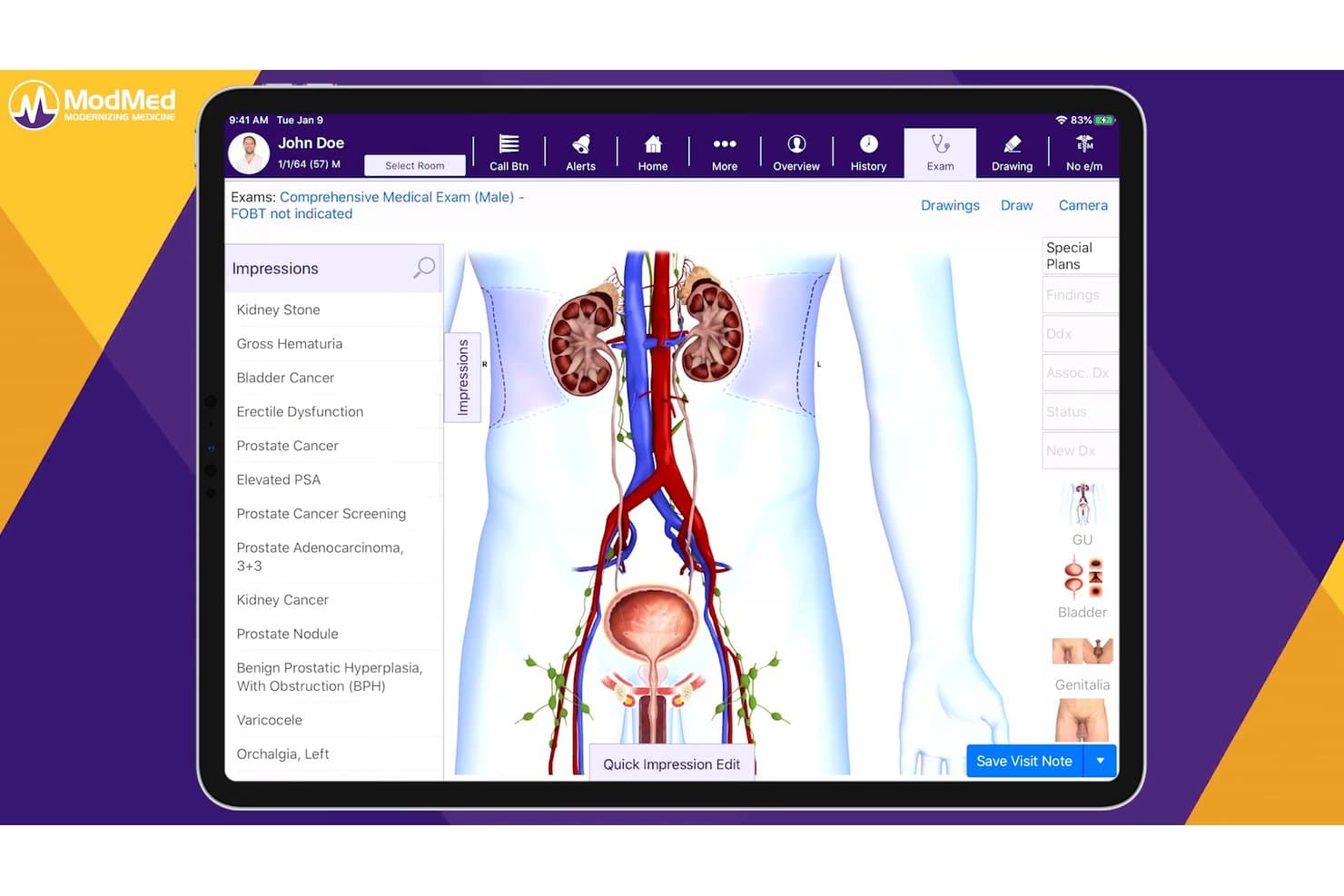
ModMed lets urologists document impressions with visual anatomy tools. ModMed is a specialty-specific EHR and practice management platform for medical practices that need clinical documentation, patient engagement, billing, and revenue cycle tools in one system.
Who Is ModMed Best For?
ModMed fits specialty medical practices that need AI-assisted charting alongside specialty-specific EHR and practice management tools.
Why ModMed Is a Good eClinicalWorks Alternative
I picked ModMed because its specialty-specific AI scribe charting supports clinical documentation within a specialty-focused EHR. My team can use AI-assisted charting alongside patient engagement, billing, and revenue cycle tools. That combination makes ModMed a focused eClinicalWorks alternative when ehr software lacks specialty-specific documentation workflows.
ModMed Key Features
- Controlled-substance ePrescribing: Send prescriptions electronically where supported.
- Telehealth: Conduct real-time audio and video patient visits.
- MIPS quality module: Collect and submit MIPS data.
- Image management: Review diagnostic images and connect imaging devices.
ModMed Integrations
ModMed’s website does not clearly document native integrations, Zapier support, or an API for custom integrations.
Pros and Cons
Pros:
- Billing and revenue cycle tools included
- Ambient AI suggests structured clinical notes
- Specialty-specific workflows support focused documentation
Cons:
- Customer support receives mixed user reviews
- Implementation timelines can run longer than expected
Learn more about ModMed: Best for occupational and multi-location specialty care
- Free demo available
- Pricing upon request
Visit WebsiteCustomer Rating:4.1/5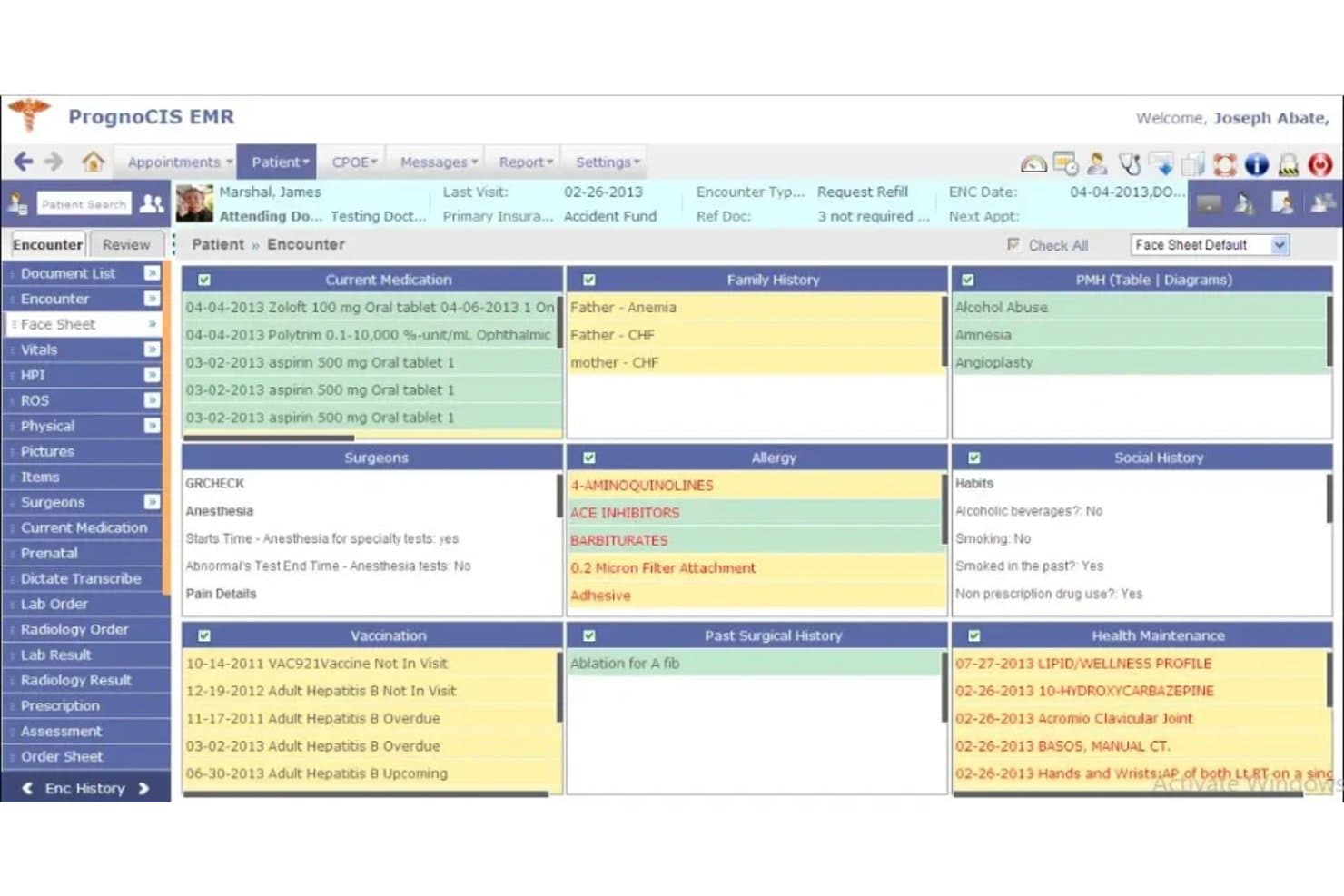
PrognoCIS centralizes patient history, allergies, and meds in one view. PrognoCIS is a cloud-based EHR and practice management platform for clinics seeking an eClinicalWorks alternative, combining specialty workflows, multi-location support, and clinical, scheduling, and billing tools.
Who Is PrognoCIS Best For?
PrognoCIS suits occupational health clinics and specialty practices managing care across multiple locations.
Why PrognoCIS Is a Good eClinicalWorks Alternative
I picked PrognoCIS for its focus on occupational and multi-location specialty care. I use specialty templates and workflows to document occupational medicine encounters, while its cloud platform supports unlimited locations. Centralized scheduling, billing, and revenue dashboards let my team manage care and financial activity across every site.
PrognoCIS Key Features
- E-Prescribing: Send prescriptions electronically to connected pharmacies.
- Patient Check-In: Manage registration and check-in workflows digitally.
- AI Claims Scrubbing: Detect claim errors before submission.
- Secure Messaging: Support two-way chat between staff and patients.
PrognoCIS Integrations
PrognoCIS documents integrations with Lab Corp, TriCore, and Bostwick Labs, plus radiology systems, vaccine registries, claims clearinghouses, pharmacies, health information exchanges, and medical devices. It also provides an API for custom integrations.
Pros and Cons
Pros:
- AI claims scrubbing flags submission errors early
- Multi-location controls centralize scheduling and billing
- Occupational medicine templates support specialized documentation
Cons:
- Reporting options can require manual workarounds
- Interface feels dated compared with newer platforms
Learn more about PrognoCIS: Best for independent primary care charting
- Free demo available
- Pricing upon request
Visit WebsiteCustomer Rating:4.4/5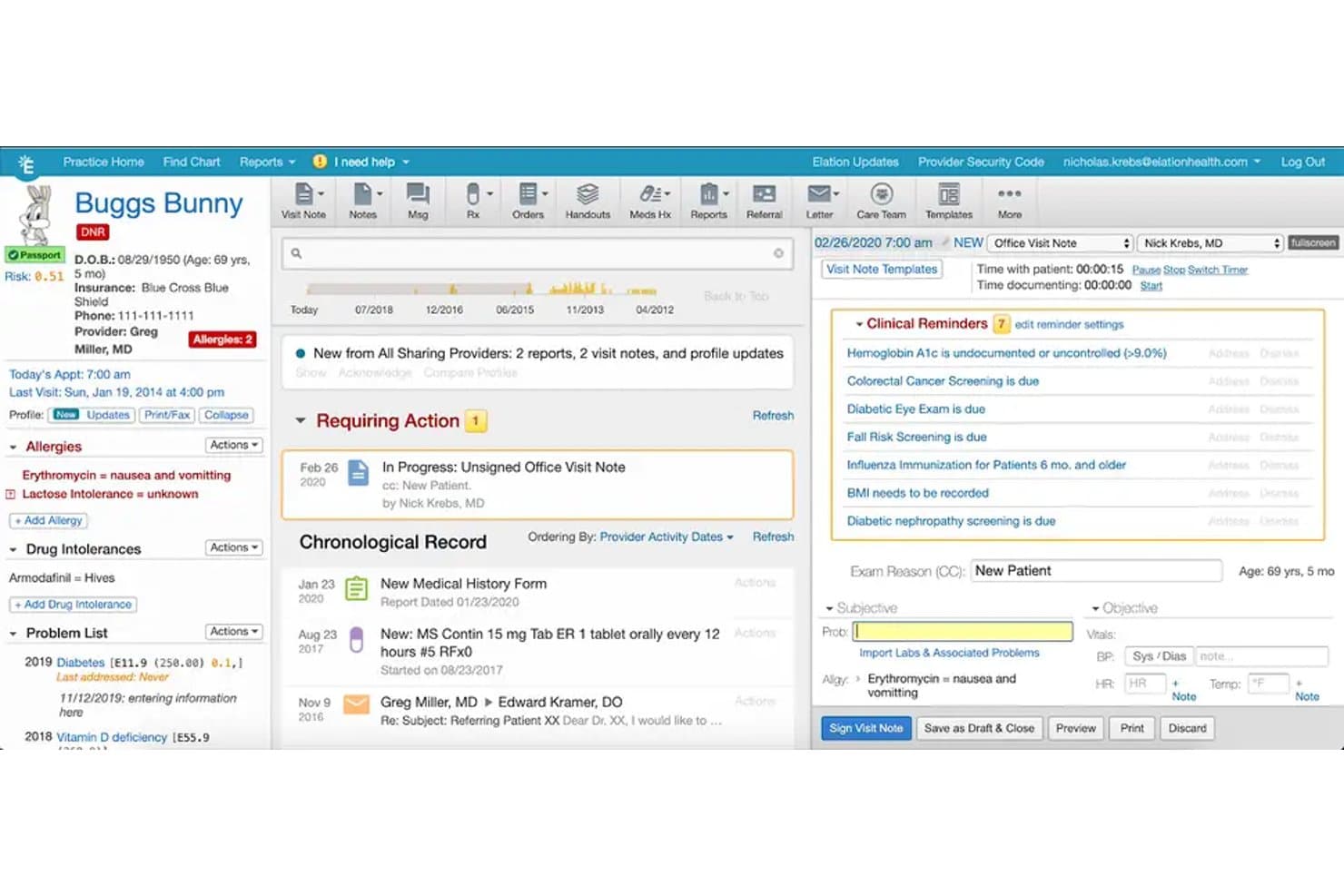
Elation Health offers a comprehensive patient chart view with clinical reminders, allergy tracking, problem lists, and visit note documentation in its EMR platform. Elation Health is a cloud-based EHR for independent primary care practices that supports clinical charting, patient communication, and care workflows without the complexity of larger eClinicalWorks alternatives.
Who Is Elation Health Best For?
Independent primary care clinicians who need a focused EHR for documenting visits, managing patient records, and coordinating routine care.
Why Elation Health Is a Good eClinicalWorks Alternative
I picked Elation Health because it focuses on independent primary care charting rather than larger enterprise workflows. My team uses its clinical charting tools to document visits and maintain patient records in one cloud-based EHR. Patient communication and routine care workflows also support follow-up after appointments.
Elation Health Key Features
- Electronic prescribing: Create prescriptions with medication decision support and adherence insights.
- Referral management: Send electronic referrals, share charts, and track referral status.
- Telehealth: Conduct virtual visits through integrated Zoom video.
- Medical billing: Verify eligibility, scrub claims, and post electronic remittance advice.
Elation Health Integrations
Elation Health has a native Zoom integration for telehealth visits. Other native integrations and API support aren’t clearly documented.
Pros and Cons
Pros:
- AI notes reduce documentation workload
- Multiple-window views expose patient history
- Primary care workflows keep charts focused
Cons:
- Billing workflows remain difficult for some users
- Customer support receives repeated complaints
Learn more about Elation Health: Best for specialty-specific EHR and RCM in one
- Free demo available
- Pricing upon request
Visit WebsiteCustomer Rating:4.3/5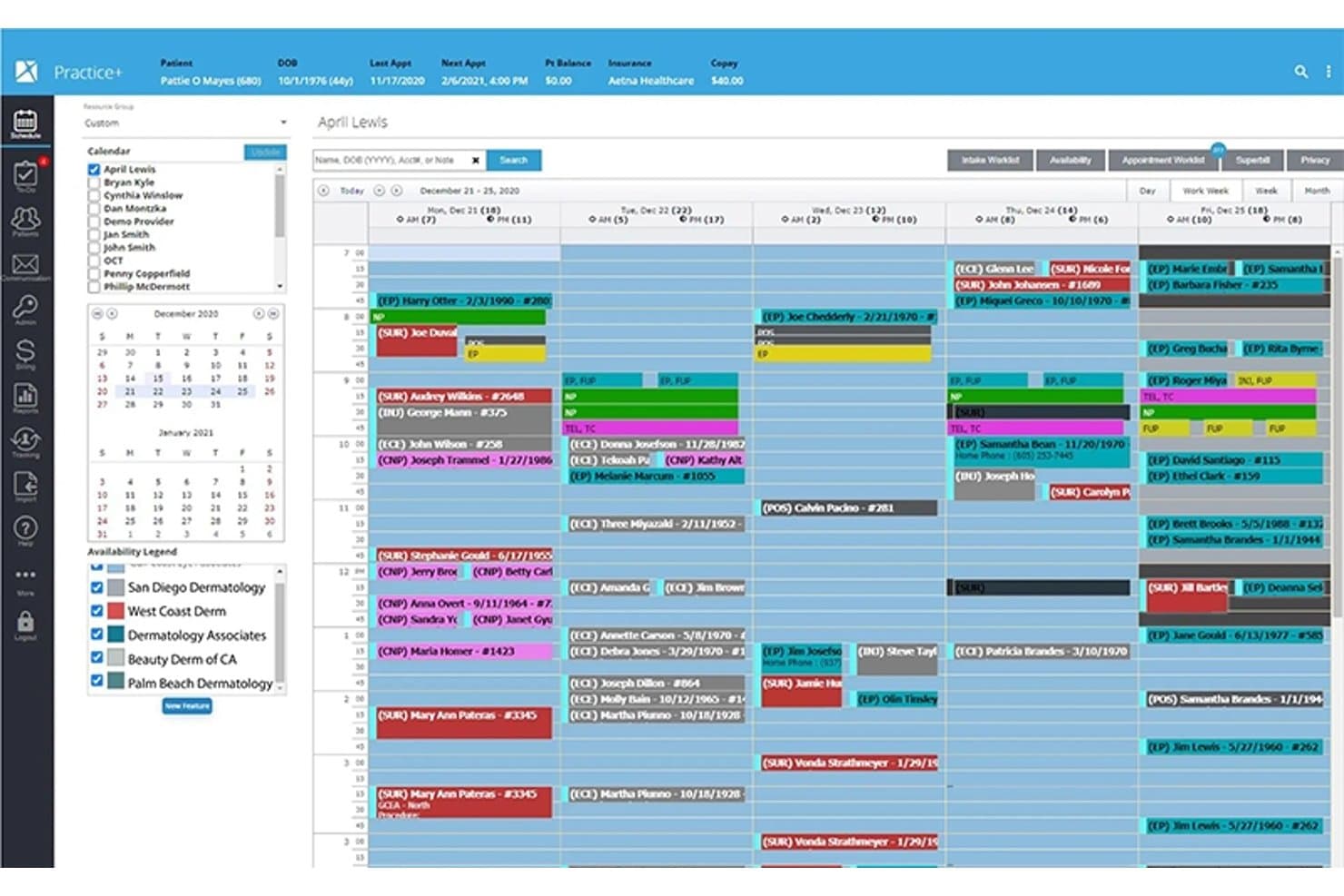
Nextech displays a multi-provider weekly appointment calendar view. Nextech is a specialty-focused EHR and practice management platform for ophthalmology, dermatology, plastic surgery, med spa, and orthopedic practices seeking an eClinicalWorks alternative with clinical, billing, and RCM workflows together.
Who Is Nextech Best For?
Nextech suits ophthalmology, dermatology, plastic surgery, med spa, and orthopedic practices needing specialty-specific clinical and revenue cycle workflows.
Why Nextech Is a Good eClinicalWorks Alternative
I picked Nextech because its specialty-specific EHR and RCM workflows cover clinical documentation, billing, and revenue cycle tasks in one platform. My team can use it for ophthalmology, dermatology, plastic surgery, med spa, and orthopedic operations instead of adapting a general-purpose system to specialty needs.
Nextech Key Features
- Appointment scheduling: Manage patient appointments through the practice management system.
- Patient portal: Let patients access appointments, records, and billing information.
- Payment processing: Accept patient payments and automate reconciliation.
- Practice reporting: Review operational and financial data through reporting tools.
Nextech Integrations
Nextech’s native integrations are not clearly documented, and API support for custom integrations is not specified.
Pros and Cons
Pros:
- Reporting supports practice-level oversight
- Integrated billing and clinical workflows
- Specialty templates support dermatology documentation
Cons:
- Users report glitches after software updates
- Physician notes can require too many steps
Learn more about Nextech: Best for independent practice billing and RCM
- Free demo available
- Pricing upon request
Visit WebsiteCustomer Rating:3.9/5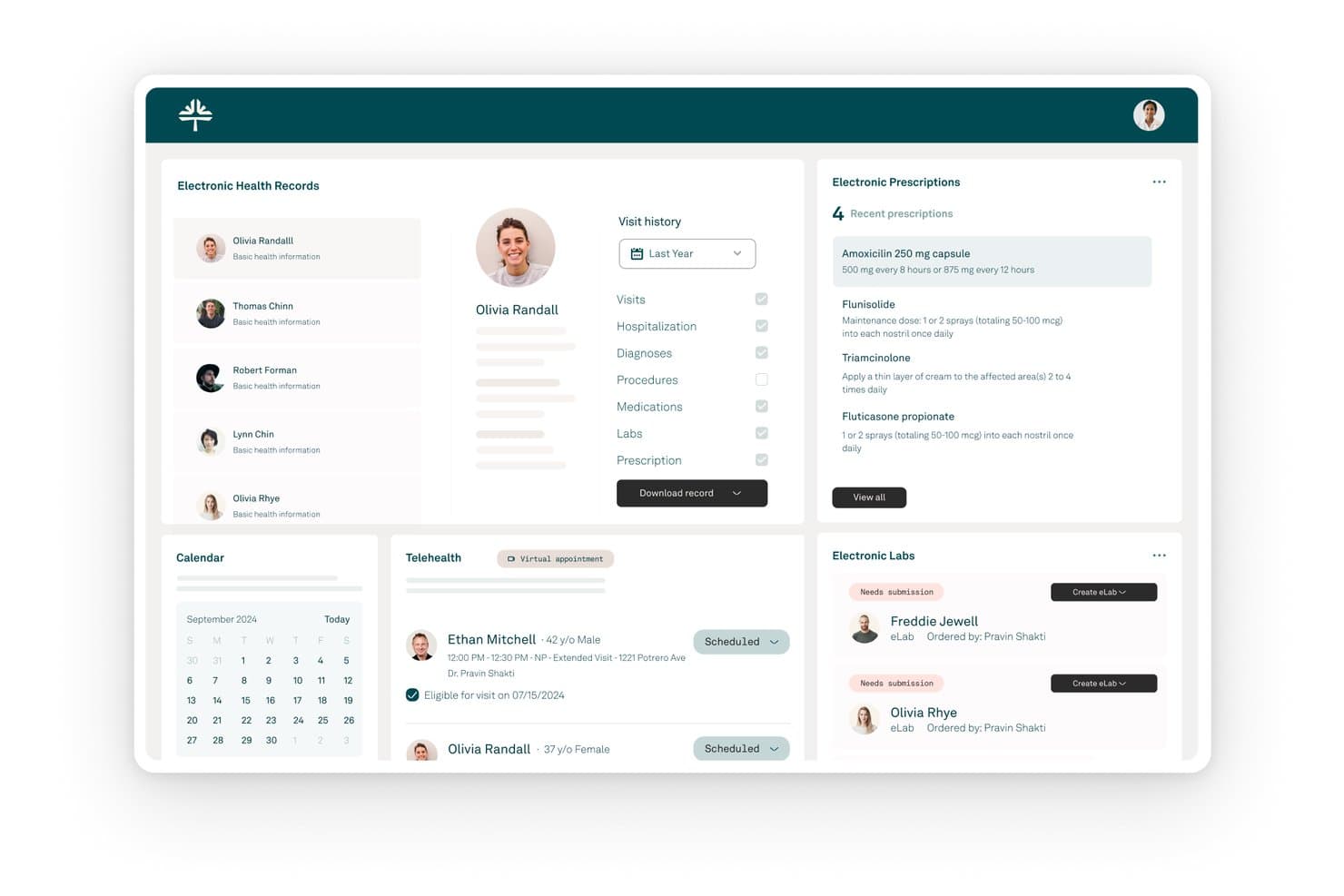
Tebra centralizes EHR, prescriptions, labs, and telehealth in one dashboard. For independent practices comparing eClinicalWorks alternatives, Tebra combines a cloud-based EHR, billing, scheduling, patient engagement, and practice management in one HIPAA-compliant platform.
Who Is Tebra Best For?
Tebra suits independent medical practices that need billing, revenue cycle management, scheduling, and patient engagement in one platform.
Why Tebra Is a Good eClinicalWorks Alternative
I picked Tebra because its billing and revenue cycle tools fit independent practices handling claims in-house. My team uses insurance eligibility checks, claims processing, and integrated payment processing to manage billing from appointment through payment. That gives us a practical alternative when eClinicalWorks feels too broad for day-to-day practice billing.
Tebra Key Features
- AI Note Assist : Supports clinical note-taking within the EHR.
- Appointment reminders : Sends reminders for scheduled visits.
- Digital intake forms : Lets patients complete forms before appointments.
- Two-way messaging : Supports messages between practices and patients.
Tebra Integrations
Tebra’s native integrations are not clearly documented, but its SOAP API supports custom integrations with third-party applications. Tebra also offers integration support for connecting EHR data with external systems, including labs, billing platforms, scheduling tools, and telehealth solutions.
Pros and Cons
Pros:
- Reviewers praise knowledgeable onboarding support
- Insurance eligibility checks support claim preparation
- Integrated EHR, billing, and scheduling
Cons:
- Users report outages and unreliable reporting
- Support responsiveness varies across reviewers
Learn more about Tebra: Best for health systems needing TEFCA interoperability
- Not available
- Pricing upon request
Visit WebsiteCustomer Rating:4/5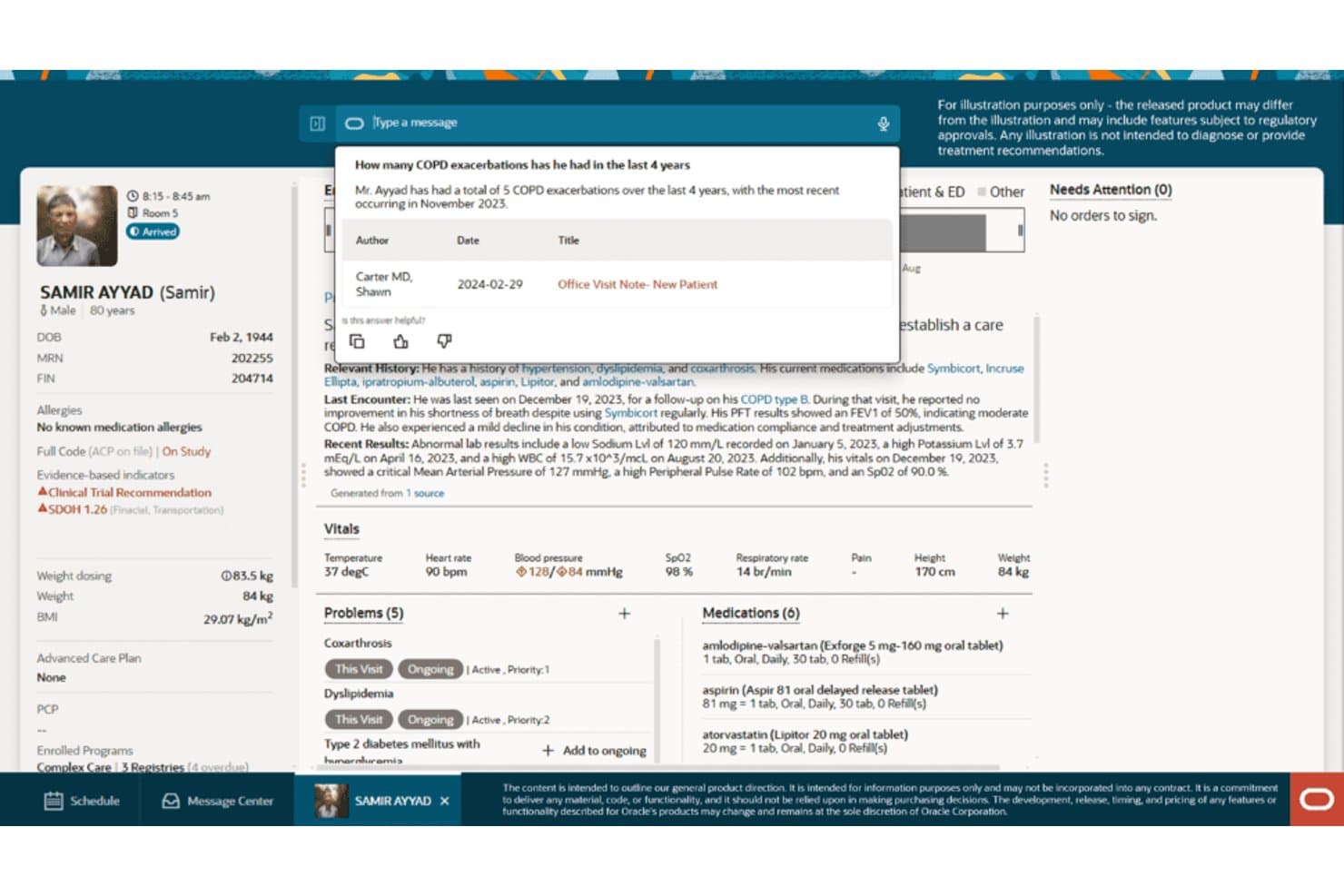
Oracle Health uses AI chat to surface patient COPD history instantly. Oracle Health is an enterprise healthcare technology platform for health systems that need connected clinical records, care coordination, and interoperability across complex provider networks.
Who Is Oracle Health Best For?
Oracle Health suits health system leaders coordinating clinical data exchange across providers through TEFCA-aligned interoperability.
Why Oracle Health Is a Good eClinicalWorks Alternative
I picked Oracle Health because it connects clinical records across complex provider networks. Its care coordination tools and TEFCA-aligned interoperability support data exchange between hospitals, clinics, and other care settings. I see it as a strong alternative when your health system needs more than a standalone EHR. Best for health systems needing TEFCA interoperability.
Oracle Health Key Features
- Revenue cycle automation : Connects registration through bill collection with intelligent automation.
- EHR-agnostic analytics : Tracks metrics across systems with embedded AI and machine learning.
- Patient outreach : Delivers guidance, reminders, and care-team communications.
- Resource management : Provides real-time data for clinical performance and resource planning.
Oracle Health Integrations
Oracle Health’s official pages don’t publish a fixed list of native integrations; its interoperability network supports exchange with other QHINs and EHRs, including CommonWell Health Alliance. Oracle Health also provides EHR and FHIR APIs for custom applications and third-party software vendors, with validated apps available through the Oracle Healthcare Marketplace.
Pros and Cons
Pros:
- Automates revenue workflows from registration through collections
- Supports cross-system analytics and performance reporting
- Connects records across complex health systems
Cons:
- Clinical workflows often require ongoing optimization
- Initial vendor training can be insufficient
Learn more about Oracle Health: Best for KLAS-recognized independent practice EHR
- Free demo available
- Pricing upon request
Visit WebsiteCustomer Rating:3.8/5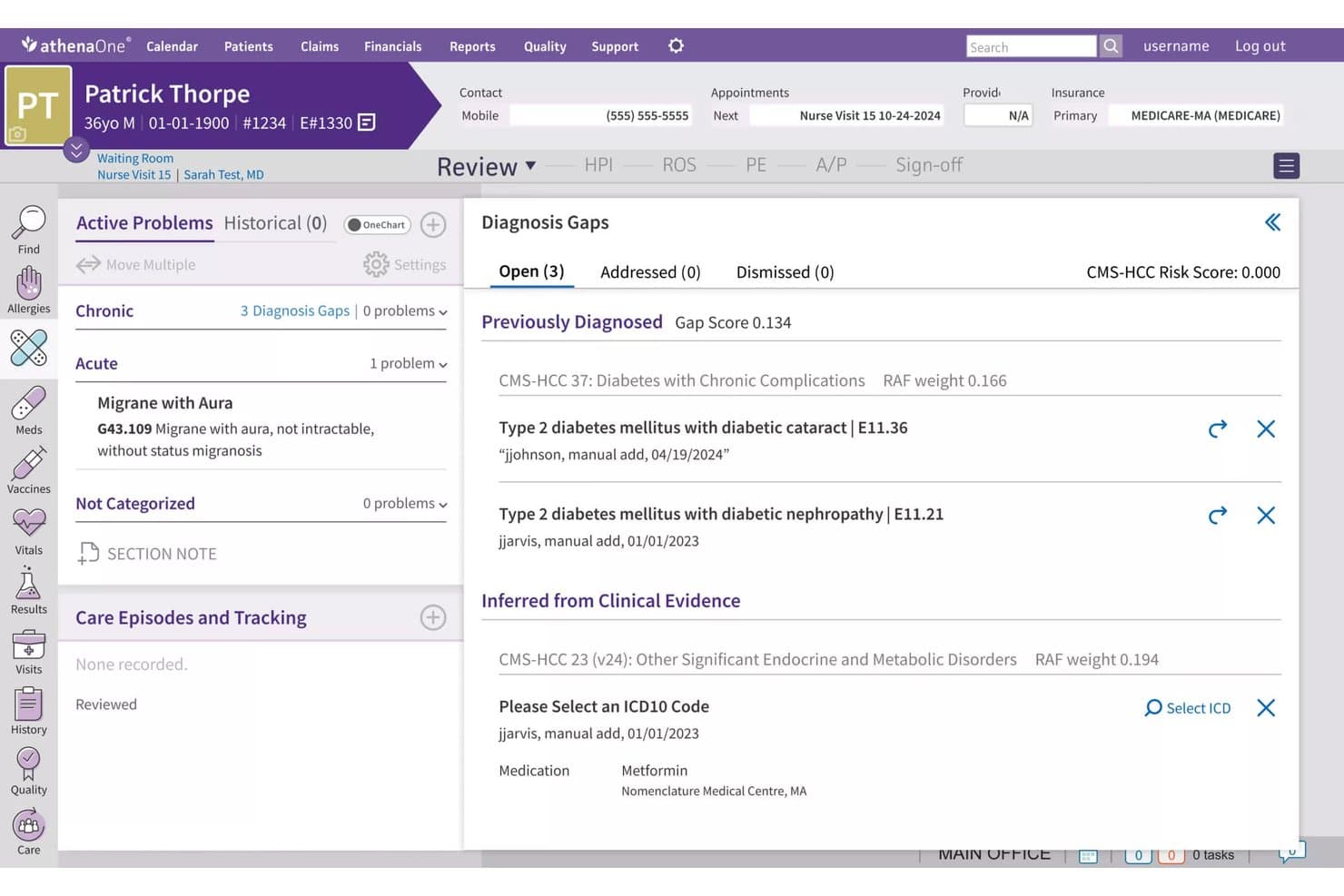
athenaOne surfaces diagnosis gaps with RAF scores to support coding accuracy. For independent practices comparing EHR software and eClinicalWorks alternatives, athenaOne is an AI-powered, all-in-one EHR that connects clinical, administrative, billing, and patient engagement workflows.
Who Is athenaOne Best For?
Independent medical practices seeking one EHR for clinical, billing, administrative, and patient engagement workflows.
Why athenaOne Is a Good Eclinicalworks Alternative
I picked athenaOne because it is a Best for KLAS-recognized independent practice EHR. I use its unified clinical, administrative, and billing workflows to manage patient records, claims, and practice operations in one system. Its patient engagement tools also support communication beyond the visit.
athenaOne Key Features
- AI-powered patient overview: Summarizes relevant patient information before each visit.
- Chart Assistant with Sage: Answers clinical questions within the encounter workflow.
- Care event summaries: Distills hospital events and discharge documents into key details.
- iOS mobile access: Supports templates, macros, and order sets on mobile devices.
athenaOne Integrations
athenaOne supports marketplace integrations from 590+ partners, with solutions evaluated for integration with athenahealth products and services. It also provides 800+ API endpoints, HL7 and C-CDA interfaces, custom interfaces, and connections with CommonWell Health Alliance and Carequality.
Pros and Cons
Pros:
- Claims scrubbing supports cleaner billing workflows
- AI patient summaries support previsit review
- Scheduling, charting, and billing share one workflow
Cons:
- Interface glitches and slowdowns frustrate users
- Support escalations can delay issue resolution
Learn more about athenaOne: Best for growing practices scaling across specialties
- Free demo available
- Pricing upon request
Visit WebsiteCustomer Rating:3.7/5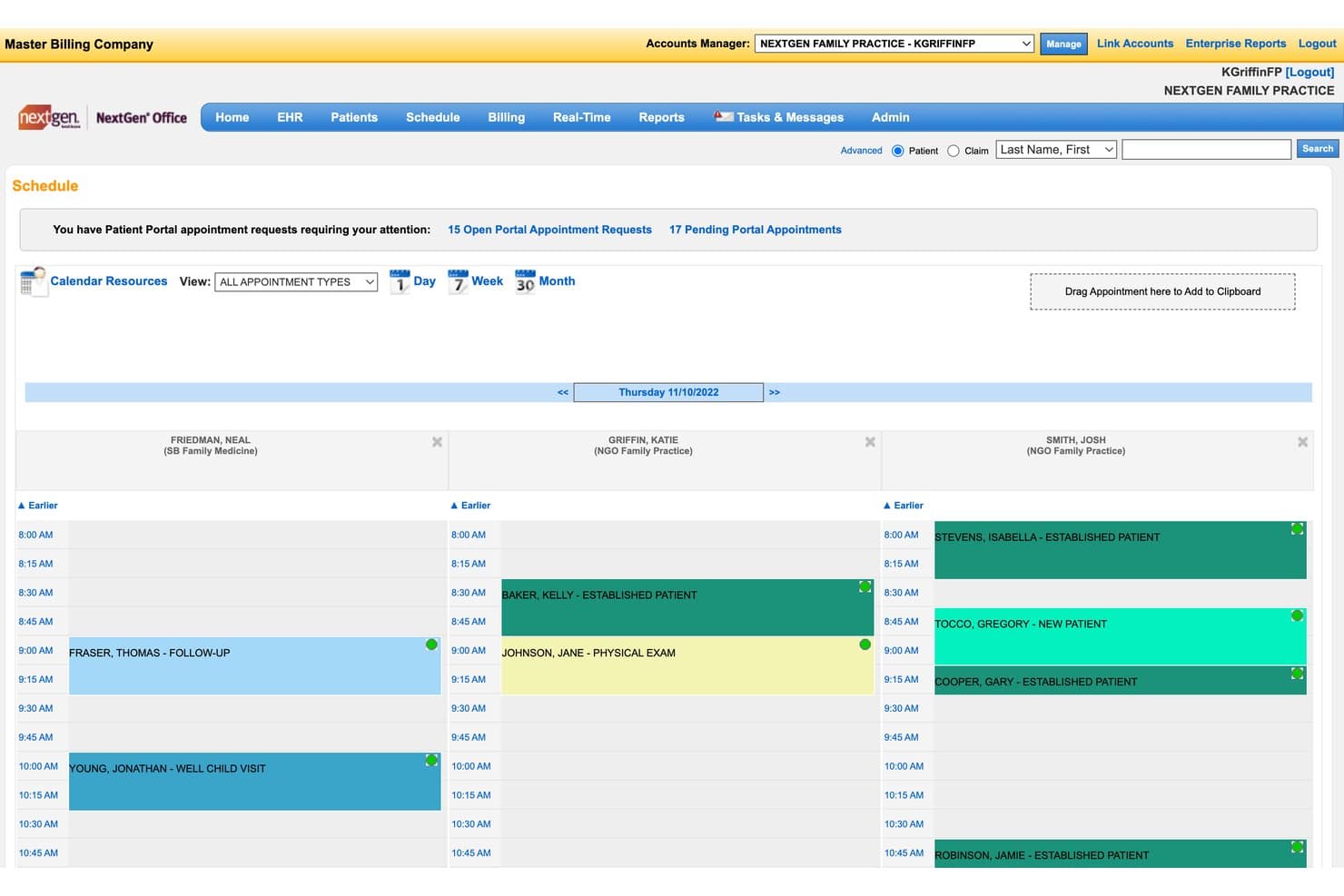
NextGen Healthcare displays a multi-provider daily schedule with appointment types. NextGen Healthcare is an EHR and practice management platform for growing medical groups that need specialty support, coordinated clinical workflows, and an alternative to eClinicalWorks.
Who Is NextGen Healthcare Best For?
NextGen Healthcare fits growing medical groups that need specialty-aware clinical and practice management workflows across multiple departments.
Why NextGen Healthcare Is a Good eClinicalWorks Alternative
I picked NextGen Healthcare for growing practices scaling across specialties. I use its specialty-aware clinical workflows to coordinate care across departments, while its practice management tools support shared operational processes. That combination gives my team a focused alternative to eClinicalWorks when one practice spans multiple specialties.
NextGen Healthcare Key Features
- Telehealth: Supports virtual visits within the platform.
- ePrescribing: Sends prescriptions electronically from patient charts.
- Patient portal: Offers results, education, payments, and messaging.
- Remote patient monitoring: Tracks patient data between visits.
NextGen Healthcare Integrations
NextGen Healthcare supports integrations with Quest Diagnostics, Labcorp, ScImage, GE, FUJI, Hillrom, Medtronic, Midmark, CoverMyMeds, and Appriss Health through documented interfaces and partner solutions. It also provides 800+ Enterprise API routes, FHIR APIs, and an API Marketplace for custom and third-party applications.
Pros and Cons
Pros:
- Customizable encounter note templates
- Integrated EHR and practice management
- Specialty-specific workflows for multi-department practices
Cons:
- Patient communication tools need improvement
- Chart navigation requires excessive clicks
Learn more about NextGen Healthcare: Best for independent practice revenue cycle management
- Free demo available
- Pricing upon request
Visit WebsiteCustomer Rating:3.6/5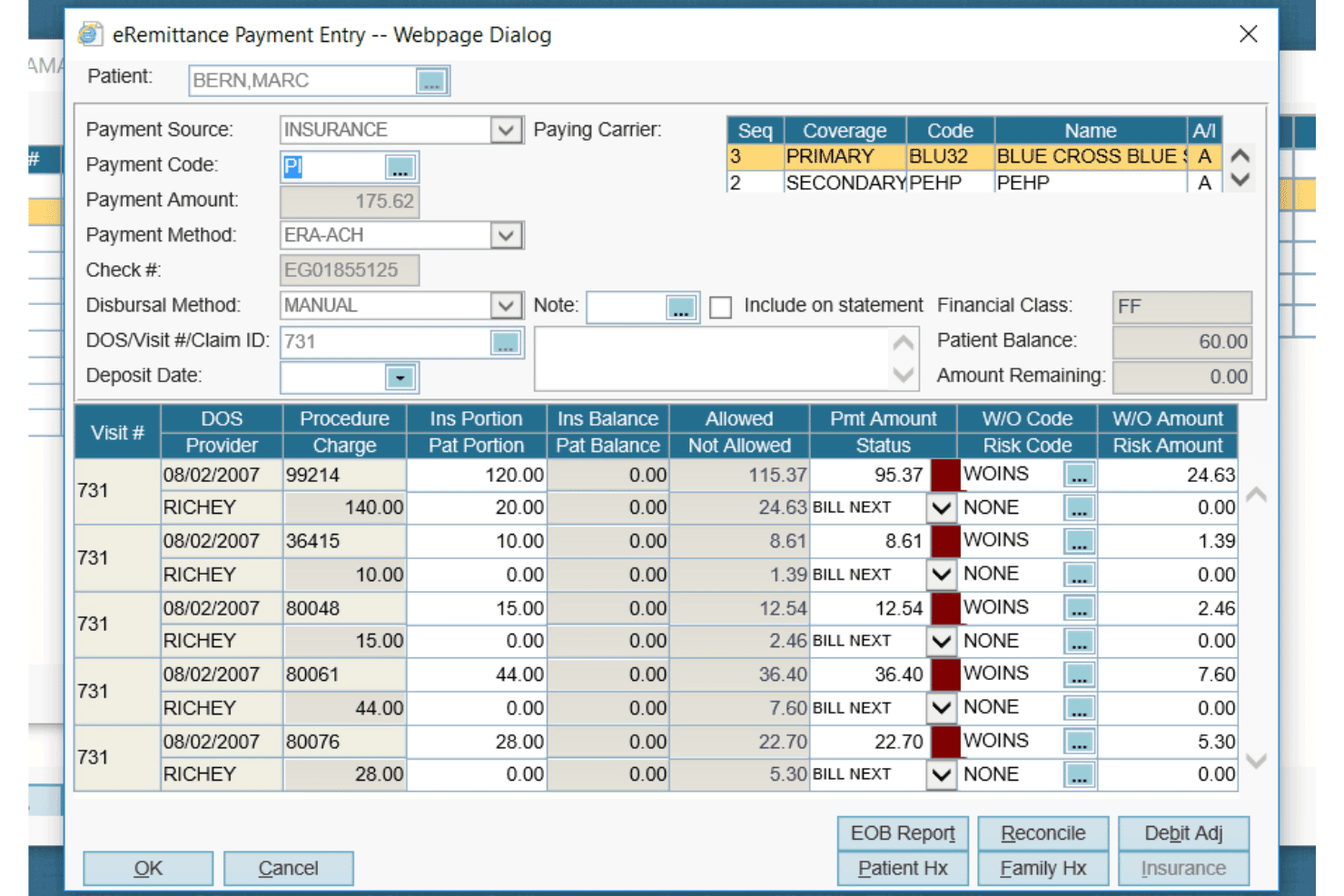
AdvancedMD offers a detailed eRemittance Payment Entry dialog for managing insurance billing, claim payments, and write-off codes per procedure. AdvancedMD is a cloud-based EHR and practice management platform for independent practices seeking an eClinicalWorks alternative with connected clinical, scheduling, billing, and revenue cycle workflows.
Who Is AdvancedMD Best For?
AdvancedMD fits independent healthcare practices that need connected EHR, practice management, and revenue cycle workflows.
Why AdvancedMD Is a Good eClinicalWorks Alternative
I picked AdvancedMD because my team can connect clinical documentation, scheduling, billing, and revenue cycle workflows in one platform. I use its practice management tools to coordinate claims and patient accounts alongside daily operations. That makes it a strong choice for independent practices replacing eClinicalWorks with focused revenue cycle management.
AdvancedMD Key Features
- Patient portal: Supports self-service intake, secure messaging, and patient payments.
- Eligibility verification: Checks insurance coverage in real time.
- Reporting and analytics: Provides financial and clinical dashboards across locations.
- Configurable workflows: Supports specialty-specific workflows within the platform.
AdvancedMD Integrations
AdvancedMD offers partner marketplace integrations, including Salesforce, Apollo CRM, LeadSquared, ZOHO, InstaMed, Healthix, Ellkay, and Falkon Data. It also provides Connect APIs, FHIR APIs, and ODBC access for custom integrations, reporting, bulk data extraction, and interoperability with labs, imaging providers, HIEs, and other healthcare systems.
Pros and Cons
Pros:
- Real-time dashboards span multiple locations
- Specialty-configurable workflows support independent practices
- Connected EHR, scheduling, billing, and RCM
Cons:
- Support response times draw recurring complaints
- Onboarding can take longer than expected
 Best for hospital-connected ambulatory billing teams
- Not available
- Pricing upon request
Visit WebsiteCustomer Rating:3.1/5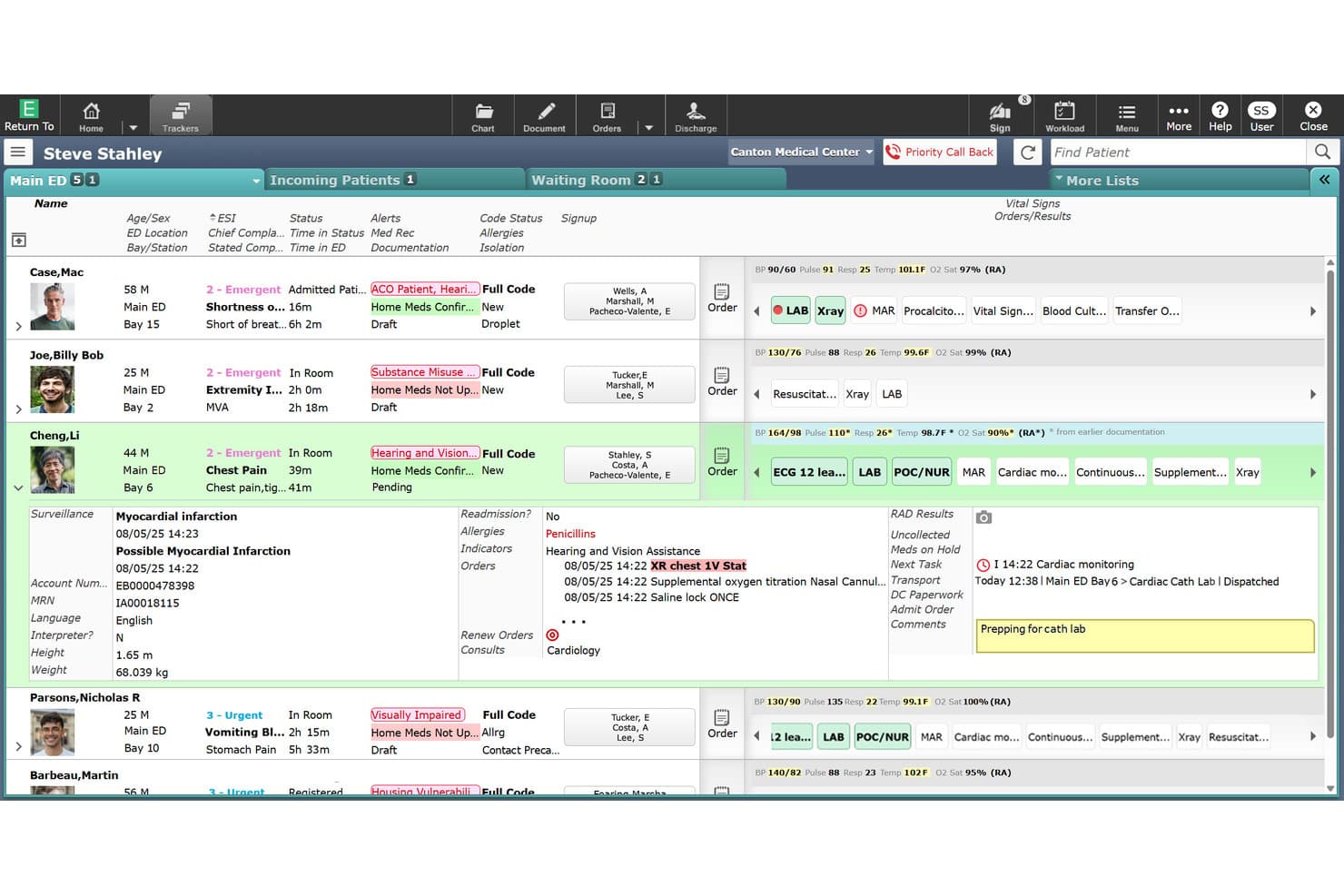
MEDITECH Expanse organizes ED patient tracking with vitals and alerts. MEDITECH Expanse is an integrated EHR for hospitals and ambulatory organizations that need connected clinical, administrative, and revenue cycle workflows in an alternative to eClinicalWorks.
Who Is MEDITECH Expanse Best For?
MEDITECH Expanse fits ambulatory billing teams connected to MEDITECH hospitals that need shared clinical, administrative, and revenue cycle workflows.
Why MEDITECH Expanse Is a Good eClinicalWorks Alternative
I picked MEDITECH Expanse because it connects ambulatory teams with hospital-based clinical, administrative, and revenue cycle workflows. My team can use shared information across care settings while coordinating billing activities within the same EHR. That hospital connection makes it a strong choice for hospital-connected ambulatory billing teams.
MEDITECH Expanse Key Features
- AI-driven personalized workflows: Provides role-specific workflows for clinicians and care teams.
- Clinical decision support: Uses predictive analytics within clinical workflows.
- Patient self-service: Supports self-check-in and virtual care options.
- Ambient documentation: Captures and summarizes patient conversations for documentation.
MEDITECH Expanse Integrations
MEDITECH has showcased Expanse integrations with Google Cloud, Microsoft, Commure, DrFirst, Health Gorilla, and Suki through a FHIR-first API. Its Greenfield Workspace supports custom integrations through US Core FHIR R4 and FHIR Scheduling APIs, while Traverse Exchange connects Expanse with other EHR networks.
Pros and Cons
Pros:
- Mobile tools support patient engagement
- Real-time allergy and interaction checks
- Hospital and ambulatory data share workflows
Cons:
- Reporting remains basic for complex analysis
- Outpatient navigation can require many clicks
Learn more about MEDITECH Expanse:
- 11CompuGroup MedicalBest for single-vendor EHR, billing, and RCM
- 12IntergyBest for FQHCs and community health billing
- 13RXNTBest for transparent per-provider pricing
- 14DrChronoBest for mobile-first charting across specialties
- 15CareCloudBest for built-in AI scribing and billing
- 16Practice FusionBest for solo and small independent practices
- 17Veradigm EHRBest for multi-location specialty billing and charting
- 18Amazing ChartsBest for small independent practice charting
- 19PracticeEHRBest for AI-assisted charting and billing in one
- 20Praxis EMRBest for AI-driven charting without templates
How I Evaluate eClinicalWorks Alternatives
I split my evaluation into three parts. First, core functionality: every tool must support structured clinical charting and handle end-to-end billing and claims—this carries the most weight. Second, standout features like AI scribe tools or specialty-specific templates. Third, I consider what's beyond features: migration support, pricing transparency, and vendor reliability.
Core Functionality (Table Stakes For This List)
When I'm selecting tools for my list, I score each one on a scale from 0 (does not offer the functionality) to 5 (excels in this area) for each core functionality listed below. I then convert the total into a percentage to help assess each tool’s overall fit, with extra weight on any functionalities I’ve deemed essential.
- EHR & Charting (Essential): I assess structured notes, specialty templates, medication tools, e-prescribing, and documentation tied to complete patient records.
- Practice Management & Billing (Essential): I look for scheduling, eligibility checks, claims workflows, payment posting, denial handling, and revenue cycle reporting.
- Patient Engagement: Portal messaging, online booking, reminders, digital intake, and two-way communication show how patients interact with the practice.
- Interoperability & Exchange: I check connections for labs, pharmacies, referral partners, hospitals, and standards-based record exchange between systems.
- Reporting & Compliance: I review clinical, financial, and operational reports that support quality programs, audits, compliance work, and management decisions.
Once I have a list of tools that meet the criteria, I consider what sets each platform apart.
Differentiating Factors (What Sets Vendors Apart)
Here's how I compare and contrast different vendors:
Standout Features
I look for specialty-specific templates that go beyond basic SOAP notes—platforms like ModMed and Nextech offer dermatology or orthopedic workflows that cut setup time for niche practices. AI-powered scribes matter too, since ambient documentation tools directly reduce after-hours charting. I also evaluate pricing transparency, checking whether a vendor charges flat per-provider rates or percentage-of-collections fees that shift with volume.
Beyond Features
I evaluate each vendor's migration support, since moving off an entrenched EHR like eClinicalWorks mid-billing cycle can stall claims for weeks if the vendor lacks a phased rollout plan. Contract flexibility matters just as much—some platforms lock you into multi-year terms, while others like Tebra and Elation Health offer month-to-month options that reduce budget risk for smaller practices. I also check whether support is live or ticket-only, because a billing team stuck on a denied claim at 4 p.m. needs a phone call, not a 48-hour queue.
Why Look for eClinicalWorks Alternatives?
While eClinicalWorks is a good choice of EHR software, there are several reasons why some users seek alternative solutions. You might be looking for an eClinicalWorks alternative because…
- Complex workflows require extensive setup and training
- Smaller practices need simpler pricing and implementation
- Specialty teams need more focused clinical templates
- Growing organizations need broader scalability across locations
- Your team needs more responsive billing support
- Regional requirements limit available features or integrations
If any of these sound like you, you've come to the right place. My list contains several EHR software options that may be better suited for teams facing these challenges with eClinicalWorks.
eClinicalWorks Key Features
Here are the key features of eClinicalWorks, to help you compare it with alternative options:
- Clinical documentation: Providers can document visits, review patient histories, manage diagnoses, and maintain structured electronic health records. In-place editing supports updates within existing documentation workflows.
- Practice management: Staff can coordinate scheduling, check-in, patient information, and daily administrative tasks from the same platform. This connects front-office activity with clinical records.
- Revenue cycle management: Practices can choose self-service billing or an eClinicalWorks-managed revenue cycle service. Tools support claims workflows, billing visibility, alerts, performance evaluation, and accounts receivable monitoring.
- Interoperability: eClinicalWorks connects with nationwide health information networks to gather patient records. Providers can review consolidated information at the point of care without relying solely on records from one practice.
- Patient engagement: The platform includes a patient portal, healow apps, check-in tools, messaging campaigns, and telehealth. Patients can use these tools for communication and access to selected practice services.
- Prescribing: eClinicalWorks supports electronic prescribing, including enhanced workflows for controlled substances. Providers can send prescriptions electronically and manage medication-related tasks within the patient record.
- Artificial intelligence: AI features include Sunoh.ai medical scribe support, Eva virtual assistant capabilities, Image AI, and the healow Genie contact center solution. These tools address documentation, patient communication, and selected administrative workflows.
- Value-based care: Care planning, chronic care management, HEDIS, HCC coding, PCMH, ACO/CIN, and MACRA or MIPS tools support population health programs. Practices can organize care activities around quality measures and patient risk.
- Reporting dashboards: Patient safety, compliance, revenue cycle, and performance dashboards provide operational and clinical visibility. Teams can monitor selected metrics, identify follow-up needs, and review practice performance.
Costs and Pricing of eClinicalWorks Alternatives
Costs vary based on features, team size, add-ons, and more. Here are the pricing ranges you can typically expect from eClinicalWorks alternatives:
Plan Comparison Table for eClinicalWorks Alternatives
| Plan Type | Average Price | Common Features |
| Personal Plan | $25-$100/provider/month | Electronic health record charting, e-prescribing, appointment reminders, and patient portal access. |
| Business Plan | $100-$300/provider/month | Advanced charting, billing and claims tools, reporting dashboards, and care coordination. |
| Enterprise Plan | $300-$1,000+/provider/month | Multi-location management, custom integrations, revenue cycle support, and dedicated account assistance. |