

MEDITECH Expanse Review: Pros, Cons, Features and Pricing
I weigh MEDITECH Expanse’s strengths, trade-offs, features, and pricing to show where its integrated EHR approach fits—and what healthcare teams should scrutinize before choosing it.

We review tools independently, and commissions help fund our testing. See our transparency policy, our methodology, or suggest a tool.
MEDITECH Expanse is a cloud-native, mobile-first EHR software platform that unifies patient data and supports clinical, administrative, and financial workflows. Consider it if your health system needs one platform across hospital and ambulatory settings, with room to tailor workflows and maintain organizational independence. I’d choose Expanse over Epic when your priority is a cloud-native, mobile-first system that connects care settings while supporting organizational flexibility.
MEDITECH Expanse Evaluation Summary
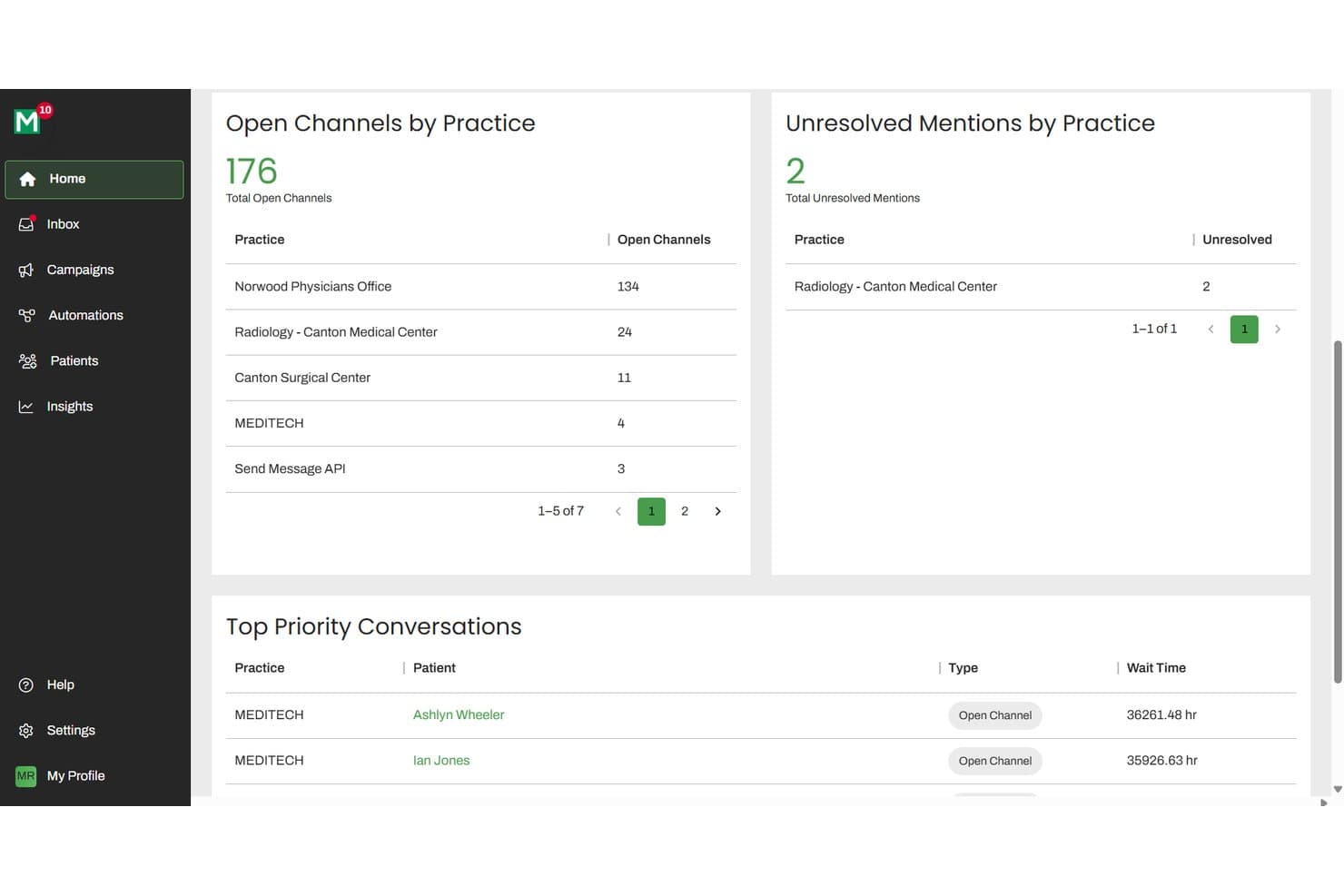
3.1/5
- Pricing upon request
- Not available
Why Trust Our Software Recommendations
6,700+
Reviews
20
Industry experts
16+
Evaluation factors
14
Years
Our team has been testing and reviewing software since 2012. As medical practice leaders ourselves, we know how difficult—and important—it is to choose the right software.
For this guide, we evaluated tools using hands-on testing and independent research, scoring tools using our selection criteria.
Our reviews reflect our human editorial judgment, not a sales pitch.
MEDITECH Expanse Overview
I’d consider MEDITECH Expanse when choosing an EHR for a health system that wants cloud-native, mobile-first workflows across hospital and ambulatory care. Its integrated approach and configurable workflows compare well with systems that offer less organizational flexibility; for example, teams can connect clinical, administrative, and financial work in one platform. I’d judge it less favorably if your priority is a simple rollout or transparent upfront pricing: costs are tailored, and onboarding and interface requirements need careful review. Before selecting it, confirm support arrangements and integration scope against your existing systems.
Pros
- Shared records connect inpatient, ambulatory, and ancillary workflows.
- Mobile access and patient portals support bedside and patient workflows.
- Community hospitals cite manageable implementation and lower IT overhead.
Cons
- Reviewers report outages that can block access to existing charts.
- Some clinical workflows require extra clicks and repeated documentation.
- Basic reporting can limit complex analytics and operational oversight.


How We Test & Score Tools
We’ve spent years building, refining, and improving our software testing and scoring system. The rubric is designed to capture the nuances of software selection and what makes a tool effective, focusing on critical aspects of the decision-making process.
Below, you can see exactly how our testing and scoring works across seven criteria. It allows us to provide an unbiased evaluation of the software based on core functionality, standout features, ease of use, onboarding, customer support, integrations, customer reviews, and value for money.
Core Functionality (25% of final scoring)
The starting point of our evaluation is always the core functionality of the tool. Does it have the basic features and functions that a user would expect to see? Are any of those core features locked to higher-tiered pricing plans? At its core, we expect a tool to stand up against the baseline capabilities of its competitors.
Standout Features (25% of final scoring)
Next, we evaluate uncommon standout features that go above and beyond the core functionality typically found in tools of its kind. A high score reflects specialized or unique features that make the product faster, more efficient, or offer additional value to the user.
We also evaluate how easy it is to integrate with other tools typically found in the tech stack to expand the functionality and utility of the software. Tools offering plentiful native integrations, 3rd party connections, and API access to build custom integrations score best.
Ease of Use (10% of final scoring)
We consider how quick and easy it is to execute the tasks defined in the core functionality using the tool. High scoring software is well designed, intuitive to use, offers mobile apps, provides templates, and makes relatively complex tasks seem simple.
Onboarding (10% of final scoring)
We know how important rapid team adoption is for a new platform, so we evaluate how easy it is to learn and use a tool with minimal training. We evaluate how quickly a team member can get set up and start using the tool with no experience. High scoring solutions indicate little or no support is required.
Customer Support (10% of final scoring)
We review how quick and easy it is to get unstuck and find help by phone, live chat, or knowledge base. Tools and companies that provide real-time support score best, while chatbots score worst.
Customer Reviews (10% of final scoring)
Beyond our own testing and evaluation, we consider the net promoter score from current and past customers. We review their likelihood, given the option, to choose the tool again for the core functionality. A high scoring software reflects a high net promoter score from current or past customers.
Value for Money (10% of final scoring)
Lastly, in consideration of all the other criteria, we review the average price of entry level plans against the core features and consider the value of the other evaluation criteria. Software that delivers more, for less, will score higher.
Core Features
Clinical Handoff Management
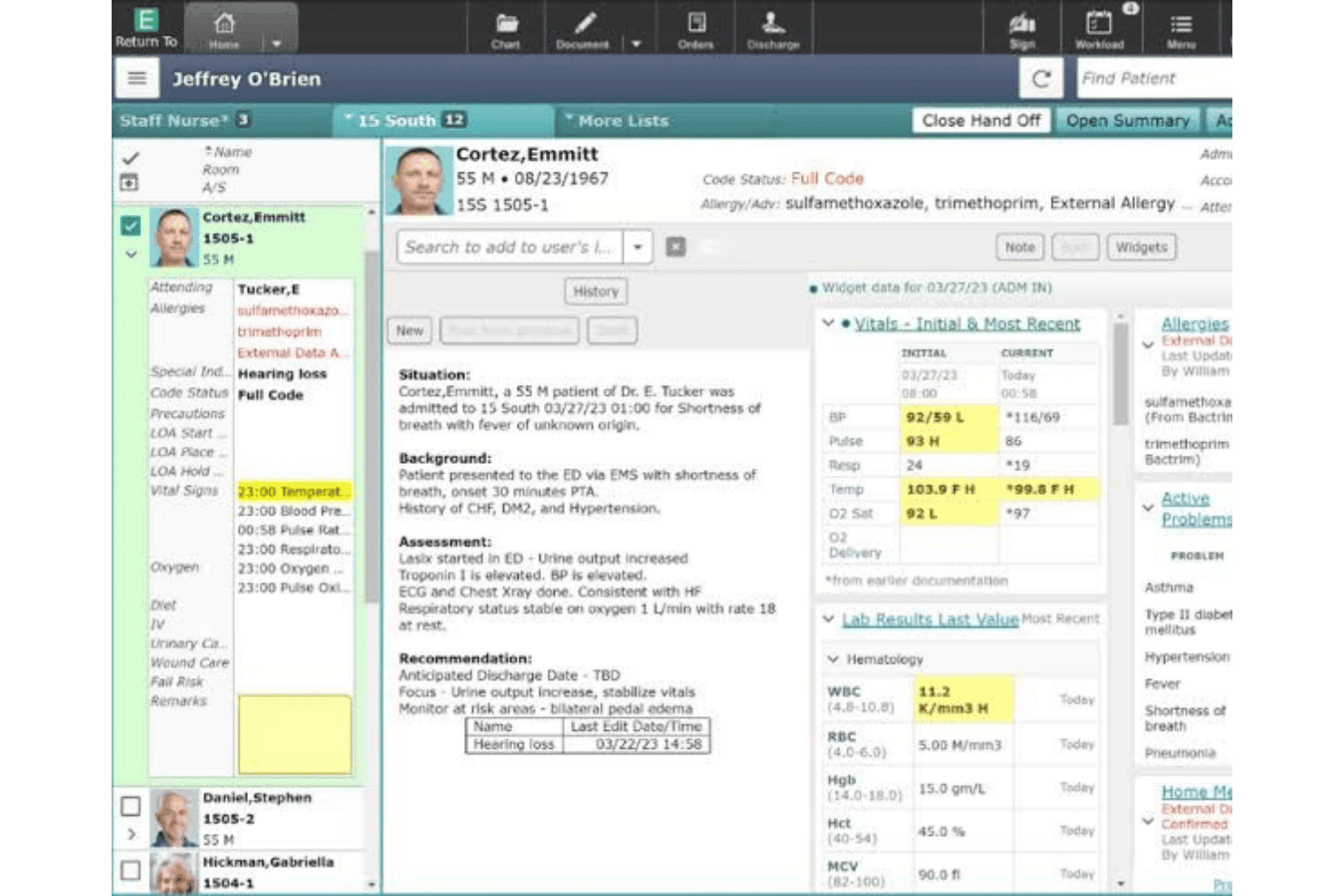
MEDITECH Expanse provides a clinical handoff workspace where care teams can review patient conditions, vital signs, laboratory results, and clinical notes. Staff can document handoff information and access patient records during transitions of care.
Ambient AI Documentation
MEDITECH Expanse supports ambient clinical documentation that generates draft encounter notes from patient-provider conversations. Clinicians can review the captured history of present illness and review of systems before adding the information to the clinical record.
Emergency Department Tracking
MEDITECH Expanse displays emergency department patients by acuity, location, care status, and clinical alerts. Staff can monitor vital signs, review pending orders, and track patient movement throughout emergency care.
AI-Assisted Clinical Summarization
MEDITECH Expanse uses AI to prepare clinical summaries from patient information, including symptoms, diagnoses, test results, and treatment details. Clinicians can verify the generated text before adding it to the medical record.
Clinical Record Search
MEDITECH Expanse allows clinicians to search patient records across reports, observations, medications, notes, and scanned documents. Users can filter results and preview matching clinical information without manually opening individual files.
Health Information Exchange
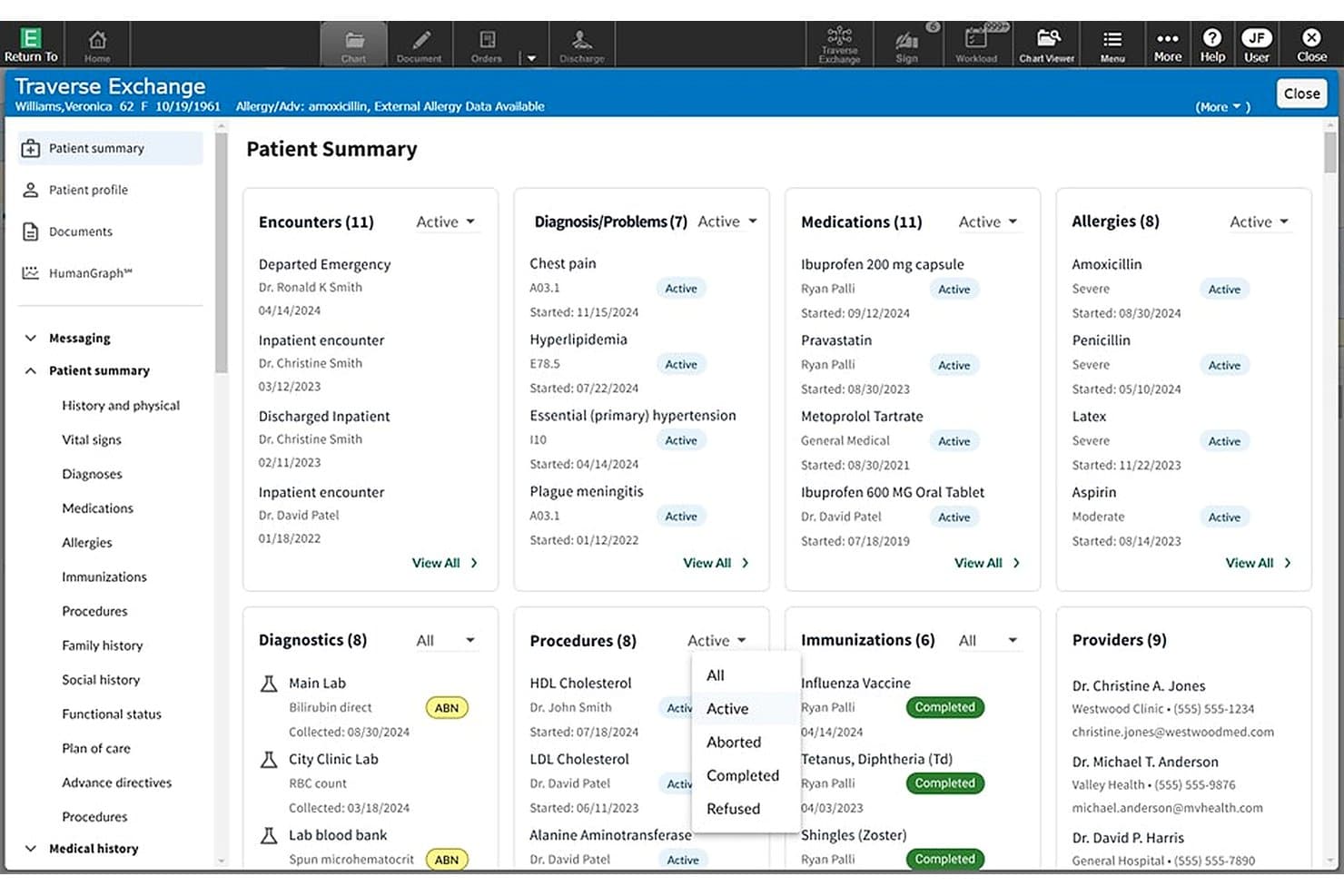
MEDITECH Expanse provides access to patient information shared across connected healthcare organizations. Clinicians can review encounter histories, diagnoses, medications, allergies, and other clinical records to support coordinated care.
Ease of Use
MEDITECH Expanse offers customizable clinical workflows, patient summaries, and documentation tools across hospital and ambulatory settings. Its Expanse Navigator uses AI to organize relevant patient information, while configurable templates and shortcuts support faster charting. However, user experiences vary, with some appreciating its accessible patient records and flexible workflows, while others report confusing navigation, excessive clicks, and difficulty locating clinical notes. I'd recommend testing routine documentation and chart review tasks to determine whether the interface meets your team's needs.
Integrations
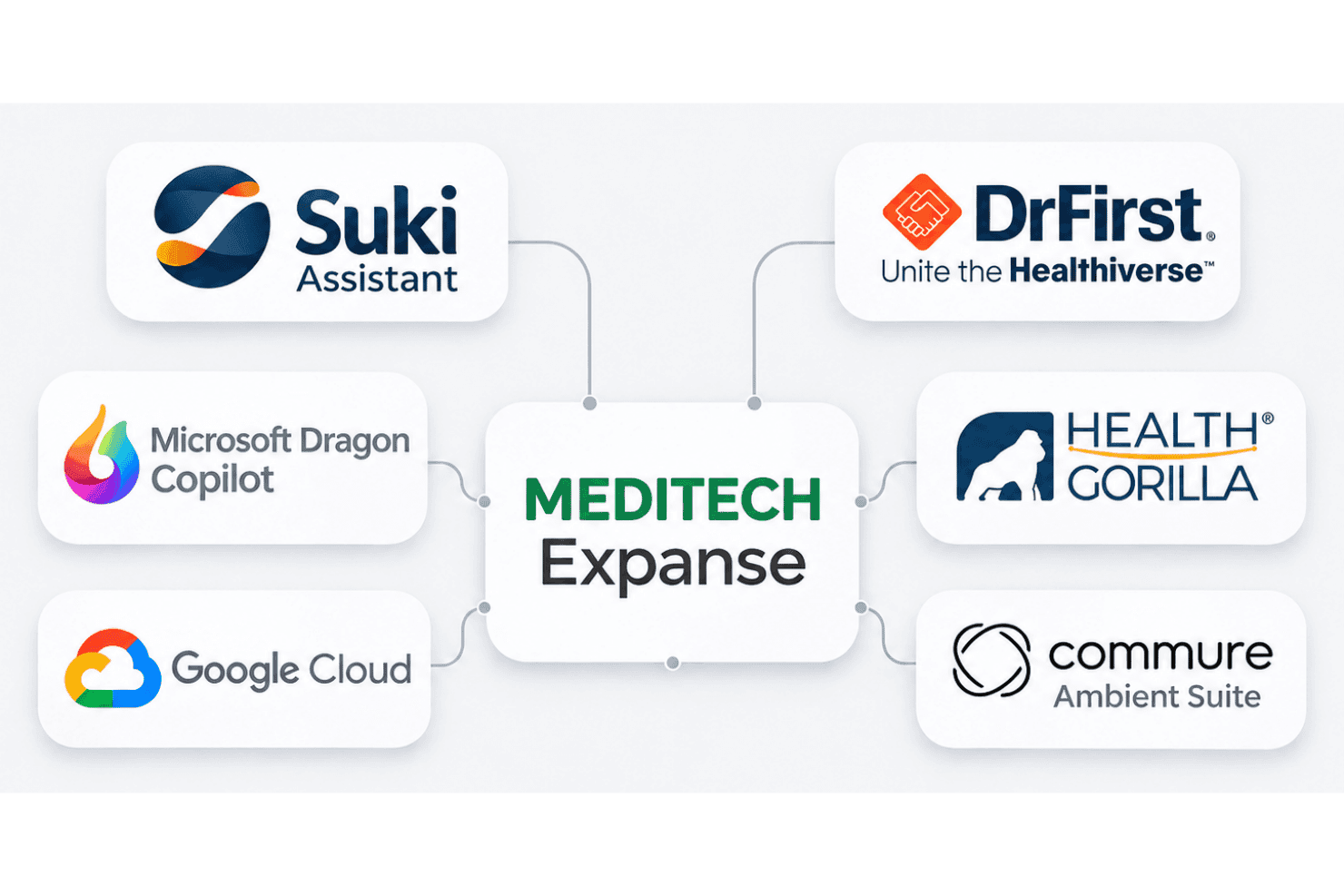
MEDITECH Expanse integrates with Suki Assistant, DrFirst, Health Gorilla, Commure Ambient Suite, Google Cloud, and Microsoft technologies for clinical documentation, medication management, interoperability, and AI-assisted workflows. It also supports RESTful FHIR APIs and HL7 interfaces, while Greenfield Workspace provides a testing environment for developers building third-party applications. Integration availability may vary by product and configuration.
MEDITECH Expanse Specs
- API: Yes
- Appointment Scheduling: Yes
- Athlete Management: No
- Audit Management: Yes
- Calendar Management: Yes
- Compliance Tracking: Yes
- Customer Management: Yes
- Dashboard: Yes
- Data Export: Yes
- Data Import: Yes
- Data Visualization: Yes
- Electronic Prescribing: Yes
- External Integrations: Yes
- File Sharing: Yes
- File Transfer: Yes
- Health Management: Yes
- HIPAA Compliance: Yes
- Inventory Tracking: Yes
- Multi-User: Yes
- Notifications: Yes
- Organization Management: Yes
- Patient Management: Yes
- Project Management: No
- Regulatory Alerts: No
- Risk Assessment: Yes
- Scheduling: Yes
- Supplier Management: No


