

WebPT Review: Pros, Cons, Features, and Pricing
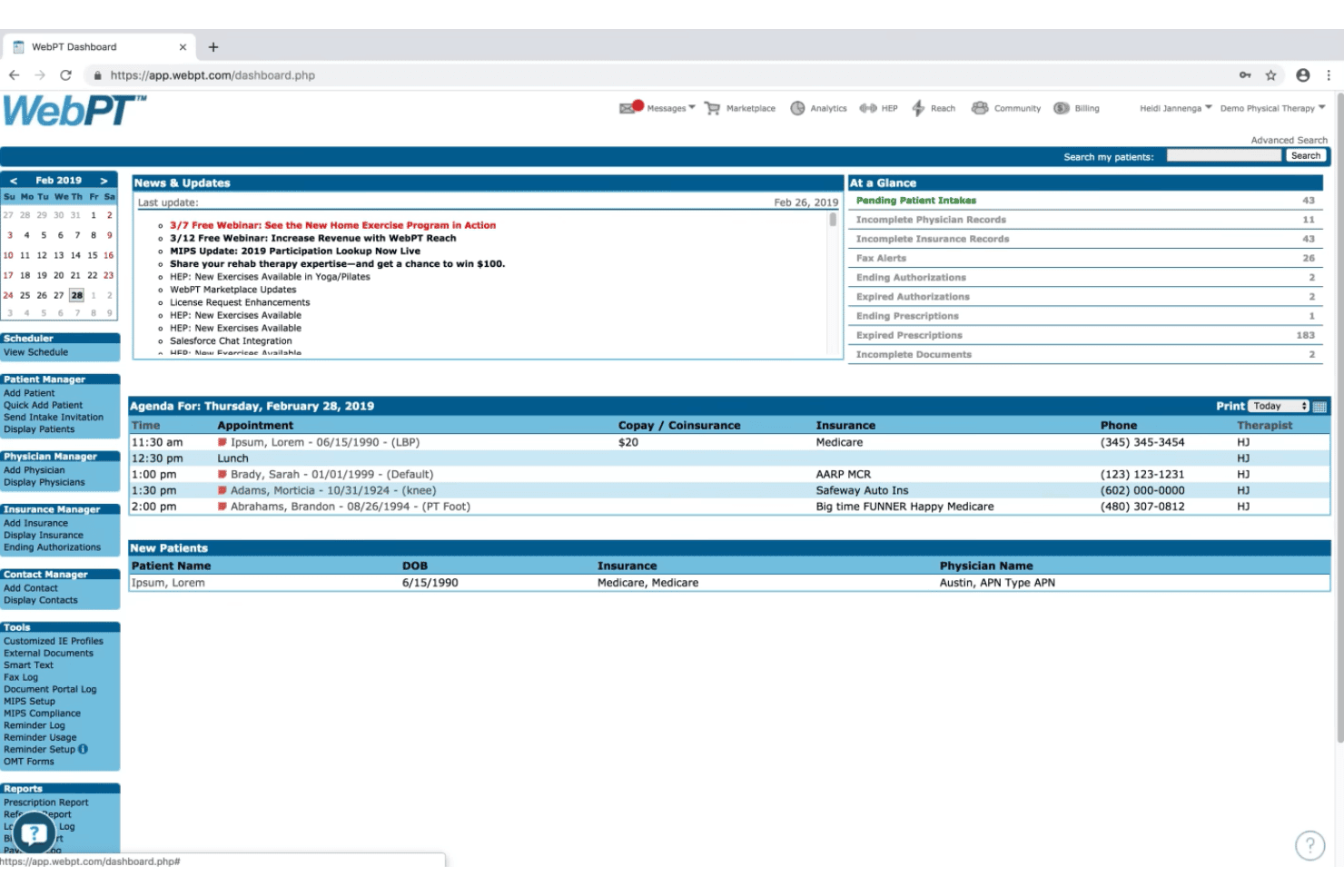
WebPT brings therapy practice management into one platform, from patient scheduling and documentation to billing, compliance, and rehab clinic workflow management.

We review tools independently, and commissions help fund our testing. See our transparency policy, our methodology, or suggest a tool.
WebPT is a medical practice management software built for rehabilitation therapy practices—physical therapy, occupational therapy, and speech-language pathology. If your clinic needs therapy-specific documentation, scheduling, and billing in one platform, it's a natural fit. I'd pick it over a general platform like Kareo if your day-to-day revolves around rehab workflows, since WebPT's clinical documentation and outcome tracking are designed from the ground up for therapy rather than adapted from a broader system.
WebPT Evaluation Summary
4.2/5
- Pricing upon request
- Free demo available
Why Trust Our Software Recommendations
6,700+
Reviews
20
Industry experts
16+
Evaluation factors
14
Years
Our team has been testing and reviewing software since 2012. As medical practice leaders ourselves, we know how difficult—and important—it is to choose the right software.
For this guide, we evaluated tools using hands-on testing and independent research, scoring tools using our selection criteria.
Our reviews reflect our human editorial judgment, not a sales pitch.
WebPT Overview
If I’m judging practice management software for therapy clinics, I’d put WebPT ahead for its specialized documentation, customizable templates, and strong billing tools. The interface is clean, and onboarding is quick compared to others I’ve used. While pricing can run high and integrations aren’t always plug-and-play, support is responsive and updates are frequent.
WebPT is best if you run a physical therapy or rehab-focused practice that needs detailed compliance features and values ongoing improvements.
Pros
- Strong therapy-specific documentation and compliance features.
- Frequent updates and new feature releases for clinics.
- Reliable scheduling tools for high-volume clinic workflows
Cons
- Reporting dashboard has limited customization options.
- Customer support response can be slow during peak times.
- Mobile app has fewer features than the web platform.
Is WebPT Right For Your Needs?
Who Would be a Good Fit for WebPT?
WebPT is ideal for therapy-focused clinics and healthcare providers who need specialty documentation, MIPS compliance, and patient engagement features. Therapy clinics, especially those serving Medicare patients or operating across multiple locations, get standout value from its audit-proof workflows, outcomes tracking, and frequent regulatory updates.
Smaller practices also like how quickly staff can learn scheduling and charting, while larger groups benefit from advanced business analytics.
- Outpatient Therapy ClinicsYou’ll get specialized note templates, outcomes benchmarking, and Medicare compliance tools designed for PT, OT, and SLP clinics.
- Multi-Location ClinicsWebPT keeps all your sites connected under one platform, so you can view schedules, billing, and reports across locations.
- Home Health TeamsBuilt-in home exercise programs and digital care plans make it easy to engage remote patients and support follow-up adherence.
- Rehab Department LeadersAnalytics dashboards show therapist productivity, referral trends, and payer mix in real time, supporting operational and staffing decisions.
- Compliance ManagersAutomated compliance alerts and documentation audits help clinics minimize regulatory risk and prepare for payer audits.
- Patient Experience TeamsPatient portal and digital forms help streamline intake and support a modern, accessible therapy experience.
Who Would be a Bad Fit for WebPT?
WebPT isn’t suited to organizations that don’t rely on therapy workflows or require more generalized medical EMR and billing tools. Larger healthcare systems, urgent care, and specialties like dental or behavioral health usually need broader clinical capabilities or insurance workflows beyond what WebPT is built for.
Non-healthcare businesses and teams outside the medical field will also find its feature set irrelevant.
- Hospital SystemsWebPT lacks lab result management, inpatient charting, and specialty modules needed for full-service hospitals.
- Behavioral Health ProvidersTherapy note templates and practice tools are geared to PT, OT, and SLP workflows—not behavioral or mental health care.
- Dental PracticesWebPT does not support dental coding, imaging management, or specialized charting for dental procedures.
- Urgent Care ClinicsWalk-in clinics need rapid triage, prescription management, and diagnostic integrations missing from WebPT’s therapy-focused tools.
- Solo General PractitionersGeneral medicine offices require broader diagnostic and treatment support than WebPT’s structured therapy templates provide.
- Non-Healthcare BusinessesCompanies outside the healthcare industry have no use for WebPT’s clinic and patient-facing features.
How We Test & Score Tools
We’ve spent years building, refining, and improving our software testing and scoring system. The rubric is designed to capture the nuances of software selection and what makes a tool effective, focusing on critical aspects of the decision-making process.
Below, you can see exactly how our testing and scoring works across seven criteria. It allows us to provide an unbiased evaluation of the software based on core functionality, standout features, ease of use, onboarding, customer support, integrations, customer reviews, and value for money.
Core Functionality (25% of final scoring)
The starting point of our evaluation is always the core functionality of the tool. Does it have the basic features and functions that a user would expect to see? Are any of those core features locked to higher-tiered pricing plans? At its core, we expect a tool to stand up against the baseline capabilities of its competitors.
Standout Features (25% of final scoring)
Next, we evaluate uncommon standout features that go above and beyond the core functionality typically found in tools of its kind. A high score reflects specialized or unique features that make the product faster, more efficient, or offer additional value to the user.
We also evaluate how easy it is to integrate with other tools typically found in the tech stack to expand the functionality and utility of the software. Tools offering plentiful native integrations, 3rd party connections, and API access to build custom integrations score best.
Ease of Use (10% of final scoring)
We consider how quick and easy it is to execute the tasks defined in the core functionality using the tool. High scoring software is well designed, intuitive to use, offers mobile apps, provides templates, and makes relatively complex tasks seem simple.
Onboarding (10% of final scoring)
We know how important rapid team adoption is for a new platform, so we evaluate how easy it is to learn and use a tool with minimal training. We evaluate how quickly a team member can get set up and start using the tool with no experience. High scoring solutions indicate little or no support is required.
Customer Support (10% of final scoring)
We review how quick and easy it is to get unstuck and find help by phone, live chat, or knowledge base. Tools and companies that provide real-time support score best, while chatbots score worst.
Customer Reviews (10% of final scoring)
Beyond our own testing and evaluation, we consider the net promoter score from current and past customers. We review their likelihood, given the option, to choose the tool again for the core functionality. A high scoring software reflects a high net promoter score from current or past customers.
Value for Money (10% of final scoring)
Lastly, in consideration of all the other criteria, we review the average price of entry level plans against the core features and consider the value of the other evaluation criteria. Software that delivers more, for less, will score higher.
Core Features
Scheduling and Calendar Management
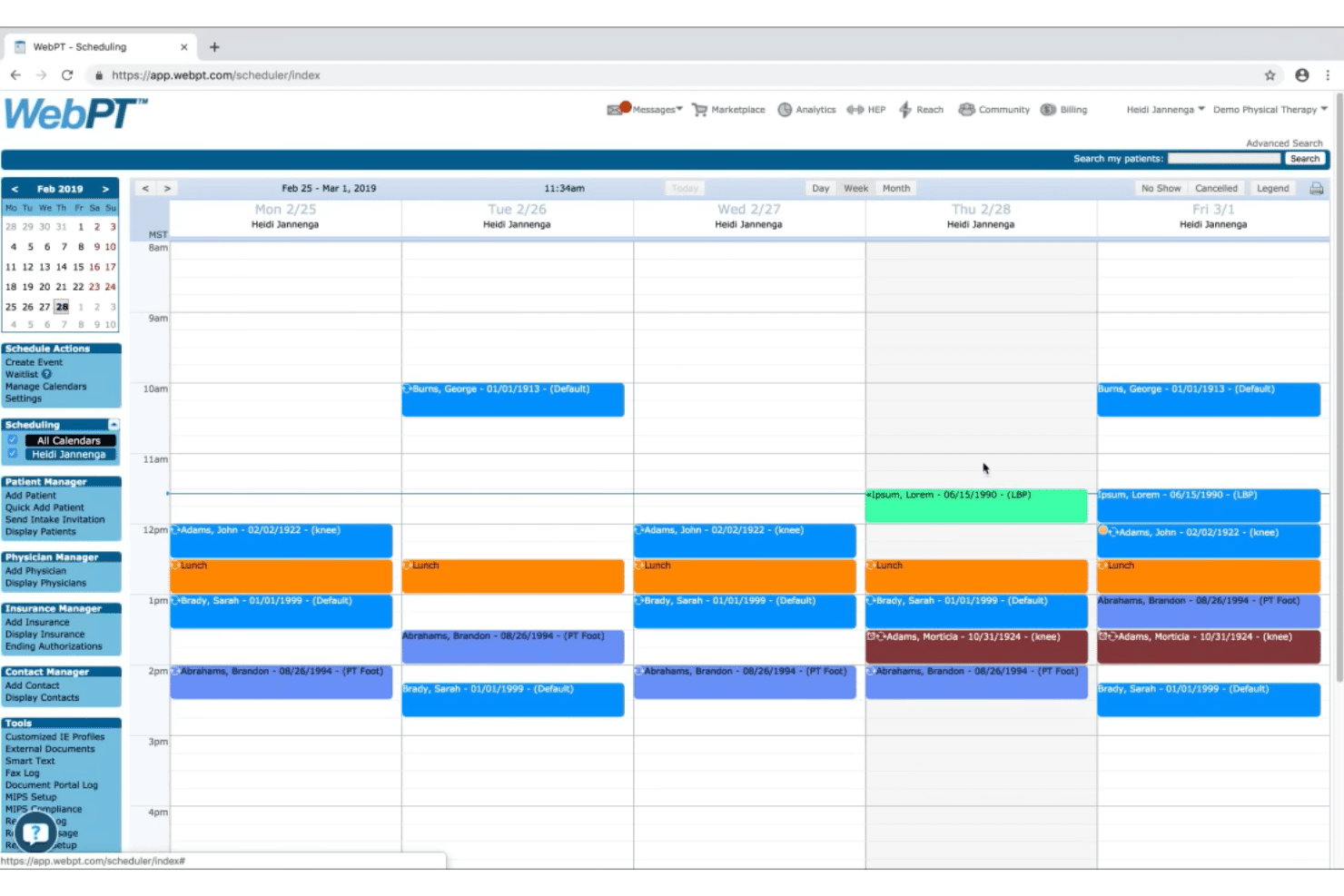
Manage patient appointments with color-coded views and multi-provider scheduling. Automatic appointment reminders help reduce no-shows and late cancellations.
Documentation and Charting
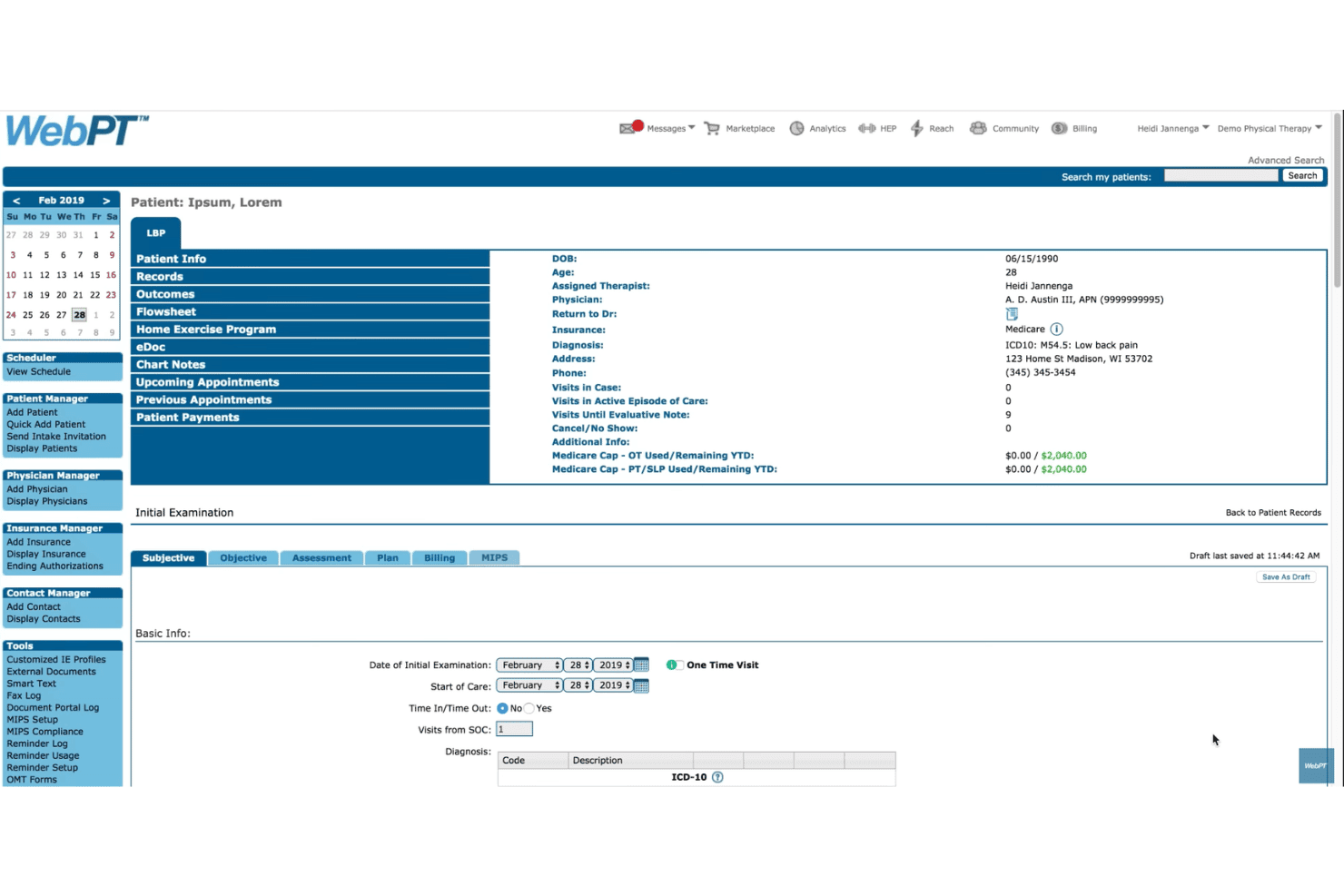
Complete therapy notes with customizable templates tailored to specialty needs. WebPT’s charting system flags missing documentation to help clinics stay audit-ready.
Billing and Claims Management
Handle insurance and self-pay billing with built-in claim scrubbing. Real-time claim status lets your team quickly address denials or rejections.
Outcomes Tracking and Reporting
Capture patient outcomes data and generate specialty-specific reports. Benchmark progress against industry standards to support clinical decision-making.
Patient Portal
Let patients view appointments, sign forms, and access records online. Secure messaging gives your clinic a direct channel for client communication.
Analytics and Business Reporting
View at-a-glance dashboards for metrics like referral sources and appointment volume. Drill into detailed reports to track productivity and financial trends.
Ease of Use
WebPT stands out for its intuitive navigation and logical workflows tailored to therapy clinics. The drag-and-drop scheduler, easily accessible documentation templates, and visual patient progress tracking set it apart in usability.
Most users say daily tasks involve minimal clicks and fast screen loads. The interface feels uncluttered without sacrificing access to specialty tools like compliance alerts and outcomes tracking.
Integrations
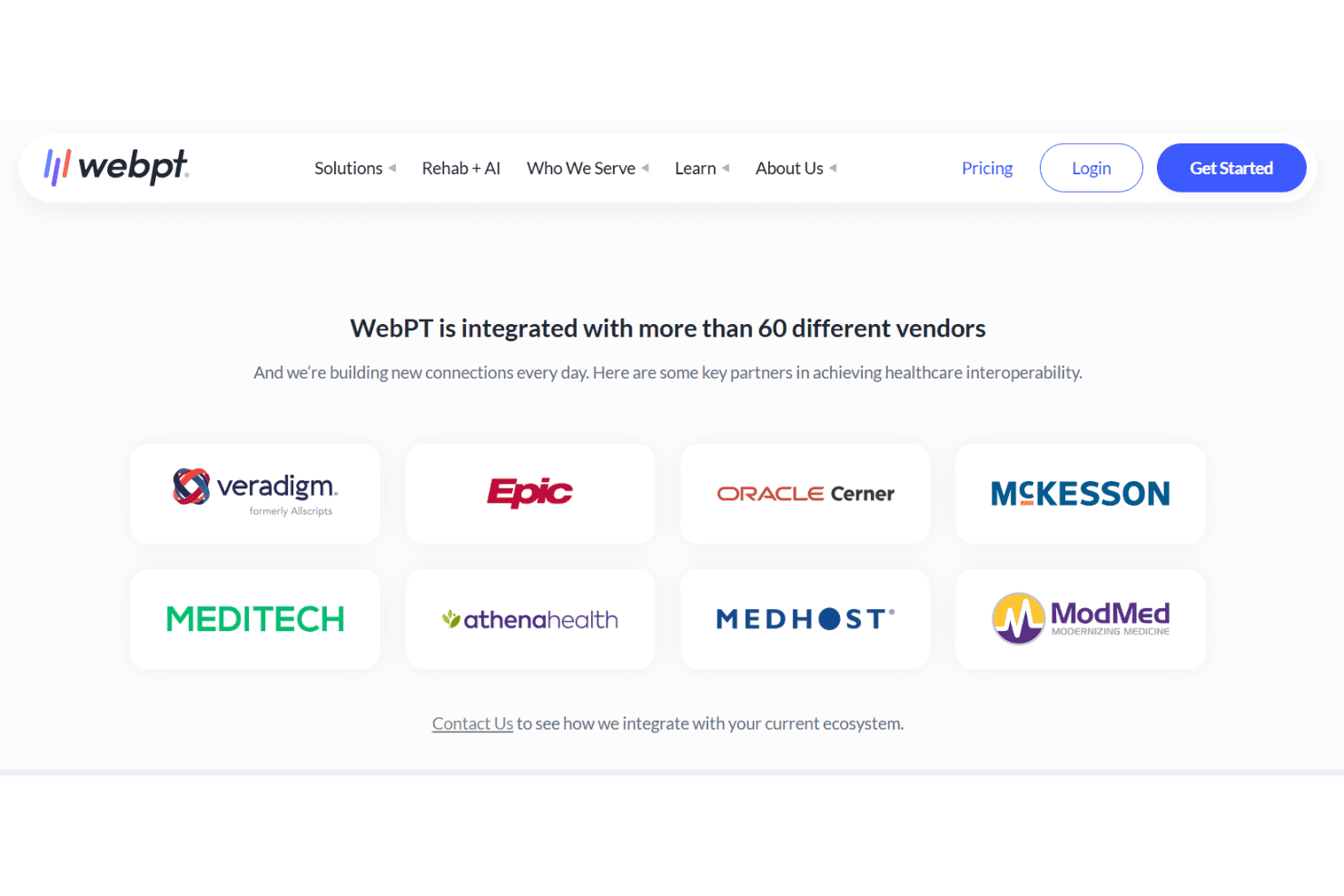
WebPT integrates with Medsender, OpenPM, Luma Health, Breakthrough, ALIGN, Therabill, PatientPay, Waystar, Kno2, and Worldpay.
WebPT also offers an API and supports custom integrations for connecting with additional systems.
WebPT Specs
- 2-Factor Authentication: Yes
- API: Yes
- Appointment Scheduling: Yes
- Approval Workflows: No
- Audit Management: No
- Audit Trail: No
- Batch Permissions & Access: Yes
- Billing/Invoicing: Yes
- Compliance Tracking: Yes
- Customer Management: Yes
- Data Export: No
- Data Import: No
- Document Management: Yes
- Electronic Prescribing: No
- External Integrations: Yes
- HIPAA Compliance: Yes
- Incident Management: No
- Multi-User: Yes
- Notifications: Yes
- Patient Management: Yes
- Regulatory Alerts: Yes
- Report & Compliance: Yes
- Risk Assessment: No
- Self-service Portal: Yes
- Task Scheduling/Tracking: Yes
- Workflow Management: Yes


