

AI dental software uses artificial intelligence to automate imaging, support clinical decisions, and reduce repetitive work in dental practices. If you’re looking for the best AI dental software, you’re likely after tools that free up your team, strengthen diagnostics, and make daily workflows less of a grind. With new features rolling out quickly, it’s tough to figure out which solutions will actually deliver value in fast-paced dental settings. Here, you’ll find clear comparisons of the top tools, including how they help clinicians, front-desk staff, and dental business owners stay ahead in 2026.
Why Trust Our Software Recommendations
6,700+
Reviews
20
Industry experts
16+
Evaluation factors
14
Years
Our team has been testing and reviewing software since 2012. As medical practice leaders ourselves, we know how difficult—and important—it is to choose the right software.
For this guide, we evaluated tools using hands-on testing and independent research, scoring tools using our selection criteria.
Our reviews reflect our human editorial judgment, not a sales pitch.
AI Dental Software Comparison Table
This comparison table summarizes pricing details for my top dental software selections.
| Tool | Best For | Trial Info | Price | ||
|---|---|---|---|---|---|
| 1 | Best unified cloud dental management solution | Free demo available | From $829/month | Website | |
| 2 | Best patient communication for growing practices | Free demo available | Pricing upon request | Website | |
| 3 | Best cloud-based dental practice workflows | Free demo available | Pricing upon request | Website | |
| 4 | Best data integration for dental operations | Free demo available | From $899/month | Website | |
| 5 | Best insurance claims automation capability | Free demo available | Pricing upon request | Website | |
| 6 | Best multi-modality image annotation features | Free demo available | From $129/month | Website | |
| 7 | Best clinical decision support for dentists | Free demo available | Pricing upon request | Website | |
| 8 | Best FDA-cleared image analysis technology | Free demo available | Pricing upon request | Website | |
| 9 | Best 3D dental scan interpretation tools | Free demo available | Pricing upon request | Website | |
| 10 | Best for automated radiology insights | Free demo available | Pricing upon request | Website |


 Best unified cloud dental management solution
- Free demo available
- From $829/month
Visit WebsiteCustomer Rating:4.8/5This rating combines scores from multiple user review sites to reflect overall customer sentiment about the product.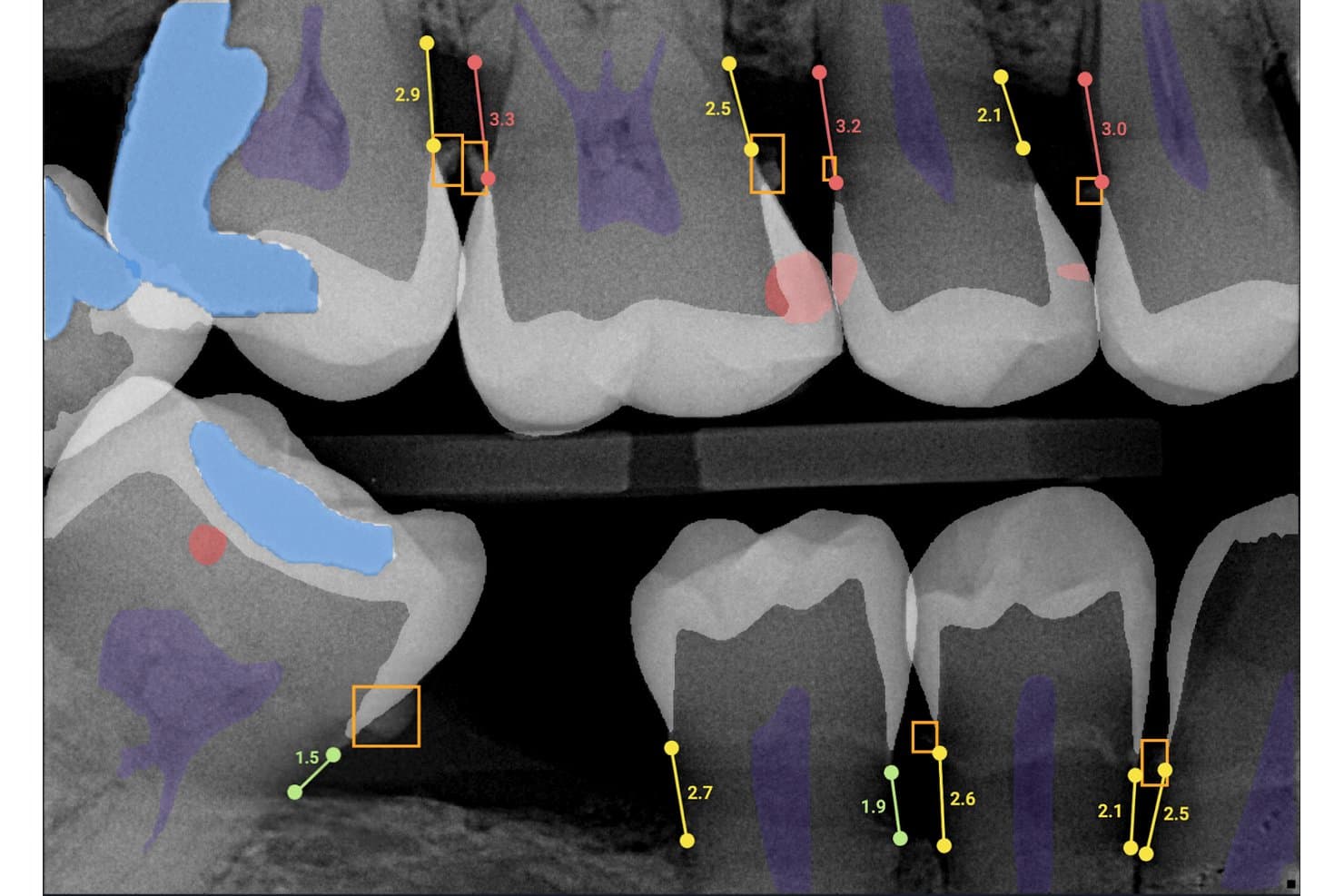
CareStack offers AI-powered dental radiograph analysis with automated bone level measurements, decay detection highlights, and periodontal annotations overlaid on bitewing X-rays. CareStack is a cloud-based dental management platform designed for practices seeking AI-enabled tools for patient scheduling, billing automation, treatment planning, and integrated dental imaging within a single system.
Who Is CareStack Best For?
Dental groups and multi-location practices that need an all-in-one platform for centralizing operations, billing, and clinical workflows.
Why I Picked CareStack
I picked CareStack as one of the best because it's the only platform I've used that unifies dental EHR, billing, and imaging workflows in one cloud-based solution. My team can manage scheduling and claims processing alongside patient records without switching systems.
CareStack Key Features
- Automated insurance verification: Checks patient insurance eligibility before appointments and updates status in real time.
- Digital patient intake forms: Lets patients complete and submit required forms online before arriving at the office.
- Clinical templates for charting: Offers prebuilt templates for dental procedures, making clinical documentation faster and more consistent.
- Built-in patient communications: Sends automated appointment reminders, confirmations, and recalls through SMS, email, or voice.
CareStack Integrations
CareStack offers native integrations with dental imaging systems like Dexis, Apteryx, and XDR, as well as claims clearinghouses such as Vyne Dental. An API is available for custom integrations.
Pros and Cons
Pros:
- Supports multi-location dental practices.
- Combines clinical, billing, and admin workflows.
- Wide range of AI automation tools.
Cons:
- Can be complex for small practices.
- May require extensive staff training.
Learn more about CareStack: Best patient communication for growing practices
- Free demo available
- Pricing upon request
Visit WebsiteCustomer Rating:4.4/5This rating combines scores from multiple user review sites to reflect overall customer sentiment about the product.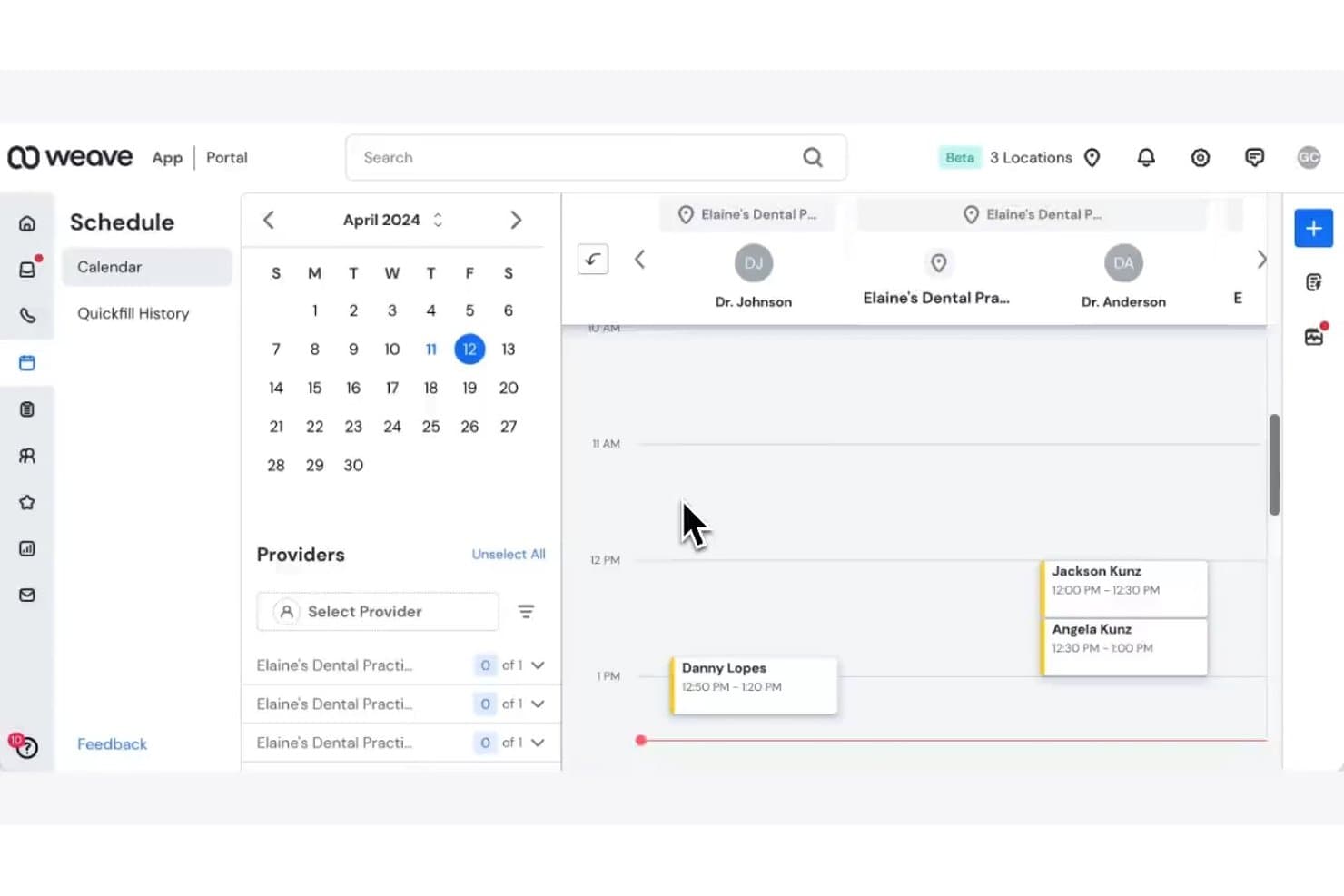
Weave offers a dental scheduling calendar view with provider columns, appointment time blocks, and multi-location filtering for organized daily scheduling. Weave is an AI-enabled dental communication platform that connects practices and patients through features like two-way texting, VoIP phones, online scheduling, digital forms, and smart appointment reminders.
Who Is Weave Best For?
Dental practices and office teams seeking unified patient communication and engagement tools for managing appointments, reminders, payments, and two-way texting.
Why I Picked Weave
I picked Weave as one of the best because my team uses its AI-driven texting, appointment reminders, and missed call automations to keep patients engaged. I rely on features like Call Pop for instant patient info and digital forms that simplify communication workflows.
Weave Key Features
- Online scheduling: Patients can book, reschedule, or cancel appointments through an integrated digital calendar.
- VoIP phone system: Practices manage calls with a cloud-based phone solution that syncs with patient records.
- Text-to-pay: Patients receive secure payment requests via SMS and can pay directly from their mobile devices.
- Automated review requests: The system sends post-appointment prompts for patients to leave feedback and ratings.
Weave Integrations
Weave offers native integrations with Dentrix, Eaglesoft, Open Dental, Curve Dental, PracticeWorks, Easy Dental, Dolphin Management, Practice-Web, and Cloud 9. An API is available for custom integrations.
Pros and Cons
Pros:
- Digital forms streamline patient intake process
- Missed call text automation for patient follow-up
- AI-powered patient texting and reminders
Cons:
- Limited automation for insurance billing tasks
- No AI for radiograph analysis or charting
Learn more about Weave: Best cloud-based dental practice workflows
- Free demo available
- Pricing upon request
Visit WebsiteCustomer Rating:4.3/5This rating combines scores from multiple user review sites to reflect overall customer sentiment about the product.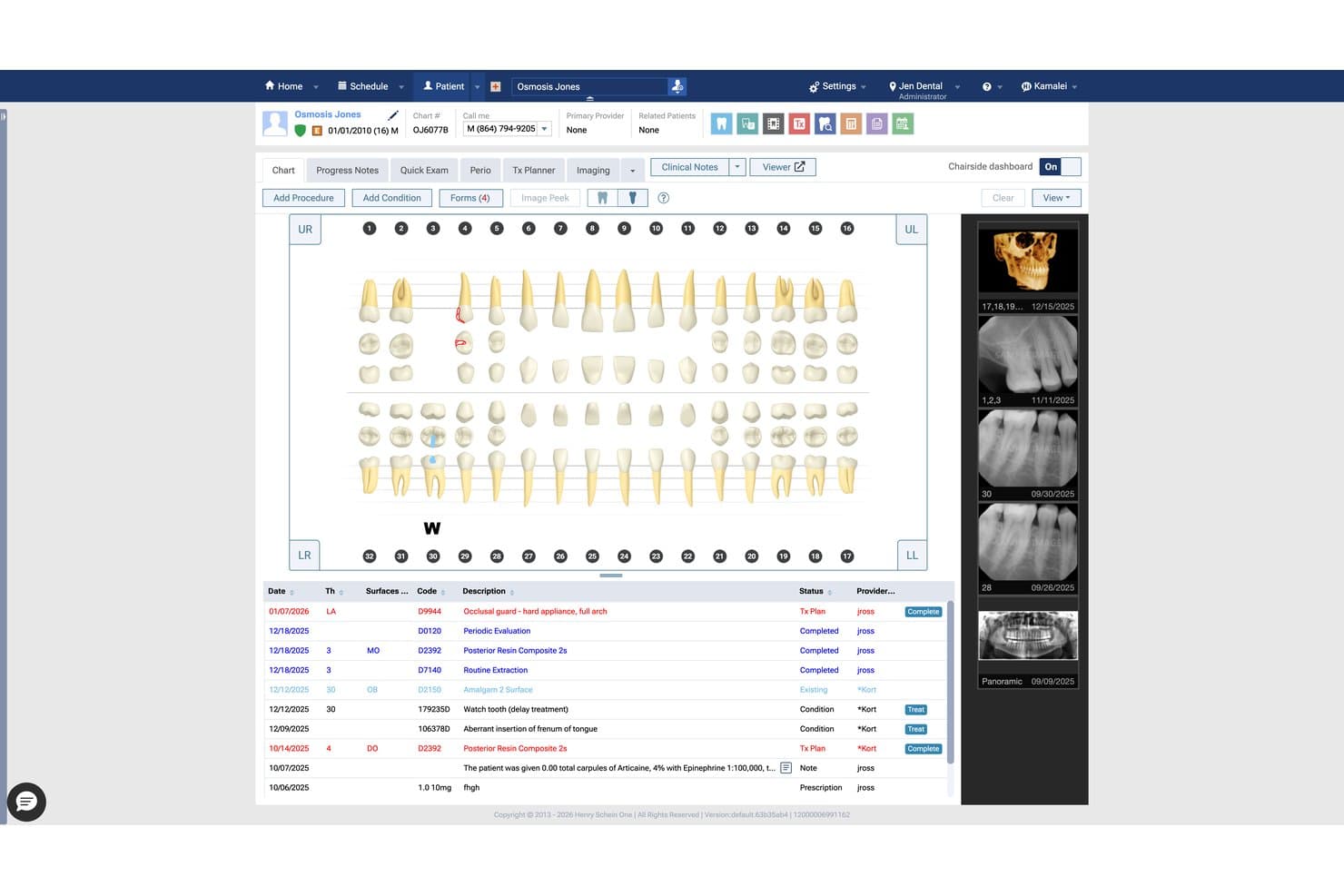
Dentrix Ascend offers a comprehensive patient chart view with tooth diagrams, procedure history, imaging thumbnails, and treatment planning tools. Dentrix Ascend is a cloud-based AI dental software platform that brings advanced imaging diagnostics, automated workflows, and multi-location practice management together for dental teams and DSOs.
Who Is Dentrix Ascend Best For?
Dental practices and DSOs needing centralized, cloud-based AI-powered management for clinical, administration, and billing workflows across multiple locations.
Why I Picked Dentrix Ascend
I picked Dentrix Ascend as one of the best for its best cloud-based dental practice workflows, combining AI analysis of dental imaging with centralized scheduling and automated billing. I use it to manage multi-location practices and enable real-time diagnostic support chairside.
Dentrix Ascend Key Features
- AI voice notes: Record and attach transcriptions to patient records in real time.
- Digital perio charting: Document periodontal exams directly in the clinical interface.
- Automated insurance eligibility checks: Verify patient insurance status instantly before each visit.
- Role-based access controls: Restrict sensitive clinical data access by user role or team.
Dentrix Ascend Integrations
Dentrix Ascend offers native integrations with Videa Health, Pearl AI, and Kickcall, and provides an API for custom integrations.
Pros and Cons
Pros:
- Automated insurance verification and billing tools
- Native cloud platform for multi-location management
- FDA-cleared AI dental imaging analysis
Cons:
- Lacks full ambient AI clinical charting
- Downtime and cloud outages sometimes reported
Learn more about Dentrix Ascend: Best data integration for dental operations
- Free demo available
- From $899/month
Visit WebsiteCustomer Rating:4.7/5This rating combines scores from multiple user review sites to reflect overall customer sentiment about the product.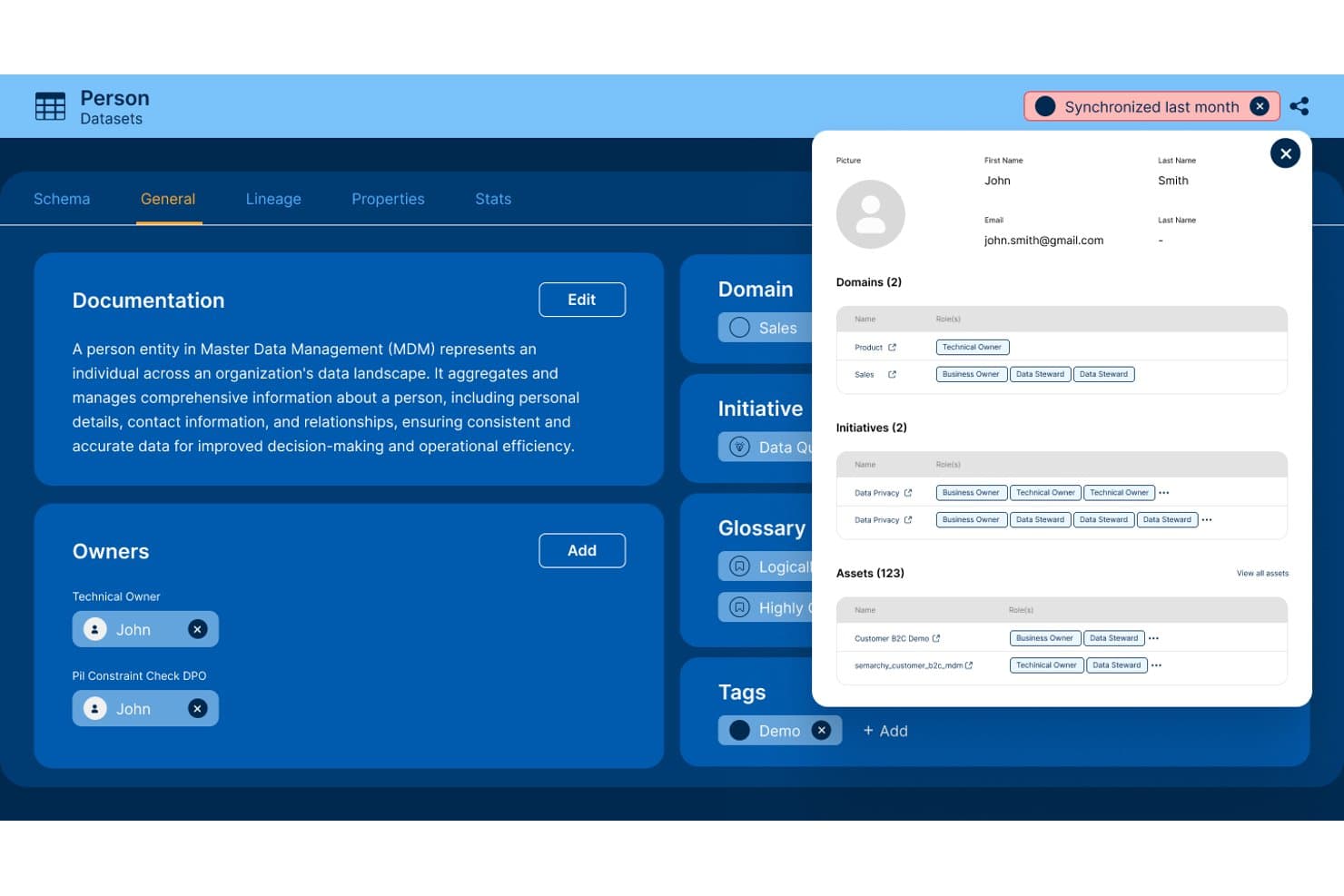
Semarchy xDM offers a data management interface for viewing person entity profiles, ownership roles, and domain associations within a master data platform. Semarchy xDM is a dental data integration platform designed for dental practices and DSOs needing unified management of clinical, billing, and patient information across distributed systems.
Who Is Semarchy xDM Best For?
Dental organizations managing data across multiple practice locations and seeking streamlined integration between clinical, billing, and patient management systems.
Why I Picked Semarchy xDM
I picked Semarchy xDM as one of the best because I can unify data from disparate dental imaging, billing, and patient management sources. In practice, that means my team uses its data integration tools to create a single, consistent patient record across all operations, which supports the best data integration for dental operations.
Semarchy xDM Key Features
- AI-powered data quality tools: Continuously monitor and improve the accuracy of dental records from multiple sources.
- Role-based access controls: Set permissions to manage data viewing and editing based on team responsibilities.
- Automated workflow orchestration: Trigger actions for patient data updates across clinical, billing, and imaging systems.
- Audit and compliance reporting: Track data changes and generate compliance reports suited for dental operations.
Semarchy xDM Integrations
Native integrations are not clearly documented. An API is available for custom integrations.
Pros and Cons
Pros:
- Enables custom workflows for dental operations
- Supports automated data quality management
- Centralizes dental data across all locations
Cons:
- Native integrations are not clearly available
- Limited AI diagnostic imaging capabilities
Learn more about Semarchy xDM: Best insurance claims automation capability
- Free demo available
- Pricing upon request
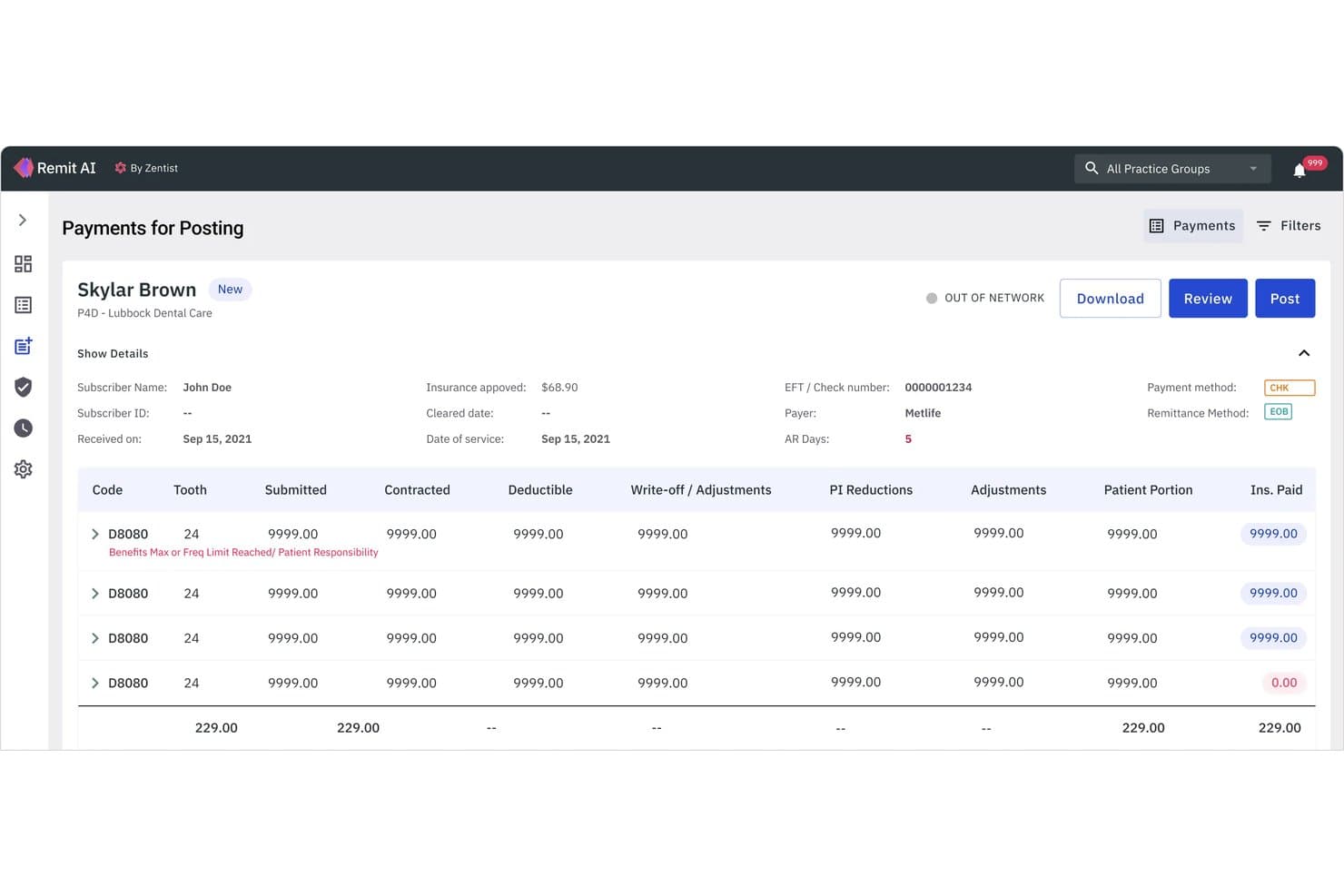
Zentist offers an AI-powered Payments for Posting dashboard that displays patient remittance details, procedure codes, and insurance payment breakdowns for dental practices. Zentist is an AI-powered dental revenue cycle management platform that focuses on automating insurance verification, claims processing, posting, and analytics for dental practices and DSOs.
Who Is Zentist Best For?
Dental office billing teams and multi-location DSOs that need advanced insurance claims automation and centralized RCM tools.
Why I Picked Zentist
I picked Zentist because its AI automatically extracts, classifies, and posts EOB and ERA data at scale. My billing team uses its predictive denial management tools and centralized RCM hub to efficiently handle complex multi-location insurance workflows.
Zentist Key Features
- Automated open claims follow-up: Tracks claim status and automates insurance follow-up tasks across all payers.
- Centralized analytics dashboard: Consolidates insurance and billing performance metrics for all locations in one view.
- Custom A/R workflows: Lets users create and manage workflows for aging and unpaid insurance claims.
- Integrated with dental clearinghouses: Connects directly to platforms like DentalXchange for real-time claim submissions.
Zentist Integrations
Zentist offers native integrations with DentalXchange and several leading dental practice management systems. An API is available for custom integrations.
Pros and Cons
Pros:
- Predictive denial management for dental billing
- Centralized dashboard for revenue cycle management
- Automates insurance claims across multiple locations
Cons:
- Lacks patient communication automation tools
- No AI imaging or diagnostic features
Learn more about Zentist: Best multi-modality image annotation features
- Free demo available
- From $129/month
Visit WebsiteCustomer Rating:4.8/5This rating combines scores from multiple user review sites to reflect overall customer sentiment about the product.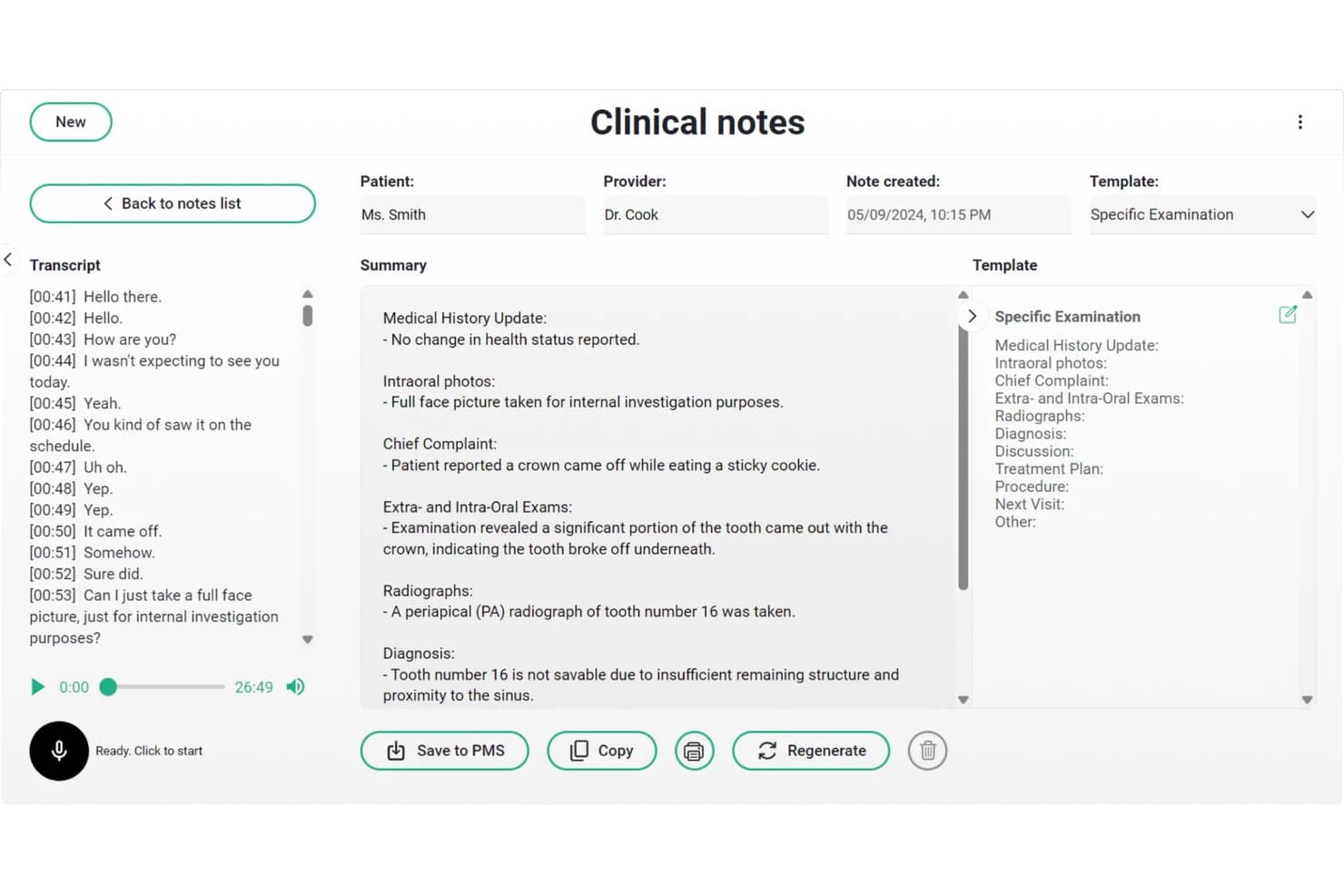
Denti.AI offers an AI-powered clinical notes interface that automatically transcribes dental appointments and generates structured summaries using customizable templates. Denti.AI is an AI dental software platform that combines automated image analysis, voice-driven charting, AI-powered clinical documentation, and patient communication tools for dental practices and DSOs.
Who Is Denti.AI Best For?
Dental practices and dental support organizations seeking advanced AI-driven imaging, documentation, and patient engagement capabilities.
Why I Picked Denti.AI
I picked Denti.AI as one of the best because its multi-modality image annotation features let my team analyze panoramic, bitewing, and intraoral images in a single interface, with annotated findings for caries, bone loss, and other pathologies.
Denti.AI Key Features
- Voice-driven perio charting: Users can record periodontal measurements directly into patient records using voice commands.
- Ambient AI clinical documentation: Automatically generates structured clinical notes from chairside conversation.
- AI-powered patient communication: Sends automated appointment reminders and follow-ups via SMS or email.
- Bi-directional PMS integration: Syncs data with major dental practice management systems for seamless record updates.
Denti.AI Integrations
Denti.AI offers native integrations with Dentrix, Eaglesoft, Open Dental, Denticon, and Curve Dental. An API is available for custom integrations.
Pros and Cons
Pros:
- Voice-driven periodontal charting support
- Real-time AI clinical note generation
- Multi-modality image annotation for radiographs
Cons:
- Occasional background noise in voice charting
- Not a full-featured practice management system
Learn more about Denti.AI: Best clinical decision support for dentists
- Free demo available
- Pricing upon request
Visit WebsiteCustomer Rating:2.5/5This rating combines scores from multiple user review sites to reflect overall customer sentiment about the product.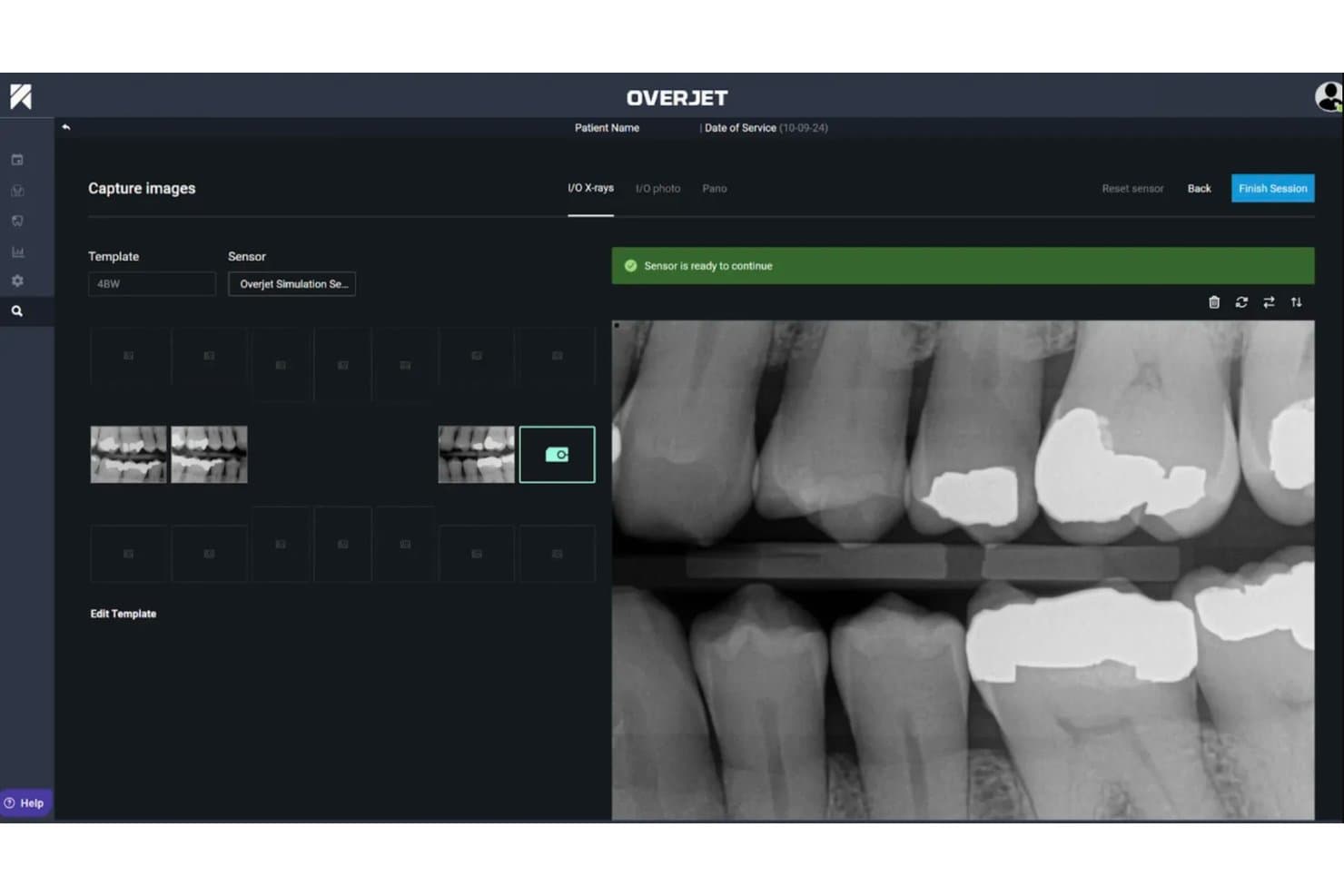
Overjet offers an AI-powered dental X-ray capture interface that displays bitewing radiographs with real-time sensor readiness status. Overjet is an AI dental software platform for practices and DSOs, offering FDA-cleared radiograph analysis, automated charting, insurance verification, treatment plan support, and integrations with leading dental management systems.
Who Is Overjet Best For?
Dental practices and DSOs needing advanced AI-powered radiograph analysis and clinical workflow automation across multiple locations.
Why I Picked Overjet
I picked Overjet as one of the best because it brings FDA-cleared, AI-driven radiograph detection to the operatory, making it easy to highlight caries and bone loss for case review. Its confidence scoring and real-time clinical overlays set it apart for supporting fast, data-backed decisions.
Overjet Key Features
- AI insurance verification: Automates eligibility checks and connects with over 300 dental insurance payers.
- Voice-driven charting: Captures clinical notes and perio charting through dictation and voice commands.
- Treatment planning automation: Generates suggested plans and visualizes findings for patient review.
- PMS integrations: Syncs bi-directionally with major dental practice management systems for unified records.
Overjet Integrations
Overjet offers native integrations with major dental practice management systems including Dentrix, Eaglesoft, Open Dental, and Carestream. An API is available for custom integrations.
Pros and Cons
Pros:
- Automated insurance verification across major payers
- Real-time voice-driven clinical documentation
- FDA-cleared multi-pathology radiograph analysis
Cons:
- Customer support responsiveness varies by practice size
- Occasional false positives in radiograph detection
Learn more about Overjet: Best FDA-cleared image analysis technology
- Free demo available
- Pricing upon request
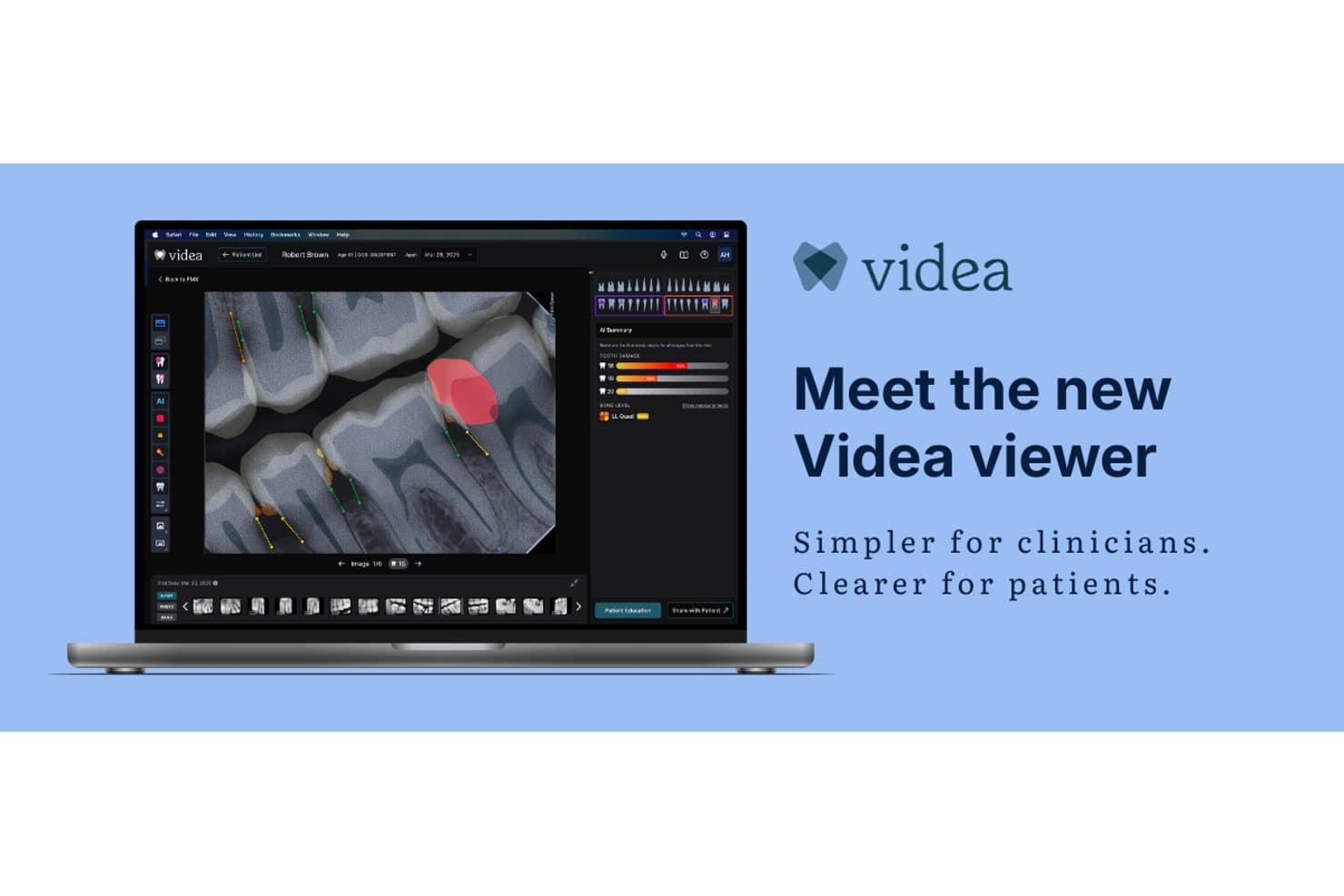
Videa (VideaHealth) offers an AI-powered dental X-ray viewer that highlights tooth damage and bone level findings directly on radiograph images. VideaHealth is an AI dental software platform focused on FDA-cleared X-ray image analysis, multi-condition detection, integration with dental imaging and practice management systems, and automated clinical note generation.
Who Is Videa (VideaHealth) Best For?
Dental practices and multi-location DSOs seeking advanced AI-driven X-ray analysis integrated with existing imaging and practice management systems.
Why I Picked Videa (VideaHealth)
I picked Videa (VideaHealth) because it is the best FDA-cleared image analysis technology, with multi-pathology detection, annotated overlays, and confidence scores for X-rays in dental workflows.
Videa (VideaHealth) Key Features
- EHR integration: Connects radiographic findings to leading dental practice management and imaging systems.
- Automated note generation: Inserts detected findings into clinical notes for faster documentation.
- User access controls: Offers role-based permissions for managing staff access and workflow security.
- Cloud-based platform: Provides web access to AI analysis tools without the need for local installation.
Videa (VideaHealth) Integrations
Videa (VideaHealth) offers native integrations with Dentrix Ascend, Eaglesoft, Dexis, Curve Dental, and Carestream Dental. An API is available for custom integrations.
Pros and Cons
Pros:
- Fast onboarding with most imaging systems
- Confidence scores provided for each finding
- FDA-cleared for X-ray caries detection
Cons:
- No ambient or voice-based charting
- Limited to 2D X-ray analysis
Learn more about Videa (VideaHealth): Best 3D dental scan interpretation tools
- Free demo available
- Pricing upon request
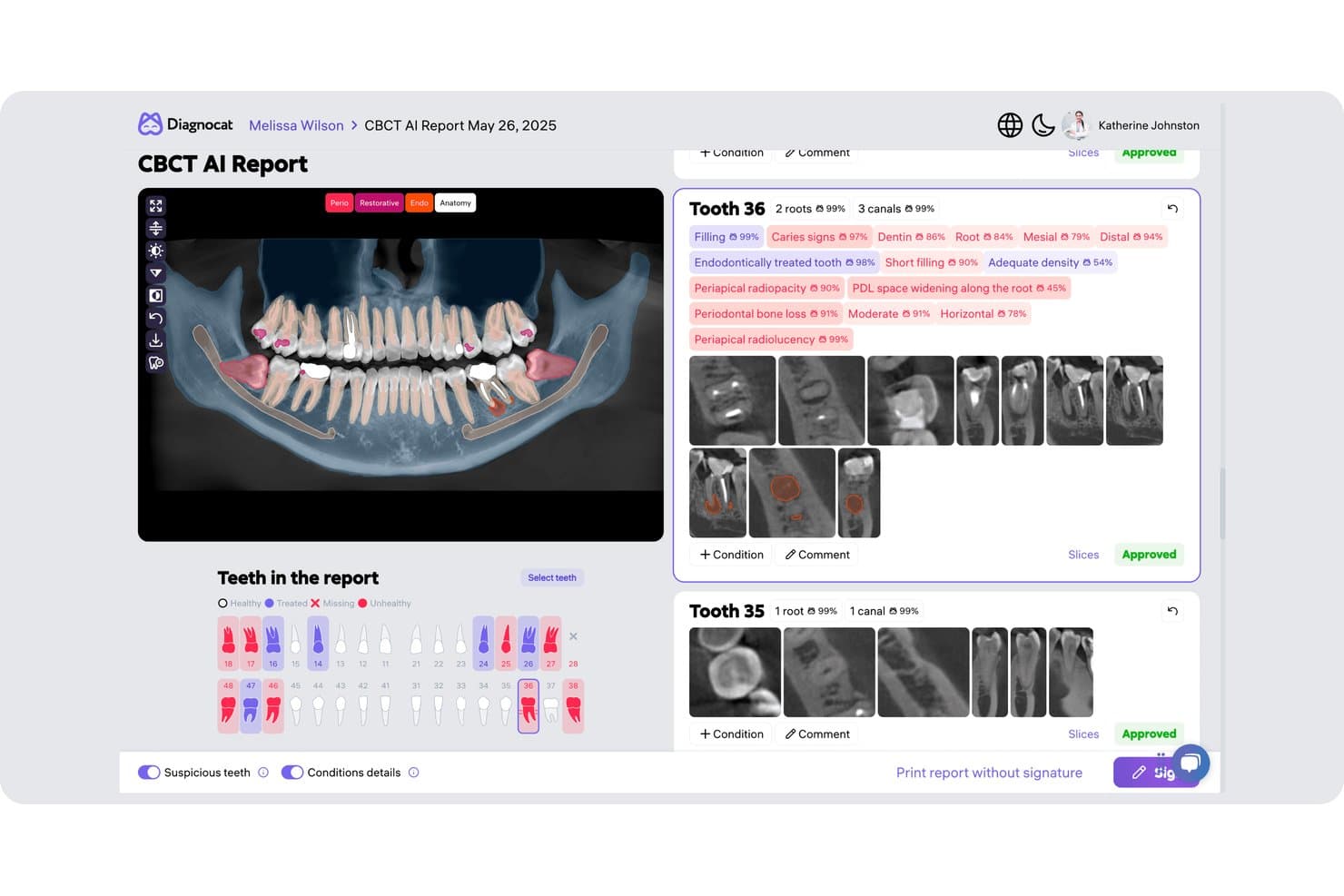
Diagnocat offers an AI-powered CBCT report interface that displays detailed tooth-level findings, confidence scores, and annotated scan slices for dental diagnosis. Diagnocat is an AI-powered dental imaging software that analyzes 2D and 3D scans, detects multiple dental pathologies, and provides automated charting, clinical documentation, and treatment planning features.
Who Is Diagnocat Best For?
Dental practices and DSOs looking for advanced AI-driven analysis of radiographs and 3D dental scans.
Why I Picked Diagnocat
I picked Diagnocat as one of the best because it excels at interpreting 3D dental scans, spotting dozens of pathologies across CBCT and panoramic X-rays. I rely on its annotated visualizations and automated charts to support precise dental diagnostics.
Diagnocat Key Features
- Automated perio charting: The platform generates detailed periodontal charts based on imaging data.
- Transcriptor voice recording: Voice recordings of consultations are automatically transcribed into patient records.
- EHR and PMS integration: Diagnocat connects with practice management and electronic health record systems to sync data.
- Customizable patient reports: Clinicians can produce print-friendly, annotated reports tailored for patient education.
Diagnocat Integrations
Diagnocat offers native integrations with Dentrix, Open Dental, Planmeca Romexis, and Carestream Dental, and supports custom integrations through its API.
Pros and Cons
Pros:
- Annotated case reports for patient education
- Generates detailed perio and dental charting
- Automatically detects dozens of dental pathologies
Cons:
- No built-in insurance claim management
- Limited patient communication automation features
Learn more about Diagnocat:
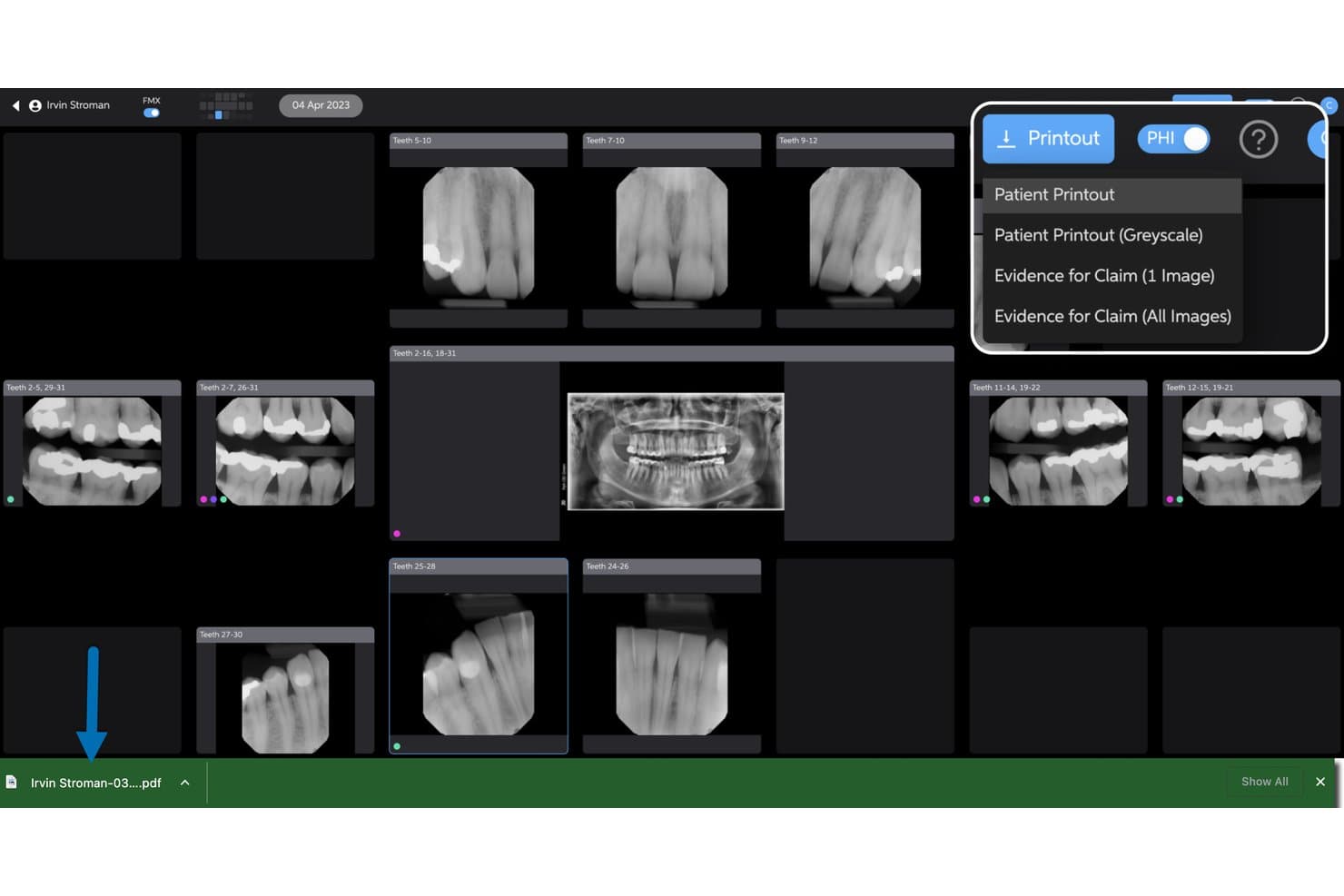
Pearl offers a printout and download menu with options to export patient X-ray images as PDF, greyscale, or insurance claim evidence directly from its AI dental imaging platform. Pearl is an AI dental software platform that specializes in automated radiograph analysis, multi-pathology detection, PMS integration, charting automation, and insurance claim assistance for dental practices and DSOs.
Who Is Pearl Best For?
Pearl is a fit for dental practices and DSOs looking to add AI-powered radiology and clinical documentation capabilities to their existing workflows.
Why I Picked Pearl
I picked Pearl as one of my best AI dental software choices because it offers FDA-cleared, multi-pathology detection for radiology, complete with annotated overlays. In practice, I use it to instantly analyze bitewing and CBCT images and document findings for case reviews.
Pearl Key Features
- Practice management system integrations: Connect with major dental PMS platforms for data sync and workflow automation.
- AI charting and voice documentation: Generate periodontal charts and clinical notes using voice-powered AI tools.
- Automated billing and claim submission: Verify insurance eligibility and submit claims directly from the platform.
- Patient recall and scheduling automation: Automate patient reminders and recall scheduling to support ongoing care.
Pearl Integrations
Pearl offers native integrations with Dentrix, Eaglesoft, Open Dental, Denticon, Curve Dental, Fuse, Tab32, and Archy. An API is available for custom integrations.
Pros and Cons
Pros:
- Automated perio charting with voice AI
- Annotated overlays for patient communication
- FDA-cleared automated pathology detection
Cons:
- Documentation features depend on external systems
- AI radiograph analysis can miss some findings
Learn more about Pearl:
Other AI Dental Software
Here are some additional dental software options that didn’t make it onto my shortlist but are still worth checking out:
- 11DentalRobotBest task automation for dental offices
- 12Rondah AIBest for AI front-desk scaling across DSOs
- 13Karini AIBest patient charting with AI voice assistance
- 14Voicebox MDBest custom templates for dental documentation
Related Reviews
How I Evaluate AI Dental Software
Every tool here has to prove its AI delivers real value—like flagging caries on a radiograph or cutting hours from claims work. I split my evaluation into core functionality a tool must meet and differentiating factors that set one vendor apart.
Core Functionality (Table Stakes for This List)
When I'm selecting tools for my list, I rank each one on a scale from 0 (does not offer the functionality) to 5 (excels in this area) for each core functionality listed below. Then, I calculate the tool's total score into a percentage. Each tool needs to achieve a minimum total score of 65% to be considered for inclusion.
- AI Imaging Analysis: I check whether the tool can detect conditions like caries, bone loss, and periapical lesions across standard radiograph types, not just a single finding on bitewings.
- Practice Management Integration: The tool should connect with dental PMS platforms like Dentrix, Eaglesoft, or Open Dental so AI outputs flow into patient records without manual re-entry.
- AI Charting/Documentation: I look for automated clinical note generation or perio charting that goes beyond basic templates, such as voice-driven note-taking during a procedure.
- Automated Billing & Claims: I evaluate how the tool handles insurance verification, claim scrubbing, and submission, especially whether it can flag likely denials before you send a claim out.
- Treatment Plan Automation: AI-suggested treatment plans that connect imaging findings to recommended procedures matter here, along with patient-facing presentation features that support case acceptance.
- Patient Communication AI: I look at whether the tool offers AI-driven scheduling, recall management, or conversational agents that handle appointment booking and reminders across channels like SMS and email.
Once I have a list of tools that meet the criteria, I consider what sets each platform apart.
Differentiating Factors (What Sets Vendors Apart)
Here's how I compare and contrast different vendors:
Standout Features
Voice-to-chart documentation is a big differentiator. I look for tools that transcribe operatory dialogue and auto-populate perio charts or SOAP notes in real time, so clinicians aren't stopping mid-procedure to type. Predictive scheduling also matters—tools that use patient history to forecast no-shows and auto-fill from a waitlist keep chairs productive without extra front-desk effort. I evaluate patient communication AI agents too, especially ones that handle booking, recall, and post-op follow-ups across SMS and email.
Beyond Features
Clinical accuracy matters most to me—I check whether imaging AI modules hold FDA 510(k) clearance and whether the vendor publishes sensitivity and specificity data. HIPAA compliance is another area I evaluate closely, including whether vendors are transparent about using patient imaging data to train their models. Practice size and deployment fit also shape my recommendations, since a solo practice needs fast cloud onboarding while a DSO needs multi-location analytics and centralized admin controls.
How to Choose AI Dental Software
It’s easy to get bogged down in long feature lists and complex pricing structures. To help you stay focused as you work through your unique software selection process, here’s a checklist of factors to keep in mind:
| Factor | What to Consider |
| Scalability | Will the solution adapt as your practice grows or if you add more locations? Check for multi-site admin controls and group analytics if you’re a DSO or plan to expand. |
| Integrations | How well does the software connect with your existing PMS, imaging hardware, and billing systems? Ensure native integrations and easy data exchange to avoid manual work. |
| Implementation and onboarding | Does the vendor provide guided setup and workflow mapping? Review training options and timeline to get the system live without disrupting patient care. |
| Ease of use | Will your whole team—clinicians, admins, billing—find it easy to use on day one? Look for clear navigation, intuitive workflows, and role-appropriate dashboards. |
| Security safeguards | Does the software offer HIPAA-compliant infrastructure, data encryption, and role-based access? Validate the vendor’s approach to audit logs and third-party certifications. |
| Customizability | Can you tailor documentation fields, appointment types, and patient communication settings? Flexible configuration helps fit your unique workflows. |
| Cost | Are subscription fees, per-provider costs, or usage-based pricing transparent and scalable? Watch for hidden add-ons, overage fees, or long lock-in contracts. |
| Vendor transparency | Is the vendor open about how they use your patient data, AI model updates, and any third-party data-sharing? Ask for written policies and ongoing model improvement plans. |
What Is AI Dental Software?
AI dental software is a type of technology that uses artificial intelligence to automate clinical, administrative, and imaging tasks in dental practices. These tools analyze dental radiographs, support clinical charting, help with insurance claims, and improve patient communication. By reducing routine work and offering diagnostic support, AI dental software helps dental teams deliver safer and more efficient care.
Features of AI Dental Software
When selecting ai dental software, keep an eye out for the following key features:
- AI imaging analysis: Uses machine learning to detect caries, bone loss, and other pathologies in dental radiographs, helping clinicians catch issues early and document findings with visual annotations.
- Automated clinical charting: Generates clinical notes, perio charts, and treatment documentation automatically—often by transcribing chairside conversations and linking them to patient records.
- Practice management integration: Syncs with existing dental PMS platforms to ensure AI findings, documentation, and scheduling data flow directly into patient charts and office workflows.
- Automated billing and claims: Assists with insurance verification, code selection, and claim submission by flagging missing information, predicting denials, and tracking claims through the revenue cycle.
- Treatment plan automation: Recommends treatment options based on diagnostic findings, enabling dentists to build visual, patient-friendly plans and track acceptance rates.
- Patient communication tools: Offers AI-driven scheduling, recall reminders, automated appointment confirmations, and follow-ups across multiple channels like SMS and email.
- No-show prediction: Uses historical patient data to predict which appointments are at risk for late cancellation or no-show, triggering proactive reminders and filling openings from a waitlist.
- Voice-to-chart capabilities: Enables hands-free documentation by transcribing operatory conversations, saving time, and improving the accuracy of clinical records.
- Real-time analytics and dashboards: Provides actionable insights on production, case acceptance, patient engagement, and operational performance using live data.
- HIPAA-compliant security: Ensures all patient data and imaging are encrypted, access controlled, and audit logged—meeting strict healthcare data protection standards.
Benefits of AI Dental Software
Implementing ai dental software provides several benefits for your team and your business. Here are a few you can look forward to:
- More accurate diagnoses: AI imaging analysis helps clinicians detect caries, bone loss, and other pathologies earlier and with greater consistency.
- Faster clinical documentation: Automated charting and voice-to-chart tools streamline note-taking, freeing up more time for patient care.
- Simplified insurance processing: Automated billing and claims features reduce manual paperwork, flag coding errors, and help accelerate reimbursements.
- Higher case acceptance: AI-supported treatment plan automation creates clearer, more visual plans that boost patient understanding and acceptance rates.
- Reduced no-shows and cancellations: Predictive tools identify at-risk appointments and automate reminders or waitlist fills to keep your schedule full.
- Better patient engagement: AI-powered communication agents maintain consistent follow-ups, appointment confirmations, and recall reminders across channels like SMS and email.
- Stronger data security: HIPAA-compliant safeguards and access controls keep patient information protected and regulatory requirements met.
Costs and Pricing of AI Dental Software
Selecting ai dental software requires an understanding of the various pricing models and plans available. Costs vary based on features, team size, add-ons, and more. The table below summarizes common plans, their average prices, and typical features included in ai dental software solutions:
Plan Comparison Table for AI Dental Software
| Plan Type | Average Price | Common Features |
| Free Plan | $0 | Basic imaging analysis, limited charting, manual reminders, simple reporting, and online support. |
| Personal Plan | $50-$150/month | AI imaging analysis, automated charting, claims management, appointment reminders, and email support. |
| Business Plan | $200-$400/month | Multi-user access, native PMS integrations, predictive scheduling, compliance tools, enhanced analytics, and live chat support. |
| Enterprise Plan | $500-$2000/month | Multi-location management, custom onboarding, API access, advanced AI modules, priority support, and ROI dashboards. |
AI Dental Software FAQs
Here are some answers to common questions about ai dental software:
How does AI Dental Software integrate with my current practice management system?
Most AI dental software connects with major dental PMS platforms, such as Dentrix or Open Dental, to automatically sync patient records, schedule data, and chart notes without manual entry.
Is AI Dental Software secure and HIPAA compliant?
Yes, leading ai dental software providers offer HIPAA-compliant solutions with data encryption, role-based access, and clear audit trails to meet regulatory requirements for patient data privacy.
Can AI Dental Software help reduce claim denials?
Yes, many solutions include automated claim scrubbing and denial prediction, which flag potential issues before submission and help your team address them proactively.
What kind of training is needed for my team?
Most vendors offer guided onboarding, live training sessions, and on-demand resources so clinicians, front desk, and billing staff can get up to speed quickly with new workflows.
Does AI Dental Software require special hardware?
Usually no, as most platforms are cloud-based and work on standard computers and existing x-ray or imaging hardware already in your practice. Always confirm compatibility with your equipment.