

Güçlü Tebra alternatifleri, uzmanlık alanınıza ve çalışma modelinize uygun muayenehane yönetimi, elektronik sağlık kayıtları, randevu planlama ve faturalandırma özelliklerini bir araya getirir. Doğru platform, ekibiniz için ekstra iş oluşturmadan doğru dokümantasyonu, taleplerin yönetimini, hasta erişimini, uyumluluğu ve büyümeyi desteklemelidir. Bu kılavuz, önde gelen seçenekleri faturalandırma desteği, klinik iş akışları, yapay zekâ özellikleri, geçiş desteği ve farklı personel yapıları ile gelir döngüsü ihtiyaçlarına sahip muayenehanelere uygunluk açısından karşılaştırır.
Tebra Nedir?
Tebra; elektronik sağlık kayıtları, muayenehane yönetimi, faturalandırma, randevu planlama ve hasta etkileşimi araçlarını bir araya getiren bir sağlık hizmetleri muayenehane platformudur. Bağımsız tıbbi muayenehaneleri klinik dokümantasyon, randevu yönetimi, talep iş akışları, çevrim içi ödemeler ve hasta iletişimiyle destekler. Tebra alternatiflerini karşılaştıran muayenehaneler, platform değiştirmeden önce uzmanlık alanı desteğini, faturalandırma seçeneklerini, uygulama gereksinimlerini, entegrasyonları ve ölçeklenebilirliği değerlendirmelidir.
En İyi Tebra Alternatiflerini Karşılaştırın
Kısa listeme giren Tebra alternatiflerinin fiyatlarını ve teknik özelliklerini yan yana karşılaştırın.
Score legend (out of 5)
- Excellent4.5–5
- Good4–4.4
- Average3–3.9
- Below average2–2.9
- Poor1–1.9
Sorted by: Default
| Tool | Starting Price | Website | |||||||
|---|---|---|---|---|---|---|---|---|---|
Best for rehab therapy billing and RCM | 4.2 out of 5 | 4 | 5 | 4 | 4 | 4 | 4 | $79/user/month Free demo available | Website |
Best for switching from Kareo with in-house migration | 4.2 out of 5 | 4 | 5 | 4 | 3 | 4 | 5 | $25/month Free plan + free demo available | Website |
Best for outsourced RCM with in-house billing | 4.2 out of 5 | 4 | 5 | 4 | 3 | 4 | 5 | Pricing upon request Free demo available | Website |
Best for small practices with built-in AI charting | 4.2 out of 5 | 3 | 5 | 5 | 4 | 4 | 4 | Pricing upon request Not available | Website |
Best for outsourced RCM with built-in AI billing | 4.3 out of 5 | 4 | 5 | 5 | 4 | 4 | 4 | Pricing upon request Free demo available | Website |
Best for iPad-native EHR across 11 specialties | 4.7 out of 5 | 4 | 5 | 5 | 5 | 4 | 5 | Pricing upon request Free demo available | Website |
Best for independent practices rated #1 in KLAS | 4.5 out of 5 | 4 | 5 | 5 | 4 | 4 | 5 | Pricing upon request Free demo available | Website |
Best for multi-specialty outsourced RCM billing | 4.3 out of 5 | 4 | 5 | 4 | 4 | 4 | 5 | $130/user/month 30-day free trial + free demo available | Website |
Best for outsourced RCM with specialty EHR built in | 4.7 out of 5 | 5 | 5 | 5 | 4 | 4 | 5 | Pricing upon request Free demo available | Website |
Best for AI-driven scheduling across 30+ specialties | 4.5 out of 5 | 4 | 5 | 5 | 4 | 4 | 5 | Pricing upon request Free demo available | Website |


Why Trust Our Software Recommendations
6,700+
Reviews
20
Industry experts
16+
Evaluation factors
14
Years
Our team has been testing and reviewing software since 2012. As medical practice leaders ourselves, we know how difficult—and important—it is to choose the right software.
For this guide, we evaluated tools using hands-on testing and independent research, scoring tools using our selection criteria.
Our reviews reflect our human editorial judgment, not a sales pitch.
Tebra Alternatifleri İncelemeleri
Aşağıda, kısa listeme giren en iyi Tebra alternatifleri hakkındaki özetlerimi bulabilirsiniz. İncelemelerim, muayenehaneniz için doğru seçeneği bulmanıza yardımcı olmak amacıyla her sağlık hizmetleri platformunun özelliklerini, faturalandırma olanaklarını ve en uygun kullanım alanlarını ele alır.
 Best for rehab therapy billing and RCM
- Free demo available
- From $79/user/month
Visit WebsiteCustomer Rating:4.4/5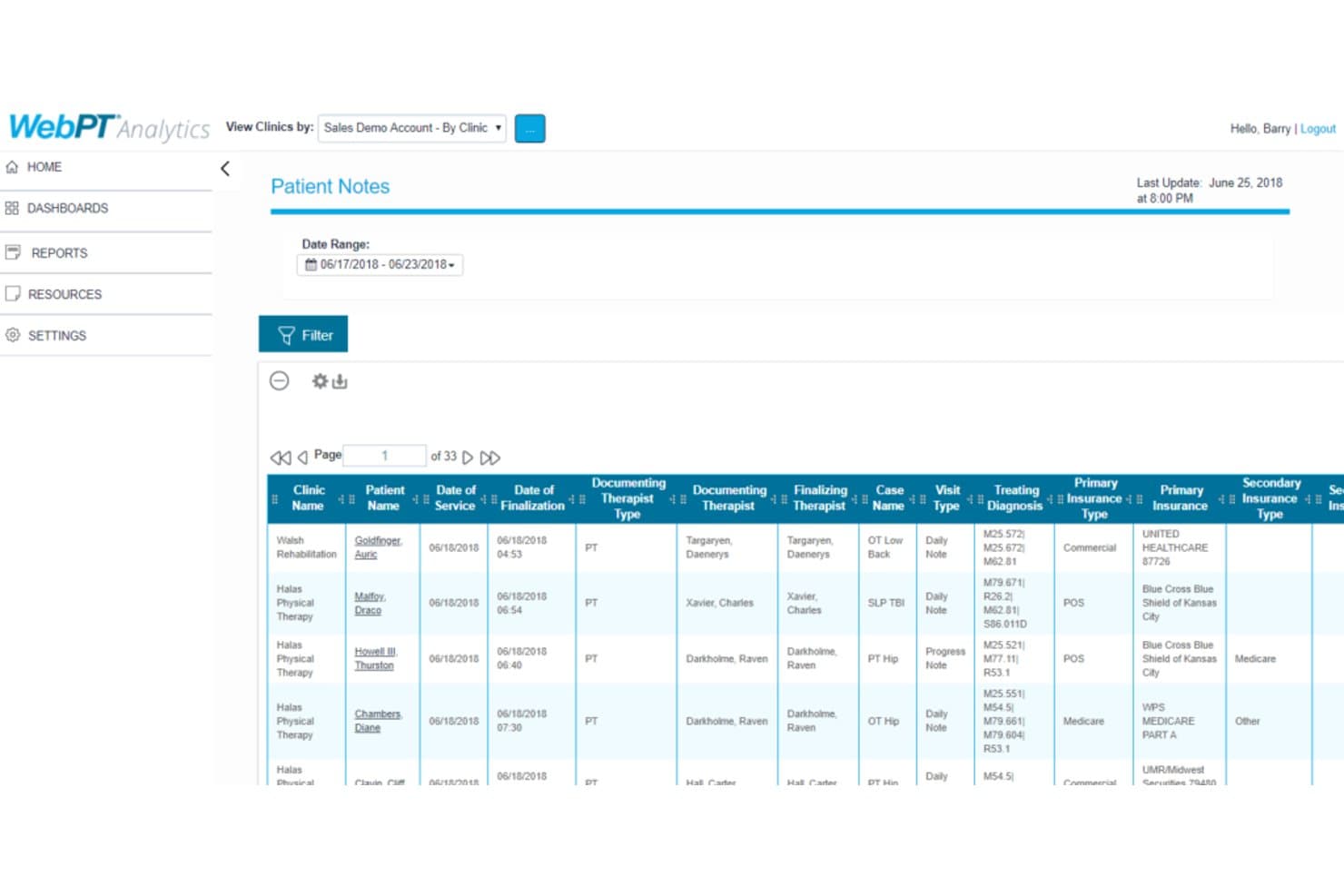
WebPT tracks patient notes with therapist and insurance details. WebPT is a practice management platform built for rehab therapy practices that need connected documentation, scheduling, billing, compliance, and patient outcome tracking in one system.
Who Is WebPT Best For?
WebPT suits outpatient physical, occupational, and speech therapy practices that need integrated billing and revenue cycle management.
Why WebPT Is a Good Tebra Alternative
I picked WebPT because it connects rehab documentation, scheduling, billing, and revenue cycle management in one platform. I use its billing workflows alongside patient outcome tracking and compliance tools to support physical, occupational, and speech therapy practices. That focus makes WebPT Best for rehab therapy billing and RCM.
WebPT Key Features
- Patient intake: Collect patient information before appointments.
- Balance collection: Collect outstanding patient balances online.
- Performance dashboards: Monitor practice data through real-time dashboards.
- Review requests: Encourage patients to leave Google reviews.
WebPT Integrations
WebPT integrates with 60+ software partners, including Waystar, Worldpay, Kno2, PatientPay, Better Healthcare, PredictionHealth, and Patient360. It supports custom integration development for patient registration, billing, documentation, and healthcare interoperability workflows.
Pros and Cons
Pros:
- Online intake and balance collection tools
- Integrated billing and revenue cycle management
- Rehab-specific documentation and outcome tracking
Cons:
- Billing workflows can require staff oversight
- Less suitable for general medical practices
Learn more about WebPT: Best for switching from Kareo with in-house migration
- Free plan + free demo available
- From $25/month
Visit WebsiteCustomer Rating:4.2/5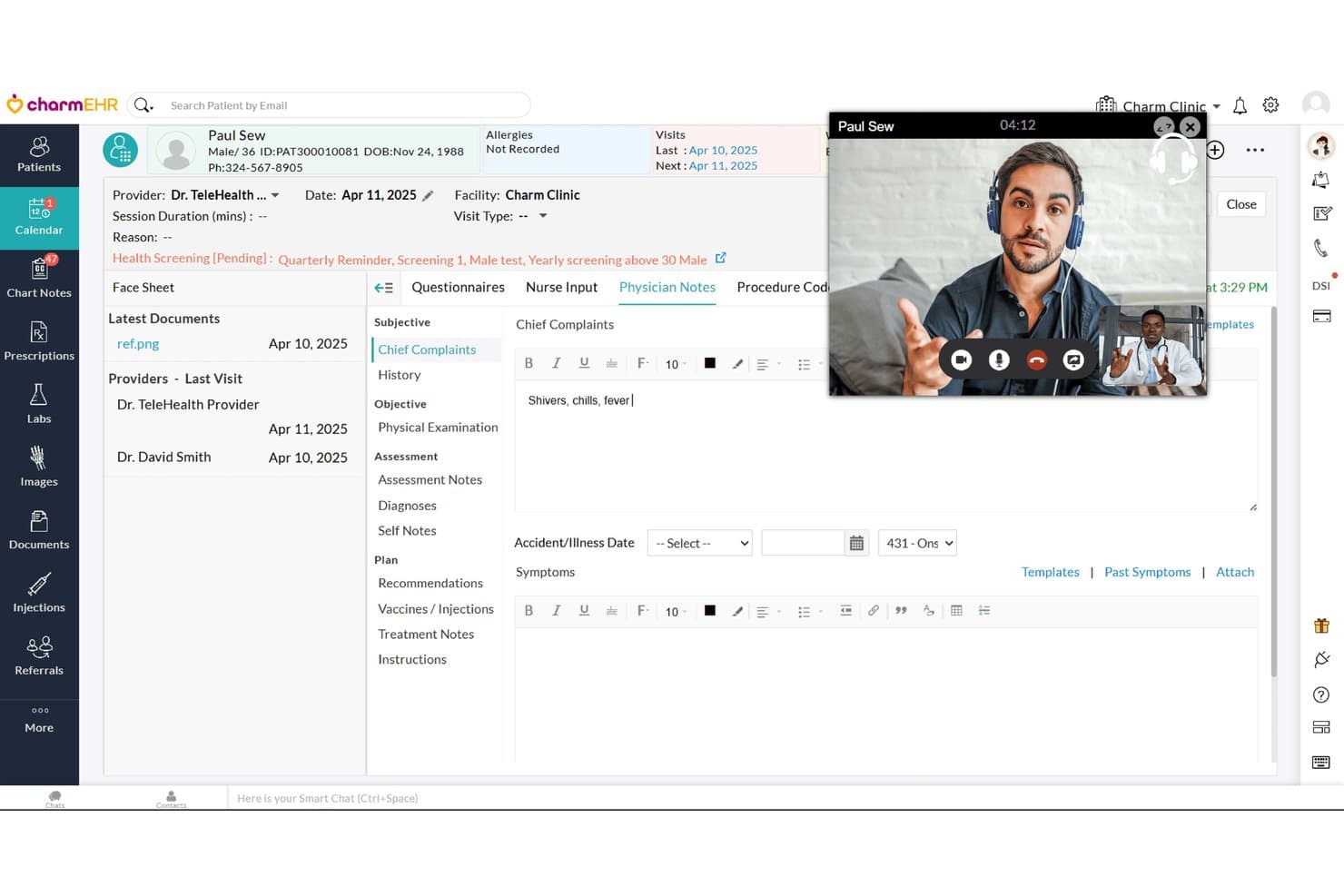
CharmHealth supports telehealth visits with live video inside the EHR. CharmHealth is an all-in-one, AI-enabled EHR and practice management platform for clinics that need connected scheduling, billing, patient engagement, and clinical documentation without piecing together separate systems.
Who Is CharmHealth Best For?
CharmHealth suits independent clinics moving from Kareo that want to manage their data migration in-house.
Why CharmHealth Is a Good Tebra Alternative
I picked CharmHealth because it’s a practical choice for switching from Tebra with in-house migration. I use its scheduling, billing, patient engagement, and clinical documentation tools within one EHR and practice management platform. Its AI-enabled documentation also supports clinics replacing separate systems without relying on external migration services.
CharmHealth Key Features
- Role-based access: Set granular permissions and audit user actions.
- Inventory management: Track stock levels, expiry dates, and reorder thresholds.
- Patient check-in kiosk: Let patients enter details and complete questionnaires on an iPad.
- Analytics reports: Create custom reports on practice, patient, and clinical data.
CharmHealth Integrations
CharmHealth offers marketplace integrations through CharmHealthHub, including Fullscript and Bluefin, along with connections to labs, diagnostic centers, devices, and health technology applications. Its REST API, including FHIR API documentation, supports custom integrations with medical applications and devices.
Pros and Cons
Pros:
- AI tools support visit documentation
- Patient portal handles records and questionnaires
- Integrated clinical, billing, and scheduling workflows
Cons:
- Limited note templates beyond SOAP
- Support responses can take too long
Learn more about CharmHealth: Best for outsourced RCM with in-house billing
- Free demo available
- Pricing upon request
Visit WebsiteCustomer Rating:4/5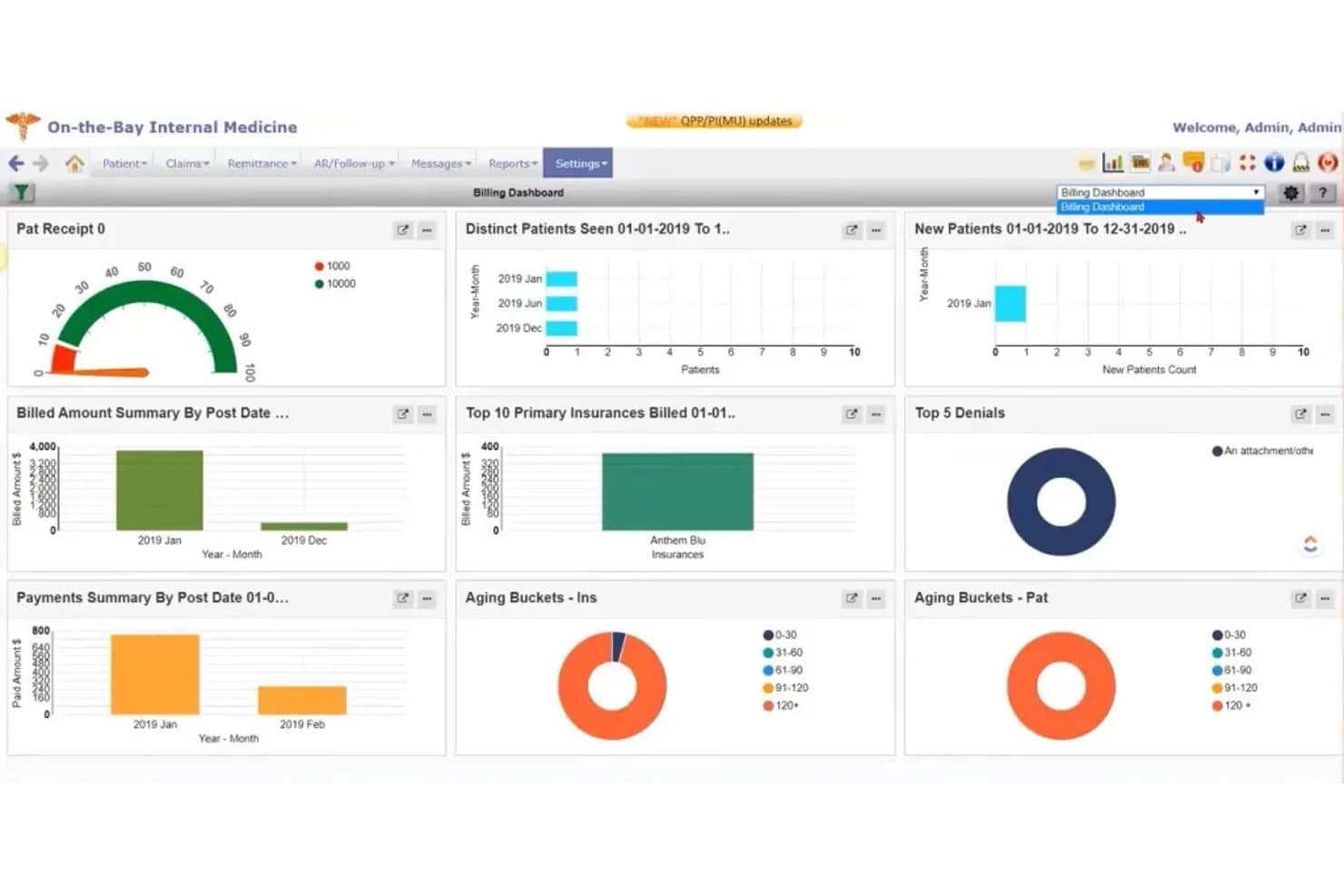
PrognoCIS billing dashboard showing payments, denials, insurance claims, and aging reports PrognoCIS is a cloud-based EHR and practice management platform for medical practices that combines clinical, scheduling, patient engagement, and billing workflows—Best for outsourced RCM with in-house billing.
Who Is PrognoCIS Best For?
PrognoCIS suits practice administrators and billing teams that need one cloud platform for clinical workflows, scheduling, patient engagement, and in-house billing.
Why PrognoCIS Is a Good Tebra Alternative
I picked PrognoCIS as a tebra alternative because it is best for outsourced RCM with in-house billing. I use its integrated claims submission, denial tracking, coding assistance, and real-time eligibility checks to manage billing workflows. Its EHR also supports third-party billing, while in-house teams retain visibility into claims and payment activity.
PrognoCIS Key Features
- Patient portal: Offers secure messaging, document sharing, online payments, and appointment scheduling.
- E-prescribing: Lets providers send prescriptions electronically from the clinical workflow.
- E-faxing: Sends and receives faxes without requiring physical fax hardware.
- Referral management: Tracks referrals and related coordination tasks within the platform.
PrognoCIS Integrations
PrognoCIS integrates with LabCorp, Pathology Inc., TriCore, US Medical Scientific, and Bostwick Labs, with interoperability across pharmacies, radiology providers, payers, transcription services, appointment reminders, and vaccine registries. It also provides APIs for custom and standard EMR integrations.
Pros and Cons
Pros:
- Patient portal supports scheduling and payments
- Outsourced RCM retains in-house claims visibility
- Billing includes claim scrubbing and payment posting
Cons:
- Template customization takes time
- Billing adjustments can be complicated
Learn more about PrognoCIS Psychiatry EHR: Best for small practices with built-in AI charting
- Not available
- Pricing upon request
Visit WebsiteCustomer Rating:3.7/5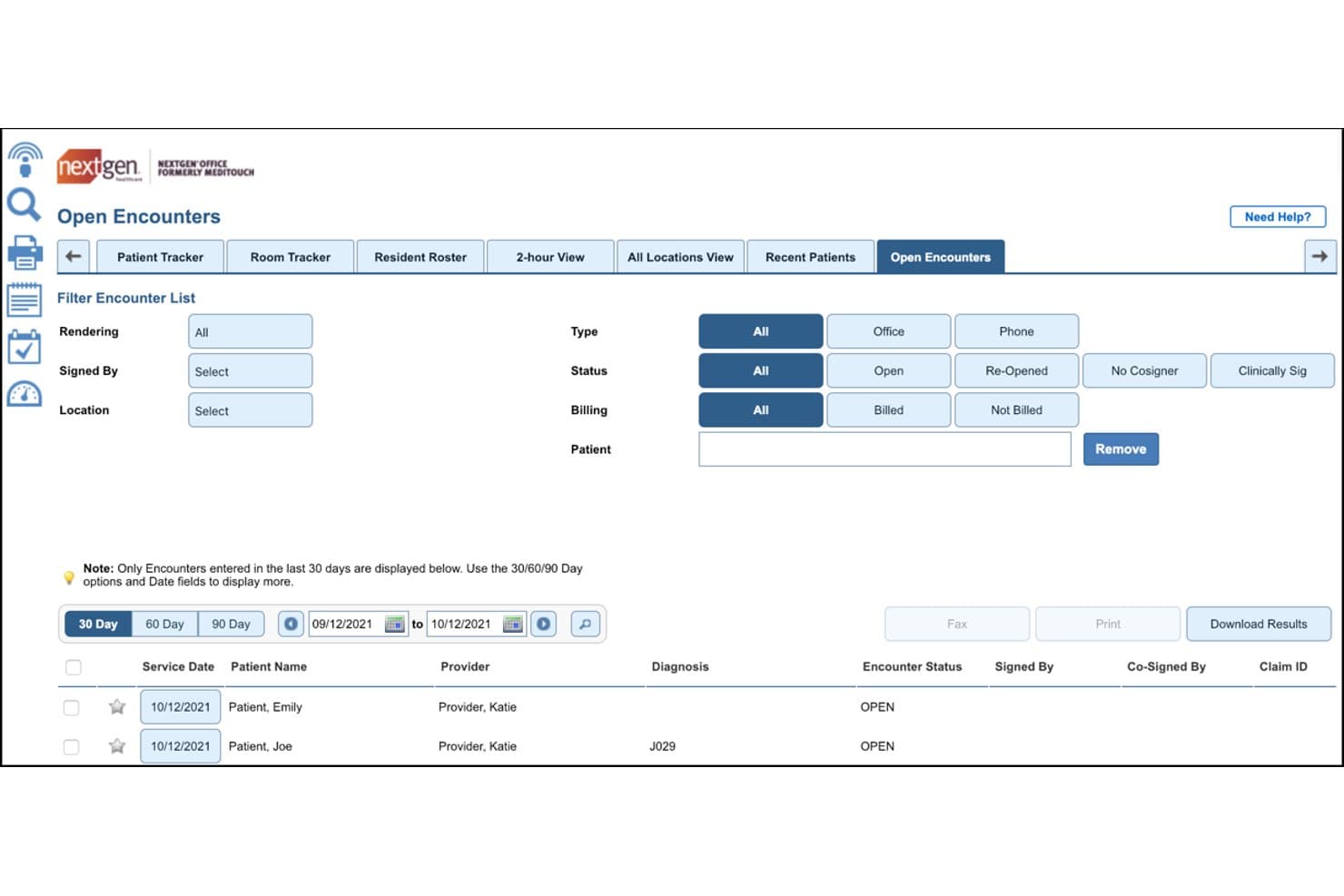
NextGen Office lets users filter and review open encounters by status and billing. NextGen Office is a cloud-based EHR and practice management platform for small practices that need unified tools for scheduling, billing, clinical documentation, and built-in AI charting.
Who Is NextGen Office Best For?
Small medical practices needing EHR, practice management, and AI charting in one cloud-based platform.
Why NextGen Office Is a Good Tebra Alternative
I picked NextGen Office because it combines EHR and practice management tools for small practices with built-in AI charting. I like how teams can manage scheduling, billing, and clinical documentation in one cloud-based platform. Its AI charting supports documentation during routine patient visits.
NextGen Office Key Features
- Embedded patient portal: Supports secure messaging, online payments, and patient access.
- E-prescribing: Sends prescriptions electronically from the EHR.
- Telehealth visits: Supports virtual appointments through the patient portal.
- Eligibility verification: Checks patient coverage electronically before visits.
NextGen Office Integrations
NextGen Office supports Apple Health integration, lab connections, and clearinghouse integration. Specific connected vendors, native integration counts, and API availability aren't clearly documented.
Pros and Cons
Pros:
- Patient portal supports messaging and payments
- Integrated scheduling, billing, and clinical records
- AI-assisted charting supports routine visits
Cons:
- Users report occasional system lag
- Updates can disrupt the entire system
Learn more about NextGen Office: Best for outsourced RCM with built-in AI billing
- Free demo available
- Pricing upon request
Visit WebsiteCustomer Rating:3.6/5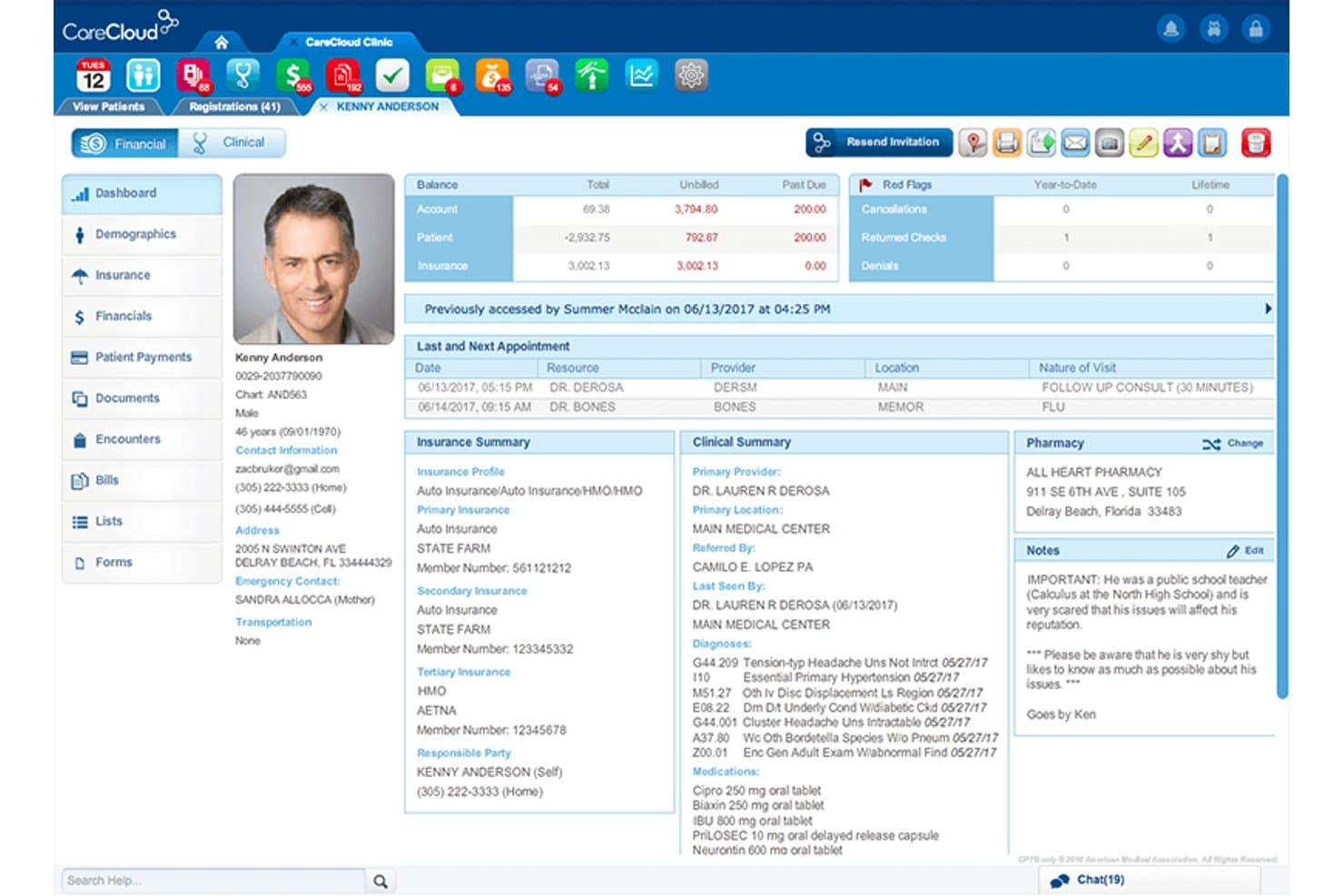
CareCloud offers a detailed patient profile dashboard displaying billing balances, insurance summaries, clinical notes, and appointment history in one unified view. CareCloud is a cloud-based healthcare platform for medical practices and health systems that combines practice management, EHR, patient engagement, telehealth, and revenue cycle tools in one Tebra alternative.
Who Is CareCloud Best For?
CareCloud fits medical practices and health systems that want to outsource revenue cycle operations while keeping clinical and administrative tools connected.
Why CareCloud Is a Good Tebra Alternative
I picked CareCloud because it combines practice management with outsourced revenue cycle management and built-in AI billing. My team can use its claims management and billing workflows while CareCloud’s RCM specialists handle revenue operations. That makes it a strong Tebra alternative for practices seeking Best for outsourced RCM with built-in AI billing.
CareCloud Key Features
- Electronic health records: Provides cloud-based clinical records with real-time insights.
- Telehealth: Supports secure virtual care visits.
- Analytics and reporting: Tracks patient outcomes, financial metrics, and operational data.
- Customizable dashboards: Displays practice insights through configurable business intelligence views.
CareCloud Integrations
CareCloud’s native integrations with specific third-party vendors aren’t clearly documented. It supports HL7 and FHIR connectivity, plus REST APIs for custom integrations and interoperability projects.
Pros and Cons
Pros:
- Customizable dashboards expose financial performance metrics
- AI-generated appeal letters support reimbursement workflows
- Claim scrubbing targets cleaner first-pass submissions
Cons:
- Some reviewers cite inconsistent billing support
- Reviewers report slow claims handling
Learn more about CareCloud: Best for iPad-native EHR across 11 specialties
- Free demo available
- Pricing upon request
Visit WebsiteCustomer Rating:4.5/5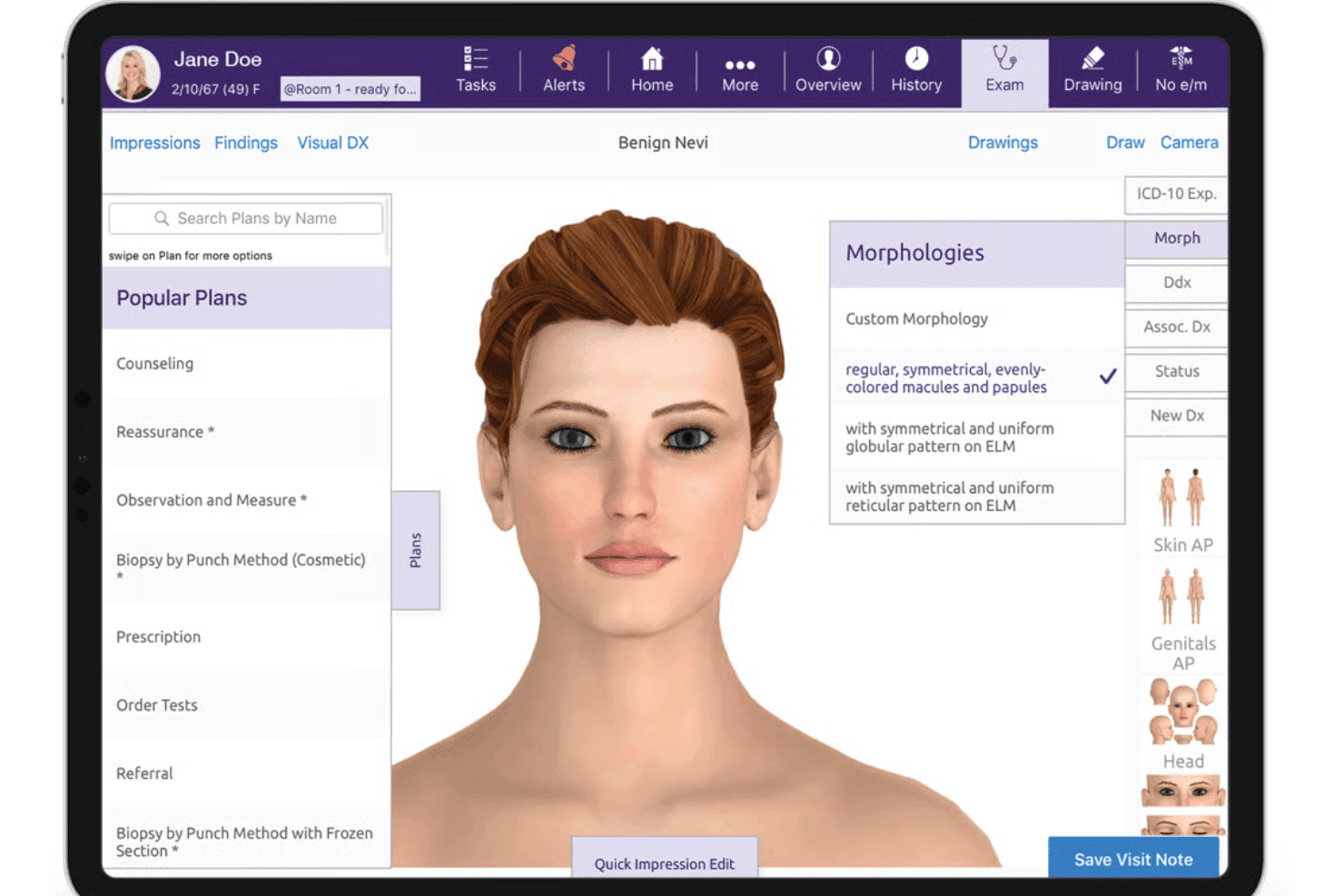
ModMed delivers specialty EHR, AI documentation, e-prescribing, billing, and RCM. ModMed is a specialty-focused EHR and practice management platform for medical practices that need connected clinical, billing, scheduling, and patient communication workflows.
Who Is ModMed Best For?
ModMed suits specialty medical practices that want an iPad-native EHR for clinical, billing, scheduling, and patient communication workflows.
Why ModMed Is a Good Tebra Alternative
I picked ModMed because its iPad-native EHR supports clinical documentation across 11 specialties. My team uses connected clinical, billing, and scheduling workflows to manage visits from intake through claims. Patient communication tools also keep appointment updates and care-related messages in the same practice platform.
ModMed Key Features
- Missed-appointment reporting: Calculate missed appointments by month.
- Coding distribution reports: Compare E/M, modifier, and CPT code distributions.
- MIPS tracking: Monitor MIPS scores and progress with CMS.
- Reimbursement trend reports: Identify reimbursement trends before they affect cash flow.
ModMed Integrations
ModMed offers marketplace integrations with ClearWave, DrConnect, InstaMed, Inuvio, Luma, NextPatient, PatientPop, Podium, Relatient, and TriZetto. It also supports custom connectivity through Certified FHIR, proprietary, and HL7 APIs.
Pros and Cons
Pros:
- MIPS and reimbursement reporting included
- Tap-and-go notes suggest coding
- Specialty-specific templates support 11 disciplines
Cons:
- Implementation timelines can run long
- Rigid contracts limit practice flexibility
Learn more about ModMed: Best for independent practices rated #1 in KLAS
- Free demo available
- Pricing upon request
Visit WebsiteCustomer Rating:3.8/5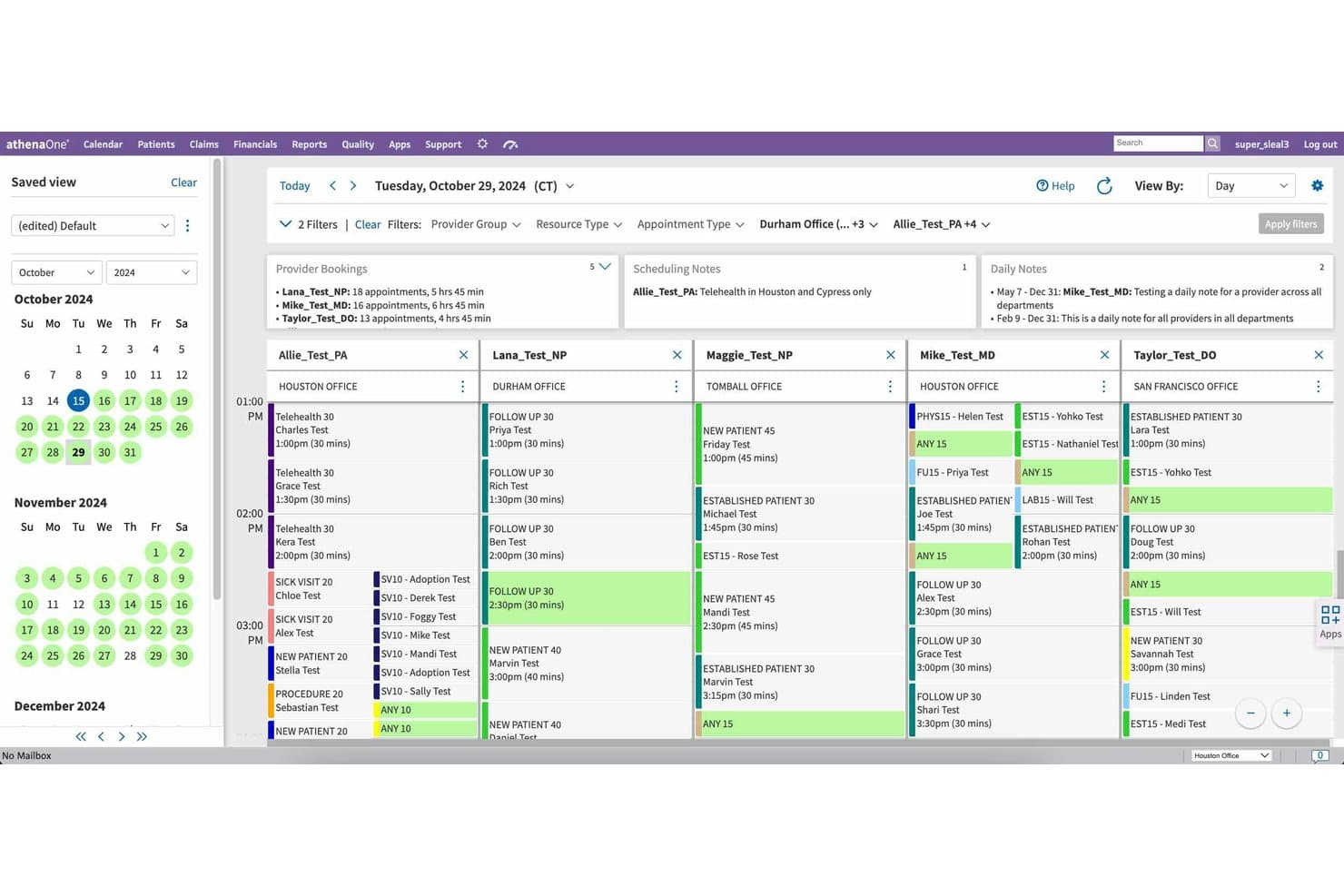
athenaOne lets users manage daily provider schedules across multiple offices. athenaOne is an AI-powered, all-in-one EHR and practice management platform for independent practices, bringing clinical workflows, patient engagement, and revenue cycle tasks into one system.
Who Is athenaOne Best For?
athenaOne fits independent medical practices that need one platform for clinical documentation, patient engagement, practice management, and revenue cycle tasks.
Why athenaOne Is a Good Tebra Alternative
I picked athenaOne because its Best for independent practices rated #1 in KLAS positioning aligns with smaller practices seeking one system. I use its clinical documentation, patient engagement, practice management, and revenue cycle workflows together, rather than coordinating separate tools. This fits teams managing care delivery and billing within the same practice.
athenaOne Key Features
- Clinical decision support: Delivers clinical insights to support care decisions.
- Care Event Summaries: Distills hospital events and discharge documentation.
- Electronic ordering: Supports electronic ordering within the EHR.
- Group video conferencing: Adds up to four care team members to telehealth visits.
athenaOne Integrations
athenaOne offers marketplace integrations from over 300 partners, with solutions covering more than 60 capabilities. It also provides over 800 API endpoints for custom integrations and data exchange.
Pros and Cons
Pros:
- Care Event Summaries condense hospital documentation
- Clinical insights support point-of-care decisions
- Unified scheduling, charting, and billing
Cons:
- Staff training takes substantial time
- Customer support quality varies by reviewer
Learn more about athenaOne: Best for multi-specialty outsourced RCM billing
- 30-day free trial + free demo available
- From $130/user/month
Visit WebsiteCustomer Rating:3.6/5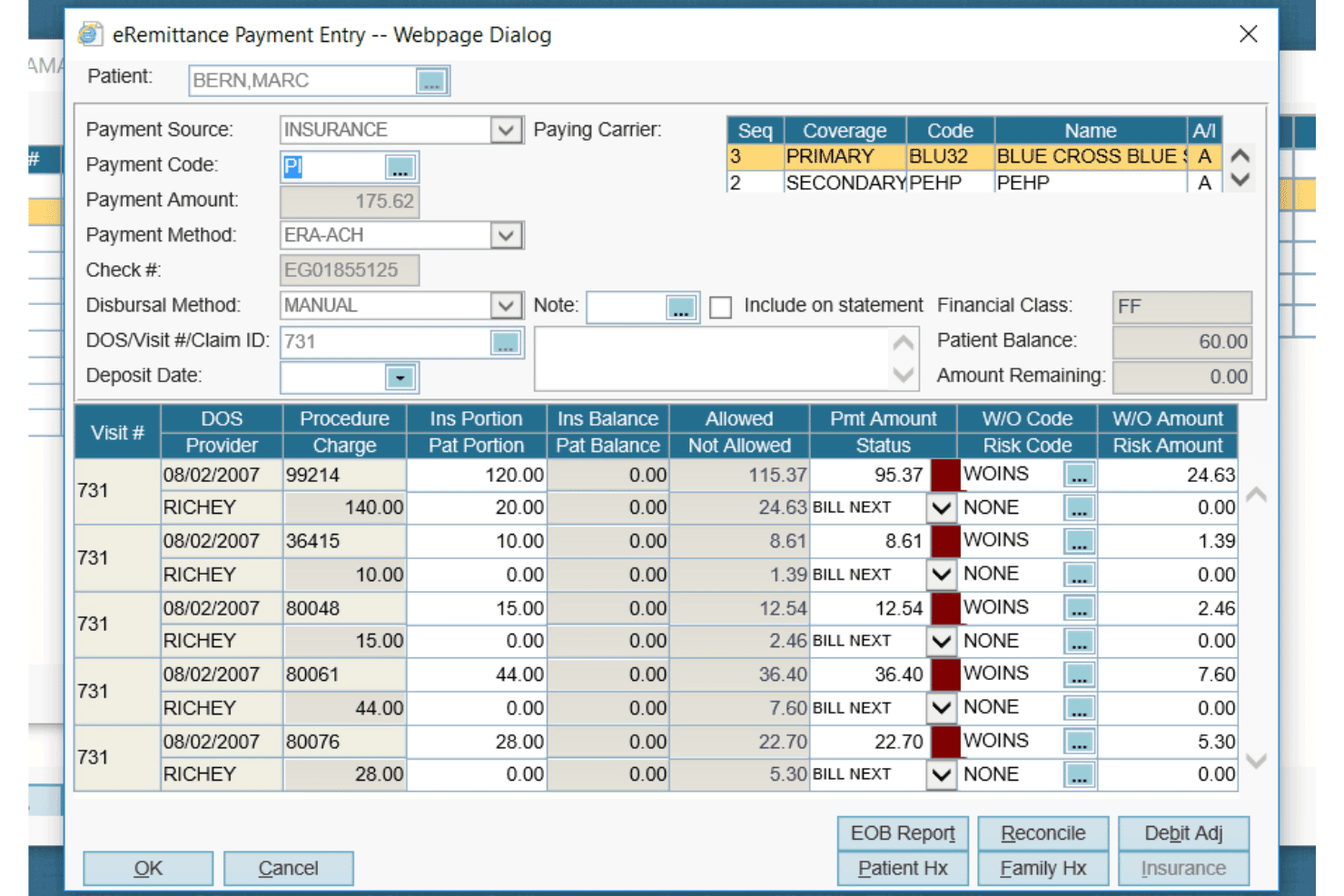
AdvancedMD offers a detailed eRemittance Payment Entry dialog for managing insurance billing, claim payments, and write-off codes per procedure. AdvancedMD is a cloud-based practice management platform for independent and multi-specialty practices that need unified scheduling, billing, EHR, patient engagement, and outsourced revenue cycle support.
Who Is AdvancedMD Best For?
Multi-specialty medical practices that need outsourced revenue cycle management alongside scheduling, billing, EHR, and patient engagement tools.
Why AdvancedMD Is a Good Tebra Alternative
I picked AdvancedMD because its outsourced revenue cycle support fits multi-specialty practices managing billing across varied workflows. My team uses its unified scheduling, billing, and EHR tools alongside outsourced RCM services, keeping practice and financial operations connected. That combination makes AdvancedMD a strong choice for multi-specialty outsourced RCM billing.
AdvancedMD Key Features
- Insurance eligibility verification: Checks coverage status in real time.
- Automated claim scrubbing: Identifies claim errors before submission.
- Ambient AI documentation: Transcribes visits and drafts clinical notes.
- Financial dashboards: Displays real-time data across providers and locations.
AdvancedMD Integrations
AdvancedMD offers 1,400+ marketplace integration and partner offerings, including Weave, InstaMed, Promptly, Healthix, Apollo CRM, LeadSquared, LunaJoy, Salesforce, Suite CRM, and Zoho. Its Open API supports custom connections with medical systems, laboratories, health information exchanges, and clinical information exchanges.
Pros and Cons
Pros:
- Financial dashboards cover providers and locations
- Claim scrubbing catches errors before submission
- Outsourced RCM supports multi-specialty billing
Cons:
- Users report recurring billing problems
- Support handoffs can delay issue resolution
 Best for outsourced RCM with specialty EHR built in
- Free demo available
- Pricing upon request
Visit WebsiteCustomer Rating:3.9/5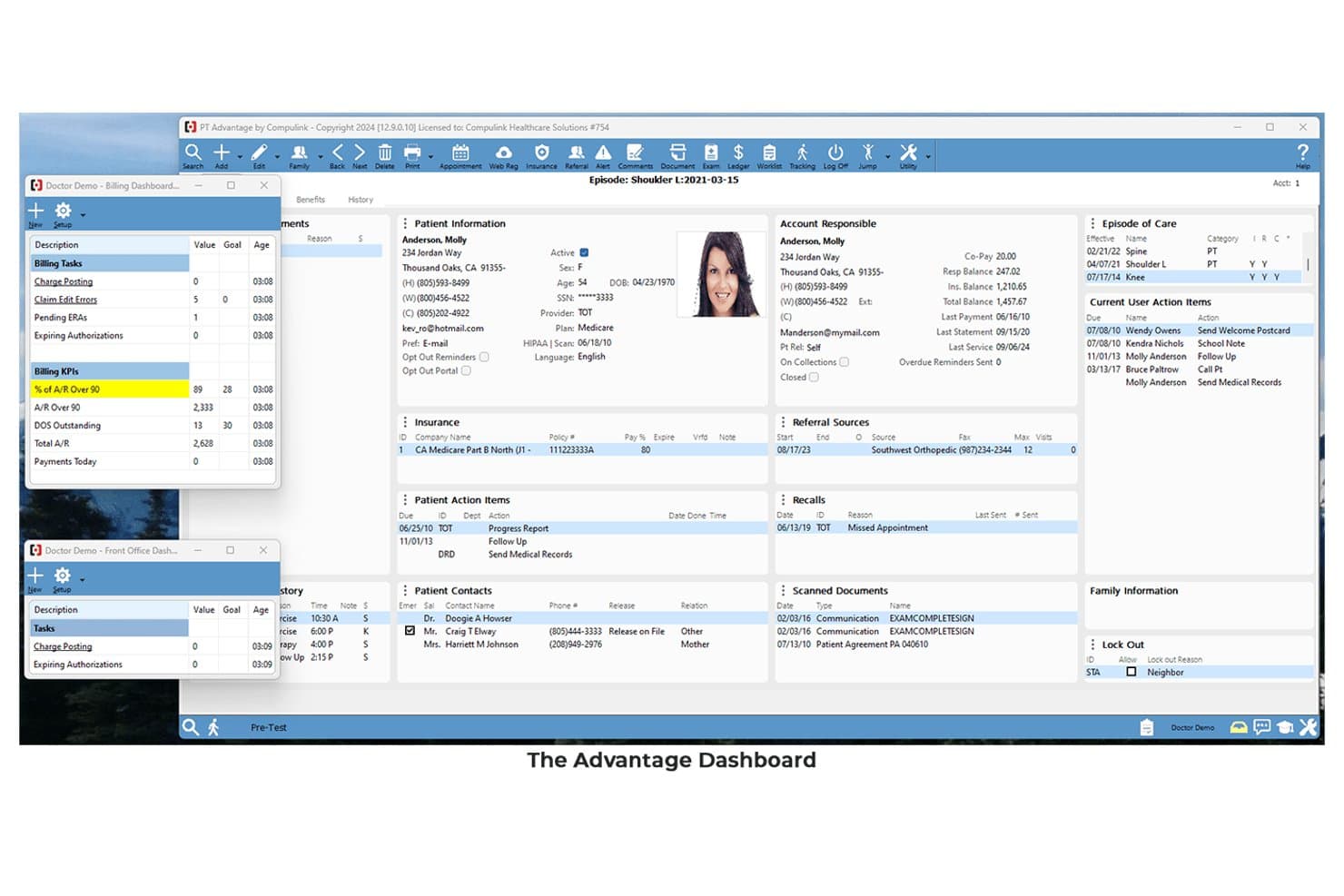
Compulink centralizes patient, billing, and scheduling data in one dashboard. For practices comparing Tebra alternatives, Compulink combines specialty EHR workflows, practice management, billing, patient engagement, and analytics to coordinate clinical and administrative work in one system.
Who Is Compulink Best For?
Compulink suits specialty medical practices that need an EHR with integrated practice management and outsourced revenue cycle management.
Why Compulink Is a Good Tebra Alternative
I picked Compulink because it is best for outsourced RCM with specialty EHR built in. I use its specialty EHR workflows alongside practice management and billing tools, while its outsourced revenue cycle management supports claims and reimbursement work. Patient engagement and analytics keep clinical and administrative activity connected.
Compulink Key Features
- Customizable documentation: Configure charting templates around your specialty.
- OneTab layout: View chart details on a single page.
- Optical POS tools: Manage lens catalogs, inventory, and lab orders.
- Online patient store: Manage product orders, tracking, and notifications.
Compulink Integrations
Compulink documents API connections with ABB, VisionWeb, EdgePro, and Relatient, plus an integrated solution with Weave. It also offers an API partner program for custom integrations.
Pros and Cons
Pros:
- Outsourced billing includes dedicated revenue cycle support
- OneTab consolidates charting onto one screen
- Specialty workflows support tailored clinical documentation
Cons:
- Patient web registration remains slow and cumbersome
- Updates can reset customized workflow settings
Learn more about Compulink: 10Best for AI-driven scheduling across 30+ specialties
CureMD
- Free demo available
- Pricing upon request
Visit WebsiteCustomer Rating:3.5/5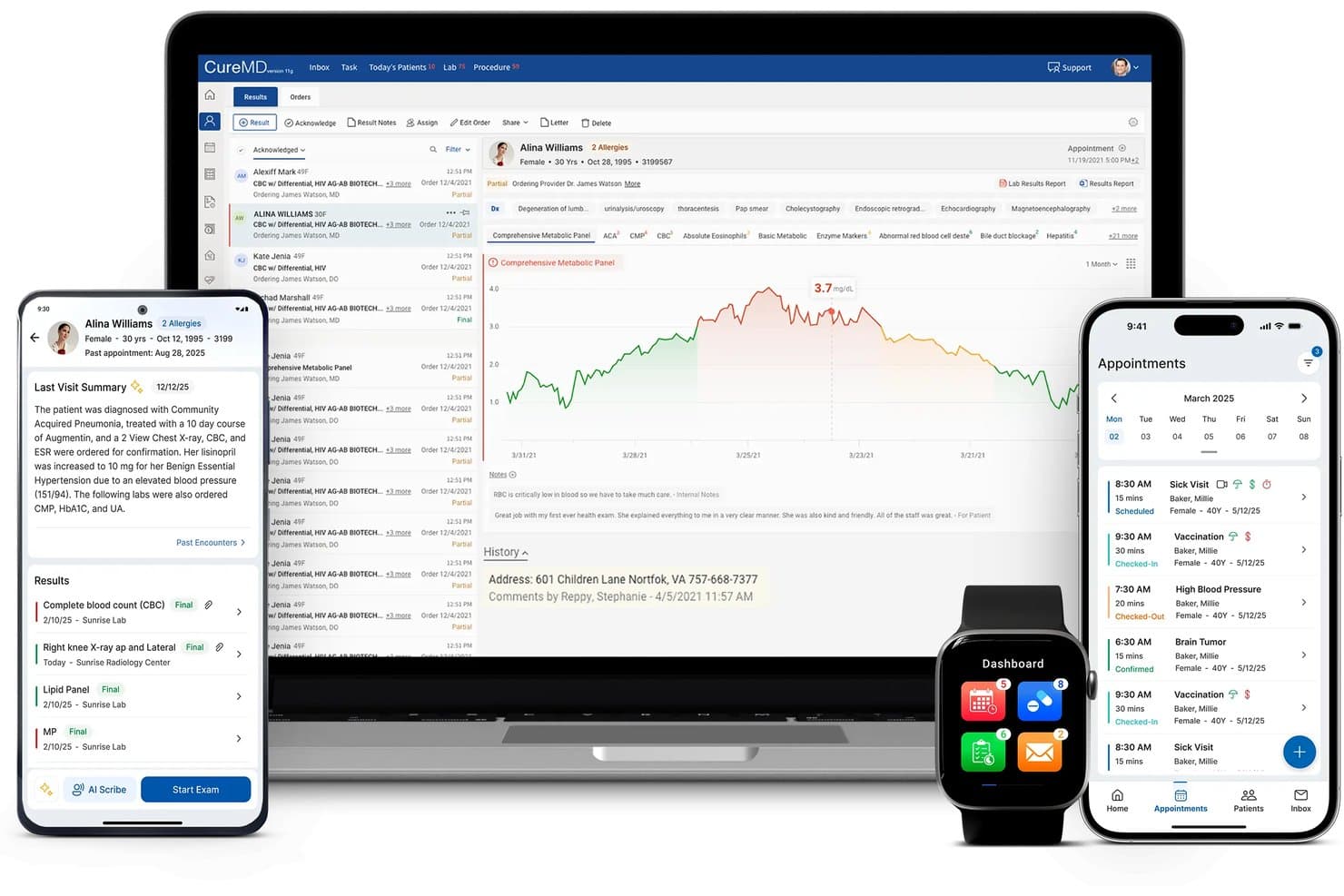
CureMD displays patient records across mobile, tablet, and watch. CureMD is a cloud-based practice management and EHR platform for medical practices that need specialty workflows, integrated billing, scheduling, and patient engagement in one Tebra alternative.
Who Is CureMD Best For?
CureMD suits specialty medical practices that need AI-assisted scheduling alongside EHR, billing, and patient engagement workflows.
Why CureMD Is a Good Tebra Alternative
I picked CureMD because its AI-driven scheduling supports workflows across 30+ specialties. I use its AI Contact Center for automated appointment booking and intake, while specialty-specific templates support practices such as cardiology, dermatology, and OB/GYN. That combination gives my team a practical scheduling alternative to Tebra.
CureMD Key Features
- Real-time eligibility checks: Verify coverage before appointments.
- Billing automation: Automate billing and claims workflows.
- Mobile EHR: Access clinical records from mobile devices.
- Chronic care management: Track care plans and related billing.
CureMD Integrations
CureMD’s native integrations are not clearly documented, but it supports custom integrations with FHIR, HL7, and APIs for connecting labs, imaging systems, pharmacies, and other EHRs.
Pros and Cons
Pros:
- Cloud access unifies clinical and billing workflows
- AI contact center handles appointment booking
- Specialty templates cover 30-plus disciplines
Cons:
- Training and support experiences vary widely
- Users report freezing during clinical notes
Learn more about CureMD:
Diğer Tebra Alternatifleri
İşte en iyi seçenekler listeme girmeyen ancak yine de göz atmaya değer birkaç ek seçenek:
- 11RXNTBest for per-provider pricing with an AI scribe
- 12ValantBest for behavioral health billing and EHR in one
- 13DrChronoBest for mobile EHR with iPad-native charting
- 14JaneBest for wellness clinics booking and billing in one
- 15ChiroTouchBest for chiropractic billing and EHR in one
- 16NextechBest for specialty EHR with built-in CRM marketing
- 17eClinicalWorksBest for outsourcing RCM at a flat percentage rate
- 18Veradigm EHRBest for AI-driven scheduling in multi-specialty groups
- 19IntergyBest for multispecialty PM with built-in clearinghouse
How I Evaluate Tebra Alternatives
I split my evaluation into three parts. First, I look for tools that can schedule patient appointments and submit and track insurance claims—these carry the most weight. Then I evaluate standout features like outsourced billing services and specialty-specific templates. Finally, I consider onboarding support, pricing transparency, and contract flexibility.
Core Functionality (Table Stakes For This List)
When I'm selecting tools for my list, I score each one on a scale from 0 (does not offer the functionality) to 5 (excels in this area) for each core functionality listed below. I then convert the total into a percentage to help assess each tool’s overall fit, with extra weight on any functionalities I’ve deemed essential.
- Patient Scheduling & Calendar (Essential): I look for multi-provider booking, location calendars, online self-scheduling, reminders, waitlists, and conflict handling.
- Medical Billing & Claims (Essential): I assess electronic claims, eligibility checks, claim tracking, denial workflows, payment posting, and collection reporting.
- Clinical Documentation: I evaluate encounter notes, templates, orders, prescriptions, and links between charts, appointments, and billing.
- Patient Intake: I check digital forms, demographic capture, insurance details, pre-visit registration, and updates to patient records.
- Reporting & Analytics: I look for dashboards and reports covering collections, claim status, denials, appointment activity, and provider performance.
- Patient Communication: I assess portals, two-way messaging, appointment reminders, recalls, follow-ups, and automated patient outreach.
Once I have a list of tools that meet the criteria, I consider what sets each platform apart.
Differentiating Factors (What Sets Vendors Apart)
Here's how I compare and contrast different vendors:
Standout Features
I look for outsourced billing services that let you offload claims submission and follow-up to a managed team. This matters most for small practices without dedicated billing staff. Telehealth is another key factor—I check whether video visits are built into scheduling and charting workflows or require a third-party add-on. Platforms like athenaOne and eClinicalWorks handle this differently, so the integration depth varies. I also evaluate credentialing support, since payer enrollment delays can stall revenue for new providers joining a growing practice.
Beyond Features
I check whether a vendor locks you into long-term contracts or offers month-to-month billing, since practices outgrow platforms faster than expected. Interoperability matters just as much—I look for HL7/FHIR support and pre-built connections to clearinghouses, labs, and pharmacy networks, because a platform that can't exchange data with your existing systems creates manual work. I also evaluate onboarding support, specifically whether the vendor assigns a dedicated migration specialist or leaves you with self-service setup docs when moving off a legacy system.
Neden Tebra Alternatifleri Aranmalı?
Tebra iyi bir muayenehane yönetimi yazılımı seçeneği olsa da bazı kullanıcıların alternatif çözümler aramasının çeşitli nedenleri vardır. Şu nedenlerle Tebra alternatifi arıyor olabilirsiniz:
- Uzmanlık alanına özgü klinik iş akışlarına duyulan ihtiyaç
- Faturalandırma kontrolünü kurum içinde yürütme tercihi
- Dış kaynaklı gelir döngüsü yönetimine duyulan ihtiyaç
- Birden fazla konumda ölçeklendirmeyle ilgili endişeler
- Daha güçlü geçiş ve işe alıştırma desteğine duyulan ihtiyaç
Bunlardan herhangi biri size uyuyorsa doğru yere geldiniz. Listemde, Tebra ile bu zorluklarla karşılaşan ve alternatif çözümler arayan ekipler için daha uygun olan çeşitli muayenehane yönetimi yazılımı seçenekleri yer alıyor.
Tebra'nın Temel Özellikleri
Alternatif seçeneklerle karşılaştırmanıza yardımcı olmak için Tebra'nın temel özellikleri şunlardır:
- Elektronik sağlık kayıtları: Tebra, yeniden kullanılabilir şablonlar, makrolar ve uzmanlık alanına özel belgeleme araçlarıyla bulut tabanlı kayıt tutma olanağı sunar. AI Note Assist, hasta görüşmelerini klinik notlara dönüştürebilir; reçete ve laboratuvar iş akışları ise ilgili bilgilerin hasta kaydı içinde tutulmasını sağlar.
- Hasta randevu planlaması: Muayenehaneler çevrim içi randevu için sağlayıcı uygunluğunu, randevu sürelerini ve ziyaret nedenlerini yapılandırabilir. Randevu planlama araçları takvimler, hatırlatıcılar ve hasta kayıtlarıyla bağlantı kurarak ön büro ekiplerinin farklı sağlayıcılar ve konumlardaki randevuları yönetmesine yardımcı olur.
- Tıbbi faturalandırma: Tebra, klinik belgeleri sigorta uygunluk kontrolleri, elektronik talepler, ret takibi ve ödeme iş akışlarıyla birleştirir. Faturalandırma araçları, ekiplerin talep durumunu incelemesine, sorunları belirlemesine ve gelir döngüsü görevlerini tek bir platformdan yönetmesine yardımcı olur.
- Hasta ödemeleri: Platform, çevrim içi ödemeleri, kayıtlı kart seçeneklerini ve otomatik elektronik veya postayla gönderilen ekstreleri destekler. Ekipler hastalara ödeme bağlantıları gönderebilir ve bakiyeleri faturalandırma ve hesap bilgileriyle birlikte takip edebilir.
- Hasta kabulü: Dijital kabul formları, randevulardan önce demografik bilgileri, sigorta bilgilerini ve ziyarete ilişkin verileri toplar. Doldurulan formlar hasta kayıtlarına aktarılabilir ve kayıt işlemi sırasında manuel veri girişini azaltabilir.
- Hasta portalı: Portal, hastalara ziyaret özetlerine, test sonuçlarına, sağlık kayıtlarına, belgelere, faturalandırma araçlarına ve mesajlara güvenli erişim sağlar. Muayenehaneler portalı bilgi paylaşmak ve randevular dışında iletişimi sürdürmek için kullanabilir.
- Tele-sağlık: Tebra, randevu planlama ve klinik notlarla bağlantılı, HIPAA uyumlu görüntülü görüşmeler sunar. Sağlayıcılar uzaktan randevular gerçekleştirebilir ve görüşmeleri aynı EHR iş akışı içinde belgeleyebilir.
- Elektronik reçeteler ve laboratuvar hizmetleri: Sağlayıcılar reçeteleri doğrudan eczanelere gönderebilir, etkileşim uyarılarını inceleyebilir ve yenilemeleri takip edebilir. Elektronik laboratuvar araçları, ayrı portallar gerektirmeden istem oluşturmayı ve sonuçları görüntülemeyi destekler.
Tebra Alternatiflerinin Maliyetleri ve Fiyatlandırması
Maliyetler özelliklere, ekip büyüklüğüne, ek hizmetlere ve faturalandırma hizmetlerine göre değişir. Tebra alternatiflerinde genellikle karşılaşabileceğiniz fiyat aralıkları aşağıda verilmiştir:
Tebra Alternatifleri için Plan Karşılaştırma Tablosu
| Plan Türü | Ortalama Fiyat | Yaygın Özellikler |
| Bireysel Plan | $50–$150/sağlayıcı/ay | Randevu planlama, klinik belgeleme, hasta kabulü ve temel faturalandırma. |
| İşletme Planı | $150–$300/sağlayıcı/ay | Birden fazla sağlayıcı için randevu planlama, talep yönetimi, hasta iletişimi ve raporlama. |
| Kurumsal Plan | $300–$600/sağlayıcı/ay | Birden fazla konum yönetimi, gelişmiş raporlama, özel işe alıştırma, özel entegrasyonlar ve dış kaynaklı faturalandırma seçenekleri. |