

Why Trust Our Software Recommendations
6,700+
Reviews
20
Industry experts
16+
Evaluation factors
14
Years
Our team has been testing and reviewing software since 2012. As medical practice leaders ourselves, we know how difficult—and important—it is to choose the right software.
For this guide, we evaluated tools using hands-on testing and independent research, scoring tools using our selection criteria.
Our reviews reflect our human editorial judgment, not a sales pitch.
EMR Patient Portal Software Comparison Table
This comparison table summarizes pricing details for my top EMR patient portal software selections:
| Tool | Best For | Trial Info | Price | ||
|---|---|---|---|---|---|
| 1 | Best for primary care communication | Free demo available | Pricing upon request | Website | |
| 2 | Best for patient engagement tools | Free demo available | Pricing upon request | Website | |
| 3 | Best for connecting mobile scheduling | Free demo available | Pricing upon request | Website | |
| 4 | Best for integrated intake and payment workflows | Free demo available | From $429/user/month | Website | |
| 5 | Best for digital check-in and service workflows | Free demo available | From $249/user/month | Website | |
| 6 | Best for enterprise patient across health systems | Free demo available | Pricing upon request | Website | |
| 7 | Best for managing records and messages in one | Free demo available | Pricing upon request | Website | |
| 8 | Best for secure messaging and online payments | Free demo available | Pricing upon request | Website | |
| 9 | Best for mobile health records | Free demo available | From $499/user/month | Website | |
| 10 | Best for mobile access and digital check-in | Free demo available | Pricing upon request | Website |


Best EMR Patient Portal Software Reviews
Below are my detailed summaries of the best EMR patient portal software that made it onto my shortlist. My reviews offer a detailed look at the features, best use cases, and integrations of each software to help you find the best one for you.
 Best for primary care communication
- Free demo available
- Pricing upon request
Visit WebsiteCustomer Rating:4.4/5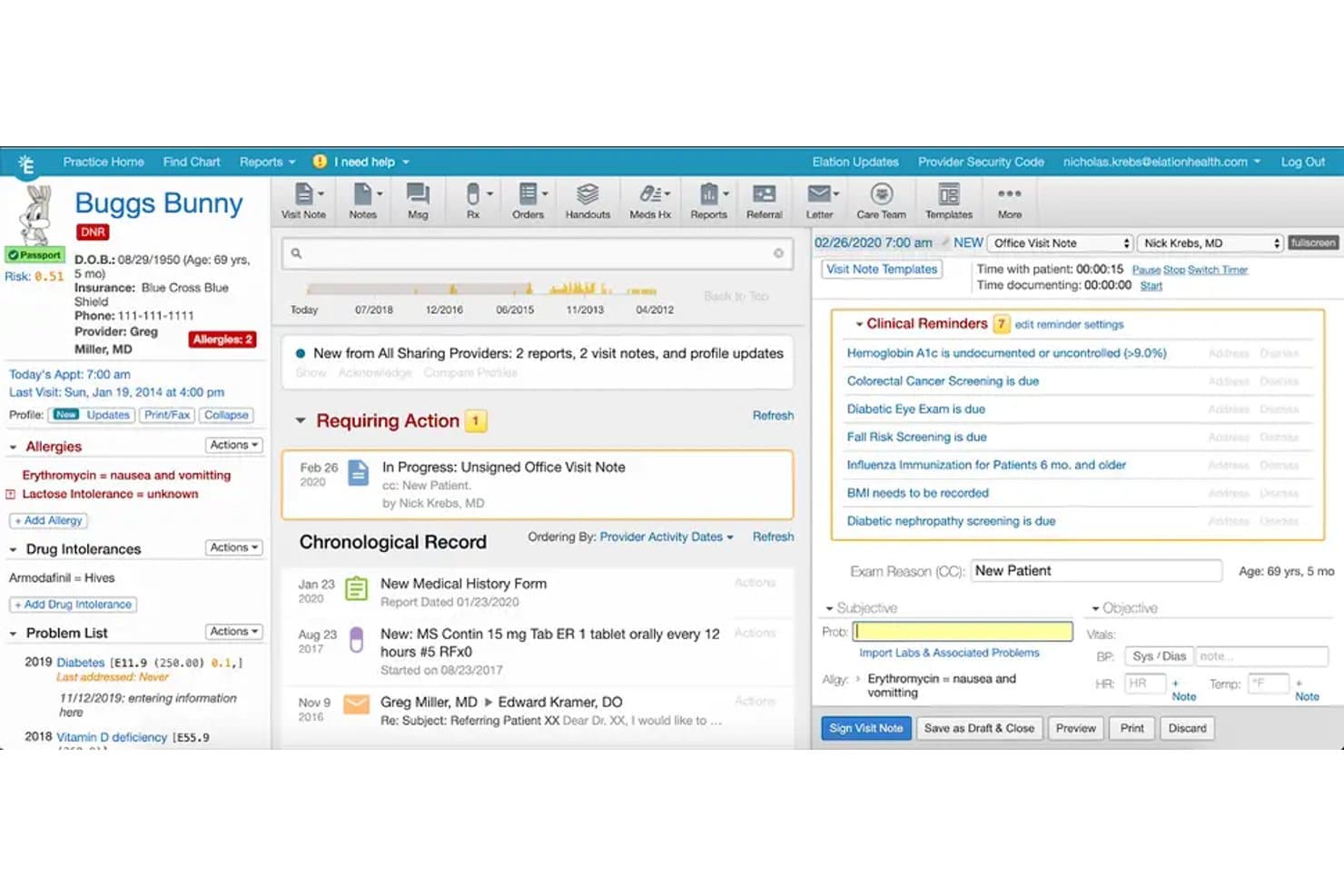
Elation Health offers a comprehensive patient chart view with clinical reminders, allergy tracking, problem lists, and visit note documentation in its EMR platform. Elation Health is a native patient portal, giving patients access to health records, secure messaging, appointment self-service, prescription refill requests, and online bill pay.
Who Is Elation Health Best For?
Independent primary care practices looking for a patient portal that's natively embedded in their EHR rather than bolted on as a third-party add-on.
Why I Picked Elation Health
I picked Elation Health because of how tightly its secure messaging is woven into the clinical record. When a patient sends a message with an attached lab report or image, the care team sees it directly within the same EHR chart, with no context-switching. The multilingual portal (available in seven languages) means primary care teams aren't losing communication threads across language barriers. I also like that refill requests route directly to the provider through the same messaging layer.
Elation Health Key Features
- Mobile app access: Patients can use the Elation Passport app on iOS or Android to manage records, appointments, and messages.
- Self-scheduling booking tab: Enables direct appointment scheduling and cancellations by patients when the feature is enabled by the provider.
- Family and caregiver account management: Users can manage multiple loved ones’ health information with a single login.
- Digital consent and registration workflows: New patient registration and consent are completed and stored electronically within the portal.
Elation Health Integrations
Elation Health offers native integrations with Zocdoc, Surescripts, Dock Health, Fullscript, Zus, Nsight Health, and Carequality. An API is available for custom integrations.
Pros and Cons
Pros:
- Patients manage multiple family members’ records
- Native EHR integration for real-time updates
- Multi-language portal supports patient diversity
Cons:
- Online bill pay features may require setup
- Limited appointment waitlist functionality
Learn more about Elation Health: Best for patient engagement tools
- Free demo available
- Pricing upon request
Visit WebsiteCustomer Rating:3.9/5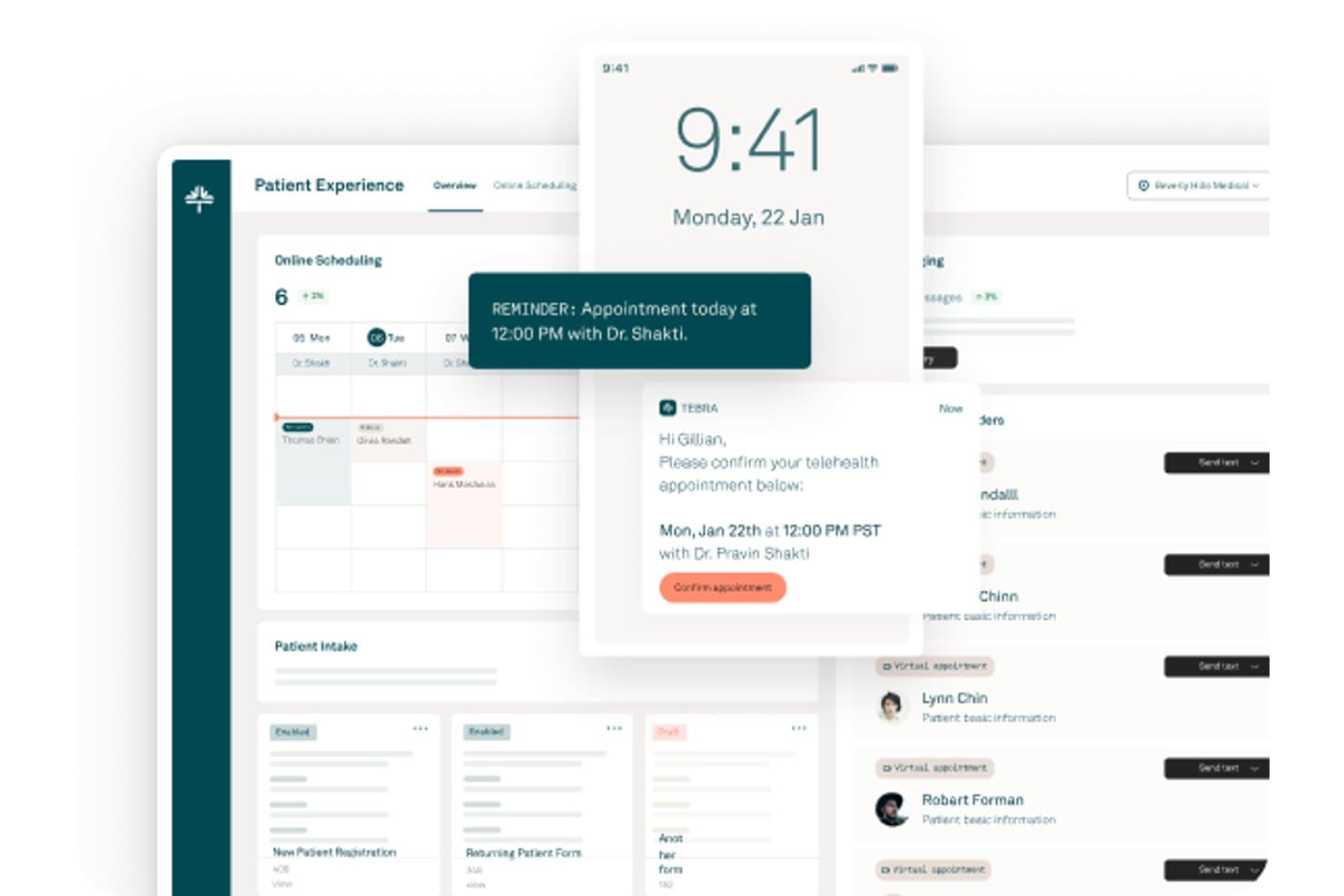
Tebra offers a patient experience dashboard with online scheduling, appointment reminders, telehealth confirmations, and patient intake management. Tebra is a cloud-based EHR and practice management platform with a built-in patient portal covering online scheduling, digital intake, secure messaging, online bill pay, and patient engagement tools in a single system.
Who Is Tebra Best For?
Tebra is a strong fit for independent medical practices that want a single platform to manage both clinical workflows and patient-facing engagement tools.
Why I Picked Tebra
Tebra earns its spot as one of the best on my shortlist because the patient engagement toolkit goes well beyond a standard portal. I particularly like the Patient Broadcast feature, which lets my team send mass messages to targeted patient segments, and the automated post-visit surveys that populate public review profiles across 80+ directories. The system also automates birthday outreach, which is a level of patient communication detail I don't see in most EMR-linked portals.
Tebra Key Features
- Patient online scheduling: Lets patients book, reschedule, or cancel appointments directly through the portal.
- Digital intake forms: Allows patients to complete registration, medical history, and consent forms online.
- In-portal bill pay: Gives patients the ability to securely view statements and make payments from their portal.
- HIPAA-compliant secure messaging: Enables two-way encrypted messaging between patients and providers within the portal.
Tebra Integrations
Tebra offers native integrations with TriZetto, Appriss Health (PDMP), and supports e-prescribing via EPCS. An API is available for custom integrations.
Pros and Cons
Pros:
- Automated birthday messages for patient outreach
- Post-visit surveys auto-publish to directories
- Mass messaging to segmented patient groups
Cons:
- Intake forms have limited customization options
- Secure messaging requires portal invite setup
Learn more about Tebra: Best for connecting mobile scheduling
- Free demo available
- Pricing upon request
Visit WebsiteCustomer Rating:3.9/5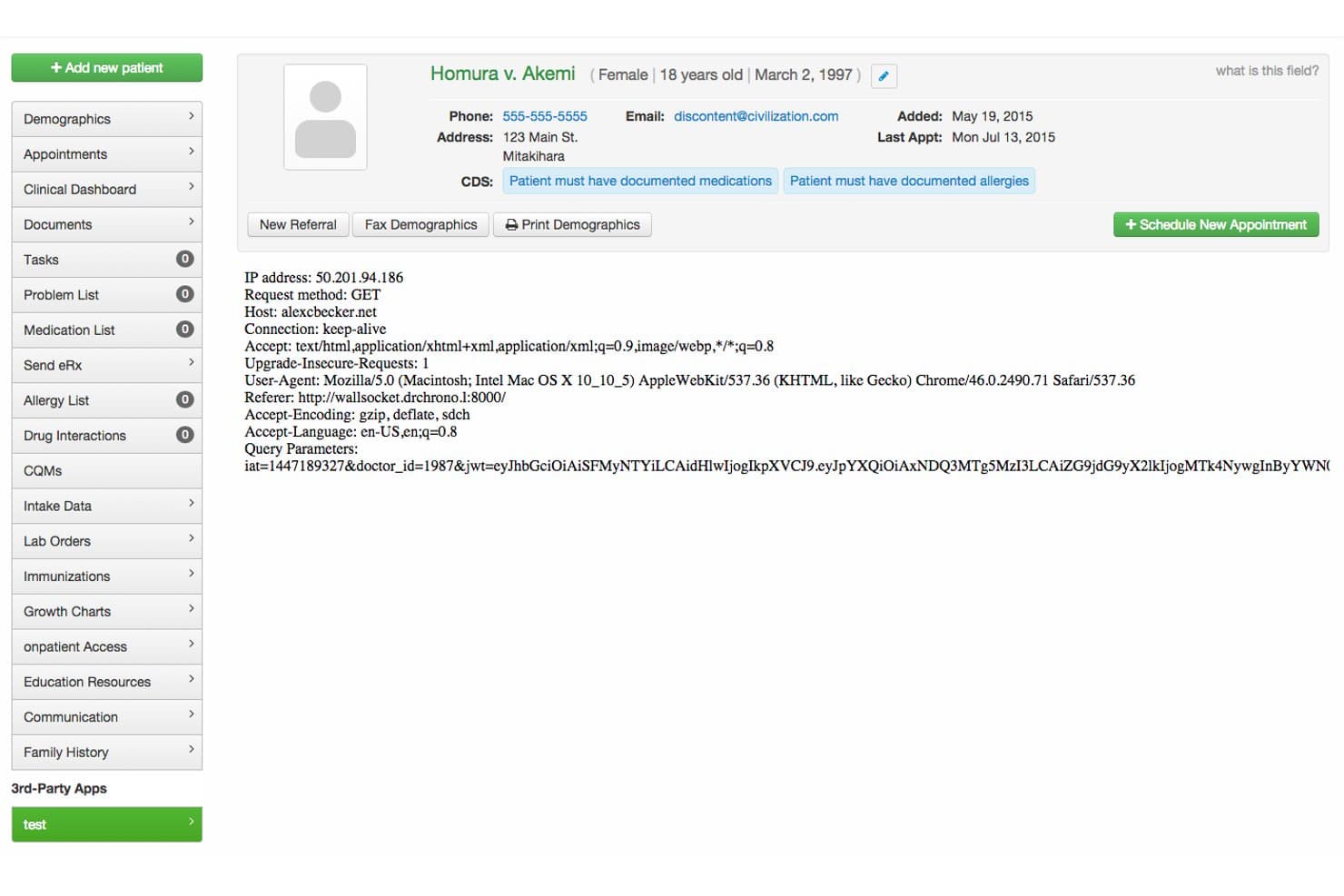
DrChrono offers a patient portal interface displaying patient demographics, CDS alerts, HTTP request metadata, and navigation tools for managing medical records. DrChrono is a cloud-based EHR platform with a native patient portal that covers clinical documentation, mobile scheduling, digital intake forms, secure messaging, online bill pay, and e-prescribing in one connected system.
Who Is DrChrono Best For?
DrChrono is a strong fit for independent and small-to-mid-sized practices that run clinical workflows on Apple devices.
Why I Picked DrChrono
DrChrono earns its spot on my shortlist because its scheduling and patient portal work together in a way that's genuinely Apple-native. I like that when a patient books through OnPatient, the system automatically sends the correct intake forms for that appointment type, so patients arrive pre-documented. The AI no-show predictor is another feature I find valuable, flagging at-risk appointments before they create gaps in the schedule.
DrChrono Key Features
- HIPAA-compliant patient portal: Patients can log in to securely view records, messages, and manage appointments.
- Customizable digital intake forms: Practices can create specialty-specific e-forms that flow directly into patient charts.
- Integrated online bill pay: Patients can pay balances and set up recurring plans directly through the portal.
- E-prescribing and medication management: Providers can e-prescribe medications and patients can request refills online.
DrChrono Integrations
DrChrono offers native integrations with Labcorp, Quest Diagnostics, Health Gorilla, Lifepoint, and Square POS. An API and a developer App Directory are available for custom integrations.
Pros and Cons
Pros:
- Automated appointment reminders reduce manual workload
- Native iPad and iPhone scheduling experience
- Patient portal supports digital intake forms
Cons:
- Limited customization for patient portal branding
- Patient portal interface is dated
Learn more about DrChrono: Best for integrated intake and payment workflows
- Free demo available
- From $429/user/month
Visit WebsiteCustomer Rating:3.6/5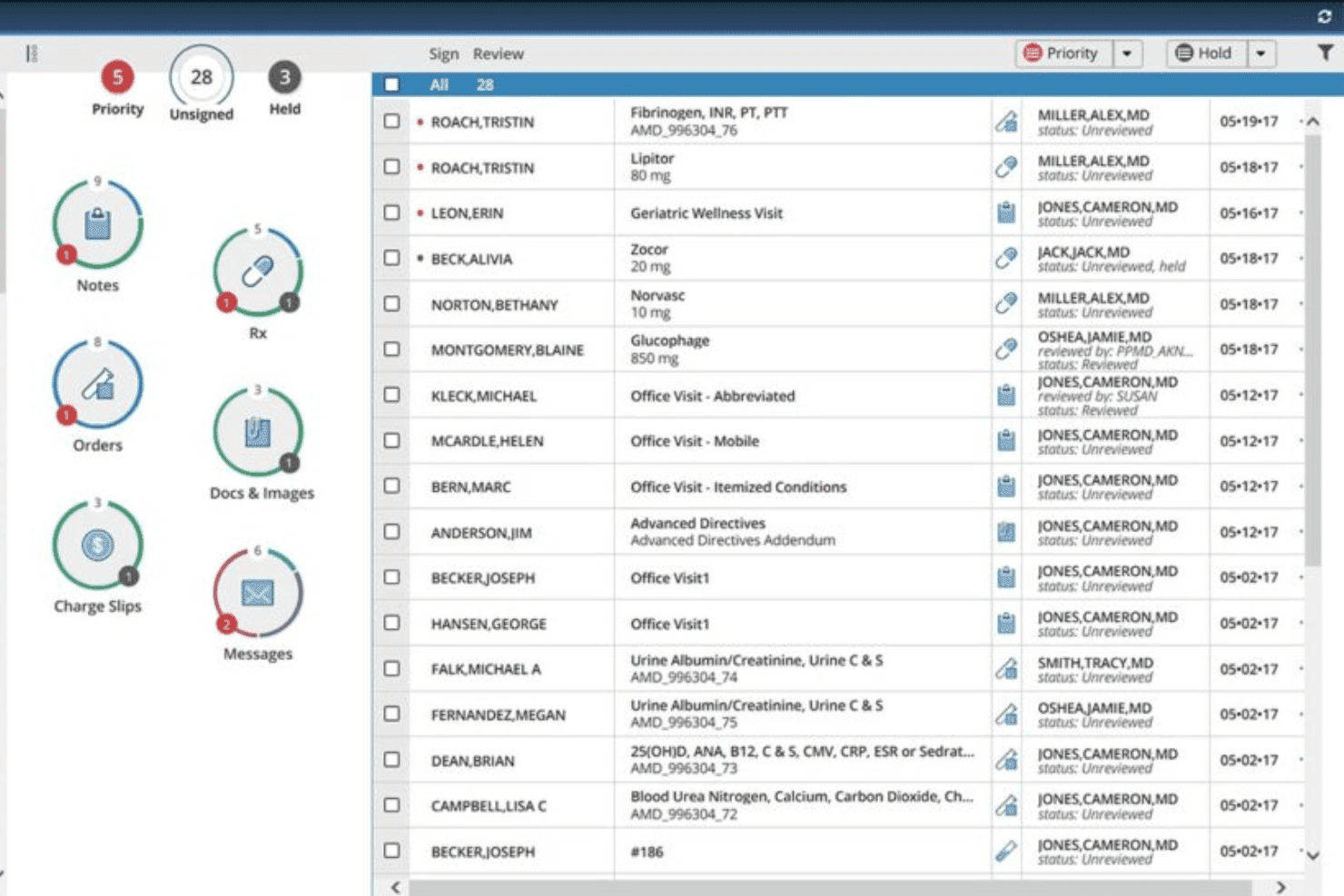
AdvancedMD dashboard for reviewing patient notes, prescriptions, orders, documents, and messages AdvancedMD EMR is a cloud-based, ONC-certified EHR and practice management platform with a built-in patient portal covering self-service scheduling, digital intake forms, secure messaging, online bill pay, and ePrescribing.
Who Is AdvancedMD EMR Best For?
AdvancedMD EMR is a strong fit for independent multi-specialty practices that need a single platform for clinical documentation, scheduling, and insurance billing.
Why I Picked AdvancedMD EMR
I've included AdvancedMD EMR in my top picks because it handles intake and payment as native parts of the clinical workflow, not add-ons. The patient kiosk lets patients complete registration and consent forms on an iPad at check-in, with data flowing directly into their chart. In-portal bill pay pairs with integrated credit card processing, so a patient's balance can be collected at the point of check-in or after a visit without leaving the platform.
AdvancedMD EMR Key Features
- Patient portal self-scheduling: Patients can book, reschedule, or cancel appointments directly online.
- HIPAA-compliant secure messaging: Enables patients and providers to exchange secure messages, including clinical documents.
- Customizable digital intake forms: Intake forms with conditional logic auto-populate charts and are completed electronically.
- ePrescribing and refill management: Patients view medications and request prescription refills through the portal.
AdvancedMD EMR Integrations
AdvancedMD EMR offers native integrations with Phreesia and supports HIE and HL7 connectivity. An API is available for custom integrations.
Pros and Cons
Pros:
- ONC-certified EHR supports detailed clinical records
- Self-service appointment booking and payment workflows
- Intake forms integrate directly with patient chart
Cons:
- Patient portal interface can be confusing
- Patient payment plans functionality is limited
Learn more about AdvancedMD EMR: Best for digital check-in and service workflows
- Free demo available
- From $249/user/month
Visit WebsiteCustomer Rating:3.6/5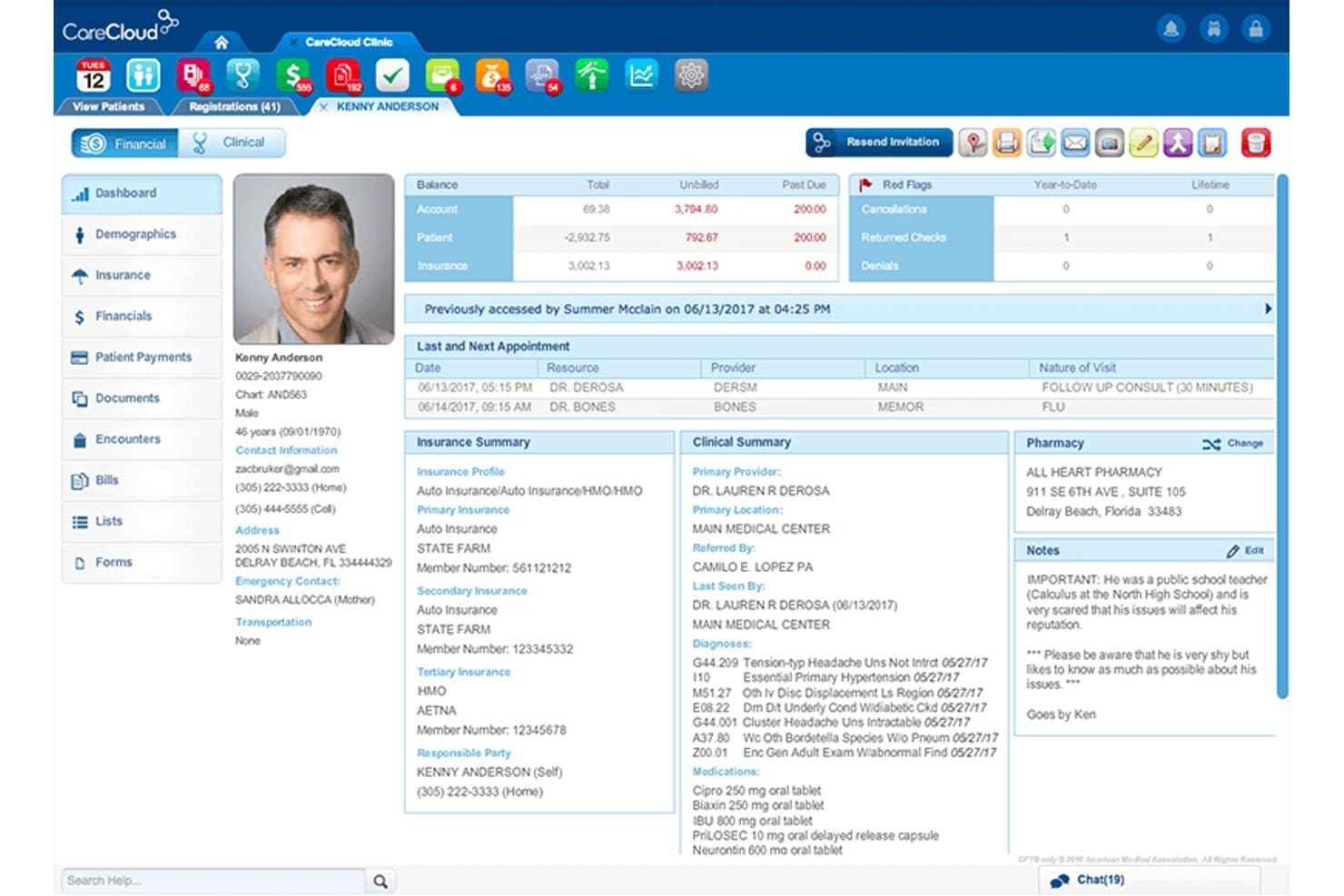
CareCloud offers a comprehensive patient portal dashboard displaying financial summaries, insurance details, clinical notes, and appointment history in one unified view. CareCloud is a patient experience platform that combines digital intake forms, online scheduling, secure portal messaging, and in-portal bill pay, tightly integrated with CareCloud's EHR and practice management systems.
Who Is CareCloud Best For?
CareCloud Breeze is a strong fit for independent and small-to-mid-size practices looking to replace paper-based front-office workflows with a fully digital patient experience.
Why I Picked CareCloud
CareCloud Breeze earns its spot on my shortlist because of how tightly it connects the digital check-in experience to back-end clinical records. I love that patients can complete customizable intake forms before their visit, with responses auto-populating directly into CareCloud Charts and the practice management system. I also find the Clover kiosk integration genuinely useful, letting patients check in on-site from a self-serve kiosk without front-desk involvement.
CareCloud Key Features
- Telehealth visit requests: Patients can request and join virtual appointments with a single click.
- Automated appointment reminders: The system sends email or text reminders to reduce no-shows.
- Portal messaging: Practices can send important pre-visit communications directly to patients within the portal.
- Multiple payment options: The platform supports various payment methods and payment plan customization.
CareCloud Integrations
CareCloud Breeze offers native integrations with CareCloud Central (practice management), CareCloud Charts (EHR), and Clover POS kiosks. An API is available for custom integrations.
Pros and Cons
Pros:
- Automated payment reminders with card-on-file payment
- Supports patient check-in via on-site kiosk
- Pre-registration forms auto-populate clinical records
Cons:
- Only works with CareCloud’s own EHR
- Messaging features are basic compared to peers
Learn more about CareCloud: Best for enterprise patient across health systems
- Free demo available
- Pricing upon request
Visit WebsiteCustomer Rating:4.3/5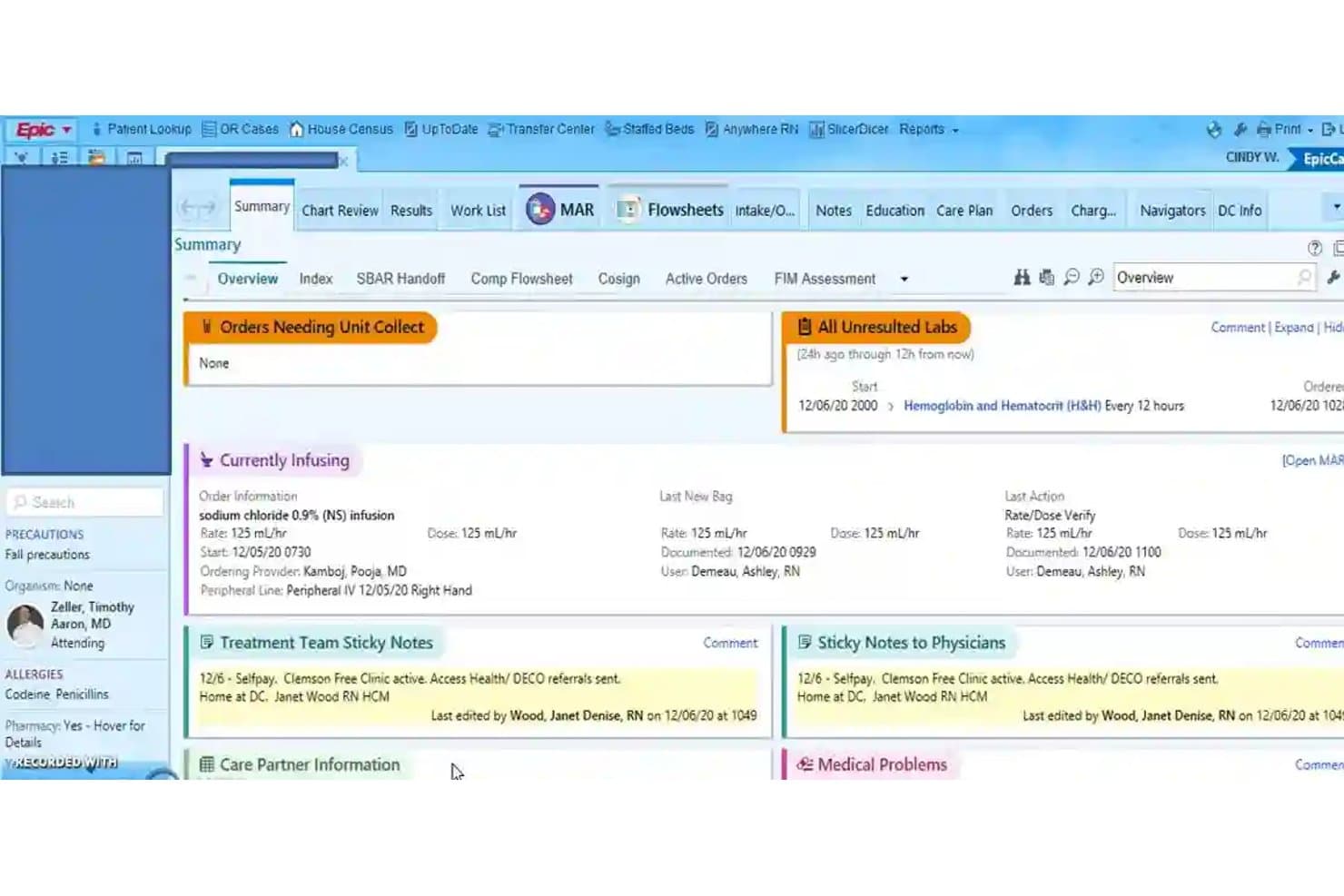
Epic EMR Software offers a patient summary dashboard displaying active infusions, unresulted labs, treatment team notes, and allergy information in a clinical overview layout. Epic is an enterprise EMR platform with a native patient portal (MyChart) that gives patients access to clinical records, secure messaging, self-scheduling, digital intake, bill pay, and prescription refill requests across large health systems.
Who Is Epic EMR Software Best For?
Epic is a strong fit for large hospitals, academic medical centers, and multi-site health systems that need a unified patient portal across complex, enterprise-scale environments.
Why I Picked Epic EMR Software
Epic EMR Software earns its spot on my shortlist because no other patient portal matches its cross-organization record access at this scale. MyChart Central lets patients link accounts from multiple health systems into a single unified view, which matters most when patients receive care across several affiliated or unaffiliated organizations. I also find the Fast Pass waitlist feature genuinely useful, as it automatically notifies patients when an earlier appointment opens up without requiring any staff to manually manage the list.
Epic EMR Software Key Features
- Secure patient messaging: Patients can communicate with care teams and send attachments from their portal account.
- Self-service eCheck-in: Patients complete forms and questionnaires online prior to appointments, with responses flowing into the EMR.
- Integrated online bill pay: Users can access statements and pay balances directly through the patient portal using multiple payment options.
- Dedicated telehealth visits: Video visits launch directly from MyChart, allowing patients to connect with providers without leaving the portal.
Epic EMR Software Integrations
Epic EMR Software offers native integrations with platforms like Iguana, MyChart, Avatier Identity Anywhere, Artera, PioneerRx, Harris CareTracker, and Ambara Health. An API is available for custom integrations, and open.epic.com provides FHIR and SMART Health Card support.
Pros and Cons
Pros:
- Offers advanced appointment management features
- Supports customizable digital intake workflows
- Enables cross-system patient record access
Cons:
- Onboarding requires extensive training and resources
- Suited for large organizations only
Learn more about Epic EMR Software: Best for managing records and messages in one
- Free demo available
- Pricing upon request
Visit WebsiteCustomer Rating:4/5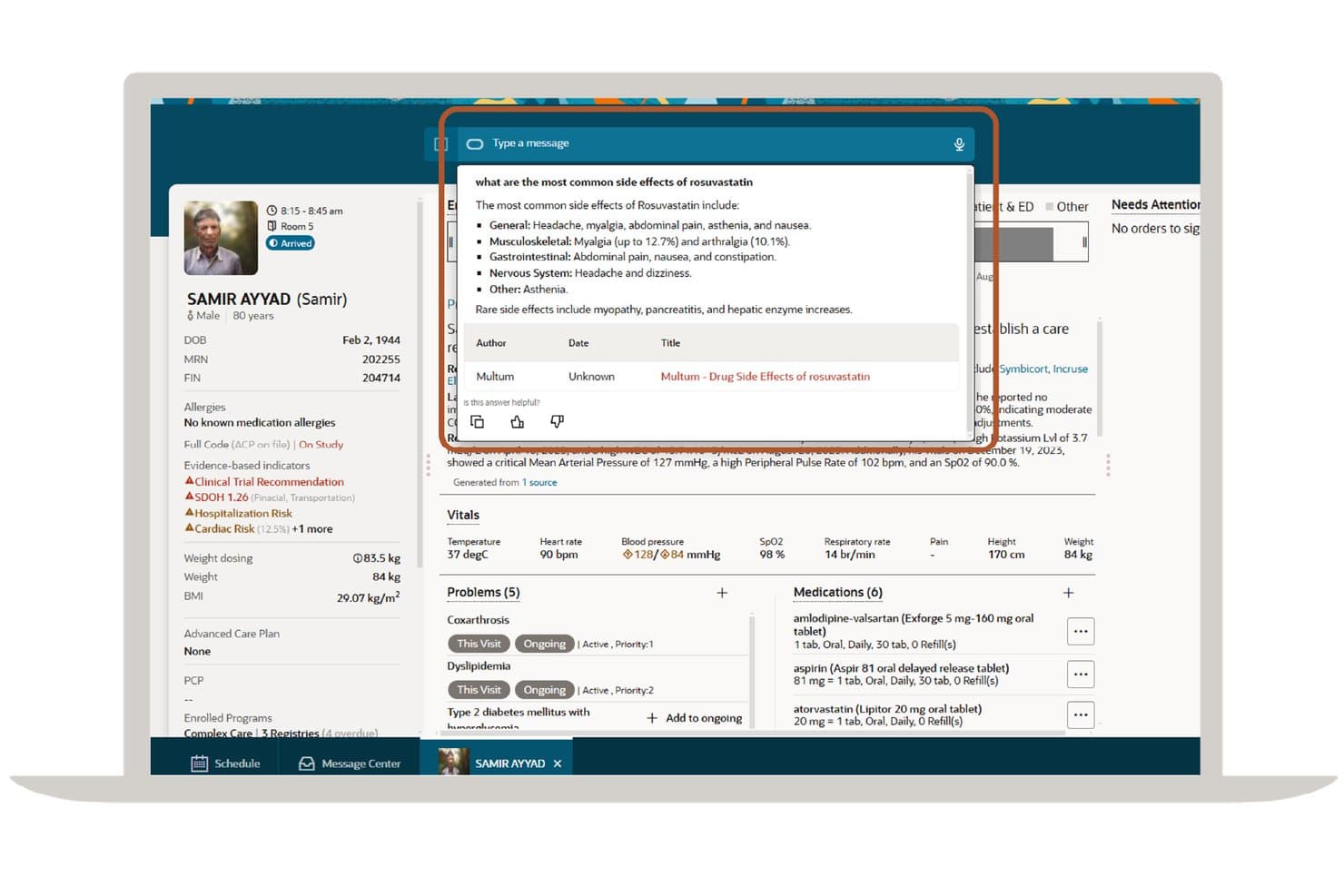
Oracle Health offers an AI-powered voice assistant within its EMR that answers clinical queries, such as rosuvastatin side effects, directly in the patient chart. Oracle Health is an enterprise EMR and patient portal platform that combines native health record access, HIPAA-compliant provider messaging, self-service scheduling, digital intake, and integrated bill pay in a single clinical suite.
Who Is Oracle Health Best For?
Oracle Health is built for mid-to-large health systems, hospital-affiliated practices, and multi-site clinical organizations with dedicated IT and administrative teams.
Why I Picked Oracle Health
I picked Oracle Health as one of the best because the Patient Portal natively syncs with the Oracle Health EHR, giving patients access to lab results, visit summaries, and medications in one place. What I find genuinely distinctive is the Unified Consumer Communications module, which threads portal messages, SMS, and third-party channels into a single provider-routed inbox. The AI layer, built on OpenAI, also translates lab results into plain language and drafts patient messages directly in the portal.
Oracle Health Key Features
- Patient intake and check-in: Supports electronic registration and medical history forms that feed directly into the EHR.
- Video visit scheduling: Enables virtual appointments through native telehealth modules and partner integrations.
- Real-time device integration: Connects medical devices like infusion pumps, vitals monitors, and lab instruments for immediate record updates.
- Advanced payment processing: Offers PCI-compliant payments with multiple digital wallet and card options through Oracle Health Payments.
Oracle Health Integrations
Oracle Health offers native integrations with Amwell for video visits and supports Apple Pay, Google Pay, and Samsung Pay through Oracle Health Payments. The platform also provides an API for custom integrations and connects medical devices like infusion pumps and lab instruments.
Pros and Cons
Pros:
- Supports advanced device and lab data flows
- Centralized HIPAA-compliant patient messaging
- Real-time EHR and patient portal sync
Cons:
- Suited mainly for large or hospital-based organizations
- Onboarding process is complex for new patients
Learn more about Oracle Health: Best for secure messaging and online payments
- Free demo available
- Pricing upon request
Visit WebsiteCustomer Rating:3.7/5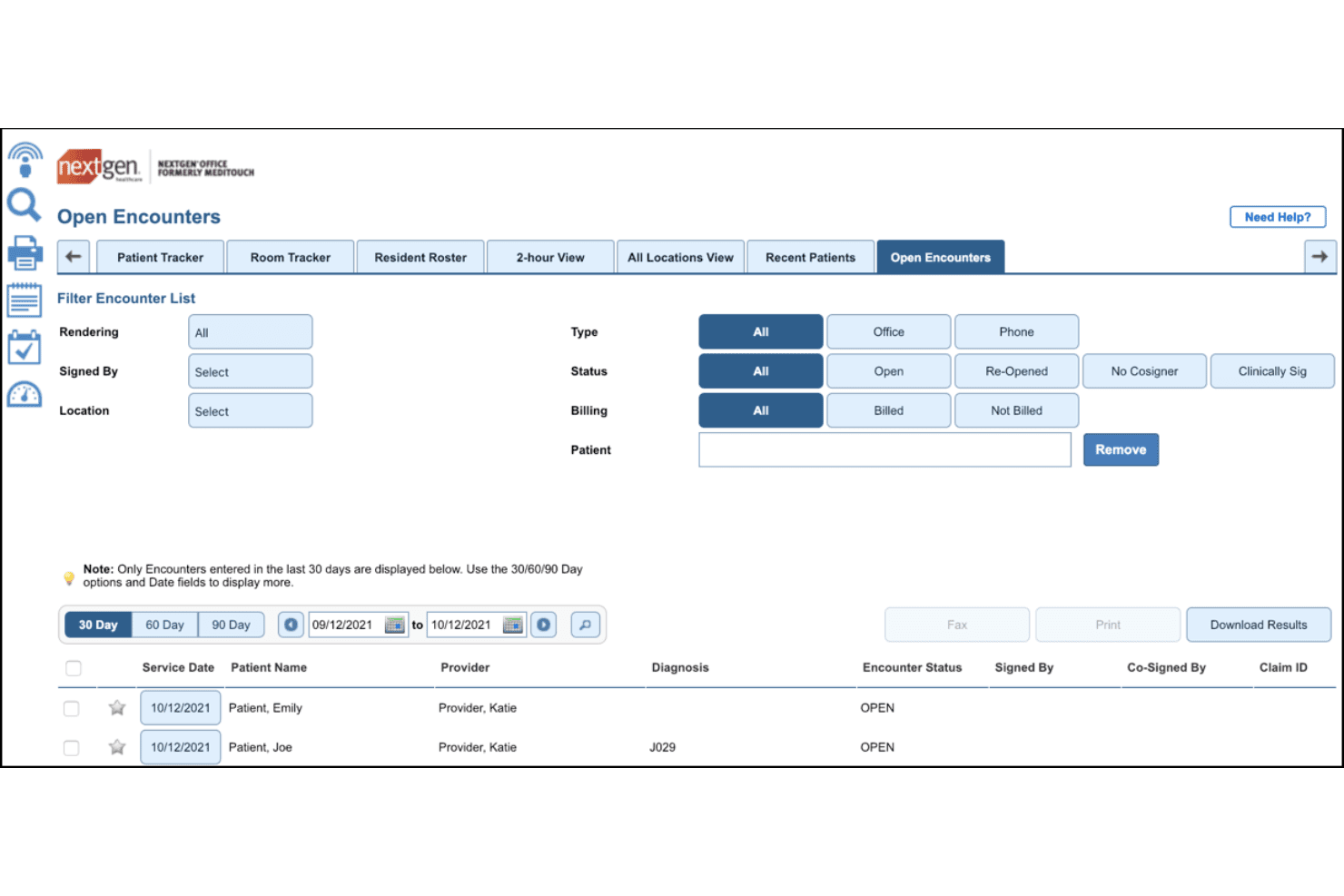
NextGen Healthcare offers an Open Encounters view that allows providers to filter, track, and manage patient encounter statuses, billing, and diagnoses in one screen. NextGen Healthcare is a native ambulatory EHR and patient portal platform that integrates secure messaging, online bill pay, self-scheduling, digital intake, and prescription refill requests into a single closed-loop system.
Who Is NextGen Healthcare Best For?
NextGen Healthcare is a strong fit for independent and multi-specialty ambulatory practices that want a fully integrated EHR and patient portal without stitching together separate vendor tools.
Why I Picked NextGen Healthcare
I picked NextGen Healthcare as one of the best because its secure messaging and payment tools are built directly into the EHR, not sourced from outside vendors. The PxP Portal routes patient messages to specific staff by topic, which keeps provider inboxes manageable. NextGen Pay layers on guest pay, autopay enrollment, and payment plans, and one documented practice saw a fourfold increase in patient payment uptake after switching to it.
NextGen Healthcare Key Features
- Bidirectional EMR integration: Patient portal data syncs with the NextGen EHR in real time for lab results, notes, and records.
- Customizable digital intake forms: Patients complete registration, medical history, and consent forms that populate their chart automatically.
- Self-scheduling and appointment management: Patients can book, reschedule, or cancel appointments directly through the portal.
- Mobile-optimized patient portal access: The portal works on any device with a web browser and supports onboarding in both English and Spanish.
NextGen Healthcare Integrations
NextGen Healthcare offers native integrations via the NextGen Marketplace, including Mirth Connect, Commure, ActX Genomic Decision Support, Innovaccer, Weave, Birdeye, Clearwave, Arcadia.io, Labcorp Diagnostic Assistant, and AWS. An API is available for custom integrations.
Pros and Cons
Pros:
- Integrated autopay enrollment and payment plans
- Real-time EMR updates from patient portal activity
- Secure patient messaging with routing workflows
Cons:
- Limited prescription adherence tracking tools
- Reports of slow support ticket resolution
Learn more about NextGen Healthcare: Best for mobile health records
- Free demo available
- From $499/user/month
Visit WebsiteCustomer Rating:3.4/5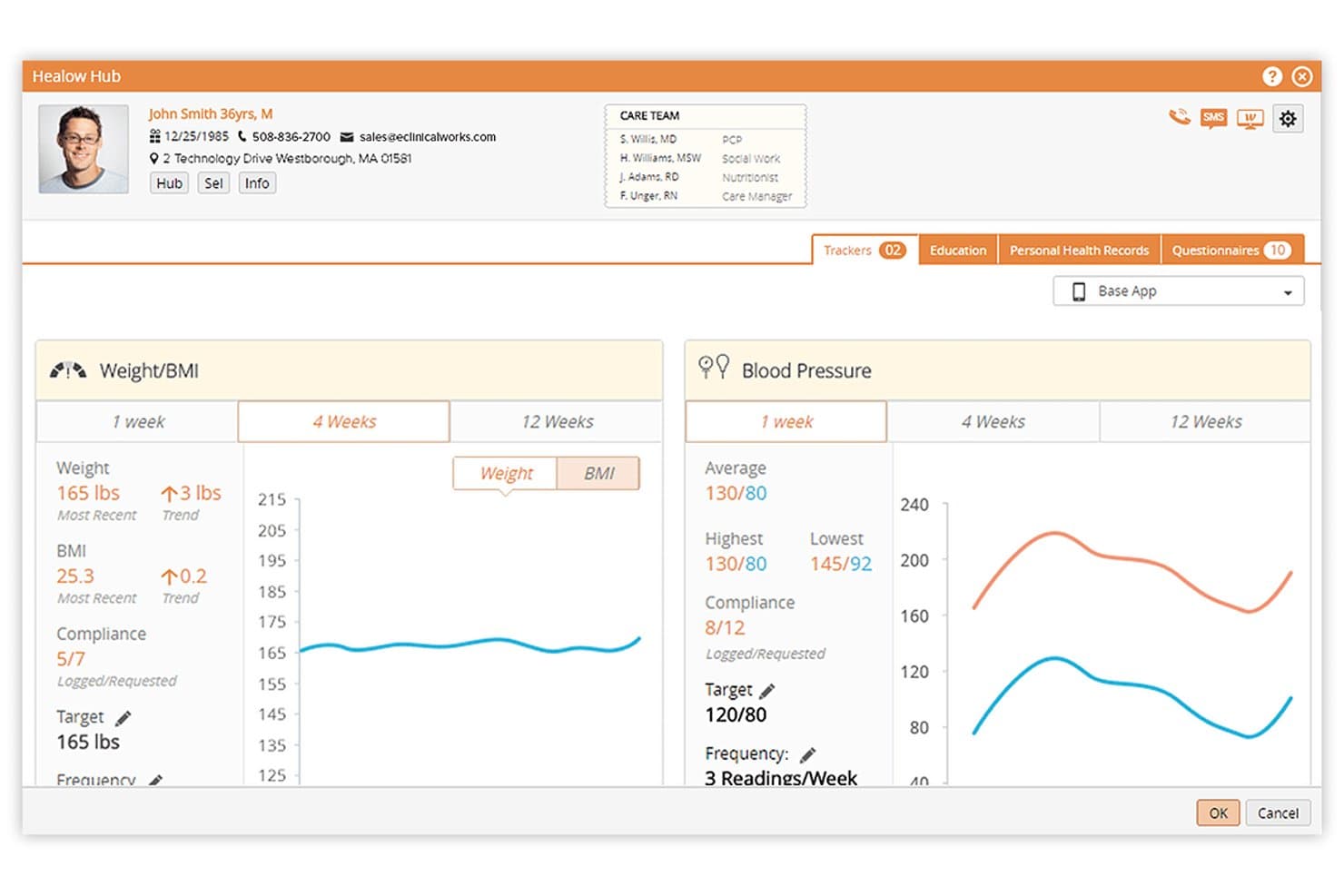
eClinicalWorks offers a patient health tracking portal called Healow Hub, displaying weight/BMI and blood pressure trackers with trend charts and compliance data. eClinicalWorks is a cloud-based EMR platform with a native patient engagement suite called healow, covering self-scheduling, secure messaging, digital intake, telehealth, and mobile health record access.
Who Is eClinicalWorks Best For?
eClinicalWorks is a strong fit for ambulatory practices and community health centers that need a fully integrated EMR and patient portal under one platform.
Why I Picked eClinicalWorks
I picked eClinicalWorks as one of the best because the healow app puts a patient's complete health record, active medications, and upcoming appointments into a single mobile interface. Patients can launch a TeleVisit or complete their pre-visit intake, including consent forms and copay payment, from that same app. Very few EMR-native portals deliver that full clinical and administrative mobile experience without requiring a separate third-party tool.
eClinicalWorks Key Features
- PRISMA health information search engine: Aggregates records from external EHRs and organizes clinical data for provider review.
- healow Genie AI contact center: Provides automated, 24/7 patient self-service by phone, SMS, or chatbot.
- Customizable digital intake forms: Allows patients to complete registration, medical history, and consent electronically before their visit.
- Integrated online bill pay: Patients can view statements and complete payments directly through the patient portal.
eClinicalWorks Integrations
eClinicalWorks offers native integrations with LabCorp and supports data syncing with devices like home blood glucose meters and Fitbit through the healow platform. An API is available for custom integrations.
Pros and Cons
Pros:
- Digital pre-visit forms sync to the EHR
- Robust telehealth tools within patient portal
- Mobile app offers full patient record access
Cons:
- Portal updates roll out slowly across practices
- User interface feels dated to many users
Learn more about eClinicalWorks: Best for mobile access and digital check-in
- Free demo available
- Pricing upon request
Visit WebsiteCustomer Rating:5/5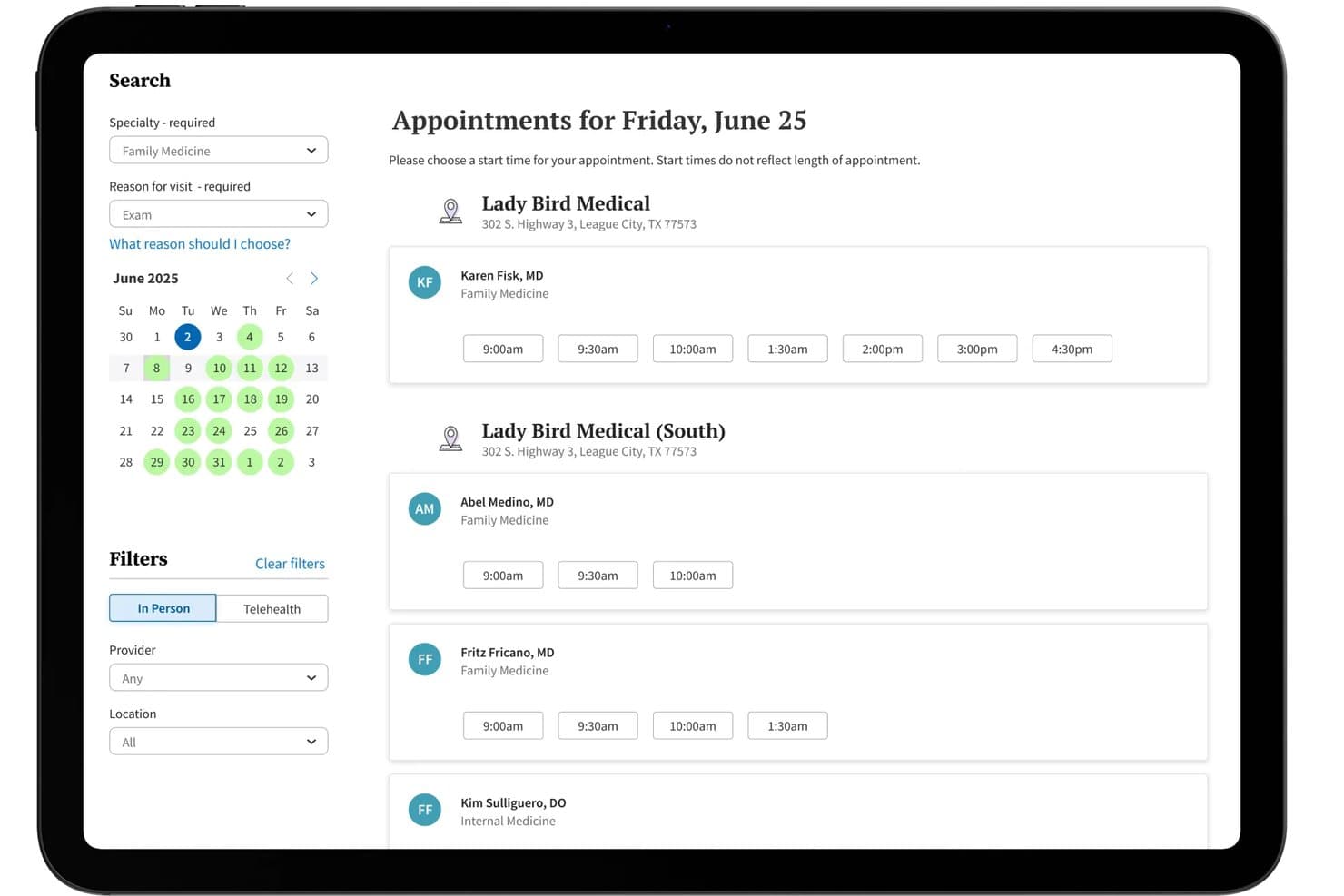
Athenahealth offers a self-scheduling patient portal where patients can browse available appointment times by specialty, location, and provider directly from a calendar interface. Athenahealth is a cloud-based EHR and patient portal platform that combines clinical records, secure messaging, self-scheduling, digital intake, online payments, and e-prescribing in one connected system.
Who Is Athenahealth Best For?
Athenahealth works well for independent and ambulatory practices that want an integrated EHR and patient portal without relying on multiple disconnected tools.
Why I Picked Athenahealth
I picked Athenahealth because the AthenaPatient mobile app gives patients direct access to health records, test results, appointments, messages, and billing information from their phones. I particularly like its pre-visit digital check-in tools, which let patients complete intake forms, screening questionnaires, and consent documents before arriving. This can reduce paperwork at the front desk and help staff prepare for visits more efficiently.
Athenahealth Key Features
- HIPAA-compliant secure messaging: Let patients and providers exchange protected messages and documents through the portal or mobile app.
- Integrated e-prescribing: Allow patients to review current medications and submit refill requests directly to their care team.
- Automated waitlist notifications: Notify patients when earlier appointment slots become available and let them book those openings online.
- Custom-branded patient portal: Add the practice’s logo and branding to create a more consistent patient experience.
Athenahealth Integrations
Athenahealth connects with laboratories, pharmacies, imaging centers, payers, and other healthcare organizations. It also supports data exchange through Carequality and CommonWell, offers a marketplace of vetted partner applications, and provides API access for custom integrations.
Pros and Cons
Pros:
- Real-time self-scheduling for appointments
- Pre-visit digital check-in workflow included
- Mobile patient app with full record access
Cons:
- Reporting customization is limited for some metrics
- Patient portal notifications can be inconsistent
Learn more about Athenahealth:
Other EMR Patient Portal Software
Here are some additional EMR patient portal software options that didn’t make it onto my shortlist, but are still worth checking out:
- 11FollowMyHealthBest for connecting patients with records
- 12RXNTBest for affordable portal access
- 13Azalea HealthBest for engagement in rural healthcare
- 14CharmHealthBest for customizable patient engagement
- 15ModMedBest for specialty-specific patient engagement
- 16NextechBest for specialty patient portals in dermatology
- 17CureMDBest for combining portal access
- 18NextGen OfficeBest for patient access for small practices
How I Evaluate EMR Patient Portal Software
I split my evaluation into core functionality every portal must cover—like bidirectional EMR sync and HIPAA-compliant messaging—and the differentiators that separate good tools from great ones.
Core Functionality (Table Stakes For This List)
When I'm selecting tools for my list, I rank each one on a scale from 0 (does not offer the functionality) to 5 (excels in this area) for each core functionality listed below. Then, I calculate the tool's total score into a percentage. Each tool needs to achieve a minimum total score of 65% to be considered for inclusion.
- EMR/EHR Integration: I check whether patient-submitted data syncs bidirectionally with the chart, so lab results and visit notes update without manual reconciliation.
- Secure Patient Messaging: HIPAA-compliant messaging with attachment support and provider routing matters here, like sharing wound photos or post-op instructions.
- Appointment Self-Service: Patients should be able to book, reschedule, or cancel visits on their own, ideally with real-time availability and automated reminders.
- Digital Intake Forms: I evaluate whether registration and consent forms auto-populate the patient's chart, replacing clipboard-and-scan workflows at check-in.
- Online Bill Pay: Each portal should offer in-portal payment with multiple methods and payment plans, not just a redirect to a third-party processor.
- Prescription & Refill Requests: I look for a dedicated refill workflow that routes requests directly to the provider rather than relying on a generic message thread.
Once I have a list of tools that meet the criteria, I consider what sets each platform apart.
Differentiating Factors (What Sets Vendors Apart)
Here's how I compare and contrast different vendors:
Standout Features
Telehealth integration is a key differentiator—I look for portals where patients can launch a video visit directly without a separate app or login. Mobile app access with push notifications also matters, since patients are far more likely to review lab results or respond to messages when alerts reach their phone. Family and proxy access is another feature I evaluate closely, especially for pediatric or elder care practices where a caregiver needs to manage records for dependents under proper HIPAA controls.
Beyond Features
EMR/EHR interoperability is where I start—I check whether a portal connects natively to the practice's existing system or requires HL7/FHIR bridges that add complexity. Regulatory compliance also weighs heavily, especially ONC Health IT Certification for practices participating in Promoting Interoperability programs. Practice size and specialty fit round out my evaluation. A solo dermatology office needs a turnkey setup, while a multi-location health system needs unified patient identity management across sites and providers.