

O software EMR em conformidade com a HIPAA consiste em sistemas de registos médicos eletrónicos que protegem a privacidade dos pacientes e cumprem as normas de segurança dos dados de saúde dos EUA. Se procura software que mantenha as informações sensíveis seguras e, simultaneamente, suporte fluxos de trabalho eficientes, não pode comprometer a conformidade.
Esta lista analisa as principais opções de EMR em conformidade com a HIPAA, ajudando-o a comparar ferramentas de confiança que se adequam às suas necessidades clínicas, à dimensão da sua clínica e à sua área de especialidade — para que possa prestar cuidados com confiança sem arriscar violações dispendiosas.
Why Trust Our Software Recommendations
6,700+
Reviews
20
Industry experts
16+
Evaluation factors
14
Years
Our team has been testing and reviewing software since 2012. As medical practice leaders ourselves, we know how difficult—and important—it is to choose the right software.
For this guide, we evaluated tools using hands-on testing and independent research, scoring tools using our selection criteria.
Our reviews reflect our human editorial judgment, not a sales pitch.
Tabela de comparação de software EMR em conformidade com a HIPAA
Esta tabela de comparação resume os detalhes de preços das minhas seleções de software EMR em conformidade com a HIPAA:
| Tool | Best For | Trial Info | Price | ||
|---|---|---|---|---|---|
| 1 | Best for primary care with clinical-first design | Free demo available | Pricing upon request | Website | |
| 2 | Best for solo and small independent practices | Free demo available | Pricing upon request | Website | |
| 3 | Best for multi-specialty practice customization | Free demo available | Pricing upon request | Website | |
| 4 | Best for cloud-based access on any device | Free demo available | From $199/user/month | Website | |
| 5 | Best for cloud-based charting and billing | Free demo available | Pricing upon request | Website | |
| 6 | Best for deep health system integration | Not available | Pricing upon request | Website | |
| 7 | Best for AI-driven enterprise-scale solutions | Free demo available | Pricing upon request | Website | |
| 8 | Best for customizable specialty templates | Free demo available | Pricing upon request | Website | |
| 9 | Best for ambient AI documentation tools | Free demo available | Pricing upon request | Website | |
| 10 | Best for specialty-specific AI charting | Free demo available | Pricing upon request | Website |


Análises do melhor software EMR em conformidade com a HIPAA
Seguem-se os meus resumos detalhados do melhor software EMR em conformidade com a HIPAA que integrou a minha seleção. As minhas análises apresentam uma visão detalhada das funcionalidades, dos melhores casos de utilização e das integrações de cada software, para o ajudar a encontrar a melhor opção para si.
 Best for primary care with clinical-first design
- Free demo available
- Pricing upon request
Visit WebsiteCustomer Rating:4.4/5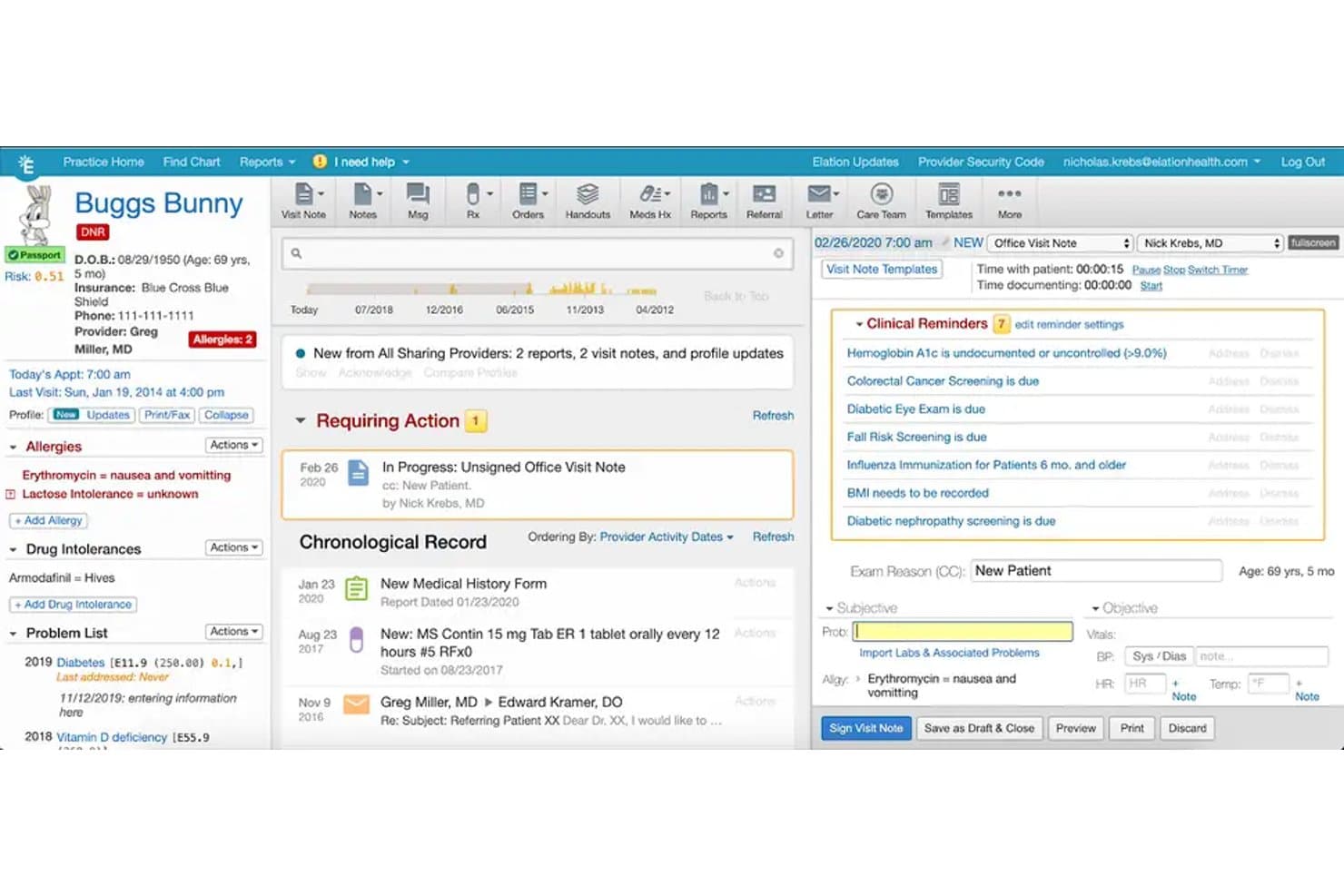
Elation Health offers a comprehensive patient chart view with clinical reminders, allergy tracking, problem lists, and visit note documentation in its EMR platform. Elation Health is a HIPAA-compliant, cloud-based EHR built for primary care, offering AI-assisted clinical charting, EPCS-certified e-prescribing, lab order management, and an integrated patient portal.
Who Is Elation Health Best For?
Elation Health suits independent primary care physicians and small practices, particularly those running direct primary care or membership-based models.
Why I Picked Elation Health
Elation Health earns its spot on my shortlist because its three-panel console keeps patient charts, notes, and orders visible at once, reducing the need to switch between screens during visits. I also like that Note Assist, its AI-powered medical scribing tool, generates structured SOAP notes from patient encounters, reducing manual documentation. Its e-prescribing functionality supports controlled substance prescriptions (EPCS) and drug interaction checks within the same workflow, reinforcing its focus on clinical efficiency.
Elation Health Key Features
- Integrated telehealth: Offers HIPAA-compliant video visits with direct chart integration and automatic encounter documentation.
- Role-based access controls: Lets you configure user permissions to restrict PHI access according to staff responsibilities.
- Audit trail and access logs: Tracks all PHI access and changes for enhanced security and compliance reporting.
- Patient Passport portal: Provides secure messaging, intake forms, and appointment requests for patients within a unified platform.
Elation Health Integrations
Elation Health offers over 300 native integrations, including Quest Diagnostics, LabCorp, Ribbon, Spruce, Hint Health, American Esoteric Laboratories, Access Medical Labs, Apex, Anne Arundel Medical, and MDScripts. An open API and FHIR API are available for custom integrations.
Pros and Cons
Pros:
- Bidirectional lab ordering with discrete data results
- Note Assist generates SOAP notes automatically
- Three-panel console keeps full chart visible
Cons:
- Reporting limited to pre-built canned reports
- Customer support response times often slow
Learn more about Elation Health: Best for solo and small independent practices
- Free demo available
- Pricing upon request
Visit WebsiteCustomer Rating:3.9/5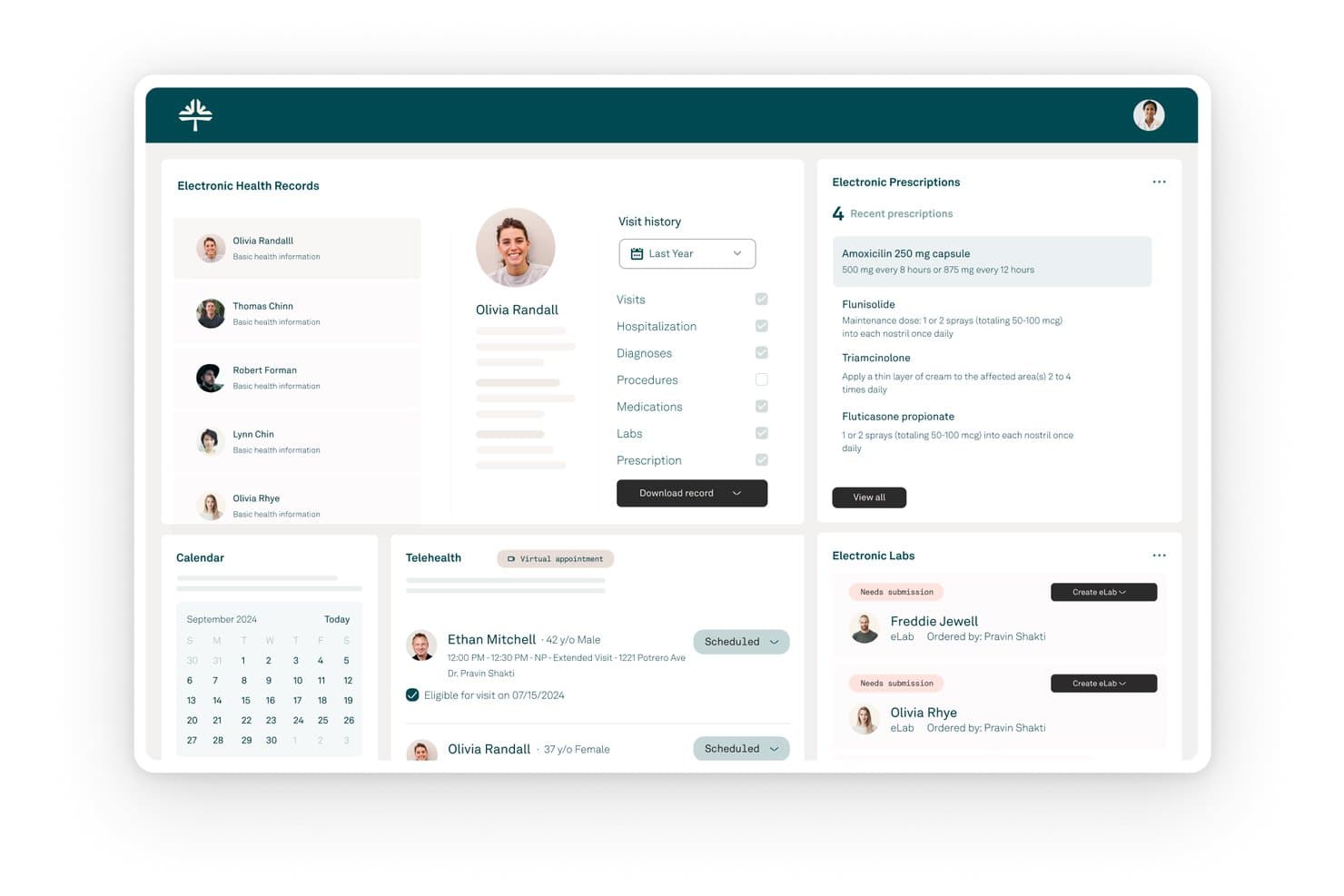
Tebra offers a unified dashboard displaying electronic health records, prescriptions, telehealth appointments, and electronic labs for streamlined patient management. Tebra is a cloud-based, ONC-certified EHR platform that combines HIPAA-compliant clinical charting, AI-assisted documentation, e-prescribing with EPCS and PDMP integration, eLabs, telehealth, and integrated billing in one system.
Who Is Tebra Best For?
Tebra fits solo practitioners and small independent practices across primary care, mental health, pediatrics, and NP-led clinics.
Why I Picked Tebra
I've included Tebra in my top picks because it's built specifically for solo and small independent practices, where one provider handles both clinical and admin work. I like the AI Note Assist with SALT, which pulls forward content from a patient's prior visit directly into the current note. The EPCS and PDMP integration is baked into the prescribing workflow, so you can handle controlled substance prescriptions with real-time monitoring without a third-party add-on.
Tebra Key Features
- Integrated telehealth: Connect with patients through HIPAA-compliant video visits built right into the schedule and chart.
- Secure patient portal: Patients can view records, send secure messages, complete intake, and pay bills online.
- E-labs and order management: Electronic ordering of labs and receipt of results are fully integrated into each patient chart.
- Role-based access controls: Set permissions by user role to protect PHI and ensure access only for authorized staff.
Tebra Integrations
Tebra offers native integrations with labs, imaging centers, supplement ordering services, clearinghouses for e-claims, and PDMP via Appriss Health. An API is also available for custom integrations.
Pros and Cons
Pros:
- Full EPCS and PDMP prescribing in one workflow
- Integrated telehealth built into the chart
- AI-assisted SOAP notes with prior visit pull-forward
Cons:
- Notes can be lost due to recurring system errors
- E-prescriptions frequently fail to reach the pharmacy
Learn more about Tebra: Best for multi-specialty practice customization
- Free demo available
- Pricing upon request
Visit WebsiteCustomer Rating:3.9/5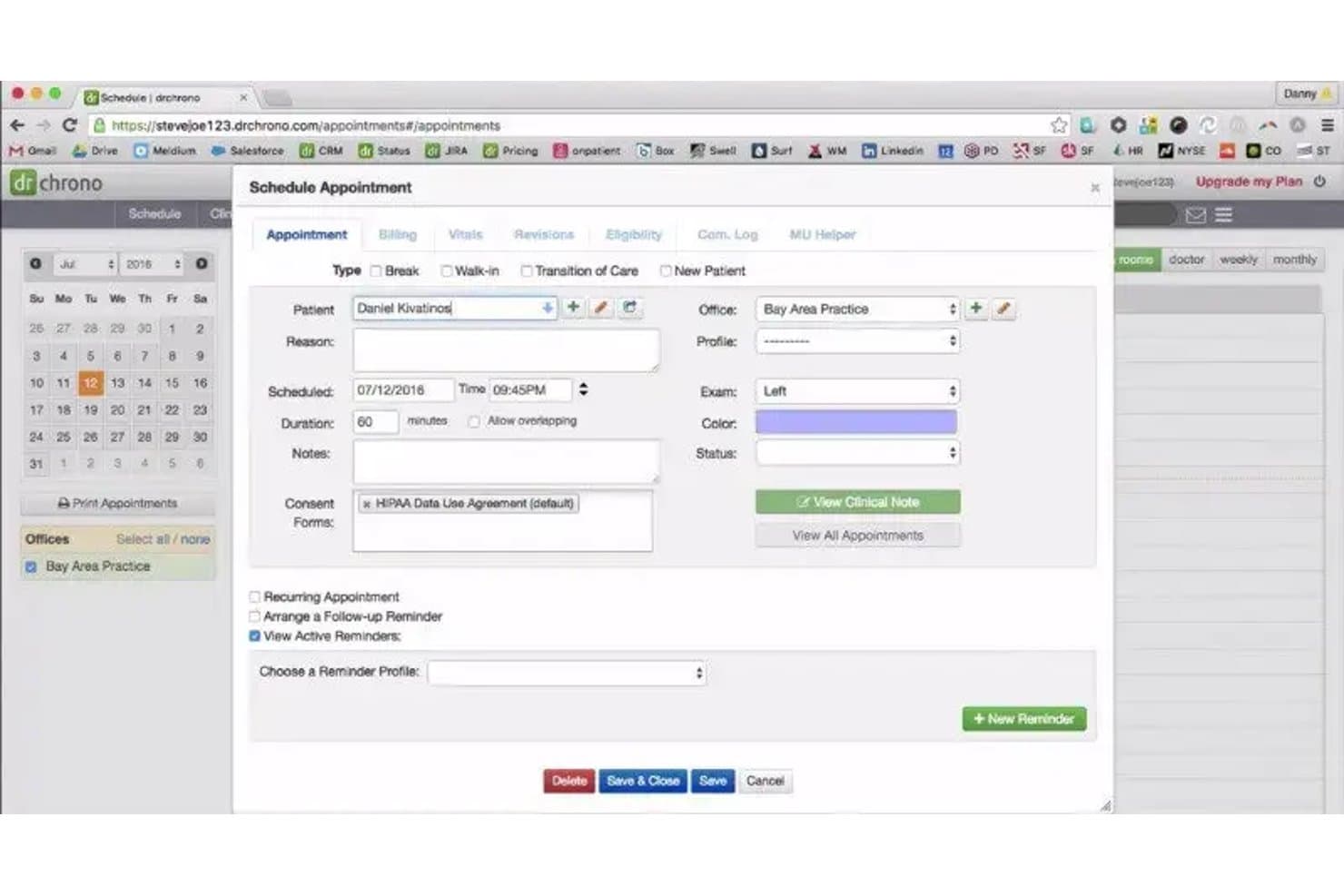
DrChrono offers a HIPAA-compliant appointment scheduling form with consent form management, including a built-in HIPAA Data Use Agreement field. DrChrono is a HIPAA-compliant, cloud-based EMR platform that combines clinical charting, e-prescribing, lab ordering, practice management, and revenue cycle management across 20+ specialty-specific workflows.
Who Is DrChrono Best For?
DrChrono is a strong fit for independent and multi-specialty practices that need specialty-specific charting workflows without building them from scratch.
Why I Picked DrChrono
DrChrono earns its spot on my shortlist because of the depth of its specialty-specific charting. I can choose from pre-built templates across 20+ specialties, from podiatry to wound care, and further customize forms and charting shortcuts to match each provider's workflow. On top of that, EPCS-certified ePrescribing is built directly into those specialty workflows, so controlled substance prescribing follows the same configured path as the rest of the chart.
DrChrono Key Features
- Audit trail reporting: Track all access, edits, and transmission of patient health information for HIPAA compliance and audit investigations.
- Integrated telehealth module: Conduct secure video visits with built-in scheduling, chart access, and real-time documentation.
- ONC-certified e-prescribing: Compliant with electronic prescriptions including controlled substances, drug interaction screening, and automatic allergy checks.
- Patient portal with secure messaging: Share visit notes and lab results, complete intake forms, and communicate with patients on a HIPAA-compliant platform.
DrChrono Integrations
DrChrono offers native integrations with LabCorp, Quest Diagnostics, Surescripts, Curogram, and Fullscript, and connects with thousands of labs and pharmacies nationwide. An API is available for custom integrations.
Pros and Cons
Pros:
- EPCS-certified ePrescribing built into specialty workflows
- AI scribe generates notes during patient visits
- Pre-built templates for 20+ medical specialties
Cons:
- Auto-renewal contracts limit exit flexibility
- Billing module has documented glitch complaints
Learn more about DrChrono: Best for cloud-based access on any device
- Free demo available
- From $199/user/month
Visit WebsiteCustomer Rating:3.7/5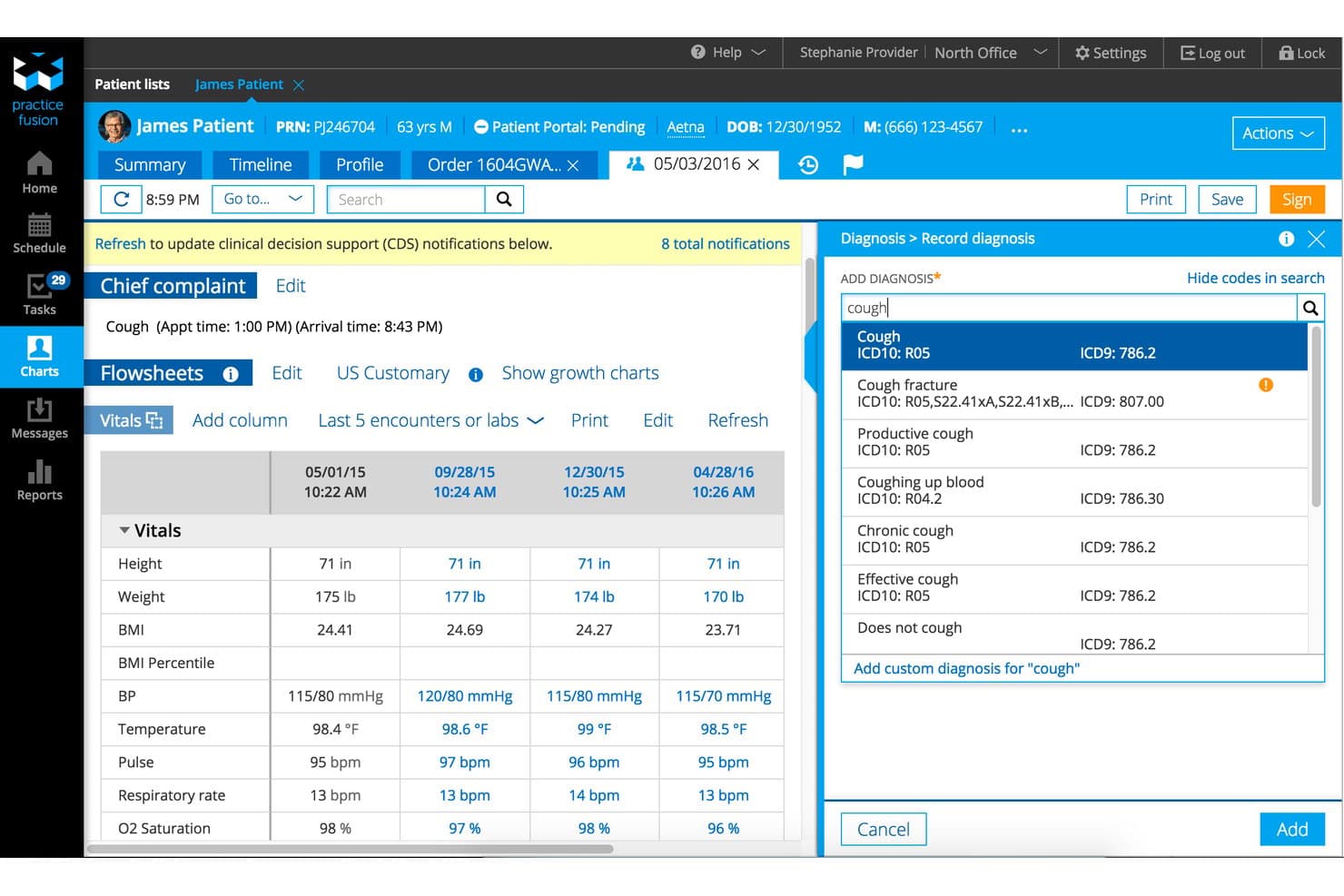
Practice Fusion offers a HIPAA-compliant EMR with integrated diagnosis coding, patient vitals flowsheets, and clinical decision support within a single encounter view. Practice Fusion is a cloud-based, HIPAA compliant EHR platform for independent practices that includes clinical charting, EPCS-certified e-prescribing, lab and imaging order management, and a built-in patient portal.
Who Is Practice Fusion Best For?
Practice Fusion is a strong fit for small independent practices and solo providers who need a full-featured ambulatory EHR without the complexity built for large health systems.
Why I Picked Practice Fusion
I picked Practice Fusion as one of the best because its fully cloud-based architecture requires no software downloads, and the EHR updates automatically without any IT involvement. In practice, I can chart from a laptop at the front desk or a tablet in the exam room, with HIPAA-compliant access controls following the session regardless of device. The EPCS-certified e-prescribing works the same way, so sending a controlled substance prescription never requires being at a specific workstation.
Practice Fusion Key Features
- Custom charting templates: Build and modify clinical documentation templates for specialty care and encounter types.
- Integrated lab and imaging orders: Order labs and imaging directly from the EHR with bidirectional result delivery.
- HIPAA-compliant patient portal: Patients can securely message providers, access records, and complete intake forms online.
- Detailed audit trails: Track access, edits, and activity on all patient charts for HIPAA compliance and reporting.
Practice Fusion Integrations
Practice Fusion offers native integrations with BioReference Laboratories, Ascension Health System, CBLPath, Counsyl, Diagnostic Laboratory Services, Diagnostic Pathology Medical Group, Desert Medical Imaging, and Avalon Laboratory System. An API is available for custom integrations.
Pros and Cons
Pros:
- Updates automatically with no IT involvement
- Free built-in patient portal
- EPCS-certified e-prescribing across all 50 states
Cons:
- Customer support response times frequently criticized
- MFA and SOC 2 poorly documented
Learn more about Practice Fusion: Best for cloud-based charting and billing
- Free demo available
- Pricing upon request
Visit WebsiteCustomer Rating:3.6/5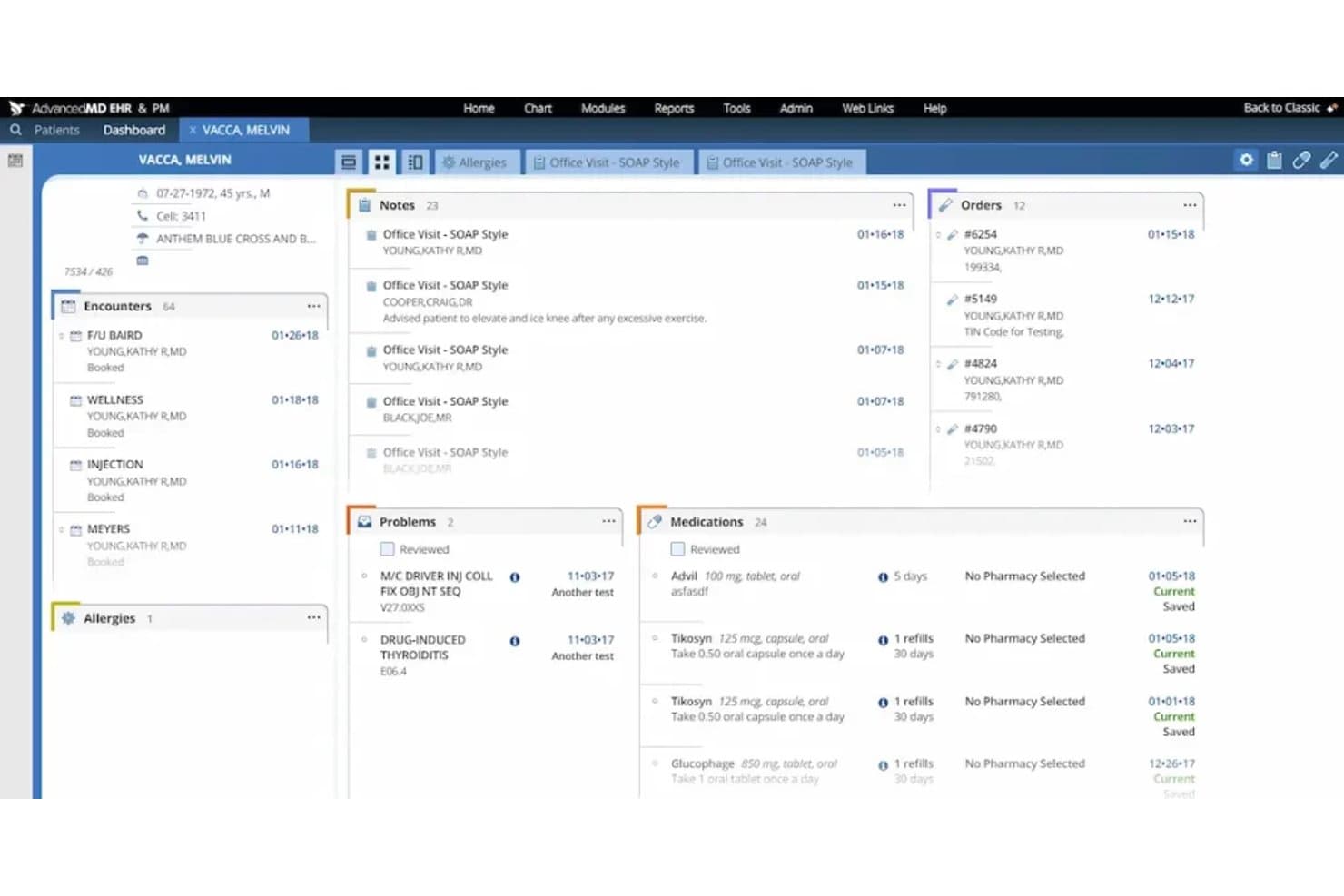
AdvancedMD offers a comprehensive patient dashboard displaying encounters, notes, orders, problems, medications, and allergies in a unified view. AdvancedMD is a cloud-based HIPAA-compliant EMR platform that combines electronic charting, practice management, e-prescribing, and integrated medical billing for independent ambulatory practices.
Who Is AdvancedMD Best For?
AdvancedMD fits independent practices of any size, from solo physicians to multi-provider groups, across medical, behavioral health, and physical medicine specialties.
Why I Picked AdvancedMD
AdvancedMD earns its spot as one of the best on my shortlist because the charting-to-billing workflow is genuinely connected. I love that I can complete a clinical note, generate a charge slip, and submit a claim without ever leaving the platform. The Smart EHR dashboard's task donuts give me a real-time view of pending charges, unsigned notes, and pharmacy requests all in one screen, which keeps nothing falling through the cracks between the clinical and billing sides of a practice.
AdvancedMD Key Features
- Role-based access controls: Assign granular user permissions to protect PHI and ensure HIPAA compliance.
- Customizable specialty chart templates: Use physician-designed templates tailored to individual specialties for structured, accurate documentation.
- Integrated telehealth module: Launch HIPAA-compliant video visits directly from the platform with automatic encounter recording.
- Automated audit logging: Track all PHI access, edits, and disclosures to maintain detailed audit trails for compliance.
AdvancedMD Integrations
AdvancedMD offers over 25 marketplace integrations, including HIPAA One, EirSystems eMAR, Keragon, QuickBooks, Redox, and Mirth Connect, with FHIR APIs available for custom integrations.
Pros and Cons
Pros:
- AI-assisted documentation available as an add-on
- EPCS and PDMP built into e-prescribing
- Unified charting and billing in one platform
Cons:
- Initial setup and onboarding is time-consuming
- Customer support responsiveness frequently criticized by users
 Best for deep health system integration
- Not available
- Pricing upon request
Visit WebsiteCustomer Rating:4.3/5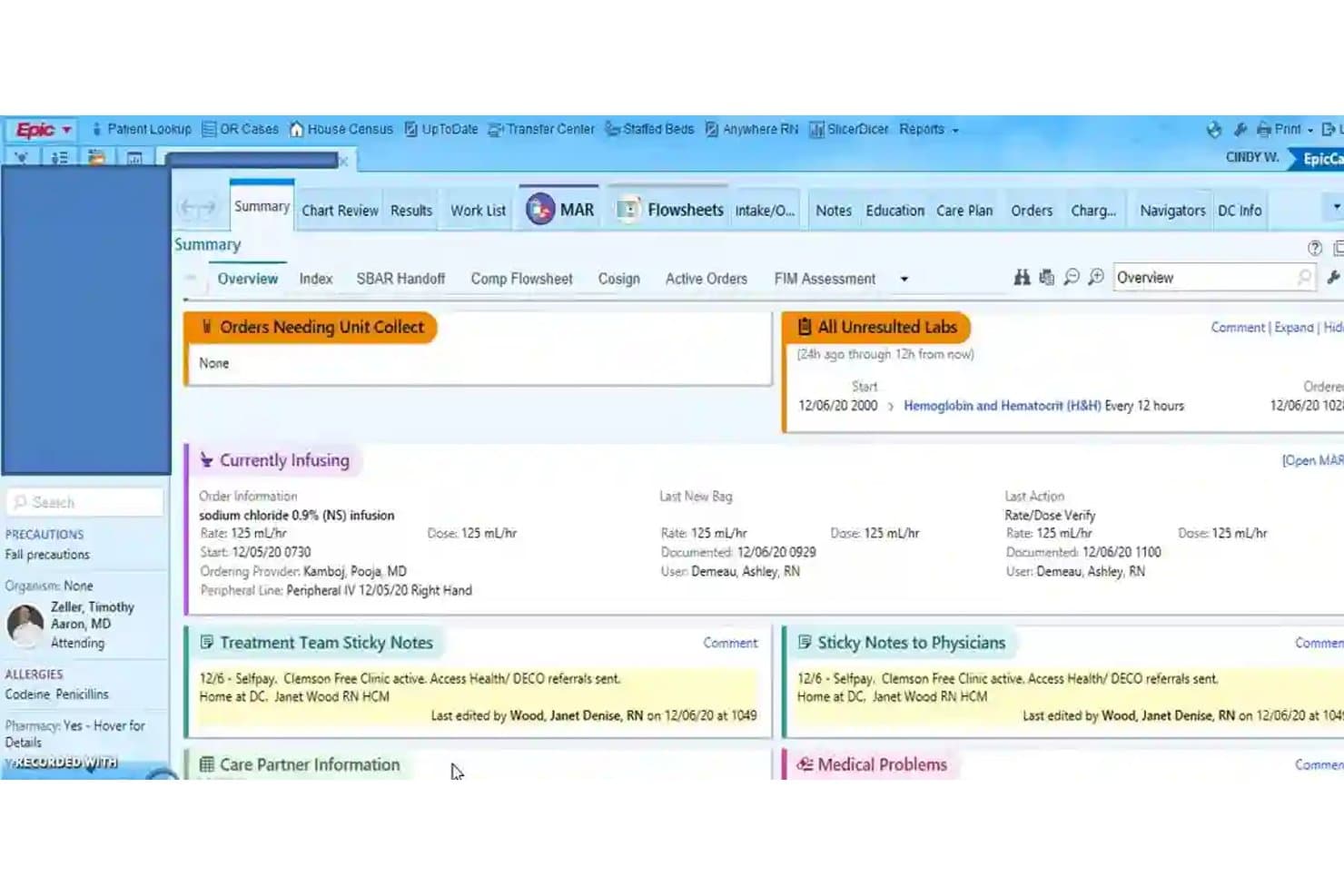
Epic EMR Software offers a patient summary dashboard displaying active infusions, unresulted labs, treatment team notes, and allergy information in a clinical overview layout. Epic is an enterprise-grade, HIPAA-compliant EHR platform that covers clinical charting, e-prescribing, lab order management, patient portal access, and cross-system health data exchange across inpatient and outpatient care settings.
Who Is Epic EMR Software Best For?
Epic is built for large hospitals, multi-site health systems, and integrated delivery networks that need a unified clinical platform across departments and care settings.
Why I Picked Epic EMR Software
Epic earns its spot as one of the best on my shortlist because of how deeply it connects clinical data across departments, facilities, and external health systems. Care Everywhere lets providers pull patient records from outside organizations directly into the chart, which matters in real multi-site care coordination. Epic's HITRUST certification backs its HIPAA compliance with independently audited documentation, not just self-reported claims.
Epic EMR Software Key Features
- Customizable specialty templates: Configure structured charting templates for over 40 specialties, including behavioral health and cardiology.
- Integrated e-prescribing with EPCS: Manage all prescription workflows electronically, including controlled substances and drug interaction checks.
- Comprehensive audit logging: Track access, edits, and disclosures of patient health information with exportable reports for compliance.
- HIPAA-compliant patient portal: Enable secure messaging, document uploads, intake forms, and appointment scheduling through MyChart.
Epic EMR Software Integrations
Epic offers native integrations with LabCorp, Quest Diagnostics, Zoom, Harris CareTracker, and PioneerRx. It supports integration with external health systems using HL7 v2, FHIR APIs, and provides an API for custom integrations.
Pros and Cons
Pros:
- MyChart supports telehealth and secure patient messaging
- Care Everywhere enables cross-system patient record sharing
- HITRUST-certified with independently audited HIPAA safeguards
Cons:
- Not suited for solo or small practices
- Implementation requires dedicated IT teams and resources
Learn more about Epic EMR Software: Best for AI-driven enterprise-scale solutions
- Free demo available
- Pricing upon request
Visit WebsiteCustomer Rating:4/5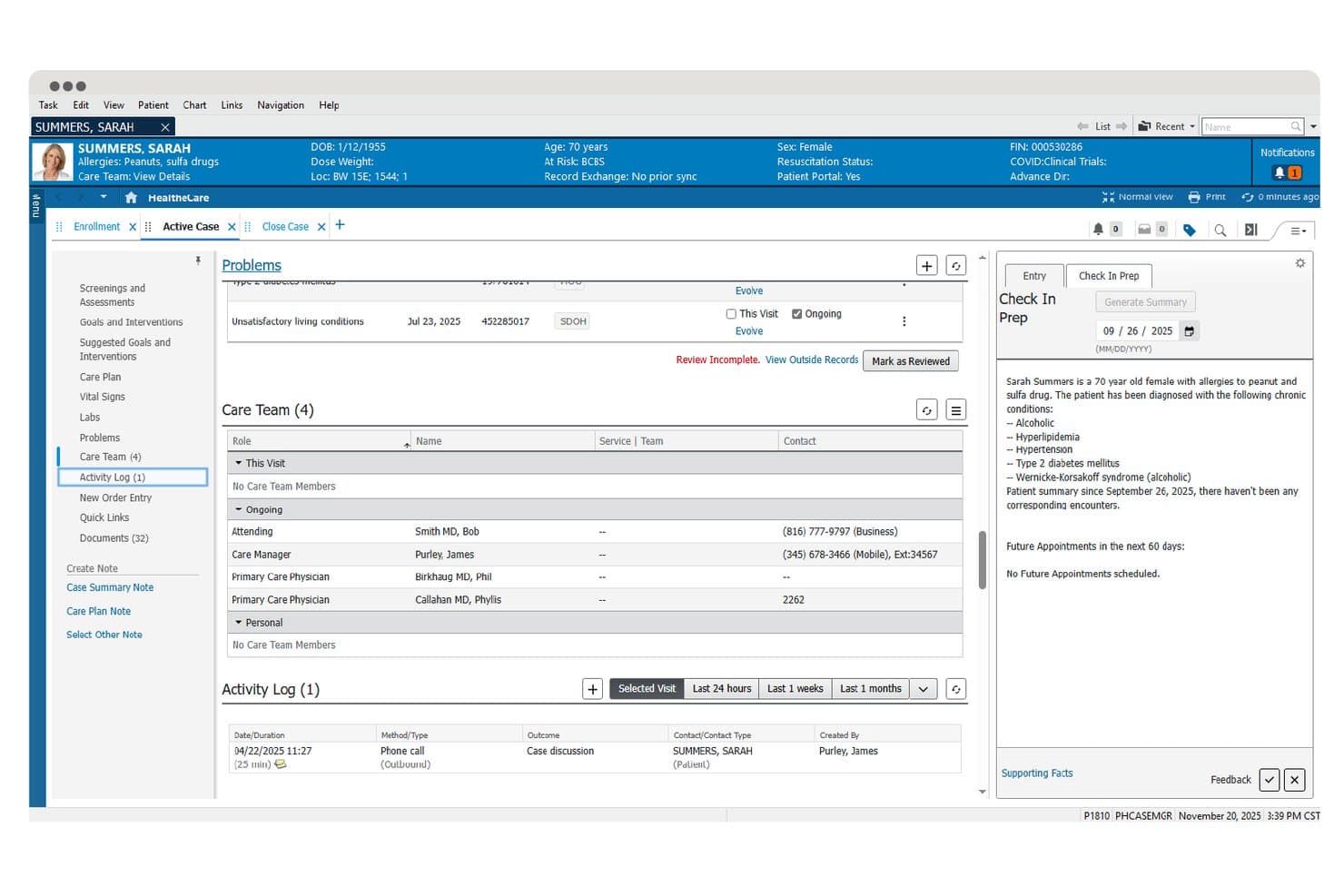
Oracle Health offers a HIPAA-compliant EMR with a care coordination view showing patient problems, care team members, activity logs, and an AI-generated check-in summary. Oracle Health is a cloud-native, enterprise EHR platform that combines AI-embedded clinical documentation, voice-driven charting, revenue cycle management, and interoperability tools across 30+ medical specialties.
Who Is Oracle Health Best For?
Oracle Health is a strong fit for large, multi-site healthcare organizations — including integrated delivery networks, hospital systems, and enterprise-scale group practices.
Why I Picked Oracle Health
Oracle Health earns its spot on my shortlist because its Clinical AI Agent reduces the time physicians spend documenting patient visits. According to Oracle Health, physicians using the tool reported nearly 30% less daily documentation time, while voice commands allow clinicians to retrieve lab results, medication histories, and other patient information directly within the EHR. I also like that its AI-personalized EHR adapts to individual preferences and frequently used workflows, reducing repetitive tasks across different clinical specialties.
Oracle Health Key Features
- HealtheLife patient portal: Patients can securely message providers, view records, complete intake forms, and access appointment scheduling.
- Real-time audit dashboards: Administrators get tamper-proof logs, real-time alerts, and exportable audit trails to support HIPAA compliance and investigations.
- Integrated e-prescribing suite: Handles electronic prescriptions with EPCS certification, drug interaction checking, and automated refills.
- Bidirectional lab and imaging integration: Enables electronic ordering and receipt of lab, imaging, and diagnostic results directly into the patient chart.
Oracle Health Integrations
Oracle Health offers native integrations with LabCorp, Quest Diagnostics, Surescripts, and imaging devices via CareAware. It supports FHIR and SMART on FHIR APIs for custom integrations and third-party app connectivity.
Pros and Cons
Pros:
- Clinical AI Agent supports 30+ medical specialties
- HITRUST-certified cloud infrastructure for PHI protection
- AI-driven documentation cuts charting time significantly
Cons:
- Steep onboarding for smaller clinical teams
- Complex implementation requires significant IT resources
Learn more about Oracle Health: Best for customizable specialty templates
- Free demo available
- Pricing upon request
Visit WebsiteCustomer Rating:3.7/5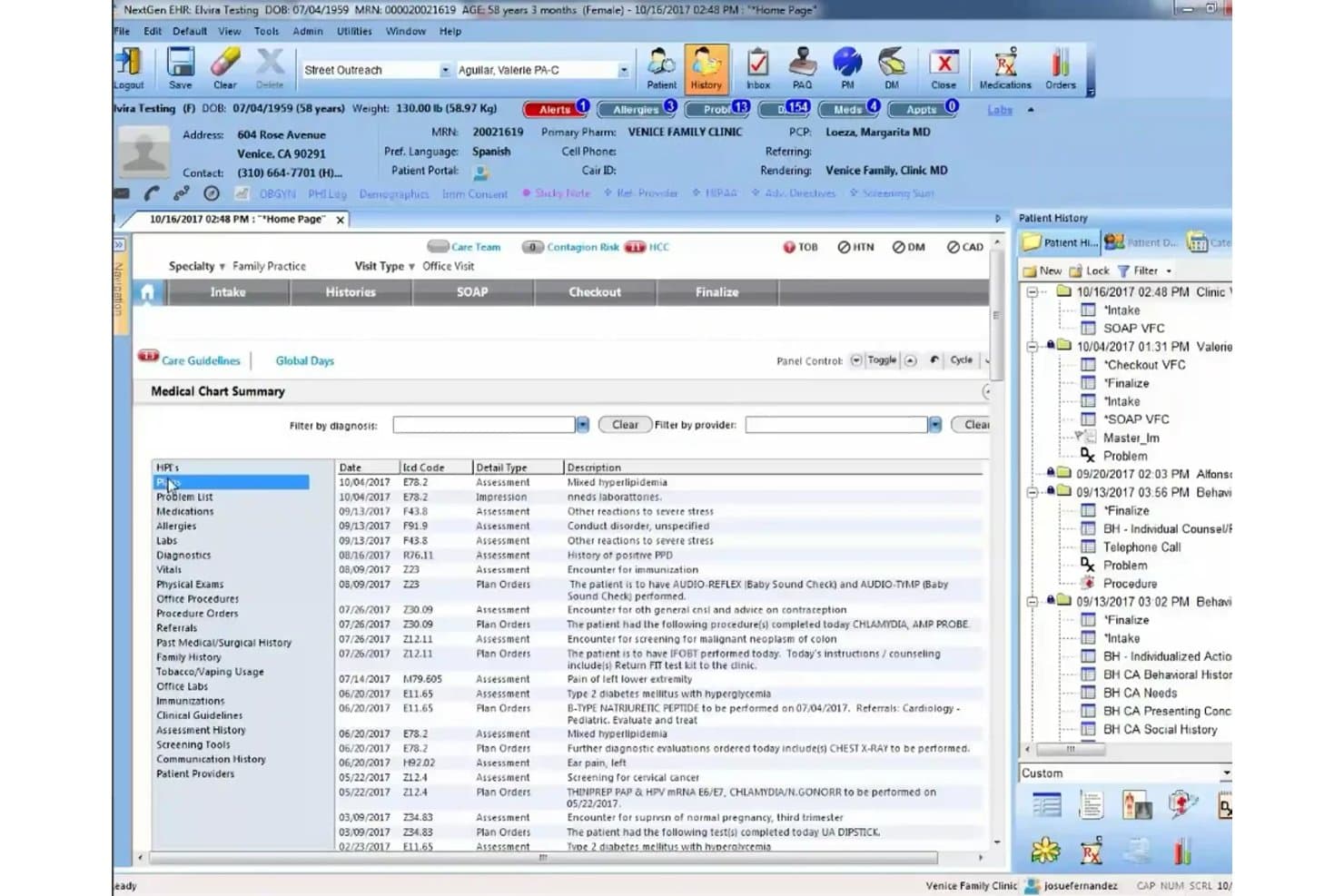
NextGen Healthcare offers a HIPAA-compliant EMR with a detailed Medical Chart Summary displaying patient history, diagnoses, and visit records. NextGen Healthcare is a HIPAA-compliant EMR platform built for ambulatory practices, offering clinical charting, e-prescribing, lab order management, revenue cycle management, and a secure patient portal across 40+ medical specialties.
Who Is NextGen Healthcare Best For?
NextGen Healthcare fits specialty-focused ambulatory practices, from small independent clinics to mid-size multi-provider groups, that need deeply configurable clinical workflows.
Why I Picked NextGen Healthcare
I picked NextGen Healthcare as one of the best because its library of 2,000+ specialty-specific templates spans 40+ clinical disciplines, from behavioral health to orthopedics to FQHC practices. I particularly like the drag-and-drop template customization, which lets you reshape forms and workflows without needing configuration support. The Clinical AI ambient listening tool also generates structured SOAP notes directly from patient conversations, feeding output into your custom template structure.
NextGen Healthcare Key Features
- HIPAA-compliant patient portal: Patients can securely message providers, access health records, and complete intake forms.
- Electronic prescribing with EPCS: Allows electronic transmission of prescriptions, including controlled substances, with drug interaction and allergy checks.
- Bidirectional lab integrations: Enables orders and receipt of results directly in the patient chart from major labs and imaging centers.
- Detailed audit logging: Tracks PHI access, edits, and disclosures for compliance and breach investigations.
NextGen Healthcare Integrations
NextGen Healthcare offers native integrations with Mirth Connect, InstaMed, Carequality, CommonWell Health Alliance, Apple Health, major labs including LabCorp and Quest, and an API for custom integrations. Marketplace integrations include Inbox Health, SamaCare, and LinkMD AI.
Pros and Cons
Pros:
- Ambient AI converts conversations to SOAP notes
- Telehealth visits built directly into the EMR
- Strong specialty template depth across 40+ disciplines
Cons:
- Reporting tools lack flexibility for custom outputs
- Customer support response times are often slow
Learn more about NextGen Healthcare: Best for ambient AI documentation tools
- Free demo available
- Pricing upon request
Visit WebsiteCustomer Rating:3.4/5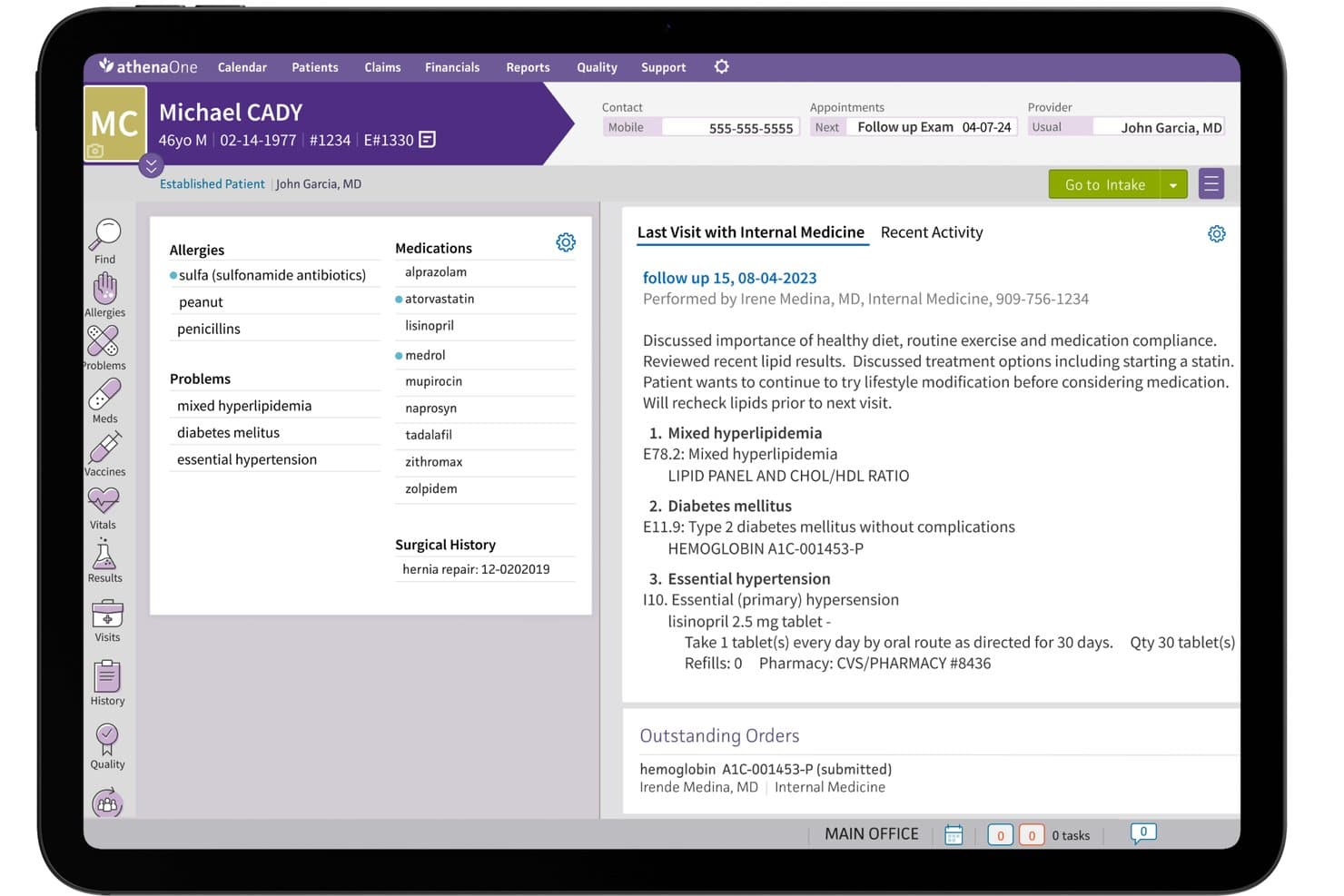
athenahealth offers a comprehensive patient chart view displaying allergies, medications, problems, visit history, and outstanding orders within its HIPAA-compliant EMR platform. athenaOne is a HIPAA-compliant, cloud-based EHR platform that integrates clinical charting, medical billing, practice management, and AI-assisted documentation into a single system for independent and group practices.
Who Is athenahealth Best For?
athenaOne is a strong fit for independent and small-to-midsize practices that want a single platform covering clinical, billing, and documentation workflows without managing separate systems.
Why I Picked athenahealth
athenahealth earns its spot on my shortlist because of Ambient Notes, the only EHR-embedded tool that lets clinicians pick from multiple AI scribe models (Suki, iScribe, and Abridge) within the same chart session. I like that generated notes auto-populate into structured fields inside athenaOne rather than requiring copy-paste from a separate app. I've also found the multi-model flexibility genuinely useful: if one model underperforms in a specialty, clinicians can switch without changing platforms.
athenahealth Key Features
- HIPAA-compliant patient portal: Patients can securely message providers, access records, complete intake tasks, and manage appointments online.
- Bidirectional lab and imaging integrations: Clinicians order labs and receive structured results directly within the patient chart.
- ONC-certified e-prescribing: Enables electronic prescriptions, including EPCS, with built-in drug interaction and allergy checks.
- Audit logging and access controls: Tracks and monitors all PHI access, edits, and disclosures with detailed audit trails.
athenahealth Integrations
athenahealth offers built-in clinical connections to laboratories, pharmacies, imaging centers, hospitals, and healthcare networks, supporting electronic orders, results delivery, and patient data exchange. It also supports AI-assisted clinical documentation through partners such as Suki AI, iScribe AI, and Abridge, alongside the athenahealth Marketplace for third-party applications.
Pros and Cons
Pros:
- Bidirectional lab ordering built into charts
- Specialty-specific charting templates across many specialties
- Multi-model ambient AI scribe built in
Cons:
- Custom reporting requires vendor support to configure
- Lacks native behavioral health-specific clinical tools
Learn more about athenahealth: Best for specialty-specific AI charting
- Free demo available
- Pricing upon request
Visit WebsiteCustomer Rating:3.4/5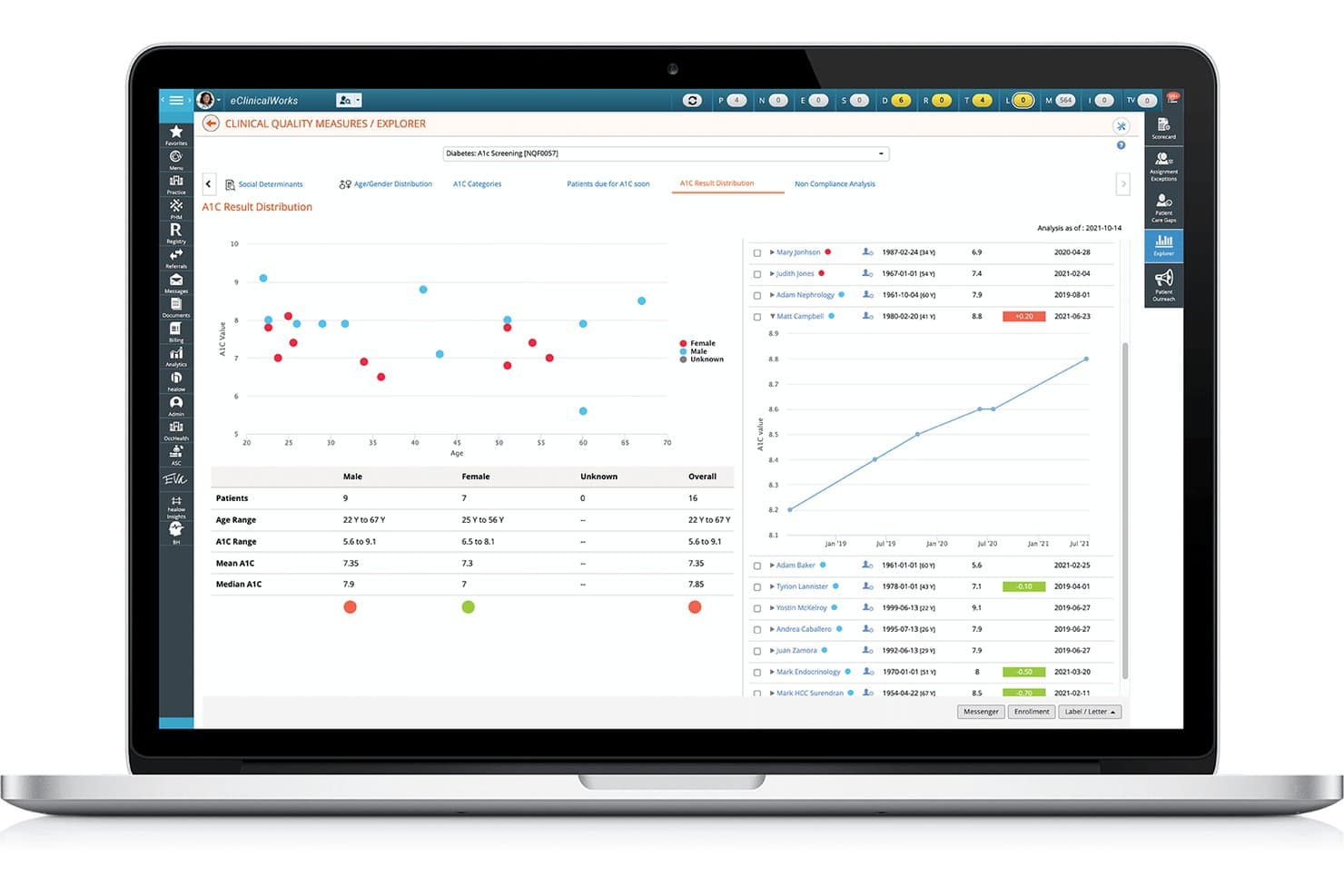
eClinicalWorks offers a Clinical Quality Measures Explorer with A1C result distribution charts, patient lists, and trend analysis to support HIPAA-compliant diabetes care management. eClinicalWorks is a cloud-based EHR and practice management platform combining AI-powered clinical documentation, e-prescribing, lab and order management, revenue cycle management, and an integrated patient engagement suite.
Who Is eClinicalWorks Best For?
eClinicalWorks suits ambulatory specialty practices—including behavioral health, urgent care, and surgical centers—that need both tailored clinical workflows and AI-assisted documentation.
Why I Picked eClinicalWorks
I picked eClinicalWorks as one of the best because of how its V12+AI stack handles specialty-specific charting. Sunoh.ai, its ambient AI scribe, listens to patient encounters and generates structured notes without manual input. I also like that the system's Smart Forms and clinical templates are built around specific specialties like behavioral health and urgent care, not generic SOAP layouts repurposed across disciplines.
eClinicalWorks Key Features
- HIPAA-compliant encryption: All PHI is secured with AES-256 encryption at rest and TLS 1.2+ in transit.
- Bidirectional lab integration: Electronic ordering and automated receipt of lab, imaging, and diagnostic results connect directly to patient charts.
- ePrescribing with EPCS support: Include electronic prescribing for controlled substances and real-time drug/allergy interaction checks.
- healow patient portal: Patients can securely message providers, access forms, schedule appointments, and review their health records online.
eClinicalWorks Integrations
eClinicalWorks offers native integrations with LabCorp, Quest Diagnostics, Surescripts, healow, Sunoh.ai, and PRISMA. An API is also available for custom integrations.
Pros and Cons
Pros:
- Built-in telehealth logs encounters automatically
- Specialty templates cover dozens of clinical disciplines
- Sunoh.ai scribe captures notes hands-free
Cons:
- Legacy data migration is notoriously complex
- Customer support widely reported as slow
Learn more about eClinicalWorks:
Outro software EMR em conformidade com a HIPAA
Eis algumas opções adicionais de software EMR em conformidade com a HIPAA que não integraram a minha seleção, mas que vale a pena consultar:
- 11VeradigmBest for ambulatory workflow automation
- 12MEDITECH ExpanseBest with unified, longitudinal patient data views
- 13ValantBest for psychiatry group care and billing
- 14SimplePracticeBest for solo and group behavioral providers
- 15Praxis EMRBest for template-free, AI-driven charting
- 16TherapyNotesBest for streamlined psychotherapy documentation
- 17ICANotesBest for automated mental health progress notes
- 18CareCloudBest for unified practice management and billing
- 19Greenway HealthBest for configurable multi-specialty workflows
- 20Cerbo EHRBest for direct primary care membership models
How I Evaluate HIPAA Compliant EMR Software
I evaluate these tools in two layers: the baseline requirements every EMR must meet—PHI encryption, a signed BAA, audit logs—and the differentiators like AI charting and specialty-specific templates.
Core Functionality (Table Stakes for This List)
When I'm selecting tools for my list, I rank each one on a scale from 0 (does not offer the functionality) to 5 (excels in this area) for each core functionality listed below. Then, I calculate the tool's total score into a percentage. Each tool needs to achieve a minimum total score of 65% to be considered for inclusion.
- HIPAA Safeguards: I check for PHI encryption at rest and in transit, role-based access controls, MFA options, and a willingness to sign a BAA covering all subcontractors.
- Audit Logging: Detailed audit trails should track who accessed, edited, or exported PHI—useful when responding to a breach investigation or compliance audit.
- Clinical Charting: I look for structured SOAP notes, problem lists, and medication history rather than just free-text fields that make quality reporting harder.
- E-Prescribing: Full eRx should include EPCS certification, drug interaction and allergy checks, and formulary lookups through networks like Surescripts.
- Lab & Order Management: Bidirectional lab integrations matter here—ordering and receiving results within the chart saves time and reduces manual entry errors.
- Secure Patient Portal: I evaluate whether the portal supports secure messaging, intake forms, and appointment requests without exposing PHI over unsecured channels.
Once I have a list of tools that meet the criteria, I consider what sets each platform apart.
Differentiating Factors (What Sets Vendors Apart)
Here's how I compare and contrast different vendors:
Standout Features
AI-assisted documentation is a major differentiator. Ambient scribing and auto-generated SOAP notes can significantly cut charting time after each patient visit. I also evaluate specialty-specific templates, since a behavioral health practice needs very different workflows than a cardiology group. Automated audit dashboards matter too—they give compliance officers real-time access logs and one-click audit reports instead of manual spreadsheet tracking.
Beyond Features
A signed BAA is the first thing I check—it should cover all subcontractors, cloud infrastructure, and any AI add-ons that touch PHI. Interoperability also matters: FHIR and HL7 support determines how well the EMR exchanges data with labs, imaging centers, and referring providers. I look at certifications like ONC Health IT, HITRUST CSF, and SOC 2 Type II, which signal that a vendor's compliance claims hold up under independent review.
Como escolher software EMR em conformidade com a HIPAA
É fácil perder-se em listas extensas de funcionalidades e estruturas de preços complexas. Para o ajudar a manter-se concentrado enquanto analisa o seu processo específico de seleção de software, apresentamos uma lista de verificação dos fatores a ter em conta:
| Fator | O que considerar |
|---|---|
| FatorEscalabilidade | O que considerarO sistema acompanhará o seu crescimento, como a adição de profissionais, localizações ou especialidades, sem migrações significativas ou custos adicionais? |
| FatorIntegrações | O que considerarO EMR liga-se às suas ferramentas de faturação, laboratórios, prescrição eletrónica e envolvimento dos pacientes para evitar a introdução duplicada de dados e o trabalho manual? |
| FatorPersonalização | O que considerarPode adaptar os modelos clínicos, os fluxos de trabalho e os relatórios para corresponder à sua especialidade ou ao estilo da sua clínica — sem desenvolvimento dispendioso ou atrasos? |
| FatorFacilidade de utilização | O que considerarOs seus profissionais clínicos e funcionários compreenderão facilmente a navegação e o registo clínico ou será necessário realizar formação contínua extensiva? |
| FatorImplementação e integração inicial | O que considerarQual é o prazo habitual para a entrada em funcionamento completa? Saiba o que está incluído — migração de dados, formação baseada em funções, assistência e configuração do sistema. |
| FatorCusto | O que considerarExistem taxas ocultas relativas a BAAs, assistência, portais de pacientes ou complementos? Compare os custos totais — mensais, anuais e por profissional — para obter uma visão clara. |
| FatorMedidas de segurança | O que considerarO fornecedor disponibiliza um BAA, atualizações de segurança contínuas e registos de auditoria? Confirme que não existe acesso a PHI através de canais não seguros ou complementos não verificados. |
| FatorDisponibilidade da assistência | O que considerarA sua equipa consegue contactar a assistência em direto durante o horário de expediente e em situações de emergência fora desse horário? Procure acordos de nível de serviço claros e contactos dedicados para questões de conformidade. |
O que é o software EMR em conformidade com a HIPAA?
O software EMR em conformidade com a HIPAA consiste em sistemas de registos médicos eletrónicos concebidos para proteger as informações de saúde protegidas (PHI), em conformidade com as regras de privacidade e segurança da HIPAA. Estas plataformas utilizam encriptação, controlos de acesso baseados em funções, registos de auditoria e Acordos de Associado Empresarial assinados para manter a confidencialidade e apoiar fluxos de trabalho clínicos seguros nas organizações de cuidados de saúde.
Funcionalidades do software EMR compatível com a HIPAA
Eis as principais funcionalidades que qualquer software EMR compatível com a HIPAA deve ter:
- Encriptação de PHI: Protege os dados dos doentes em repouso e em trânsito através de encriptação padrão do setor, garantindo que apenas os utilizadores autorizados podem aceder a informações sensíveis.
- Controlos de acesso baseados em funções: Permite aos administradores definir permissões de utilizador com base nas funções profissionais, minimizando a possibilidade de acesso não autorizado a PHI.
- Registos de auditoria: Regista toda a atividade do sistema, incluindo quem acedeu, editou ou partilhou PHI, promovendo a responsabilização e a preparação para auditorias de conformidade.
- Prescrição eletrónica (eRx): Permite aos prestadores de cuidados de saúde enviar receitas eletrónicas — incluindo de substâncias controladas — com verificações integradas de interações medicamentosas e alergias.
- Modelos clínicos personalizáveis: Disponibiliza modelos específicos para cada especialidade ou editáveis, para um registo eficiente e uma documentação consistente.
- Integração bidirecional com laboratórios: Permite aos médicos enviar pedidos de análises e receber resultados automaticamente nos processos clínicos dos doentes, reduzindo a introdução manual de dados e os atrasos.
- Portal seguro do doente: Proporciona aos doentes acesso compatível com a HIPAA aos seus registos, pedidos de marcação, formulários de admissão e mensagens seguras com a sua equipa de cuidados de saúde.
- Cópias de segurança automatizadas e recuperação após catástrofes: Efetua regularmente cópias de segurança de todas as PHI e dos dados da clínica, permitindo uma recuperação rápida após falhas ou violações.
- Gestão eletrónica de consentimentos: Recolhe e armazena eletronicamente os consentimentos assinados pelos doentes, reduzindo a burocracia e melhorando a rastreabilidade das auditorias.
Benefícios do software EMR compatível com a HIPAA
A implementação de software EMR compatível com a HIPAA proporciona vários benefícios à sua equipa e à sua empresa. Eis alguns dos benefícios que pode esperar:
- Maior segurança dos dados dos doentes: A encriptação de PHI e os registos de auditoria protegem informações sensíveis e ajudam a manter a conformidade regulamentar.
- Redução do risco de incumprimento: O registo automático de auditorias, os controlos de acesso granulares e os BAAs simplificam o cumprimento dos requisitos da HIPAA e a aprovação em auditorias de segurança.
- Fluxos de trabalho clínicos simplificados: Os modelos personalizáveis e as integrações bidirecionais com laboratórios permitem-lhe passar menos tempo com a documentação e o trabalho administrativo.
- Comunicação segura com os doentes: Os portais dos doentes e as mensagens encriptadas garantem que os registos, os consentimentos e as perguntas permanecem protegidos e acessíveis.
- Maior continuidade operacional: As cópias de segurança automatizadas e a recuperação após catástrofes mantêm os seus dados disponíveis e as operações em funcionamento, mesmo após interrupções inesperadas.
- Documentação mais precisa: Os modelos específicos para cada especialidade e as ferramentas de prescrição eletrónica ajudam a reduzir erros e a uniformizar os registos clínicos.
- Interoperabilidade facilitada: As capacidades de integração tornam a partilha de dados dos doentes com farmácias, laboratórios e outros prestadores de cuidados de saúde mais fiável e segura.
Custos e preços do software EMR compatível com a HIPAA
A seleção de software EMR compatível com a HIPAA exige uma compreensão dos vários modelos de preços e planos disponíveis. Os custos variam consoante as funcionalidades, o tamanho da equipa, os complementos e outros fatores. A tabela abaixo resume os planos comuns, os respetivos preços médios e as funcionalidades normalmente incluídas nas soluções de software EMR compatíveis com a HIPAA:
Tabela comparativa de planos de software EMR compatível com a HIPAA
| Tipo de plano | Preço médio | Funcionalidades comuns |
|---|---|---|
| Tipo de planoPlano pessoal | Preço médio$25-$60 por utilizador/mês | Funcionalidades comunsEncriptação de PHI, acesso baseado em funções, prescrição eletrónica básica, modelos personalizáveis e suporte padrão. |
| Tipo de planoPlano empresarial | Preço médio$80-$150 por utilizador/mês | Funcionalidades comunsIntegrações bidirecionais com laboratórios, relatórios avançados, acesso ao portal do doente, BAA, registo de auditorias e apoio à integração. |
| Tipo de planoPlano empresarial de grande escala | Preço médio$170-$300+ por utilizador/mês | Funcionalidades comunsFluxos de trabalho personalizados, suporte 24/7, interoperabilidade avançada, cópias de segurança automatizadas, contacto dedicado para conformidade e acesso total à API. |
Perguntas frequentes
Eis algumas respostas a perguntas comuns sobre software EMR compatível com a HIPAA:
Como sei se um EMR é realmente compatível com a HIPAA?
Procure encriptação de PHI, controlos de acesso robustos, registos de auditoria e um fornecedor disposto a assinar um BAA detalhado que abranja toda a infraestrutura e os subcontratantes. Confirme certificações independentes e analise os respetivos protocolos de notificação de violações.
Todos os EMR incluem um portal seguro para pacientes?
Não, nem todos os EMR incluem um portal para pacientes. Pergunte se a plataforma suporta mensagens encriptadas, formulários de admissão e recolha de consentimento de forma a manter a PHI protegida.
O software EMR compatível com a HIPAA pode integrar-se com outras ferramentas de consultórios?
Sim, a maioria dos sistemas EMR modernos oferece integrações com faturação, prescrição eletrónica, pedidos de análises e aplicações de terceiros. Deverá confirmar o suporte das normas HL7, FHIR ou CCDA.
Quais são alguns custos ocultos a que devo estar atento?
Esteja atento a custos adicionais relativos a portais para pacientes, BAA, módulos de telessaúde, suporte avançado e exportação de dados no final do contrato. Esclareça sempre o que está incluído antes de assinar.
Quanto tempo demora normalmente a implementação?
Os prazos de implementação variam, mas a maioria dos consultórios deverá contar com várias semanas para a migração de dados, a formação dos utilizadores e o suporte durante a entrada em produção. As configurações complexas ou com várias localizações podem demorar mais tempo.