

Plastic surgery practice EMR software is a specialized electronic medical record system built to handle the unique clinical and administrative needs of plastic and aesthetic surgery practices. If you’re searching for the right EMR, you want a solution that supports photo documentation, HIPAA-compliant charting, appointment tracking, and the detailed workflows you rely on daily. Documentation, compliance, and personalized patient care are on the line. This guide compares the top options—helping you find a tool that saves you time and suits the way your practice actually runs.
Why Trust Our Software Recommendations
6,700+
Reviews
20
Industry experts
16+
Evaluation factors
14
Years
Our team has been testing and reviewing software since 2012. As medical practice leaders ourselves, we know how difficult—and important—it is to choose the right software.
For this guide, we evaluated tools using hands-on testing and independent research, scoring tools using our selection criteria.
Our reviews reflect our human editorial judgment, not a sales pitch.
Best Plastic Surgery Practice EMR Software
This comparison chart outlines pricing for my top plastic surgery practice EMR software picks, helping you find the best option for your budget and practice needs.
| Tool | Best For | Trial Info | Price | ||
|---|---|---|---|---|---|
| 1 | Best for voice-enabled plastic surgery charting | Free demo available | Pricing upon request | Website | |
| 2 | Best for integrated scheduling and management | Free demo available | Pricing upon request | Website | |
| 3 | Best for aesthetic treatment charting | 14-day free trial | From $15/user/month | Website | |
| 4 | Best for all-in-one medical spa scheduling | Free demo available | From $160/month | Website | |
| 5 | Best for cloud-based aesthetic practice management | Free demo available | Pricing upon request | Website | |
| 6 | Best for managing consultations and bookings | Free demo available | From $65/user/month (billed annually) | Website | |
| 7 | Best for adaptive plastic surgery charting | Free demo available | Pricing upon request | Website | |
| 8 | Best for photo management and practice workflows | Free demo available | Pricing upon request | Website | |
| 9 | Best for all-in-one plastic surgery EMR | Free demo available | Pricing upon request | Website | |
| 10 | Best for mobile-first plastic surgery | Free demo available | Pricing upon request | Website |


Best Plastic Surgery Practice EMR Software Reviews
Below are my detailed summaries of the best plastic surgery practice EMR software that made it onto my shortlist. My reviews offer a detailed look at the features, capabilities, and integrations of each software to help you find the best one for you.
 Best for voice-enabled plastic surgery charting
- Free demo available
- Pricing upon request
Visit WebsiteCustomer Rating:3.9/5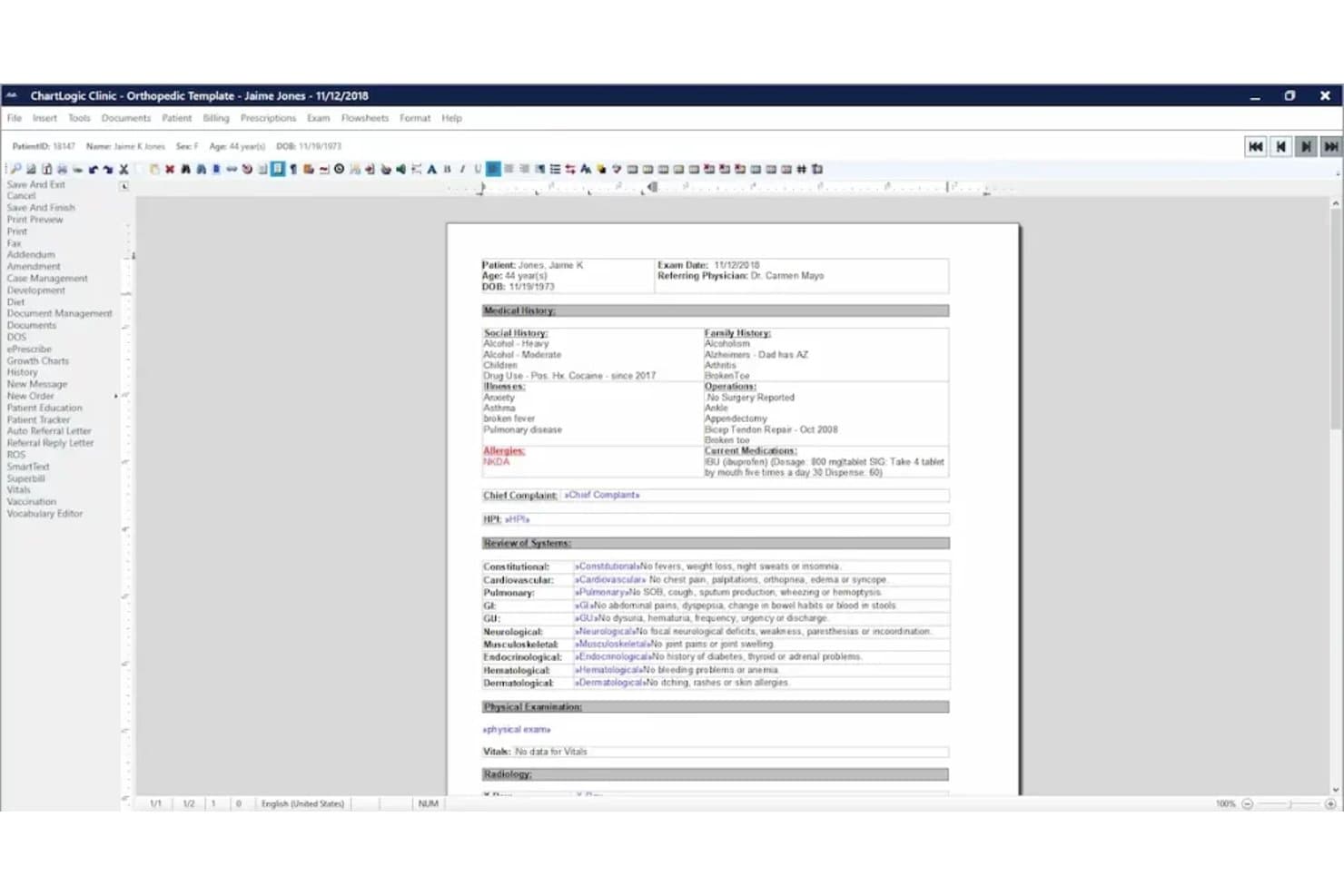
ChartLogic offers an orthopedic EHR template with structured medical history, review of systems, and physical examination sections for clinical documentation. ChartLogic is a plastic surgery EMR and practice management platform that combines voice-driven surgical charting, specialty-specific templates, ePrescribing, scheduling, and integrated RCM into a single ambulatory suite.
Who Is ChartLogic Best For?
ChartLogic is a strong fit for solo and small-to-mid-sized reconstructive plastic surgery practices that prioritize fast surgical documentation and integrated billing.
Why I Picked ChartLogic
I picked ChartLogic as one of the best because its PrecisionVoice system goes well beyond standard dictation. Rather than just transcribing speech, it lets surgeons navigate the chart by voice, so saying "Go to HPI" instantly moves the cursor there without touching a mouse. Paired with plastic-surgery-specific surgical vocabularies and flow sheets, I've clocked complete operative notes in under 90 seconds using this setup.
ChartLogic Key Features
- Custom note template builder: Design and modify plastic surgery charting templates specific to your procedures and workflow preferences.
- Patient tracker: Track patient location and wait time in real time throughout your office, including during pre-op and post-op stages.
- Electronic prescribing (ePrescribe): Send prescriptions directly to pharmacies from the patient’s chart with integrated medication history.
- Multi-location data sharing: Share patient information instantly across multiple clinics or surgery center locations without duplicate data entry.
ChartLogic Integrations
ChartLogic offers native integrations with Surescripts for e-prescribing, Dragon Medical One for voice dictation, and connects to hundreds of lab facilities for electronic lab ordering. An API is available for custom integrations.
Pros and Cons
Pros:
- Patient tracker supports pre-op and post-op stages
- Plastic surgery templates built into EMR
- Voice navigation streamlines surgical charting workflow
Cons:
- Scheduler interface feels dated compared to newer tools
- No before and after photo module
Learn more about ChartLogic: Best for integrated scheduling and management
- Free demo available
- Pricing upon request
Visit WebsiteCustomer Rating:3.6/5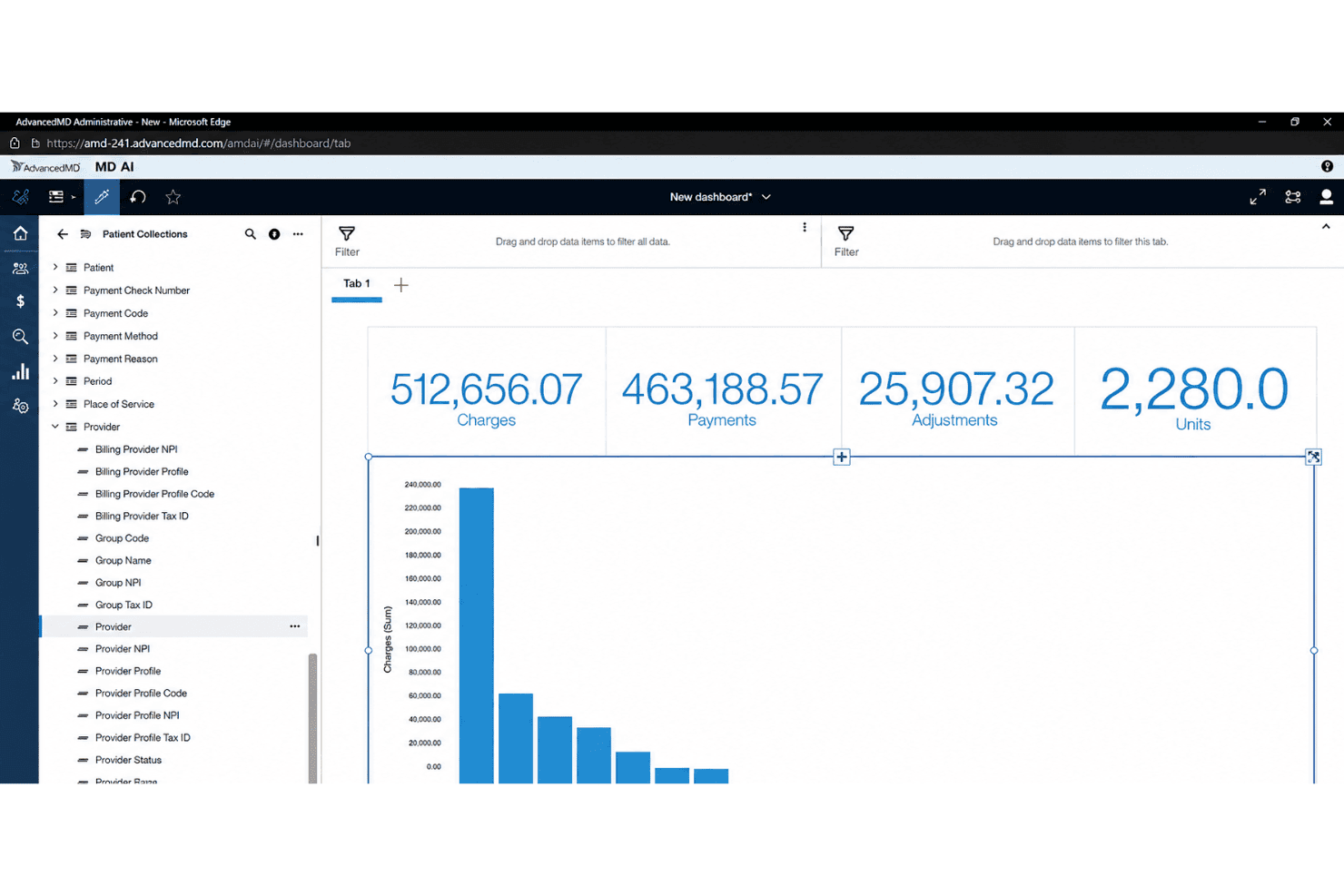
AdvancedMD tracks billing trends, denial causes, and revenue gaps in real time. AdvancedMD is a cloud-based EMR and practice management platform that combines surgical charting, before/after photo management, multi-facility scheduling, and integrated billing for plastic surgery practices.
Who Is AdvancedMD Best For?
AdvancedMD suits independent and small-to-mid-size plastic surgery practices that handle both insurance-covered reconstructive procedures and cash-pay cosmetic services.
Why I Picked AdvancedMD
I've included AdvancedMD in my top picks because its multi-facility scheduling genuinely sets it apart for plastic surgery practices running consultations, in-office procedures, and ASC bookings across separate locations. I like that the scheduler connects directly to billing and clinical documentation, so a surgical booking automatically flows into charge capture. The AI-powered predictive scheduling layer also helps optimize patient flow without manual calendar management.
AdvancedMD Key Features
- PACS imaging and annotation: Upload, view, and annotate high-resolution clinical photos directly within patient charts.
- Customizable surgical charting templates: Use editable templates for pre-op, intra-op, and post-op notes specific to plastic surgery.
- Integrated patient portal: Enable patients to access records, upload forms, and securely message staff from any device.
- Claims and payment automation: Manage both insurance and self-pay procedures with built-in claims tracking and integrated payment processing.
AdvancedMD Integrations
AdvancedMD offers native integrations with Amazon Web Services for hosting, e-prescribing platforms, and payment processing terminals like PAX A920. An open API and integration marketplace are available for custom connections and interoperability with other systems.
Pros and Cons
Pros:
- Specialty charting for plastic and reconstructive cases
- Built-in before and after photo annotation
- Handles multi-location surgical and med spa workflows
Cons:
- Cosmetic quoting lacks native retail financing workflows
- No advanced 3D imaging or morphing
 Best for aesthetic treatment charting
- 14-day free trial
- From $15/user/month
Visit WebsiteCustomer Rating:3.5/5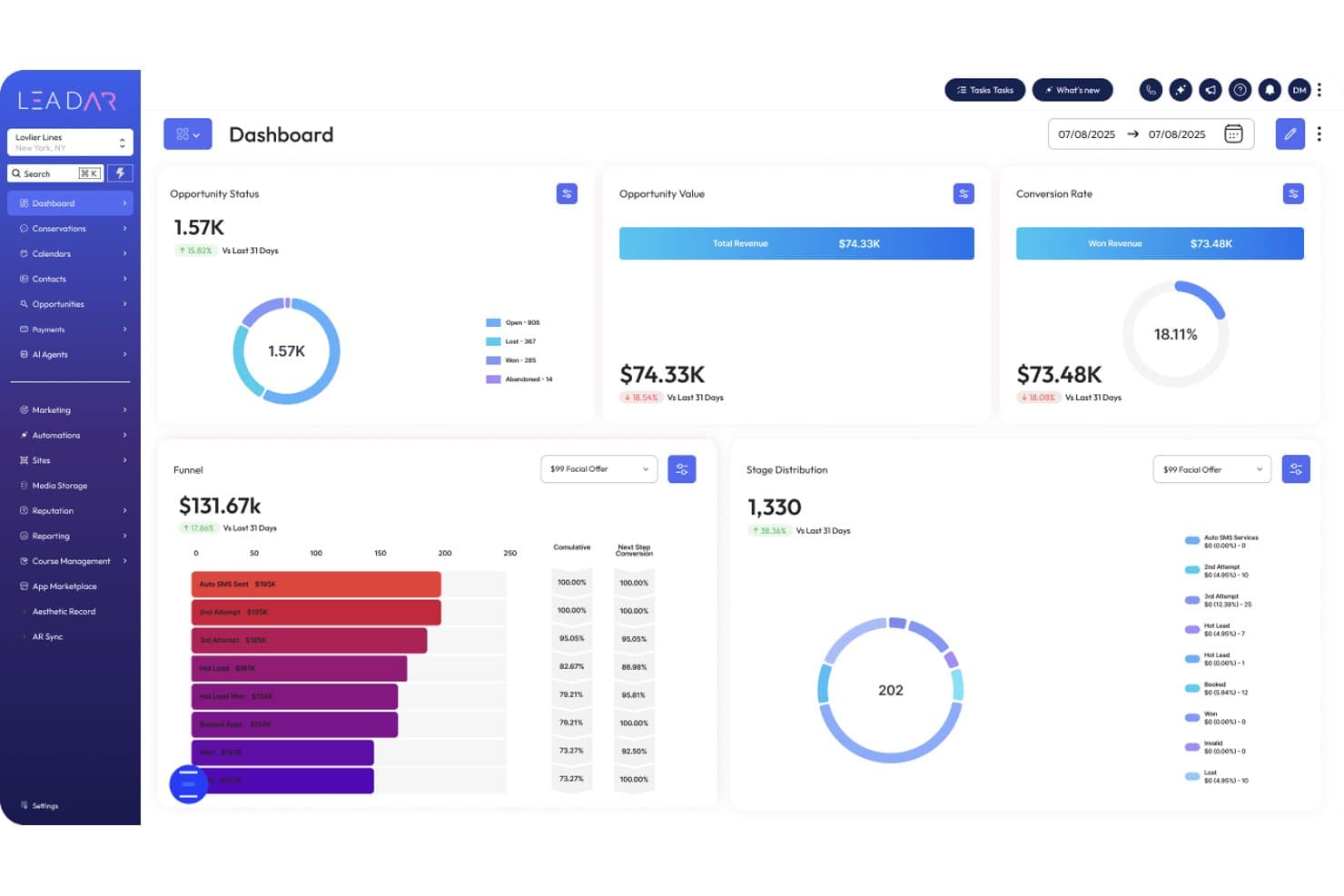
Aesthetic Record dashboard showing opportunities, revenue, conversion rates, and sales funnel performance. Aesthetic Record is a HIPAA-compliant EMR and practice management platform built for aesthetic medicine, combining procedure charting, before-and-after photo management, scheduling, payments, and e-prescribing in one system.
Who Is Aesthetic Record Best For?
Aesthetic Record fits cash-pay aesthetic and cosmetic practices that prioritize visual treatment documentation, elective payment processing, and client engagement tools.
Why I Picked Aesthetic Record
Aesthetic Record earns its spot on my shortlist because no other EMR on this list handles aesthetic treatment charting with this level of specificity. ChartSmart AI converts voice dictation into structured, procedure-specific chart entries during back-to-back appointment days. The before-and-after photo and video tools sit inside the patient chart itself, so providers can pull up side-by-side treatment comparisons without ever leaving the record.
Aesthetic Record Key Features
- Integrated e-prescribing: Send electronic prescriptions for controlled and non-controlled substances using Surescripts EPCS from within the EMR.
- HIPAA-compliant two-way texting: Communicate securely with patients for reminders, follow-ups, and scheduling straight from the platform.
- Inventory and supply tracking: Manage medication, injectable product, and retail skincare inventory with lot number tracking and reorder alerts.
- Memberships and loyalty programs: Create and manage patient memberships, package deals, loyalty points, and gift card programs directly in the system.
Aesthetic Record Integrations
Aesthetic Record offers native integrations with RepeatMD, TouchMD, JOYA, PatientFi, ASPIRE Galderma Rewards, Constant Contact, Active Campaign, MailChimp, Zoho, and HubSpot. An API is available for custom integrations.
Pros and Cons
Pros:
- Comprehensive injectable and treatment inventory management
- Built-in patient loyalty and membership tools
- Embedded before and after photo galleries
Cons:
- Limited surgical operative note templates
- No insurance claim or coding workflows
Learn more about Aesthetic Record: Best for all-in-one medical spa scheduling
- Free demo available
- From $160/month
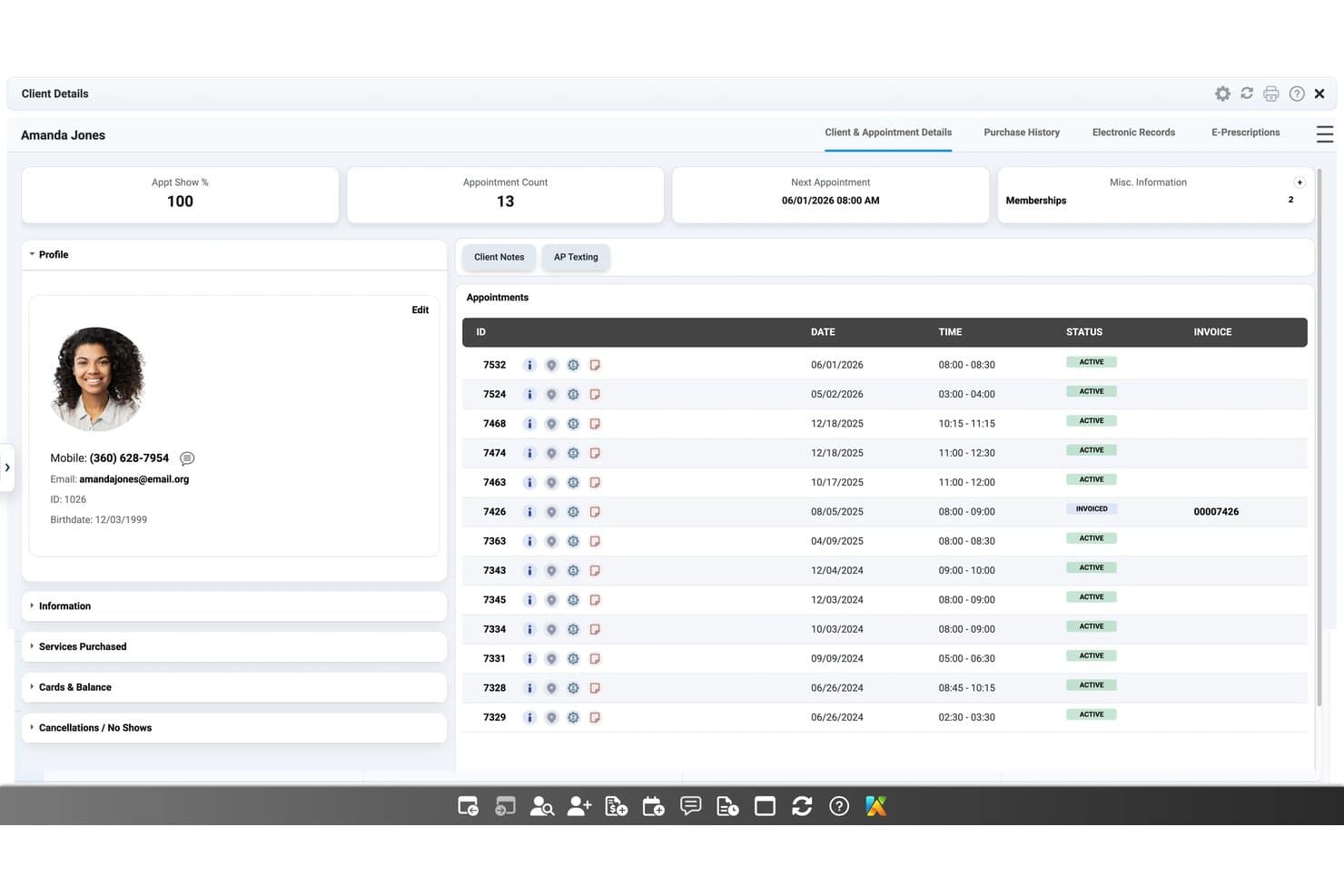
AestheticsPro offers a detailed client profile view with appointment history, status tracking, and invoice management for plastic surgery practices. AestheticsPro is a cloud-based EMR and practice management platform built for aesthetic practices, combining clinical charting, before/after photo management, scheduling, payments, and patient CRM in one system.
Who Is AestheticsPro Best For?
AestheticsPro suits small to mid-sized aesthetic clinics and plastic surgery practices with a strong non-surgical or medical spa service line.
Why I Picked AestheticsPro
AestheticsPro earns its spot on my shortlist because the scheduling system is genuinely built for aesthetic practice workflows. I can book consultations, assign procedure rooms, and trigger automated text reminders from one calendar view. What I like most is how AP Photo ties directly into patient records, so before/after images with alignment guides and side-by-side comparisons sit alongside charting and consent forms rather than in a separate system.
AestheticsPro Key Features
- Customizable EMR form library: Build and modify specialty-specific clinical forms for surgical charting and consent documentation.
- Integrated e-prescribing: Write and transmit prescriptions electronically through a certified platform from within the patient chart.
- HIPAA-compliant patient portal: Give patients access to secure messaging, e-consents, and pre/post-op documentation.
- Inventory management and barcode scanning: Track injectables, products, and retail inventory with integrated barcode scanning and lot control.
AestheticsPro Integrations
AestheticsPro offers native integrations with Google Calendar, Apple Calendar, MDToolbox, Salesforce, Zoom, HighLevel, Twilio, Cherry, Constant Contact, and Zapier. An API is available for custom integrations.
Pros and Cons
Pros:
- Customizable EMR forms for surgical documentation
- Supports electronic prescribing within patient charts
- Photo management includes alignment guides and comparisons
Cons:
- Lacks advanced surgical charting templates
- No insurance or reconstructive billing workflows
Learn more about AestheticsPro: Best for cloud-based aesthetic practice management
- Free demo available
- Pricing upon request
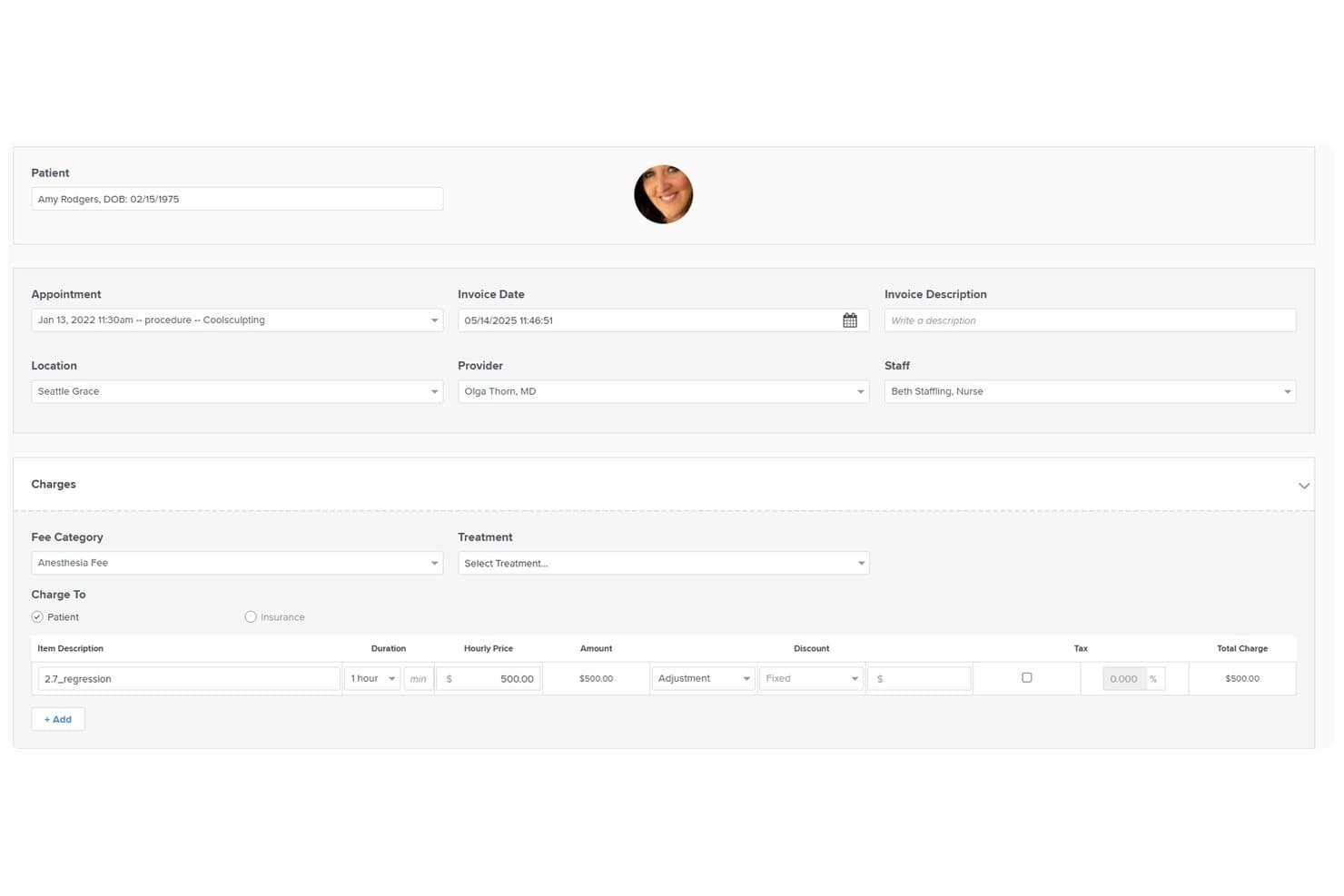
Remedly offers a detailed invoice and charges screen for plastic surgery procedures, including anesthesia fee categorization, provider assignment, and itemized billing with discount and tax fields. Remedly is a cloud-based EHR and practice management platform that combines clinical charting, before-and-after photo documentation, cosmetic quoting, scheduling, and integrated revenue cycle management for aesthetic and plastic surgery practices.
Who Is Remedly Best For?
Remedly is a strong fit for small to mid-size plastic surgery and aesthetic practices that bill both insurance and cash-pay cosmetic services.
Why I Picked Remedly
I picked Remedly as one of the best because, as a cloud-based system, it gives aesthetic practices full access to clinical and billing functions from any device, without a server or local installation. I like how the Full Body Map and before/after photo documentation are built directly into the patient chart, making it easy to record visual case details during a consultation. The cosmetic quoting tool (Estimate of Procedure Cost) works alongside the billing module, so procedure pricing and claims live in the same system.
Remedly Key Features
- Patient portal: Enables secure patient access to forms, photos, and appointment information.
- Marketing module: Lets you manage campaigns, prepaid packages, and memberships for aesthetic and surgical services.
- Inventory management: Tracks injectables, skincare, and retail products with consumption logs linked to patient charts.
- E-prescribing integration: Connects with DrFirst for prescription writing and medication tracking within the EMR.
Remedly Integrations
Remedly offers native integrations with DrFirst for e-prescribing, Twilio for two-way texting, LabSoft Inc. for eLabs, 360 Payments and Square for payment processing, Concord Technologies for cloud fax, and TriZetto Provider Solutions and Claim.MD for insurance clearinghouse connectivity. An API is available for custom integrations.
Pros and Cons
Pros:
- Handles insurance and cash-pay workflows
- Full body mapping for surgical documentation
- Built-in before and after photo charting
Cons:
- No dedicated surgical resource scheduling
- Limited advanced photo imaging features
Learn more about remedly: Best for managing consultations and bookings
- Free demo available
- From $65/user/month (billed annually)
Visit WebsiteCustomer Rating:4.7/5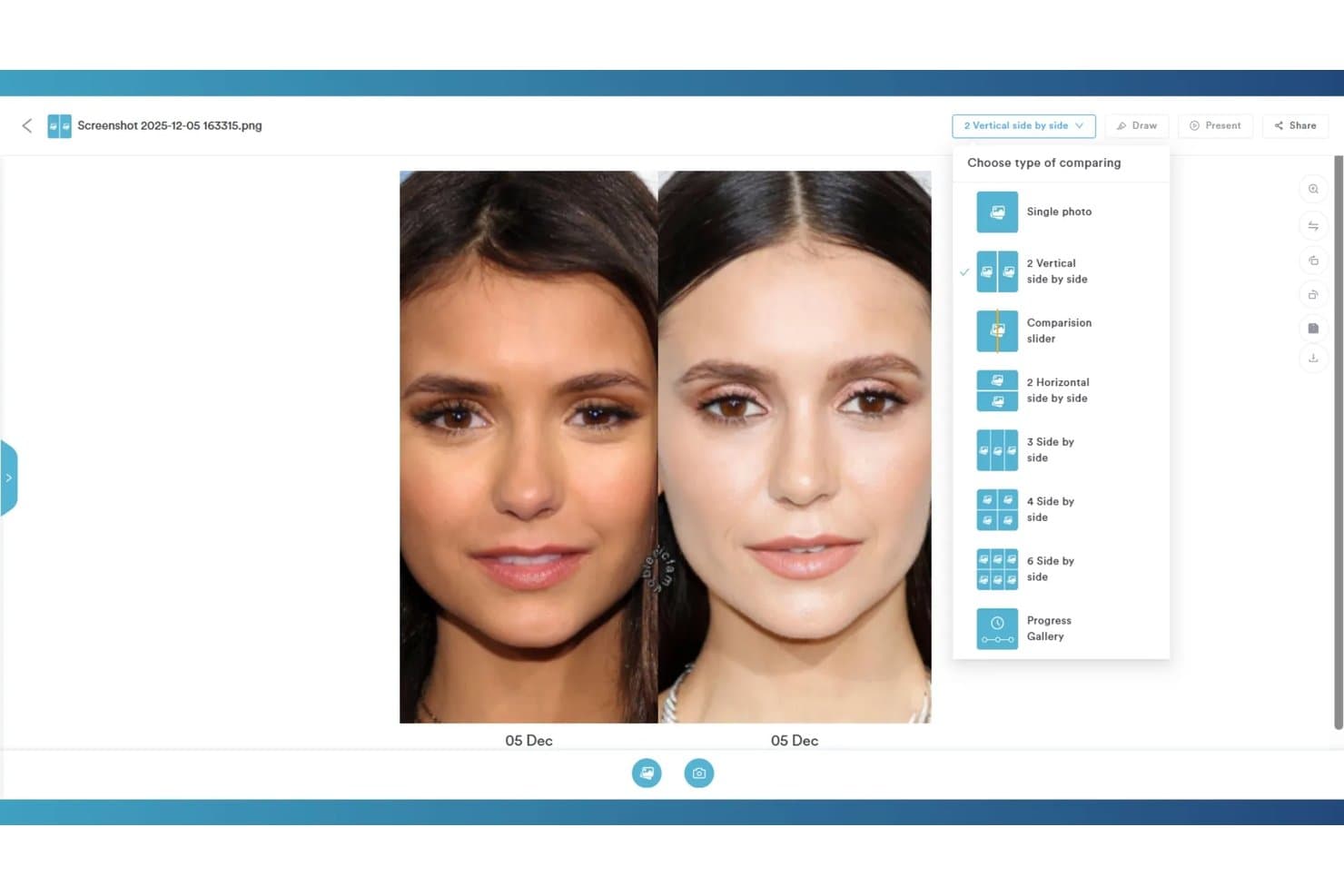
Pabau offers a before-and-after photo comparison tool with vertical side-by-side view options for tracking patient progress in plastic surgery practices. Pabau is an all-in-one practice management and EMR platform built for aesthetic and cosmetic clinics, combining clinical records, before-and-after photo management, surgical charting, consultation scheduling, cosmetic quoting, and payment processing.
Who Is Pabau Best For?
Pabau fits aesthetic clinics and cosmetic surgery practices that run high volumes of consultations and need scheduling, records, and payments managed in one place.
Why I Picked Pabau
Pabau earns its spot on my shortlist because of how tightly it connects consultation scheduling to the full patient journey. I like that when a patient books a consultation, their intake forms, before-and-after photos, and procedure quote all live in the same record. The multi-location room and resource management means surgical suites and consultation rooms are visible at a glance, so double-bookings don't happen.
Pabau Key Features
- AI scribe with real-time transcription: Turn spoken surgical notes and consult details into structured patient records directly within the chart.
- Digital consent management: Capture, store, and access procedure-specific e-consents with customizable templates for different surgical workflows.
- Integrated inventory tracking: Monitor medical supplies and injectable product usage tied to patient charts and appointment records.
- Customizable reporting and analytics: Access more than 100 pre-built reports to analyze consultation conversion, revenue by procedure, and patient retention trends.
Pabau Integrations
Pabau offers native integrations with Stripe, Xero, Google Calendar, Healthcode, Reserve with Google, GoCardless, Mailchimp, Doctolib, and Zapier. An API is available for custom integrations.
Pros and Cons
Pros:
- Customizable chart templates cover cosmetic procedures
- Before and after photo tools are strong
- Consultation and surgery scheduling is unified
Cons:
- No 3D simulation or morphing for images
- Insurance billing tools are limited
Learn more about Pabau: Best for adaptive plastic surgery charting
- Free demo available
- Pricing upon request
Visit WebsiteCustomer Rating:4.4/5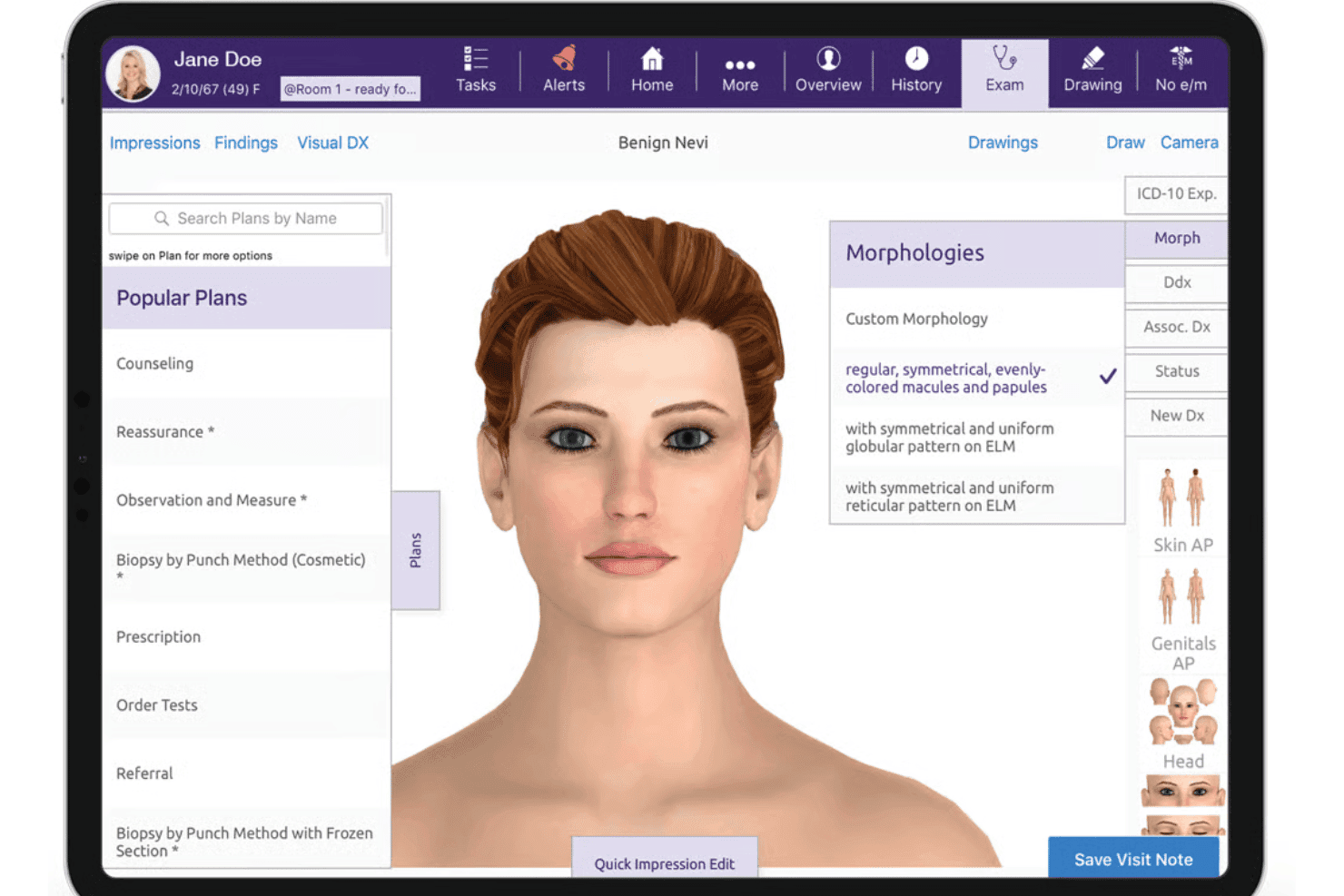
ModMed delivers specialty EHR, AI documentation, e-prescribing, billing, and RCM. ModMed EMA is a plastic surgery–specific EHR platform that combines adaptive clinical charting, before/after photo management, surgical documentation templates, practice management, and integrated billing in a single iPad-native system.
Who Is ModMed Best For?
ModMed is a strong fit for plastic surgery practices that handle both insurance-billed reconstructive procedures and self-pay cosmetic services under one roof.
Why I Picked ModMed
ModMed earns its spot on my shortlist because the EMA charting engine actually learns how each surgeon works. It recalls preferred implant specs, surgical techniques, and anesthesia settings, so documentation doesn't start from a blank template every visit. I also like ModMed Scribe, which listens during patient encounters, auto-populates visit notes, and surfaces CPT code suggestions for the provider to approve before they leave the room.
ModMed Key Features
- Integrated before/after photo gallery: Securely captures, tags, and organizes high-resolution patient images directly within the chart.
- Cosmetic case quoting and payment processing: Generates procedure-specific quotes, processes card payments, and separates insurance from cash-pay services.
- Digital consent forms and e-signature: Stores surgical consents and post-op documentation accessible through the patient portal.
- Practice-wide scheduling hub: Coordinates multiple provider schedules, consults, surgical bookings, and OR management from a single calendar.
ModMed Integrations
ModMed offers native integrations with Klara for patient communication, APPatient for patient portal access, ModMed Pay for payment processing, and supports custom integrations through its certified FHIR API and HL7 connections.
Pros and Cons
Pros:
- Handles MedSpa and surgical workflows together
- Built-in before and after photo management
- Adaptive charting engine learns surgeon preferences
Cons:
- Reporting customization is limited
- Billing support response times can be slow
Learn more about ModMed: Best for photo management and practice workflows
- Free demo available
- Pricing upon request
Visit WebsiteCustomer Rating:4.3/5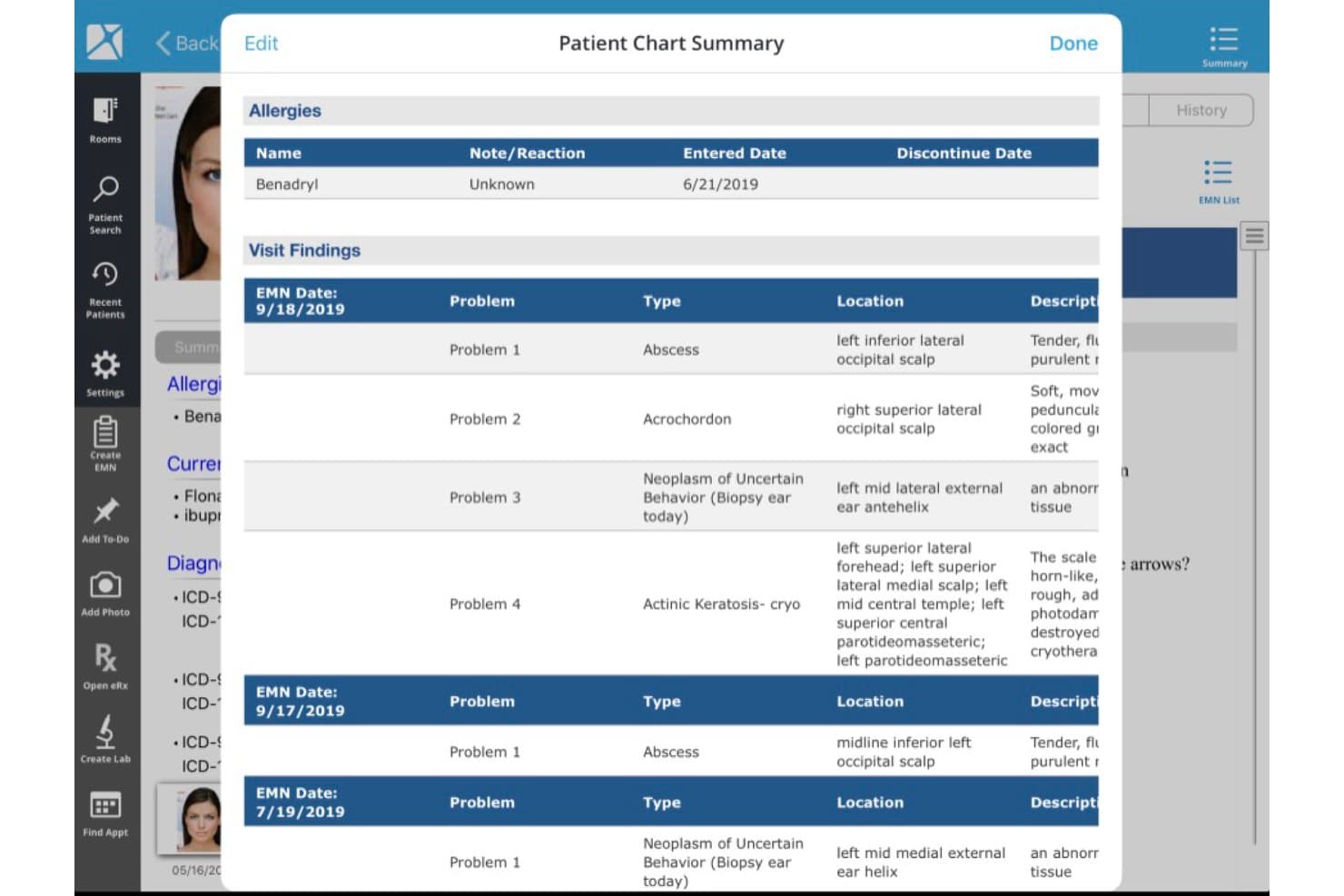
Nextech offers a Patient Chart Summary view that displays allergies, visit findings, problem types, locations, and descriptions across multiple EMN dates in a structured table format. Nextech is a specialty-specific cloud-based EMR and practice management platform built for plastic surgery practices, combining clinical charting, patient scheduling, billing, photo documentation, and payment processing in one system.
Who Is Nextech Best For?
Nextech is a strong fit for plastic surgery and aesthetic practice owners who need a single platform to manage clinical, administrative, and patient-facing workflows.
Why I Picked Nextech
I picked Nextech as one of the best because of TouchMD Snap Pro, its AI-guided photography module that auto-detects patient faces and guides staff to optimal camera positioning directly from an iPhone or iPad. Images land inside the patient chart instantly, with markup and annotation tools built in. I also like how Practice+ handles ASC billing, memberships, and recurring payment plans natively, so staff aren't toggling between systems mid-consult.
Nextech Key Features
- Customizable surgical charting templates: Build and modify procedure-specific templates, op notes, patient consents, and post-op documentation for plastic surgery cases.
- Multi-provider scheduling: Manage appointment calendars for surgeons, PAs, nurses, and med spa staff in one unified interface.
- Integrated ASC billing and coding: Supports both insurance and cash-pay coding workflows for reconstructive and cosmetic cases, including CPT/ICD support.
- HIPAA-compliant patient portal: Patients access consents, pre/post-op instructions, and secure chart updates online.
Nextech Integrations
Nextech offers native integrations with Stripe, Affirm, TouchMD, and Ocuco. An API is available for custom integrations.
Pros and Cons
Pros:
- Customizable plastic surgery charting templates
- Cosmetic quoting and recurring payment workflows included
- TouchMD Snap Pro for surgical photo capture
Cons:
- Occasional lag with large photo libraries
- Procedure room scheduling not fully detailed
Learn more about Nextech: Best for all-in-one plastic surgery EMR
- Free demo available
- Pricing upon request
Visit WebsiteCustomer Rating:3/5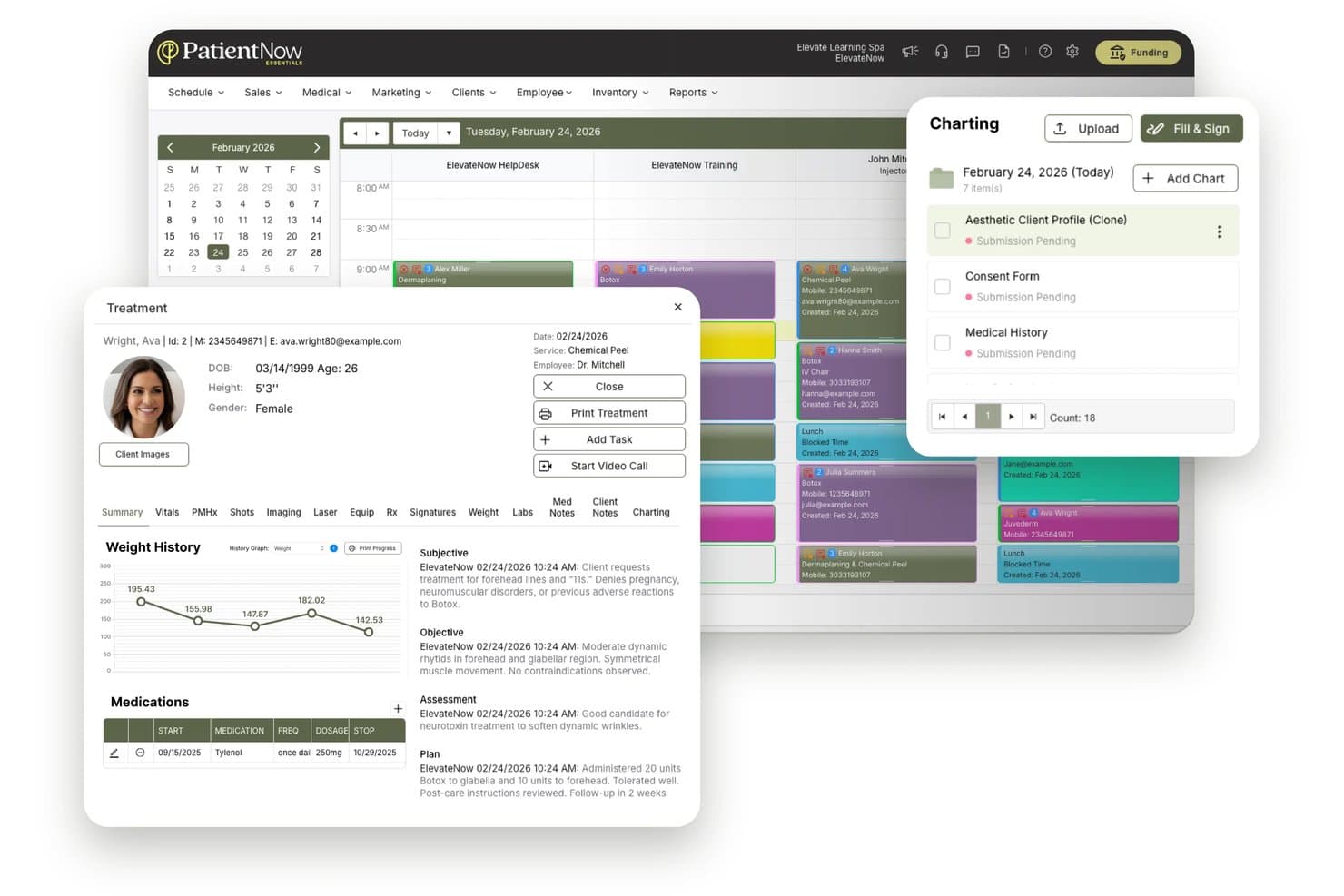
PatientNow offers a comprehensive EMR system with scheduling, patient charting, SOAP notes, weight history, medications, and digital consent forms for plastic surgery and aesthetic practices. PatientNow is an aesthetic practice management platform that combines EMR, before-and-after photo documentation, cosmetic quoting, elective payment processing, scheduling, and built-in marketing tools in a single system built for plastic surgery and aesthetic practices.
Who Is PatientNow Best For?
PatientNow is a good fit for plastic surgery and aesthetic practices that want to replace disconnected point solutions with a single platform covering clinical, administrative, and marketing workflows.
Why I Picked PatientNow
PatientNow earns its spot as one of the best on my shortlist because it's built from the ground up for aesthetic and plastic surgery practices, not adapted from a generic EMR. I love that RxPhoto, the native photo module, captures before-and-after images and links them directly to the patient chart while also feeding into a patient-facing marketing gallery. The procedure-specific charting templates and built-in cosmetic quoting with elective payment processing mean my team isn't stitching together separate tools to cover a single patient visit.
PatientNow Key Features
- AI-powered encounter scribe: Automatically drafts provider visit notes to speed up documentation and reduce after-hours charting.
- Digital intake and e-consents: Patients complete intake forms and sign consents electronically before appointments, streamlining front desk workflows.
- Resource and room-based scheduling: Schedules surgical, provider, and treatment rooms in one interface to prevent booking conflicts.
- Integrated QuickBooks Online sync: Connects practice financial data directly to QuickBooks for easier accounting and reporting.
PatientNow Integrations
PatientNow offers native integrations with QuickBooks Online, Optum for insurance processing, Swell for reputation management, Yext, Tippy, WooCommerce, and RxPhoto. API access is available for custom integrations.
Pros and Cons
Pros:
- Quoting and payment tools for cash-pay procedures
- Customizable charting for surgical and med spa cases
- Built-in before and after photo management
Cons:
- Reporting options can feel limited for power users
- Medical charting templates require initial customization
Learn more about PatientNow:
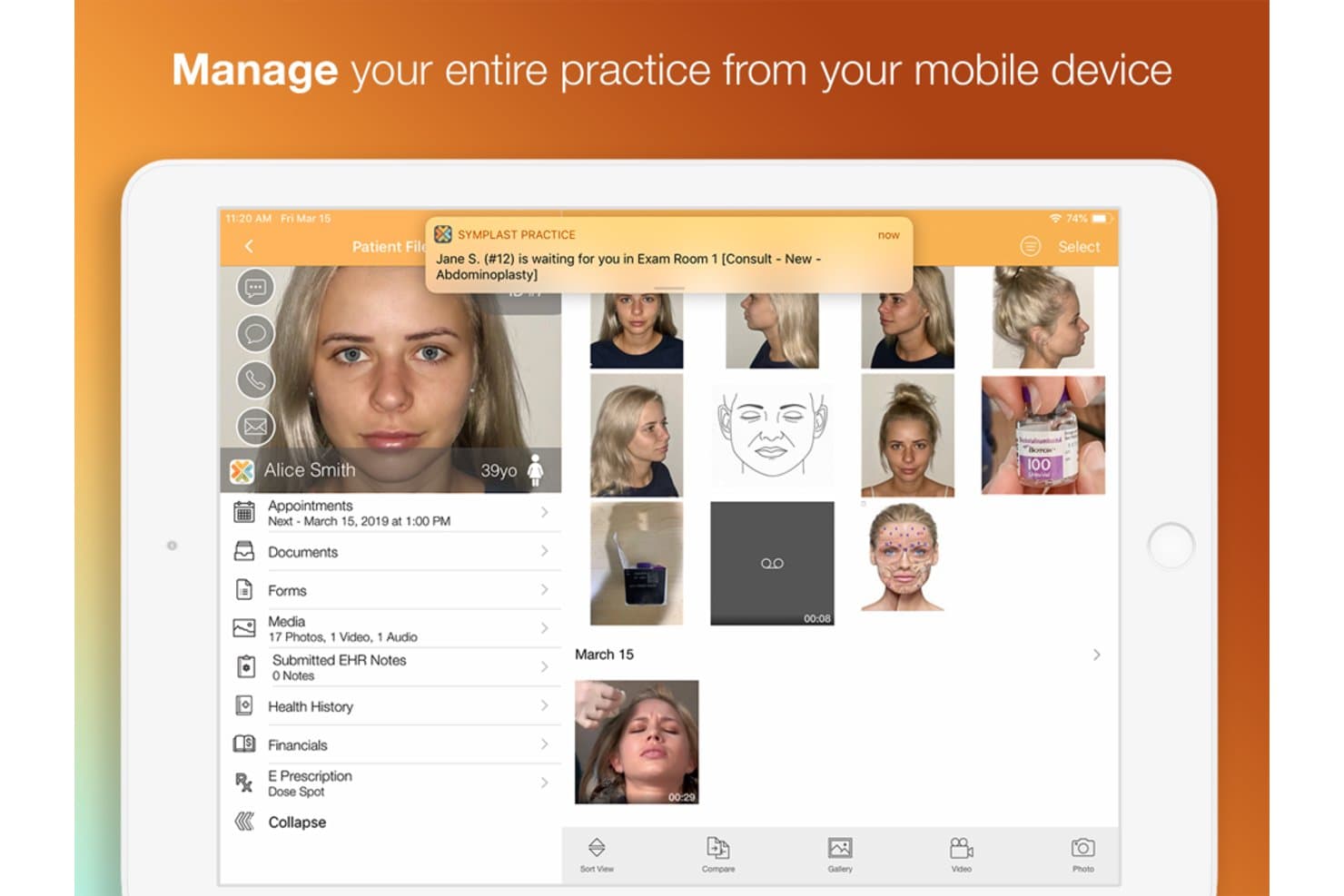
Symplast offers a mobile-friendly EMR interface displaying patient files, photo galleries, appointments, and real-time exam room notifications on an iPad. Symplast is a mobile-first EHR and practice management platform built specifically for plastic surgery and medical aesthetics, combining clinical charting, before/after photo management, scheduling, billing, and patient engagement in one system.
Who Is Symplast Best For?
Symplast suits plastic surgeons and aesthetic practice owners who need full clinical and operational access from a mobile device, not just a desktop.
Why I Picked Symplast
I picked Symplast as one of the best because it's one of the only plastic surgery EMRs built from the ground up for mobile, not adapted for it later. I can capture before/after photos, dictate SOAP notes through the AI Scribe, and enter CPT billing codes from my phone, all inside a single patient chart. The in-app photography with photo tagging keeps patient media directly tied to the clinical record without any separate upload step.
Symplast Key Features
- Integrated reputation management: Automates reputation requests and tracks reviews linked to completed visits within the platform.
- Digital intake and e-consents: Enables HIPAA-compliant patient registration, medical histories, and e-signature consent collection before appointments.
- Inventory management for injectables and retail: Tracks lot numbers, usage, and retail skincare inventory with barcode scanning and margin reporting.
- Secure two-way texting: Allows practices to communicate with patients using HIPAA-compliant messaging for appointment reminders and post-op instructions.
Symplast Integrations
Symplast offers native integrations with CareCredit and Symplast Payments, and connects to a medical billing clearinghouse for claims management. An API is available for custom integrations.
Pros and Cons
Pros:
- Specialty templates for aesthetic and surgical cases
- Built-in HIPAA-compliant patient messaging
- Mobile-first photo capture and charting workflow
Cons:
- Occasional lags with large photo libraries
- Limited insurance split billing options
Learn more about Symplast:
Other Plastic Surgery Practice EMR Software
Here are some additional plastic surgery practice EMR software options that didn’t make it onto my shortlist, but are still worth checking out:
- 11CosmetiSuiteBest for cosmetic surgery practice management
- 124D EMRBest for surgery charting and documentation
- 13MangomintBest for modern scheduling
- 14ZenotiBest for multi-location medical spas
- 15TebraBest for independent practices needing tools
- 16TouchMDBest for visual patient education and consultation
- 17Amazing ChartsBest for documentation for smaller practices
- 18BoulevardBest for premium med spa booking
How I Evaluate Plastic Surgery Practice EMR Software
I look at plastic surgery EMRs in two layers: must-have capabilities like before/after photo management and surgical charting, and the differentiators that separate the best from the rest.
Core Functionality (Table Stakes For This List)
When I'm selecting tools for my list, I rank each one on a scale from 0 (does not offer the functionality) to 5 (excels in this area) for each core functionality listed below. Then, I calculate the tool's total score into a percentage. Each tool needs to achieve a minimum total score of 55% to be considered for inclusion.
- Before/After Photo Management: I check whether the platform lets you capture, tag, and compare pre- and post-op photos directly in the patient chart—not just attach files.
- Cosmetic Quoting & Payments: A good EMR here handles itemized quotes for procedures like rhinoplasty or mommy makeovers and ties into financing options at checkout.
- Surgical Charting Templates: I look for specialty-specific templates covering operative notes, consent forms, and post-op protocols rather than generic medical charting.
- HIPAA-Compliant EMR Core: The platform should offer certified electronic records with e-prescribing and clinical documentation that meets HIPAA requirements out of the box.
- Practice Scheduling Integration: Scheduling should handle consult visits, surgical bookings, and OR or procedure room assignments across multiple providers in one view.
- Insurance & Reconstructive Billing: I evaluate whether the system supports both insurance claims for reconstructive cases and cash-pay processing for elective cosmetic services.
Once I have a list of tools that meet the criteria, I consider what sets each platform apart.
Differentiating Factors (What Sets Vendors Apart)
Here's how I compare and contrast different vendors:
Standout Features
Consultation-to-conversion tracking matters because cosmetic leads often take weeks to decide. I look for platforms that tie web inquiries to consult bookings and track which prospects actually schedule surgery. Body mapping tools add real value too—annotating Botox dosing sites or filler placement on digital diagrams keeps documentation precise. I also evaluate cosmetic quoting with financing integrations like CareCredit or PatientFi, which help patients commit to elective procedures.
Beyond Features
Hybrid workflow support is a big one—many plastic surgery practices run med spa services alongside surgical cases, so I check whether the platform handles both insurance-billed reconstructive work and cash-pay cosmetic visits within one chart. Implementation also matters. Migrating legacy photos and charts from a prior EMR can be painful, so I look at whether the vendor offers structured data migration. Ecosystem fit rounds it out: connections to imaging systems like Canfield VECTRA and accounting tools like QuickBooks keep your tech stack working together.
How to Choose Plastic Surgery Practice EMR Software
It’s easy to get bogged down in long feature lists and complex pricing structures. To help you stay focused as you work through your unique software selection process, here’s a checklist of factors to keep in mind:
| Factor | What to Consider |
| Scalability | Will the system support multiple providers, locations, and service lines as your practice grows, including expansion into med spa or new surgical offerings? |
| Integrations | Does the EMR connect with your imaging systems, payment processors, accounting software, and marketing stack—or will you need custom workarounds or add-on tools? |
| Customizability | Can you tailor chart templates, scheduling flows, and reporting to the way your team works, or will you have to adapt your processes to fit the software? |
| Ease of use | Will your surgeons, RNs, and front desk team pick it up quickly, or will the learning curve bog down daily patient scheduling and documentation? |
| Implementation and onboarding | How much support does the vendor provide for data migration, staff training, and go-live? What’s the timeline and what resources do you need on your end? |
| Cost | Does pricing fit your budget not only today but as you add users, modules, or features? Watch for mandatory add-ons or steep costs for extra storage or photos. |
| Security safeguards | Are there audit logs, two-factor authentication, and HIPAA-compliant protections for patient records and photos—especially for shared iPads or mobile charting? |
| Support availability | How quickly can you get help if your team gets stuck or runs into a downtime issue, and is support included or separately billed? |
What Is Plastic Surgery Practice EMR Software?
Plastic surgery practice EMR software is a type of electronic medical record system designed for the clinical, administrative, and workflow needs of cosmetic and reconstructive surgery practices. It covers before-and-after photo documentation, specialty chart templates, cosmetic quoting, scheduling, and secure HIPAA-compliant recordkeeping—all in one place.
Features of Plastic Surgery Practice EMR Software
When selecting plastic surgery practice EMR software, keep an eye out for the following key features:
- Before/after photo management: Lets you capture, tag, and compare patient photos over time directly within the chart, supporting informed consults and marketing efforts.
- Cosmetic quoting and payments: Enables creation of itemized procedure quotes, tracks elective payment plans, and supports easy collection of self-pay transactions.
- Specialty charting templates: Provides documentation forms tailored for common plastic surgery procedures, including operative notes, consents, and post-op instructions.
- Integrated scheduling: Allows you to manage appointments, OR bookings, and room assignments for surgeons, nurses, and med spa staff in one calendar.
- HIPAA-compliant documentation: Maintains patient privacy and legal standards for charting, e-consents, photos, prescriptions, and sensitive data sharing.
- Insurance and reconstructive billing: Supports both insurance claims for reconstructive procedures and cash-pay workflows for elective cosmetic services.
- Patient portal: Offers secure online access for patients to view records, upload photos, sign forms, and communicate with your team.
- Inventory management: Tracks medication, injectable vials, retail products, and skincare inventory, tying usage and sales back to individual patient charts.
- Consultation and lead tracking: Captures incoming web or phone leads, links them to appointments, and monitors follow-up and conversion outcomes.
Common Plastic Surgery Practice EMR Software AI Features
Beyond the standard plastic surgery practice EMR software features listed above, many of these solutions are incorporating AI with features like:
- Automated photo analysis: Uses AI to detect, align, and compare before-and-after images, highlighting subtle changes and helping providers track surgical outcomes more objectively.
- Predictive scheduling optimization: AI analyzes appointment patterns and provider availability to suggest optimal scheduling slots, reducing gaps and improving resource utilization.
- Smart documentation assistance: AI-powered tools suggest relevant chart notes, auto-complete operative reports, and flag missing documentation based on procedure type and patient history.
- AI-driven patient triage: Automatically reviews intake forms and patient messages to prioritize urgent consults, flag potential complications, and route cases to the right provider.
- Natural language processing for charting: Converts spoken or typed notes into structured chart entries, making documentation faster and more accurate for busy clinical teams.
Benefits of Plastic Surgery Practice EMR Software
Implementing plastic surgery practice EMR software provides several benefits for your team and your business. Here are a few you can look forward to:
- Streamlined workflows: Integrated scheduling, charting, and billing tools help your team manage consults, procedures, and follow-up in one system.
- Enhanced photo documentation: Built-in before-and-after photo management ensures you securely capture, tag, and compare images right from the patient chart.
- Improved patient experience: Online patient portals, e-consents, and automated appointment reminders make communication, education, and intake more convenient.
- Efficient billing integration: Tools that support both insurance claims and self-pay cosmetic billing make financial processes faster and more accurate.
- Stronger compliance: HIPAA-compliant features protect sensitive medical data, including photos and consents, meeting strict privacy and security standards.
- Easier lead management: Centralized consult, lead, and follow-up tracking support higher conversion rates for new cosmetic patients.
- Better decision support: Specialty chart templates and real-time reporting enable providers to deliver more consistent, informed care and business management.
Costs and Pricing of Plastic Surgery Practice EMR Software
Selecting plastic surgery practice EMR software requires an understanding of the various pricing models and plans available. Costs vary based on features, team size, add-ons, and more. The table below summarizes common plans, their average prices, and typical features included in plastic surgery practice EMR software solutions:
Plan Comparison Table for Plastic Surgery Practice EMR Software
| Plan Type | Average Price | Common Features |
| Free Plan | $0 | Basic appointment scheduling, limited charting, and email support. |
| Personal Plan | $50-$150/user/month | HIPAA-compliant charting, before/after photo storage, basic billing tools, and standard scheduling. |
| Business Plan | $200-$400/user/month | Advanced photo management, procedure quoting, payment processing, insurance billing, customizable templates, and reporting. |
| Enterprise Plan | $500+/user/month | Full workflow automation, multi-location support, advanced integrations, dedicated account management, and custom onboarding. |
Plastic Surgery Practice EMR Software FAQs
Here are some answers to common questions about plastic surgery practice EMR software:
Can plastic surgery EMR software support both cosmetic and reconstructive cases?
Yes, most modern solutions accommodate both cash-pay cosmetic workflows and insurance-billed reconstructive cases, allowing your team to manage all patient types and procedures in a single system.
What unique photo management features should I expect?
You should expect integrated before-and-after photo capture, tagging, side-by-side comparison, and built-in consent workflows for secure patient sharing and marketing use—all directly linked to the patient chart.
How does inventory management work in these systems?
Inventory management tools track injectable vials, retail skincare, and devices by lot or unit, alerting you to low stock and tying product usage directly to patient encounters for compliance and margin tracking.
What kind of support is available for onboarding and migration?
Vendors typically offer specialty onboarding, data migration for legacy charts and photos, and ongoing training for new staff, which is important for minimizing disruption during your transition.
Are these systems designed to meet HIPAA requirements?
Yes, reputable vendors build in audit logging, secure messaging, user permissions, and encrypted storage to help your practice stay compliant with HIPAA and other privacy standards.