

Software-ul EMR pentru chirurgie este o platformă digitală concepută pentru a documenta, gestiona și eficientiza toate aspectele îngrijirii pacienților chirurgicali și ale fluxurilor clinice de lucru. Dacă sunteți în căutarea celui mai bun software EMR pentru chirurgie, probabil doriți să îmbunătățiți eficiența operațională, să minimizați erorile și să vă sprijiniți echipa cu instrumente adaptate cerințelor specialității dumneavoastră. Având în vedere cerințele stricte de conformitate, volumul mare de cazuri și necesitatea coordonării îngrijirii între echipele clinice și administrative, alegerea soluției EMR potrivite vă poate ajuta să obțineți rezultate mai sigure și mai consecvente. Această listă vă va ghida prin opțiunile cele mai bine cotate, astfel încât să găsiți software-ul care corespunde nevoilor unice ale practicii dumneavoastră chirurgicale.
Why Trust Our Software Recommendations
6,700+
Reviews
20
Industry experts
16+
Evaluation factors
14
Years
Our team has been testing and reviewing software since 2012. As medical practice leaders ourselves, we know how difficult—and important—it is to choose the right software.
For this guide, we evaluated tools using hands-on testing and independent research, scoring tools using our selection criteria.
Our reviews reflect our human editorial judgment, not a sales pitch.
Tabel comparativ al programelor EMR pentru chirurgie
Acest tabel comparativ sintetizează detaliile privind prețurile pentru selecțiile mele de top de software EMR pentru chirurgie:
Sorted by: Default
| Tool | Starting Price | Website | |
|---|---|---|---|
Best for coordinating perioperative care | 4.4 out of 5 | Pricing upon request Free demo available | Website |
Best for plastic surgery EHR, scheduling | 4.3 out of 5 | Pricing upon request Free demo available | Website |
Best for voice-enabled charting | 3.9 out of 5 | Pricing upon request Free demo available | Website |
Best for configurable surgical workflows | 3.7 out of 5 | Pricing upon request Free demo available | Website |
Best for integrated scheduling and EHR tools | 3.6 out of 5 | $130/user/month 30-day free trial + free demo available | Website |
Best for specialty-specific surgical documentation | 4.5 out of 5 | Pricing upon request Free demo available | Website |
Best for managing plastic surgery | 3.0 out of 5 | Pricing upon request Free demo available | Website |
Best for integrated ASC scheduling | Not rated | Pricing upon request Free demo available | Website |
Best for end-to-end surgery center management | Not rated | Pricing upon request Free demo available | Website |
Best for cloud-based clinical documentation | Not rated | Pricing upon request Free demo available | Website |


Recenzii ale celor mai bune programe EMR pentru chirurgie
Mai jos sunt rezumatele mele detaliate ale celor mai bune programe EMR pentru chirurgie care au ajuns pe lista mea scurtă. Recenziile mele oferă o privire detaliată asupra funcțiilor, cazurilor de utilizare recomandate și integrărilor fiecărei platforme, pentru a vă ajuta să găsiți cea mai potrivită opțiune.
 Best for coordinating perioperative care
- Free demo available
- Pricing upon request
Visit WebsiteCustomer Rating:4.4/5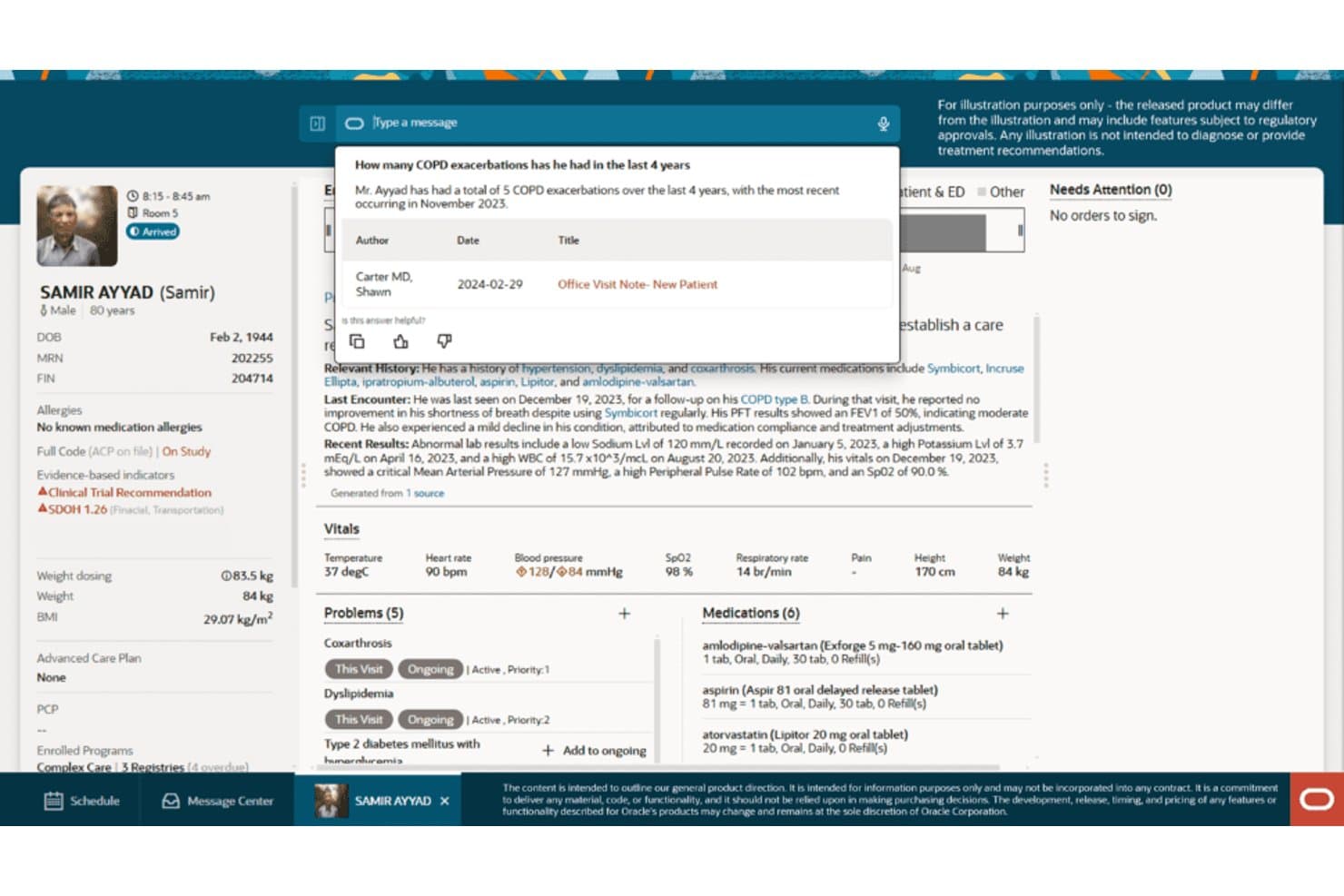
Oracle Health offers an AI-assisted patient summary interface that displays COPD exacerbation history, vitals, medications, and clinical notes within its EHR platform. Oracle Health is an enterprise EHR platform built for large health systems, covering perioperative documentation, anesthesia workflows, OR scheduling, surgical inventory management, and FHIR-based interoperability across the full surgical continuum.
Who Is Oracle Health Best For?
Oracle Health is a strong fit for large hospital systems and health networks that need a unified platform to manage surgical departments across multiple facilities.
Why I Picked Oracle Health
Oracle Health earns its spot on my shortlist because of how tightly it connects every phase of surgical care within one chart. I like that the Anesthesia module pulls device data and near real-time vitals directly into the EHR, keeping anesthesiologists and surgeons working from the same record. The built-in AORN Syntegrity documentation guidelines also mean surgical teams aren't manually building standardized perioperative workflows from scratch.
Oracle Health Key Features
- OR block scheduling board: Lets you assign rooms, equipment, and staff to cases with visual scheduling tools.
- Surgical inventory management: Tracks supply usage, device identifiers, and expiration alerts directly in the patient chart.
- HL7/FHIR-based interoperability: Connects with labs, imaging, anesthesia monitors, and referral networks for real-time data exchange.
- Customizable surgical note templates: Offers specialty-based documentation workflows for various procedures across multiple service lines.
Oracle Health Integrations
Oracle Health offers native integrations with Surescripts, Haemonetics BloodTrack, Oracle Cloud Infrastructure, and Multum Drug Database. It connects with medical devices such as infusion pumps and vital sign monitors, and provides FHIR and HL7 APIs for custom integrations.
Pros and Cons
Pros:
- Strong multi-facility OR scheduling coordination
- Advanced surgical inventory and implant tracking
- Comprehensive perioperative and anesthesia documentation
Cons:
- Limited fit for small or independent practices
- Configuration requires extensive professional services
Learn more about Oracle Health: Best for plastic surgery EHR, scheduling
- Free demo available
- Pricing upon request
Visit WebsiteCustomer Rating:4.3/5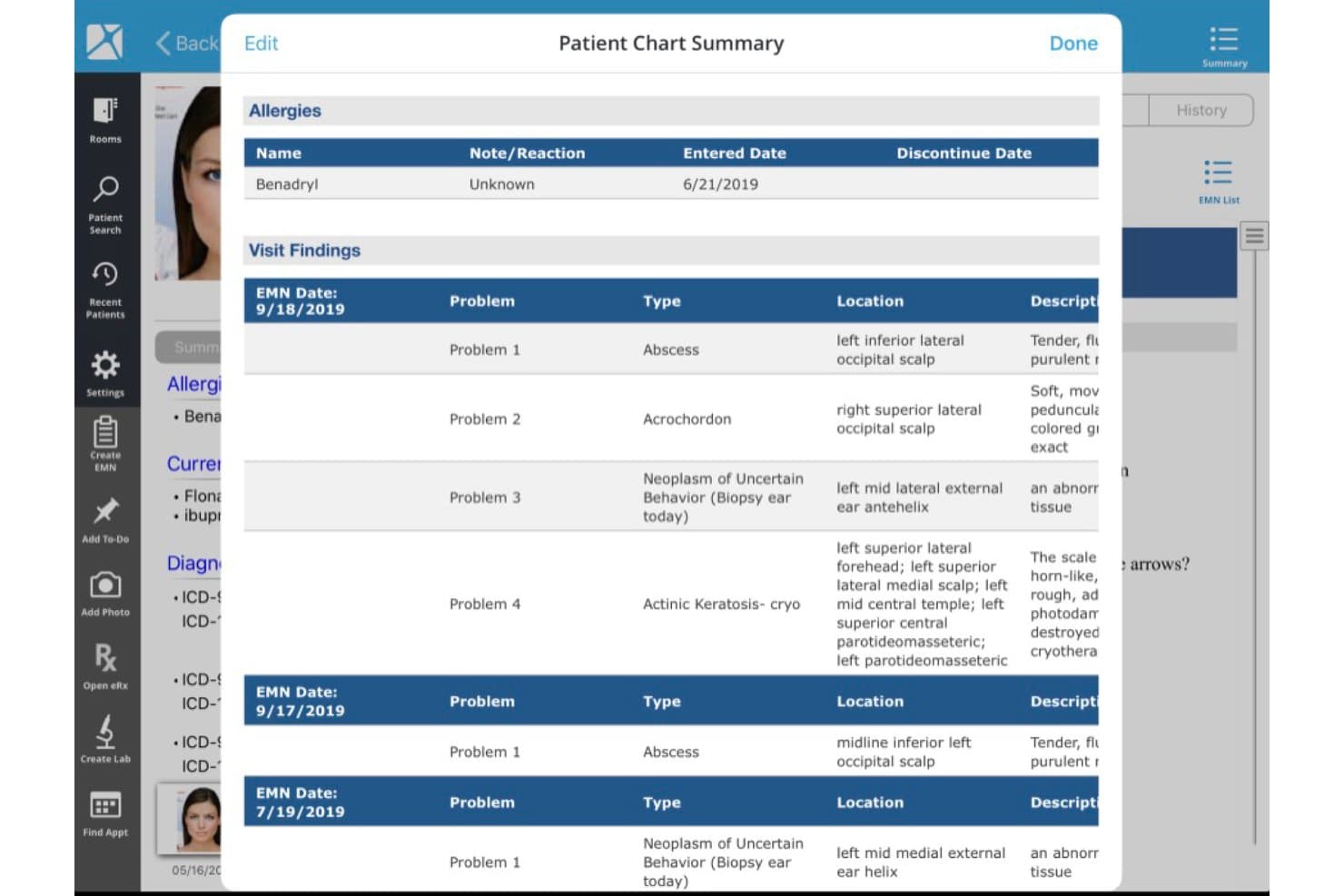
Nextech offers a Patient Chart Summary view that displays allergies, visit findings, problem types, locations, and descriptions across multiple EMN dates in a structured table format. Nextech is a cloud-based EHR and practice management platform built specifically for plastic surgery practices, combining customizable operative templates, integrated photo management, e-prescribing, and ASC billing in a single system.
Who Is Nextech Best For?
Nextech is a strong fit for plastic surgery practices and ASCs that need a specialty-specific clinical and billing system built around cosmetic and reconstructive workflows.
Why I Picked Nextech
I picked Nextech as one of the best because its plastic surgery EHR goes deeper than generic operative templates. The smart stamping tool lets me point-and-click directly onto anatomical diagrams to document injection sites and surgical markings, and the built-in photo management pulls before-and-after images directly into the chart. Scheduling ties directly to the patient record, so pre-op consults, procedure dates, and post-op follow-ups all live in one place.
Nextech Key Features
- Customizable surgical templates: Create specialty-driven documentation for a wide range of plastic surgery procedures.
- Integrated e-prescribing with EPCS: Manage pre-op and post-op prescriptions, including controlled substances, from within the EMR.
- Cloud-based access: Chart and review patient records securely from any web-enabled device at any location.
- ASC billing and membership management: Handle ambulatory surgery center claims, subscriptions, and payment plans directly in the platform.
Nextech Integrations
Nextech offers native integrations with Clearwave, DermoPRO, ConnectOnCall, Zocdoc, Affirm, Stripe, and TouchMD. It also supports integrations via its API and FHIR standards through the MyPatientVisit portal.
Pros and Cons
Pros:
- Fully integrated ASC and cosmetic billing workflows
- Built-in pre-op and post-op image management
- Plastic surgery-specific operative and charting tools
Cons:
- Less suitable for multi-specialty surgical practices
- Lacks intraoperative anesthesia and implant tracking
Learn more about Nextech: Best for voice-enabled charting
- Free demo available
- Pricing upon request
Visit WebsiteCustomer Rating:3.9/5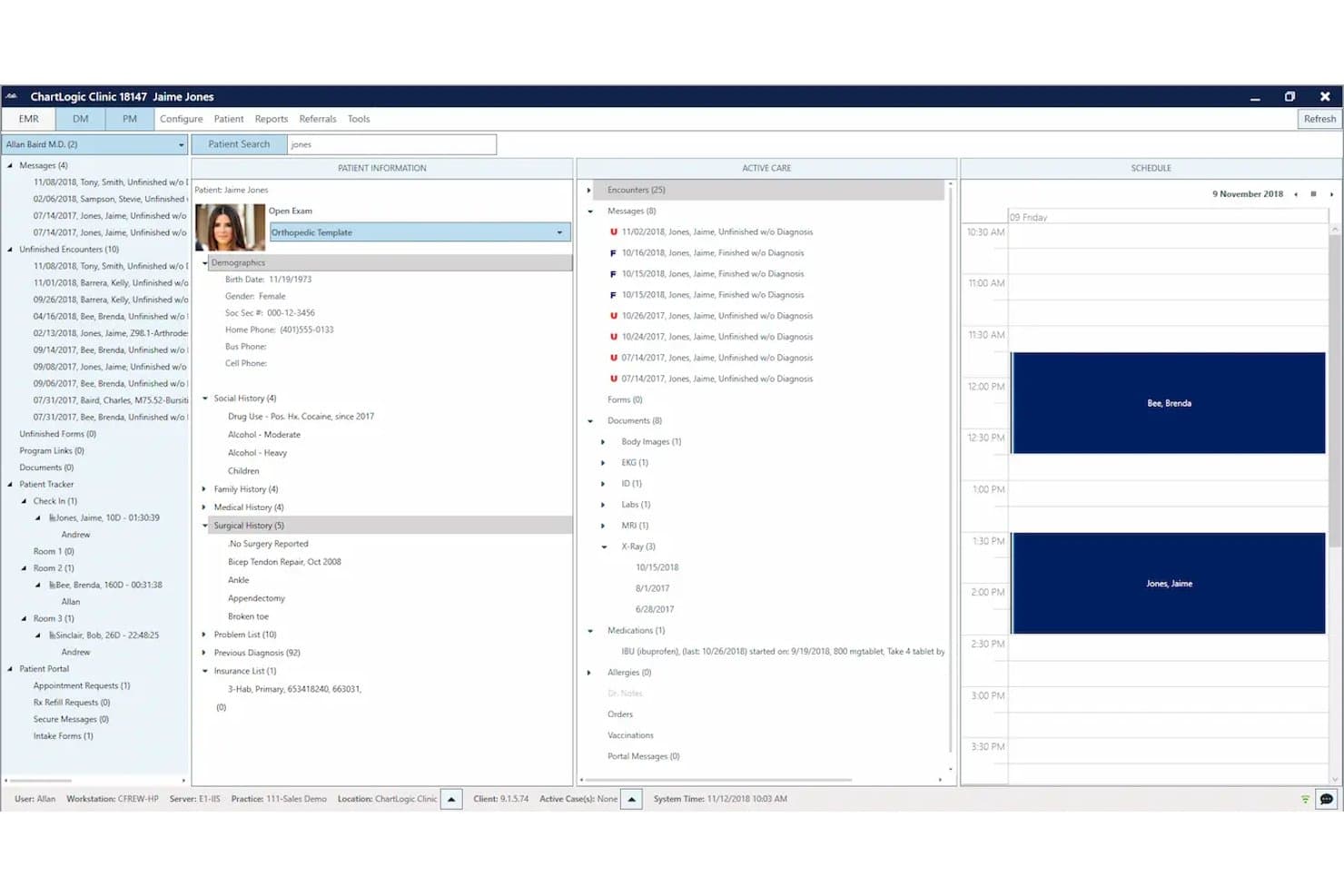
ChartLogic centralizes patient records, scheduling, and active care in one dashboard. ChartLogic is an ambulatory EMR built for surgical specialties, combining voice-driven clinical documentation, customizable specialty templates, practice management, and integrated RCM into a single platform.
Who Is ChartLogic Best For?
ChartLogic is a strong fit for solo and small-to-mid-sized surgical practices where physicians handle their own documentation and need fast, voice-driven charting.
Why I Picked ChartLogic
I've included ChartLogic in my top picks because its PrecisionVoice technology goes beyond basic dictation. Surgeons can navigate the entire note, insert sub-templates, and enter data using voice commands alone, without touching a keyboard. That means a complete surgical note in under 90 seconds. ChartLogic also displays the entire patient note on a single screen, so there's no clicking through pop-ups or drop-downs mid-documentation.
ChartLogic Key Features
- Specialty-specific templates: Pre-built templates for general, orthopedic, podiatry, ophthalmology, and pain management surgery charting.
- Integrated practice management: Scheduling, billing, and reporting tools are unified within the EMR platform.
- Lab and imaging connectivity: Direct connections to national lab networks and radiology systems for fast data exchange.
- ONC-certified clinical compliance: Meets federal certification requirements and supports MIPS participation for value-based programs.
ChartLogic Integrations
ChartLogic offers native integrations with CGM LABDAQ, FlexScanMD, and Change Healthcare's Clinical Network for labs and radiology. An API is available for custom integrations.
Pros and Cons
Pros:
- ONC-certified with MIPS support
- Specialty templates for multiple surgical fields
- Voice-driven note creation for surgeons
Cons:
- Limited OR scheduling and resource management
- Weak perioperative workflow features
Learn more about ChartLogic: Best for configurable surgical workflows
- Free demo available
- Pricing upon request
Visit WebsiteCustomer Rating:3.7/5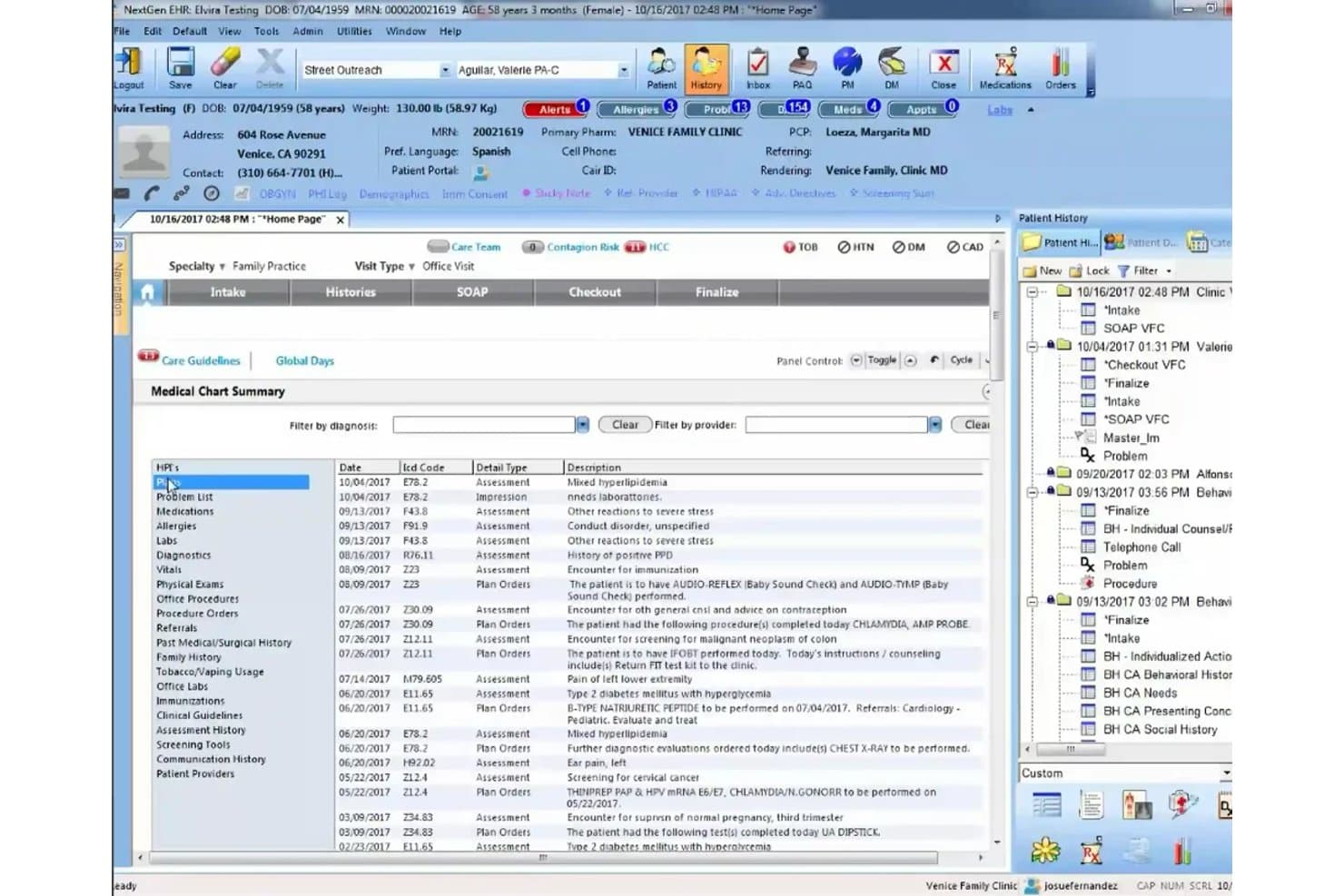
NextGen Healthcare offers a Medical Chart Summary view displaying patient history, diagnoses, ICD codes, and assessment details within its EHR interface. NextGen Healthcare is an ambulatory EHR platform built for surgical and specialty practices, combining specialty-specific clinical templates, surgical scheduling, charge capture, and HL7/FHIR interoperability in a single system.
Who Is NextGen Healthcare Best For?
It's a strong fit for ambulatory surgery centers and multi-provider surgical specialty practices that need configurable clinical workflows without a hospital-grade system.
Why I Picked NextGen Healthcare
I picked NextGen Healthcare as one of the best because of how deeply you can configure its surgical workflows without needing a hospital-grade system. I like that surgery scheduling is built directly into the clinical chart, so my team can link OR resources, staff assignments, and pre-op documentation in one place. The Ambient Assist AI also captures structured SOAP notes and suggests ICD-10 codes and charges on the fly, which cuts a lot of manual steps out of post-op documentation.
NextGen Healthcare Key Features
- Specialty-specific surgical templates: Provides orthopedic, plastic, ophthalmic, and multiple other surgical note layouts with CPT and procedure linking.
- Integrated e-prescribing with EPCS support: Allows electronic management of controlled substance prescriptions for surgical patients within the workflow.
- ONC-certified interoperability tools: Includes HL7 and FHIR connectivity to hospital systems, labs, imaging, and referring providers.
- Revenue cycle management integration: Supports charge capture, surgical coding with modifiers, and direct connection to PM and clearinghouse platforms.
NextGen Healthcare Integrations
NextGen Healthcare offers native integrations with Mirth Connect, Waystar, CoverMyMeds, InstaMed, HST Case Coordination, HST Price Transparency, and NextGen Share Diagnostic Hub for lab connectivity. An API is available for custom integrations.
Pros and Cons
Pros:
- Ambulatory and ASC workflows managed in one chart
- Embedded surgery scheduling links resources and documentation
- Highly configurable surgical templates for multiple specialties
Cons:
- Reported slower response times during peak hours
- Limited intraoperative nursing and anesthesia charting
Learn more about NextGen Healthcare: Best for integrated scheduling and EHR tools
- 30-day free trial + free demo available
- From $130/user/month
Visit WebsiteCustomer Rating:3.6/5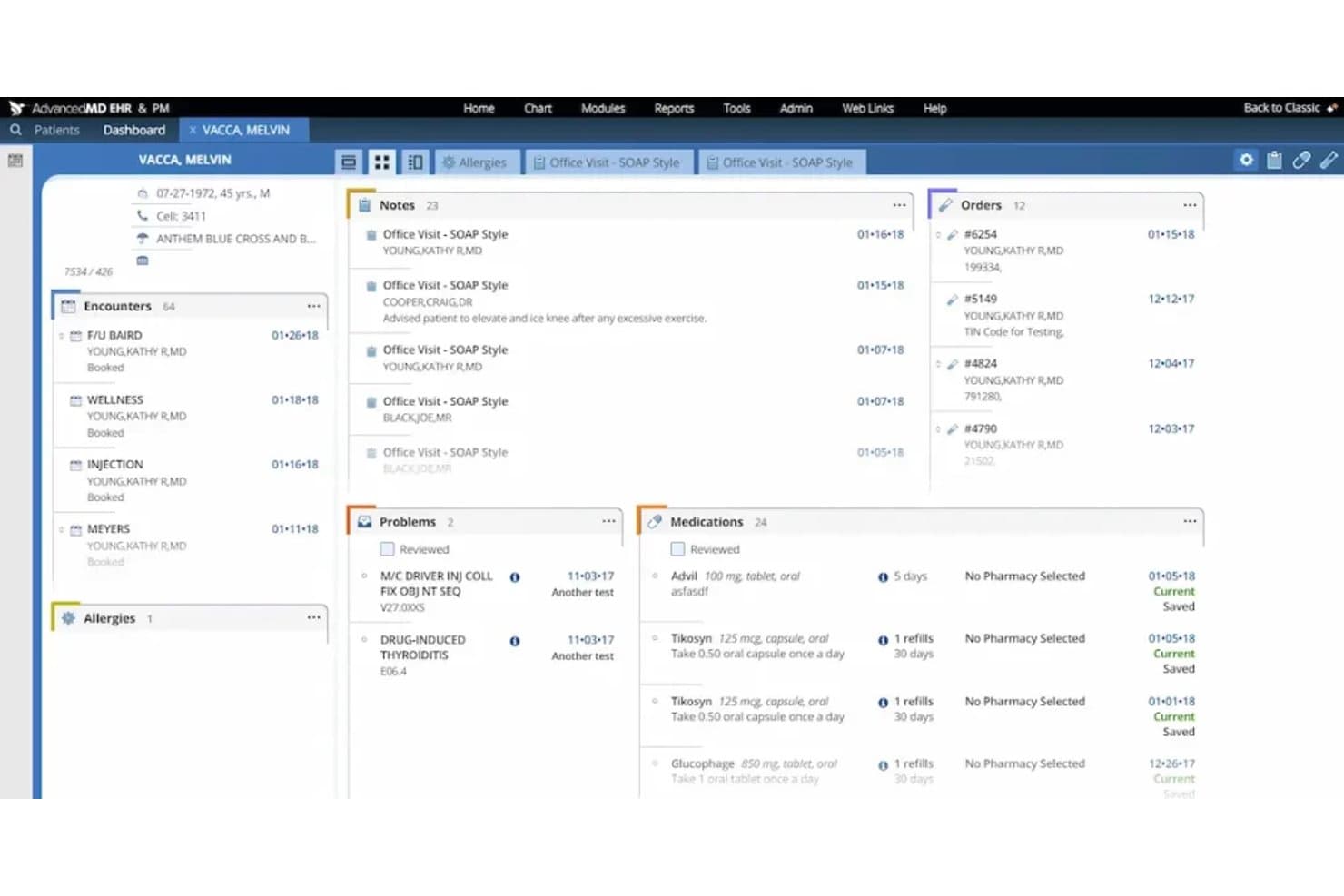
AdvancedMD offers a comprehensive patient dashboard displaying encounters, notes, orders, problems, medications, and allergies in a unified view. AdvancedMD is a cloud-based EMR and practice management platform built for ambulatory surgery centers, covering perioperative documentation, surgical scheduling, CPT/ICD-10 coding, e-prescribing, and integrated billing.
Who Is AdvancedMD Best For?
AdvancedMD is a strong fit for independent ASCs and surgical practices with 2–50 providers that need clinical documentation, scheduling, and billing managed in one platform.
Why I Picked AdvancedMD
AdvancedMD earns its spot on my shortlist because the scheduling and EHR modules are genuinely unified, not just loosely connected. When a surgical case is booked, the patient chart, pre-op checklist, and insurance verification all trigger from that single scheduling action. I also like how intra-operative notes automatically generate CPT and ICD-10 codes, which cuts a step that typically creates bottlenecks between clinical and billing staff.
AdvancedMD Key Features
- Customizable procedure templates: Build and modify pre-op, intra-op, and post-op templates for various surgical specialties and workflows.
- Integrated e-prescribing and EPCS: Manage controlled substance and routine medication orders electronically with PDMP registry integration.
- ONC-certified API and HL7/FHIR support: Enable data sharing with hospitals, labs, imaging centers, and referring providers.
- Automated reporting for ASC compliance: Track and submit quality measures for ASCQR, MIPS, and other regulatory requirements directly from the platform.
AdvancedMD Integrations
AdvancedMD offers native integrations with Intraprise Health, HIPAA One, Change Healthcare, and Surescripts, supports HL7 and FHIR connectivity to hospitals and labs, and provides an open API for custom integrations.
Pros and Cons
Pros:
- Integrated scheduling with patient chart linkage
- Automated surgical coding and claim creation
- Highly configurable perioperative documentation templates
Cons:
- Custom workflow setup can require specialist support
- Lacks built-in advanced OR block scheduling
 Best for specialty-specific surgical documentation
- Free demo available
- Pricing upon request
Visit WebsiteCustomer Rating:4.5/5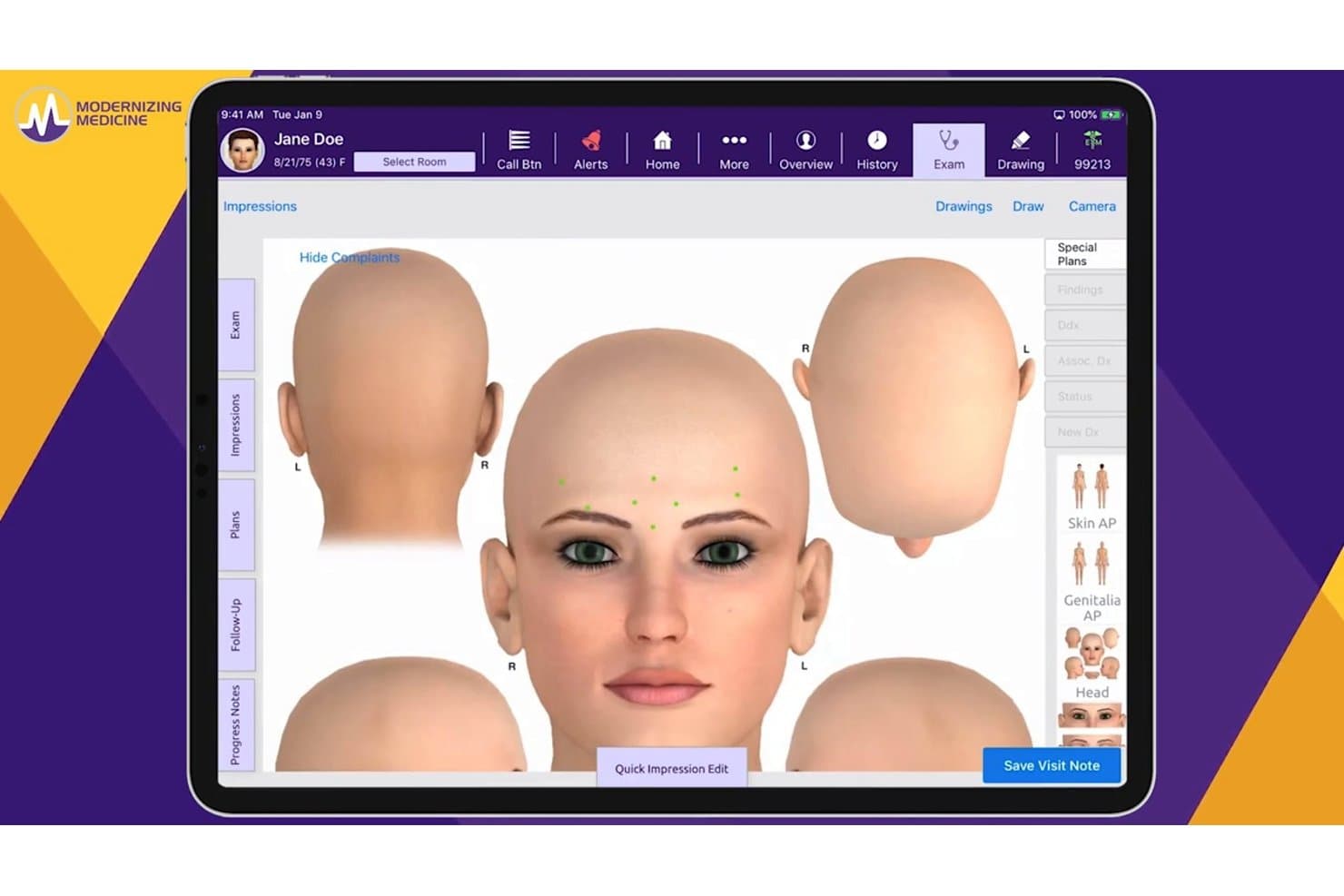
ModMed offers a 3D anatomical body diagram tool within its EHR platform, allowing providers to visually map patient complaints directly on a rendered head model during the exam. ModMed is a specialty-specific EHR platform that combines surgical documentation, perioperative charting, CPT-driven coding, e-prescribing, and practice management across multiple surgical disciplines.
Who Is ModMed Best For?
ModMed is a strong fit for specialty surgical practices and ambulatory surgery centers operating across disciplines like orthopedics, plastic surgery, ophthalmology, ENT, and urology.
Why I Picked ModMed
ModMed earns its spot on my shortlist because of how deeply it bakes surgical specialty into the documentation layer itself. The ModMed ASC module comes with built-in specialty-specific surgical narratives that nurses, anesthesiologists, and surgeons can complete simultaneously during a procedure. I also like the adaptive CPT coding engine, which learns each surgeon's documentation patterns and surfaces relevant codes and modifiers automatically.
ModMed Key Features
- Surgical scheduling board: Lets staff visually manage OR block scheduling with specific room, staff, and equipment assignments.
- Integrated anesthesia module: Captures real-time vitals and drug administration events directly from anesthesia workflows.
- UDI-compliant implant tracking: Tracks implants and supplies by barcode for each case, linking usage to patient records.
- Accreditation-ready reporting: Delivers built-in ASC certification, MIPS/MACRA, and CMS ASCQR quality reporting tools.
ModMed Integrations
ModMed offers native integrations with Surescripts, Klara, Relatient, TouchMD, and has a certified FHIR API for custom integrations. HL7 connectivity supports hospital, lab, and imaging system integrations.
Pros and Cons
Pros:
- Unified perioperative charting for entire surgical team
- Adaptive CPT coding engine learns physician style
- Specialty-driven surgical templates for multiple disciplines
Cons:
- No public pricing for quick evaluation
- ASC scheduling board lacks advanced multi-site features
Learn more about ModMed: Best for managing plastic surgery
- Free demo available
- Pricing upon request
Visit WebsiteCustomer Rating:3/5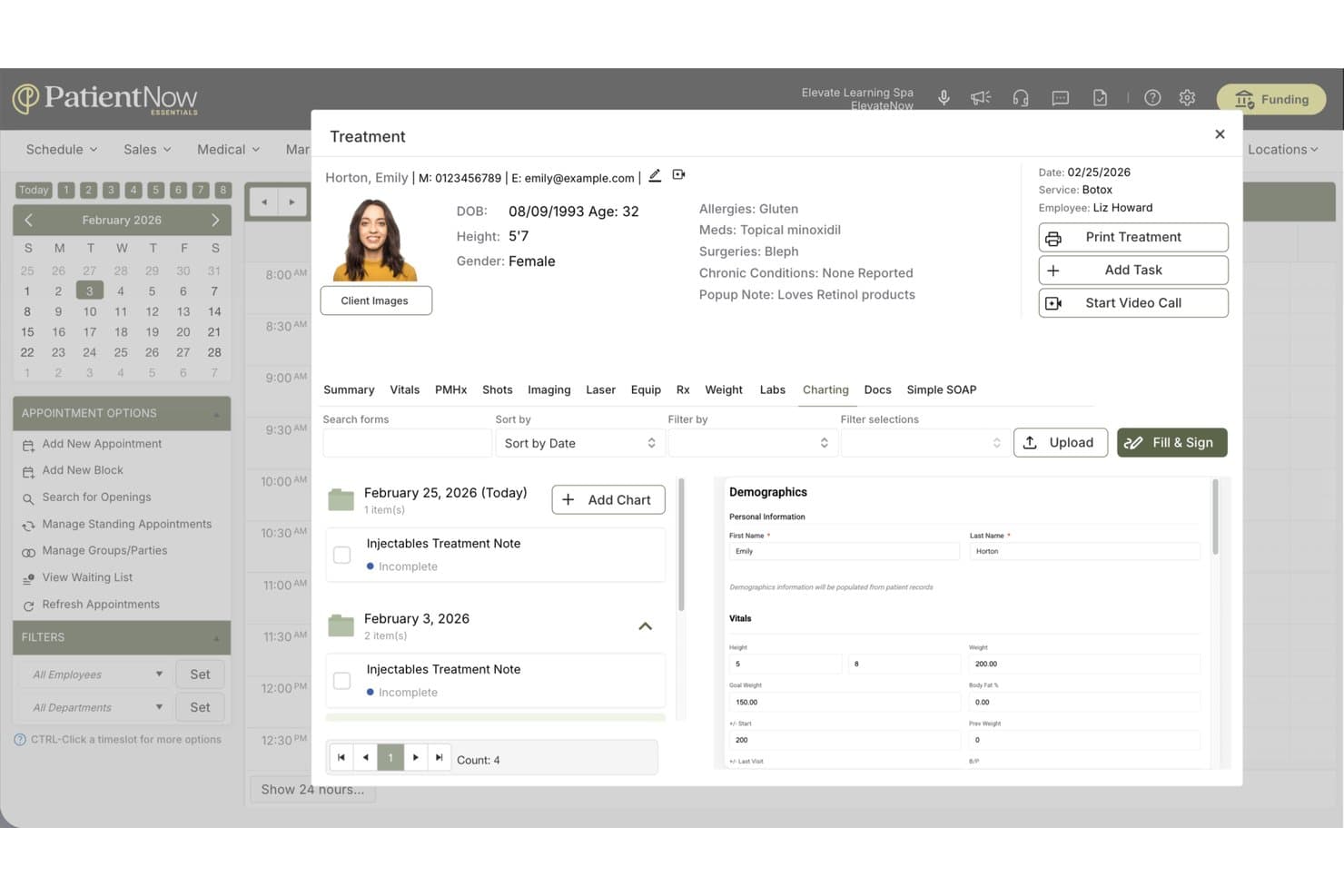
PatientNow offers a charting tab within its treatment modal, displaying patient demographics, vitals, and injectable treatment notes organized by date. PatientNow is an aesthetic and wellness EMR platform with clinical charting templates, AI-assisted documentation, digital intake, photo-based recordkeeping, ePrescribing, and practice management tools built specifically for plastic surgery and cash-pay practices.
Who Is PatientNow Best For?
PatientNow is a good fit for plastic surgeons and aesthetic practice owners running office-based, cash-pay practices who need specialty-specific charting tools.
Why I Picked PatientNow
I picked PatientNow as one of the best because its plastic surgery charting goes deeper than what you'd get from a general surgical EMR. The built-in RxPhoto module lets me annotate before-and-after photos directly inside the patient record, linking images to consents and treatment notes in a single chart. On top of that, the AI Scribe drafts structured visit notes from the same encounter, which I can review and sign without toggling between systems.
PatientNow Key Features
- Customizable surgical charting templates: Choose from specialty templates for injectables, surgery, weight loss, or wellness and adapt them to your workflow.
- Digital patient intake and consent capture: Deliver forms and consents by SMS or email and store completed files in the patient record automatically.
- Integrated ePrescribing and lab orders: Access 120+ e-prescribing and lab vendors directly within the patient chart for streamlined medication and order management.
- Practice management and scheduling tools: Centralize appointment booking, staff management, and payments in one platform built for office-based surgical practices.
PatientNow Integrations
PatientNow offers native integrations with QuickBooks Online, Optum for insurance processing, Swell Reputation Management, WooCommerce, Yext, and Tippy, and provides API access for custom integrations.
Pros and Cons
Pros:
- Digital intake forms and consent management
- Photo management for before-and-after documentation
- Specialty templates for aesthetic and plastic surgery
Cons:
- Limited intraoperative and anesthesia charting
- No ASC or hospital facility workflows
Learn more about PatientNow:
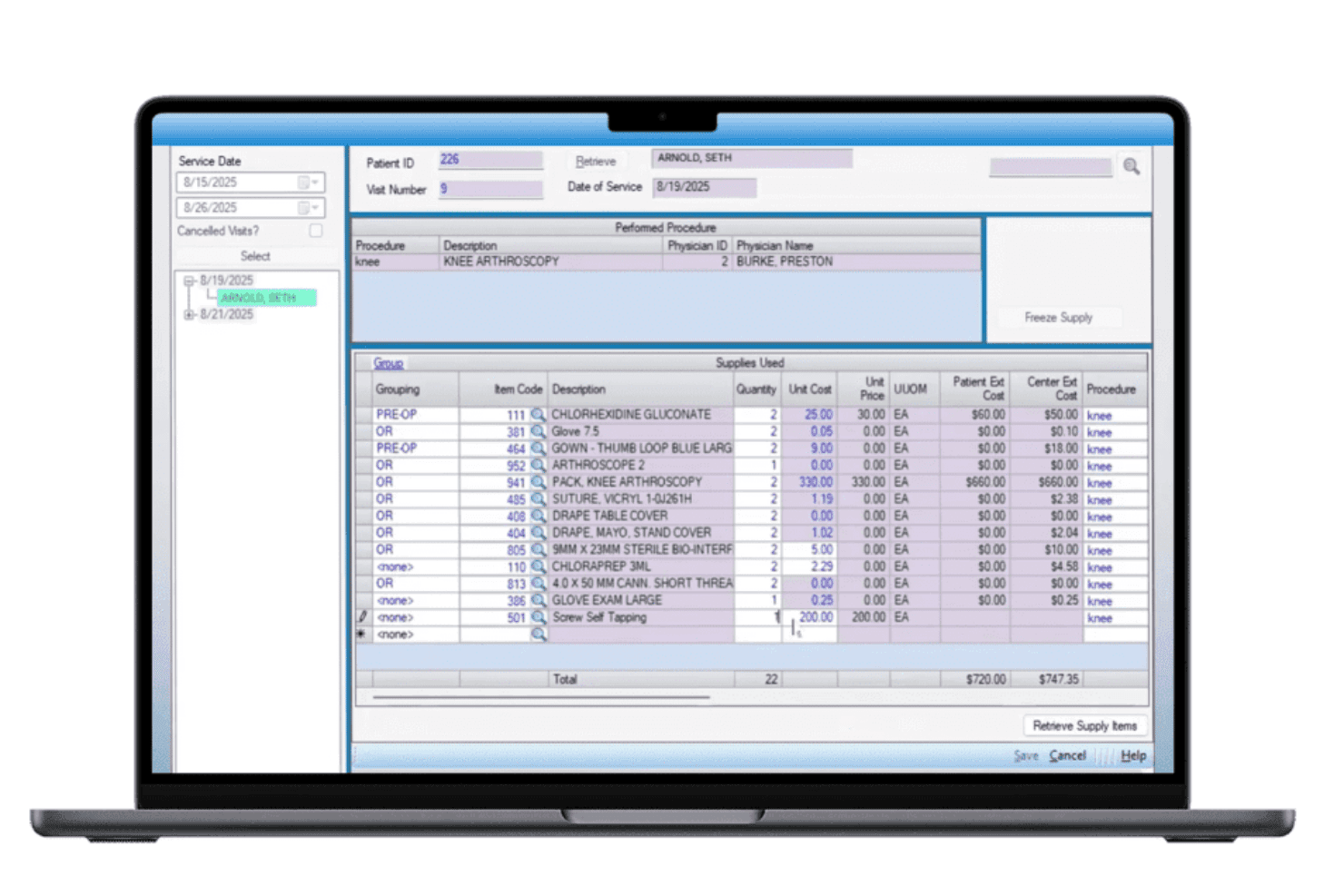
HST Pathways supports ASC claims, RCM, estimates, implant billing and contracts. HST Pathways is a cloud-based EMR and practice management platform built exclusively for ambulatory surgery centers, covering perioperative charting, OR scheduling, surgical billing, and patient engagement in a single suite.
Who Is HST Pathways Best For?
HST Pathways is a strong fit for ASC directors and administrators managing multi-specialty surgery centers who need scheduling, charting, and billing under one platform.
Why I Picked HST Pathways
HST Pathways earns its spot on my shortlist because the connection between Case Coordination and eChart is genuinely built for how surgery centers run cases. I like that block scheduling ties directly to the patient chart, so staff assignments, equipment needs, and clinical documentation all live in one place. LiveEdit™ lets multiple clinicians update the same chart simultaneously during a case, which cuts down on post-case documentation catch-up.
HST Pathways Key Features
- Tablet-optimized charting: Allows clinical staff to document perioperative care on mobile devices at the point of care.
- Patient estimates module: Generates automated, procedure-specific out-of-pocket estimates and integrates with eligibility verification tools.
- Raw ASC Data analytics: Provides customizable business intelligence dashboards for case costing, operational metrics, and clinical reporting.
- Integrated e-signature capture: Enables providers to collect patient and staff signatures on consents and chart entries directly within the EMR.
HST Pathways Integrations
HST Pathways offers native integrations with Waystar for revenue cycle and claims management, Advantien for implant purchasing and inventory, and supports HL7 interfaces with hospital and physician office EHR systems. An API is available for custom integrations.
Pros and Cons
Pros:
- OR scheduling links directly to patient charts
- Strong perioperative documentation with chart completion tracking
- Purpose-built for ambulatory surgery center workflows
Cons:
- Data feeds often flow one way only
- E-prescribing for controlled substances not included
Learn more about HST Pathways: Best for end-to-end surgery center management
- Free demo available
- Pricing upon request
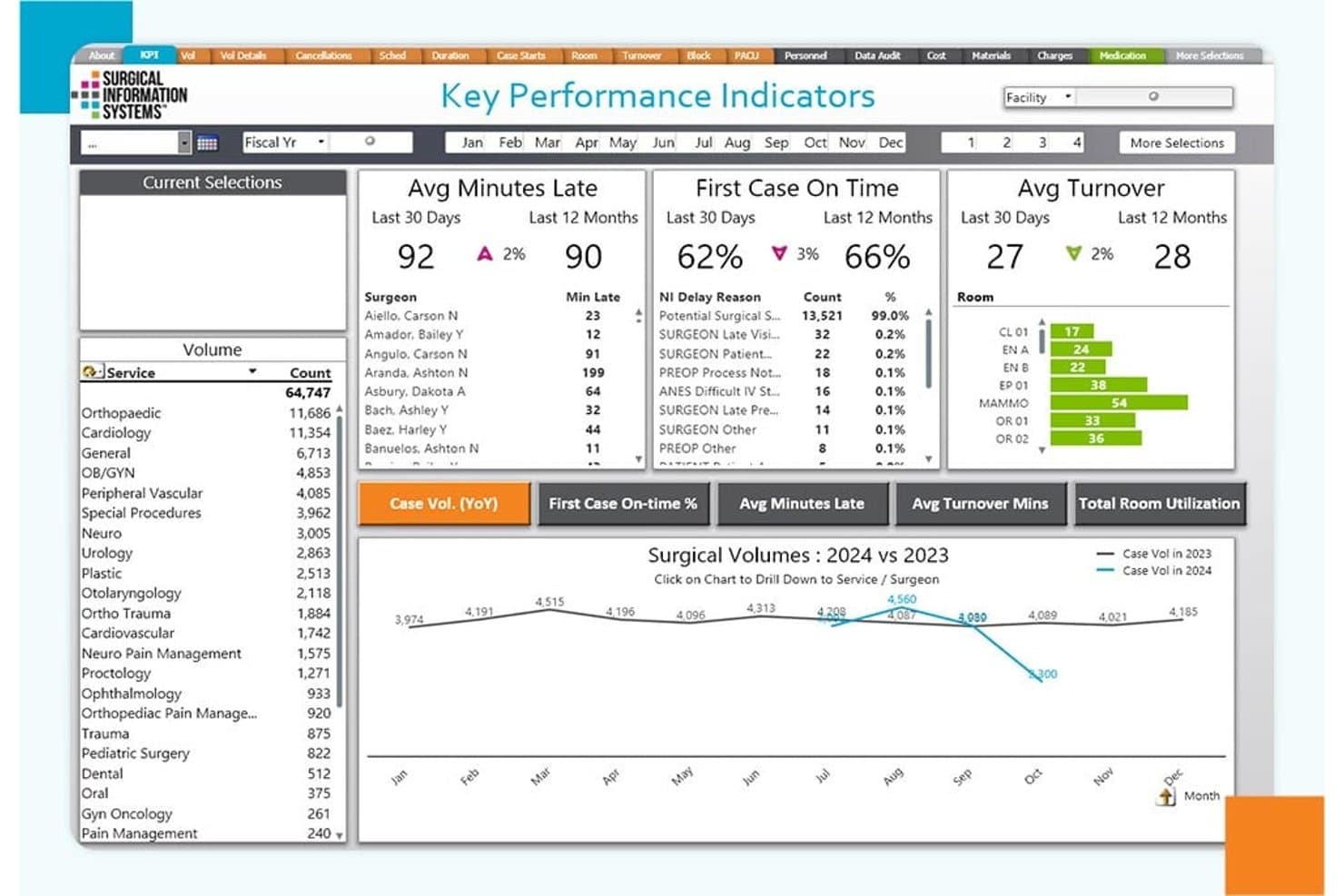
Surgical Information Systems (SIS) offers a robust Key Performance Indicators dashboard displaying surgical volumes, first case on-time rates, average turnover minutes, and minutes late metrics for surgery EMR analytics. SIS is a cloud-based perioperative EMR and ASC management platform built exclusively for surgical environments, combining clinical documentation, OR scheduling, anesthesia records, patient engagement, and revenue cycle management in one system.
Who Is Surgical Information Systems (SIS) Best For?
SIS is purpose-built for ambulatory surgery centers and surgical hospitals that need a single platform to manage both clinical and operational workflows.
Why I Picked Surgical Information Systems (SIS)
SIS earns its spot on my shortlist because it's built exclusively for the perioperative environment, unlike general ambulatory EMRs that treat surgery as an afterthought. I like how SIS Charts links electronic tracking boards across Preop, OR, Recovery, and Waiting Rooms into one unified patient chart. The built-in Revenue Cycle Services module, covering coding, claims, and transcription, means surgical teams manage the full case lifecycle without a separate billing vendor.
Surgical Information Systems (SIS) Key Features
- Anesthesia information management system: Captures anesthesia events, vitals, and drug administration directly from monitors during the case.
- Implant and inventory tracking: Records UDI-compliant implant usage and updates inventory with automatic reorder alerts.
- ONC-certified interoperability: Supports HL7 and FHIR connections for secure data exchange with hospitals, labs, and referring providers.
- Customizable specialty templates: Includes configurable documentation templates for various surgical specialties, pre-op, and post-op workflow.
Surgical Information Systems (SIS) Integrations
SIS offers native integrations with Surescripts for medication reconciliation, anesthesia monitoring devices, and over 130 third-party healthcare vendors. An API is available for custom integrations.
Pros and Cons
Pros:
- Supports procedure-level templates for multiple specialties
- Real-time anesthesia data capture and charting
- Built specifically for ambulatory surgery centers
Cons:
- Limited flexibility when using outside billing vendors
- Extensive configurations can prolong initial setup
Learn more about Surgical Information Systems (SIS): Best for cloud-based clinical documentation
- Free demo available
- Pricing upon request
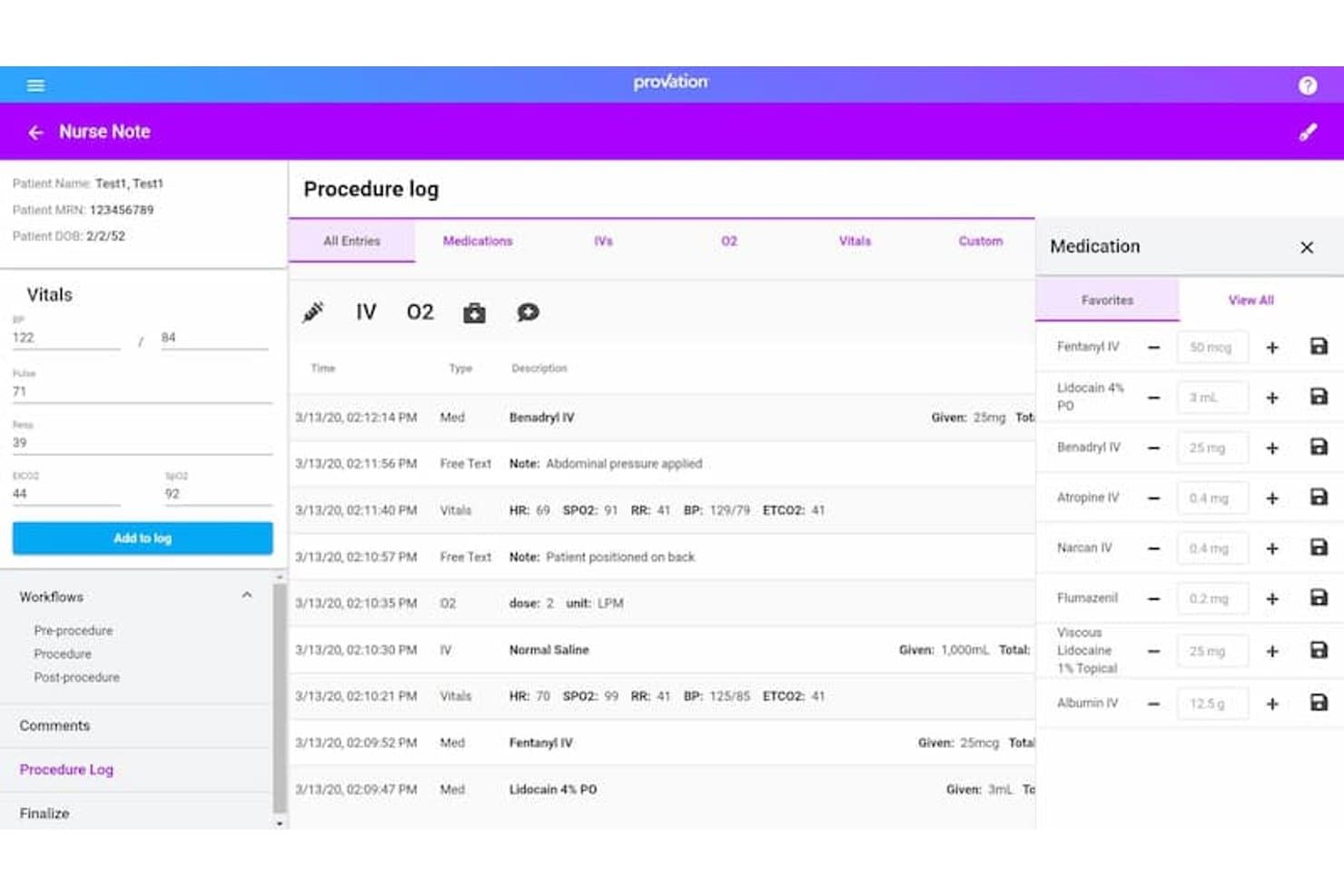
Provation Apex offers a detailed procedure log with a medication drawer showing drug names, dosages, and administration controls for surgical documentation. Provation Apex is a cloud-based ASC EMR built around structured procedure documentation, specialty-specific clinical templates, automated CPT/ICD-10 coding, and integrated physician, nursing, and anesthesia charting modules.
Who Is Provation Apex Best For?
Provation Apex is a strong fit for ambulatory surgery centers running GI, pulmonology, or orthopedic service lines that need structured, cloud-native procedure documentation.
Why I Picked Provation Apex
I've included Provation Apex in my top picks because of how it handles structured, cloud-native procedure documentation at the specialty level. Each specialty gets its own CPT-linked template set, so physicians document a colonoscopy or arthroscopic procedure with pre-populated diagnosis codes rather than free-text notes. The Provation Apex Data Suite, included at no extra cost, turns that structured documentation into reportable clinical data across the facility.
Provation Apex Key Features
- Anesthesia module: Captures real-time anesthesia events, drug doses, and vitals within its own charting interface.
- Nursing and patient charting: Allows nurses to document vitals, medications, and specimens directly into the electronic chart.
- Real-time patient tracking: Digital whiteboard displays patient status and room assignment updates as cases progress.
- EHR integrations: Connects with platforms like Epic, Cerner, and MEDITECH for data exchange between systems.
Provation Apex Integrations
Provation Apex offers native integrations with Epic, Cerner, MEDITECH, Oracle Health Ambulatory Suite, and supports HL7 and DICOM connectivity for data exchange with hospital and ASC systems.
Pros and Cons
Pros:
- Dedicated anesthesia charting module
- Real-time patient and room tracking
- CPT-linked templates for procedure documentation
Cons:
- Limited coverage for non-GI surgical specialties
- Lacks integrated e-prescribing functionality
Learn more about Provation Apex:
Alte programe EMR pentru chirurgie
Iată câteva opțiuni suplimentare de software EMR pentru chirurgie care nu au ajuns pe lista mea scurtă, dar care merită totuși luate în considerare:
- 11EpicBest for enterprise surgical care
- 12SymplastBest for mobile-first plastic surgery
- 13OmniMDBest for customizable EHR and billing tools
- 14Praxis EMRBest for template-free surgical documentation
- 15EyeMD EMRBest for ophthalmology-specific charting
- 16Picis Experior SuiteBest for perioperative documentation
- 17Ambula EMRBest for cloud-based ambulatory surgery centers
How I Evaluate Surgery EMR Software
I split my evaluation into core requirements—like perioperative workflow support and surgical coding—and differentiators that set one platform apart from another.
Core Functionality (Table Stakes For This List)
When I'm selecting tools for my list, I rank each one on a scale from 0 (does not offer the functionality) to 5 (excels in this area) for each core functionality listed below. Then, I calculate the tool's total score into a percentage. Each tool needs to achieve a minimum total score of 65% to be considered for inclusion.
- Surgical Documentation Templates: I look for procedure-specific templates across specialties like orthopedics, ophthalmology, and plastics—not just generic SOAP notes.
- Perioperative Workflow Support: The platform should link pre-op assessments, intra-op notes, and post-op documentation within one unified patient chart.
- Surgical Scheduling Integration: I check whether the tool supports OR/block scheduling with room, staff, and equipment assignments tied to the patient record.
- Surgical Coding & Billing: CPT/ICD-10 support with charge capture, modifier logic, and claims generation should be built in or tightly integrated with a PM system.
- E-Prescribing & EPCS: I evaluate whether the EMR handles controlled substance prescribing for post-op pain management alongside standard e-prescribing.
- ONC Certification & Interoperability: Each tool should be ONC-certified and support HL7/FHIR connections to hospitals, labs, imaging systems, and referring providers.
Once I have a list of tools that meet the criteria, I consider what sets each platform apart.
Differentiating Factors (What Sets Vendors Apart)
Here's how I compare and contrast different vendors:
Standout Features
Intraoperative charting with barcode scanning is a major differentiator. It lets your team capture implants and supplies in real time during a case, which reduces manual logging errors. I also look for a dedicated anesthesia module that pulls vitals directly from monitors and timestamps drug administration automatically. Implant and inventory tracking matters here too, especially for practices that need UDI-compliant logging tied to patient records with automatic stock updates and reorder alerts.
Beyond Features
Facility type fit matters a lot. A platform built for ASCs handles OR turnover and case volumes differently than one designed for hospital ORs or office-based suites. I also evaluate regulatory support, specifically whether the system includes built-in reporting for AAAHC, Joint Commission, or CMS ASC Quality Reporting requirements. Revenue cycle alignment is another key factor—I look for prior authorization workflows and case-costing analytics that help you track profitability by procedure and payer.
Cum să alegeți software-ul EMR pentru chirurgie
Este ușor să vă pierdeți în liste lungi de funcții și structuri complexe de prețuri. Pentru a vă ajuta să rămâneți concentrat pe parcursul procesului unic de selecție a software-ului, iată o listă de verificare cu factorii pe care trebuie să îi aveți în vedere:
| Factor | Aspecte de luat în considerare |
| Scalabilitate | Va putea platforma să susțină un volum în creștere de cazuri, specialități noi sau extinderea unităților în următorii ani? |
| Integrări | Se conectează sistemul EMR la sistemele dumneavoastră de gestionare a cabinetului, facturare, monitoare de anestezie, laboratoare și imagistică? |
| Posibilități de personalizare | Puteți adapta fluxurile de lucru, șabloanele și programele pentru a corespunde specialităților chirurgicale și nevoilor dumneavoastră de documentare? |
| Ușurință în utilizare | Vor putea medicii, asistenții medicali și personalul administrativ să adopte rapid sistemul? Sunt incluse resurse de instruire? |
| Implementare și integrare inițială | Cum arată calendarul integrării inițiale? Veți beneficia de ajutor pentru migrarea datelor și de instruire specifică ASC pentru echipa dumneavoastră? |
| Cost | Există costuri ascunse pentru interfețe, asistență sau module suplimentare? Modelul de prețuri corespunde bugetului și volumului dumneavoastră de cazuri? |
| Măsuri de securitate | Cum gestionează furnizorul HIPAA, permisiunile utilizatorilor, jurnalele de audit și actualizările regulate de securitate? |
| Cerințe de conformitate | Aveți nevoie de suport pentru certificarea ONC, raportarea MIPS/MACRA sau acreditarea ASC și indicatorii de calitate? |
Ce este software-ul EMR pentru chirurgie?
Software-ul EMR pentru chirurgie este o soluție digitală concepută pentru a documenta, gestiona și coordona fluxurile clinice și administrative de lucru pentru îngrijirea chirurgicală. Acesta sprijină documentarea preoperatorie, intraoperatorie și postoperatorie, programarea intervențiilor chirurgicale, facturarea și cerințele de conformitate. Aceste sisteme unifică dosarele pacienților, eficientizează sarcinile perioperatorii și ajută practicile chirurgicale să mențină standardele de reglementare în diverse specialități și tipuri de unități.
Funcții
Atunci când selectați software EMR pentru chirurgie, urmăriți următoarele funcții esențiale:
- Șabloane pentru documentația chirurgicală: Șabloanele predefinite, specifice fiecărei specialități, pentru notele preoperatorii, intraoperatorii și postoperatorii permit echipei dumneavoastră să înregistreze detaliile esențiale eficient și consecvent.
- Gestionarea fluxului de lucru perioperator: Fluxurile de lucru de la un capăt la altul conectează evaluările, rapoartele operatorii și îngrijirea postoperatorie într-un singur dosar, reducând lacunele de informații și introducerea duplicată a datelor.
- Programarea sălilor de operație și a resurselor: Instrumentele de gestionare a calendarului și resurselor coordonează orele procedurilor, personalul, echipamentele și utilizarea sălilor, contribuind la prevenirea conflictelor de programare și a blocajelor.
- Prescriere electronică cu EPCS: Permite medicilor să prescrie electronic medicamente, inclusiv substanțe controlate, respectând cerințele de conformitate și îmbunătățind siguranța pacienților.
- Facturare chirurgicală integrată: Codificarea automată CPT/ICD-10, înregistrarea costurilor și fluxurile de lucru pentru cereri de despăgubire contribuie la înregistrarea corectă a veniturilor și la reducerea respingerilor sau întârzierilor.
- Urmărirea implanturilor și a stocurilor: Înregistrarea bazată pe coduri de bare asociază fiecare material sau implant cu cazul corespunzător, actualizând stocurile în timp real și sprijinind conformitatea cu cerințele de reglementare.
- Modul pentru fișele de anestezie: Documentația dedicată pentru anestezie înregistrează semnele vitale, medicamentele și evenimentele direct de la monitoarele conectate, asigurând acuratețea și completitudinea.
- Portal pentru pacienți: Oferă pacienților acces la instrucțiuni, formulare și actualizări înainte și după proceduri, îmbunătățind implicarea și satisfacția acestora.
- Interoperabilitate și integrări: Sprijină conexiunile HL7 sau FHIR cu sistemele spitalicești, laboratoarele, serviciile de imagistică și sistemele de facturare, astfel încât datele să circule fără probleme între toate componentele echipei de îngrijire chirurgicală.
- Instrumente pentru conformitatea cu cerințele de reglementare: Funcționalitățile și rapoartele concepute pentru HIPAA, ONC și acreditarea ASC mențin cabinetul pregătit pentru audituri și evaluări ale calității.
Funcții AI comune ale software-ului EMR pentru chirurgie
Pe lângă funcțiile standard ale software-ului EMR pentru chirurgie enumerate mai sus, multe dintre aceste soluții integrează inteligența artificială prin funcții precum:
- Generarea automată a notelor operatorii: Inteligența artificială analizează datele intraoperatorii și dictarea vocală pentru a redacta note operatorii detaliate, economisind timp și reducând erorile de documentare.
- Optimizarea predictivă a programărilor: Inteligența artificială analizează durata istorică a cazurilor și utilizarea resurselor pentru a sugera alocări optime ale blocurilor din sălile de operație și pentru a reduce întârzierile sau intervalele dintre proceduri.
- Asistență inteligentă pentru codificare: Inteligența artificială scanează documentația pentru a recomanda coduri CPT și ICD-10, semnalând detaliile lipsă și contribuind la asigurarea unei facturări corecte și conforme.
- Asistență pentru deciziile clinice: Inteligența artificială afișează alerte privind interacțiunile medicamentoase, riscurile de alergii sau lacunele în îngrijirea bazată pe ghiduri în timpul planificării chirurgicale și al gestionării postoperatorii.
- Detectarea anomaliilor în semnele vitale: Inteligența artificială monitorizează semnele vitale ale pacientului și cele asociate anesteziei în timp real, alertând personalul cu privire la tendințe sau abateri care pot necesita intervenție imediată.
Beneficii
Implementarea software-ului EMR pentru chirurgie oferă mai multe beneficii echipei și afacerii dumneavoastră. Iată câteva dintre beneficiile pe care le puteți anticipa:
- Fluxuri de lucru chirurgicale simplificate: Documentația unificată și gestionarea perioperatorie reduc introducerea duplicată a datelor și îmbunătățesc coordonarea echipei.
- Eficiență îmbunătățită a programărilor: Instrumentele integrate pentru programarea sălilor de operație și a resurselor contribuie la minimizarea conflictelor și la optimizarea rotației în săli.
- Acuratețe mai mare a facturării: Codificarea automată, înregistrarea costurilor și asistența pentru cererile de despăgubire reduc erorile și scurtează ciclurile de încasare.
- Pregătire îmbunătățită pentru conformitate: Rapoartele de reglementare și pistele de audit integrate mențin cabinetul aliniat la standardele HIPAA, ONC și ASC.
- Siguranță sporită a pacienților: Funcții precum prescrierea electronică cu EPCS și monitorizarea în timp real a semnelor vitale sprijină îngrijirea mai sigură în fiecare etapă chirurgicală.
- Implicare crescută a pacienților: Portalurile pentru pacienți și instrumentele de comunicare mențin persoanele informate înainte și după proceduri.
- Control detaliat al stocurilor: Urmărirea prin coduri de bare a materialelor și implanturilor asociază utilizarea cu cazurile și sprijină alertele automate pentru reaprovizionare.
Costuri și prețuri
Selectarea software-ului EMR pentru chirurgie necesită înțelegerea diferitelor modele și planuri de tarifare disponibile. Costurile variază în funcție de funcții, dimensiunea echipei, modulele suplimentare și alți factori. Tabelul de mai jos rezumă planurile comune, prețurile medii ale acestora și funcțiile incluse de obicei în soluțiile software EMR pentru chirurgie:
Tabel comparativ al planurilor pentru software EMR pentru chirurgie
| Tipul planului | Preț mediu | Funcții comune |
| Plan gratuit | $0 | Instrumente limitate pentru fișe medicale, programare de bază, asistență de bază și raportare minimă. |
| Plan personal | $100-$300/utilizator/lună | Documentație clinică de bază, programare, prescriere electronică, asistență prin e-mail și integrări limitate. |
| Plan pentru afaceri | $350-$800/utilizator/lună | Fișe medicale complete, fluxuri de lucru perioperatorii, urmărirea stocurilor, șabloane personalizate, opțiuni de integrare și analize. |
| Plan pentru întreprinderi | $900+/utilizator/lună | Implementare în mai multe locații, integrări avansate, personalizări, gestionarea dedicată a contului și instrumente pentru conformitate. |
Întrebări frecvente
Iată câteva răspunsuri la întrebările frecvente despre software-ul EMR pentru chirurgie:
Prin ce diferă software-ul EMR pentru chirurgie de sistemele EMR generale?
Software-ul EMR pentru chirurgie este conceput special pentru îngrijirea perioperatorie și oferă module dedicate fluxurilor de lucru preoperatorii, intraoperatorii și postoperatorii, programării intervențiilor chirurgicale și monitorizării implanturilor. Sistemelor EMR generale le lipsesc adesea aceste instrumente și șabloane specializate necesare echipelor chirurgicale.
Ce integrări ar trebui să prioritizez pentru un EMR destinat chirurgiei?
Ar trebui să căutați integrări cu sistemele de gestionare a cabinetului, furnizorii de servicii de facturare/RCM, monitoarele de anestezie, PACS pentru imagistică și laboratoarele. Aceste conexiuni reduc introducerea duplicată a datelor, asigură documentarea corectă a intervențiilor chirurgicale și susțin un dosar medical mai unitar.
Este dificil să migrez înregistrările chirurgicale existente într-un EMR nou?
Nu, majoritatea furnizorilor oferă servicii de migrare a datelor, inclusiv conversia notelor operatorii vechi, a dosarelor pacienților și a registrelor implanturilor. Cartografierea clară a datelor și instruirea de către specialiști contribuie la asigurarea unei tranziții fără probleme, cu întreruperi minime ale activităților chirurgicale.
Poate software-ul EMR pentru chirurgie să ajute la respectarea cerințelor de reglementare?
Da, majoritatea soluțiilor includ funcții pentru securitatea HIPAA, certificarea ONC, raportarea pentru acreditarea ASC și tablouri de bord MIPS/MACRA. Aceste instrumente ajută cabinetele să țină pasul cu cerințele de conformitate aflate în schimbare și să se pregătească pentru audituri.
Cât durează de obicei implementarea?
Implementarea poate dura de la câteva săptămâni la câteva luni, în funcție de dimensiunea sălii de operație, de utilizarea unor șabloane personalizate și de necesitatea unor integrări complexe. Planificarea instruirii și a migrării datelor ajută la menținerea calendarului pentru lansarea sistemului.