

O software EMR para clínicas de cirurgia plástica é um sistema especializado de registos médicos eletrónicos, desenvolvido para responder às necessidades clínicas e administrativas específicas das clínicas de cirurgia plástica e estética. Se está à procura do EMR adequado, precisa de uma solução que permita documentar fotografias, efetuar registos em conformidade com a HIPAA, acompanhar marcações e gerir os fluxos de trabalho detalhados de que depende diariamente.
A documentação, a conformidade e os cuidados personalizados dos pacientes estão em jogo. Este guia compara as principais opções — ajudando-o a encontrar uma ferramenta que lhe poupe tempo e se adapte verdadeiramente à forma como a sua clínica funciona.
Why Trust Our Software Recommendations
6,700+
Reviews
20
Industry experts
16+
Evaluation factors
14
Years
Our team has been testing and reviewing software since 2012. As medical practice leaders ourselves, we know how difficult—and important—it is to choose the right software.
For this guide, we evaluated tools using hands-on testing and independent research, scoring tools using our selection criteria.
Our reviews reflect our human editorial judgment, not a sales pitch.
Tabela comparativa de software EMR para clínicas de cirurgia plástica
Esta tabela comparativa apresenta os preços das minhas principais escolhas de software EMR para clínicas de cirurgia plástica:
| Tool | Best For | Trial Info | Price | ||
|---|---|---|---|---|---|
| 1 | Best for managing consultations and bookings | Free demo available | Pricing upon request | Website | |
| 2 | Best for adaptive plastic surgery charting | Free demo available | Pricing upon request | Website | |
| 3 | Best for photo management and practice workflows | Free demo available | Pricing upon request | Website | |
| 4 | Best for mixed insurance and self-pay billing | Free demo available | Pricing upon request | Website | |
| 5 | Best for mixed-pay surgical practice workflows | Free demo available | Pricing upon request | Website | |
| 6 | Best for aesthetic treatment charting | 14-day free trial | From $15/user/month | Website | |
| 7 | Best for all-in-one plastic surgery EMR | Free demo available | Pricing upon request | Website | |
| 8 | Best for mobile-first plastic surgery | Free demo available | Pricing upon request | Website | |
| 9 | Best for cloud-based aesthetic practice management | Free demo available | Pricing upon request | Website | |
| 10 | Best for surgery charting and documentation | Free demo available | From $750/month | Website |


Avaliações do melhor software EMR para clínicas de cirurgia plástica
Apresento abaixo os meus resumos detalhados do melhor software EMR para clínicas de cirurgia plástica que integrou a minha lista restrita. As minhas avaliações analisam detalhadamente as funcionalidades, capacidades e integrações de cada software, para o ajudar a encontrar a melhor opção para si.
 Best for managing consultations and bookings
- Free demo available
- Pricing upon request
Visit WebsiteCustomer Rating:4.7/5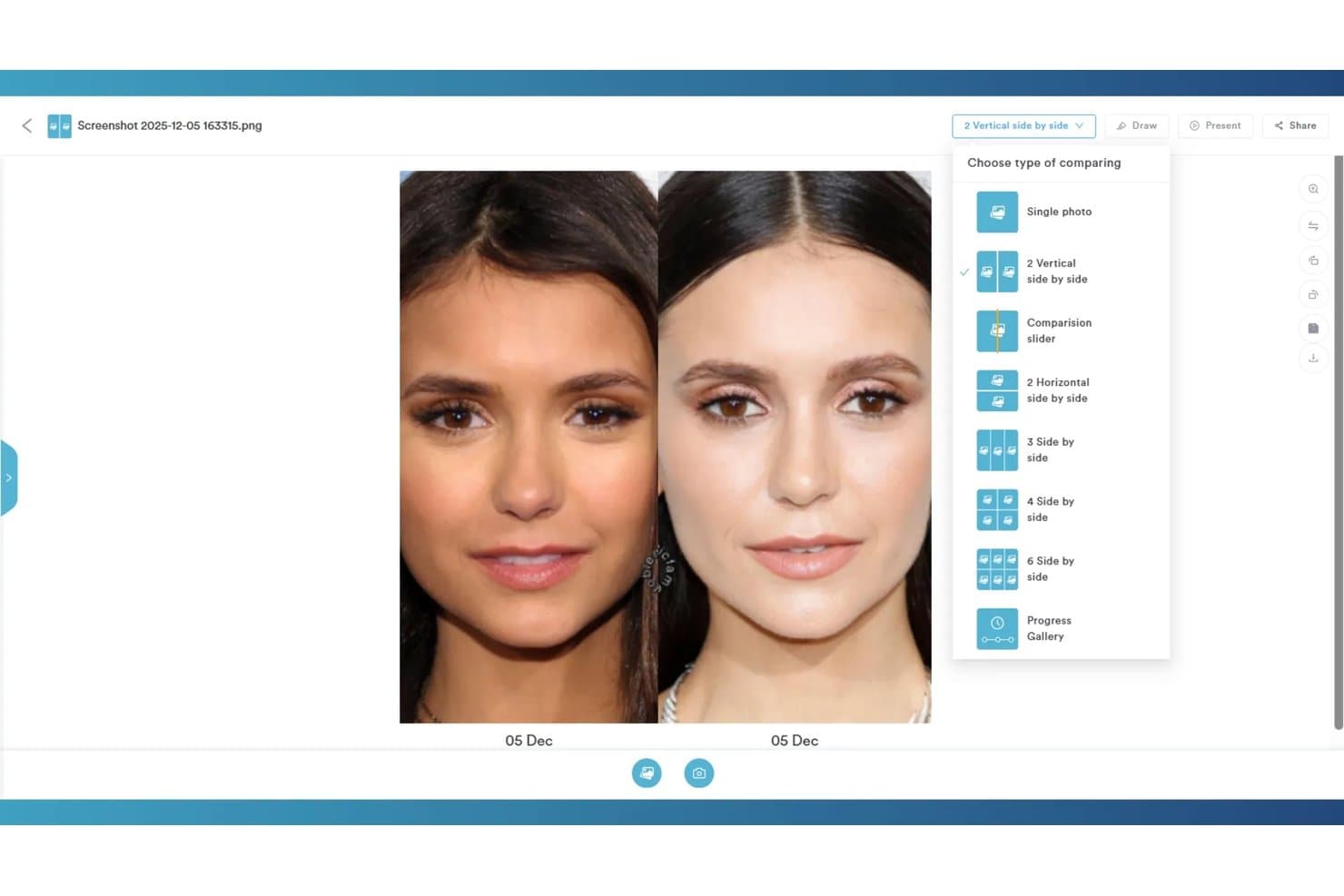
Pabau offers a before-and-after photo comparison tool with vertical side-by-side view options for tracking patient progress in plastic surgery practices. Pabau is an all-in-one practice management and EMR platform built for aesthetic and cosmetic clinics, combining clinical records, before-and-after photo management, surgical charting, consultation scheduling, cosmetic quoting, and payment processing.
Who Is Pabau Best For?
Pabau fits aesthetic clinics and cosmetic surgery practices that run high volumes of consultations and need scheduling, records, and payments managed in one place.
Why I Picked Pabau
Pabau earns its spot on my shortlist because of how tightly it connects consultation scheduling to the full patient journey. I like that when a patient books a consultation, their intake forms, before-and-after photos, and procedure quote all live in the same record. The multi-location room and resource management means surgical suites and consultation rooms are visible at a glance, so double-bookings don't happen.
Pabau Key Features
- AI scribe with real-time transcription: Turn spoken surgical notes and consult details into structured patient records directly within the chart.
- Digital consent management: Capture, store, and access procedure-specific e-consents with customizable templates for different surgical workflows.
- Integrated inventory tracking: Monitor medical supplies and injectable product usage tied to patient charts and appointment records.
- Customizable reporting and analytics: Access more than 100 pre-built reports to analyze consultation conversion, revenue by procedure, and patient retention trends.
Pabau Integrations
Pabau offers native integrations with Stripe, Xero, Google Calendar, Healthcode, Reserve with Google, GoCardless, Mailchimp, Doctolib, and Zapier. An API is available for custom integrations.
Pros and Cons
Pros:
- Customizable chart templates cover cosmetic procedures
- Before and after photo tools are strong
- Consultation and surgery scheduling is unified
Cons:
- No 3D simulation or morphing for images
- Insurance billing tools are limited
Learn more about Pabau: Best for adaptive plastic surgery charting
- Free demo available
- Pricing upon request
Visit WebsiteCustomer Rating:4.5/5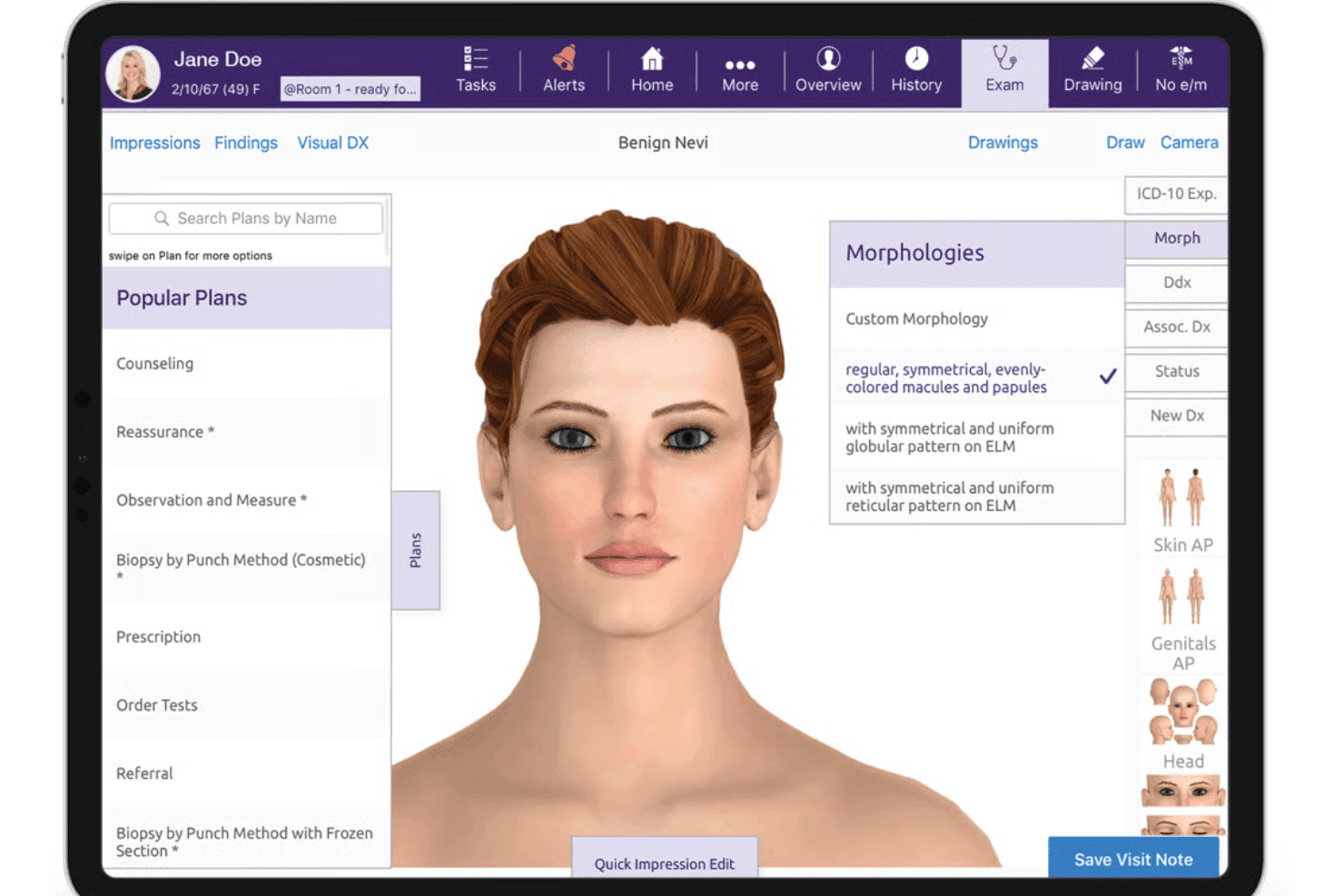
ModMed delivers specialty EHR, AI documentation, e-prescribing, billing, and RCM. ModMed EMA is a plastic surgery–specific EHR platform that combines adaptive clinical charting, before/after photo management, surgical documentation templates, practice management, and integrated billing in a single iPad-native system.
Who Is ModMed Best For?
ModMed is a strong fit for plastic surgery practices that handle both insurance-billed reconstructive procedures and self-pay cosmetic services under one roof.
Why I Picked ModMed
ModMed earns its spot on my shortlist because the EMA charting engine actually learns how each surgeon works. It recalls preferred implant specs, surgical techniques, and anesthesia settings, so documentation doesn't start from a blank template every visit. I also like ModMed Scribe, which listens during patient encounters, auto-populates visit notes, and surfaces CPT code suggestions for the provider to approve before they leave the room.
ModMed Key Features
- Integrated before/after photo gallery: Securely captures, tags, and organizes high-resolution patient images directly within the chart.
- Cosmetic case quoting and payment processing: Generates procedure-specific quotes, processes card payments, and separates insurance from cash-pay services.
- Digital consent forms and e-signature: Stores surgical consents and post-op documentation accessible through the patient portal.
- Practice-wide scheduling hub: Coordinates multiple provider schedules, consults, surgical bookings, and OR management from a single calendar.
ModMed Integrations
ModMed offers native integrations with Klara for patient communication, APPatient for patient portal access, ModMed Pay for payment processing, and supports custom integrations through its certified FHIR API and HL7 connections.
Pros and Cons
Pros:
- Handles MedSpa and surgical workflows together
- Built-in before and after photo management
- Adaptive charting engine learns surgeon preferences
Cons:
- Reporting customization is limited
- Billing support response times can be slow
Learn more about ModMed: Best for photo management and practice workflows
- Free demo available
- Pricing upon request
Visit WebsiteCustomer Rating:4.3/5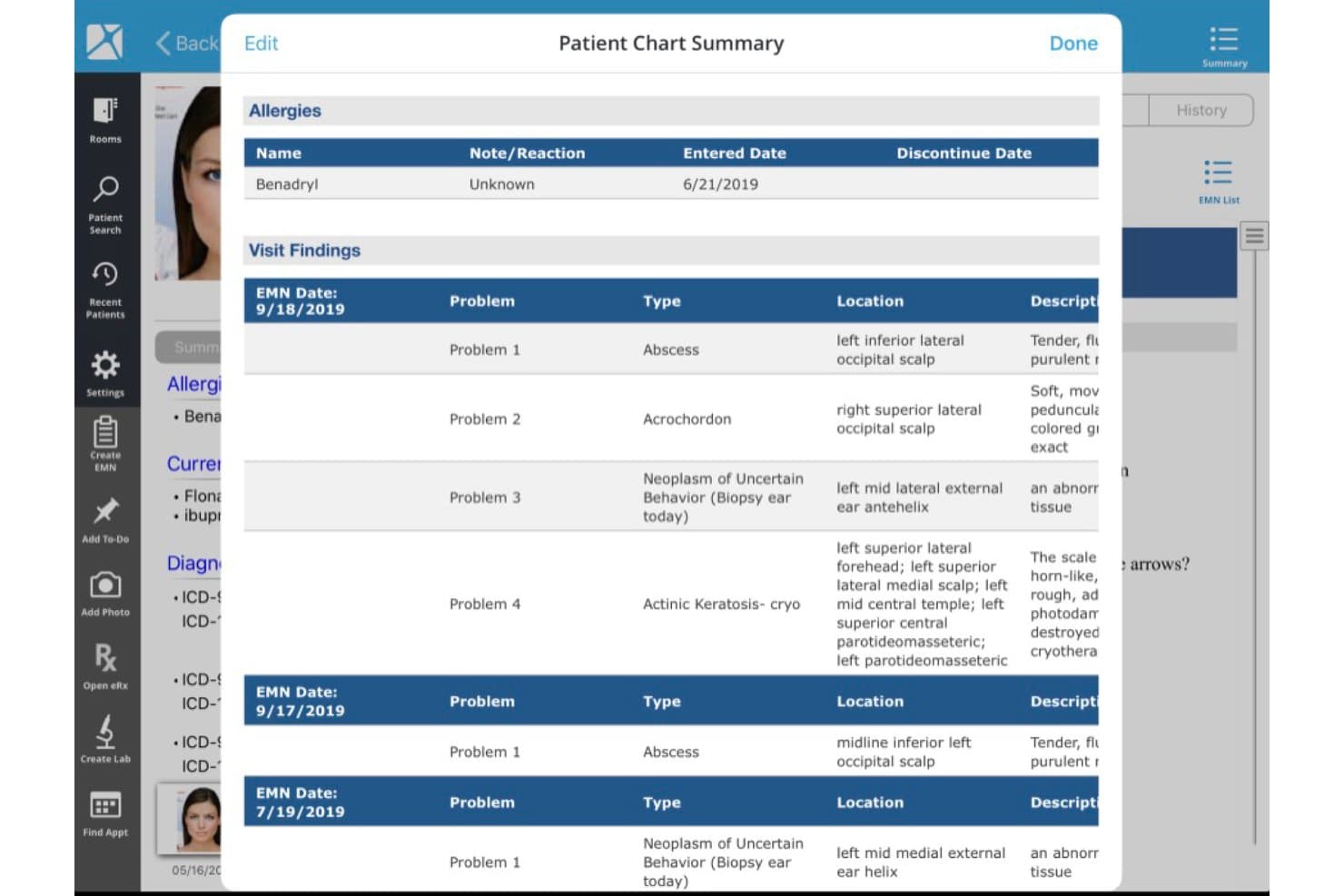
Nextech offers a Patient Chart Summary view that displays allergies, visit findings, problem types, locations, and descriptions across multiple EMN dates in a structured table format. Nextech is a specialty-specific cloud-based EMR and practice management platform built for plastic surgery practices, combining clinical charting, patient scheduling, billing, photo documentation, and payment processing in one system.
Who Is Nextech Best For?
Nextech is a strong fit for plastic surgery and aesthetic practice owners who need a single platform to manage clinical, administrative, and patient-facing workflows.
Why I Picked Nextech
I picked Nextech as one of the best because of TouchMD Snap Pro, its AI-guided photography module that auto-detects patient faces and guides staff to optimal camera positioning directly from an iPhone or iPad. Images land inside the patient chart instantly, with markup and annotation tools built in. I also like how Practice+ handles ASC billing, memberships, and recurring payment plans natively, so staff aren't toggling between systems mid-consult.
Nextech Key Features
- Customizable surgical charting templates: Build and modify procedure-specific templates, op notes, patient consents, and post-op documentation for plastic surgery cases.
- Multi-provider scheduling: Manage appointment calendars for surgeons, PAs, nurses, and med spa staff in one unified interface.
- Integrated ASC billing and coding: Supports both insurance and cash-pay coding workflows for reconstructive and cosmetic cases, including CPT/ICD support.
- HIPAA-compliant patient portal: Patients access consents, pre/post-op instructions, and secure chart updates online.
Nextech Integrations
Nextech offers native integrations with Stripe, Affirm, TouchMD, and Ocuco. An API is available for custom integrations.
Pros and Cons
Pros:
- Customizable plastic surgery charting templates
- Cosmetic quoting and recurring payment workflows included
- TouchMD Snap Pro for surgical photo capture
Cons:
- Occasional lag with large photo libraries
- Procedure room scheduling not fully detailed
Learn more about Nextech: Best for mixed insurance and self-pay billing
- Free demo available
- Pricing upon request
Visit WebsiteCustomer Rating:3.9/5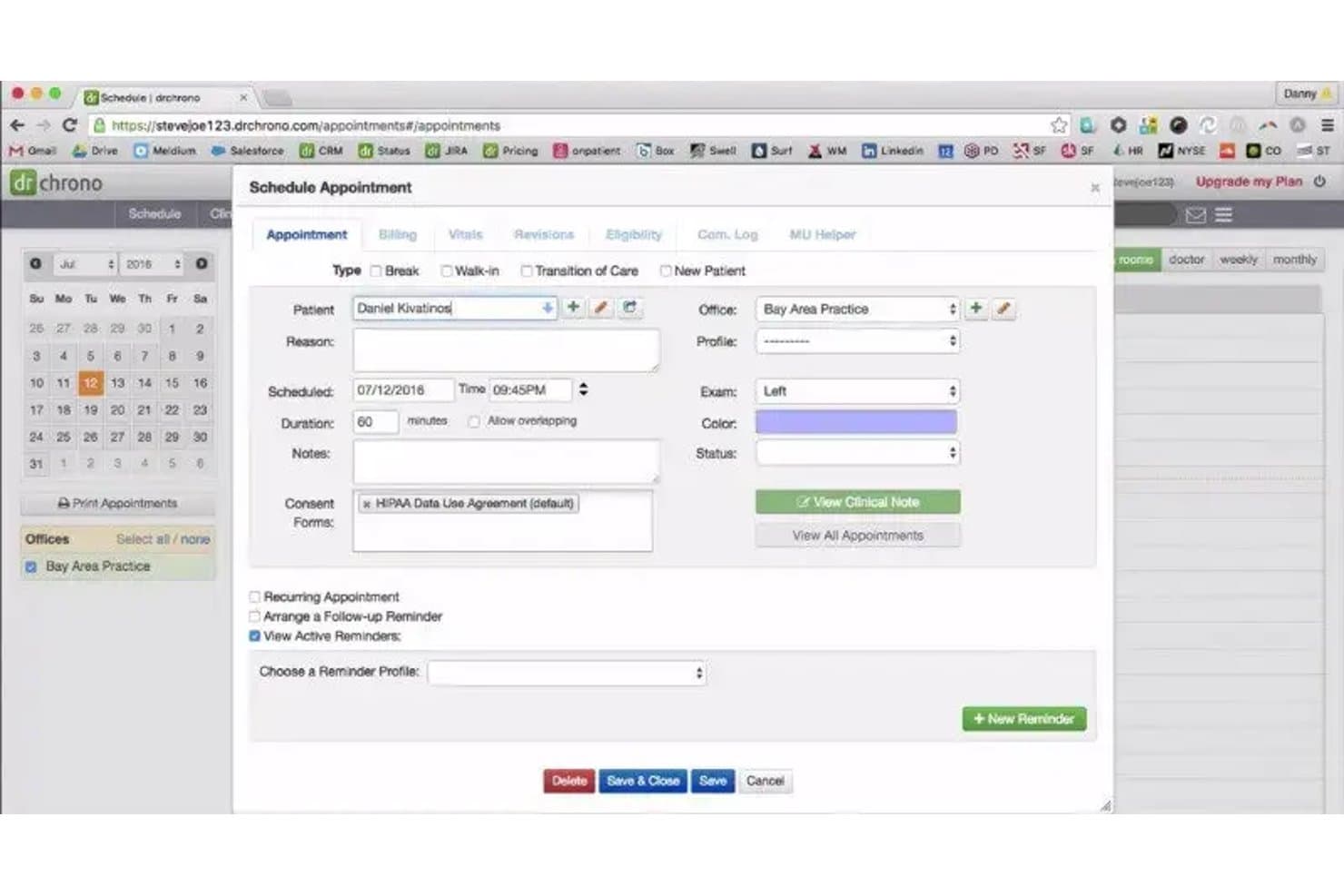
DrChrono lets plastic surgery staff schedule and manage patient appointments. DrChrono is a mobile-friendly EHR platform that combines clinical charting, specialty-specific templates, scheduling, billing, and patient engagement tools for medical practices, including plastic surgery workflows with photo charting and digital consent forms.
Who Is DrChrono Best For?
DrChrono works well for mixed practices that bill both insurance and self-pay patients and need scheduling, charting, and revenue cycle tools in one mobile-friendly platform.
Why I Picked DrChrono
I've included DrChrono in my top picks because it handles both insurance claims and cash-pay billing in a single platform, which matters a lot when your patient mix includes reconstructive cases billed to insurance and elective cosmetic procedures paid out of pocket. I like that you can configure patient payment plans directly in the system, setting minimum monthly payments and balance thresholds for individual patients without routing them through a third-party financing portal. The built-in eligibility checking and ERA auto-posting keep the insurance side moving while you collect cash-pay balances through integrated payments.
DrChrono Key Features
- Specialty-specific template library: Access customizable templates across 20+ medical fields, including procedure-specific forms for plastic surgery workflows.
- Digital consent form storage: Patients sign consent forms through the OnPatient portal, and signed forms are automatically saved to the chart under Documents.
- EverHealth Scribe: Ambient AI captures visit conversations and generates structured clinical notes for clinician review before pushing them into the EHR.
- Real-time insurance eligibility checks: The system verifies patient coverage before appointments and supports automated bulk verification across your schedule.
DrChrono Integrations
DrChrono connects with Quest Diagnostics, Labcorp, Surescripts, Iron Bridge, and CoverMyMeds; RxPhoto is a marketplace integration for before-and-after photos. It supports REST, FHIR, OAuth 2.0, proprietary APIs, and webhooks for custom integrations.
Pros and Cons
Pros:
- Scheduling keeps appointments and patient records together
- Custom forms adapt consultation documentation
- iOS charting supports in-room documentation
Cons:
- Before-and-after comparisons require a separate app
- Billing errors create extra reconciliation work
Learn more about DrChrono: Best for mixed-pay surgical practice workflows
- Free demo available
- Pricing upon request
Visit WebsiteCustomer Rating:3.8/5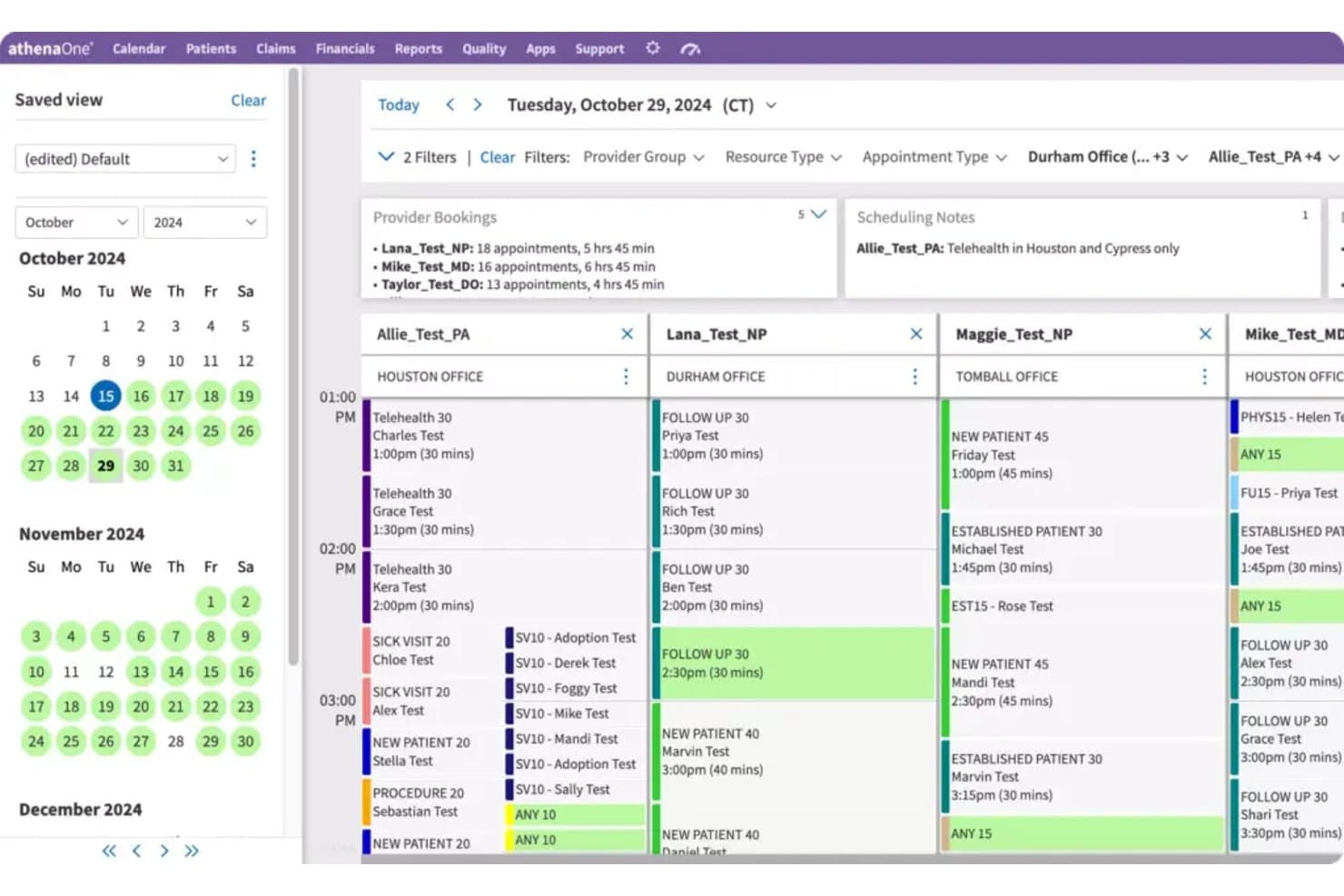
athenaOne lets users manage daily provider schedules across multiple office locations. athenaOne is an integrated EHR, medical billing, and practice management platform that combines clinical documentation, surgical scheduling, patient engagement, and revenue cycle tools for ambulatory practices.
Who Is athenaOne Best For?
athenaOne suits ambulatory surgical practices that handle both insurance and cash-pay patients and need scheduling, billing, and clinical documentation managed in one place.
Why I Picked athenaOne
I picked athenaOne as one of the best because it genuinely handles the scheduling and billing complexity that comes with running a mixed-pay surgical practice. Its surgical scheduling workflow links procedures directly to surgical orders, manages provider block time and room schedules, and supports both insurance selection and self-pay scenarios from the same appointment booking flow. I also like that the revenue cycle tools handle claim-error detection and coding support, which keeps both insured and cash-pay encounters moving through billing without constant manual intervention.
athenaOne Key Features
- Mobile image capture: The mobile app captures photos during physical exam and procedure documentation and uploads them directly to the patient chart.
- Digital intake forms: Enhanced Self Check-In delivers registration, health-history, and screening forms digitally, with submitted data updating athenaOne records automatically.
- Automated appointment reminders: ReminderCall sends patients automated reminders by phone, email, or text to reduce no-shows.
- Claim error detection: A rules engine flags and resolves claim errors before submission to support cleaner insurance and self-pay billing.
athenaOne Integrations
athenaOne offers more than 500 Marketplace integrations, including RxPhoto for aesthetic photography, CertifyOS for electronic consent, and Helio for patient engagement. It also provides 277K+ direct clinical integrations and an API program for custom connectivity.
Pros and Cons
Pros:
- Users value adaptable encounter templates
- Reviews praise centralized billing and records
- Surgical scheduling coordinates rooms and procedures
Cons:
- Plastic-surgery-specific templates aren't documented
- No native before-and-after photo comparisons
Learn more about athenaOne: Best for aesthetic treatment charting
- 14-day free trial
- From $15/user/month
Visit WebsiteCustomer Rating:3.5/5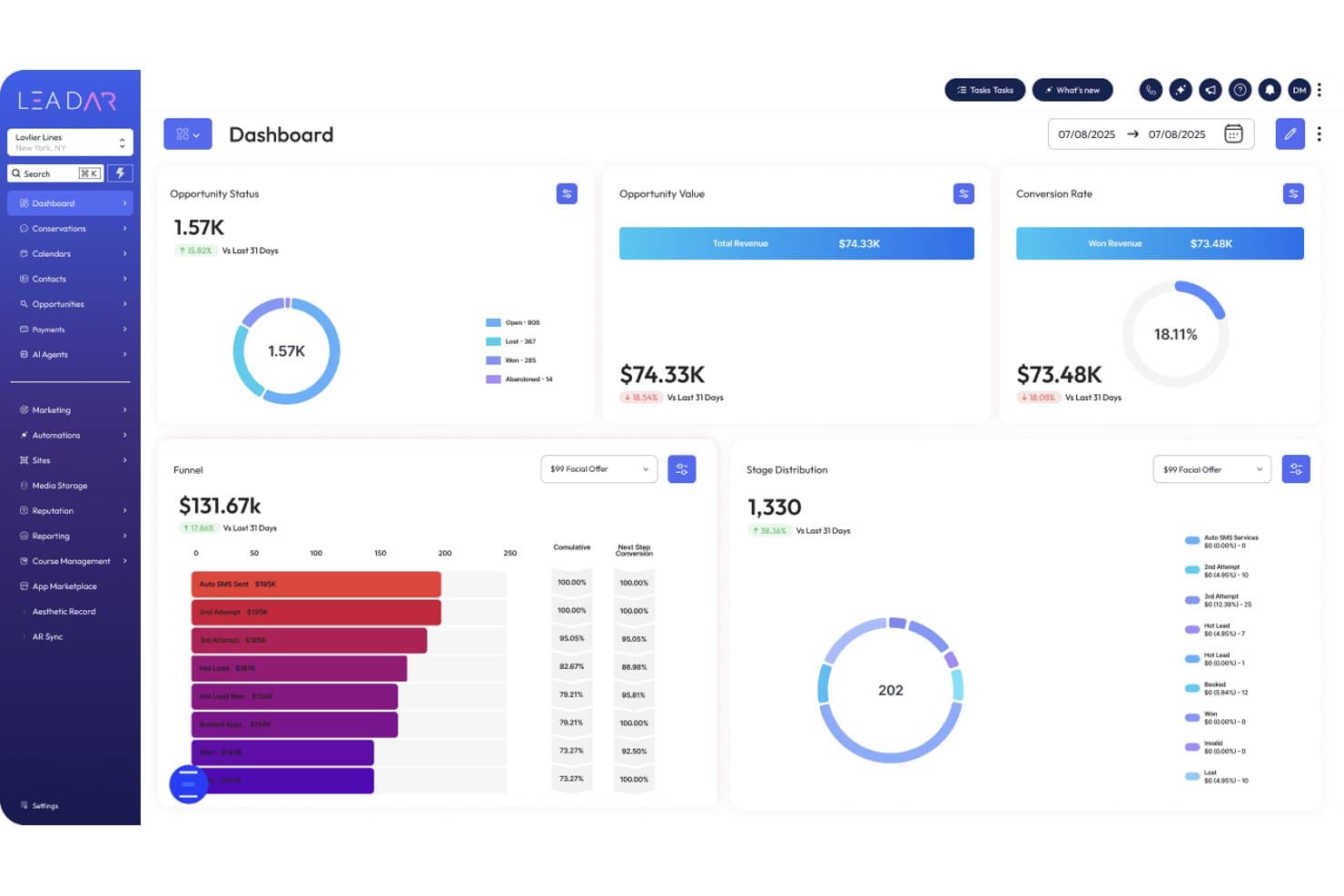
Aesthetic Record dashboard showing opportunities, revenue, conversion rates, and sales funnel performance. Aesthetic Record is a HIPAA-compliant EMR and practice management platform built for aesthetic medicine, combining procedure charting, before-and-after photo management, scheduling, payments, and e-prescribing in one system.
Who Is Aesthetic Record Best For?
Aesthetic Record fits cash-pay aesthetic and cosmetic practices that prioritize visual treatment documentation, elective payment processing, and client engagement tools.
Why I Picked Aesthetic Record
Aesthetic Record earns its spot on my shortlist because no other EMR on this list handles aesthetic treatment charting with this level of specificity. ChartSmart AI converts voice dictation into structured, procedure-specific chart entries during back-to-back appointment days. The before-and-after photo and video tools sit inside the patient chart itself, so providers can pull up side-by-side treatment comparisons without ever leaving the record.
Aesthetic Record Key Features
- Integrated e-prescribing: Send electronic prescriptions for controlled and non-controlled substances using Surescripts EPCS from within the EMR.
- HIPAA-compliant two-way texting: Communicate securely with patients for reminders, follow-ups, and scheduling straight from the platform.
- Inventory and supply tracking: Manage medication, injectable product, and retail skincare inventory with lot number tracking and reorder alerts.
- Memberships and loyalty programs: Create and manage patient memberships, package deals, loyalty points, and gift card programs directly in the system.
Aesthetic Record Integrations
Aesthetic Record offers native integrations with RepeatMD, TouchMD, JOYA, PatientFi, ASPIRE Galderma Rewards, Constant Contact, Active Campaign, MailChimp, Zoho, and HubSpot. An API is available for custom integrations.
Pros and Cons
Pros:
- Comprehensive injectable and treatment inventory management
- Built-in patient loyalty and membership tools
- Embedded before and after photo galleries
Cons:
- Limited surgical operative note templates
- No insurance claim or coding workflows
Learn more about Aesthetic Record: Best for all-in-one plastic surgery EMR
- Free demo available
- Pricing upon request
Visit WebsiteCustomer Rating:3/5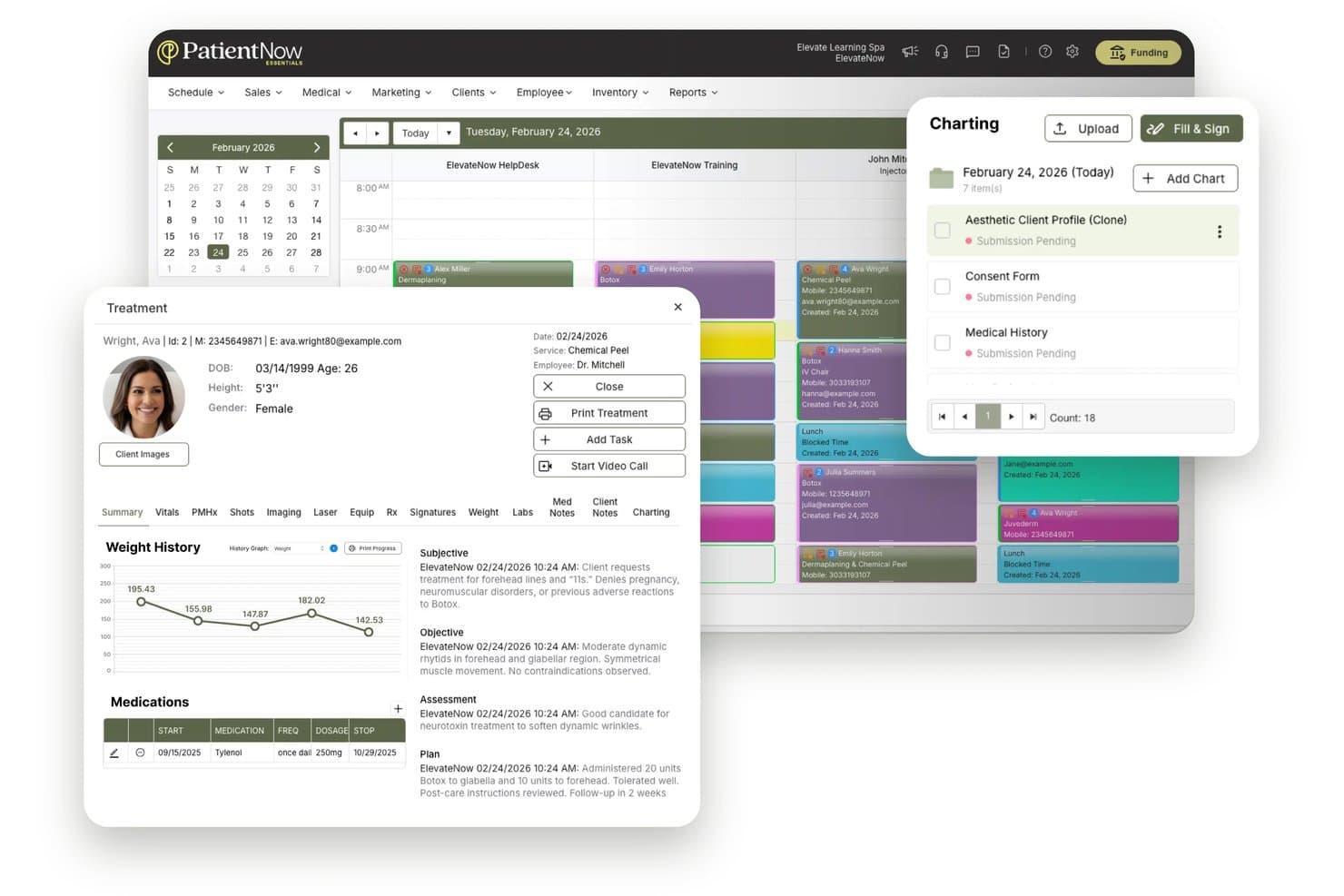
PatientNow offers a comprehensive EMR system with scheduling, patient charting, SOAP notes, weight history, medications, and digital consent forms for plastic surgery and aesthetic practices. PatientNow is an aesthetic practice management platform that combines EMR, before-and-after photo documentation, cosmetic quoting, elective payment processing, scheduling, and built-in marketing tools in a single system built for plastic surgery and aesthetic practices.
Who Is PatientNow Best For?
PatientNow is a good fit for plastic surgery and aesthetic practices that want to replace disconnected point solutions with a single platform covering clinical, administrative, and marketing workflows.
Why I Picked PatientNow
PatientNow earns its spot as one of the best on my shortlist because it's built from the ground up for aesthetic and plastic surgery practices, not adapted from a generic EMR. I love that RxPhoto, the native photo module, captures before-and-after images and links them directly to the patient chart while also feeding into a patient-facing marketing gallery. The procedure-specific charting templates and built-in cosmetic quoting with elective payment processing mean my team isn't stitching together separate tools to cover a single patient visit.
PatientNow Key Features
- AI-powered encounter scribe: Automatically drafts provider visit notes to speed up documentation and reduce after-hours charting.
- Digital intake and e-consents: Patients complete intake forms and sign consents electronically before appointments, streamlining front desk workflows.
- Resource and room-based scheduling: Schedules surgical, provider, and treatment rooms in one interface to prevent booking conflicts.
- Integrated QuickBooks Online sync: Connects practice financial data directly to QuickBooks for easier accounting and reporting.
PatientNow Integrations
PatientNow offers native integrations with QuickBooks Online, Optum for insurance processing, Swell for reputation management, Yext, Tippy, WooCommerce, and RxPhoto. API access is available for custom integrations.
Pros and Cons
Pros:
- Quoting and payment tools for cash-pay procedures
- Customizable charting for surgical and med spa cases
- Built-in before and after photo management
Cons:
- Reporting options can feel limited for power users
- Medical charting templates require initial customization
Learn more about PatientNow:
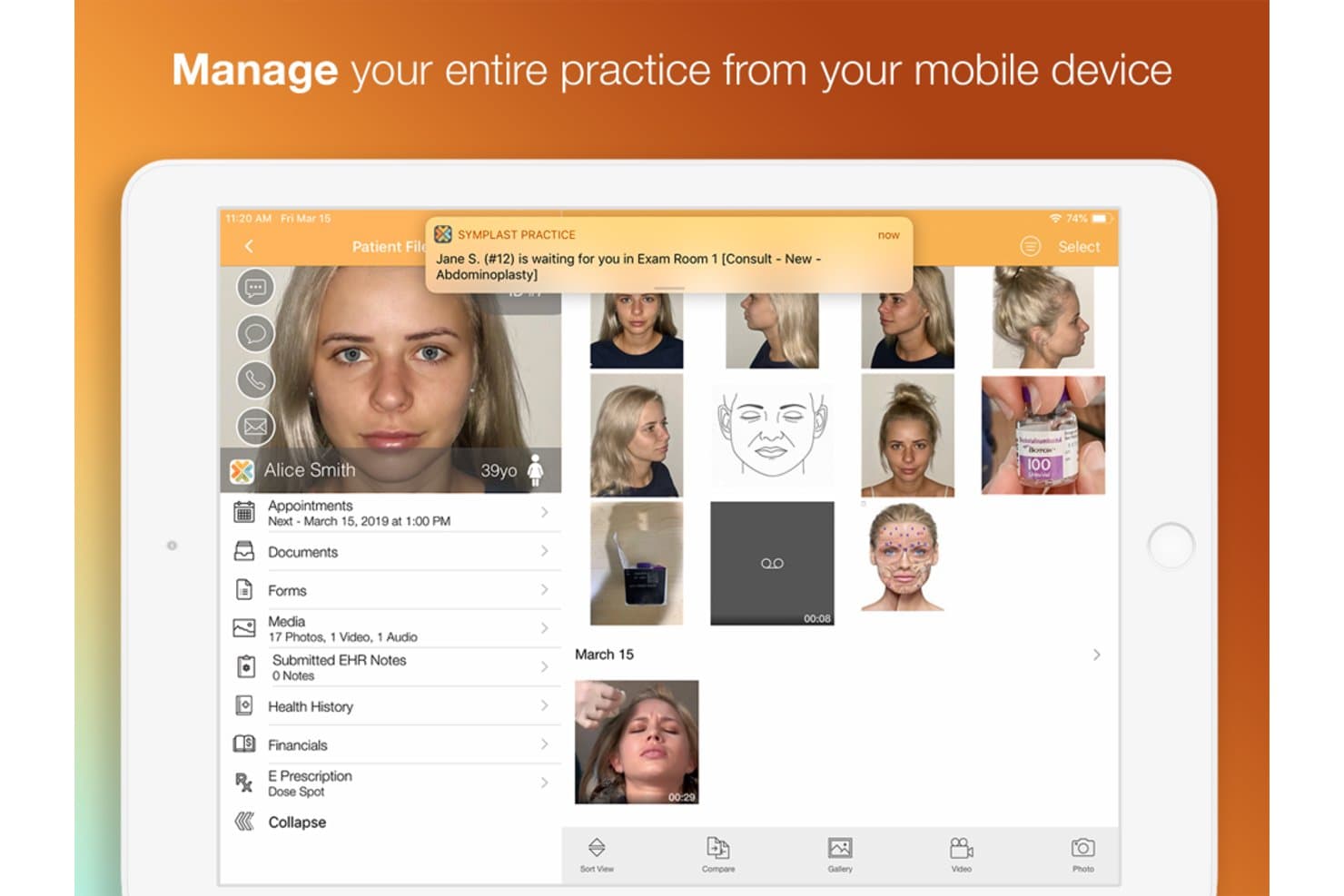
Symplast offers a mobile-friendly EMR interface displaying patient files, photo galleries, appointments, and real-time exam room notifications on an iPad. Symplast is a mobile-first EHR and practice management platform built specifically for plastic surgery and medical aesthetics, combining clinical charting, before/after photo management, scheduling, billing, and patient engagement in one system.
Who Is Symplast Best For?
Symplast suits plastic surgeons and aesthetic practice owners who need full clinical and operational access from a mobile device, not just a desktop.
Why I Picked Symplast
I picked Symplast as one of the best because it's one of the only plastic surgery EMRs built from the ground up for mobile, not adapted for it later. I can capture before/after photos, dictate SOAP notes through the AI Scribe, and enter CPT billing codes from my phone, all inside a single patient chart. The in-app photography with photo tagging keeps patient media directly tied to the clinical record without any separate upload step.
Symplast Key Features
- Integrated reputation management: Automates reputation requests and tracks reviews linked to completed visits within the platform.
- Digital intake and e-consents: Enables HIPAA-compliant patient registration, medical histories, and e-signature consent collection before appointments.
- Inventory management for injectables and retail: Tracks lot numbers, usage, and retail skincare inventory with barcode scanning and margin reporting.
- Secure two-way texting: Allows practices to communicate with patients using HIPAA-compliant messaging for appointment reminders and post-op instructions.
Symplast Integrations
Symplast offers native integrations with CareCredit and Symplast Payments, and connects to a medical billing clearinghouse for claims management. An API is available for custom integrations.
Pros and Cons
Pros:
- Specialty templates for aesthetic and surgical cases
- Built-in HIPAA-compliant patient messaging
- Mobile-first photo capture and charting workflow
Cons:
- Occasional lags with large photo libraries
- Limited insurance split billing options
Learn more about Symplast: Best for cloud-based aesthetic practice management
- Free demo available
- Pricing upon request
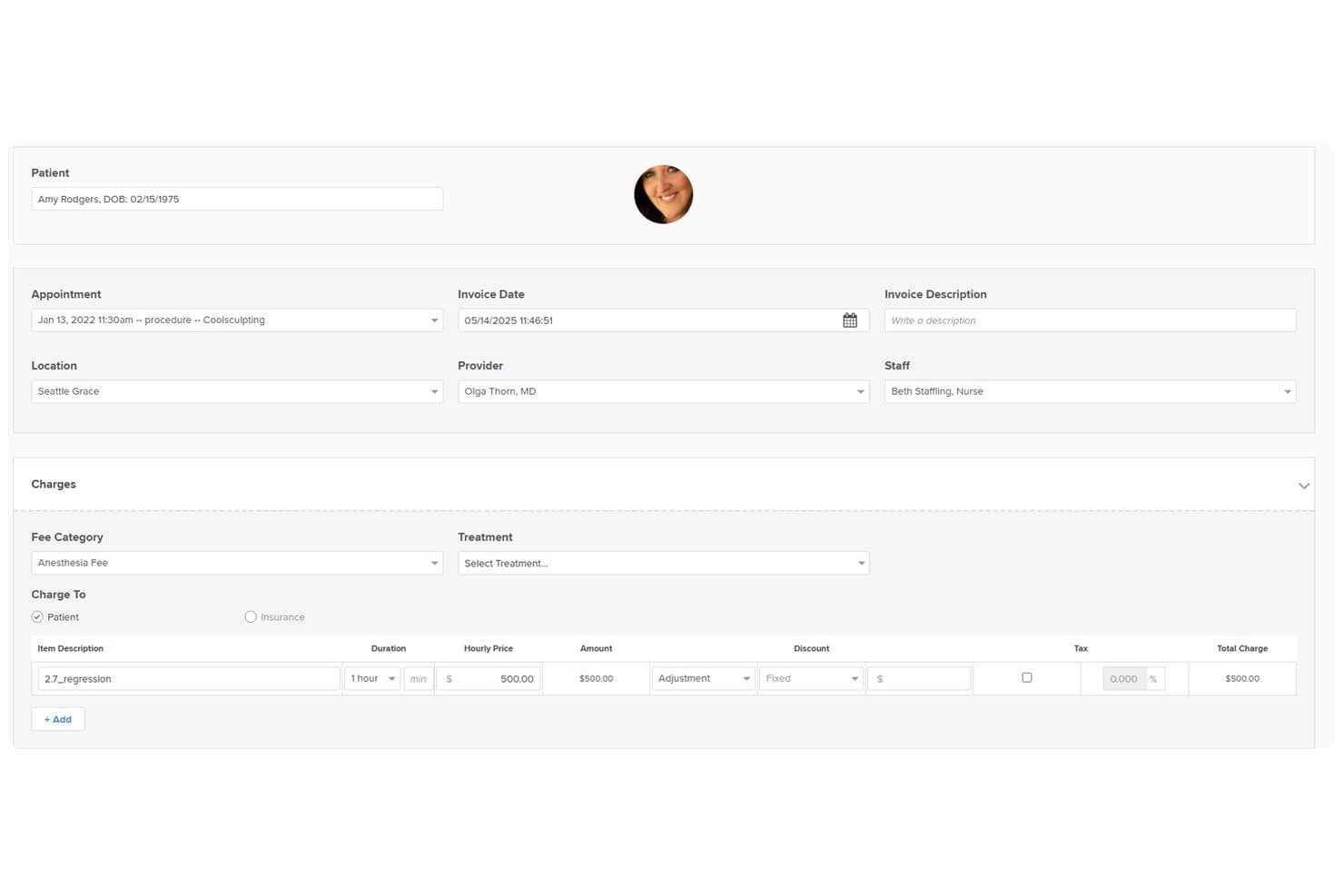
Remedly offers a detailed invoice and charges screen for plastic surgery procedures, including anesthesia fee categorization, provider assignment, and itemized billing with discount and tax fields. Remedly is a cloud-based EHR and practice management platform that combines clinical charting, before-and-after photo documentation, cosmetic quoting, scheduling, and integrated revenue cycle management for aesthetic and plastic surgery practices.
Who Is Remedly Best For?
Remedly is a strong fit for small to mid-size plastic surgery and aesthetic practices that bill both insurance and cash-pay cosmetic services.
Why I Picked Remedly
I picked Remedly as one of the best because, as a cloud-based system, it gives aesthetic practices full access to clinical and billing functions from any device, without a server or local installation. I like how the Full Body Map and before/after photo documentation are built directly into the patient chart, making it easy to record visual case details during a consultation. The cosmetic quoting tool (Estimate of Procedure Cost) works alongside the billing module, so procedure pricing and claims live in the same system.
Remedly Key Features
- Patient portal: Enables secure patient access to forms, photos, and appointment information.
- Marketing module: Lets you manage campaigns, prepaid packages, and memberships for aesthetic and surgical services.
- Inventory management: Tracks injectables, skincare, and retail products with consumption logs linked to patient charts.
- E-prescribing integration: Connects with DrFirst for prescription writing and medication tracking within the EMR.
Remedly Integrations
Remedly offers native integrations with DrFirst for e-prescribing, Twilio for two-way texting, LabSoft Inc. for eLabs, 360 Payments and Square for payment processing, Concord Technologies for cloud fax, and TriZetto Provider Solutions and Claim.MD for insurance clearinghouse connectivity. An API is available for custom integrations.
Pros and Cons
Pros:
- Handles insurance and cash-pay workflows
- Full body mapping for surgical documentation
- Built-in before and after photo charting
Cons:
- No dedicated surgical resource scheduling
- Limited advanced photo imaging features
Learn more about remedly:
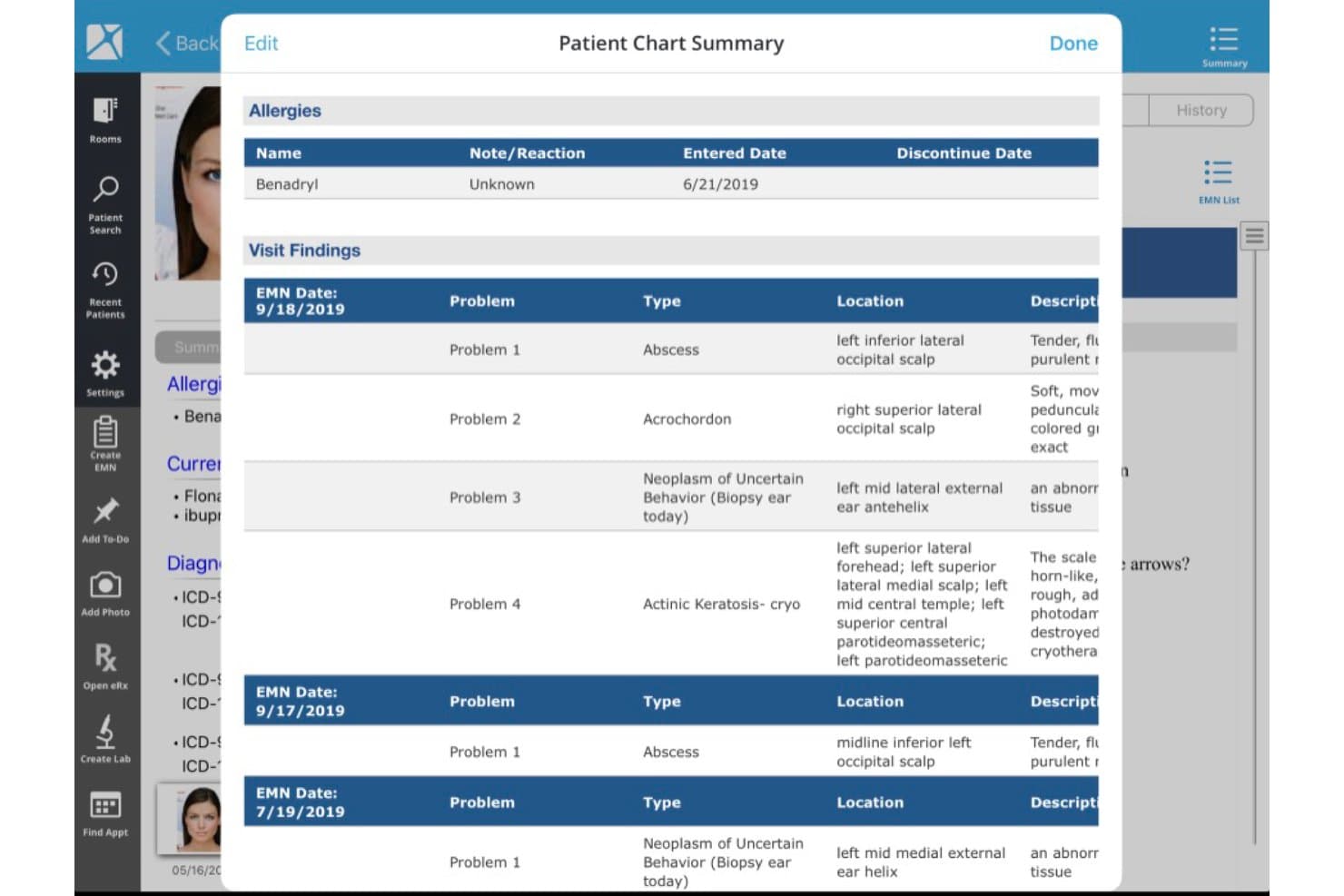
4D EMR offers a Patient Chart Summary view displaying allergies, visit findings, problem types, locations, and descriptions across multiple EMN dates. 4D EMR is a cloud-based EMR built specifically for plastic surgery and aesthetic practices, combining surgical charting, photo management, scheduling, quoting, e-prescribing, and integrated payment processing in one platform.
Who Is 4D EMR Best For?
It's a natural fit for plastic surgeons and cosmetic practice owners who need a specialty-specific EMR rather than a general-purpose system retrofitted for aesthetics.
Why I Picked 4D EMR
I picked 4D EMR as one of the best because of how deeply it handles surgical charting. Built by a practicing plastic surgeon, it supports six documentation methods, including AI ambient transcription via 4D Scribe AI, which generates structured SOAP and operative notes in under 90 seconds. Templated chart notes use merge fields that pull patient data automatically, so procedure-specific documentation like consent forms and post-op protocols are built into the chart, not bolted on.
4D EMR Key Features
- Integrated before and after photo management: Capture, tag, and compare patient photos securely within each patient chart.
- Cosmetic quoting and payments: Generate itemized quotes and process credit card transactions inside the system.
- Digital anatomical diagramming: Mark up diagrams for documenting procedures and treatment areas.
- Membership and loyalty tracking: Manage prepaid treatment packages, spa memberships, and patient loyalty programs directly in the EMR.
4D EMR Integrations
4D EMR offers native integrations with Crisalix, EntityMed, Klara, AesthetixCRM, PilotPractice, ClinicOS, Romea.ai, InsightX, MedSpeak.ai, and Olivarch. An API is available for custom integrations.
Pros and Cons
Pros:
- Built-in before and after photo management
- Six charting methods including AI ambient scribe
- Specialty templates for cosmetic and reconstructive surgery
Cons:
- Steep transition for teams used to generic EMRs
- Limited insurance claims management functionality
Learn more about 4D EMR:
How I Evaluate Plastic Surgery Practice EMR Software
I split my evaluation into three parts, giving the most weight to core functionality: document consultations and procedures, and organize chart-linked photos. Next, I consider standout features such as 3D imaging simulation. Finally, I weigh beyond-feature factors, including photo-migration support, staff onboarding, and pricing value.
Core Functionality (Table Stakes For This List)
When I'm selecting tools for my list, I score each one on a scale from 0 (does not offer the functionality) to 5 (excels in this area) for each core functionality listed below. I then convert the total into a percentage to help assess each tool's overall fit, with extra weight on any functionalities I’ve deemed essential.
- Clinical Documentation (Essential): I look for plastic surgery templates that support consultation notes, procedure details, and pre- and post-op documentation.
- Photo Management (Essential): I check whether teams can securely link photos to charts and organize them by visit or procedure for before-and-after review.
- Scheduling & Appointments: I assess how the calendar handles consultations, surgeries, and follow-ups across providers and locations.
- Billing Workflows: I look for support for both self-pay cosmetic services and insurance-based reconstructive care, linked to the patient record.
- Security & Access: I evaluate safeguards such as role-based access, audit logs, and secure storage for sensitive records and images.
- Intake & Consent Forms: I check whether patients can complete digital intake and procedure-specific consent forms that staff can track in the chart.
Once I have a list of tools that meet the criteria, I consider what sets each platform apart.
Differentiating Factors (What Sets Vendors Apart)
Here's how I compare and contrast different vendors:
Standout Features
I look for 3D imaging simulation support, since platforms that connect with tools like VECTRA or Crisalix let surgeons show patients predictive visuals mid-consultation. That changes the conversation from abstract to concrete. I also evaluate built-in patient financing integrations—cosmetic practices lose conversions when patients have to leave the office to arrange payment. Mobile charting and photo capture matter too. A native app that lets staff snap and tag clinical photos in the exam room cuts documentation time and keeps images linked to the right chart.
Beyond Features
I check whether a vendor supports both office-based cosmetic suites and accredited surgical facilities, since a platform built only for med spas won't fit a practice mixing reconstructive and aesthetic cases. Photo migration is another priority—I look for vendor-assisted data conversion that preserves chart links and tagging, because re-uploading thousands of clinical images manually stalls onboarding. I also evaluate how photo storage costs scale as high-resolution image libraries grow over multiple years.
Como escolher software EMR para clínicas de cirurgia plástica
É fácil perder-se em listas extensas de funcionalidades e estruturas de preços complexas. Para o ajudar a manter o foco enquanto analisa o seu processo específico de seleção de software, eis uma lista de fatores a ter em conta:
| Fator | O que considerar |
| Escalabilidade | O sistema suportará vários profissionais, localizações e áreas de serviço à medida que a sua clínica cresce, incluindo a expansão para um spa médico ou a oferta de novos serviços cirúrgicos? |
| Integrações | O EMR liga-se aos seus sistemas de imagiologia, processadores de pagamentos, software de contabilidade e ferramentas de marketing — ou precisará de soluções alternativas personalizadas ou ferramentas adicionais? |
| Personalização | Pode adaptar os modelos de registo, os fluxos de marcação e os relatórios à forma como a sua equipa trabalha, ou terá de adaptar os seus processos ao software? |
| Facilidade de utilização | Os seus cirurgiões, enfermeiros e equipa de receção conseguirão começar a utilizá-lo rapidamente, ou a curva de aprendizagem irá atrasar as marcações e a documentação diárias dos pacientes? |
| Implementação e integração inicial | Que nível de apoio disponibiliza o fornecedor para a migração de dados, a formação da equipa e a entrada em funcionamento? Qual é o prazo e de que recursos precisará do seu lado? |
| Custo | O preço cabe no seu orçamento, não só hoje, mas também à medida que adiciona utilizadores, módulos ou funcionalidades? Esteja atento a suplementos obrigatórios ou a custos elevados por armazenamento ou fotografias adicionais. |
| Medidas de segurança | Existem registos de auditoria, autenticação de dois fatores e proteções em conformidade com a HIPAA para os registos e fotografias dos pacientes — especialmente no caso de iPads partilhados ou do registo móvel? |
| Disponibilidade do apoio | Com que rapidez pode obter ajuda se a sua equipa ficar bloqueada ou se deparar com um problema de indisponibilidade, e o apoio está incluído ou é cobrado separadamente? |
O que é o software EMR para clínicas de cirurgia plástica?
O software EMR para clínicas de cirurgia plástica é um tipo de sistema de registos médicos eletrónicos concebido para as necessidades clínicas, administrativas e operacionais de clínicas de cirurgia estética e reconstrutiva. Abrange a documentação fotográfica do antes e depois, modelos de registo especializados, orçamentos de procedimentos estéticos, marcações e manutenção segura de registos em conformidade com a HIPAA — tudo num só lugar.
Funcionalidades do software EMR para clínicas de cirurgia plástica
Ao selecionar um software EMR para clínicas de cirurgia plástica, procure as seguintes funcionalidades essenciais:
- Gestão de fotografias de antes e depois: Permite captar, etiquetar e comparar fotografias dos pacientes ao longo do tempo diretamente no processo clínico, apoiando consultas informadas e iniciativas de marketing.
- Orçamentação e pagamentos de procedimentos estéticos: Permite criar orçamentos discriminados de procedimentos, acompanhar planos de pagamento eletivos e facilitar a cobrança de transações pagas pelo próprio paciente.
- Modelos de processos clínicos especializados: Disponibiliza formulários de documentação adaptados aos procedimentos comuns de cirurgia plástica, incluindo notas operatórias, consentimentos e instruções pós-operatórias.
- Agendamento integrado: Permite gerir consultas, reservas do bloco operatório e atribuições de salas para cirurgiões, enfermeiros e funcionários do spa médico num único calendário.
- Documentação em conformidade com a HIPAA: Mantém a privacidade dos pacientes e as normas legais relativas à documentação clínica, consentimentos eletrónicos, fotografias, prescrições e partilha de dados sensíveis.
- Faturação de seguros e de procedimentos reconstrutivos: Suporta tanto pedidos de reembolso de seguros para procedimentos reconstrutivos como fluxos de trabalho de pagamento direto para serviços estéticos eletivos.
- Portal do paciente: Oferece aos pacientes acesso seguro online para consultarem os seus registos, carregarem fotografias, assinarem formulários e comunicarem com a sua equipa.
- Gestão de inventário: Acompanha medicamentos, frascos de injetáveis, produtos para venda e inventário de cuidados da pele, associando a utilização e as vendas aos processos clínicos individuais dos pacientes.
- Acompanhamento de consultas e potenciais clientes: Regista potenciais clientes provenientes da Internet ou do telefone, associa-os a consultas e monitoriza os resultados do acompanhamento e da conversão.
Funcionalidades comuns de AI no software EMR para clínicas de cirurgia plástica
Para além das funcionalidades padrão do software EMR para clínicas de cirurgia plástica acima mencionadas, muitas destas soluções estão a integrar AI com funcionalidades como:
- Análise automatizada de fotografias: Utiliza AI para detetar, alinhar e comparar imagens de antes e depois, destacando alterações subtis e ajudando os profissionais a acompanhar os resultados cirúrgicos de forma mais objetiva.
- Otimização preditiva do agendamento: A AI analisa os padrões das consultas e a disponibilidade dos profissionais para sugerir horários de agendamento ideais, reduzindo intervalos e melhorando a utilização dos recursos.
- Assistência inteligente à documentação: As ferramentas baseadas em AI sugerem notas clínicas relevantes, preenchem automaticamente relatórios operatórios e assinalam documentação em falta com base no tipo de procedimento e no historial do paciente.
- Triagem de pacientes orientada por AI: Analisa automaticamente formulários de admissão e mensagens dos pacientes para dar prioridade a consultas urgentes, assinalar possíveis complicações e encaminhar os casos para o profissional adequado.
- Processamento de linguagem natural para documentação clínica: Converte notas faladas ou escritas em registos clínicos estruturados, tornando a documentação mais rápida e precisa para equipas clínicas ocupadas.
Benefícios do software EMR para clínicas de cirurgia plástica
A implementação de um software EMR para clínicas de cirurgia plástica proporciona vários benefícios para a sua equipa e para o seu negócio. Eis alguns dos benefícios que pode esperar:
- Fluxos de trabalho simplificados: As ferramentas integradas de agendamento, documentação clínica e faturação ajudam a sua equipa a gerir consultas, procedimentos e acompanhamento num único sistema.
- Documentação fotográfica melhorada: A gestão integrada de fotografias de antes e depois garante que pode captar, etiquetar e comparar imagens em segurança diretamente a partir do processo clínico do paciente.
- Melhor experiência do paciente: Os portais online dos pacientes, os consentimentos eletrónicos e os lembretes automatizados de consultas tornam a comunicação, a educação e a admissão mais convenientes.
- Integração eficiente da faturação: As ferramentas que suportam tanto pedidos de reembolso de seguros como a faturação de serviços estéticos pagos diretamente pelos pacientes tornam os processos financeiros mais rápidos e precisos.
- Maior conformidade: As funcionalidades em conformidade com a HIPAA protegem dados médicos sensíveis, incluindo fotografias e consentimentos, cumprindo normas rigorosas de privacidade e segurança.
- Gestão mais fácil de potenciais clientes: O acompanhamento centralizado de consultas, potenciais clientes e seguimentos contribui para taxas de conversão mais elevadas de novos pacientes de estética.
- Melhor apoio à decisão: Os modelos de processos clínicos especializados e os relatórios em tempo real permitem aos profissionais prestar cuidados e gerir o negócio de forma mais consistente e informada.
Custos e preços do software EMR para clínicas de cirurgia plástica
A seleção de um software EMR para clínicas de cirurgia plástica exige uma compreensão dos vários modelos de preços e planos disponíveis. Os custos variam consoante as funcionalidades, a dimensão da equipa, os complementos e outros fatores. A tabela abaixo resume os planos comuns, os seus preços médios e as funcionalidades normalmente incluídas nas soluções de software EMR para clínicas de cirurgia plástica:
Tabela de comparação de planos para software EMR de clínicas de cirurgia plástica
| Tipo de plano | Preço médio | Funcionalidades comuns |
| Plano gratuito | $0 | Agendamento básico de consultas, registos clínicos limitados e suporte por e-mail. |
| Plano pessoal | $50-$150/utilizador/mês | Registos clínicos em conformidade com a HIPAA, armazenamento de fotografias antes/depois, ferramentas básicas de faturação e agendamento padrão. |
| Plano empresarial | $200-$400/utilizador/mês | Gestão avançada de fotografias, orçamentação de procedimentos, processamento de pagamentos, faturação de seguros, modelos personalizáveis e relatórios. |
| Plano empresarial de grande dimensão | $500+/utilizador/mês | Automatização completa dos fluxos de trabalho, suporte para várias localizações, integrações avançadas, gestão dedicada da conta e integração personalizada. |
Perguntas frequentes sobre software EMR para clínicas de cirurgia plástica
Aqui ficam algumas respostas a perguntas comuns sobre software EMR para clínicas de cirurgia plástica:
O software EMR para cirurgia plástica pode suportar tanto casos estéticos como reconstrutivos?
Sim, a maioria das soluções modernas suporta tanto fluxos de trabalho estéticos pagos diretamente pelo paciente como casos reconstrutivos faturados aos seguros, permitindo à sua equipa gerir todos os tipos de pacientes e procedimentos num único sistema.
Que funcionalidades específicas de gestão de fotografias devo esperar?
Deve esperar captura integrada de fotografias antes/depois, etiquetagem, comparação lado a lado e fluxos de trabalho integrados para obter o consentimento necessário para a partilha segura com pacientes e para utilização em marketing — tudo diretamente associado ao processo clínico do paciente.
Como funciona a gestão de inventário nestes sistemas?
As ferramentas de gestão de inventário acompanham frascos de injetáveis, produtos de cuidados da pele para venda a retalho e dispositivos por lote ou unidade, alertando-o para níveis de stock reduzidos e associando diretamente a utilização dos produtos aos episódios dos pacientes, para garantir a conformidade e acompanhar as margens.
Que tipo de suporte está disponível para a integração e migração?
Os fornecedores disponibilizam normalmente integração especializada, migração de dados de processos clínicos e fotografias existentes e formação contínua para novos funcionários, o que é importante para minimizar as perturbações durante a transição.
Estes sistemas foram concebidos para cumprir os requisitos da HIPAA?
Sim, os fornecedores conceituados incluem registos de auditoria, mensagens seguras, permissões de utilizador e armazenamento encriptado para ajudar a sua clínica a cumprir a HIPAA e outras normas de privacidade.