

Um RCE de psiquiatria é uma plataforma de registos clínicos eletrónicos concebida para as necessidades específicas dos cuidados psiquiátricos — ajudando-o a documentar, gerir e faturar serviços de saúde mental com precisão. Se está à procura do melhor RCE de psiquiatria, é provável que esteja a lidar com requisitos de documentação, salvaguardas de privacidade e a necessidade de registos clínicos e prescrição flexíveis.
Este guia explica onde se enquadram os principais RCE de psiquiatria da atualidade, as funcionalidades essenciais a procurar e os pontos fortes específicos de cada opção, para que possa investir com confiança e manter tanto a sua prática como os seus pacientes devidamente apoiados.
Why Trust Our Software Recommendations
6,700+
Reviews
20
Industry experts
16+
Evaluation factors
14
Years
Our team has been testing and reviewing software since 2012. As medical practice leaders ourselves, we know how difficult—and important—it is to choose the right software.
For this guide, we evaluated tools using hands-on testing and independent research, scoring tools using our selection criteria.
Our reviews reflect our human editorial judgment, not a sales pitch.
Tabela de comparação de RCE de psiquiatria
A tabela abaixo compara os detalhes de preços das minhas principais seleções de RCE de psiquiatria.
Score legend (out of 5)
- Excellent4.5–5
- Good4–4.4
- Average3–3.9
- Below average2–2.9
- Poor1–1.9
Sorted by: Default
| Tool | Starting Price | Website | |||||||
|---|---|---|---|---|---|---|---|---|---|
Best for addiction treatment workflows | 3.3 out of 5 | 4 | 4 | 2 | 3 | 3 | 4 | Pricing upon request Free demo available | Website |
Best for enterprise behavioral health | 3.5 out of 5 | 3 | 3 | 4 | 4 | 3 | 4 | Pricing upon request Free demo available | Website |
Best for flexible psychiatry workflows | 3.3 out of 5 | 2 | 3 | 3 | 4 | 4 | 4 | $25/month Free plan available | Website |
Best for psychiatry billing automation | 4.0 out of 5 | 4 | 4 | 4 | 4 | 4 | 4 | $130/user/month 30-day free trial + free demo available | Website |
Best for Canadian privacy and data residency | 3.7 out of 5 | 2 | 4 | 4 | 4 | 4 | 4 | Pricing upon request Free demo available | Website |
Best for solo psychiatry practices | 3.2 out of 5 | 3 | 4 | 3 | 2 | 3 | 4 | $49/month 30-day free trial | Website |
Best for therapy notes and billing | 3.7 out of 5 | 3 | 4 | 4 | 3 | 4 | 4 | $69/user/month 30-day free trial + free demo available | Website |
Best for interventional psychiatry | 4.2 out of 5 | 4 | 4 | 4 | 4 | 5 | 4 | $249/month Free demo available | Website |
Best for behavioral health workflows | 3.7 out of 5 | 3 | 3 | 4 | 4 | 4 | 4 | Pricing upon request Free demo available | Website |
Best for psychiatry-specific charting | 3.8 out of 5 | 4 | 4 | 3 | 4 | 4 | 4 | $35/month 30-day free trial + free demo available | Website |


Análises dos melhores RCE de psiquiatria
Seguem-se os meus resumos detalhados dos melhores RCE de psiquiatria que entraram na minha lista restrita. As minhas análises apresentam uma visão detalhada das funcionalidades, dos melhores casos de utilização e dos preços de cada plataforma, para o ajudar a encontrar a melhor opção para si.
 1Best for addiction treatment workflows
Kipu
- Free demo available
- Pricing upon request
Visit WebsiteCustomer Rating:4.7/5
Kipu offers an Executive Dashboard with real-time census, occupancy, admissions, and clinical metrics for psychiatric facility management. Kipu is a behavioral health EHR built for addiction treatment and dual-diagnosis programs, combining clinical documentation, medication management, integrated billing, telehealth, and outcomes tracking in a single platform.
Who Is Kipu Best For?
Kipu is a strong fit for group behavioral health clinics, residential treatment centers, and dual-diagnosis programs that need a facility-scale EHR.
Why I Picked Kipu
I picked Kipu as one of the best because its MAT workflow tools are genuinely built for addiction psychiatry. The medication management module covers Suboxone, Methadone, and Sublocade prescribing with built-in diversion control and patient call-back tracking, which I haven't seen handled this specifically in other EHRs. KIP AI also automatically generates progress notes from session transcriptions, cutting the documentation burden on clinicians running high-volume SUD programs.
Kipu Key Features
- Outcomes library: Includes PHQ-9, GAD-7, BAM, DASS-21, and other standardized screening tools for tracking symptom trends.
- Integrated telehealth: HIPAA-compliant video visits are accessible directly from the patient portal for seamless remote care.
- Automated benefits verification: Instant insurance eligibility checks are built into the admissions and intake workflow.
- Scheduler with waitlist management: Supports staff scheduling, automated reminders, waitlists, and configurable appointment types.
Kipu Integrations
Kipu offers marketplace integrations through the Kipu Consolidated Integrations platform, connecting with tools like Recovery.com, R1 Learning, Huml Health, Further, Braided, and AveaOffice. An API is available for custom integrations.
Pros and Cons
Pros:
- HiTRUST-certified with 42 CFR Part 2 compliance
- KIP AI auto-generates progress notes from sessions
- Built-in MAT workflows for SUD prescribing
Cons:
- Not suited for solo psychiatry practices
- Complex treatment plan tool frustrates clinical users
Learn more about Kipu: Best for enterprise behavioral health
- Free demo available
- Pricing upon request
Visit WebsiteCustomer Rating:4.4/5
Qualifacts CareLogic offers a comprehensive client dashboard displaying patient demographics, diagnosis, treatment plans, payer information, and scheduled appointments for psychiatric care management. Qualifacts CareLogic is an enterprise behavioral health EHR that combines configurable clinical documentation, e-prescribing with EPCS, behavioral health billing, scheduling, telepsychiatry, and outcomes tracking in a single platform.
Who Is Qualifacts CareLogic Best For?
It's a strong fit for multi-location behavioral health agencies and large group psychiatric practices that need configurable workflows and state reporting compliance.
Why I Picked Qualifacts CareLogic
CareLogic earns its spot on my shortlist because it's built for the compliance complexity that large behavioral health organizations face. I particularly like how it handles 42 CFR Part 2 alongside HIPAA, which matters for psychiatric practices treating patients with co-occurring substance use disorders. The configurable documentation system lets clinical teams build MSE templates, treatment plans, and outcome tracking using PHQ-9 and GAD-7 without relying on IT support.
Qualifacts CareLogic Key Features
- Customizable clinical forms: Teams can tailor psychiatric intake, progress, and discharge notes to specific workflows.
- Patient portal with screening tools: Clients complete PHQ-9, GAD-7, and C-SSRS scales before appointments for easy tracking.
- Multi-provider scheduling: Coordinate recurring psychiatric sessions and med-checks for large clinical teams.
- Secure messaging: Providers and clients exchange HIPAA-compliant messages through the online portal.
Qualifacts CareLogic Integrations
Qualifacts CareLogic offers native integrations with DrFirst Rcopia for e-prescribing, OnCall Health for telehealth, and connects to labs, HIEs, and third-party behavioral health solutions. An API is available for custom integrations.
Pros and Cons
Pros:
- Built-in PHQ-9, GAD-7, and C-SSRS tracking
- Configurable MSE and treatment plan templates
- Handles 42 CFR Part 2 SUD compliance
Cons:
- Interface feels dated compared to newer EHRs
- Implementation can take up to 18 months
Learn more about Qualifacts CareLogic: Best for flexible psychiatry workflows
- Free plan available
- From $25/month
Visit WebsiteCustomer Rating:4.2/5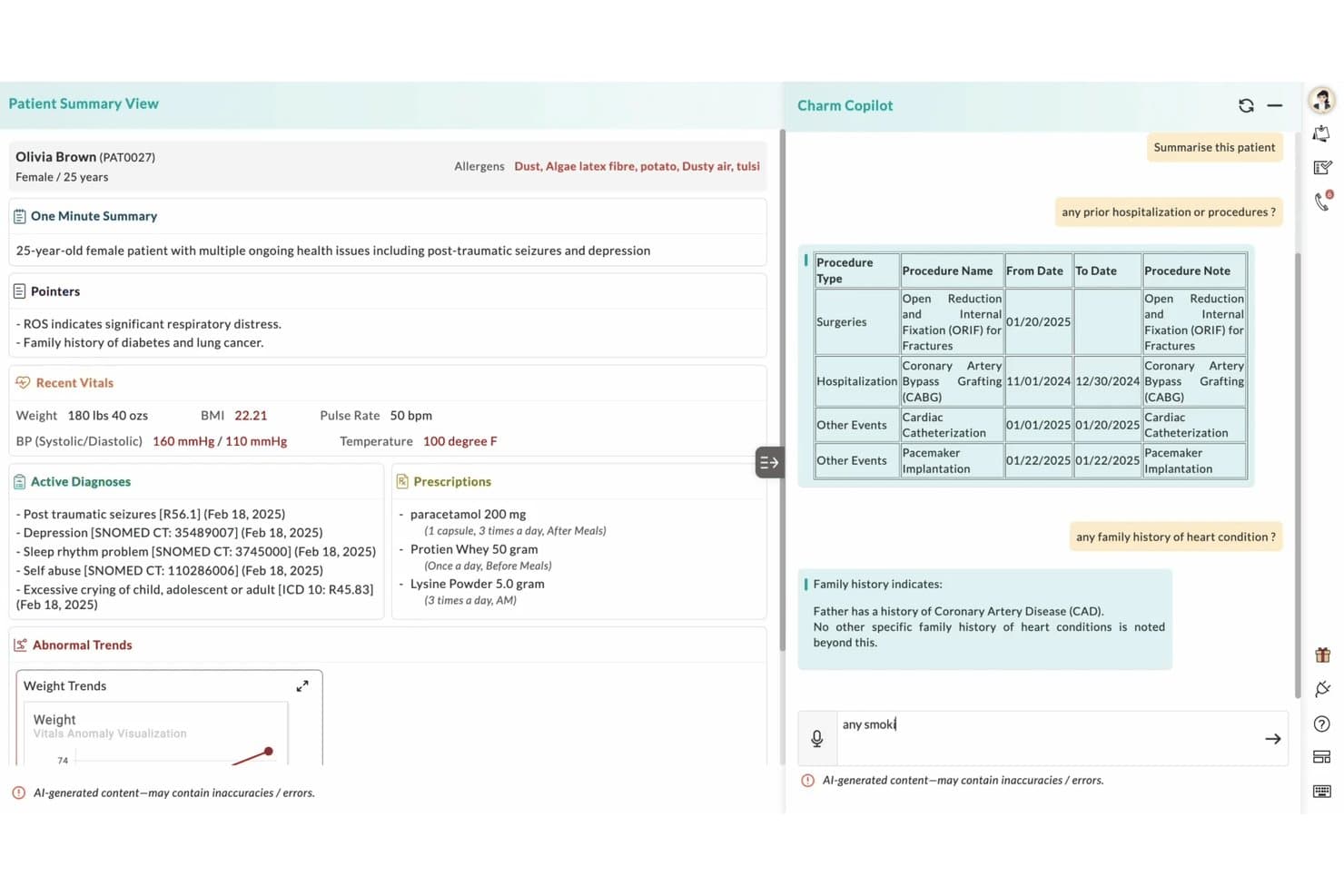
CharmHealth offers an AI Copilot feature that allows clinicians to query patient history, procedures, and family health conditions directly within the behavioral health EHR interface. CharmHealth is a cloud-based EHR, practice management, and medical billing platform for small and midsize practices. Its psychiatry-focused tools include customizable evaluation templates, private psychotherapy notes, e-prescribing, telehealth, patient engagement, billing, and AI-assisted documentation.
Who Is CharmHealth Best For?
CharmHealth is a strong fit for psychiatrists, psychologists, therapists, and small behavioral health practices that want flexible clinical and administrative tools without the cost of a large enterprise EHR.
Why I Picked CharmHealth
I picked CharmHealth because it gives behavioral health providers room to customize documentation while protecting sensitive clinical information. Its Private Charting feature restricts access to psychotherapy and progress notes, which is especially valuable in multidisciplinary organizations. I also like its psychiatry templates for adult, child, adolescent, and addiction care, plus flexible pricing that includes a limited free plan for smaller practices.
CharmHealth Key Features
- Private charting: Restrict sensitive psychotherapy and progress notes so they are visible only to the treating psychiatrist.
- Psychiatry templates: Create evaluation forms for adult, child and adolescent, and addiction psychiatry workflows.
- AI-assisted documentation: Use CharmAI Scribe and CharmAssist to draft notes, interpret clinical information, and create referral letters.
- Integrated telehealth: Conduct virtual consultations while keeping scheduling, documentation, and patient records within the same platform.
CharmHealth Integrations
CharmHealth supports integrations with laboratories, pharmacies through Surescripts, immunization registries, Optum for electronic claims, Bluefin for payment processing, and secure electronic fax services. It also connects with native tools for patient portals, telehealth, practice management, billing, and CharmConnect messaging.
Pros and Cons
Pros:
- Limited free plan for smaller practices
- Integrated EHR, billing, telehealth, and patient portal
- Psychiatry-specific templates and private charting
Cons:
- Interface may take time to configure and learn
- Several capabilities require paid add-ons
Learn more about CharmHealth: Best for psychiatry billing automation
- 30-day free trial + free demo available
- From $130/user/month
Visit WebsiteCustomer Rating:3.6/5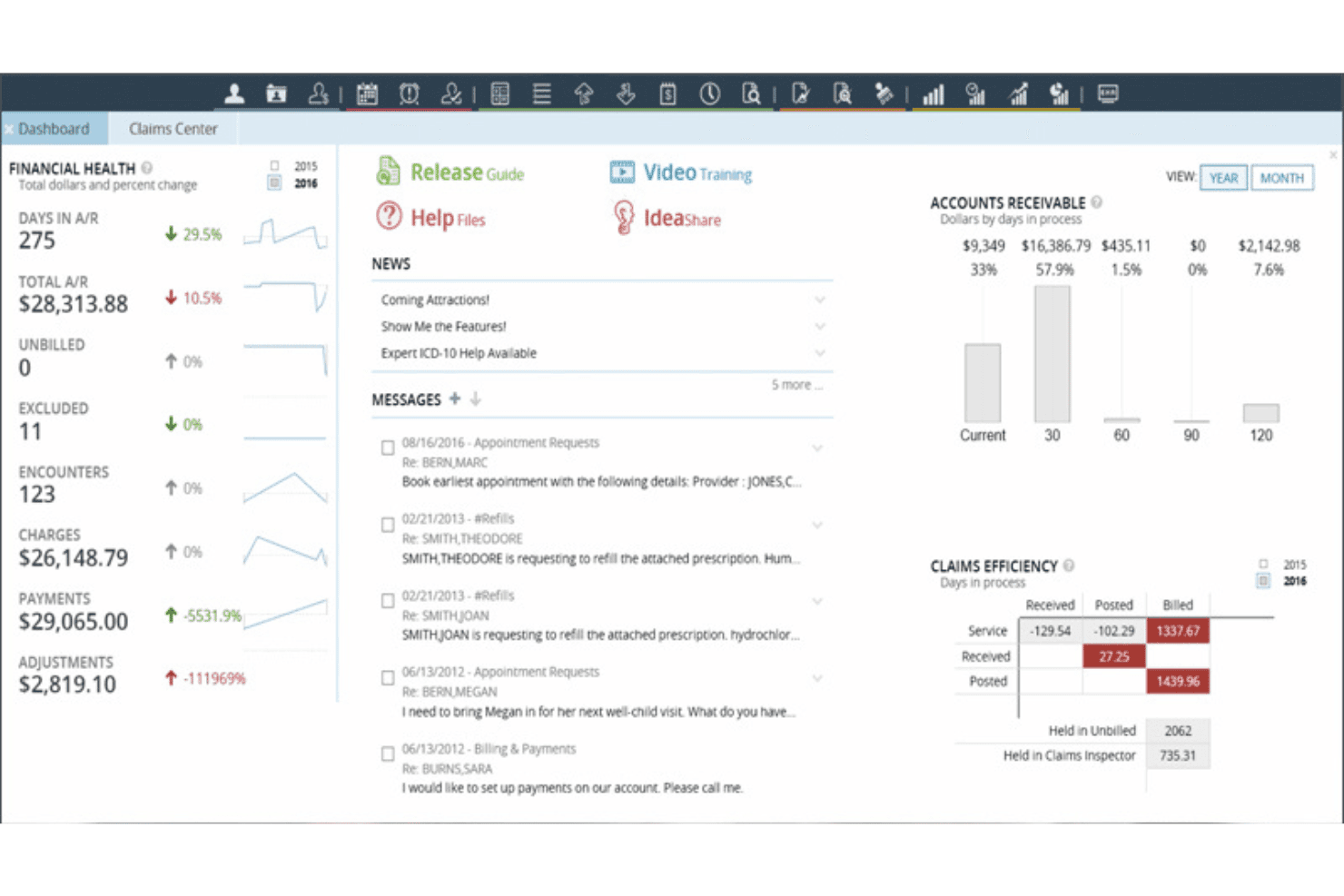
AdvancedMD manages client claims, scrubbing, denials, ERA, and eligibility. AdvancedMD is a cloud-based EHR and practice management platform built for behavioral health, combining psychiatry-specific documentation templates, e-prescribing with EPCS, integrated billing, telepsychiatry, and a patient portal.
Who Is AdvancedMD Best For?
AdvancedMD is a strong fit for multi-provider behavioral health clinics and group psychiatry practices that manage complex billing across multiple payers.
Why I Picked AdvancedMD
AdvancedMD earns its spot on my shortlist because its billing automation is purpose-built for psychiatry, not adapted from a generic medical billing template. I particularly like the psychiatry-specific CPT and ICD-10 code libraries paired with automated claim scrubbing, which catches coding errors before claims go out the door. The Waystar clearinghouse integration means claims move faster across commercial payers, Medicaid, and Medicare without manual touchpoints.
AdvancedMD Key Features
- Psychiatry-specific assessment library: Access pre-loaded clinical rating scales like PHQ-9, GAD-7, and PCL-5 that auto-score and attach results to patient charts.
- Customizable note templates: Configure intake, med-check, and therapy documentation with specialty smart phrases, macros, and voice-to-text.
- HIPAA-compliant psychotherapy note separation: Assign role-based access to segregated psychotherapy notes distinct from other medical record entries.
- Integrated telehealth visits: Launch HIPAA-compliant video sessions from within the schedule for remote psychiatric care.
AdvancedMD Integrations
AdvancedMD offers native integrations with Mental Health Technologies SmarTest, EirSystems eMAR, Waystar Clearinghouse, Phreesia, and supports screening tools like PHQ-9, GAD-7, and PCL-5. An API is available for custom integrations.
Pros and Cons
Pros:
- Dedicated RCM services for behavioral health billing
- Psychiatric rating scales auto-populate progress notes
- Built-in EPCS with PDMP registry access
Cons:
- Psychotherapy note separation relies on manual configuration
- Telehealth module lacks group session support
 Best for Canadian privacy and data residency
- Free demo available
- Pricing upon request
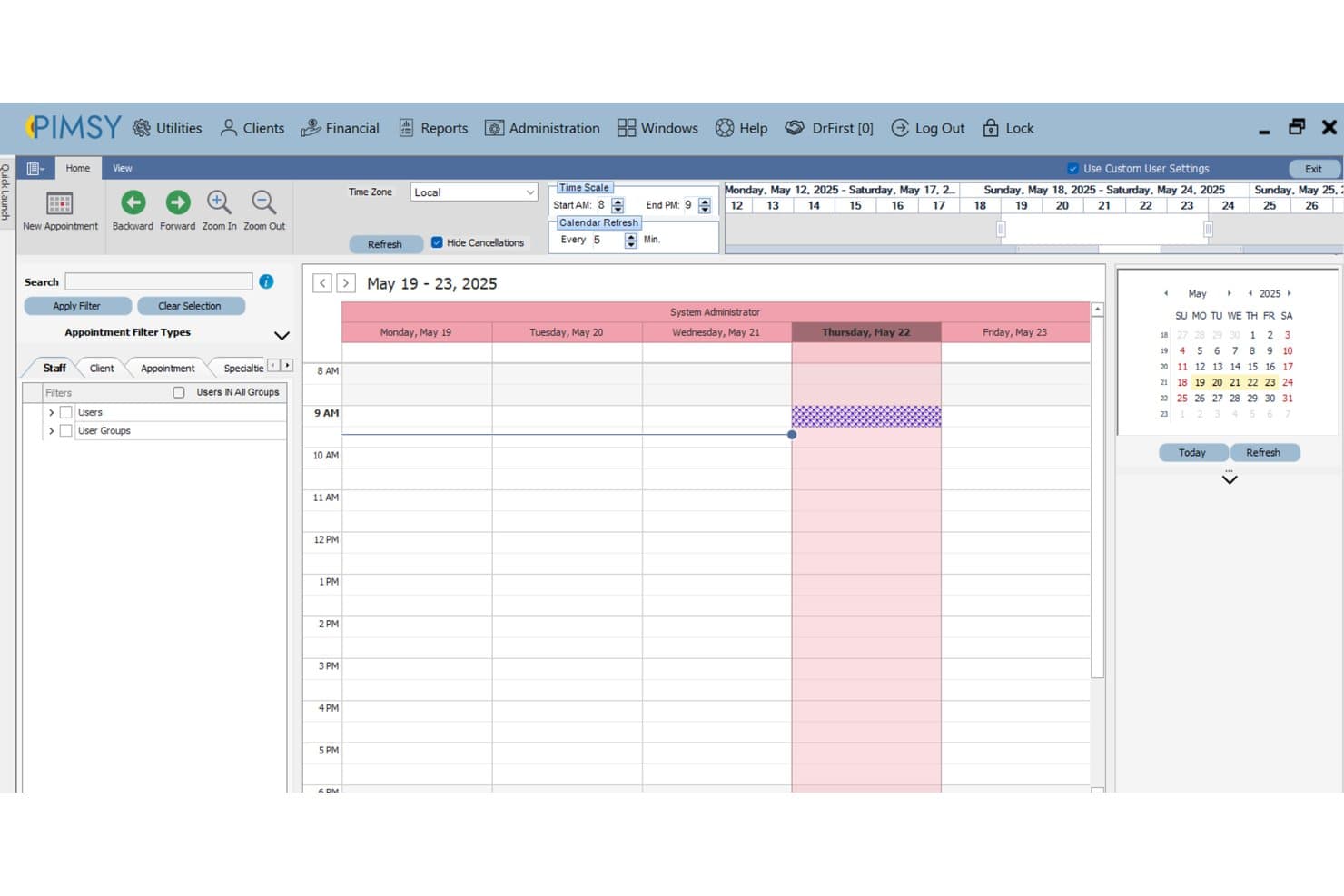
PIMSY's scheduling calendar helps users manage weekly appointments. PIMSY is a psychiatry and behavioral health EHR that covers clinical documentation, ePrescribing with EPCS and PDMP checks, scheduling, billing, and a patient portal, with AI-assisted note generation and multi-location practice management built in.
Who Is PIMSY Best For?
PIMSY is a strong fit for Canadian behavioral health practices that need data residency on Canadian servers and compliance with PIPEDA and PHIPA alongside full psychiatric EHR functionality.
Why I Picked PIMSY
I've included PIMSY in my top picks because it's the only psychiatry EHR I've found that hosts Canadian client data on Microsoft Azure servers located in Canada, making PIPEDA and PHIPA compliance built-in rather than bolted on. For Canadian behavioral health practices, that distinction matters: your data never crosses the border. I also like that full psychiatric EHR functionality, including EPCS e-prescribing with PDMP checks and AI-assisted note generation, comes alongside that data residency guarantee.
PIMSY Key Features
- Ambient Scribe: Transcribes session audio in real time and drafts notes directly into your existing templates for review and approval, then discards the audio.
- Multi-location scheduling: A centralized calendar supports recurring appointments, group scheduling, and multi-provider visits across locations and time zones.
- eMAR: Tracks medication administration with barcode scanning, scheduled-dose alerts, pill counts, and dosing data that feeds directly into billing.
- Managed billing services: PIMSY's billing staff can handle claim submission, eligibility checks, authorization tracking, and denial management on your behalf.
PIMSY Integrations
PIMSY has marketplace integrations with LabSoft/LabSync, DrFirst, SecureVideo, Claim.MD, Office Ally, and Waystar. Its API supports FHIR, REST APIs, and HL7 for custom integrations.
Pros and Cons
Pros:
- Reviewers praise responsive training and support
- Custom SOAP, DAP, and BIRP notes
- Canadian data residency supports privacy-sensitive practices
Cons:
- Hard-coded fields complicate documentation adjustments
- Users report freezes interrupting clinical workflows
Learn more about PIMSY:

SimplePractice offers an ePrescribe access management modal where admins can add or manage prescribing permissions for individual clinicians. SimplePractice is a cloud-based EHR and practice management platform for mental health and wellness providers that combines clinical documentation, ePrescribing with EPCS, behavioral health billing, integrated telehealth, and a client portal.
Who Is SimplePractice Best For?
Solo psychiatrists and PMHNPs running independent practices who need an all-in-one system with ePrescribing, documentation, and billing in a single platform.
Why I Picked SimplePractice
I picked SimplePractice as one of the best because its ePrescribe add-on handles controlled substance prescriptions natively, including EPCS registration and PDMP integration for tracking high-risk prescribing patterns. I also like the AI Care Aide suite, which puts an AI Note Taker and Session Sidekick directly in the chart for in-session psychiatric notes. Customizable treatment plans and psychiatric intake templates mean I'm not building documentation from scratch for every new patient.
SimplePractice Key Features
- Customizable intake forms: Collect psychiatric intake and demographic information using templates tailored to practice needs.
- Integrated client portal: Clients can access intake forms, appointment details, and secure messages from a central HIPAA-compliant portal.
- Recurring appointment scheduling: Set up and manage ongoing psychiatric or therapy appointments directly within the platform.
- Screening tool library: Access and administer standardized assessments like PHQ-9 and GAD-7 from within client records.
SimplePractice Integrations
SimplePractice offers native integrations with Stripe for payment processing, Wiley Treatment Planners, Experian for identity proofing, and state PDMP systems for controlled substance monitoring. Native integration with personal calendar apps is also supported.
Pros and Cons
Pros:
- PHQ-9 and GAD-7 available within charts
- AI Note Taker assists in-session documentation
- EPCS and PDMP support built in
Cons:
- Less depth than dedicated psychiatry platforms
- Telehealth reliability issues reported by users
Learn more about SimplePractice: Best for therapy notes and billing
- 30-day free trial + free demo available
- From $69/user/month
Visit WebsiteCustomer Rating:4.4/5
TherapyNotes offers a comprehensive Documents tab displaying organized clinical notes, evaluations, and treatment plans with status tracking for psychiatry patients. TherapyNotes is a behavioral health EHR with psychiatry-specific documentation templates, integrated ePrescribing, behavioral health billing, telehealth, outcome measures, and a patient portal built for mental health practices.
Who Is TherapyNotes Best For?
TherapyNotes is a strong fit for solo psychiatrists and small behavioral health group practices that want a structured, all-in-one system without heavy configuration overhead.
Why I Picked TherapyNotes
I picked TherapyNotes as one of the best because its psychiatry progress notes automatically carry forward medications and pull diagnoses from the most recent note. On the billing side, it handles BH CPT codes, real-time eligibility verification, ERA, and secondary claim submission natively. The TherapyFuel AI suite also generates progress notes directly from session transcripts, with options to customize clinical voice and writing tone within the same interface.
TherapyNotes Key Features
- Outcome measures library: Track symptom changes over time with automated scoring for PHQ-9, GAD-7, and other psychiatric screening tools.
- Patient portal: Give patients secure access to intake forms and allow secure messaging between client and practice.
- Role-based permissions: Configure granular access controls for clinical and non-clinical team members.
- Supervisor co-sign workflow: Allow clinical supervisors to review and sign off on trainee or intern documentation within the platform.
TherapyNotes Integrations
TherapyNotes offers native integrations with Google Calendar and Outlook Calendar, and supports ePrescribing via DrFirst. An API is available for custom integrations.
Pros and Cons
Pros:
- Built-in PHQ-9 and GAD-7 with auto-scoring
- Psychiatry progress notes carry forward medications automatically
- Automated BH billing with ERA and eligibility
Cons:
- Telehealth module lacks group session depth
- Psychiatric note templates aren't user-customizable
Learn more about TherapyNotes: Best for interventional psychiatry
- Free demo available
- From $249/month
Visit WebsiteCustomer Rating:4.6/5
Osmind offers a day-view scheduling interface that displays multiple providers, exam rooms, and color-coded appointment types like Ketamine infusion and Spravato. Osmind is a psychiatry-specific EHR built around interventional treatment workflows, combining psychiatric charting, e-prescribing with EPCS, integrated billing, patient engagement, and measurement-based care tools in one platform.
Who Is Osmind Best For?
Osmind is a strong fit for psychiatry practices offering interventional treatments like TMS, ketamine, or SPRAVATO alongside traditional medication management.
Why I Picked Osmind
I picked Osmind as one of the best because no other psychiatry EHR handles interventional treatment workflows as natively. I use it to manage automated SPRAVATO REMS submissions and pull from ketamine and TMS-specific charting templates built directly into the EHR. On top of that, I like that 30+ validated rating scales can be scheduled automatically to patients, giving me longitudinal outcome data tied directly to the treatment record.
Osmind Key Features
- Customizable psychiatry templates: Create intake, progress, and treatment notes tailored to specific mental health workflows.
- Patient engagement app: Patients can complete intake forms, rating scales, journaling, and secure messaging through a connected mobile app.
- Integrated lab ordering: Order and receive lab results electronically from LabCorp and Quest within the EHR.
- Recurring appointment scheduling: Manage multi-location calendars, enable self-scheduling, and send automated reminders for psychiatric visits.
Osmind Integrations
Osmind offers native integrations with DrFirst/iPrescribe for e-prescribing, LabCorp and Quest for labs, ClaimMD and OfficeAlly for insurance claims, Stripe for payments, Google Calendar, and state PDMPs. An API is available for custom integrations.
Pros and Cons
Pros:
- Integrated telehealth with automatic patient-facing session access
- Native interventional workflows for TMS, ketamine, and SPRAVATO
- Built-in outcome tracking across 30+ validated rating scales
Cons:
- Higher price point makes it less suitable for solo cash-pay practices
- Billing tools feel clunky compared to dedicated RCM platforms
Learn more about Osmind: Best for behavioral health workflows
- Free demo available
- Pricing upon request
Visit WebsiteCustomer Rating:4.1/5
Valant offers structured treatment planning with problems, goals, objectives, and interventions organized in a clear, hierarchical layout within the EHR. Valant is a behavioral health EHR built exclusively for mental health practices, combining psychiatric documentation, ePrescribing with EPCS, measurement-based care, integrated telepsychiatry, and practice management in a single platform.
Who Is Valant Best For?
Valant fits psychiatrists, PMHNPs, and group behavioral health practices that need prescriber-focused workflows, including EPCS and TMS management, across multiple providers or locations.
Why I Picked Valant
Valant earns its spot on my shortlist because it's built from the ground up for behavioral health, not adapted from a primary-care platform. I particularly like the measurement-based care workflow: the PHQ-9 and GAD-7 automatically send to patients before appointments and feed directly into the clinical note. The DrFirst ePrescribing with PDMP lookup sits inside the same workflow, so prescribers aren't toggling between systems during a med-check.
Valant Key Features
- Outcome measures automation: Schedule and automatically deliver standardized rating scales like PHQ-9 and GAD-7 to patients through the portal.
- Group therapy support: Run group therapy sessions with up to 30 participants using integrated telehealth and documentation tools.
- Customizable note templates: Access over 100 configurable templates for psychiatric intakes, MSEs, and therapy progress notes.
- Integrated practice management: Manage scheduling, insurance eligibility, billing, and claims submission from within the same platform.
Valant Integrations
Valant offers native integrations with DrFirst for ePrescribing (including EPCS and PDMP), an integrated clearinghouse for claims submission, and provides an API for custom integrations.
Pros and Cons
Pros:
- Strong fit for multi-provider and TMS-focused practices
- Clinical, billing, and scheduling data unified in one system
- Pre-session outcome measures auto-sent through patient portal
Cons:
- Note templates require significant setup and feel click-heavy
- System outages reported during business hours
Learn more about Valant: 10Best for psychiatry-specific charting
ICANotes
- 30-day free trial + free demo available
- From $35/month
Visit WebsiteCustomer Rating:4.1/5
ICANotes offers a detailed Review of Systems (ROS) interface that allows providers to document respiratory and other system findings directly within psychiatric progress notes. ICANotes is a cloud-based EHR built exclusively for behavioral health, offering psychiatry-specific documentation templates, EPCS e-prescribing, behavioral health billing, telehealth, and a patient portal.
Who Is ICANotes Best For?
ICANotes is a strong fit for psychiatrists, PMHNPs, and behavioral health practices that need a prescribing-capable EHR built around psychiatric workflows.
Why I Picked ICANotes
ICANotes earns its spot on my shortlist because of its proprietary clinical content engine, which covers over 90 psychiatric and psychosocial concerns using 75,000+ pre-built clinical phrases. I particularly like how it generates full narrative psychiatric evaluations, mental status exams, and progress notes through menu-driven templates. That means a prescriber can complete a detailed medication management note in minutes without free-typing every line.
ICANotes Key Features
- Integrated e-prescribing with EPCS: Enables DEA-certified electronic prescribing for controlled substances, including PDMP checks.
- Behavioral health billing tools: Supports CPT codes for psychiatric services with built-in claim submission and ERA posting.
- HIPAA-compliant patient portal: Lets patients access intake forms, upload documents, complete screening tools, and send secure messages.
- Recurring appointment scheduling: Makes it easy to book therapy and medication management visits on a repeating basis for each client.
ICANotes Integrations
ICANotes offers native integrations with Inovalon, electronic lab systems, e-prescribing networks, clearinghouses, and health information exchanges. An API is available for custom integrations.
Pros and Cons
Pros:
- Scorable psychiatric rating scales auto-populate notes
- Menu-driven charting reduces free-text documentation time
- Pre-built MSE and psychiatric evaluation templates
Cons:
- Limited mobile app functionality for clinicians
- Dated interface compared to newer EHR competitors
Learn more about ICANotes:
How I Evaluate Psychiatry EHR
I split my evaluation into three parts, weighting core functionality most: document psychiatric evaluations and treatment plans, and prescribe controlled medications. Next, I consider standout features such as PDMP access or symptom-score trends. Finally, I weigh beyond-feature factors like onboarding, compliance guidance, and pricing fit.
Core Functionality (Table Stakes For This List)
When I'm selecting tools for my list, I score each one on a scale from 0 (does not offer the functionality) to 5 (excels in this area) for each core functionality listed below. I then convert the total into a percentage to help assess each tool's overall fit, with extra weight on any functionalities I’ve deemed essential.
- Psychiatric Documentation (Essential): I look for structured evaluations, mental status exams, progress notes, and adaptable treatment plans—not just generic chart fields.
- Controlled E-Prescribing (Essential): I check for integrated EPCS, identity verification, medication history, and interaction alerts for controlled psychiatric medications.
- Behavioral Health Scheduling: I assess recurring therapy and medication visits, flexible appointment lengths, and reminders that fit each practice’s schedule.
- Outcome Measures: I look for scales such as PHQ-9 and GAD-7, with scores recorded and tracked over time in the patient record.
- Behavioral Health Billing: I evaluate support for psychiatric CPT codes, time-based services, and claims workflows used by behavioral health practices.
- Mental Health Patient Portal: I check whether patients can access secure intake forms, appointment requests, telehealth, and ongoing communication.
Once I have a list of tools that meet the criteria, I consider what sets each platform apart.
Differentiating Factors (What Sets Vendors Apart)
Here's how I compare and contrast different vendors:
Standout Features
I look for PDMP integration that pulls a patient's controlled substance history directly into the prescribing workflow—not as a separate browser tab. Measurement-based care dashboards matter too; I check whether PHQ-9 and GAD-7 scores trend visually over time so clinicians can spot treatment response patterns during a visit. I also evaluate collaborative care model support, since practices billing CoCM or BHI codes need workflows built for psychiatric consultants embedded in primary care teams.
Beyond Features
I check whether a vendor's onboarding includes EPCS identity-proofing walkthroughs, since practices without dedicated IT staff can stall at DEA two-factor setup. Compliance configuration matters just as much—substance use disorder records fall under 42 CFR Part 2, and I look for systems where consent and confidentiality rules are adjustable by record type. I also evaluate pricing structure, because a per-provider model that works for a solo prescriber can become expensive fast when a growing group adds therapists and nurse practitioners.
Como escolher um RCE
É fácil perder-se em listas extensas de funcionalidades e estruturas de preços complexas. Para o ajudar a manter o foco enquanto analisa o seu processo específico de seleção de software, apresentamos uma lista de verificação dos fatores a ter em conta:
| Fator | O que considerar |
| Escalabilidade | A ferramenta dará suporte à sua prática à medida que adicionar mais profissionais de saúde, localizações ou novas especialidades? |
| Integrações | Pode ligar-se aos laboratórios, PDMP estatais, redes de prescrição eletrónica e ferramentas de acompanhamento de resultados que já utiliza? |
| Personalização | Os formulários de admissão, os modelos de notas e os fluxos de trabalho podem ser facilmente adaptados aos seus fluxos de trabalho de psiquiatria e às suas preferências de documentação? |
| Facilidade de utilização | Os profissionais de saúde e funcionários conseguem aprender a utilizá-la rapidamente, sem uma curva de aprendizagem acentuada nem dependência de manuais e vídeos de formação? |
| Implementação e integração inicial | Que apoio e recursos oferece o fornecedor para migrar dados, dar formação e ajudar a sua equipa a familiarizar-se com a plataforma? |
| Custo | O preço inclui elementos essenciais como EPCS, telemedicina ou faturação, ou existem custos ocultos ou variáveis à medida que cresce? |
| Salvaguardas de segurança | A plataforma oferece permissões baseadas em funções, registos de auditoria e conformidade com a HIPAA/42 CFR desde o início? |
| Disponibilidade do apoio | Quando tem dúvidas ou problemas, obtém ajuda rapidamente por telefone, e-mail ou chat, ou terá de esperar vários dias? |
O que são os RCE de psiquiatria?
Os RCE de psiquiatria são um tipo especializado de RCE de saúde mental, que disponibiliza funcionalidades de documentação, prescrição, faturação e privacidade adaptadas aos fluxos de trabalho psiquiátricos. Ajudam os psiquiatras e as equipas de saúde comportamental a gerir a medicação, documentar notas de psicoterapia, manter a conformidade com regulamentações específicas e prestar serviços de telepsiquiatria. Estas plataformas de software de RCE foram concebidas para se adaptarem às exigências diárias da avaliação psiquiátrica, do planeamento do tratamento e da gestão contínua dos pacientes.
Funcionalidades
Ao selecionar um EHR de psiquiatria, esteja atento às seguintes funcionalidades principais:
- Modelos específicos para psiquiatria: Formulários integrados de avaliação e notas de evolução concebidos para avaliações, exames do estado mental e sessões de terapia, adaptados aos fluxos de trabalho de saúde mental.
- Prescrição eletrónica com EPCS: Ferramentas seguras e em conformidade com a DEA para prescrever medicamentos psiquiátricos controlados, incluindo verificações no PDMP e histórico de medicação.
- Telepsiquiatria integrada: Funcionalidades de consultas por vídeo em conformidade com a HIPAA que permitem aos prestadores observar os pacientes à distância, documentar as sessões e apoiar a continuidade dos cuidados.
- Faturação de saúde comportamental: Submissão automatizada de pedidos de reembolso e suporte para códigos CPT de saúde comportamental, complementos de psicoterapia e fluxos de trabalho de seguros.
- Notas de psicoterapia separadas: Ferramentas que permitem aos profissionais de saúde armazenar notas de psicoterapia e restringir o seu acesso, garantindo a conformidade e uma maior privacidade dos pacientes.
- Portal do paciente: Acesso online seguro para os pacientes marcarem consultas, preencherem formulários de admissão e enviarem mensagens aos prestadores ou consultarem recursos educativos.
- Ferramentas de rastreio e avaliação de resultados: Disponibilização e pontuação digitais de instrumentos validados, como o PHQ-9 ou o GAD-7, que são automaticamente incorporados no processo clínico e permitem acompanhar a evolução do paciente ao longo do tempo.
- Gestão da medicação: Funcionalidades para acompanhar medicamentos, consultar o histórico de medicação, gerir alertas de interações entre medicamentos e monitorizar efeitos secundários em pacientes psiquiátricos.
- Agendamento recorrente: Suporte para consultas recorrentes de revisão da medicação ou sessões de terapia, ajudando as clínicas a gerir acompanhamentos regulares e a reduzir as faltas dos pacientes.
- Permissões baseadas em funções: Possibilidade de conceder ou restringir o acesso aos registos dos pacientes com base nas funções dos utilizadores, para proteger informações sensíveis de saúde comportamental.
Vantagens
A implementação de um EHR de psiquiatria proporciona várias vantagens à sua equipa e ao seu negócio. Eis algumas das que pode esperar:
- Documentação simplificada: Os modelos e as notas específicos para psiquiatria aceleram a admissão, o registo da evolução e o planeamento do tratamento, reduzindo simultaneamente a introdução repetitiva de dados.
- Maior segurança da medicação: A prescrição eletrónica integrada com EPCS e os alertas de interações medicamentosas ajudam a gerir a medicação psicotrópica de forma segura e eficiente.
- Maior precisão na faturação: A codificação automatizada de saúde comportamental e a submissão de pedidos de reembolso reduzem os erros e aceleram o reembolso dos serviços psiquiátricos.
- Maior privacidade dos pacientes: As notas de psicoterapia separadas e os controlos de acesso detalhados protegem as informações sensíveis de saúde mental em conformidade com os requisitos da HIPAA.
- Coordenação dos cuidados facilitada: O acesso ao portal, as mensagens e as ferramentas de telepsiquiatria apoiam a comunicação com os pacientes e facilitam o acompanhamento dos resultados e a partilha de informações relevantes.
- Melhores informações clínicas: A pontuação automatizada das escalas de avaliação e o acompanhamento longitudinal permitem monitorizar as alterações dos sintomas e a resposta ao tratamento ao longo do tempo.
- Operações escaláveis: O agendamento recorrente, as permissões baseadas em funções e os fluxos de trabalho personalizáveis ajudam a sua clínica a crescer e a adaptar-se com menos encargos administrativos.
Custos e preços
A seleção de um EHR de psiquiatria requer uma compreensão dos vários modelos de preços e planos disponíveis. Os custos variam consoante as funcionalidades, o tamanho da equipa, os complementos e outros fatores. A tabela abaixo resume os planos mais comuns, os seus preços médios e as funcionalidades normalmente incluídas nas soluções de EHR de psiquiatria:
Tabela de comparação de planos para EHR de psiquiatria
| Tipo de plano | Preço médio | Funcionalidades comuns |
| Plano gratuito | $0 | Modelos de documentação limitados, agendamento básico e apoio por e-mail. |
| Plano pessoal | $30-$80/utilizador/mês | Modelos de avaliação psiquiátrica, prescrição eletrónica (pode excluir EPCS), faturação básica, agendamento e portal do paciente limitado. |
| Plano empresarial | $90-$180/utilizador/mês | EPCS, telepsiquiatria integrada, notas de psicoterapia separadas, faturação avançada, relatórios e um portal completo. |
| Plano empresarial avançado | $200+/utilizador/mês | Fluxos de trabalho personalizados, integrações empresariais, permissões baseadas em funções, gestão dedicada da conta e apoio prioritário. |
Perguntas frequentes sobre EHR de psiquiatria
Eis algumas respostas a perguntas frequentes sobre EHR de psiquiatria:
As plataformas de EHR de psiquiatria permitem a prescrição eletrónica de substâncias controladas?
Sim, a maioria das plataformas de EHR de psiquiatria inclui EPCS para gerir substâncias controladas e medicamentos psicotrópicos de forma segura, frequentemente com verificações integradas no PDMP para garantir a conformidade e a segurança.
Como é que estes sistemas ajudam a garantir a segurança e a privacidade das notas?
As soluções de EHR de psiquiatria oferecem opções para manter as notas de psicoterapia separadas do registo geral, utilizando controlos de acesso granulares para que apenas os utilizadores autorizados possam consultar documentação altamente sensível.
Posso utilizar um EHR de psiquiatria para sessões de telepsiquiatria?
Sim, muitos sistemas de EHR de psiquiatria disponibilizam ferramentas de vídeo integradas e compatíveis com a HIPAA para telepsiquiatria, permitindo realizar sessões à distância, registar a documentação diretamente no processo clínico e, por vezes, incluir suporte para consultas em grupo.
Existem opções de EHR de psiquiatria adequadas para profissionais que trabalham a solo?
Sim, encontrará opções leves concebidas para profissionais que trabalham a solo, com documentação simples, planos mensais acessíveis e uma configuração informática mínima, continuando a suportar a prescrição eletrónica e a telepsiquiatria segura.
Como funciona a faturação nas plataformas de EHR de psiquiatria?
Estes EHR suportam normalmente códigos CPT de saúde comportamental, automatizam o envio de pedidos de reembolso e disponibilizam funcionalidades como a verificação e correção de pedidos, o registo de ERAs e o acompanhamento de autorizações prévias, reduzindo a carga administrativa dos profissionais.