

ClinicSense Review: Pros, Cons, Features, and Pricing
ClinicSense brings clinic management into one platform, from appointment scheduling and billing to client communication, SOAP notes, and wellness practice workflows.

We review tools independently, and commissions help fund our testing. See our transparency policy, our methodology, or suggest a tool.
ClinicSense is a clinic management software built for solo practitioners and small clinics in health and wellness fields like massage therapy and physiotherapy. It handles online booking, SOAP notes, invoicing, and client intake forms in one place. I'd look at it seriously if your practice is outgrowing a generic booking tool but doesn't need the full complexity of a platform like Jane App. ClinicSense keeps the setup light and approachable without dropping the clinical documentation features that matter most for day-to-day care.
ClinicSense Evaluation Summary

4/5
- From $39/month
- 14-day free trial
Why Trust Our Software Recommendations
6,700+
Reviews
20
Industry experts
16+
Evaluation factors
14
Years
Our team has been testing and reviewing software since 2012. As medical practice leaders ourselves, we know how difficult—and important—it is to choose the right software.
For this guide, we evaluated tools using hands-on testing and independent research, scoring tools using our selection criteria.
Our reviews reflect our human editorial judgment, not a sales pitch.
ClinicSense Overview
When I compare ClinicSense to other clinic management software, I think its clean interface, simple onboarding, and responsive support make it a top pick for solo practitioners and small clinics. The built-in SOAP notes, online booking, and automated reminders are easy to set up and use. Pricing is transparent, and you won’t get bogged down with features you don’t need.
However, if you want deep integrations or advanced reporting, you might find it limited. For straightforward scheduling, documentation, and billing, I’d suggest ClinicSense is a strong choice for practices prioritizing ease of use over customization.
Pros
- Automated appointment reminders help reduce client no-shows.
- Customer support responds quickly and resolves issues promptly.
- SOAP notes and intake forms are customizable for different practices.
Cons
- Reporting and analytics options are limited compared to others.
- Integrations with third-party tools are minimal or unavailable.
- Mobile app frequently logs users out and lacks full features.
Is ClinicSense Right For Your Needs?
Who Would be a Good Fit for ClinicSense?
ClinicSense is best for small healthcare teams, solo practitioners, and wellness clinics that want simple scheduling, SOAP notes, and payment tools without extra complexity. Its focus on core clinic management features makes it ideal for practices that don’t need deep integrations or advanced analytics.
If you need a system that’s easy to set up, offers responsive support, and helps reduce no-shows with automated reminders, ClinicSense is a strong choice.
- Wellness CentersThe system’s client management and billing features work well for wellness-focused teams.
- Acupuncture PracticesClinicSense’s intake forms and payment tools fit acupuncture clinics’ needs.
- Chiropractic OfficesAutomated reminders and SOAP notes support chiropractic workflows.
- Small Physical Therapy ClinicsCustomizable documentation and easy scheduling help small PT teams stay organized.
- Solo PractitionersThe platform’s simple setup and all-in-one features suit solo providers.
- Massage TherapistsClinicSense offers SOAP notes, intake forms, and appointment reminders tailored for massage practices.
Who Would be a Bad Fit for ClinicSense?
ClinicSense isn’t the best choice for large, multi-location organizations or teams needing advanced integrations, custom workflows, or in-depth analytics. If your clinic relies on connecting with other software, requires detailed reporting, or manages complex billing scenarios, you’ll likely find ClinicSense’s feature set too limited for your needs.
- Corporate Health DepartmentsClinicSense can’t handle large-scale employee health tracking or compliance reporting.
- Research ClinicsThe system doesn’t offer advanced data export or analytics for research needs.
- Medical Billing CompaniesClinicSense’s billing features are basic and not suited for third-party billing.
- Behavioral Health NetworksLimited integrations and documentation options restrict behavioral health teams.
- Multi-Disciplinary ClinicsThe platform doesn’t support complex workflows across multiple specialties.
- Large Hospital SystemsClinicSense lacks multi-location management and enterprise-level reporting.
How We Test & Score Tools
We’ve spent years building, refining, and improving our software testing and scoring system. The rubric is designed to capture the nuances of software selection and what makes a tool effective, focusing on critical aspects of the decision-making process.
Below, you can see exactly how our testing and scoring works across seven criteria. It allows us to provide an unbiased evaluation of the software based on core functionality, standout features, ease of use, onboarding, customer support, integrations, customer reviews, and value for money.
Core Functionality (25% of final scoring)
The starting point of our evaluation is always the core functionality of the tool. Does it have the basic features and functions that a user would expect to see? Are any of those core features locked to higher-tiered pricing plans? At its core, we expect a tool to stand up against the baseline capabilities of its competitors.
Standout Features (25% of final scoring)
Next, we evaluate uncommon standout features that go above and beyond the core functionality typically found in tools of its kind. A high score reflects specialized or unique features that make the product faster, more efficient, or offer additional value to the user.
We also evaluate how easy it is to integrate with other tools typically found in the tech stack to expand the functionality and utility of the software. Tools offering plentiful native integrations, 3rd party connections, and API access to build custom integrations score best.
Ease of Use (10% of final scoring)
We consider how quick and easy it is to execute the tasks defined in the core functionality using the tool. High scoring software is well designed, intuitive to use, offers mobile apps, provides templates, and makes relatively complex tasks seem simple.
Onboarding (10% of final scoring)
We know how important rapid team adoption is for a new platform, so we evaluate how easy it is to learn and use a tool with minimal training. We evaluate how quickly a team member can get set up and start using the tool with no experience. High scoring solutions indicate little or no support is required.
Customer Support (10% of final scoring)
We review how quick and easy it is to get unstuck and find help by phone, live chat, or knowledge base. Tools and companies that provide real-time support score best, while chatbots score worst.
Customer Reviews (10% of final scoring)
Beyond our own testing and evaluation, we consider the net promoter score from current and past customers. We review their likelihood, given the option, to choose the tool again for the core functionality. A high scoring software reflects a high net promoter score from current or past customers.
Value for Money (10% of final scoring)
Lastly, in consideration of all the other criteria, we review the average price of entry level plans against the core features and consider the value of the other evaluation criteria. Software that delivers more, for less, will score higher.
Core Features
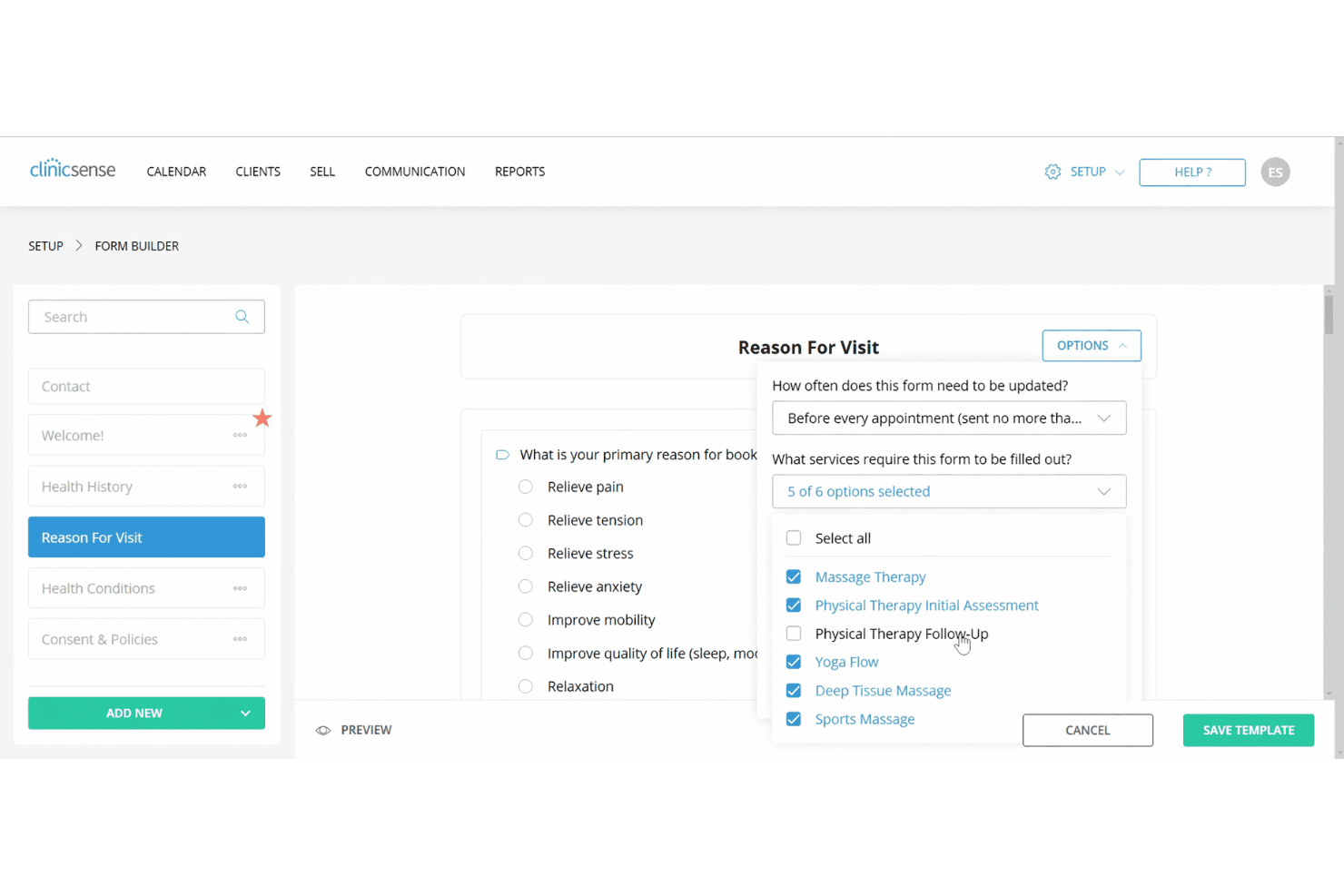
Online Booking
Clients can schedule appointments directly through your website or a booking link. This reduces admin time and helps fill your calendar automatically.
SOAP Notes
Create, store, and customize SOAP notes for each client visit. Notes are easy to access and update, supporting compliance and continuity of care.
Automated Appointment Reminders
Send email and SMS reminders to clients before their appointments. This helps reduce no-shows and keeps your schedule running smoothly.
Digital Intake Forms
Clients complete intake forms online before their visit. Forms are stored securely and linked to each client’s profile for easy reference.
Invoicing and Payment Processing
Generate invoices, accept payments, and track transactions within the platform. This streamlines billing and helps you stay on top of finances.
Client Management
Store client contact details, appointment history, and documents in one place. This centralizes information and makes it easy to manage ongoing care.
Standout Features
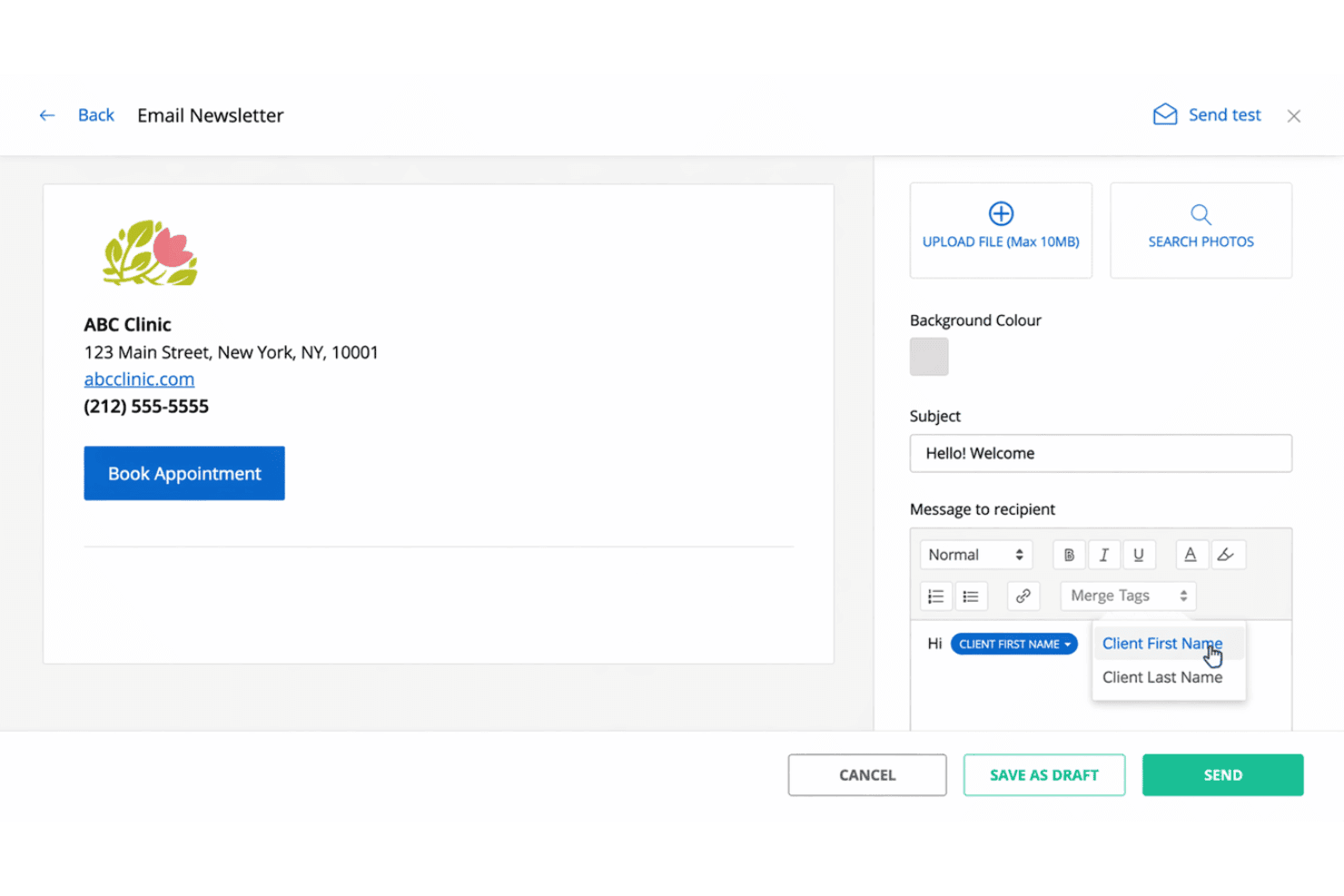
Email Marketing Tools
ClinicSense lets you send newsletters and promotions directly to clients from within the platform. This helps you nurture client relationships and drive repeat bookings without needing a separate email tool.
No-Show Protection
You can require clients to enter a credit card to book and set cancellation policies that automatically enforce fees for late cancellations or no-shows. This feature helps protect your revenue and encourages clients to keep their appointments.
Ease of Use
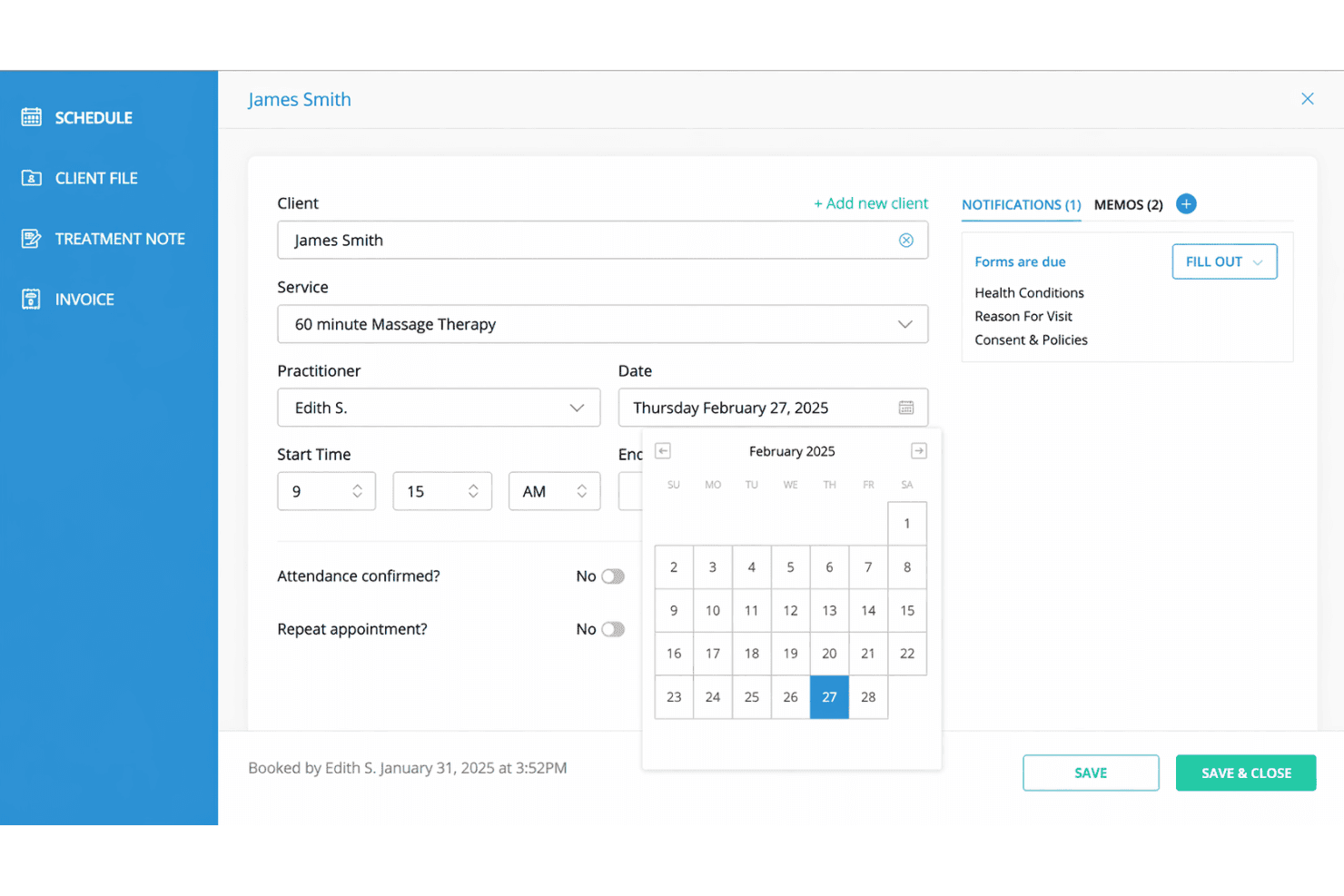
ClinicSense stands out for its clean, intuitive interface and straightforward navigation, making it easy for new users to get started without training. Most users say setup is quick, and features like online booking, SOAP notes, and reminders are simple to access and use daily.
The platform avoids clutter and unnecessary options, so you can focus on core tasks.
Onboarding
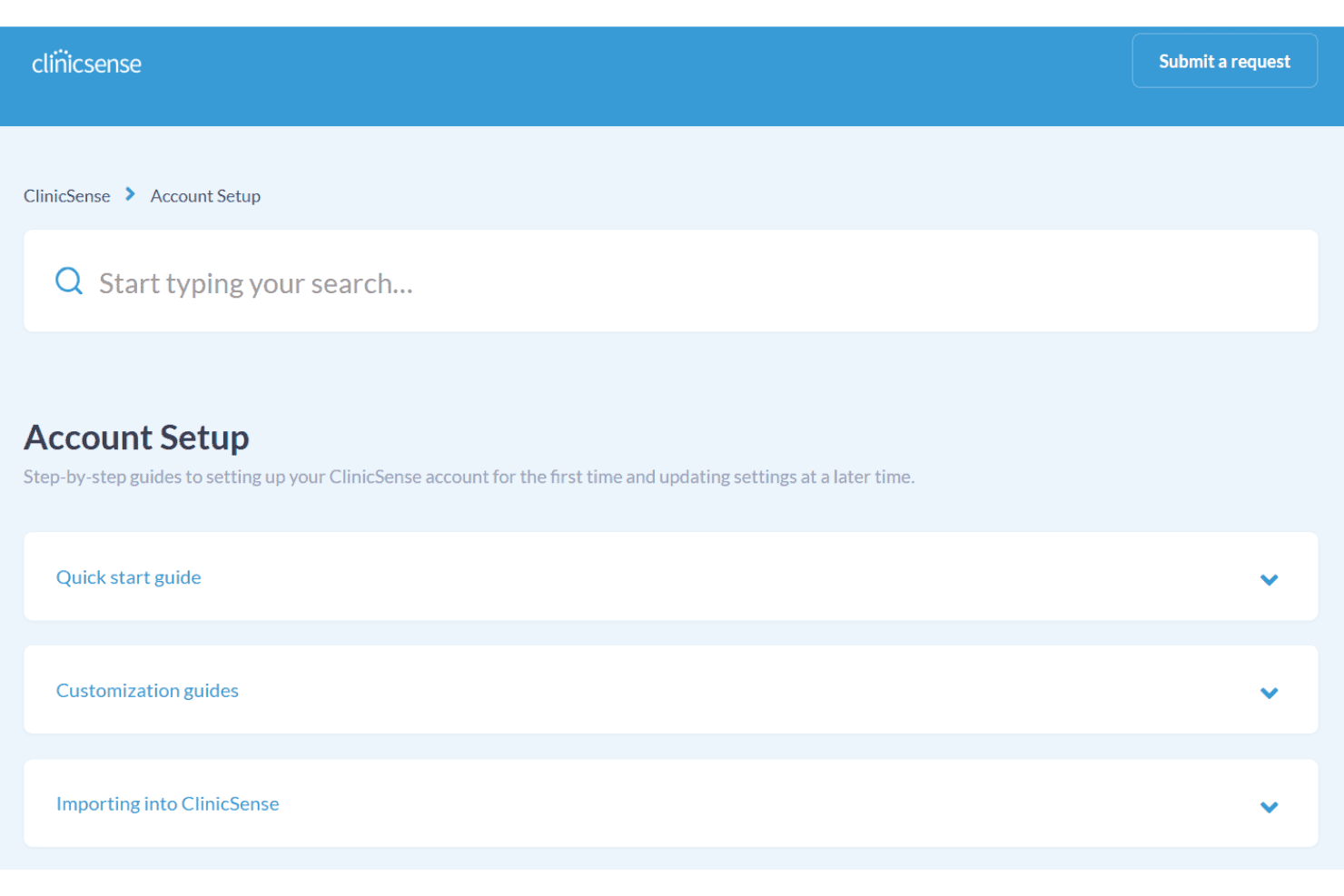
ClinicSense offers a smooth onboarding experience with guided setup, helpful tutorials, and responsive customer support.
Many users mention getting up and running in just a day or two, thanks to clear instructions and accessible help articles. Live chat and email support are quick to respond, helping resolve questions quickly.
Customer Support
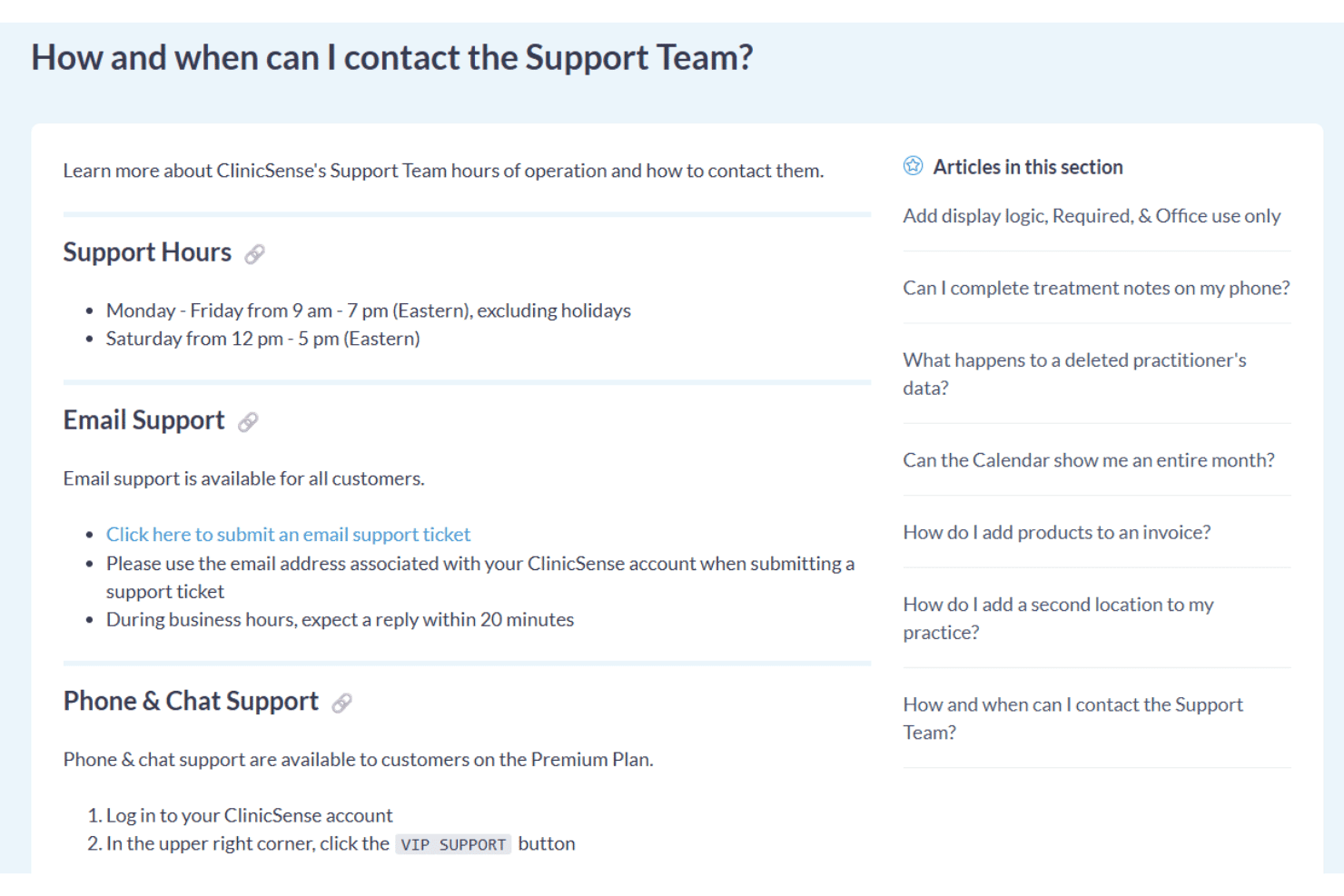
ClinicSense earns high marks for its responsive and knowledgeable customer support team. Users often highlight the fast replies via live chat and email, with most issues resolved quickly and thoroughly.
The support team is praised for being friendly and proactive, often following up to ensure problems are fully addressed.
Integrations
ClinicSense integrates with Square, TELUS Health eClaims, Google Calendar, Google Reviews, Mailchimp, Stripe, Zoom, QuickBooks, Outlook Calendar, and Facebook, among others.
ClinicSense does not currently offer a public API or direct connections with third-party integration tools.
Value for Money
ClinicSense is affordable for solo practitioners and small clinics, offering strong value with its all-in-one features and responsive support.
Users appreciate transparent pricing, no hidden fees, and the ability to choose a plan that fits their needs as their practice grows.
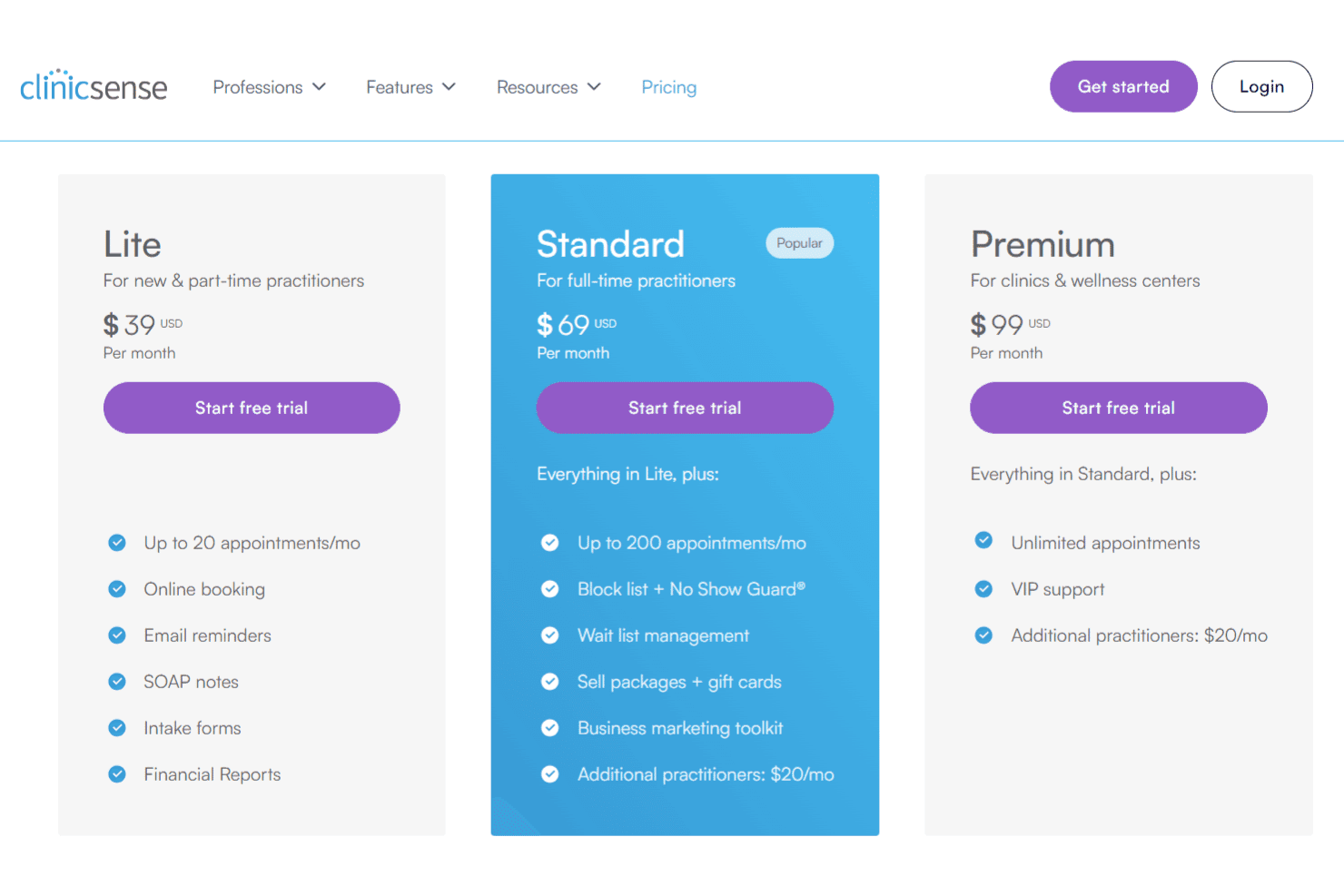
- Lite: Core scheduling, booking, and reminders for small or part-time practices.
- Standard: Expanded bookings with SMS reminders and basic no-show reduction tools.
- Premium: Unlimited appointments with advanced features and priority support.
ClinicSense Specs
- API: No
- Appointment Scheduling: Yes
- Athlete Management: No
- Audit Management: No
- Calendar Management: Yes
- Compliance Tracking: Yes
- Customer Management: Yes
- Dashboard: Yes
- Data Export: Yes
- Data Import: Yes
- Data Visualization: Yes
- Electronic Prescribing: No
- External Integrations: Yes
- File Sharing: Yes
- File Transfer: No
- Health Management: Yes
- HIPAA Compliance: Yes
- Inventory Tracking: No
- Multi-User: Yes
- Notifications: Yes
- Organization Management: Yes
- Patient Management: Yes
- Project Management: No
- Regulatory Alerts: No
- Risk Assessment: No
- Scheduling: Yes
- Supplier Management: No
ClinicSense FAQs
ClinicSense Company Overview & History
ClinicSense is a clinic management software company serving over 8,500 wellness professionals, including massage therapists, physical therapists, and holistic health practitioners. The company is known for its user-friendly platform, strong customer support, and focus on helping small clinics and solo practitioners manage scheduling, charting, and client communication.
ClinicSense has built a reputation for ease of use, earning top ratings for user satisfaction and customer service.
ClinicSense Major Milestones
- 2014: ClinicSense founded and launched its clinic management software.
- 2018: Reached 1,000+ wellness professionals using the platform.
- 2023: Recognized for best ease of use by Capterra for the sixth year in a row.
- 2026: Serves over 8,500 wellness professionals worldwide.