

Multi-specialty billing software is designed to manage billing, coding, and revenue cycle tasks for practices serving diverse clinical specialties under one system. If you’re looking for ways to reduce billing headaches, coordinate complex claims, and keep payments moving across multiple specialties, you’re in the right place.
Below, you’ll find what sets each top solution apart—so you can compare features, avoid costly mistakes, and choose the right billing platform for your unique needs.
Why Trust Our Software Recommendations
6,700+
Reviews
20
Industry experts
16+
Evaluation factors
14
Years
Our team has been testing and reviewing software since 2012. As medical practice leaders ourselves, we know how difficult—and important—it is to choose the right software.
For this guide, we evaluated tools using hands-on testing and independent research, scoring tools using our selection criteria.
Our reviews reflect our human editorial judgment, not a sales pitch.
Multi-Specialty Billing Software Comparison Table
This comparison table summarizes pricing details for my multi-specialty billing software.
| Tool | Best For | Trial Info | Price | ||
|---|---|---|---|---|---|
| 1 | Best for advanced eligibility verification | Free demo available | Pricing upon request | Website | |
| 2 | Best for real-time claim status updates | Free demo available | Pricing upon request | Website | |
| 3 | Best for integrated claim submission workflow | Free demo available | Pricing upon request | Website | |
| 4 | Best for user-defined billing workflows | Free demo available | Pricing upon request | Website | |
| 5 | Best for integrated all-in-one EHR and billing | Free demo available | Pricing upon request | Website | |
| 6 | Best for specialty-specific financial analytics | Free demo available | From $249/user/month | Website | |
| 7 | Best for coding automation across specialties | Free demo available | Pricing upon request | Website | |
| 8 | Best for contract management precision | Free demo available | Pricing upon request | Website | |
| 9 | Best for detailed denial tracking tools | Free demo available | From $499/user/month | Website | |
| 10 | Best for tailored specialty reporting dashboards | Free demo available | Pricing upon request | Website |


Best Multi-Specialty Billing Software Reviews
Below are my detailed summaries of the best multi-specialty billing software that made it onto my shortlist. My reviews offer a detailed look at the features, best use cases, and integrations of each platform to help you find the best one for you.
 Best for advanced eligibility verification
- Free demo available
- Pricing upon request
Visit WebsiteCustomer Rating:4.4/5This rating combines scores from multiple user review sites to reflect overall customer sentiment about the product.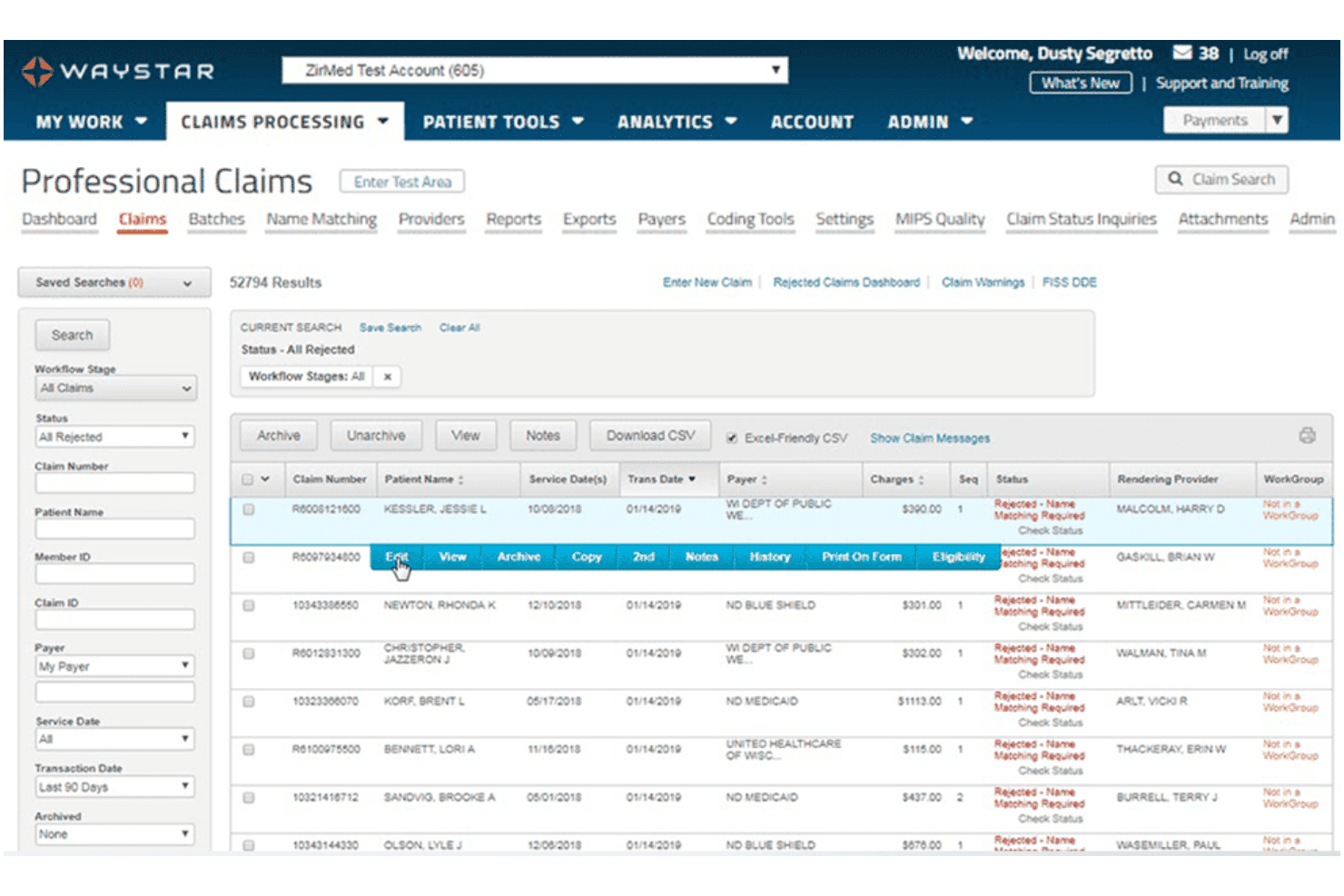
Waystar offers a Professional Claims dashboard that displays rejected claims with filtering options, claim status, and charges. Waystar is a cloud-native revenue cycle management platform that covers claims scrubbing, eligibility verification, prior authorization, denial management, and remittance processing across multi-specialty and multi-location provider organizations.
Who Is Waystar Best For?
Waystar is a strong fit for mid-to-large health systems, hospital-affiliated groups, and multi-specialty organizations with dedicated revenue cycle or billing teams managing high claim volumes.
Why I Picked Waystar
Waystar earns its spot on my shortlist because of how far its eligibility verification goes beyond a basic payer lookup. Coverage Detection automatically identifies secondary and tertiary coverage, which I find especially useful in multi-specialty settings where patients often carry layered plans. Auth Accelerate speeds up prior authorization workflows across payer types, and real-time alerts flag out-of-network risks and missing patient data before a claim is ever submitted.
Waystar Key Features
- Automated claim scrubbing and payer edits: Continuously updated rule engine checks claims for specialty-specific requirements before submission.
- Multi-specialty segmented dashboards: Customizable analytics display revenue, denial rates, and payer mix by specialty, provider, and location.
- Denial and appeals worklists: Structured worklists organize denials by reason code and specialty, supporting targeted team follow-up.
- Integrated remit management: Electronic remittance advice (ERA) and EOB conversion tools automate matching, reconciliation, and payment posting across payers.
Waystar Integrations
Waystar offers native integrations with Epic, MEDITECH, Cerner (Oracle Health), Allscripts, and eClinicalWorks, and provides an API for custom integrations.
Pros and Cons
Pros:
- RCM tools work across existing clinical systems
- Extensive payer connectivity supports varied billing requirements
- One claim engine handles multiple claim formats
Cons:
- Advanced claims capabilities vary by package
- It is not a full practice-management replacement
Learn more about Waystar: Best for real-time claim status updates
- Free demo available
- Pricing upon request
Visit WebsiteCustomer Rating:4.1/5This rating combines scores from multiple user review sites to reflect overall customer sentiment about the product.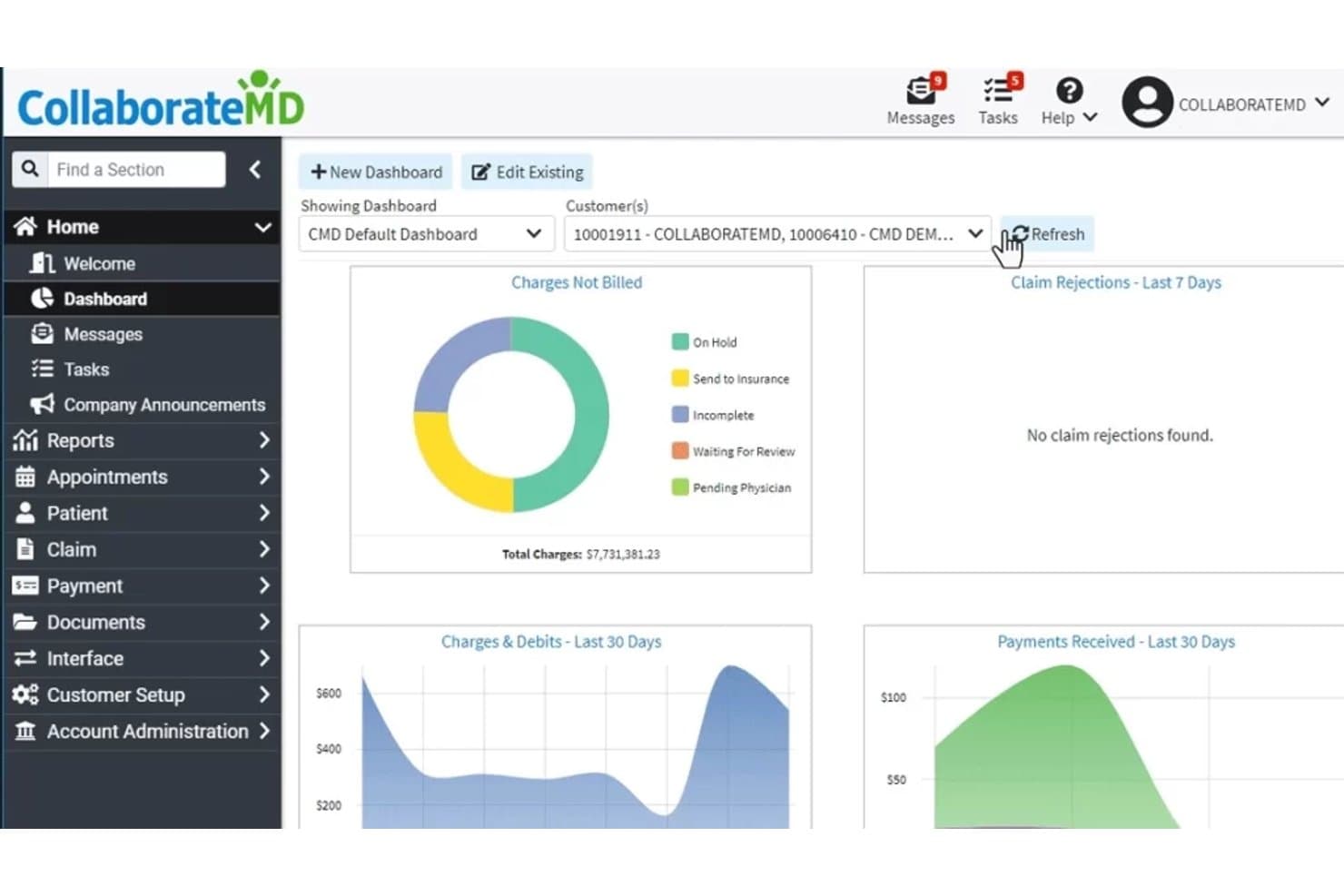
CollaborateMD offers a multi-specialty billing dashboard displaying charges not billed, claim rejections, charges and debits, and payments received over customizable time periods. CollaborateMD is a cloud-based medical billing and practice management platform that handles multi-specialty claims submission, real-time eligibility verification, denial management, and revenue cycle reporting across multi-provider and multi-location practices.
Who Is CollaborateMD Best For?
It's a strong fit for medical billing companies and multi-specialty group practices managing billing across multiple providers and locations from a single platform.
Why I Picked CollaborateMD
I picked CollaborateMD as one of the best because its real-time claim submission and built-in clearinghouse give my team immediate visibility into claim status the moment a claim goes out. I also like the AI-powered rejection support, which translates payer rejection codes into plain language so billing staff can respond immediately. The built-in Level 2 Claim Edits, including CCI and NCD/LCD checks, apply across 100+ specialties before claims ever reach the payer.
CollaborateMD Key Features
- Specialty-specific coding libraries: Access continually updated code sets for over 100 medical specialties in one centralized platform.
- Customizable reporting dashboards: Build and share dashboards that segment KPIs by specialty, provider, location, and payer.
- Integrated patient payment portal: Offer patients a branded portal with payment plans, consolidated statements, and online payment options.
- API-first architecture: Connect CollaborateMD with EHRs, labs, and payment processors using open API integrations.
CollaborateMD Integrations
CollaborateMD offers native integrations with Practice Fusion, Nexus Clinical, Alleva, Quest Diagnostics, LabCorp, and LabDAQ, and provides an API for custom integrations.
Pros and Cons
Pros:
- Extensive financial reporting supports cross-provider analysis
- Multi-client tools suit billing organizations
- Built-in clearinghouse removes a separate claims vendor
Cons:
- Several advanced patient-billing tools require the top tier
- Advanced claim scrubbing is gated to higher plans
Learn more about CollaborateMD: Best for integrated claim submission workflow
- Free demo available
- Pricing upon request
Visit WebsiteCustomer Rating:3.9/5This rating combines scores from multiple user review sites to reflect overall customer sentiment about the product.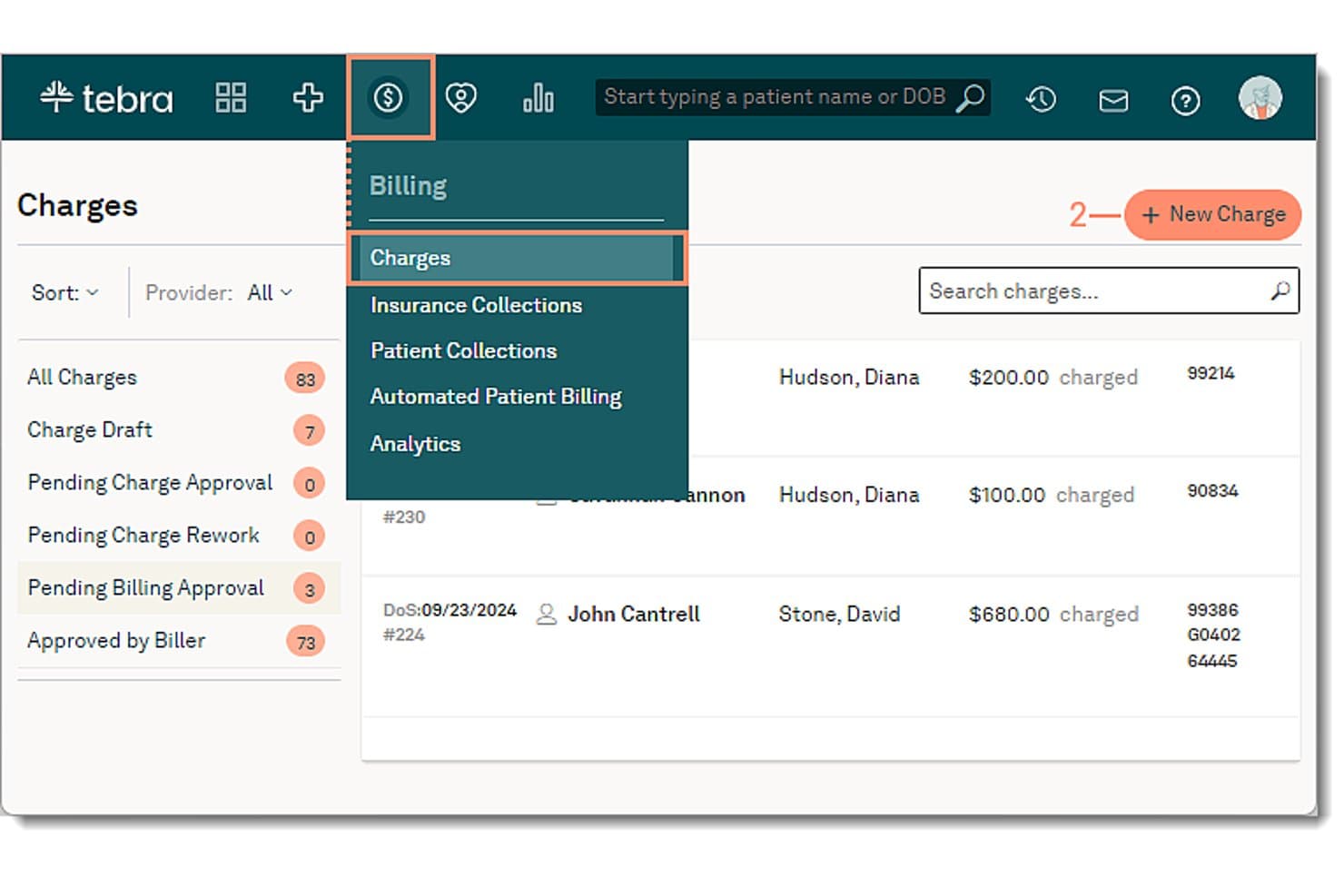
Tebra offers a Charges billing dashboard with options for new charge entry, charge drafts, and billing approval workflows for multi-specialty practices. Tebra is an integrated EHR and medical billing platform built for independent practices, combining claim submission, eligibility verification, denial management, charge capture, and patient payments in a single cloud-native system.
Who Is Tebra Best For?
Tebra is a strong fit for independent medical practices and specialty clinics that handle billing in-house and need a unified platform to manage claims across multiple providers.
Why I Picked Tebra
Tebra earns its spot on my shortlist because of how tightly the claim submission workflow is woven into the broader billing platform. I like that claims move from charge capture through TriZetto-powered scrubbing, applying payer-specific rules before submission, all within a single system. The Track Claims Status tool then lets me catch rejections and denials early, before they age into A/R problems across multiple specialty departments.
Tebra Key Features
- Specialty template library: Offers customizable documentation and billing templates for a wide range of medical specialties.
- Automated eligibility verification: Instantly checks patient coverage and plan details across over 2,700 payers.
- Role-based access control: Provides tailored permissions and data visibility for billing teams, providers, and administrative staff.
- Patient payment portal: Enables self-service online bill pay, payment plans, and statement access for patients.
Tebra Integrations
Tebra offers native integrations with TriZetto and Surescripts for clearinghouse and e-prescribing, and provides an API for custom integrations.
Pros and Cons
Pros:
- Built-in EHR reduces duplicate data entry
- Real-time eligibility checks across thousands of payers
- End-to-end claim submission within one platform
Cons:
- Support response times reported as inconsistent by users
- Reporting lacks depth for multi-specialty segmentation
Learn more about Tebra: Best for user-defined billing workflows
- Free demo available
- Pricing upon request
Visit WebsiteCustomer Rating:4.1/5This rating combines scores from multiple user review sites to reflect overall customer sentiment about the product.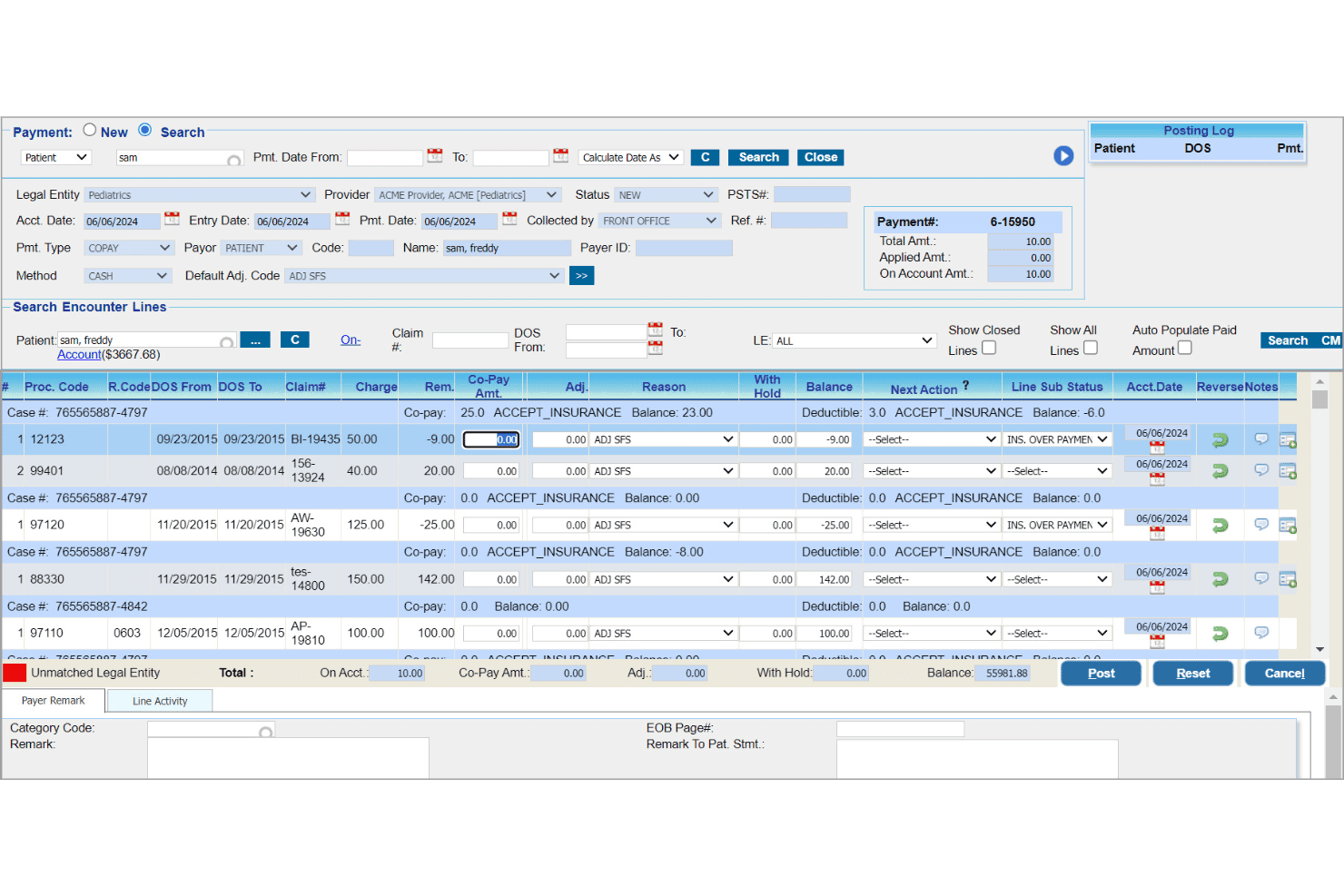
PracticeSuite oversees client claims, denials, payments, and financial reports. PracticeSuite is a cloud-based medical billing and RCM platform supporting 150+ specialties, with claims scrubbing, denial management, eligibility verification, and a Central Billing Office for managing multiple practices and providers in one system.
Who Is PracticeSuite Best For?
PracticeSuite is a strong fit for third-party medical billing companies and multi-provider group practices managing RCM across several specialties simultaneously.
Why I Picked PracticeSuite
PracticeSuite earns its spot on my shortlist because of how granularly you can configure billing workflows by user role. I like the AI-driven RCM workflow tool, which lets me assign billing tasks to each team member based on their role, so a denial specialist only sees rejection queues while a scheduler handles eligibility. On top of that, the Central Billing Office lets me monitor claim status and assign tasks across multiple client practices from a single login.
PracticeSuite Key Features
- Specialty-specific code libraries: Supports CPT, HCPCS, and ICD-10 codes for over 150 specialties.
- Enterprise claims management dashboard: Lets teams review, correct, and batch submit claims across multiple practices.
- Automated eligibility verification: Checks patient insurance status in real time before appointments.
- Specialty-segmented reporting: Offers dashboards with drill-down analytics by specialty, provider, location, and payer.
PracticeSuite Integrations
PracticeSuite offers native integrations with Practice Fusion, Relay Health, and clearinghouses for claims submission. It also provides nationwide connectivity to labs, pharmacies, and HIE networks, and has an API for custom integrations.
Pros and Cons
Pros:
- Mass claim corrections suit high-volume billing operations
- Central Billing Office manages multiple accounts from one login
- Supports more than 150 billing specialties
Cons:
- EHR integrations cover fewer specialties than billing
- Feature availability depends on a customized package
Learn more about PracticeSuite: Best for integrated all-in-one EHR and billing
- Free demo available
- Pricing upon request
Visit WebsiteCustomer Rating:4.3/5This rating combines scores from multiple user review sites to reflect overall customer sentiment about the product.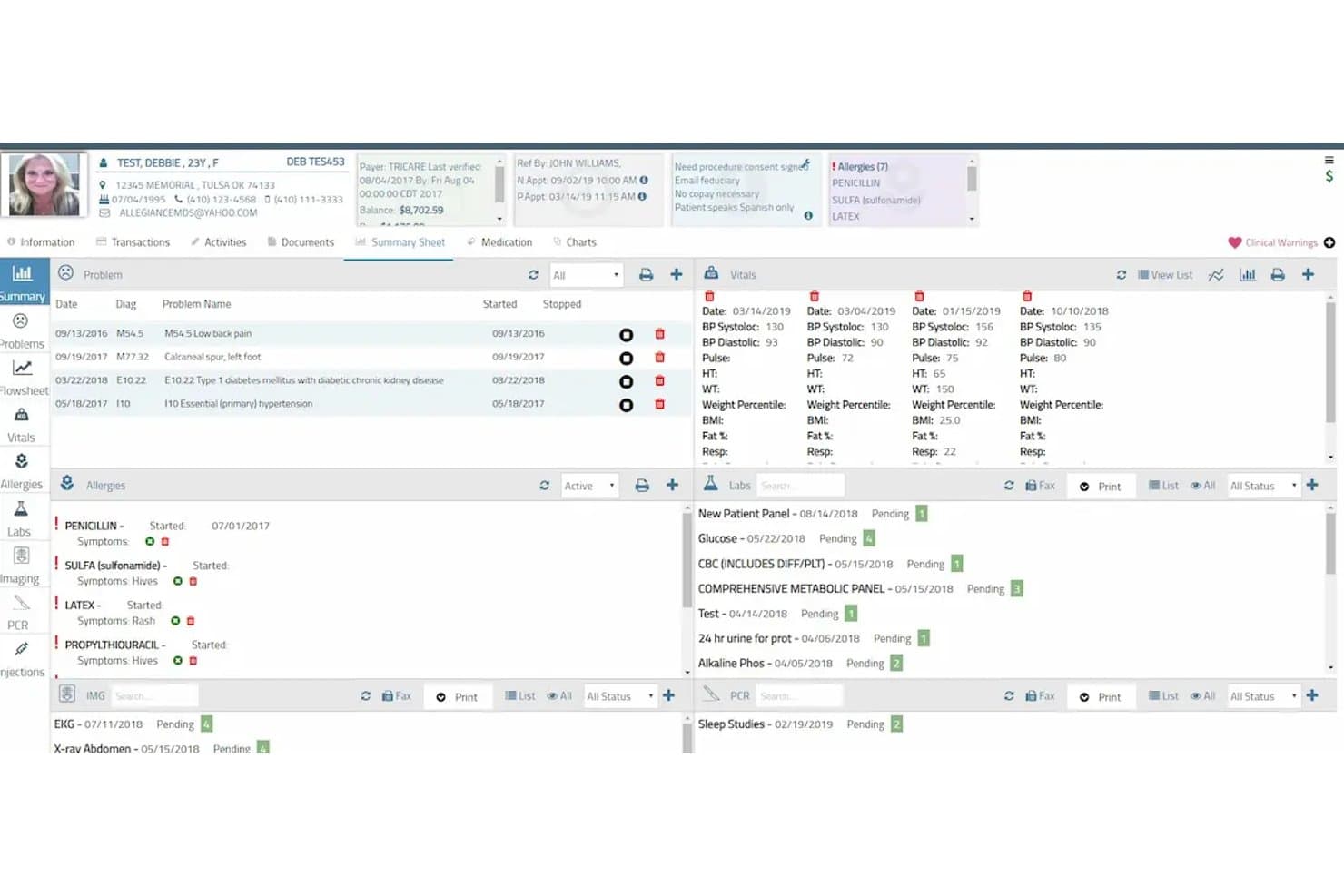
AllegianceMD offers a multi-specialty patient summary dashboard displaying vitals, allergies, problems, labs, and billing balance in a single view. AllegianceMD is a cloud-based, all-in-one medical billing and EHR platform that combines practice management, multi-specialty claim scrubbing, denial tracking, electronic eligibility verification, and integrated clearinghouse submission across 45+ clinical specialties.
Who Is AllegianceMD Best For?
AllegianceMD suits small to midsize multi-specialty practices and ambulatory surgery centers that want billing and EHR managed in a single platform.
Why I Picked AllegianceMD
AllegianceMD earns its spot on my shortlist because the billing layer lives inside the same system as the EHR, so charge capture flows directly from the clinical encounter without any re-keying. I like that claim scrubbing is AI-driven and the integrated clearinghouse auto-generates secondary claims straight from EOB posting. The dedicated denial follow-up module pairs with daily rejection tracking reports, giving billing teams a clear view of where revenue is stalling across each specialty.
AllegianceMD Key Features
- Specialty-specific template library: Includes over 45 pre-built templates tailored for unique billing codes across multiple specialties.
- Electronic eligibility verification: Checks patient insurance eligibility in real time before claims are submitted.
- Integrated patient portal: Provides secure online access where patients can view balances, make payments, and manage communications.
- Automated electronic statements: Sends billing statements electronically with options for patients to pay online.
AllegianceMD Integrations
AllegianceMD does not list any third-party integrations.
Pros and Cons
Pros:
- Claims can be resubmitted directly from patient accounts
- Claim follow-up can be assigned directly to staff
- Insurance cases separate different billing scenarios
Cons:
- Advanced billing analytics are not well documented publicly
- No dedicated third-party billing integration directory is published
Learn more about AllegianceMD: Best for specialty-specific financial analytics
- Free demo available
- From $249/user/month
Visit WebsiteCustomer Rating:3.6/5This rating combines scores from multiple user review sites to reflect overall customer sentiment about the product.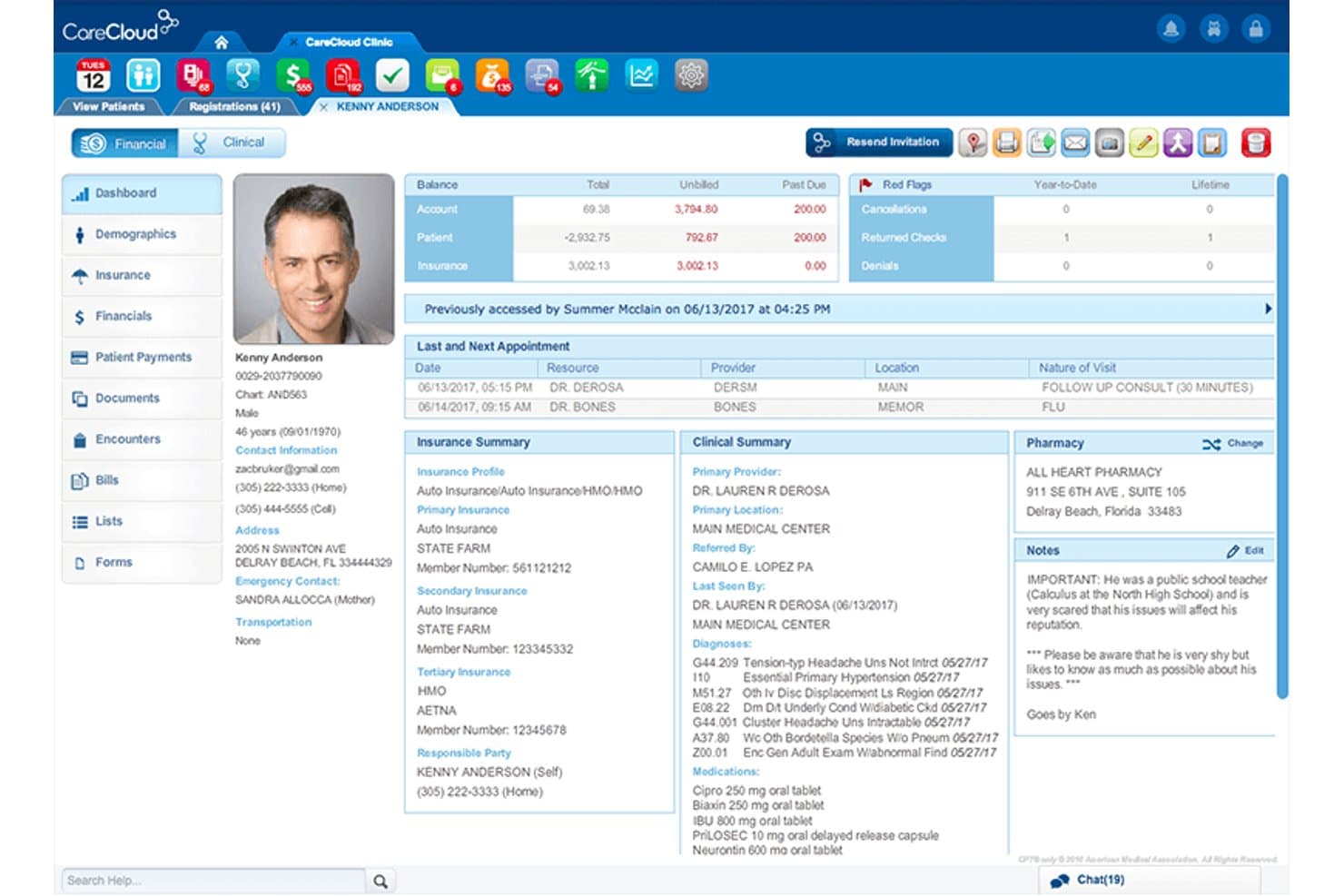
CareCloud offers a detailed patient profile dashboard displaying billing balances, insurance summaries, clinical notes, and appointment history in one unified view. CareCloud is a cloud-based medical billing and revenue cycle management platform built to handle claims processing, coding, eligibility verification, denial management, and financial reporting across 70+ medical specialties.
Who Is CareCloud Best For?
CareCloud suits multi-specialty group practices and revenue cycle teams managing billing across multiple providers, locations, and payer contracts from a single platform.
Why I Picked CareCloud
CareCloud earns its spot on my shortlist because of how well its reporting adapts to specialty-level performance data. I love that dashboards can be segmented by specialty, provider, location, and payer all in one view, which makes it easy to pinpoint where revenue is leaking across a multi-specialty group. The CollectiveIQ rules engine also embeds specialty-specific coding edits directly into the claims workflow, catching errors before submission rather than after.
CareCloud Key Features
- Real-time eligibility verification: Check patient insurance coverage instantly for multiple specialties before each appointment.
- Integrated clearinghouse: Submit claims electronically to payers from within the platform across a network of connected payers.
- Denial worklist automation: Track and organize denied claims with automated routing and specialty-specific categorization.
- Multi-location scheduling: Manage appointments and resources for providers across multiple locations within a single system.
CareCloud Integrations
CareCloud offers native integrations with CareCloud Central, Charts, Breeze, cirrusAI, Zocdoc, CodoniX EHR, EHRYourWay, ICANotes, MD Logic, Optivate, Praxis EMR, Sevocity, TeleVox, and Vital Interaction. An API is available for custom integrations.
Pros and Cons
Pros:
- Billing queues remain visible even with outsourced services
- Payer-aware rules identify errors before submission
- Billing services accommodate more than 70 specialties
Cons:
- Pricing lacks a single standardized structure
- Deeper RCM functions depend on the service level
Learn more about CareCloud: Best for coding automation across specialties
- Free demo available
- Pricing upon request
Visit WebsiteCustomer Rating:3.6/5This rating combines scores from multiple user review sites to reflect overall customer sentiment about the product.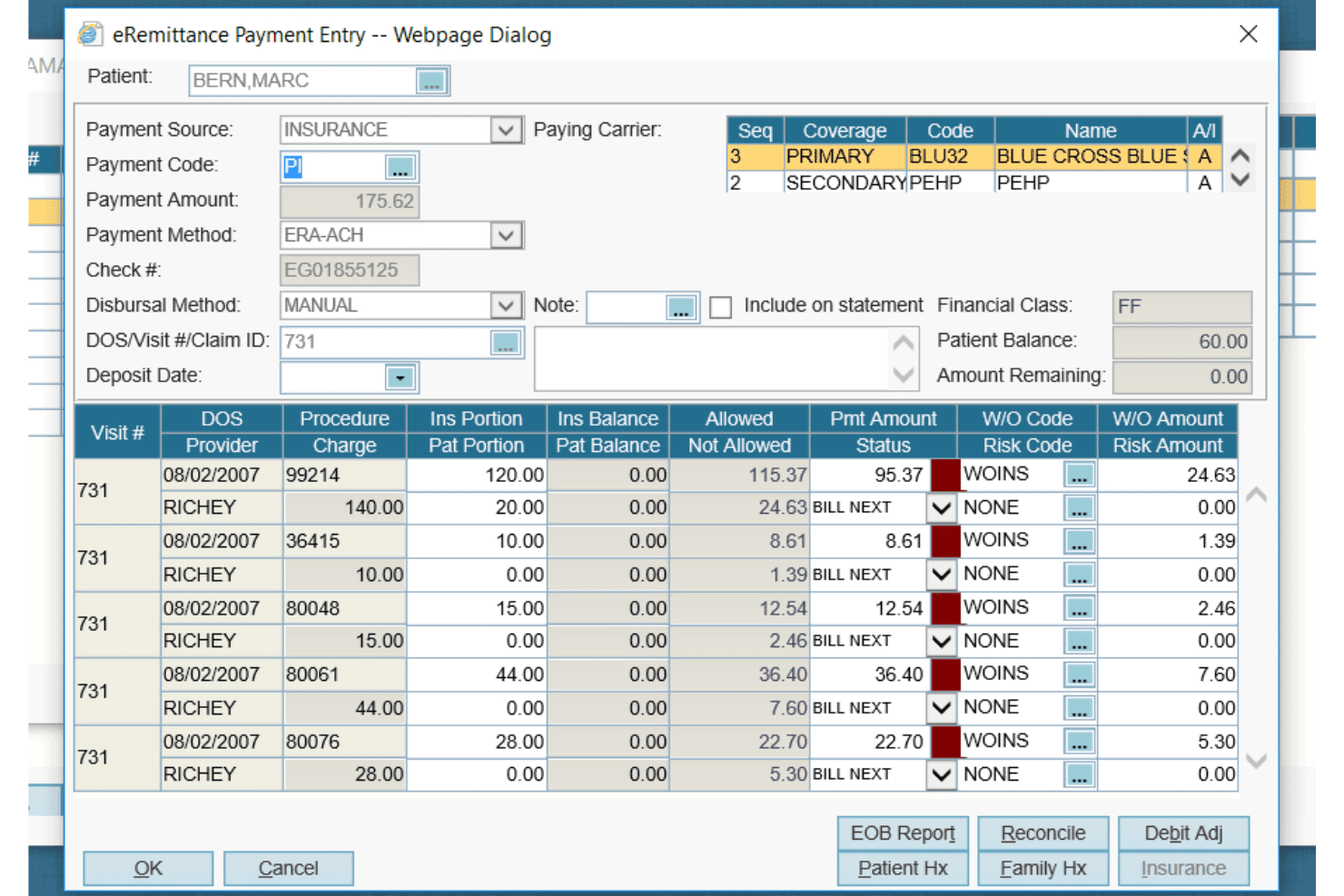
AdvancedMD offers a detailed eRemittance Payment Entry dialog for managing insurance billing, claim payments, and write-off codes per procedure. AdvancedMD is a cloud-based medical billing and practice management platform with an integrated clearinghouse, automated claims scrubbing, coding tools, denial management, and eligibility verification across multiple medical specialties.
Who Is AdvancedMD Best For?
It's a strong fit for mid-to-large multi-specialty group practices and billing companies managing multiple providers, locations, or specialty departments under one billing operation.
Why I Picked AdvancedMD
AdvancedMD earns its spot on my shortlist because ClaimInspector scrubs claims against CCI, HIPAA, and LCD rules automatically, catching specialty-specific coding errors before they reach the payer. I rely on the Central Billing Office to manage multiple providers and specialty departments under one login, keeping coding workflows organized across a multi-specialty group. The specialty-configurable templates mean coding setups for cardiology and physical medicine stay completely separate.
AdvancedMD Key Features
- Central billing office: Manage billing for multiple providers and locations from a single login and database.
- Customizable reporting dashboards: Create specialty-segmented analytics tracking KPIs by provider, location, and payer.
- Integrated clearinghouse: Submit, track, and receive electronic claims and remittances within the same platform.
- Batch eligibility verification: Check insurance eligibility for entire patient schedules across multiple specialties in one workflow.
AdvancedMD Integrations
AdvancedMD offers native integrations with ChartRequest, DeepScribe, Doctorsoft, InstaMed, LeadSquared, and NextPatient. An Integration Marketplace and open API are available for custom integrations with EHRs, CRMs, and HIE platforms.
Pros and Cons
Pros:
- Specialty editions cover a wide range of clinical disciplines
- ClaimInspector checks multiple coding rule sets before submission
- Centralized billing spans providers and locations
Cons:
- Full-service RCM uses percentage-based pricing
- Historical financial transactions are excluded from migration tiers
 Best for contract management precision
- Free demo available
- Pricing upon request
Visit WebsiteCustomer Rating:3.7/5This rating combines scores from multiple user review sites to reflect overall customer sentiment about the product.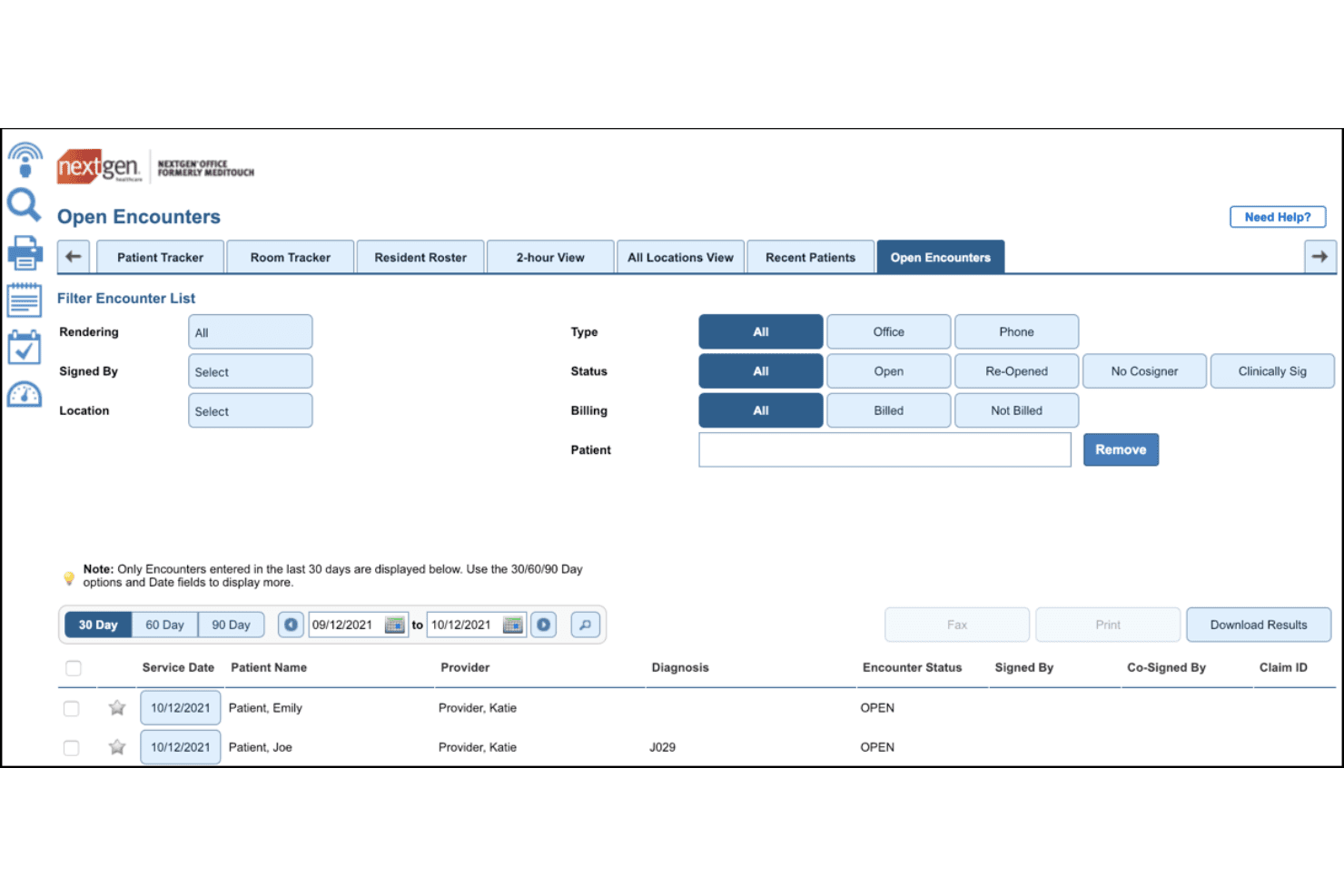
NextGen Healthcare offers an Open Encounters module that allows multi-specialty practices to filter, track, and manage billing statuses across patient encounters. NextGen Healthcare is an RCM and practice management platform built for multi-specialty and enterprise ambulatory practices, covering claims scrubbing, denial management, coding, eligibility verification, and specialty-segmented financial reporting.
Who Is NextGen Healthcare Best For?
It's a strong fit for mid-to-large multi-specialty group practices and enterprise ambulatory networks with 10 or more providers.
Why I Picked NextGen Healthcare
I've included NextGen Healthcare in my top picks because its contract management capabilities go deeper than most multi-specialty billing platforms. The Enterprise PM tracks payer-specific contracted rates and applies automated claim edits that flag underpayments before they slip through. I particularly like that each RCM client gets a dedicated specialty-expert client manager, so contract rules are applied correctly across Cardiology, Orthopedics, GI, and other specialties simultaneously.
NextGen Healthcare Key Features
- AI-powered claims scrubbing: Applies custom and specialty-specific edits to claims before submission to help avoid delays.
- Integrated clearinghouse connectivity: Submits claims electronically and manages responses within a single platform.
- Specialty-segmented revenue dashboards: Delivers financial analytics with filters for provider, specialty, location, and payer.
- Dedicated client manager: Assigns a specialty-trained expert to assist with process optimization and billing workflow questions.
NextGen Healthcare Integrations
NextGen Healthcare offers native integrations with NextGen Enterprise EHR, NextGen PxP Portal, NextGen Optical Management, and NextGen Document Management. It also provides native interoperability through Mirth Connect and Mirth Health Data Hub, and has an API for custom integrations.
Pros and Cons
Pros:
- Clinical and billing configurations cover diverse practice types
- Claim edits combine standard and custom rules
- Dedicated RCM managers bring specialty knowledge
Cons:
- Full A/R management relies on an outsourced service team
- Small and larger practices use different product tracks
Learn more about NextGen Healthcare: Best for detailed denial tracking tools
- Free demo available
- From $499/user/month
Visit WebsiteCustomer Rating:3.4/5This rating combines scores from multiple user review sites to reflect overall customer sentiment about the product.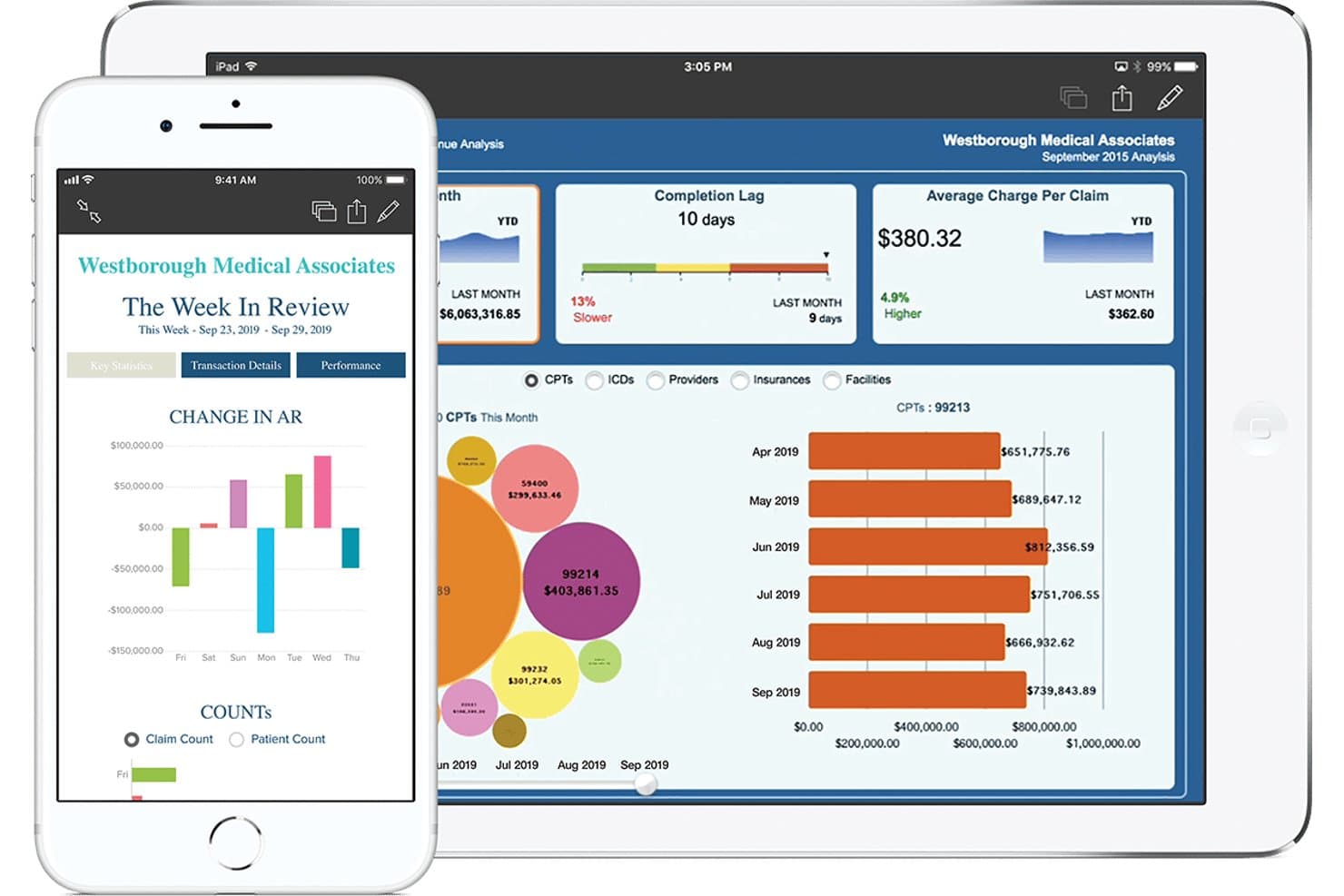
eClinicalWorks offers a revenue cycle management dashboard displaying charge analysis, completion lag, average charge per claim, and CPT code breakdowns across a tablet and smartphone interface. eClinicalWorks is a cloud-based RCM platform that handles medical billing, claims scrubbing, denial management, eligibility verification, and revenue cycle reporting across 40+ medical specialties.
Who Is eClinicalWorks Best For?
It's a strong fit for mid-to-large multi-provider group practices and CBOs managing billing across multiple locations and specialties.
Why I Picked eClinicalWorks
I picked eClinicalWorks as one of the best because of how its Agentic AI handles denials end-to-end. The Appeals agent generates payer-specific appeal packets with a single click, which cuts the time my team spends rebuilding appeals from scratch for each payer. The Learning Engine analyzes rejection patterns and automatically adjusts claim edit rules before submission, so fewer denials reach the queue in the first place.
eClinicalWorks Key Features
- Multi-specialty coding libraries: Includes CPT, ICD-10, HCPCS, and specialty modifiers for 40+ disciplines.
- CBO OpenConnect architecture: Supports centralized billing for multi-location or multi-specialty organizations.
- Real-time eligibility verification: Checks insurance coverage across payers before services are rendered.
- Specialty-segmented reporting dashboards: Provides analytics by specialty, provider, location, and payer in a unified view.
eClinicalWorks Integrations
eClinicalWorks offers native integrations with CHADIS, Sunoh.ai, and the healow patient engagement suite, and provides an API and HL7/FHIR interfaces for custom integrations with labs, imaging, and clinical systems.
Pros and Cons
Pros:
- Managed RCM covers appeals through every level
- Practices can choose self-service or outsourced billing
- Centralized RCM supports multiple EHR environments
Cons:
- Core EHR and practice-management pricing scales per provider
- Managed RCM fees scale with collections
Learn more about eClinicalWorks: 10Best for tailored specialty reporting dashboards
DrChrono
- Free demo available
- Pricing upon request
Visit WebsiteCustomer Rating:3.9/5This rating combines scores from multiple user review sites to reflect overall customer sentiment about the product.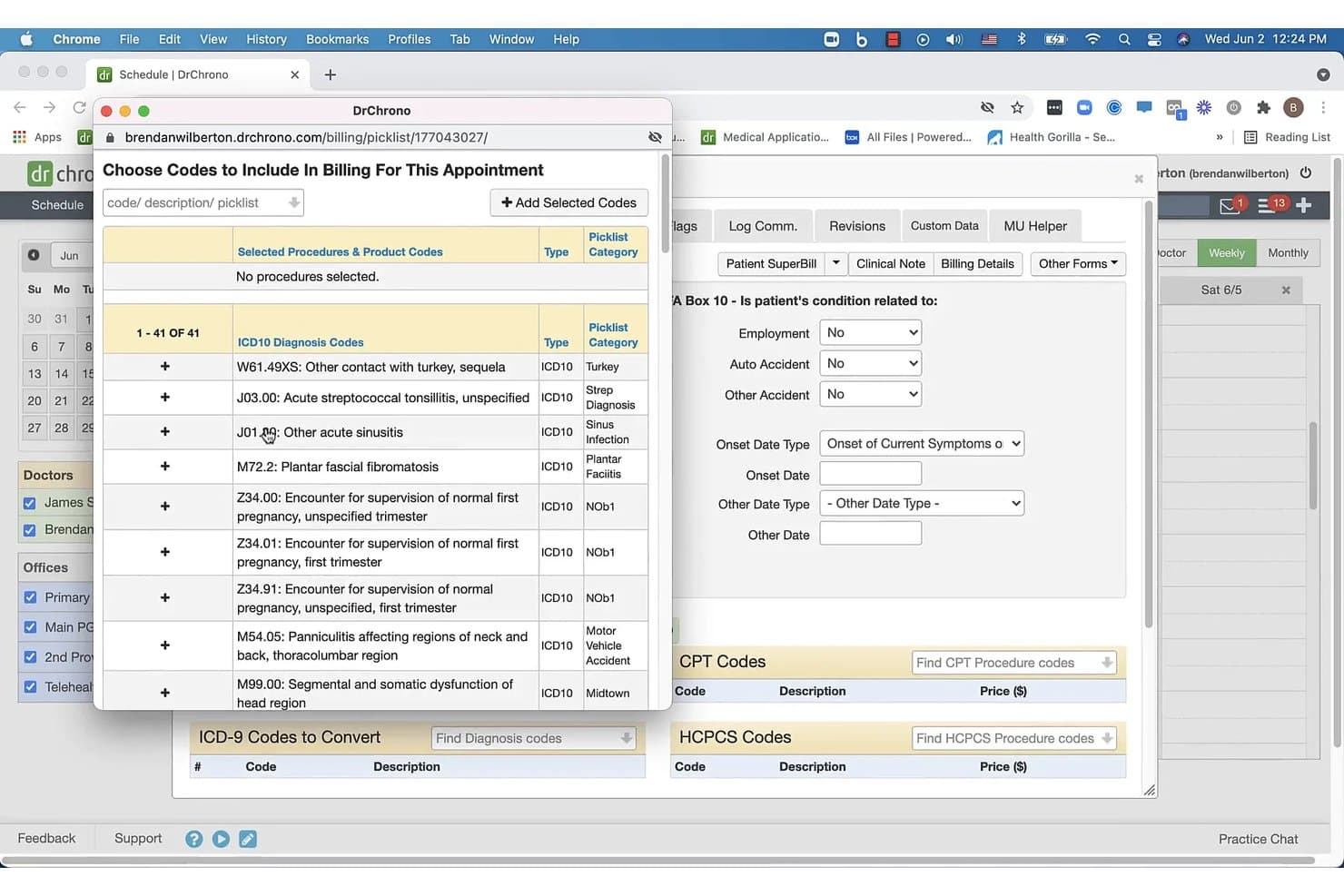
DrChrono offers a multi-specialty ICD-10 diagnosis code picklist to simplify billing for conditions such as sinusitis, plantar fasciitis, and pregnancy supervision. DrChrono is a cloud-based EHR and medical billing platform that combines claims management, multi-specialty coding, denial tracking, eligibility verification, and revenue cycle reporting across clinical and administrative workflows.
Who Is Dr Chrono Best For?
DrChrono is a strong fit for independent and small-to-mid-sized multi-specialty practices that want EHR and billing managed in one platform.
Why I Picked Dr Chrono
DrChrono earns its spot on my shortlist because of how it handles specialty-segmented revenue reporting. I like that the real-time billing dashboard tracks claim status, denial trends, and reimbursement performance broken down by specialty, provider, and payer in a single view. The customizable reporting templates let me configure dashboards around the specific code sets and workflows each specialty uses, rather than applying a generic layout across the board.
Dr Chrono Key Features
- Customizable coding library: Customize CPT, ICD-10, and DSM-5 code sets for each specialty within your organization.
- Real-time eligibility verification: Instantly check patient insurance status before every appointment from a unified dashboard.
- Integrated e-prescribing: Send electronic prescriptions directly to the patient’s preferred pharmacy from within patient records.
- Embedded telehealth module: Launch HIPAA-compliant video visits with screen sharing and document upload, all accessible from any device.
Dr Chrono Integrations
DrChrono offers over 20 native integrations, including Box, Ambra, Square, Collectly, Curogram, DeepScribe, Demandforce, Quest Diagnostics, and LabCorp. An API is available for custom integrations.
Pros and Cons
Pros:
- Billing can remain in-house or shift to managed RCM
- Location-specific billing supports complex practice structures
- Specialty-specific billing profiles reduce repetitive coding
Cons:
- Some useful billing capabilities remain add-ons
- Entry-level billing carries transaction-based charges
Learn more about DrChrono:
Other Multi-Specialty Billing Software
Here are some additional multi-specialty billing software options that didn’t make it onto my shortlist, but are still worth checking out:
- 11athenahealthBest for payer and clearinghouse connectivity
- 12RXNTBest for fast setup and onboarding for practices
- 13PrognoCISBest for customizable specialty templates
- 14Azalea HealthBest for rural health and specialty clinic support
- 15NueMDNueMD - Best for configurable billing workflows
- 16CureMDBest for specialty-specific AR management tools
- 17IntergyBest for centralized billing across practices
- 18MeditabBest with automated immunotherapy billing tools
- 19MicroMDBest for configurable reporting by specialty
- 20ClaimocityBest for mobile charge capture for providers
How I Evaluate Multi-Specialty Billing Software
I split my evaluation into baseline criteria—like multi-specialty coding support and denial workflows—and the differentiators that separate vendors for complex, multi-site billing operations.
Core Functionality (Table Stakes For This List)
When I'm selecting tools for my list, I rank each one on a scale from 0 (does not offer the functionality) to 5 (excels in this area) for each core functionality listed below. Then, I calculate the tool's total score into a percentage. Each tool needs to achieve a minimum total score of 65% to be considered for inclusion.
- Multi-Specialty Coding Support: I check whether the platform carries specialty-specific CPT, ICD-10, HCPCS, and modifier libraries—like behavioral health codes alongside orthopedic modifiers—without manual setup.
- Claims Scrubbing & Submission: Each tool should scrub claims against payer-specific rules per specialty and submit electronically through integrated clearinghouse connections.
- Fee Schedule Management: I evaluate how well the platform handles multiple contracted rates and reimbursement rules, especially when one practice bills cardiology and primary care under different payer terms.
- Denial Management & Appeals: Tracking and categorizing denials matters, but I also look for specialty-aware routing so a denied oncology claim follows a different correction path than a dermatology one.
- Eligibility & Prior Authorization: Real-time insurance verification and prior auth workflows should adapt to each specialty's requirements, since a surgical referral has different authorization needs than a routine visit.
- Specialty-Segmented Reporting: The platform should deliver revenue cycle analytics broken down by specialty, provider, location, and payer within a single dashboard so you aren't pulling separate reports per department.
Once I have a list of tools that meet the criteria, I consider what sets each platform apart.
Differentiating Factors (What Sets Vendors Apart)
Here's how I compare and contrast different vendors:
Standout Features
Specialty-specific rule engines matter because they determine whether your billers spend time building custom coding logic or can rely on pre-loaded edits for each discipline. I also evaluate AI-driven denial management—platforms that predict rejection likelihood before submission save your team from chasing preventable denials. Cross-specialty reporting dashboards round out my comparison. Segmenting A/R aging and clean claim rates by specialty, provider, and payer in one view gives revenue cycle directors real visibility.
Beyond Features
EHR integration depth is one of the first things I check, especially when different specialties in the same group run different clinical systems. Bidirectional data flow and pre-built clearinghouse connections prevent duplicate entry and claim delays. Specialty coverage breadth also matters—I look for vendors that maintain updated code libraries annually and show proven experience with multi-specialty groups, not just single-discipline practices. Deployment model is worth weighing too, since the choice between SaaS, outsourced RCM, or a hybrid approach shapes your team's daily workload and long-term costs.
How to Choose Multi-Specialty Billing Software
It’s easy to get bogged down in long feature lists and complex pricing structures. To help you stay focused as you work through your unique software selection process, here’s a checklist of factors to keep in mind:
| Factor | What to Consider |
|---|---|
| FactorScalability | What to ConsiderWill the system handle growing specialty lines, locations, and user counts over time without major disruptions? |
| FactorIntegrations | What to ConsiderDoes the platform integrate smoothly with your EHR(s), clearinghouses, and analytics tools—both now and as you grow? |
| FactorEase of use | What to ConsiderCan your front desk, billing, and clinical teams learn the workflows fast, or will ongoing training slow you down? |
| FactorImplementation and onboarding | What to ConsiderHow long will deployment take for a multi-specialty group, and do you have resources for a staged rollout? |
| FactorCustomizability | What to ConsiderHow well can you tailor contract rules, reports, and workflows to the nuances of your specialties and payers? |
| FactorCost | What to ConsiderWhat is the true total cost—including hidden integration fees, training, and transaction costs at scale? |
| FactorSecurity safeguards | What to ConsiderDo security certifications and audit trails match your compliance profile and local data protection expectations? |
| FactorSupport availability | What to ConsiderAre specialty-trained support and timely response SLAs included for troubleshooting, especially after hours? |
What Is Multi-Specialty Billing Software?
Multi-specialty billing software is a platform designed to manage billing, claims, and revenue operations for healthcare practices serving multiple specialties. It supports specialty-specific coding, payer rules, and fee schedules within one system, so practices with diverse departments can manage billing more efficiently and reduce errors.
This type of software offers unified workflows, specialty-segmented reporting, and automated denial management tailored for group, multi-provider, or multi-location practices.
Features of Multi-Specialty Billing Software
When selecting multi-specialty billing software, keep an eye out for the following key features:
- Multi-specialty coding libraries: Access CPT, HCPCS, and ICD-10 code sets for a wide range of specialties without manual updates or imports.
- Automated claims scrubbing: Review and correct claims automatically before submission based on payer and specialty-specific rules to catch errors early.
- Real-time eligibility verification: Instantly check patient insurance coverage and benefits across multiple payers for all scheduled visits.
- Prior authorization workflows: Manage and track pre-approvals for specialty procedures and visits directly from within the platform.
- Contract and fee schedule management: Store, update, and enforce multiple fee schedules and contracted rates for various specialties and payers.
- Denial tracking and appeals: Automatically categorize denied claims, flag root causes, and simplify correction or resubmission workflows.
- Specialty-segmented reporting: Generate financial and operational analytics broken down by specialty, provider, location, and payer for actionable insights.
- Patient payment portal: Offer online bill pay, payment plans, and consolidated statements for patients who visit multiple specialties within your practice.
- Integrated clearinghouse connections: Submit claims electronically to multiple payers and receive remittance directly in your billing system.
- Role-based access controls: Assign permissions by role or specialty to ensure staff only access the data and workflows relevant to their responsibilities.
Benefits of Multi-Specialty Billing Software
Implementing multi-specialty billing software provides several benefits for your team and your business. Here are a few you can look forward to:
- Unified billing operations: Manage claims, coding, and denials for all specialties in one system, reducing manual work and duplicate entry.
- Improved revenue performance: Specialty-segmented reporting and advanced denial workflows help you track KPIs and accelerate reimbursement across departments.
- Fewer claim errors: Automated scrubbing and real-time eligibility checks catch coding or insurance issues before they turn into denials.
- Better patient experience: A consolidated payment portal and digital statements make it easy for patients to understand and pay for services across specialties.
- Customizable workflows: Support each department’s unique requirements—like prior authorization or contract enforcement—with tools tailored for multi-specialty practices.
- Scalable growth: The software adapts to new specialties, providers, and locations without needing to retool your entire billing infrastructure.
- Greater compliance and audit readiness: Role-based access controls, integrated audit trails, and specialty-specific code updates keep your billing compliant and secure.
Costs and Pricing of Multi-Specialty Billing Software
Selecting multi-specialty billing software requires an understanding of the various pricing models and plans available. Costs vary based on features, team size, add-ons, and more. The table below summarizes common plans, their average prices, and typical features included in multi specialty billing software solutions:
Plan Comparison Table for Multi-Specialty Billing Software
| Plan Type | Average Price | Common Features |
|---|---|---|
| Plan TypeFree Plan | Average Price$0 | Common FeaturesBasic claims entry, simple coding support, limited user access, and essential eligibility checks. |
| Plan TypePersonal Plan | Average Price$50-$150/user/month | Common FeaturesSpecialty coding libraries, electronic claim submission, payer management, and basic denial tracking. |
| Plan TypeBusiness Plan | Average Price$200-$500/user/month | Common FeaturesMulti-specialty support, automated claims scrubbing, prior authorization tools, reporting, and payment portal. |
| Plan TypeEnterprise Plan | Average Price$800-$2000+/month | Common FeaturesAdvanced AI denial management, custom integrations, enhanced security, role-based permissions, and dedicated support. |
Multi-Specialty Billing Software FAQs
Here are some answers to common questions about multi-specialty billing software:
How does multi specialty billing software handle specialty-specific coding updates?
The software maintains up-to-date libraries for CPT, ICD-10, and HCPCS codes per specialty, so your team doesn’t have to manually update code sets every year or with each payer change.
Can this type of software integrate with different EHRs across specialties?
Yes, many multi specialty billing solutions offer bidirectional integrations with various EHR platforms, supporting practices that use different clinical systems for each specialty.
What happens if a claim is denied for one specialty but not others?
The software routes denied claims based on specialty, so you can apply appeal workflows or correction protocols specific to each department’s requirements.
Is training available for new specialties added later?
Most vendors provide specialty-specific training and support when you add new departments, making transitions smoother for coders and billing teams.
What are common costs beyond the subscription fee?
Common extra costs can include EHR integration, data migration, advanced reporting, extra support tiers, and transaction fees for high claim volumes.