

Healthcare vendor management software helps medical practices organize, track, and oversee the vendors that support daily operations, from credentialing to contract management. As your clinic grows, it gets harder to keep up with compliance records, renewals, and multi-site staffing needs. This guide helps you compare feature sets that matter most for real clinical and operational workflows, from credential checks to facility access controls. You’ll get a clear view of your best options and which tools solve the pain points of busy medical practices.
Why Trust Our Software Recommendations
6,700+
Reviews
20
Industry experts
16+
Evaluation factors
14
Years
Our team has been testing and reviewing software since 2012. As medical practice leaders ourselves, we know how difficult—and important—it is to choose the right software.
For this guide, we evaluated tools using hands-on testing and independent research, scoring tools using our selection criteria.
Our reviews reflect our human editorial judgment, not a sales pitch.
Best Healthcare Vendor Management Software Summary
This comparison chart summarizes pricing details for my top healthcare vendor management software software selections to help you find the best one for your budget and business needs.
| Tool | Best For | Trial Info | Price | ||
|---|---|---|---|---|---|
| 1 | Best for unified spend and invoice analytics | Free demo available | Pricing upon request | Website | |
| 2 | Best for configurable staffing compliance features | Free demo available | Pricing upon request | Website | |
| 3 | Best for real-time facility access monitoring | Free demo available | Pricing upon request | Website | |
| 4 | Best for controlling agency coverage by department | Free demo available | Pricing upon request | Website | |
| 5 | Best for automated sanction screening | 7-day free trial | From $199/month | Website | |
| 6 | Best for centralizing vendor credential tracking | Not available | Pricing upon request | Website | |
| 7 | Best for automated contract renewal alerts | Free demo available | Pricing upon request | Website | |
| 8 | Best for consolidated vendor workforce oversight | Free demo available | Pricing upon request | Website | |
| 9 | Best for custom clinical system integrations | Free demo available | Pricing upon request | Website | |
| 10 | Best for ongoing credentialing compliance | Free demo available | Pricing upon request | Website |


Healthcare Vendor Management Software Reviews
Below are my detailed summaries of the best healthcare vendor management software that made it onto my shortlist. My reviews offer a detailed look at the features, compliance capabilities, and integrations of each platform to help you find the best one for you.
 Best for unified spend and invoice analytics
- Free demo available
- Pricing upon request
Visit WebsiteCustomer Rating:4.8/5This rating combines scores from multiple user review sites to reflect overall customer sentiment about the product.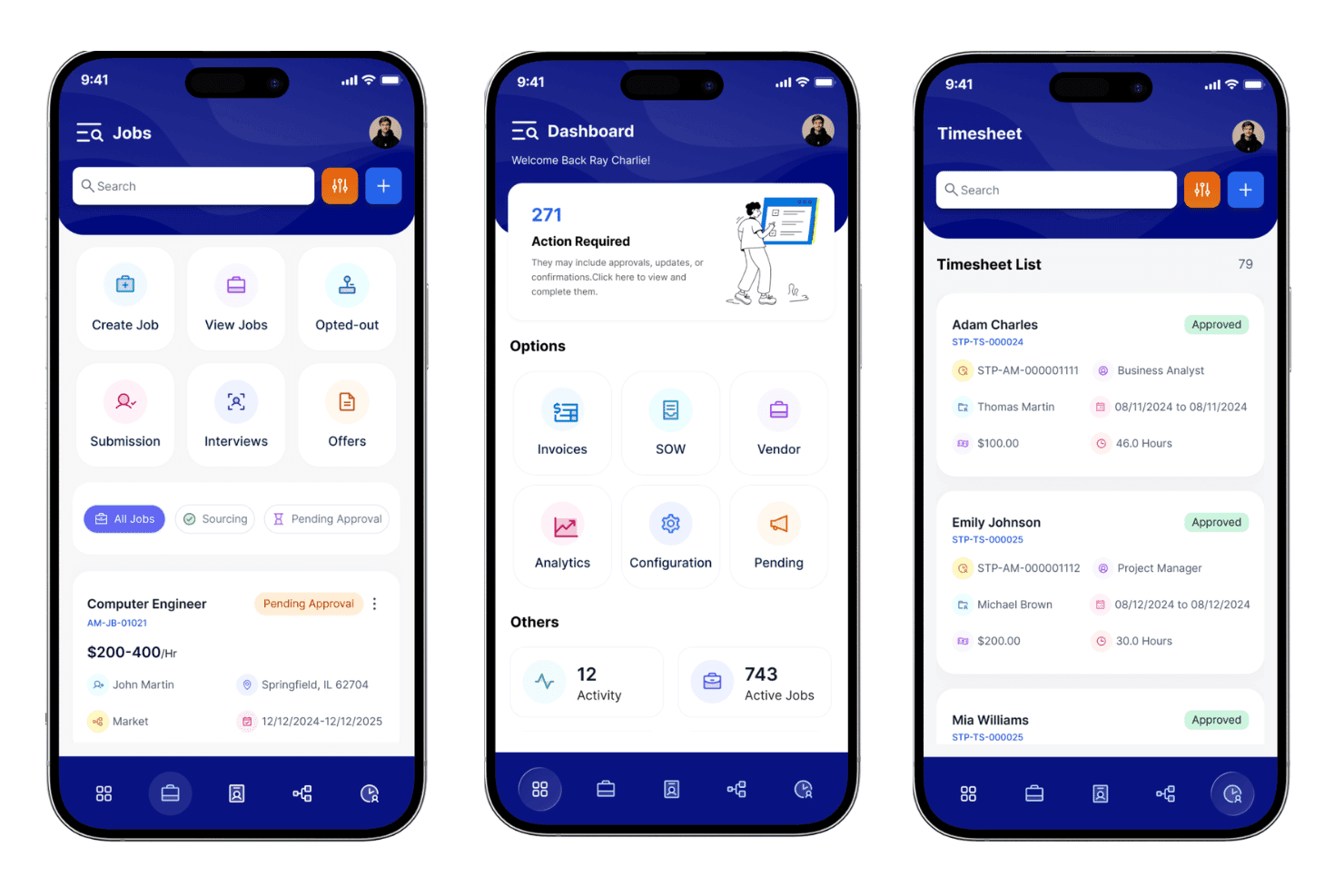
Simplify VMS lets users track jobs, timesheets, and workforce data in one mobile app. Simplify VMS is a healthcare-focused vendor management system that centralizes contingent workforce procurement, supplier credentialing, time and expense tracking, and spend and invoice analytics across nursing, allied health, and locum tenens labor categories.
Who Is Simplify VMS Best For?
Simplify VMS is a strong fit for enterprise health systems managing large-scale contingent staffing programs across multiple facilities and labor categories.
Why I Picked Simplify VMS
I picked Simplify VMS as one of the best because it consolidates spend and invoice data across every labor category into one real-time dashboard. I especially like the AI-driven reporting layer, which surfaces vendor spend trends and performance benchmarks without requiring manual data pulls. The vendor scorecards let me compare agency performance side by side across nursing, allied health, and locum tenens suppliers simultaneously.
Simplify VMS Key Features
- Automated credential tracking: Continually monitors license status and certification requirements for contingent clinicians.
- Supplier management dashboard: Centralizes supplier profiles, contracts, and compliance documentation in a single platform.
- Requisition workflow automation: Streamlines creation, approval, and distribution of staffing requests to multiple vendors.
- Custom analytics and reporting: Allows creation of tailored reports on staffing utilization and supplier performance trends.
Simplify VMS Integrations
Native integrations are not clearly documented. An API is available for custom integrations.
Pros and Cons
Pros:
- Automates credential tracking and compliance enforcement
- Real-time spend and vendor performance dashboards
- Covers all contingent labor categories in one platform
Cons:
- Limited documented third-party integration ecosystem
- No transparent pricing published for budget planning
Learn more about Simplify VMS: Best for configurable staffing compliance features
- Free demo available
- Pricing upon request
Visit WebsiteCustomer Rating:3.6/5This rating combines scores from multiple user review sites to reflect overall customer sentiment about the product.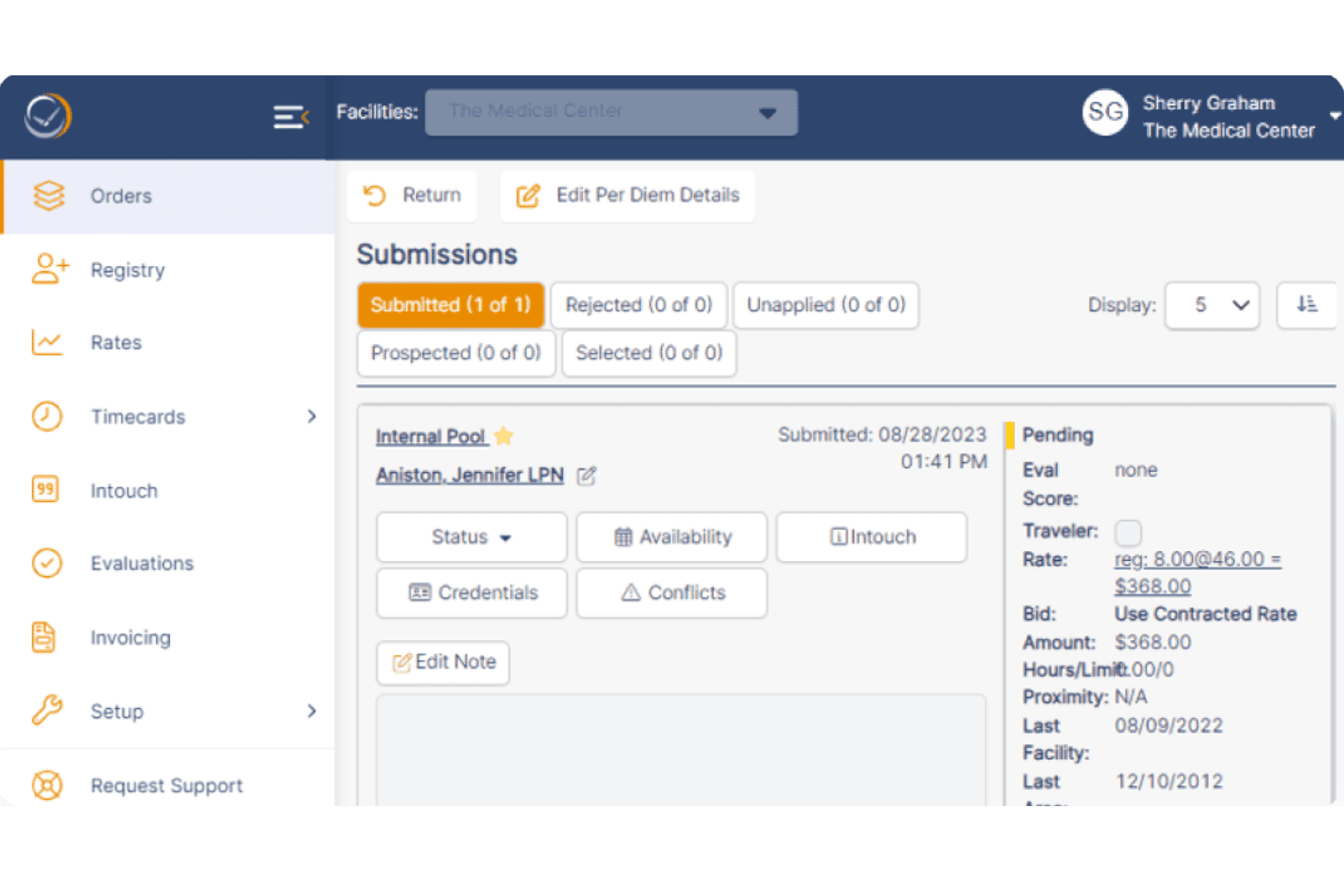
StafferLink lets users review and manage per diem shift submissions. StafferLink is a healthcare-specific staffing vendor management system (VMS) that handles contingent workforce requisitions, agency supplier management, credential tracking, and invoicing for health systems and MSPs.
Who Is StafferLink Best For?
It's a strong fit for enterprise health systems and managed service providers overseeing contingent clinical labor across multiple facilities.
Why I Picked StafferLink
I picked StafferLink because its User Defined Field (UDF) framework gives compliance teams granular control over staffing rules at the individual shift level. I can configure separate rules for location, facility type, and shift category without rebuilding the entire program structure. I also like that those same UDFs feed directly into invoicing, keeping compliance logic and billing aligned across every agency relationship.
StafferLink Key Features
- Registry talent pooling: Build and maintain a validated pool of internal and agency staff with up-to-date credential documentation.
- Automated time capture: Collect time and expense data for contingent staff manually or through third-party system integrations.
- Centralized invoice management: Generate and distribute detailed invoices automatically as timecards and expenses are approved.
- Custom performance tracking: Use configurable forms and user-defined fields to collect and evaluate stakeholder feedback on staffing agency performance.
StafferLink Integrations
Native integrations are not clearly documented. StafferLink offers an API for custom integrations.
Pros and Cons
Pros:
- Built specifically for contingent clinical workforce management
- UDFs tie compliance logic directly to invoicing
- Highly configurable shift-level compliance rule settings
Cons:
- Reporting customization requires significant initial configuration
- No pre-built native integrations with EHR systems
Learn more about StafferLink: Best for real-time facility access monitoring
- Free demo available
- Pricing upon request
Visit WebsiteCustomer Rating:2.8/5This rating combines scores from multiple user review sites to reflect overall customer sentiment about the product.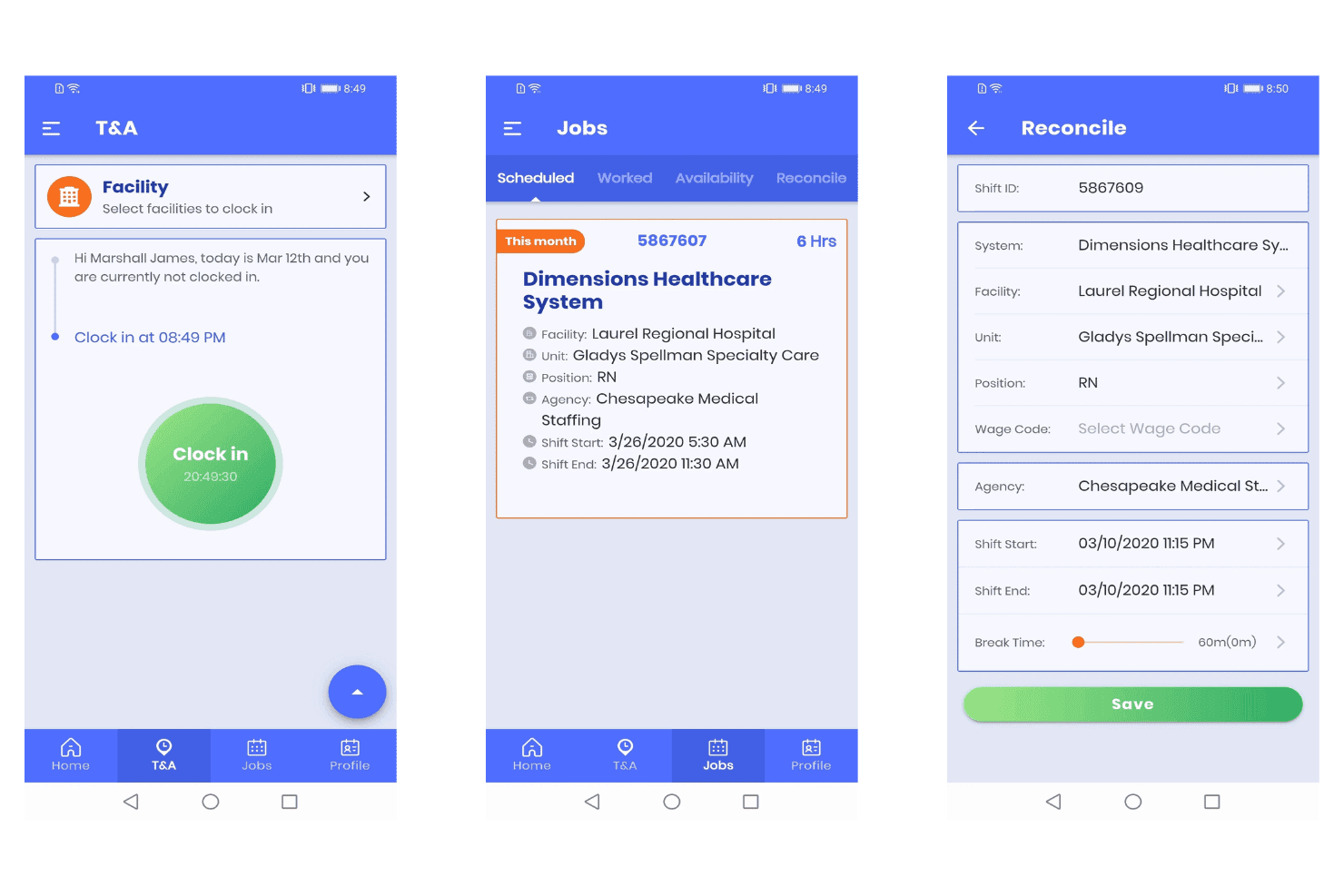
b4health lets nurses clock in at assigned facilities, view scheduled jobs, and reconcile completed shifts. b4health is a cloud-based vendor management system built for hospitals and health systems, combining staffing agency coordination, credential compliance monitoring, shift scheduling, and billing reconciliation in a single platform.
Who Is b4health Best For?
b4health is a good fit for hospital staffing coordinators and administrators managing contingent workforce programs across large health systems.
Why I Picked b4health
I picked b4health as one of the best because its GPS-based Mobile Time Tracker verifies that agency staff are physically on-site before clocking in, which is something I haven't seen handled this precisely in other VMS platforms. I also like that the system flags workers with expired credentials before they gain facility access, so credentialing and access control work together in real time. That combination makes it genuinely useful for hospitals running high-volume contingent staffing programs.
b4health Key Features
- Credential compliance monitoring: Tracks expiring licenses and certifications for healthcare staff with automated alerts built into the system.
- Integrated billing and reconciliation: Lets you generate, edit, and reconcile agency invoices directly from the VMS interface.
- Customizable reporting suite: Provides exportable reports on scheduling, spending, time cards, contract status, and quality assurance metrics.
- Multi-channel time and attendance: Supports web, mobile app, and phone-based time tracking options for agency and internal resource pool staff.
b4health Integrations
Native integrations are not clearly documented. An API is available for custom integrations.
Pros and Cons
Pros:
- Supports multi-method time and attendance recording
- Vendor-neutral agency sourcing with no conflicts
- GPS-verified check-in prevents buddy clocking
Cons:
- Narrowly focused on staffing, not full vendor lifecycle
- Limited native integrations with major EHR platforms
Learn more about b4health: Best for controlling agency coverage by department
- Free demo available
- Pricing upon request
Visit WebsiteCustomer Rating:4.8/5This rating combines scores from multiple user review sites to reflect overall customer sentiment about the product.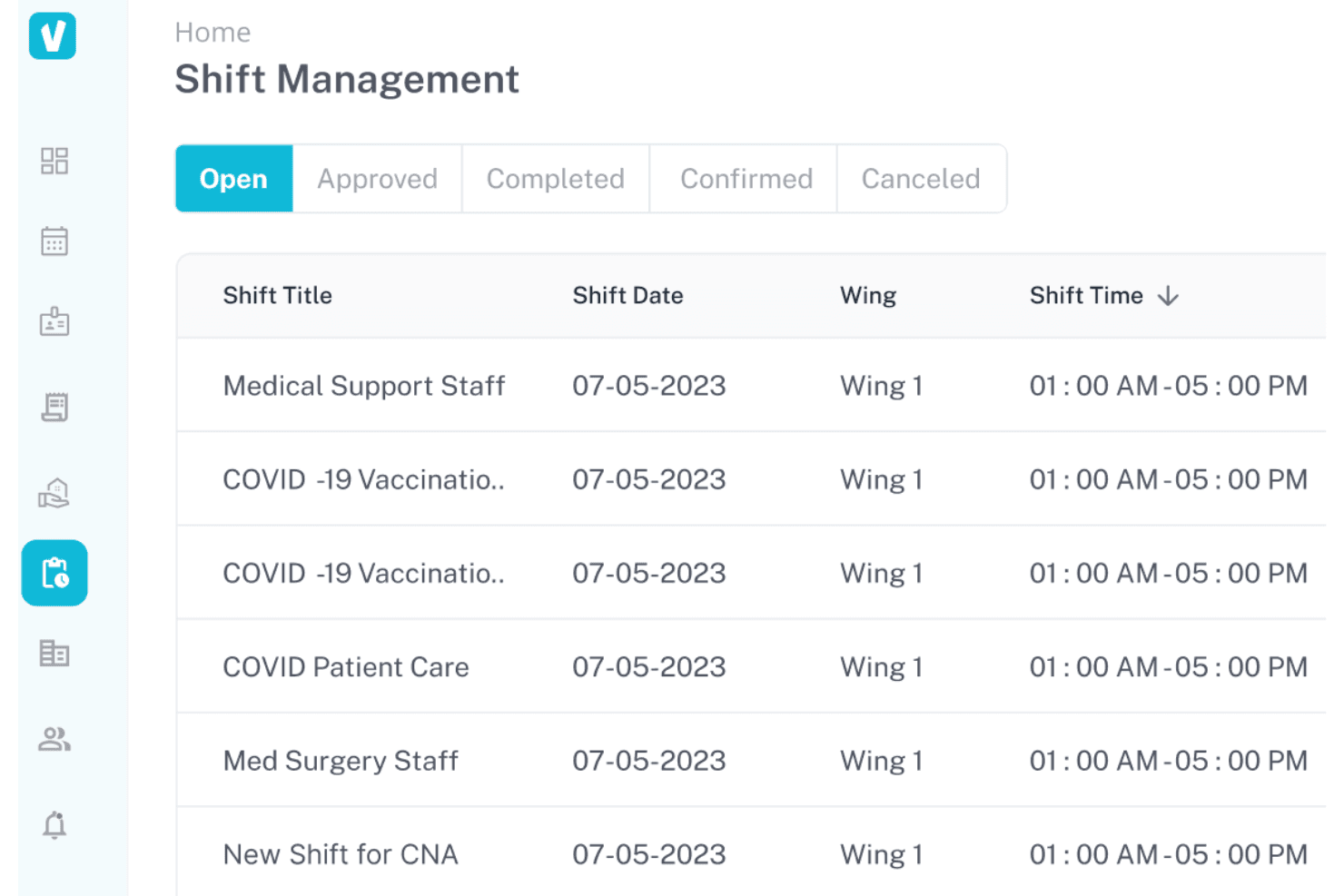
Vars Health tracks open shifts by date and wing for easier staffing coordination. Vars Health is a healthcare staffing vendor management platform that centralizes agency oversight, contingent workforce credentialing, shift scheduling, and spend analytics across departments and facilities.
Who Is Vars Health Best For?
Vars Health is a strong fit for healthcare staffing agencies and MSPs managing contingent labor across multiple hospital departments or facility locations.
Why I Picked Vars Health
I picked Vars Health as one of the best because of how precisely it handles department-level agency coverage. Its multi-rate card management lets me set different rate structures per department, and the float pool optimization tools give me real-time visibility into which units are covered and which have gaps. I also rely on its role-based access controls to make sure each department lead only sees and manages their own staffing activity.
Vars Health Key Features
- Automated credential expiration alerts: Sends notifications for upcoming credential renewals to keep compliance up to date.
- Secure document storage: Lets you store, organize, and access all staff credentials and onboarding documents in one place.
- Audit-ready compliance reporting: Generates reports tailored for regulatory standards like Joint Commission audits.
- Finance dashboard: Tracks labor spend, invoicing, and rate cards for all contingent staff in real time.
Vars Health Integrations
Native integrations are not clearly documented. An API is available for custom integrations.
Pros and Cons
Pros:
- Originally built for a multi-hospital healthcare system
- Float pool visibility across multiple facility locations
- Department-level rate card configuration per unit
Cons:
- Limited public reviews to assess long-term performance
- No clearly documented native third-party integrations
Learn more about Vars Health: Best for automated sanction screening
- 7-day free trial
- From $199/month
Visit WebsiteCustomer Rating:5/5This rating combines scores from multiple user review sites to reflect overall customer sentiment about the product.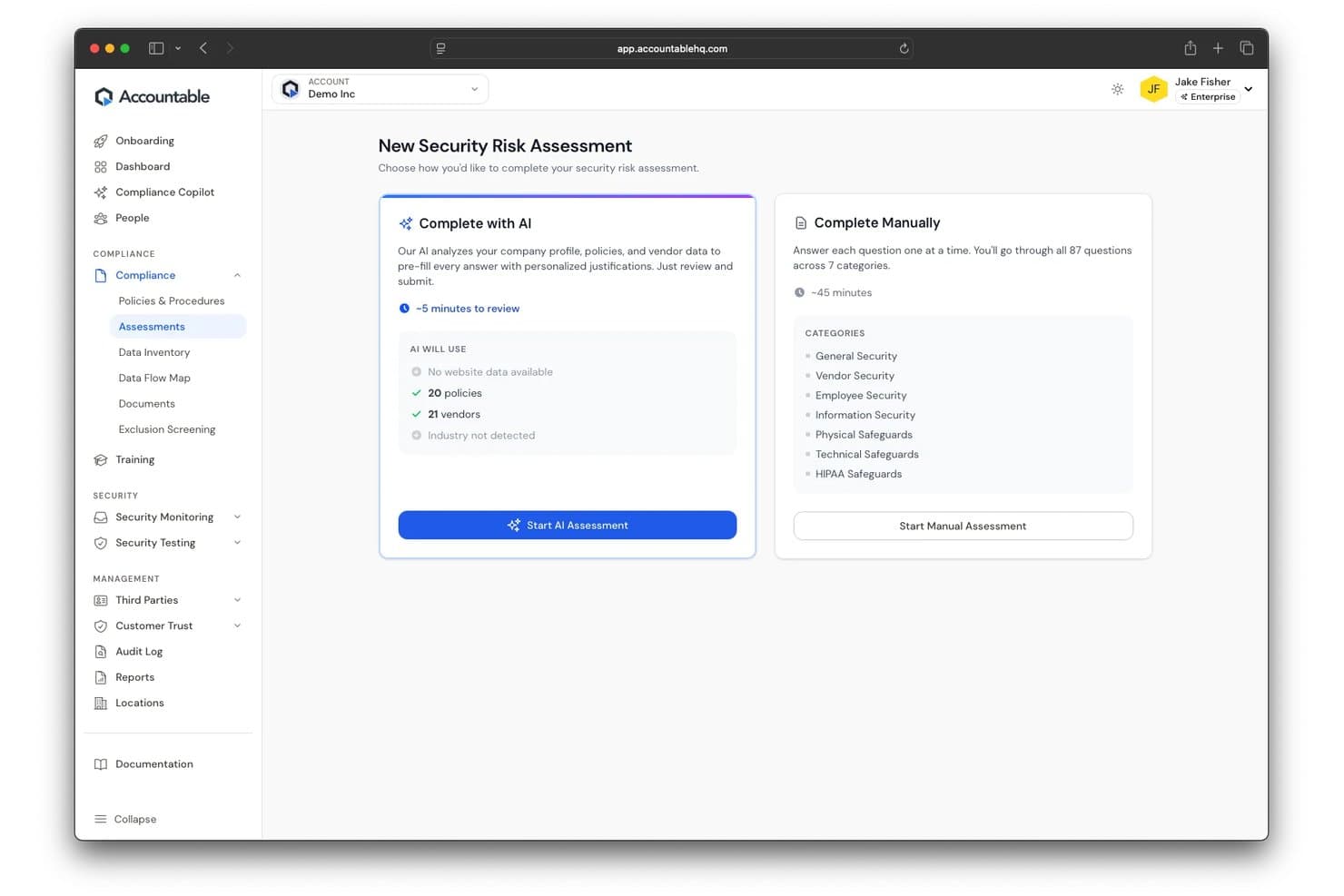
Accountable HQ lets users run AI-powered security risk assessments in minutes. Accountable HQ is a HIPAA compliance platform that combines vendor management, BAA tracking, security risk assessment, and exclusion screening into a single compliance hub for healthcare organizations and their business associates.
Who Is Accountable HQ Best For?
It's a strong fit for small to mid-sized healthcare organizations and business associates that need a dedicated compliance coordinator or practice administrator to manage HIPAA obligations across vendors.
Why I Picked Accountable HQ
I picked Accountable HQ as one of the best because its Exclusion Screening feature automatically checks vendors against OIG and SAM exclusion lists, which is something I have to do manually with most other HIPAA compliance platforms. Paired with Vendor Discovery and Shadow IT detection, I can catch unauthorized vendors handling PHI before they become a liability. The BAA Management workflow ties it all together, so every flagged vendor has a documented compliance trail.
Accountable HQ Key Features
- Compliance Copilot: AI-powered tool for generating HIPAA policies and procedures tailored to organizational needs.
- Security risk assessment: Built-in module for conducting structured annual HIPAA security risk assessments.
- Incident response management: Centralized dashboard for documenting and managing security incidents and response activities.
- Audit log: Comprehensive activity logging to support audit readiness and compliance reviews.
Accountable HQ Integrations
Native integrations are not clearly documented. An API is available for custom integrations.
Pros and Cons
Pros:
- Purpose-built for HIPAA compliance workflows
- BAA management with e-signature built in
- Continuous OIG and SAM exclusion screening
Cons:
- Reporting lacks multi-facility or IDN-level depth
- Limited vendor access control for on-site management
Learn more about Accountable HQ: Best for centralizing vendor credential tracking
- Not available
- Pricing upon request
Visit WebsiteCustomer Rating:3.5/5This rating combines scores from multiple user review sites to reflect overall customer sentiment about the product.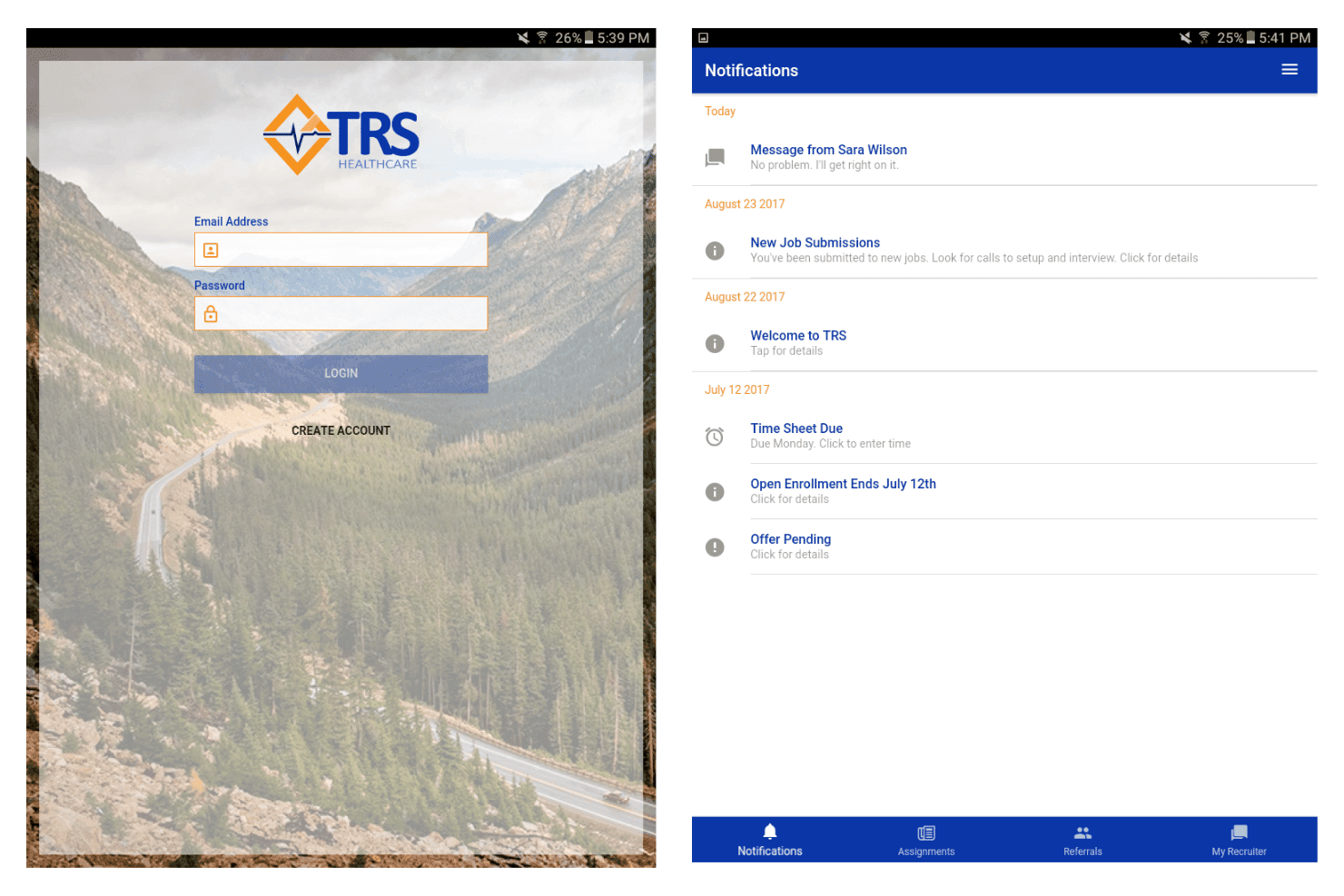
TRS Healthcare's app keeps travelers updated on assignments and required actions. TRS Healthcare is a healthcare staffing vendor management system that centralizes credential and license tracking, assignment management, timesheet processing, and invoicing across your vendor supplier network.
Who Is TRS Healthcare Best For?
TRS Healthcare is a strong fit for hospital systems and large healthcare facilities managing multiple staffing agencies and contingent clinical workforce vendors.
Why I Picked TRS Healthcare
I picked TRS Healthcare because the unified dashboard keeps credential and license tracking, timesheet management, and contract renewals in one place for every staffing vendor in my network. When I'm managing multiple agencies supplying clinical staff, I can review applications, track active licenses, and flag upcoming renewals without toggling between systems. The pre-vetted supplier network also adds a vetting layer before credentials ever reach the dashboard.
TRS Healthcare Key Features
- Unified assignment management: Oversee posting, hiring, timesheet review, and contract renewal for staffing vendors on a single platform.
- Dedicated supplier network: Access a pre-vetted roster of staffing partners to fill clinical workforce needs.
- Dashboard analytics: Track fill rates, costs, quality measures, and vendor utilization with built-in reporting tools.
- Compliance tracking: Maintain oversight of assignment statuses and clinician credential validity for every agency-supplied staff member.
TRS Healthcare Integrations
Native integrations are not clearly documented. An API is available for custom integrations.
Pros and Cons
Pros:
- Handles the full assignment lifecycle in one place
- Pre-vetted supplier network included out of the box
- Paired MSP support alongside the VMS platform
Cons:
- Limited publicly documented credentialing verification depth
- Focused on staffing workflows, not broader vendor compliance
Learn more about TRS Healthcare: Best for automated contract renewal alerts
- Free demo available
- Pricing upon request
Visit WebsiteCustomer Rating:5/5This rating combines scores from multiple user review sites to reflect overall customer sentiment about the product.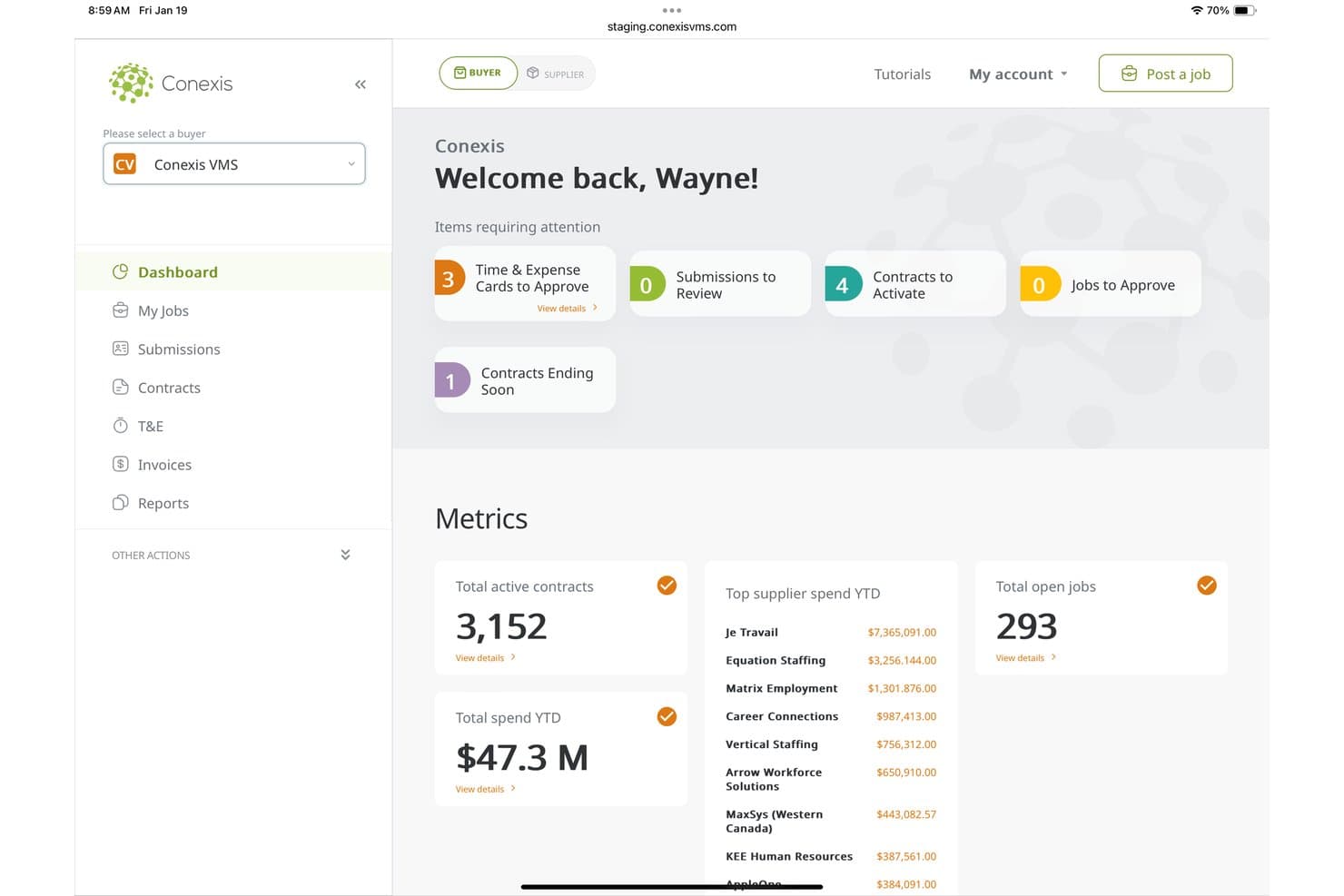
Conexis VMS manages vendor spend, contracts, and approvals in one dashboard. Conexis VMS is a contingent workforce vendor management system built for hospitals and health systems, covering staffing agency management, credential tracking, shift-based scheduling, spend management, and compliance monitoring.
Who Is Conexis VMS Best For?
Conexis VMS is a good fit for mid-market hospitals and health systems managing contingent clinical and non-clinical staff through multiple staffing agencies.
Why I Picked Conexis VMS
I picked Conexis VMS as one of the best because its automated contract renewal alerts keep staffing agency agreements from lapsing unnoticed. The platform tracks supplier contract timelines alongside credential expiration dates, so your team gets ahead of renewals before they create coverage gaps. I also like that audit-ready documentation is stored centrally, making it easy to pull supplier records during an accreditation review.
Conexis VMS Key Features
- Shift-based requisition management: Create and manage open shift requests for both clinical and non-clinical positions across departments.
- Automated credential tracking: Track worker licenses, certifications, background checks, and flag upcoming expirations for compliance.
- Internal resource pool management: Build and prioritize float pools and internal contingent staff before releasing requests to outside agencies.
- Spend and invoice reporting: Generate detailed reports on staffing agency invoices, billed hours, and cost allocation by department.
Conexis VMS Integrations
Native integrations are not clearly documented. An API is available for custom integrations.
Pros and Cons
Pros:
- Do-not-rehire flagging prevents risky worker reengagement
- Tracks credentials, immunizations, and background checks automatically
- Go-live possible in under 30 days
Cons:
- Primarily focused on contingent workforce, not full vendor lifecycle management
- Native integrations with clinical systems not clearly documented
Learn more about Conexis VMS: Best for consolidated vendor workforce oversight
- Free demo available
- Pricing upon request
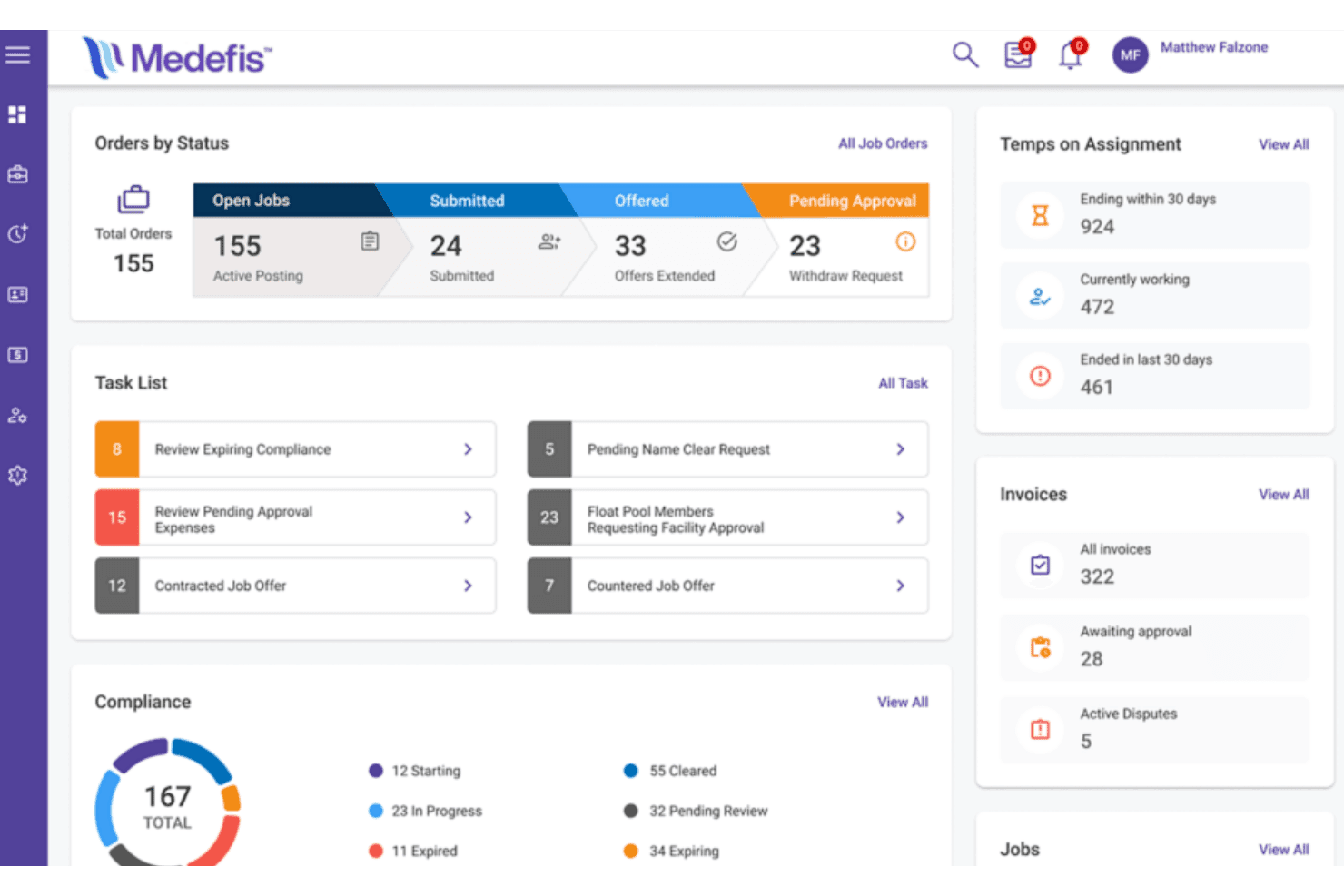
Medefis manages job orders, tasks, compliance, and invoices in one dashboard. Medefis is a healthcare vendor management system (VMS) that centralizes contingent workforce sourcing across clinical and non-clinical categories, with tools for vendor sourcing, candidate credentialing, competitive bid management, and staffing spend tracking.
Who Is Medefis Best For?
Medefis is a strong fit for hospital systems and large health networks managing high volumes of contingent clinical staff across multiple facilities and staffing vendors.
Why I Picked Medefis
I've included Medefis in my top picks because its BidMatch and TalentMatch engines bring a level of consolidated vendor oversight that other staffing VMS platforms don't replicate. When I post a position, competing agencies are automatically notified when they've been outbid, which keeps pricing market-driven across all submissions. I also like that I can track travelers on assignment, open jobs, and expiring positions from a single dashboard, spanning a network of 900+ suppliers across clinical, non-clinical, and locum categories.
Medefis Key Features
- Credential expiration tracking: Track clinician license and certification expiration dates with date-stamped storage and renewal alerts.
- Marketplace vendor access: Post open positions to a network of 900+ vetted staffing suppliers across clinical and non-clinical categories.
- Real-time assignment status: View real-time data on open, filled, and expiring staffing assignments for monitoring resource availability.
- Document storage and retrieval: Store, organize, and retrieve credential documents securely for auditing and compliance checks.
Medefis Integrations
Native integrations are not clearly documented. An API is available for custom integrations.
Pros and Cons
Pros:
- Single dashboard view across multiple assignments and vendors
- Competitive bidding keeps contingent labor costs market-driven
- Large pre-vetted supplier network for clinical roles
Cons:
- Reporting customization options are limited for non-staffing spend
- Primarily built for staffing VMS, not credentialing or BAA management
Learn more about Medefis: Best for custom clinical system integrations
- Free demo available
- Pricing upon request
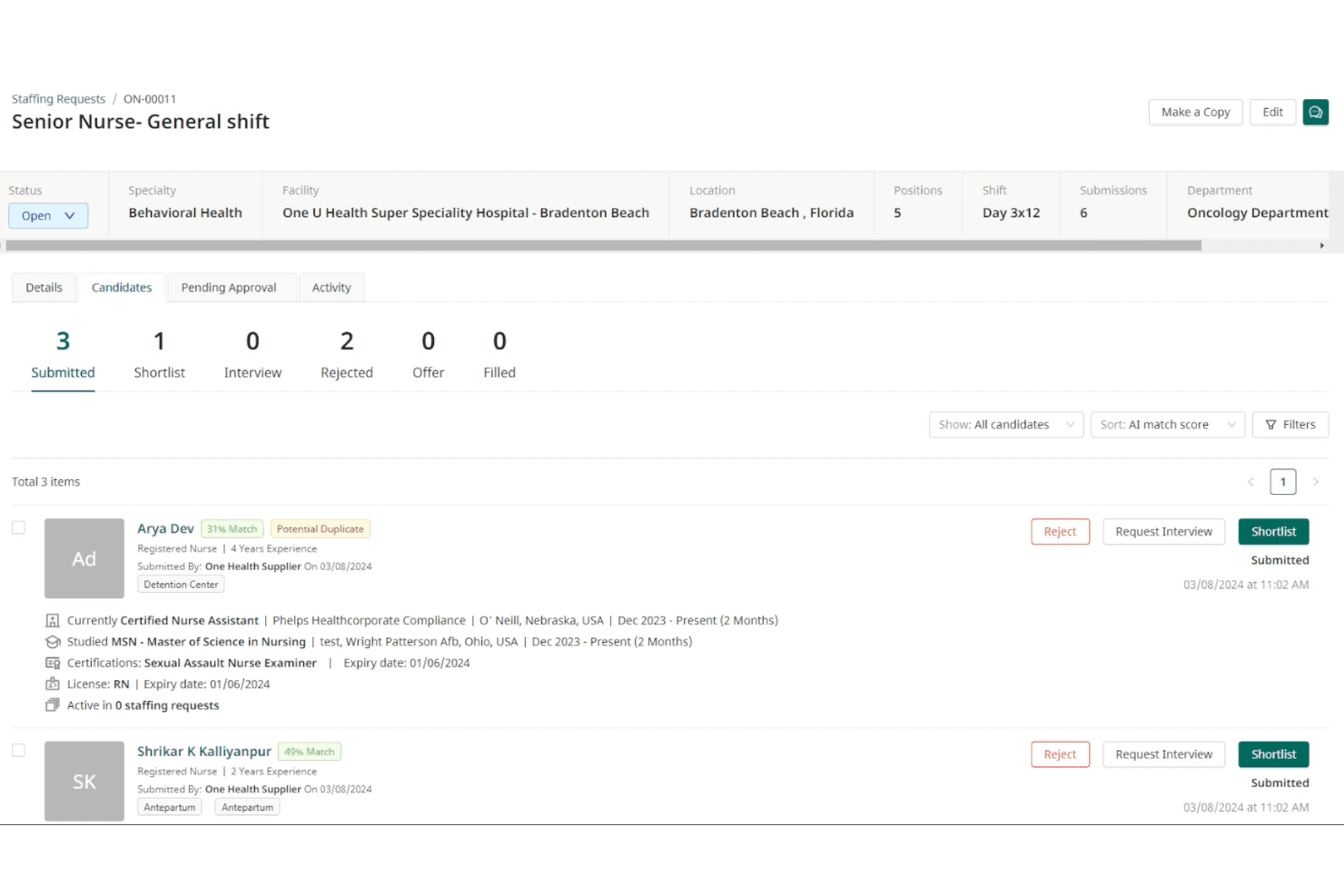
AbilityStack tracks nurse candidates through submission, shortlist, and interview stages. AbilityStack is a healthcare workforce VMS that consolidates contract, per-diem, and SOW staffing management with built-in clinician credentialing, shift scheduling, and API-based integrations to clinical systems including EMR, HRIS, and payroll platforms.
Who Is AbilityStack Best For?
AbilityStack is a good fit for enterprise health systems managing large contingent workforces across multiple facilities with existing EMR, HRIS, or payroll environments to integrate.
Why I Picked AbilityStack
AbilityStack earns its spot on my shortlist because of its API-first architecture, which lets health systems build custom connections to EMR, HRIS, and payroll platforms without replacing legacy infrastructure. I particularly like how the no-code/low-code configuration layer lets you shape clinical workflows around those integrations rather than the other way around. I've found this most valuable when connecting shift scheduling to timekeeping or syncing clinician credentials across systems.
AbilityStack Key Features
- Clinician credentialing management: Track licenses, certifications, expirations, and automated alerts for medical staff.
- Shift and per-diem scheduling: Manage assignments, float pools, and last-minute call-ins in a unified workspace.
- Direct sourcing and talent pools: Create branded talent networks and referral programs to build a pipeline of clinical candidates.
- Analytics and visual reporting: Access real-time dashboards with workforce and staffing analytics for informed decision-making.
AbilityStack Integrations
Native integrations are not clearly documented. The tool supports integrations via API for custom connections to platforms such as EMR, HRIS, and payroll systems.
Pros and Cons
Pros:
- Rapid deployment with healthcare-specific configuration templates
- Covers contract, per-diem, and permanent workforce types
- API-first architecture suits complex health system environments
Cons:
- Narrowly focused on staffing, not broader vendor compliance management
- Limited native integrations without custom development work
Learn more about AbilityStack: Best for ongoing credentialing compliance
- Free demo available
- Pricing upon request
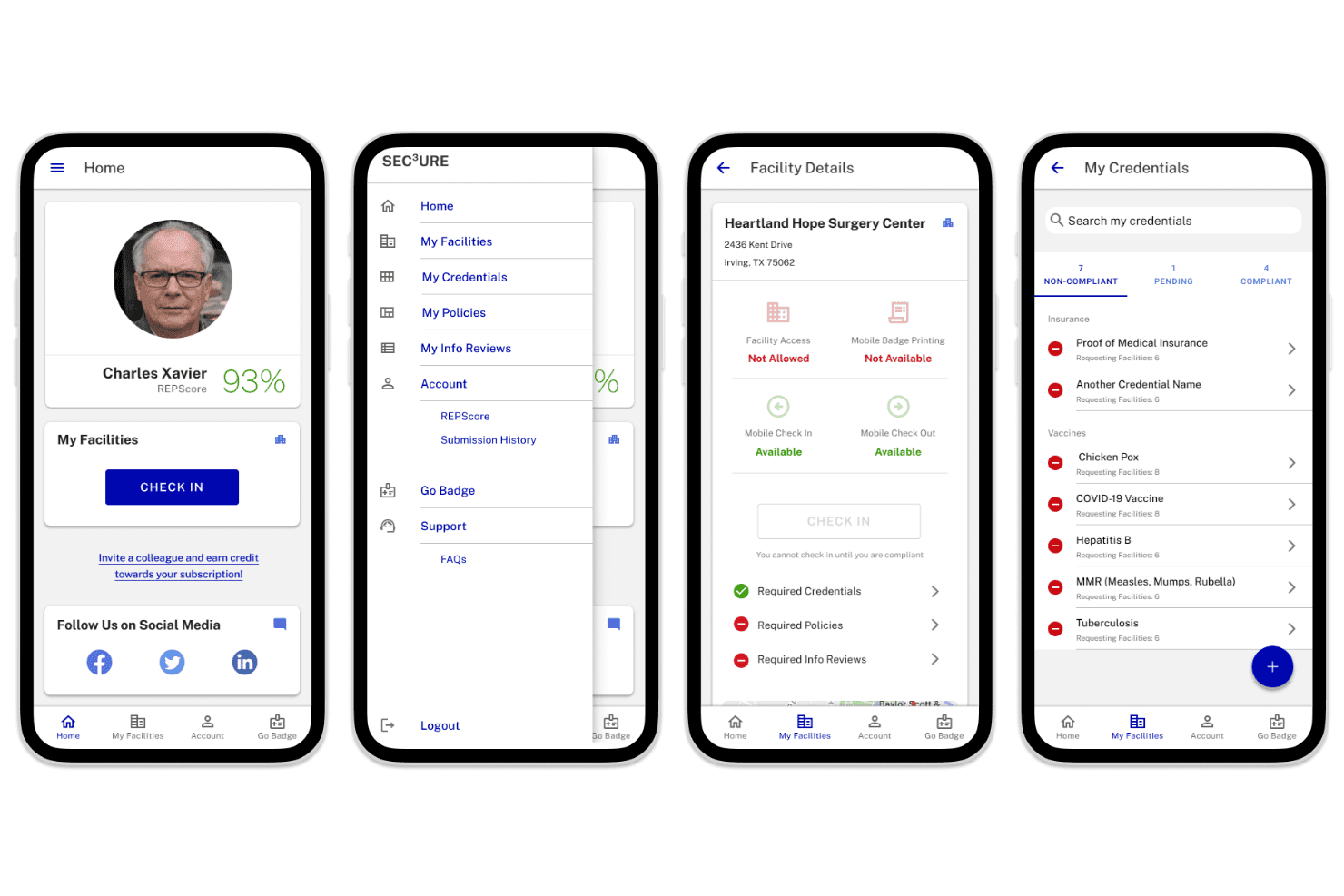
IntelliCentrics SEC³URE helps reps manage credentials and facility check-ins on mobile. IntelliCentrics is a vendor credentialing platform built for healthcare facilities, combining automated credential verification, digital check-in and access control, continuous sanction monitoring, and compliance tracking across medical and non-medical vendors.
Who Is IntelliCentrics Best For?
IntelliCentrics is a strong fit for credentialing coordinators and compliance staff at hospitals, health systems, and ambulatory surgical centers managing high vendor volumes across multiple sites.
Why I Picked IntelliCentrics
IntelliCentrics earns its spot on my shortlist because of how it handles continuous credentialing rather than one-time verification. The SEC³URE Passport monitors each vendor's credentials daily, automatically flagging expiring documents and new policy requirements. I also rely on the 30-day rolling sanction checks, which keep OIG compliance current without my team having to trigger manual reviews.
IntelliCentrics Key Features
- SEC³URE GO! digital badge: Lets vendors check in and display real-time compliance using a contactless, wearable badge.
- "Who's Onsite" dashboard: Shows a live view of all vendors currently checked in at your facility.
- Expirable management automation: Flags and manages documentation expiration dates for vendor records without manual tracking.
- Centralized policy updates: Pushes compliance policy changes directly to vendors through digital passports and mobile app notifications.
IntelliCentrics Integrations
Native integrations are not clearly documented. IntelliCentrics offers an API for custom integrations.
Pros and Cons
Pros:
- Credential verification happens at check-in, not after
- Large pre-registered vendor network reduces onboarding time
- Daily automated sanction monitoring across OIG and SAM
Cons:
- Reporting customization is limited for complex facilities
- Vendor-side fees create friction during rep onboarding
Learn more about IntelliCentrics:
Other Healthcare Vendor Management Software
Here are some additional healthcare vendor management software options that didn’t make it onto my shortlist, but are still worth checking out:
- 11Trio Workforce SolutionsBest for rapid vendor onboarding and support
- 12RingoBest for managing multi-facility vendor networks
- 13BlueSkyBest for scheduling integration with care teams
- 14ShiftWiseBest for integrating with GPO purchasing networks
- 15ShiftNex AIBest for AI-driven vendor activity insights
- 16KimedicsBest for credentialing medical staffing vendors
- 17VectorCareBest for facility-based vendor coordination
- 18FocusOne SolutionsBest for centralized workforce vendor oversight
- 19NTRACTSBest for contract audit and compliance review
- 20WorkWiseBest for automated compliance document tracking
How I Evaluate Healthcare Vendor Management Software
I evaluate each platform against baseline requirements—credentialing automation, BAA tracking—then look at differentiators like exclusion monitoring and EHR integrations that set the best apart.
Core Functionality (Table Stakes For This List)
When I'm selecting tools for my list, I rank each one on a scale from 0 (does not offer the functionality) to 5 (excels in this area) for each core functionality listed below. I then calculate the tool's total score into a percentage, using 65% as a benchmark to help assess its overall fit for the list.
- Vendor Credentialing: I look for automated collection and verification of licenses, insurance certificates, and OIG/SAM exclusion checks rather than basic document storage.
- HIPAA Compliance Tracking: Managing BAAs across dozens of vendors manually is a headache, so I evaluate how well each tool handles BAA workflows and compliance status monitoring.
- Contract Management: I check whether the platform centralizes contracts with automated renewal alerts and version control so nothing expires without notice.
- Vendor Access Control: For practices with vendor reps visiting clinical areas, I look at digital check-in, badging, and access permission features that replace paper visitor logs.
- Risk Assessment: Each tool should score vendors based on PHI access and compliance status, not just assign a static risk label that never updates.
- Spend & Performance Analytics: I evaluate whether the platform tracks vendor invoices and performance metrics in dashboards rather than requiring manual spreadsheet exports.
Once I have a list of tools that meet the criteria, I consider what sets each platform apart.
Differentiating Factors (What Sets Vendors Apart)
Here's how I compare and contrast different vendors:
Standout Features
Continuous exclusion and sanction monitoring is a major differentiator. Platforms that screen against OIG, SAM, and state exclusion lists on an ongoing basis catch risks that one-time onboarding checks miss. Vendor visitor check-in matters too—kiosk or mobile check-in with badge printing and training verification gives you real control over who enters clinical areas. I also evaluate spend analytics dashboards that break down costs by service line or department, which helps surface consolidation opportunities across contracts.
Beyond Features
Integration with clinical and financial systems is a big one. A platform that connects to your EHR and ERP means vendor data flows into existing workflows without manual re-entry. I also evaluate the size of each vendor's pre-registered community network—a large network means fewer reps need to credential from scratch when they first visit your facility. Healthcare-specific compliance coverage matters too, especially built-in support for Joint Commission, CMS, and Stark Law requirements beyond standard HIPAA tracking.
How to Choose a Healthcare Vendor Management Software
Choosing the right healthcare vendor management software comes down to matching key compliance, credentialing, and workflow requirements with your highest priorities as a clinic or practice administrator:
| If your priority is... | Look for... |
|---|---|
| If your priority is...Tracking credentials and licenses | Look for...Automated alerts and real-time exclusion/sanction checks |
| If your priority is...Enforcing access controls for vendor reps | Look for...Visitor kiosk, mobile check-in, and badge printing |
| If your priority is...Managing BAAs and regulatory standards | Look for...Built-in HIPAA, CMS, and Joint Commission workflows |
| If your priority is...Connecting to your clinical or financial systems | Look for...Native EHR or ERP integrations (not manual exports) |
| If your priority is...Reducing onboarding friction for new vendors | Look for...Pre-registered rep/vendor community with self-service |
How to Vet Your Shortlist
- Check credentialing automation claims: Request a sample OIG/SAM exclusion screening report run in the last 30 days.
- Test real-world access controls: Schedule a live demo of digital check-in and badge printing at your actual facility.
- Validate compliance tracking: Ask for a Business Associate Agreement workflow document or screencast covering HIPAA compliance steps.
- Demo integrations: Have your IT team verify a test connection to your EHR or ERP using anonymized data.
- Tradeoff to weigh: Decide between a platform that excels at out-of-the-box credentialing for small practices vs. one built for multi-site or hospital system scalability.
What Is Healthcare Vendor Management Software?
Healthcare vendor management software is a system that helps clinics and medical practices organize, credential, and oversee third-party vendors and service providers. You use it to automate tasks like credential verification, manage Business Associate Agreements (BAAs), control vendor facility access, and track contract renewals for compliance and risk reduction. This software centralizes records, improves oversight, and supports safer facility operations by ensuring every vendor meets healthcare-specific regulatory standards.
Features of Healthcare Vendor Management Software
When selecting healthcare vendor management software, keep an eye out for the following key features:
- Vendor credentialing: Ensures vendors have valid, up-to-date licenses, insurance, and certifications by automating document collection, verification, and renewal reminders.
- HIPAA compliance tracking: Tracks Business Associate Agreements and verifies ongoing vendor compliance with healthcare regulations, supporting secure PHI handling.
- Contract management: Stores vendor contracts centrally, offers version control, and automates expiration alerts, reducing risk of lapses and missed renewals.
- Vendor access control: Manages facility entry for vendor reps using digital check-in, badging, and access permissions, replacing paper sign-in sheets for better security.
- Risk assessment tools: Scores vendors based on their access to sensitive data, compliance status, and business associate risk, helping practices manage third-party exposure.
- Spend analytics dashboards: Provides reporting on vendor spend by service line, location, or department, highlighting cost drivers and consolidation opportunities.
- Exclusion and sanction monitoring: Continuously checks vendors against OIG, SAM, GSA, and state sanction lists and alerts you when a risk appears.
- Visitor check-in kiosk: Offers an on-site kiosk or mobile app that prints badges, verifies required training, and tracks vendor rep locations in clinical areas.
- Performance tracking: Collects and analyzes vendor KPIs such as on-time delivery, quality, and service levels, supporting evidence-based vendor decisions.
- Self-service vendor portal: Lets vendors upload documentation, update insurances, and monitor credentialing status, reducing admin workload for your practice.
Common Healthcare Vendor Management Software AI Features
Beyond the standard healthcare vendor management software features listed above, many of these solutions are incorporating AI with features like:
- Predictive risk scoring: Uses AI to analyze vendor data and flag potential compliance or credentialing risks before they become issues, helping you act proactively.
- Automated document classification: AI scans and categorizes uploaded vendor documents, extracting key details and reducing manual data entry for credentialing teams.
- Anomaly detection in spend: Identifies unusual spending patterns or invoice discrepancies across vendors, alerting you to possible fraud or billing errors.
- Smart contract review: AI reviews contract language for compliance gaps, missing clauses, or renewal risks, supporting faster and more accurate contract management.
- Natural language query: Lets users ask questions about vendor data or compliance status in plain language, with AI surfacing relevant insights instantly.
Benefits of Healthcare Vendor Management Software
Implementing healthcare vendor management software provides several benefits for your team and your business. Here are a few you can look forward to:
- Improved compliance: Centralized credentialing and automated OIG/SAM monitoring keep your practice on top of regulations like HIPAA and Joint Commission.
- Reduced administrative load: Digital document collection, automated reminders, and self-service vendor portals cut down on manual tracking and follow-up.
- Better facility security: Digital check-in, real-time badge printing, and training verification control access for vendors in sensitive clinical areas.
- Lower risk exposure: Automated risk scoring and continuous sanction monitoring surface issues before they impact your business or patients.
- Increased contract visibility: Centralized contract storage and automated renewal alerts help you avoid missed deadlines and lapses.
- Optimized vendor spend: Analytics dashboards give you insights to consolidate vendors, negotiate better terms, and control costs.
- Streamlined vendor onboarding: Access to pre-registered networks and intuitive self-service tools help new vendors get approved and working faster.
Costs and Pricing of Healthcare Vendor Management Software
Selecting healthcare vendor management software requires an understanding of the various pricing models and plans available. Costs vary based on features, team size, add-ons, and more. The table below summarizes common plans, their average prices, and typical features included in healthcare vendor management software solutions:
Plan Comparison Table for Healthcare Vendor Management Software
| Plan Type | Average Price | Common Features |
|---|---|---|
| Plan TypeFree Plan | Average Price$0 | Common FeaturesBasic document storage, limited credential tracking, and single-user access. |
| Plan TypePersonal Plan | Average Price$25–$50/user/month | Common FeaturesLicense verification, simple contract storage, user support, and exclusion list alerts. |
| Plan TypeBusiness Plan | Average Price$75–$150/user/month | Common FeaturesAutomated credentialing, visitor management, integration options, spend analytics, and compliance tools. |
| Plan TypeEnterprise Plan | Average Price$200+/user/month | Common FeaturesAdvanced integrations, custom workflows, risk scoring, dedicated onboarding, and enterprise-level support. |
Healthcare Vendor Management Software FAQs
Here are some answers to common questions about healthcare vendor management software:
How does healthcare vendor management software support regulatory compliance?
Healthcare vendor management software automates exclusion checks, tracks contract and license expirations, and stores compliance documents like BAAs. This helps your clinic or facility prove due diligence during audits and reduces the risk of engaging with non-compliant vendors.
Can healthcare vendor management software integrate with our EHR or procurement system?
Yes, most solutions offer native or API integrations with common EHR, ERP, and procurement systems. This lets you sync credentialing, contract data, and vendor access updates between platforms, reducing manual data entry and errors.
What happens if a vendor's credentials expire or a sanction is flagged?
You’ll get real-time alerts and can set automated access restrictions or workflow escalations. This ensures only qualified, compliant vendors are allowed onsite and keeps your facility protected.
Is vendor onboarding faster with healthcare vendor management software?
Yes, onboarding is much quicker since pre-registered networks, self-service portals, and automated document verification reduce paperwork and administrative delays for both your team and new vendors.