

Healthcare employee perks platforms are specialized tools that help clinics and health systems recognize, reward, and support clinical staff—without adding to your admin load or disrupting shift workflows.
If you’re searching for the best healthcare employee perks platforms, you already know how staff morale and retention can make or break your clinic’s growth.
This guide compares 10 top solutions built for healthcare teams, so you can see which platforms fit unique scheduling patterns, real-world recognition needs, and the pressure to deliver quality patient care while keeping your team engaged.
Why Trust Our Software Recommendations
6,700+
Reviews
20
Industry experts
16+
Evaluation factors
14
Years
Our team has been testing and reviewing software since 2012. As medical practice leaders ourselves, we know how difficult—and important—it is to choose the right software.
For this guide, we evaluated tools using hands-on testing and independent research, scoring tools using our selection criteria.
Our reviews reflect our human editorial judgment, not a sales pitch.
Healthcare Employee Perks Platforms Comparison Table
This comparison table summarizes pricing details for my top healthcare employee perks platforms selections:
| Tool | Best For | Trial Info | Price | ||
|---|---|---|---|---|---|
| 1 | Best for recognizing shift-based clinical staff | Free demo available | Pricing upon request | Website | |
| 2 | Best for clinical staff recognition and retention | Free demo available | Pricing upon request | Website | |
| 3 | Best for ADP-connected perks and recognition | Free demo available | From $3/user/month | Website | |
| 4 | Best for recognition-led engagement in clinical teams | Free demo available | Pricing upon request | Website | |
| 5 | Best for health system recognition and retention ROI | Free demo available | Pricing upon request | Website | |
| 6 | Best for recognition tied to clinical milestones | Free demo available | Pricing upon request | Website | |
| 7 | Best for recognition-led retention in clinical teams | Free demo available | Pricing upon request | Website | |
| 8 | Best for all-in-one perks without point-solution sprawl | Free demo available | Pricing upon request | Website | |
| 9 | Best for NHS and public healthcare staff perks | Free demo available | Pricing upon request | Website | |
| 10 | Best for large-scale clinical staff recognition | Free demo available | Pricing upon request | Website |


Healthcare Employee Perks Platforms Reviews
Below are my detailed summaries of the best healthcare employee perks platforms that made it onto my shortlist. My reviews offer a detailed look at the features, integrations, and best use cases of each platform to help you find the best one for you.
 Best for recognizing shift-based clinical staff
- Free demo available
- Pricing upon request
Visit WebsiteCustomer Rating:4.7/5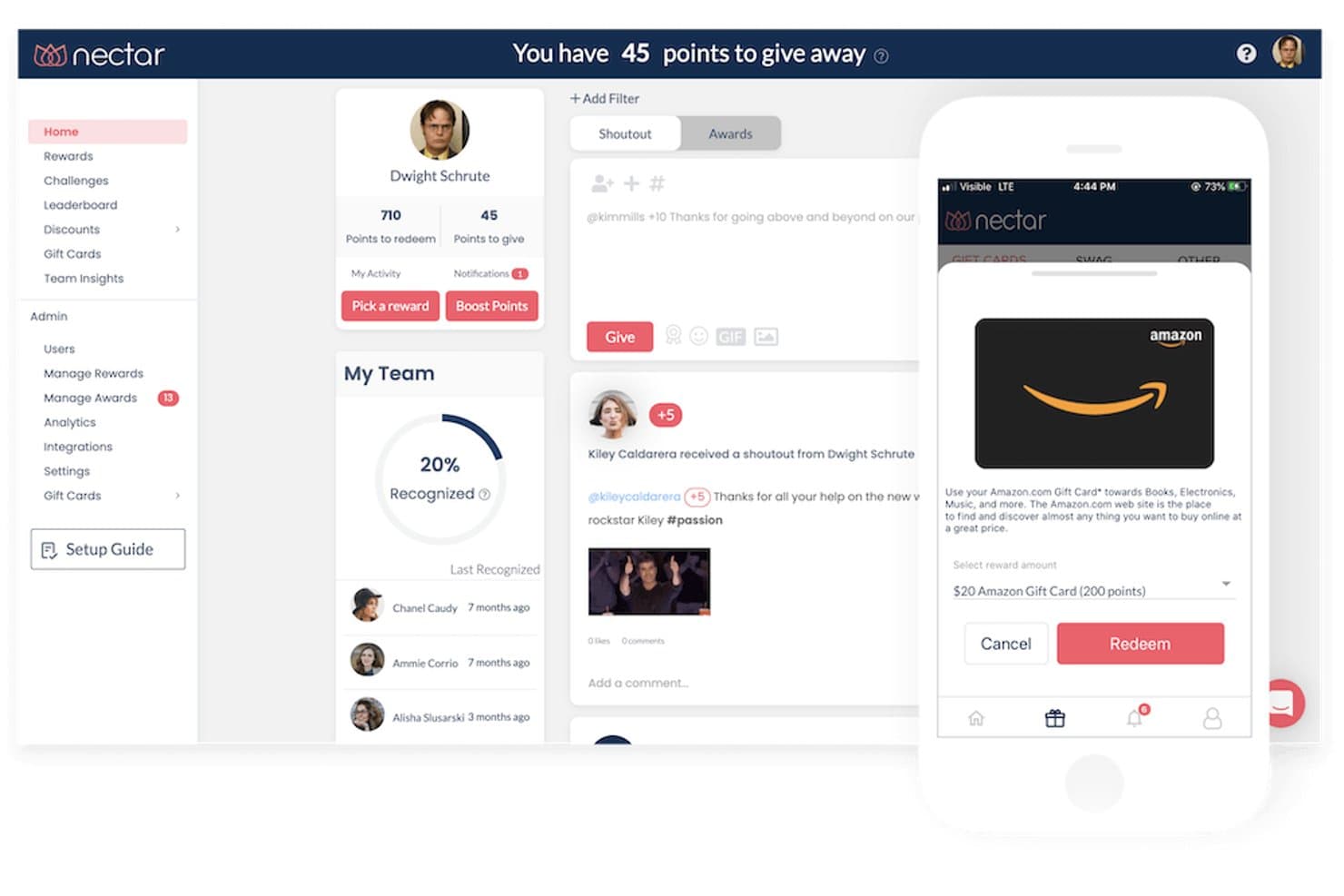
Nectar lets healthcare teams recognize peers and redeem gift card rewards. Nectar is an employee recognition and engagement platform built for healthcare organizations, offering peer-to-peer recognition, a points-based rewards catalog, automated milestone celebrations, pulse surveys, and frontline-accessible tools like SMS, kiosk mode, and a mobile app.
Who Is Nectar Best For?
Nectar is a strong fit for healthcare HR teams managing large populations of shift-based clinical staff who need recognition tools that reach workers without desk access.
Why I Picked Nectar
I picked Nectar as one of the best because it's the only platform here with a dedicated Healthcare Bundle built specifically for shift-based clinical teams. Features like kiosk mode and SMS recognition mean a floor nurse finishing a 12-hour shift can receive a peer shoutout without ever touching a desktop. I also love the Community Recognition feed, which lets patients and families recognize clinical staff directly, something you won't find on most recognition platforms.
Nectar Key Features
- Nectar Signals: Monitors behavioral engagement patterns across the platform to generate real-time health scores for individuals, teams, and departments, flagging early disengagement risk.
- Nomination programs: Configurable nomination workflows let HR teams design custom award categories, manage review and selection, and announce winners to the broader organization.
- Pulse surveys with AI sentiment analysis: ClaraAI scans open-ended survey responses to identify recurring themes and surface burnout or morale patterns across clinical teams.
- SafeTalk anonymous feedback: A two-way anonymous channel where employees can raise concerns confidentially and HR can follow up without revealing identities.
Nectar Integrations
Nectar offers native integrations with common HRIS and collaboration tools, including ADP, BambooHR, Workday, Paycor, Paylocity, Rippling, UKG, Microsoft Teams, Slack, and Okta, plus SSO support via Azure AD, Ping Identity, and SAML. An open API is available at the Premium tier for custom integrations, though native connectors to clinical scheduling systems like QGenda or Symplr aren't documented.
Pros and Cons
Pros:
- Burnout risk flagged with real-time health scores
- Kiosk mode supports shift and deskless staff
- Recognition feed allows patient and family shoutouts
Cons:
- Lacks HIPAA compliance and Business Associate Agreement
- No healthcare-specific perks or discount partners
Learn more about Nectar: Best for clinical staff recognition and retention
- Free demo available
- Pricing upon request
Visit WebsiteCustomer Rating:4.8/5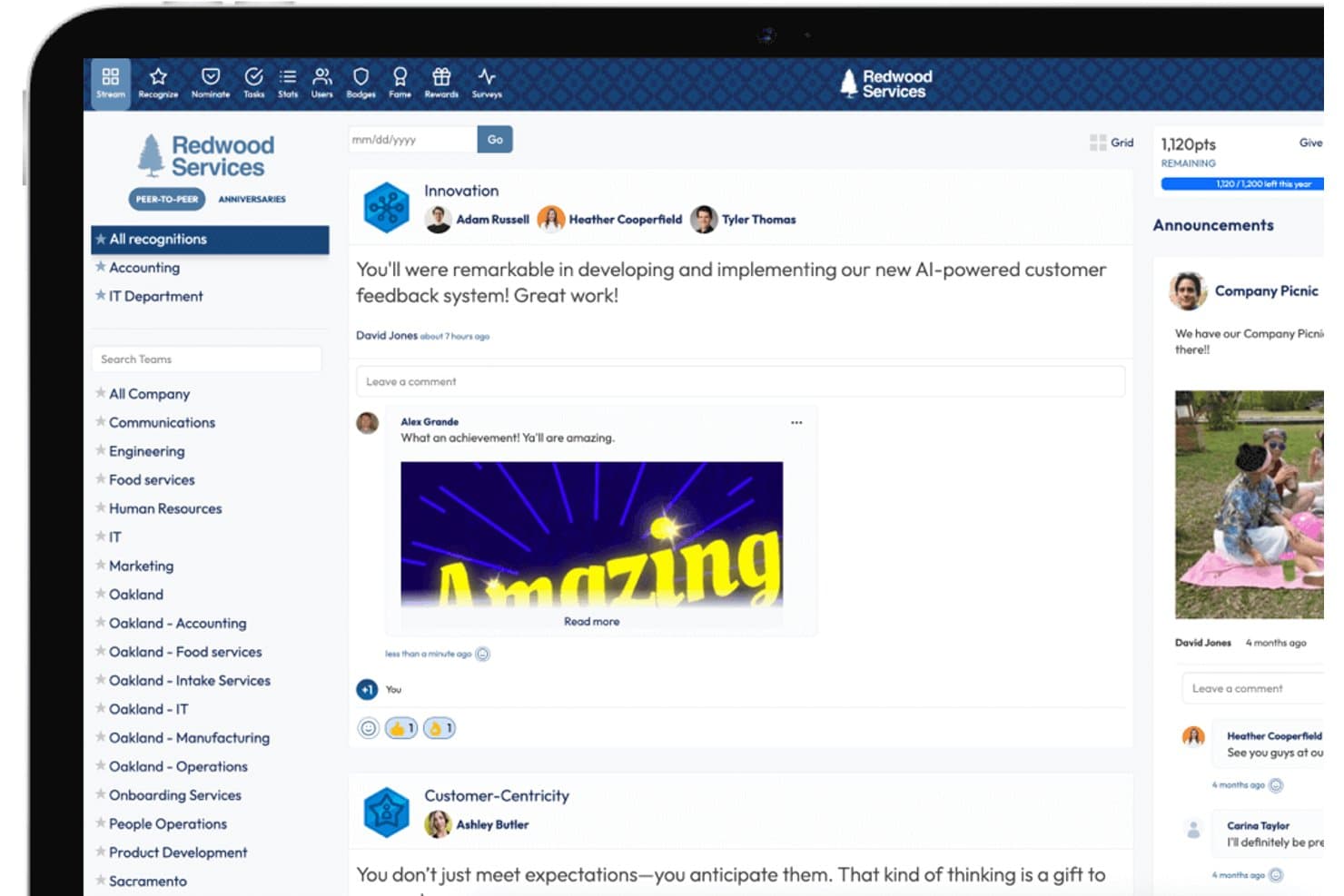
Recognize lets healthcare teams celebrate peer achievements with badges and points. Recognize is an employee recognition and rewards platform built for healthcare settings, combining peer-to-peer recognition, clinical role-specific badges, a 50,000+ reward catalog, pulse surveys, and frontline worker accessibility tools like SMS login and TV Kiosk Mode.
Who Is Recognize Best For?
Recognize is a strong fit for small-to-mid-sized medical practices and clinics that want to build a culture of recognition among shift-based clinical staff without a large HR budget.
Why I Picked Recognize
Recognize earns its spot on my shortlist because of how seriously it treats clinical staff recognition as its own discipline. I love that it ships with preconfigured healthcare badges like HIPAA Hero, Infection Protection, and Care Transition, so your team isn't starting from scratch trying to translate generic recognition into clinical values. The Frontline Worker package is what really sets it apart: telephone-based login and TV Kiosk Mode mean nurses and techs on a 12-hour shift can receive recognition without ever touching a corporate email account.
Recognize Key Features
- Automated service milestone recognition: Recognize automatically triggers work anniversary and tenure milestone recognition with configurable reward types and per-role budgets.
- Employee nominations: Staff and managers can nominate colleagues for employee of the month, quarter, or year awards through a structured voting workflow.
- Pulse and eNPS surveys: Built-in survey tools let you run wellness, happiness, and engagement surveys natively inside Microsoft Teams, Outlook, and SharePoint.
- 50,000+ reward catalog with zero markup: Staff can redeem points for gift cards, Amazon products, travel, experiences, and swag across 180+ countries at up to 30% off retail prices.
Recognize Integrations
Recognize offers native integrations with Workday, ADP, Paylocity, Slack, and across the Microsoft ecosystem, including Microsoft Teams, Outlook, SharePoint, and Viva Engage, plus SSO through Okta, Azure AD, and ADFS. It connects with Zapier and provides a REST API, webhooks, SCIM, and sFTP for custom integrations, though no native integrations with clinical scheduling systems like Kronos, UKG Dimensions, or QGenda are documented.
Pros and Cons
Pros:
- Service milestone recognition with role-based options
- TV Kiosk and SMS support for frontline staff
- Preconfigured clinical recognition badges for healthcare teams
Cons:
- Does not offer a HIPAA compliance option
- No healthcare-specific perks like scrubs or CME
Learn more about Recognize: Best for ADP-connected perks and recognition
- Free demo available
- From $3/user/month
Visit WebsiteCustomer Rating:4.7/5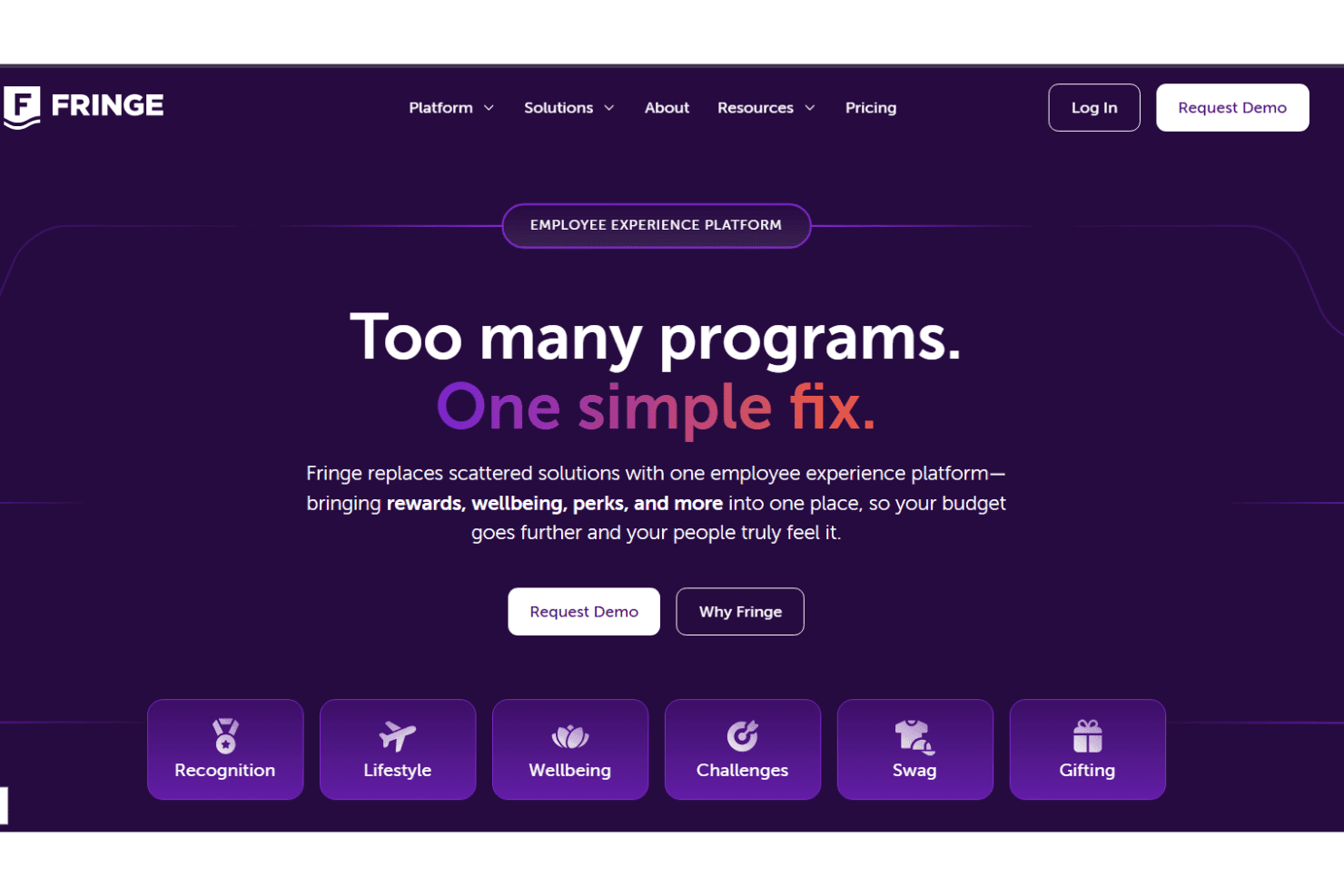
Fringe supports healthcare staff wellness with lifestyle benefits, perks, and rewards. Fringe is an employee perks platform that consolidates rewards, recognition, lifestyle benefits, wellness, and gifting into a single points-based system with native HRIS and payroll integrations.
Who Is Fringe Best For?
Fringe is a strong fit for mid-sized medical practices and physician groups that already run ADP Workforce Now and want to consolidate recognition, lifestyle benefits, and wellness into one platform.
Why I Picked Fringe
I've included Fringe in my top picks because it's ADP's official recognition partner, which means if your practice already runs ADP Workforce Now, you get peer-to-peer recognition, automated milestone celebrations, and a social recognition feed embedded directly inside ADP at no extra platform cost. I also like that the points-based lifestyle marketplace lets staff choose their own rewards across wellness, travel, childcare, and fitness, covering a diverse healthcare workforce without a one-size-fits-all approach.
Fringe Key Features
- Points-based lifestyle marketplace: Employees spend points directly across 140+ brands spanning wellness, travel, childcare, dining, and fitness without submitting receipts or reimbursement requests.
- Automated milestone recognition: The platform triggers birthday, work anniversary, and new hire celebrations automatically, with no manual setup required per employee.
- Wellness challenges with leaderboards: Configurable step, hydration, sleep, and mindfulness campaigns reward participation with points and display progress on team leaderboards.
- Real-time engagement dashboards: Admins view utilization rates, redemption trends, and feature adoption across all programs in a single reporting dataset.
Fringe Integrations
Fringe offers 20+ native HRIS and payroll integrations, including ADP Workforce Now (with recognition embedded directly inside ADP), Gusto, Alight, Okta, Slack, Microsoft Teams, Gmail, Outlook, Fitbit, and Apple Watch. Zapier support is not clearly documented, and a form to request additional integrations is available on the platform.
Pros and Cons
Pros:
- Wellness suite covers therapy, coaching, fitness, and more
- Employees choose rewards from a diverse marketplace
- Recognition is directly embedded in ADP Workforce Now
Cons:
- No documented HIPAA or SOC 2 compliance
- No healthcare-specific perks or clinical tools
Learn more about Fringe: Best for recognition-led engagement in clinical teams
- Free demo available
- Pricing upon request
Visit WebsiteCustomer Rating:4.9/5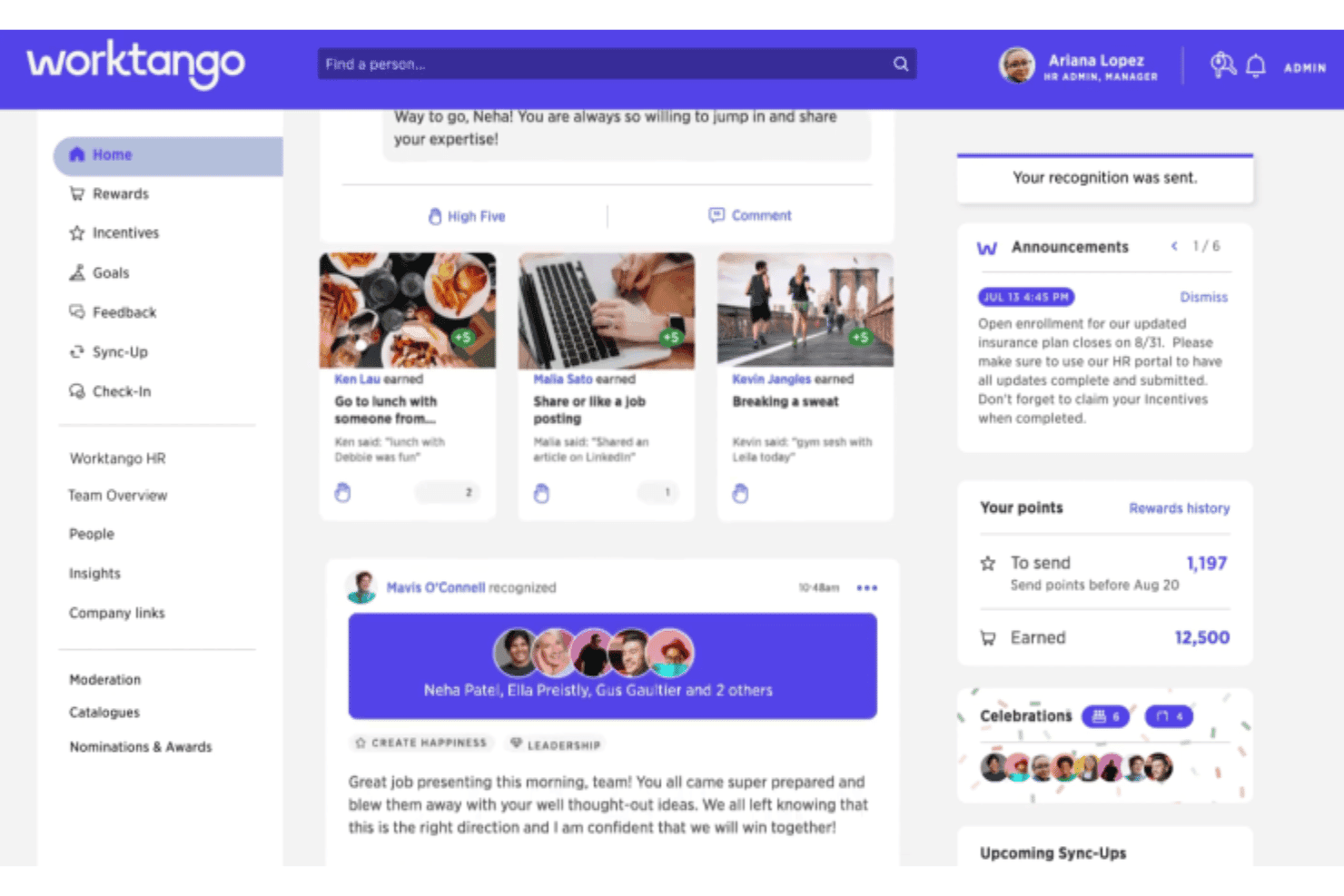
WorkTango rewards healthcare staff with peer recognition and wellness incentives. WorkTango is an employee recognition and rewards platform that combines peer-to-peer recognition, automated milestone awards, a global perks marketplace, wellness incentives, and engagement surveys in one system.
Who Is WorkTango Best For?
WorkTango is a strong fit for mid-to-large health systems and eldercare organizations whose HR teams want to anchor a staff retention strategy in peer-to-peer recognition and engagement surveys.
Why I Picked WorkTango
WorkTango earns its spot on my shortlist because its peer-to-peer recognition engine is genuinely built for the rhythm of clinical work. I love that staff can send recognition from a personal phone without a work email, and that those moments surface on break room TV displays, so shift workers who never sit at a desk still feel seen. Automated service milestone awards mean a nurse's fifth anniversary gets celebrated without HR having to remember it.
WorkTango Key Features
- Incentives module: Choose from 50+ pre-configured templates to reward specific staff behaviors, like survey completion or wellness participation, with built-in budget controls and claim caps.
- Wellness Index surveys: Run targeted surveys to measure wellness gaps across departments and track trends over time, with anonymous conversation options for staff to raise concerns confidentially.
- Global rewards marketplace: Give staff access to 10M+ reward options across 85 countries at zero markup, so your recognition budget goes entirely to the reward itself.
- Engagement analytics dashboards: Segment recognition and survey data by department, location, or team to spot struggling units early before disengagement or turnover escalates.
WorkTango Integrations
WorkTango offers 60+ native HRIS and HCM integrations, including Workday, UKG Pro, ADP Workforce Now, Ceridian Dayforce, Paychex, Paylocity, SAP SuccessFactors, BambooHR, Apple Health, and Google Fit, plus native connections across the Microsoft ecosystem, including Microsoft Teams and Microsoft Outlook, and Slack. SSO is supported via SAML 2.0 with Okta, Azure Active Directory, and Google Workspace, and an API is available for custom integrations.
Pros and Cons
Pros:
- TV display support for break-room recognition
- Automated milestone awards for nurse anniversaries
- Recognition works without email for clinical staff
Cons:
- No clinical scheduling or wellness platform integration
- No healthcare-specific perks or reward partners
Learn more about WorkTango: Best for health system recognition and retention ROI
- Free demo available
- Pricing upon request
Visit WebsiteCustomer Rating:4.8/5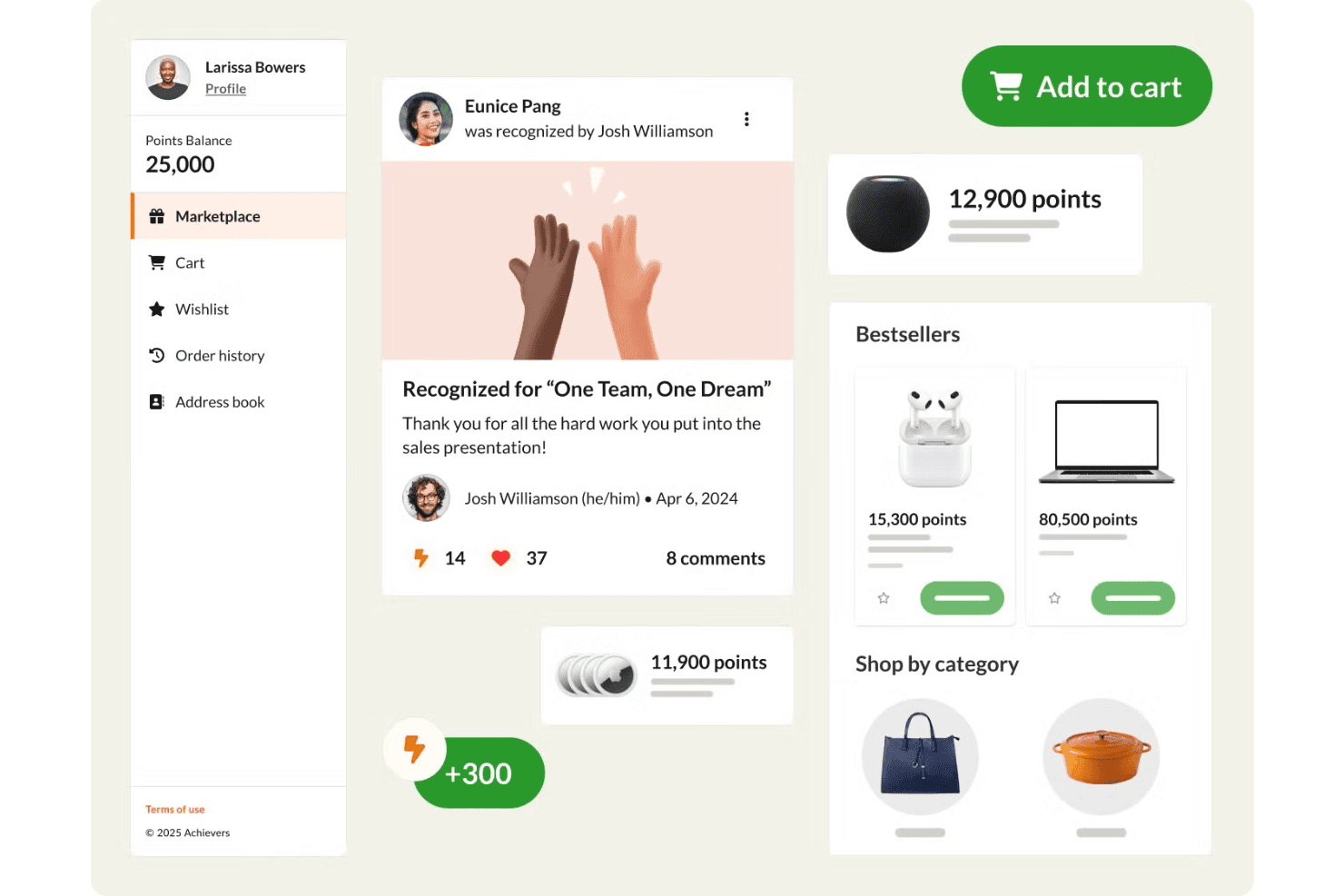
Achievers helps health systems recognize frontline clinicians through patient feedback, peer praise, and milestone rewards. Achievers is an employee recognition and rewards platform built for large health systems, combining peer-to-peer recognition, a global rewards marketplace, milestone automation, and patient-sourced recognition for frontline clinical staff.
Who Is Achievers Best For?
Achievers is a strong fit for large health systems and hospital networks with 1,000+ employees that need a structured, data-backed recognition program tied to measurable retention outcomes.
Why I Picked Achievers
I picked Achievers as one of the best because it's the only platform on this list with documented, health-system-scale retention ROI: Bon Secours Mercy Health reported $41.8M in annual savings, and Christus Health saw a 250% ROI with a measurable drop in turnover. I love that its patient-sourced recognition feature, powered by a Cipher Health integration, lets patients submit recognition directly for bedside nurses and clinical staff, which mirrors programs like the DAISY Award in practice. The Zebra Technologies integration also stands out, giving shift-based clinical workers access to recognition on rugged handheld devices without needing a desk or laptop.
Achievers Key Features
- Global rewards marketplace: Employees redeem recognition points from a catalog of 3M+ merchandise items, 345,000+ experiences, and 11,000+ gift cards across 190 countries.
- AI-powered inclusive language checker: Reviews recognition messages in real time to flag non-inclusive language before submission, supporting equity across large, distributed clinical teams.
- Voice of Employee pulse surveys: Built-in weekly check-ins and pulse surveys let HR and operations leaders track staff sentiment and surface frontline concerns in near real time.
- Service milestone automation: Automatically triggers anniversary, birthday, and onboarding milestone recognitions with configurable reward tokens, points, and custom digital cards.
Achievers Integrations
Achievers offers native integrations with Workday (Gold Tier), UKG Pro, ADP, SAP SuccessFactors, Ceridian Dayforce, Oracle, Slack, Zoom, Zebra Technologies, and Cipher Health for patient-sourced recognition, plus native connections across the Microsoft ecosystem (Teams, SharePoint, Outlook, Viva) and Google ecosystem (Chat, Gmail, Meet). An open API is available for custom integrations.
Pros and Cons
Pros:
- Mobile and Zebra device access for shift workers
- Documented retention ROI in health systems
- Patient-sourced recognition for clinical staff
Cons:
- No explicit HIPAA BAA advertised
- No healthcare-specific perks marketplace
Learn more about Achievers: Best for recognition tied to clinical milestones
- Free demo available
- Pricing upon request
Visit WebsiteCustomer Rating:4.7/5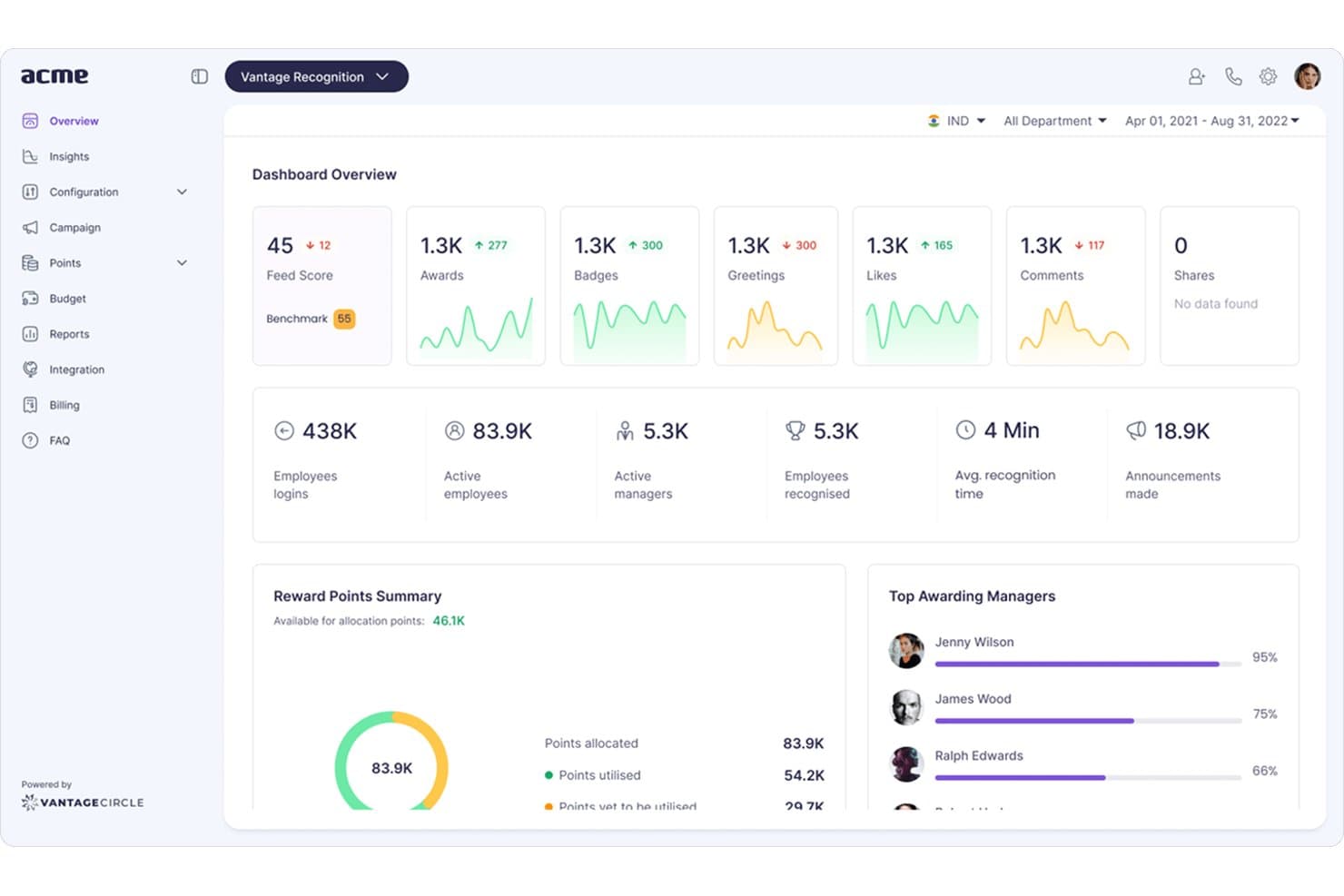
Vantage Circle tracks recognition, rewards, and engagement metrics in one dashboard. Vantage Circle is an employee recognition, perks, wellness, and engagement platform that combines peer-to-peer rewards, a corporate discounts marketplace, wellness challenges, and pulse survey tools in a single modular suite.
Who Is Vantage Circle Best For?
Vantage Circle is a strong fit for mid-to-large health systems that want to tie employee recognition directly to clinical performance milestones across multi-site, shift-based teams.
Why I Picked Vantage Circle
I picked Vantage Circle as one of the best because it directly ties recognition to clinical milestones, like zero-deviation streaks and protocol adherence, in a way most perks platforms don't. I love that phygital recognition cards let bedside nurses and MAs participate without a corporate device or email. The AI-powered Vantage Pulse also flags burnout risk before it escalates, which matters in high-pressure shift-based care environments.
Vantage Circle Key Features
- Vantage Perks marketplace: Access 1,000+ brand deals across retail, travel, wellness, and lifestyle categories, with a built-in cashback system that converts purchases into redeemable points.
- Automated milestone recognition: Sync with your HRIS to trigger recognition for work anniversaries, birthdays, and service milestones without manual input from managers.
- Vantage Pulse surveys: Run pulse surveys with AI-powered sentiment analysis that flags recurring disengagement themes and predicts attrition risk across departments and shift groups.
- Microsoft Teams and Slack integration: Embed the full recognition feed, rewards wallet, and catalog directly inside Teams or Slack so staff can give and receive recognition without leaving their existing tools.
Vantage Circle Integrations
Vantage Circle offers 20+ native HRIS and SSO integrations, including Workday, UKG, SAP SuccessFactors, Oracle HCM, ADP, BambooHR, Rippling, Paylocity, Microsoft Teams, and Slack, plus native connections across the Microsoft ecosystem, including Microsoft 365 Copilot and Azure AD. WhatsApp alerts are supported for recognition notifications, though there are no documented native integrations with clinical scheduling platforms like QGenda or ShiftKey.
Pros and Cons
Pros:
- AI predicts burnout and attrition risks
- Phygital cards support non-desk clinical workers
- Ties recognition to clinical performance milestones
Cons:
- No native EAP or earned wage access
- No healthcare-specific perks or scrubs discounts
Learn more about Vantage Circle: Best for recognition-led retention in clinical teams
- Free demo available
- Pricing upon request
Visit WebsiteCustomer Rating:4.6/5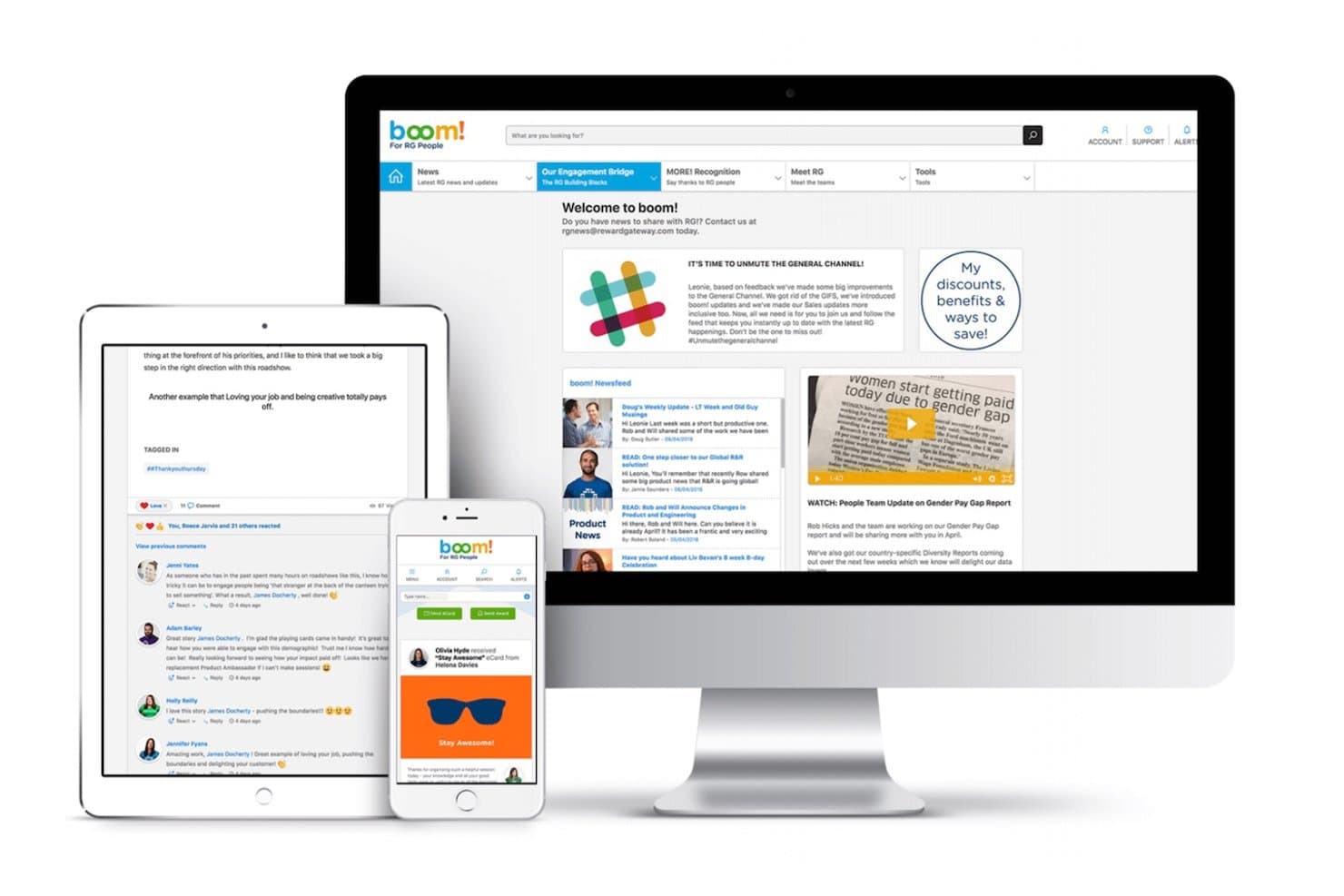
Reward Gateway centralizes perks, recognition, and news in one platform. Reward Gateway is an employee engagement platform built around recognition, perks discounts, wellbeing, and internal communications—with a dedicated healthcare vertical and tools like SmartHub, SmartSpending™, and Wellbeing+ designed for distributed clinical and administrative teams.
Who Is Reward Gateway Best For?
Reward Gateway is a strong fit for mid-size to large health systems and multi-site clinical organizations where HR teams need a structured recognition program to anchor staff retention.
Why I Picked Reward Gateway
Reward Gateway earns its spot on my shortlist because of how well its recognition suite maps to the retention problem in clinical environments. I love that peer-to-peer recognition, manager Boost awards, and automated service milestones can all be configured by role and department, so a 27-location health system can run the same program across every site without losing specificity. The Shannon Medical Center case study, where the platform generated nearly 19,700 recognition moments in six months, shows this isn't theoretical.
Reward Gateway Key Features
- SmartSpending™ app: A dedicated mobile app for browsing and redeeming employee discounts across hundreds of national retailers, including grocery, dining, and travel categories.
- Wellbeing+ app: A corporate wellness app with activity challenges, meditation content, nutrition resources, and wearable device integration for tracking personal fitness goals.
- Engaged Index™ survey tool: A validated four-question engagement benchmark that measures workforce sentiment and compares results across Reward Gateway's global client base.
- Audience-segmented communications: An internal content and blogging tool that lets HR teams publish and schedule posts by role, location, or department to reach frontline and administrative staff separately.
Reward Gateway Integrations
Reward Gateway offers 30+ native integrations, including Workday, ADP Workforce Now, UKG, Paychex, Paylocity, BambooHR, Rippling, Microsoft Teams, Slack, and Okta, with an Open API available for custom integrations.
Pros and Cons
Pros:
- Wellbeing app includes activity and mental health tools
- Automated service milestones for healthcare roles
- Structured recognition for multi-site clinical teams
Cons:
- No documented HIPAA or BAA compliance
- No healthcare-specific discounts or rewards
Learn more about Reward Gateway: Best for all-in-one perks without point-solution sprawl
- Free demo available
- Pricing upon request
Visit WebsiteCustomer Rating:4.6/5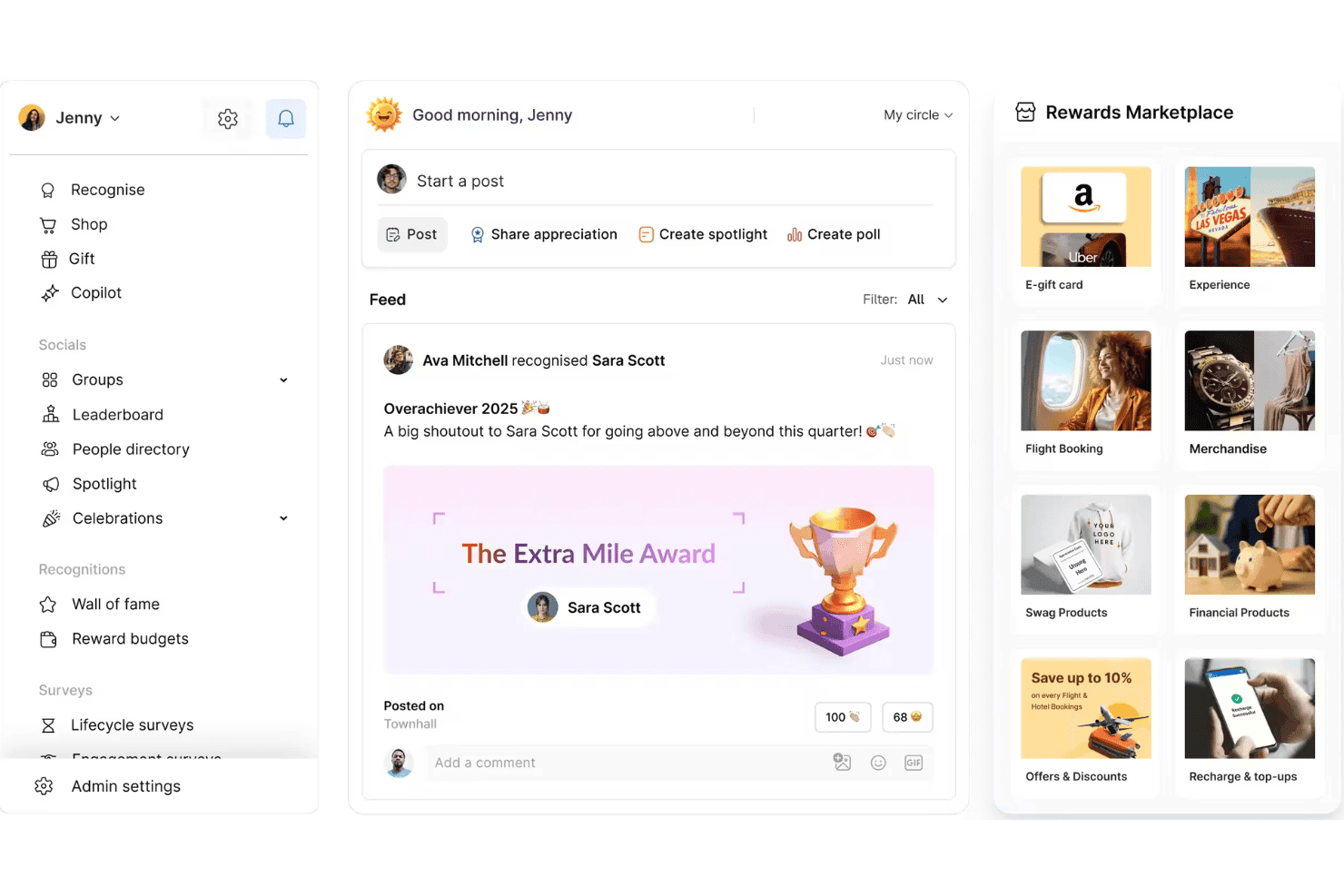
Empuls fosters healthcare staff wellness with rewards, discounts, and surveys. Empuls is an employee perks and engagement platform that combines a rewards and discounts marketplace, peer-to-peer recognition, wellness benefits, pulse surveys, and a social intranet into a single system.
Who Is Empuls Best For?
Empuls is a good fit for HR teams at small-to-midsize healthcare organizations that want recognition, perks, wellness, and engagement surveys in one platform instead of managing several separate tools.
Why I Picked Empuls
Empuls earns its spot on my shortlist because it replaces the usual tangle of separate recognition, perks, wellness, and survey tools with a single platform. I particularly like the OTP-based mobile login, which lets shift-based clinical staff access recognition and rewards without a corporate email or desktop, and the QR-code instant recognition feature that lets supervisors acknowledge a great patient interaction on the spot. The AI-powered flight-risk signals are a genuine differentiator, surfacing burnout patterns before they become turnover.
Empuls Key Features
- Peer-to-peer and manager recognition feed: A social recognition wall where staff can post, react to, and comment on colleague appreciations using 150+ core value badges or custom badges.
- AI-powered flight-risk signals: Empuls Copilot analyzes engagement and survey data to flag employees showing early burnout or disengagement patterns before they escalate.
- Lifecycle survey suite: Configurable pulse surveys, eNPS tracking, onboarding/offboarding surveys, and 360° feedback tools that run automatically based on employee milestones.
- Multi-channel reward delivery: Employees receive recognition and reward notifications via push, SMS, or WhatsApp—no corporate email address required.
Empuls Integrations
Empuls offers 50+ native integrations, including BambooHR, Workday, SAP SuccessFactors, ADP, UKG, HiBob, Microsoft Teams, Slack, Google Workspace, and Zoom, with SAML/SCIM SSO support (Okta, Azure AD) and a full REST API available for custom integrations. Healthcare-specific scheduling connectors (QGenda, Symplr, ShiftKey, Kronos/UKG Dimensions scheduling) are not documented.
Pros and Cons
Pros:
- Built-in AI burnout and flight-risk analytics
- Wide global rewards marketplace breadth
- Mobile-first OTP login for shift clinicians
Cons:
- Wellness partners focus on India, not U.S.
- No healthcare-specific perks like scrubs or CME
Learn more about Empuls: Best for NHS and public healthcare staff perks
- Free demo available
- Pricing upon request
Visit WebsiteCustomer Rating:4.5/5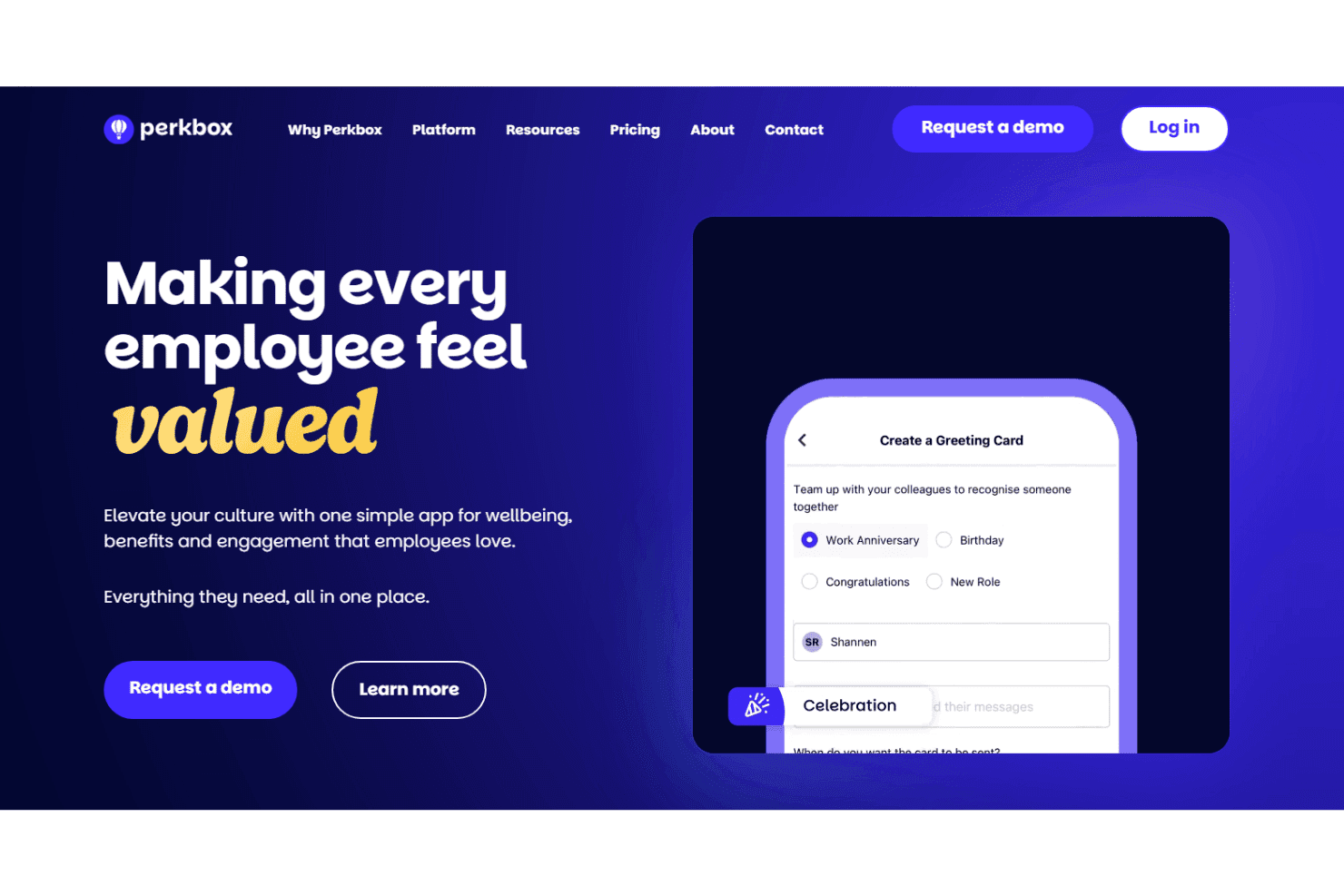
Perkbox backs healthcare staff wellness with EAP, GP access, perks, and rewards. Perkbox is an employee perks platform that combines a discounts marketplace, peer-to-peer recognition, rewards, and wellbeing tools—including an EAP and online GP access—in a single app built for deskless and shift-based workforces.
Who Is Perkbox Best For?
Perkbox is a strong fit for HR managers at NHS trusts and UK public healthcare organizations looking to consolidate perks, recognition, and wellbeing into a single platform for frontline and shift-based staff.
Why I Picked Perkbox
Perkbox earns its spot on my shortlist because it's trusted by over 80% of NHS organizations, making it the go-to perks platform for UK public healthcare staff. I'm particularly impressed by the QR code and kiosk access points that let frontline clinical and facilities staff tap into discounts without ever needing a desktop. The Oxford University Hospitals rollout is a real-world proof point I keep coming back to: 15,000+ employees, £173,000 in employer NI savings, and a 100% increase in staff accessing cost-saving benefits.
Perkbox Key Features
- Peer-to-peer recognition feed: Employees and managers send value-tagged recognitions visible across the entire organization, with scheduled and milestone-based recognition options built in.
- Employee Assistance Programme (EAP): A fully accredited, 24/7 confidential counselling service with licensed counsellors, reporting an 87% user improvement rate.
- Salary sacrifice schemes: Cycle to Work, Home and Electronics, and Car Benefit schemes are available as add-ons, letting employees access tax-efficient purchasing directly through the platform.
- Admin analytics portal: Drill-down usage reporting by team, department, and site, with industry benchmarking and real-time rewards spend tracking.
Perkbox Integrations
Perkbox offers 30+ native integrations, including Workday, BambooHR, HiBob, Lattice, Sage, Breathe HR, Okta, Google Workspace, and Microsoft Azure AD, though only one HRIS connection can be active at a time and no clinical scheduling systems (QGenda, UKG, Symplr) are supported.
Pros and Cons
Pros:
- QR code and kiosk access for frontline staff
- Unified app for perks, wellbeing, recognition
- Broad NHS/public healthcare adoption and trust
Cons:
- UK-centric features limit global applicability
- No healthcare-specific perks or burnout tools
Learn more about Perkbox: 10Best for large-scale clinical staff recognition
Espresa
- Free demo available
- Pricing upon request
Visit WebsiteCustomer Rating:4.2/5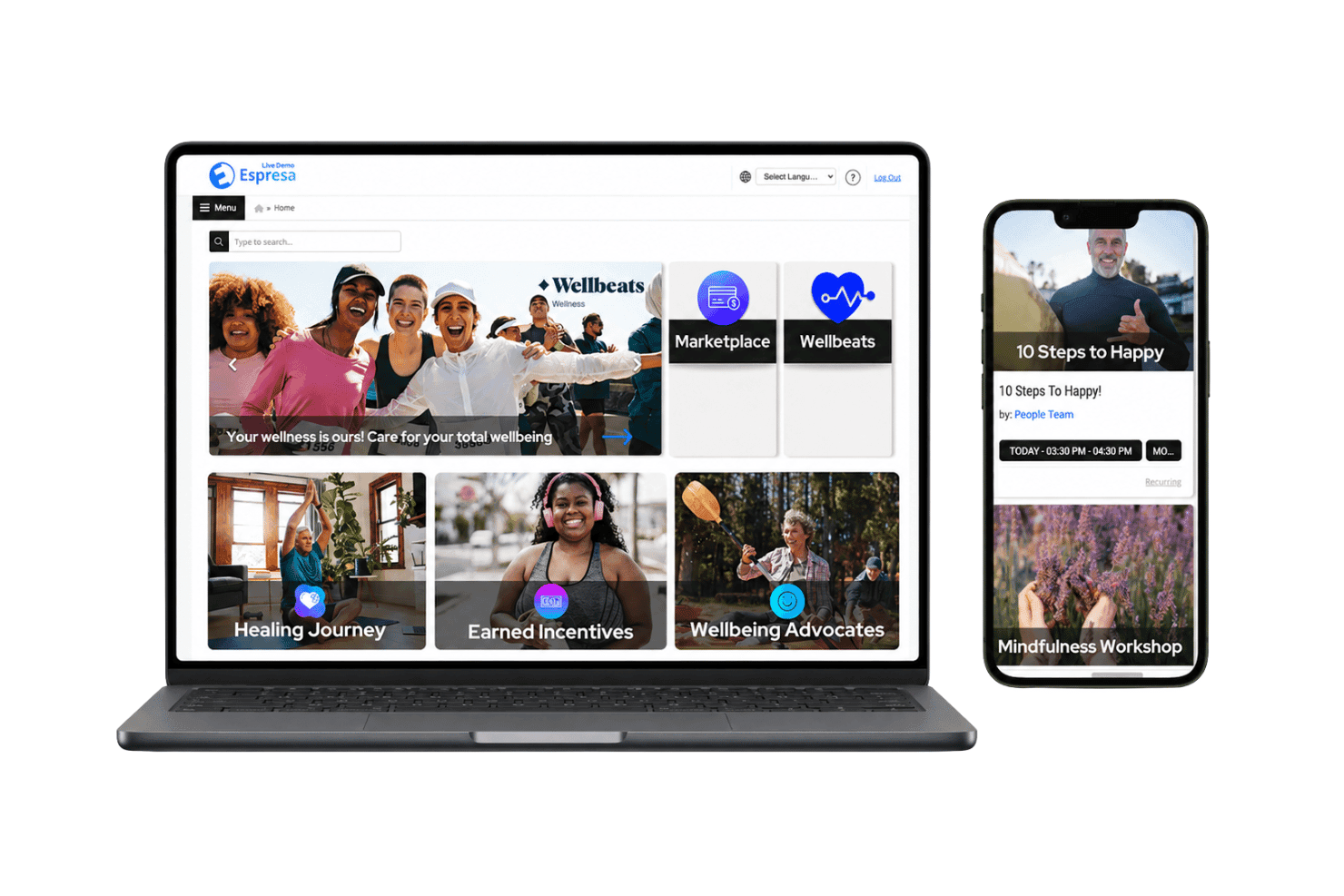
Espresa centralizes wellness perks like incentives and advocacy tools. Espresa is an employee perks platform that brings lifestyle spending accounts, peer recognition, wellbeing challenges, and specialty care benefits together in a single system designed for large, distributed workforces.
Who Is Espresa Best For?
Espresa is a strong fit for HR teams at large health systems managing recognition, wellbeing, and lifestyle spending benefits across thousands of distributed clinical and non-clinical staff.
Why I Picked Espresa
Espresa earns its spot on my shortlist because of how well it handles recognition at scale across large, distributed clinical workforces. I'm particularly impressed by its social recognition wall, peer-to-peer workflows, and 360-degree analytics, which together gave MaineHealth's 25,000-person team across 16 hospitals 43,000+ recognitions in just eight months. Its Specialty Care Accounts, covering GLP-1, HRT, and specialty mental health, add a layer of clinical-grade benefit support I don't see on most recognition platforms.
Espresa Key Features
- Lifestyle spending account (LSA) categories: Employers configure eligible spending categories—such as physical fitness, financial wellness, and professional growth—with funds accessible via a physical or digital Espresa Visa Card.
- Wellbeing challenges module: Employees join gamified health challenges and team competitions, with activity tracked via wearable integrations including Fitbit, Apple Watch, Garmin, and Strava.
- Specialty Care Accounts: Employers fund capped healthcare budgets covering GLP-1 medications, hormone replacement therapy, and specialty mental health services outside standard group health plans.
- AI Eligibility Adviser: An AI-powered claims validation tool reviews employee submissions before processing, with Espresa reporting 99.9% first-pass claim adjudication accuracy.
Espresa Integrations
Espresa offers native integrations with major HRIS, SSO, and wellness platforms, including Workday, ADP, UKG, SAP SuccessFactors, Oracle HCM, Okta, Microsoft Entra ID, Fitbit, Garmin, and Wellbeats, along with wearable syncs for Apple Watch and Strava and marketplace fulfillment via a Visa-backed debit card. An API is available for custom integrations and feed-based syncing with additional HRIS/HCM systems.
Pros and Cons
Pros:
- Specialty care budgets for GLP-1 and HRT
- Unified LSA, recognition, and wellbeing modules
- Proven success with large regional health systems
Cons:
- No clinical scheduling platform integrations
- No named healthcare-specific perks partners
Learn more about Espresa:
Other Healthcare Employee Perks Platforms
Here are some additional healthcare employee perks platforms options that didn’t make it onto my shortlist, but are still worth checking out:
- 11AwardcoBest for recognizing clinical staff across every shift
- 12Bucketlist RewardsBest for frontline clinical staff recognition
- 13BonuslyBest for peer-to-peer recognition with HRIS sync
- 14Cooleaf (ITA Group)Best for engagement-led nurse retention
- 15AssemblyBest for recognition and rewards in small practices
- 16MotivosityBest for burnout signals and nurse retention
- 17WorkhumanBest for enterprise-wide clinical staff recognition
- 18TerryberryBest for recognition-led wellness in clinical teams
- 19FormaBest for flexible benefits across healthcare HR
- 20PerkSpotBest for a free discounts marketplace in healthcare
How I Evaluate Healthcare Employee Perks Platforms
I split my evaluation into baseline criteria every platform must meet and differentiating factors that separate tools built for clinical teams from generic HR software.
Core Functionality (Table Stakes For This List)
When I'm selecting tools for my list, I rank each one on a scale from 0 (does not offer the functionality) to 5 (excels in this area) for each core functionality listed below. I then calculate the tool's total score into a percentage, using 65% as a benchmark to help assess its overall fit for the list.
- Perks & discounts marketplace: I check whether the catalog goes beyond generic retail discounts to include perks healthcare staff actually use, like scrubs, continuing education, or childcare deals.
- Recognition & rewards: The platform should support both peer-to-peer and manager-led recognition with a real rewards catalog, not just kudos badges that collect dust.
- Wellness & mental health benefits: I look for built-in wellness stipends or mental health resources that address burnout head-on, especially for high-stress clinical roles.
- Shift-worker accessibility: A native mobile app matters here. Nurses and techs working overnight rotations need push notifications and full feature access from their phones.
- HRIS & payroll integration: Platforms that connect with systems like ADP, UKG, or Workday save your HR team from manually syncing employee eligibility every pay cycle.
- Engagement analytics & reporting: I evaluate whether dashboards let you segment participation by department or role, so you can spot which teams are disengaged before turnover spikes.
Once I have a list of tools that meet the criteria, I consider what sets each platform apart.
Differentiating Factors (What Sets Vendors Apart)
Here's how I compare and contrast different vendors:
Standout Features
I look for burnout risk signals like pulse surveys and engagement heatmaps that flag at-risk departments before turnover hits. A night-shift nursing unit showing declining sentiment scores is exactly the kind of early warning that lets you act, not react. Service milestone automation matters too—platforms like Awardco and Vantage Circle can trigger recognition for nursing anniversaries or board certifications without manual tracking. I also evaluate shift-scheduling sync with tools like QGenda or UKG, so rewards tie to actual worked shifts rather than outdated rosters.
Beyond Features
I check whether a platform can deploy without a dedicated HRIS admin, since most clinics under 100 staff don't have one. Minimum seat counts and pricing tiers that fit a 20-person practice matter as much as enterprise scalability. I also evaluate integration depth with payroll systems like ADP or Paychex and scheduling tools like QGenda, because manual roster syncing burns HR time fast. Finally, I look for healthcare-specific compliance posture—SOC 2 Type II certification, role-based access controls, and clear policies on how reward incentives align with anti-kickback regulations.
How to Choose a Healthcare Employee Perks Platform
When you’re deciding which healthcare employee perks platform is right for your team, ask: Which real-world staff, scheduling, and regulatory needs matter most in your clinic, and can the platform handle those without creating more admin work?
| If your priority is... | Look for... |
|---|---|
| If your priority is...Minimizing admin work | Look for...Deep integration with your HRIS/payroll and auto-sync rosters |
| If your priority is...Retaining shift-based clinical staff | Look for...Mobile-first platforms with in-shift recognition features |
| If your priority is...Supporting nurse well-being and burnout | Look for...Built-in wellness stipends and mental health support tools |
| If your priority is...Scaling across multiple clinic sites | Look for...Multi-location configuration and site-level reporting |
| If your priority is...Protecting against compliance risk | Look for...SOC 2 Type II and role-based access controls |
How to Vet Your Shortlist
- Check system integration: Request a live demo showing how the platform syncs with your current HR/payroll system and scheduling tools.
- Test mobile access: Launch a week-long trial and have night-shift staff send and receive recognition via the mobile app.
- Confirm perks relevance: Ask for a full perks catalog export and verify it includes healthcare-specific options, not just retail discounts.
- Verify compliance posture: Request SOC 2 Type II certification and a written statement on anti-kickback compliance as it relates to clinical rewards.
- Tradeoff—scalability vs. healthcare focus: Decide if you need a healthcare-specialized solution that prioritizes clinical workflows or a generalist HR platform with broader HRIS features.
What Is Healthcare Employee Perks Platforms?
Healthcare employee perks platforms are digital tools that help clinics and health systems recognize, reward, and support their staff. These platforms typically offer access to perks, wellness benefits, and recognition programs tailored to clinical and administrative teams.
They are designed to fit shift-based workflows, reduce manual administration, and help organizations drive engagement, support retention, and improve overall team well-being in high-pressure healthcare environments.
Features of Healthcare Employee Perks Platforms
When selecting healthcare employee perks platforms, keep an eye out for the following key features:
Perks and discounts marketplace: A curated catalog of deals and perks tailored for healthcare staff, such as discounts on scrubs, continuing education, meal services, or childcare. This ensures benefits feel relevant to day-to-day clinical and non-clinical roles.
Recognition and rewards system: Allows both peer-to-peer and manager-driven recognition that ties to tangible rewards, not just digital badges. This helps foster a positive work culture and encourages ongoing engagement from all levels of staff.
Wellness and mental health benefits: Offers access to wellness stipends, mental health resources, or stress management tools specifically designed to address the burnout risks unique to healthcare settings.
Mobile accessibility: Provides a mobile app with push notifications and full functionality, so shift-based employees can access features, receive recognition, or redeem perks during nonstandard hours or on the go.
HRIS and payroll integration: Connects with HR information systems and payroll platforms like ADP, UKG, or Workday, reducing manual data entry and keeping employee records and eligibility aligned automatically.
Engagement analytics and reporting: Dashboards and reporting tools reveal perk usage and recognition trends across sites, departments, and roles, so administrators can spot disengaged teams and prioritize interventions.
Shift scheduling synchronization: Syncs with healthcare scheduling software to ensure reward and recognition programs reflect actual worked shifts and are accessible to night and weekend staff.
Automated milestone tracking: Automatically triggers service anniversaries or certification-based recognition, so key events and achievements never go unnoticed.
Role-based access controls: Allows organizations to set custom permissions and visibility for managers, HR, and staff, supporting healthcare compliance and privacy requirements.
Compliance and security standards: Built-in support for SOC 2 Type II certification and clear controls to ensure compliance with healthcare regulations and anti-kickback statutes when offering incentives to clinical staff.
Common Healthcare Employee Perks Platforms AI Features
Beyond the standard healthcare employee perks platforms features listed above, many of these solutions are incorporating AI with features like:
AI-driven engagement insights: Uses machine learning to analyze participation data, recognition trends, and sentiment from surveys to flag departments or teams at risk of disengagement or turnover. This helps you target interventions before issues escalate.
Personalized perk recommendations: AI algorithms suggest relevant perks, rewards, or wellness resources to individual staff based on their role, shift patterns, and past engagement, making the experience feel tailored and increasing usage.
Automated recognition prompts: AI monitors work anniversaries, certifications, and even shift completion data to trigger timely recognition suggestions for managers and peers, reducing the chance of missing key milestones.
Natural language processing for feedback analysis: Analyzes survey and recognition feedback to uncover themes, concerns, and trends.
Predictive retention modeling: AI analyzes historical engagement, recognition, and scheduling data to predict which employees may be at higher risk of leaving, allowing HR to proactively address retention challenges.
Benefits of Healthcare Employee Perks Platforms
Implementing healthcare employee perks platforms provides several benefits for your team and your business. Here are a few you can look forward to:
- Increased staff retention: Relevant perks, wellness support, and recognition can improve staff retention.
- Reduced burnout and improved well-being: Wellness stipends and mental health resources support staff in high-stress roles.
- Simplified HR administration: HRIS, payroll, and scheduling integrations keep employee data and eligibility current.
- Greater engagement visibility: Analytics reveal participation trends and disengaged teams before turnover rises.
- Mobile access for shift workers: Mobile apps give night and weekend staff access to perks and recognition anytime.
- Stronger compliance and security: SOC 2 Type II, access controls, and reward safeguards support healthcare compliance.
- Timely, personalized recognition: Automated milestones and AI prompts keep achievements and anniversaries recognized.
Costs and Pricing of Healthcare Employee Perks Platforms
Selecting healthcare employee perks platforms requires an understanding of the various pricing models and plans available. Costs vary based on features, team size, add-ons, and more. The table below summarizes common plans, their average prices, and typical features included in healthcare employee perks platforms solutions:
Plan Comparison Table for Healthcare Employee Perks Platforms
| Plan Type | Average Price | Common Features |
|---|---|---|
| Plan TypeFree Plan | Average Price$0 | Common FeaturesAccess to limited perks marketplace, basic recognition tools, and standard mobile app access. |
| Plan TypePersonal Plan | Average Price$5–$10/user/month | Common FeaturesAccess to expanded perks catalog, peer recognition, mobile app notifications, and basic reporting dashboards. |
| Plan TypeBusiness Plan | Average Price$10–$20/user/month | Common FeaturesFull perks and discounts marketplace, peer and manager recognition, wellness and mental health benefits, mobile scheduling, and HRIS sync. |
| Plan TypeEnterprise Plan | Average Price$20–$30/user/month | Common FeaturesCustom integrations, engagement analytics, role-based access, compliance support, automated milestone tracking, and advanced reporting. |
Healthcare Employee Perks Platforms FAQs
Here are some answers to common questions about healthcare employee perks platforms:
How do healthcare employee perks platforms support compliance with healthcare regulations?
Yes, most healthcare employee perks platforms support compliance by offering features like SOC 2 Type II certification, role-based access controls, and controls to align rewards with anti-kickback laws. These are especially important if you deliver incentives to clinical staff, since healthcare-specific regulations can be strict about gifts and perks.
Can small clinics without a dedicated HR team use these platforms easily?
Yes, many platforms are designed so you don’t need a full-time HRIS admin. Some offer fast onboarding, minimum seat counts under 20, self-service setup, and integrations that reduce ongoing admin work. That makes them practical for clinics or practices with limited HR resources.
Can rewards be managed differently across departments or clinical roles?
Many platforms allow administrators to create separate programs, eligibility rules, budgets, or recognition criteria for different employee groups. This can be useful when nurses, physicians, administrative staff, technicians, and other teams have different schedules, responsibilities, or wellness needs.
How can I tell whether the available perks will actually appeal to healthcare staff?
Review the vendor’s rewards and benefits catalog before selecting a platform. Look for options relevant to clinical work, such as wellness services, childcare support, meal benefits, fitness programs, continuing education resources, transportation benefits, and discounts on work-related essentials.
Can night-shift, weekend, and per-diem staff participate in the same perks program?
Yes, but accessibility varies by platform. Look for mobile access, asynchronous recognition, automated eligibility rules, and notifications that do not depend on employees being online during standard office hours. This can make programs more accessible to staff working rotating or irregular schedules.
Can the platform support multiple hospitals, clinics, or practice locations?
Many platforms support location-based administration and reporting. Look for features that allow each facility or department to manage recognition locally while maintaining organization-wide policies, reporting, and program oversight.