

Ambulatory surgery center EMR software is a digital platform built to manage patient records, documentation, and workflows for outpatient surgical facilities. If you’re comparing ASC EMR software, you’re likely looking for ways to reduce paperwork, keep teams coordinated, and meet compliance requirements without slowing down your daily operations. With so many options—each promising unique features or specialty focuses—it’s tough to know where to start. This guide sorts through the top ASC EMR systems, highlights what matters most in clinical and administrative settings, and aims to help you confidently choose the right fit for your center.
Why Trust Our Software Recommendations
6,700+
Reviews
20
Industry experts
16+
Evaluation factors
14
Years
Our team has been testing and reviewing software since 2012. As medical practice leaders ourselves, we know how difficult—and important—it is to choose the right software.
For this guide, we evaluated tools using hands-on testing and independent research, scoring tools using our selection criteria.
Our reviews reflect our human editorial judgment, not a sales pitch.
Ambulatory Surgery Center EMR Software Comparison Table
This comparison table summarizes pricing details for my top ambulatory surgery center EMR software selections:
| Tool | Best For | Trial Info | Price | ||
|---|---|---|---|---|---|
| 1 | Best for customizable ambulatory EHR | Free demo available | From $249/user/month | Website | |
| 2 | Best for flexible ASC documentation | Free demo available | From $280/user/month | Website | |
| 3 | Best for enterprise surgical care | Not available | Pricing upon request | Website | |
| 4 | Best for ASC billing and practice management | Free demo available | Pricing upon request | Website | |
| 5 | Best for streamlined surgical documentation | Free demo available | Pricing upon request | Website | |
| 6 | Best for ASC scheduling and billing | Free demo available | Pricing upon request | Website | |
| 7 | Best for end-to-end ASC management | Free demo available | Pricing upon request | Website | |
| 8 | Best for specialty-focused ASC workflows | Free demo available | Pricing upon request | Website | |
| 9 | Best for ASC clinical documentation | Free demo available | Pricing upon request | Website | |
| 10 | Best for perioperative workflow management | Not available | Pricing upon request | Website |


Best Ambulatory Surgery Center EMR Software Reviews
Below are my detailed summaries of the best ambulatory surgery center EMR software that made it onto my shortlist. My reviews offer a detailed look at the features, best use cases, and integrations of each software to help you find the best one for you.
 Best for customizable ambulatory EHR
- Free demo available
- From $249/user/month
Visit WebsiteCustomer Rating:4.4/5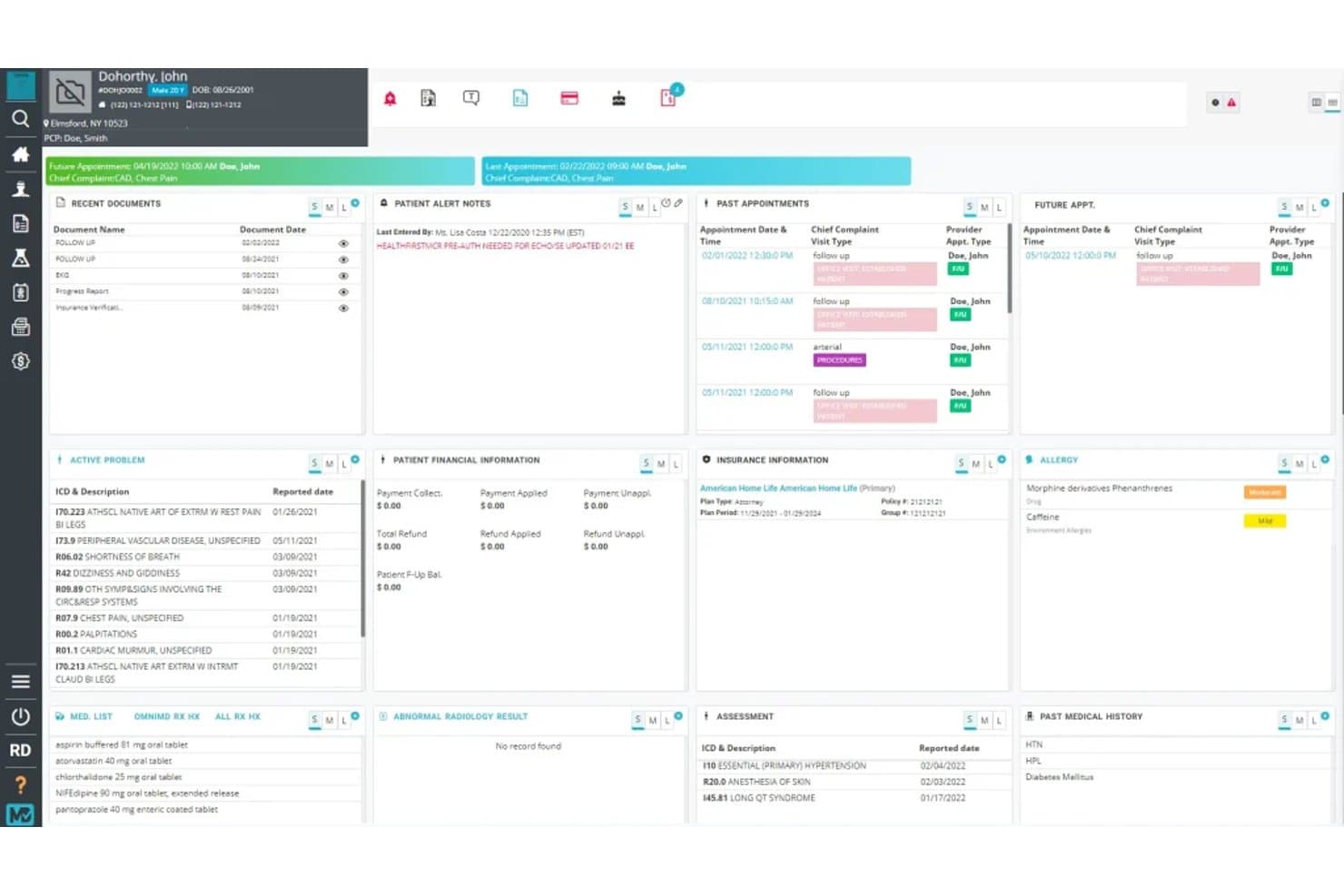
OmniMD offers a comprehensive patient dashboard displaying medical history, appointments, active problems, insurance, allergies, and financial information for ambulatory surgery centers. OmniMD is an AI-native ambulatory EMR platform that combines perioperative documentation, OR scheduling, ASC-specific billing, ASCQRP quality reporting, and specialty-specific clinical templates across surgical disciplines.
Who Is OmniMD Best For?
OmniMD suits single-specialty and multispecialty ASCs looking for a surgical EMR that adapts to their specific procedures, documentation standards, and billing workflows.
Why I Picked OmniMD
I picked OmniMD as one of the best because of how deeply it adapts to each surgical specialty. The GI workflow timestamps scope insertion and withdrawal, the cataract workflow captures IOL type and power within the operative note, and the orthopedic workflow logs implant lot numbers and UDIs directly at charge entry. That level of specialty-specific customization is built into the documentation itself, not added as a generic afterthought.
OmniMD Key Features
- Real-time OR status board: Displays room assignments, turnovers, and surgical progress for all active cases.
- ASCQRP quality reporting dashboard: Automatically tracks and compiles ASC quality measures for Medicare and benchmarking.
- EPCS and PDMP integration: Enables electronic prescribing of controlled substances and automates prescription drug monitoring compliance.
- HL7 and FHIR lab integration: Lets you electronically order labs and receive discrete results directly in the patient chart.
OmniMD Integrations
OmniMD offers native integrations with LabCorp, Quest Diagnostics, and regional labs for electronic lab ordering and results. The platform also supports HL7 and FHIR standards for data exchange and provides an API for custom integrations.
Pros and Cons
Pros:
- Built-in OR status and turnover management
- Automated ASCQRP and Medicare quality reporting
- Specialty-specific perioperative documentation templates
Cons:
- No built-in barcode scanning for inventory
- Anesthesia workflows lack direct monitor integration
Learn more about OmniMD: Best for flexible ASC documentation
- Free demo available
- From $280/user/month
Visit WebsiteCustomer Rating:4.1/5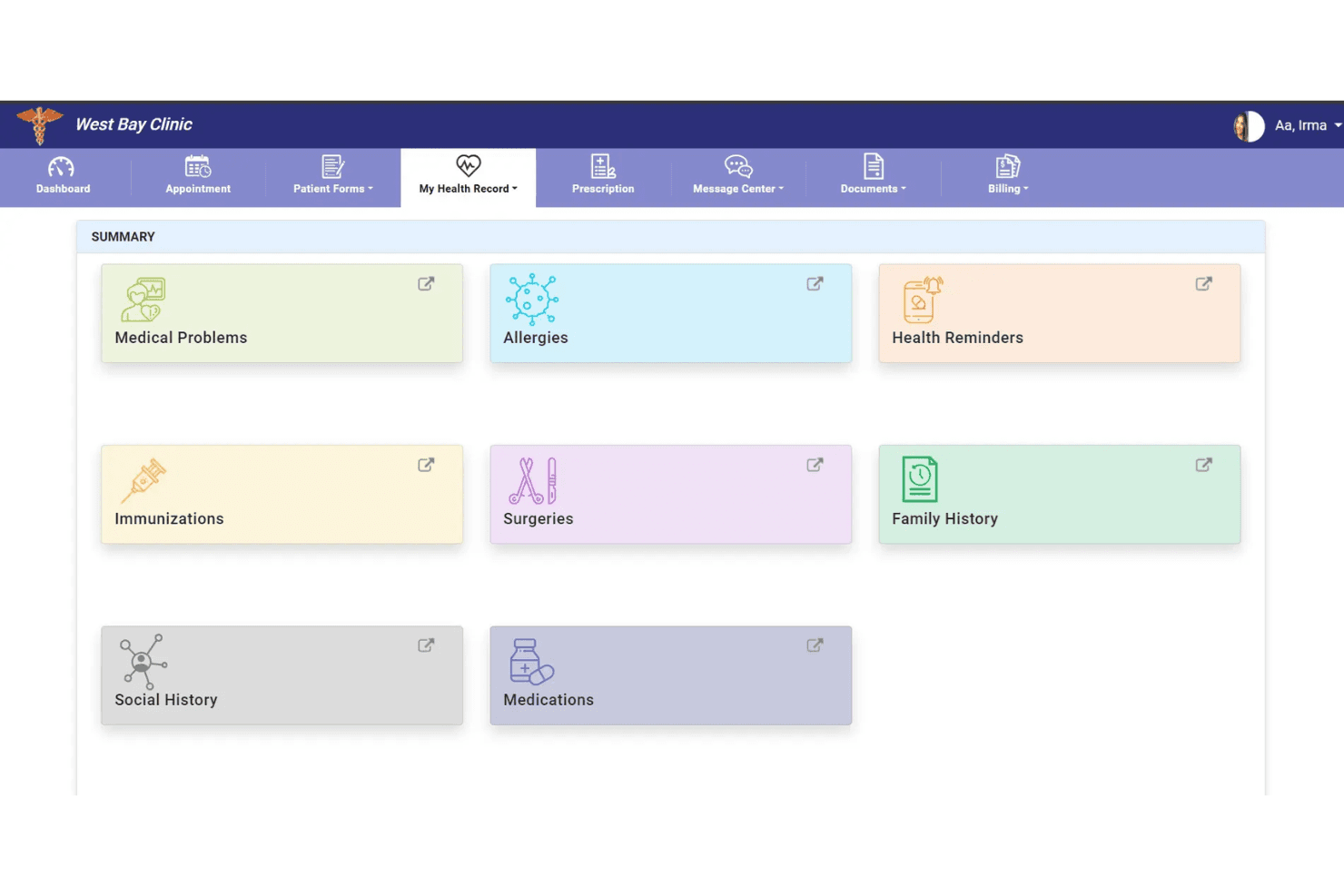
PrognoCIS provides a patient portal for accessing health summaries and managing appointments. PrognoCIS is a cloud-based EHR platform with a dedicated ASC module that covers pre-op and post-op charting, OR scheduling, anesthesia documentation, surgical billing, and inventory tracking.
Who Is PrognoCIS Best For?
PrognoCIS is a strong fit for small to mid-sized ASCs that need customizable clinical documentation across multiple surgical specialties.
Why I Picked PrognoCIS
I picked PrognoCIS as one of the best because its ASC documentation module lets surgical teams build custom pre-op and post-op charting templates by specialty, rather than forcing everyone into a one-size-fits-all layout. I also like that data entered at pre-op pushes directly to the nursing station without re-entry. The open API support means you can build additional custom templates specific to your actual case mix.
PrognoCIS Key Features
- Integrated pre-op scheduling: Schedule and manage surgeries with built-in coordination for pre-operative planning and resources.
- Real-time prescriptions: Authorize and track medications with ePrescribing and alternative therapy suggestions for patients.
- Surgical supply tracking: Monitor and manage inventory levels for surgical supplies and equipment within the ASC module.
- API access for interoperability: Connect with labs, imaging systems, and external billing platforms using open API support and HL7/FHIR compliance.
PrognoCIS Integrations
PrognoCIS offers native integrations with Amazon, FDB (First Databank), Merck Manuals, MedlinePlus, and Surescripts. It supports API access for custom integrations and connects to labs, radiology companies, and vaccine registries.
Pros and Cons
Pros:
- Direct data transfer from pre-op to nursing station
- Customizable perioperative charting workflows available
- Flexible ASC documentation templates across specialties
Cons:
- Lacks dedicated implant and preference card management
- Limited reporting for AAAHC and ASCQR requirements
Learn more about PrognoCIS: 3Best for enterprise surgical care
Epic
- Not available
- Pricing upon request
Visit WebsiteCustomer Rating:4.2/5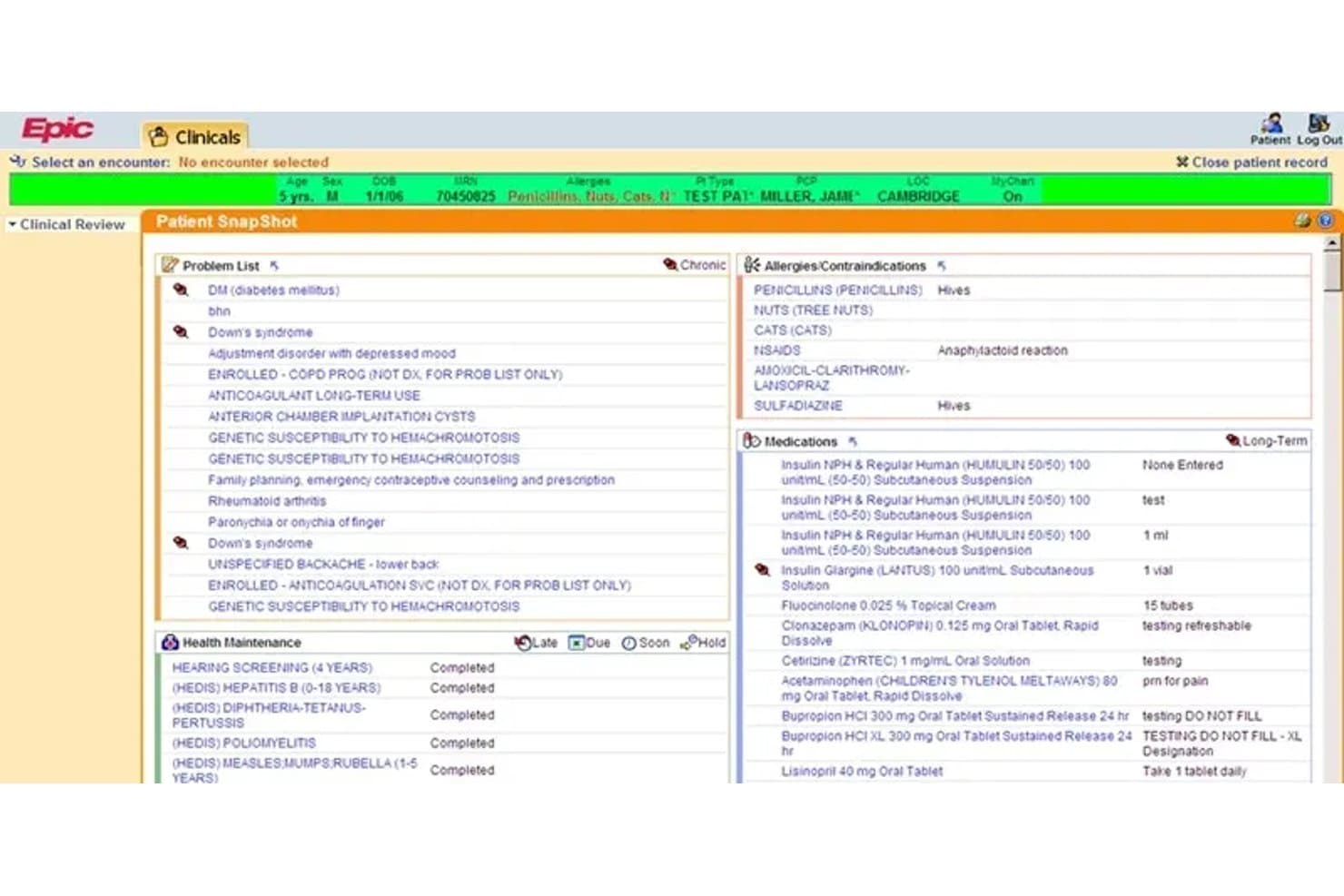
Epic offers a Clinical Review Patient Snapshot screen displaying problem lists, allergies, contraindications, medications, and health maintenance records in its ambulatory EMR software. Epic is an enterprise EHR platform with dedicated surgical modules, including OpTime for OR scheduling and perioperative documentation, and a fully integrated anesthesia record system for hospital-affiliated and large multi-specialty ambulatory surgery centers.
Who Is Epic Best For?
Epic is a natural fit for large health systems and integrated delivery networks that operate or oversee hospital-affiliated ambulatory surgery centers.
Why I Picked Epic
I picked Epic as one of the best because OpTime's Snapboard gives surgical teams a live OR board with drag-and-drop case management, block scheduling, and automatic conflict detection. What I find especially valuable is how Case Requests flow directly from EpicCare Ambulatory into the OR schedule, removing back-and-forth between surgical offices and the ASC. Epic's integrated anesthesia module captures real-time vitals and medication administration tied directly to each operative record.
Epic Key Features
- Customizable perioperative templates: Build and tailor charting templates for specialty surgical workflows within ambulatory surgery centers.
- Integrated implant and supply tracking: Monitor implant use and surgical supplies with preference cards and case-based deduction features.
- Regulatory and quality reporting suite: Access tools that generate reports for AAAHC, Medicare ASCQR, and track infection rates and outcomes.
- Interoperability with third-party systems: Connect with hospital EHRs, anesthesia devices, labs, and imaging for seamless data exchange.
Epic Integrations
Epic offers native integrations with other Epic modules including EpicCare Ambulatory, OpTime, Anesthesia, MyChart, Haiku, and Canto. It supports interoperability through FHIR and HL7, and an API is available for custom integrations.
Pros and Cons
Pros:
- Deep quality reporting for surgical outcomes
- Integrated anesthesia and perioperative documentation
- Real-time OR board and case management
Cons:
- Hospital-focused features increase system complexity
- ASC configuration requires extensive customization
Learn more about Epic: Best for ASC billing and practice management
- Free demo available
- Pricing upon request
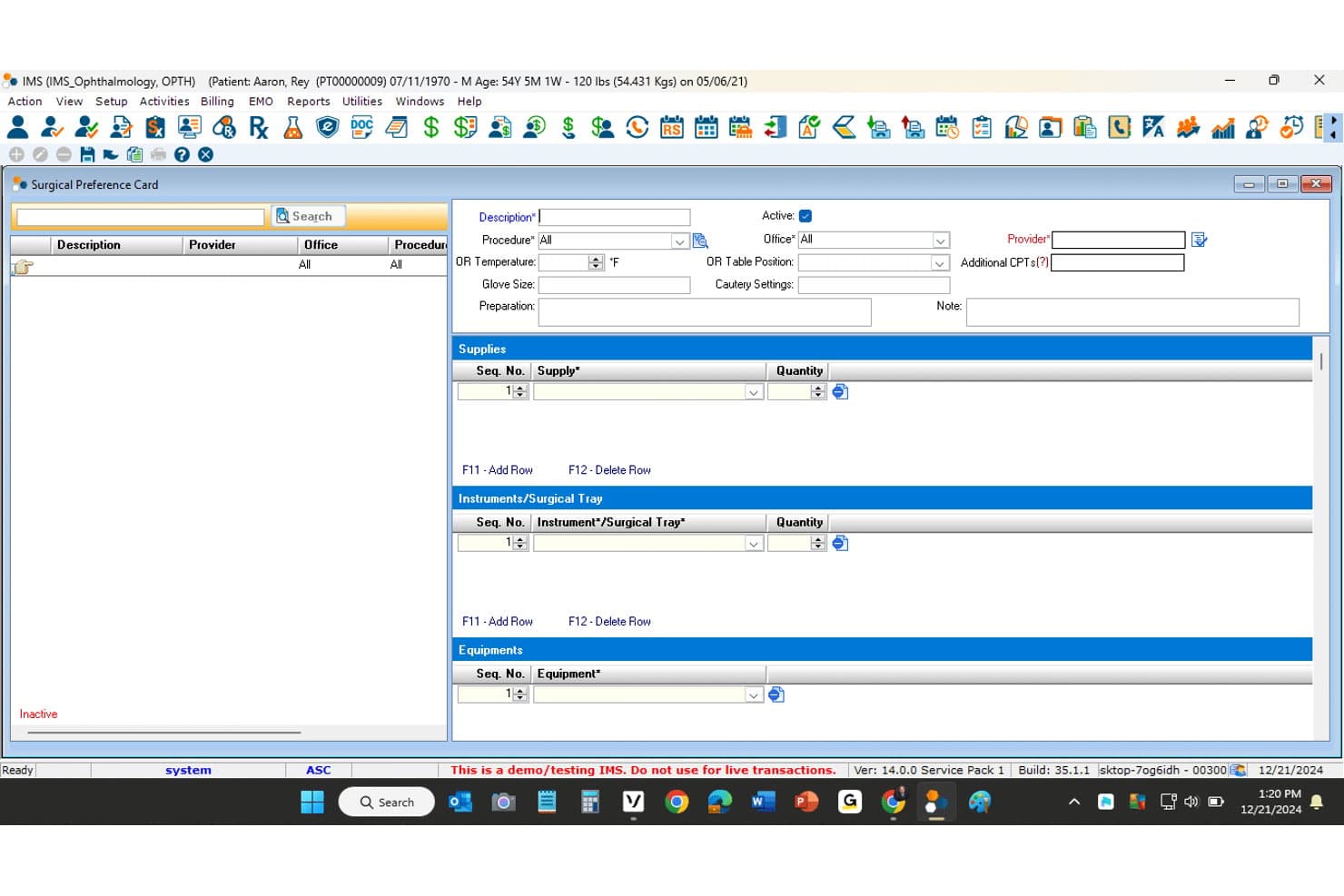
1st Providers Choice offers a Surgical Preference Card module within its ASC EMR, allowing staff to configure procedure-specific supplies, instruments, and equipment. 1st Providers Choice is an ASC-specific EMR and practice management platform covering perioperative documentation, OR scheduling, surgical charge capture, anesthesia records, and integrated billing.
Who Is 1st Providers Choice Best For?
It's a strong fit for multi-specialty ambulatory surgery centers that need deeply customizable, specialty-specific workflows without juggling separate billing and clinical systems.
Why I Picked 1st Providers Choice
I picked 1st Providers Choice as one of the best because its billing engine is genuinely built around ASC workflows, not retrofitted from a general practice platform. The automatic pre-claim analysis catches coding issues before submission, and ERA reconciliation closes the loop on payments without manual matching. I also like that surgical preference cards and charge capture live in the same system, so case costs and billable items don't fall through the gaps between clinical and billing staff.
1st Providers Choice Key Features
- Customizable ASC chart templates: Tailor pre-op, intra-op, and post-op notes with specialty-specific fields and configurations.
- Integrated patient portal: Give patients access to their records, pre-surgery instructions, and secure messaging in one system.
- Healthcare device integration: Connects with PACS, digital x-ray, fluoroscopy, anesthesia machines, and vitals monitors for real-time data capture.
- ONC certified compliance tools: Supports HIPAA, CMS QPP, and AAAHC documentation for regulatory alignment.
1st Providers Choice Integrations
1st Providers Choice offers native integrations with Availity, Optum Insight, Office Ally, Gateway EDI, Realmed, Emdeon, United, Blue Cross, Medicare EDI, Mindray, and PACS/DICOM imaging systems. HL7 and FHIR interoperability and an API are available for custom integrations.
Pros and Cons
Pros:
- Automated ASC billing rules and pre-claim checks
- Integrated anesthesia records with device connectivity
- Specialty-specific ASC charting and case templates
Cons:
- Fewer out-of-the-box analytics dashboards
- Limited mobile and telehealth functionality
Learn more about 1st Providers Choice: Best for streamlined surgical documentation
- Free demo available
- Pricing upon request
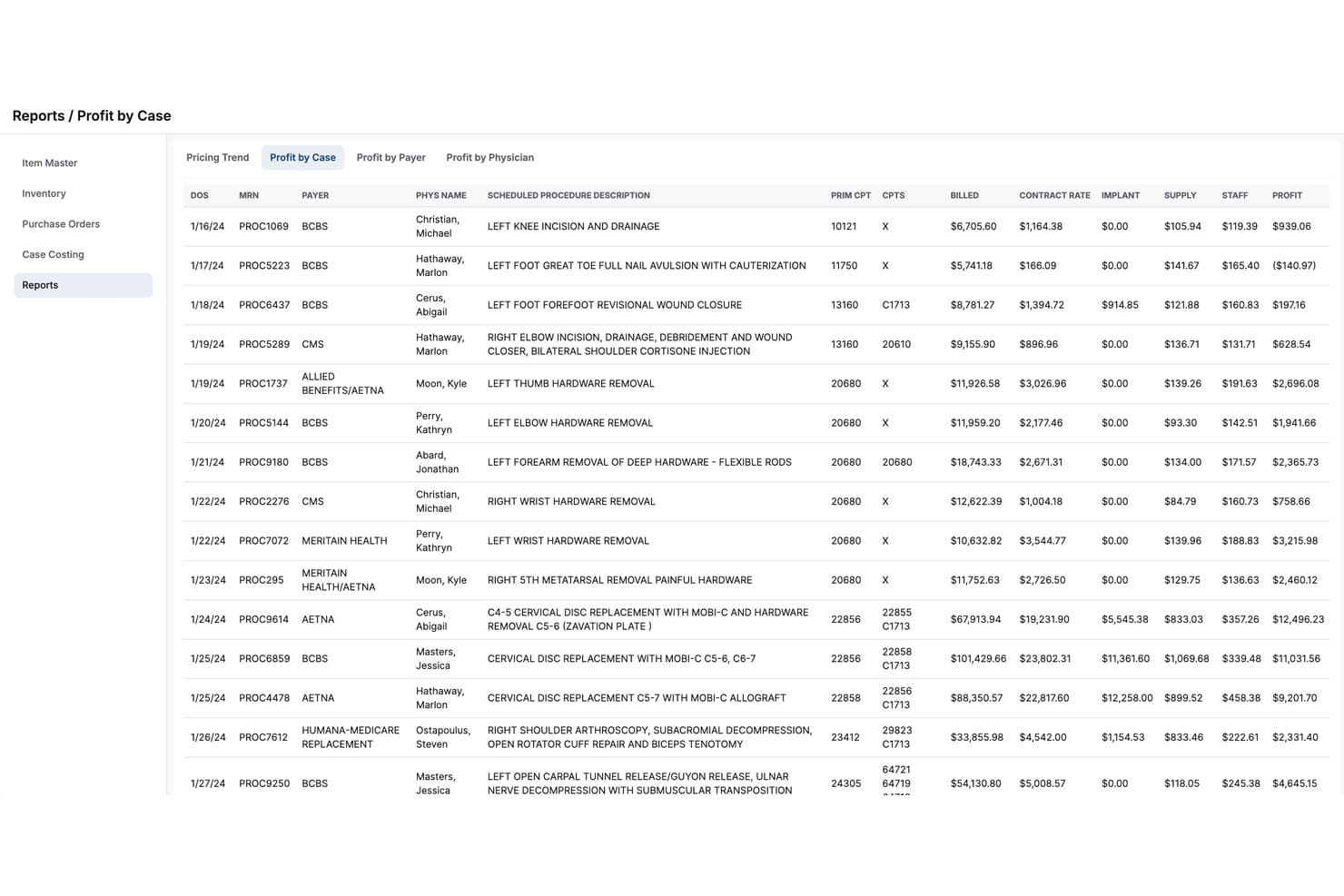
Procision EMR offers a detailed Profit by Case report showing billed amounts, contract rates, implant costs, supply costs, staff costs, and profit per surgical procedure. Procision EMR is an ASC-native electronic medical records platform built specifically for surgery centers, combining perioperative charting, OR scheduling, RCM, and materials management in a single cloud-based system.
Who Is Procision EMR Best For?
Procision EMR is a strong fit for ASC administrators and perioperative nursing directors who need surgical documentation tools built around OR workflows.
Why I Picked Procision EMR
I picked Procision EMR as one of the best because its documentation workflow is genuinely designed around how surgery centers operate. Built-in compliance hard stops flag incomplete charts before they reach billing, and data flows automatically between pre-op, intra-op, and post-op records to eliminate redundant entry. The tablet-optimized interface means my team can document directly at the bedside without switching devices between care phases.
Procision EMR Key Features
- Smart Scheduling module: Automates block scheduling and imports multiple surgical cases at once for quick OR planning.
- Built-in compliance hard stops: Flags any incomplete or non-compliant charts before claims submission.
- Customizable chart templates: Allows centers to tailor documentation formats to match specialty needs like ophthalmology or orthopedics.
- Automated clinical calculations: Calculates BMI, risk scores, and other key data points without manual entry.
Procision EMR Integrations
Native integrations are not clearly documented. An API is available for custom integrations, and the Practice Portal connects with referring surgeon office EMRs.
Pros and Cons
Pros:
- Built-in ASC-specific compliance hard stops
- Bulk import tool for high-volume case scheduling
- Tablet-optimized perioperative charting for ASC staff
Cons:
- No anesthesia device connectivity documented
- Limited native integrations with external systems
Learn more about Procision EMR: Best for ASC scheduling and billing
- Free demo available
- Pricing upon request
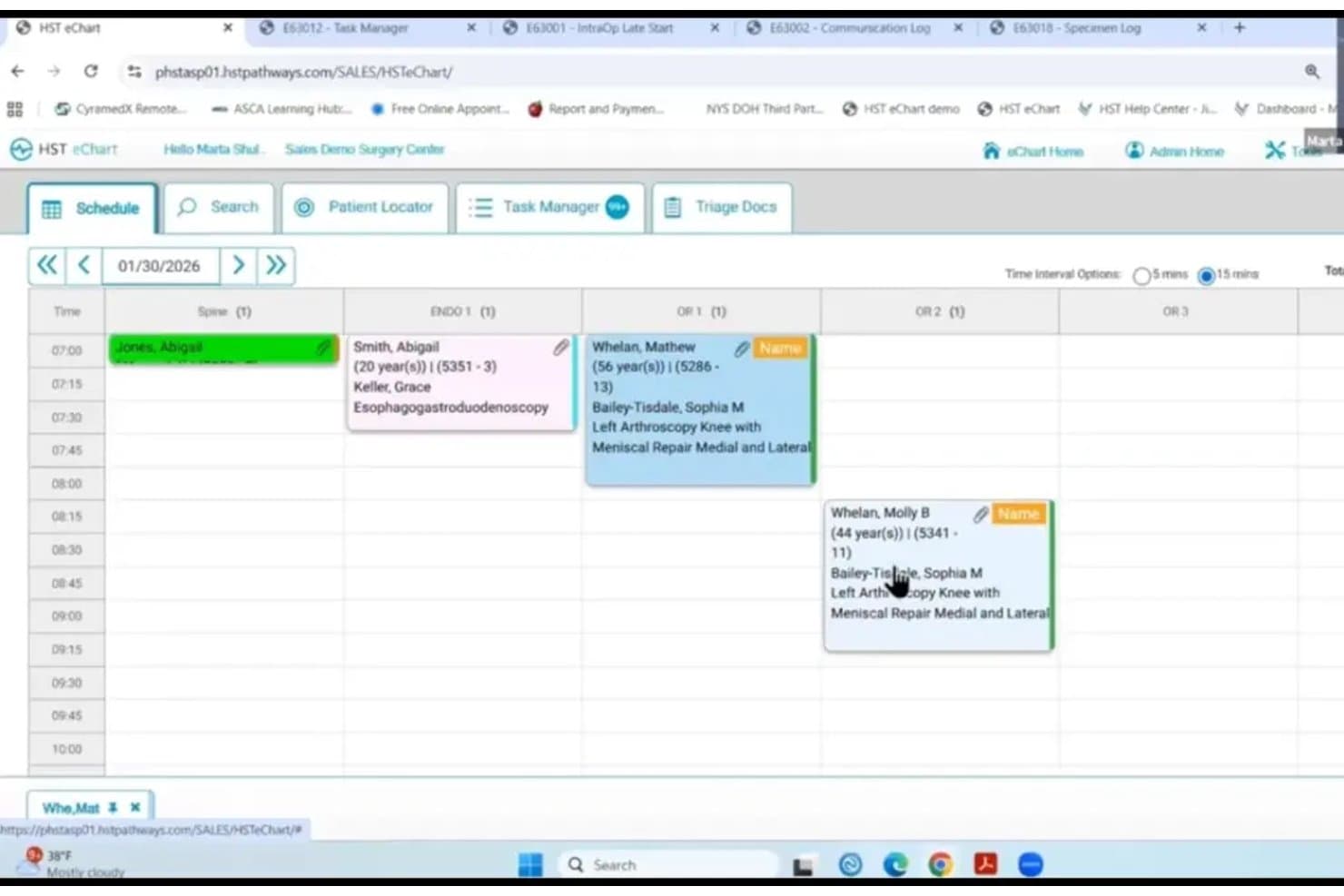
HST Pathways offers a surgical schedule view displaying patient cases across multiple operating rooms with procedure and surgeon details. HST Pathways is a cloud-based EMR and practice management platform built exclusively for ambulatory surgery centers, covering perioperative charting, OR scheduling, case coordination, and ASC-specific billing.
Who Is HST Pathways Best For?
HST Pathways is a strong fit for ASC administrators and revenue cycle managers who need a single platform to handle surgical scheduling, clinical documentation, and billing.
Why I Picked HST Pathways
HST Pathways earns its spot on my shortlist because of how tightly its scheduling and billing tools are built around ASC-specific workflows. I particularly like the Case Coordination module, which handles OR block management and lets surgeon offices post cases directly for ASC approval. On the billing side, the Waystar clearinghouse integration helps submit clean claims on the first pass, and Case Profit Estimations shows case margin before it even hits the OR.
HST Pathways Key Features
- LiveEdit concurrent charting: Multiple users can edit patient charts at the same time to support perioperative workflows.
- Physician preference card management: Create digital preference cards that auto-populate supply lists for each surgeon and procedure.
- Raw ASC Data module: Export clinical, operational, and financial data to external BI tools for advanced analytics and reporting.
- Integrated inventory tracking: Deducts supplies case-by-case, logs implant usage, and connects with centralized purchasing partners.
HST Pathways Integrations
HST Pathways offers native integrations with Waystar, Advantien, and BI tools like Tableau and Power BI. It supports HL7 interfaces with hospital and physician office systems and provides an API for custom integrations.
Pros and Cons
Pros:
- Built-in case profitability and margin analytics
- ASC-specific preference cards and inventory tracking
- Live multi-user charting with concurrent edits
Cons:
- Limited specialty-specific reporting for benchmarking
- No fully automated anesthesia device integration
Learn more about HST Pathways: Best for end-to-end ASC management
- Free demo available
- Pricing upon request
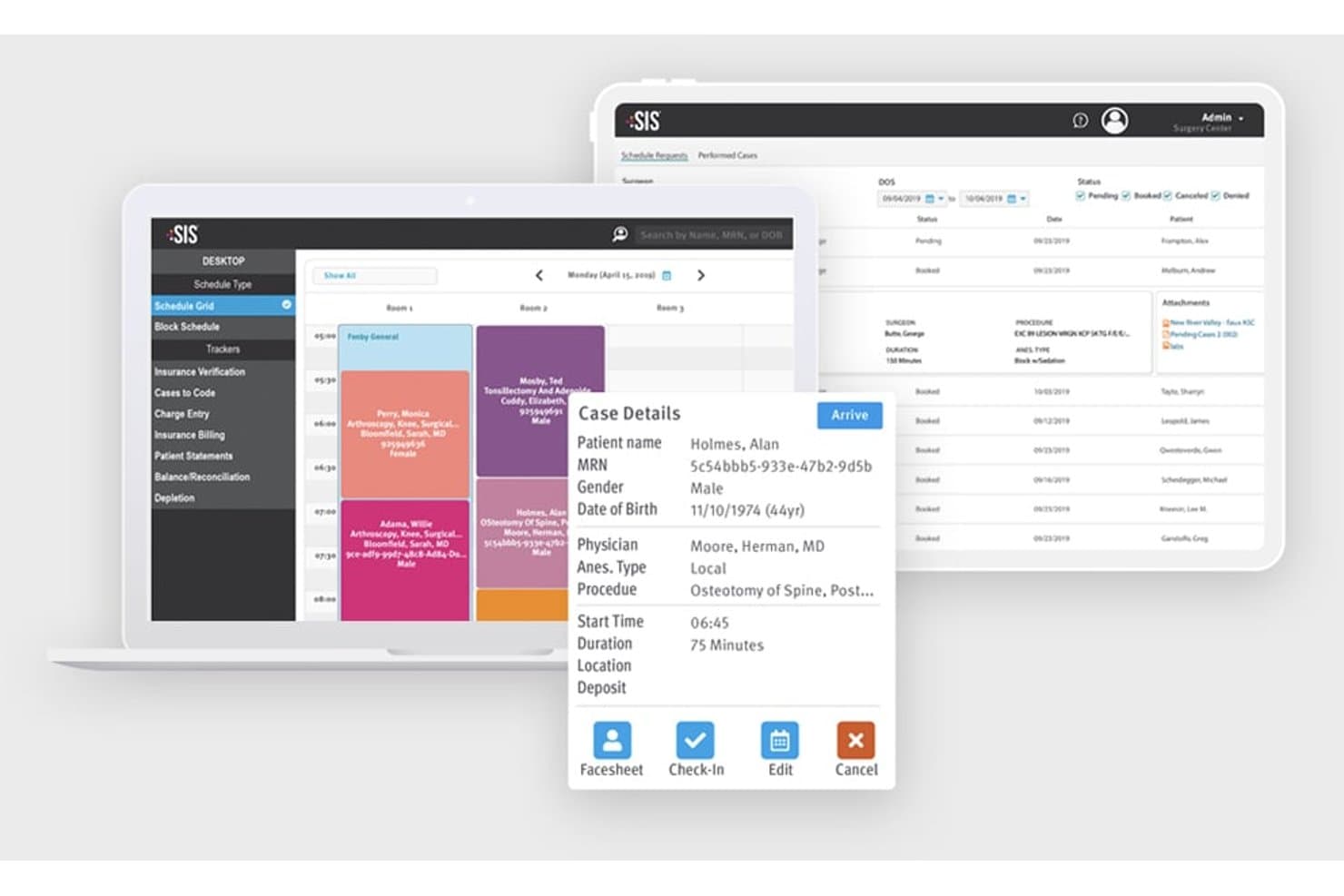
Surgical Information Systems (SIS) offers a schedule grid and case details panel for managing ambulatory surgery center patient scheduling and check-in workflows. Surgical Information Systems (SIS) is a cloud-based EMR and ASC management platform that covers perioperative charting, OR scheduling, surgical billing, inventory tracking, and compliance tools in a single system purpose-built for ambulatory surgery centers.
Who Is Surgical Information Systems (SIS) Best For?
SIS is a strong fit for ASC administrators and perioperative teams managing multi-specialty surgical programs who need clinical, operational, and billing workflows in one platform.
Why I Picked Surgical Information Systems (SIS)
I picked SIS as one of the best because no platform I've evaluated covers the full ASC workflow within a single cloud environment the way SIS Complete does. SIS Charts handles perioperative charting from pre-op through post-op, while SIS Office manages scheduling, case requests, and billing without requiring a separate system. I particularly like SIS Scribe, the AI-assisted op note dictation built into the platform, which keeps documentation moving without breaking the surgical workflow.
Surgical Information Systems (SIS) Key Features
- SIS Link: Surgeons and office staff can submit case requests and view surgical schedules from outside the ASC.
- SIS Insights: Users can access pre-built and custom reports to analyze case volumes, outcomes, and operational trends.
- SIS Comply: Digital logbooks, automated credentialing, and regulatory reporting tools help manage accreditation needs.
- Integrated inventory management: The platform automates supply tracking, purchase orders, and case-based inventory deduction across procedures.
Surgical Information Systems (SIS) Integrations
SIS Complete offers native integrations with Infinitus and Flexbone and supports over 130 vendor and partner interfaces specific to the ASC industry. An API is available for custom integrations.
Pros and Cons
Pros:
- Automated regulatory compliance reporting included
- Real-time operating room and case tracking
- End-to-end documentation for ASC workflows
Cons:
- Implementation timelines can be unpredictable
- Limited specialty libraries for non-core ASC areas
Learn more about Surgical Information Systems (SIS): Best for specialty-focused ASC workflows
- Free demo available
- Pricing upon request
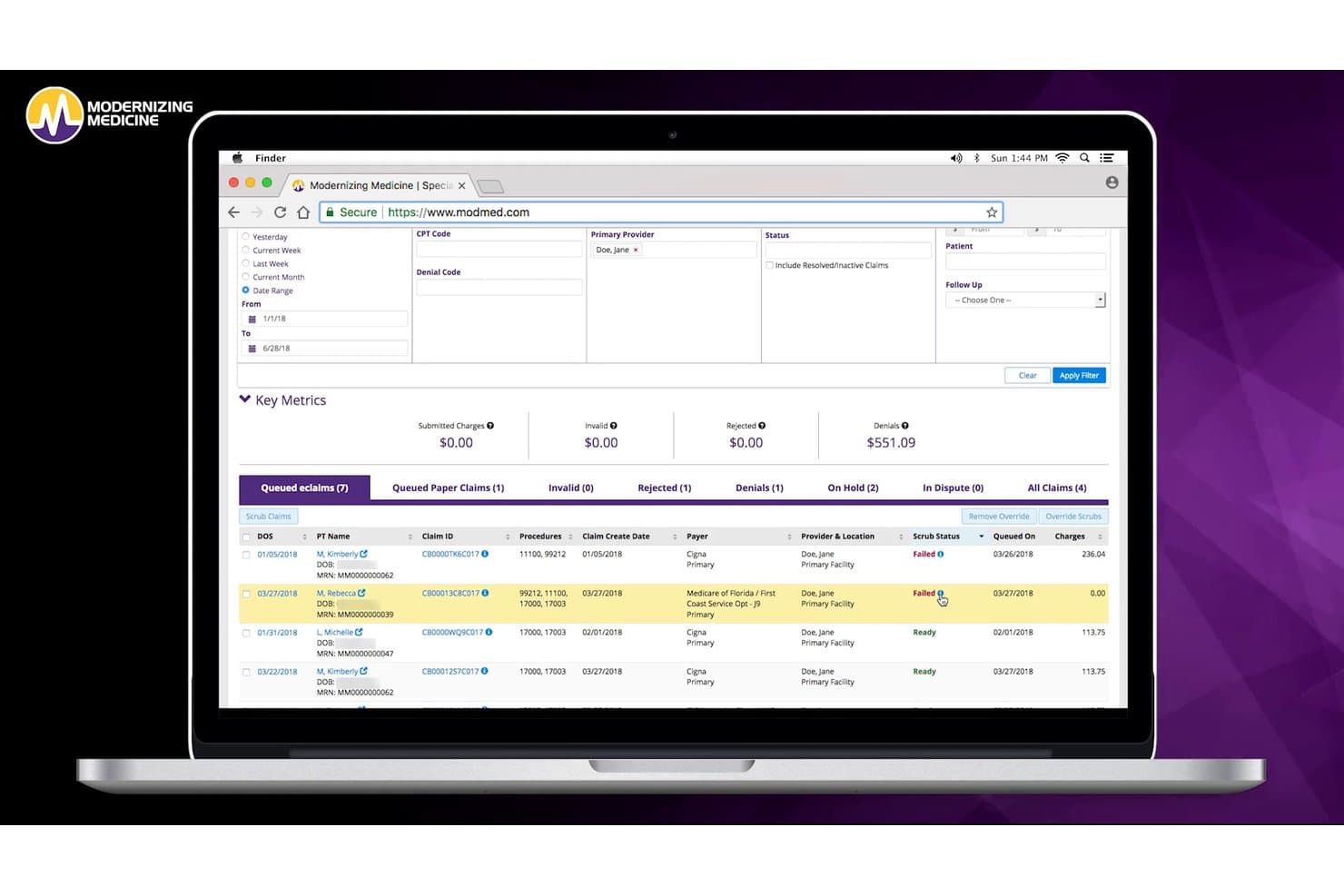
ModMed ASC offers a billing and claims management dashboard with scrub status tracking, key metrics, and queued eclaims filtering by date range and payer. ModMed ASC is a specialty-specific ambulatory surgery center EMR that connects perioperative clinical documentation, ASC facility billing, OR scheduling, and quality reporting within a single platform built for ophthalmology and gastroenterology surgical settings.
Who Is ModMed ASC Best For?
ModMed ASC fits ophthalmology and gastroenterology surgery centers whose clinical teams need their practice EHR and ASC documentation to share patient data without manual re-entry.
Why I Picked ModMed ASC
ModMed ASC earns its spot on my shortlist because of how tightly it ties specialty-specific surgical documentation to its practice-side EHR. I particularly like that nurses, anesthesiologists, and physicians can chart simultaneously on the same case record, with patient history and scheduling data pulled directly from EMA or gGastro without re-entry. Built-in ASCQR tracking and prebuilt reports for AAAHC, CMS, and Joint Commission accreditation mean my team isn't manually assembling compliance data at audit time.
ModMed ASC Key Features
- Integrated inventory management: Track surgical supplies, implant logs, and reorder status with inventory management tied to each case.
- Monitor interfacing: Capture real-time patient vitals and device data directly into the procedure note from connected anesthesia monitors.
- Clearinghouse interface: Submit insurance claims, receive electronic remittance advice, and run eligibility checks through a built-in clearinghouse connection.
- Patient mobile app: Enable patients to complete digital paperwork, access instructions, and communicate securely through the APPatient™ mobile application.
ModMed ASC Integrations
ModMed ASC offers native integrations with Klara, Relatient, TouchMD, Artera, Phreesia, Demandforce, DeepScribe, and Clearwave, and natively connects with ModMed EMA, Practice Management, and gGastro EHR platforms. An API is available for custom integrations.
Pros and Cons
Pros:
- Simultaneous charting by nurses and anesthesia
- Specialty-driven perioperative workflows for ASC teams
- Built-in ASCQR and AAAHC quality reporting
Cons:
- OR block scheduling lacks advanced management tools
- Limited to select surgical specialties only
Learn more about ModMed ASC: Best for ASC clinical documentation
- Free demo available
- Pricing upon request
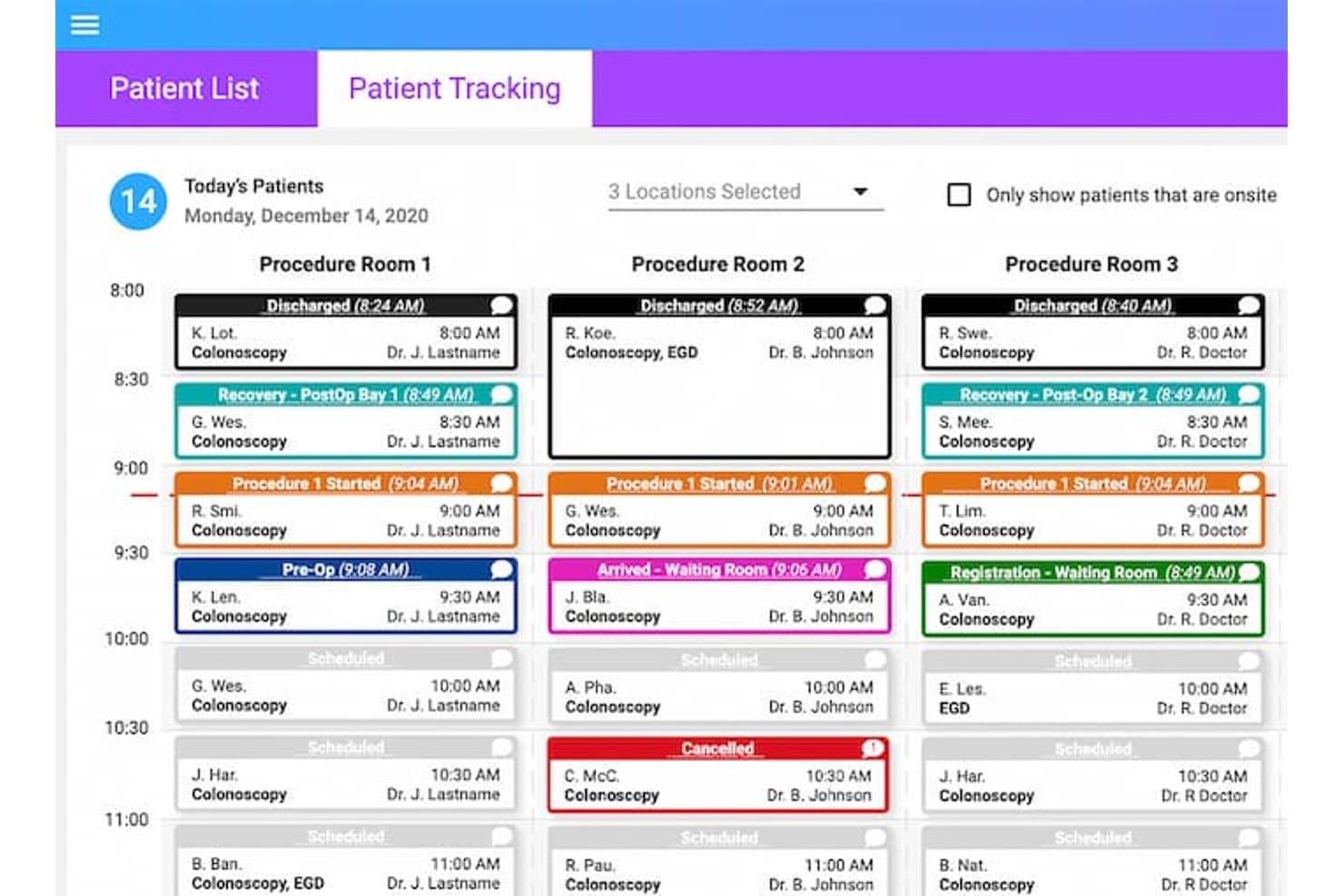
Provation Apex offers a real-time patient tracking dashboard that displays procedure room schedules, patient statuses, and appointment times across multiple rooms. Provation Apex is a cloud-based ASC EMR platform built around specialty-specific procedure documentation, automated CPT/ICD-10 coding, anesthesia charting, and quality registry reporting across GI, pulmonology, and orthopedic surgery workflows.
Who Is Provation Apex Best For?
It's a strong fit for GI, pulmonology, and orthopedic ASCs that need structured procedure documentation without the overhead of a large in-house IT team.
Why I Picked Provation Apex
I picked Provation Apex as one of the best because its clinical documentation depth is genuinely specialty-specific, not just generic templates with a specialty label applied. For a colonoscopy or ERCP, it auto-generates coding from over 150 CPT/HCPCS and 1,000+ ICD-10 codes tied directly to what the physician selects in the procedure note. I also like the machine-learned favorites feature, which adapts to each physician's documentation patterns over time so repeat procedure notes require far less manual input to complete.
Provation Apex Key Features
- Role-based clinical modules: Dedicated tools for physicians, nurses, anesthesia providers, and patient engagement teams in the surgical workflow.
- Quality registry reporting: Built-in support for sending structured data to GIQuIC and other ASC quality registries.
- Real-time patient tracking: Electronic patient status board for monitoring movement through pre-op, OR, and post-op areas.
- Cloud-based deployment: Minimal onsite IT setup required, with automatic data backup and HIPAA-compliant access for all users.
Provation Apex Integrations
Provation Apex offers native integrations with MEDITECH Expanse, Oracle Health Ambulatory Suite, and Cerner Millennium. An API is available for custom integrations.
Pros and Cons
Pros:
- Structured quality registry reporting workflows
- Automated CPT and ICD-10 coding tools
- Specialty-specific procedure documentation templates
Cons:
- Lacks native surgical block scheduling
- No built-in inventory tracking
Learn more about Provation Apex: Best for perioperative workflow management
- Not available
- Pricing upon request
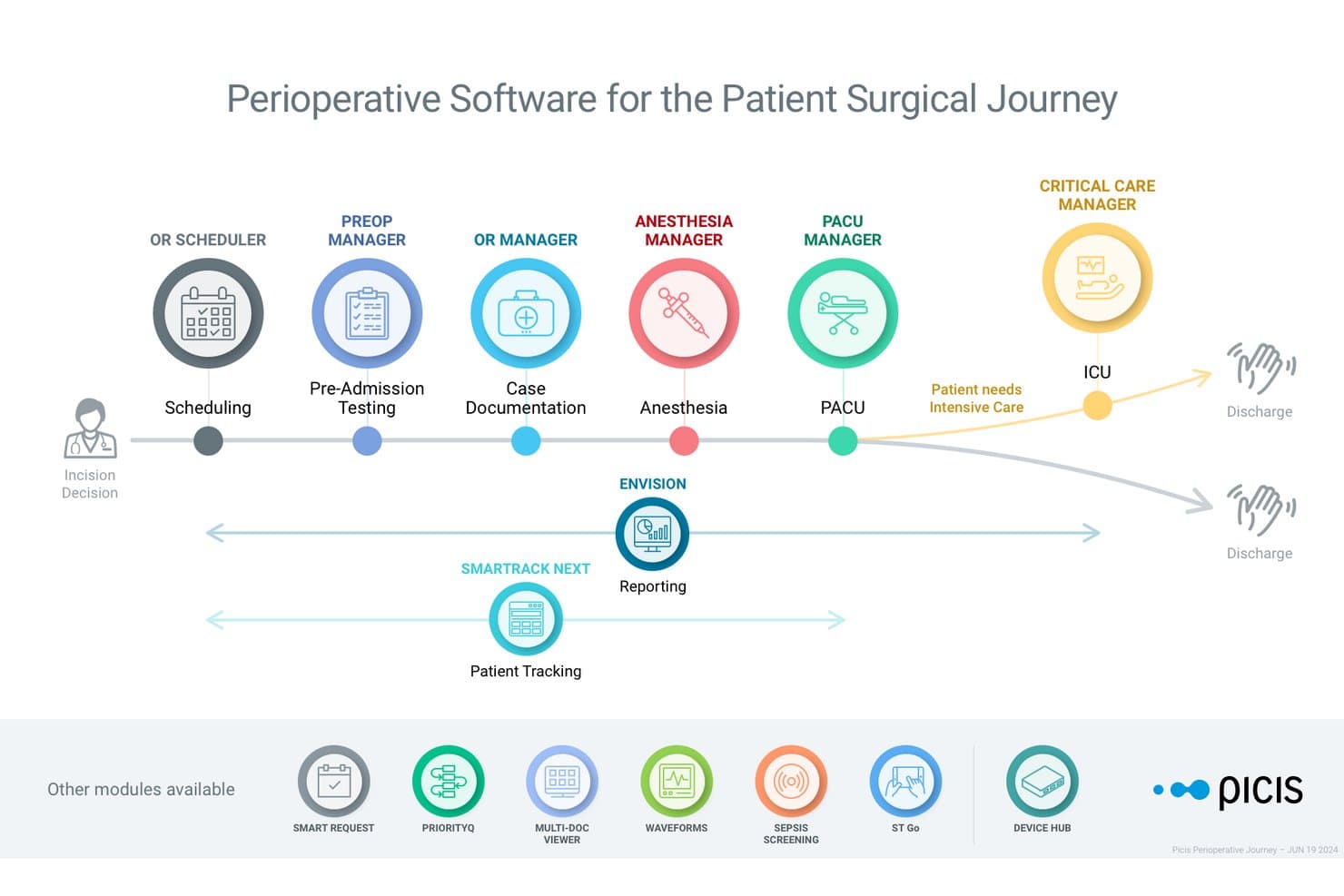
Picis Experior Suite offers a perioperative software workflow diagram mapping the full patient surgical journey from scheduling through discharge or ICU care. Picis Experior Suite is a modular ASC EMR platform that combines perioperative EHR, OR scheduling, anesthesia records, surgical billing, inventory tracking, and compliance reporting in a single system built specifically for ambulatory surgery centers.
Who Is Picis Experior Suite Best For?
Picis Experior Suite is a strong fit for ASC administrators and perioperative nursing directors who need a purpose-built surgical platform rather than a general EMR adapted for outpatient care.
Why I Picked Picis Experior Suite
I picked Picis Experior Suite because it's one of the few ASC platforms built around the full perioperative arc, from pre-op through PACU, rather than bolting surgical workflows onto a general EHR. I particularly like how it pulls real-time device data (ventilators, monitors, lab systems) directly into the anesthesia record, eliminating manual transcription mid-case. The preference card and case costing modules tie clinical setup directly to charge capture, keeping OR coordination and billing tightly connected.
Picis Experior Suite Key Features
- Digital chart tracking: Monitor chart completion status and manage documentation workflow across all perioperative phases.
- Electronic patient portal: Allow patients to review visit details, submit intake forms, and access perioperative instructions online.
- Physician credentialing module: Centralize management of surgeon credentials, expiration dates, and compliance documents for regulatory audits.
- Clearinghouse integration: Transmit insurance claims and receive ERA responses without needing an external billing system.
Picis Experior Suite Integrations
Picis Experior Suite offers native integrations with perioperative medical devices such as patient monitors, ventilators, and laboratory systems, as well as hospital information systems for clinical data exchange. An API is available for custom integrations.
Pros and Cons
Pros:
- Case costing analytics for procedure profitability
- Preference card and implant tracking modules
- Device-integrated anesthesia and periop charting
Cons:
- ASCQR reporting automation not well documented
- Limited independent user reviews available online
Learn more about Picis Experior Suite:
Other Ambulatory Surgery Center EMR Software
Here are some additional ambulatory surgery center EMR software options that didn’t make it onto my shortlist, but are still worth checking out:
- 11Nextech ASCBest for ophthalmology ASC workflows
- 12AthenahealthBest for cloud-based ASC workflows
- 13Oracle HealthBest for integrated perioperative care
- 14ADSCBest for specialty ASC practice management
- 15One Mnet HealthBest for digital patient engagement
How I Evaluate Ambulatory Surgery Center EMR Software
I split my evaluation into core surgical workflow coverage—perioperative charting, OR scheduling, and ASC billing—and the differentiators that set one platform apart for a specific ASC's case mix.
Core Functionality (Table Stakes for This List)
When I'm selecting tools for my list, I rank each one on a scale from 0 (does not offer the functionality) to 5 (excels in this area) for each core functionality listed below. Then, I calculate the tool's total score into a percentage. Each tool needs to achieve a minimum total score of 65% to be considered for inclusion.
- Perioperative Documentation: I evaluate whether the platform offers structured charting across all surgical phases—pre-op assessments, intra-op notes, and PACU recovery tracking—with templates that adapt to different specialties like GI or orthopedics.
- OR Scheduling & Case Management: Block scheduling, case booking, and room turnover tracking all matter here. I look for tools that coordinate surgeons, anesthesia providers, and nursing staff on a single shared board.
- ASC-Specific Billing: General medical billing isn't enough. I check for ASC fee schedule support, CPT/HCPCS coding, multi-procedure discounting logic, and implant charge capture tied to individual cases.
- Anesthesia Records: Whether anesthesia documentation lives natively in the EMR or connects through an integration, I look for medication tracking, vitals monitoring, and records that link directly to the surgical case file.
- Regulatory & Quality Reporting: ASCs face specific reporting obligations. I check for prebuilt reports aligned with AAAHC accreditation, Medicare ASCQR measures, and state-level compliance requirements like infection rate tracking.
- Inventory & Implant Tracking: Managing surgical supplies per case is a real operational challenge. I look for preference card support, case-based inventory deductions, and implant logging that ties back to both the patient record and billing.
Once I have a list of tools that meet the criteria, I consider what sets each platform apart.
Differentiating Factors (What Sets Vendors Apart)
Here's how I compare and contrast different vendors:
Standout Features
Case costing analytics is a major differentiator—I look for per-case profitability dashboards that break down supplies, staff time, and reimbursement by CPT code or payer. Physician preference cards also make a real difference in daily operations. When they're linked to scheduling and inventory, OR teams can auto-generate pick lists and cut turnover time between cases. I also evaluate whether a platform offers ASC-specific workflow modules that mirror the compressed same-day surgical timeline, from pre-op assessment through PACU discharge.
Beyond Features
ASC-focused specialization matters—I check whether a vendor's customer base skews toward ambulatory centers or if the EMR is a trimmed-down hospital system. Interoperability is another key factor, especially HL7/FHIR connectivity with referring physician EHRs, anesthesia monitors, and clearinghouses for claims processing. I also evaluate implementation support, including go-live timelines and whether the vendor assigns implementation managers with hands-on ASC operational experience.
How to Choose Ambulatory Surgery Center EMR Software
It’s easy to get bogged down in long feature lists and complex pricing structures. To help you stay focused as you work through your unique software selection process, here’s a checklist of factors to keep in mind:
| Factor | What to Consider |
| Scalability | Will this system support your center’s expected case volume growth, new specialties, or added sites without costly upgrades? |
| Integrations | Can the software connect to anesthesia monitors, hospital EHRs, labs, and your clearinghouse? How reliable and supported is the connectivity? |
| Customizability | Does the platform let you modify workflows, templates, or reports to match how your teams operate in the OR and PACU? |
| Ease of use | How intuitive is the user interface for busy clinical and front-office staff? Can users quickly navigate, chart, and schedule cases? |
| Implementation and onboarding | What kind of timeline and resource commitment are needed? Can you expect disruption to your existing surgical schedule during go-live? |
| Cost | Are pricing and contract terms clear? Will growth bring new charges for users, volume, or integrations? Can you lock in predictable costs? |
| Security safeguards | Does the vendor provide strong HIPAA compliance, data encryption, and secure access controls to protect patient and financial data? |
| Compliance requirements | Can the system help you meet AAAHC, Medicare ASCQR, and state-specific reporting requirements without significant manual effort? |
What Are Ambulatory Surgery Center EMR Software?
Ambulatory surgery center EMR software are digital systems designed specifically to manage clinical and administrative workflows in outpatient surgical facilities. These tools facilitate perioperative documentation, OR scheduling, anesthesia record-keeping, quality reporting, and ASC-specific billing so your teams can coordinate patient care, ensure regulatory compliance, and streamline documentation across every phase of the surgical journey.
Features of Ambulatory Surgery Center EMR Software
When selecting ambulatory surgery center EMR software, keep an eye out for the following key features:
- Perioperative documentation: Structured templates for pre-op, intra-op, and post-op charting make it easy to track patient care at every stage and reduce documentation gaps.
- OR scheduling: Advanced scheduling tools let you assign operating rooms, manage block times, and coordinate surgeon and staff availability for each case.
- ASC-specific billing: Built-in surgical coding, CPT/HCPCS support, and automatic charge capture ensure accurate billing tailored to ASC rules and payer requirements.
- Anesthesia record-keeping: Integrated modules let anesthesia providers document medications, procedures, and vitals directly within the EMR during surgery.
- Quality and compliance reporting: Generate required regulatory reports for AAAHC and Medicare, and monitor infection rates, case outcomes, and quality benchmarks.
- Inventory and implant tracking: Track surgical supplies, implant usage, and automate reorder points to maintain optimal stock and charge for implants accurately.
- Physician preference cards: Digital templates store surgeon-specific supply and setup preferences to streamline case prep and reduce OR turnover time.
- Case costing analytics: Break down expenses per case—including staff time, supplies, and implants—to identify savings opportunities and improve center profitability.
- Patient portal: Secure portals give patients access to their surgical instructions, forms, and post-op care plans, improving communication and engagement.
Common Ambulatory Surgery Center EMR Software AI Features
Beyond the standard ambulatory surgery center EMR software features listed above, many of these solutions are incorporating AI with features like:
- Predictive scheduling optimization: AI analyzes historical case data and staffing patterns to recommend optimal OR schedules, reducing delays and maximizing room utilization.
- Automated clinical documentation: Natural language processing (NLP) tools convert spoken or typed notes into structured perioperative records, saving time and improving accuracy.
- Anomaly detection in outcomes: AI flags unusual trends in infection rates, complications, or readmissions, helping teams identify quality issues before they escalate.
- Intelligent charge capture: Machine learning reviews case documentation to suggest missing charges or coding opportunities, reducing revenue leakage and compliance risk.
- Smart supply forecasting: AI predicts future inventory needs based on case mix, seasonality, and usage trends, helping centers avoid stockouts and over-ordering.
Benefits of Ambulatory Surgery Center EMR Software
Implementing ambulatory surgery center EMR software provides several benefits for your team and your business. Here are a few you can look forward to:
- Streamlined perioperative workflow: Automated charting and case coordination features help staff manage every phase of surgery efficiently from admission to discharge.
- Improved compliance: Built-in regulatory reporting and audit trails simplify AAAHC, Medicare ASCQR, and state-specific compliance.
- Accurate billing and reimbursement: ASC-specific coding, claim scrubbing, and charge capture minimize denials and speed up payments from payers.
- Enhanced OR utilization: Real-time scheduling and turnover tracking reduce delays and maximize use of surgical suites.
- Better inventory control: Integrated implant and supply tracking reduces waste and prevents costly stockouts or overordering.
- Data-driven decision making: Case costing analytics and quality dashboards support operational improvements, benchmarking, and strategic growth plans.
- Physician and patient satisfaction: Customizable preference cards and patient portals create smoother surgical experiences for care teams and patients alike.
Costs and Pricing of Ambulatory Surgery Center EMR Software
Selecting ambulatory surgery center EMR software requires an understanding of the various pricing models and plans available. Costs vary based on features, team size, add-ons, and more. The table below summarizes common plans, their average prices, and typical features included in ambulatory surgery center EMR software solutions:
Plan Comparison Table for Ambulatory Surgery Center EMR Software
| Plan Type | Average Price | Common Features |
| Free Plan | $0 | Basic scheduling tools, limited documentation functionality, restricted user access, and minimal support. |
| Personal Plan | $200-$500/month | Perioperative charting, single-provider workflow customization, reporting templates, and standard compliance features. |
| Business Plan | $800-$2,000/month | Multi-provider support, advanced ASC billing, inventory and implant tracking, robust integrations, and analytics tools. |
| Enterprise Plan | $2,500-$7,000/month | Custom workflow automation, dedicated onboarding, advanced interoperability, premium support, and enterprise security. |
Ambulatory Surgery Center EMR Software FAQs
Here are some answers to common questions about ambulatory surgery center EMR software:
What’s the difference between ASC EMR software and hospital EMRs?
ASC EMR software is purpose-built for same-day surgical workflows, fast room turnover, and outpatient documentation, while hospital EMRs prioritize inpatient, multi-day care and broader specialty needs.
Can ASC EMR systems integrate with outside labs and physician EHRs?
Yes, most modern ASC EMR systems support HL7 or FHIR integration for secure data exchange with labs, imaging centers, and referring physician EHRs, helping coordinate perioperative care.
How long does it take to implement a new ASC EMR software?
Implementation usually takes anywhere from a few weeks to several months, depending on system complexity, data migration needs, and whether role-based training is included for all users.
Are there special compliance requirements for ASC EMR software?
Yes, ASC EMR solutions must address HIPAA, AAAHC or Joint Commission standards, Medicare reporting, and, in some regions, state-level documentation or quality programs.
What kinds of support do vendors typically offer post-go-live?
Most vendors offer email, chat, or phone support, ongoing system updates, and user training resources. Some also provide a dedicated account manager or ASC specialist.