

Why Trust Our Software Recommendations
6,700+
Reviews
20
Industry experts
16+
Evaluation factors
14
Years
Our team has been testing and reviewing software since 2012. As medical practice leaders ourselves, we know how difficult—and important—it is to choose the right software.
For this guide, we evaluated tools using hands-on testing and independent research, scoring tools using our selection criteria.
Our reviews reflect our human editorial judgment, not a sales pitch.
Tabel comparativ al programelor EDI pentru domeniul sănătății
Acest tabel comparativ rezumă detaliile privind prețurile pentru selecțiile mele de top de programe EDI pentru domeniul sănătății:
Sorted by: Default
| Tool | Starting Price | Website | |
|---|---|---|---|
Best for fast electronic claims submission | 4.9 out of 5 | $30/month Free demo available | Website |
Best for cloud-based claims and billing workflows | 4.1 out of 5 | Pricing upon request Free demo available | Website |
Best for independent practice claims management | 3.9 out of 5 | Pricing upon request Free demo available | Website |
Best for EDI-enabled medical billing automation | 3.6 out of 5 | $130/user/month 30-day free trial + free demo available | Website |
Best for affordable clearinghouse | Not rated | $44.95/user/month Free plan available | Website |
Best for automated claims and payment workflows | 4.4 out of 5 | Pricing upon request Free demo available | Website |
Best for payer connectivity and eligibility checks | 3.7 out of 5 | Pricing upon request Not available | Website |
Best for healthcare transaction management | 3.9 out of 5 | Pricing upon request Free demo available | Website |
Best for payer-provider EDI connectivity | Not rated | Pricing upon request Free demo available | Website |
Best for claim validation | Not rated | Pricing upon request Free demo available | Website |


Recenzii ale celor mai bune programe EDI pentru domeniul sănătății
Mai jos sunt rezumatele mele detaliate ale celor mai bune programe EDI pentru domeniul sănătății care au ajuns pe lista mea scurtă. Recenziile mele oferă o privire detaliată asupra funcțiilor, integrărilor și celor mai potrivite cazuri de utilizare pentru fiecare platformă, pentru a vă ajuta să o găsiți pe cea mai potrivită pentru dumneavoastră.
 Best for fast electronic claims submission
- Free demo available
- From $30/month
Visit WebsiteCustomer Rating:4.9/5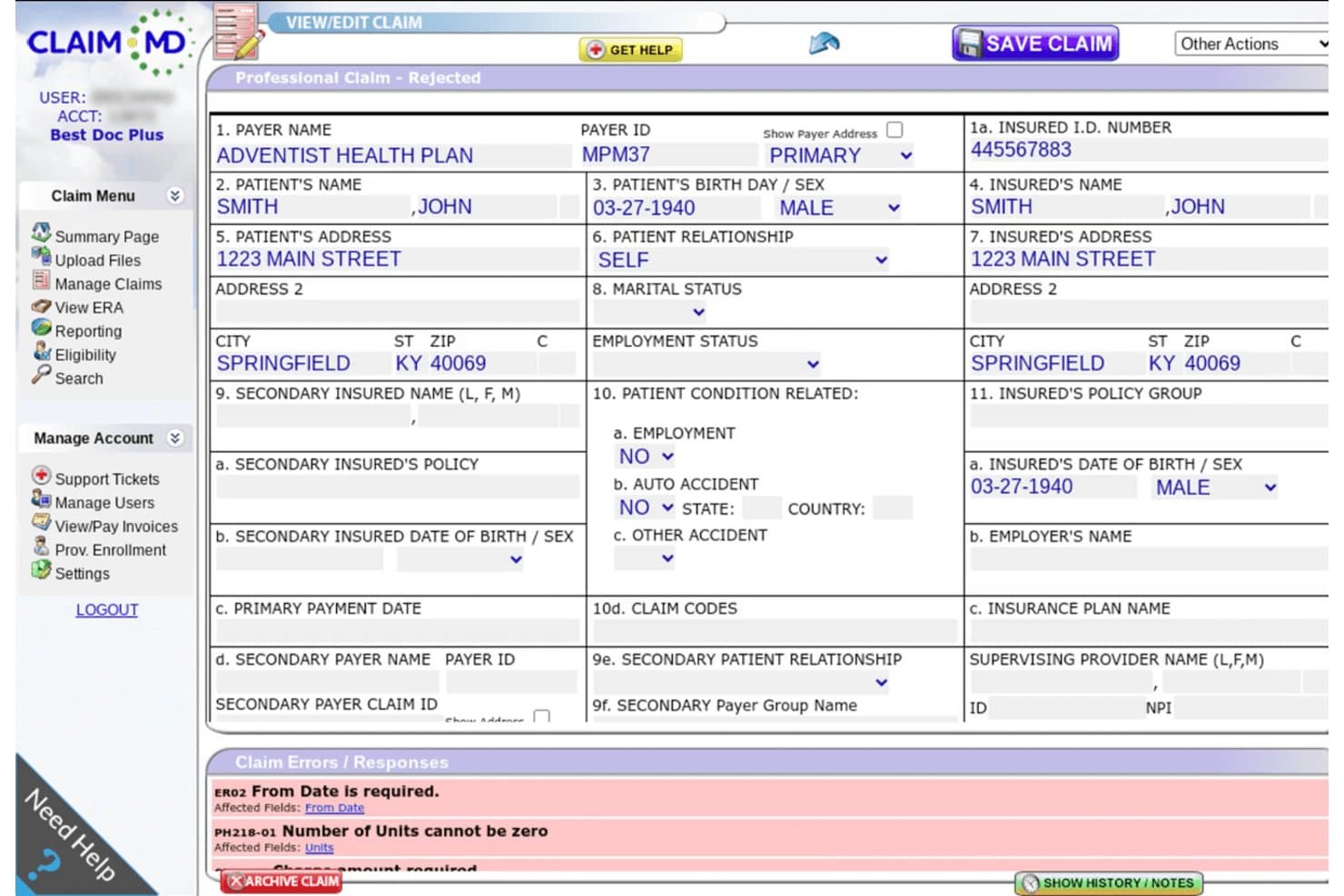
Claim.MD offers a detailed View/Edit Claim form with fields for payer, patient, and insured information, along with visible claim errors and rejection status. Claim.MD is a healthcare EDI clearinghouse that handles electronic claims submission, ERA processing, real-time eligibility verification, and rejection management across a broad network of commercial, Medicare, and Medicaid payers.
Who Is Claim.MD Best For?
Claim.MD works well for independent practices and billing services that need a direct clearinghouse connection without the overhead of a full practice management platform.
Why I Picked Claim.MD
I picked Claim.MD because no other clearinghouse I've used comes as close to true real-time claims transmission. Most clearinghouses batch and send claims overnight, but Claim.MD gets payer acknowledgments back in minutes. When a claim does come back rejected, the interactive editing workflow lets me correct it directly and resubmit with the payer's Original Claim ID attached, keeping the claim's history intact.
Claim.MD Key Features
- Eligibility transaction bundling: Plans include bundled eligibility transactions for efficient patient coverage checks without extra setup.
- ERA/835 remittance parsing: Download, print, or view electronic remittance in spreadsheet, XML, PDF, or standard 835 formats.
- Integration marketplace: Connect to a range of EHR and practice management systems using supported data formats and APIs.
- Multi-format claim support: Upload and process 837P/837I, CSV, XLS, XML, NSF, and print image file types for flexible claim submission.
Claim.MD Integrations
Claim.MD offers native integrations with Jane, NowMD, and Office Puzzle, and provides an API for custom integrations. It connects to thousands of payers, including Medicare, Medicaid, and Blue Cross Blue Shield.
Pros and Cons
Pros:
- Fast rejection visibility for immediate action
- Interactive claim correction and resubmission workflow
- Real-time claim submission and payer acknowledgment
Cons:
- Auto-posting of ERAs depends on integrations
- Does not support 278 authorization transactions
Learn more about Claim.MD: Best for cloud-based claims and billing workflows
- Free demo available
- Pricing upon request
Visit WebsiteCustomer Rating:4.1/5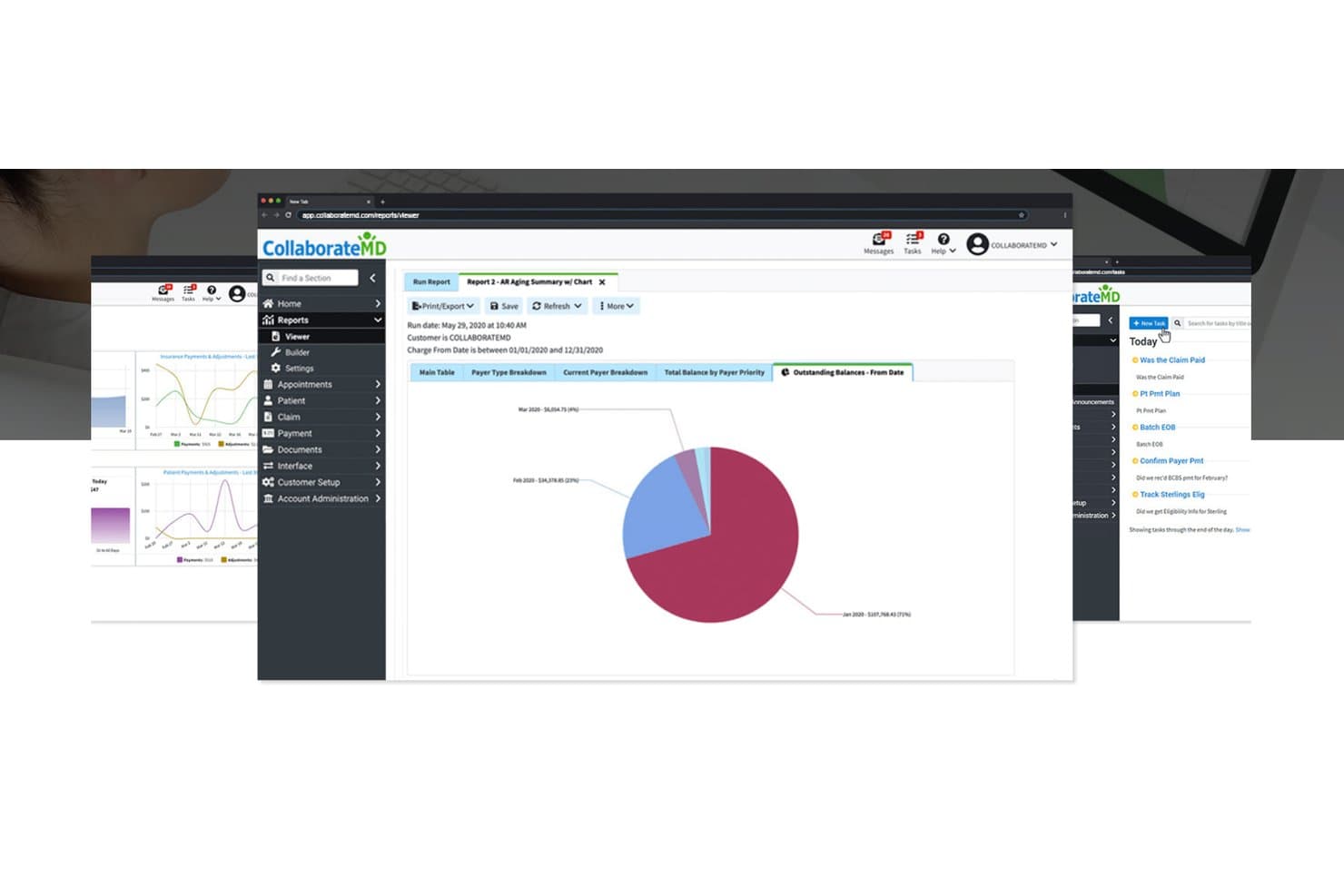
CollaborateMD offers an AR Aging Summary report with interactive pie charts and task management panels for healthcare billing workflows. CollaborateMD is a cloud-based medical billing and practice management platform with a built-in clearinghouse that handles electronic claims submission, real-time eligibility verification, ERA auto-posting, and denial management.
Who Is CollaborateMD Best For?
CollaborateMD is a strong fit for small to mid-sized medical practices and independent billing companies managing claims across multiple providers.
Why I Picked CollaborateMD
I picked CollaborateMD as one of the best because its built-in clearinghouse removes the need for a separate clearinghouse subscription entirely. I particularly like the Level 2 claim scrubbing, which checks CCI, NCD/LCD, and modifier rules before transmission, catching errors that would otherwise result in denials. On top of that, the AI-powered rejection explanations translate payer denial codes into plain language, so my team spends less time decoding rejections and more time correcting and resubmitting claims.
CollaborateMD Key Features
- Real-time eligibility verification: Instantly check patient insurance coverage with batch and individual 270/271 EDI transactions.
- Automated ERA auto-posting: Receive and auto-post 835 remittances directly to the practice management system.
- EHR and lab integrations: Connect with EHR partners, diagnostic labs, and mobile charge capture via standard interfaces or API.
- Customizable analytics and reporting: Access 125+ customizable financial and operational reports within the platform.
CollaborateMD Integrations
CollaborateMD offers native integrations with Practice Fusion, Nexus Clinical, Alleva, PBO MD, Stride, The Tree, Amazing Charts, Praxis, PrognoCIS, KIPU, Hello Health, Quest Diagnostics, LabCorp, LabDAQ, MDTech, and MediMobile, and provides an API for custom integrations.
Pros and Cons
Pros:
- Batch eligibility checks for multiple patients
- Real-time claim status and ERA posting
- Built-in clearinghouse for direct payer connections
Cons:
- Lacks built-in root-cause analytics for denials
- No automated scheduled eligibility runs
Learn more about CollaborateMD: Best for independent practice claims management
- Free demo available
- Pricing upon request
Visit WebsiteCustomer Rating:3.9/5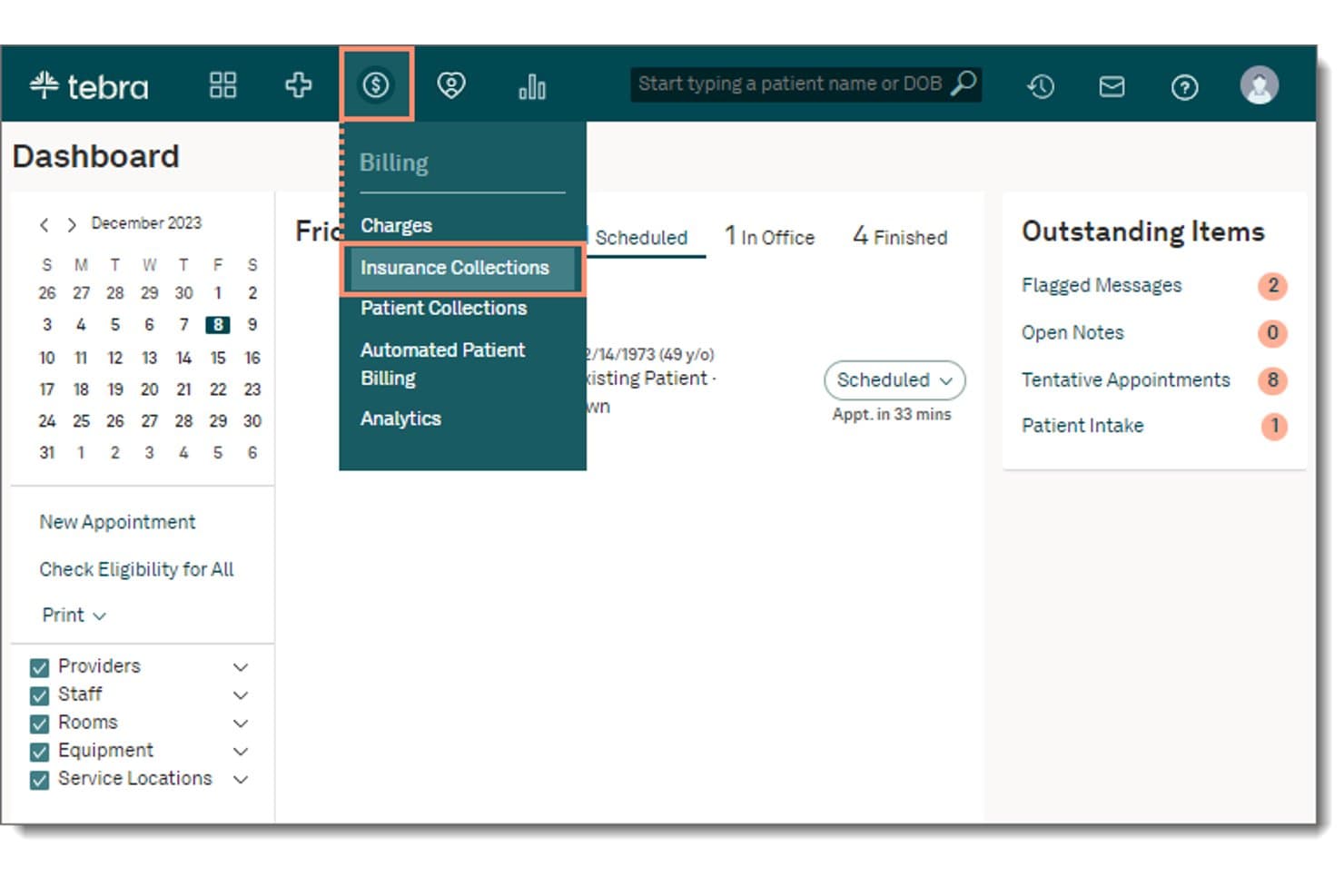
Tebra offers an Insurance Collections navigation option within its Billing dropdown menu, accessible from the main dashboard. Tebra is a cloud-based practice management and EDI platform that handles electronic claims submission, real-time eligibility verification, ERA auto-posting, and denial management for independent medical practices.
Who Is Tebra Best For?
Tebra is a strong fit for small independent practices that manage billing in-house and need a single platform to handle claims, eligibility, and remittance.
Why I Picked Tebra
I picked Tebra as one of the best because its claim scrubbing engine applies payer-specific rules before EDI transmission via TriZetto, catching errors that would otherwise trigger rejections. I like that real-time 270/271 eligibility checks run against 2,700+ payers before a claim ever reaches the clearinghouse. The RPA-driven ERA auto-posting then closes the loop, matching remittance against submitted claims without manual entry.
Tebra Key Features
- HL7 and FHIR interoperability: Connects with most major EHRs using HL7 or FHIR protocols for data exchange.
- Custom fee schedule management: Lets you tailor billing rates and rules at the payer, plan, or provider level.
- Advanced reporting dashboards: Provides detailed analytics on claim status, remittance posting, and payer performance.
- Patient payment automation: Sends digital statements and payment links by email or SMS for faster collections.
Tebra Integrations
Tebra offers native integrations with TriZetto and Jopari for clearinghouse and claims processing, and supports interoperability with over 60 EHR systems using HL7 or FHIR protocols. An API is available for custom integrations.
Pros and Cons
Pros:
- Denial management workflow with instant appeal
- Automated claim scrubbing before EDI submission
- Real-time eligibility checks for 2,700+ payers
Cons:
- Payer library lacks workers’ comp depth
- Limited root-cause denial analytics
Learn more about Tebra: Best for EDI-enabled medical billing automation
- 30-day free trial + free demo available
- From $130/user/month
Visit WebsiteCustomer Rating:3.6/5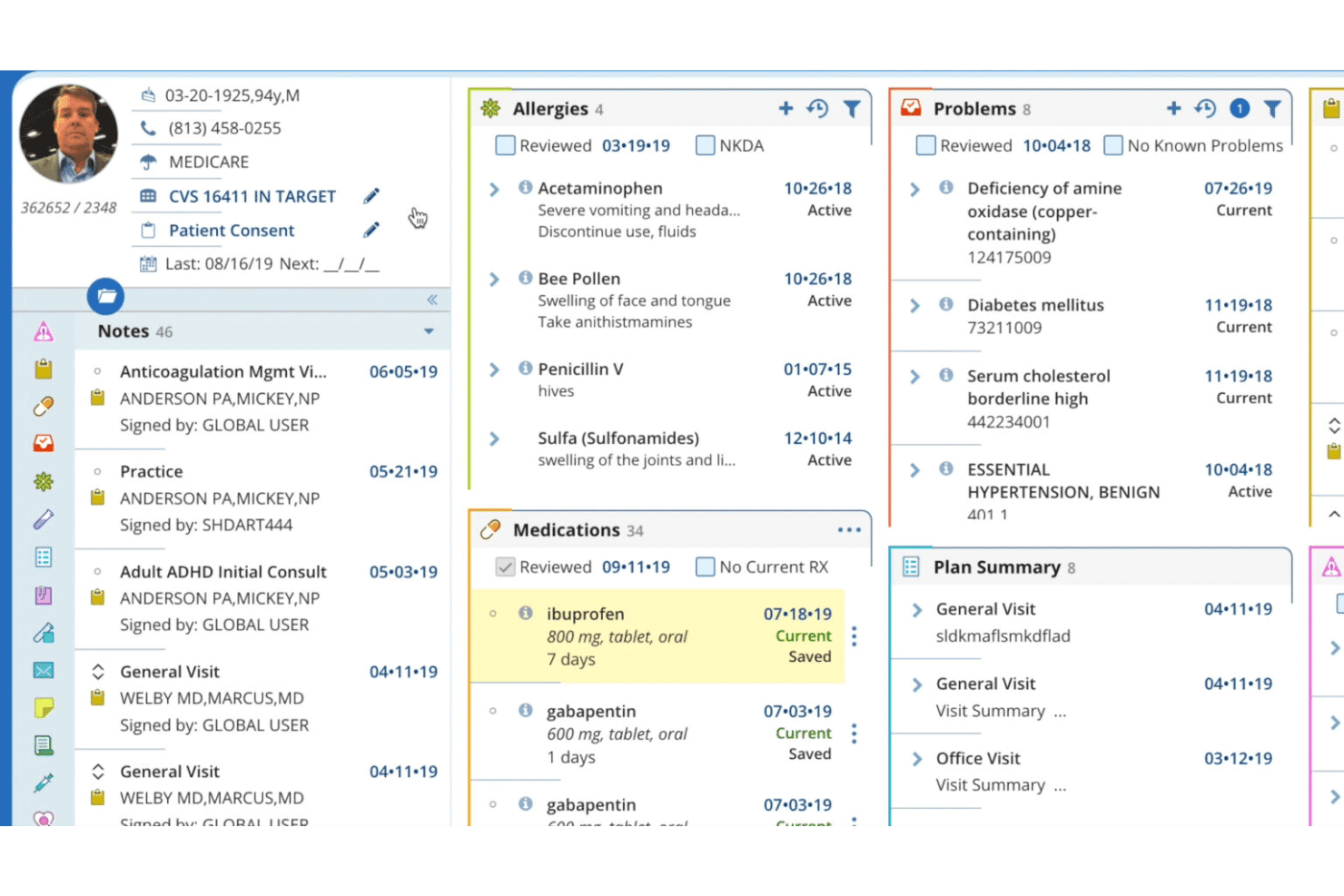
AdvancedMD patient record view with allergies, medications, and care plans. AdvancedMD is a cloud-based medical billing and practice management platform that handles EDI claims submission, automated remittance processing, eligibility verification, and denial management through a built-in multi-clearinghouse connection.
Who Is AdvancedMD Best For?
AdvancedMD is a strong fit for independent medical practices with in-house billing teams managing high claim volumes across multiple providers or locations.
Why I Picked AdvancedMD
I picked AdvancedMD as one of the best because its ClaimInspector tool scrubs every claim against CCI, HIPAA, and LCD rules before transmission, catching errors that would otherwise return as denials. I also like that the platform operates as its own clearinghouse, with Waystar as the preferred payment network, connecting to 1,800+ payers without a separate clearinghouse subscription. ERA posting is automatic, so my team isn't manually matching 835 files to open claims.
AdvancedMD Key Features
- A/R Control Center: Centralized dashboards and worklists help teams manage accounts receivable and track outstanding balances.
- Central Billing Office: Manage billing for multiple providers or locations within a single unified database and login.
- Batch eligibility verification: Process eligibility checks for groups of patients simultaneously to save staff time.
- Customizable financial reporting: Create financial dashboards and reports that update in real time across your practice.
AdvancedMD Integrations
AdvancedMD offers native integrations with Dragon Medical One, Inbox Health, MedXCom, Falkondata, LeadSquared, ChartRequest, DAX Copilot, DeepScribe, Doctorsoft, and InstaMed. An Open API is available for custom integrations.
Pros and Cons
Pros:
- Built-in batch eligibility verification tool
- Centralized dashboards for A/R and claim tracking
- ClaimInspector stops preventable denials pre-submission
Cons:
- Multi-entity support setup can be complex
- Appeals and root-cause denial analytics limited
 Best for affordable clearinghouse
- Free plan available
- From $44.95/user/month
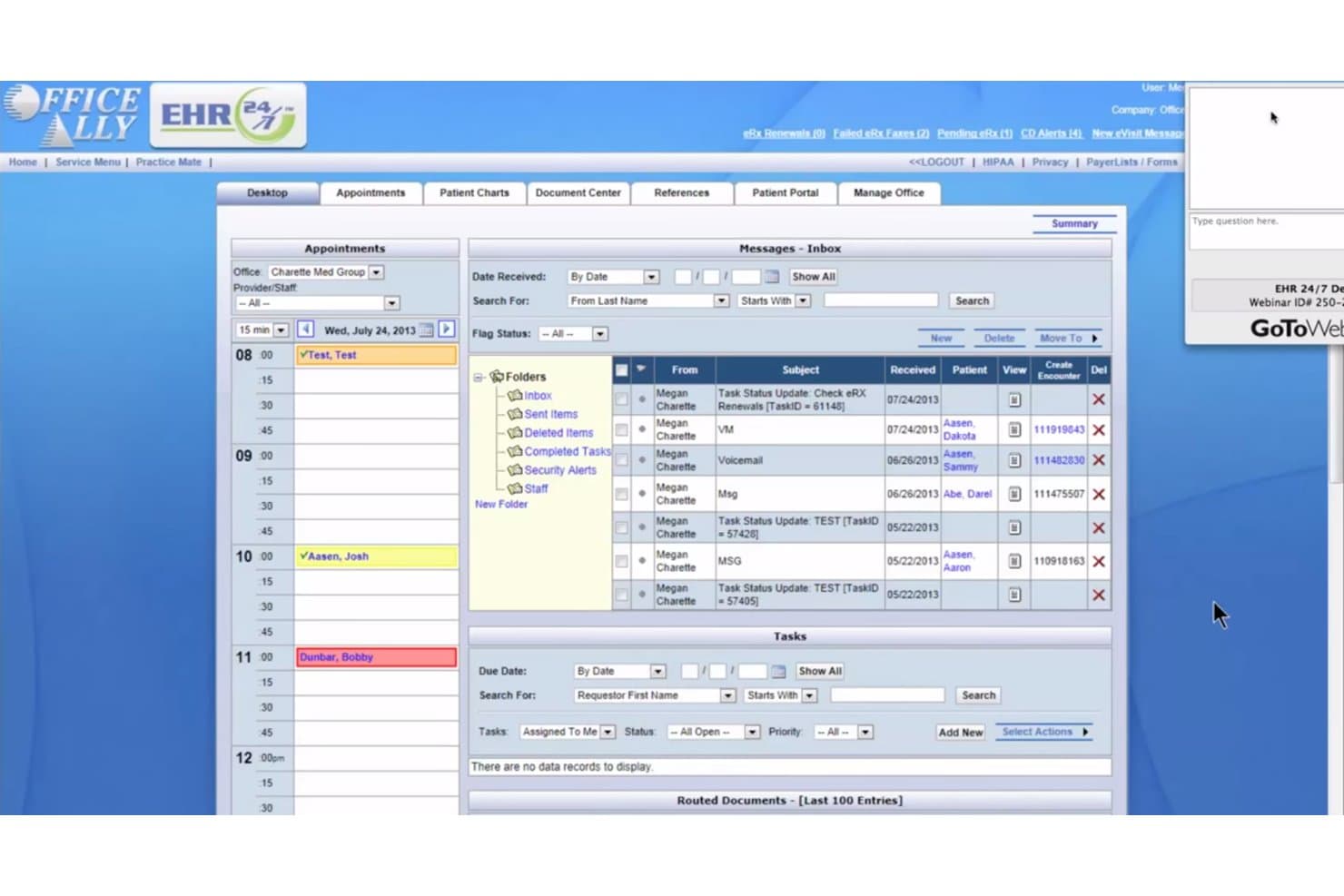
Office Ally EHR offers a comprehensive desktop dashboard with appointment scheduling, inbox messaging, and task management for healthcare providers. Office Ally EHR is a cloud-based all-payer clearinghouse and EHR platform that handles EDI claims submission, real-time eligibility verification, electronic remittance processing, and claim status tracking across a broad payer network.
Who Is Office Ally EHR Best For?
It's a strong fit for independent practices and medical billing teams that need a low-cost EDI clearinghouse without sacrificing payer reach or HIPAA transaction support.
Why I Picked Office Ally EHR
I picked Office Ally EHR as one of the best because its Service Center clearinghouse starts free and still reaches 6,100+ payers, spanning commercial, Medicare, Medicaid, and workers' comp claims. I like that it covers the core HIPAA X12 transaction sets, including 837 claim submission, 835 ERA parsing, and real-time 270/271 eligibility checks. Its CAQH CORE Phase III certification adds weight, confirming it handles both batch and real-time transactions at a level that holds up under payer scrutiny.
Office Ally EHR Key Features
- All-payer claim portal: Lets you submit, track, and edit claims across commercial, Medicare, Medicaid, and workers’ compensation payers.
- Insurance discovery tool: Identifies potential patient coverage options to reduce eligibility-related claim rejections.
- Customizable superbill builder: Enables creation and management of diagnosis and procedure codes tailored to your specialty workflow.
- Integrated patient ledger: Tracks patient balances, payments, and account history in one place for audit or review.
Office Ally EHR Integrations
Office Ally EHR offers integrations with external systems via SFTP and secure API, supports HL7 lab interfaces, connects with HIE organizations and immunization registries, and is compatible with most practice management software through print-image file uploads.
Pros and Cons
Pros:
- Provides real-time 270/271 eligibility uploads
- Covers all major payer types nationwide
- No per-claim transaction fees for most payers
Cons:
- Limited 278 and 820/834 transaction support
- Batch claim uploads require manual workarounds
Learn more about Office Ally EHR: Best for automated claims and payment workflows
- Free demo available
- Pricing upon request
Visit WebsiteCustomer Rating:4.4/5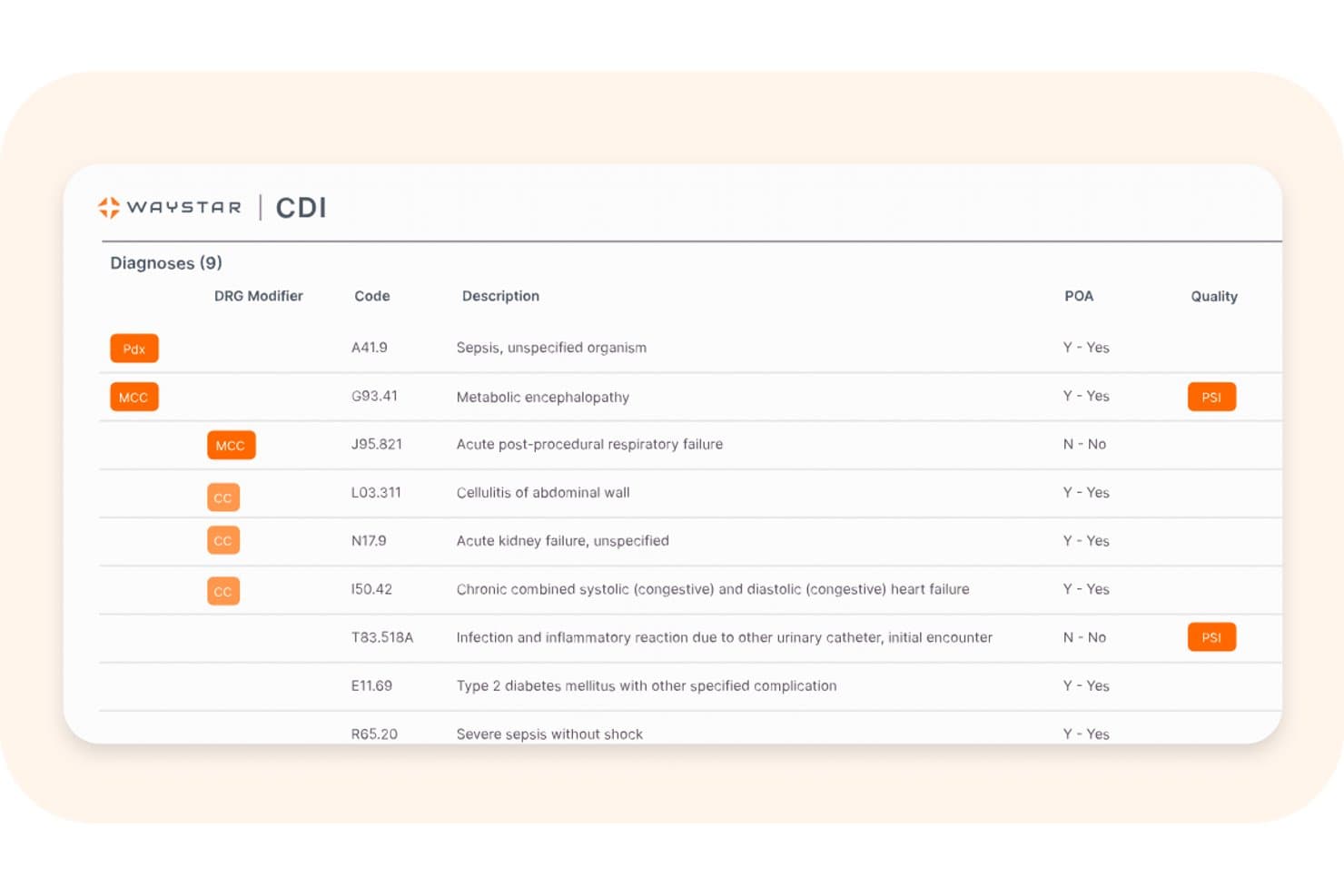
Waystar offers a CDI (Clinical Documentation Integrity) interface that displays a list of nine diagnoses with DRG modifiers, ICD-10 codes, descriptions, POA status, and quality flags like PSI. Waystar is a healthcare payments and EDI clearinghouse platform that handles claims submission, eligibility verification, remittance processing, and denial management across commercial, Medicare, and Medicaid payers.
Who Is Waystar Best For?
Waystar is a strong fit for revenue cycle teams at hospitals, health systems, and large group practices managing high claim volumes across multiple payers.
Why I Picked Waystar
Waystar earns its spot on my shortlist because of how far it takes claims automation before a claim ever reaches a payer. Its Claim Manager applies payer-specific edits and crowdsourced scrubbing rules that catch errors pre-submission, which is how it consistently hits a 98.5% first-pass clean claims rate. I also like how AltitudeAI handles the denial side, routing appeals automatically and batching up to 100 at a time to the same payer.
Waystar Key Features
- Eligibility verification dashboard: Lets staff run real-time and batch 270/271 eligibility checks across hundreds of payers.
- Integrated remit manager: Parses and auto-posts 835 ERA files for payment reconciliation and audit tracking.
- Pre-built payer connection library: Includes thousands of commercial payer, Medicare, and Medicaid connections out of the box.
- Quality and compliance reporting: Tracks X12 EDI acceptance, turnaround time, and HIPAA transaction compliance with customizable analytics.
Waystar Integrations
Waystar offers native integrations with Epic, Cerner, Athenahealth, NextGen, and Allscripts, supports all major practice management systems, and provides an API for custom integrations.
Pros and Cons
Pros:
- Deep payer connectivity across commercial and government payers
- Automated denial routing and appeals batching
- Extremely high first-pass clean claims rate
Cons:
- Contract terms may be difficult to negotiate
- Customer support response times can be slow
Learn more about Waystar: Best for payer connectivity and eligibility checks
- Not available
- Pricing upon request
Visit WebsiteCustomer Rating:3.7/5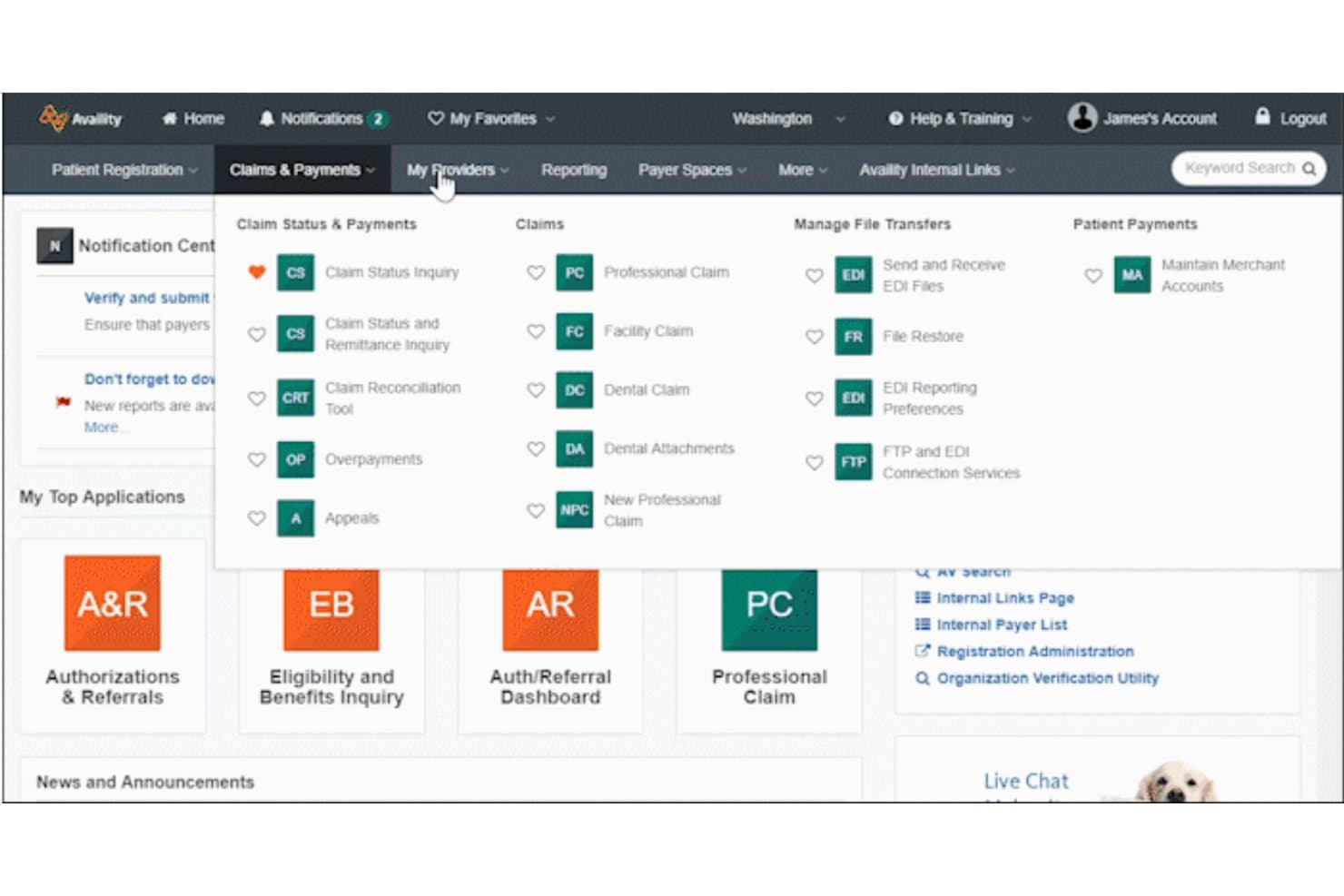
Availity offers a comprehensive Claims & Payments menu with EDI file management, claim submission, and remittance inquiry tools for healthcare providers. Availity is a healthcare EDI clearinghouse and payer connectivity network that supports HIPAA X12 transactions for claims submission, real-time eligibility verification, remittance processing, and prior authorization across a nationwide all-payer network.
Who Is Availity Best For?
Availity is a strong fit for medical billing teams and revenue cycle staff at provider organizations that need direct, multi-payer EDI connectivity without managing separate payer portal logins.
Why I Picked Availity
Availity earns its spot on my shortlist because of the scale and depth of its payer network. I love that real-time 270/271 eligibility checks return copay, deductible, and coinsurance breakdowns, not just a basic yes/no coverage confirmation. I also rely on the self-pay eligibility discovery tool, which surfaces potential Medicaid coverage for uninsured patients before a claim is ever submitted.
Availity Key Features
- Claim status tracking: Monitor 276/277 claim status updates directly within the portal for timely information on every submission.
- API connectivity for EHRs and PMS: Connect EHR and practice management systems using X12, SOAP, REST, or FHIR APIs for seamless data exchange.
- 835 remittance parsing and delivery: Receive and parse electronic remittance advice files for easy integration into payment workflows.
- Provider enrollment management: Manage provider credentials, NPI, and trading partner enrollments within a single interface.
Availity Integrations
Availity offers native integrations with Epic and other leading EHR and practice management systems, supports direct connections using X12, SOAP, REST, and FHIR APIs, and provides API access for custom integrations.
Pros and Cons
Pros:
- Automated claims scrubbing with payer-specific edits
- Real-time eligibility response with detailed breakdown
- Nationwide all-payer clearinghouse network
Cons:
- Limited denial analytics and appeals workflows
- ERA auto-posting issues with some payers
Learn more about Availity: Best for healthcare transaction management
- Free demo available
- Pricing upon request
Visit WebsiteCustomer Rating:3.9/5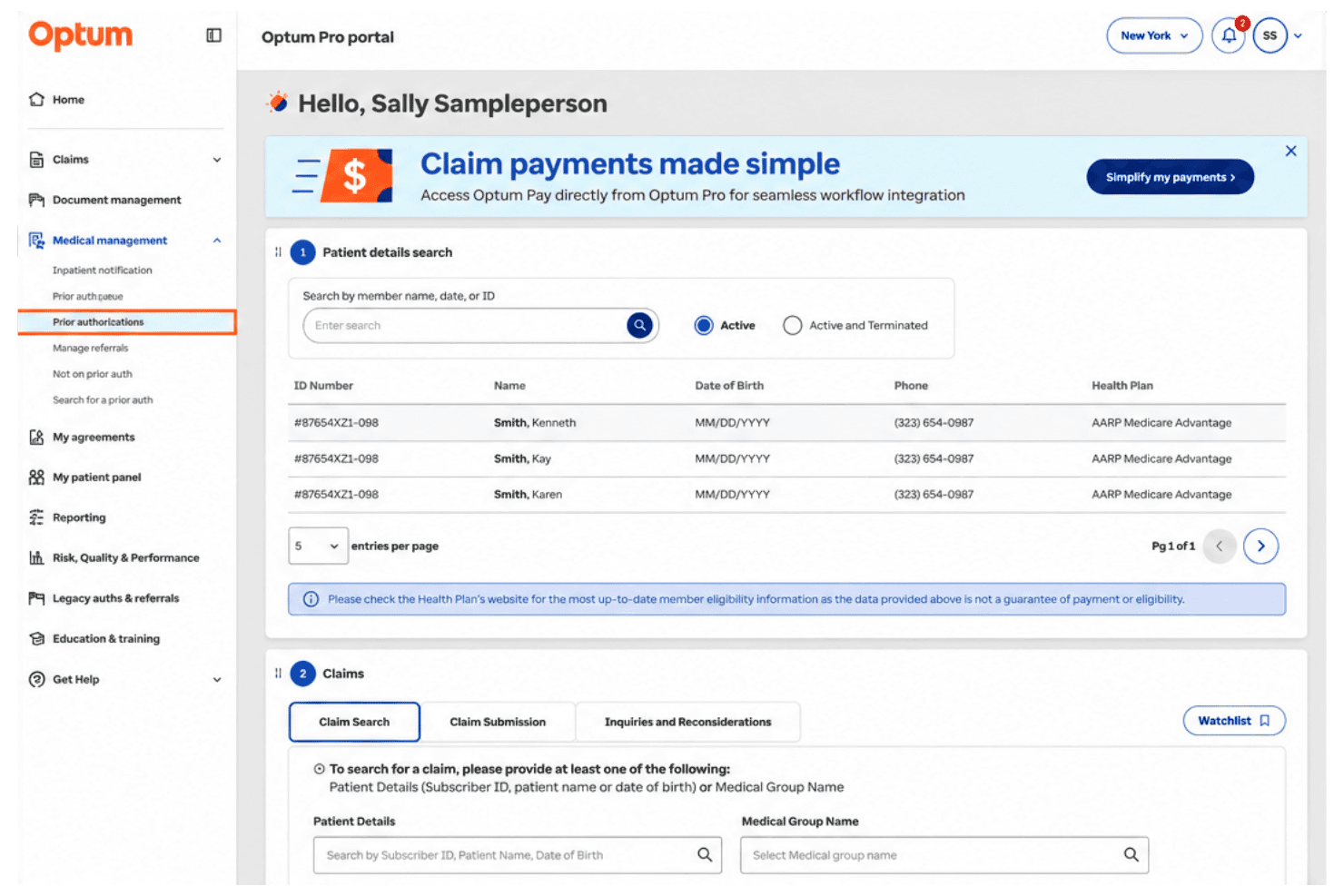
Optum (Change Healthcare) offers a Pro portal dashboard with prior authorization search, patient details lookup, and claims management tools for billing workflows. Optum (Change Healthcare) is a healthcare clearinghouse that processes HIPAA X12 transactions—including 837 claims, 835 remittance, 270/271 eligibility, 276/277 claim status, and 278 authorizations—across a payer network of 5,500+ connections via SFTP, REST APIs, and web portals.
Who Is Optum (Change Healthcare) Best For?
It's a strong fit for hospitals, large physician groups, and RCM billing companies that process high claim volumes across multiple payers.
Why I Picked Optum (Change Healthcare)
I picked Optum (Change Healthcare) as one of the best because its 5,500+ payer network is genuinely unmatched in the U.S. clearinghouse market. I also like the Enhanced Eligibility API, which applies a customer-specific rules engine and payer-specific benefit normalization in real time, so 271 responses reflect actual payer benefit structures. The AI-driven claim scrubbing layer applies payer-specific edits before transmission, which cuts rejection rates at the source.
Optum (Change Healthcare) Key Features
- Advanced claim routing: Directs transactions to payers with customizable logic for different claim types and adjudicator requirements.
- API-first architecture: Offers RESTful APIs for real-time and batch X12 transactions, accessible in JSON format.
- EDI transaction dashboards: Visualizes metrics like submission status, turnaround time, and payer response rates for multiple transaction sets.
- Payer enrollment support: Provides onboarding assistance with trading partner setup and payer enrollment for practices and billing companies.
Optum (Change Healthcare) Integrations
Optum (Change Healthcare) offers native integrations with Epic, Oracle Health (Cerner), MEDITECH, athenahealth, NextGen Healthcare, and eClinicalWorks, and provides an API for custom integrations.
Pros and Cons
Pros:
- Robust support for high-volume enterprise transactions
- Real-time benefit response normalization for 271 files
- Largest payer network in the clearinghouse market
Cons:
- Payer-adjacent ownership may raise neutrality concerns
- Outages and downtime reported after major cyberattack
Learn more about Optum (Change Healthcare): Best for payer-provider EDI connectivity
- Free demo available
- Pricing upon request
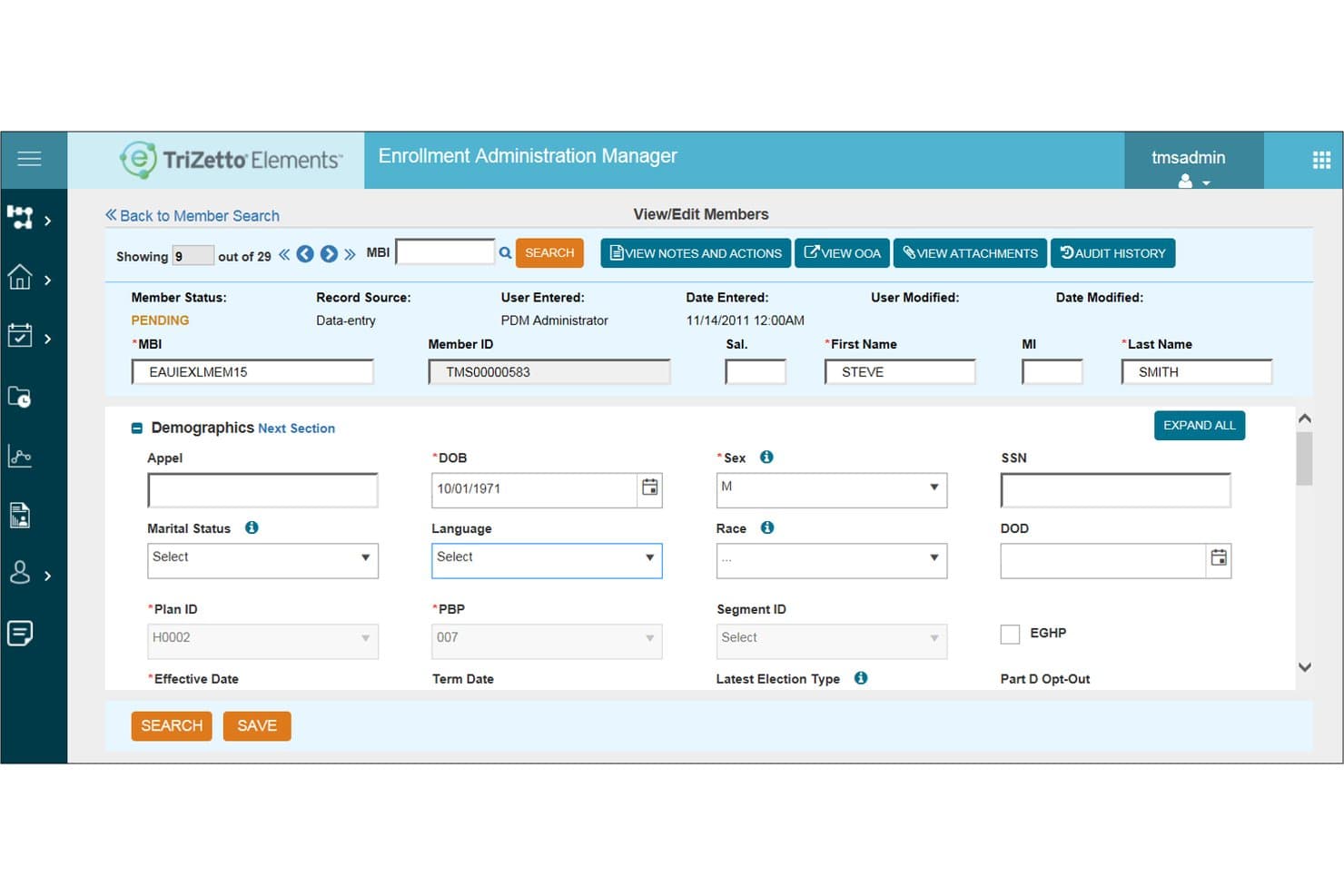
Cognizant TriZetto Provider Solutions offers an Enrollment Administration Manager interface for viewing and editing member demographics, plan details, and enrollment status. Cognizant TriZetto Provider Solutions is a healthcare clearinghouse and revenue cycle platform that handles electronic claims submission, eligibility verification, remittance processing, and denial management across professional, institutional, and dental claims.
Who Is Cognizant TriZetto Provider Solutions Best For?
It's a strong fit for revenue cycle teams at physician practices, billing services, and health systems that need enterprise-grade clearinghouse connectivity at scale.
Why I Picked Cognizant TriZetto Provider Solutions
Cognizant TriZetto Provider Solutions earns its spot on my shortlist because of the sheer depth of its payer network. With over 11,000 payer connections spanning commercial, Medicare, Medicaid, and workers' comp, I've found it covers virtually every payer my billing team encounters. I also like the AI-powered Advanced Claim Editing, which applies payer-specific edits before transmission to catch errors that generic scrubbing misses.
Cognizant TriZetto Provider Solutions Key Features
- Real-time eligibility checks: Instantly verify patient insurance details using 270/271 inquiry and response transactions.
- 835 remittance auto-posting: Automatically apply electronic remittance advices to patient accounts through PMS/EHR integrations.
- Denial workflow tools: Track, categorize, and resolve claim rejections and denials with configurable management workflows.
- HIPAA and SOC 2 compliance: Maintain regulatory standards through end-to-end encryption and certified data handling protocols.
Cognizant TriZetto Provider Solutions Integrations
Cognizant TriZetto Provider Solutions offers native integrations with over 650 practice management systems and electronic health record platforms, including Epic, Cerner, NextGen, Athenahealth, and Greenway Health. An API is available for custom integrations.
Pros and Cons
Pros:
- Supports high-volume multi-entity organizations
- Advanced denial and rejection workflow tools
- Extensive national payer connectivity
Cons:
- Claims setup and onboarding can be complex
- Customer service response times can be slow
Learn more about Cognizant TriZetto Provider Solutions: Best for claim validation
- Free demo available
- Pricing upon request
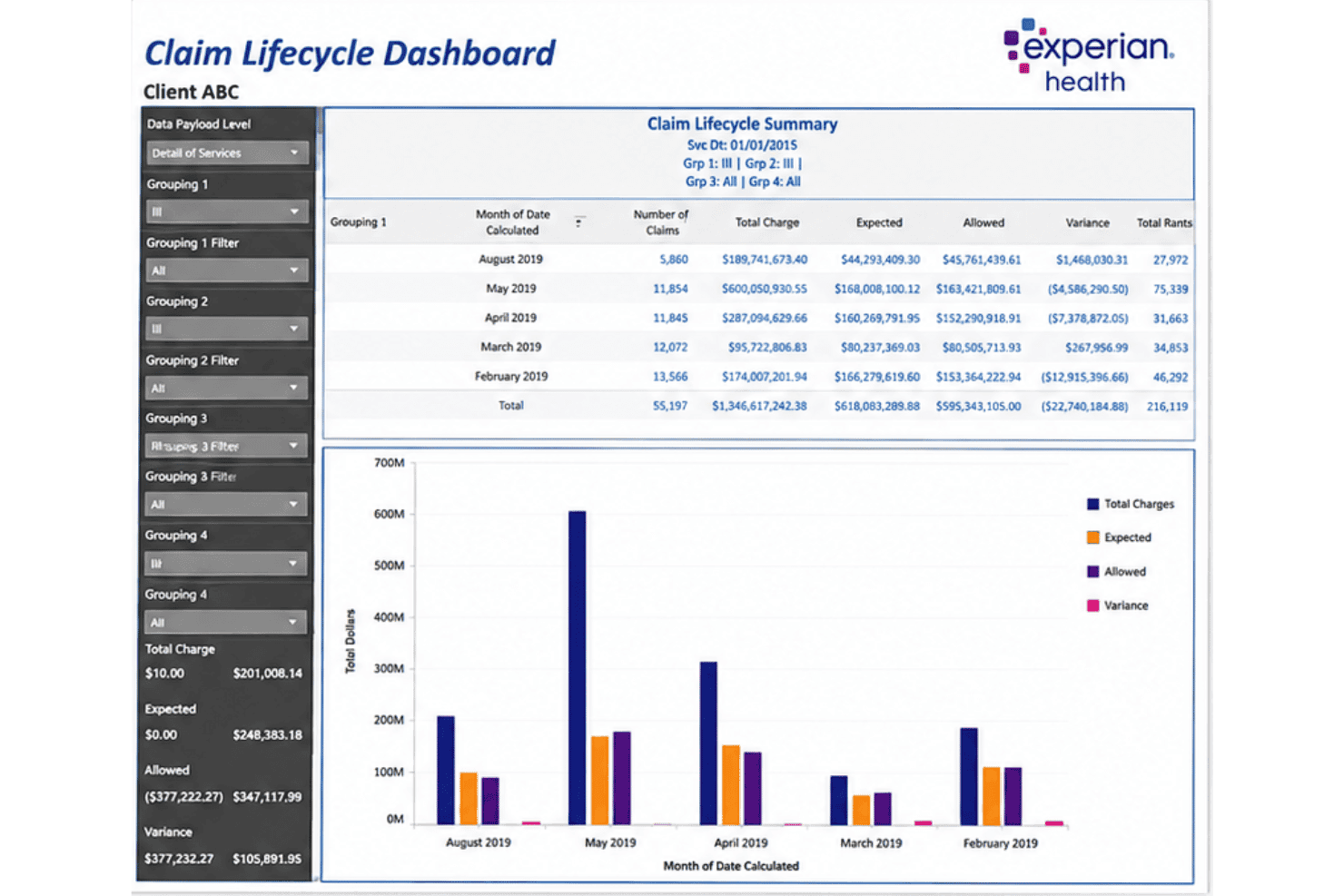
Experian Health ClaimSource handles claims, edits, tracking, denials, and ERA. Experian Health ClaimSource is a claims management platform that handles EDI claim submission, automated pre-submission scrubbing, payer-specific edits, remittance processing, eligibility verification, and denial workflow management for healthcare providers.
Who Is Experian Health ClaimSource Best For?
ClaimSource is a strong fit for mid-to-large health systems and hospitals with high claims volume that need automated, enterprise-grade editing and denial management.
Why I Picked Experian Health ClaimSource
ClaimSource earns its spot on my shortlist because of how seriously it approaches pre-submission claim validation. It combines a national payer edits library with custom provider-specific edits, so claims are validated against real payer rules before submission. The AI Advantage Predictive Denials module goes further, flagging likely denials before my team even sends a claim out. That kind of upstream error-catching is where ClaimSource genuinely separates itself from standard clearinghouse tools.
Experian Health ClaimSource Key Features
- ERA and remit processing: Handles electronic remittance advice (835) files with parsing and automated posting workflows.
- Payer connectivity library: Connects directly to thousands of commercial, Medicare, and Medicaid payers.
- Real-time eligibility and benefits verification: Supports 270/271 eligibility checks against payer databases within the claims workflow.
- Denial workflow manager: Centralizes denial categorization, correction, appeals routing, and automated resubmission tracking.
Experian Health ClaimSource Integrations
ClaimSource offers native integrations with Epic, athenahealth, Oracle Health, FollowMyHealth, and NextGate. An API is available for custom integrations.
Pros and Cons
Pros:
- Automated workflows for denial management
- Predictive denials with AI root-cause analysis
- National payer and custom claim edits
Cons:
- Limited presence on public review platforms
- No self-service training resources available
Learn more about Experian Health ClaimSource:
Alte programe EDI pentru domeniul sănătății
Iată câteva opțiuni suplimentare de programe EDI pentru domeniul sănătății care nu au ajuns pe lista mea scurtă, dar merită totuși analizate:
- 11SSI GroupBest for high-volume claims
- 12AthenahealthBest for integrated claims and practice workflows
- 13RXNTBest for integrated EDI and medical billing
- 14DrChronoBest for EDI billing within practice workflows
- 15EZClaimBest for simple electronic claims submission
- 16InovalonBest for healthcare data exchange
- 17Veradigm PayerpathBest for claims and remittance workflows
- 18Zelis PaymentsBest for electronic healthcare payment processing
- 19AppVerifyBest for insurance eligibility verification
Related Reviews
How I Evaluate Healthcare EDI Software
I split my evaluation into two layers: whether a platform handles core HIPAA X12 transactions reliably, and what sets it apart for billing managers chasing fewer denials and faster ERA reconciliation.
Core Functionality (Table Stakes For This List)
When I'm selecting tools for my list, I rank each one on a scale from 0 (does not offer the functionality) to 5 (excels in this area) for each core functionality listed below. Then, I calculate the tool's total score into a percentage. Each tool needs to achieve a minimum total score of 65% to be considered for inclusion.
- HIPAA X12 Transaction Support: I check whether a platform handles the full range of X12 sets—837, 835, 270/271, 276/277, and 278—not just claims and remittance.
- Claims Submission & Scrubbing: Pre-submission scrubbing matters most here. I look for payer-specific edit libraries that catch errors before claims leave your system.
- Payer Connectivity: I evaluate the breadth of payer connections, including commercial, Medicare, and Medicaid networks, and whether setup requires manual enrollment.
- Eligibility Verification: Real-time 270/271 lookups at the front desk prevent surprises at billing. I look for batch and scheduled options alongside single-patient checks.
- ERA & Remittance Processing: I look for 835 parsing with auto-posting to your practice management system, plus variance flagging when payments don't match expected amounts.
- Denial & Rejection Management: Beyond displaying raw rejection codes, I evaluate whether a tool offers denial categorization, resubmission workflows, and root-cause tracking.
Once I have a list of tools that meet the criteria, I consider what sets each platform apart.
Differentiating Factors (What Sets Vendors Apart)
Here's how I compare and contrast different vendors:
Standout Features
EDI transaction analytics make a real difference at high volumes. Dashboards that track acceptance rates and turnaround times by payer help you spot bottlenecks before they become revenue problems. Denial management is another area where I look for depth. Platforms with root-cause analytics and appeals routing give billing teams a clear path to recover revenue. A broad payer connectivity library also matters—pre-built connections save your IT team from manually configuring trading partner agreements.
Beyond Features
Compliance goes beyond checking a HIPAA box. I look for signed BAAs, SOC 2 Type II certification, and end-to-end encryption for PHI—especially if you're handling high claim volumes across multiple entities. Integration matters just as much. Native connectors to your EHR and practice management system determine whether ERA auto-posting actually works or creates manual workarounds. I also evaluate pricing transparency, since hidden per-transaction fees or payer connection charges can erode margins as your volume scales.
Cum să alegeți un program EDI pentru domeniul sănătății
Este ușor să vă pierdeți în liste lungi de funcții și structuri complexe de prețuri. Pentru a vă menține concentrarea pe parcursul procesului unic de selecție a programului, iată o listă de verificare a factorilor de care trebuie să țineți cont:
| Factor | Aspecte de luat în considerare |
| Scalabilitate | Poate platforma să gestioneze creșterea volumului de solicitări, mai multe NPI-uri sau locații noi în timp, fără costuri sau întârzieri perturbatoare? |
| Integrări | Se integrează programul cu sistemul dumneavoastră EHR, PM sau de facturare sau veți avea nevoie de soluții alternative și introducere manuală pentru fluxurile de lucru privind solicitările și ERA? |
| Ușurință în utilizare | Cât de intuitivă este interfața pentru echipele dumneavoastră din zona de recepție, facturare și administrare? Sunt frecvente erorile sau etapele omise în procesele reale? |
| Implementare și integrare inițială | Ce instruire, înscriere la asigurători și asistență primiți în timpul configurării? Va avea echipa dumneavoastră nevoie de ajutor practic pentru lansare sau procesul se desfășoară autonom? |
| Posibilitate de personalizare | Puteți adapta regulile de verificare, fluxurile de lucru și rapoartele la specializarea sau combinația dumneavoastră de asigurători sau sunteți limitați la șabloane rigide, standardizate? |
| Măsuri de securitate | Oferă platforma criptare de la un capăt la altul, piste de audit și BAA-uri semnate pentru a gestiona cu încredere PHI și a răspunde auditurilor sau breșelor de securitate? |
| Cost | Sunt prețurile și taxele casei de compensare transparente sau există taxe ascunse per solicitare ori pentru configurarea asigurătorului care v-ar putea surprinde pe măsură ce volumul solicitărilor crește? |
| Disponibilitatea asistenței | Atunci când apar probleme în timpul procesării solicitărilor sau a ERA, puteți contacta personal de asistență disponibil, competent și bine informat sau sunteți limitați la cozi de tichete și răspunsuri automate? |
Ce este un program EDI pentru domeniul sănătății?
Programul EDI pentru domeniul sănătății este o platformă digitală care automatizează schimbul securizat de tranzacții medicale — precum solicitări, verificări ale eligibilității și notificări de remitere — între furnizorii de servicii medicale, asigurători și casele de compensare. Aceste sisteme ajută echipele de facturare să reducă erorile manuale, să asigure conformitatea cu standardele de tranzacționare HIPAA și să accelereze întregul ciclu al veniturilor, de la înregistrarea pacientului până la rambursarea de către asigurător.
Funcțiile programelor EDI pentru domeniul sănătății
Atunci când alegeți un program EDI pentru domeniul sănătății, urmăriți următoarele funcții esențiale:
- Asistență pentru tranzacții HIPAA X12: Permite transmiterea standardizată în format electronic a cererilor de despăgubire, remiterilor, verificărilor eligibilității, stărilor și autorizărilor între furnizori și plătitori, asigurând în același timp conformitatea cu reglementările.
- Trimiterea și verificarea cererilor de despăgubire: Validează și corectează cererile înainte de a le trimite plătitorilor, identificând datele lipsă sau incorecte pentru a reduce respingerile și a accelera rambursările.
- Verificarea eligibilității în timp real: Verifică instantaneu acoperirea și beneficiile asigurării pacientului la punctul de prestare a serviciului, prevenind respingerile neașteptate ale cererilor și oferind informații utile pentru discuțiile despre facturare încă de la început.
- Înregistrarea automată a remiterilor: Analizează notificările electronice de remitere și înregistrează automat plățile în sistemul de facturare, reducând introducerea manuală a datelor și accelerând reconcilierea veniturilor.
- Bibliotecă de conexiuni cu plătitorii: Oferă o listă de conexiuni directe sau prin case de compensare preconfigurate către plătitori naționali, regionali și guvernamentali, pentru simplificarea înscrierii și direcționarea cererilor.
- Gestionarea respingerilor și refuzurilor: Semnalează cererile respinse sau refuzate, clasifică problemele și oferă fluxuri de lucru pentru corectare și retrimitere, minimizând veniturile pierdute.
- Capacități de procesare în loturi: Permite procesarea în bloc a mai multor cereri, verificări de eligibilitate sau remiteri, eficientizând sarcinile repetitive de facturare.
- Instrumente de raportare personalizabile: Generează informații utile despre starea cererilor, indicatorii ciclului veniturilor și performanța plătitorilor, pentru a ghida îmbunătățirile operaționale.
- Gestionarea securizată a datelor: Criptează datele în tranzit și în repaus, asigurând protecția informațiilor despre pacienți și respectarea cerințelor de securitate din domeniul sănătății.
- Înregistrarea și urmărirea auditurilor: Păstrează un istoric detaliat al trimiterilor, modificărilor și plăților aferente cererilor, precum și al activității utilizatorilor, pentru a sprijini controalele interne și auditurile plătitorilor.
Funcții AI comune ale software-ului EDI pentru domeniul sănătății
Pe lângă funcțiile standard ale software-ului EDI pentru domeniul sănătății enumerate mai sus, multe dintre aceste soluții integrează inteligența artificială prin funcții precum:
- Analiză predictivă a refuzurilor: Utilizează învățarea automată pentru a analiza datele istorice ale cererilor și a prezice care cereri sunt cel mai probabil să fie refuzate, ajutând echipele de facturare să prioritizeze acțiunile ulterioare.
- Sugestii automate de codificare: Inteligența artificială analizează documentația clinică și recomandă cele mai exacte coduri de facturare, reducând erorile manuale de codificare și accelerând pregătirea cererilor.
- Extragerea inteligentă a documentelor: Extrage date esențiale din documente scanate, faxuri sau fișiere PDF folosind procesarea limbajului natural, eficientizând introducerea datelor pentru cereri și remiteri.
- Detectarea anomaliilor în plăți: Inteligența artificială semnalează tiparele neobișnuite de plată sau plățile insuficiente comparând datele remiterilor cu rambursarea așteptată, contribuind la soluționarea mai rapidă a discrepanțelor.
- Verificarea inteligentă a eligibilității: Învață continuu tiparele răspunsurilor plătitorilor pentru a optimiza verificările eligibilității, reducând interogările inutile și îmbunătățind ratele de reușită a verificării din prima încercare.
Beneficiile software-ului EDI pentru domeniul sănătății
Implementarea software-ului EDI pentru domeniul sănătății oferă mai multe beneficii echipei și companiei dumneavoastră. Iată câteva dintre acestea:
- Procesare mai rapidă a cererilor: Trimiterea automată a cererilor și verificările eligibilității în timp real înseamnă mai puține întârzieri și rambursări mai rapide din partea plătitorilor.
- Rate mai mici de respingere: Verificarea cererilor și analiza refuzurilor bazată pe inteligență artificială vă ajută să identificați erorile și să corectați problemele înainte ca acestea să ducă la refuzuri.
- Vizibilitate îmbunătățită asupra fluxului de numerar: Panourile de control și rapoartele în timp real oferă claritate asupra cererilor restante, plăților și refuzurilor pentru toți plătitorii.
- Reducerea volumului de muncă manuală: Înregistrarea automată a remiterilor, extragerea documentelor și procesarea în loturi reduc introducerea repetitivă a datelor de către personalul de facturare.
- Mai multă încredere în conformitate: Măsurile de securitate integrate, jurnalele de audit și respectarea standardelor HIPAA contribuie la protejarea datelor pacienților și la simplificarea auditurilor de reglementare.
- Relații simplificate cu plătitorii: Bibliotecile de conexiuni preconfigurate și asistența la integrare elimină dificultățile configurării sau întreținerii legăturilor individuale cu plătitorii.
- Recuperarea îmbunătățită a veniturilor: Fluxurile de lucru pentru gestionarea refuzurilor și analizele cauzelor principale facilitează identificarea, contestarea și recuperarea sumelor aferente cererilor respinse.
Costurile și prețurile software-ului EDI pentru domeniul sănătății
Alegerea software-ului EDI pentru domeniul sănătății necesită înțelegerea diverselor modele și planuri tarifare disponibile. Costurile variază în funcție de funcții, dimensiunea echipei, suplimente și alți factori. Tabelul de mai jos prezintă planurile comune, prețurile medii ale acestora și funcțiile incluse de obicei în soluțiile software EDI pentru domeniul sănătății:
Tabel comparativ al planurilor pentru software-ul EDI destinat domeniului sănătății
| Tipul planului | Preț mediu | Funcții comune |
| Plan gratuit | $0 | Volume limitate de cereri, verificări de bază ale eligibilității și asistență minimă. |
| Plan personal | $50-$150/lună | Acces pentru un singur utilizator, instrumente de trimitere a cererilor, conectivitate de bază cu plătitorii și verificarea manuală a eligibilității. |
| Plan de afaceri | $300-$900/lună | Asistență pentru mai mulți utilizatori, cereri procesate în loturi, acces la biblioteca plătitorilor, verificări ale eligibilității în timp real, panouri de raportare și asistență standard. |
| Plan pentru întreprinderi | $1200-$3500/lună | Integrări personalizate, manager de cont dedicat, certificări de conformitate, analize avansate și integrare și asistență prioritare. |
Întrebări frecvente despre software-ul EDI pentru domeniul sănătății
Iată câteva răspunsuri la întrebările frecvente despre software-ul EDI pentru domeniul sănătății:
Cât de sigur este software-ul EDI pentru domeniul sănătății?
Majoritatea platformelor utilizează criptare de la un capăt la altul, respectă orientările HIPAA și HITECH și oferă jurnale de audit pentru a proteja informațiile pacienților. Confirmați întotdeauna că furnizorul dumneavoastră oferă un BAA semnat și îndeplinește cerințele specifice de conformitate ale organizației dumneavoastră.
Se poate conecta software-ul EDI pentru domeniul sănătății la orice sistem EHR sau de facturare?
Nu toate soluțiile oferă același nivel de integrare. Unele dispun de conectori preconfigurați pentru principalele sisteme EHR și PM, în timp ce altele se bazează pe API-uri sau exporturi manuale. Verificați împreună cu furnizorul compatibilitatea cu sistemele dumneavoastră actuale și orice configurare suplimentară necesară.
Cât durează, de obicei, implementarea?
Durata variază în funcție de complexitatea sistemului, înscrierea la plătitori și necesitățile de instruire. Cabinetele mici pot deveni operaționale în câteva săptămâni, în timp ce organizațiile mai mari sau cele care necesită integrări personalizate se pot aștepta la un proces mai îndelungat, cu mai multe etape.
Ce tipuri de tranzacții medicale pot fi gestionate?
Platformele obișnuite acceptă transmiterea cererilor de rambursare (837), verificările eligibilității (270/271), notificările de plată (835), verificarea stadiului cererilor (276/277) și autorizarea prealabilă (278). Verificați dacă soluția acoperă seturile de tranzacții EDI pe care le utilizați cel mai frecvent.
Ajută software-ul EDI la reducerea respingerilor cererilor de rambursare?
Da. Verificarea automată a cererilor identifică erorile înainte de transmitere, verificările în timp real ale eligibilității semnalează din timp problemele de acoperire, iar fluxurile de lucru pentru respingeri ajută personalul să acționeze rapid în cazul cererilor respinse — împreună, acestea reduc rata respingerilor și accelerează încasările.
Ce asistență este disponibilă dacă apare o problemă la transmiterea unei cereri de rambursare?
Asistența diferă în funcție de furnizor. Unii oferă asistență telefonică sau prin chat în timp real, în timp ce alții se bazează pe e-mail sau pe sisteme de tichete. Alegeți un nivel de asistență care corespunde nevoilor echipei dumneavoastră, în special în perioadele cu volum ridicat sau în cazul întreruperilor serviciilor plătitorilor.