

A escolha de uma alternativa ao MEDITECH Expanse depende da forma como a sua organização gere a documentação clínica, os cuidados prestados aos doentes e a gestão do ciclo de receitas. Depois de ter expandido a minha clínica de um único médico para uma equipa de 15 pessoas, testemunhei em primeira mão como as necessidades de pessoal, o acesso dos doentes e os requisitos de faturação mudam à medida que uma clínica cresce.
Alguns sistemas de RSE centram-se na coordenação dos cuidados em todo o hospital, enquanto outros oferecem registos específicos para cada especialidade, documentação assistida por IA ou serviços de faturação dedicados. Comparei estas opções para destacar as suas diferenças e identificar o lugar que cada plataforma ocupa nos fluxos de trabalho clínicos e administrativos diários.
O que é o MEDITECH Expanse?
O MEDITECH Expanse é uma plataforma de registos de saúde eletrónicos (RSE) nativa da nuvem para hospitais e sistemas de saúde. Reúne os dados dos doentes numa vista partilhada e suporta fluxos de trabalho clínicos, documentação, cuidados virtuais e tarefas relacionadas com o ciclo de receitas. O seu design orientado para dispositivos móveis e as suas ferramentas baseadas em IA servem organizações de diferentes contextos e especialidades de cuidados, pelo que é uma opção orientada para hospitais e não necessariamente adequada a todas as clínicas independentes.
Compare as melhores alternativas ao MEDITECH Expanse
Compare lado a lado os preços e as especificações das alternativas ao MEDITECH Expanse que incluí na minha lista final.
Score legend (out of 5)
- Excellent4.5–5
- Good4–4.4
- Average3–3.9
- Below average2–2.9
- Poor1–1.9
Sorted by: Default
| Tool | Starting Price | Website | |||||||
|---|---|---|---|---|---|---|---|---|---|
Best for clinics using AI for notes and intake | 3.8 out of 5 | 4 | 3 | 4 | 4 | 4 | 4 | Pricing upon request Free demo available | Website |
Best for per-encounter pricing across providers | 3.5 out of 5 | 4 | 3 | 4 | 3 | 4 | 3 | $25/month Free plan available | Website |
Best for visual, specialty-specific charting | 3.5 out of 5 | 4 | 2 | 4 | 4 | 4 | 3 | Pricing upon request Free demo available | Website |
Best for independent practice operations | 3.5 out of 5 | 4 | 2 | 4 | 3 | 4 | 4 | Pricing upon request Free demo available | Website |
Best for outpatient care and revenue cycle | 3.5 out of 5 | 3 | 3 | 4 | 3 | 4 | 4 | Pricing upon request Free demo available | Website |
Best for ambulatory care and revenue cycle | 3.7 out of 5 | 4 | 3 | 4 | 3 | 4 | 4 | Pricing upon request Free demo available | Website |
Best for RCM without replacing your EHR | 3.7 out of 5 | 4 | 4 | 4 | 3 | 4 | 3 | Pricing upon request Free demo available | Website |
Best for specialty care in a shared record | 4.2 out of 5 | 5 | 4 | 3 | 4 | 4 | 5 | Pricing upon request Not available | Website |
Best for EHR buyers seeking billing services | 3.5 out of 5 | 4 | 3 | 4 | 3 | 4 | 3 | Pricing upon request Free demo available | Website |
Best for AI-assisted hospital documentation | 3.8 out of 5 | 4 | 4 | 4 | 3 | 4 | 4 | Pricing upon request Free demo available | Website |


Why Trust Our Software Recommendations
6,700+
Reviews
20
Industry experts
16+
Evaluation factors
14
Years
Our team has been testing and reviewing software since 2012. As medical practice leaders ourselves, we know how difficult—and important—it is to choose the right software.
For this guide, we evaluated tools using hands-on testing and independent research, scoring tools using our selection criteria.
Our reviews reflect our human editorial judgment, not a sales pitch.
Avaliações das alternativas ao MEDITECH Expanse
Apresento abaixo os meus resumos das melhores alternativas ao MEDITECH Expanse que incluí na minha lista final. As minhas avaliações abrangem as funcionalidades de cada sistema de RSE, os fluxos de trabalho clínicos e o apoio à faturação, para o ajudar a encontrar a opção mais adequada.
 Best for clinics using AI for notes and intake
- Free demo available
- Pricing upon request
Visit WebsiteCustomer Rating:4.4/5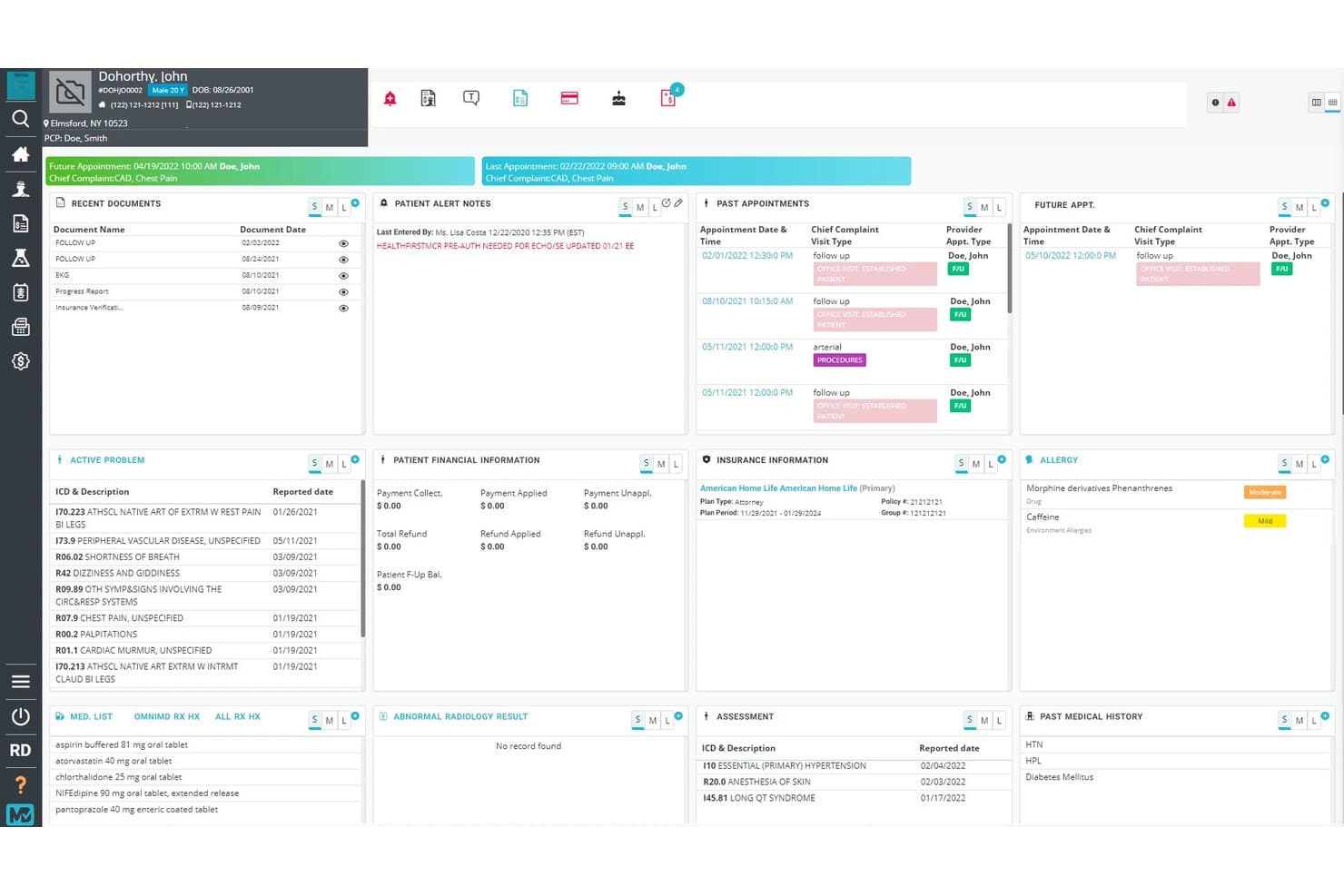
OmniMD automates clinical notes, patient intake, scheduling, e-prescribing, and billing. OmniMD is a cloud-based EHR and practice management platform for ambulatory practices, covering AI-assisted clinical documentation, appointment scheduling, patient intake, electronic prescribing, medical billing, and revenue cycle management.
Who Is OmniMD Best For?
OmniMD suits independent and small-to-mid-sized ambulatory practices considering a MEDITECH Expanse alternative that need AI-assisted documentation, automated patient intake, insurance verification, and medical coding within one platform.
Why OmniMD Is a Good MEDITECH Expanse Alternative
I picked OmniMD as a MEDITECH Expanse alternative because its AI Medical Scribe and AI Front Desk automate clinical and administrative tasks throughout patient visits. I particularly like how the AI Medical Scribe converts patient-provider conversations into structured SOAP, DAP, or APSO notes for clinician review. Its AI Front Desk also handles appointment booking, insurance eligibility checks, and patient intake, reducing manual data entry before and after encounters.
OmniMD Key Features
- Specialty-specific templates: Choose from templates built for 20+ specialties, including built-in clinical scales like PHQ-9, GAD-7, and NIHSS.
- ONC-certified e-prescribing: Prescribe directly from the chart with drug-interaction and allergy alerts, plus EPCS support for controlled substances.
- AI Medical Coder: Converts clinical notes into ICD, CPT, and HCPCS code suggestions, with undercoding and overcoding checks before claims are submitted.
- Denial-risk scoring: Flags claims likely to be rejected based on payer patterns and historical data before they leave the practice.
OmniMD Integrations
OmniMD connects with Labcorp and Quest Diagnostics through its OmniXchange platform for laboratory orders and results. Its AI Medical Scribe supports connections with Epic, Oracle Health (formerly Cerner), athenahealth, eClinicalWorks, and Allscripts (now part of Veradigm), with OmniMD advertising compatibility with more than 50 EHR systems.
Pros and Cons
Pros:
- Clinical, billing, and scheduling workflows connect
- Scheduling confirmations and rescheduling move quickly
- Dictation saves note-writing time
Cons:
- Reports can require extra filters
- Navigation between screens adds steps
Learn more about OmniMD: Best for per-encounter pricing across providers
- Free plan available
- From $25/month
Visit WebsiteCustomer Rating:4.2/5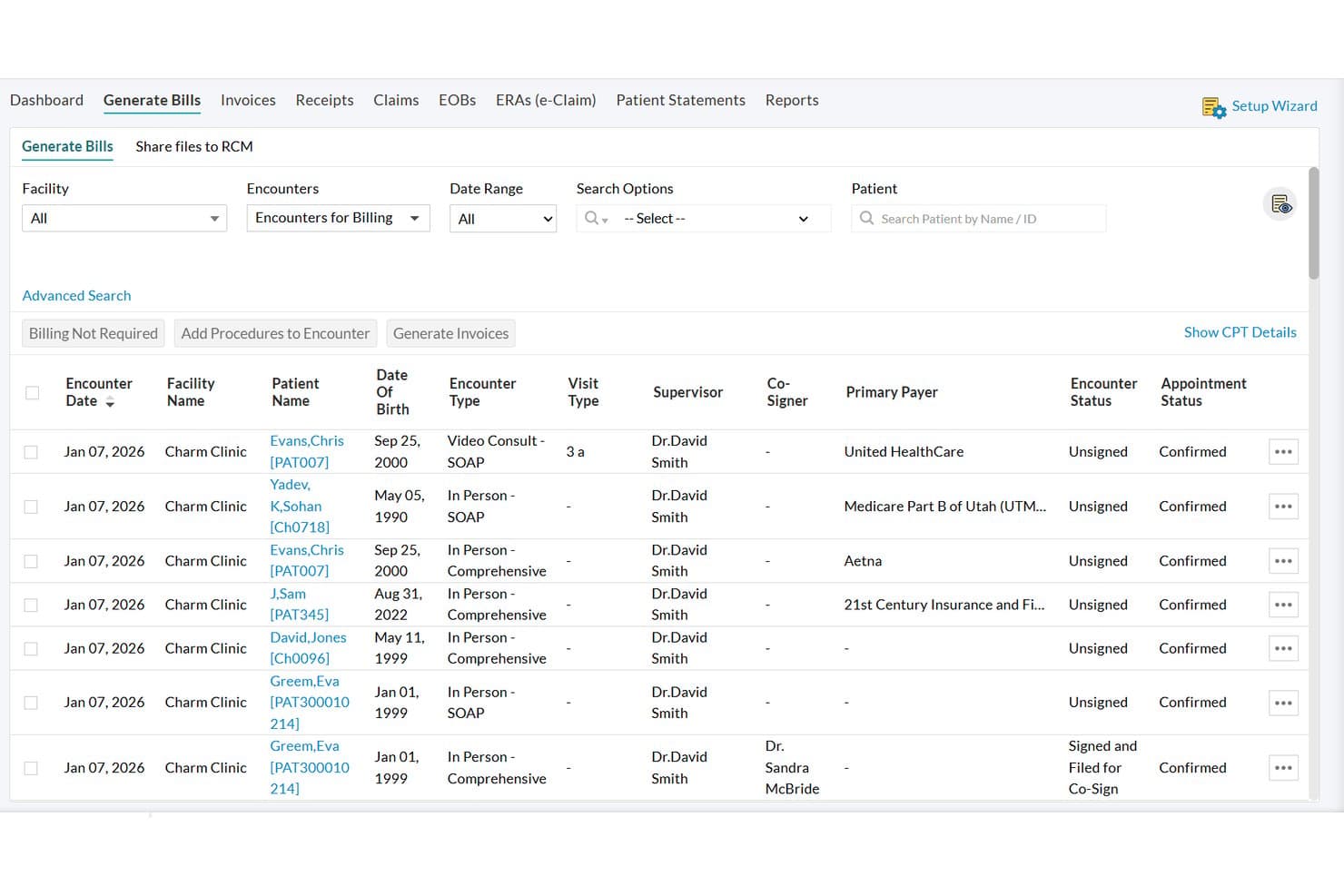
CharmHealth lets users review and generate bills from encounter records. CharmHealth is a cloud-based EHR and practice management platform for ambulatory practices, covering clinical documentation, appointment scheduling, medical billing, patient communication, and insurance claims management.
Who Is CharmHealth Best For?
CharmHealth suits solo clinicians and growing ambulatory practices considering a MEDITECH Expanse alternative that want customizable charting and encounter-based pricing without additional subscription charges for each provider.
Why CharmHealth Is a Good MEDITECH Expanse Alternative
I picked CharmHealth as a MEDITECH Expanse alternative because of its encounter-based pricing model. I like that practices can add multiple providers without increasing their base subscription based on provider count, since charges depend on recorded patient encounters. This gives growing clinical teams more flexibility when managing EHR expenses. Its AI-powered claim validation also checks procedure codes, modifiers, and place-of-service information during claim creation, allowing billing teams to identify potential errors before submission.
CharmHealth Key Features
- SOAP note templates: Build and customize structured note templates with quick, brief, and comprehensive chart-note workflows to match your practice's documentation style.
- Patient portal: Give patients access to request appointments, complete pre-visit questionnaires, share records, and message the care team directly.
- Denial management views: Review denied claims by denial category, code, and payer-wide trends, with claim-level denial reasons available for correction and resubmission.
- Multi-factor authentication controls: Require MFA for all practice members or configure it selectively, with support for authenticator apps, hardware tokens, and passkeys.
CharmHealth Integrations
CharmHealth connects with Google Calendar for appointment synchronization, QuickBooks for accounting, Bluefin for payment processing, Surescripts for electronic prescribing, and Labcorp and Quest Diagnostics for laboratory services. It also supports Fullscript for supplement ordering and works with Optum for electronic claims processing. REST and FHIR APIs are available for custom integrations and healthcare data exchange.
Pros and Cons
Pros:
- Reviewers value combined charting, scheduling, and billing
- Patients value portal records and appointment requests
- Adaptable chart templates earn reviewer praise
Cons:
- E-prescribing and Quest lab issues disrupt workflows
- Payer enrollment delays can stall reimbursement
Learn more about CharmHealth: Best for visual, specialty-specific charting
- Free demo available
- Pricing upon request
Visit WebsiteCustomer Rating:4.3/5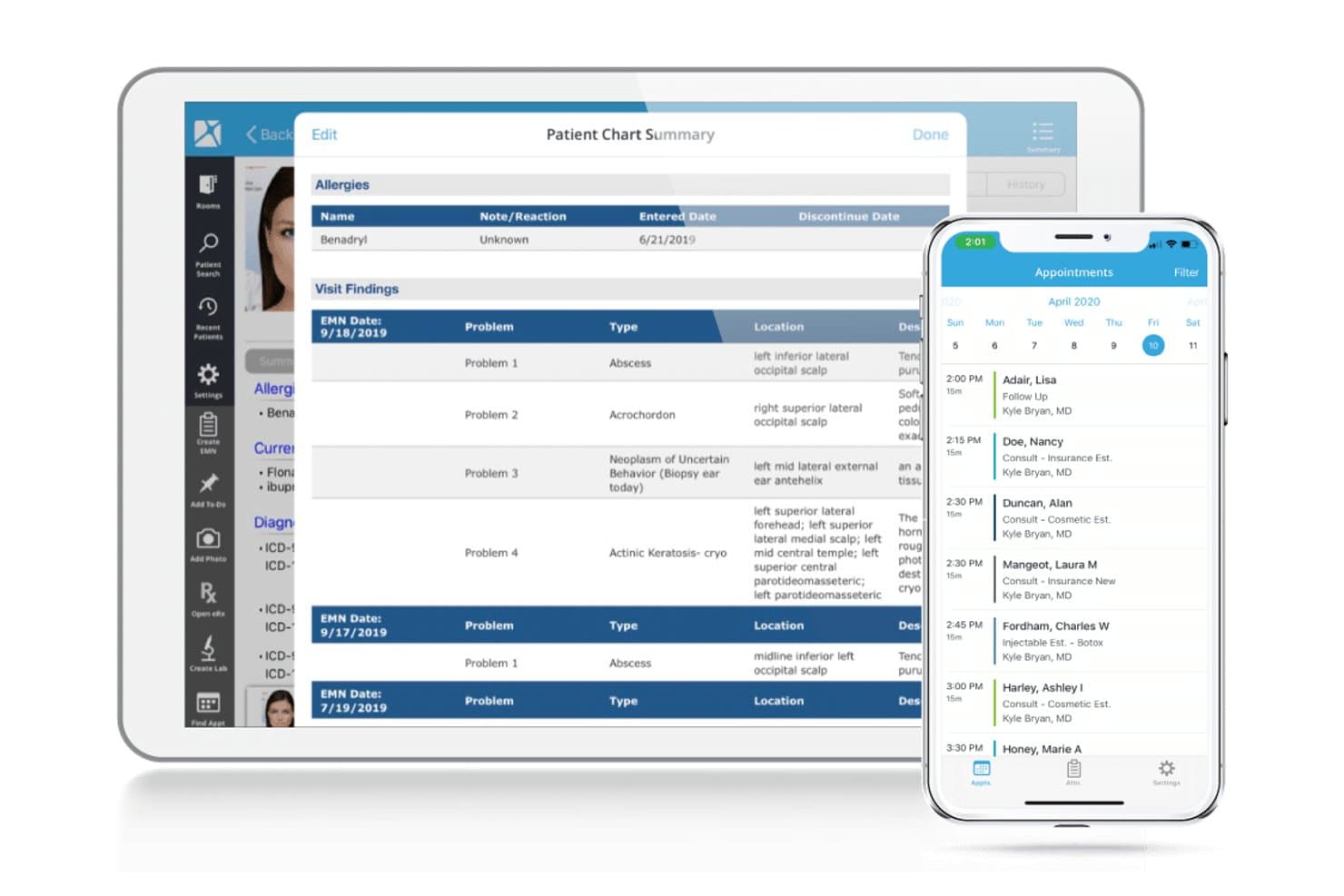
Nextech unifies specialty EHR, practice management, and medical billing tools. Nextech is an EHR and practice management platform for ophthalmology, dermatology, plastic surgery, and med spa practices, offering specialty-specific documentation, AI-assisted charting, scheduling, and medical billing.
Who Is Nextech Best For?
Nextech suits specialty outpatient practices considering a MEDITECH Expanse alternative that need clinical documentation tools designed for ophthalmology, dermatology, plastic surgery, and aesthetic procedures.
Why Nextech Is a Good MEDITECH Expanse Alternative
I picked Nextech as a MEDITECH Expanse alternative because of its specialty-specific clinical charting capabilities. I like that ophthalmology practices can use the Glaucoma Flowsheet and Cataract Surgery Planner to review relevant patient information within dedicated workflows. Its Cora Scribe also generates structured ophthalmology documentation from clinical conversations in near real time. For dermatology and plastic surgery, point-and-click smart stamping allows clinicians to mark anatomical diagrams and document treatment locations directly in patient charts.
Nextech Key Features
- Patient portal: Lets patients view records and test results, request prescription refills, schedule appointments, send secure messages, and pay bills online.
- Claims scrubbing: Checks claims before submission for coding errors, missing fields, authorizations, payer rules, and duplicate claims, then routes clean claims through a clearinghouse.
- Drag-and-drop scheduling: Provides a visual scheduling interface with automated outreach by email, text, or phone, plus waiting-list notifications and recall messaging.
- FHIR API access: Supports FHIR R4 and STU3 APIs, allowing patients to connect their health data to third-party apps directly through the patient portal.
Nextech Integrations
Nextech connects with Ocuco Acuitas 3 for optical practice management and lists patient application connections with b.well Connected Health, Epic Happy Together, Fasten Health, Hugo Health, and OneRecord. It also supports FHIR R4 and STU3 APIs, allowing authorized third-party applications to access patient health information and supporting custom healthcare data exchange.
Pros and Cons
Pros:
- G2 reviewers report easier setup than MEDITECH
- Reviewers praise quick charting
- Specialty templates suit ambulatory workflows
Cons:
- Reviewers report glitches and update slowdowns
- Common tasks can require multiple screens
Learn more about Nextech: Best for independent practice operations
- Free demo available
- Pricing upon request
Visit WebsiteCustomer Rating:3.9/5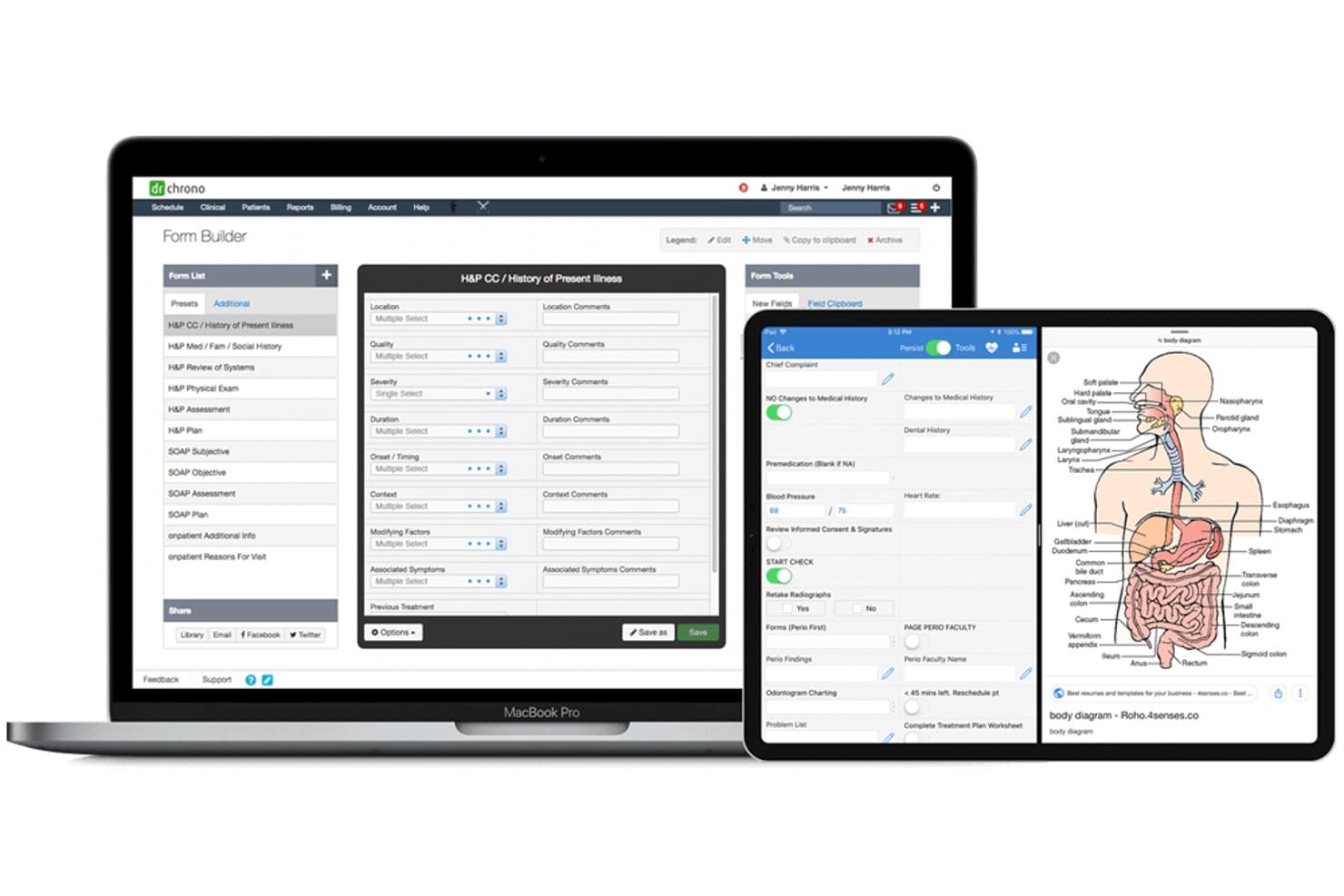
DrChrono covers EHR charting, appointment scheduling, medical billing, and telehealth. DrChrono is a cloud-based EHR and practice management platform by EverHealth for independent ambulatory practices, covering clinical documentation, appointment scheduling, medical billing, telehealth, and patient engagement.
Who Is DrChrono Best For?
DrChrono suits independent ambulatory practices considering a MEDITECH Expanse alternative that need AI-assisted clinical documentation, insurance billing, and patient management within one EHR.
Why DrChrono Is a Good MEDITECH Expanse Alternative
I picked DrChrono as a MEDITECH Expanse alternative because of its EverHealth Scribe and medical practice management capabilities. I like that EverHealth Scribe captures patient-provider conversations and generates structured clinical notes, including history of present illness, assessments, treatment plans, and suggested ICD-10 codes. Clinicians can review and approve the documentation before adding it to patient charts, with DrChrono reporting average documentation time savings of 8–10 minutes per visit. Its billing tools also support eligibility verification, claims submission, and denial management through the Live Claims Feed.
DrChrono Key Features
- OnPatient portal: Patients can schedule appointments, message providers, view lab results, complete intake forms, and pay bills through a web or mobile portal.
- RecordSync: Retrieves clinical records from outside providers via Surescripts and the Carequality network, pulling encounters, diagnoses, labs, allergies, and medications into the patient chart.
- No-show predictor: Flags patients at higher risk of missing appointments so your team can send targeted reminders or take proactive outreach steps.
- MIPS Assist: Guides eligible clinicians through measure selection, performance tracking, Medicare data organization, and MIPS submission preparation.
DrChrono Integrations
DrChrono offers native integrations with Quest, Labcorp, Iron Bridge, Surescripts RecordSync, Surescripts eRx, and CoverMyMeds. It also provides REST and OAuth APIs with FHIR endpoints, plus marketplace integrations.
Pros and Cons
Pros:
- Scheduling, charting, and billing sit in one platform
- iOS charting supports mobile clinical work
- Specialty templates support ambulatory documentation
Cons:
- Migrated legacy notes aren’t editable structured notes
- Billing discrepancies can require extra cleanup
Learn more about DrChrono: Best for outpatient care and revenue cycle
- Free demo available
- Pricing upon request
Visit WebsiteCustomer Rating:4/5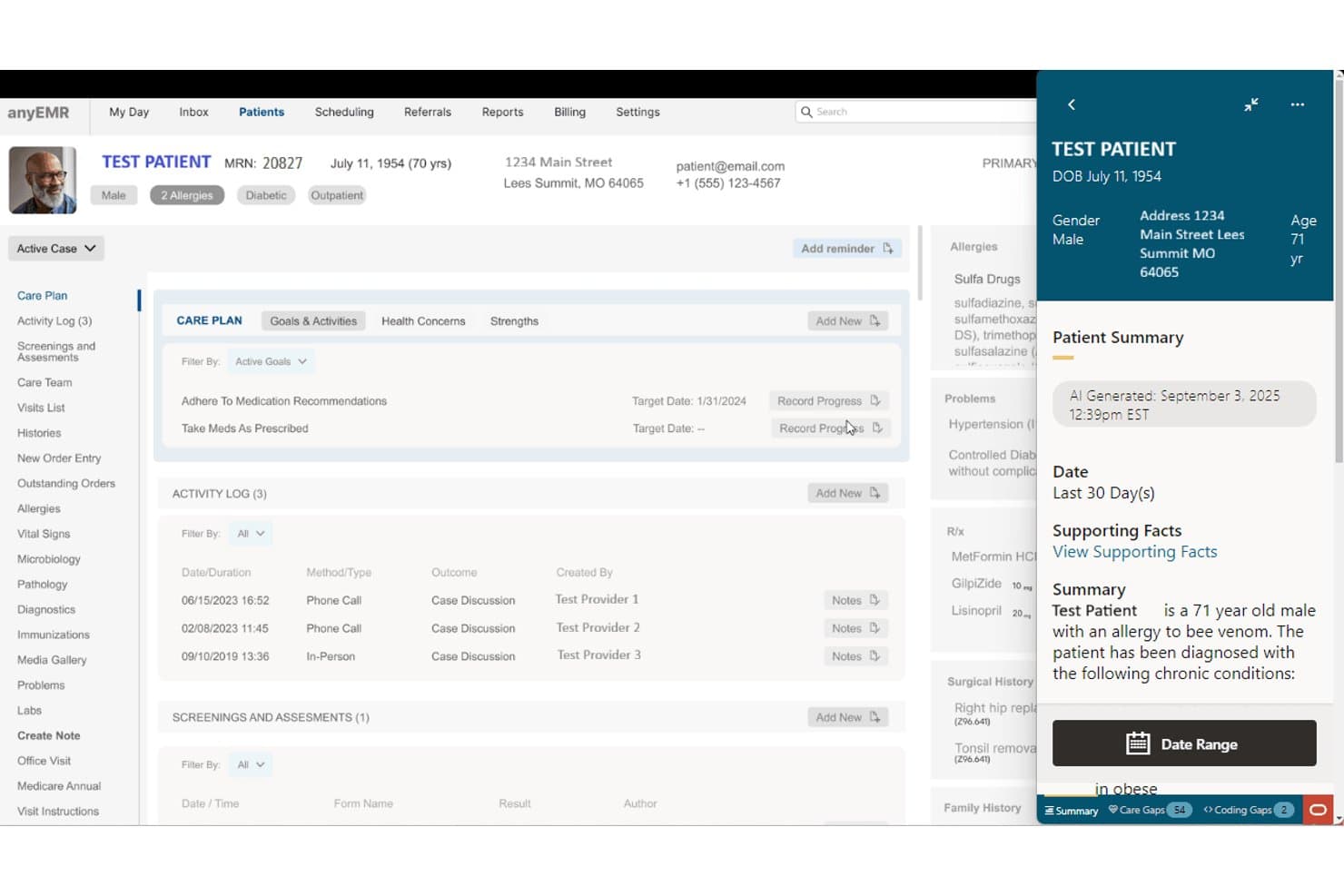
Oracle Health uses AI for patient summaries, automated charge capture, and near-real-time claims. Oracle Health EHR is a cloud-based electronic health record platform for outpatient practices and health systems, covering clinical documentation, patient management, AI-assisted charting, patient history tracking, and revenue cycle management.
Who Is Oracle Health Best For?
Oracle Health EHR suits outpatient practices and health systems considering a MEDITECH Expanse alternative that need AI-assisted clinical documentation, patient history summaries, automated charge capture, and connected clinical and financial workflows.
Why Oracle Health Is a Good MEDITECH Expanse Alternative
I picked Oracle Health as a MEDITECH Expanse alternative because its Ambulatory AI Application Suite connects outpatient clinical workflows with patient accounting and AI-assisted documentation. I particularly like how Oracle Health Patient Accounting uses clinical encounter data to automate charge capture and generate claims in near real time. Its AI-generated patient summaries also draw from encounters, medications, laboratory results, and clinical notes to surface relevant information for chart review and visit preparation.
Oracle Health Key Features
- Clinical AI Agent: Drafts notes and orders from voice recordings, with generated notes surfacing directly in the EHR's Needs Attention panel for clinician review and sign-off.
- Patient history timeline: Displays encounters, medications, diagnoses, dosage changes, and condition-specific insights in chronological order for quick chart review.
- Risk and care-gap insights: Flags potential risks, care gaps, and barriers like readmission risk or financial concerns within the clinical workflow.
- Role-based training and adoption coaching: Provides change management, readiness assessments, and near-real-time Q&A support before, during, and after go-live.
Oracle Health EHR Integrations
Oracle Health EHR supports third-party connectivity through Oracle Health Reference Lab Network for laboratory orders and results, Oracle Health Electronic Prescription Interoperability for prescription transactions, and Oracle Health Information Network for clinical data exchange. It also provides access to validated third-party applications through Oracle Healthcare Marketplace.
Pros and Cons
Pros:
- Clinicians praise access to historical records
- Patient Accounting links encounters to claims
- Ambulatory suite targets outpatient workflows
Cons:
- Ambient AI may miss complex consent details
- Users report extra clicks and navigation friction
Learn more about Oracle Health: Best for ambulatory care and revenue cycle
- Free demo available
- Pricing upon request
Visit WebsiteCustomer Rating:3.8/5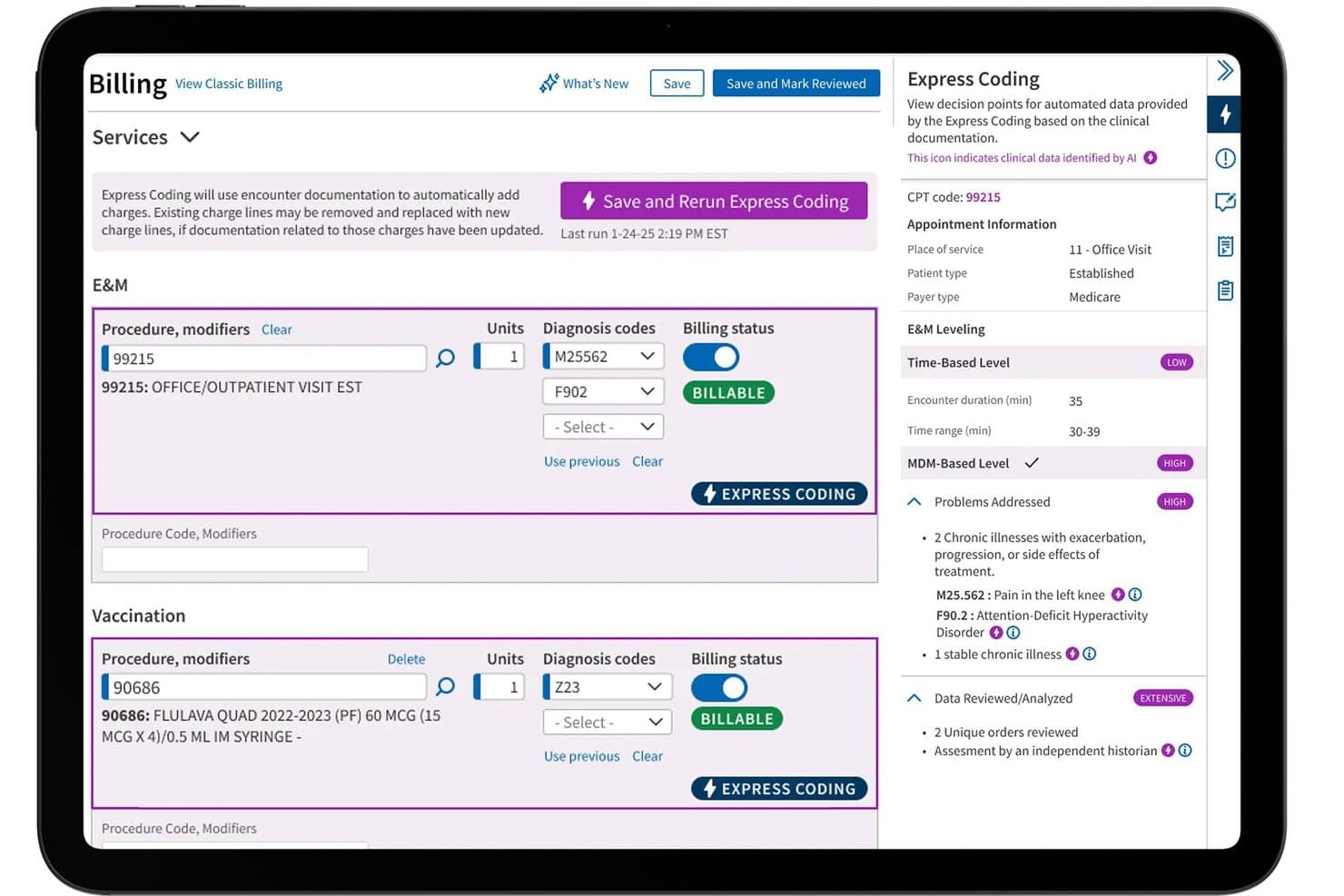
athenaOne supports AI-assisted charting, appointment scheduling, medical billing, and RCM. athenaOne is a cloud-based EHR, practice management, and patient engagement platform for ambulatory practices, covering clinical documentation, appointment scheduling, medical billing, revenue cycle management, and AI-assisted charting.
Who Is athenaOne Best For?
athenaOne suits independent and multi-provider ambulatory practices considering a MEDITECH Expanse alternative that need AI-assisted clinical documentation, automated medical coding, insurance eligibility verification, and patient engagement tools in one platform.
Why athenaOne Is a Good MEDITECH Expanse Alternative
I picked athenaOne as a MEDITECH Expanse alternative because its AI-assisted clinical documentation and coding capabilities are designed around ambulatory care workflows. I particularly like how athenaAmbient captures patient-provider conversations and generates structured draft notes with suggested diagnoses and orders for clinician review. Its Express Coding feature also analyzes encounter documentation, orders, and practice rules to suggest E&M and CPT codes, allowing billing teams to review and approve charges without manually selecting every code.
athenaOne Key Features
- Specialty-specific workflow templates: Configure encounter workflows and create templates for questions, tests, and results tailored to your specialty.
- Network-informed clinical insights: Surface potential care and diagnosis gaps directly in the clinical workflow using data drawn from athenahealth's broader provider network.
- Automated eligibility verification: Check patient insurance eligibility automatically three days before scheduled appointments, with on-demand checks also available.
- Patient self-scheduling: Let patients book, manage, and check in for appointments online through the Patient Portal, the athenaPatient app, or a guest booking workflow.
athenaOne Integrations
athenaOne provides access to more than 277,000 direct clinical integrations, including connections with laboratories, pharmacies, and imaging centers. It supports patient record exchange through CommonWell Health Alliance, Carequality, and TEFCA. Its developer platform offers more than 800 API endpoints, HL7 and C-CDA interfaces, custom connections, and Data View for reporting and data extraction. athenaOne also supports third-party applications through its marketplace, including Suki AI, Abridge, and iScribe for AI-assisted clinical documentation.
Pros and Cons
Pros:
- Claim tools support coding and follow-up
- Scheduling, records, and billing share workflows
- Specialty templates structure ambulatory charting
Cons:
- MEDITECH-specific migration path isn’t documented
- Reviewers report excessive clicks and navigation friction
Learn more about athenaOne: Best for RCM without replacing your EHR
- Free demo available
- Pricing upon request
Visit WebsiteCustomer Rating:3.6/5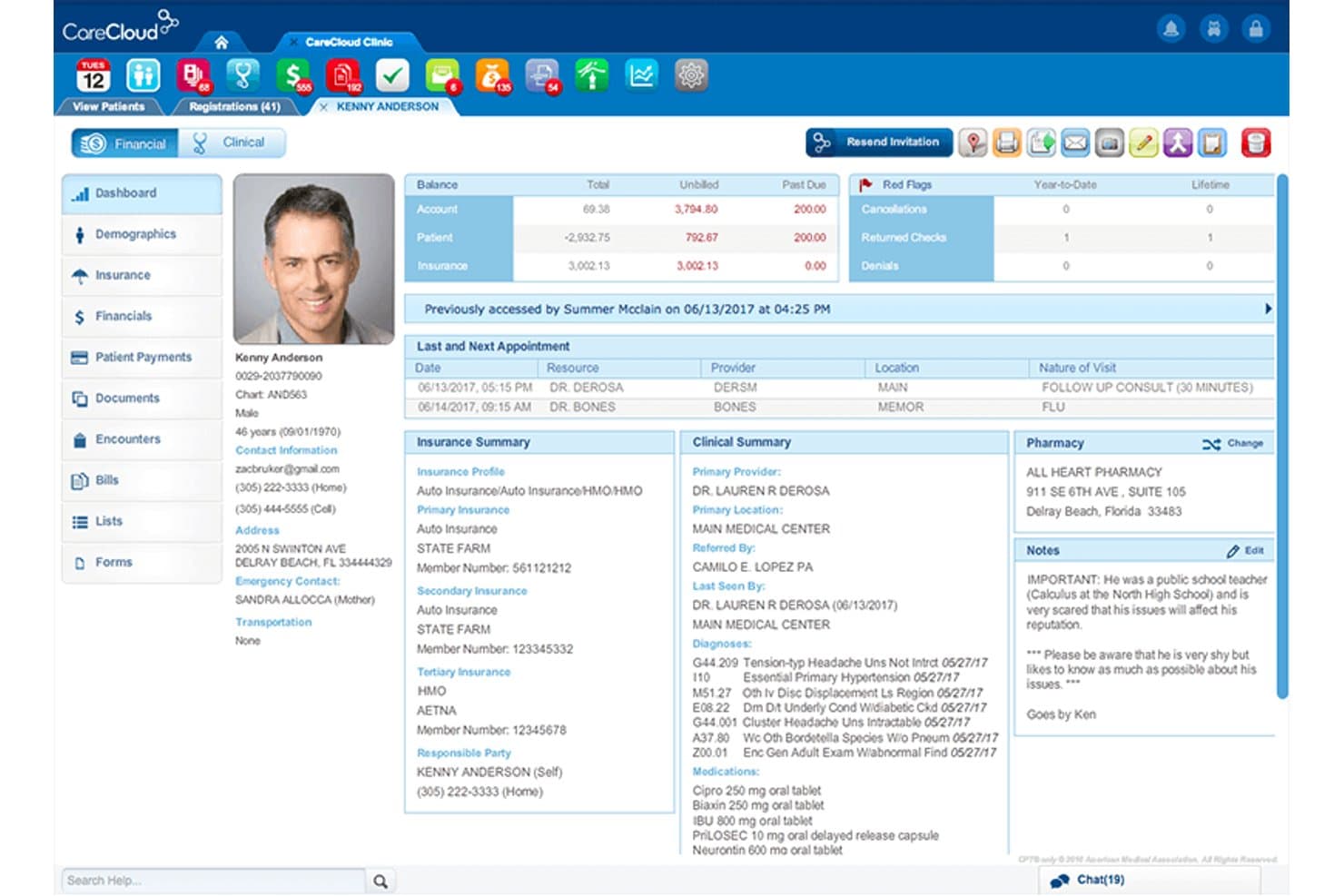
CareCloud automates medical claims and RCM with AI charting and inpatient management. CareCloud is a cloud-based EHR and revenue cycle management platform for ambulatory practices and hospitals, covering AI-assisted clinical documentation, inpatient patient management, medical billing, claims processing, and revenue cycle automation.
Who Is CareCloud Best For?
CareCloud suits hospitals, health systems, and ambulatory practices considering a MEDITECH Expanse alternative that need AI-assisted documentation, inpatient workflow management, and revenue cycle tools that can operate alongside an existing EHR.
Why CareCloud Is a Good MEDITECH Expanse Alternative
I picked CareCloud as a MEDITECH Expanse alternative because its Hospital RCM platform can operate alongside an existing EHR and practice management system without requiring a complete clinical system replacement. I particularly like how its pre-bill accuracy checks identify documentation gaps, coding inconsistencies, and payer-specific rule violations before claims are submitted. Its appeals automation also supports denied and underpaid claim recovery through automated appeals and follow-up workflows, reducing manual billing work while maintaining existing clinical operations.
CareCloud Key Features
- cirrusAI Notes: Captures provider-patient encounters in real time and generates structured SOAP notes, with support for more than 50 specialties and multilingual documentation.
- Patient flow intelligence: Dashboards monitor bed utilization, patient severity, and departmental throughput for inpatient settings.
- Connector integration library: Provides a single point for lab, EHR, and immunization integrations, with FHIR and CCDA data conversion built in.
- Operational command center: Live leadership dashboards surface KPIs, care standards, bottlenecks, and financial metrics in one view.
CareCloud Integrations
CareCloud lists Chiron Health for telehealth and immunization registry connections, including Alabama ImmPRINT, Arkansas WebIZ, and Illinois I-CARE, in its partner directory. Its CareCloud Connector platform also supports laboratory and EHR connections, along with FHIR R4 and CCDA standards for clinical data exchange.
Pros and Cons
Pros:
- RCM reporting earns favorable user comparisons
- Specialty charting receives positive reviewer feedback
- Scheduling and office-flow tools earn user praise
Cons:
- Calendar limits affect recurring appointments
- Users report slow claim follow-up
Learn more about CareCloud: 8Best for specialty care in a shared record
Epic
- Not available
- Pricing upon request
Visit WebsiteCustomer Rating:3.9/5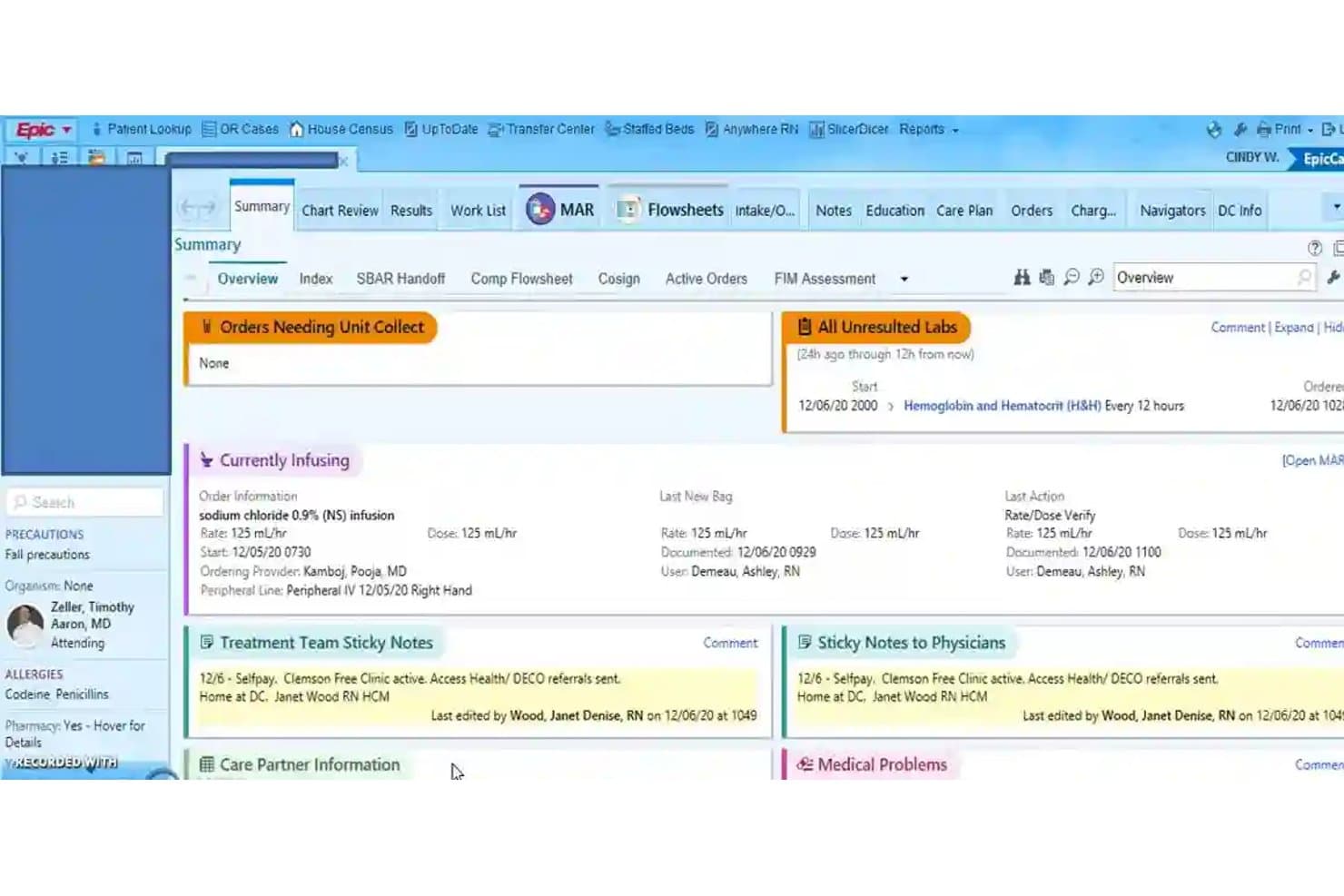
Epic generates AI-assisted clinical notes, diagnoses, orders, and patient summaries. Epic is an enterprise electronic health record platform for hospitals, health systems, and large specialty practices, covering AI-assisted clinical documentation, patient management, care coordination, revenue cycle management, and patient engagement.
Who Is Epic Best For?
Epic suits large hospitals and health systems considering a MEDITECH Expanse alternative that need specialty-specific clinical workflows across more than 60 care areas, shared patient records, and AI-assisted documentation.
Why Epic Is a Good MEDITECH Expanse Alternative
I picked Epic as a MEDITECH Expanse alternative because it supports over 60 medical specialties within a shared patient record. I particularly like its Cupid cardiology and Beacon oncology applications, which provide specialty-specific workflows across departments. Its Art AI charting tool also generates draft notes, diagnoses, and orders from patient-provider conversations, reducing manual documentation.
Epic Key Features
- Care Everywhere record exchange: Exchanges patient records across health systems daily, including with organizations on different EHR platforms.
- MyChart patient engagement suite: Gives patients tools for online scheduling, bill pay, secure messaging, and remote monitoring through a connected portal.
- Penny for revenue cycle: An AI tool built for revenue cycle and operations workflows, including billing automation and charge management.
- CDS Hooks clinical alerts: Lets organizations configure workflow-specific decision-support alerts based on custom criteria without modifying core clinical workflows.
Epic Integrations
Epic connects with Tempus for genomic test ordering and results, while Care Everywhere exchanges patient records across different EHR systems. It also supports custom integrations through FHIR APIs, HL7v2 interfaces, CDS Hooks, and other interoperability standards.
Pros and Cons
Pros:
- Custom chart templates support tailored workflows
- Care Everywhere helps teams access outside records
- Specialty workflows share one patient record
Cons:
- Routine scheduling can take many clicks
- New clinicians need substantial workflow training
Learn more about Epic: Best for EHR buyers seeking billing services
- Free demo available
- Pricing upon request
Visit WebsiteCustomer Rating:3.5/5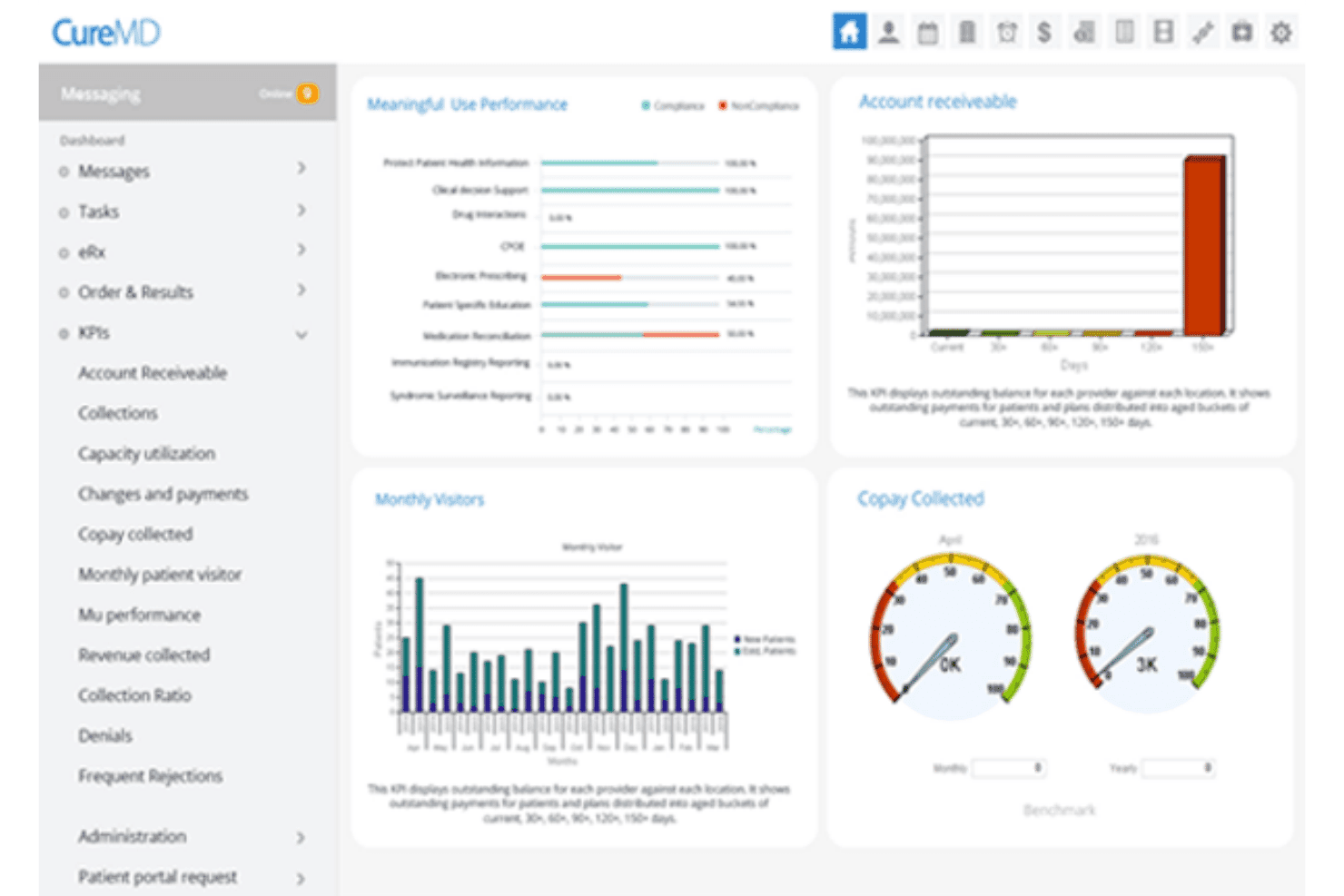
CureMD supports specialty EHR charting, appointment scheduling, medical billing, and RCM. CureMD is a cloud-based EHR and practice management platform for ambulatory practices, covering specialty-specific clinical documentation, appointment scheduling, medical billing, and revenue cycle management.
Who Is CureMD Best For?
CureMD suits ambulatory practices considering a MEDITECH Expanse alternative that need AI-assisted medical coding, customizable clinical workflows, and outsourced revenue cycle management.
Why CureMD Is a Good MEDITECH Expanse Alternative
I picked CureMD as a MEDITECH Expanse alternative because of its AI-powered medical coding and revenue cycle management services. I like that its AI Medical Coder assigns ICD-10, CPT, and HCPCS codes from clinical documentation, while experienced coders handle more complicated cases. CureMD also provides billing services covering claims submission, denial management, appeals, and accounts receivable follow-up. This gives ambulatory practices an option for managing clinical documentation, medical coding, and insurance reimbursement through one provider.
CureMD Key Features
- AI Scribe documentation: Listens to patient-provider conversations and generates specialty-tailored clinical notes for clinician review and approval.
- Specialty-specific EHR templates: Provides pre-built workflows, templates, and procedure documentation across more than 30 medical specialties.
- Patient portal with self-service tools: Lets patients schedule appointments, request refills, view lab results, pay bills, and message their care team.
- Mobile EHR app: Supports clinical record review, note creation, e-prescribing, and eligibility verification from iOS and Android devices.
CureMD Integrations
CureMD supports connections with Quest Diagnostics, Labcorp, Surescripts, and other laboratory, pharmacy, and healthcare systems. Its interoperability platform advertises more than 500 prebuilt connections and supports FHIR-compliant APIs and HL7 interfaces for custom healthcare data exchange.
Pros and Cons
Pros:
- AI scribe supports specialty-tailored documentation
- Reviewers praise customizable notes and templates
- Combined ambulatory charting and billing workflows
Cons:
- External orders and registry connections can falter
- Reviewers report lag, freezes, and crashes
Learn more about CureMD: Best for AI-assisted hospital documentation
- Free demo available
- Pricing upon request
Visit WebsiteCustomer Rating:3.2/5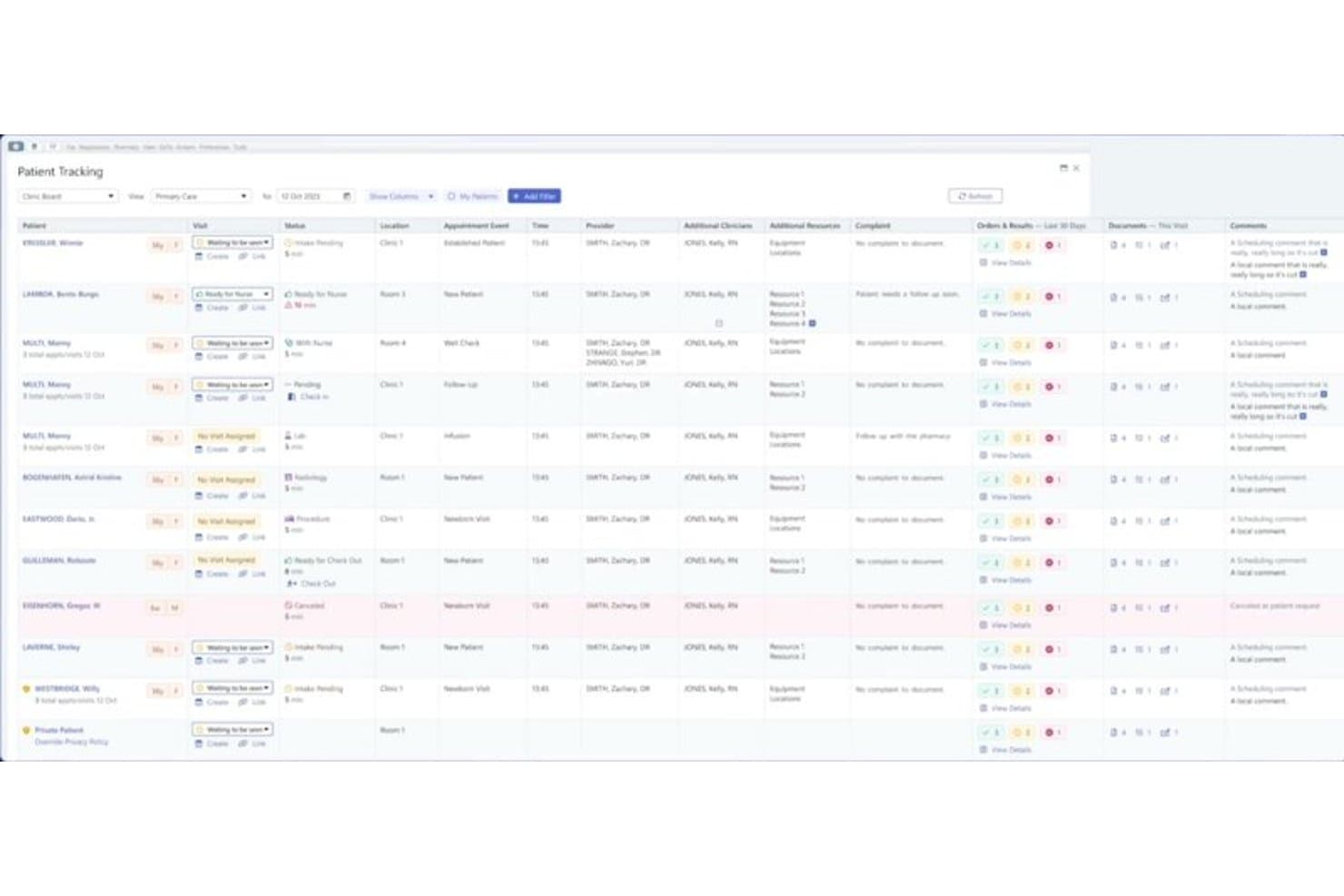
Altera Sunrise supports AI-assisted charting, inpatient care coordination, and patient tracking. Altera Sunrise is an electronic health record platform for mid-sized hospitals and health systems, covering clinical documentation, inpatient care coordination, revenue cycle management, patient tracking, and AI-assisted charting.
Who Is Altera Sunrise Best For?
Altera Sunrise suits mid-sized hospitals and health systems considering a MEDITECH Expanse alternative that need AI-assisted clinical documentation, access to external patient records, revenue cycle management, and connected inpatient workflows.
Why Altera Sunrise Is a Good MEDITECH Expanse Alternative
I picked Altera Sunrise because its Sunrise Thread AI converts patient-provider conversations recorded on mobile devices into structured clinical notes for review. I also like how Sunrise Axon provides access to external clinical records from a network covering over 220 million patients, including laboratory results, imaging data, and health information exchanges, reducing manual record retrieval.
Altera Sunrise Key Features
- Sunrise Financial Manager billing hub: Consolidates billing requests, claims, and self-pay into a single tabbed workspace with embedded claim edits and automated denial management during remittance processing.
- Sunrise CarePath patient engagement: Gives patients mobile-first access to health records, secure messaging with care teams, self-scheduling, and customizable appointment reminders.
- Sepsis early-warning alerts: Calculates a risk score from live vital signs and lab results, then notifies clinicians when a configurable threshold is reached, alongside evidence-based sepsis order sets.
- FHIR R4 and HTI-1 compliance: Supports USCDI v3, SMART App Launch v2, and the HL7 CDA R2 eICR Implementation Guide, enabling third-party app integration through open APIs.
Altera Sunrise Integrations
Altera Sunrise has marketplace integrations with Apple Health app and MyLinks. It supports FHIR APIs and SMART App Launch for custom third-party integrations, with Sunrise Axon connecting to external records through Health Gorilla and TEFCA-aligned exchange.
Pros and Cons
Pros:
- Integrated billing and clinical workflows
- Editable templates support tailored clinical charting
- Ambient mobile notes reduce after-hours charting
Cons:
- Small fonts and lag disrupt chart review
- Older-note review takes extra clicks
Learn more about Altera Sunrise:
Outras alternativas ao MEDITECH Expanse
Eis algumas opções adicionais que não entraram na minha lista final, mas que continuam a merecer atenção:
- 11NextGen EnterpriseBest for specialty notes and charge capture
- 12TebraBest for patient discovery and online booking
- 13WebPTBest for rehab progress between visits
- 14Praxis EMRBest for one-to-one clinician onboarding
- 15TherapyNotesBest for outpatient psychotherapy practices
- 16eClinicalWorksBest for inpatient-outpatient record continuity
- 17Greenway IntergyBest for clinic-based care, not hospital IT
- 18PrognoCIS (Bizmatics)Best for clinics with varied lab connections
- 19Kipu HealthBest for addiction treatment workflows
How I Evaluate MEDITECH Expanse Alternatives
I split my evaluation into three parts. First, core functionality: I look for systems that can chart patient encounters electronically and exchange data with labs, pharmacies, and other providers—these carry the most weight. Then I check for standout features like specialty-specific content and unified practice management. Finally, I consider implementation support, pricing transparency, and scalability for ambulatory settings.
Core Functionality (Table Stakes For This List)
When I'm selecting tools for my list, I score each one on a scale from 0 (does not offer the functionality) to 5 (excels in this area) for each core functionality listed below. I then convert the total into a percentage to help assess each tool's overall fit, with extra weight on any functionalities I’ve deemed essential.
- Electronic Charting (Essential): I check for structured notes, usable templates, and specialty workflows that support documenting histories and visits without relying on free text alone.
- Interoperability (Essential): I look for secure exchange with labs, pharmacies, referral partners, and other records systems, so clinicians can access relevant data across care settings.
- Scheduling: I evaluate whether teams can coordinate appointments across providers or departments, manage patient flow, and send reminders.
- Billing and Claims: I assess charge capture, claims submission and tracking, and denial workflows to see how well billing tasks fit clinical operations.
- Patient Engagement: I check whether patients can access records, message care teams, and manage appointments through a portal or other online tools.
- Clinical Decision Support: I look for relevant allergy or interaction alerts, care reminders, and guidance that appears in the clinical workflow.
Once I have a list of tools that meet the criteria, I consider what sets each platform apart.
Differentiating Factors (What Sets Vendors Apart)
Here's how I compare and contrast different vendors:
Standout Features
I look for specialty-specific content—pre-built templates and order sets for areas like orthopedics or behavioral health that cut setup time and match real clinical workflows. A unified practice management suite matters too, since a single database for scheduling, charting, and billing removes the duplicate entry you get with bolted-on modules. I also check mobile charting with offline access, which is key for providers working across multiple sites.
Beyond Features
I check whether vendors offer structured data migration and phased go-live options, since moving off a hospital-centric system like MEDITECH mid-operation can stall billing if records don't carry over cleanly. Total cost of ownership matters too—I compare per-provider subscription pricing against hidden interface and training fees that inflate the real spend. Finally, I evaluate how easily a platform scales when you add providers or locations without forcing a full re-implementation.
Por que procurar alternativas ao MEDITECH Expanse?
Embora o MEDITECH Expanse seja uma boa escolha de software de RSE, alguns utilizadores procuram alternativas que se adaptem melhor às suas necessidades. Poderá estar à procura de uma alternativa ao MEDITECH Expanse porque:
- A sua clínica independente precisa de um sistema mais simples, centrado nos cuidados ambulatórios
- A sua especialidade precisa de modelos adequados à documentação do dia a dia
- A sua equipa quer preços mais claros antes de elaborar o orçamento da implementação
- Precisa de um plano de migração faseado que se adapte à continuidade dos cuidados e da faturação
- A sua organização precisa de uma plataforma dimensionada para os seus estabelecimentos e para o seu pessoal
Se alguma destas situações lhe parece familiar, veio ao lugar certo. A minha lista inclui várias opções de RSE mais adequadas a equipas que enfrentam estes desafios com o MEDITECH Expanse e procuram alternativas.
Principais funcionalidades do MEDITECH Expanse
Eis as principais funcionalidades do MEDITECH Expanse para o ajudar a compará-lo com opções alternativas:
- Documentação clínica: Os profissionais de saúde podem utilizar vistas de registos, modelos, conjuntos de pedidos e fluxos de trabalho personalizáveis para documentar consultas. Os conteúdos específicos de cada especialidade oferecem às equipas opções estruturadas para registar históricos dos doentes e planos de cuidados.
- Conteúdos específicos de especialidade: O Expanse Ambulatory disponibiliza modelos, conjuntos de pedidos, folhas de registo e widgets para mais de 40 especialidades. As unidades de saúde podem adaptar estas ferramentas aos seus fluxos de trabalho clínicos, em vez de dependerem apenas de documentação genérica.
- Interoperabilidade: O Traverse Exchange reúne dados dos doentes provenientes do MEDITECH e de outros RSE, organizando-os nos fluxos de trabalho dos profissionais de saúde. O Consolidated Patient Summary apresenta as informações relevantes numa única vista para apoiar as decisões de cuidados.
- Acesso móvel: A plataforma nativa para dispositivos móveis suporta o acesso seguro através do navegador em computadores portáteis, tablets e smartphones. A aplicação Expanse Now para médicos também permite realizar tarefas de rotina e coordenar cuidados longe de um computador de secretária.
- Documentação assistida por IA: O Ambient Intelligence pode gerar notas clínicas de consultas a partir das conversas entre profissionais de saúde e doentes. Os profissionais podem rever as notas resultantes como parte da documentação, enquanto o Expanse Navigator pesquisa e resume registos, documentos digitalizados e dados antigos.
- Envolvimento dos doentes: O portal e a aplicação MyHealth permitem que os doentes e os representantes autorizados acedam a informações de saúde, comuniquem com os profissionais de saúde, giram consultas e paguem faturas. O Expanse Patient Connect envia lembretes, instruções e acompanhamentos bidirecionais através dos canais preferidos dos doentes.
- Cuidados virtuais: As consultas de vídeo agendadas integram-se nos fluxos de trabalho de cuidados ambulatórios e no processo clínico do doente. O Virtual On Demand Care também permite marcar consultas de cuidados urgentes para doentes novos e já existentes.
- Agendamento e gestão da unidade de saúde: Os funcionários podem utilizar o Scheduling Grid para gerir o registo de entrada e saída, marcar consultas de acompanhamento e preencher horários de consultas canceladas. O sistema também disponibiliza previsão de faltas às consultas, painéis de controlo e análises.
- Ferramentas do ciclo de receitas: O Expanse liga a documentação clínica aos fluxos de trabalho de codificação, faturação e pedidos de reembolso. As ferramentas incluem autorização prévia eletrónica, estimativas de custos em tempo real, alertas de faturação, apoio à gestão de recusas e recursos e acompanhamento de contas a receber.
Custos e preços das alternativas ao MEDITECH Expanse
Os preços variam consoante as funcionalidades, o número de profissionais, os complementos e o âmbito da implementação. Muitas alternativas ao MEDITECH Expanse não utilizam níveis de planos normalizados, mas estes intervalos oferecem uma orientação geral para a elaboração do orçamento.
Tabela de comparação de planos para alternativas ao MEDITECH Expanse
| Tipo de plano | Preço médio | Funcionalidades comuns |
|---|---|---|
| Tipo de planoPlano gratuito | Preço médio$0, quando disponível | Funcionalidades comunsRegistos clínicos básicos, número limitado de processos de doentes e apoio autónomo. |
| Tipo de planoPlano pessoal | Preço médio$25-$100 por profissional/mês | Funcionalidades comunsAgendamento, registos clínicos eletrónicos, portal do doente e prescrição eletrónica. |
| Tipo de planoPlano empresarial | Preço médio$100-$600 por profissional/mês | Funcionalidades comunsGestão da unidade de saúde, fluxos de trabalho de pedidos de reembolso, relatórios e integrações. |
| Tipo de planoPlano empresarial de grande dimensão | Preço médio$600+ por profissional/mês ou orçamento personalizado | Funcionalidades comunsImplementação em vários locais, interfaces de interoperabilidade, serviços de implementação e apoio dedicado. |