

O software EMR de urologia simplifica os dados de urofluxometria, imagiologia e agendamento cirúrgico, permitindo que a sua equipa se concentre em melhorar o envolvimento dos doentes a longo prazo. Gerir agendas com muitos procedimentos pode ser um desafio, mas o suporte adequado pode reduzir atrasos e garantir uma documentação uniforme.
Neste artigo, comparo e analiso as melhores ferramentas de software EMR de urologia para apoiar a sua decisão de compra.
Why Trust Our Software Recommendations
6,700+
Reviews
20
Industry experts
16+
Evaluation factors
14
Years
Our team has been testing and reviewing software since 2012. As medical practice leaders ourselves, we know how difficult—and important—it is to choose the right software.
For this guide, we evaluated tools using hands-on testing and independent research, scoring tools using our selection criteria.
Our reviews reflect our human editorial judgment, not a sales pitch.
Tabela de comparação de software EMR de urologia
Esta tabela de comparação resume os detalhes de preços das minhas principais seleções de software EMR de urologia:
| Tool | Best For | Trial Info | Price | ||
|---|---|---|---|---|---|
| 1 | Best for customizable urology templates | 15-day free trial | From $99/month | Website | |
| 2 | Best for customizable urology workflows | Free demo available | Pricing upon request | Website | |
| 3 | Good for peer-reviewed and specialty-specific content | Free demo available | Pricing upon request | Website | |
| 4 | Best for chronic urology care tracking | Free demo available | Pricing upon request | Website | |
| 5 | Best for in-office urology procedure billing | Free demo available | Pricing upon request | Website | |
| 6 | Best for mobile EHR access for on-the-go providers | Free demo available | Pricing upon request | Website | |
| 7 | Best for built-in medical billing and telehealth | Free demo available | From $429/user/month | Website | |
| 8 | Best for large urology group data consolidation | Free demo available | Pricing upon request | Website | |
| 9 | Best for urology-specific workflow optimization | Free demo available | Pricing upon request | Website | |
| 10 | Best for customizing templates to your practice needs | Free demo available | Pricing upon request | Website |


Análises do melhor software EMR de urologia
Seguem-se os meus resumos detalhados do melhor software EMR de urologia que entrou na minha lista restrita. As minhas análises apresentam uma análise detalhada das principais funcionalidades, vantagens & desvantagens, integrações e casos de utilização ideais de cada ferramenta, para o ajudar a encontrar a melhor opção para si.
 Best for customizable urology templates
- 15-day free trial
- From $99/month
Visit WebsiteCustomer Rating:4.8/5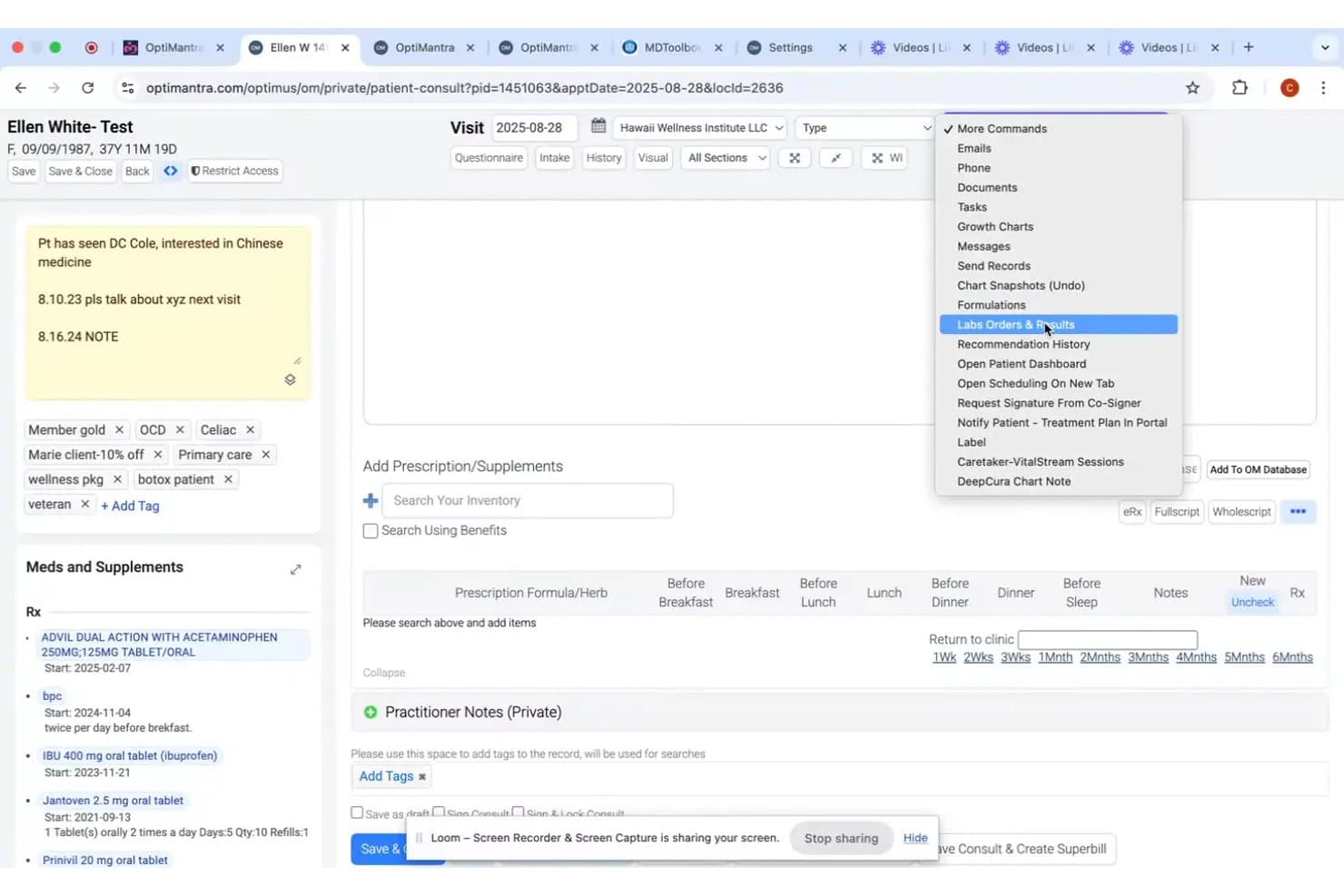
OptiMantra offers a Labs Orders & Results option accessible through a dropdown command menu within the patient consult screen. OptiMantra is a customizable EMR and practice management platform that combines clinical charting, e-prescribing, lab ordering, telehealth, scheduling, and integrated insurance billing for specialty practices.
Who Is OptiMantra Best For?
It's a strong fit for solo practitioners and small specialty practices that need a flexible, affordable EMR they can tailor to their own clinical workflows.
Why I Picked OptiMantra
I picked OptiMantra because its template builder gives urology practices genuine control over how they document encounters. I can build condition-specific SOAP notes for BPH, kidney stones, or incontinence from scratch, and follow-up charts can pull forward content from previous visits automatically. Custom questionnaires can also be pushed to patients through the portal before appointments, so intake is already mapped to the chart by the time a urologist walks in.
OptiMantra Key Features
- Integrated e-prescribing: Send electronic prescriptions, including controlled substances, to most US pharmacies.
- Insurance billing module: Manage claims, superbills, EOB auto-posting, and insurance payments within the EMR.
- HIPAA-compliant telehealth: Provide secure video visits directly through the platform at no additional cost.
- Lab and imaging connectivity: Place orders and receive results from major labs and imaging centers inside the EMR.
OptiMantra Integrations
OptiMantra offers native integrations with LabCorp, Quest Diagnostics, Access Medical Labs, Rupa Health, SimonMed, Surescripts (via MDToolbox), Stripe, Fiserv (Clover Connect), Box.com, Google Calendar, and SFax. An API is available for custom integrations.
Pros and Cons
Pros:
- Built-in patient portal and telehealth tools
- Embedded e-prescribing with controlled substance support
- Highly configurable chart templates for urology specialties
Cons:
- ONC certification and MIPS reporting not available
- No prebuilt urology-specific chart content
Learn more about OptiMantra: Best for customizable urology workflows
- Free demo available
- Pricing upon request
Visit WebsiteCustomer Rating:5/5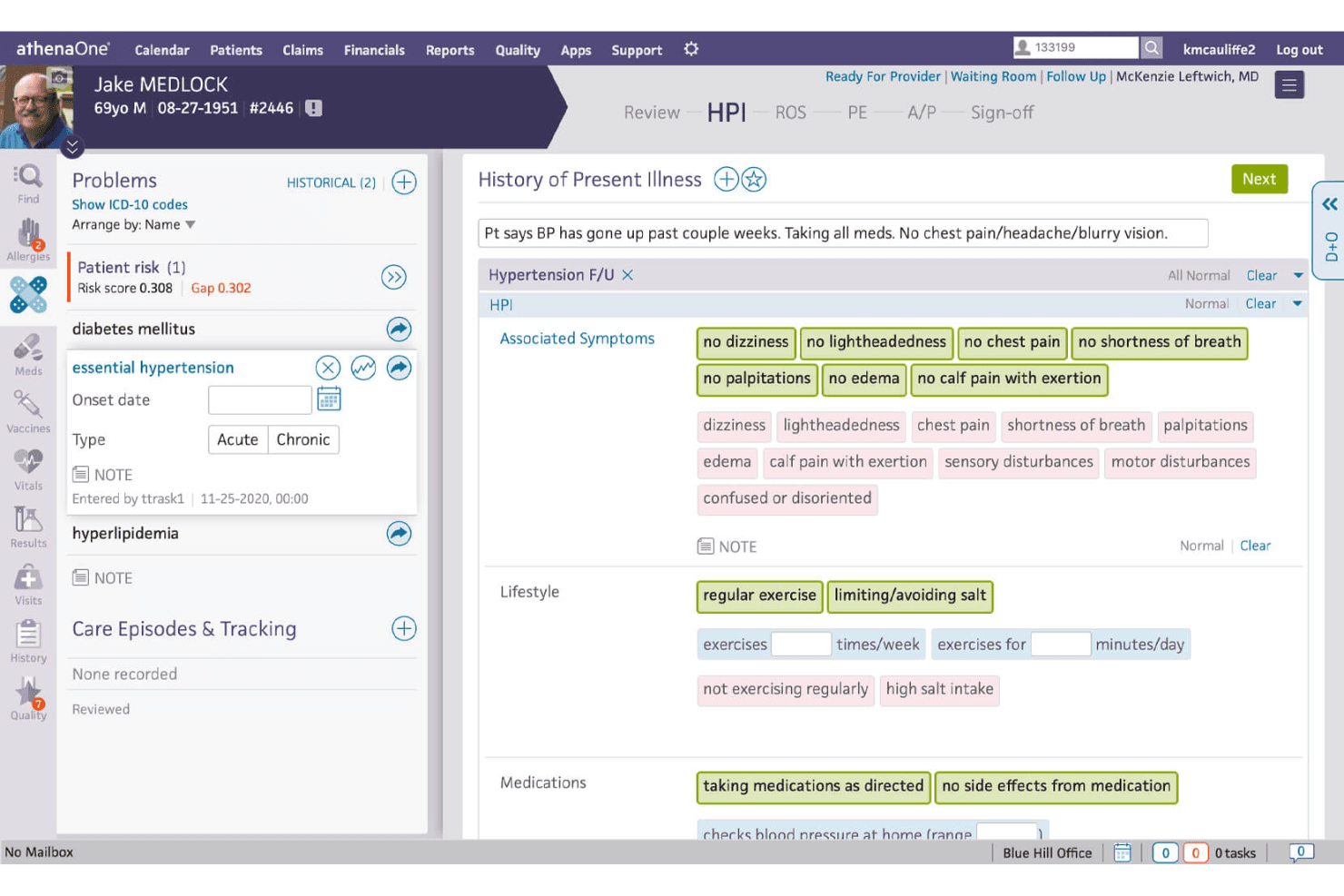
Athenahealth's platform offers a patient history interface, which simplifies documentation of the patient's medical background and previous treatments. Athenahealth is a cloud-based EHR and practice management platform that combines clinical documentation, revenue cycle management, scheduling, and patient engagement within a single, specialty-configurable system.
Who Is Athenahealth Best For?
Athenahealth suits mid-to-large urology practices and multi-specialty groups that prioritize integrated billing performance and configurable clinical workflows over out-of-the-box urology templates.
Why I Picked Athenahealth
I picked Athenahealth because its workflow customization goes deeper than most EMRs I've evaluated. Urologists can build personal templates, macros, and order sets that surface the right questions and results for each encounter type, whether that's a BPH follow-up or a kidney stone workup. I also like its Ambient Notes feature, which listens during encounters and auto-generates documentation, cutting post-visit charting time significantly.
Athenahealth Key Features
- AI-native rules engine: Automates billing workflows using over 30,000 prebuilt rules to help minimize claim errors.
- Integrated patient engagement portal: Lets patients schedule, message providers, pay bills, and access records through a single platform.
- Mobile EHR access: Enables charting, order management, and schedule review from any mobile device.
- Network-informed care gap insights: Surfaces real-time clinical insights and gaps in care during patient encounters.
Athenahealth Integrations
Athenahealth offers more than 300 marketplace integrations, including Fullscript, Epion, DeepScribe, TimeDoc Health, LucidAct, and Clearwave. An API is available for custom integrations.
Pros and Cons
Pros:
- Integrated RCM with automated claim scrubbing
- Strong reporting and analytics dashboard options
- Customizable encounter templates for urology subspecialties
Cons:
- No native AUA Quality Registry submission
- Urology device integrations require partner solutions
Learn more about Athenahealth: Good for peer-reviewed and specialty-specific content
- Free demo available
- Pricing upon request
Visit WebsiteCustomer Rating:4.5/5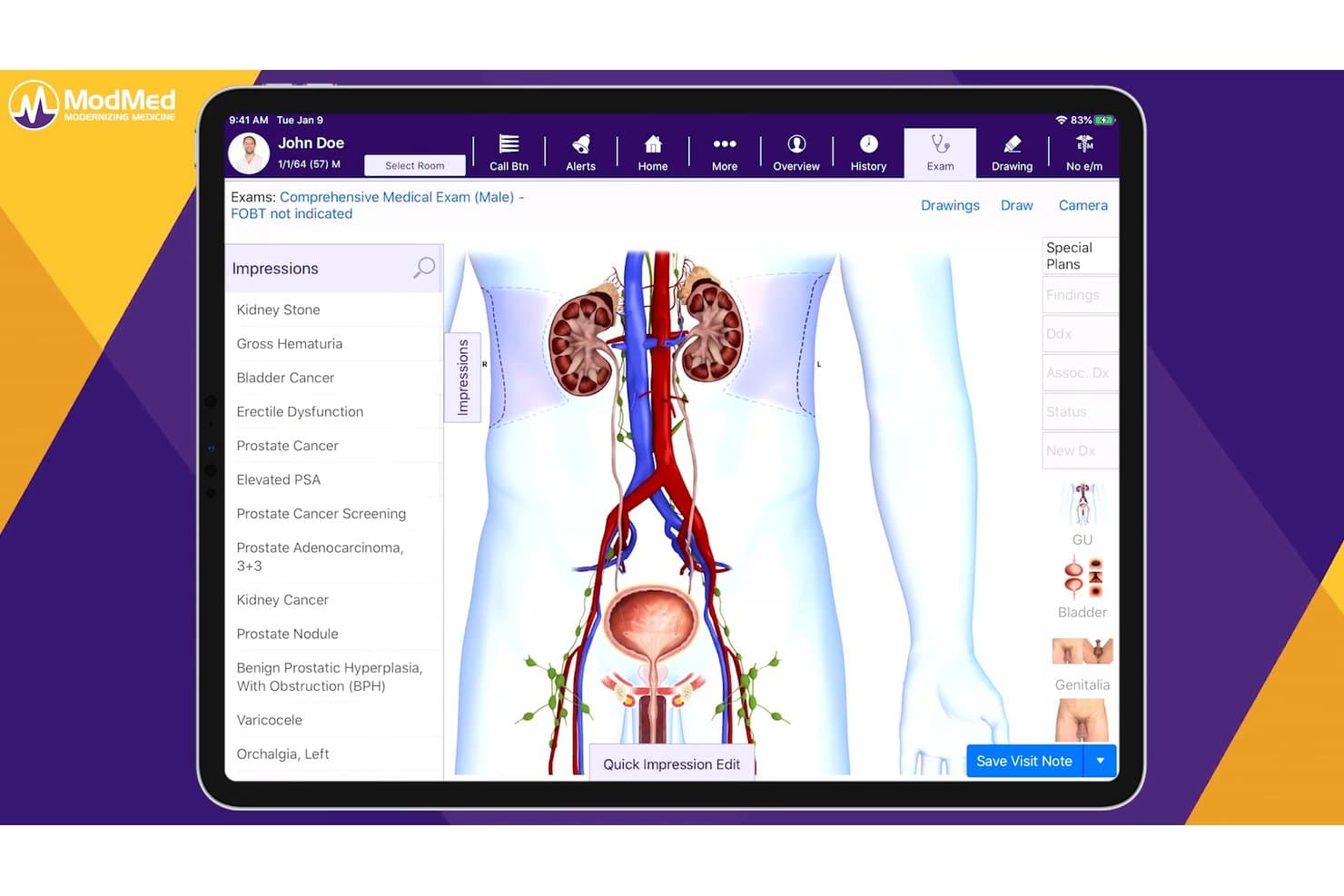
ModMed lets urologists document impressions with visual anatomy tools. ModMed EMA is a urology-focused EHR platform built specifically for urology practices, offering specialty-specific documentation workflows, integrated practice management, AI-assisted charting, billing and coding support, and patient engagement tools.
Who Is ModMed Best For?
ModMed EMA is a strong fit for urology physicians and practice administrators who want a single platform built specifically around urology clinical workflows, documentation, and revenue cycle management.
Why I Picked ModMed
I picked ModMed as one of the best because its EMA platform is built specifically by urologists for urologists, and that depth shows in how it handles peer-reviewed, specialty-specific content. Its prebuilt protocols for BPH, incontinence, and prostate cancer apply documentation, prescriptions, and MIPS items in a single click, and AI Scribe 2.0 was trained on over 750 million de-identified encounters to suggest notes and billing codes directly from the patient conversation. The AQUA registry integration also keeps practices aligned with urology-specific quality reporting without manual data entry.
ModMed Key Features
- AQUA registry integration: Automatically submits urology-specific quality data to the AQUA registry without manual data entry.
- Automated patient recalls: Sends reminders for PSA draws, cystoscopy follow-ups, medication injections, and critical lab results.
- ModMed BOOST revenue cycle service: Connects practices with certified coders who manage claims, track A/R, and report on net collection rates.
- APPatient mobile app: Lets patients view lab results, message the practice, request refills, pay bills, and schedule appointments from their phone.
ModMed Integrations
Documented integrations include Surescripts, Appriss Health, AQUA, PACS, urodynamic devices, and ultrasound systems. ModMed also supports FHIR APIs, HL7 connections, ModMed Records Exchange, and the synapSYS partner marketplace.
Pros and Cons
Pros:
- Revenue cycle tools support coding accuracy
- Urology protocols reduce repetitive charting steps
- Peer-reviewed content supports urology-specific decisions
Cons:
- AI Scribe suggestions need provider review
- Support responses can take too long
Learn more about ModMed: Best for chronic urology care tracking
- Free demo available
- Pricing upon request
Visit WebsiteCustomer Rating:4.4/5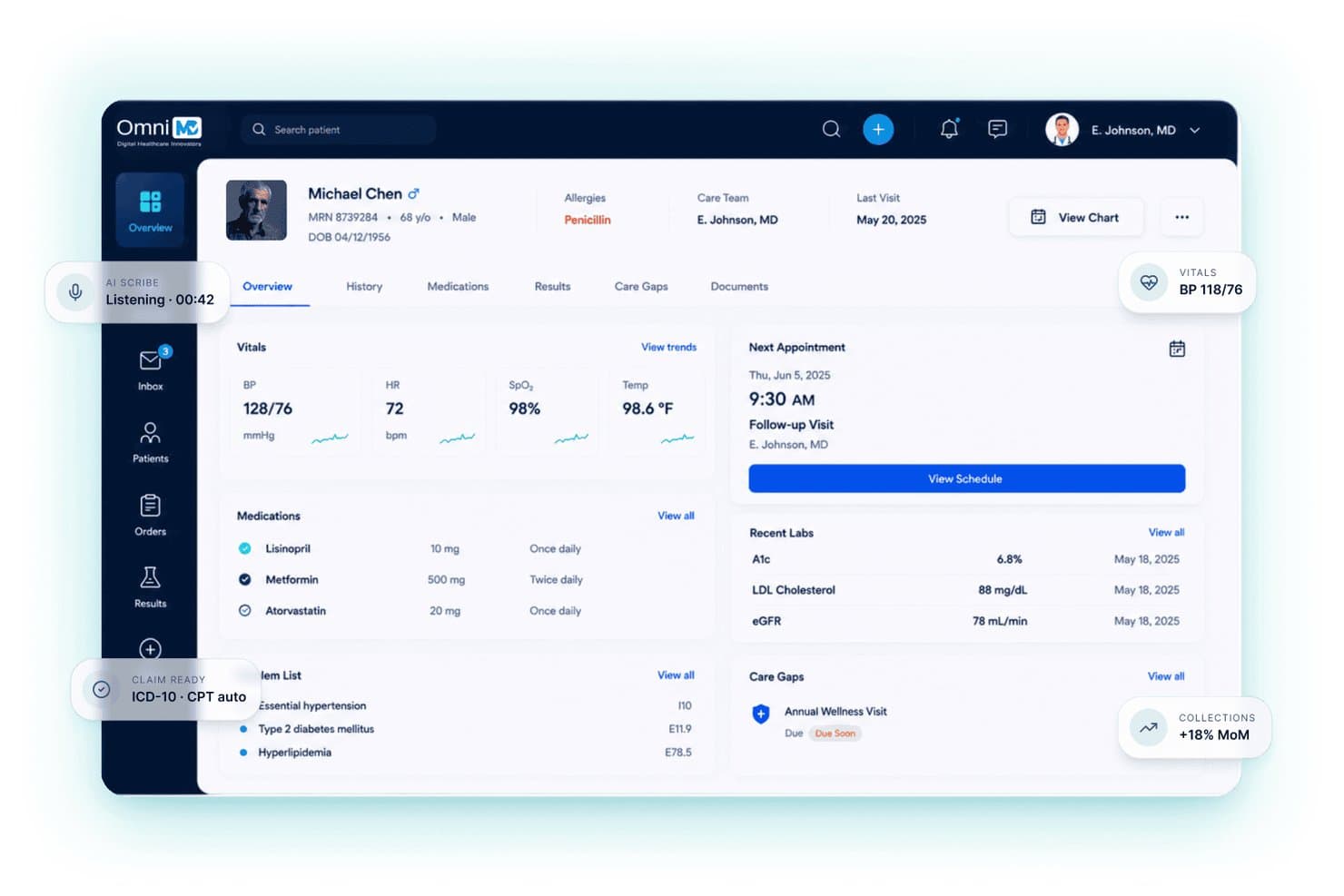
OmniMD centralizes patient vitals, meds, and labs in one EHR view. OmniMD is a multi-specialty EHR platform with urology-specific functionality, covering chronic care tracking, AI-assisted documentation, e-prescribing, billing, and lab integration in a single system.
Who Is OmniMD Best For?
OmniMD fits urology practices that need to manage long-term patient conditions like BPH, prostate cancer survivorship, and recurring kidney stones alongside day-to-day billing and documentation.
Why I Picked OmniMD
I picked OmniMD because its Chronic Care Engine is purpose-built for the long-term conditions urology practices deal with most: BPH, overactive bladder, recurring kidney stones, and prostate cancer survivorship. I like that PSA trends, biopsy results, and urine cytology all feed into a single patient timeline, with automatic alerts when pathology flags malignancy. The AI scribe also understands urology-specific terminology like AUA symptom scores and Gleason grading, which cuts documentation time without sacrificing clinical precision.
OmniMD Key Features
- AI medical scribe: Captures visit notes using ambient listening and understands urology-specific terminology like LUTS, AUA symptom scores, and Gleason grading.
- E-prescribing with EPCS: Sends controlled and non-controlled prescriptions directly to the pharmacy, with built-in allergy and drug interaction checks.
- OmniXchange lab integration: Uses HL7 to send orders to LabCorp, Quest, and regional labs, returning structured results with abnormal values flagged automatically.
- AI medical coder: Assigns procedure and diagnosis codes immediately after each visit, flagging undercoding and compliance gaps for kidney stone procedures and prostate workups.
OmniMD Integrations
OmniMD supports HL7/FHIR integrations with LabCorp, Quest, regional labs, hospital systems, pathology groups, and EHRs including Epic, Cerner, athenahealth, eClinicalWorks, and Allscripts. SMART-on-FHIR, APIs, and remote patient monitoring connectors support custom connectivity.
Pros and Cons
Pros:
- Combines charting, billing, and portal workflows
- Support teams resolve issues quickly
- Tracks PSA and chronic urology conditions
Cons:
- Users report bugs and duplicate data entry
- Urology templates lack publicly verified depth
Learn more about OmniMD: Best for in-office urology procedure billing
- Free demo available
- Pricing upon request
Visit WebsiteCustomer Rating:4/5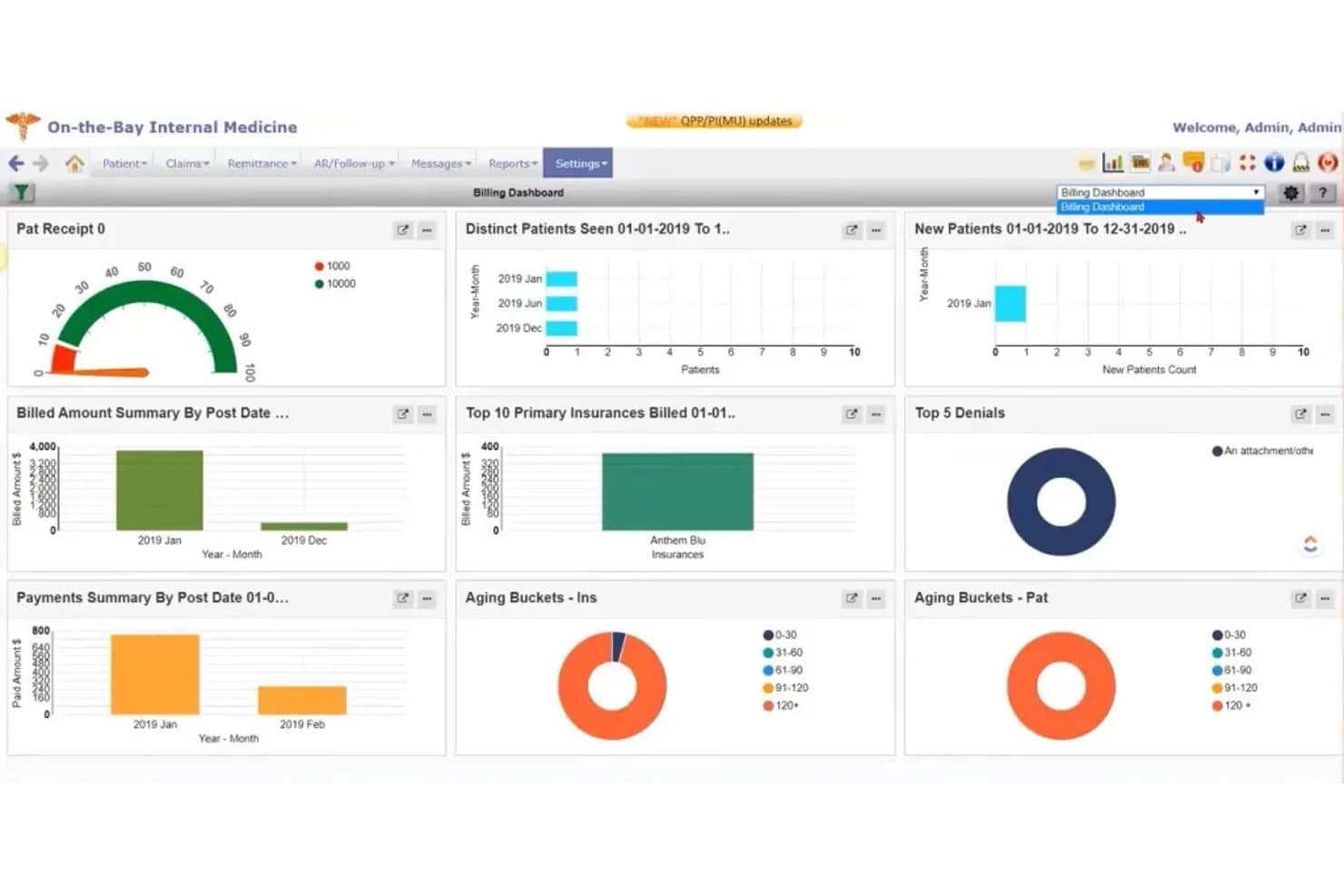
PrognoCIS billing dashboard showing payments, denials, insurance claims, and aging reports PrognoCIS is a multi-specialty urology EMR that combines specialty-specific procedure templates, e-prescribing, billing automation, and practice management tools in a single platform.
Who Is PrognoCIS Best For?
PrognoCIS is a strong fit for urology practices that do high volumes of in-office procedures and need billing automation built directly into their clinical workflow.
Why I Picked PrognoCIS
I picked PrognoCIS as one of the best because its procedure-level billing tools are built directly into its clinical templates. When a urologist completes a cystoscopy or vasectomy note, charge capture happens automatically, with urology-specific CPT/ICD codes, CCI edits, and claim scrubbing applied before the claim leaves the practice. I also like that it flags E&M coding during documentation, which cuts the back-and-forth between clinical and billing staff on procedure-heavy days.
PrognoCIS Key Features
- Urology procedure templates: Pre-built templates for cystoscopy, vasectomy, TURP, prostate biopsy, and radical prostatectomy are available out of the box.
- AI Scribe: Records and drafts HPI, exam, history, and medication sections in real time, with support for 54 languages.
- ASC surgical scheduling module: Coordinates pre-op scheduling, anesthesia charting, inventory tracking, and post-op tracking across clinic and OR.
- EPCS with PDMP integration: Supports controlled substance prescribing with two-factor authentication and state prescription-monitoring checks built in.
PrognoCIS Integrations
PrognoCIS integrations include Bostwick Labs, LabCorp, Surescripts, First Databank, IdenTrust, Zoom, ProMeet, and Nuance Dragon Medical. It supports HL7, FHIR, PACS/DICOM, Direct messaging, HIEs, and custom APIs.
Pros and Cons
Pros:
- Supports multi-site administrative reporting and RCM
- Reviewers praise one-click chart-to-billing workflows
- Procedure notes connect directly to charge capture
Cons:
- Urology analytics lack documented PSA trend tools
- Billing workflows can feel difficult to navigate
Learn more about PrognoCIS Psychiatry EHR: Best for mobile EHR access for on-the-go providers
- Free demo available
- Pricing upon request
Visit WebsiteCustomer Rating:3.7/5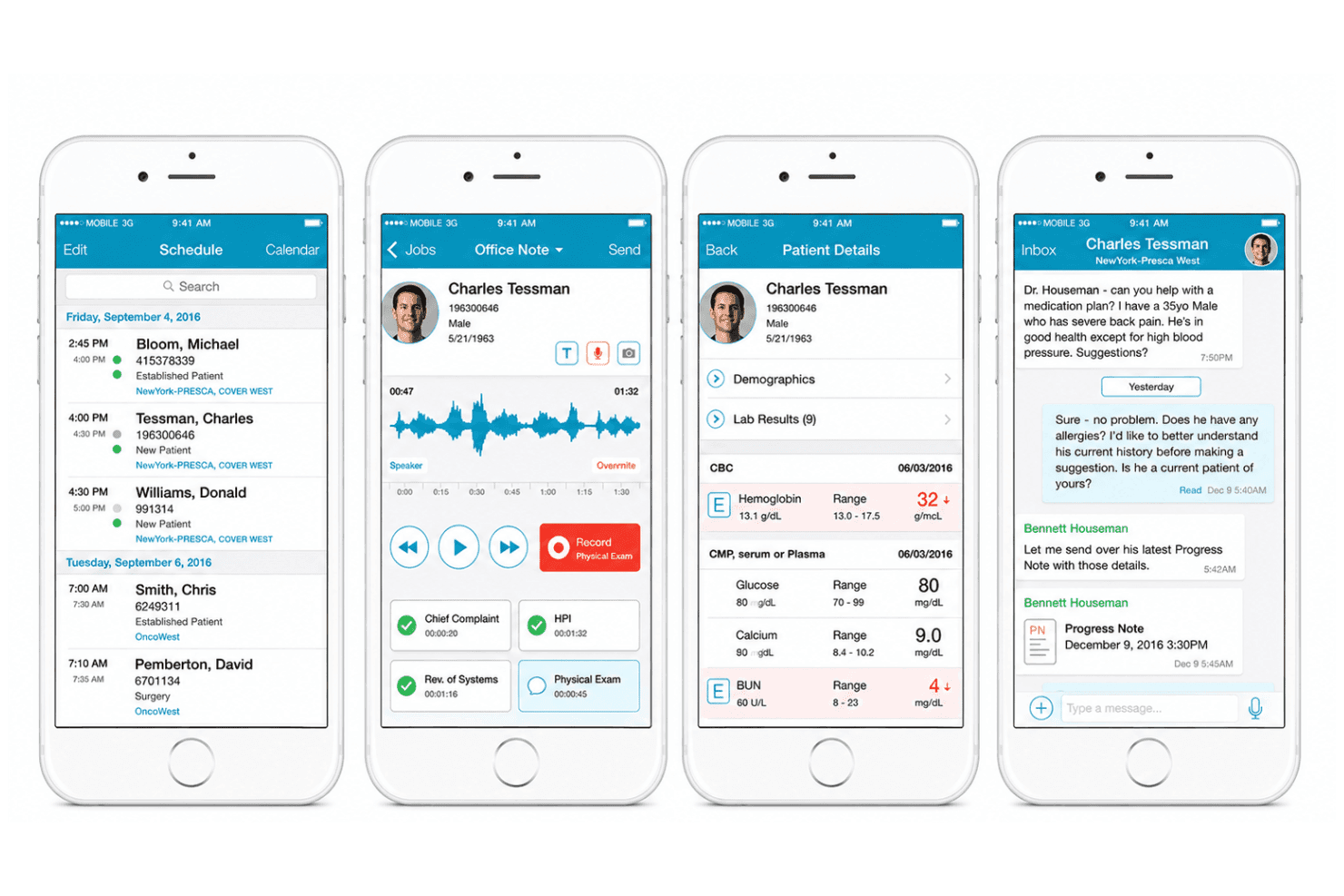
NextGen Healthcare’s mobile app displays appointment schedules, clinical notes, patient records, lab results, and secure provider messaging. NextGen Healthcare is a specialty-focused ambulatory EHR and practice management platform built for urology practices, offering urology-specific clinical templates, integrated billing and RCM, device and PACS integration, and native mobile EHR with AI-powered documentation.
Who Is NextGen Healthcare Best For?
NextGen Healthcare suits mid-to-large urology practices with multiple providers that need deep specialty workflows, integrated RCM, and mobile chart access across clinic, hospital, and surgical settings.
Why I Picked NextGen Healthcare
I picked NextGen Healthcare as one of the best because its mobile EHR goes well beyond basic chart access. I love how Ambient Assist listens to patient-provider conversations and auto-generates structured SOAP notes directly into the urology chart. Mobile e-prescribing and same-visit charge capture keep billing and prescribing accurate even when a urologist is moving between hospital rounds and clinic.
NextGen Healthcare Key Features
- Urology-specific clinical templates: Offers dedicated charting workflows for cystoscopy, BCG-advanced catheter, prostate cancer, and urine culture management.
- Integrated PACS and lab connectivity: Connects directly to imaging and lab systems for seamless data import into patient charts.
- Automated insurance eligibility checks: Runs real-time insurance validation at scheduling and check-in to prevent billing issues.
- Horizontal patient timeline: Provides a unified view of a patient’s urology history, orders, and follow-ups across the care continuum.
NextGen Healthcare Integrations
NextGen Healthcare offers native integrations with PACS, Labcorp, Doctible, Solutionreach, Clearwave, InstaMed, and Surescripts. Its Marketplace includes integrations with HST Price Transparency, Inbox Health, LinkMD AI, Commure, ActX, Surgimate, and TimeDoc. An API is available for custom integrations.
Pros and Cons
Pros:
- Prostate cancer tracking in patient timeline
- Dedicated urology templates speed documentation
- Mobile charting works well across locations
Cons:
- Reporting customizations can be time-consuming
- Specialty content setup requires vendor assistance
Learn more about NextGen Healthcare: Best for built-in medical billing and telehealth
- Free demo available
- From $429/user/month
Visit WebsiteCustomer Rating:3.6/5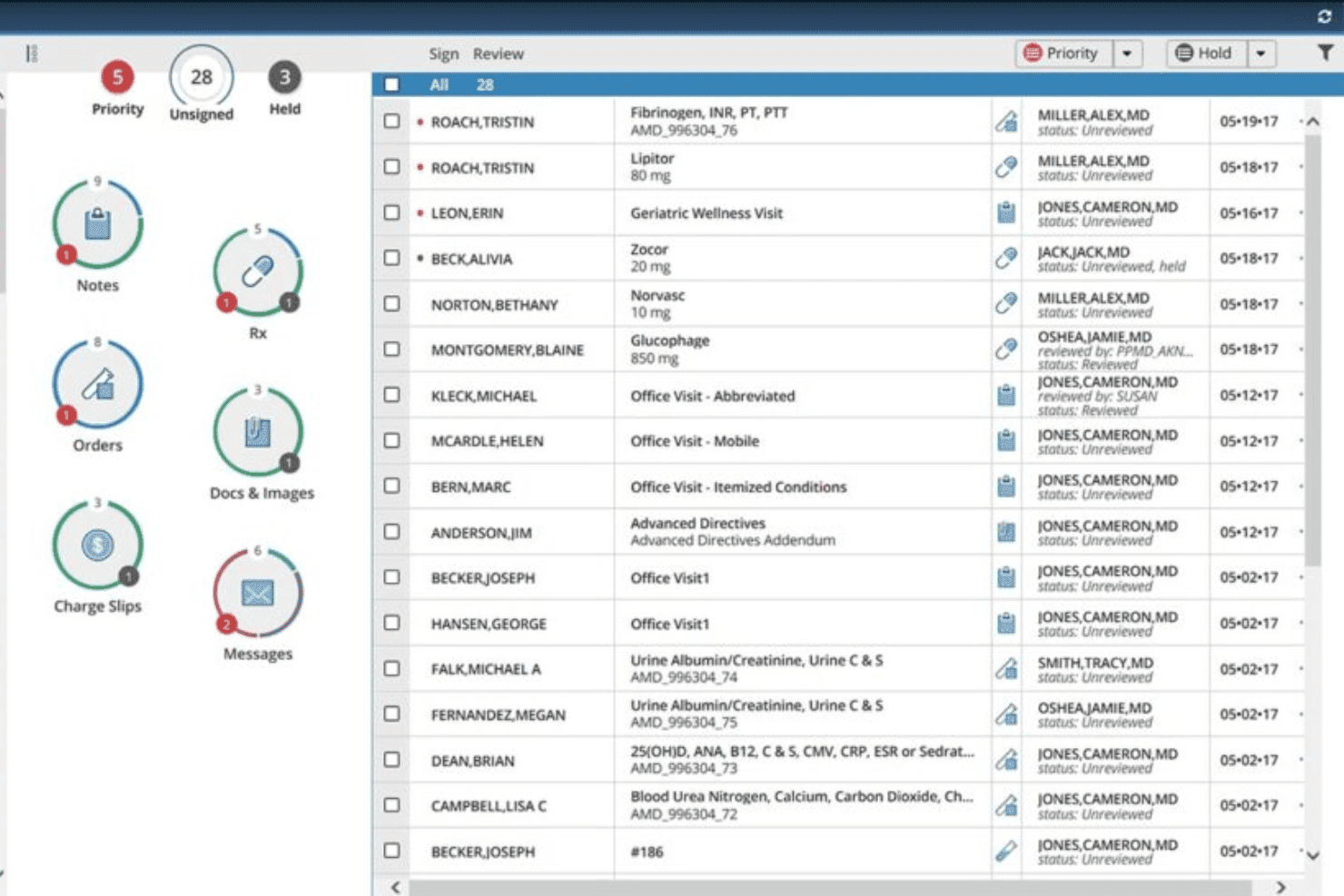
AdvancedMD dashboard for reviewing patient notes, prescriptions, orders, documents, and messages AdvancedMD EMR is a cloud-based urology EMR that combines clinical charting, practice management, medical billing, e-prescribing, and built-in telehealth in a single platform.
Who Is AdvancedMD EMR Best For?
AdvancedMD EMR is a strong fit for independent urology practices and small-to-medium groups that want billing, scheduling, and clinical charting in one system.
Why I Picked AdvancedMD EMR
I picked AdvancedMD EMR because its billing and telehealth tools are built directly into the same platform as its EHR, which matters in urology where billing complexity is high. ClaimInspector scrubs claims for CCI and LCD errors before submission, and urology-specific code shortlists filter out irrelevant CPT codes so billers aren't wading through noise. On the telehealth side, screenshot uploads save automatically to the patient chart, and session links stay active for 60 days, which makes follow-up visits for post-procedure patients genuinely easier to manage.
AdvancedMD EMR Key Features
- Pre-built urology templates: Includes condition- and procedure-specific templates for BPH, elevated PSA, UTI, cystoscopy, and catheterization that clinicians can customize.
- AI pre-visit summary: Automatically pulls together recent notes, labs, medications, allergies, and risk factors before each appointment.
- EPCS with PDMP integration: Lets clinicians prescribe Schedule II–IV controlled substances with DEA-required two-factor authentication and automatic audit trails, with a direct connection to the state prescription drug monitoring database.
- HealthWatcher alerts: Flags patients due for preventive screenings based on their individual medical and family history.
AdvancedMD EMR Integrations
AdvancedMD EMR offers marketplace integrations with StratusDX, plus documented connections to QuickBooks, Zoho, LeadSquared, SuiteCRM, Salesforce via custom build, and Microsoft Entra ID. Its open API supports labs, HIEs, CCD/CCA exchange, and SMART on FHIR apps.
Pros and Cons
Pros:
- Telehealth supports chart-linked follow-up visits
- Urology templates cover core procedures
- Unified clinical and billing workflows
Cons:
- Onboarding and support receive mixed reviews
- Generalist workflows limit specialty depth
Learn more about AdvancedMD EMR: Best for large urology group data consolidation
- Free demo available
- Pricing upon request
Visit WebsiteCustomer Rating:3.4/5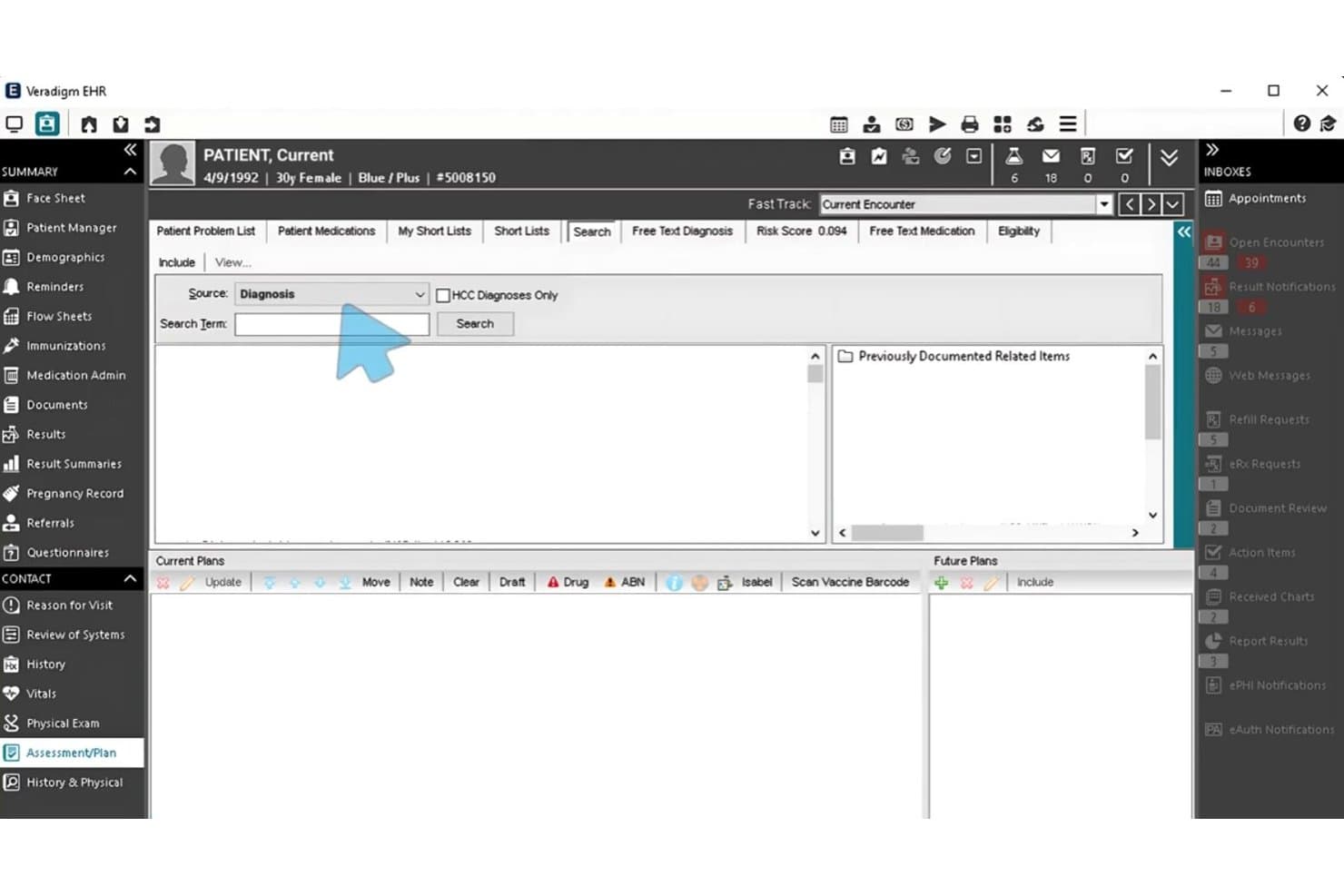
Veradigm EHR lets users search and document diagnoses in the Assessment/Plan section. Veradigm EHR is a multi-specialty ambulatory EHR with urology-specific templates, flowsheets, e-prescribing, lab and imaging integration, and a patient portal designed for physician-led, multi-site practices.
Who Is Veradigm EHR Best For?
Veradigm EHR is a strong fit for large, multi-site urology groups that need to consolidate patient data and clinical workflows across many locations under one system.
Why I Picked Veradigm EHR
Veradigm EHR earns its spot on my list because of how well it handles data consolidation across large, multi-site urology groups. I'm particularly impressed by the Chesapeake Urology case study, where 111 physicians across 28 locations unified onto one system. Urology-specific flowsheets, prostate cancer timelines, and AQUA Registry connectivity give clinical teams a single source of truth across every location.
Veradigm EHR Key Features
- Ambient Scribe: An AI documentation tool embedded in the EHR that captures visit conversations and generates structured notes with ICD-10 code suggestions.
- AQUA Registry integration: Pre-configured one-step connectivity to the AUA Quality Registry for CMS quality reporting and specialty benchmarking.
- FollowMyHealth patient portal: A mobile-first portal where patients can view results, message providers, book appointments, pay bills, and access telehealth visits.
- Electronic prior authorization: Built-in eAUTH handles prior authorization requests directly within the prescribing workflow, alongside real-time benefit checks and drug pricing.
Veradigm EHR Integrations
Veradigm EHR integrates with Veradigm Practice Management, Payerpath, FollowMyHealth, and the AQUA Registry, plus 300+ labs and imaging centers and about 5,000 hospitals. Veradigm Connect APIs and the App Expo marketplace support custom and partner integrations.
Pros and Cons
Pros:
- Multi-site chart consolidation suits growing groups
- E-prescribing handles controlled-substance safeguards
- Urology flowsheets support prostate cancer tracking
Cons:
- Setup demands substantial IT support
- Reviewers report slow loading and crashes
Learn more about Veradigm EHR: Best for urology-specific workflow optimization
- Free demo available
- Pricing upon request
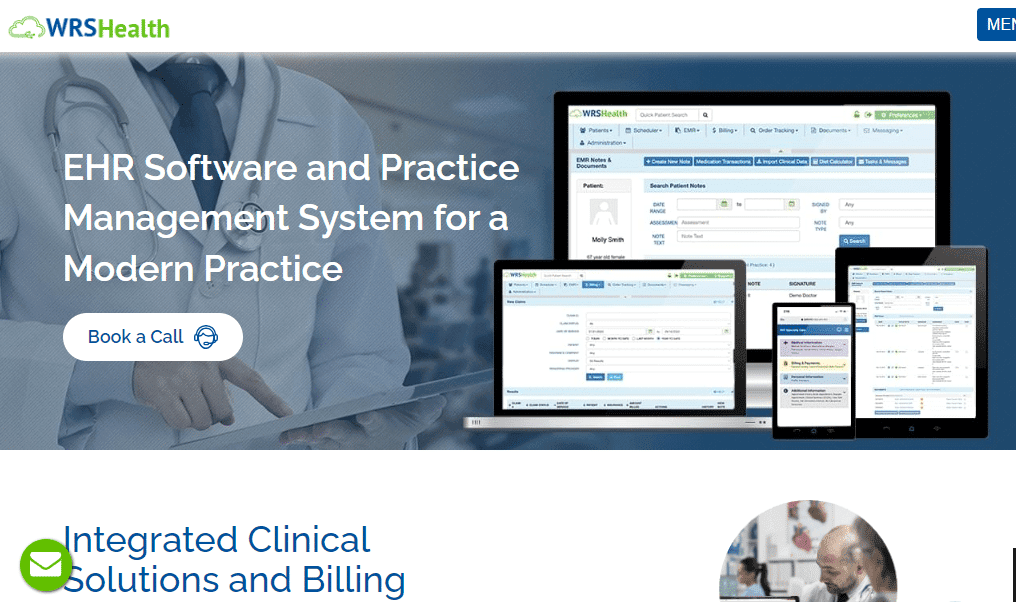
A screenshot of the website for the tool Urology-Cloud. Urology-Cloud is a urology-specific EMR and practice management platform that combines specialty templates, patient charting, e-prescribing, integrated billing, and a patient portal in one web-based system.
Who Is Urology-Cloud Best For?
Urology-Cloud is a strong fit for urology practices that want scheduling, charting, billing, and e-prescribing built around specialty-specific workflows rather than adapted from a general-purpose platform.
Why I Picked Urology-Cloud
Urology-Cloud earns its spot on my shortlist because every workflow, from PSA surveillance tracking to post-op documentation for prostatectomy recovery, is built around urology from the ground up rather than adapted from a general template library. I particularly like the automatic recall flags that trigger reminders for PSA rechecks and stent removals, which closes follow-up gaps without any manual effort. The real-time AI-driven E/M coding checks tied directly to CMS rules also make a meaningful difference when billing for procedures like cystoscopy or ureteroscopy.
Urology-Cloud Key Features
- Specialty-specific template library: Customizable templates cover new patient consults, procedure notes, chronic conditions, oncology monitoring, and pediatric urology across the full range of urology visit types.
- Patient portal with automated education delivery: Patients can complete intake forms, view results, and receive diagnosis-specific education materials sent automatically based on their chart.
- AI-assisted chart preparation: An AI scribe handles pre-visit chart prep, medication reconciliation, and CCDA record summaries before the patient encounter begins.
- Outsourced revenue cycle management: An optional full-service billing team handles claims, denial management, and A/R reviews, with fees starting at 2.9%.
Urology-Cloud Integrations
Urology-Cloud integrates with the Surescripts network and Dragon Medical dictation. Its FHIR API supports custom connections with labs, imaging centers, referring providers, and health information exchanges.
Pros and Cons
Pros:
- Embedded AI supports chart preparation and coding
- Automatic recalls flag PSA and stent follow-ups
- Urology-specific templates span procedures and oncology
Cons:
- No independent Urology-Cloud user reviews exist
- Parent-company reviews report freezes and delayed support
Learn more about Urology-Cloud: 10Best for customizing templates to your practice needs
PronoCIS
- Free demo available
- Pricing upon request

A photo for the interface of the tool PronoCIS. PrognoCIS is a multi-specialty urology EMR that combines customizable procedure templates, integrated billing and coding, e-prescribing, patient charting, and a self-service patient portal into a single platform.
Who Is PrognoCIS Best For?
PrognoCIS is a strong fit for urology physicians and practice administrators who want to build and own their own documentation templates without relying on a vendor to do it for them.
Why I Picked PrognoCIS
PrognoCIS earns its spot on my shortlist because it lets urology practices build and own their documentation from the ground up. I particularly like that you can create custom templates for procedures like cystoscopy, TURP, and prostate biopsy, then tie each template directly to automatic charge capture. That connection between clinical documentation and billing coding means a completed vasectomy note doesn't require a separate coding step.
PrognoCIS Key Features
- AI Scribe: Automatically generates structured clinical notes—including HPI, ROS, exam findings, and assessment/plan—from provider-patient encounters.
- E-prescribing with EPCS: Sends electronic prescriptions, including controlled substances, through Surescripts with IdenTrust two-factor authentication and state PMP connectivity.
- Patient portal: Gives patients self-service access to records, appointment booking, secure messaging, refill requests, e-forms, and online bill pay.
- Real-time eligibility and claim scrubbing: Checks patient insurance eligibility and scrubs claims before submission to reduce denials and catch errors early.
PrognoCIS Integrations
PrognoCIS integrates with Labcorp, Pathology Inc., TriCore, Bostwick Labs, PACS/DICOM systems, Surescripts, Secure Connect, TriZetto, Waystar, and Jopari. It also supports HL7, FHIR, medical device integration, and custom APIs.
Pros and Cons
Pros:
- Integrated billing supports urology-specific coding
- Charge capture connects procedures with documentation
- Customizable templates cover major urology procedures
Cons:
- Billing workflows may complicate claim adjustments
- Template configuration can require substantial setup
Learn more about PronoCIS:
How I Evaluate Urology EMR Software
I split my evaluation into three parts, with the most weight on core functionality: documenting cystoscopies and tracking PSA trends and treatment history. I compare standout features such as in-office procedure coding and PSA dashboards. Beyond features, I consider urology-specific onboarding, support, and value as a practice grows.
Core Functionality (Table Stakes For This List)
When I'm selecting tools for my list, I score each one on a scale from 0 (does not offer the functionality) to 5 (excels in this area) for each core functionality listed below. I then convert the total into a percentage to help assess each tool's overall fit, with extra weight on any functionalities I’ve deemed essential.
- Urology Templates (Essential): I look for structured cystoscopy, vasectomy, and prostate biopsy notes that capture findings, consent, and follow-up.
- Patient Charting (Essential): I assess longitudinal views of PSA, urinalysis, procedures, and treatment history across visits to support follow-up care.
- E-Prescribing: I check workflows for routine and controlled medications, including medication history and safety checks for pain or hormone therapy.
- Billing & Coding: I evaluate CPT and ICD-10 support for office procedures and whether documentation connects to charges and claims.
- Lab & Imaging Links: I look at how PSA tests, ultrasounds, and biopsy reports enter charts and remain easy to review.
- Patient Portal: I assess whether patients can view records and results, manage appointments, and securely message the care team.
Once I have a list of tools that meet the criteria, I consider what sets each platform apart.
Differentiating Factors (What Sets Vendors Apart)
Here's how I compare and contrast different vendors:
Standout Features
I evaluate in-office procedure coding support because urology practices depend on accurate charge capture for high-volume procedures like vasectomies and cystoscopies. I check whether the system links documentation directly to CPT codes so billing staff aren't rebuilding charges manually. I also look at ASC scheduling integration, since many groups split cases between the clinic and surgical centers. A platform that coordinates both calendars in one view prevents double-booking and keeps patients on track for procedures like lithotripsy. Mobile rounding and dictation tools matter too—urologists moving between hospital floors and clinic rooms need to chart without sitting down at a desktop.
Beyond Features
I evaluate whether a vendor specializes in urology or bolts it onto a generic EMR, because specialty-focused platforms ship deeper clinical content and need less custom build-out. Onboarding quality matters just as much—urology procedure documentation is complex, so I check for specialty-specific training for physicians, nurses, and billing staff. I also look at how licensing scales when a group adds providers or surgical-center sites.
Como escolher um software EMR de urologia
É fácil ficar preso a longas listas de funcionalidades e estruturas de preços complexas. Para o ajudar a manter-se concentrado enquanto percorre o seu processo único de seleção de software, segue-se uma lista de verificação dos fatores a ter em conta:
| Fator | O que considerar |
|---|---|
| FatorEscalabilidade | O que considerarO software consegue crescer com a sua clínica? Considere a expansão futura e certifique-se de que a ferramenta consegue lidar com um aumento do volume de doentes sem problemas. |
| FatorIntegrações | O que considerarConsegue ligar-se aos seus sistemas existentes? Procure compatibilidade com sistemas laboratoriais, plataformas de faturação e portais de doentes para simplificar os seus fluxos de trabalho. |
| FatorPersonalização | O que considerarPode adaptar o software às necessidades da sua clínica? Verifique se é possível modificar modelos e relatórios para corresponder aos seus fluxos de trabalho específicos. |
| FatorFacilidade de utilização | O que considerarA interface é intuitiva para a sua equipa? Evite ferramentas com curvas de aprendizagem acentuadas que possam tornar mais lentas as operações diárias. |
| FatorImplementação e integração | O que considerarQuanto tempo será necessário para começar a trabalhar? Procure processos de integração rápidos, com recursos de formação disponíveis, para minimizar o tempo de inatividade. |
| FatorCusto | O que considerarEncaixa-se no seu orçamento? Compare os planos de preços, tenha em conta quaisquer taxas ocultas e avalie o valor oferecido em relação ao preço. |
| FatorMedidas de segurança | O que considerarOs dados e registos dos doentes estão seguros? Certifique-se de que o software cumpre normas do setor, como a HIPAA, para proteger informações sensíveis. |
| FatorRequisitos de conformidade | O que considerarO software cumpre as necessidades regulamentares? Confirme se suporta a documentação e os relatórios necessários para manter a conformidade com os regulamentos de saúde. |
O que é um software EMR de urologia?
O software EMR de urologia apoia os urologistas com modelos especializados, ferramentas de imagiologia e acompanhamento de procedimentos. Aborda diagnósticos complexos, como exames da próstata e ecografias da bexiga, ajudando a simplificar os cuidados urológicos e a documentação dos doentes.
Funcionalidades
Ao selecionar um software EMR de urologia, esteja atento às seguintes funcionalidades principais:
- Gestão dos registos dos doentes: Organiza e armazena as informações dos doentes para facilitar o acesso e as atualizações.
- Agendamento de consultas: Simplifica a marcação e a gestão das consultas dos doentes para otimizar a gestão do tempo.
- Processamento da faturação e dos seguros: Automatiza a faturação e os pedidos de reembolso para reduzir erros e acelerar os reembolsos.
- Segurança dos dados: Protege os dados sensíveis dos doentes através da conformidade com normas do setor, como a HIPAA.
- Modelos personalizáveis: Permite personalizar formulários e relatórios para corresponder às necessidades específicas da prática clínica.
- Integração com laboratórios: Liga-se a sistemas laboratoriais para uma gestão integrada dos resultados dos exames.
- Funcionalidades de telemedicina: Permite consultas virtuais para alargar o acesso dos doentes e proporcionar maior comodidade.
- Ferramentas de análise: Fornece informações sobre o desempenho da prática clínica e os resultados dos doentes para apoiar a tomada de decisões fundamentadas.
- Acesso ao portal do doente: Oferece aos doentes uma forma segura de consultar os seus registos e comunicar com os profissionais de saúde.
- Suporte à conformidade: Garante que toda a documentação e os relatórios cumprem os requisitos regulamentares.
Vantagens
A implementação de software EMR de urologia proporciona várias vantagens para a sua equipa e para a sua empresa. Eis algumas das vantagens que pode esperar:
- Maior eficiência: Automatiza tarefas de rotina, como o agendamento e a faturação, libertando tempo para os cuidados aos doentes.
- Segurança de dados reforçada: Protege as informações dos doentes através da conformidade com regulamentos como a HIPAA, reduzindo o risco de violações de dados.
- Melhor gestão dos doentes: Centraliza os registos e os históricos dos doentes, facilitando o acompanhamento da evolução e dos resultados dos tratamentos.
- Maior precisão: Reduz os erros na faturação e nos pedidos de reembolso dos seguros, garantindo reembolsos mais rápidos e menos disputas.
- Tomada de decisões fundamentadas: Disponibiliza ferramentas de análise que fornecem informações sobre o desempenho da prática clínica e as tendências dos doentes.
- Maior acessibilidade: As funcionalidades de telemedicina permitem consultas virtuais, alargando o alcance e a comodidade para os doentes.
- Cuidados personalizados: Os modelos personalizáveis e os portais dos doentes permitem adaptar a comunicação e a documentação a cada doente.
Custos e preços
A seleção de software EMR de urologia exige uma compreensão dos vários modelos de preços e planos disponíveis. Os custos variam consoante as funcionalidades, o tamanho da equipa, os complementos e outros fatores. A tabela abaixo resume os planos mais comuns, os respetivos preços médios e as funcionalidades normalmente incluídas nas soluções de software EMR de urologia:
Tabela de comparação de planos de software EMR de urologia
| Tipo de plano | Preço médio | Funcionalidades comuns |
|---|---|---|
| Tipo de planoPlano gratuito | Preço médio$0 | Funcionalidades comunsGestão básica dos registos dos doentes, agendamento de consultas e apoio ao cliente limitado. |
| Tipo de planoPlano pessoal | Preço médio$20-$50/utilizador/mês | Funcionalidades comunsFuncionalidades de faturação melhoradas, conformidade com os requisitos de segurança dos dados e modelos personalizáveis. |
| Tipo de planoPlano empresarial | Preço médio$50-$100/utilizador/mês | Funcionalidades comunsFerramentas de análise avançadas, resultados laboratoriais integrados, funcionalidades de telemedicina e portais dos doentes. |
| Tipo de planoPlano empresarial de grande dimensão | Preço médio$100-$200/utilizador/mês | Funcionalidades comunsApoio abrangente, opções de integração completas, gestão dedicada da conta e escalabilidade. |
Perguntas frequentes sobre software EMR de urologia
Eis algumas respostas a perguntas comuns sobre software EMR de urologia:
Como pode o software EMR melhorar os cuidados prestados aos doentes?
O software EMR melhora os cuidados prestados aos doentes ao proporcionar acesso rápido a registos clínicos abrangentes, reduzir erros e facilitar uma melhor comunicação entre os prestadores de cuidados e os doentes. Funcionalidades como portais do doente e telemedicina também melhoram o envolvimento e a conveniência dos doentes.
Quais são os desafios comuns da implementação de software EMR?
Os desafios comuns da implementação de software EMR incluem a migração de dados, a formação do pessoal e a interrupção dos fluxos de trabalho. Certifique-se de que tem um plano sólido para a integração e formação da sua equipa. Escolha um fornecedor que ofereça suporte robusto durante a transição para minimizar as interrupções.
O software EMR pode integrar-se com outros sistemas?
Sim, a maioria dos softwares EMR pode integrar-se com outros sistemas, como os de faturação, laboratório e imagiologia. Verifique a compatibilidade do EMR com os seus sistemas existentes para garantir uma troca de dados fluida e evitar interrupções no fluxo de trabalho.
Quão seguros estão os dados dos doentes nos sistemas EMR?
Os dados dos doentes nos sistemas EMR são geralmente seguros, com encriptação e controlos de acesso implementados. No entanto, é crucial verificar se o EMR está em conformidade com os regulamentos de proteção de dados de saúde, como a HIPAA. As atualizações regulares e as auditorias de segurança podem ajudar a manter a integridade dos dados.