

Escolher uma alternativa ao WebPT implica analisar atentamente a forma como a sua clínica gere a documentação de terapia, a marcação de consultas, os pedidos de reembolso às seguradoras e os acompanhamentos dos pacientes. Algumas plataformas concentram-se nos fluxos de trabalho específicos da fisioterapia, enquanto outras oferecem ferramentas para terapia ocupacional, terapia da fala e práticas de reabilitação com várias localizações.
Comparei estas opções com base nas respetivas funcionalidades clínicas, capacidades de faturação, flexibilidade de agendamento e ferramentas de gestão da prática, para ajudar a identificar qual a plataforma que melhor se adapta às suas operações diárias.
O que é o WebPT?
O WebPT é uma plataforma de registos médicos eletrónicos (EMR) e de gestão de práticas clínicas desenvolvida para clínicas de reabilitação. Reúne documentação clínica, registos configuráveis, medidas de resultados, agendamento, admissão de pacientes, faturação e relatórios da prática. As clínicas também podem utilizar as suas ferramentas de comunicação com os pacientes e escolher software de faturação ou suporte de faturação completo.
Compare as melhores alternativas ao WebPT
Compare lado a lado os preços e as especificações das alternativas ao WebPT que incluí na minha lista restrita.
Score legend (out of 5)
- Excellent4.5–5
- Good4–4.4
- Average3–3.9
- Below average2–2.9
- Poor1–1.9
Sorted by: Default
| Tool | Starting Price | Website | |||||||
|---|---|---|---|---|---|---|---|---|---|
Best for clinics switching from WebPT | 3.8 out of 5 | 4 | 4 | 4 | 4 | 4 | 3 | Pricing upon request Free demo available | Website |
Best for clinics spanning PT, OT, and SLP | 3.5 out of 5 | 4 | 4 | 4 | 4 | 3 | 2 | Pricing upon request Free demo available | Website |
Best for multi-site rehab billing teams | 3.7 out of 5 | 3 | 4 | 4 | 4 | 4 | 3 | Pricing upon request Free demo available | Website |
Best for month-to-month therapy practices | 3.7 out of 5 | 4 | 4 | 4 | 4 | 4 | 2 | $49.99/month Free plan available | Website |
Best for transparent per-provider pricing | 3.7 out of 5 | 4 | 4 | 4 | 4 | 3 | 3 | Pricing upon request Free demo available | Website |
Best for cash-pay and hybrid PT workflows | 3.5 out of 5 | 4 | 4 | 4 | 4 | 3 | 2 | $49/month Free demo available | Website |
Best for clinics seeking co-sourced billing | 3.7 out of 5 | 4 | 3 | 4 | 4 | 3 | 4 | Pricing upon request Free demo available | Website |
Best for multi-site, multi-specialty rehab | 3.7 out of 5 | 4 | 4 | 4 | 4 | 3 | 3 | $130/user/month 30-day free trial + free demo available | Website |
Best for mixed-discipline rehab clinics | 3.8 out of 5 | 4 | 4 | 3 | 4 | 4 | 4 | Pricing upon request Free demo available | Website |
Best for month-to-month WebPT switching | 3.7 out of 5 | 4 | 4 | 4 | 4 | 3 | 3 | $47.50/user/month Free demo available | Website |


Why Trust Our Software Recommendations
6,700+
Reviews
20
Industry experts
16+
Evaluation factors
14
Years
Our team has been testing and reviewing software since 2012. As medical practice leaders ourselves, we know how difficult—and important—it is to choose the right software.
For this guide, we evaluated tools using hands-on testing and independent research, scoring tools using our selection criteria.
Our reviews reflect our human editorial judgment, not a sales pitch.
Avaliações das alternativas ao WebPT
Apresento abaixo os meus resumos detalhados das melhores alternativas ao WebPT incluídas na minha lista restrita. As minhas avaliações abrangem as funcionalidades e os preços de cada sistema EMR, para ajudar a encontrar a opção mais adequada.
 1Best for clinics switching from WebPT
SPRY
- Free demo available
- Pricing upon request
Visit WebsiteCustomer Rating:4.8/5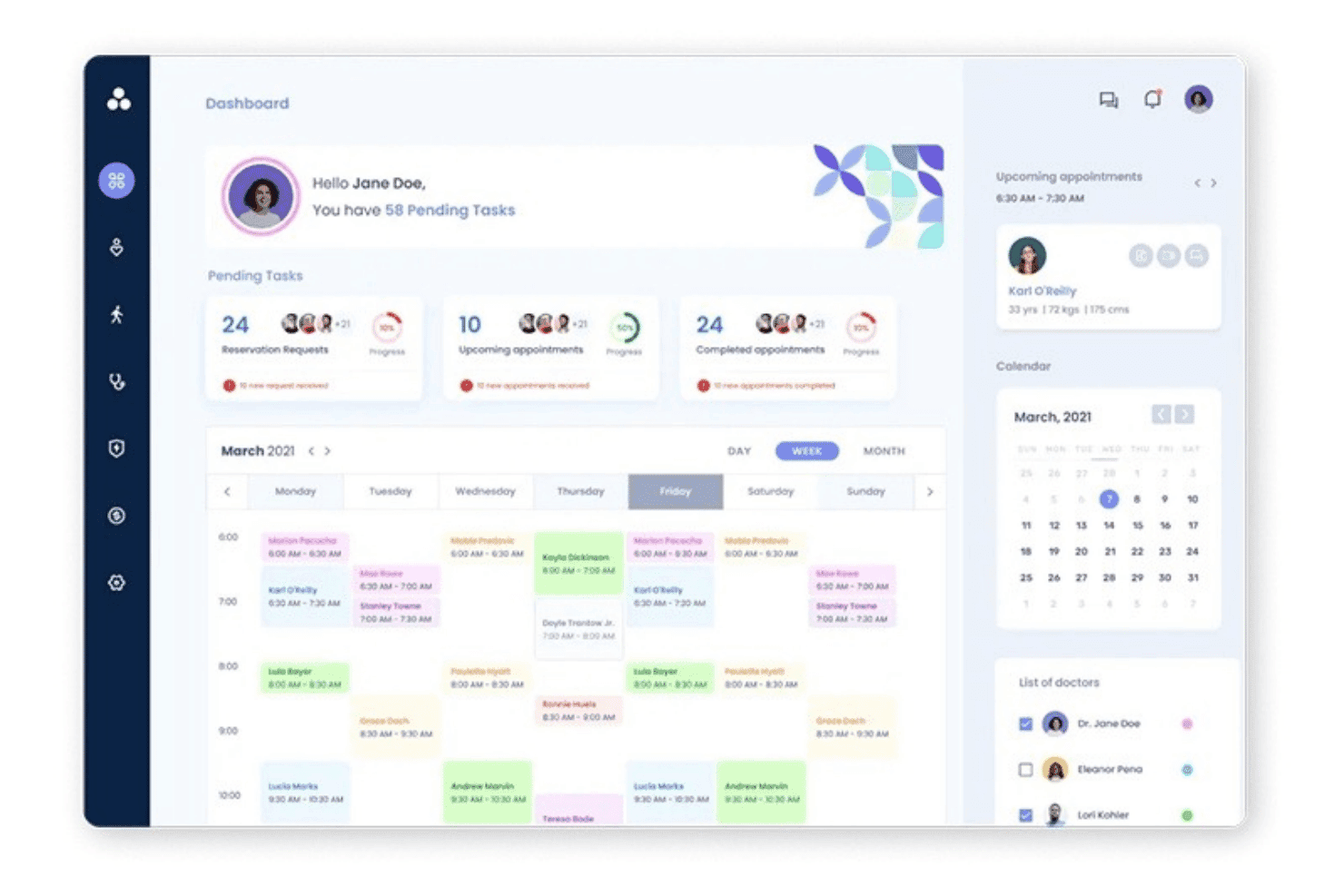
SPRY coordinates rehab appointment scheduling, cancellations, waitlists, patient intake, and billing. SPRY is an AI-native EMR and revenue cycle management platform for rehabilitation clinics, covering patient intake, scheduling, clinical documentation, insurance verification, and billing.
Who Is SPRY Best For?
SPRY suits rehabilitation clinics switching from WebPT that want AI-assisted documentation and billing workflows in one platform.
Why SPRY Is a Good WebPT Alternative
I picked SPRY as a WebPT alternative for its connected clinical documentation and revenue cycle workflows. Its AI scribe supports SOAP notes, while charge capture links clinical documentation to billing. I also like its prior authorization tracking, which identifies expiring approvals and visit limits before they affect claims.
SPRY Key Features
- Digital intake: Patients can complete intake forms and provide insurance details.
- Eligibility checks: Verify patient coverage and benefits.
- Scheduling tools: Manage appointments, cancellations, and waitlists.
- Patient portal: Patients can access online booking and appointment reminders.
SPRY Integrations
SPRY lists integrations with ModMed, Zocdoc, Zapier, Mailchimp, Keap, Wibbi, Twilio, Square, and Stripe. It also supports custom connections through REST APIs, FHIR, and HL7 interfaces.
Pros and Cons
Pros:
- Patient, billing, and clinical records stay connected
- Built-in eligibility and prior-auth tracking
- AI Scribe cuts repetitive SOAP documentation
Cons:
- Mobile billing and charting feel cramped
- RCM denials still need clinic oversight
Learn more about SPRY: Best for clinics spanning PT, OT, and SLP
- Free demo available
- Pricing upon request
Visit WebsiteCustomer Rating:4.9/5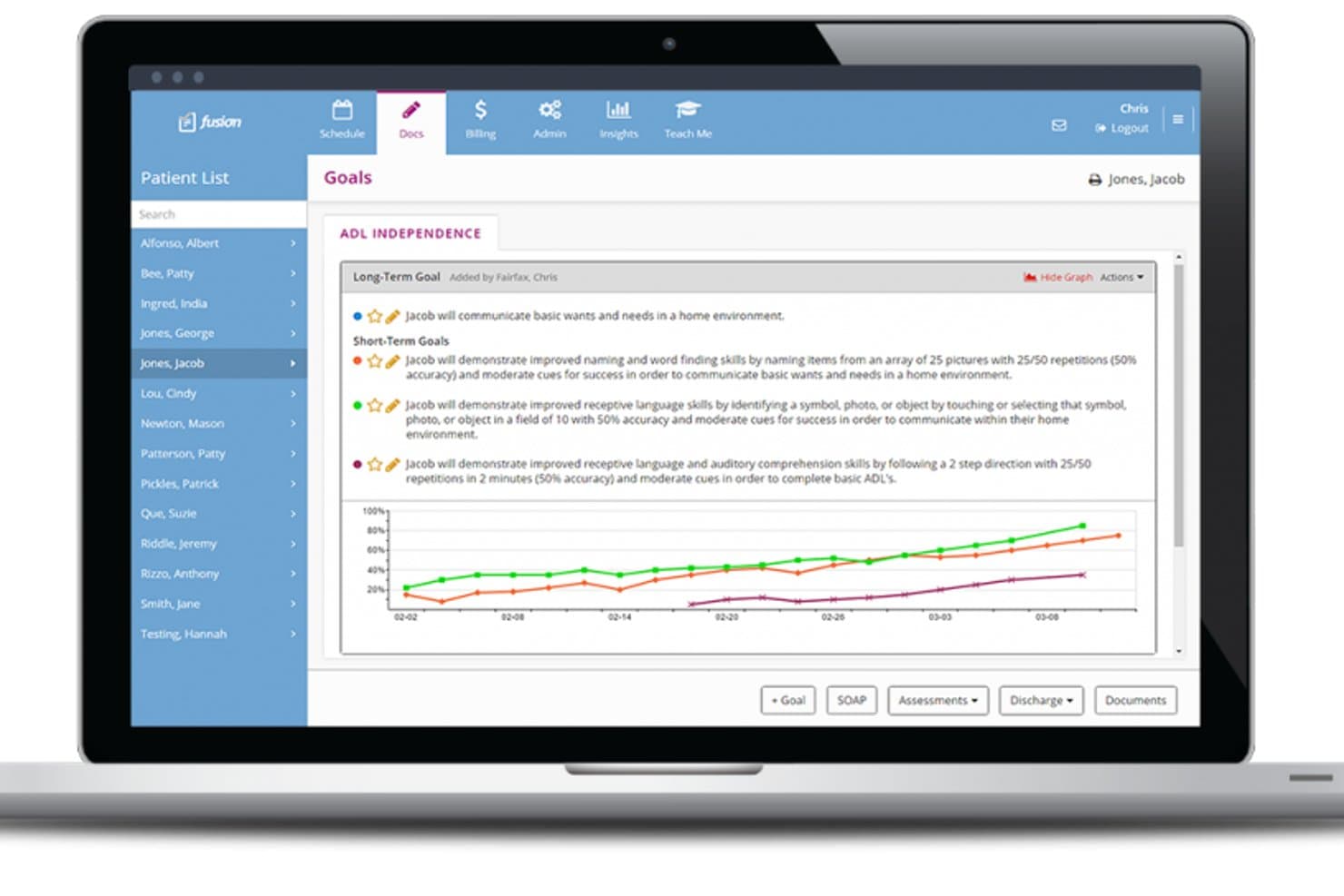
Fusion by Ensora Health coordinates PT, OT, and speech therapy notes, goals, scheduling, and billing. Fusion by Ensora Health is a cloud-based EHR and practice management platform for outpatient rehabilitation clinics that provides clinical documentation, appointment scheduling, insurance billing, goal tracking, and patient engagement tools for physical, occupational, and speech therapy.
Who Is Fusion Best For?
Fusion fits multidisciplinary rehabilitation clinics that need specialty-specific documentation, treatment planning, and progress tracking for physical therapy (PT), occupational therapy (OT), and speech-language pathology (SLP).
Why Fusion Is a Good WebPT Alternative
I picked Fusion because its clinical documentation tools accommodate physical, occupational, and speech therapy within the same platform. I like that physical therapists can develop treatment plans for postoperative recovery and chronic pain while monitoring patient progress against treatment goals. Speech-language pathologists can use goal tracking and visual progress charts to assess improvements, while occupational therapists can document treatment regimens for sensory integration, fine motor skills, and daily living activities. Fusion also provides discipline-specific documentation templates, goal banks, and mastery criteria for tracking treatment outcomes.
Fusion Key Features
- Scheduling: Coordinate therapist availability, appointments, and locations through a shared calendar with automated reminders and waitlist management.
- Client portal: Allow patients to access appointments, complete intake forms, review assigned exercises, and make payments online.
- Integrated billing: The system checks claims for errors before submission.
- Reporting: Monitor staff productivity, outstanding tasks, insurance authorizations, and practice performance through reporting dashboards.
Fusion Integrations
Fusion connects with Wibbi for home exercise programs and remote therapeutic monitoring. Therapists can create and assign exercise programs directly from Fusion's daily notes, with program details automatically synchronized to patient records. The connection also supports tracking exercise adherence and generating documentation and billing records for eligible remote therapeutic monitoring services.
Pros and Cons
Pros:
- Claims and scheduling share patient records
- Therapy templates and quick phrases speed notes
- Coordinates PT, OT, and SLP workflows
Cons:
- Scheduling lacks five-minute appointment increments
- Billing reports are scattered across sections
Learn more about Fusion: Best for multi-site rehab billing teams
- Free demo available
- Pricing upon request
Visit WebsiteCustomer Rating:4.3/5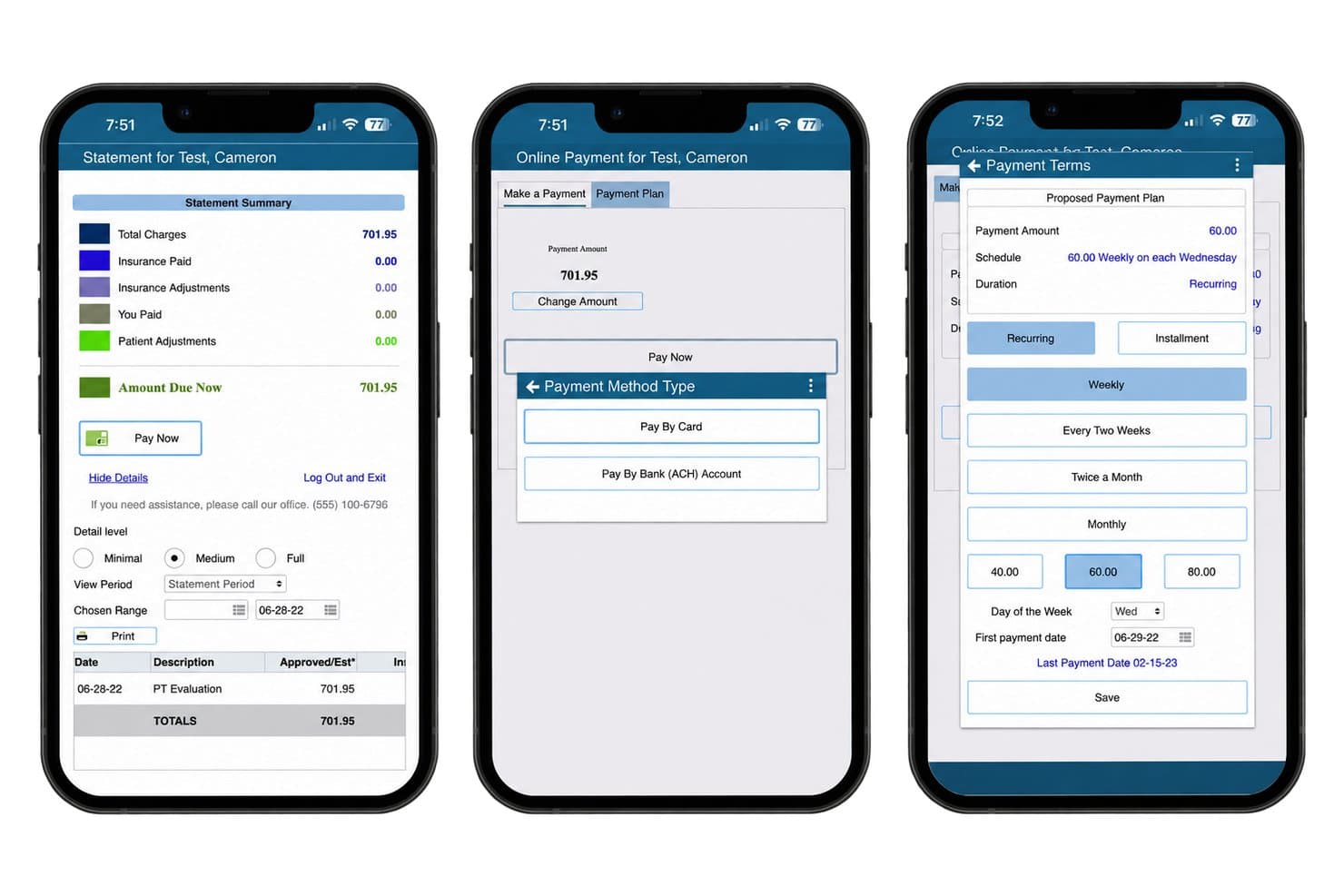
Raintree applies AI to rehab EMR documentation, scheduling, billing, mobile access, and multi-site care. Raintree is an AI-powered EMR and practice management platform for rehabilitation organizations, covering clinical documentation, scheduling, billing, and patient engagement across multiple locations.
Who Is Raintree Best For?
Raintree suits multi-location rehabilitation organizations that need centralized billing, claims management, and financial reporting.
Why Raintree Is a Good WebPT Alternative
I picked Raintree as a WebPT alternative for its multi-site rehabilitation billing capabilities. Its configurable billing rules account for different payers, providers, and clinic locations, while enterprise reporting tracks revenue-cycle performance across facilities. I also like its automated claim scrubbing and denial routing, which allow billing teams to identify errors and address rejected claims.
Raintree Key Features
- Specialty-specific documentation: Use exam and note templates for rehabilitation specialties.
- Embedded telehealth: Host virtual visits with screen sharing and multiple participants.
- Digital patient intake: Collect patient details, insurance information, medical history, and consent forms online.
- Patient portal messaging: Let patients communicate with staff and therapists through the portal.
Raintree Integrations
Raintree lists partnerships with Availity, Jopari, MedBridge, Physitrack, Limber Health, TriZetto Provider Solutions, and Waystar. Its Gateways platform also supports API-based connections with third-party applications.
Pros and Cons
Pros:
- Reusable templates support therapy documentation
- Reviewers praise integrated billing
- Billing rules support multi-site operations
Cons:
- Users report software issues and unreliable telehealth
- Therapists report clunky evaluation documentation
Learn more about Raintree: Best for month-to-month therapy practices
- Free plan available
- From $49.99/month
Visit WebsiteCustomer Rating:4.8/5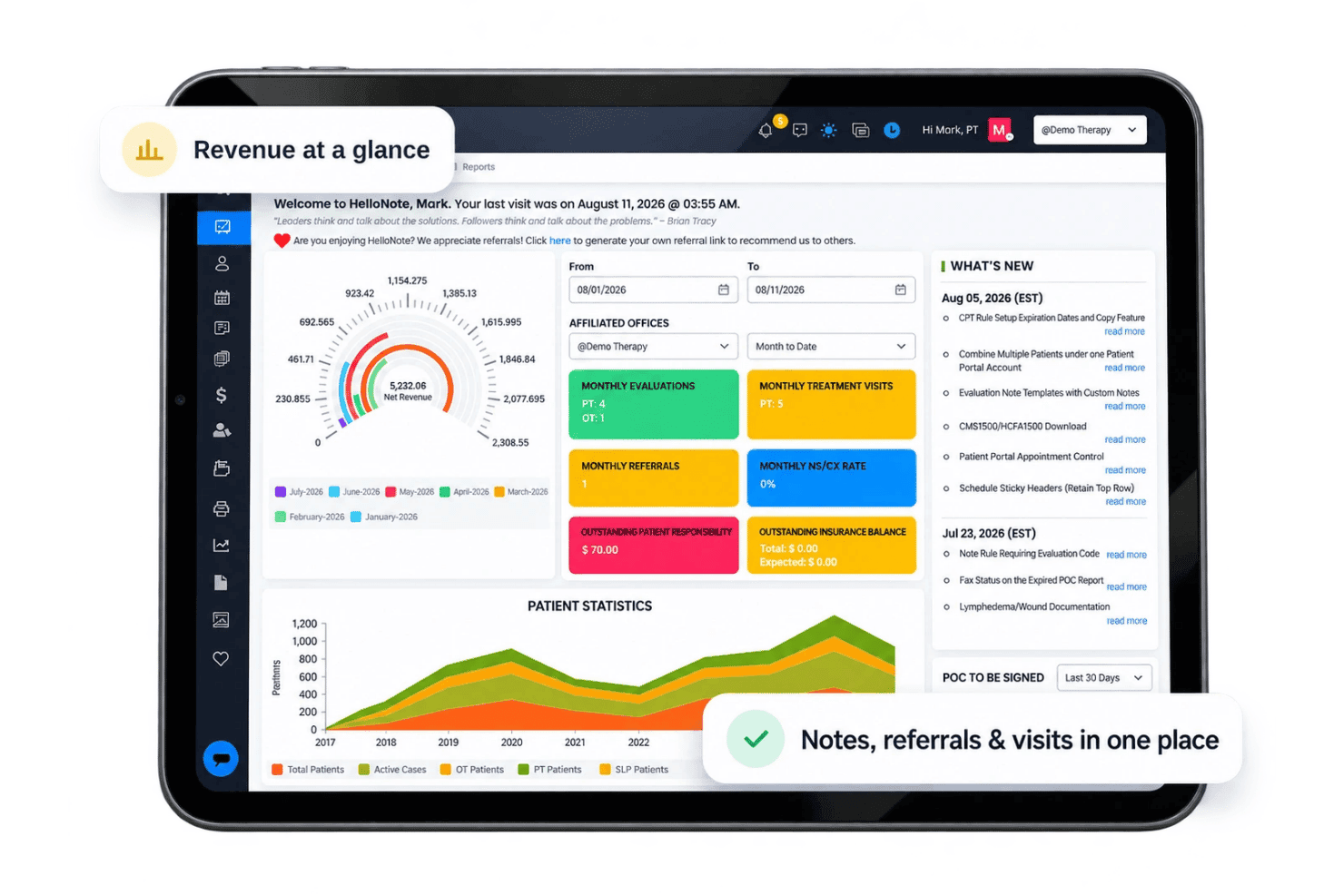
HelloNote provides PT, OT, and speech therapy EMR charting, scheduling, billing, and telehealth. HelloNote is a cloud-based EMR and practice management platform for physical, occupational, and speech therapy practices that offers clinical documentation, appointment scheduling, insurance billing, telehealth, and patient engagement tools.
Who Is HelloNote Best For?
HelloNote fits independent therapists and outpatient rehabilitation clinics seeking flexible month-to-month EMR subscriptions without long-term contracts or setup fees.
Why HelloNote Is a Good WebPT Alternative
I picked HelloNote because its month-to-month subscriptions offer flexibility for therapy practices without long-term commitments. I like that clinics can choose per-user or usage-based pricing while accessing customizable SOAP notes, evaluations, and plans of care. Its scheduling tools support recurring and group appointments, while plan-of-care tracking and missing-signature reports keep clinicians informed about outstanding documentation.
HelloNote Key Features
- Patient portal: Patients can complete digital intake and access individualized home exercise programs.
- Billing tools: Verify insurance eligibility, submit electronic claims, and track payments.
- Telehealth: Conduct virtual therapy sessions through built-in video conferencing.
- Analytics and reports: Review practice revenue, productivity, and billing reports.
HelloNote Integrations
HelloNote connects with Fiserv and Clover POS for payment processing, while Comprehend PT supports AI-assisted clinical documentation through a Chrome extension. It also offers connections with ptMantra and My Rehab Connection for home exercise programs, and GoHighLevel for CRM data synchronization. HelloNote's ptMantra integration uses FHIR-based connectivity to exchange patient and remote therapeutic monitoring information.
Pros and Cons
Pros:
- Reviewers praise responsive onboarding and support
- Custom templates support note carry-over
- Therapist-focused notes include Medicare alerts
Cons:
- Billing setup and payment entry take extra steps
- Glitches can cause lost documentation
Learn more about HelloNote: Best for transparent per-provider pricing
- Free demo available
- Pricing upon request
Visit WebsiteCustomer Rating:3.9/5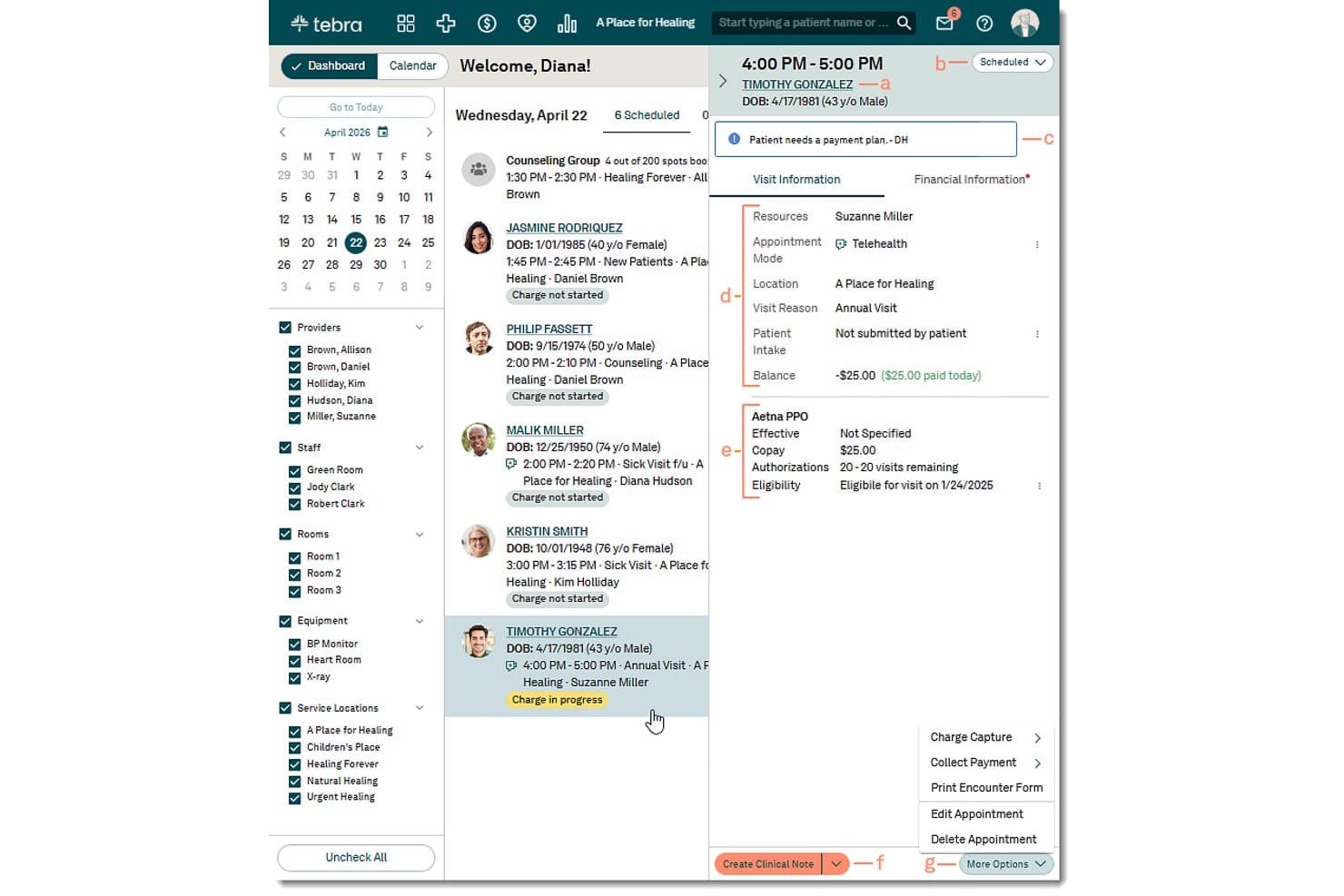
Tebra offers EHR charting, appointment scheduling, insurance claims, e-prescribing, and patient messaging. Tebra is a cloud-based EHR and practice management platform for independent healthcare practices that offers clinical documentation, appointment scheduling, insurance billing, electronic prescribing, and patient engagement tools.
Who Is Tebra Best For?
Tebra fits independent medical and therapy practices seeking per-provider subscription pricing with options for clinical documentation, billing, and patient communication.
Why Tebra Is a Good WebPT Alternative
I picked Tebra because its per-provider pricing model gives independent practices a clear basis for evaluating software costs. I like that its subscription options account for provider type, specialty, and claim volume, with bundles covering EHR, billing, and telehealth. Practices can also choose additional patient engagement tools as their needs change. These capabilities make Tebra a practical WebPT alternative for clinics comparing subscription costs alongside clinical and administrative requirements.
Tebra Key Features
- Prescription management: Create and manage prescriptions within the EHR.
- Lab tools: Access lab features as part of the clinical workflow.
- Digital intake: Let patients complete intake forms online.
- Two-way messaging: Exchange messages with patients through the platform.
Tebra Integrations
Tebra connects with Fullscript for supplement recommendations and fulfillment, allowing providers to create supplement plans within the EHR. It also supports laboratory and imaging connectivity through third-party integrations.
Pros and Cons
Pros:
- Digital intake and messaging support patient workflows
- Online booking can reduce front-desk phone calls
- Scheduling, notes, and billing share one system
Cons:
- Reviewers report occasional glitches in workflows
- Billing reports can be difficult to interpret
Learn more about Tebra: Best for cash-pay and hybrid PT workflows
- Free demo available
- From $49/month
Visit WebsiteCustomer Rating:4.8/5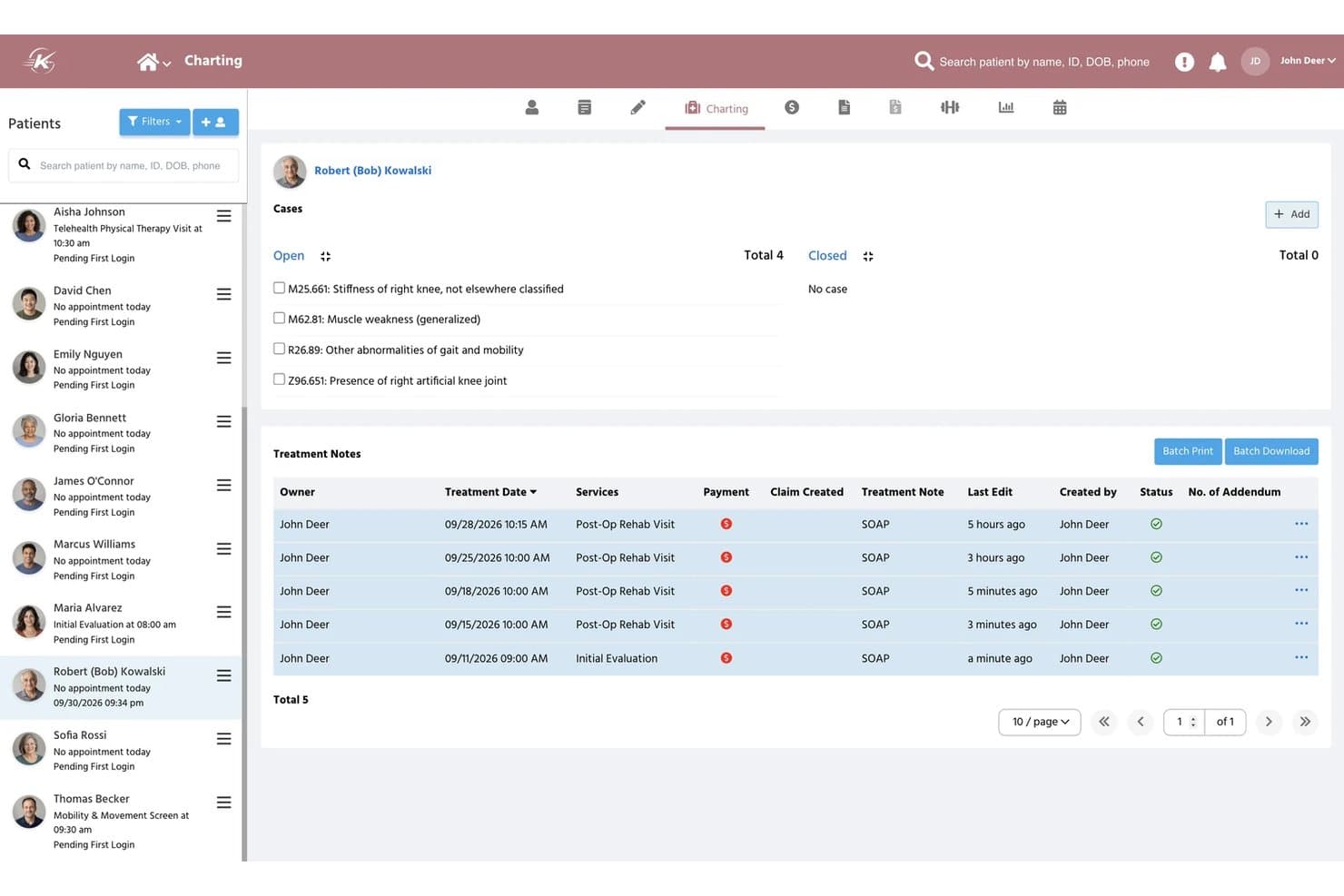
PtEverywhere centralizes patient charting, diagnoses, and SOAP notes in one view. PtEverywhere is a cloud-based physical therapy EMR and practice management platform that offers clinical documentation, appointment scheduling, insurance billing, patient communication, home exercise programs, and telehealth services.
Who Is PtEverywhere Best For?
PtEverywhere fits physical therapy clinics that offer both cash-pay and insurance-based treatments and need to manage patient payments, treatment packages, insurance claims, and clinical records within the same platform.
Why PtEverywhere Is a Good WebPT Alternative
I picked PtEverywhere because its billing tools accommodate clinics that operate with both private-pay and insurance reimbursement models. I like that practices can sell treatment packages, collect card payments, and generate superbills for patients seeking out-of-network reimbursement. Its insurance billing capabilities also support electronic claims, payer-specific billing requirements, and separate tracking of patient and insurance balances. Clinics can designate individual appointments as cash-pay visits even when a patient normally uses insurance, providing flexibility when offering additional wellness or rehabilitation services.
PtEverywhere Key Features
- PT charting: Document patient evaluations, treatment sessions, plans of care, and progress using therapy-specific clinical templates.
- Scheduling: Coordinate multiple provider calendars and allow patients to book appointments through an online patient portal.
- Home exercise programs: Assign personalized exercise programs with instructional videos and monitor patient completion, pain levels, and exercise difficulty.
- Telehealth: Conduct virtual therapy appointments while accessing patient records, clinical notes, and home exercise programs within the same workflow.
PtEverywhere Integrations
PtEverywhere connects with GoHighLevel for patient engagement and marketing automation, allowing practices to synchronize patient information, appointments, and case milestones between the platforms. It also offers an Open API for developing custom connections with third-party applications, with API documentation available to subscribers at no additional charge.
Pros and Cons
Pros:
- Reviewers praise responsive customer support
- Hybrid billing handles superbills and payer rates
- Patient self-booking supports cash-pay clinics
Cons:
- Complex insurance workflows may need more automation
- Reviewers report occasional note-saving glitches
- Exercise prescription tools frustrate some reviewers
Learn more about PtEverywhere: Best for clinics seeking co-sourced billing
- Free demo available
- Pricing upon request
Visit WebsiteCustomer Rating:3.8/5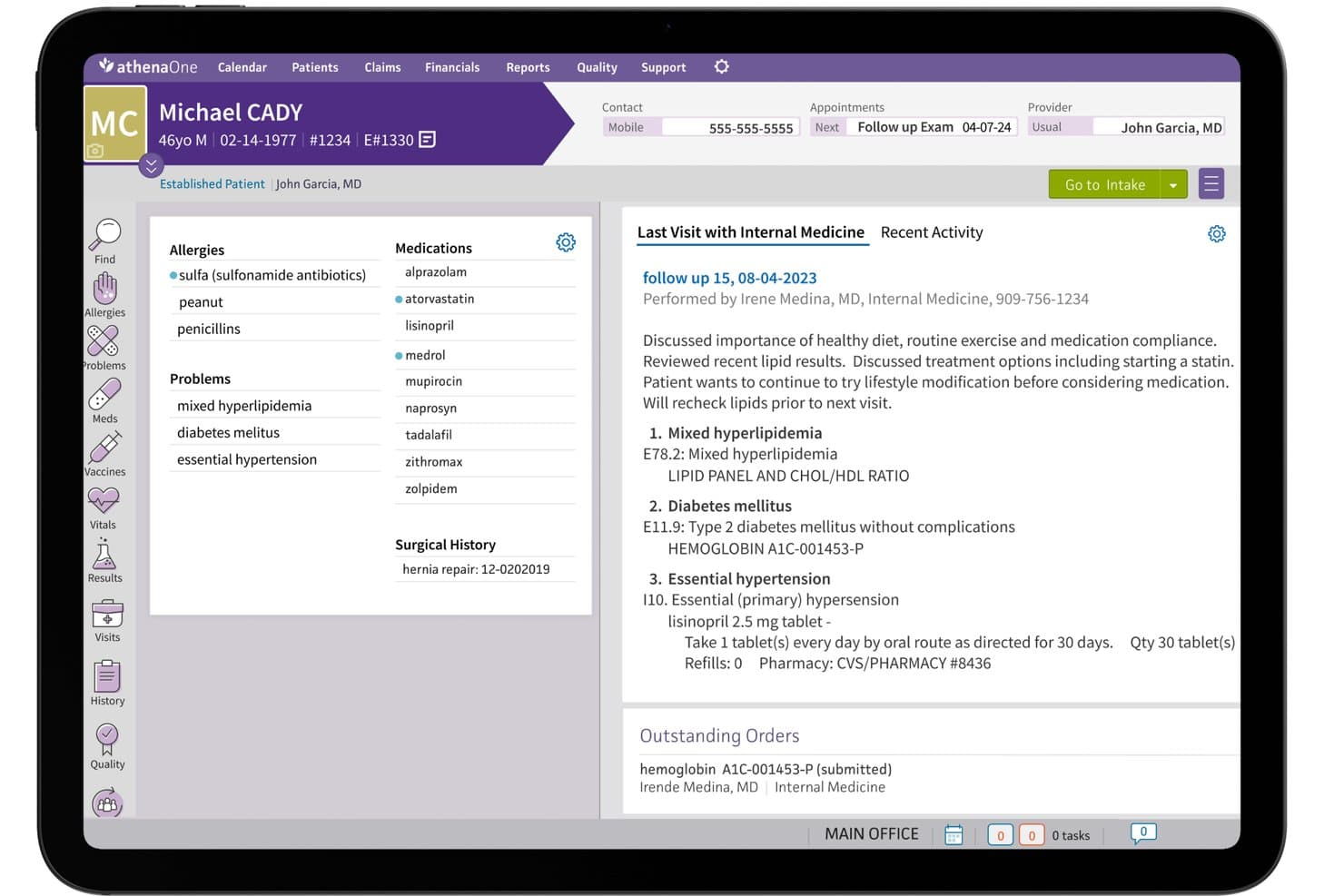
athenaOne centralizes patient records, medications, and visit history in one view. athenaOne is a cloud-based EHR and practice management platform for ambulatory medical practices that offers clinical documentation, appointment scheduling, revenue cycle management, patient engagement, and AI-assisted administrative workflows.
Who Is athenaOne Best For?
athenaOne fits ambulatory medical practices that need EHR software alongside co-sourced billing services, insurance claims management, and certified medical coding support.
Why athenaOne Is a Good WebPT Alternative
I picked athenaOne because its revenue cycle management tools pair automated billing with support from athenahealth's billing specialists. I like that its claim scrubbing identifies errors before submission, while claim alarms flag outstanding reimbursements for follow-up. Its AI-powered denial guidance suggests corrections for coding-related issues, and its co-sourced billing model shares responsibility for payer follow-ups, denial resolution, and claims resubmission. Optional medical coding services also provide access to certified coders.
athenaOne Key Features
- Patient overview: Summarizes important clinical information before appointments.
- Chart Assistant with Sage: Ask questions and retrieve patient information during encounters.
- Care event summaries: Condense hospital records and discharge documents into relevant clinical details.
- Population health management: Analyze external patient data to identify care gaps and monitor quality measures.
athenaOne Integrations
athenaOne offers third-party connections through the athenahealth Marketplace, alongside more than 800 documented API endpoints for custom integrations. It supports HL7, C-CDA, and FHIR-based data exchange, with custom interfaces available for additional connectivity. Through CommonWell Health Alliance and Carequality, athenaOne also exchanges clinical records with external healthcare organizations to support patient information sharing across care settings.
Pros and Cons
Pros:
- Patient overviews consolidate records before each encounter
- Optional certified coders extend billing team capacity
- Claim scrubbing and denial guidance support follow-up
Cons:
- Interface slowdowns complicate busy clinic workflows
- Users report billing-team edits interrupting claim work
Learn more about athenaOne: Best for multi-site, multi-specialty rehab
- 30-day free trial + free demo available
- From $130/user/month
Visit WebsiteCustomer Rating:3.6/5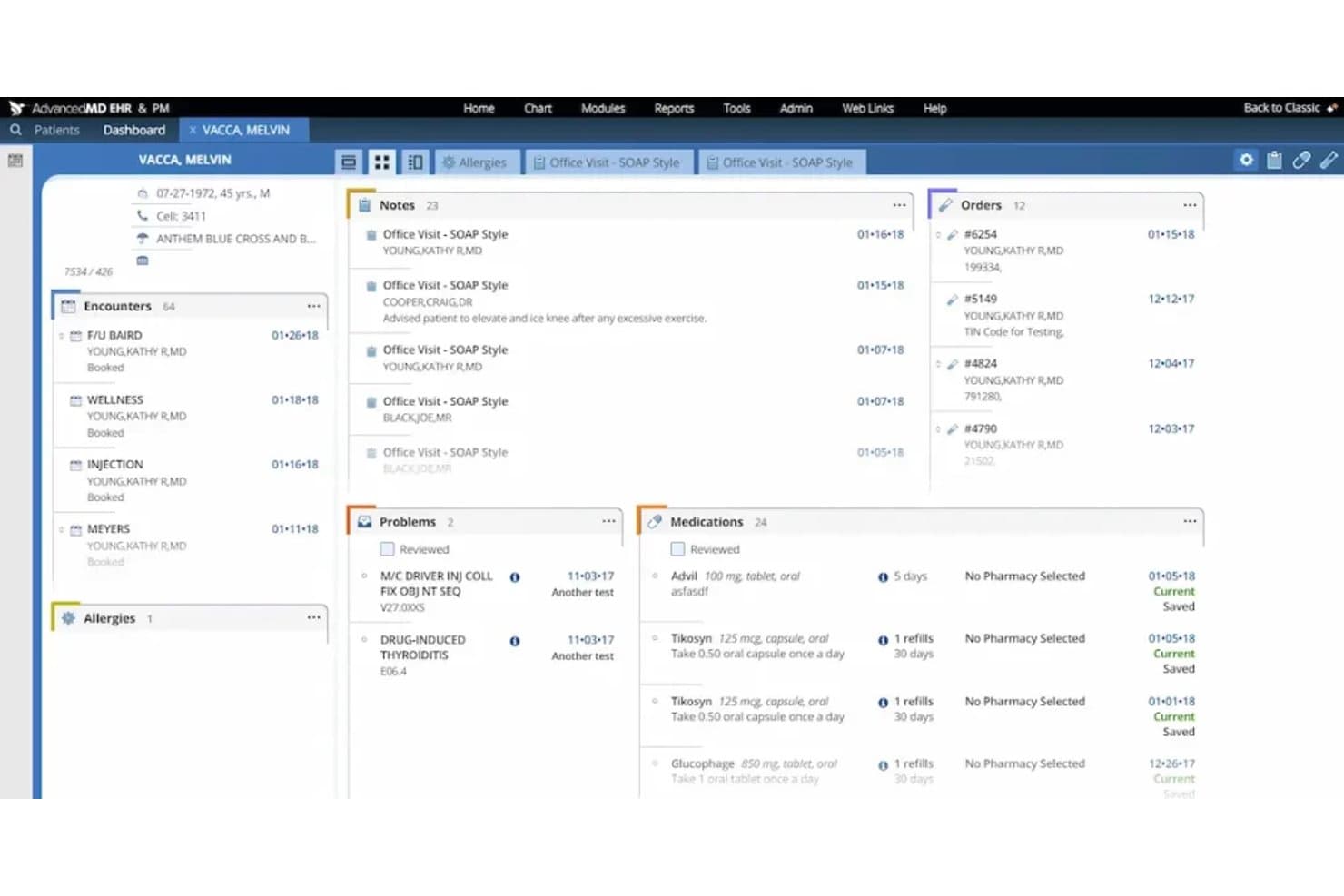
AdvancedMD connects rehab EHR charting, scheduling, insurance billing, and multi-site operations. AdvancedMD is a cloud-based EHR and practice management platform for physical therapy, rehabilitation, and other medical specialties that offers clinical documentation, appointment scheduling, insurance billing, patient engagement, and multi-location management.
Who Is AdvancedMD Best For?
AdvancedMD fits rehabilitation organizations that need to coordinate clinical documentation, patient scheduling, billing, and financial reporting across multiple locations and medical specialties.
Why AdvancedMD Is a Good WebPT Alternative
I picked AdvancedMD because its multi-location management capabilities accommodate rehabilitation practices operating across different specialties and clinic sites. I like that its EHR, scheduling, and billing tools share a central database, allowing clinicians and administrative teams to access patient records, appointments, and financial information without switching between separate systems. Its customizable clinical templates also support documentation requirements for physical therapy, occupational therapy, and physical medicine. Additionally, centralized billing and reporting tools allow administrators to monitor provider productivity, revenue, and claims activity across locations.
AdvancedMD Key Features
- Telehealth: Conduct virtual visits through the EHR.
- E-prescribing: Send electronic prescriptions and manage Schedule II–IV medications.
- Mobile EHR: Access clinical records through the iOS app.
- Immunization reporting: Submit immunization data electronically to state registries.
AdvancedMD Integrations
AdvancedMD offers more than 1,400 integration offerings through its Partner Marketplace, including connections with Apollo CRM, LeadSquared, LunaJoy, Salesforce, SuiteCRM, WebVehicle, and Zoho. It also supports laboratory and health information exchange connectivity through its interoperability services. For custom connections, AdvancedMD provides Connect APIs and FHIR-based interoperability capabilities, with developer registration and licensing requirements.
Pros and Cons
Pros:
- Shared charting and billing database links workflows
- Specialty-specific templates adapt notes across disciplines
- Multi-location scheduling supports distributed rehab clinics
Cons:
- Complex reports can be unavailable or inflexible
- Implementation and template setup require substantial effort
 Best for mixed-discipline rehab clinics
- Free demo available
- Pricing upon request
Visit WebsiteCustomer Rating:4/5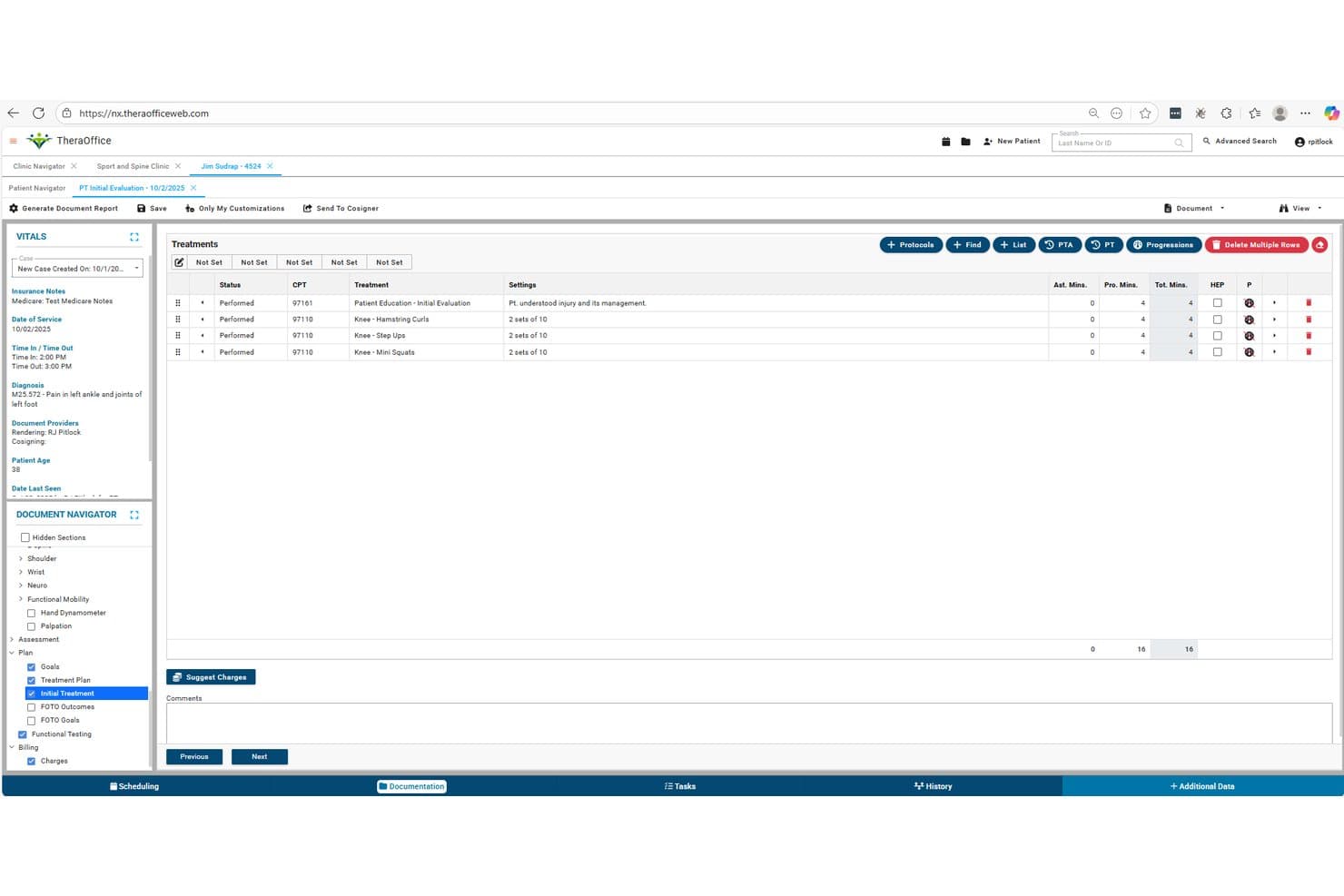
Netsmart TheraOffice organizes PT, OT, and speech therapy intake, scheduling, EMR notes, billing, and reports. Netsmart TheraOffice is a cloud-based EMR and practice management platform for physical, occupational, and speech therapy clinics, covering patient intake, scheduling, documentation, billing, and reporting.
Who Is TheraOffice Best For?
TheraOffice suits rehabilitation clinics coordinating physical, occupational, and speech therapy across multiple providers and locations.
Why TheraOffice Is a Good WebPT Alternative
I picked TheraOffice as a WebPT alternative for its multi-specialty rehabilitation documentation. It offers over 40 customizable templates for PT, OT, SLP, and specialized treatments such as pelvic health and vestibular therapy. I also like its location-specific scheduling, which allows clinics to coordinate appointments across multiple facilities while keeping documentation and billing in the same system.
TheraOffice Key Features
- Digital intake: Mobile check-in validates intake forms and supports benefits verification.
- Billing tools: Process ERAs, manage denials, and post payments with a billing wizard.
- Built-in telehealth: Conduct telehealth visits within TheraOffice.
- Reporting: Access 175+ reports covering productivity, KPIs, and visit history.
TheraOffice Integrations
TheraOffice connects with Rectangle Health's Practice Management Bridge for patient payments and ScribePT for AI-assisted clinical documentation. The ScribePT connection allows clinicians to submit documentation to both platforms in a single step.
Pros and Cons
Pros:
- Reports flag authorization and unsigned care plans
- Therapy-specific templates cover multiple disciplines
- Scheduling, documentation, and billing share one system
Cons:
- Accounting workflows can feel unintuitive
- Users report freezes and slow performance
Learn more about TheraOffice: Best for month-to-month WebPT switching
- Free demo available
- From $47.50/user/month
Visit WebsiteCustomer Rating:4.3/5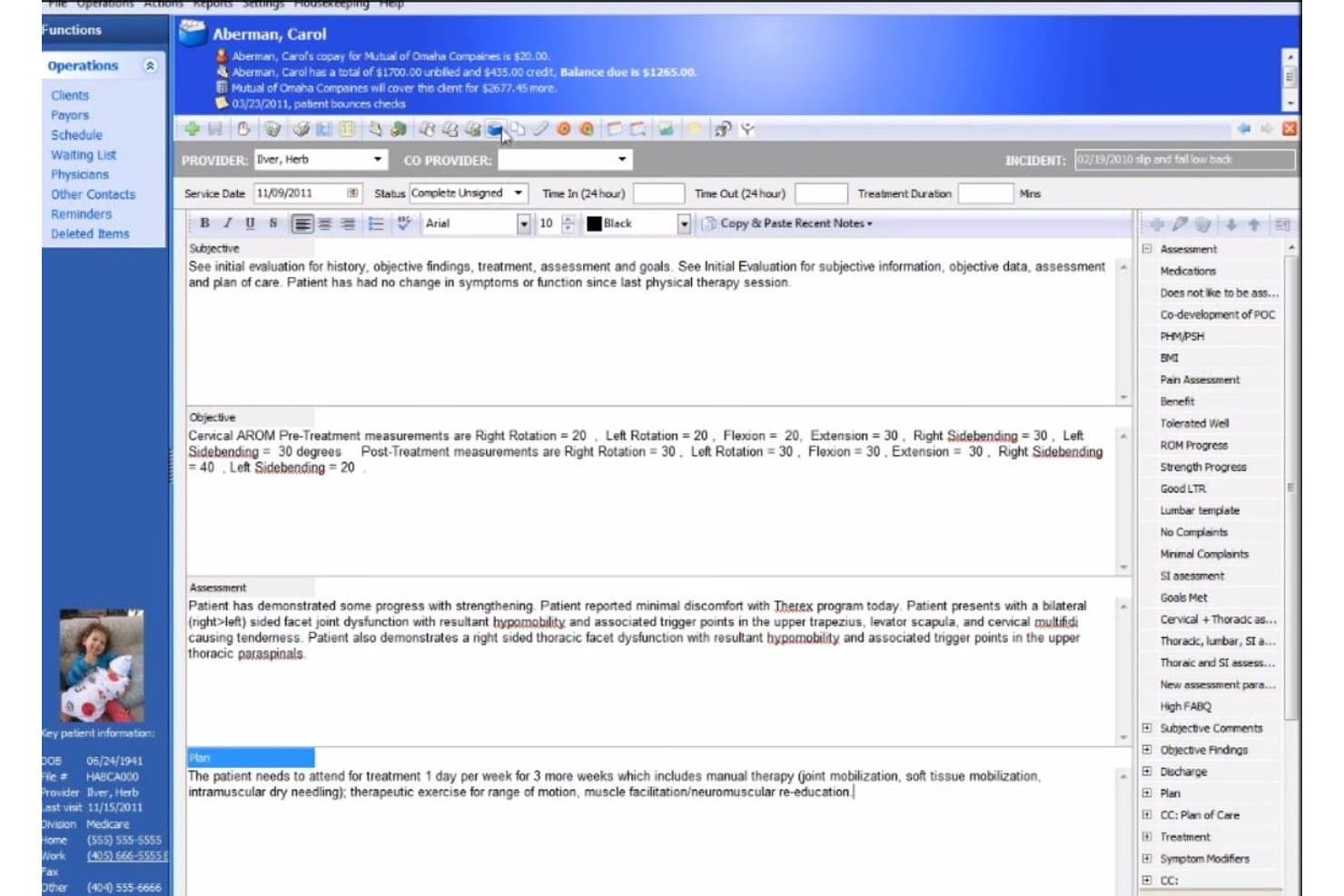
Practice Perfect centralizes patient notes, billing, and treatment plans. Practice Perfect is an EMR and practice management platform for physical therapy and rehabilitation clinics that covers clinical documentation, patient scheduling, insurance billing, operational reporting, and patient communication.
Who Is Practice Perfect Best For?
Practice Perfect fits rehabilitation clinics transitioning from WebPT that prefer month-to-month subscriptions, migration assistance, and access to their records after cancellation.
Why Practice Perfect Is a Good WebPT Alternative
I picked Practice Perfect because its month-to-month subscriptions allow rehabilitation clinics to change EMR systems without long-term contracts. I like that its scheduling, clinical documentation, and billing tools operate within the same platform, while complimentary data migration can transfer patient demographics, payer details, and contact records from WebPT. Practice Perfect also provides training and ongoing support without additional fees.
Practice Perfect Key Features
- Task management: Assign staff tasks and track deadlines with pop-up reminders.
- Operational analytics: Monitor revenue, patient volume, and staff productivity.
- Referral tracking: Record patient referrals and monitor referral activity.
- Communication: Send patient text messages and fax documents to providers.
Practice Perfect Integrations
Practice Perfect connects with Global Payments Integrated for payment processing, Wibbi for home exercise programs, and Coviu for telehealth. It also supports Hushmail for secure messaging, Waystar for electronic claims and remittances, and One Body for insurance eligibility verification.
Pros and Cons
Pros:
- SOAP templates and goal tracking support rehab documentation
- Remote access covers schedules and patient records
- Customizable, color-coded schedules include appointment notes
Cons:
- New staff may find scheduling cumbersome
- Reviewers report lag and occasional freezing
Learn more about Practice Perfect:
Outras alternativas ao WebPT
Eis algumas opções adicionais que não entraram na minha lista restrita, mas que ainda vale a pena conhecer:
- 11HenoBest for clinics growing cash-pay programs
- 12Practice ProBest for multi-specialty therapy documentation
- 13DrChronoBest for provider and office activity reports
- 14JaneBest for app-based patient follow-up
- 15TheraPlatformBest for teletherapy with interactive games
- 16OptiMantraBest for rehab clinics selling supplements
- 17ClinicientBest for home exercise and outcome tracking
- 18StrataPTBest for Medicare therapy compliance checks
- 19OptimisPTBest for linking exam findings to treatment
- 20CedaronBest for hospital-linked rehab clinics
How I Evaluate WebPT Alternatives
I split my evaluation into three parts, starting with core functionality—specifically, whether a tool can handle clinical documentation and scheduling—since these carry the most weight. Then I look for standout features like specialty-specific templates or outcomes tracking. Beyond features, I consider onboarding support, pricing transparency, and contract flexibility.
Core Functionality (Table Stakes For This List)
When I'm selecting tools for my list, I score each one on a scale from 0 (does not offer the functionality) to 5 (excels in this area) for each core functionality listed below. I then convert the total into a percentage to help assess each tool's overall fit, with extra weight on any functionalities I’ve deemed essential.
- Clinical Documentation (Essential): I look for structured notes and treatment plans that clinicians can adapt to different visit types and disciplines.
- Scheduling (Essential): I check whether teams can coordinate recurring visits across providers and locations, track attendance, and send appointment reminders.
- Billing & Claims: I assess whether billed services connect to documentation and whether staff can submit, track, and review claims.
- Compliance & Reporting: I look for reports that help teams review documentation, outcomes, and operational activity for audits and practice oversight.
- Patient Engagement: I consider how patients complete intake, access care information, communicate with the clinic, and manage appointments.
- Data Exchange: I check how the system exchanges records with referral partners and connects billing workflows to clearinghouses.
Once I have a list of tools that meet the criteria, I consider what sets each platform apart.
Differentiating Factors (What Sets Vendors Apart)
Here's how I compare and contrast different vendors:
Standout Features
I check whether a platform includes specialty-specific templates for PT, OT, and speech therapy, since a pediatric OT note has different documentation needs than an adult sports rehab eval. Built-in home exercise program libraries let clinicians assign video-based exercises from within the chart, which saves time and gives patients a clearer reference between visits. I also evaluate contract flexibility—month-to-month options matter when you're switching from a system that isn't working. Finally, I look at outcomes tracking tools that tie functional measures to documentation, helping justify medical necessity during audits.
Beyond Features
I check whether a vendor offers dedicated onboarding support with staff who understand rehab therapy workflows, since migrating schedules, charts, and billing history from a system like WebPT can stall a clinic for weeks without hands-on help. Payer connectivity matters just as much—I look for real-time eligibility checks and clearinghouse integrations that handle therapy-specific billing rules, because a denied claim tied to a missing modifier costs your front desk time and your practice revenue. I also evaluate contract length and cancellation terms, especially for clinics leaving a platform that already felt like a lock-in.
Porquê procurar alternativas ao WebPT?
Embora o WebPT seja uma boa escolha de software EMR, alguns utilizadores procuram alternativas para necessidades específicas de fluxos de trabalho ou de negócio. Poderá estar à procura de uma alternativa ao WebPT porque…
- A sua equipa precisa de fluxos de trabalho adaptados à sua combinação de disciplinas terapêuticas
- A sua equipa de faturação precisa de maior supervisão em várias localizações da clínica
- Pretende condições mensais antes de transferir os registos e os horários
- O seu programa de pagamento direto precisa de fluxos de trabalho concebidos para consultas pagas pelo próprio
- Procura uma estrutura de preços que se adeque melhor à sua equipa
Se alguma destas situações lhe parece familiar, veio ao lugar certo. A minha lista contém várias opções de software EMR que poderão adaptar-se melhor às equipas que enfrentam estes desafios com o WebPT e procuram alternativas.
Principais funcionalidades do WebPT
Eis as principais funcionalidades do WebPT, para ajudar a compará-lo com opções alternativas:
- Documentação assistida por IA: O registo de voz para texto, o texto preditivo e a informação transitada de consultas anteriores apoiam a criação de notas. Os terapeutas podem rever e editar o rascunho antes de o adicionar ao processo do paciente.
- Registo clínico configurável: Os perfis e modelos de registo clínico suportam fluxos de trabalho de PT, OT e terapia da fala. A sua equipa pode escolher formatos de documentação adequados a diferentes disciplinas e áreas de especialidade.
- Verificações de conformidade: Os alertas em tempo real assinalam informações em falta e documentação que necessita de justificação adicional. Os campos obrigatórios e as salvaguardas ajudam a equipa a rever as notas antes de estas avançarem nos fluxos de faturação.
- Sugestões de codificação: O WebPT analisa as notas de tratamento e sugere códigos CPT. Também pode assinalar uma possível faturação insuficiente, dando aos responsáveis pela faturação um aviso para verificarem se os serviços documentados correspondem aos códigos submetidos.
- Admissão digital de pacientes: Os pacientes podem preencher formulários digitais antes das consultas e os detalhes da admissão podem ser transferidos para as notas clínicas. Isto permite às equipas de receção recolher informações antes de o terapeuta documentar os cuidados prestados.
- Ferramentas de agendamento e receção: A plataforma inclui agendamento, pagamentos dos pacientes e ferramentas relacionadas com faltas e vagas disponíveis. As equipas de receção podem utilizar estas funcionalidades para gerir a logística das consultas e os saldos pendentes.
- Fluxos de faturação e reclamações: O WebPT liga a documentação, a codificação e a faturação, com ferramentas para a gestão de pagamentos e recusas. As clínicas podem utilizar o seu software de faturação ou optar por apoio completo à faturação.
- Relatórios e troca de dados: Os relatórios da clínica e os painéis operacionais ajudam os gestores a analisar a atividade da clínica. O WebPT também suporta a troca de registos com EHRs hospitalares e de cuidados pós-agudos, incluindo referências, registos e resultados através do Message Manager.
Custos e preços das alternativas ao WebPT
Os preços variam consoante o número de prestadores, as funcionalidades incluídas e os complementos. Muitos fornecedores apresentam orçamentos personalizados, por isso utilize estes intervalos como ponto de partida ao comparar alternativas ao WebPT.
Tabela de comparação de planos para alternativas ao WebPT
| Tipo de plano | Preço médio | Funcionalidades comuns |
|---|---|---|
| Tipo de planoPlano gratuito | Preço médio$0-$0, normalmente apenas para avaliação | Funcionalidades comunsAcesso por tempo limitado, documentação básica e agendamento. |
| Tipo de planoPlano pessoal | Preço médio$39-$99 por prestador/mês | Funcionalidades comunsNotas clínicas, agendamento de consultas, admissão de pacientes e ferramentas básicas de faturação. |
| Tipo de planoPlano empresarial | Preço médio$100-$700/mês | Funcionalidades comunsAgendamento para vários prestadores, ferramentas de faturação e reclamações, relatórios e comunicação com os pacientes. |
| Tipo de planoPlano empresarial de grande dimensão | Preço médioPreços personalizados, frequentemente $700+/mês | Funcionalidades comunsAdministração de várias localizações, relatórios avançados, integrações e integração inicial dedicada. |