

Valget av et alternativ til MEDITECH Expanse avhenger av hvordan organisasjonen håndterer klinisk dokumentasjon, pasientbehandling og inntektsstyring. Etter å ha utviklet klinikken min fra én lege til et team på 15 personer har jeg selv sett hvordan bemanning, pasienttilgang og faktureringskrav endrer seg når en praksis vokser.
Noen elektroniske pasientjournalsystemer fokuserer på koordinering av behandling på tvers av hele sykehuset, mens andre tilbyr spesialitetstilpasset journalføring, KI-assistert dokumentasjon eller dedikerte faktureringstjenester. Jeg har sammenlignet disse alternativene for å fremheve forskjellene og identifisere hvor hver plattform passer inn i den daglige kliniske og administrative arbeidsflyten.
Hva er MEDITECH Expanse?
MEDITECH Expanse er en skybasert elektronisk pasientjournalplattform (EHR) for sykehus og helsesystemer. Den samler pasientdata i en felles visning og støtter kliniske arbeidsflyter, dokumentasjon, virtuell behandling og oppgaver knyttet til inntektsstyring. Den mobilorienterte utformingen og KI-baserte verktøyene er utviklet for organisasjoner på tvers av behandlingsmiljøer og spesialiteter, så dette er et sykehusorientert alternativ som ikke passer direkte for alle uavhengige praksiser.
Sammenlign de beste alternativene til MEDITECH Expanse
Sammenlign priser og spesifikasjoner side om side for alternativene til MEDITECH Expanse som kom med på kortlisten min.
Score legend (out of 5)
- Excellent4.5–5
- Good4–4.4
- Average3–3.9
- Below average2–2.9
- Poor1–1.9
Sorted by: Default
| Tool | Starting Price | Website | |||||||
|---|---|---|---|---|---|---|---|---|---|
Best for clinics using AI for notes and intake | 3.8 out of 5 | 4 | 3 | 4 | 4 | 4 | 4 | Pricing upon request Free demo available | Website |
Best for per-encounter pricing across providers | 3.5 out of 5 | 4 | 3 | 4 | 3 | 4 | 3 | $25/month Free plan available | Website |
Best for visual, specialty-specific charting | 3.5 out of 5 | 4 | 2 | 4 | 4 | 4 | 3 | Pricing upon request Free demo available | Website |
Best for independent practice operations | 3.5 out of 5 | 4 | 2 | 4 | 3 | 4 | 4 | Pricing upon request Free demo available | Website |
Best for outpatient care and revenue cycle | 3.5 out of 5 | 3 | 3 | 4 | 3 | 4 | 4 | Pricing upon request Free demo available | Website |
Best for ambulatory care and revenue cycle | 3.7 out of 5 | 4 | 3 | 4 | 3 | 4 | 4 | Pricing upon request Free demo available | Website |
Best for RCM without replacing your EHR | 3.7 out of 5 | 4 | 4 | 4 | 3 | 4 | 3 | Pricing upon request Free demo available | Website |
Best for specialty care in a shared record | 4.2 out of 5 | 5 | 4 | 3 | 4 | 4 | 5 | Pricing upon request Not available | Website |
Best for EHR buyers seeking billing services | 3.5 out of 5 | 4 | 3 | 4 | 3 | 4 | 3 | Pricing upon request Free demo available | Website |
Best for AI-assisted hospital documentation | 3.8 out of 5 | 4 | 4 | 4 | 3 | 4 | 4 | Pricing upon request Free demo available | Website |


Hvorfor du kan stole på våre programvareanbefalinger
6,700+
Reviews
20
Industry experts
16+
Evaluation factors
14
Years
Teamet vårt har testet og anmeldt programvare siden 2012. Vi leder selv legekontorer, så vi vet hvor vanskelig og hvor viktig det er å velge riktig programvare.
I denne guiden har vi vurdert verktøyene gjennom praktisk testing og uavhengig research og gitt dem poeng ut fra våre utvelgelseskriterier.
Anmeldelsene våre bygger på vår egen redaksjonelle vurdering. De er ikke et salgsargument.
Anmeldelser av alternativer til MEDITECH Expanse
Nedenfor finner du mine sammendrag av de beste alternativene til MEDITECH Expanse som kom med på kortlisten min. Anmeldelsene dekker funksjonene, de kliniske arbeidsflytene og faktureringsstøtten i hvert EHR-system for å hjelpe deg med å finne det som passer best.
 Best for clinics using AI for notes and intake
- Free demo available
- Pricing upon request
Visit WebsiteCustomer Rating:4.4/5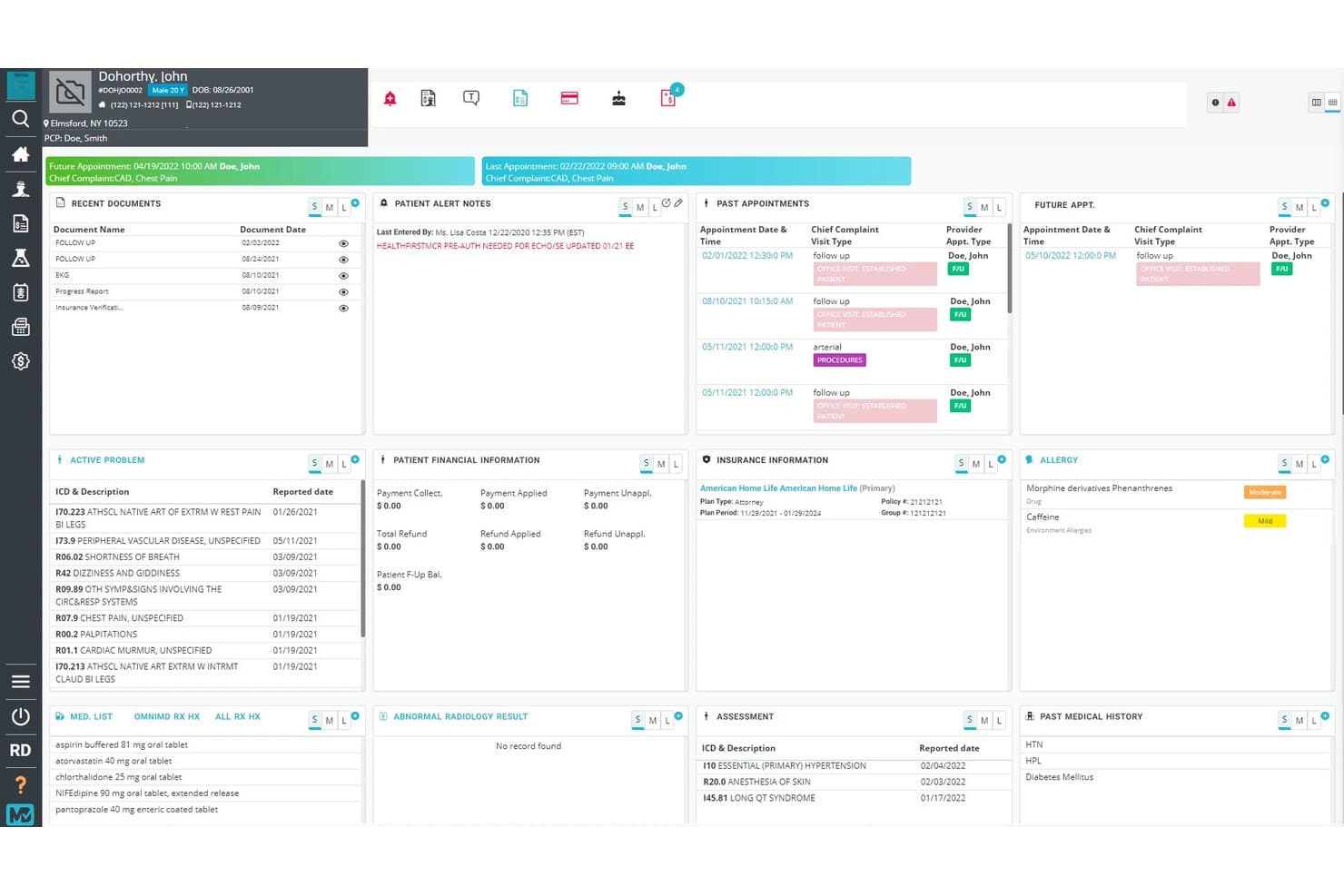
OmniMD automates clinical notes, patient intake, scheduling, e-prescribing, and billing. OmniMD is a cloud-based EHR and practice management platform for ambulatory practices, covering AI-assisted clinical documentation, appointment scheduling, patient intake, electronic prescribing, medical billing, and revenue cycle management.
Who Is OmniMD Best For?
OmniMD suits independent and small-to-mid-sized ambulatory practices considering a MEDITECH Expanse alternative that need AI-assisted documentation, automated patient intake, insurance verification, and medical coding within one platform.
Why OmniMD Is a Good MEDITECH Expanse Alternative
I picked OmniMD as a MEDITECH Expanse alternative because its AI Medical Scribe and AI Front Desk automate clinical and administrative tasks throughout patient visits. I particularly like how the AI Medical Scribe converts patient-provider conversations into structured SOAP, DAP, or APSO notes for clinician review. Its AI Front Desk also handles appointment booking, insurance eligibility checks, and patient intake, reducing manual data entry before and after encounters.
OmniMD Key Features
- Specialty-specific templates: Choose from templates built for 20+ specialties, including built-in clinical scales like PHQ-9, GAD-7, and NIHSS.
- ONC-certified e-prescribing: Prescribe directly from the chart with drug-interaction and allergy alerts, plus EPCS support for controlled substances.
- AI Medical Coder: Converts clinical notes into ICD, CPT, and HCPCS code suggestions, with undercoding and overcoding checks before claims are submitted.
- Denial-risk scoring: Flags claims likely to be rejected based on payer patterns and historical data before they leave the practice.
OmniMD Integrations
OmniMD connects with Labcorp and Quest Diagnostics through its OmniXchange platform for laboratory orders and results. Its AI Medical Scribe supports connections with Epic, Oracle Health (formerly Cerner), athenahealth, eClinicalWorks, and Allscripts (now part of Veradigm), with OmniMD advertising compatibility with more than 50 EHR systems.
Pros and Cons
Pros:
- Clinical, billing, and scheduling workflows connect
- Scheduling confirmations and rescheduling move quickly
- Dictation saves note-writing time
Cons:
- Reports can require extra filters
- Navigation between screens adds steps
Learn more about OmniMD: Best for per-encounter pricing across providers
- Free plan available
- From $25/month
Visit WebsiteCustomer Rating:4.2/5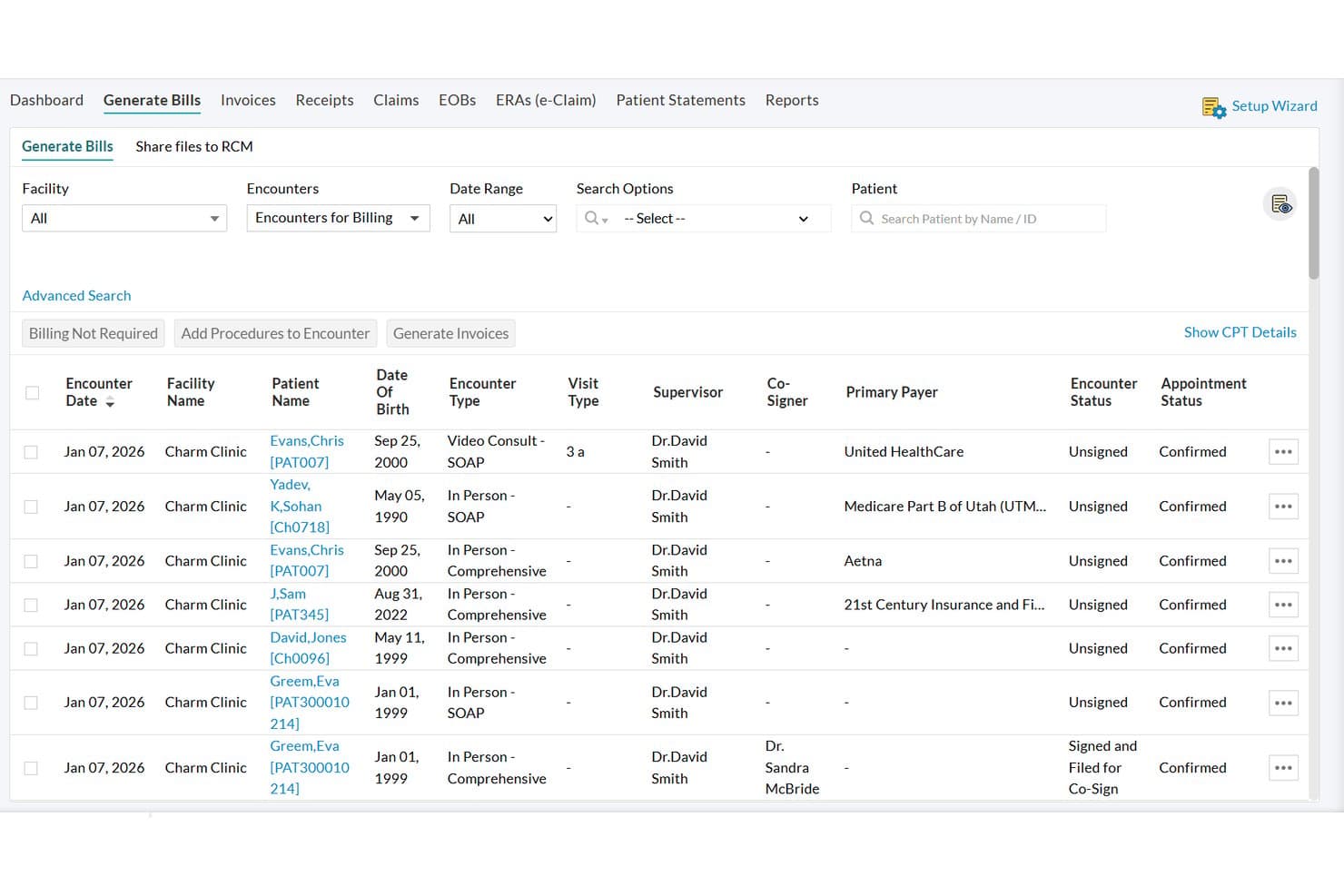
CharmHealth lets users review and generate bills from encounter records. CharmHealth is a cloud-based EHR and practice management platform for ambulatory practices, covering clinical documentation, appointment scheduling, medical billing, patient communication, and insurance claims management.
Who Is CharmHealth Best For?
CharmHealth suits solo clinicians and growing ambulatory practices considering a MEDITECH Expanse alternative that want customizable charting and encounter-based pricing without additional subscription charges for each provider.
Why CharmHealth Is a Good MEDITECH Expanse Alternative
I picked CharmHealth as a MEDITECH Expanse alternative because of its encounter-based pricing model. I like that practices can add multiple providers without increasing their base subscription based on provider count, since charges depend on recorded patient encounters. This gives growing clinical teams more flexibility when managing EHR expenses. Its AI-powered claim validation also checks procedure codes, modifiers, and place-of-service information during claim creation, allowing billing teams to identify potential errors before submission.
CharmHealth Key Features
- SOAP note templates: Build and customize structured note templates with quick, brief, and comprehensive chart-note workflows to match your practice's documentation style.
- Patient portal: Give patients access to request appointments, complete pre-visit questionnaires, share records, and message the care team directly.
- Denial management views: Review denied claims by denial category, code, and payer-wide trends, with claim-level denial reasons available for correction and resubmission.
- Multi-factor authentication controls: Require MFA for all practice members or configure it selectively, with support for authenticator apps, hardware tokens, and passkeys.
CharmHealth Integrations
CharmHealth connects with Google Calendar for appointment synchronization, QuickBooks for accounting, Bluefin for payment processing, Surescripts for electronic prescribing, and Labcorp and Quest Diagnostics for laboratory services. It also supports Fullscript for supplement ordering and works with Optum for electronic claims processing. REST and FHIR APIs are available for custom integrations and healthcare data exchange.
Pros and Cons
Pros:
- Reviewers value combined charting, scheduling, and billing
- Patients value portal records and appointment requests
- Adaptable chart templates earn reviewer praise
Cons:
- E-prescribing and Quest lab issues disrupt workflows
- Payer enrollment delays can stall reimbursement
Learn more about CharmHealth: Best for visual, specialty-specific charting
- Free demo available
- Pricing upon request
Visit WebsiteCustomer Rating:4.3/5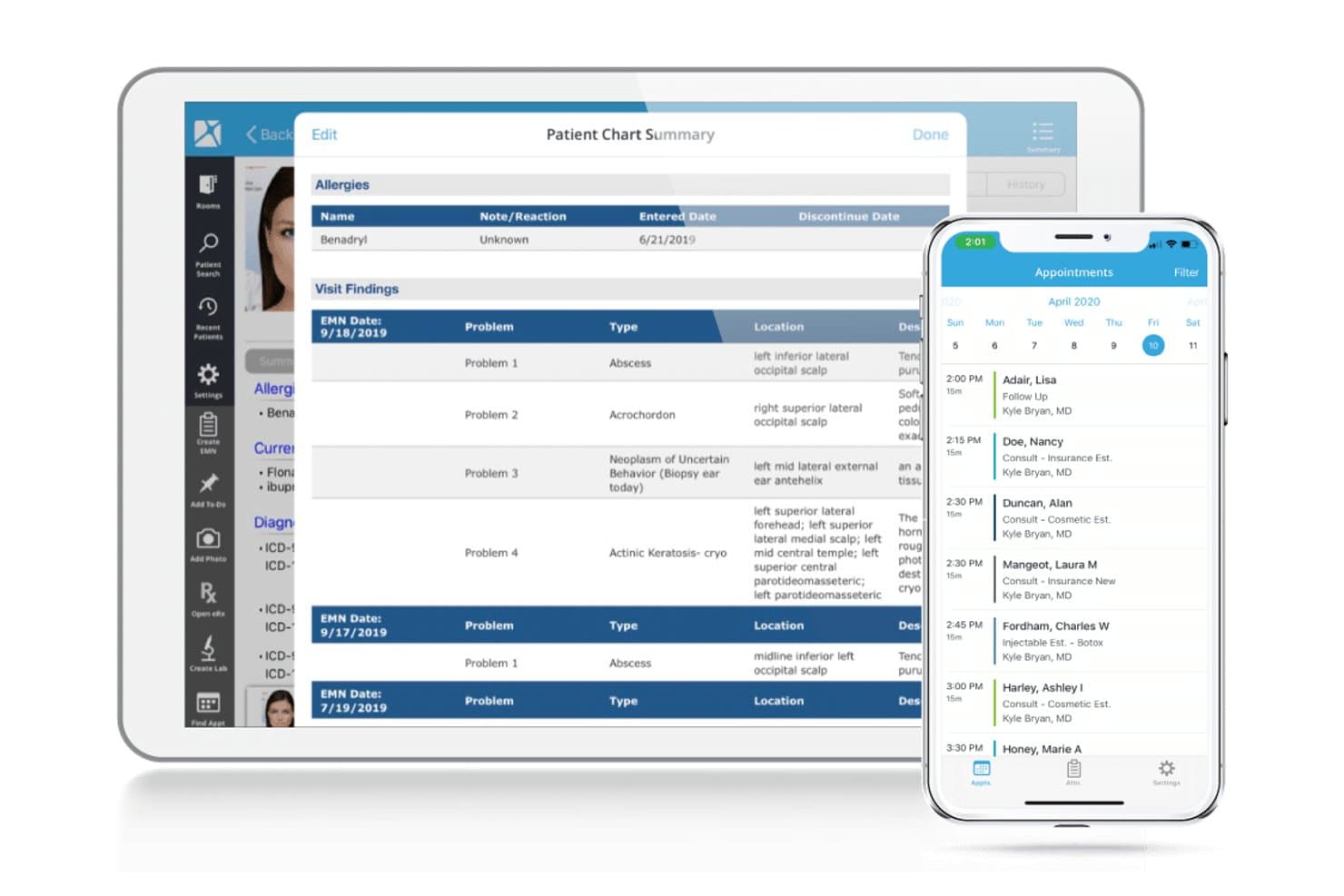
Nextech unifies specialty EHR, practice management, and medical billing tools. Nextech is an EHR and practice management platform for ophthalmology, dermatology, plastic surgery, and med spa practices, offering specialty-specific documentation, AI-assisted charting, scheduling, and medical billing.
Who Is Nextech Best For?
Nextech suits specialty outpatient practices considering a MEDITECH Expanse alternative that need clinical documentation tools designed for ophthalmology, dermatology, plastic surgery, and aesthetic procedures.
Why Nextech Is a Good MEDITECH Expanse Alternative
I picked Nextech as a MEDITECH Expanse alternative because of its specialty-specific clinical charting capabilities. I like that ophthalmology practices can use the Glaucoma Flowsheet and Cataract Surgery Planner to review relevant patient information within dedicated workflows. Its Cora Scribe also generates structured ophthalmology documentation from clinical conversations in near real time. For dermatology and plastic surgery, point-and-click smart stamping allows clinicians to mark anatomical diagrams and document treatment locations directly in patient charts.
Nextech Key Features
- Patient portal: Lets patients view records and test results, request prescription refills, schedule appointments, send secure messages, and pay bills online.
- Claims scrubbing: Checks claims before submission for coding errors, missing fields, authorizations, payer rules, and duplicate claims, then routes clean claims through a clearinghouse.
- Drag-and-drop scheduling: Provides a visual scheduling interface with automated outreach by email, text, or phone, plus waiting-list notifications and recall messaging.
- FHIR API access: Supports FHIR R4 and STU3 APIs, allowing patients to connect their health data to third-party apps directly through the patient portal.
Nextech Integrations
Nextech connects with Ocuco Acuitas 3 for optical practice management and lists patient application connections with b.well Connected Health, Epic Happy Together, Fasten Health, Hugo Health, and OneRecord. It also supports FHIR R4 and STU3 APIs, allowing authorized third-party applications to access patient health information and supporting custom healthcare data exchange.
Pros and Cons
Pros:
- G2 reviewers report easier setup than MEDITECH
- Reviewers praise quick charting
- Specialty templates suit ambulatory workflows
Cons:
- Reviewers report glitches and update slowdowns
- Common tasks can require multiple screens
Learn more about Nextech: Best for independent practice operations
- Free demo available
- Pricing upon request
Visit WebsiteCustomer Rating:3.9/5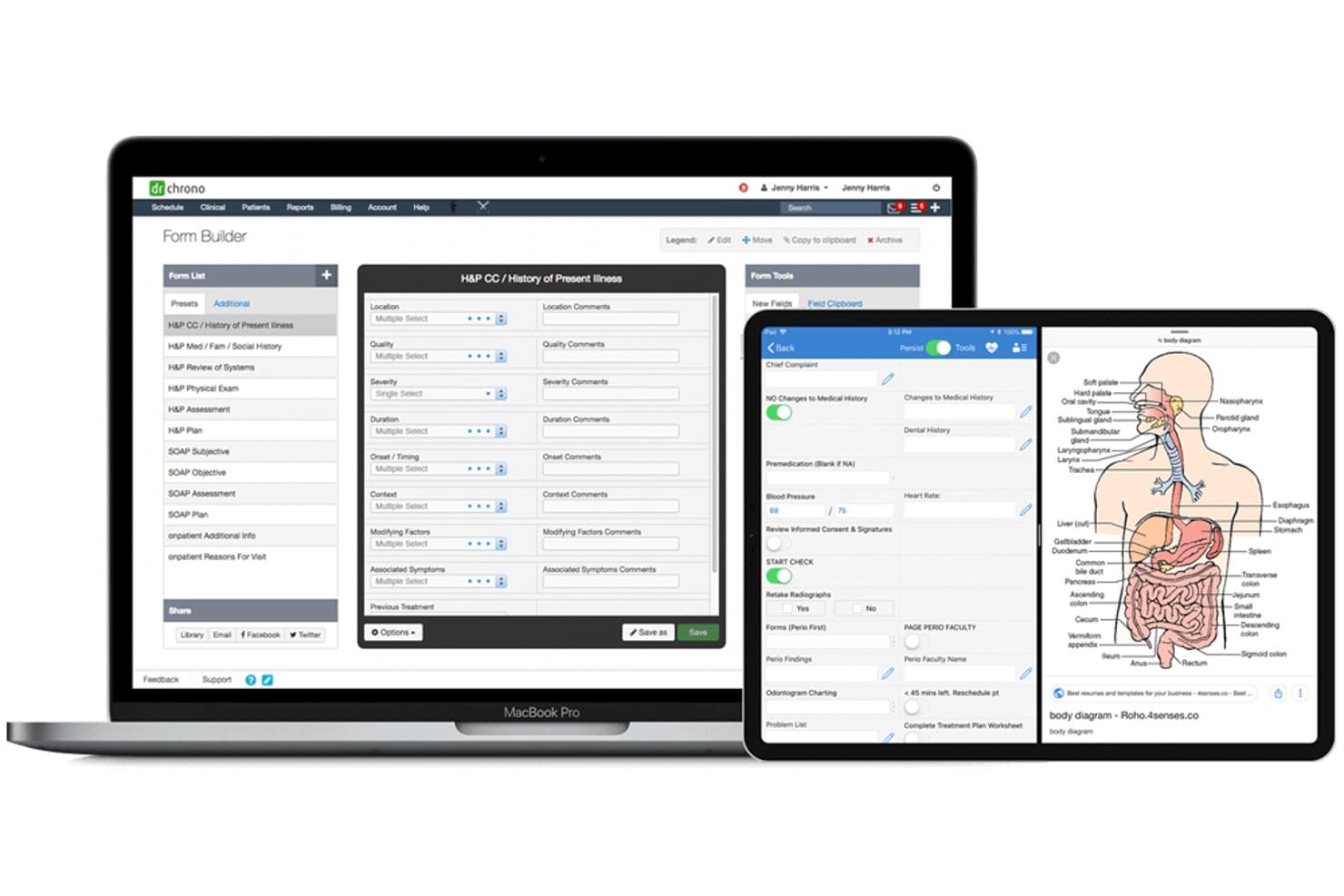
DrChrono covers EHR charting, appointment scheduling, medical billing, and telehealth. DrChrono is a cloud-based EHR and practice management platform by EverHealth for independent ambulatory practices, covering clinical documentation, appointment scheduling, medical billing, telehealth, and patient engagement.
Who Is DrChrono Best For?
DrChrono suits independent ambulatory practices considering a MEDITECH Expanse alternative that need AI-assisted clinical documentation, insurance billing, and patient management within one EHR.
Why DrChrono Is a Good MEDITECH Expanse Alternative
I picked DrChrono as a MEDITECH Expanse alternative because of its EverHealth Scribe and medical practice management capabilities. I like that EverHealth Scribe captures patient-provider conversations and generates structured clinical notes, including history of present illness, assessments, treatment plans, and suggested ICD-10 codes. Clinicians can review and approve the documentation before adding it to patient charts, with DrChrono reporting average documentation time savings of 8–10 minutes per visit. Its billing tools also support eligibility verification, claims submission, and denial management through the Live Claims Feed.
DrChrono Key Features
- OnPatient portal: Patients can schedule appointments, message providers, view lab results, complete intake forms, and pay bills through a web or mobile portal.
- RecordSync: Retrieves clinical records from outside providers via Surescripts and the Carequality network, pulling encounters, diagnoses, labs, allergies, and medications into the patient chart.
- No-show predictor: Flags patients at higher risk of missing appointments so your team can send targeted reminders or take proactive outreach steps.
- MIPS Assist: Guides eligible clinicians through measure selection, performance tracking, Medicare data organization, and MIPS submission preparation.
DrChrono Integrations
DrChrono offers native integrations with Quest, Labcorp, Iron Bridge, Surescripts RecordSync, Surescripts eRx, and CoverMyMeds. It also provides REST and OAuth APIs with FHIR endpoints, plus marketplace integrations.
Pros and Cons
Pros:
- Scheduling, charting, and billing sit in one platform
- iOS charting supports mobile clinical work
- Specialty templates support ambulatory documentation
Cons:
- Migrated legacy notes aren’t editable structured notes
- Billing discrepancies can require extra cleanup
Learn more about DrChrono: Best for outpatient care and revenue cycle
- Free demo available
- Pricing upon request
Visit WebsiteCustomer Rating:4/5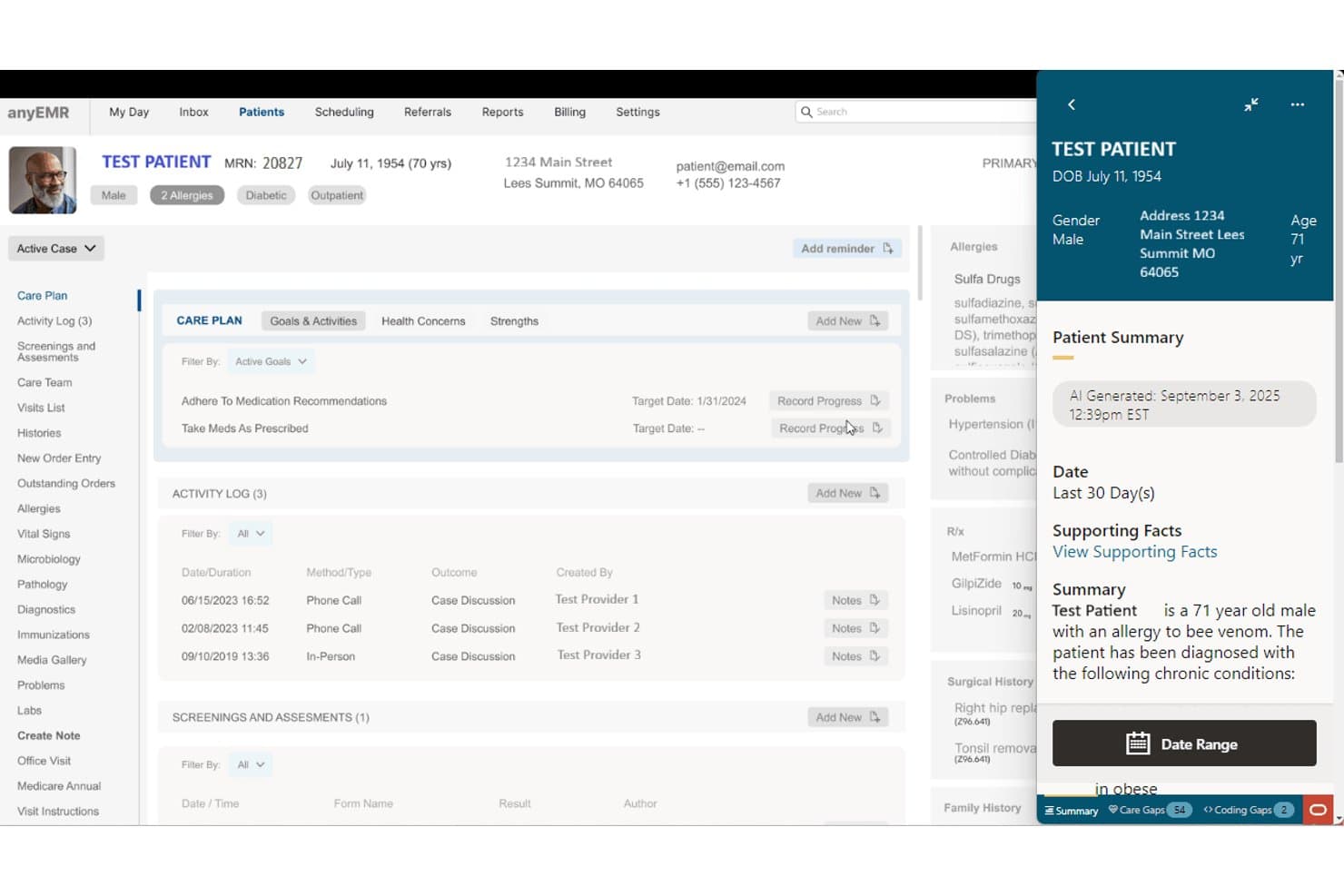
Oracle Health uses AI for patient summaries, automated charge capture, and near-real-time claims. Oracle Health EHR is a cloud-based electronic health record platform for outpatient practices and health systems, covering clinical documentation, patient management, AI-assisted charting, patient history tracking, and revenue cycle management.
Who Is Oracle Health Best For?
Oracle Health EHR suits outpatient practices and health systems considering a MEDITECH Expanse alternative that need AI-assisted clinical documentation, patient history summaries, automated charge capture, and connected clinical and financial workflows.
Why Oracle Health Is a Good MEDITECH Expanse Alternative
I picked Oracle Health as a MEDITECH Expanse alternative because its Ambulatory AI Application Suite connects outpatient clinical workflows with patient accounting and AI-assisted documentation. I particularly like how Oracle Health Patient Accounting uses clinical encounter data to automate charge capture and generate claims in near real time. Its AI-generated patient summaries also draw from encounters, medications, laboratory results, and clinical notes to surface relevant information for chart review and visit preparation.
Oracle Health Key Features
- Clinical AI Agent: Drafts notes and orders from voice recordings, with generated notes surfacing directly in the EHR's Needs Attention panel for clinician review and sign-off.
- Patient history timeline: Displays encounters, medications, diagnoses, dosage changes, and condition-specific insights in chronological order for quick chart review.
- Risk and care-gap insights: Flags potential risks, care gaps, and barriers like readmission risk or financial concerns within the clinical workflow.
- Role-based training and adoption coaching: Provides change management, readiness assessments, and near-real-time Q&A support before, during, and after go-live.
Oracle Health EHR Integrations
Oracle Health EHR supports third-party connectivity through Oracle Health Reference Lab Network for laboratory orders and results, Oracle Health Electronic Prescription Interoperability for prescription transactions, and Oracle Health Information Network for clinical data exchange. It also provides access to validated third-party applications through Oracle Healthcare Marketplace.
Pros and Cons
Pros:
- Clinicians praise access to historical records
- Patient Accounting links encounters to claims
- Ambulatory suite targets outpatient workflows
Cons:
- Ambient AI may miss complex consent details
- Users report extra clicks and navigation friction
Learn more about Oracle Health: Best for ambulatory care and revenue cycle
- Free demo available
- Pricing upon request
Visit WebsiteCustomer Rating:3.8/5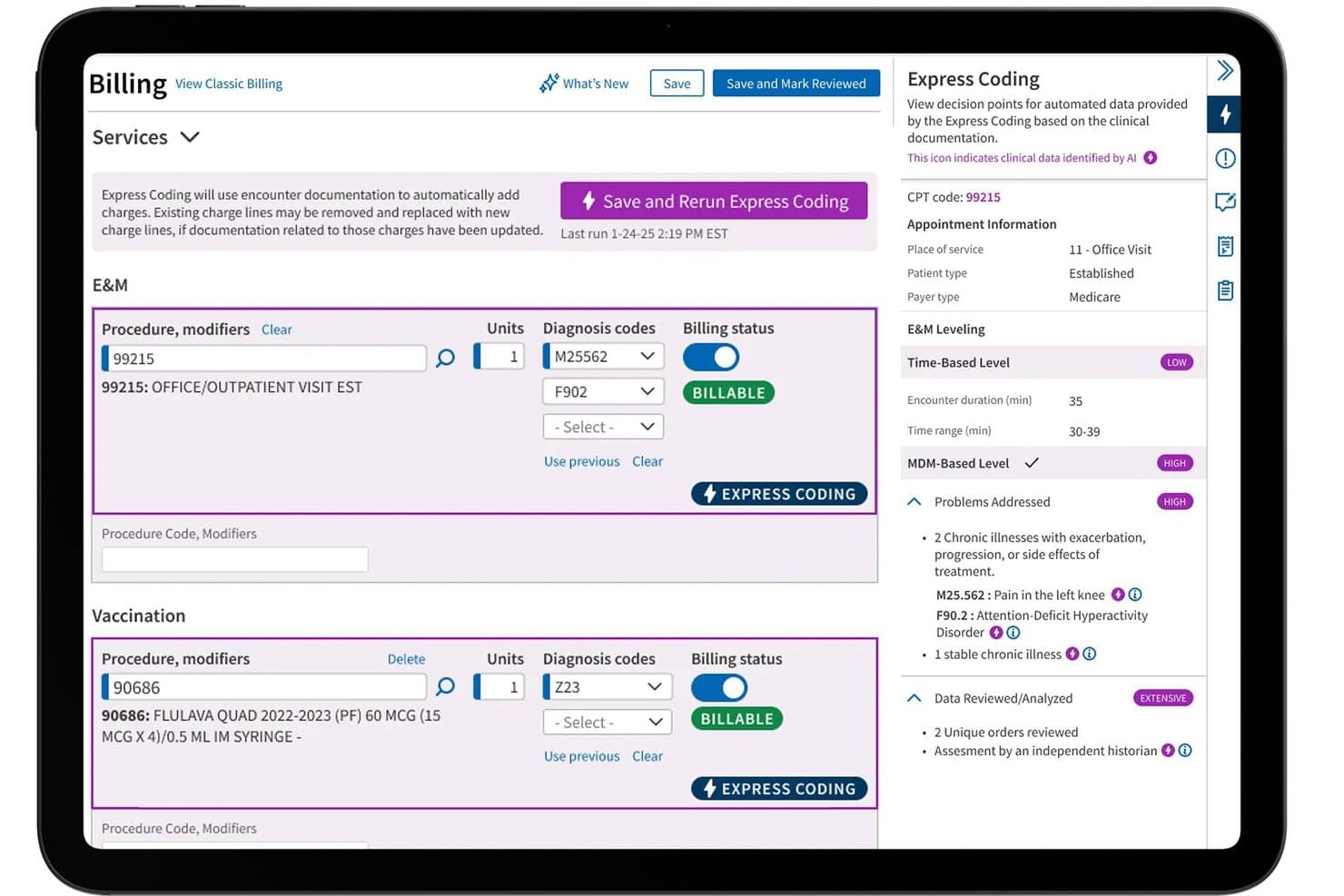
athenaOne supports AI-assisted charting, appointment scheduling, medical billing, and RCM. athenaOne is a cloud-based EHR, practice management, and patient engagement platform for ambulatory practices, covering clinical documentation, appointment scheduling, medical billing, revenue cycle management, and AI-assisted charting.
Who Is athenaOne Best For?
athenaOne suits independent and multi-provider ambulatory practices considering a MEDITECH Expanse alternative that need AI-assisted clinical documentation, automated medical coding, insurance eligibility verification, and patient engagement tools in one platform.
Why athenaOne Is a Good MEDITECH Expanse Alternative
I picked athenaOne as a MEDITECH Expanse alternative because its AI-assisted clinical documentation and coding capabilities are designed around ambulatory care workflows. I particularly like how athenaAmbient captures patient-provider conversations and generates structured draft notes with suggested diagnoses and orders for clinician review. Its Express Coding feature also analyzes encounter documentation, orders, and practice rules to suggest E&M and CPT codes, allowing billing teams to review and approve charges without manually selecting every code.
athenaOne Key Features
- Specialty-specific workflow templates: Configure encounter workflows and create templates for questions, tests, and results tailored to your specialty.
- Network-informed clinical insights: Surface potential care and diagnosis gaps directly in the clinical workflow using data drawn from athenahealth's broader provider network.
- Automated eligibility verification: Check patient insurance eligibility automatically three days before scheduled appointments, with on-demand checks also available.
- Patient self-scheduling: Let patients book, manage, and check in for appointments online through the Patient Portal, the athenaPatient app, or a guest booking workflow.
athenaOne Integrations
athenaOne provides access to more than 277,000 direct clinical integrations, including connections with laboratories, pharmacies, and imaging centers. It supports patient record exchange through CommonWell Health Alliance, Carequality, and TEFCA. Its developer platform offers more than 800 API endpoints, HL7 and C-CDA interfaces, custom connections, and Data View for reporting and data extraction. athenaOne also supports third-party applications through its marketplace, including Suki AI, Abridge, and iScribe for AI-assisted clinical documentation.
Pros and Cons
Pros:
- Claim tools support coding and follow-up
- Scheduling, records, and billing share workflows
- Specialty templates structure ambulatory charting
Cons:
- MEDITECH-specific migration path isn’t documented
- Reviewers report excessive clicks and navigation friction
Learn more about athenaOne: Best for RCM without replacing your EHR
- Free demo available
- Pricing upon request
Visit WebsiteCustomer Rating:3.6/5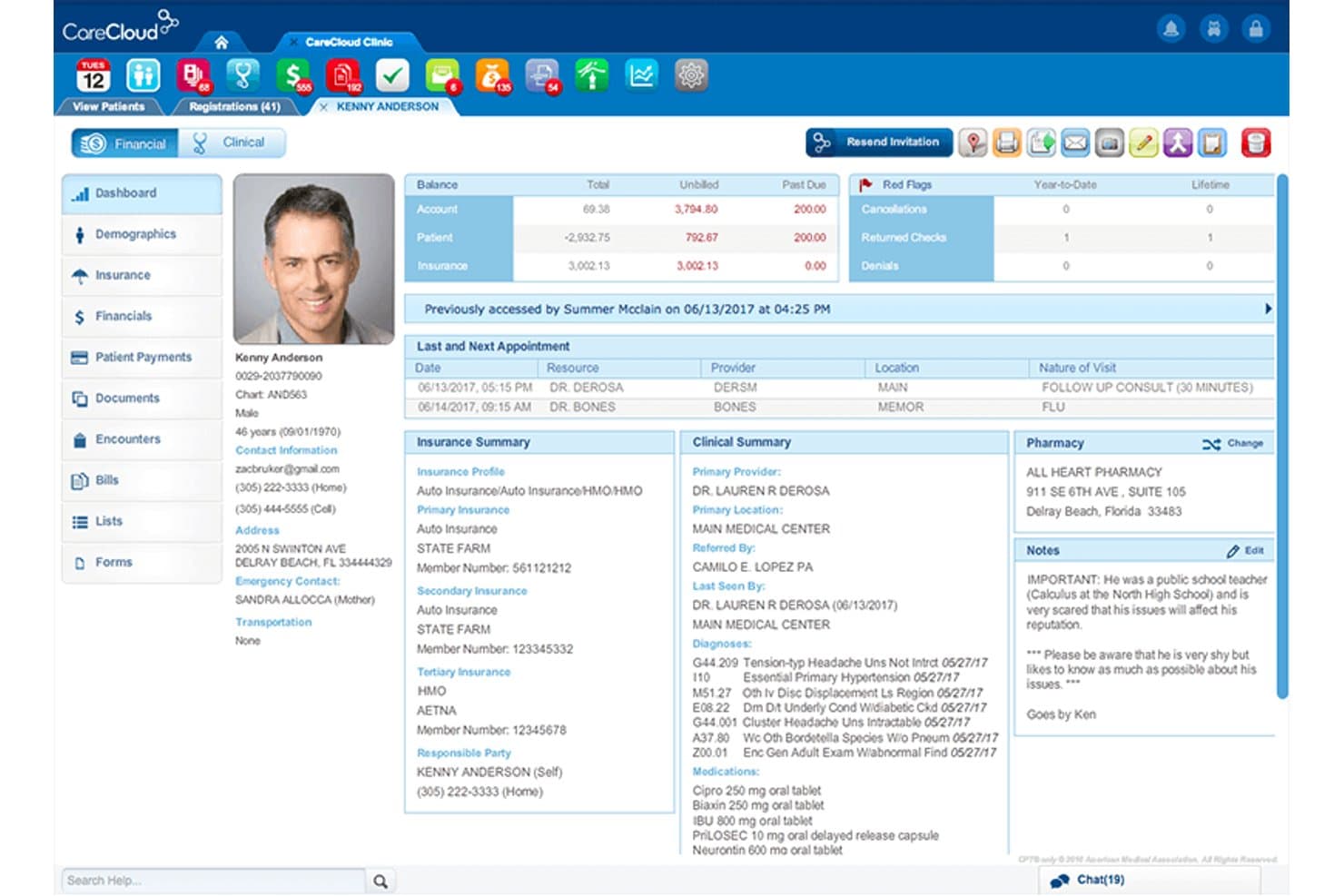
CareCloud automates medical claims and RCM with AI charting and inpatient management. CareCloud is a cloud-based EHR and revenue cycle management platform for ambulatory practices and hospitals, covering AI-assisted clinical documentation, inpatient patient management, medical billing, claims processing, and revenue cycle automation.
Who Is CareCloud Best For?
CareCloud suits hospitals, health systems, and ambulatory practices considering a MEDITECH Expanse alternative that need AI-assisted documentation, inpatient workflow management, and revenue cycle tools that can operate alongside an existing EHR.
Why CareCloud Is a Good MEDITECH Expanse Alternative
I picked CareCloud as a MEDITECH Expanse alternative because its Hospital RCM platform can operate alongside an existing EHR and practice management system without requiring a complete clinical system replacement. I particularly like how its pre-bill accuracy checks identify documentation gaps, coding inconsistencies, and payer-specific rule violations before claims are submitted. Its appeals automation also supports denied and underpaid claim recovery through automated appeals and follow-up workflows, reducing manual billing work while maintaining existing clinical operations.
CareCloud Key Features
- cirrusAI Notes: Captures provider-patient encounters in real time and generates structured SOAP notes, with support for more than 50 specialties and multilingual documentation.
- Patient flow intelligence: Dashboards monitor bed utilization, patient severity, and departmental throughput for inpatient settings.
- Connector integration library: Provides a single point for lab, EHR, and immunization integrations, with FHIR and CCDA data conversion built in.
- Operational command center: Live leadership dashboards surface KPIs, care standards, bottlenecks, and financial metrics in one view.
CareCloud Integrations
CareCloud lists Chiron Health for telehealth and immunization registry connections, including Alabama ImmPRINT, Arkansas WebIZ, and Illinois I-CARE, in its partner directory. Its CareCloud Connector platform also supports laboratory and EHR connections, along with FHIR R4 and CCDA standards for clinical data exchange.
Pros and Cons
Pros:
- RCM reporting earns favorable user comparisons
- Specialty charting receives positive reviewer feedback
- Scheduling and office-flow tools earn user praise
Cons:
- Calendar limits affect recurring appointments
- Users report slow claim follow-up
Learn more about CareCloud: 8Best for specialty care in a shared record
Epic
- Not available
- Pricing upon request
Visit WebsiteCustomer Rating:3.9/5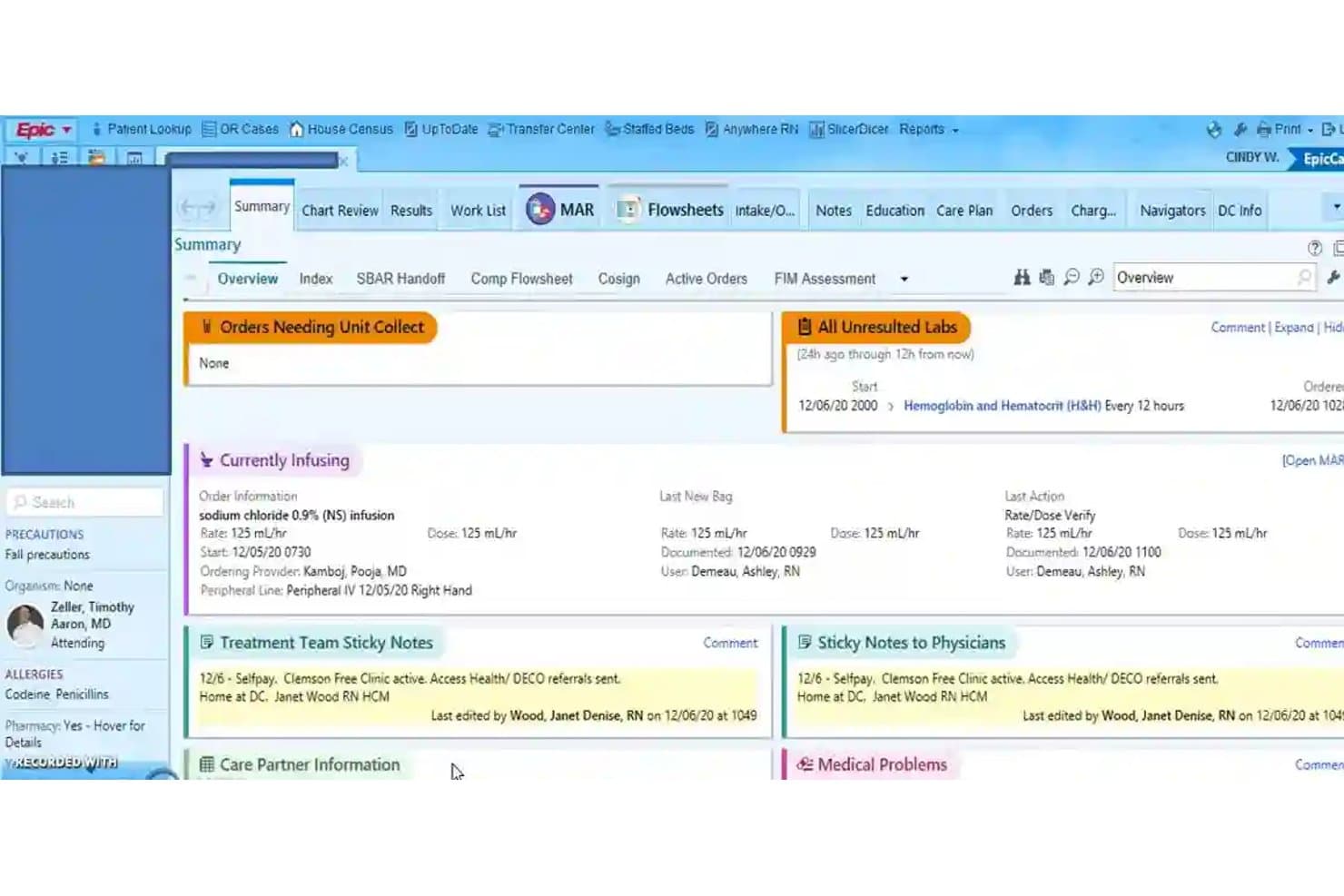
Epic generates AI-assisted clinical notes, diagnoses, orders, and patient summaries. Epic is an enterprise electronic health record platform for hospitals, health systems, and large specialty practices, covering AI-assisted clinical documentation, patient management, care coordination, revenue cycle management, and patient engagement.
Who Is Epic Best For?
Epic suits large hospitals and health systems considering a MEDITECH Expanse alternative that need specialty-specific clinical workflows across more than 60 care areas, shared patient records, and AI-assisted documentation.
Why Epic Is a Good MEDITECH Expanse Alternative
I picked Epic as a MEDITECH Expanse alternative because it supports over 60 medical specialties within a shared patient record. I particularly like its Cupid cardiology and Beacon oncology applications, which provide specialty-specific workflows across departments. Its Art AI charting tool also generates draft notes, diagnoses, and orders from patient-provider conversations, reducing manual documentation.
Epic Key Features
- Care Everywhere record exchange: Exchanges patient records across health systems daily, including with organizations on different EHR platforms.
- MyChart patient engagement suite: Gives patients tools for online scheduling, bill pay, secure messaging, and remote monitoring through a connected portal.
- Penny for revenue cycle: An AI tool built for revenue cycle and operations workflows, including billing automation and charge management.
- CDS Hooks clinical alerts: Lets organizations configure workflow-specific decision-support alerts based on custom criteria without modifying core clinical workflows.
Epic Integrations
Epic connects with Tempus for genomic test ordering and results, while Care Everywhere exchanges patient records across different EHR systems. It also supports custom integrations through FHIR APIs, HL7v2 interfaces, CDS Hooks, and other interoperability standards.
Pros and Cons
Pros:
- Custom chart templates support tailored workflows
- Care Everywhere helps teams access outside records
- Specialty workflows share one patient record
Cons:
- Routine scheduling can take many clicks
- New clinicians need substantial workflow training
Learn more about Epic: Best for EHR buyers seeking billing services
- Free demo available
- Pricing upon request
Visit WebsiteCustomer Rating:3.5/5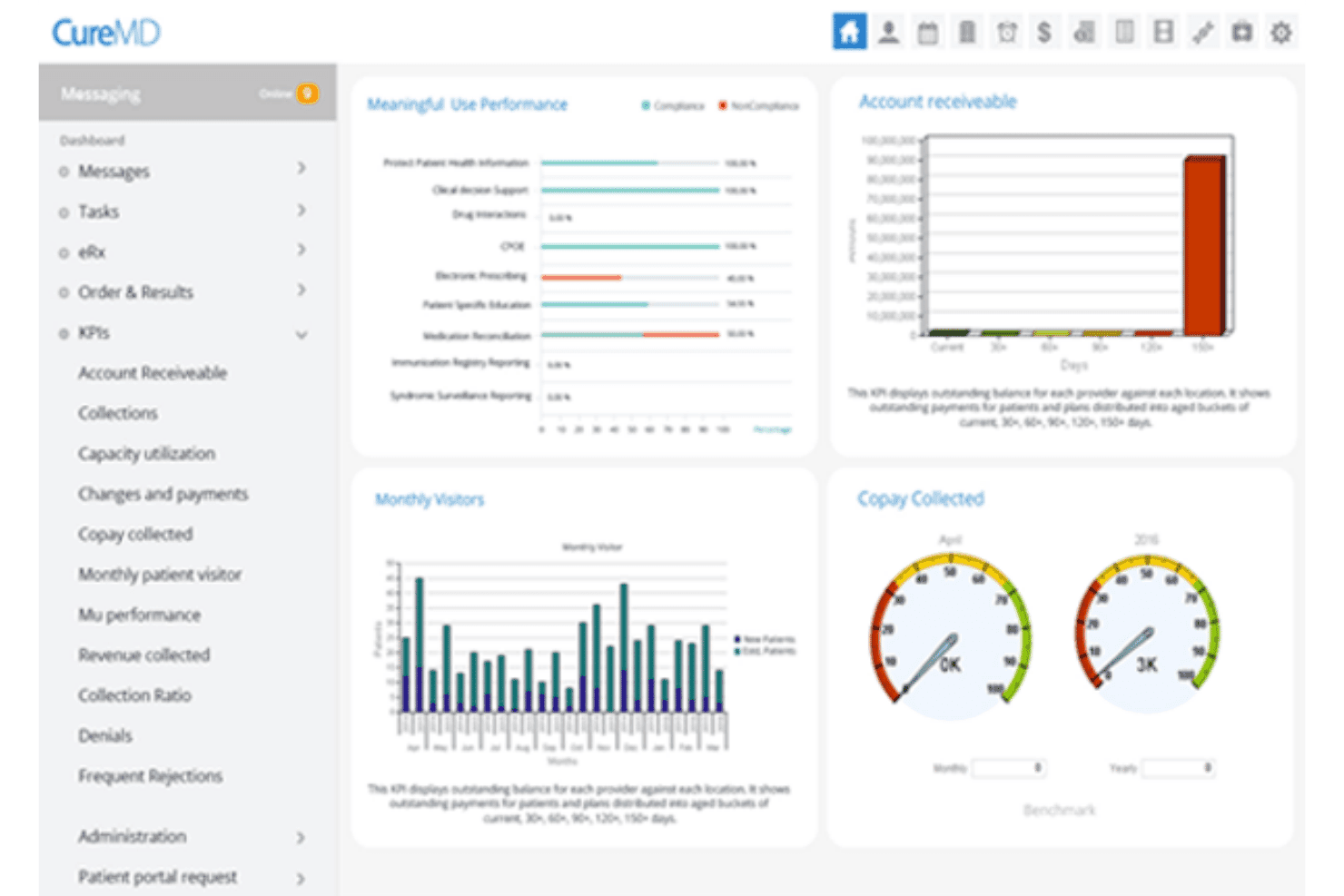
CureMD supports specialty EHR charting, appointment scheduling, medical billing, and RCM. CureMD is a cloud-based EHR and practice management platform for ambulatory practices, covering specialty-specific clinical documentation, appointment scheduling, medical billing, and revenue cycle management.
Who Is CureMD Best For?
CureMD suits ambulatory practices considering a MEDITECH Expanse alternative that need AI-assisted medical coding, customizable clinical workflows, and outsourced revenue cycle management.
Why CureMD Is a Good MEDITECH Expanse Alternative
I picked CureMD as a MEDITECH Expanse alternative because of its AI-powered medical coding and revenue cycle management services. I like that its AI Medical Coder assigns ICD-10, CPT, and HCPCS codes from clinical documentation, while experienced coders handle more complicated cases. CureMD also provides billing services covering claims submission, denial management, appeals, and accounts receivable follow-up. This gives ambulatory practices an option for managing clinical documentation, medical coding, and insurance reimbursement through one provider.
CureMD Key Features
- AI Scribe documentation: Listens to patient-provider conversations and generates specialty-tailored clinical notes for clinician review and approval.
- Specialty-specific EHR templates: Provides pre-built workflows, templates, and procedure documentation across more than 30 medical specialties.
- Patient portal with self-service tools: Lets patients schedule appointments, request refills, view lab results, pay bills, and message their care team.
- Mobile EHR app: Supports clinical record review, note creation, e-prescribing, and eligibility verification from iOS and Android devices.
CureMD Integrations
CureMD supports connections with Quest Diagnostics, Labcorp, Surescripts, and other laboratory, pharmacy, and healthcare systems. Its interoperability platform advertises more than 500 prebuilt connections and supports FHIR-compliant APIs and HL7 interfaces for custom healthcare data exchange.
Pros and Cons
Pros:
- AI scribe supports specialty-tailored documentation
- Reviewers praise customizable notes and templates
- Combined ambulatory charting and billing workflows
Cons:
- External orders and registry connections can falter
- Reviewers report lag, freezes, and crashes
Learn more about CureMD: Best for AI-assisted hospital documentation
- Free demo available
- Pricing upon request
Visit WebsiteCustomer Rating:3.2/5
Altera Sunrise supports AI-assisted charting, inpatient care coordination, and patient tracking. Altera Sunrise is an electronic health record platform for mid-sized hospitals and health systems, covering clinical documentation, inpatient care coordination, revenue cycle management, patient tracking, and AI-assisted charting.
Who Is Altera Sunrise Best For?
Altera Sunrise suits mid-sized hospitals and health systems considering a MEDITECH Expanse alternative that need AI-assisted clinical documentation, access to external patient records, revenue cycle management, and connected inpatient workflows.
Why Altera Sunrise Is a Good MEDITECH Expanse Alternative
I picked Altera Sunrise because its Sunrise Thread AI converts patient-provider conversations recorded on mobile devices into structured clinical notes for review. I also like how Sunrise Axon provides access to external clinical records from a network covering over 220 million patients, including laboratory results, imaging data, and health information exchanges, reducing manual record retrieval.
Altera Sunrise Key Features
- Sunrise Financial Manager billing hub: Consolidates billing requests, claims, and self-pay into a single tabbed workspace with embedded claim edits and automated denial management during remittance processing.
- Sunrise CarePath patient engagement: Gives patients mobile-first access to health records, secure messaging with care teams, self-scheduling, and customizable appointment reminders.
- Sepsis early-warning alerts: Calculates a risk score from live vital signs and lab results, then notifies clinicians when a configurable threshold is reached, alongside evidence-based sepsis order sets.
- FHIR R4 and HTI-1 compliance: Supports USCDI v3, SMART App Launch v2, and the HL7 CDA R2 eICR Implementation Guide, enabling third-party app integration through open APIs.
Altera Sunrise Integrations
Altera Sunrise has marketplace integrations with Apple Health app and MyLinks. It supports FHIR APIs and SMART App Launch for custom third-party integrations, with Sunrise Axon connecting to external records through Health Gorilla and TEFCA-aligned exchange.
Pros and Cons
Pros:
- Integrated billing and clinical workflows
- Editable templates support tailored clinical charting
- Ambient mobile notes reduce after-hours charting
Cons:
- Small fonts and lag disrupt chart review
- Older-note review takes extra clicks
Learn more about Altera Sunrise:
Andre alternativer til MEDITECH Expanse
Her er noen flere alternativer som ikke kom med på kortlisten min, men som likevel er verdt å se nærmere på:
- 11NextGen EnterpriseBest for specialty notes and charge capture
- 12TebraBest for patient discovery and online booking
- 13WebPTBest for rehab progress between visits
- 14Praxis EMRBest for one-to-one clinician onboarding
- 15TherapyNotesBest for outpatient psychotherapy practices
- 16eClinicalWorksBest for inpatient-outpatient record continuity
- 17Greenway IntergyBest for clinic-based care, not hospital IT
- 18PrognoCIS (Bizmatics)Best for clinics with varied lab connections
- 19Kipu HealthBest for addiction treatment workflows
How I Evaluate MEDITECH Expanse Alternatives
I split my evaluation into three parts. First, core functionality: I look for systems that can chart patient encounters electronically and exchange data with labs, pharmacies, and other providers—these carry the most weight. Then I check for standout features like specialty-specific content and unified practice management. Finally, I consider implementation support, pricing transparency, and scalability for ambulatory settings.
Core Functionality (Table Stakes For This List)
When I'm selecting tools for my list, I score each one on a scale from 0 (does not offer the functionality) to 5 (excels in this area) for each core functionality listed below. I then convert the total into a percentage to help assess each tool's overall fit, with extra weight on any functionalities I’ve deemed essential.
- Electronic Charting (Essential): I check for structured notes, usable templates, and specialty workflows that support documenting histories and visits without relying on free text alone.
- Interoperability (Essential): I look for secure exchange with labs, pharmacies, referral partners, and other records systems, so clinicians can access relevant data across care settings.
- Scheduling: I evaluate whether teams can coordinate appointments across providers or departments, manage patient flow, and send reminders.
- Billing and Claims: I assess charge capture, claims submission and tracking, and denial workflows to see how well billing tasks fit clinical operations.
- Patient Engagement: I check whether patients can access records, message care teams, and manage appointments through a portal or other online tools.
- Clinical Decision Support: I look for relevant allergy or interaction alerts, care reminders, and guidance that appears in the clinical workflow.
Once I have a list of tools that meet the criteria, I consider what sets each platform apart.
Differentiating Factors (What Sets Vendors Apart)
Here's how I compare and contrast different vendors:
Standout Features
I look for specialty-specific content—pre-built templates and order sets for areas like orthopedics or behavioral health that cut setup time and match real clinical workflows. A unified practice management suite matters too, since a single database for scheduling, charting, and billing removes the duplicate entry you get with bolted-on modules. I also check mobile charting with offline access, which is key for providers working across multiple sites.
Beyond Features
I check whether vendors offer structured data migration and phased go-live options, since moving off a hospital-centric system like MEDITECH mid-operation can stall billing if records don't carry over cleanly. Total cost of ownership matters too—I compare per-provider subscription pricing against hidden interface and training fees that inflate the real spend. Finally, I evaluate how easily a platform scales when you add providers or locations without forcing a full re-implementation.
Hvorfor se etter alternativer til MEDITECH Expanse?
Selv om MEDITECH Expanse er et godt valg av EHR-programvare, ser noen brukere etter alternativer som passer bedre til behovene deres. Det kan hende du ser etter et alternativ til MEDITECH Expanse fordi:
- Den uavhengige praksisen din trenger et enklere system med fokus på poliklinisk behandling
- Spesialiteten din trenger maler som passer til den daglige journalføringen
- Teamet ditt ønsker tydeligere priser før dere budsjetterer for implementeringen
- Du trenger en trinnvis migreringsplan som passer med pågående behandling og fakturering
- Organisasjonen din trenger en plattform som er dimensjonert for lokasjonene og bemanningen
Hvis noe av dette høres kjent ut, har du kommet til rett sted. Listen min inneholder flere EHR-alternativer som passer bedre for team som møter disse utfordringene med MEDITECH Expanse og ser etter alternativer.
Viktige funksjoner i MEDITECH Expanse
Her er de viktigste funksjonene i MEDITECH Expanse, slik at du kan sammenligne systemet med alternative løsninger:
- Klinisk dokumentasjon: Klinikere kan bruke tilpassbare journalvisninger, maler, ordresett og arbeidsflyter til å dokumentere konsultasjoner. Innhold spesifikt for ulike spesialiteter gir teamene strukturerte alternativer for registrering av pasienthistorikk og behandlingsplaner.
- Innhold for spesialiteter: Expanse Ambulatory tilbyr maler, ordresett, flytskjemaer og widgeter for mer enn 40 spesialiteter. Virksomheter kan tilpasse disse verktøyene til sine kliniske arbeidsflyter i stedet for å basere seg på generell dokumentasjon alene.
- Samhandling: Traverse Exchange samler pasientdata fra MEDITECH og andre EHR-systemer og organiserer dem i klinikernes arbeidsflyter. Konsolidert pasientoversikt viser relevant informasjon i én visning for beslutninger om behandling.
- Mobil tilgang: Den mobiltilpassede plattformen støtter sikker nettlesertilgang på bærbare datamaskiner, nettbrett og smarttelefoner. Legeappen Expanse Now støtter også rutineoppgaver og koordinering av behandling utenfor en stasjonær datamaskin.
- KI-støttet dokumentasjon: Omgivelsesintelligens kan generere kliniske konsultasjonsnotater fra samtaler mellom helsepersonell og pasienter. Klinikere kan gjennomgå de resulterende notatene som en del av dokumentasjonen, mens Expanse Navigator søker i og oppsummerer journaler, skannede dokumenter og eldre data.
- Pasientinvolvering: MyHealth-portalen og -appen lar pasienter og autoriserte fullmektiger få tilgang til helseopplysninger, kommunisere med behandlere, administrere avtaler og betale regninger. Expanse Patient Connect sender påminnelser, instruksjoner og oppfølging i begge retninger via pasientenes foretrukne kanaler.
- Virtuell behandling: Planlagte videokonsultasjoner kobles til arbeidsflyter i poliklinikken og pasientjournalen. Virtuell behandling ved behov støtter også akuttimeavtaler for nye og eksisterende pasienter.
- Timebestilling og praksisadministrasjon: Personalet kan bruke planleggingsrutenettet til å administrere innsjekking og utsjekking, planlegge oppfølgingsbesøk og fylle avbestilte timer. Systemet tilbyr også prediksjon av uteblivelser, oversikter og analyser.
- Verktøy for inntektssyklusen: Expanse kobler klinisk dokumentasjon sammen med arbeidsflyter for koding, fakturering og krav. Verktøyene omfatter elektronisk forhåndsgodkjenning, kostnadsestimater i sanntid, faktureringsvarsler, støtte for avviste krav og klager samt oppfølging av utestående fordringer.
Kostnader og priser for alternativer til MEDITECH Expanse
Prisene varierer etter funksjoner, antall behandlere, tilleggstjenester og omfanget av implementeringen. Mange alternativer til MEDITECH Expanse bruker ikke standardiserte abonnementsnivåer, men disse intervallene gir en generell veiledning for budsjettering.
Sammenligningstabell for abonnementsnivåer for alternativer til MEDITECH Expanse
| Abonnementstype | Gjennomsnittspris | Vanlige funksjoner |
|---|---|---|
| AbonnementstypeGratisabonnement | Gjennomsnittspris$0, når tilgjengelig | Vanlige funksjonerGrunnleggende journalføring, et begrenset antall pasientjournaler og selvbetjent brukerstøtte. |
| AbonnementstypePersonlig abonnement | Gjennomsnittspris$25-$100 per behandler/måned | Vanlige funksjonerTimebestilling, elektronisk journalføring, pasientportal og elektronisk forskrivning. |
| AbonnementstypeForretningsabonnement | Gjennomsnittspris$100-$600 per behandler/måned | Vanlige funksjonerPraksisadministrasjon, arbeidsflyter for krav, rapportering og integrasjoner. |
| AbonnementstypeVirksomhetsabonnement | Gjennomsnittspris$600+ per behandler/måned eller pristilbud etter avtale | Vanlige funksjonerImplementering på flere lokasjoner, grensesnitt for samhandling, implementeringstjenester og dedikert brukerstøtte. |