


RXNT vs. athenahealth: Comparison and Expert Reviews for 2026
RXNT and athenahealth both promise to make clinical and practice management workflows easier, but the day-to-day experience is where the decision gets interesting. Keep reading for the practical tradeoffs medical leaders should know.

We review tools independently, and commissions help fund our testing. See our transparency policy, our methodology, or suggest a tool.
A growing patient load should not automatically mean more billing follow-ups, scheduling bottlenecks, and administrative work. Yet the platform behind your practice can either absorb that complexity or quietly add to it.
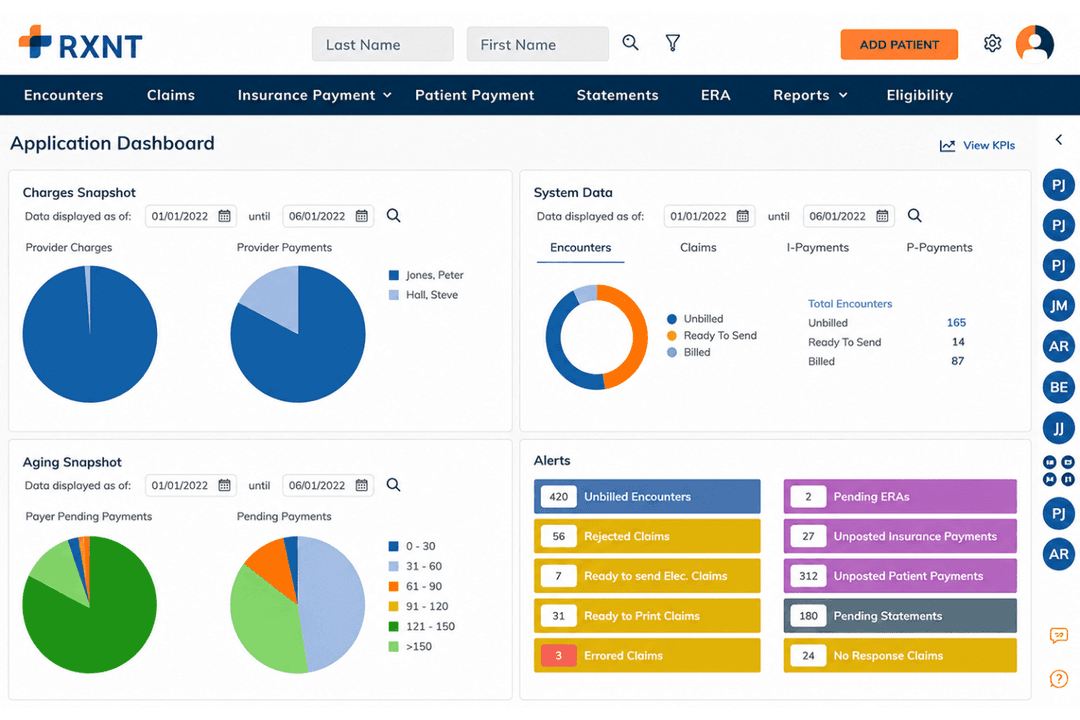
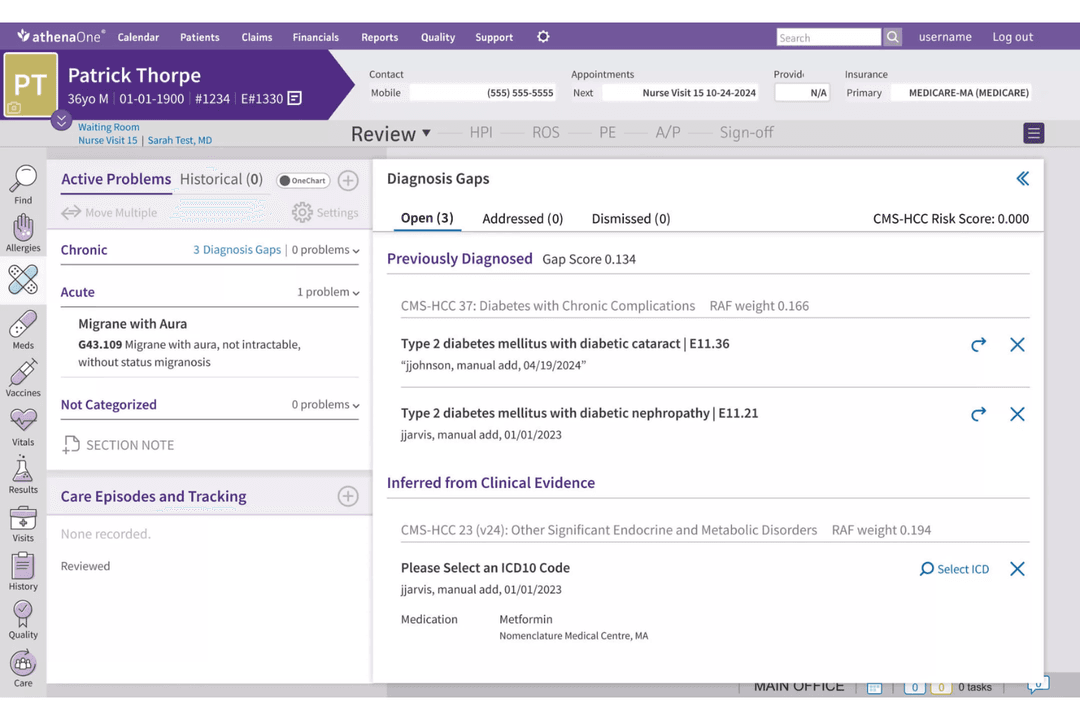
RXNT and athenahealth are both EMR software platforms that combine clinical and practice management workflows, but they operate under very different models. RXNT brings EHR, e-prescribing, scheduling, patient engagement, billing, and practice management into one suite, while athenahealth leans into AI automation and service-backed operations.
In this comparison, I’ll examine their features, pricing, usability, security, strengths, limitations, and ideal use cases to help you decide which platform better supports the way your practice manages patient care and daily operations.
RXNT
4.3/5
- Free demo + free expert consultation available
- Pricing upon request
athenahealth
3.4/5
- Free demo available
- Pricing upon request
Why Trust Our Software Recommendations
6,700+
Reviews
20
Industry experts
16+
Evaluation factors
14
Years
Our team has been testing and reviewing software since 2012. As medical practice leaders ourselves, we know how difficult—and important—it is to choose the right software.
For this guide, we evaluated tools using hands-on testing and independent research, scoring tools using our selection criteria.
Our reviews reflect our human editorial judgment, not a sales pitch.
| RXNT | athenahealth | |
|---|---|---|
| Free Trial | Free demo + free expert consultation available | Free demo available |
| Pricing | Pricing upon request | Pricing upon request |
RXNT vs. athenahealth Pricing & Hidden Costs
RXNT is easier to price upfront because it publishes per-provider rates for its core products and bundles. Onboarding, data migration, support, cloud access, and regular upgrades are included, which keeps the starting cost fairly predictable. However, most plans require an annual contract, while extras such as EPCS, lab interfaces, patient reminders, electronic faxing, and printed claims or statements can raise the final bill.
athenahealth, by contrast, does not publish standard pricing and requires practices to request a customized quote. That makes it harder to estimate the true cost before speaking with sales, especially when implementation, revenue cycle services, interfaces, support, and optional capabilities may vary by configuration. I would ask both vendors for an itemized quote covering contract terms, add-ons, usage fees, implementation services, and future price increases. RXNT gives you more visibility from the start, while athenahealth requires a closer look at the fine print.
| RXNT | athenahealth | |
|---|---|---|
| API | Yes | Yes |
| Appointment Scheduling | Yes | Yes |
| Audit Management | Yes | Yes |
| Compliance Tracking | Yes | Yes |
| Customer Management | No | Yes |
| Data Export | Yes | Yes |
| Data Import | Yes | Yes |
| Electronic Prescribing | Yes | Yes |
| External Integrations | Yes | Yes |
| HIPAA Compliance | Yes | Yes |
| Multi-User | Yes | Yes |
| Notifications | Yes | Yes |
| Patient Management | Yes | Yes |
| Regulatory Alerts | Yes | No |
| Risk Assessment | Yes | No |
| Integration | RXNT | athenahealth |
|---|---|---|
| IntegrationQuest Diagnostics | RXNT✅ | athenahealth✅ |
| IntegrationLabCorp | RXNT✅ | athenahealth✅ |
| IntegrationCGM LabDaq | RXNT✅ | athenahealth✅ |
| IntegrationAeon | RXNT✅ | athenahealth❌ |
| IntegrationSurescripts | RXNT✅ | athenahealth✅ |
| IntegrationHealth Gorilla | RXNT❌ | athenahealth✅ |
| IntegrationGoogle Calendar | RXNT✅ | athenahealth❌ |
| IntegrationHealthCollab | RXNT✅ | athenahealth❌ |
| IntegrationSalesforce | RXNT❌ | athenahealth✅ |
| IntegrationAPI | RXNT✅ | athenahealth✅ |
Both RXNT and athenahealth support the core connections needed for clinical, prescribing, billing, and data exchange workflows. RXNT focuses on practical integrations for everyday ambulatory operations, while athenahealth supports a different mix of healthcare and enterprise connections. Overall, the better fit depends on the external systems your organization already uses.
| Factor | RXNT | athenahealth |
|---|---|---|
| FactorCompliance and Certifications | RXNTHIPAA compliant, with SOC 2 Type II-certified data centers, ONC-certified health IT, Surescripts- and EPCS-certified prescribing software, and support for MACRA, MIPS, and MVPs. | athenahealthMaintains HITRUST CSF, PCI DSS, EHNAC, EPCS, DirectTrust, and ONC certifications across applicable products and services. |
| FactorData Protection and Threat Monitoring | RXNTProtects PHI through encryption, access controls, vulnerability management, regular security assessments, and Azure Cloud Defender for active threat detection and response. | athenahealthUses encryption, access auditing, ongoing risk controls, and safeguards aligned with HIPAA and the NIST Cybersecurity Framework. |
| FactorAccess and Audit Controls | RXNTApplies unique-user access controls and auditable system activity to help practices trace access to electronic health information and investigate sensitive actions. | athenahealthRequires all athenaOne users to enable multi-factor authentication or single sign-on and records critical access activity for review. |
| FactorControlled-Substance Prescribing | RXNTUses EPCS certification, identity proofing, administrator-approved access, and two-factor or biometric authentication to secure controlled-substance prescribing. | athenahealthHolds third-party EPCS certification and combines controlled-substance prescribing with platform-wide multi-factor authentication or single sign-on requirements. |
| FactorReliability and Maintenance | RXNTProvides 24/7 cloud access with automatic updates and security patches, reducing the need for local server maintenance while keeping protections current. | athenahealthMaintains a public status page that tracks athenaOne services, integrations, prescribing, APIs, and other system components during incidents and maintenance. |
Both platforms offer mature healthcare security, but RXNT’s controls are especially practical for ambulatory organizations that need close oversight of clinical access and controlled-substance prescribing. Its SOC 2 Type II-certified data centers, Azure Cloud Defender, ONC-certified health IT, Surescripts- and EPCS-certified prescribing software, identity proofing, administrator-approved access, and biometric authentication provide safeguards beyond basic HIPAA compliance. athenahealth carries a broader certification portfolio and provides more public visibility into service status, while RXNT makes a stronger case for prescribing governance and direct control over sensitive workflows.
| Factor | RXNT | athenahealth |
|---|---|---|
| FactorUser Interface and Workflow | RXNTBrings its clinical and practice management tools into one cloud-based suite, although teams with established documentation and billing processes may need time to adjust. | athenahealthBrings clinical, billing, and patient engagement workflows into one cloud interface, using personalized templates and AI tools to surface relevant tasks and information. |
| FactorOnboarding | RXNTIncludes a kickoff process, dedicated onboarding, free data migration, custom template assistance, and product training, with timing depending on the selected products, data, and workflow complexity. | athenahealthUses a phased implementation process to assess needs, configure workflows, train staff, and optimize the system after launch, although setup can take longer than with plug-and-play products. |
| FactorWorkflow Customization | RXNTSupports customizable clinical templates, forms, and reports, though highly specialized workflows may feel less flexible. | athenahealthSupports specialty templates, macros, order sets, and configurable workflows for more complex setups. |
| FactorCustomer Support | RXNTProvides free, US-based phone and email support through separate clinical and practice management teams during published weekday hours. | athenahealthProvides 24/7 technical support, live and on-demand training, performance coaching, a Customer Success Manager, and an online Success Community. |
| FactorMobile Experience | RXNTExtends core workflows to free iOS and Android apps for e-prescribing, scheduling, charge capture, patient check-in, and patient access, with facial or fingerprint authentication on supported devices. | athenahealthExtends EHR workflows to its mobile app for patient records, documentation, templates, macros, and order sets, while athenaPatient provides mobile access for patients. |
RXNT may still take time to learn when an organization brings over deeply established workflows; however, included migration, custom template support, training resources, and direct US-based assistance make the transition more manageable. athenahealth, meanwhile, offers a more layered implementation and coaching model with broader AI-assisted workflows and around-the-clock technical support. Overall, RXNT provides a more straightforward onboarding and support package, while athenahealth may suit teams willing to take on a more involved implementation for a larger service ecosystem.
RXNT
- Connects EMR, e-prescribing, scheduling, billing, and patient engagement workflows
- Includes hands-on onboarding, free data migration, and custom template setup
- Supports more than 45 specialties and ambulatory organizations of all sizes
- Limited customization may restrict established documentation and billing processes
- New releases may occasionally introduce bugs or temporary instability
- Not designed for hospitals, inpatient facilities, dental offices, or some urgent care settings
athenahealth
- The user-friendly interface makes navigation easy for your team.
- Reliable customer support helps resolve issues quickly.
- Its efficient scheduling tools simplify appointment management.
- Some users find the initial setup process time-consuming.
- Its limited customization options may not fit every practice's unique needs.
- Occasional updates can temporarily disrupt your workflow.
RXNT
- Healthcare ProfessionalsIndividual providers can use RXNT to manage documentation, prescribing, scheduling, patient communication, and billing without relying on a separate product for each task.
- Ambulatory Care OrganizationsThe platform is built around outpatient workflows, including patient records, appointments, prescriptions, claims, and everyday practice operations.
- Primary Care ProvidersPrimary care organizations can use RXNT for charting, medication management, preventive care documentation, patient engagement, and billing across a broad range of routine encounters.
- Mental and Behavioral Health ProvidersPsychiatry, mental health, and behavioral health organizations can manage documentation, prescribing, scheduling, patient communication, and reimbursement workflows within the system.
- Multi-Specialty and Multi-Location OrganizationsConnected patient records, scheduling, billing, and administrative tools can help larger ambulatory groups coordinate care across different specialties and locations.
- Medical Billing CompaniesBilling companies and central billing offices can use RXNT to manage claims, payments, accounts receivable, reporting, and revenue cycle workflows for multiple healthcare clients.
athenahealth
- Family MedicineAthenahealth's scheduling and billing tools help your team manage high patient volumes efficiently.
- Specialty ClinicsThe software's user-friendly interface allows specialists to focus more on patient care instead of administrative tasks.
- Small PracticesAthenahealth's reliable support and easy navigation make it ideal for practices with limited IT resources.
- Outpatient ServicesEfficient appointment management tools bolster your team's workflow in busy outpatient settings.
- Administrative TeamsAthenahealth's intuitive system simplifies scheduling, referrals, billing, and medical records requests, reducing your team's workload.
- Health Care StartupsThe easy setup and reliable support are perfect for new practices looking to establish themselves quickly.
Who Should Use RXNT, And Who Should Use athenahealth?
If you want an integrated platform that brings EHR, e-prescribing, scheduling, billing, and patient engagement into one system, RXNT is likely the better fit. It works well for ambulatory organizations of different sizes, including solo providers, specialty practices, billing companies, and multi-location groups that want closely connected clinical and financial workflows.
If, instead, you need AI-assisted administration, service-backed revenue cycle support, and broader interoperability, athenahealth may be the stronger choice. It is well suited to ambulatory practices that want their clinical software paired with more operational guidance across billing, scheduling, and patient management.
| RXNT | athenahealth | |
|---|---|---|
| Implementation Approach | RXNT Includes onboarding, data migration, custom template development, product training, and ongoing US-based support with its subscriptions. | athenahealth Uses a more phased implementation process supported by training, customer success resources, and continued workflow optimization. |
| Integration Strategy | RXNT Focuses on practical ambulatory connections for laboratories, prescribing, billing, scheduling, and clinical data exchange. | athenahealth Emphasizes broader interoperability across healthcare networks, enterprise systems, APIs, and third-party applications. |
| Pricing Approach | RXNT Publishes per-provider pricing for its products and bundles, which makes starting costs easier to estimate before contacting sales. | athenahealth Uses custom pricing based on the products, services, and implementation requirements included in each organization’s setup. |
| Product Structure | RXNT Lets organizations adopt individual tools or combine EHR, e-prescribing, scheduling, billing, and practice management in a broader suite. | athenahealth Brings EHR, practice management, patient engagement, and related operational services together through the athenaOne platform. |
| Revenue Cycle Model | RXNT Provides software-led tools for claims, eligibility checks, payment posting, accounts receivable, denials, and financial reporting. | athenahealth Pairs billing technology with service-backed revenue cycle support, administrative automation, and assistance with claims-related work. |
| Clinical and Practice Management | Both combine EHR functionality with scheduling, billing, patient management, and other tools used in everyday practice operations. |
|---|---|
| Cloud and Mobile Access | Both are cloud-based and provide mobile options for accessing key clinical and administrative workflows away from a desktop. |
| E-Prescribing | Both offer certified electronic prescribing for sending prescriptions to pharmacies and reviewing relevant medication information. |
| HIPAA Compliance | Both platforms support HIPAA-compliant workflows and apply security controls designed to protect electronic health information. |
| Patient Engagement | Each provides a patient portal for accessing health information, communicating with the practice, and managing parts of the care experience. |