

Orientarea în domeniul tratamentului abuzului de substanțe poate fi dificilă, mai ales când vine vorba despre gestionarea dosarelor pacienților și respectarea cerințelor de conformitate. Aveți nevoie de un software EMR de încredere, care să păstreze totul organizat și accesibil. Din experiența mea, software-ul potrivit poate face o diferență semnificativă în activitățile dumneavoastră zilnice.
Am testat și analizat diverse soluții EMR pentru tratamentul abuzului de substanțe, pentru a vă ajuta să găsiți cea mai potrivită opțiune pentru echipa dumneavoastră. Scopul meu este să vă ofer o listă imparțială și bine documentată cu cele mai bune opțiuni, concentrându-mă pe ceea ce contează cu adevărat pentru dumneavoastră.
În acest articol, veți descoperi software-uri care pot contribui la reducerea problemelor frecvente, la îmbunătățirea îngrijirii pacienților și la asigurarea conformității. Să analizăm cele mai bune opțiuni disponibile astăzi.
Why Trust Our Software Recommendations
6,700+
Reviews
20
Industry experts
16+
Evaluation factors
14
Years
Our team has been testing and reviewing software since 2012. As medical practice leaders ourselves, we know how difficult—and important—it is to choose the right software.
For this guide, we evaluated tools using hands-on testing and independent research, scoring tools using our selection criteria.
Our reviews reflect our human editorial judgment, not a sales pitch.
Tabel comparativ al software-urilor EMR pentru tratamentul abuzului de substanțe
Score legend (out of 5)
- Excellent4.5–5
- Good4–4.4
- Average3–3.9
- Below average2–2.9
- Poor1–1.9
Sorted by: Default
| Tool | Starting Price | Website | |||||||
|---|---|---|---|---|---|---|---|---|---|
Best for mental and behavioral health charting | Not rated | Not rated | 3 | 2 | 4 | 3 | Not rated | $335/month Free demo available | Book Demo |
Best for detailed charting | 2.8 out of 5 | 2 | 3 | 3 | 4 | 3 | 2 | $99/month 15-day free trial | Website |
Best for outcome tracking tools | 3.5 out of 5 | 2 | 4 | 4 | 4 | 4 | 3 | Pricing upon request Free demo available | Website |
Best for AI-powered note generation | 2.8 out of 5 | 2 | 4 | 3 | 4 | 2 | 2 | Pricing upon request Free demo available | Website |
Best for simplified documentation | 3.3 out of 5 | 2 | 3 | 4 | 4 | 4 | 3 | Pricing upon request Free demo available | Website |
Best for MAT workflows and addiction care ops | 3.2 out of 5 | 3 | 4 | 3 | 3 | 3 | 3 | Pricing upon request Free demo available | Website |
Best for post-discharge alumni engagement tools | 3.5 out of 5 | 3 | 4 | 3 | 4 | 4 | 3 | Pricing upon request Free demo available | Website |
Best for menu-driven SUD note templates | 3.5 out of 5 | 3 | 4 | 3 | 4 | 4 | 3 | $35/month 30-day free trial + free demo available | Website |
Best for unified admissions, care, and billing | 3.7 out of 5 | 3 | 3 | 4 | 5 | 4 | 3 | Pricing upon request Free demo available | Website |
Best for user-friendly and intuitive interface | 4.2 out of 5 | 4 | 4 | 4 | 5 | 4 | 4 | Pricing upon request Not available | Website |


Recenzii ale celor mai bune software-uri EMR pentru tratamentul abuzului de substanțe
 1Best for mental and behavioral health charting
RXNT
- Free demo available
- From $335/month(billed annually)
Visit WebsiteCustomer Rating:4.3/5
A screenshot of the RXNT substance abuse EMR software interface RXNT provides an electronic health record (EHR) system that's designed with a strong emphasis on mental and behavioral health functionality. RXNT is cloud-based, ONC-certified medical software. It includes a comprehensive set of features and tools that cater specifically to the unique needs of mental and behavioral health providers.
Why I Picked RXNT: I selected RXNT for its unique focus on mental and behavioral health functions within its EHR software. It sets itself apart by prioritizing the specific needs of this sector, with specialized tools like customizable behavioral health templates and integrated patient assessment tools. This distinct emphasis makes RXNT the best choice for robust mental and behavioral health functionality.
Standout Features & Integrations:
RXNT’s feature suite is robust, with capabilities like patient reminders, telehealth support, customizable mental health templates, e-prescribing, and client portal access. It offers integrations with popular software platforms, including QuickBooks for accounting and various laboratory management systems for smooth data transition.
Pros and Cons
Pros:
- Reliable integration with popular software platforms
- Robust feature suite including telehealth and customizable templates
- Tailored to the specific needs of mental and behavioral health providers
Cons:
- The interface may take some time to navigate effectively
- Might be expensive for smaller practices
- No free version is available, only a free demo
Learn more about RXNT:

OptiMantra lets providers document patient visits with customizable SOAP templates, questionnaires, and clinical notes in one place. OptiMantra is an electronic medical records (EMR) and practice management platform designed for a variety of healthcare specialties. It helps clinics and providers organize patient information, manage clinical workflows, and support operational needs from one system. With its specialty-specific tools, it adapts to practices that focus on substance abuse and related behavioral care.
Why I Picked OptiMantra: I picked OptiMantra because of its detailed charting and customizable consult templates that support behavioral and psychiatric treatment. These tools let you capture patient history, track progress, and document care plans in a structured way that matches the needs of substance abuse treatment. The software also allows pre-appointment questionnaires and intake forms that help you gather critical information about patients’ health, lifestyle, and treatment history before they even walk in, which saves time and improves accuracy in assessments.
Standout Features & Integrations:
OptiMantra also offers an integrated telehealth feature, which lets you meet patients remotely through HIPAA- and PHIPA-compliant video sessions. For substance abuse care, where patients may face stigma or accessibility issues, having secure virtual visits ensures continuity of care and better patient engagement. Integrations include Surescripts, LabCorp, Mercy Diagnostics, Quest Diagnostics, Access Medical Lab, Clinical Labs of Hawaii, Rupa Health, SimonMed, Boston Heart Diagnostics, Fullscript, Zoom, and Stripe.
Pros and Cons
Pros:
- Telehealth built in and HIPAA compliance
- Pre-appointment intakes save time for providers
- Customizable templates fit different treatment needs
Cons:
- Mostly caters to US-based practices
- Some features feel complex for small practices
Learn more about OptiMantra: Best for outcome tracking tools
- Free demo available
- Pricing upon request
Visit WebsiteCustomer Rating:4.3/5
ClinicTracker offers a comprehensive dashboard for managing clinical workflows. ClinicTracker delivers a tailored electronic medical record system built specifically for behavioural-health and substance-abuse treatment providers, offering an all-in-one EHR, billing, and practice-management platform. If your clinic runs addiction treatment, mental-health counseling, or substance-use programs, this is software that speaks directly to the unique workflows and compliance needs you face.
Why I Picked ClinicTracker
I picked ClinicTracker for its ability to cater specifically to substance abuse treatment centers with features like outcome tracking tools and collaboration options. The outcome tracking tools allow your team to monitor patient progress effectively, which is crucial in addiction treatment. I also appreciate the collaboration tools, such as secure messaging and telehealth options, which enhance patient engagement and facilitate better communication within your team.
ClinicTracker Key Features
In addition to its specialized tools for substance abuse treatment, I also like that it offers:
- Custom Form Builder: Allows your team to create and modify forms tailored to specific clinical and administrative needs.
- Automated Appointment Reminders: Helps reduce no-show rates by sending reminders to patients via email or text.
- ePrescribing: Streamlines the prescription process by allowing clinicians to send prescriptions electronically directly to pharmacies.
- Patient Portal: Provides patients with access to their health information, appointment scheduling, and direct communication with providers.
ClinicTracker Integrations
Integrations include Azure, Clinicom, AMBIR, Microsoft, Topaz, Soft Trac, and Zoom.
Pros and Cons
Pros:
- Telehealth integration expands access to remote care.
- Strong revenue cycle management streamlines billing processes.
- It supports a wide range of behavioral-health workflows (mental health, substance abuse, social services).
Cons:
- The initial setup and onboarding process can demand significant time and effort, particularly for customizing workflows.
- Limited native integration options compared to competitors.
Learn more about ClinicTracker: Best for AI-powered note generation
- Free demo available
- Pricing upon request
Visit WebsiteCustomer Rating:5/5
NextGen Healthcare dashboard displaying recent activity summaries and financial reporting tools. NextGen is a cloud-based electronic health record and practice management system that supports addiction treatment programs with a robust suite of clinical and operational tools. It combines AI-driven documentation, flexible specialty-specific templates, and patient engagement tools to help practices enhance both care delivery and financial outcomes.
Why I Picked NextGen: I picked NextGen for its ambient AI capabilities that can auto-generate SOAP notes from conversations—cutting down on documentation time by hours each day. What also stood out is its wide-ranging support for behavioral health, including features tailored for addiction care and an integration marketplace with tools like Medsender, Relaymed, Klara, and CallMyDoc. These make NextGen a smart pick for clinics that need flexibility, compliance, and automation all in one platform.
Standout Features & Integrations:
Key features include mobile-friendly AI note capture, rules-based RCM automation, self-scheduling, population health tracking, and specialty-specific templates. Integrations cover a wide ecosystem, including Relaymed, Medsender, Klara, Surgimate, Transform9, CallMyDoc, rater8, Arcadia, and more.
Pros and Cons
Pros:
- Customizable templates and workflows for various medical practices
- Wide-ranging integrations and API marketplace
- Ambient AI for hands-free SOAP note generation
Cons:
- Feature set may be excessive for small practices
- Learning curve with more advanced capabilities
Learn more about NextGEN: Best for simplified documentation
- Free demo available
- Pricing upon request
Visit WebsiteCustomer Rating:5/5
Athenahealth's platform has a patient history section, which simplifies documentation of the patient's medical background and previous treatments. Athenahealth offers a comprehensive cloud-based healthcare platform known as athenaOne, which integrates a variety of software and services aimed at enhancing clinical effectiveness, patient experience, and financial performance for healthcare providers.
Why I Picked Athenahealth: I liked its simplified documentation process, which reduces the time and distractions associated with patient encounters. This is particularly beneficial in substance abuse treatment settings where detailed and accurate documentation is crucial for tracking patient progress and ensuring compliance with treatment protocols. The software also offers customizable workflows with best-practice templates, macros, and tools that can be tailored to the specific needs of substance abuse treatment.
Standout Features & Integrations:
Another notable feature of athenaOne is its mobile documentation capability, which allows healthcare providers to document patient encounters on the go using the athenaOne app. This feature is particularly useful for substance abuse treatment providers who may need to access and update patient records in various settings, including outpatient clinics and community-based programs. Integrations include NextPatient, DocResponse, Yosi Health, Secondwave, Recovery Plus, TSI, VaxCare, Fullscript, QueueDr, and CallMyDoc.
Pros and Cons
Pros:
- Customizable templates for various medical specialties
- Cloud-based system for remote access
- Wide range of features for healthcare management
Cons:
- Limited customization options for certain workflows
- Due to its extensive features, new users may experience a learning curve
Learn more about Athenahealth: 6Best for MAT workflows and addiction care ops
Kipu
- Free demo available
- Pricing upon request
Visit WebsiteCustomer Rating:4.7/5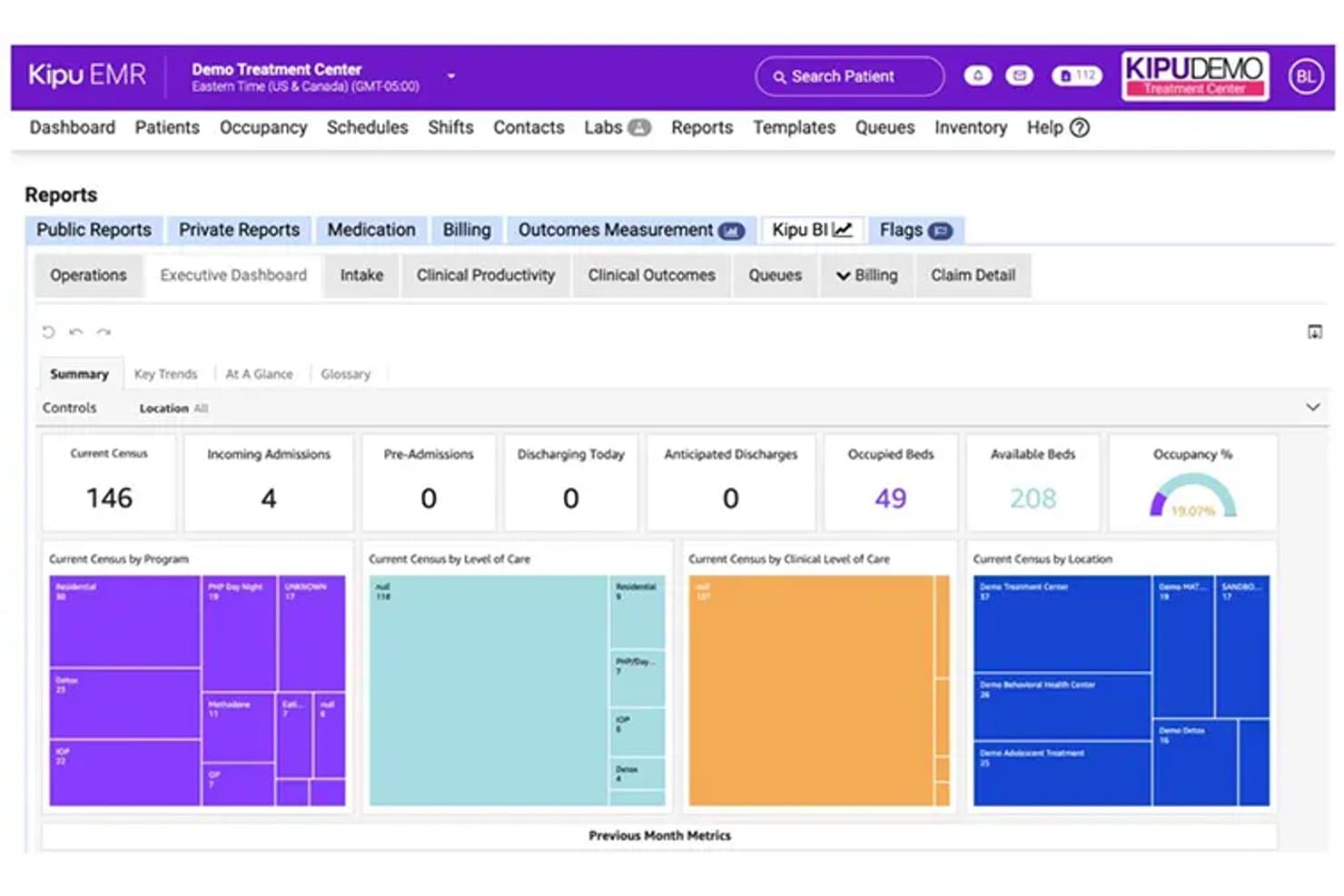
Kipu tracks census, admissions, and occupancy in one executive dashboard. Kipu is a behavioral health EMR built for addiction treatment and substance use disorder programs, covering clinical documentation, medication management, MAT workflows, scheduling, outcome assessments, and revenue cycle management.
Who Is Kipu Best For?
Kipu is a strong fit for addiction treatment centers and substance use disorder programs that need purpose-built MAT workflows, integrated medication management, and clinical documentation in a single platform.
Why I Picked Kipu
I picked Kipu as one of the best because its MAT workflows are genuinely built for how addiction treatment programs operate—not bolted on. I particularly like the diversion control and call-back workflows for Suboxone, Methadone, and Sublocade, paired with DrFirst e-prescribing and PDMP access, which keeps your controlled-substance documentation tight. The AI-powered Chart Snapshot also adds real clinical value by generating ASAM and LOCUS level-of-care recommendations directly from patient documentation.
Kipu Key Features
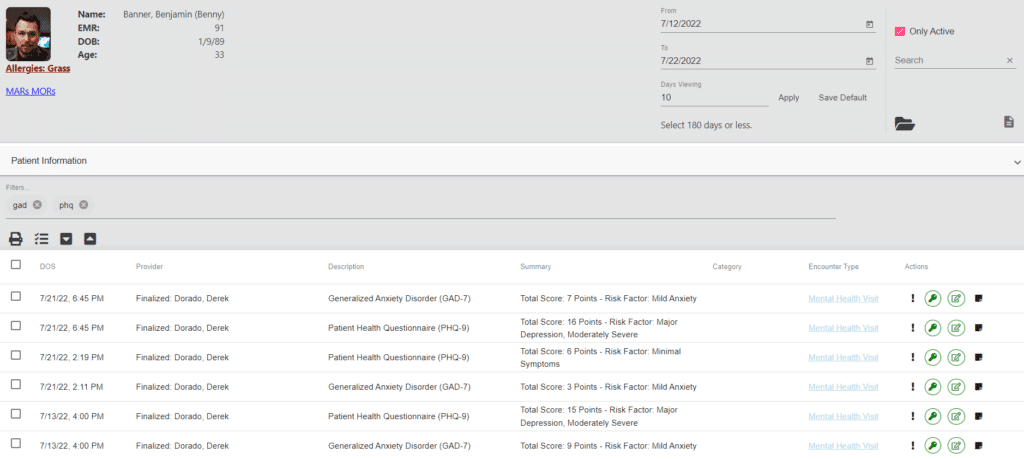
- Outcome assessment library: Access a built-in library of SUD-relevant assessments, including BAM, GAD-7, PHQ-9, DASS-21, and RAS, configurable by location.
- AI-powered note assistant: Transcribes provider-patient conversations and generates structured notes in SOAP, DAP, or progress-note formats with suggested diagnosis codes.
- Occupancy and bed management: View real-time room and bed availability by location, including upcoming openings tied to scheduled discharges.
- Compliance management system: Automate recurring compliance tasks, store permission-based compliance documents, and generate audit-ready reports for Joint Commission, CARF, and state requirements.
Kipu Integrations
Kipu lists integrations with DrFirst for e-prescribing and PDMP access, plus SciLog and Ivek dispensing pumps. It also lists Google Analytics, Gmail, and Outlook, and offers 41 APIs for custom connectivity.
Pros and Cons
Pros:
- Bed management helps coordinate residential capacity
- MAT diversion workflows support medication accountability
- Reviewers praise behavioral-health charting and customizable forms
Cons:
- Users report lag and occasional chart freezes
- Treatment planning can feel difficult to navigate
Learn more about Kipu: Best for post-discharge alumni engagement tools
- Free demo available
- Pricing upon request
Visit WebsiteCustomer Rating:4.7/5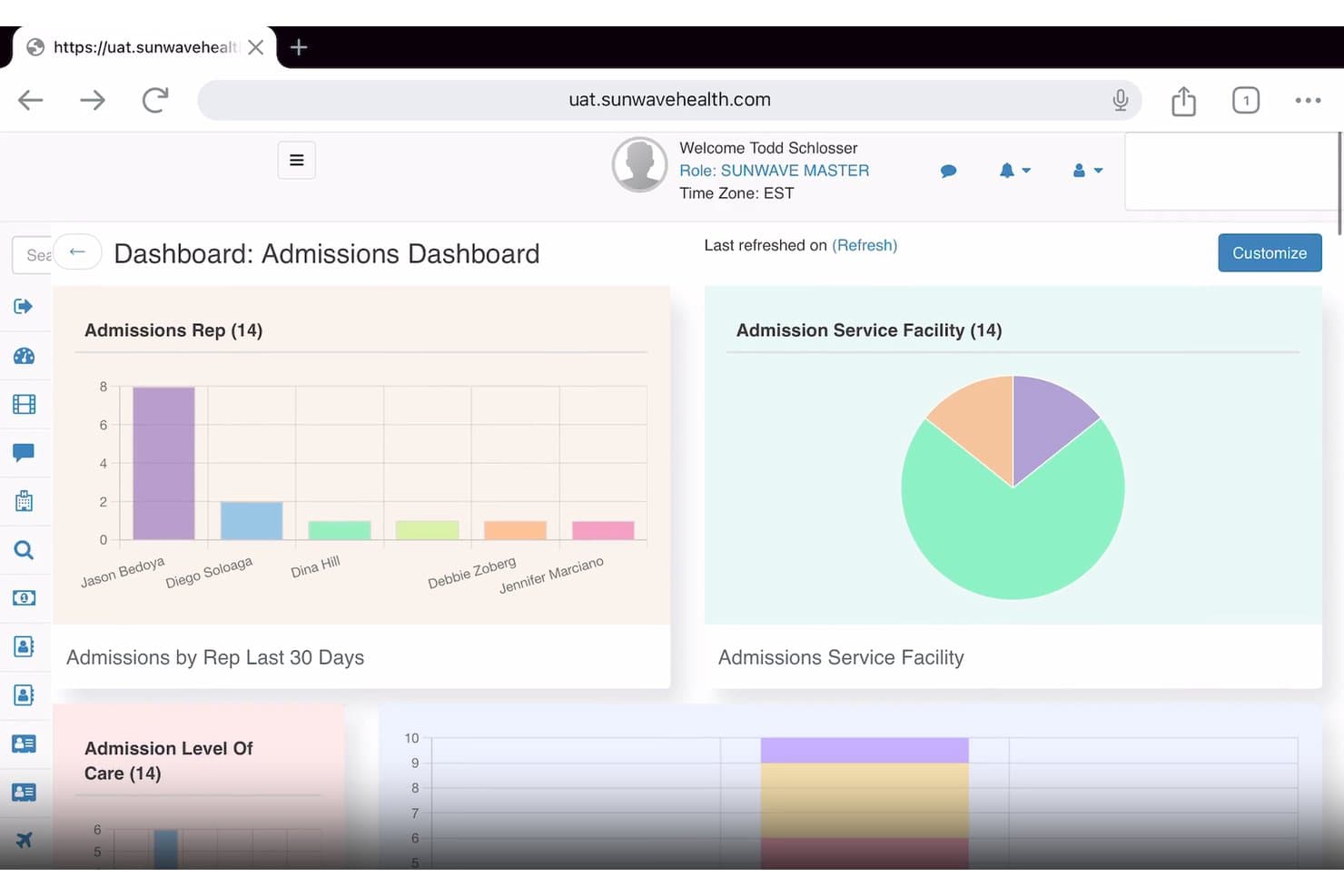
Sunwave tracks admissions data by rep, facility, and care level. Sunwave is a behavioral health EMR built for substance use disorder treatment programs, combining clinical documentation, CRM, revenue cycle management, and AI-assisted charting tools in a single platform.
Who Is Sunwave Best For?
Sunwave is a strong fit for substance use disorder treatment centers that want clinical, billing, and post-discharge alumni engagement managed in one connected platform.
Why I Picked Sunwave
I've included Sunwave in my top picks because its alumni management tools are genuinely built for what happens after discharge, not treated as an afterthought. Staff can log check-in calls, track texts and messages, and get flags when an alumni's engagement pattern suggests they may need follow-up, all from the same platform used for clinical and billing workflows. I also like that SIA generates BPS assessments and progress notes for clinician review, cutting documentation time significantly.
Sunwave Key Features
- Custom template builder: Lets your team create and configure clinical documentation templates tailored to your program's specific workflows and requirements.
- Medication management: Supports prescriptions, protocol-based orders, contraindication flags, MAT, and controlled and psychotropic substance tracking within the patient record.
- Telehealth with unlimited group participants: Hosts individual therapy, group sessions, and psychiatry appointments directly in the platform, with automated reminders and linked visit documentation.
- Revenue cycle management dashboards: Provides financial KPI, VOB, charges and claims, and utilization review dashboards to give administrators real-time visibility into billing performance.
Sunwave Integrations
Sunwave lists integrations with Salesforce, CHESS Health, Twilio, PaySimple, DoseSpot, CTM, Waystar, and Revolv3. API availability and integration types are not stated.
Pros and Cons
Pros:
- Alumni tools track outreach and flag follow-up needs
- Group and individual therapy scheduling in one calendar
- Reviewers value connected clinical and billing workflows
Cons:
- Payer and code coverage needs validation before adoption
- Initial setup can take substantial staff effort
Learn more about Sunwave: Best for menu-driven SUD note templates
- 30-day free trial + free demo available
- From $35/month
Visit WebsiteCustomer Rating:4.1/5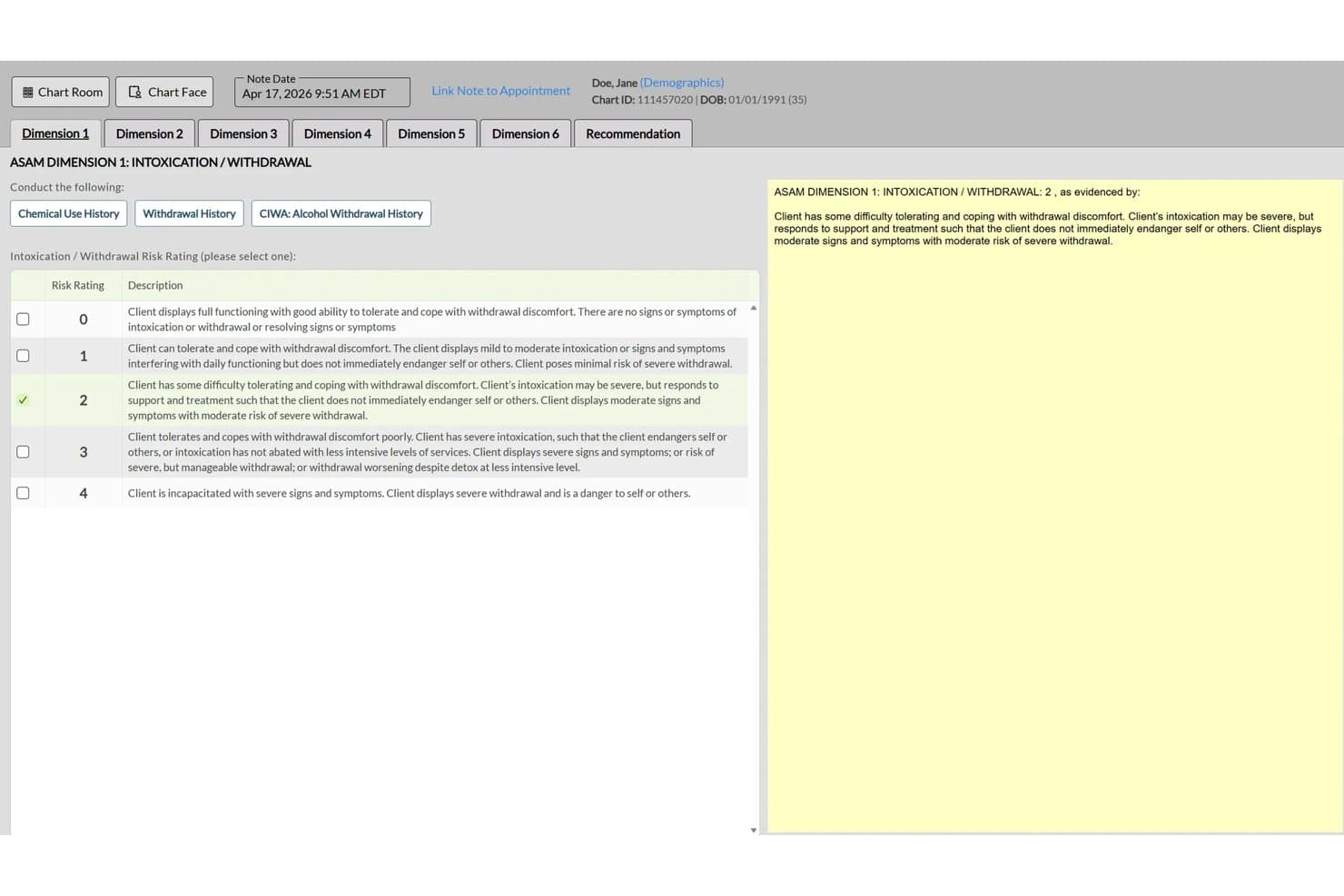
ICANotes structures ASAM criteria documentation for addiction treatment notes. ICANotes is a behavioral health EHR built exclusively for mental health and substance use practices, combining menu-driven SUD clinical documentation, treatment planning, group therapy workflows, scheduling, and integrated billing tools.
Who Is ICANotes Best For?
ICANotes suits addiction counselors and substance use practices that need structured, menu-driven note generation without spending hours on documentation.
Why I Picked ICANotes
ICANotes earns its spot on my shortlist because its menu-driven SUD documentation genuinely cuts the time counselors spend writing notes. I like that progress notes come pre-structured with SUD-specific content areas like cravings, relapse risk, stage of change, and treatment response, so clinicians are selecting relevant clinical details rather than writing from scratch. Group therapy workflows are also well thought out, letting you capture individualized participant notes, attendance, and session remarks all in one pass.
ICANotes Key Features
- 42 CFR Part 2 compliance support: Role-based permissions and segmented documentation restrict access to sensitive SUD records based on user role.
- 100+ electronic assessment tools: Validated substance-use rating scales and assessment tools support intake, treatment planning, and outcome tracking.
- Inpatient and residential documentation: Shift-based records, eMAR, UB-04 billing, and treatment-team coordination tools support residential program workflows.
- Integrated telehealth: Clinicians can schedule, launch, and document individual or group video sessions directly from the EHR.
ICANotes Integrations
ICANotes integrates with Cordant Health, Ammon, Stratus, Select, US Medical, HealthInfoNet, THA, and Health Information Network for lab and HIE connectivity. Its partner-facing FHIR R4 API supports custom patient, provider, location, and appointment integrations.
Pros and Cons
Pros:
- Group workflows support attendance and individual notes
- Notes capture cravings, relapse risk, and treatment response
- Menu-driven SUD notes reduce documentation time
Cons:
- Clinicians can’t chart from phones or tablets
- Reviewers report billing and claims friction
Learn more about ICANotes: Best for unified admissions, care, and billing
- Free demo available
- Pricing upon request
Visit WebsiteCustomer Rating:4.4/5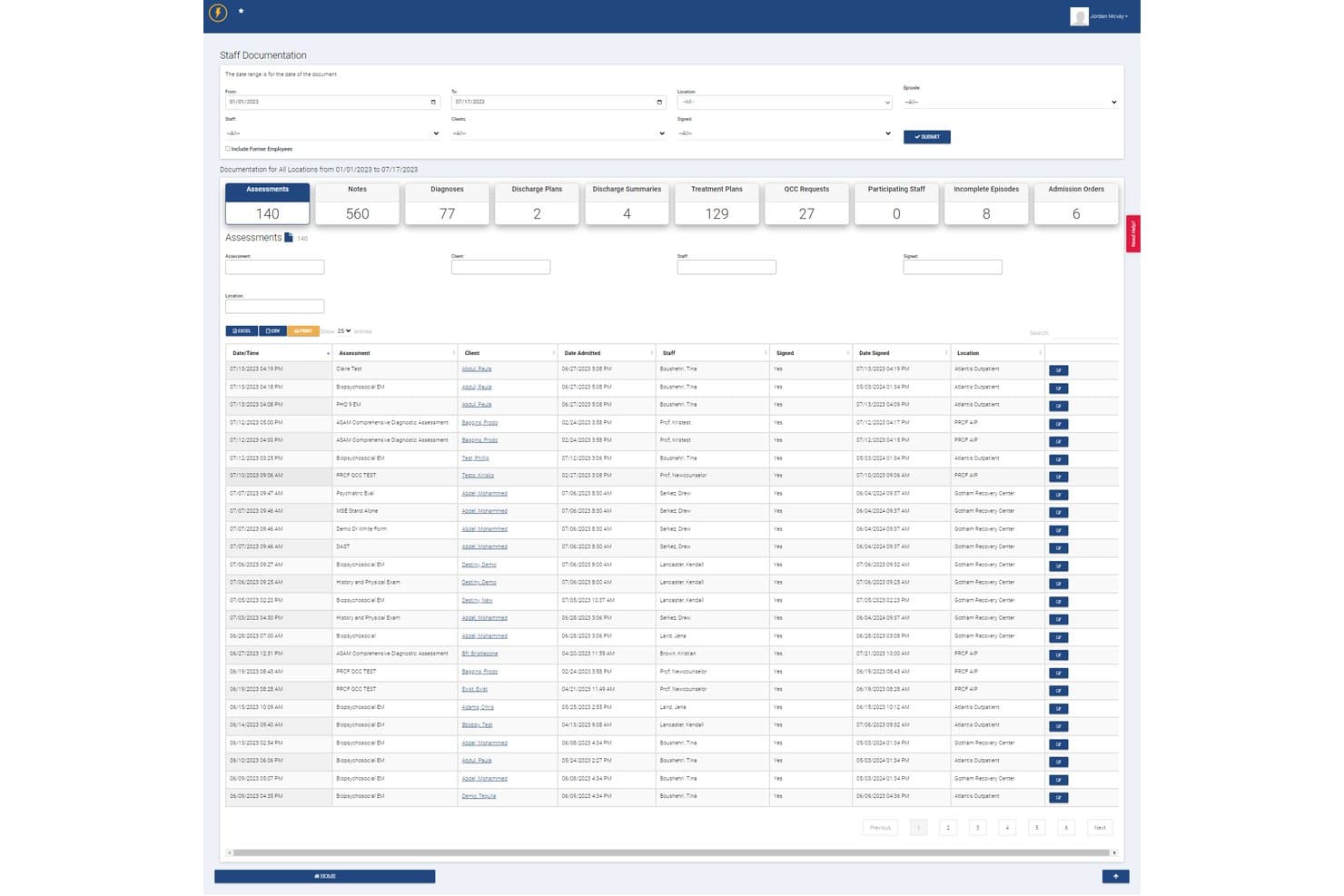
Lightning Step centralizes staff documentation and assessments for addiction programs. Lightning Step is a behavioral health EMR platform that unifies admissions, clinical documentation, and revenue cycle management—covering CRM, scheduling, treatment planning, medication management, and integrated billing in a single system built for addiction treatment programs.
Who Is Lightning Step Best For?
Lightning Step is a strong fit for multi-location addiction treatment centers that need admissions, clinical documentation, and billing managed in one system.
Why I Picked Lightning Step
I picked Lightning Step as one of the best because it's the only platform on my list where admissions, clinical documentation, and billing genuinely live in one system rather than being loosely connected. I like how the bed management and VOB dashboards feed directly into the clinical record, so a counselor's treatment plan and the billing team's claims pull from the same patient file. The AI assistant (LIA) drafting progress notes from voice dictation is a real time-saver for clinicians carrying large caseloads across multiple locations.
Lightning Step Key Features
- Medication-assisted treatment (MAT) support: The medication module manages MAT prescriptions, controlled substances, and protocol-based orders within the patient record.
- LIA AI assistant: LIA drafts individual and group progress notes and patient summaries directly from voice dictation.
- 42 CFR Part 2 consent management: The platform tracks disclosure permissions, restricts access by department or program, and generates real-time audit trails.
- Verification of benefits (VOB) dashboard: Staff can check insurance eligibility and benefits directly from the admissions workflow before a patient is admitted.
Lightning Step Integrations
Lightning Step has documented integrations with Salesforce and Updox for referral management, secure messaging, and electronic faxing. It also supports an open/custom API framework with HL7 and FHIR connectors for additional healthcare integrations.
Pros and Cons
Pros:
- Integrated e-prescribing cuts prescription time
- Supervisors can flag overdue treatment plans
- Unified admissions, care, and billing workflows
Cons:
- Client invoicing burdens larger treatment centers
- Mobile charting remains limited for clinicians
Learn more about Lightning Step:
Example photo for Azzly's dashboard Ease (formerly AZZLY Rize) is a behavioral health EMR platform purpose-built for addiction treatment programs, combining CRM, clinical documentation, scheduling, and revenue cycle management in one unified system.
Who Is Azzly Best For?
Azzly is a strong fit for addiction treatment centers that want clinical, administrative, and billing workflows in one place without juggling multiple point solutions.
Why I Picked Azzly
I've included Azzly in my top picks because its interface genuinely reduces the friction that slows clinical teams down in busy addiction treatment settings. I like how the unified CRM, EHR, and RCM layout means a clinician can move from reviewing a patient's biopsychosocial evaluation to checking group session attendance to confirming an authorization, all without leaving the same chart. The shared group-documentation workflow, where you capture the session theme once and then add individual participant notes, is a practical time-saver for IOP and PHP programs running multiple groups daily.
Azzly Key Features
- AI-assisted clinical documentation: A real-time AI scribe generates and auto-fills clinical notes, reducing manual charting time for clinicians.
- E-prescribing with EPCS: Supports controlled-substance e-prescribing with PDMP integration, including medication tracking for buprenorphine and naltrexone across care levels.
- 42 CFR Part 2 record segmentation: Applies field-level, consent-based segmentation of SUD records with per-provider consent tracking and re-disclosure notices.
- Integrated RCM engine: Handles claim creation, scrubbing, submission, denial management, and ERA parsing with AI-driven validation and denial-risk flagging.
Azzly Integrations
Azzly offers native integrations with Google Calendar and Power BI. Its addiction-treatment materials also identify integrations with LabCorp, Quest, DrFirst, Availity, and Waystar, while an API supports custom integrations.
Pros and Cons
Pros:
- Reviewers praise quick chart access
- Group notes link attendance to billing
- Unified intake, clinical, and billing workflows
Cons:
- Reporting accuracy and print workflows frustrate users
- Some reviewers report slow chart loading
Learn more about Azzly:
Alte opțiuni de software EMR pentru tratamentul abuzului de substanțe
Mai jos se află o listă cu software-uri suplimentare pentru tratamentul abuzului de substanțe pe care le-am inclus pe lista scurtă, dar care nu au ajuns în primele 10 poziții. Merită cu siguranță să le analizați.
- 11RittenBest for multi-level-of-care SUD documentation
How I Evaluate Substance Abuse EMR Software
I split my evaluation into three parts: core functionality carries the most weight, including documenting SUD plans and progress and managing intake through discharge. Then I look for differentiators such as ASAM level-of-care assessments. Finally, I consider SUD-specific onboarding and whether pricing fits the program’s size and care model.
Core Functionality (Table Stakes For This List)
When I'm selecting tools for my list, I score each one on a scale from 0 (does not offer the functionality) to 5 (excels in this area) for each core functionality listed below. I then convert the total into a percentage to help assess each tool's overall fit, with extra weight on any functionalities I’ve deemed essential.
- SUD Documentation (Essential): I look for treatment plans, progress notes, and assessments that support SUD care, including ASAM evaluations and progress tracking across levels of care.
- Part 2 Privacy (Essential): I assess consent management, disclosure controls, and audit trails for protecting confidential treatment records when staff share information.
- Intake & Discharge: Check whether teams can manage structured intake, admission, and discharge steps, including status tracking and care transitions.
- MAT Tracking: I look for dosing schedules and administration logs that help staff follow medication protocols and coordinate with prescribers.
- Billing & Claims: Evaluate insurance claims workflows, behavioral health coding, and denial tracking for the services the program provides.
- Session Scheduling: Check that teams can schedule individual and group sessions and record attendance, with support for provider calendars and group capacity.
Once I have a list of tools that meet the criteria, I consider what sets each platform apart.
Differentiating Factors (What Sets Vendors Apart)
Here's how I compare and contrast different vendors:
Standout Features
I check whether platforms include built-in ASAM criteria tools that auto-recommend level-of-care placement. This saves clinical directors from manually justifying decisions during utilization reviews. I also evaluate alumni and aftercare engagement features, since programs that track discharged patients and send check-ins see better long-term outcomes. Telehealth for group therapy matters too—I look for native multi-participant video, not retrofitted 1:1 tools, because IOP programs run group sessions daily.
Beyond Features
I evaluate whether vendors offer SUD-specific onboarding, not generic software training. Counselors need guided setup for treatment plan templates and 42 CFR Part 2 consent workflows, especially given high staff turnover in addiction treatment settings. I also check how licensing scales—per-user vs. per-facility pricing affects multi-location programs differently as they add sites. Finally, I look at how each platform handles payer mix complexity, including Medicaid eligibility checks and denial management tailored to behavioral health codes.
Cum să alegeți un software EMR pentru tratamentul abuzului de substanțe
Este ușor să vă pierdeți în liste lungi de funcții și structuri complexe de prețuri. Pentru a vă ajuta să rămâneți concentrat pe parcursul procesului unic de selectare a software-ului, iată o listă de verificare cu factorii de care trebuie să țineți cont:
| Factor | Ce trebuie luat în considerare |
|---|---|
| FactorScalabilitate | Ce trebuie luat în considerarePoate software-ul să se dezvolte odată cu cabinetul dumneavoastră? Luați în considerare extinderea viitoare și dacă instrumentul poate gestiona un număr mai mare de pacienți. |
| FactorIntegrări | Ce trebuie luat în considerareSe conectează cu instrumentele existente? Asigurați compatibilitatea cu sistemele de facturare, platformele de telemedicină și alte software-uri esențiale. |
| FactorPersonalizare | Ce trebuie luat în considerareÎl puteți adapta nevoilor dumneavoastră? Căutați opțiuni pentru modificarea șabloanelor și fluxurilor de lucru, astfel încât să corespundă cerințelor specifice ale cabinetului dumneavoastră. |
| FactorUșurință în utilizare | Ce trebuie luat în considerareEste software-ul intuitiv? Evaluați interfața și navigarea pentru a vă asigura că este ușor de utilizat pentru echipa dumneavoastră. |
| FactorImplementare și integrare inițială | Ce trebuie luat în considerareCât de repede puteți începe? Luați în considerare resursele necesare pentru instruire și asistența disponibilă în timpul tranziției. |
| FactorCost | Ce trebuie luat în considerareSe încadrează în bugetul dumneavoastră? Comparați planurile tarifare și fiți atenți la taxele ascunse sau la contractele pe termen lung care v-ar putea afecta finanțele. |
| FactorMăsuri de securitate | Ce trebuie luat în considerareCum protejează datele pacienților? Asigurați-vă că software-ul respectă reglementările HIPAA și oferă o criptare solidă a datelor. |
| FactorCerințe de conformitate | Ce trebuie luat în considerareRespectă standardele industriei? Verificați dacă software-ul respectă toate cerințele legale și de reglementare necesare pentru tratamentul abuzului de substanțe. |
Ce este software-ul EMR pentru tratamentul abuzului de substanțe?
Software-ul EMR pentru tratamentul abuzului de substanțe este un instrument digital conceput pentru gestionarea dosarelor pacienților și a planurilor de tratament în cadrul programelor pentru abuzul de substanțe. Este utilizat frecvent de profesioniști din domeniul sănătății, precum consilieri, terapeuți și personal administrativ, pentru a îmbunătăți îngrijirea pacienților și a asigura respectarea reglementărilor. Funcțiile de programare, gestionare a pacienților și raportare contribuie la desfășurarea eficientă a activităților și la organizarea datelor. În ansamblu, aceste instrumente oferă o modalitate structurată de gestionare a informațiilor despre pacienți, îmbunătățind calitatea îngrijirii și eficiența administrativă.
Funcții
Atunci când selectați un software EMR pentru tratamentul abuzului de substanțe, acordați atenție următoarelor funcții esențiale:
- Gestionarea pacienților: Organizează dosarele pacienților și planurile de tratament pentru a asigura accesul facil și îngrijirea eficientă.
- Programări: Ajută la rezervarea și gestionarea programărilor, reducând absențele și optimizând timpul.
- Monitorizarea conformității: Asigură respectarea tuturor standardelor legale și de reglementare, oferind liniște sufletească.
- Raportare: Generează rapoarte detaliate privind rezultatele pacienților și eficiența operațională, contribuind la luarea deciziilor bazate pe date.
- Integrarea telemedicinei: Facilitează consultațiile la distanță, extinzând accesul la îngrijire și îmbunătățind flexibilitatea.
- Șabloane personalizabile: Vă permite să adaptați formularele și fluxurile de lucru la nevoile specifice ale cabinetului dumneavoastră.
- Stocarea securizată a datelor: Protejează informațiile sensibile ale pacienților prin criptare și alte măsuri de securitate.
- Integrarea facturării: Simplifică tranzacțiile financiare, asigurând procese de facturare precise și la timp.
- Interfață ușor de utilizat: Simplifică navigarea și utilizarea, reducând timpul de instruire și sporind satisfacția utilizatorilor.
- Reamintiri automate: Trimite alerte pentru programări și administrarea medicamentelor, îmbunătățind respectarea tratamentului și îngrijirea ulterioară.
Beneficii
Implementarea unui software EMR pentru tratarea abuzului de substanțe oferă mai multe beneficii echipei și afacerii dumneavoastră. Iată câteva dintre acestea:
- Îngrijire îmbunătățită a pacienților: Accesul la dosare și planuri de tratament organizate ajută echipa să ofere îngrijiri mai bune.
- Conformitate îmbunătățită: Monitorizarea integrată a conformității asigură respectarea tuturor reglementărilor necesare.
- Economie de timp: Programările și reamintirile automate reduc sarcinile administrative, oferindu-vă mai mult timp pentru pacienți.
- Decizii bazate pe date: Funcțiile de raportare oferă informații care ghidează strategiile de tratament și operațiunile afacerii.
- Acces sporit la îngrijire: Integrarea telemedicinei permite consultații la distanță, extinzând accesul pacienților.
- Precizie financiară: Integrarea facturării asigură tranzacții financiare precise și la timp, reducând erorile.
- Satisfacția utilizatorilor: O interfață ușor de utilizat facilitează navigarea în software, îmbunătățind experiența zilnică a echipei.
Costuri & prețuri
Selectarea unui software EMR pentru tratarea abuzului de substanțe necesită înțelegerea diferitelor modele și planuri de preț disponibile. Costurile variază în funcție de funcții, dimensiunea echipei, suplimente și alți factori. Tabelul de mai jos rezumă planurile comune, prețurile medii și funcțiile incluse de obicei în soluțiile software EMR pentru tratarea abuzului de substanțe:
Tabel comparativ al planurilor pentru software EMR destinat tratării abuzului de substanțe
| Tipul planului | Preț mediu | Funcții comune |
|---|---|---|
| Tipul planuluiPlan gratuit | Preț mediu$0 | Funcții comuneGestionarea de bază a pacienților, programări limitate și raportare de bază. |
| Tipul planuluiPlan personal | Preț mediu$10-$30/user/month | Funcții comuneGestionarea pacienților, programări, monitorizarea conformității și raportare de bază. |
| Tipul planuluiPlan de afaceri | Preț mediu$40-$70/user/month | Funcții comuneRaportare avansată, integrarea facturării, șabloane personalizabile și telemedicină. |
| Tipul planuluiPlan pentru întreprinderi | Preț mediu$80-$120/user/month | Funcții comuneToate funcțiile, inclusiv asistență premium, securitate avansată și integrări complete. |
Întrebări adresate frecvent (FAQ)
Prin ce diferă software-ul EMR pentru tratarea abuzului de substanțe de sistemele EMR generale?
Software-ul EMR pentru tratarea abuzului de substanțe este conceput special pentru centrele de tratare a dependențelor, concentrându-se pe funcții precum gestionarea medicamentelor, evaluări specializate și respectarea unor reglementări specifice, precum 42 CFR Part 2. Această specializare ajută echipa să gestioneze mai eficient îngrijirea pacienților decât sistemele EMR generale.
Se poate integra software-ul EMR pentru tratarea abuzului de substanțe cu alte sisteme?
Da, majoritatea programelor software EMR pentru tratarea abuzului de substanțe se pot integra cu sistemele de facturare, telemedicină și laborator. Această integrare îmbunătățește eficiența fluxului de lucru, permițând partajarea datelor între platforme și ajutând echipa să păstreze dosare consecvente și exacte.
Este disponibilă instruirea pentru utilizatorii noi ai software-ului EMR pentru tratarea abuzului de substanțe?
Majoritatea furnizorilor oferă resurse de instruire, precum seminare web, tutoriale și ghiduri de asistență. Aceste resurse ajută echipa să se familiarizeze rapid cu software-ul, asigurând utilizarea eficientă a acestuia chiar din prima zi.
Cum gestionează software-ul EMR pentru tratarea abuzului de substanțe implicarea pacienților?
Multe sisteme oferă funcții precum portaluri pentru pacienți, telemedicină și mesagerie securizată. Aceste instrumente îmbunătățesc comunicarea dintre pacienți și furnizori, facilitând gestionarea îngrijirii de către echipă și menținând pacienții informați și implicați.