

If you want to keep up with medical breakthroughs, policy shifts, and expert takes, curating the right healthcare newsletters can make your job simpler. This roundup highlights trusted options that help you stay informed, cut through noise, and drive better outcomes for patients and teams.
The 22 Best Healthcare Newsletters
Below are my summaries of the best healthcare newsletters. My reviews offer a look at each newsletter's audience, frequency, cost, and more.
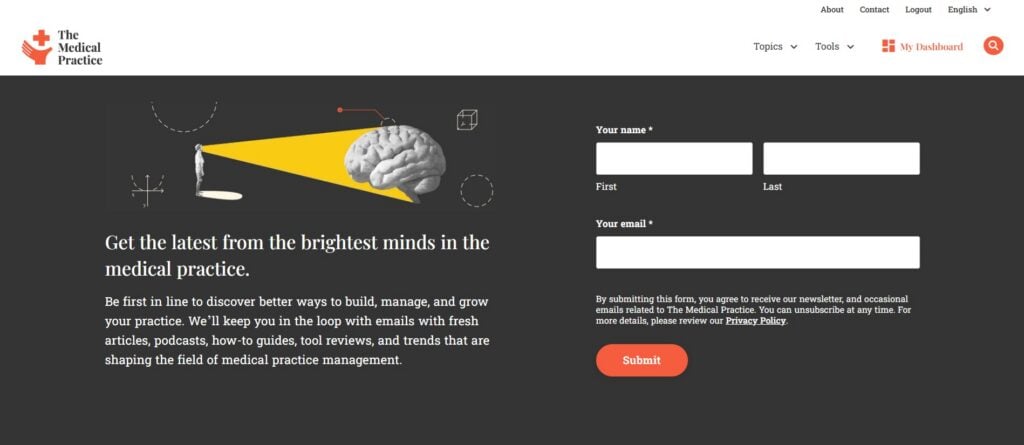
1. The Medical Practice - Best for medical practice management
- Audience: Healthcare professionals, particularly those involved in medical practice management
- Newsletter Frequency: Monthly
- Cost: Free
The Medical Practice newsletter covers a wide range of topics relevant to healthcare professionals, including access and reimbursement, billing and collections, coding and documentation, finance, law and malpractice, patient engagement and communications, staffing and salary, technology, industry news, and practice management.
Why Subscribe: The Medical Practice newsletter is a valuable resource for healthcare professionals looking to stay informed about the latest trends and best practices in medical practice management, improving their practice and patient care.
It includes articles on various healthcare-related topics, resources, surveys, and information on upcoming conferences and events in the healthcare industry.
2. Morning Rounds - Best for early-morning medical news dumps
- Audience: Healthcare professionals, life sciences workers, and industry followers
- Frequency: Every weekday
- Cost: Free
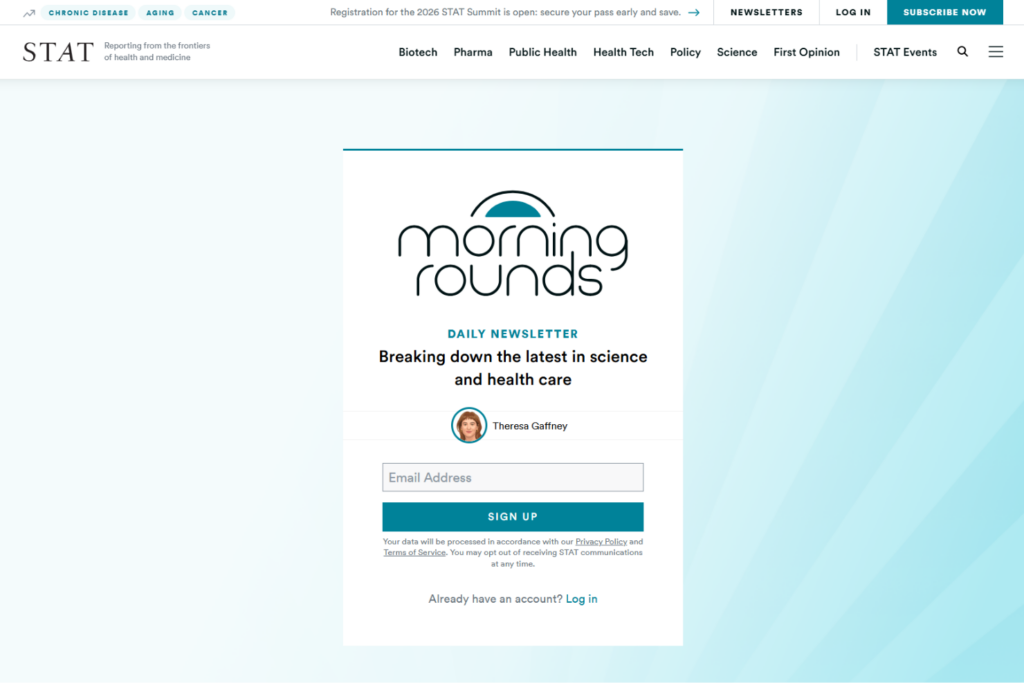
STAT News Morning Rounds is a weekday newsletter from STAT News that delivers the day's most important science and health care stories before you've had your second cup of coffee.
It's curated by journalist Theresa Gaffney and designed for anyone who needs to stay current on what's shaping medicine, policy, and life sciences.
Why subscribe? Morning Rounds is one of the most trusted daily briefings in health care, drawing from STAT News's own reporting rather than aggregating from other outlets. Each edition covers breaking clinical news, policy shifts, and research developments that directly affect how medicine is practiced and regulated.
If you want a reliable pulse on the industry delivered first thing in the morning, this one earns its place in your inbox.
3. Fierce Healthcare - Best for health industry news updates
- Audience: Hospital and health system leaders, payers, and providers
- Size: 120,000+ members
- Frequency: Daily
- Cost: Free
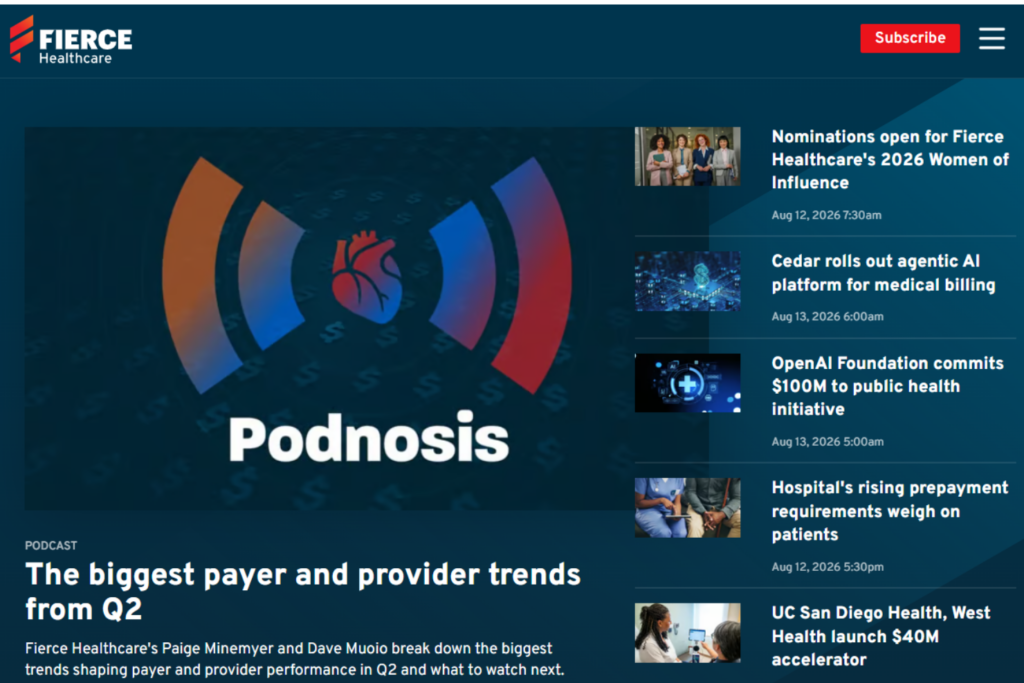
Fierce Healthcare is a daily newsletter published by Questex that covers the full spectrum of the healthcare industry, from hospital operations and health policy to payer news and digital health.
It's built for executives, administrators, and clinical leaders who need to track how business and regulatory forces are reshaping care deli
very.
Why subscribe? With Fierce Healthcare, you can subscribe to topic-specific newsletters covering AI, health tech, payers, hospitals, and practice management so your inbox reflects what actually matters to your role. The reporting goes beyond headlines, with exclusive interviews and analysis from journalists like Heather Landi who cover these beats closely.
If you're in a leadership or operational role, this is one of the few free daily resources that covers both the clinical and business sides of healthcare in one place.
4. Healthcare Dive - Best for executive-level analysis
- Audience: Healthcare executives, policy leaders, and health IT professionals
- Frequency: Daily and weekly options
- Cost: Free
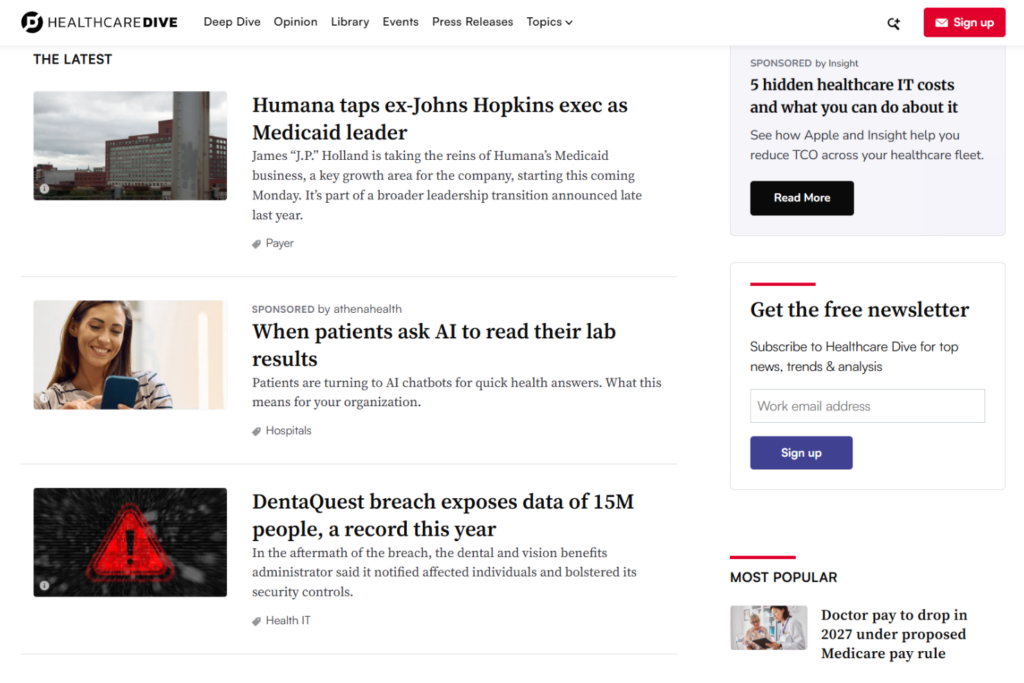
Healthcare Dive is a free daily newsletter published by Informa TechTarget that covers breaking news, trends, and analysis across hospitals, health policy, payers, and health IT. It's built for healthcare executives and administrators who need a reliable industry briefing every weekday morning.
Why subscribe? What I appreciate about Healthcare Dive is the flexibility—you can subscribe to the flagship Daily Dive for broad coverage, or add the Payer Weekly and IT Weekly editions to go deeper on the areas most relevant to your role. The reporting is original and well-sourced, covering everything from M&A activity and regulatory shifts to workforce challenges and technology adoption.
If you're in an operational or leadership role and want industry news that's actually useful for decision-making, this one delivers.
5. Modern Healthcare Newsletters - Best for policy and business coverage
- Audience: Healthcare executives, hospital leaders, and finance professionals
- Frequency: Daily, weekly, and bi-weekly options
- Cost: Free; From $25/monthly (Digital Edition)
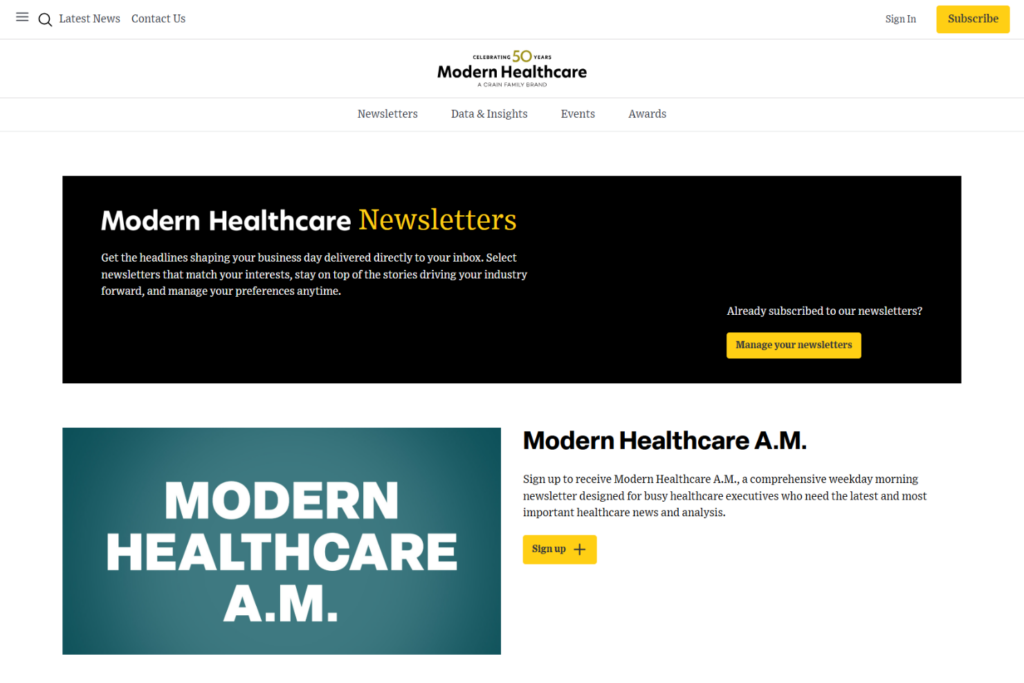
Modern Healthcare Newsletters is a suite of free newsletters published by Crain Communications, covering healthcare business news across finance, digital health, payer strategy, and executive leadership.
It's designed for hospital and health system leaders who need to track the business forces shaping the industry.
Why subscribe? The real value here is the ability to build your own briefing stack—subscribe to just the flagship Modern Healthcare A.M. for a daily business news rundown, or layer in Finance Digest, Digital Health Intelligence, and Payer Pulse to go deeper on the areas that matter to your role.
Few newsletter suites cover the business side of healthcare this thoroughly, with dedicated tracks for finance leaders, payer executives, and digital health professionals all under one subscription.

6. Becker's Hospital Review - Best for hospital executive insights
- Audience: Hospital executives, physician leaders, and healthcare administrators
- Size: 500,000+ members
- Frequency: Daily
- Cost: Free
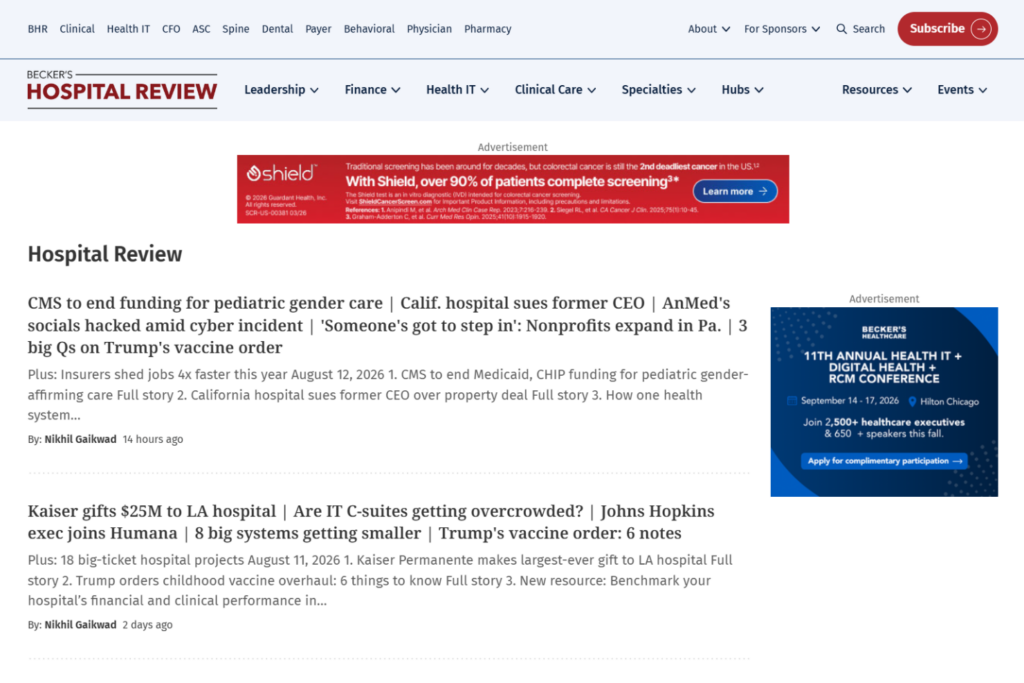
Becker's Hospital Review is a free suite of 30+ specialty newsletters published by Becker's Healthcare, covering everything from executive leadership and health IT to cardiology, oncology, and supply chain.
It's built for hospital and health system professionals who want targeted coverage of their specific role or clinical area.
Why subscribe? What sets Becker's apart is its specialization—you're not just getting a general healthcare business feed, but dedicated newsletters for CFOs, CIOs, physician leaders, and clinical department heads across more than two dozen specialty areas. Each newsletter pulls together relevant news, data, and analysis for that specific audience, so you spend less time filtering and more time acting on what matters to your role.
If you lead a clinical department or hold an executive function, I'd recommend picking the two or three newsletters that map directly to your responsibilities.
7. Health Affairs Today - Best for health policy research
- Audience: Health policy researchers, academics, and healthcare executives
- Frequency: Every weekday
- Cost: Free
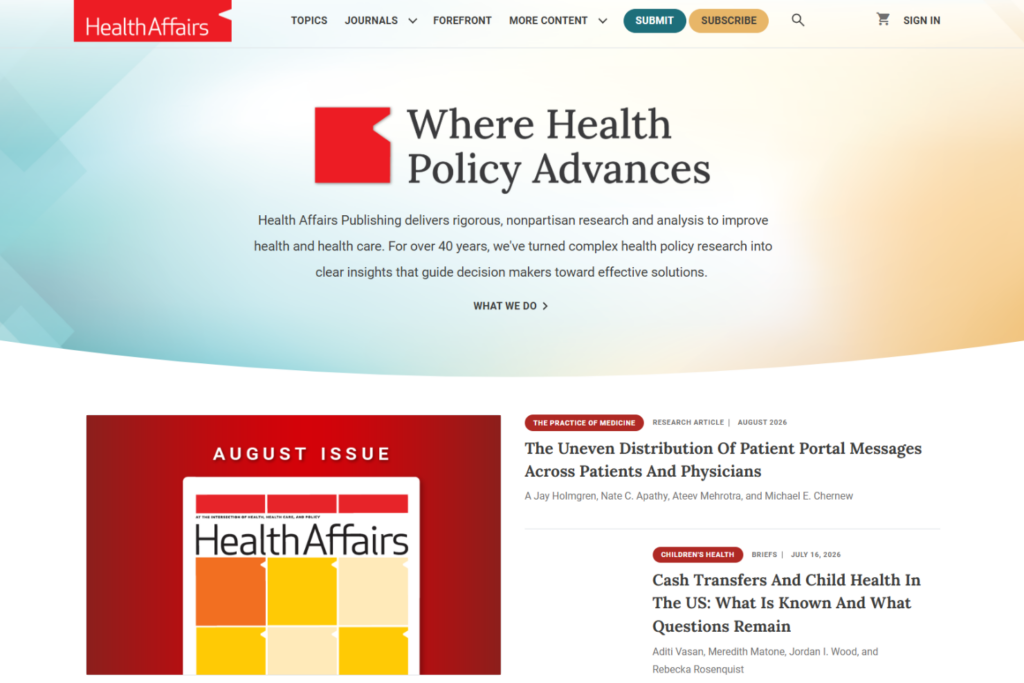
Health Affairs Today is a free daily newsletter from Health Affairs Publishing, one of the most respected health policy journals in the field, delivering peer-reviewed research, Forefront commentary, and policy analysis every weekday.
It's built for researchers, policy professionals, and healthcare leaders who need to stay current on the evidence shaping health systems and policy decisions.
Why subscribe? Unlike trade newsletters that focus on business news, Health Affairs Today connects you directly to rigorous academic research and expert policy commentary—the kind of analysis that informs legislation, regulatory decisions, and system-level strategy.
You also get access to the Sunday Update, a weekly digest that rounds up everything published that week, so you can stay informed without committing to reading every daily edition.
8. KFF Health News Morning Briefing - Best for curated health news summaries
- Audience: Health policy professionals, journalists, and healthcare leaders in the U.S.
- Frequency: Every weekday
- Cost: Free
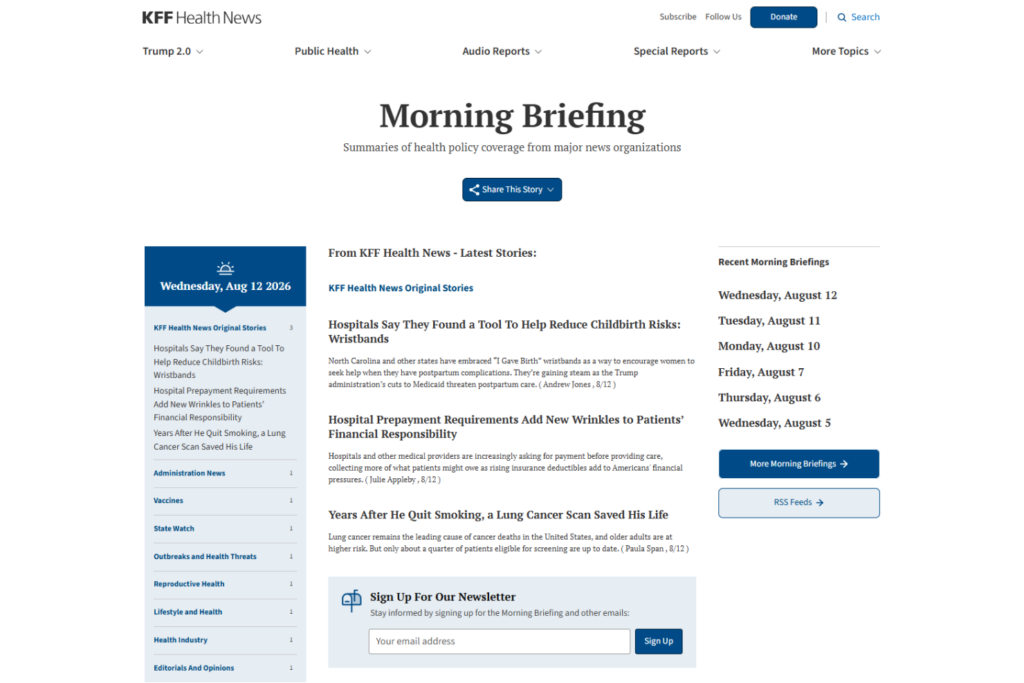
The KFF Health News Morning Briefing is a free weekday newsletter from KFF Health News, an editorially independent nonprofit newsroom that has been a trusted source of health policy journalism for decades.
It aggregates the day's top health stories from over 50 news outlets alongside original KFF Health News reporting, landing in your inbox around 9:30 a.m. ET.
Why subscribe? What makes this newsletter worth your time is the scope of its sourcing —you're getting a single daily digest that pulls from major national outlets, regional publications, and specialty health media all at once, so you're not relying on any one outlet's editorial lens.
It also pairs that aggregation with KFF's own original reporting, which is consistently among the most cited and credible in the health policy space.
9. Medical Futurist Newsletter - Best for digital health trends
- Audience: Healthcare professionals, technology leaders, and digital health enthusiasts worldwide
- Size: 23,500+ members
- Frequency: Weekly
- Cost: Free
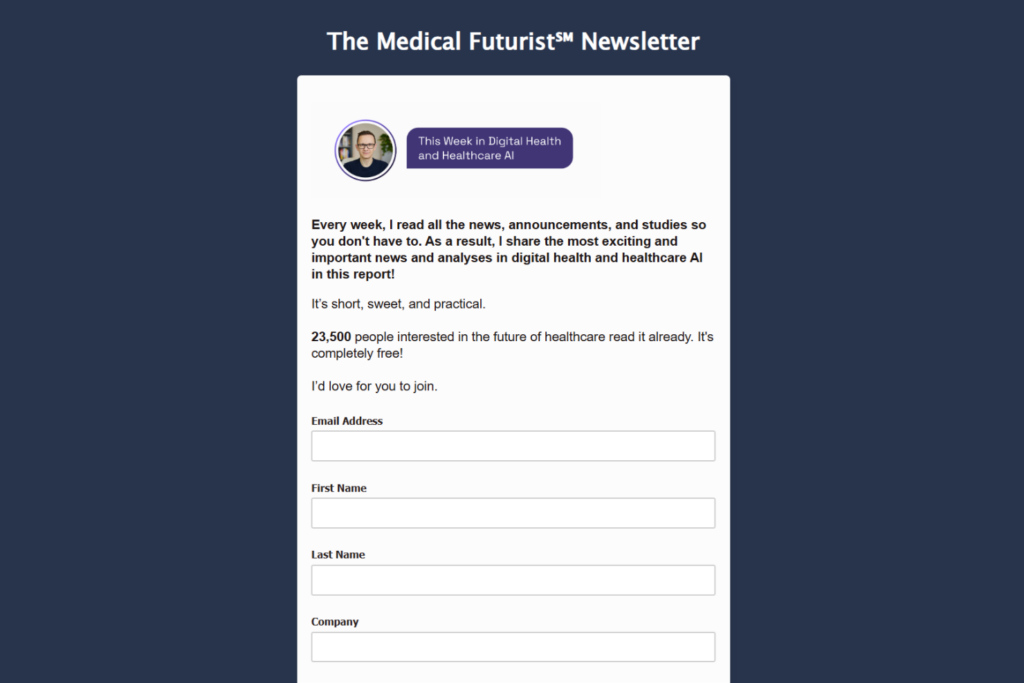
The Medical Futurist Newsletter is a free weekly publication curated by Dr. Bertalan Meskó, a physician and genomics PhD who has advised organizations like the WHO and lectured at Harvard, Stanford, and Yale.
It covers the most important news, studies, and announcements in digital health and healthcare AI, written for professionals who want to stay ahead of where medicine is heading.
Why subscribe? What sets this newsletter apart is the curator—Dr. Meskó brings genuine clinical and research credibility to topics like AI diagnostics, wearables, and telemedicine, so you're not getting tech coverage filtered through a journalist's lens but through a practicing physician's. Each edition is intentionally short and practical, so you get a focused weekly read without a heavy time commitment.
If you work at the intersection of healthcare and technology, this is one of the clearest windows into where the field is going.
10. MedCity News - Best for coverage of innovation in care
- Audience: Healthcare executives, innovators, and industry decision-makers across sectors
- Frequency: Daily
- Cost: Free
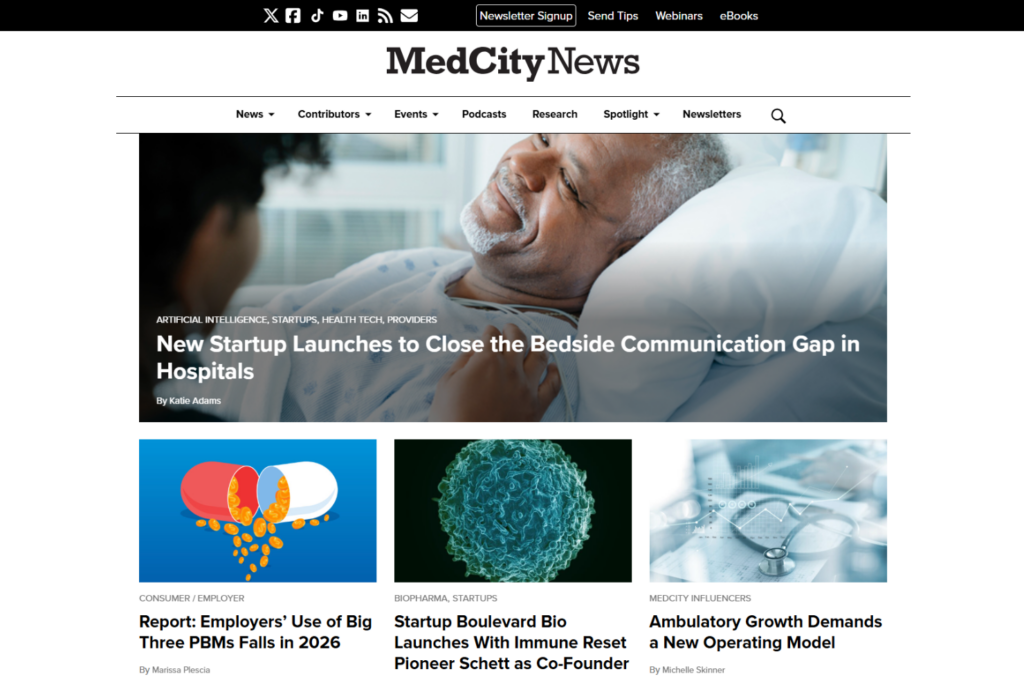
MedCity News is a digital publication and daily newsletter focused on the business of healthcare innovation, covering payers, providers, healthtech startups, investors, medtech, diagnostics, and biopharma.
It's built for senior healthcare professionals who need to stay current on how the industry is moving commercially and strategically.
Why subscribe? The daily newsletter gives you a curated digest of the most important healthcare business stories of the day, so you're not piecing together industry news from multiple sources. What makes it useful at a senior level is its consistent focus on the commercial and investment side of healthcare—funding rounds, policy shifts, startup activity, and market moves.
If you're in a leadership, innovation, or business development role in healthcare, this is a practical daily read for staying informed on the deals and decisions shaping the industry.
11. AMA Morning Rounds - Best for updates from the physician community
- Audience: US-based physicians, residents, and medical students
- Frequency: Every weekday
- Cost: Free
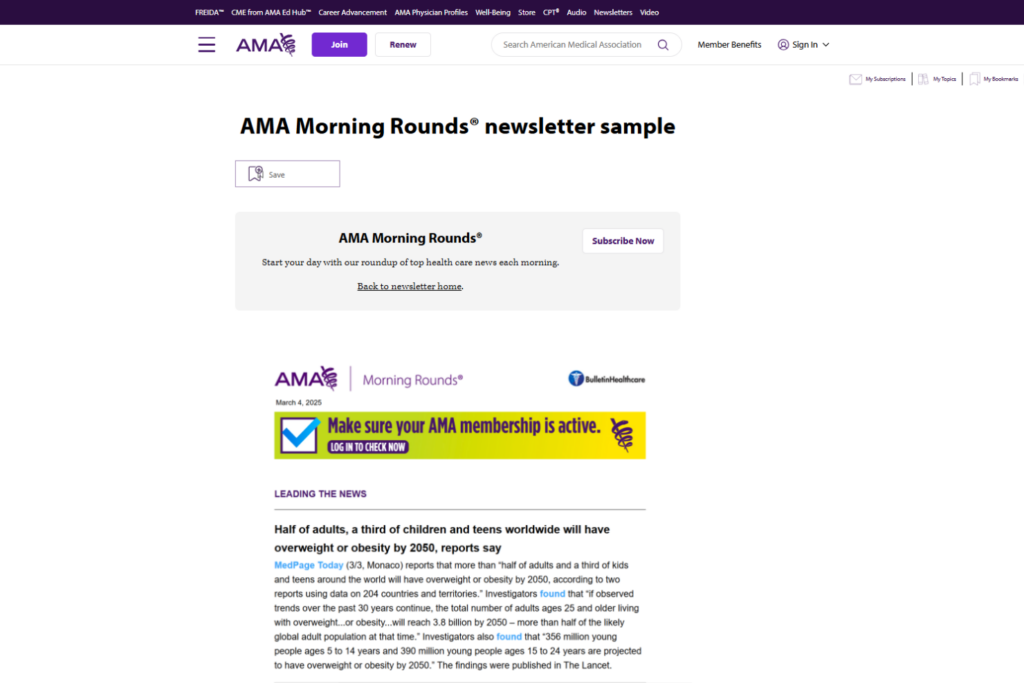
AMA Morning Rounds is a daily news digest produced by the American Medical Association in affiliation with Bulletin Healthcare LLC, delivering top healthcare headlines to physicians every weekday morning.
It's an AMA member benefit, so it's built specifically for physicians, residents, and medical students operating within the US healthcare system.
Why subscribe? Each edition pulls from thousands of sources to surface the most relevant stories of the day across clinical practice, health policy, public health, and medical education—all filtered through a physician-first lens.
What sets it apart from general healthcare news roundups is that the curation is explicitly oriented around what matters to practicing physicians, not health business executives or investors.
12. This Week's Edition - Best for evidence-based clinical research and summaries
- Audience: Practicing physicians and healthcare professionals across specialties
- Frequency: Weekly, with customizable specialty alerts
- Cost: From $9.99/monthly
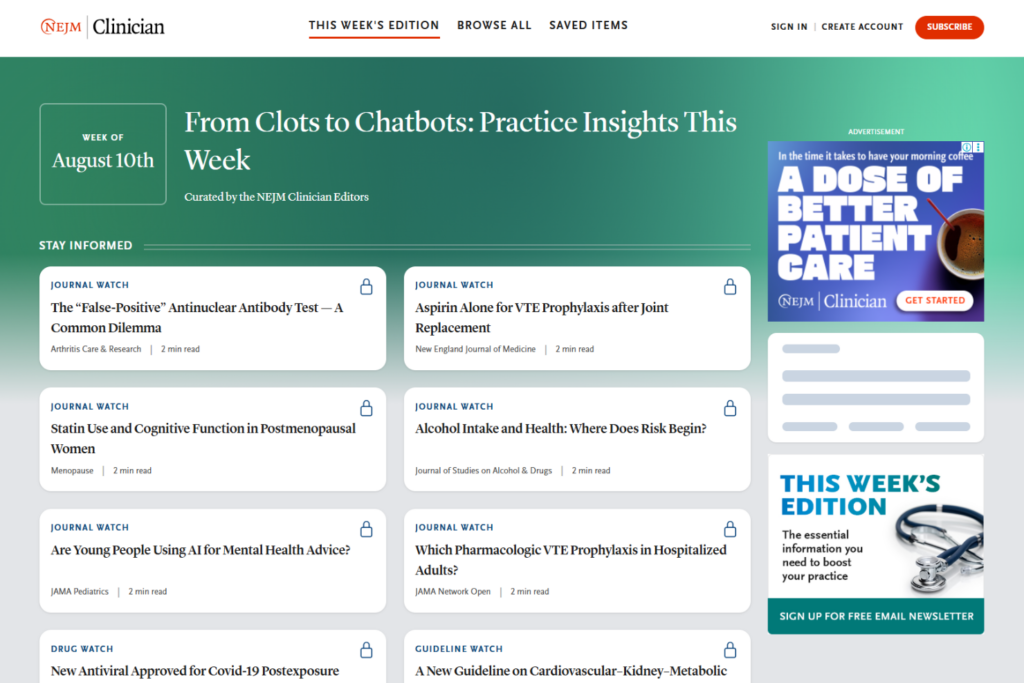
NEJM Clinician’s This Week's Edition is published by the Massachusetts Medical Society—the same organization behind the New England Journal of Medicine. It monitors over 250 scientific and medical journals to surface the most clinically relevant research across primary care and specialty areas.
Founding Editor Anthony L. Komaroff and a board of physician-editors review, summarize, and add commentary to key findings so you're getting expert interpretation, not just headlines.
Why subscribe? What makes this newsletter worth the subscription is that it doesn't just aggregate—it contextualizes, with physician-editors explaining what a study's findings actually mean for your practice. You can tailor your alerts by specialty or topic, so whether you're in cardiology, infectious disease, or general medicine, you're only getting what's relevant to you.
The weekly "This Week's Edition" is designed to keep you current in 30 minutes or less, which is a realistic ask for a busy clinical schedule.
13. JAMA Network - Best for staying current with JAMA and specialty journal research
- Audience: Physicians, researchers, and healthcare professionals worldwide
- Frequency: Daily and weekly
- Cost: Free
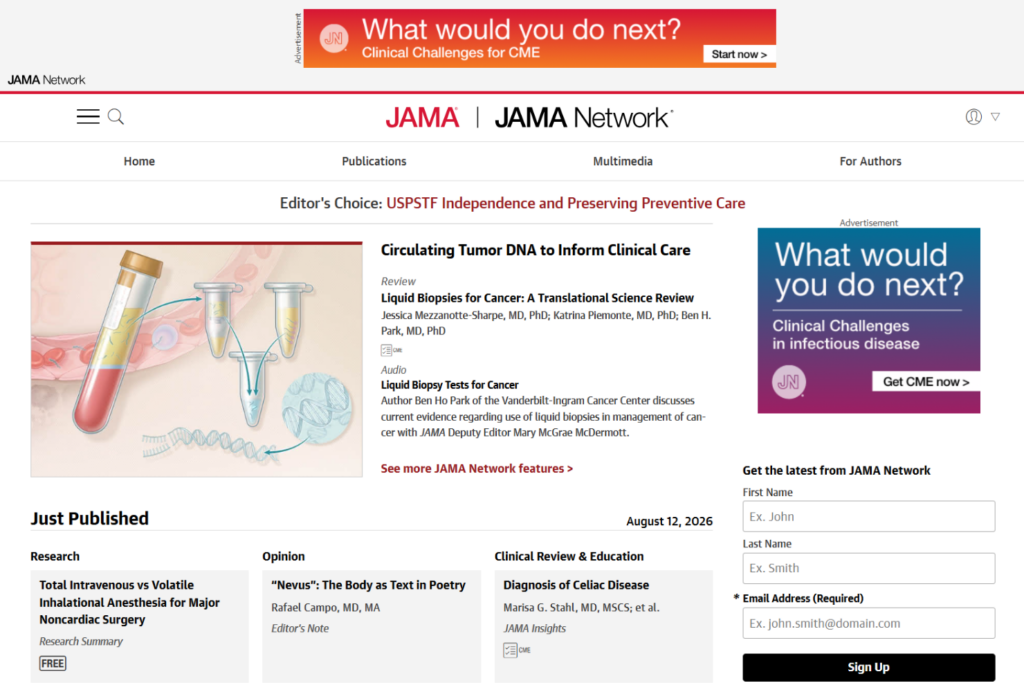
JAMA Network email alerts are published by the American Medical Association and give you direct access to new research from JAMA and 11 specialty journals—spanning cardiology, oncology, psychiatry, pediatrics, neurology, and more.
It's one of the most recognized peer-reviewed publishing networks in medicine, and the alerts are free with a basic account.
Why subscribe? The real value here is that you're getting alerts the moment new issues or articles drop, so you're not waiting for someone else to summarize research you should already know about. You can tailor your alerts by journal, so a cardiologist isn't wading through dermatology updates and vice versa.
It's one of the easiest, most direct ways to stay plugged into primary research across your specialty—especially at no cost.
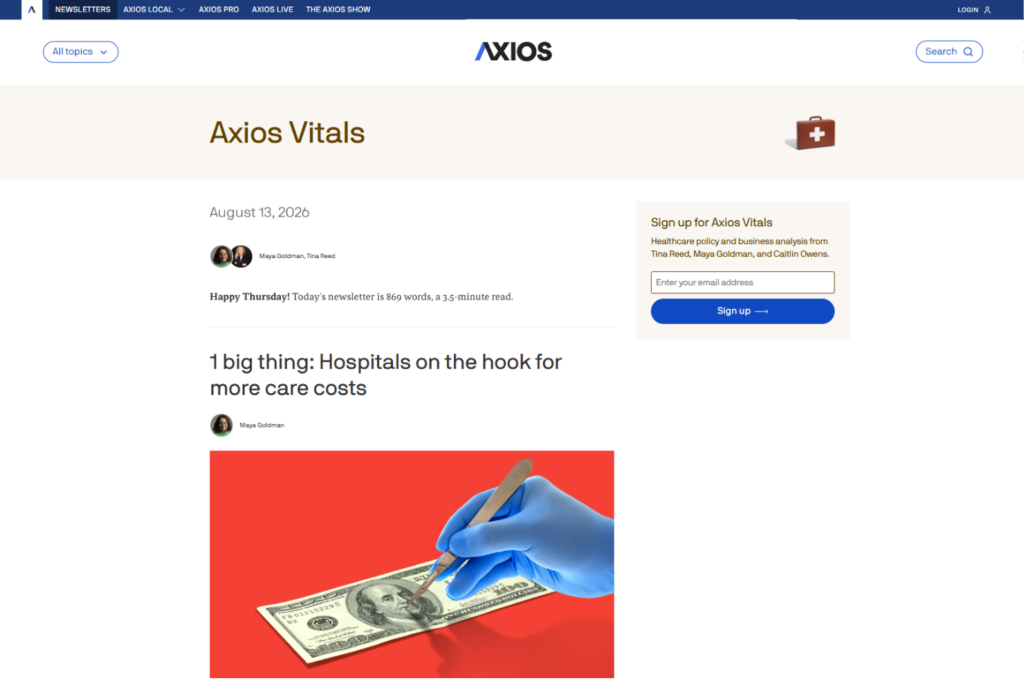
14. Axios Vitals - Best for healthcare policy and business news in “Smart Brevity” format
- Audience: Healthcare professionals, policy experts, and industry executives in the US
- Frequency: Every weekday
- Cost: Free
Axios Vitals is a weekday healthcare newsletter from Axios, written by reporters Tina Reed, Maya Goldman, and Caitlin Owens, covering US healthcare policy, regulation, and industry developments.
It uses Axios's "Smart Brevity" format, so each story is built around what happened, why it matters, and what's coming next—all in a few minutes of reading.
Why subscribe? If you're tracking federal policy, FDA decisions, drug pricing, or public health developments, Vitals keeps you up to date without requiring you to monitor multiple sources yourself. The "Why it matters" framing is genuinely useful—it goes beyond the headline to connect policy moves to real-world clinical and operational impact.
I'd recommend it for anyone in a leadership, administrative, or policy-adjacent role who needs to stay informed on the forces shaping US healthcare.
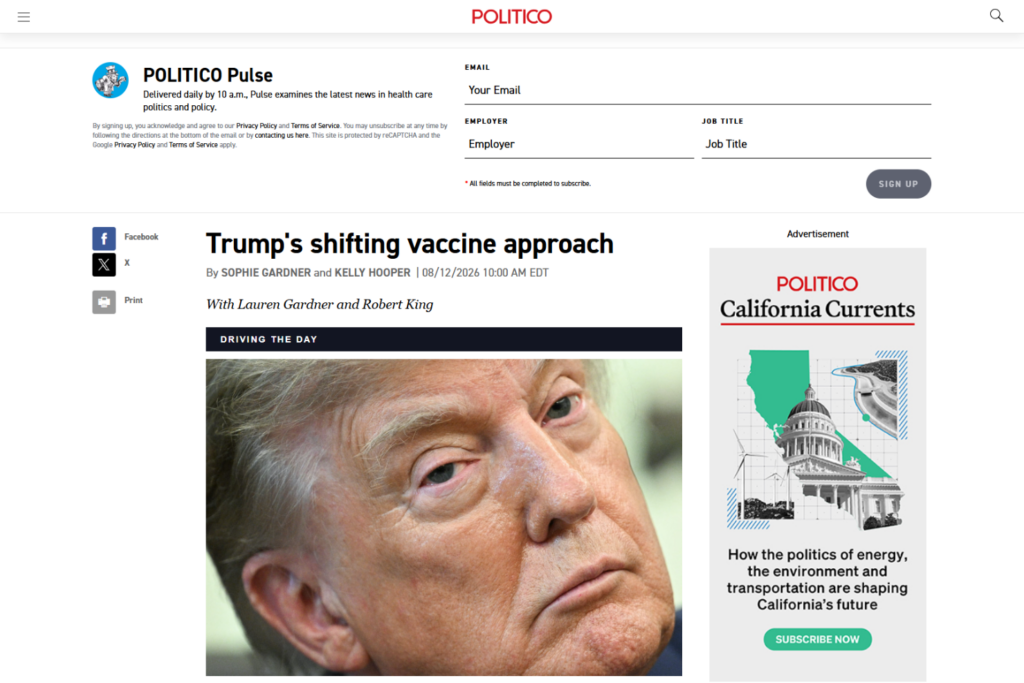
15. POLITICO Pulse - Best for daily US healthcare policy and Washington news
- Audience: US healthcare policy professionals and government affairs staff
- Frequency: Daily
- Cost: Free
POLITICO Pulse is a daily weekday newsletter from POLITICO, written by Sophie Gardner and Kelly Hooper, focused entirely on US healthcare politics and federal policy. It lands in your inbox by 10 a.m. ET, covering everything from HHS and CMS decisions to drug pricing battles and congressional health legislation.
Why subscribe? Pulse goes deep on the Washington mechanics of healthcare—agency-level moves, lobbying activity, and policy shifts that eventually trickle down to clinical and operational realities. Recurring sections like "Around the Agencies" and "Industry Intel" give you a structured look at where federal decisions are heading before they become headline news.
I'd particularly recommend it if you're in a policy, compliance, or executive role where understanding the regulatory and legislative environment is part of your job.
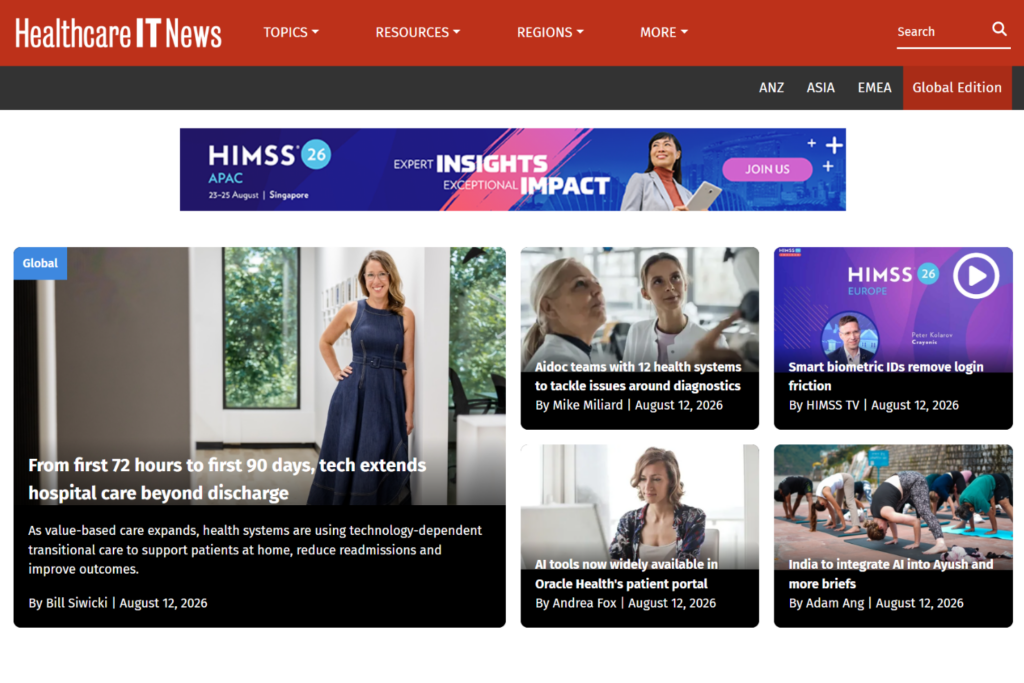
16. Healthcare IT News - Best for global healthcare technology and IT updates
- Audience: Hospital and health system IT leaders and executives
- Size: 85,000+ members
- Frequency: Daily, weekly, and twice-monthly
- Cost: Free
Healthcare IT News is a HIMSS Media publication covering the people, policy, and technology shaping modern healthcare delivery, with a global readership spanning the US, Europe, Asia, and beyond.
Contributors like Mike Miliard, Bill Siwicki, and Andrea Fox report across topics including AI, cybersecurity, EHRs, interoperability, and telehealth.
Why subscribe? What sets Healthcare IT News apart is its specialized newsletters—beyond the daily news edition, you can subscribe to focused briefings on cybersecurity, telehealth, government policy, and women in health IT, so you get coverage that maps to your specific role.
The global perspective is also a real differentiator, with regional editions for EMEA and Asia Pacific that most healthcare newsletters don't offer.
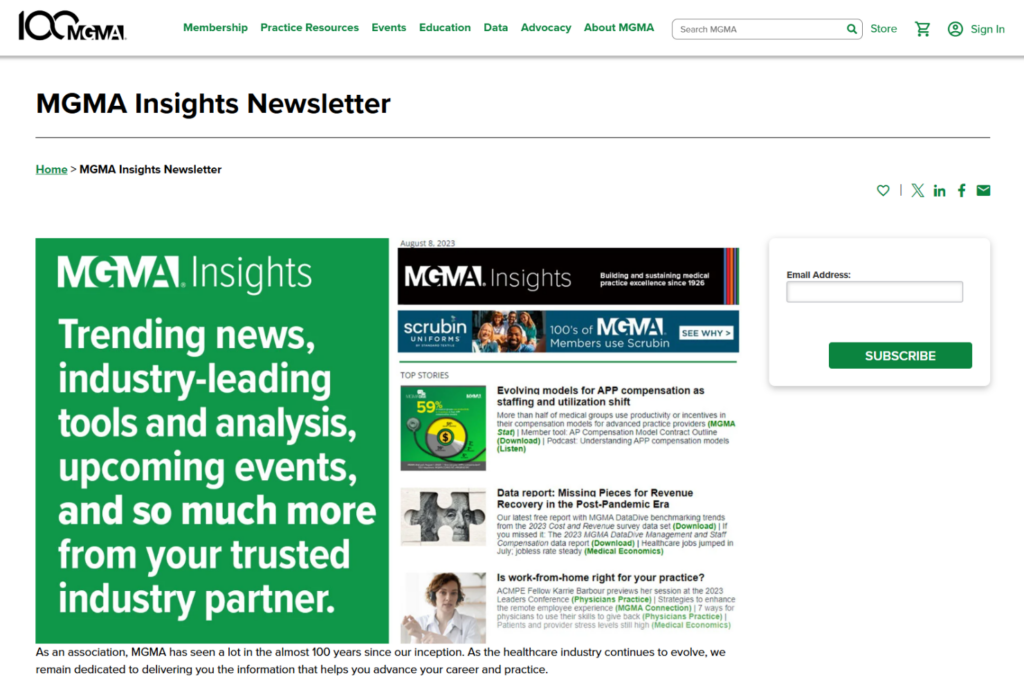
17. MGMA Insights - Best for medical practice management leaders
- Audience: US medical practice leaders and administrators
- Frequency: Weekly
- Cost: Free
The weekly newsletter from the Medical Group Management Association, MGMA Insights, is one of the most established voices in medical practice management with nearly a century of history.
It delivers news, analysis, toolkits, and thought leadership curated specifically for practice leaders and administrators.
Why subscribe? What makes MGMA Insights worth your time is the practical, operational focus—each Tuesday edition includes ready-to-use resources and best practices vetted by MGMA experts, not just industry commentary. If you're running a physician group or medical practice, the mix of actionable toolkits and upcoming events keeps you connected to both day-to-day operations and the broader profession.
I'd particularly recommend this newsletter for medical practice managers and administrators who want guidance grounded in established industry standards rather than general healthcare news.
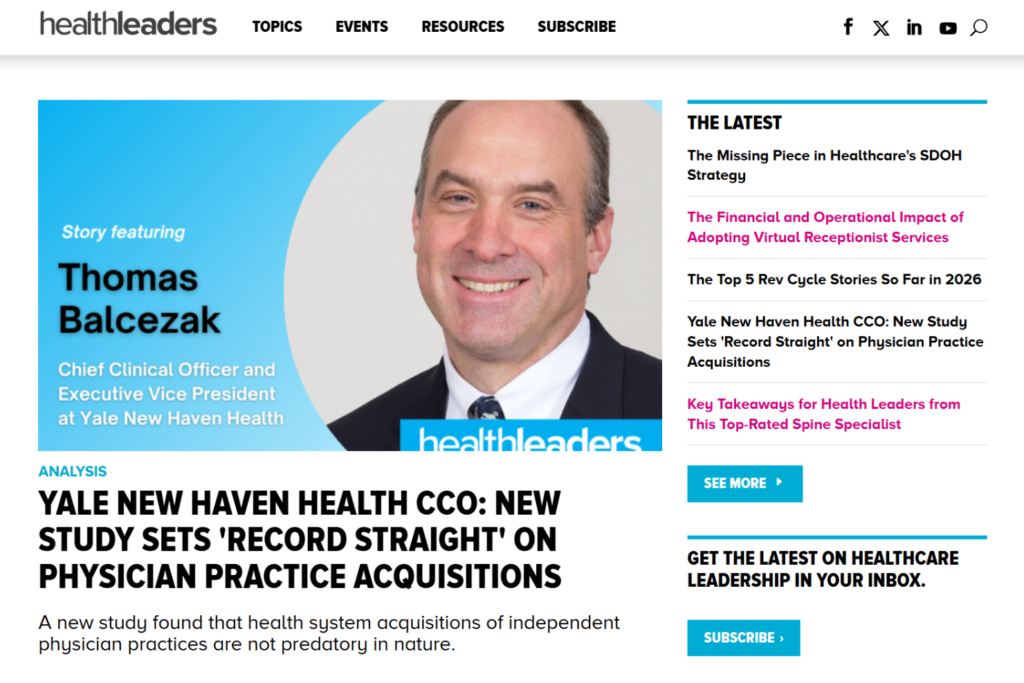
18. HealthLeaders - Best for healthcare C-suite and strategy insights
- Audience: US healthcare C-suite and senior hospital executives
- Size: 125,000+ members
- Frequency: Daily or weekly (depending on the edition)
- Cost: Free
HealthLeaders is a suite of free e-newsletters from HCPro, built specifically for hospital and health system executives navigating leadership, finance, technology, and operations.
Each edition is framed as an "analyst in your pocket," combining news with predictive analysis from an experienced editorial team.
Why subscribe? The real draw here is its executive-level analysis—HealthLeaders isn't summarizing headlines; it's helping you interpret what those headlines mean for your organization's strategy and bottom line.
You can also tailor your subscriptions by topic, choosing from focused editions covering finance, nursing, physicians, health plans, and more, so your inbox reflects your actual priorities.
19. HEALTHbeat - Best for trusted evidence-based wellness advice
- Audience: Adults seeking evidence-based wellness and medical advice
- Frequency: Weekly
- Cost: Free
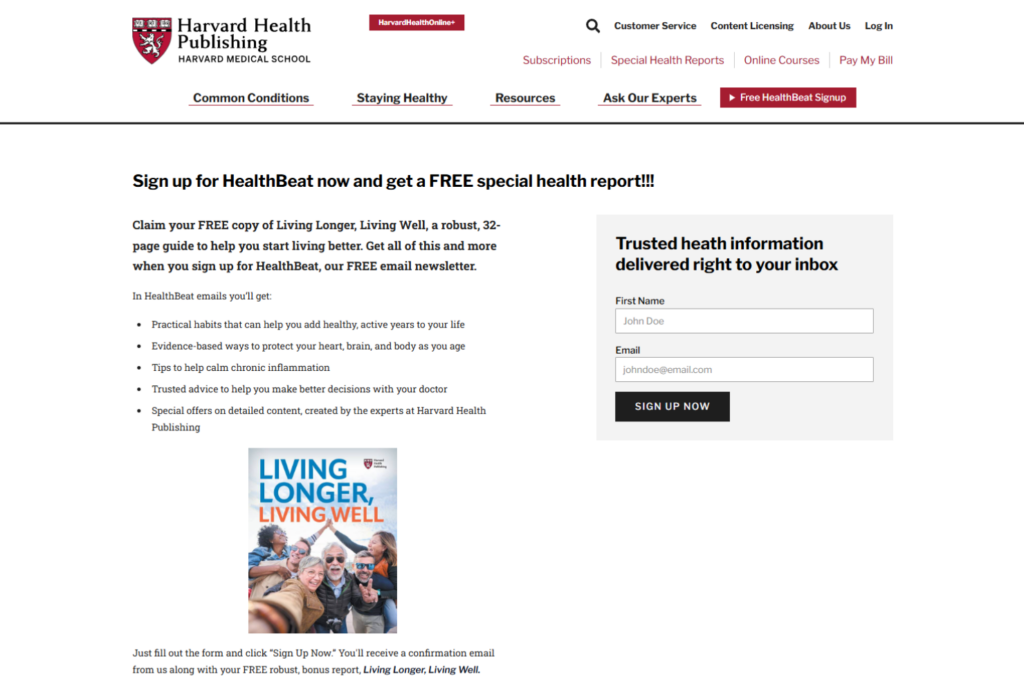
HEALTHbeat is a free weekly email newsletter from Harvard Health Publishing, the consumer health division of Harvard Medical School. It delivers evidence-based health guidance written and reviewed by Harvard Medical School faculty and physicians.
Why subscribe? With HEALTHbeat, you're getting recommendations grounded in clinical research and vetted by practicing physicians, not wellness bloggers. For healthcare professionals, it's a useful read for staying connected to how evidence-based guidance is communicated to patients, which can sharpen how you answer questions and frame health conversations in your own practice.
It covers a wide range of topics, from nutrition and exercise to medications and chronic disease management, making it broadly relevant regardless of your specialty.
20. The Health Care Blog - Best for opinionated takes on health policy and industry trends
- Audience: Healthcare executives, policymakers, clinicians, and health tech insiders
- Size: 3,000+ members
- Frequency: Weekly
- Cost: Free
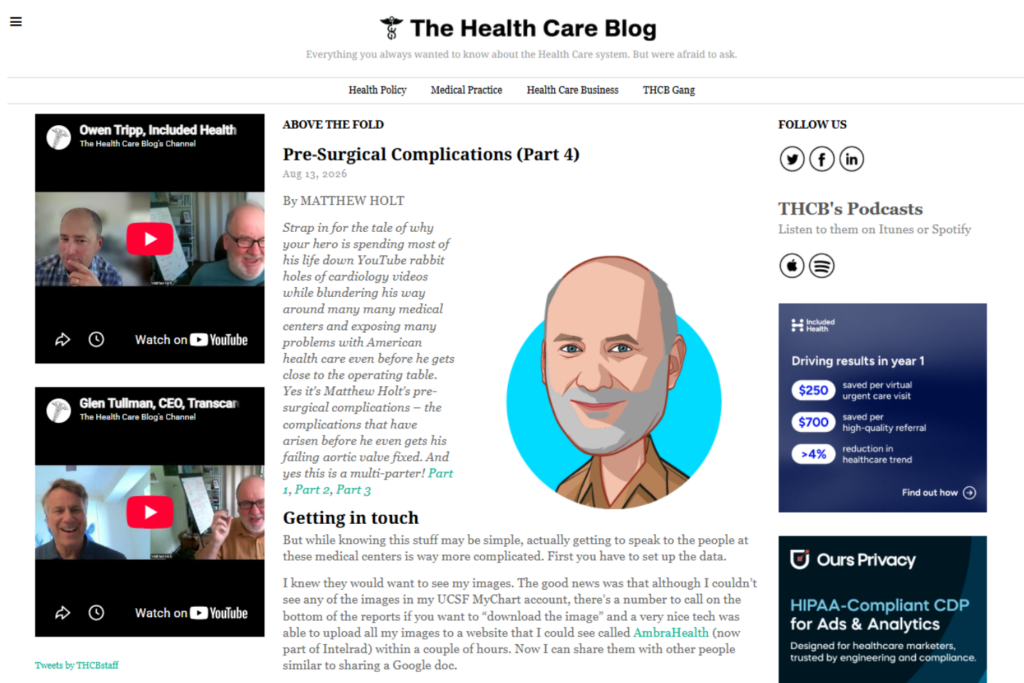
The Health Care Blog (THCB) has been publishing since 2003, making it one of the longest-running independent voices in healthcare media. Founded by Matthew Holt and praised by the Wall Street Journal as "the leading insider voice in the field," it draws contributors from across the industry—executives, physicians, policymakers, and researchers.
Why subscribe? THCB's value is in its range and honesty—you'll get sharp, unfiltered opinions on health policy, the business of care, and health technology from people who are actually in the trenches. It's especially useful if you want to stress-test your own thinking on industry direction, because the perspectives here don't follow a single editorial line.
Contributors like Jeff Goldsmith and Kim Bellard bring decades of experience, and the mix of long-form analysis, interviews, and podcast content gives you multiple ways to engage with the material.
More Articles
21. Second Opinion - Best for insider analysis on digital health and healthtech
- Audience: Healthtech founders, executives, investors, and operators
- Size: 22,000+ members
- Frequency: Bi-weekly
- Cost: Free
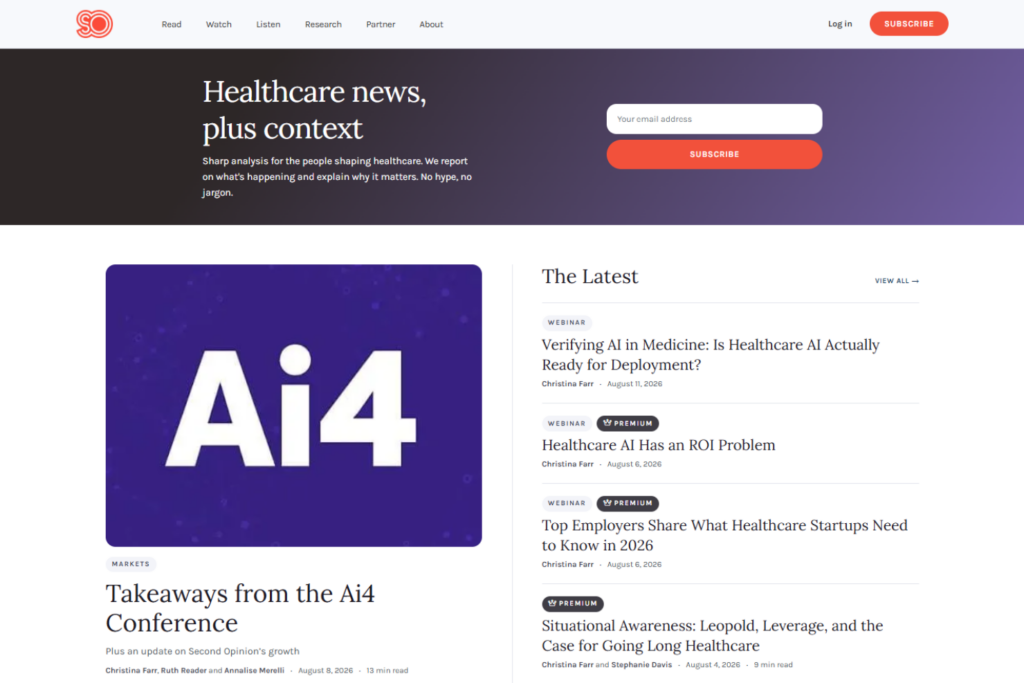
Second Opinion is a healthtech-focused newsletter run by Christina Farr, a former CNBC health-tech journalist turned venture investor, alongside contributors like Ruth Reader and Alexa Mikhail.
It covers the business side of healthcare—funding, digital health trends, AI, insurance, and care delivery—for an audience of founders, operators, and executives.
Why subscribe? What Second Opinion apart is Farr's dual lens as both a journalist and investor—you're getting analysis that understands both the editorial and the capital side of healthtech. Coverage spans product launches, regulatory shifts, and market moves, so you'll stay current on what's actually shaping the industry.
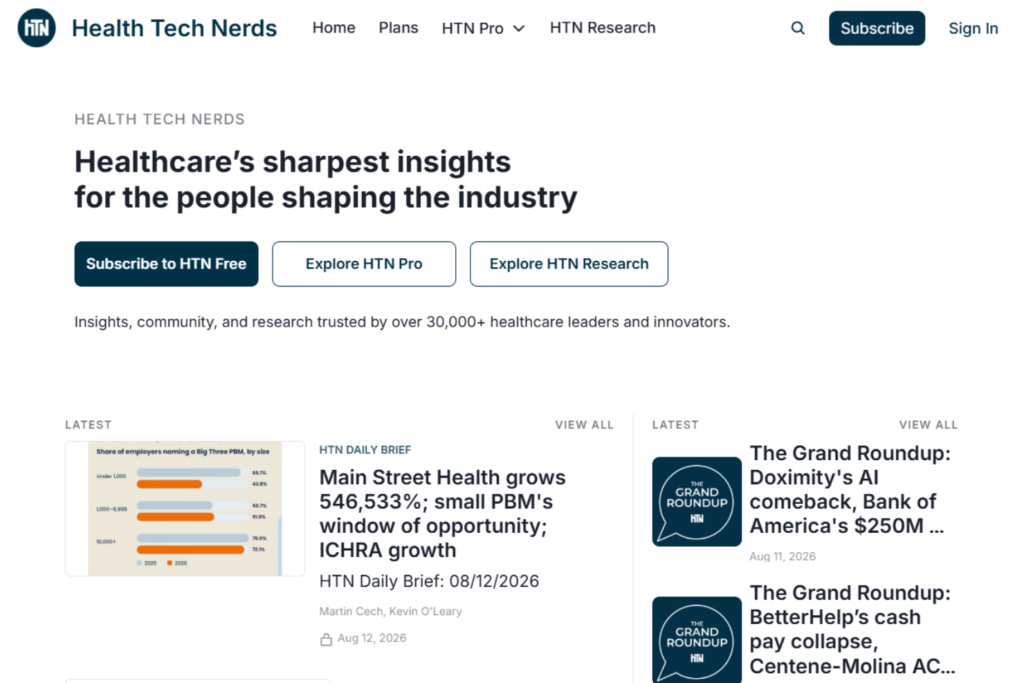
22. Health Tech Nerds - Best for in-depth healthcare news and engaged healthtech community
- Audience: Healthcare and healthtech leaders, operators, and investors
- Size: 30,000+ members
- Frequency: Weekly
- Cost: Free; From $40/monthly
Health Tech Nerds (HTN) is a newsletter and community founded by Kevin O'Leary in 2017, covering the business of healthcare and health tech for leaders, operators, and investors.
Co-authored with Martin Cech, it spans funding news, market trends, and industry analysis across a free weekly edition and a paid daily brief.
Why subscribe? Beyond the newsletter itself, HTN includes a 5,500+ member Slack community for engaging with peers. The free Sunday edition gives you O'Leary's take on the week's biggest healthcare moves, while the paid Daily Brief goes deeper on market and business analysis Tuesday through Friday.
If you're looking for both a news source and a network of healthtech professionals, HTN covers both in one place.
Keep Reading
Here are some other lists of top healthcare newsletters:
- Informative nursing newsletters covering the latest updates and best practices in nursing
- Essential dental newsletters providing insights and trends in the dental field
What’s Next?
To stay updated on the latest trends, best practices, and solutions related to your medical practice, subscribe to The Medical Practice newsletter.