

EMR-programvare for kirurgi er en digital plattform som er utviklet for å dokumentere, administrere og effektivisere alle aspekter ved kirurgisk pasientbehandling og kliniske arbeidsflyter. Hvis du leter etter den beste EMR-programvaren for kirurgi, ønsker du sannsynligvis å forbedre driftseffektiviteten, redusere feil og støtte teamet ditt med verktøy som er tilpasset behovene innen ditt fagområde. Med strenge krav til regelverksetterlevelse, høyt pasientvolum og behovet for å koordinere behandlingen på tvers av kliniske og administrative team kan det å velge riktig EMR hjelpe deg med å oppnå sikrere og mer konsistente resultater. Denne listen gir deg en oversikt over de best vurderte alternativene, slik at du kan finne programvare som passer til de unike behovene i kirurgisk praksis.
Why Trust Our Software Recommendations
6,700+
Reviews
20
Industry experts
16+
Evaluation factors
14
Years
Our team has been testing and reviewing software since 2012. As medical practice leaders ourselves, we know how difficult—and important—it is to choose the right software.
For this guide, we evaluated tools using hands-on testing and independent research, scoring tools using our selection criteria.
Our reviews reflect our human editorial judgment, not a sales pitch.
Sammenligningstabell for EMR-programvare for kirurgi
Denne sammenligningstabellen oppsummerer prisopplysningene for mine beste utvalg av EMR-programvare for kirurgi:
| Tool | Best For | Trial Info | Price | ||
|---|---|---|---|---|---|
| 1 | Best for plastic surgery EHR, scheduling | Free demo available | Pricing upon request | Website | |
| 2 | Best for enterprise surgical care | Not available | Pricing upon request | Website | |
| 3 | Best for coordinating perioperative care | Not available | Pricing upon request | Website | |
| 4 | Best for voice-enabled charting | Free demo available | Pricing upon request | Website | |
| 5 | Best for configurable surgical workflows | Free demo available | Pricing upon request | Website | |
| 6 | Best for specialty-specific surgical documentation | Free demo available | Pricing upon request | Website | |
| 7 | Best for managing plastic surgery | Free demo available | Pricing upon request | Website | |
| 8 | Best for integrated ASC scheduling | Free demo available | Pricing upon request | Website | |
| 9 | Best for end-to-end surgery center management | Free demo available | Pricing upon request | Website | |
| 10 | Best for cloud-based clinical documentation | Free demo available | Pricing upon request | Website |


Anmeldelser av den beste EMR-programvaren for kirurgi
Nedenfor finner du mine detaljerte sammendrag av den beste EMR-programvaren for kirurgi som kom med på kortlisten. Anmeldelsene mine gir en grundig gjennomgang av funksjonene, de beste bruksområdene og integrasjonene til hver plattform, slik at du kan finne den som passer best for deg.
 Best for plastic surgery EHR, scheduling
- Free demo available
- Pricing upon request
Visit WebsiteCustomer Rating:4.3/5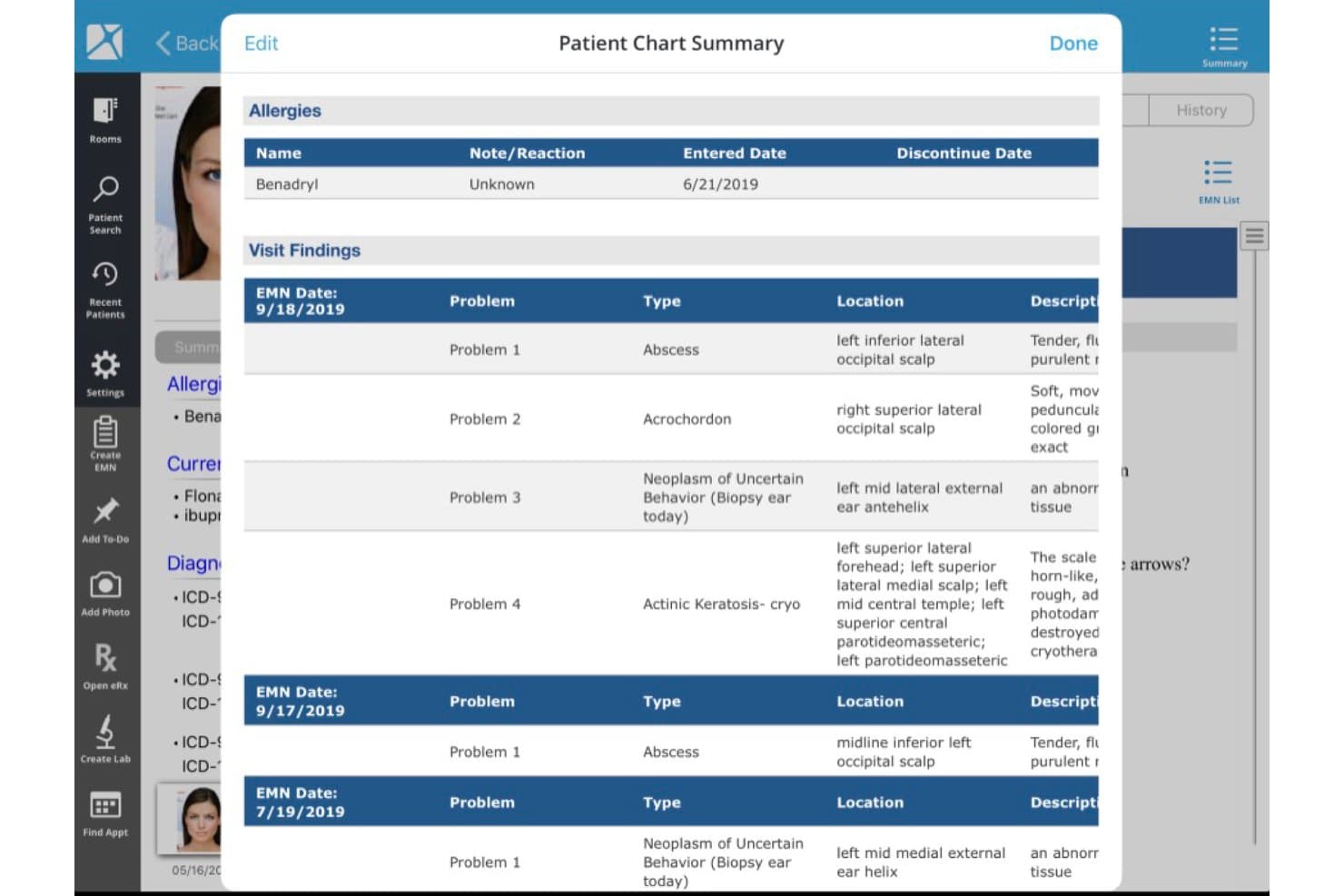
Nextech offers a Patient Chart Summary view that displays allergies, visit findings, problem types, locations, and descriptions across multiple EMN dates in a structured table format. Nextech is a cloud-based EHR and practice management platform built specifically for plastic surgery practices, combining customizable operative templates, integrated photo management, e-prescribing, and ASC billing in a single system.
Who Is Nextech Best For?
Nextech is a strong fit for plastic surgery practices and ASCs that need a specialty-specific clinical and billing system built around cosmetic and reconstructive workflows.
Why I Picked Nextech
I picked Nextech as one of the best because its plastic surgery EHR goes deeper than generic operative templates. The smart stamping tool lets me point-and-click directly onto anatomical diagrams to document injection sites and surgical markings, and the built-in photo management pulls before-and-after images directly into the chart. Scheduling ties directly to the patient record, so pre-op consults, procedure dates, and post-op follow-ups all live in one place.
Nextech Key Features
- Customizable surgical templates: Create specialty-driven documentation for a wide range of plastic surgery procedures.
- Integrated e-prescribing with EPCS: Manage pre-op and post-op prescriptions, including controlled substances, from within the EMR.
- Cloud-based access: Chart and review patient records securely from any web-enabled device at any location.
- ASC billing and membership management: Handle ambulatory surgery center claims, subscriptions, and payment plans directly in the platform.
Nextech Integrations
Nextech offers native integrations with Clearwave, DermoPRO, ConnectOnCall, Zocdoc, Affirm, Stripe, and TouchMD. It also supports integrations via its API and FHIR standards through the MyPatientVisit portal.
Pros and Cons
Pros:
- Fully integrated ASC and cosmetic billing workflows
- Built-in pre-op and post-op image management
- Plastic surgery-specific operative and charting tools
Cons:
- Less suitable for multi-specialty surgical practices
- Lacks intraoperative anesthesia and implant tracking
Learn more about Nextech: 2Best for enterprise surgical care
Epic
- Not available
- Pricing upon request
Visit WebsiteCustomer Rating:4.2/5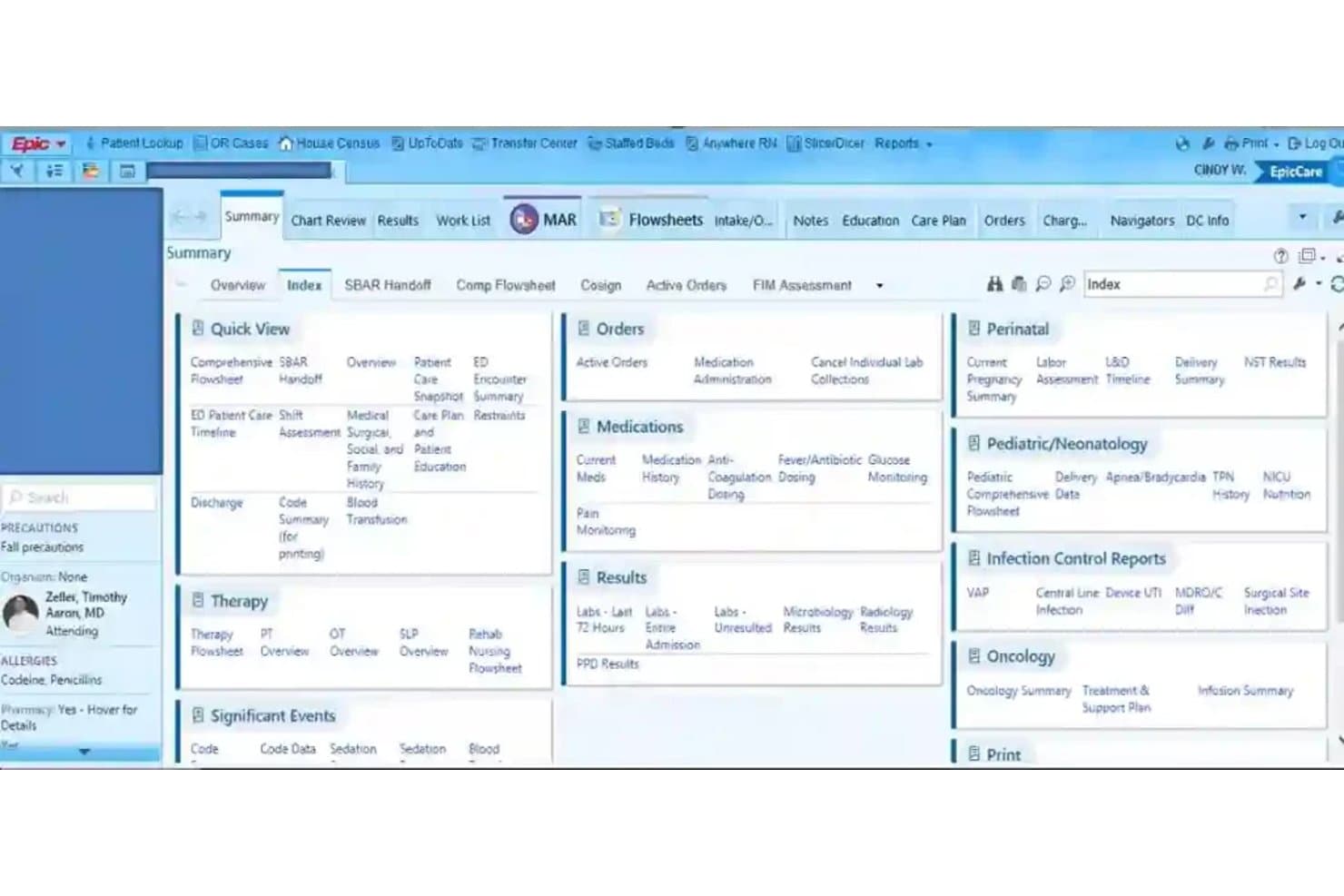
Epic offers a comprehensive patient summary dashboard with quick access to orders, medications, results, therapy, and infection control reports. Epic, delivered through CereCore's enterprise services, is a hospital-grade EHR platform covering perioperative documentation, OR scheduling, surgical coding, and revenue cycle management across inpatient and ambulatory surgical settings.
Who Is Epic Best For?
Epic is a strong fit for large hospital systems and integrated delivery networks managing surgical services across multiple facilities or care settings.
Why I Picked Epic
Epic earns its spot on my shortlist because no other EHR covers the full perioperative continuum at enterprise scale the way it does. OpTime handles OR/block scheduling, resource and staff assignment, and intra-operative documentation inside a single patient chart. I also like that surgical charge capture, CPT coding, and claims generation are all native to the platform, so surgical billing doesn't require a separate system.
Epic Key Features
- Anesthesia module: Lets you document anesthesia administration, capture vitals directly from monitors, and track time-stamped surgical events.
- Implant and supply tracking: Provides UDI-compliant implant logging and connects inventory changes directly to patient records.
- Surgical scheduling board: Offers visual OR block scheduling tools with support for staff, equipment, and turnover management.
- Interoperability tools: Supports HL7 and FHIR standards to connect with hospitals, labs, imaging, and referring providers.
Epic Integrations
Epic, as implemented by CereCore, supports integrations with systems like MEDITECH, Oracle Health (Cerner), and ServiceNow, and connects with third-party clinical applications through HL7 and FHIR standards. An API is available for custom integrations.
Pros and Cons
Pros:
- Native CPT-driven surgical charge capture and coding
- Supports large-scale multisite surgical coordination
- Offers end-to-end perioperative charting workflows
Cons:
- Designed primarily for hospital-based surgical settings
- Implementation timelines can be very lengthy
Learn more about Epic: Best for coordinating perioperative care
- Not available
- Pricing upon request
Visit WebsiteCustomer Rating:4/5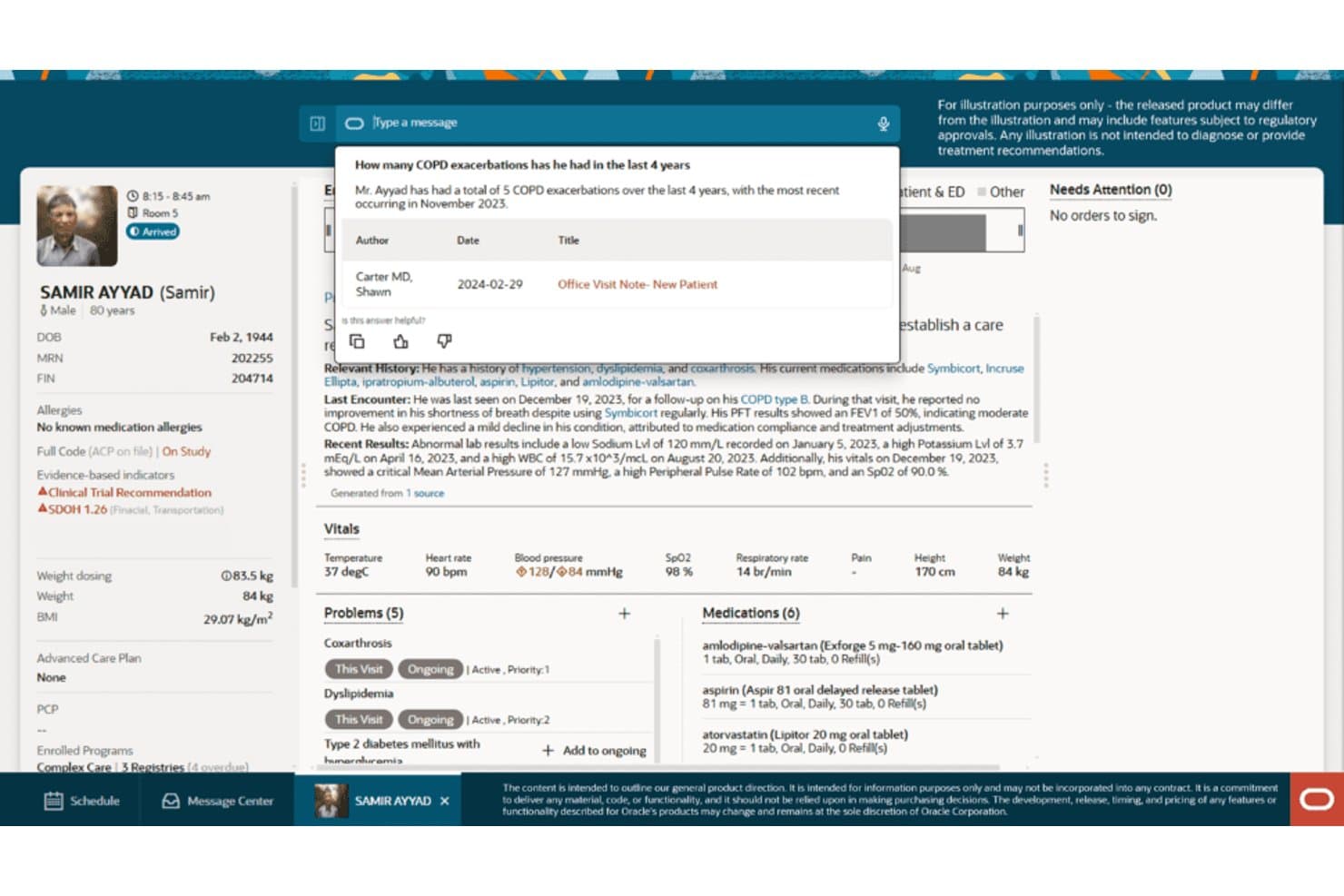
Oracle Health offers an AI-assisted patient summary interface that displays COPD exacerbation history, vitals, medications, and clinical notes within its EHR platform. Oracle Health is an enterprise EHR platform built for large health systems, covering perioperative documentation, anesthesia workflows, OR scheduling, surgical inventory management, and FHIR-based interoperability across the full surgical continuum.
Who Is Oracle Health Best For?
Oracle Health is a strong fit for large hospital systems and health networks that need a unified platform to manage surgical departments across multiple facilities.
Why I Picked Oracle Health
Oracle Health earns its spot on my shortlist because of how tightly it connects every phase of surgical care within one chart. I like that the Anesthesia module pulls device data and near real-time vitals directly into the EHR, keeping anesthesiologists and surgeons working from the same record. The built-in AORN Syntegrity documentation guidelines also mean surgical teams aren't manually building standardized perioperative workflows from scratch.
Oracle Health Key Features
- OR block scheduling board: Lets you assign rooms, equipment, and staff to cases with visual scheduling tools.
- Surgical inventory management: Tracks supply usage, device identifiers, and expiration alerts directly in the patient chart.
- HL7/FHIR-based interoperability: Connects with labs, imaging, anesthesia monitors, and referral networks for real-time data exchange.
- Customizable surgical note templates: Offers specialty-based documentation workflows for various procedures across multiple service lines.
Oracle Health Integrations
Oracle Health offers native integrations with Surescripts, Haemonetics BloodTrack, Oracle Cloud Infrastructure, and Multum Drug Database. It connects with medical devices such as infusion pumps and vital sign monitors, and provides FHIR and HL7 APIs for custom integrations.
Pros and Cons
Pros:
- Strong multi-facility OR scheduling coordination
- Advanced surgical inventory and implant tracking
- Comprehensive perioperative and anesthesia documentation
Cons:
- Limited fit for small or independent practices
- Configuration requires extensive professional services
Learn more about Oracle Health: Best for voice-enabled charting
- Free demo available
- Pricing upon request
Visit WebsiteCustomer Rating:3.9/5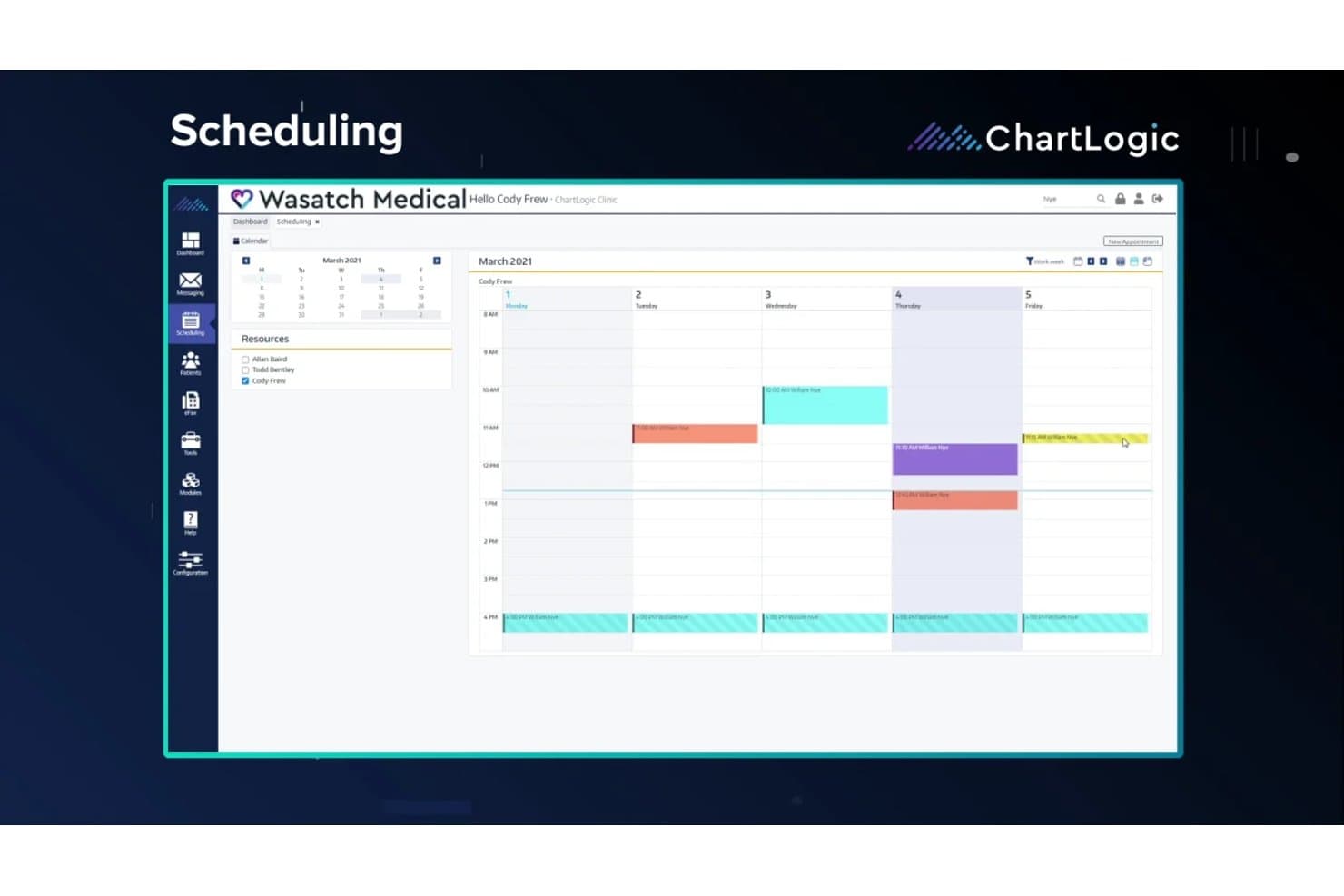
ChartLogic offers a weekly calendar scheduling view with color-coded appointments and resource filtering by provider. ChartLogic is an ambulatory EMR built for surgical specialties, combining voice-driven clinical documentation, customizable specialty templates, practice management, and integrated RCM into a single platform.
Who Is ChartLogic Best For?
ChartLogic is a strong fit for solo and small-to-mid-sized surgical practices where physicians handle their own documentation and need fast, voice-driven charting.
Why I Picked ChartLogic
I've included ChartLogic in my top picks because its PrecisionVoice technology goes beyond basic dictation. Surgeons can navigate the entire note, insert sub-templates, and enter data using voice commands alone, without touching a keyboard. That means a complete surgical note in under 90 seconds. ChartLogic also displays the entire patient note on a single screen, so there's no clicking through pop-ups or drop-downs mid-documentation.
ChartLogic Key Features
- Specialty-specific templates: Pre-built templates for general, orthopedic, podiatry, ophthalmology, and pain management surgery charting.
- Integrated practice management: Scheduling, billing, and reporting tools are unified within the EMR platform.
- Lab and imaging connectivity: Direct connections to national lab networks and radiology systems for fast data exchange.
- ONC-certified clinical compliance: Meets federal certification requirements and supports MIPS participation for value-based programs.
ChartLogic Integrations
ChartLogic offers native integrations with CGM LABDAQ, FlexScanMD, and Change Healthcare's Clinical Network for labs and radiology. An API is available for custom integrations.
Pros and Cons
Pros:
- ONC-certified with MIPS support
- Specialty templates for multiple surgical fields
- Voice-driven note creation for surgeons
Cons:
- Limited OR scheduling and resource management
- Weak perioperative workflow features
Learn more about ChartLogic: Best for configurable surgical workflows
- Free demo available
- Pricing upon request
Visit WebsiteCustomer Rating:3.7/5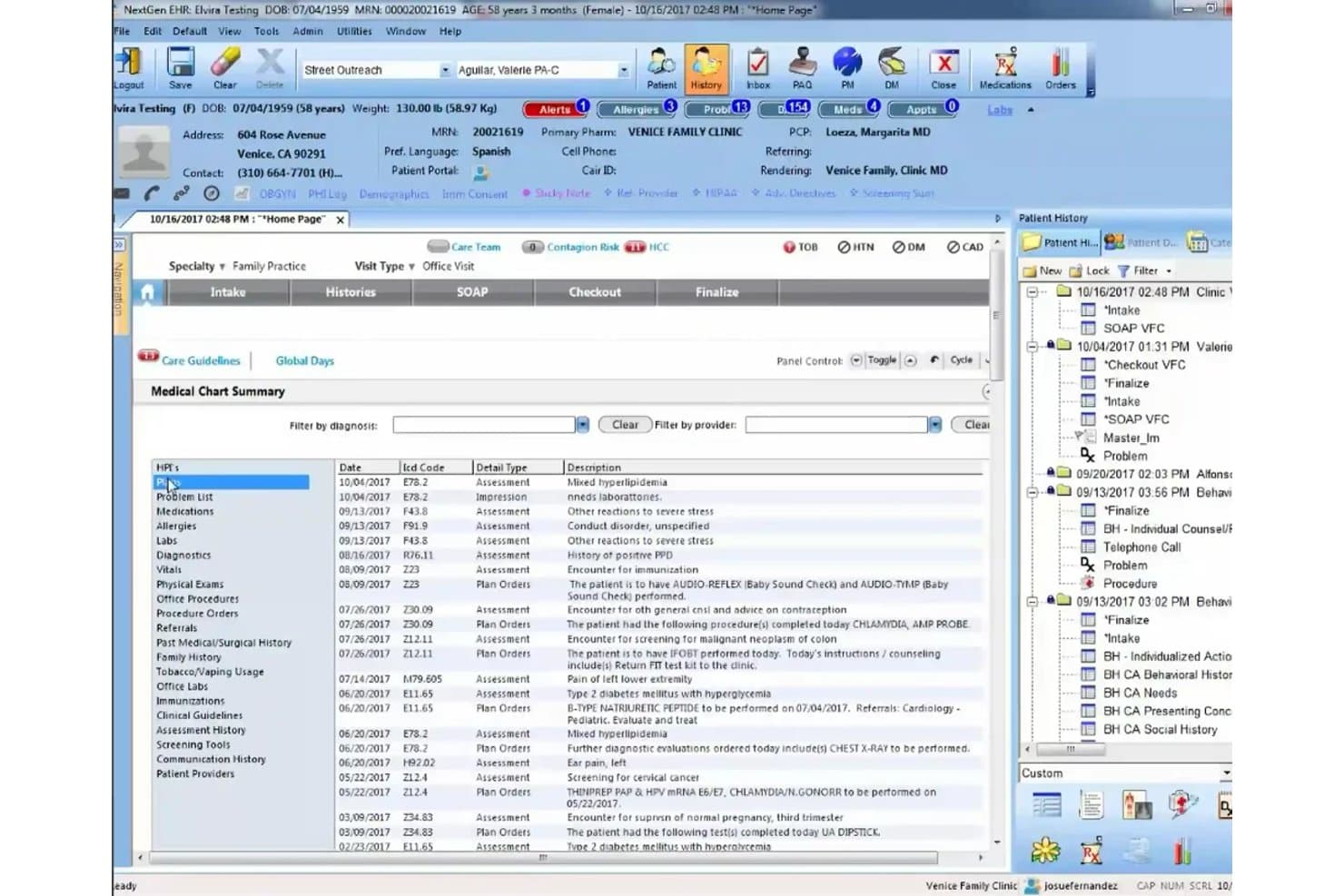
NextGen Healthcare offers a Medical Chart Summary view displaying patient history, diagnoses, ICD codes, and assessment details within its EHR interface. NextGen Healthcare is an ambulatory EHR platform built for surgical and specialty practices, combining specialty-specific clinical templates, surgical scheduling, charge capture, and HL7/FHIR interoperability in a single system.
Who Is NextGen Healthcare Best For?
It's a strong fit for ambulatory surgery centers and multi-provider surgical specialty practices that need configurable clinical workflows without a hospital-grade system.
Why I Picked NextGen Healthcare
I picked NextGen Healthcare as one of the best because of how deeply you can configure its surgical workflows without needing a hospital-grade system. I like that surgery scheduling is built directly into the clinical chart, so my team can link OR resources, staff assignments, and pre-op documentation in one place. The Ambient Assist AI also captures structured SOAP notes and suggests ICD-10 codes and charges on the fly, which cuts a lot of manual steps out of post-op documentation.
NextGen Healthcare Key Features
- Specialty-specific surgical templates: Provides orthopedic, plastic, ophthalmic, and multiple other surgical note layouts with CPT and procedure linking.
- Integrated e-prescribing with EPCS support: Allows electronic management of controlled substance prescriptions for surgical patients within the workflow.
- ONC-certified interoperability tools: Includes HL7 and FHIR connectivity to hospital systems, labs, imaging, and referring providers.
- Revenue cycle management integration: Supports charge capture, surgical coding with modifiers, and direct connection to PM and clearinghouse platforms.
NextGen Healthcare Integrations
NextGen Healthcare offers native integrations with Mirth Connect, Waystar, CoverMyMeds, InstaMed, HST Case Coordination, HST Price Transparency, and NextGen Share Diagnostic Hub for lab connectivity. An API is available for custom integrations.
Pros and Cons
Pros:
- Ambulatory and ASC workflows managed in one chart
- Embedded surgery scheduling links resources and documentation
- Highly configurable surgical templates for multiple specialties
Cons:
- Reported slower response times during peak hours
- Limited intraoperative nursing and anesthesia charting
Learn more about NextGen Healthcare: Best for specialty-specific surgical documentation
- Free demo available
- Pricing upon request
Visit WebsiteCustomer Rating:4.5/5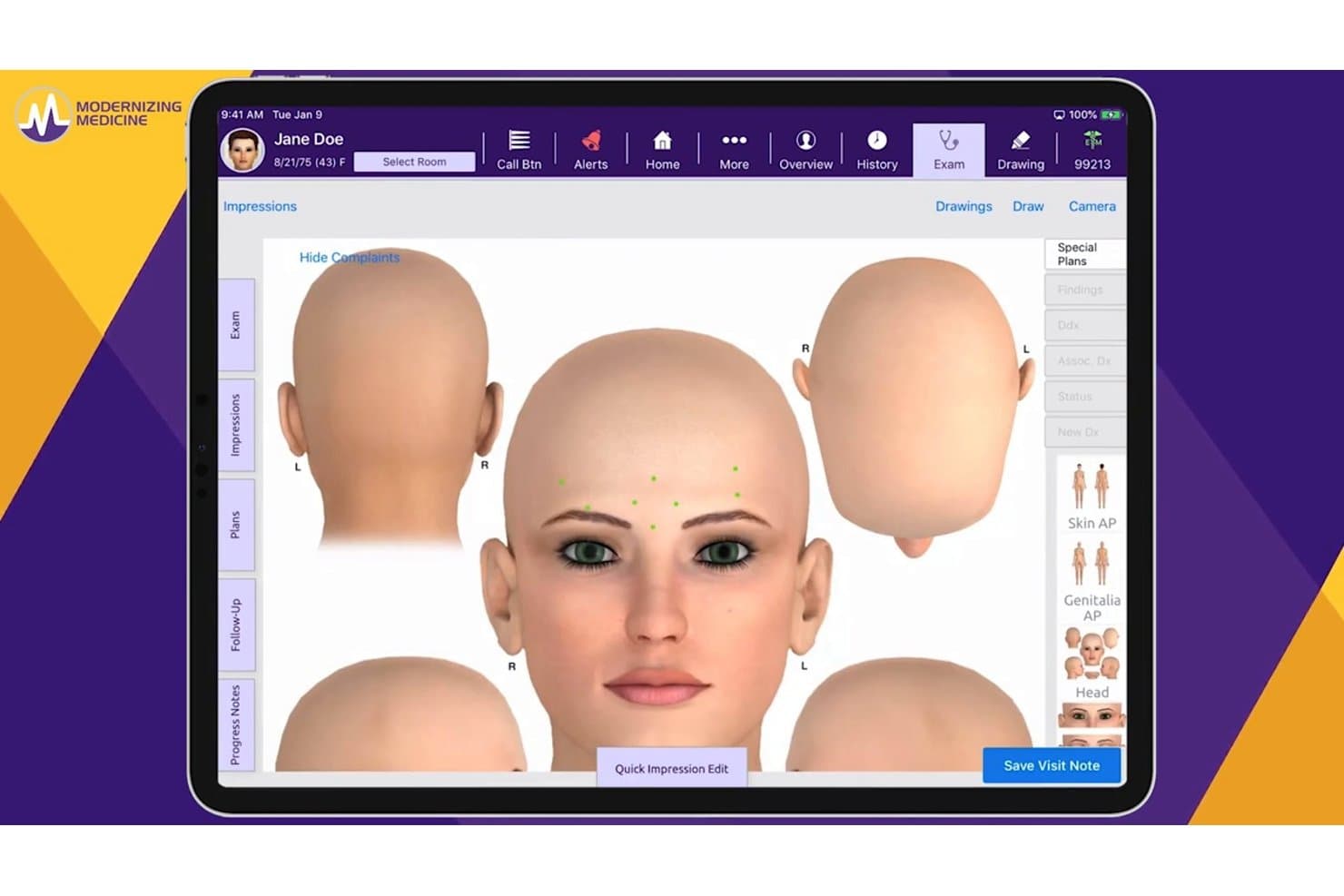
ModMed offers a 3D anatomical body diagram tool within its EHR platform, allowing providers to visually map patient complaints directly on a rendered head model during the exam. ModMed is a specialty-specific EHR platform that combines surgical documentation, perioperative charting, CPT-driven coding, e-prescribing, and practice management across multiple surgical disciplines.
Who Is ModMed Best For?
ModMed is a strong fit for specialty surgical practices and ambulatory surgery centers operating across disciplines like orthopedics, plastic surgery, ophthalmology, ENT, and urology.
Why I Picked ModMed
ModMed earns its spot on my shortlist because of how deeply it bakes surgical specialty into the documentation layer itself. The ModMed ASC module comes with built-in specialty-specific surgical narratives that nurses, anesthesiologists, and surgeons can complete simultaneously during a procedure. I also like the adaptive CPT coding engine, which learns each surgeon's documentation patterns and surfaces relevant codes and modifiers automatically.
ModMed Key Features
- Surgical scheduling board: Lets staff visually manage OR block scheduling with specific room, staff, and equipment assignments.
- Integrated anesthesia module: Captures real-time vitals and drug administration events directly from anesthesia workflows.
- UDI-compliant implant tracking: Tracks implants and supplies by barcode for each case, linking usage to patient records.
- Accreditation-ready reporting: Delivers built-in ASC certification, MIPS/MACRA, and CMS ASCQR quality reporting tools.
ModMed Integrations
ModMed offers native integrations with Surescripts, Klara, Relatient, TouchMD, and has a certified FHIR API for custom integrations. HL7 connectivity supports hospital, lab, and imaging system integrations.
Pros and Cons
Pros:
- Unified perioperative charting for entire surgical team
- Adaptive CPT coding engine learns physician style
- Specialty-driven surgical templates for multiple disciplines
Cons:
- No public pricing for quick evaluation
- ASC scheduling board lacks advanced multi-site features
Learn more about ModMed: Best for managing plastic surgery
- Free demo available
- Pricing upon request
Visit WebsiteCustomer Rating:3/5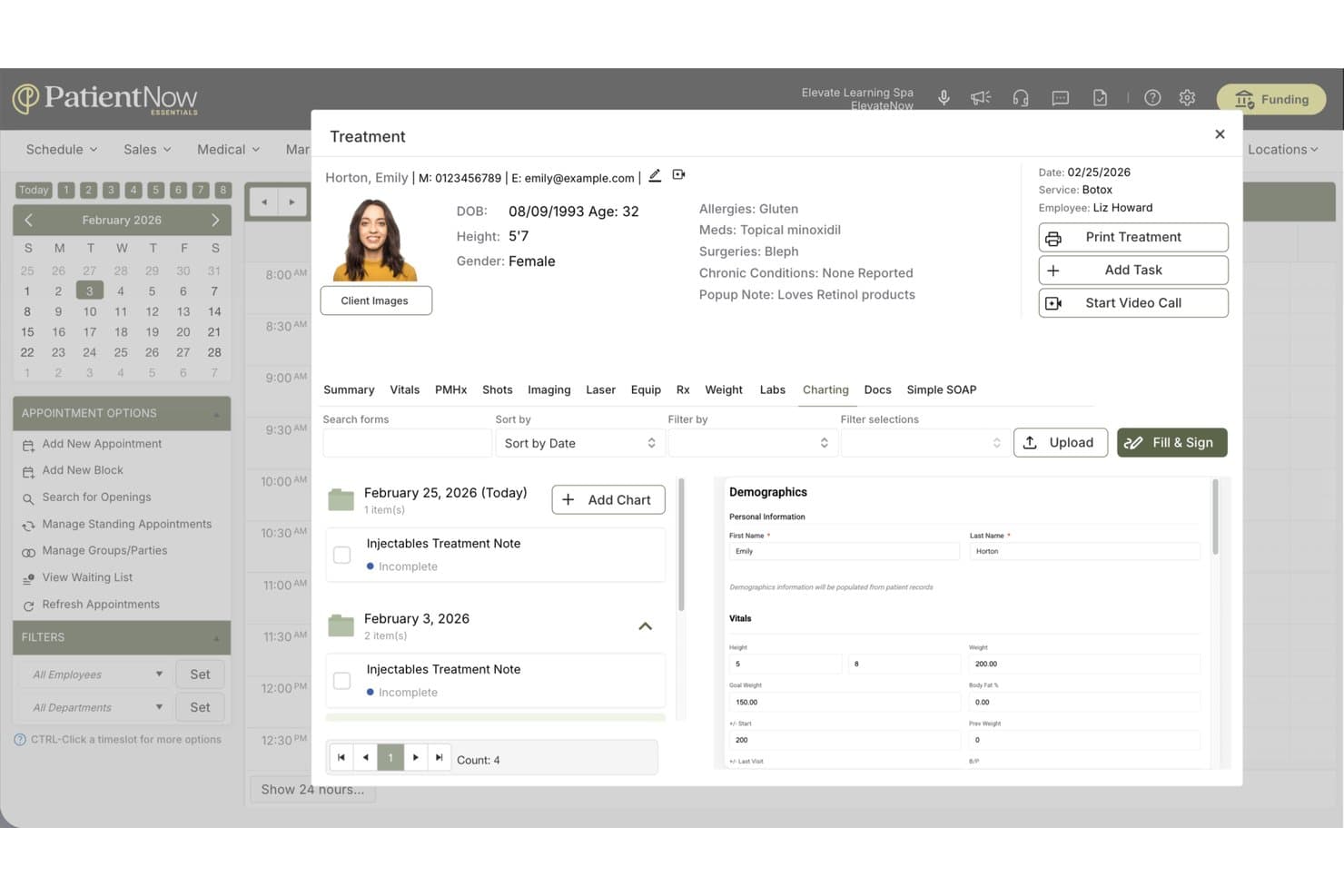
PatientNow offers a charting tab within its treatment modal, displaying patient demographics, vitals, and injectable treatment notes organized by date. PatientNow is an aesthetic and wellness EMR platform with clinical charting templates, AI-assisted documentation, digital intake, photo-based recordkeeping, ePrescribing, and practice management tools built specifically for plastic surgery and cash-pay practices.
Who Is PatientNow Best For?
PatientNow is a good fit for plastic surgeons and aesthetic practice owners running office-based, cash-pay practices who need specialty-specific charting tools.
Why I Picked PatientNow
I picked PatientNow as one of the best because its plastic surgery charting goes deeper than what you'd get from a general surgical EMR. The built-in RxPhoto module lets me annotate before-and-after photos directly inside the patient record, linking images to consents and treatment notes in a single chart. On top of that, the AI Scribe drafts structured visit notes from the same encounter, which I can review and sign without toggling between systems.
PatientNow Key Features
- Customizable surgical charting templates: Choose from specialty templates for injectables, surgery, weight loss, or wellness and adapt them to your workflow.
- Digital patient intake and consent capture: Deliver forms and consents by SMS or email and store completed files in the patient record automatically.
- Integrated ePrescribing and lab orders: Access 120+ e-prescribing and lab vendors directly within the patient chart for streamlined medication and order management.
- Practice management and scheduling tools: Centralize appointment booking, staff management, and payments in one platform built for office-based surgical practices.
PatientNow Integrations
PatientNow offers native integrations with QuickBooks Online, Optum for insurance processing, Swell Reputation Management, WooCommerce, Yext, and Tippy, and provides API access for custom integrations.
Pros and Cons
Pros:
- Digital intake forms and consent management
- Photo management for before-and-after documentation
- Specialty templates for aesthetic and plastic surgery
Cons:
- Limited intraoperative and anesthesia charting
- No ASC or hospital facility workflows
Learn more about PatientNow:
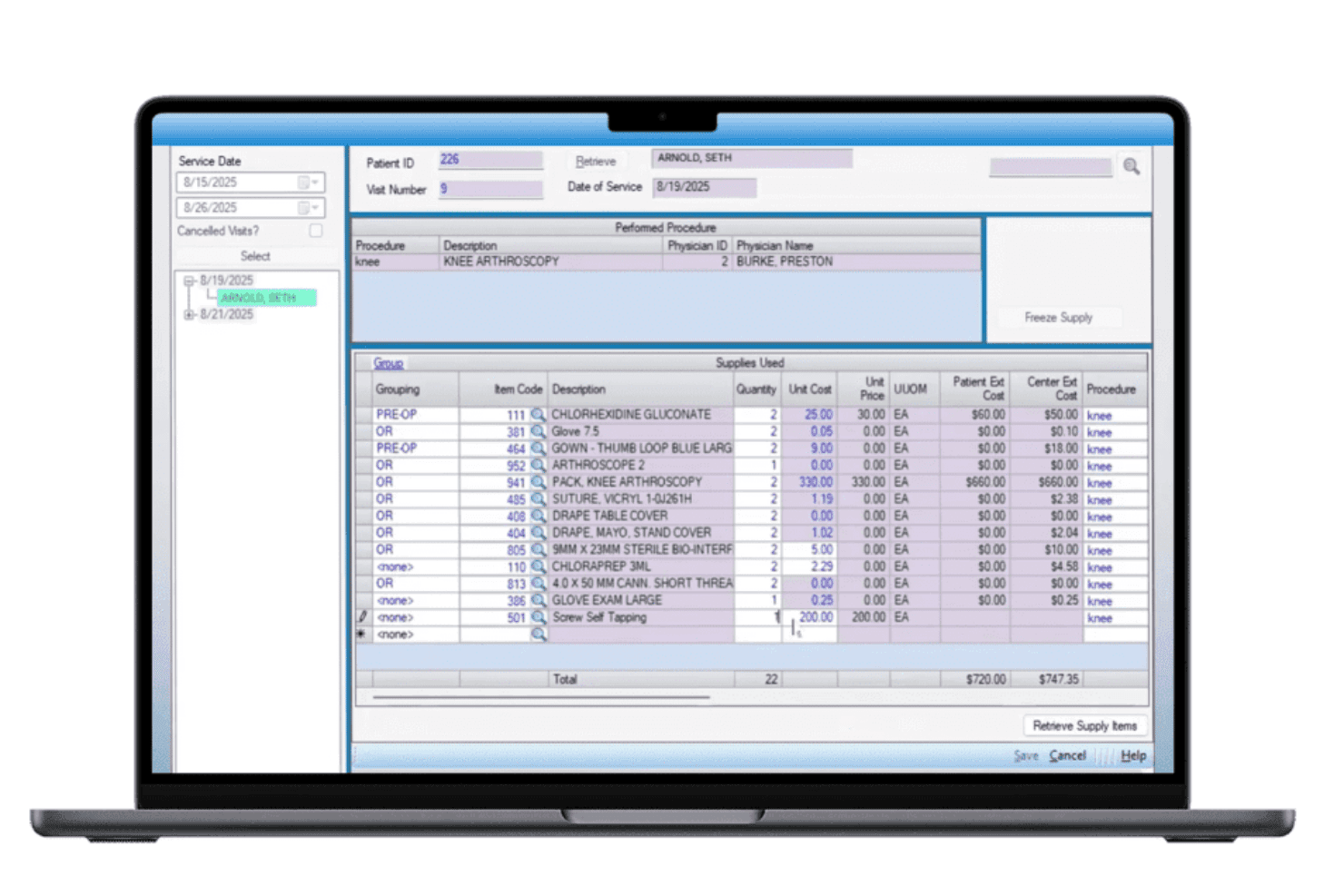
HST Pathways supports ASC claims, RCM, estimates, implant billing and contracts. HST Pathways is a cloud-based EMR and practice management platform built exclusively for ambulatory surgery centers, covering perioperative charting, OR scheduling, surgical billing, and patient engagement in a single suite.
Who Is HST Pathways Best For?
HST Pathways is a strong fit for ASC directors and administrators managing multi-specialty surgery centers who need scheduling, charting, and billing under one platform.
Why I Picked HST Pathways
HST Pathways earns its spot on my shortlist because the connection between Case Coordination and eChart is genuinely built for how surgery centers run cases. I like that block scheduling ties directly to the patient chart, so staff assignments, equipment needs, and clinical documentation all live in one place. LiveEdit™ lets multiple clinicians update the same chart simultaneously during a case, which cuts down on post-case documentation catch-up.
HST Pathways Key Features
- Tablet-optimized charting: Allows clinical staff to document perioperative care on mobile devices at the point of care.
- Patient estimates module: Generates automated, procedure-specific out-of-pocket estimates and integrates with eligibility verification tools.
- Raw ASC Data analytics: Provides customizable business intelligence dashboards for case costing, operational metrics, and clinical reporting.
- Integrated e-signature capture: Enables providers to collect patient and staff signatures on consents and chart entries directly within the EMR.
HST Pathways Integrations
HST Pathways offers native integrations with Waystar for revenue cycle and claims management, Advantien for implant purchasing and inventory, and supports HL7 interfaces with hospital and physician office EHR systems. An API is available for custom integrations.
Pros and Cons
Pros:
- OR scheduling links directly to patient charts
- Strong perioperative documentation with chart completion tracking
- Purpose-built for ambulatory surgery center workflows
Cons:
- Data feeds often flow one way only
- E-prescribing for controlled substances not included
Learn more about HST Pathways: Best for end-to-end surgery center management
- Free demo available
- Pricing upon request
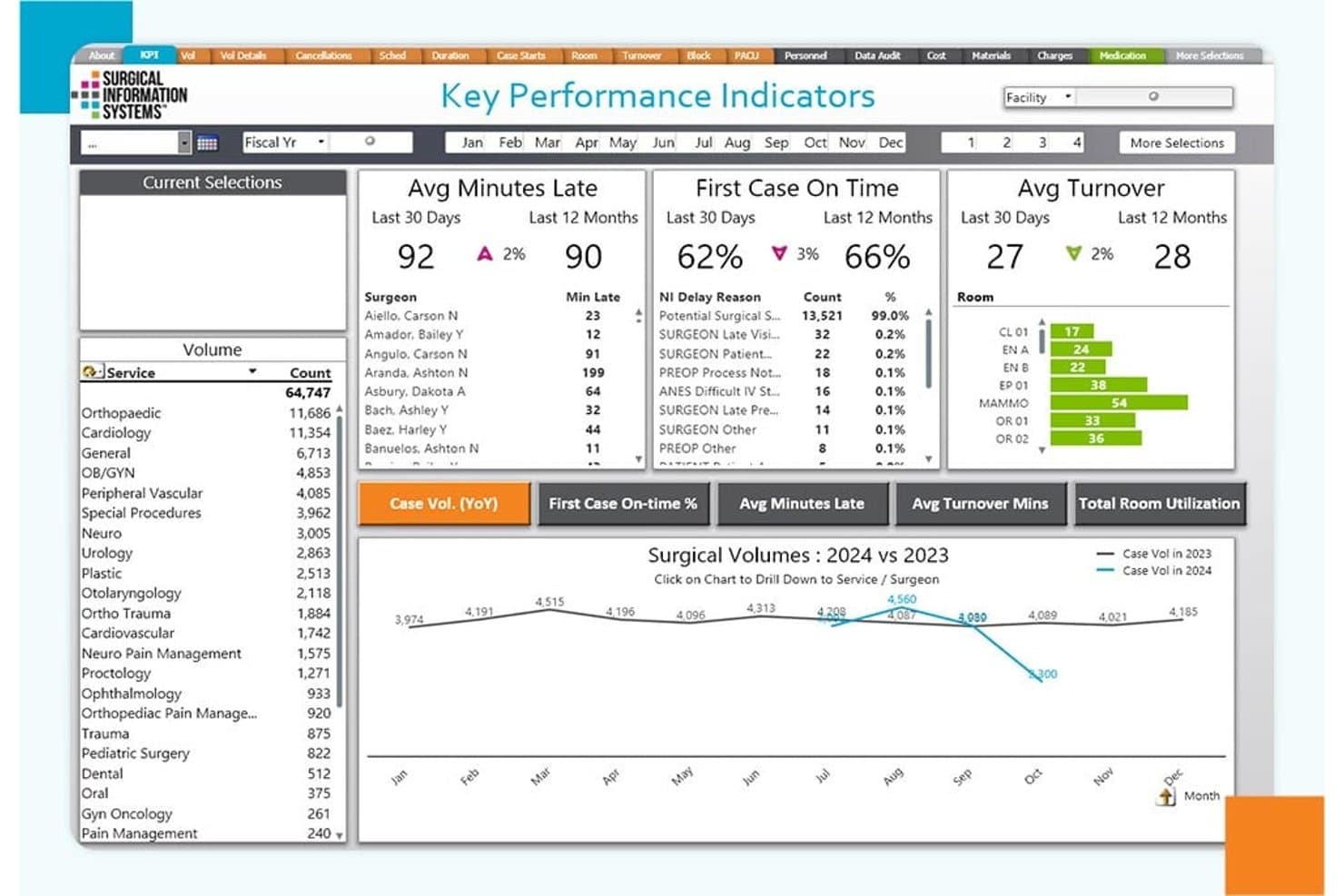
Surgical Information Systems (SIS) offers a robust Key Performance Indicators dashboard displaying surgical volumes, first case on-time rates, average turnover minutes, and minutes late metrics for surgery EMR analytics. SIS is a cloud-based perioperative EMR and ASC management platform built exclusively for surgical environments, combining clinical documentation, OR scheduling, anesthesia records, patient engagement, and revenue cycle management in one system.
Who Is Surgical Information Systems (SIS) Best For?
SIS is purpose-built for ambulatory surgery centers and surgical hospitals that need a single platform to manage both clinical and operational workflows.
Why I Picked Surgical Information Systems (SIS)
SIS earns its spot on my shortlist because it's built exclusively for the perioperative environment, unlike general ambulatory EMRs that treat surgery as an afterthought. I like how SIS Charts links electronic tracking boards across Preop, OR, Recovery, and Waiting Rooms into one unified patient chart. The built-in Revenue Cycle Services module, covering coding, claims, and transcription, means surgical teams manage the full case lifecycle without a separate billing vendor.
Surgical Information Systems (SIS) Key Features
- Anesthesia information management system: Captures anesthesia events, vitals, and drug administration directly from monitors during the case.
- Implant and inventory tracking: Records UDI-compliant implant usage and updates inventory with automatic reorder alerts.
- ONC-certified interoperability: Supports HL7 and FHIR connections for secure data exchange with hospitals, labs, and referring providers.
- Customizable specialty templates: Includes configurable documentation templates for various surgical specialties, pre-op, and post-op workflow.
Surgical Information Systems (SIS) Integrations
SIS offers native integrations with Surescripts for medication reconciliation, anesthesia monitoring devices, and over 130 third-party healthcare vendors. An API is available for custom integrations.
Pros and Cons
Pros:
- Supports procedure-level templates for multiple specialties
- Real-time anesthesia data capture and charting
- Built specifically for ambulatory surgery centers
Cons:
- Limited flexibility when using outside billing vendors
- Extensive configurations can prolong initial setup
Learn more about Surgical Information Systems (SIS): Best for cloud-based clinical documentation
- Free demo available
- Pricing upon request
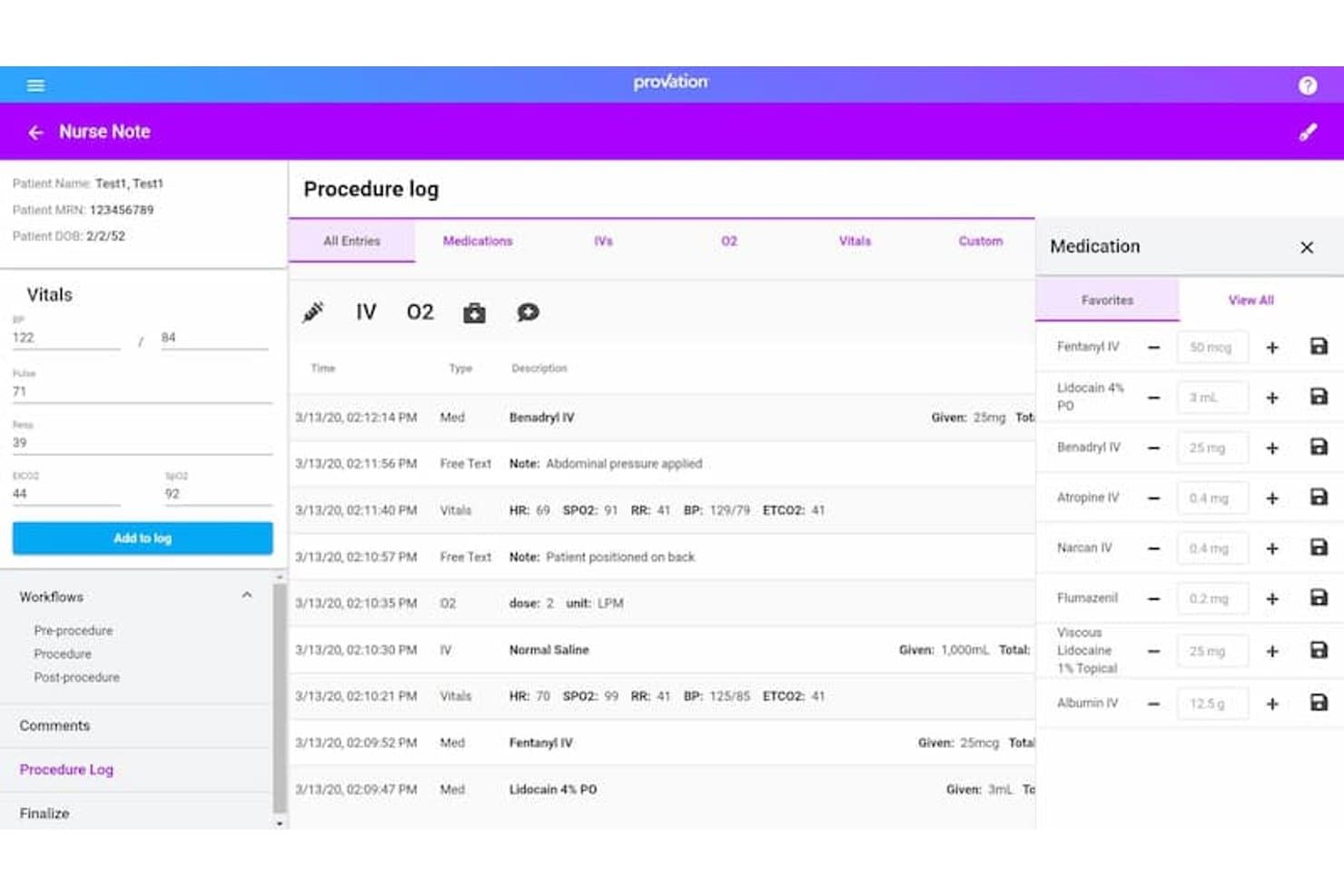
Provation Apex offers a detailed procedure log with a medication drawer showing drug names, dosages, and administration controls for surgical documentation. Provation Apex is a cloud-based ASC EMR built around structured procedure documentation, specialty-specific clinical templates, automated CPT/ICD-10 coding, and integrated physician, nursing, and anesthesia charting modules.
Who Is Provation Apex Best For?
Provation Apex is a strong fit for ambulatory surgery centers running GI, pulmonology, or orthopedic service lines that need structured, cloud-native procedure documentation.
Why I Picked Provation Apex
I've included Provation Apex in my top picks because of how it handles structured, cloud-native procedure documentation at the specialty level. Each specialty gets its own CPT-linked template set, so physicians document a colonoscopy or arthroscopic procedure with pre-populated diagnosis codes rather than free-text notes. The Provation Apex Data Suite, included at no extra cost, turns that structured documentation into reportable clinical data across the facility.
Provation Apex Key Features
- Anesthesia module: Captures real-time anesthesia events, drug doses, and vitals within its own charting interface.
- Nursing and patient charting: Allows nurses to document vitals, medications, and specimens directly into the electronic chart.
- Real-time patient tracking: Digital whiteboard displays patient status and room assignment updates as cases progress.
- EHR integrations: Connects with platforms like Epic, Cerner, and MEDITECH for data exchange between systems.
Provation Apex Integrations
Provation Apex offers native integrations with Epic, Cerner, MEDITECH, Oracle Health Ambulatory Suite, and supports HL7 and DICOM connectivity for data exchange with hospital and ASC systems.
Pros and Cons
Pros:
- Dedicated anesthesia charting module
- Real-time patient and room tracking
- CPT-linked templates for procedure documentation
Cons:
- Limited coverage for non-GI surgical specialties
- Lacks integrated e-prescribing functionality
Learn more about Provation Apex:
Annen EMR-programvare for kirurgi
Her er noen flere alternativer for EMR-programvare for kirurgi som ikke kom med på kortlisten min, men som likevel er verdt å se nærmere på:
- 11AdvancedMDBest for integrated scheduling and EHR tools
- 12SymplastBest for mobile-first plastic surgery
- 13OmniMDBest for customizable EHR and billing tools
- 14Praxis EMRBest for template-free surgical documentation
- 15EyeMD EMRBest for ophthalmology-specific charting
- 16Picis Experior SuiteBest for perioperative documentation
- 17Ambula EMRBest for cloud-based ambulatory surgery center
How I Evaluate Surgery EMR Software
I split my evaluation into core requirements—like perioperative workflow support and surgical coding—and differentiators that set one platform apart from another.
Core Functionality (Table Stakes For This List)
When I'm selecting tools for my list, I rank each one on a scale from 0 (does not offer the functionality) to 5 (excels in this area) for each core functionality listed below. Then, I calculate the tool's total score into a percentage. Each tool needs to achieve a minimum total score of 65% to be considered for inclusion.
- Surgical Documentation Templates: I look for procedure-specific templates across specialties like orthopedics, ophthalmology, and plastics—not just generic SOAP notes.
- Perioperative Workflow Support: The platform should link pre-op assessments, intra-op notes, and post-op documentation within one unified patient chart.
- Surgical Scheduling Integration: I check whether the tool supports OR/block scheduling with room, staff, and equipment assignments tied to the patient record.
- Surgical Coding & Billing: CPT/ICD-10 support with charge capture, modifier logic, and claims generation should be built in or tightly integrated with a PM system.
- E-Prescribing & EPCS: I evaluate whether the EMR handles controlled substance prescribing for post-op pain management alongside standard e-prescribing.
- ONC Certification & Interoperability: Each tool should be ONC-certified and support HL7/FHIR connections to hospitals, labs, imaging systems, and referring providers.
Once I have a list of tools that meet the criteria, I consider what sets each platform apart.
Differentiating Factors (What Sets Vendors Apart)
Here's how I compare and contrast different vendors:
Standout Features
Intraoperative charting with barcode scanning is a major differentiator. It lets your team capture implants and supplies in real time during a case, which reduces manual logging errors. I also look for a dedicated anesthesia module that pulls vitals directly from monitors and timestamps drug administration automatically. Implant and inventory tracking matters here too, especially for practices that need UDI-compliant logging tied to patient records with automatic stock updates and reorder alerts.
Beyond Features
Facility type fit matters a lot. A platform built for ASCs handles OR turnover and case volumes differently than one designed for hospital ORs or office-based suites. I also evaluate regulatory support, specifically whether the system includes built-in reporting for AAAHC, Joint Commission, or CMS ASC Quality Reporting requirements. Revenue cycle alignment is another key factor—I look for prior authorization workflows and case-costing analytics that help you track profitability by procedure and payer.
Slik velger du EMR-programvare for kirurgi
Det er lett å gå seg vill i lange funksjonslister og komplekse prismodeller. For å hjelpe deg med å holde fokus mens du går gjennom den unike prosessen med å velge programvare, har vi laget en sjekkliste over faktorer du bør ha i tankene:
| Faktor | Hva du bør vurdere |
| Skalerbarhet | Vil plattformen støtte et økende pasientvolum, nye fagområder eller utvidede fasiliteter i årene som kommer? |
| Integrasjoner | Kan EMR-systemet kobles til systemene for praksisadministrasjon, fakturering, anestesimonitorer, laboratorier og bildediagnostikk? |
| Tilpasningsmuligheter | Kan du tilpasse arbeidsflyter, maler og timeplaner etter dine kirurgiske fagområder og dokumentasjonsbehov? |
| Brukervennlighet | Vil klinikere, sykepleiere og administrativt personale kunne ta systemet raskt i bruk? Følger det med opplæringsressurser? |
| Implementering og opplæring | Hvordan ser tidsplanen for opplæringen ut? Får du hjelp med datamigrering og ASC-spesifikk opplæring for teamet ditt? |
| Kostnad | Finnes det skjulte kostnader for grensesnitt, brukerstøtte eller ekstra moduler? Passer prismodellen med budsjettet og pasientvolumet ditt? |
| Sikkerhetstiltak | Hvordan håndterer leverandøren HIPAA, brukertillatelser, revisjonslogger og regelmessige sikkerhetsoppdateringer? |
| Krav til regelverksetterlevelse | Trenger du støtte for ONC-sertifisering, MIPS/MACRA-rapportering eller ASC-akkreditering og kvalitetsmålinger? |
Hva er EMR-programvare for kirurgi?
EMR-programvare for kirurgi er digitale løsninger som er utviklet for å dokumentere, administrere og koordinere kliniske og administrative arbeidsflyter innen kirurgisk behandling. Disse systemene støtter dokumentasjon før, under og etter operasjoner, kirurgisk planlegging, fakturering og krav til regelverksetterlevelse. De samler pasientjournaler, effektiviserer perioperative oppgaver og hjelper kirurgiske praksiser med å opprettholde regulatoriske standarder på tvers av ulike fagområder og fasilitetstyper.
Funksjoner i EMR-programvare for kirurgi
Når du velger EMR-programvare for kirurgi, bør du se etter følgende viktige funksjoner:
- Maler for kirurgisk dokumentasjon: Ferdig utarbeidede, spesialitetsspesifikke maler for notater før, under og etter operasjon gjør det mulig for teamet å registrere viktige detaljer effektivt og konsekvent.
- Håndtering av perioperative arbeidsflyter: Helhetlige arbeidsflyter knytter sammen vurderinger, operasjonsrapporter og behandling etter operasjonen i én enkelt journal, noe som reduserer informasjonshull og dobbeltregistrering.
- Planlegging av operasjonsstue og ressurser: Verktøy for kalender- og ressursstyring koordinerer tidspunkt for inngrep, personale, utstyr og bruk av rom, og bidrar til å forhindre planleggingskonflikter og flaskehalser.
- Elektronisk forskrivning med EPCS: Gjør det mulig for klinikere å forskrive legemidler – inkludert kontrollerte stoffer – elektronisk, slik at krav til etterlevelse oppfylles og pasientsikkerheten forbedres.
- Integrert fakturering for kirurgi: Automatisert CPT/ICD-10-koding, registrering av kostnader og arbeidsflyter for krav bidrar til nøyaktig inntektsregistrering og færre avviste eller forsinkede krav.
- Sporing av implantater og lagerbeholdning: Strekkodebasert registrering knytter hver enkelt forbruksvare eller hvert implantat til den aktuelle saken, oppdaterer lagerbeholdningen i sanntid og støtter etterlevelse av myndighetskrav.
- Modul for anestesijournal: Dedikert anestesidokumentasjon registrerer vitale tegn, legemidler og hendelser direkte fra tilkoblede monitorer, noe som sikrer nøyaktighet og fullstendighet.
- Pasientportal: Gir pasientene tilgang til instruksjoner, skjemaer og oppdateringer før og etter inngrep, og forbedrer dermed engasjement og tilfredshet.
- Samhandling og integrasjoner: Støtter HL7- eller FHIR-tilkoblinger med sykehussystemer, laboratorier, bildediagnostikk og fakturering, slik at data flyttes sømløst mellom alle deler av det kirurgiske behandlingsteamet.
- Verktøy for etterlevelse av myndighetskrav: Funksjoner og rapportering utviklet for HIPAA, ONC og ASC-akkreditering holder virksomheten forberedt på revisjoner og kvalitetsmålinger.
Vanlige KI-funksjoner i EMR-programvare for kirurgi
I tillegg til standardfunksjonene i EMR-programvare for kirurgi som er nevnt ovenfor, tar mange av disse løsningene i bruk KI med funksjoner som:
- Automatisk generering av operasjonsnotater: KI analyserer data fra operasjonen og taleopptak for å utarbeide detaljerte operasjonsnotater, noe som sparer tid og reduserer dokumentasjonsfeil.
- Prediktiv optimalisering av planlegging: KI gjennomgår historiske varigheter for saker og ressursbruk for å foreslå optimale tildelinger av operasjonsstuetid og redusere forsinkelser eller mellomrom ved skifte av sak.
- Intelligent kodingsassistanse: KI skanner dokumentasjonen for å anbefale CPT- og ICD-10-koder, flagger manglende detaljer og bidrar til nøyaktig fakturering i samsvar med kravene.
- Støtte for kliniske beslutninger: KI viser varsler om legemiddelinteraksjoner, allergirisiko eller mangler i retningslinjebasert behandling under planlegging av kirurgi og oppfølging etter operasjonen.
- Avviksdeteksjon i vitale tegn: KI overvåker anestesi- og pasientdata i sanntid og varsler personalet om trender eller avvik som kan kreve umiddelbar inngripen.
Fordeler med EMR-programvare for kirurgi
Implementering av EMR-programvare for kirurgi gir flere fordeler for teamet og virksomheten. Her er noen av fordelene du kan se frem til:
- Effektiviserte kirurgiske arbeidsflyter: Samlet dokumentasjon og perioperativ håndtering reduserer dobbeltregistrering og forbedrer koordineringen i teamet.
- Mer effektiv planlegging: Integrerte verktøy for planlegging av operasjonsstue og ressurser bidrar til å minimere konflikter og støtter optimal klargjøring av rom mellom inngrep.
- Større nøyaktighet i faktureringen: Automatisert koding, registrering av kostnader og støtte for krav reduserer feil og forkorter inntektssyklusene.
- Bedre beredskap for etterlevelse: Innebygd myndighetsrapportering og revisjonsspor holder virksomheten i samsvar med HIPAA-, ONC- og ASC-standarder.
- Bedre pasientsikkerhet: Funksjoner som elektronisk forskrivning med EPCS og sanntidsovervåking av vitale tegn støtter tryggere behandling i alle stadier av det kirurgiske forløpet.
- Økt pasientengasjement: Pasientportaler og kommunikasjonsverktøy holder pasientene informert før og etter inngrepene.
- Detaljert lagerstyring: Strekkodesporing av forbruksvarer og implantater knytter bruken til de aktuelle sakene og støtter automatiske varsler om ny bestilling.
Kostnader og priser for EMR-programvare for kirurgi
Ved valg av EMR-programvare for kirurgi er det viktig å forstå de ulike prismodellene og abonnementene som er tilgjengelige. Kostnadene varierer ut fra funksjoner, teamstørrelse, tillegg og mer. Tabellen nedenfor oppsummerer vanlige abonnementer, gjennomsnittsprisene deres og typiske funksjoner som er inkludert i løsninger for EMR-programvare for kirurgi:
Sammenligningstabell for abonnementer på EMR-programvare for kirurgi
| Plantype | Gjennomsnittlig pris | Vanlige funksjoner |
| Gratisabonnement | $0 | Begrensede verktøy for dokumentasjon, grunnleggende planlegging, grunnleggende brukerstøtte og minimal rapportering. |
| Personlig abonnement | $100-$300/user/month | Grunnleggende klinisk dokumentasjon, planlegging, elektronisk forskrivning, brukerstøtte via e-post og begrensede integrasjoner. |
| Bedriftsabonnement | $350-$800/user/month | Fullstendig dokumentasjon, perioperative arbeidsflyter, lagerstyring, egendefinerte maler, integrasjonsmuligheter og analyseverktøy. |
| Enterprise-abonnement | $900+/user/month | Implementering på flere steder, avanserte integrasjoner, tilpasninger, dedikert kundeansvarlig og verktøy for overholdelse av regelverk. |
Vanlige spørsmål om EMR-programvare for kirurgi
\u003cspan style=\u0022font-weight: 400\u0022\u003eHer er noen svar på vanlige spørsmål om EMR-programvare for kirurgi:\u003c/span\u003e
Hvordan skiller EMR-programvare for kirurgi seg fra generelle EMR-systemer?
\u003cspan style=\u0022font-weight: 400\u0022\u003eEMR-programvare for kirurgi er spesielt utviklet for perioperativ behandling og tilbyr egne moduler for preoperative, intraoperative og postoperative arbeidsflyter, kirurgisk planlegging og sporing av implantater. Generelle EMR-systemer mangler ofte disse spesialiserte verktøyene og malene som kirurgiske team trenger.\u003c/span\u003e
Hvilke integrasjoner bør jeg prioritere med et EMR-system for kirurgi?
\u003cspan style=\u0022font-weight: 400\u0022\u003eDu bør se etter integrasjoner med systemer for praksisadministrasjon, leverandører av fakturering/RCM, anestesimonitorer, PACS for bildediagnostikk og laboratorier. Disse forbindelsene reduserer dobbeltregistrering, sikrer nøyaktig kirurgisk dokumentasjon og støtter en mer samlet pasientjournal.\u003c/span\u003e
Er det vanskelig å overføre eksisterende kirurgiske journaler til et nytt EMR-system?
\u003cspan style=\u0022font-weight: 400\u0022\u003eNei, de fleste leverandører tilbyr datamigreringstjenester, blant annet konvertering av eldre operasjonsnotater, pasientfiler og implantatlogger. Tydelig datakartlegging og opplæring av spesialister bidrar til en smidig overgang med minimale forstyrrelser i den kirurgiske driften.\u003c/span\u003e
Kan EMR-programvare for kirurgi bidra til å oppfylle regulatoriske krav?
\u003cspan style=\u0022font-weight: 400\u0022\u003eJa, de fleste løsninger inkluderer funksjoner for HIPAA-sikkerhet, ONC-sertifisering, rapportering for ASC-akkreditering og MIPS/MACRA-dashbord. Disse verktøyene hjelper praksiser med å holde oversikt over endrede krav til regelverksetterlevelse og forberede seg på revisjoner.\u003c/span\u003e
Hvor lang tid tar implementeringen vanligvis?
\u003cspan style=\u0022font-weight: 400\u0022\u003eImplementeringen kan ta fra noen uker til flere måneder, avhengig av størrelsen på operasjonsavdelingen, om du bruker egendefinerte maler, og om du trenger komplekse integrasjoner. Planlegging av opplæring og datamigrering bidrar til å holde tidsplanen for driftsstart.\u003c/span\u003e