

EMR-programvare for dagkirurgiske sentre er en digital plattform utviklet for å administrere pasientjournaler, dokumentasjon og arbeidsflyter for kirurgiske poliklinikker. Hvis du sammenligner ASC-EMR-programvare, ser du sannsynligvis etter måter å redusere papirarbeid på, holde teamene samkjørte og oppfylle krav til samsvar uten å bremse den daglige driften. Med så mange alternativer – der hvert av dem lover unike funksjoner eller spesialiseringer – kan det være vanskelig å vite hvor du skal begynne. Denne veiledningen går gjennom de beste ASC-EMR-systemene, fremhever det som er viktigst i kliniske og administrative sammenhenger, og har som mål å hjelpe deg med å velge den rette løsningen for senteret ditt med trygghet.
Hvorfor du kan stole på våre programvareanbefalinger
6,700+
Reviews
20
Industry experts
16+
Evaluation factors
14
Years
Teamet vårt har testet og anmeldt programvare siden 2012. Vi leder selv legekontorer, så vi vet hvor vanskelig og hvor viktig det er å velge riktig programvare.
I denne guiden har vi vurdert verktøyene gjennom praktisk testing og uavhengig research og gitt dem poeng ut fra våre utvelgelseskriterier.
Anmeldelsene våre bygger på vår egen redaksjonelle vurdering. De er ikke et salgsargument.
Sammenligningstabell for EMR-programvare for dagkirurgiske sentre
Denne sammenligningstabellen oppsummerer prisdetaljer for mine beste utvalgte løsninger for EMR-programvare for dagkirurgiske sentre:
Score legend (out of 5)
- Excellent4.5–5
- Good4–4.4
- Average3–3.9
- Below average2–2.9
- Poor1–1.9
Sorted by: Default
| Tool | Starting Price | Website | |||||||
|---|---|---|---|---|---|---|---|---|---|
Best for customizable ambulatory EHR | 3.3 out of 5 | 3 | 4 | 3 | 4 | 4 | 2 | Pricing upon request Free demo available | Website |
Best for flexible ASC documentation | 2.7 out of 5 | 2 | 4 | 2 | 2 | 3 | 3 | Pricing upon request Free demo available | Website |
Best for integrated perioperative care | 3.2 out of 5 | 3 | 3 | 3 | 3 | 4 | 3 | Pricing upon request Free demo available | Website |
Best for enterprise surgical care | 2.8 out of 5 | 3 | 2 | 3 | 2 | 4 | 3 | Pricing upon request Not available | Website |
Best for cross-site surgical supply tracking | 2.8 out of 5 | 3 | 2 | 3 | 2 | 4 | 3 | Pricing upon request Not available | Website |
Best for ASC scheduling and billing | 3.8 out of 5 | 5 | 4 | 4 | 3 | 4 | 3 | Pricing upon request Free demo available | Website |
Best for ASC billing and practice management | 2.8 out of 5 | 2 | 3 | 3 | 2 | 4 | 3 | Pricing upon request Free demo available | Website |
Best for end-to-end ASC management | 3.2 out of 5 | 3 | 3 | 3 | 3 | 4 | 3 | Pricing upon request Free demo available | Website |
Best for specialty-focused ASC workflows | Not rated | Not rated | 2 | 3 | 4 | 4 | 2 | Pricing upon request Free demo available | Website |
Best for perioperative workflow management | 2.8 out of 5 | 3 | 3 | 3 | 3 | 3 | 2 | Pricing upon request Not available | Website |


Anmeldelser av den beste EMR-programvaren for dagkirurgiske sentre
Nedenfor finner du mine detaljerte oppsummeringer av den beste EMR-programvaren for dagkirurgiske sentre som kom med på kortlisten min. Anmeldelsene mine gir en detaljert gjennomgang av funksjonene, de beste bruksområdene og integrasjonene i hver programvare, slik at du kan finne den beste løsningen for deg.
 Best for customizable ambulatory EHR
- Free demo available
- Pricing upon request
Visit WebsiteCustomer Rating:4.4/5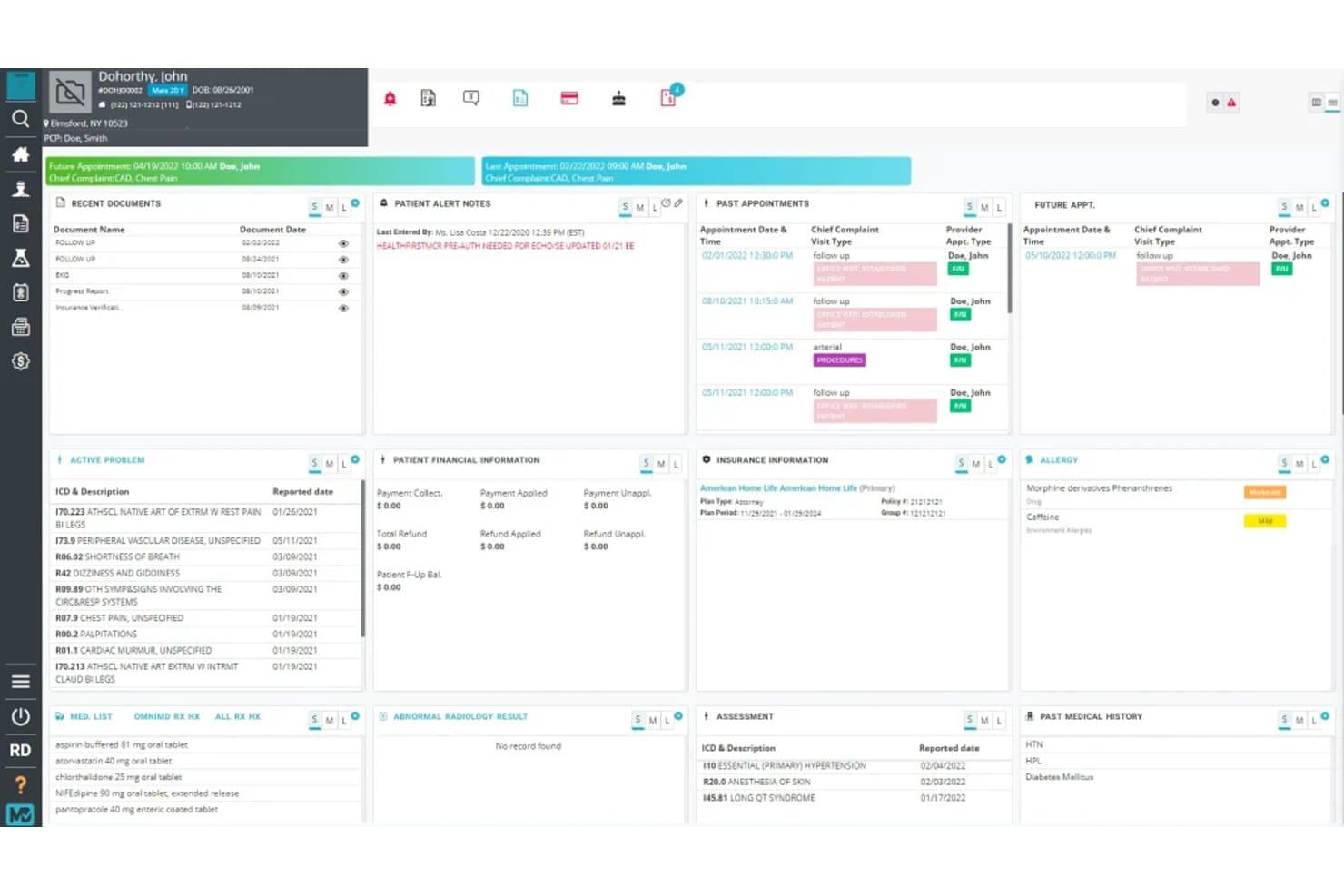
OmniMD offers a comprehensive patient dashboard displaying medical history, appointments, active problems, insurance, allergies, and financial information for ambulatory surgery centers. OmniMD is an AI-native ambulatory EMR platform that combines perioperative documentation, OR scheduling, ASC-specific billing, ASCQRP quality reporting, and specialty-specific clinical templates across surgical disciplines.
Who Is OmniMD Best For?
OmniMD suits single-specialty and multispecialty ASCs looking for a surgical EMR that adapts to their specific procedures, documentation standards, and billing workflows.
Why I Picked OmniMD
I picked OmniMD as one of the best because of how deeply it adapts to each surgical specialty. The GI workflow timestamps scope insertion and withdrawal, the cataract workflow captures IOL type and power within the operative note, and the orthopedic workflow logs implant lot numbers and UDIs directly at charge entry. That level of specialty-specific customization is built into the documentation itself, not added as a generic afterthought.
OmniMD Key Features
- Real-time OR status board: Displays room assignments, turnovers, and surgical progress for all active cases.
- ASCQRP quality reporting dashboard: Automatically tracks and compiles ASC quality measures for Medicare and benchmarking.
- EPCS and PDMP integration: Enables electronic prescribing of controlled substances and automates prescription drug monitoring compliance.
- HL7 and FHIR lab integration: Lets you electronically order labs and receive discrete results directly in the patient chart.
OmniMD Integrations
OmniMD offers native integrations with LabCorp, Quest Diagnostics, and regional labs for electronic lab ordering and results. The platform also supports HL7 and FHIR standards for data exchange and provides an API for custom integrations.
Pros and Cons
Pros:
- Built-in OR status and turnover management
- Automated ASCQRP and Medicare quality reporting
- Specialty-specific perioperative documentation templates
Cons:
- No built-in barcode scanning for inventory
- Anesthesia workflows lack direct monitor integration
Learn more about OmniMD: Best for flexible ASC documentation
- Free demo available
- Pricing upon request
Visit WebsiteCustomer Rating:4/5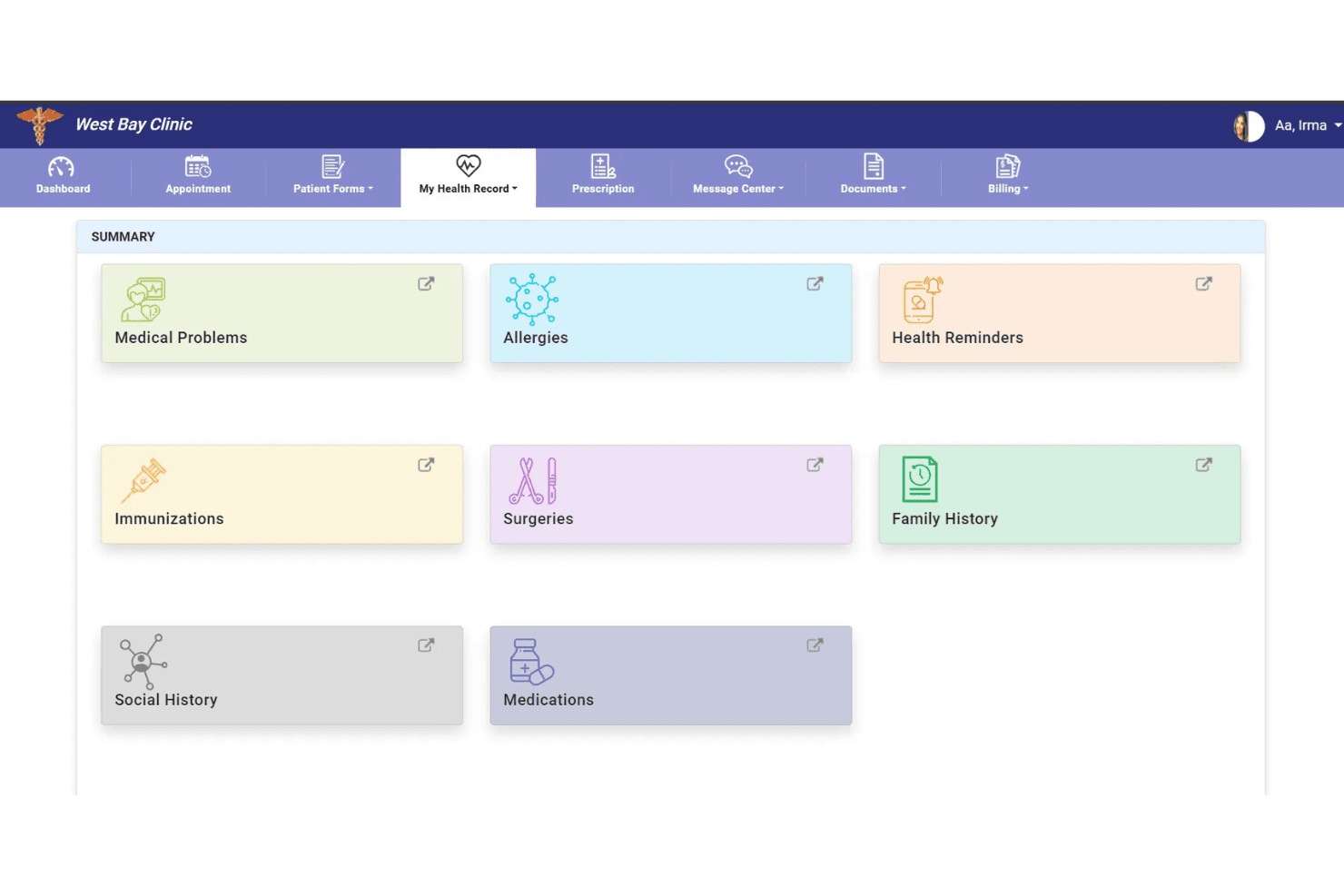
PrognoCIS provides a patient portal for accessing health summaries and managing appointments. PrognoCIS is a cloud-based EHR platform with a dedicated ASC module that covers pre-op and post-op charting, OR scheduling, anesthesia documentation, surgical billing, and inventory tracking.
Who Is PrognoCIS Best For?
PrognoCIS is a strong fit for small to mid-sized ASCs that need customizable clinical documentation across multiple surgical specialties.
Why I Picked PrognoCIS
I picked PrognoCIS as one of the best because its ASC documentation module lets surgical teams build custom pre-op and post-op charting templates by specialty, rather than forcing everyone into a one-size-fits-all layout. I also like that data entered at pre-op pushes directly to the nursing station without re-entry. The open API support means you can build additional custom templates specific to your actual case mix.
PrognoCIS Key Features
- Integrated pre-op scheduling: Schedule and manage surgeries with built-in coordination for pre-operative planning and resources.
- Real-time prescriptions: Authorize and track medications with ePrescribing and alternative therapy suggestions for patients.
- Surgical supply tracking: Monitor and manage inventory levels for surgical supplies and equipment within the ASC module.
- API access for interoperability: Connect with labs, imaging systems, and external billing platforms using open API support and HL7/FHIR compliance.
PrognoCIS Integrations
PrognoCIS offers native integrations with Amazon, FDB (First Databank), Merck Manuals, MedlinePlus, and Surescripts. It supports API access for custom integrations and connects to labs, radiology companies, and vaccine registries.
Pros and Cons
Pros:
- Direct data transfer from pre-op to nursing station
- Customizable perioperative charting workflows available
- Flexible ASC documentation templates across specialties
Cons:
- Lacks dedicated implant and preference card management
- Limited reporting for AAAHC and ASCQR requirements
Learn more about PrognoCIS Psychiatry EHR: Best for integrated perioperative care
- Free demo available
- Pricing upon request
Visit WebsiteCustomer Rating:4/5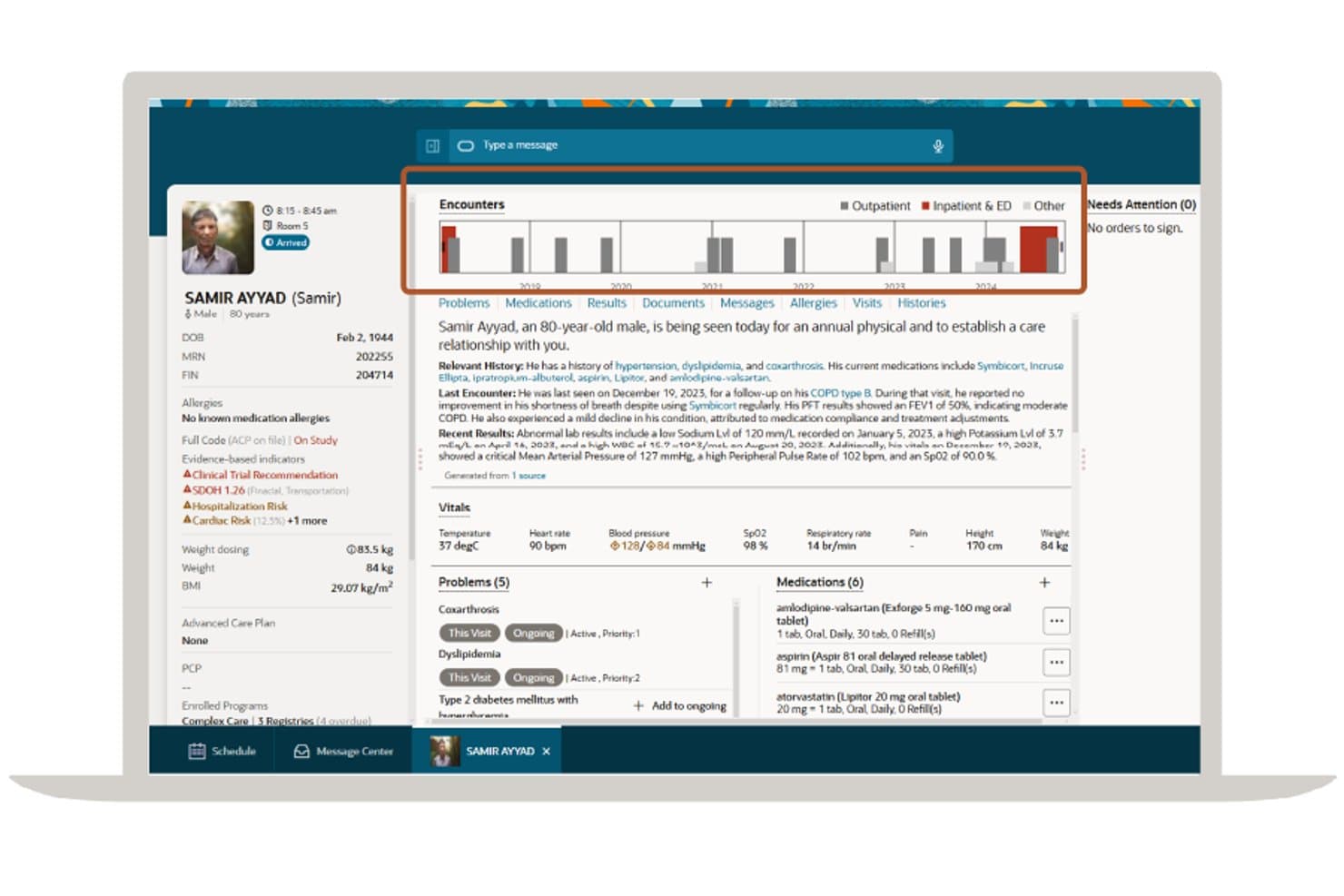
Oracle Health surfaces patient encounter history and summaries in one view. Oracle Health is an enterprise EHR platform that spans perioperative documentation, surgical case scheduling, anesthesia charting, supply and implant tracking, and revenue cycle management for ambulatory surgery centers.
Who Is Oracle Health Best For?
Oracle Health is a strong fit for health-system-integrated ASCs and large multi-site surgery center networks that need a single platform spanning perioperative documentation, scheduling, supply tracking, and revenue cycle.
Why I Picked Oracle Health
I picked Oracle Health as one of the best because it's one of the few platforms that handles the full perioperative continuum without requiring separate point solutions stitched together. I'm particularly drawn to how Perioperative Nursing Care Management documents pre-op, intra-op, post-op, and PACU phases in structured flowsheets, while Oracle Health Anesthesia captures everything from pre-anesthesia evaluation through postanesthesia records in one place. Surgical Management's preference cards auto-generate case-specific pick lists ahead of each scheduled procedure, which keeps OR prep tightly coordinated.
Oracle Health Key Features
- Perioperative Inventory Management: Tracks supply dispenses, returns, and waste in near real time, with barcode scanning for unique device identifiers and expiration and recall alerts.
- Eligibility Management: Verifies health-plan benefits at the point of care during scheduling and preregistration, storing and displaying the returned verification status.
- Oracle Health Infection Control: Monitors infection risks with surveillance tools, a clinical dashboard, and alerts for reportable conditions, isolation needs, and healthcare-associated infection risks.
- QHIN-based data exchange: Connects to the Oracle Health Information Network for patient matching and clinical data exchange with other EHRs across a qualified health information network.
Oracle Health Integrations
Oracle Health documents integrations with Amwell On-Demand Video Visits and CommonWell Health Alliance, plus QHIN-based exchange through Oracle Health Information Network and laboratory connectivity through Oracle Health Reference Lab Network. FHIR and cloud-native EHR APIs support custom integrations.
Pros and Cons
Pros:
- Supply tracking flags expirations and recalls
- Preference cards generate case-specific pick lists
- Organized records support perioperative charting
Cons:
- Support complaints can complicate adoption
- Extra clicks can slow documentation
Learn more about Oracle Health: 4Best for enterprise surgical care
Epic
- Not available
- Pricing upon request
Visit WebsiteCustomer Rating:3.9/5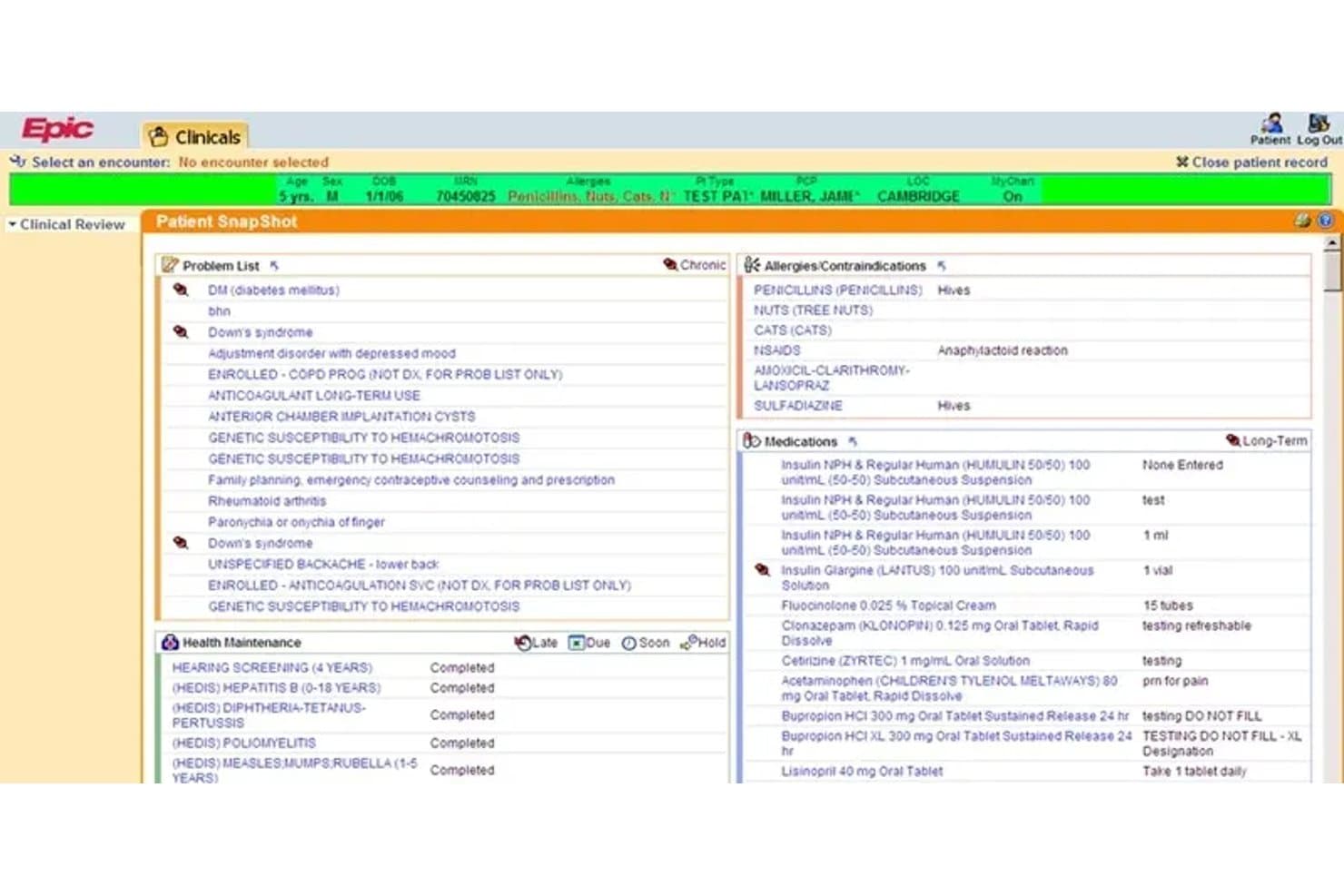
Epic offers a Clinical Review Patient Snapshot screen displaying problem lists, allergies, contraindications, medications, and health maintenance records in its ambulatory EMR software. Epic is an enterprise EHR platform with dedicated surgical modules, including OpTime for OR scheduling and perioperative documentation, and a fully integrated anesthesia record system for hospital-affiliated and large multi-specialty ambulatory surgery centers.
Who Is Epic Best For?
Epic is a natural fit for large health systems and integrated delivery networks that operate or oversee hospital-affiliated ambulatory surgery centers.
Why I Picked Epic
I picked Epic as one of the best because OpTime's Snapboard gives surgical teams a live OR board with drag-and-drop case management, block scheduling, and automatic conflict detection. What I find especially valuable is how Case Requests flow directly from EpicCare Ambulatory into the OR schedule, removing back-and-forth between surgical offices and the ASC. Epic's integrated anesthesia module captures real-time vitals and medication administration tied directly to each operative record.
Epic Key Features
- Customizable perioperative templates: Build and tailor charting templates for specialty surgical workflows within ambulatory surgery centers.
- Integrated implant and supply tracking: Monitor implant use and surgical supplies with preference cards and case-based deduction features.
- Regulatory and quality reporting suite: Access tools that generate reports for AAAHC, Medicare ASCQR, and track infection rates and outcomes.
- Interoperability with third-party systems: Connect with hospital EHRs, anesthesia devices, labs, and imaging for seamless data exchange.
Epic Integrations
Epic offers native integrations with other Epic modules including EpicCare Ambulatory, OpTime, Anesthesia, MyChart, Haiku, and Canto. It supports interoperability through FHIR and HL7, and an API is available for custom integrations.
Pros and Cons
Pros:
- Deep quality reporting for surgical outcomes
- Integrated anesthesia and perioperative documentation
- Real-time OR board and case management
Cons:
- Hospital-focused features increase system complexity
- ASC configuration requires extensive customization
Learn more about Epic: Best for cross-site surgical supply tracking
- Not available
- Pricing upon request
Visit WebsiteCustomer Rating:3.1/5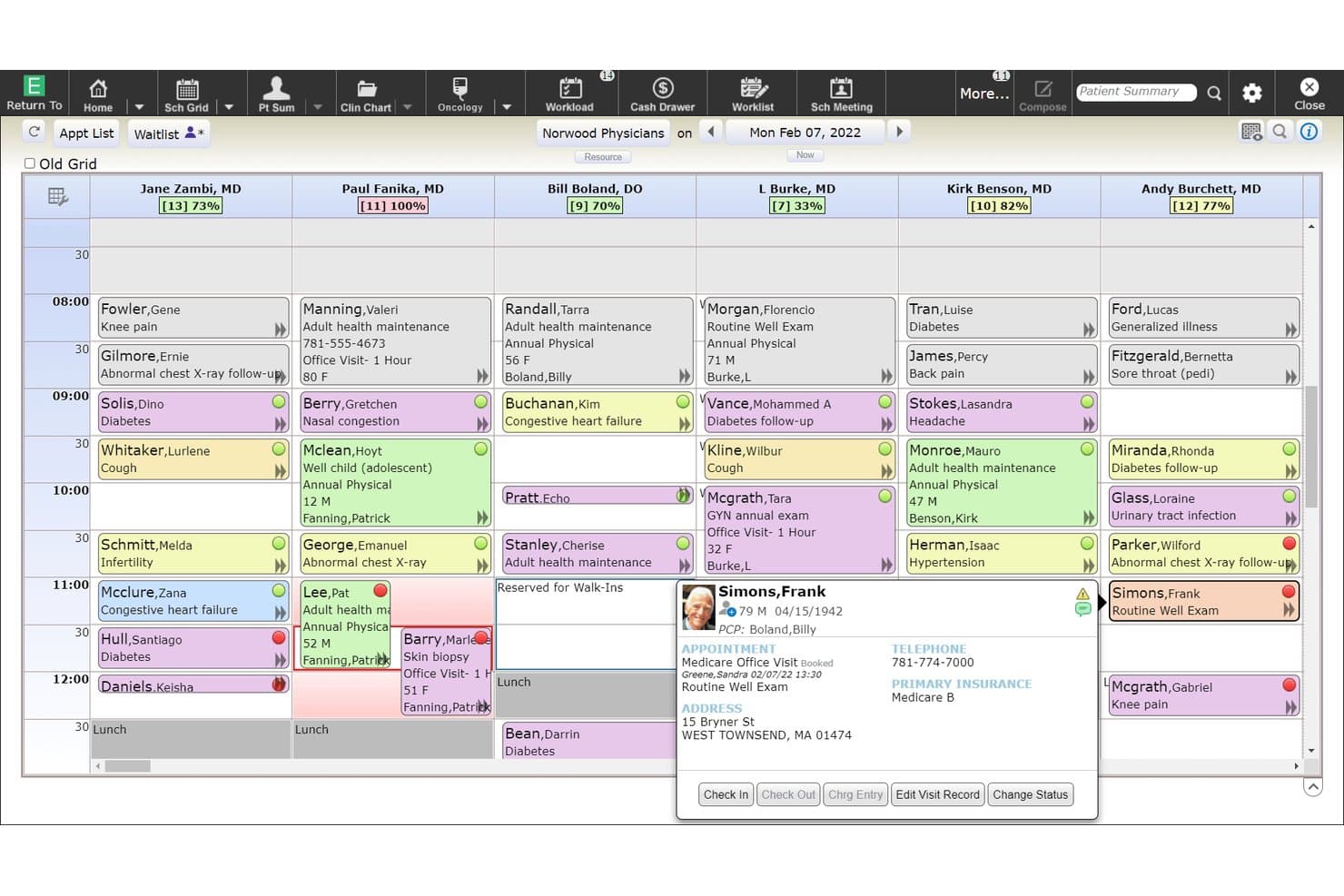
MEDITECH Expanse displays a multi-provider daily scheduling grid with patient details. MEDITECH Expanse is a cloud-native EHR platform built for surgical and perioperative care, covering case scheduling, procedure-specific documentation across the full perioperative episode, inventory and implant tracking, and integrated revenue cycle management.
Who Is MEDITECH Expanse Best For?
MEDITECH Expanse is a strong fit for hospital-owned or multi-site surgery centers that need unified perioperative documentation and cross-location supply tracking within a single EHR environment.
Why I Picked MEDITECH Expanse
I've included MEDITECH Expanse in my top picks because its barcode-based inventory tracking updates supply and implant counts in real time during case documentation, and it tracks items lent to or borrowed from another location, which is a genuine advantage for surgery centers operating across multiple sites. The Director/Manager desktop ties that data to cost analysis and block-utilization review, so administrators can see supply usage alongside case-level operational data.
MEDITECH Expanse Key Features
- Procedure-specific perioperative templates: Documents the full surgical episode from pre-op through PACU, capturing surgical times, staff, materials, medication administration, care plans, and nursing assessments in one centralized location.
- Pre-Admission Testing Desktop: Consolidates clinical data, lab results, portal questionnaires, consent forms, and documentation tools into a single pre-op workspace, with questionnaire responses flowing directly into visit documentation.
- Automated resource-conflict checks: Flags scheduling conflicts across multiple resources when booking, moving, or rescheduling cases to prevent double-booking.
- Dedicated biller desktop: Provides billing staff with a focused workspace for case management, charge capture, denial analysis, and appeal drafting within the same EHR environment.
MEDITECH Expanse Integrations
MEDITECH Expanse integrates with iProcedures for anesthesia documentation and supports CCD, Direct, HIE, and HL7 exchanges through Data Express and Forward Advantage. Its Greenfield Workspace provides FHIR APIs for custom integrations.
Pros and Cons
Pros:
- Block-utilization reports support administrator planning
- Pre-op through PACU documentation centralizes case records
- Barcode tracking follows supplies across locations
Cons:
- Users report lag and extra navigation clicks
- Reviewers report duplicate perioperative charting steps
Learn more about MEDITECH Expanse: Best for ASC scheduling and billing
- Free demo available
- Pricing upon request
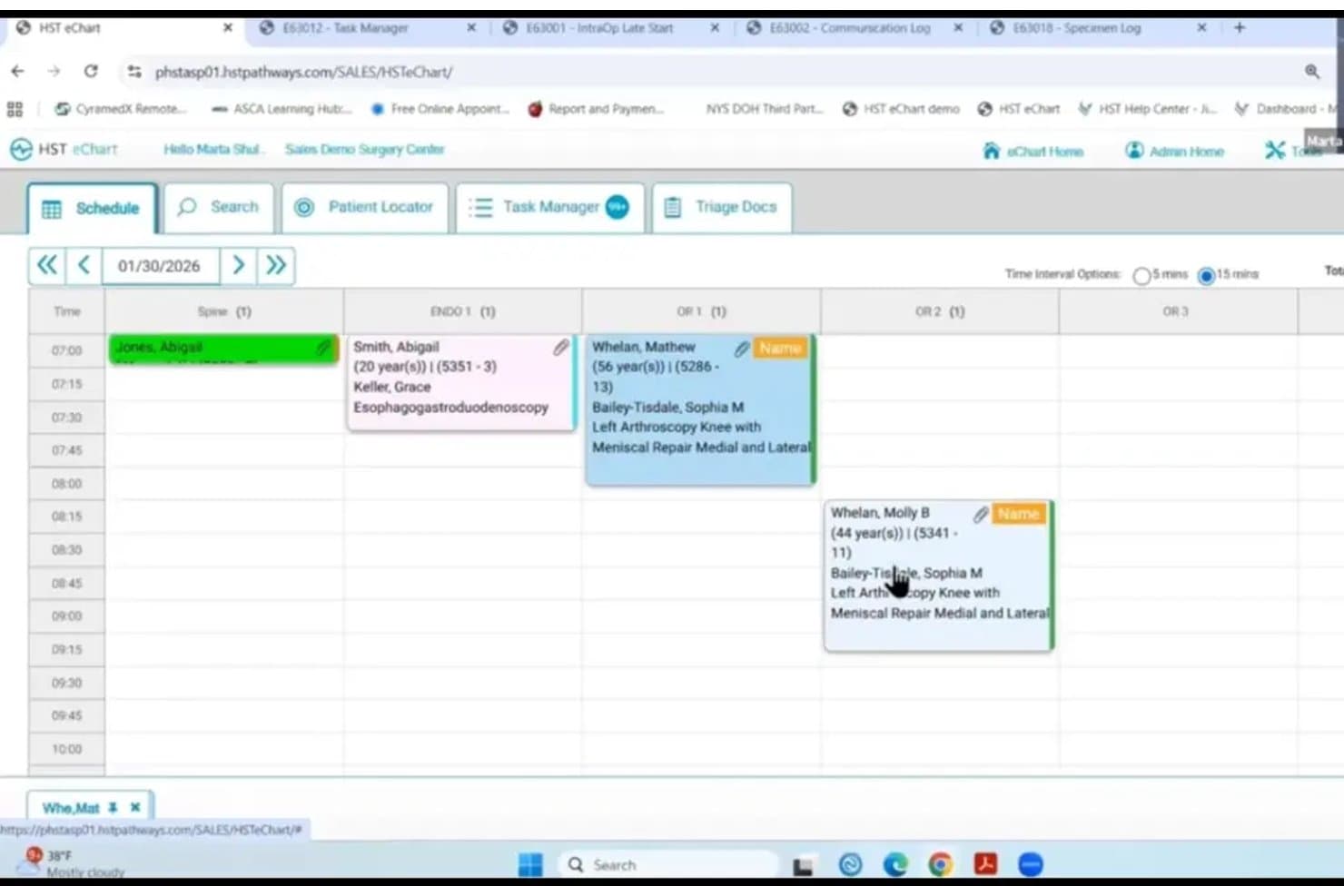
HST Pathways offers a surgical schedule view displaying patient cases across multiple operating rooms with procedure and surgeon details. HST Pathways is a cloud-based EMR and practice management platform built exclusively for ambulatory surgery centers, covering perioperative charting, OR scheduling, case coordination, and ASC-specific billing.
Who Is HST Pathways Best For?
HST Pathways is a strong fit for ASC administrators and revenue cycle managers who need a single platform to handle surgical scheduling, clinical documentation, and billing.
Why I Picked HST Pathways
HST Pathways earns its spot on my shortlist because of how tightly its scheduling and billing tools are built around ASC-specific workflows. I particularly like the Case Coordination module, which handles OR block management and lets surgeon offices post cases directly for ASC approval. On the billing side, the Waystar clearinghouse integration helps submit clean claims on the first pass, and Case Profit Estimations shows case margin before it even hits the OR.
HST Pathways Key Features
- LiveEdit concurrent charting: Multiple users can edit patient charts at the same time to support perioperative workflows.
- Physician preference card management: Create digital preference cards that auto-populate supply lists for each surgeon and procedure.
- Raw ASC Data module: Export clinical, operational, and financial data to external BI tools for advanced analytics and reporting.
- Integrated inventory tracking: Deducts supplies case-by-case, logs implant usage, and connects with centralized purchasing partners.
HST Pathways Integrations
HST Pathways offers native integrations with Waystar, Advantien, and BI tools like Tableau and Power BI. It supports HL7 interfaces with hospital and physician office systems and provides an API for custom integrations.
Pros and Cons
Pros:
- Built-in case profitability and margin analytics
- ASC-specific preference cards and inventory tracking
- Live multi-user charting with concurrent edits
Cons:
- Limited specialty-specific reporting for benchmarking
- No fully automated anesthesia device integration
Learn more about HST Pathways: Best for ASC billing and practice management
- Free demo available
- Pricing upon request
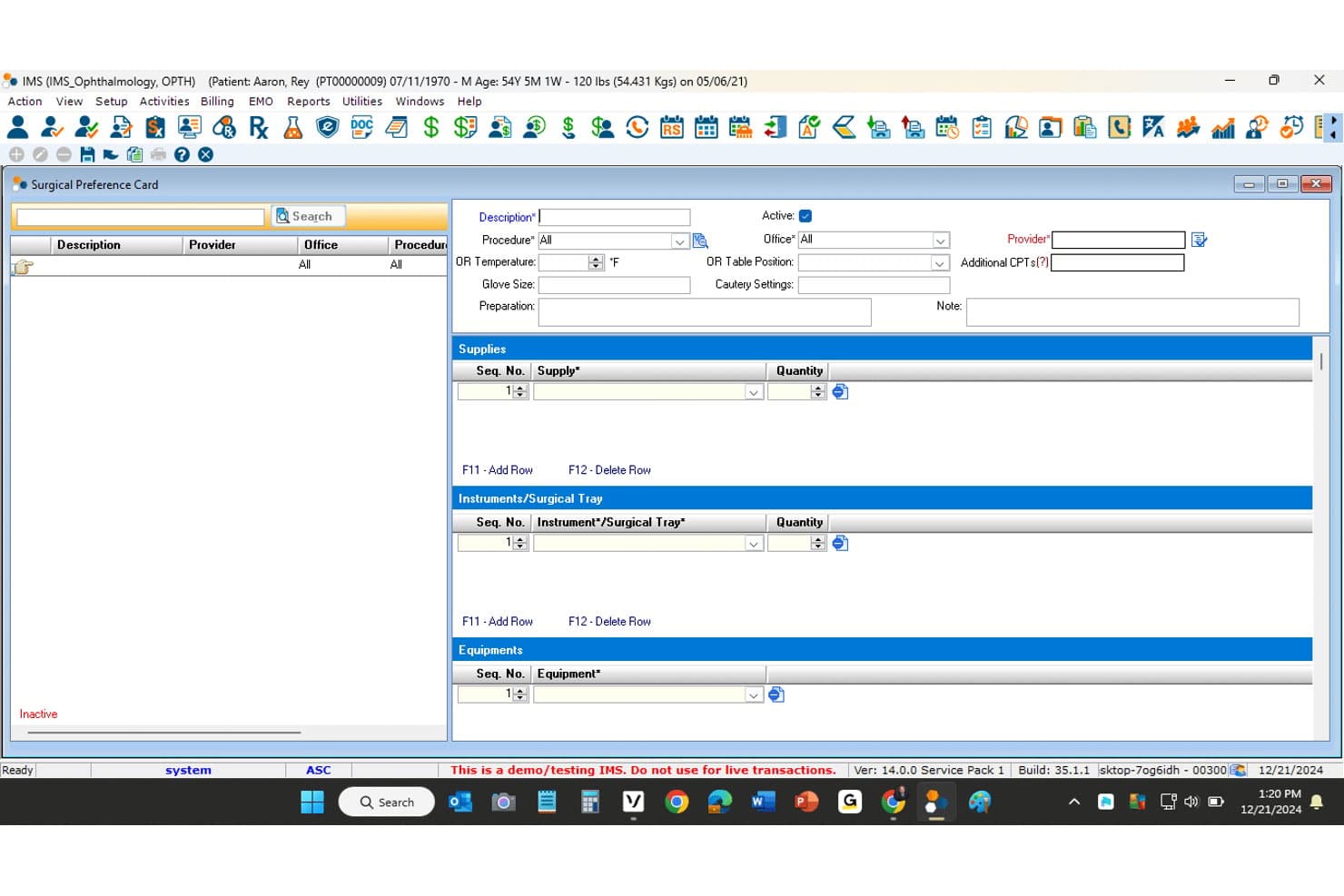
1st Providers Choice offers a Surgical Preference Card module within its ASC EMR, allowing staff to configure procedure-specific supplies, instruments, and equipment. 1st Providers Choice is an ASC-specific EMR and practice management platform covering perioperative documentation, OR scheduling, surgical charge capture, anesthesia records, and integrated billing.
Who Is 1st Providers Choice Best For?
It's a strong fit for multi-specialty ambulatory surgery centers that need deeply customizable, specialty-specific workflows without juggling separate billing and clinical systems.
Why I Picked 1st Providers Choice
I picked 1st Providers Choice as one of the best because its billing engine is genuinely built around ASC workflows, not retrofitted from a general practice platform. The automatic pre-claim analysis catches coding issues before submission, and ERA reconciliation closes the loop on payments without manual matching. I also like that surgical preference cards and charge capture live in the same system, so case costs and billable items don't fall through the gaps between clinical and billing staff.
1st Providers Choice Key Features
- Customizable ASC chart templates: Tailor pre-op, intra-op, and post-op notes with specialty-specific fields and configurations.
- Integrated patient portal: Give patients access to their records, pre-surgery instructions, and secure messaging in one system.
- Healthcare device integration: Connects with PACS, digital x-ray, fluoroscopy, anesthesia machines, and vitals monitors for real-time data capture.
- ONC certified compliance tools: Supports HIPAA, CMS QPP, and AAAHC documentation for regulatory alignment.
1st Providers Choice Integrations
1st Providers Choice offers native integrations with Availity, Optum Insight, Office Ally, Gateway EDI, Realmed, Emdeon, United, Blue Cross, Medicare EDI, Mindray, and PACS/DICOM imaging systems. HL7 and FHIR interoperability and an API are available for custom integrations.
Pros and Cons
Pros:
- Automated ASC billing rules and pre-claim checks
- Integrated anesthesia records with device connectivity
- Specialty-specific ASC charting and case templates
Cons:
- Fewer out-of-the-box analytics dashboards
- Limited mobile and telehealth functionality
Learn more about 1st Providers Choice: Best for end-to-end ASC management
- Free demo available
- Pricing upon request
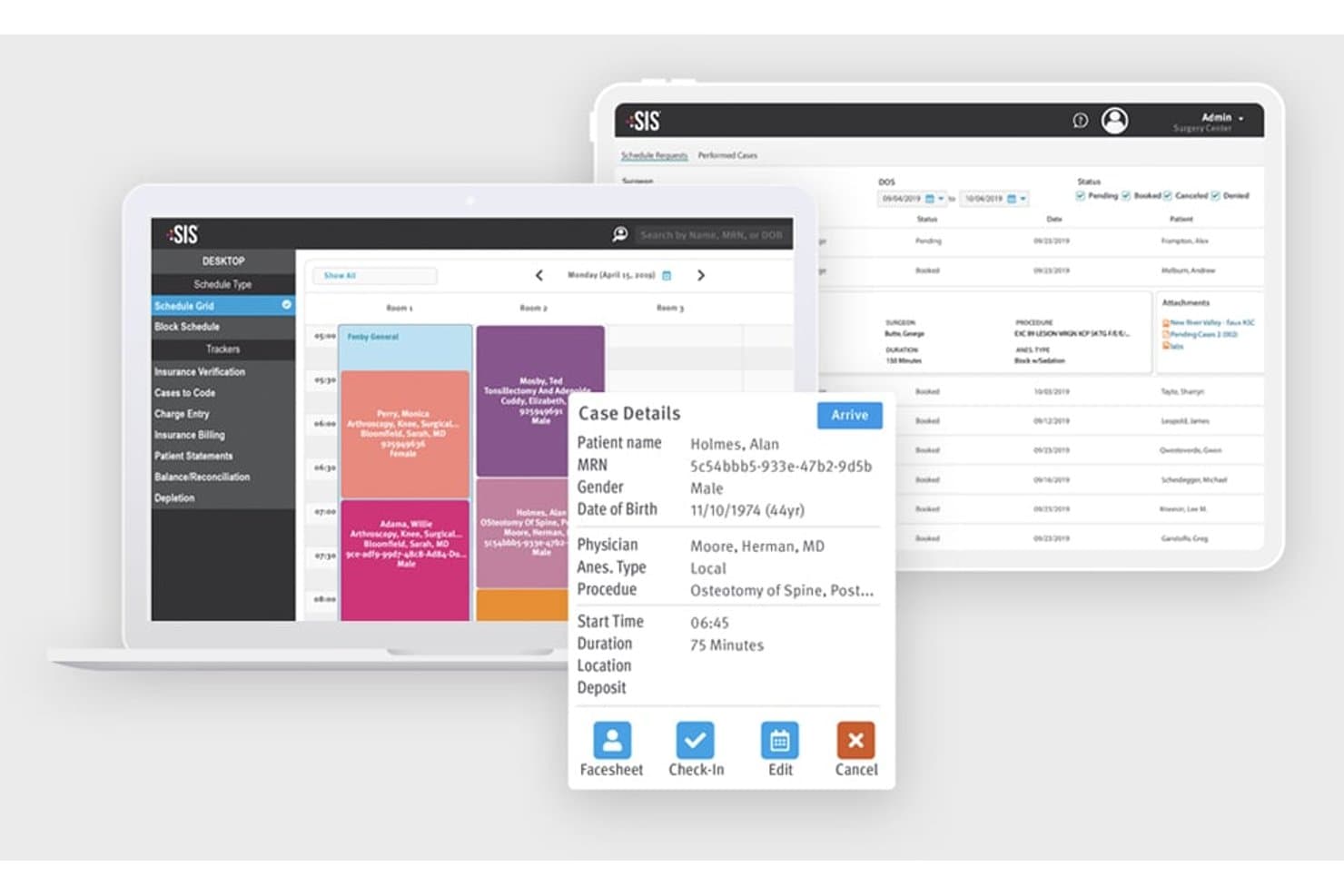
Surgical Information Systems (SIS) offers a schedule grid and case details panel for managing ambulatory surgery center patient scheduling and check-in workflows. Surgical Information Systems (SIS) is a cloud-based EMR and ASC management platform that covers perioperative charting, OR scheduling, surgical billing, inventory tracking, and compliance tools in a single system purpose-built for ambulatory surgery centers.
Who Is Surgical Information Systems (SIS) Best For?
SIS is a strong fit for ASC administrators and perioperative teams managing multi-specialty surgical programs who need clinical, operational, and billing workflows in one platform.
Why I Picked Surgical Information Systems (SIS)
I picked SIS as one of the best because no platform I've evaluated covers the full ASC workflow within a single cloud environment the way SIS Complete does. SIS Charts handles perioperative charting from pre-op through post-op, while SIS Office manages scheduling, case requests, and billing without requiring a separate system. I particularly like SIS Scribe, the AI-assisted op note dictation built into the platform, which keeps documentation moving without breaking the surgical workflow.
Surgical Information Systems (SIS) Key Features
- SIS Link: Surgeons and office staff can submit case requests and view surgical schedules from outside the ASC.
- SIS Insights: Users can access pre-built and custom reports to analyze case volumes, outcomes, and operational trends.
- SIS Comply: Digital logbooks, automated credentialing, and regulatory reporting tools help manage accreditation needs.
- Integrated inventory management: The platform automates supply tracking, purchase orders, and case-based inventory deduction across procedures.
Surgical Information Systems (SIS) Integrations
SIS Complete offers native integrations with Infinitus and Flexbone and supports over 130 vendor and partner interfaces specific to the ASC industry. An API is available for custom integrations.
Pros and Cons
Pros:
- Automated regulatory compliance reporting included
- Real-time operating room and case tracking
- End-to-end documentation for ASC workflows
Cons:
- Implementation timelines can be unpredictable
- Limited specialty libraries for non-core ASC areas
Learn more about Surgical Information Systems (SIS): Best for specialty-focused ASC workflows
- Free demo available
- Pricing upon request
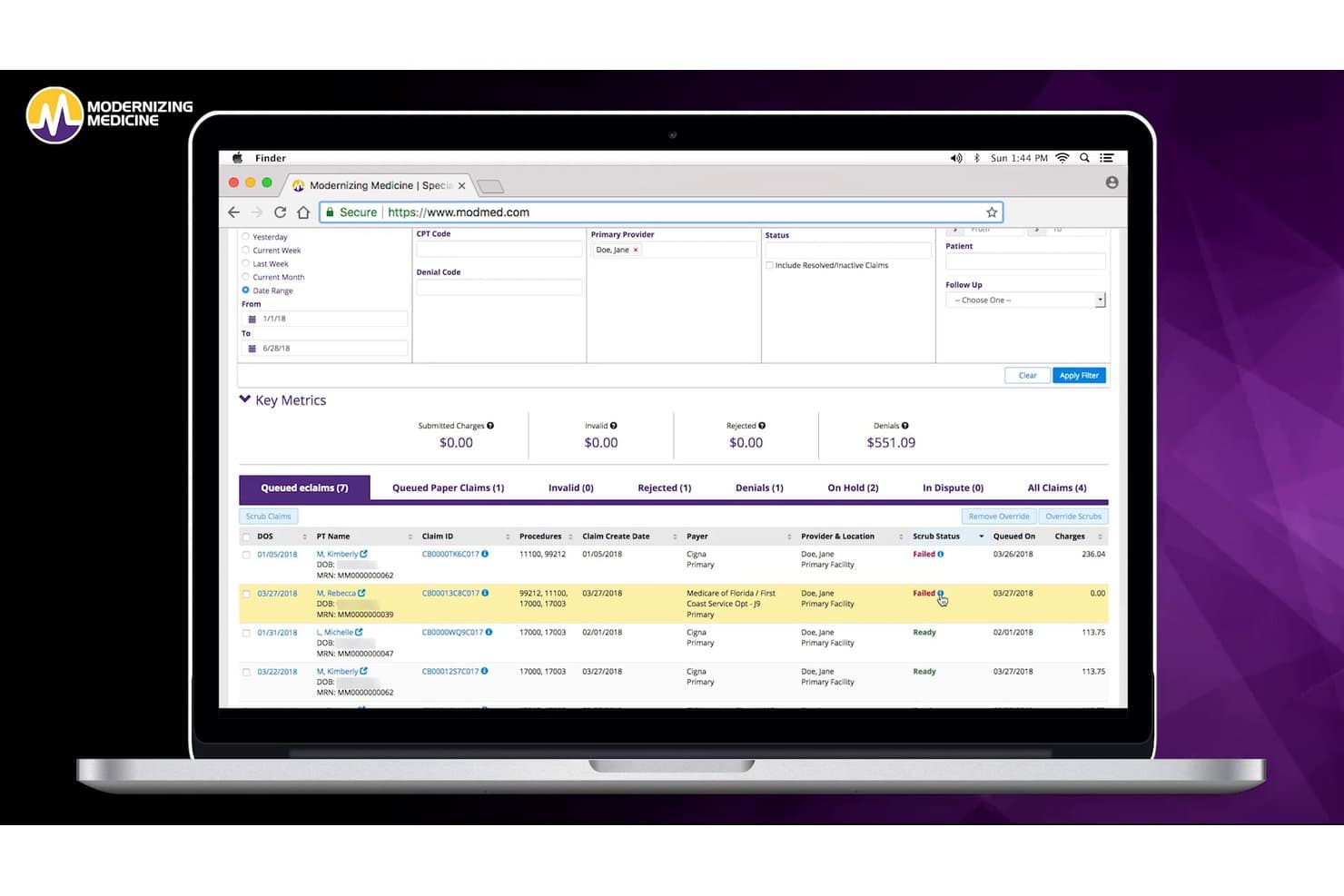
ModMed ASC offers a billing and claims management dashboard with scrub status tracking, key metrics, and queued eclaims filtering by date range and payer. ModMed ASC is a specialty-specific ambulatory surgery center EMR that connects perioperative clinical documentation, ASC facility billing, OR scheduling, and quality reporting within a single platform built for ophthalmology and gastroenterology surgical settings.
Who Is ModMed ASC Best For?
ModMed ASC fits ophthalmology and gastroenterology surgery centers whose clinical teams need their practice EHR and ASC documentation to share patient data without manual re-entry.
Why I Picked ModMed ASC
ModMed ASC earns its spot on my shortlist because of how tightly it ties specialty-specific surgical documentation to its practice-side EHR. I particularly like that nurses, anesthesiologists, and physicians can chart simultaneously on the same case record, with patient history and scheduling data pulled directly from EMA or gGastro without re-entry. Built-in ASCQR tracking and prebuilt reports for AAAHC, CMS, and Joint Commission accreditation mean my team isn't manually assembling compliance data at audit time.
ModMed ASC Key Features
- Integrated inventory management: Track surgical supplies, implant logs, and reorder status with inventory management tied to each case.
- Monitor interfacing: Capture real-time patient vitals and device data directly into the procedure note from connected anesthesia monitors.
- Clearinghouse interface: Submit insurance claims, receive electronic remittance advice, and run eligibility checks through a built-in clearinghouse connection.
- Patient mobile app: Enable patients to complete digital paperwork, access instructions, and communicate securely through the APPatient™ mobile application.
ModMed ASC Integrations
ModMed ASC offers native integrations with Klara, Relatient, TouchMD, Artera, Phreesia, Demandforce, DeepScribe, and Clearwave, and natively connects with ModMed EMA, Practice Management, and gGastro EHR platforms. An API is available for custom integrations.
Pros and Cons
Pros:
- Simultaneous charting by nurses and anesthesia
- Specialty-driven perioperative workflows for ASC teams
- Built-in ASCQR and AAAHC quality reporting
Cons:
- OR block scheduling lacks advanced management tools
- Limited to select surgical specialties only
Learn more about ModMed ASC: Best for perioperative workflow management
- Not available
- Pricing upon request
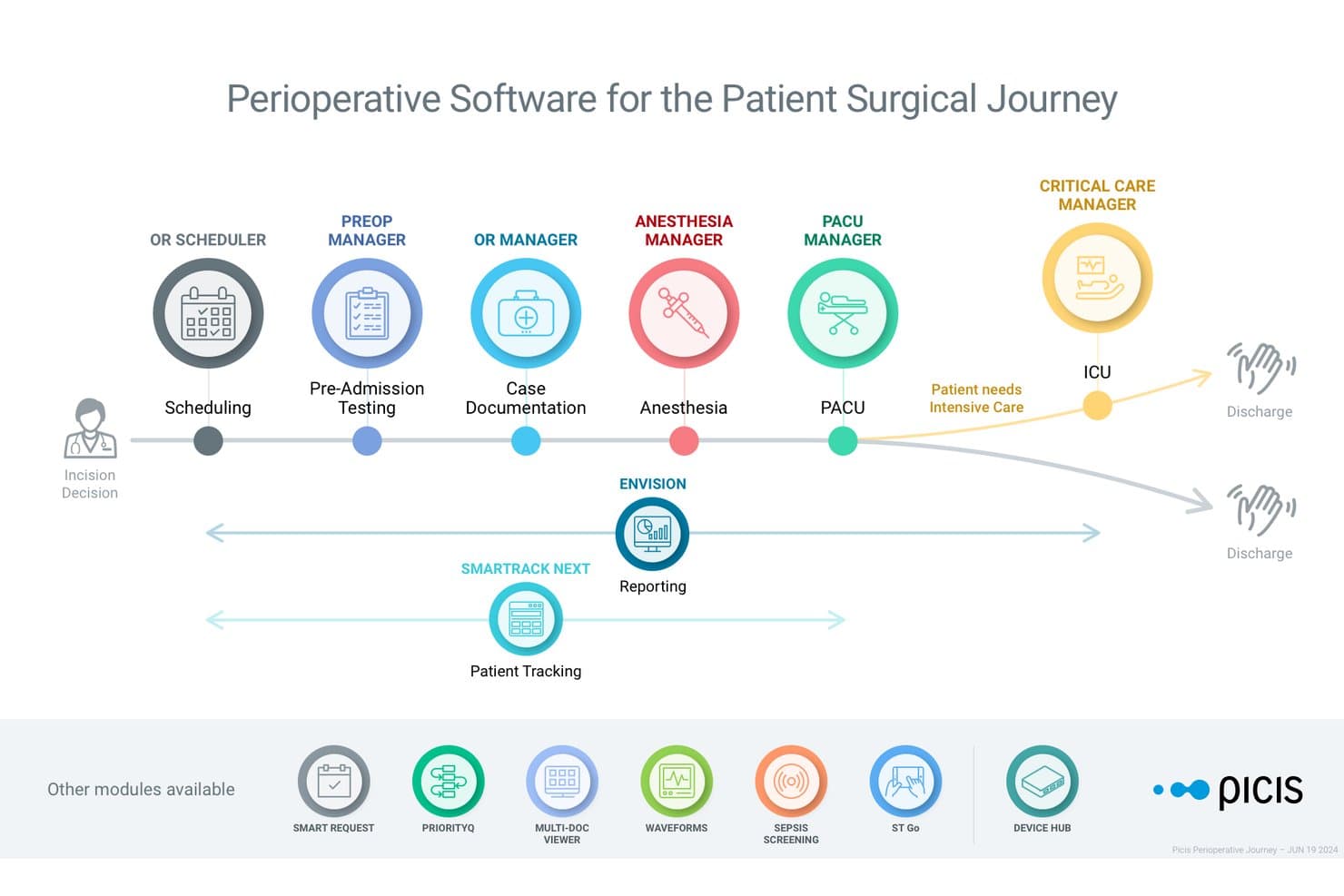
Picis Experior Suite offers a perioperative software workflow diagram mapping the full patient surgical journey from scheduling through discharge or ICU care. Picis Experior Suite is a modular ASC EMR platform that combines perioperative EHR, OR scheduling, anesthesia records, surgical billing, inventory tracking, and compliance reporting in a single system built specifically for ambulatory surgery centers.
Who Is Picis Experior Suite Best For?
Picis Experior Suite is a strong fit for ASC administrators and perioperative nursing directors who need a purpose-built surgical platform rather than a general EMR adapted for outpatient care.
Why I Picked Picis Experior Suite
I picked Picis Experior Suite because it's one of the few ASC platforms built around the full perioperative arc, from pre-op through PACU, rather than bolting surgical workflows onto a general EHR. I particularly like how it pulls real-time device data (ventilators, monitors, lab systems) directly into the anesthesia record, eliminating manual transcription mid-case. The preference card and case costing modules tie clinical setup directly to charge capture, keeping OR coordination and billing tightly connected.
Picis Experior Suite Key Features
- Digital chart tracking: Monitor chart completion status and manage documentation workflow across all perioperative phases.
- Electronic patient portal: Allow patients to review visit details, submit intake forms, and access perioperative instructions online.
- Physician credentialing module: Centralize management of surgeon credentials, expiration dates, and compliance documents for regulatory audits.
- Clearinghouse integration: Transmit insurance claims and receive ERA responses without needing an external billing system.
Picis Experior Suite Integrations
Picis Experior Suite offers native integrations with perioperative medical devices such as patient monitors, ventilators, and laboratory systems, as well as hospital information systems for clinical data exchange. An API is available for custom integrations.
Pros and Cons
Pros:
- Case costing analytics for procedure profitability
- Preference card and implant tracking modules
- Device-integrated anesthesia and periop charting
Cons:
- ASCQR reporting automation not well documented
- Limited independent user reviews available online
Learn more about Picis Experior Suite:
How I Evaluate Ambulatory Surgery Center EMR Software
I give the most weight to core functions: schedule cases around OR time and document pre-, intra-, and post-op care. I then consider standout features such as surgeon preference cards. Finally, I look at specialty-specific onboarding and ongoing support.
Core Functionality (Table Stakes For This List)
When I'm selecting tools for my list, I score each one on a scale from 0 (does not offer the functionality) to 5 (excels in this area) for each core functionality listed below. I then convert the total into a percentage to help assess each tool's overall fit, with extra weight on any functionalities I’ve deemed essential.
- Perioperative Documentation (Essential): I look for structured templates covering pre-op assessments, intra-op notes, and post-op recovery without repeated chart entry.
- Surgical Case Scheduling (Essential): I evaluate OR calendars that show room, surgeon, staff, and equipment conflicts when a case changes.
- Billing and Coding: I check for procedure-based coding, claim submission, and reimbursement follow-up for surgical encounters.
- Inventory and Implants: I assess whether teams can tie implants, supplies, and instrument use to cases and review usage for case costing.
- Compliance Reporting: I look for ASC-focused reports and audit-ready records mapped to relevant accreditation and regulatory requirements.
- Partner Data Exchange: I consider electronic exchange with referring clinicians, hospitals, anesthesia, and pathology teams across the surgical episode.
Once I have a list of tools that meet the criteria, I consider what sets each platform apart.
Differentiating Factors (What Sets Vendors Apart)
Here's how I compare and contrast different vendors:
Standout Features
Physician preference cards are the first thing I check. A well-built card ties a surgeon's preferred supplies, instruments, and positioning to each procedure type so the OR team can pull and prep without guesswork. Block utilization analytics matter just as much. I look for dashboards that show how each surgeon uses allocated OR time, since unused blocks are lost revenue and a scheduling bottleneck. I also evaluate multi-specialty template libraries because an ASC running orthopedic and GI cases needs documentation and order sets built for each workflow, not a single generic template adapted after go-live.
Beyond Features
Implementation support matters most when your ASC runs lean on IT. I look for vendors that offer specialty-specific onboarding—orthopedic workflow training, for example—rather than generic EMR walkthroughs. Cloud hosting with documented uptime SLAs is just as important, since a system outage on a full surgical day stalls every case on the board. I also evaluate payer and clearinghouse connectivity, checking whether real-time eligibility verification is built in so front-desk staff can confirm coverage before the patient arrives.
Slik velger du EMR-programvare for dagkirurgiske sentre
Det er lett å gå seg vill i lange funksjonslister og komplekse prismodeller. For å hjelpe deg med å holde fokus mens du går gjennom den unike programvareutvelgelsesprosessen din, er dette en sjekkliste over faktorer du bør ha i tankene:
| Faktor | Hva du bør vurdere |
| Skalerbarhet | Vil dette systemet støtte den forventede veksten i senterets saksmengde, nye spesialiteter eller flere lokasjoner uten kostbare oppgraderinger? |
| Integrasjoner | Kan programvaren kobles til anestesimonitorer, sykehusenes EHR-systemer, laboratorier og oppgjørssentralen din? Hvor pålitelig og godt støttet er tilkoblingen? |
| Tilpasningsmuligheter | Lar plattformen deg endre arbeidsflyter, maler eller rapporter slik at de samsvarer med hvordan teamene dine arbeider på operasjonsstuen og på oppvåkningsavdelingen? |
| Brukervennlighet | Hvor intuitivt er brukergrensesnittet for travelt klinisk personell og ansatte i frontkontoret? Kan brukerne raskt navigere, dokumentere og planlegge inngrep? |
| Implementering og opplæring | Hvilken tidsplan og ressursinnsats kreves? Kan du forvente forstyrrelser i den eksisterende operasjonsplanen under lanseringen? |
| Kostnad | Er priser og kontraktsvilkår tydelige? Vil vekst medføre nye kostnader for brukere, volum eller integrasjoner? Kan du sikre forutsigbare kostnader? |
| Sikkerhetstiltak | Tilbyr leverandøren sterkt samsvar med HIPAA, datakryptering og sikre tilgangskontroller for å beskytte pasient- og økonomiske data? |
| Krav til samsvar | Kan systemet hjelpe deg med å oppfylle rapporteringskravene fra AAAHC, Medicare ASCQR og delstaten uten betydelig manuelt arbeid? |
Hva er EMR-programvare for dagkirurgiske sentre?
EMR-programvare for dagkirurgiske sentre er digitale systemer som er utviklet spesielt for å håndtere kliniske og administrative arbeidsflyter ved dagkirurgiske fasiliteter. Disse verktøyene legger til rette for perioperativ dokumentasjon, OR-planlegging, anestesidokumentasjon, kvalitetsrapportering og ASC-spesifikk fakturering, slik at teamene deres kan koordinere pasientbehandlingen, sikre overholdelse av regelverk og effektivisere dokumentasjonen gjennom alle faser av det kirurgiske forløpet.
Funksjoner i EMR-programvare for dagkirurgiske sentre
Når dere velger EMR-programvare for dagkirurgiske sentre, bør dere se etter følgende viktige funksjoner:
- Perioperativ dokumentasjon: Strukturerte maler for dokumentasjon før, under og etter operasjonen gjør det enkelt å følge opp pasientbehandlingen i alle faser og redusere mangler i dokumentasjonen.
- OR-planlegging: Avanserte planleggingsverktøy lar dere tildele operasjonsstuer, administrere blokktider og koordinere tilgjengeligheten til kirurger og ansatte for hvert inngrep.
- ASC-spesifikk fakturering: Innebygd kirurgisk koding, støtte for CPT/HCPCS og automatisk registrering av kostnader sikrer nøyaktig fakturering tilpasset ASC-regler og krav fra betalere.
- Anestesidokumentasjon: Integrerte moduler lar anestesipersonell dokumentere legemidler, prosedyrer og vitale tegn direkte i EMR-systemet under operasjonen.
- Kvalitets- og samsvarsrapportering: Generer nødvendige rapporter til tilsynsmyndigheter for AAAHC og Medicare, og følg med på infeksjonsrater, behandlingsresultater og kvalitetsmål.
- Lager- og implantatsporing: Spor kirurgiske forsyninger og bruk av implantater, og automatiser bestillingspunkter for å opprettholde et optimalt lager og fakturere implantater korrekt.
- Preferansekort for leger: Digitale maler lagrer kirurgspesifikke preferanser for forsyninger og oppsett, slik at forberedelsen av inngrep effektiviseres og tiden mellom operasjoner i OR reduseres.
- Kostnadsanalyse per inngrep: Bryt ned utgiftene per inngrep – inkludert arbeidstid, forsyninger og implantater – for å identifisere muligheter for besparelser og forbedre lønnsomheten ved senteret.
- Pasientportal: Sikre portaler gir pasientene tilgang til kirurgiske instruksjoner, skjemaer og planer for oppfølging etter operasjonen, noe som forbedrer kommunikasjonen og engasjementet.
Vanlige AI-funksjoner i EMR-programvare for dagkirurgiske sentre
I tillegg til standardfunksjonene i EMR-programvare for dagkirurgiske sentre som er nevnt ovenfor, tar mange av disse løsningene i bruk AI med funksjoner som:
- Prediktiv optimalisering av planlegging: AI analyserer historiske data om inngrep og bemanningsmønstre for å anbefale optimale OR-planer, redusere forsinkelser og maksimere utnyttelsen av operasjonsstuene.
- Automatisert klinisk dokumentasjon: Verktøy for naturlig språkbehandling (NLP) konverterer muntlige eller innskrevne notater til strukturerte perioperative journaler, noe som sparer tid og forbedrer nøyaktigheten.
- Avviksdeteksjon i behandlingsresultater: AI markerer uvanlige trender i infeksjonsrater, komplikasjoner eller reinnleggelser, slik at teamene kan identifisere kvalitetsproblemer før de eskalerer.
- Intelligent registrering av kostnader: Maskinlæring gjennomgår dokumentasjonen fra inngrep for å foreslå manglende kostnader eller kodingsmuligheter, noe som reduserer inntektstap og risiko for manglende samsvar.
- Smarte prognoser for forsyninger: AI forutsier fremtidige lagerbehov basert på sammensetningen av inngrep, sesongvariasjoner og brukstrender, slik at sentrene kan unngå lagerbrudd og overbestilling.
Fordeler med EMR-programvare for dagkirurgiske sentre
Implementering av EMR-programvare for dagkirurgiske sentre gir flere fordeler for teamet og virksomheten deres. Her er noen av fordelene dere kan se frem til:
- Effektivisert perioperativ arbeidsflyt: Automatiserte funksjoner for journalføring og koordinering av inngrep hjelper de ansatte med å håndtere alle faser av operasjonen effektivt, fra innleggelse til utskrivelse.
- Bedre samsvar: Innebygd rapportering til tilsynsmyndigheter og revisjonsspor forenkler etterlevelsen av krav fra AAAHC, Medicare ASCQR og delstatlige regelverk.
- Nøyaktig fakturering og refusjon: ASC-spesifikk koding, kontroll av krav og registrering av kostnader minimerer avviste krav og fremskynder betalinger fra betalere.
- Bedre utnyttelse av OR: Planlegging i sanntid og sporing av tiden mellom inngrep reduserer forsinkelser og maksimerer bruken av operasjonsstuene.
- Bedre lagerstyring: Integrert sporing av implantater og forsyninger reduserer svinn og forhindrer kostbare lagerbrudd eller overbestilling.
- Datadrevet beslutningstaking: Kostnadsanalyse per inngrep og kvalitetsdashbord støtter driftsforbedringer, sammenligning mot referanseverdier og strategiske vekstplaner.
- Tilfredshet blant leger og pasienter: Tilpassbare preferansekort og pasientportaler skaper smidigere kirurgiske opplevelser for både behandlingsteam og pasienter.
Kostnader og priser for EMR-programvare for dagkirurgiske sentre
Valg av EMR-programvare for dagkirurgiske sentre krever en forståelse av de ulike prismodellene og abonnementene som er tilgjengelige. Kostnadene varierer basert på funksjoner, teamstørrelse, tillegg og mer. Tabellen nedenfor oppsummerer vanlige abonnementer, gjennomsnittsprisene deres og typiske funksjoner som er inkludert i EMR-programvareløsninger for dagkirurgiske sentre:
Sammenligningstabell for EMR-programvare for dagkirurgiske sentre
| Abonnementstype | Gjennomsnittspris | Vanlige funksjoner |
| Gratisabonnement | $0 | Grunnleggende planleggingsverktøy, begrenset dokumentasjonsfunksjonalitet, begrenset brukertilgang og minimal brukerstøtte. |
| Personlig abonnement | $200-$500/måned | Perioperativ journalføring, tilpasning av arbeidsflyt for én behandler, rapportmaler og standardfunksjoner for etterlevelse. |
| Forretningsabonnement | $800-$2,000/måned | Støtte for flere behandlere, avansert fakturering for dagkirurgiske sentre, sporing av lagerbeholdning og implantater, robuste integrasjoner og analyseverktøy. |
| Virksomhetsabonnement | $2,500-$7,000/måned | Tilpasset automatisering av arbeidsflyt, dedikert oppstart, avansert interoperabilitet, prioritert brukerstøtte og sikkerhet på virksomhetsnivå. |
Vanlige spørsmål om EMR-programvare for dagkirurgiske sentre
Her er noen svar på vanlige spørsmål om EMR-programvare for dagkirurgiske sentre:
Hva er forskjellen mellom EMR-programvare for dagkirurgiske sentre og EMR-systemer for sykehus?
EMR-programvare for dagkirurgiske sentre er utviklet spesielt for kirurgiske arbeidsflyter med behandling samme dag, rask klargjøring av operasjonsrom og dokumentasjon for poliklinisk behandling, mens EMR-systemer for sykehus prioriterer innleggelse, behandling over flere dager og bredere spesialistbehov.
Kan EMR-systemer for dagkirurgiske sentre integreres med eksterne laboratorier og legers EHR-systemer?
Ja, de fleste moderne EMR-systemer for dagkirurgiske sentre støtter HL7- eller FHIR-integrasjon for sikker datautveksling med laboratorier, bildediagnostiske sentre og henvisende legers EHR-systemer, noe som bidrar til å samordne perioperativ behandling.
Hvor lang tid tar det å implementere ny EMR-programvare for et dagkirurgisk senter?
Implementeringen tar vanligvis alt fra noen uker til flere måneder, avhengig av systemets kompleksitet, behovet for datamigrering og om opplæring basert på brukerroller er inkludert for alle brukere.
Finnes det spesielle krav til etterlevelse for EMR-programvare for dagkirurgiske sentre?
Ja, EMR-løsninger for dagkirurgiske sentre må ivareta HIPAA, standardene til AAAHC eller Joint Commission, Medicare-rapportering og, i noen regioner, dokumentasjons- eller kvalitetsprogrammer på delstatsnivå.
Hvilken type brukerstøtte tilbyr leverandører vanligvis etter lansering?
De fleste leverandører tilbyr brukerstøtte via e-post, chat eller telefon, løpende systemoppdateringer og ressurser for brukeropplæring. Noen tilbyr også en dedikert kundeansvarlig eller spesialist på dagkirurgiske sentre.