

WellSky Personal Care Review: Pros, Cons, Features, & Pricing
WellSky Personal Care helps home care agencies manage caregiver scheduling, EVV compliance, billing, and daily care operations with tools designed to streamline coordination and administration.

We review tools independently, and commissions help fund our testing. See our transparency policy, our methodology, or suggest a tool.
WellSky Personal Care is a home care software built for personal care and non-medical home care agencies managing scheduling, caregiver tracking, and billing across their operations. I'd consider it if your agency has grown past what lighter tools like AxisCare can handle and you need stronger multi-location management and more detailed caregiver oversight without moving to a full clinical platform.
WellSky Personal Care Software Evaluation Summary
4.4/5
- Pricing upon request
- Free consultation available
Why Trust Our Software Recommendations
6,700+
Reviews
20
Industry experts
16+
Evaluation factors
14
Years
Our team has been testing and reviewing software since 2012. As medical practice leaders ourselves, we know how difficult—and important—it is to choose the right software.
For this guide, we evaluated tools using hands-on testing and independent research, scoring tools using our selection criteria.
Our reviews reflect our human editorial judgment, not a sales pitch.
WellSky Personal Care Software Overview
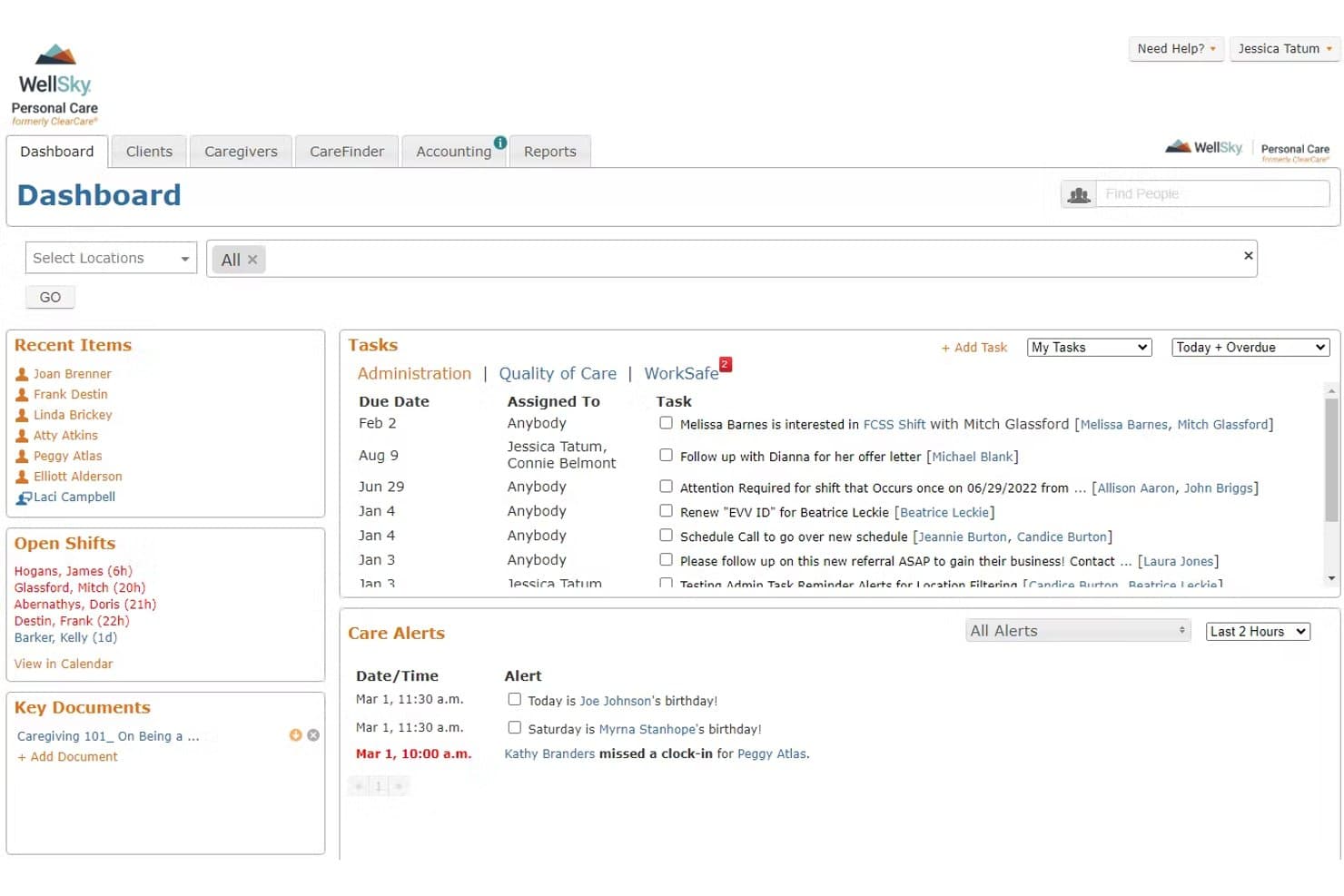
When evaluating WellSky Personal Care for home care management, I find its scheduling, caregiver coordination, and communication tools stand out. The platform is easy to use and helps agencies manage daily care operations more efficiently.
While customization and reporting may feel limited for some organizations, WellSky Personal Care still delivers solid value for agencies focused on streamlining caregiver workflows and client management.
Pros
- The user-friendly interface allows your team to quickly adapt without a steep learning curve.
- Efficient scheduling tools help your team manage appointments and caregiver assignments smoothly.
- Strong communication features let your team stay connected and informed, enhancing coordination.
Cons
- Some user reviews find limitations in customization options for specific needs.
- Reporting features could be less advanced for teams needing detailed analytics.
- Initial onboarding might present a learning curve for new users unfamiliar with the platform.
Is WellSky Personal Care Software Right For Your Needs?
Who Would be a Good Fit for WellSky Personal Care Software?
WellSky Personal Care is best suited for home care organizations that need a centralized platform for caregiver scheduling, communication, and operational coordination. Its user-friendly interface and workflow tools make it a strong fit for agencies managing multiple caregivers, appointments, and client care activities across different service types.
- Senior Care FacilitiesThe software's scheduling and communication tools help manage appointments and caregiver assignments efficiently.
- Private Duty CareWellSky Personal Care's user-friendly interface allows your team to quickly adapt and improve patient outcomes.
- Home Health AgenciesIts powerful features support efficient coordination, making it ideal for managing large caregiving teams.
- Hospice Care ProvidersThe software's communication features enhance coordination and ensure your team stays informed.
- Non-Medical Home CareWellSky Personal Care simplifies scheduling, helping your team focus more on caregiving and less on logistics.
- Assisted Living FacilitiesThe platform supports seamless management, enhancing productivity and ensuring your team's operations run smoothly.
Who Would be a Bad Fit for WellSky Personal Care Software?
While WellSky Personal Care works well for many home care providers, it may be less suitable for organizations needing highly customized workflows, advanced analytics, or specialized reporting capabilities. Teams with complex operational requirements or enterprise-level customization needs may find the platform more limiting compared to broader healthcare management systems.
- Specialized ClinicsThe software's limited customization options might not meet your specialized reporting needs.
- Large CorporationsIf your corporation requires extensive analytics, you might find the reporting features less advanced.
- Highly Regulated IndustriesThese industries might require more customization than WellSky Personal Care offers.
- Tech-Savvy TeamsYour team may seek more sophisticated tools than those provided by this user-friendly platform.
- Custom WorkflowNeeds If your team relies on tailored solutions, you might find this software's back-office customization options lacking.
- Data-Driven DepartmentsThe need for detailed analytics could make the software's reporting features feel inadequate for your work.
How We Test & Score Tools
We’ve spent years building, refining, and improving our software testing and scoring system. The rubric is designed to capture the nuances of software selection and what makes a tool effective, focusing on critical aspects of the decision-making process.
Below, you can see exactly how our testing and scoring works across seven criteria. It allows us to provide an unbiased evaluation of the software based on core functionality, standout features, ease of use, onboarding, customer support, integrations, customer reviews, and value for money.
Core Functionality (25% of final scoring)
The starting point of our evaluation is always the core functionality of the tool. Does it have the basic features and functions that a user would expect to see? Are any of those core features locked to higher-tiered pricing plans? At its core, we expect a tool to stand up against the baseline capabilities of its competitors.
Standout Features (25% of final scoring)
Next, we evaluate uncommon standout features that go above and beyond the core functionality typically found in tools of its kind. A high score reflects specialized or unique features that make the product faster, more efficient, or offer additional value to the user.
We also evaluate how easy it is to integrate with other tools typically found in the tech stack to expand the functionality and utility of the software. Tools offering plentiful native integrations, 3rd party connections, and API access to build custom integrations score best.
Ease of Use (10% of final scoring)
We consider how quick and easy it is to execute the tasks defined in the core functionality using the tool. High scoring software is well designed, intuitive to use, offers mobile apps, provides templates, and makes relatively complex tasks seem simple.
Onboarding (10% of final scoring)
We know how important rapid team adoption is for a new platform, so we evaluate how easy it is to learn and use a tool with minimal training. We evaluate how quickly a team member can get set up and start using the tool with no experience. High scoring solutions indicate little or no support is required.
Customer Support (10% of final scoring)
We review how quick and easy it is to get unstuck and find help by phone, live chat, or knowledge base. Tools and companies that provide real-time support score best, while chatbots score worst.
Customer Reviews (10% of final scoring)
Beyond our own testing and evaluation, we consider the net promoter score from current and past customers. We review their likelihood, given the option, to choose the tool again for the core functionality. A high scoring software reflects a high net promoter score from current or past customers.
Value for Money (10% of final scoring)
Lastly, in consideration of all the other criteria, we review the average price of entry level plans against the core features and consider the value of the other evaluation criteria. Software that delivers more, for less, will score higher.
Core Features
Scheduling Tools
Easily manage appointments and caregiver assignments with intuitive scheduling features that keep your team organized and efficient for the best patient care.
Communication Features
Keep your team connected and informed through built-in messaging and alerts that enhance coordination.
Billing and Payroll Automation
Visit data flows straight into billing and payroll, reducing manual work. You’ll avoid errors and speed up payments and invoicing systems.
Client Records
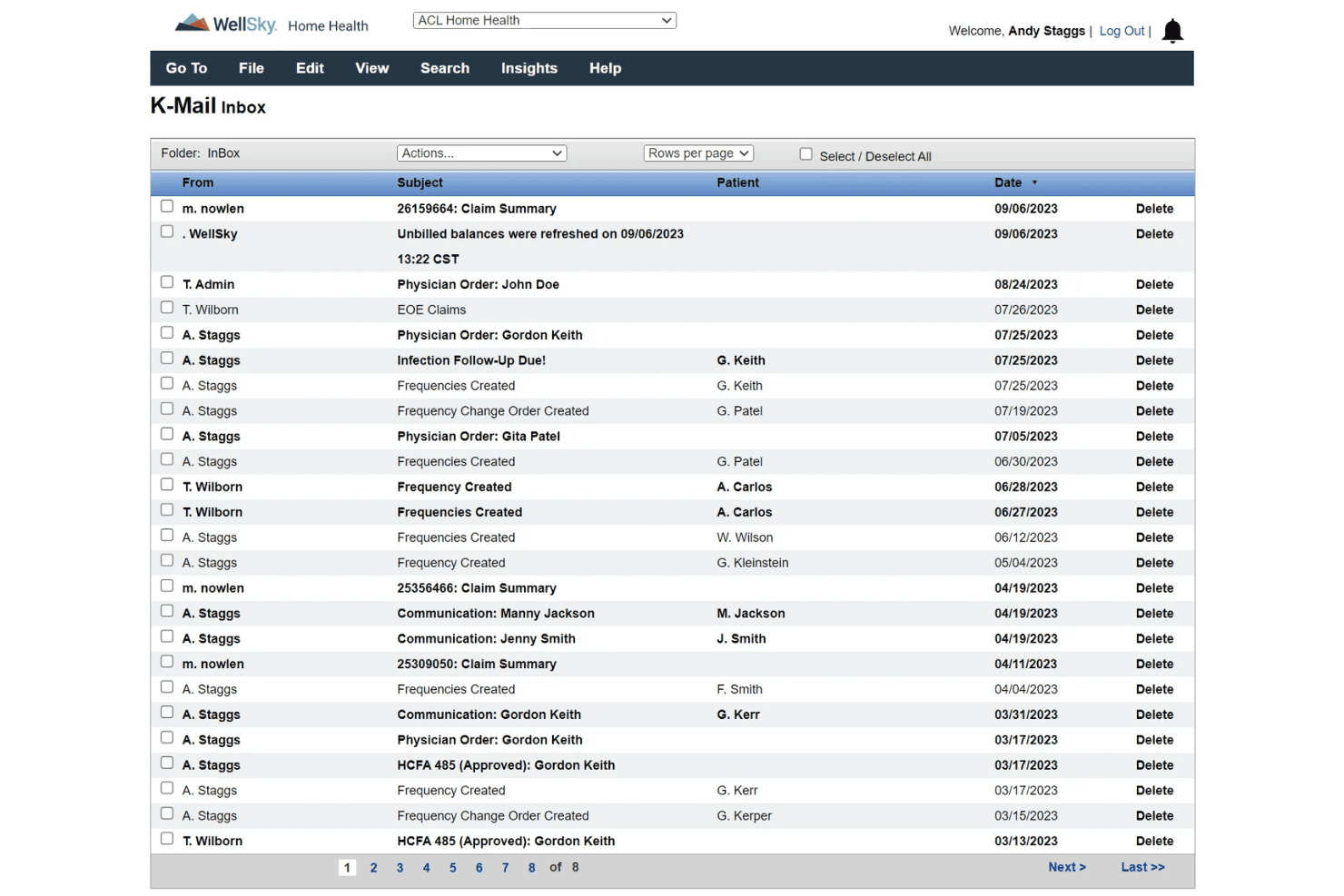
Maintain comprehensive client records that provide your team with quick access to essential information, like EMR.
Caregiver Mobile App
Caregivers can clock in, review tasks, and update care notes from their phones. This keeps your team connected and cuts down on paperwork.
Client Care Plans
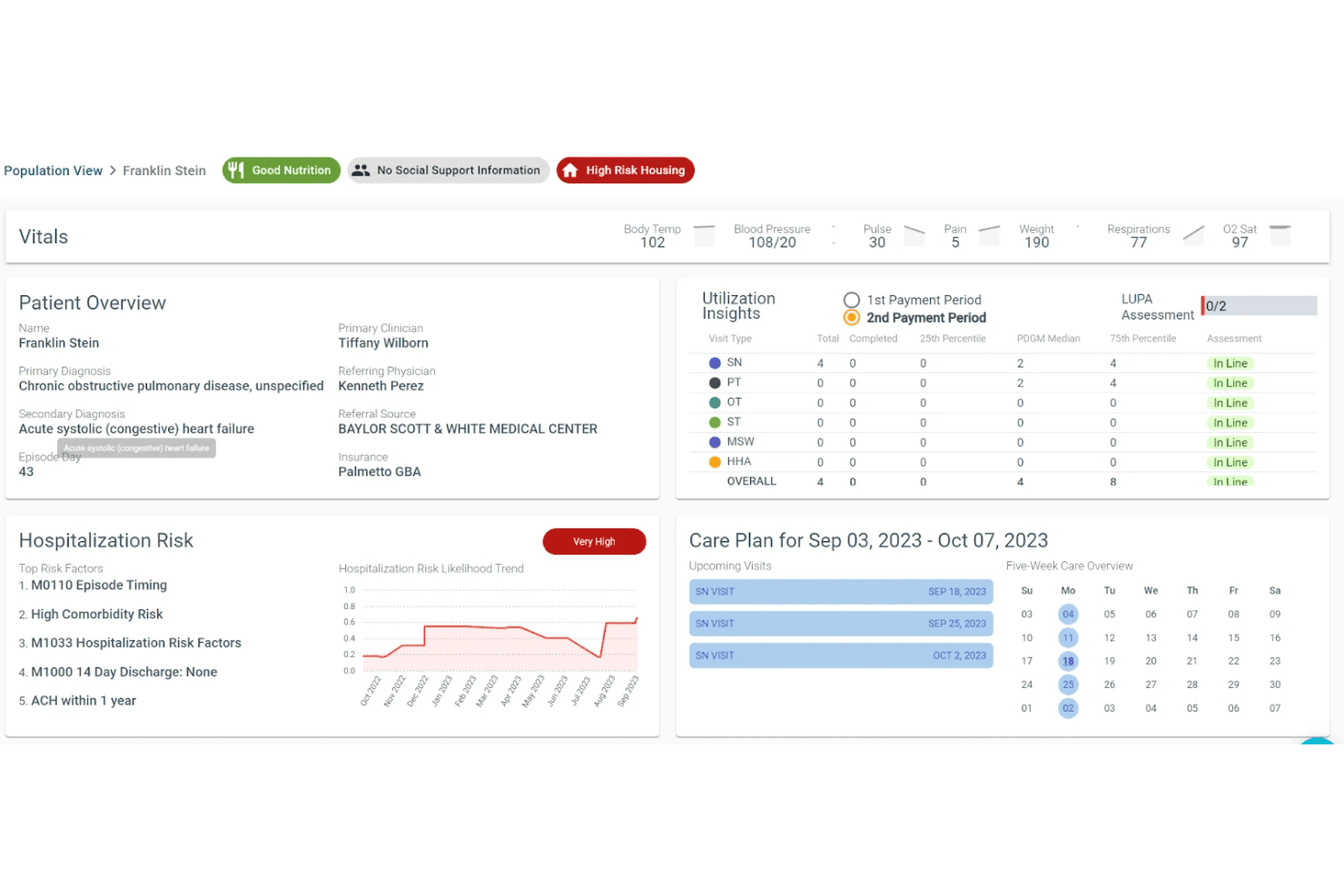
Build detailed care plans with tasks, goals, and notes that update in real time. It keeps your office staff aligned and helps track client progress.
Ease of Use
WellSky Personal Care stands out for its user-friendly interface, making it easy for your team to adapt without a steep learning curve. The straightforward design simplifies navigation, allowing your team to focus more on caregiving than grappling with the software.
With features like intuitive scheduling, communication tools, and payment processing, your team can quickly manage tasks and stay connected.
Integrations
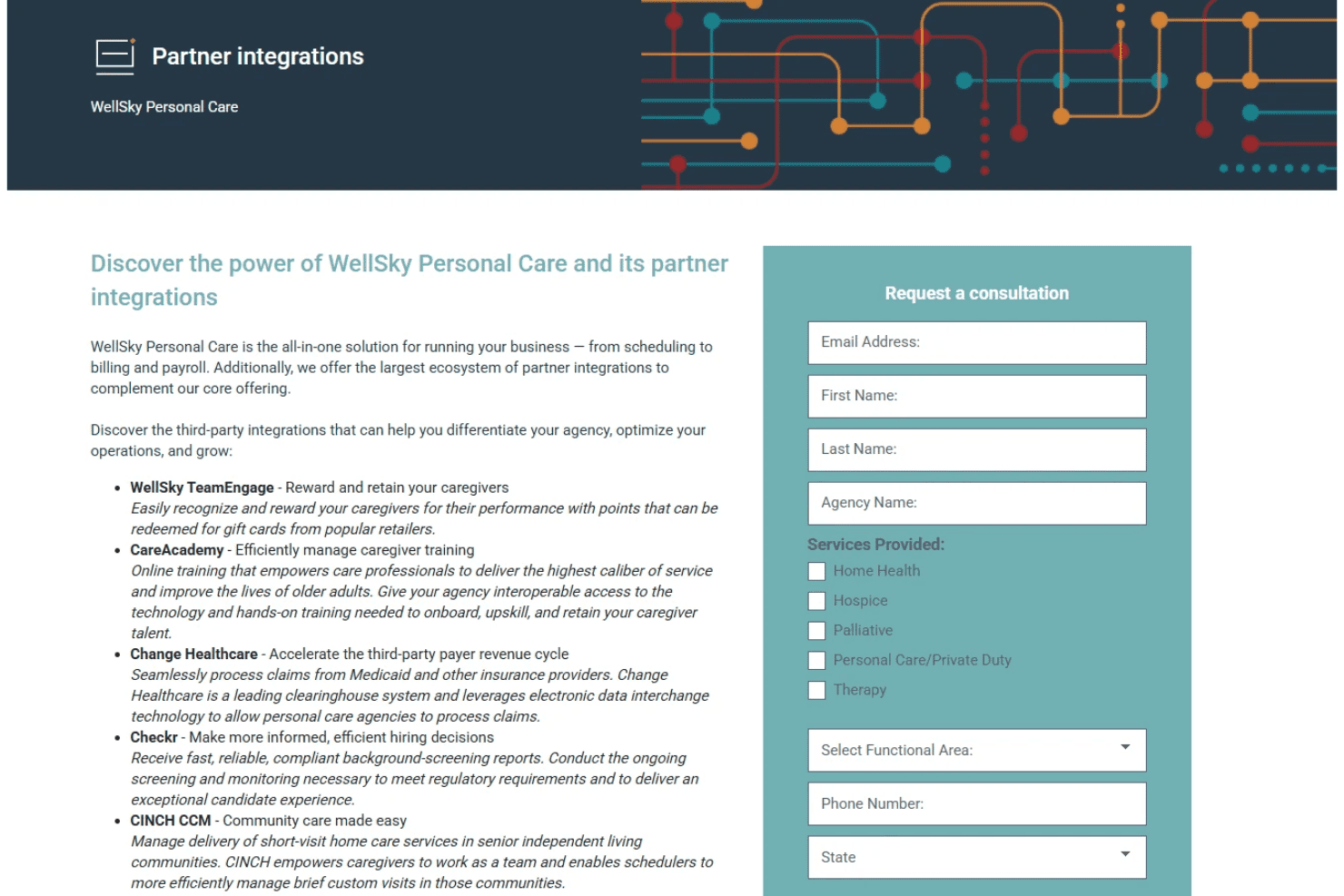
WellSky Personal Care integrates natively with QuickBooks, Paychex, ADP, AxisCare, MatrixCare, Alora, Rosemark, ClearCare, Axxess, and Sandata.
WellSky Personal Care also has an API available and connects with third-party integration tools like Zapier.
WellSky Personal Care Software Specs
- API: Yes
- Appointment Scheduling: Yes
- Athlete Management: No
- Audit Management: Yes
- Calendar Management: Yes
- Compliance Tracking: Yes
- Customer Management: Yes
- Dashboard: Yes
- Data Export: Yes
- Data Import: Yes
- Data Visualization: Yes
- Electronic Prescribing: No
- External Integrations: Yes
- File Sharing: Yes
- File Transfer: No
- Health Management: No
- HIPAA Compliance: Yes
- Inventory Tracking: No
- Multi-User: Yes
- Notifications: Yes
- Organization Management: Yes
- Patient Management: Yes
- Project Management: No
- Regulatory Alerts: No
- Risk Assessment: No
- Scheduling: Yes
- Supplier Management: No


