


RXNT vs. NextGen: Comparison & Expert Reviews for 2026
RXNT and NextGen are EMR and practice management platforms for ambulatory organizations. Compare their features, workflows, support, and best-fit use cases.

We review tools independently, and commissions help fund our testing. See our transparency policy, our methodology, or suggest a tool.
Specialty practices rarely struggle because they lack software. The real problem is finding a system that can keep documentation, scheduling, billing, and patient communication aligned without forcing every team into the same workflow.
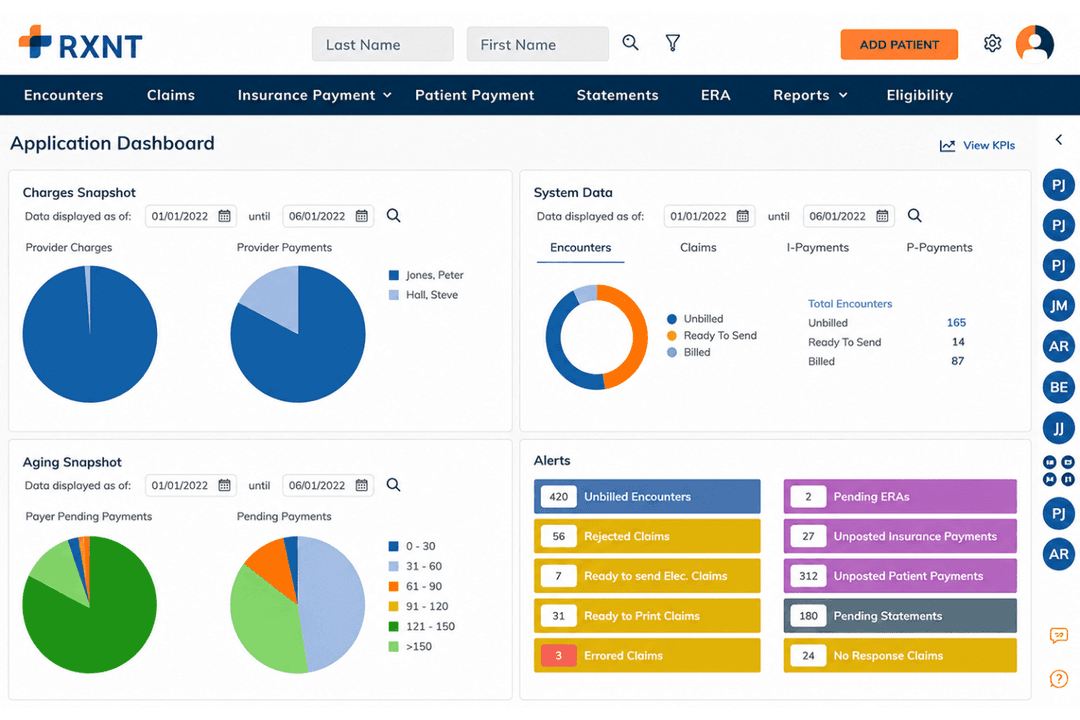
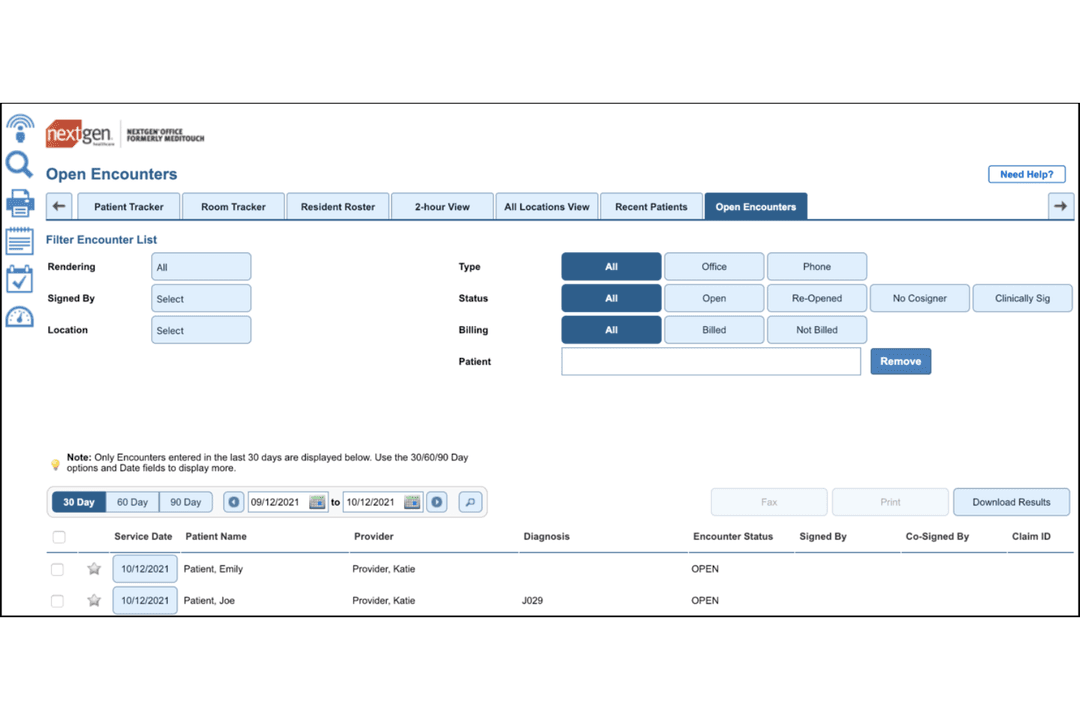
RXNT and NextGen are both EMR software platforms with practice management capabilities, but they approach that challenge differently. RXNT emphasizes an integrated suite that connects clinical and financial workflows, while NextGen centers its offering around configurable EHR and practice management tools for specialty practices.
In this comparison, I’ll examine their features, pricing, usability, security, strengths, limitations, and ideal use cases to help you decide which platform best matches how your practice delivers care and manages daily operations.
RXNT
4.3/5
- Free demo + free expert consultation available
- Pricing upon request
NextGen Healthcare EHR
3.7/5
- Free demo available
- Pricing upon request
Why Trust Our Software Recommendations
6,700+
Reviews
20
Industry experts
16+
Evaluation factors
14
Years
Our team has been testing and reviewing software since 2012. As medical practice leaders ourselves, we know how difficult—and important—it is to choose the right software.
For this guide, we evaluated tools using hands-on testing and independent research, scoring tools using our selection criteria.
Our reviews reflect our human editorial judgment, not a sales pitch.
| RXNT | NextGen Healthcare EHR | |
|---|---|---|
| Free Trial | Free demo + free expert consultation available | Free demo available |
| Pricing | Pricing upon request | Pricing upon request |
RXNT vs. NextGen Healthcare EHR Pricing & Hidden Costs
RXNT publishes predictable, per-provider pricing across its Full Suite, Practice Management, EHR, and e-prescribing options. Onboarding, data migration, cloud access, support, and regular upgrades are included. However, most plans require an annual contract, while add-ons such as EPCS, lab interfaces, patient reminders, faxing, and printed claims can increase the total cost. In contrast, NextGen lists pricing upon request, so practices must contact the vendor for a quote based on their selected products, size, specialties, and implementation requirements.
As a result, RXNT makes it easier to estimate the starting cost, while NextGen requires more discovery before you can compare the full investment. Regardless of which platform you consider, confirm the contract term, provider and user fees, implementation scope, data migration, training, interfaces, support, and optional modules before signing.
| RXNT | NextGen Healthcare EHR | |
|---|---|---|
| API | Yes | Yes |
| Appointment Scheduling | Yes | Yes |
| Athlete Management | No | No |
| Audit Management | Yes | No |
| Calendar Management | Yes | Yes |
| Compliance Tracking | Yes | No |
| Customer Management | No | Yes |
| Dashboard | Yes | Yes |
| Data Export | Yes | Yes |
| Data Import | Yes | Yes |
| Data Visualization | No | No |
| Electronic Prescribing | Yes | Yes |
| External Integrations | Yes | Yes |
| File Sharing | Yes | Yes |
| File Transfer | Yes | Yes |
| Health Management | Yes | No |
| HIPAA Compliance | Yes | Yes |
| Inventory Tracking | No | No |
| Multi-User | Yes | Yes |
| Notifications | Yes | Yes |
| Organization Management | Yes | No |
| Patient Management | Yes | Yes |
| Project Management | No | No |
| Regulatory Alerts | Yes | No |
| Risk Assessment | Yes | No |
| Scheduling | Yes | Yes |
| Supplier Management | No | No |
| Integration | RXNT | NextGen |
|---|---|---|
| IntegrationQuest Diagnostics | RXNT✅ | NextGen✅ |
| IntegrationLabCorp | RXNT✅ | NextGen✅ |
| IntegrationChange Healthcare | RXNT✅ | NextGen❌¹ |
| IntegrationSurescripts | RXNT✅ | NextGen✅ |
| IntegrationHealth e Link | RXNT✅ | NextGen❌¹ |
| IntegrationHealthCollab | RXNT✅ | NextGen❌¹ |
| IntegrationTriZetto | RXNT❌¹ | NextGen✅ |
| IntegrationTSYS | RXNT❌¹ | NextGen✅ |
| IntegrationFHIR and API Connectivity | RXNT✅ | NextGen✅ |
¹ Not publicly listed
RXNT and NextGen both support the core healthcare connections needed to move clinical, prescribing, laboratory, and billing data between systems. RXNT focuses on practical connectivity for ambulatory workflows through laboratory interfaces, health information exchanges, clearinghouse services, and FHIR capabilities, while NextGen offers a broader API ecosystem for practices with more complex integration requirements. Both cover essential interoperability needs, but RXNT favors ready-to-use healthcare connections, whereas NextGen gives technical teams more room to build and manage custom integrations.
| Factor | RXNT | NextGen |
|---|---|---|
| FactorHIPAA and Certifications | RXNTHIPAA compliant, with SOC 2 Type II-certified data centers, ONC-certified health IT, Surescripts- and EPCS-certified prescribing software, and support for MACRA, MIPS, and MVPs. | NextGenMeets HIPAA requirements and maintains ISO 27001, HITRUST CSF, SOC 2 Type II, and SOC 3 certifications or audits for applicable products and services. |
| FactorData Protection | RXNTProtects patient and practice data through encryption, vulnerability management, regular security assessments, and Azure Cloud Defender for active threat detection and response. | NextGenEncrypts hosted data at rest and in transit while applying vulnerability scanning, security testing, patch management, and secure development controls. |
| FactorAccess and Monitoring | RXNTUses authentication, access controls, audit capabilities, and organization-wide security policies to restrict access to protected health information and track system activity. | NextGenUses role-based permissions, password authentication, audit trails, and activity-log monitoring to control and review access to hosted data. |
| FactorSecurity Governance and Response | RXNTMaintains a continuously evolving security program with vulnerability reviews, threat monitoring, and response processes designed to address emerging healthcare risks. | NextGenApplies formal security governance, incident response procedures, risk assessments, and secure development controls across applicable products and services. |
| FactorReliability and Recovery | RXNTDelivers automatic cloud updates and security patches while continuously adjusting its controls to address new threats, vulnerabilities, and healthcare compliance requirements. | NextGenUses AWS infrastructure, data replication, backups, snapshots, business continuity planning, and disaster recovery processes to support system availability and data restoration. |
Overall, RXNT emphasizes healthcare-specific compliance, SOC 2 Type II-certified data centers, active threat detection through Azure Cloud Defender, and automatic cloud updates that keep security controls current without adding server maintenance to the practice. NextGen leans on broader enterprise security frameworks, detailed access monitoring, and AWS-based backup and disaster recovery processes designed for operational resilience. Both provide strong security foundations, but RXNT feels more closely aligned with the everyday needs of ambulatory practices, while NextGen prioritizes extensive governance documentation and infrastructure redundancy.
| Factor | RXNT | NextGen |
|---|---|---|
| FactorDaily Workflows | RXNTKeeps charting, prescribing, scheduling, patient engagement, and billing in one system, though its structured processes may feel restrictive for practices with highly customized workflows. | NextGenProvides configurable, specialty-specific content across more than 2,000 clinical workflows, giving teams greater flexibility but more options to learn and manage. |
| FactorOnboarding | RXNTIncludes a collaborative kickoff, free data migration, custom template setup, training resources, and dedicated support without separate implementation charges. | NextGenUses implementation consultants to configure the system around the practice, followed by online modules, hands-on exercises, and trainer-led sessions. |
| FactorCustomization | RXNTAllows teams to adjust clinical templates, forms, reports, and documentation around their specialty, although deeply established processes may still require compromise. | NextGenOffers extensive specialty configuration and organization-specific workflow training, making it adaptable but potentially more involved to set up. |
| FactorOngoing Support | RXNTProvides free, US-based support through dedicated clinical and practice management teams, alongside Help Center articles, interactive guides, and video lessons. | NextGenProvides US-based support lines, a Success Community for submitting cases, and access to documentation, training resources, and an online Learning Center. |
From an ease-of-use perspective, RXNT leans into a guided, practical experience, with included data migration, custom template setup, training resources, and closely linked clinical and financial workflows that reduce the need to move between systems. NextGen offers a more configurable environment built around specialty-specific workflows, giving practices greater control but requiring more setup, training, and process decisions upfront. Practices that want structured implementation and broad functionality without piecing together multiple products may find RXNT more approachable, while those prepared to invest in deeper configuration may appreciate NextGen’s flexibility once the system is in place.
RXNT
- Connects EMR, e-prescribing, scheduling, billing, and patient engagement workflows
- Includes hands-on onboarding, free data migration, and custom template setup
- Supports more than 45 specialties and ambulatory organizations of all sizes
- Limited customization may restrict established documentation and billing processes
- New releases may occasionally introduce bugs or temporary instability
- Not designed for hospitals, inpatient facilities, dental offices, or some urgent care settings
NextGen Healthcare EHR
- Specialty templates for different practice types are robust.
- Patient portal supports direct messaging and online scheduling.
- Reporting tools offer granular and customizable data views.
- System can lag during peak usage hours.
- Mobile app lacks some desktop features.
- Initial setup requires significant support and resources.
RXNT
- Healthcare ProfessionalsIndividual providers can use RXNT to manage documentation, prescribing, scheduling, patient communication, and billing without relying on a separate product for each task.
- Ambulatory Care OrganizationsThe platform is built around outpatient workflows, including patient records, appointments, prescriptions, claims, and everyday practice operations.
- Primary Care ProvidersPrimary care organizations can use RXNT for charting, medication management, preventive care documentation, patient engagement, and billing across a broad range of routine encounters.
- Mental and Behavioral Health ProvidersPsychiatry, mental health, and behavioral health organizations can manage documentation, prescribing, scheduling, patient communication, and reimbursement workflows within the system.
- Multi-Specialty and Multi-Location OrganizationsConnected patient records, scheduling, billing, and administrative tools can help larger ambulatory groups coordinate care across different specialties and locations.
- Medical Billing CompaniesBilling companies and central billing offices can use RXNT to manage claims, payments, accounts receivable, reporting, and revenue cycle workflows for multiple healthcare clients.
NextGen Healthcare EHR
- Multi-Specialty PracticesNextGen’s deep specialty templates and adaptable workflows help multi-specialty groups manage diverse documentation and regulatory requirements in one unified system.
- Large Medical GroupsThe platform supports complex scheduling, reporting, and revenue cycle management at scale, making it well-suited for large clinics or health systems.
- Federally Qualified Health CentersBuilt-in compliance and population health tools are tailored for FQHCs that need to track quality metrics and meet reporting mandates.
- Behavioral Health DepartmentsI’ve seen its specialty content, telehealth, and secure messaging streamline workflows for behavioral health teams.
- Revenue Cycle TeamsAdvanced billing, claims tracking, and real-time eligibility features help streamline revenue cycle operations for dedicated financial and billing personnel.
- Custom Workflow EnvironmentsOrganizations that want to build and automate unique patient flow or intake processes benefit from NextGen’s workflow automation designer.
Who Should Use RXNT, and Who Should Use NextGen Healthcare EHR?
If you’re looking for an EMR that brings clinical documentation, prescribing, scheduling, patient engagement, billing, and practice management into one integrated suite, RXNT is likely the better fit for your practice. It works well for ambulatory organizations of different sizes and specialties, especially those that value predictable pricing, included onboarding, free data migration, and US-based support without having to assemble several separate products.
If, instead, you need deeper specialty configuration, advanced workflow automation, and more extensive reporting across complex teams or locations, NextGen may be the stronger choice. It is well suited to multi-specialty practices, large medical groups, behavioral health departments, revenue cycle teams, and practices prepared to invest more time in configuration and training.
| RXNT | NextGen Healthcare EHR | |
|---|---|---|
| Implementation | RXNT Includes hands-on onboarding, free data migration, custom templates, and training resources within the subscription. | NextGen Healthcare EHR Uses implementation consultants, system configuration, online learning, and trainer-led sessions for a more tailored rollout. |
| Integration Strategy | RXNT Prioritizes ready-to-use healthcare connections through labs, prescribing networks, clearinghouses, HIEs, and FHIR exchange. | NextGen Healthcare EHR Provides a broader API and interface environment for practices managing more extensive or customized connections. |
| Platform Approach | RXNT Combines EHR, e-prescribing, scheduling, patient engagement, billing, practice management, and AI documentation within one integrated suite. | NextGen Healthcare EHR Centers its EHR and practice management tools around configurable, specialty-specific clinical and operational workflows. |
| Pricing | RXNT Publishes predictable per-provider pricing, with onboarding, migration, support, and upgrades included, though add-ons can raise the total cost. | NextGen Healthcare EHR Uses custom quotes based on selected products, specialty needs, implementation scope, and practice requirements. |
| Workflow Flexibility | RXNT Supports custom templates and workflows but may feel restrictive for practices with deeply established documentation or billing processes. | NextGen Healthcare EHR Offers deeper specialty configuration and workflow automation, though teams should expect more setup and training. |
| Ambulatory Care | Both support outpatient practices with multiple providers, locations, and specialties, combining clinical documentation, scheduling, patient engagement, and billing tools for day-to-day operations. |
|---|---|
| Clinical Documentation | Both provide electronic patient records, encounter documentation, customizable clinical templates, order management, and tools for maintaining longitudinal patient histories. |
| Electronic Prescribing | Both support electronic prescriptions, medication histories, allergy and interaction checks, formulary information, prior authorization workflows, and controlled-substance prescribing. |
| Patient Engagement | Both give patients access to portals, secure communication, appointment-related tools, health information, forms, and other self-service capabilities outside the clinical visit. |
| Practice Management | Both connect scheduling, eligibility verification, claims, payments, accounts receivable, reporting, and other administrative workflows with clinical activity. |