

Luma Health Review: Pros, Cons, Features and Pricing
Luma Health brings patient engagement and communication into one platform, from appointment scheduling and reminders to intake, messaging, and care coordination workflows.

We review tools independently, and commissions help fund our testing. See our transparency policy, our methodology, or suggest a tool.
Luma Health is a patient engagement software built for healthcare organizations that need to automate patient scheduling, reminders, and two-way messaging across the care journey. It's a strong fit for practices and health systems looking to cut down on manual outreach and no-shows without overhauling their existing workflows. When comparing this tool to others, I'd choose it over a tool like Phreesia if your team needs text-first, automated communication across the full patient journey rather than a solution centered primarily on in-office intake.
Luma Health Evaluation Summary
4.7/5
- Pricing upon request
- Free demo available
Why Trust Our Software Recommendations
6,700+
Reviews
20
Industry experts
16+
Evaluation factors
14
Years
Our team has been testing and reviewing software since 2012. As medical practice leaders ourselves, we know how difficult—and important—it is to choose the right software.
For this guide, we evaluated tools using hands-on testing and independent research, scoring tools using our selection criteria.
Our reviews reflect our human editorial judgment, not a sales pitch.
Luma Health Overview
When judging Luma Health, I’d say its messaging automation, flexible appointment tools, and rich EHR integrations set it apart for practices that want to scale patient outreach. The intuitive interface and responsive support make onboarding easy, even for less tech-savvy teams. Pricing can climb for advanced workflows, but you get robust two-way texting, referral tracking, and multi-location management.
Clinics focused on reducing no-shows and delivering coordinated care will find Luma Health a strong pick, though those with basic needs might find lighter options elsewhere.
Pros
- Automated appointment reminders reduce patient no-shows.
- Two-way texting improves real-time patient communication.
- Referral management streamlines multi-provider coordination.
Cons
- Reporting tools lack advanced customization.
- Some users report mobile app bugs.
- Multi-language support is limited compared to others.
Is Luma Health Right For Your Needs?
Who Would be a Good Fit for Luma Health?
Luma Health is best suited for healthcare organizations that need advanced patient outreach, automated scheduling, and complex referral management. Large practices, specialty clinics, and health systems benefit from its ability to automate multi-step journeys and centralize communication.
Teams looking to scale engagement or coordinate care across multiple providers see the most value, especially when personalized health campaigns and real-time messaging are essential.
- Multi-Specialty ClinicsMultiple care teams can unify scheduling, communication, and referrals, making it easier to track and manage patient journeys across specialties.
- Hospital SystemsHealth systems benefit from Luma Health’s deep EHR integrations and ability to coordinate high patient volumes across multiple departments.
- Population Health TeamsOutreach campaigns for chronic management or preventive care are simple to automate and customize for targeted groups.
- Referral CoordinatorsAutomated referral tracking closes gaps in care by notifying staff and patients when action is required.
- Large-Scale ProvidersMultiple locations or providers can manage patient communications and resource allocation from a single dashboard.
- Patient Experience LeadersThose focused on improving patient communication and feedback loops find tools to automate surveys and close the loop on complaints or requests.
Who Would be a Bad Fit for Luma Health?
Luma Health may not be ideal for solo practices, clinics with basic needs, or industries outside patient care. If your team wants only simple reminders or can’t justify higher costs, the feature depth can be overkill. Smaller, budget-conscious operations or those lacking integration needs might find more value elsewhere, especially if deep automation and analytics aren’t priorities.
- Solo ProvidersMost features are unnecessary overhead for small offices just needing basic scheduling and reminders.
- Veterinary ClinicsLuma Health is designed for human healthcare workflows and typically won’t support veterinary-specific needs.
- Dental PracticesSome dental offices find the feature set too advanced for their appointment and recall workflows
- Small Budget ClinicsPrice may outweigh the value for clinics that don’t need custom automation or in-depth analytics.
- Urgent Care CentersOn-demand walk-in models don’t always benefit from automated multi-step care journeys.
- Non-Healthcare SectorsTeams outside healthcare miss out on Luma Health’s capabilities, as it’s tailored for clinical patient engagement and compliance.
How We Test & Score Tools
We’ve spent years building, refining, and improving our software testing and scoring system. The rubric is designed to capture the nuances of software selection and what makes a tool effective, focusing on critical aspects of the decision-making process.
Below, you can see exactly how our testing and scoring works across seven criteria. It allows us to provide an unbiased evaluation of the software based on core functionality, standout features, ease of use, onboarding, customer support, integrations, customer reviews, and value for money.
Core Functionality (25% of final scoring)
The starting point of our evaluation is always the core functionality of the tool. Does it have the basic features and functions that a user would expect to see? Are any of those core features locked to higher-tiered pricing plans? At its core, we expect a tool to stand up against the baseline capabilities of its competitors.
Standout Features (25% of final scoring)
Next, we evaluate uncommon standout features that go above and beyond the core functionality typically found in tools of its kind. A high score reflects specialized or unique features that make the product faster, more efficient, or offer additional value to the user.
We also evaluate how easy it is to integrate with other tools typically found in the tech stack to expand the functionality and utility of the software. Tools offering plentiful native integrations, 3rd party connections, and API access to build custom integrations score best.
Ease of Use (10% of final scoring)
We consider how quick and easy it is to execute the tasks defined in the core functionality using the tool. High scoring software is well designed, intuitive to use, offers mobile apps, provides templates, and makes relatively complex tasks seem simple.
Onboarding (10% of final scoring)
We know how important rapid team adoption is for a new platform, so we evaluate how easy it is to learn and use a tool with minimal training. We evaluate how quickly a team member can get set up and start using the tool with no experience. High scoring solutions indicate little or no support is required.
Customer Support (10% of final scoring)
We review how quick and easy it is to get unstuck and find help by phone, live chat, or knowledge base. Tools and companies that provide real-time support score best, while chatbots score worst.
Customer Reviews (10% of final scoring)
Beyond our own testing and evaluation, we consider the net promoter score from current and past customers. We review their likelihood, given the option, to choose the tool again for the core functionality. A high scoring software reflects a high net promoter score from current or past customers.
Value for Money (10% of final scoring)
Lastly, in consideration of all the other criteria, we review the average price of entry level plans against the core features and consider the value of the other evaluation criteria. Software that delivers more, for less, will score higher.
Core Features
Automated Appointment Reminders
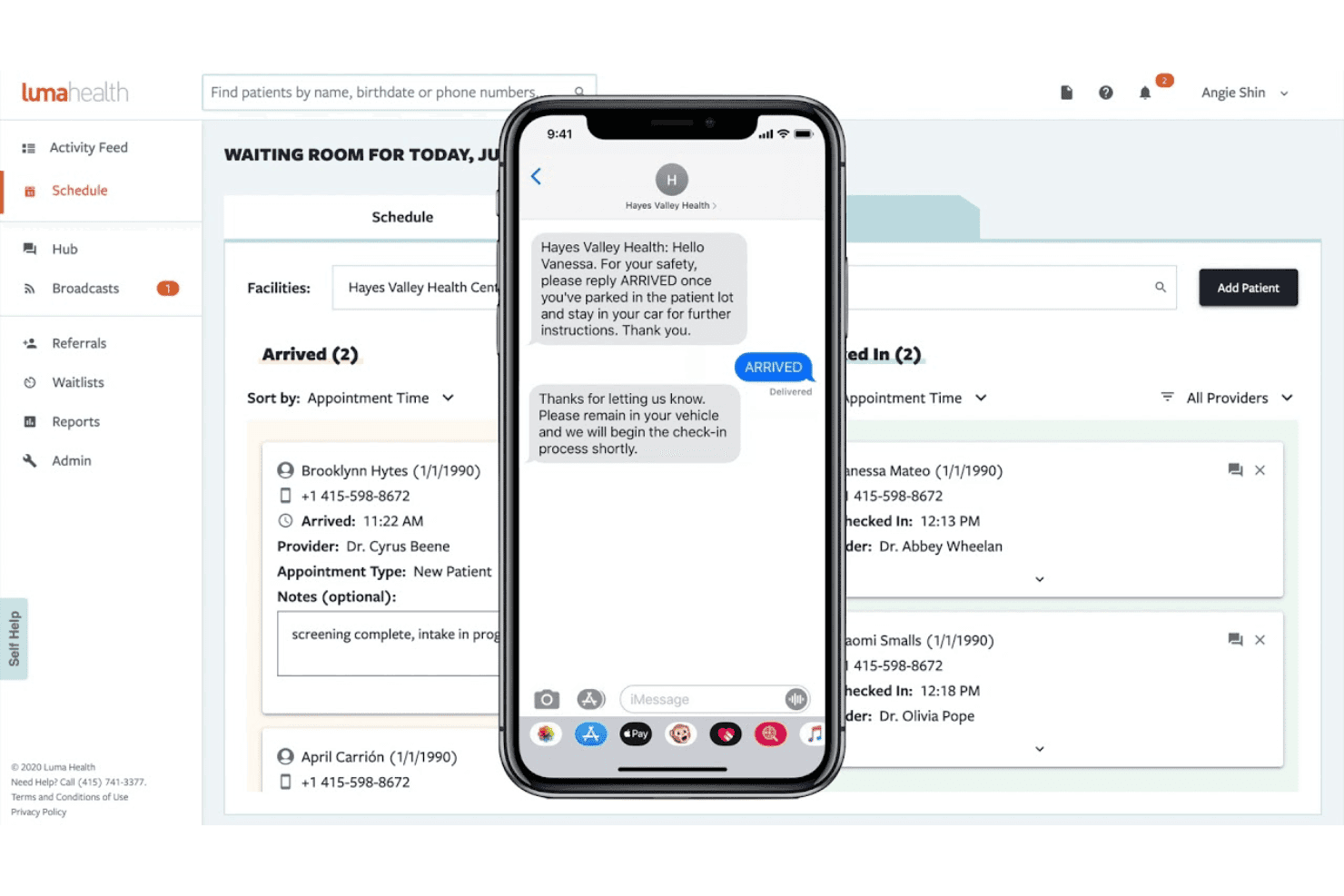
Send patients timely text, email, or voice reminders to cut down no-shows. Scheduling updates sync with your calendar and update patients instantly.
Two-Way Secure Patient Messaging
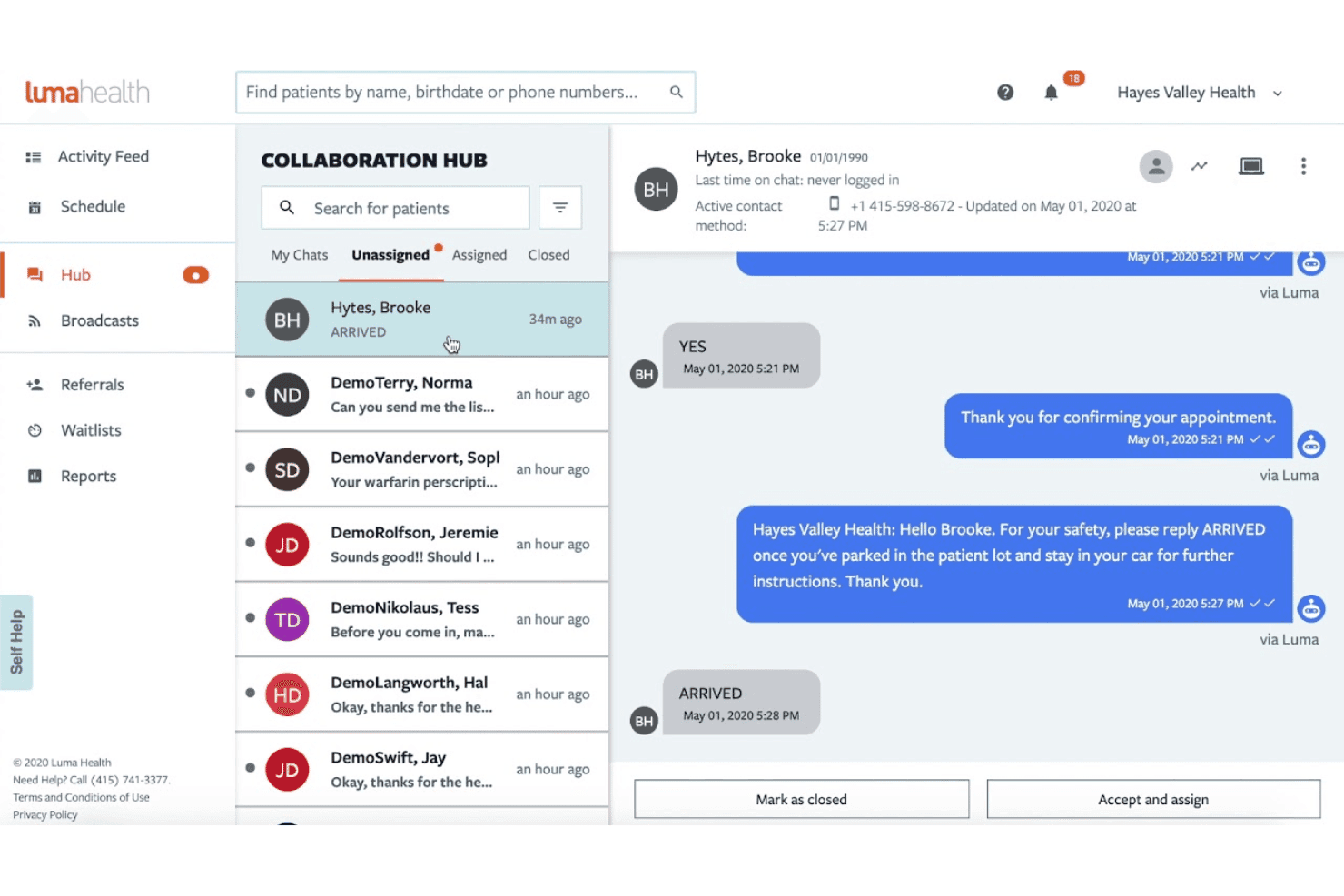
Chat with patients directly through HIPAA-compliant text messaging. Patients can ask questions and get answers without phone tag.
Digital Patient Intake Forms
Patients fill out customizable forms before arriving, streamlining check-in. Forms update patient records automatically when submitted.
Referral Management Tracking
Track the referral process from start to finish across providers. Real-time updates let practices close referral loops faster.
Broadcast Messaging for Announcements
Send bulk messages, like flu clinic hours or policy changes, to targeted patient groups. Responses route directly to staff for follow-up.
Waitlist and Fill-Now Scheduling
Patients can join a waitlist for earlier appointments automatically. If a spot opens, Luma Health notifies and reschedules patients instantly.
Standout Features
Educational Campaign Messaging
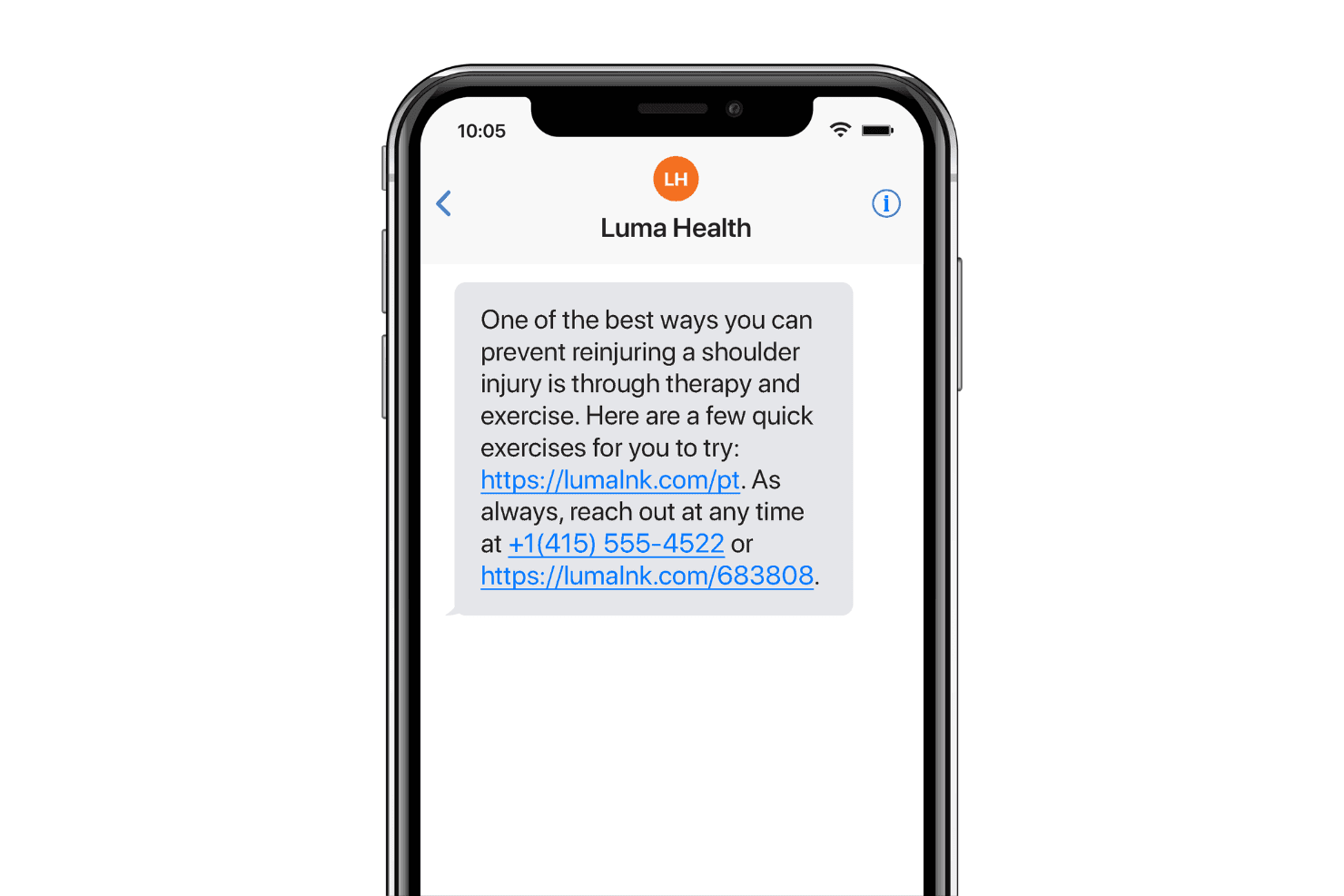
Luma Health helps you deliver targeted health education campaigns based on patient population or diagnosis. This drives preventive care engagement with reminders for screenings, vaccines, or chronic management tips.
Care Pathways Automation
Automate multi-step care journeys tailored to specific procedures or diagnoses. Patients receive a series of personalized instructions, reminders, and wellness check-ins over time.
Ease of Use
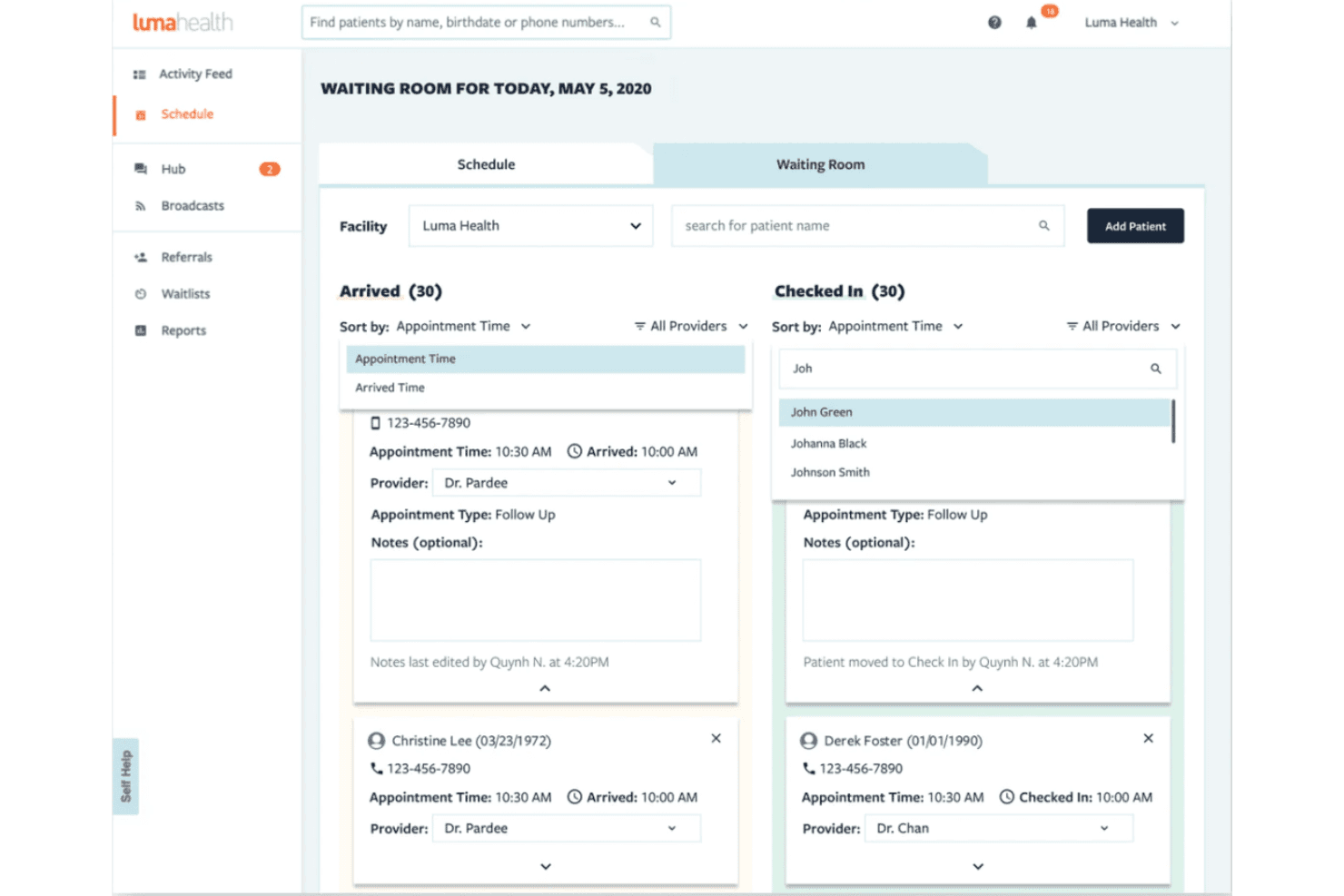
Luma Health stands out for its clean dashboard and logical workflows that keep scheduling, messaging, and patient progress at your fingertips. Most users say navigation is quick, with intuitive tabs and clear prompts guiding staff through setup, broadcast messaging, and follow-up flows.
Even with robust features, teams report getting comfortable fast thanks to thoughtful onboarding and in-app support.
Onboarding
Luma Health’s onboarding stands out, with users mentioning clear implementation guides, live training sessions, and helpful customer support throughout setup.
Most teams report getting up and running within days, helped by resource libraries and accessible support channels that answer questions quickly.
Customer Support
Luma Health offers responsive support with live chat, email, and scheduled calls, which users often highlight as prompt and knowledgeable.
I’ve seen many reviews noting that the support team regularly follows up on issues, offers actionable tips, and keeps users informed on system updates or fixes.
Integrations
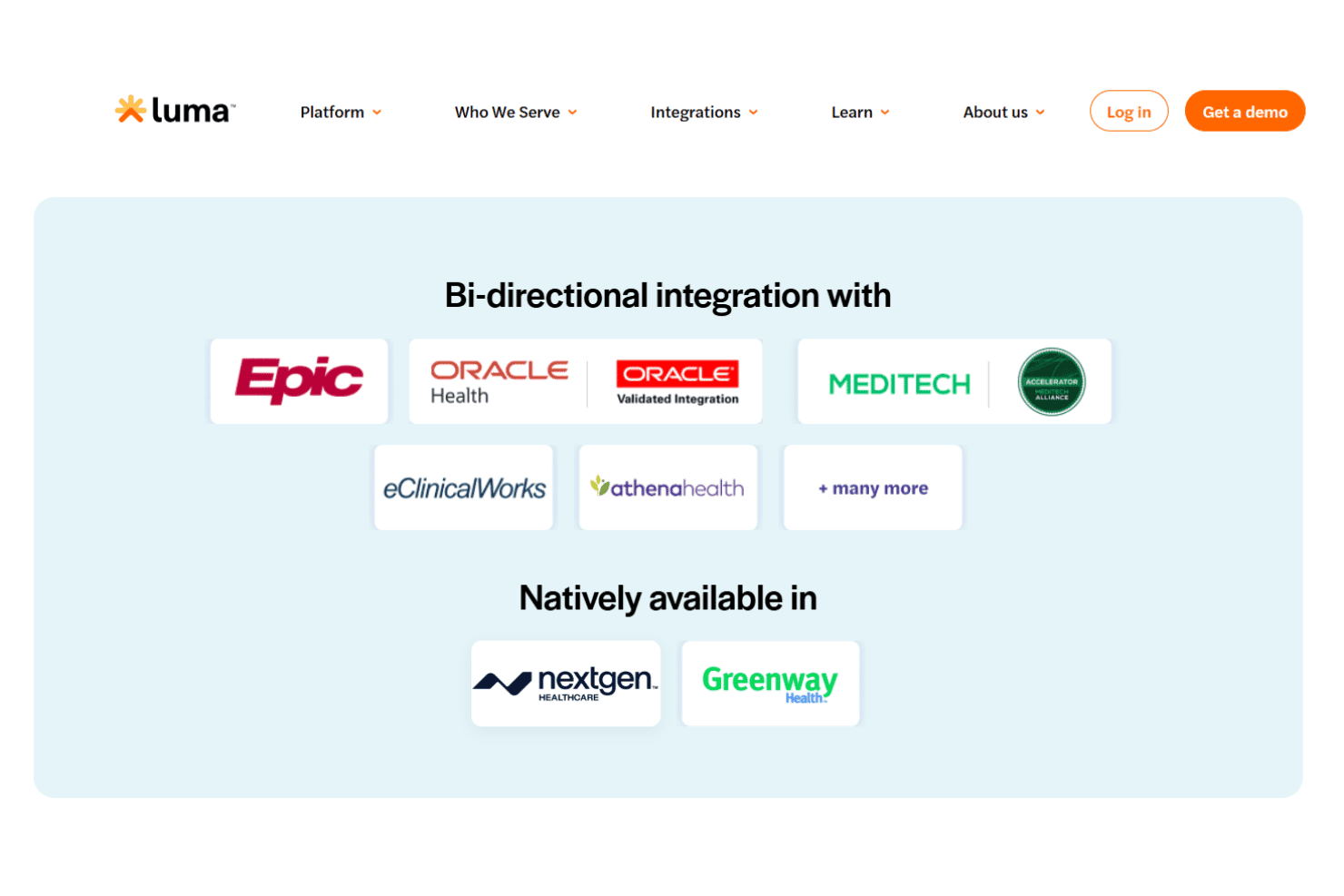
Luma Health integrates with Epic, Oracle Health, eClinicalWorks, athenahealth, NextGen, Greenway, Nextech, Cerner, Meditech, and Allscripts.
Luma Health also offers an API for custom integrations and connects with select third-party tools.
Value for Money
Luma Health uses a custom, quote-based pricing model, with the final amount determined by factors such as practice size, number of users, selected features or modules, EHR system integrations, and implementation requirements.
Its pricing runs higher than some competitors, but most users feel the automation, customization, and time saved justify the cost—especially for practices focused on complex workflows or scaling outreach.
Luma Health Specs
- API: Yes
- Appointment Scheduling: Yes
- Athlete Management: No
- Audit Management: Yes
- Calendar Management: Yes
- Compliance Tracking: Yes
- Customer Management: Yes
- Dashboard: Yes
- Data Export: Yes
- Data Import: Yes
- Data Visualization: Yes
- Electronic Prescribing: No
- External Integrations: Yes
- File Sharing: Yes
- File Transfer: Yes
- Health Management: Yes
- HIPAA Compliance: Yes
- Inventory Tracking: No
- Multi-User: Yes
- Notifications: Yes
- Organization Management: Yes
- Patient Management: Yes
- Project Management: No
- Regulatory Alerts: No
- Risk Assessment: No
- Scheduling: Yes
- Supplier Management: No
Luma Health FAQs
Luma Health Company Overview & History
Luma Health is headquartered in San Mateo, California, and focuses on patient engagement technology for healthcare organizations. The company was founded by Adnan Iqbal and Dr. Tashfeen Ekram, and its platform is used by health systems, specialty practices, and multi-location clinics across the United States.
Luma Health is known for building a culture of innovation, emphasizing rapid improvements to its core product suite in response to client feedback. Major health systems and specialty clinics comprise much of its customer base, and the company has received industry recognition for its growth and impact.
Luma Health Major Milestones
- 2015: Company founded by Adnan Iqbal and Dr. Tashfeen Ekram
- 2016: Launch of the core Luma Health patient engagement platform
- 2020: Significant user adoption surge during the COVID-19 pandemic
- 2021: Recognized by UCSF Digital Health Awards as a top patient engagement platform.
- 2022: Expanded integrations and partnerships with leading EHR vendors