

Hospital billing software manages patient billing, payment collection, claims processing, and financial reporting for hospitals and health systems. If you’re searching for the best hospital billing software, you’re probably looking for ways to reduce billing headaches, catch common payment errors, and keep your team focused on patients instead of paperwork. With regulations always evolving and revenue at stake, choosing the right system can mean fewer denials and a healthier financial picture.
In this guide, I’ll walk you through the top hospital billing software picks for 2026, so you can compare features, spot key differences, and choose what works for your facility’s workflow and goals.
Why Trust Our Software Recommendations
6,700+
Reviews
20
Industry experts
16+
Evaluation factors
14
Years
Our team has been testing and reviewing software since 2012. As medical practice leaders ourselves, we know how difficult—and important—it is to choose the right software.
For this guide, we evaluated tools using hands-on testing and independent research, scoring tools using our selection criteria.
Our reviews reflect our human editorial judgment, not a sales pitch.
Best Hospital Billing Software Summary
This comparison chart summarizes pricing details for my hospital billing software to help you find the best one for your budget and business needs.
| Tool | Best For | Trial Info | Price | ||
|---|---|---|---|---|---|
| 1 | Best for rural hospital billing needs | Free demo available | Pricing upon request | Website | |
| 2 | Best for multi-payer reimbursement support | Free demo available | Pricing upon request | Website | |
| 3 | Best for eligibility and benefits verification | Free demo available | Pricing upon request | Website | |
| 4 | Best for clearinghouse connectivity integration | Free demo available | Pricing upon request | Website | |
| 5 | Best for end-to-end revenue cycle outsourcing | Free demo available | Pricing upon request | Website | |
| 6 | Best for automated claims management | Free demo available | Pricing upon request | Website | |
| 7 | Best for enterprise-scale interoperability | Free demo available | Pricing upon request | Website | |
| 8 | Best for reimbursement analytics and optimization | Free demo available | Pricing upon request | Website | |
| 9 | Best for integrated patient and financial records | Not available | Pricing upon request | Website | |
| 10 | Best for real-time patient billing insights | Not available | Pricing upon request | Website |


Best Hospital Billing Software Reviews
Below are my detailed summaries of the best hospital billing software that made it onto my shortlist. My reviews offer a detailed look at the features, capabilities, and integrations of each software to help you find the best one for you.
 Best for rural hospital billing needs
- Free demo available
- Pricing upon request
Visit WebsiteCustomer Rating:2.6/5This rating combines scores from multiple user review sites to reflect overall customer sentiment about the product.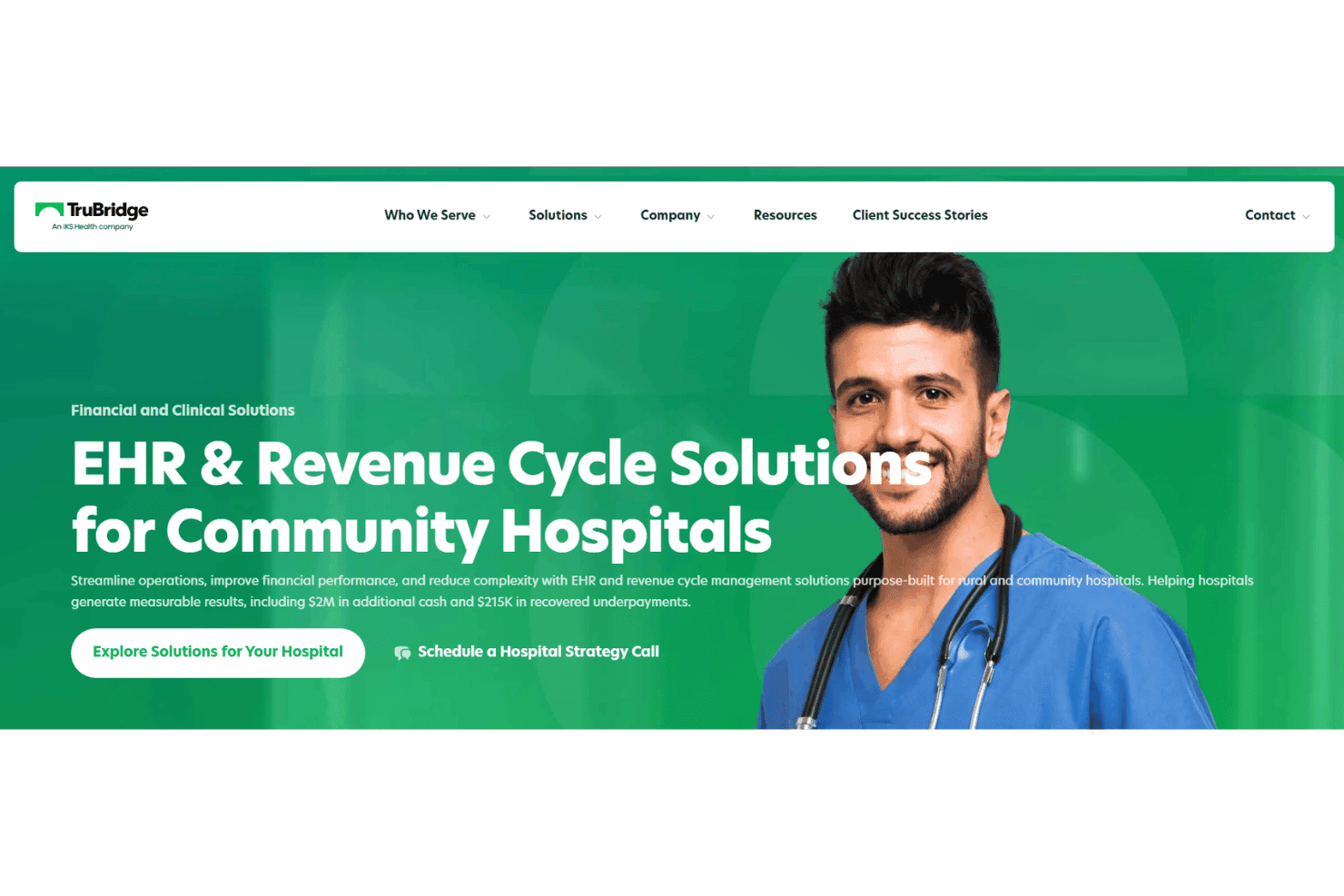
TruBridge offers EHR and Revenue Cycle Solutions purpose-built for rural and community hospitals. TruBridge is a revenue cycle management and hospital billing platform designed for rural and community hospitals, with modules spanning claims management, medical coding, charge capture, denial management, and patient billing.
Who Is TruBridge Best For?
TruBridge is a strong fit for revenue cycle directors and billing managers at critical access and community hospitals with under 100 beds.
Why I Picked TruBridge
I've included TruBridge in my top picks because it's purpose-built for the billing realities that rural and critical access hospitals face. I particularly like the Complete Business Office model, which handles claim submission through collections for facilities that can't staff a full in-house RCM team. The Contract Management module also catches underpaid claims automatically, which matters when your payer mix is Medicare-heavy and every reimbursement dollar counts.
TruBridge Key Features
- Medical coding service: Certified professionals assign ICD-10, CPT, HCPCS, and DRG codes for hospital-based billing.
- Patient billing and payment portal: Patients can view statements and make payments online through an integrated portal.
- Denial management worklists: Staff can track denied claims, categorize issues, and manage appeals in dedicated workflows.
- EHR and RCM integration: Enables seamless sharing of clinical and financial data within TruBridge's suite and other EHRs.
TruBridge Integrations
TruBridge offers native integrations with Microsoft Dragon Copilot, Multiview, and RevSpring. Native integrations are not clearly documented beyond these, and an API is not publicly disclosed for custom integrations.
Pros and Cons
Pros:
- Contract management detects payer underpayments
- Offers end-to-end revenue cycle outsourcing
- Designed for rural and critical access hospitals
Cons:
- Limited documentation for self-service troubleshooting
- Interface feels dated and unintuitive
Learn more about TruBridge: Best for multi-payer reimbursement support
- Free demo available
- Pricing upon request
Visit WebsiteCustomer Rating:3.8/5This rating combines scores from multiple user review sites to reflect overall customer sentiment about the product.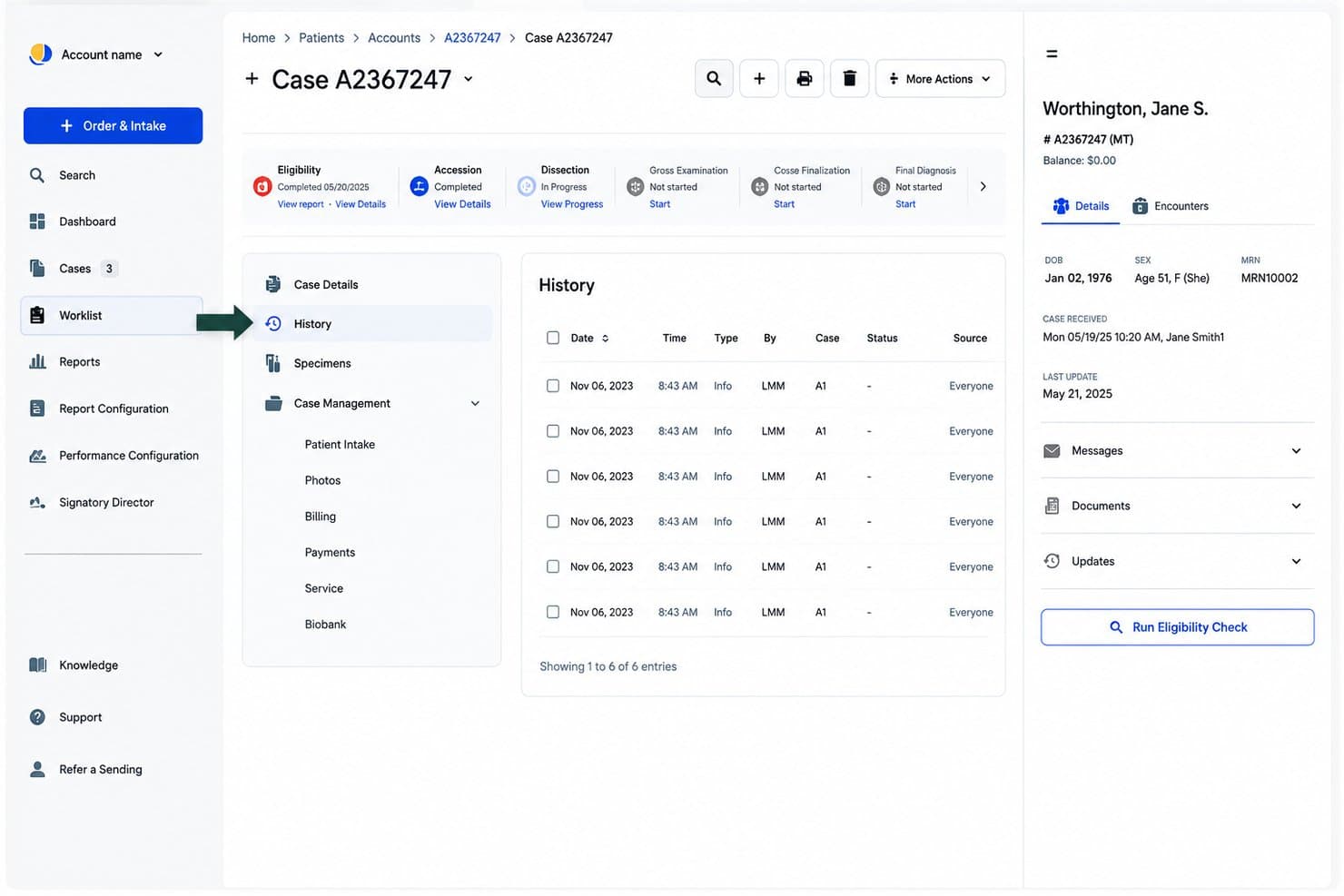
Quadax coordinates claims, eligibility, authorizations, denials, and billing. Quadax is a hospital revenue cycle management platform built around claims management, multi-payer eligibility verification, denial management, remittance automation, and AI-driven reimbursement analytics for health systems and hospitals.
Who Is Quadax Best For?
Quadax is a strong fit for hospitals and health systems that manage high claim volumes across multiple payers and need purpose-built tools for reimbursement accuracy and denial prevention.
Why I Picked Quadax
I picked Quadax as one of the best because its ICV All-Payer eligibility tool confirms copay, coinsurance, and deductible details in real time across all major payers from one platform. XpressBiller catches payer-specific errors before submission, and RemitMax converts paper EOBs into 835 transactions to keep remittance automation running even when payers send paper. Contract Management then flags underpayments against expected reimbursement by payer, which is where multi-payer billing gets complicated fast.
Quadax Key Features
- Xpeditor claims management: Streamlines claim workflow by directing claims to designated billers based on your customized criteria.
- Predictive Intelligence suite (PIQ): Uses AI to predict and avoid denials before they occur in hospital billing workflows.
- AskQ AI assistant: Delivers instant, source-backed claims guidance directly within your claims management dashboard.
- Business intelligence analytics: Provides advanced reporting and analytics for monitoring payment trends and payer performance.
Quadax Integrations
Quadax offers native integrations with Epic Resolute Billing and connects with EHR and billing platforms. An API is available for custom integrations.
Pros and Cons
Pros:
- Detailed audit trails for all claims
- Strong multi-payer eligibility verification
- High first-pass claim acceptance rates
Cons:
- No built-in charge capture module
- User interface feels dated to many users
Learn more about Quadax: Best for eligibility and benefits verification
- Free demo available
- Pricing upon request
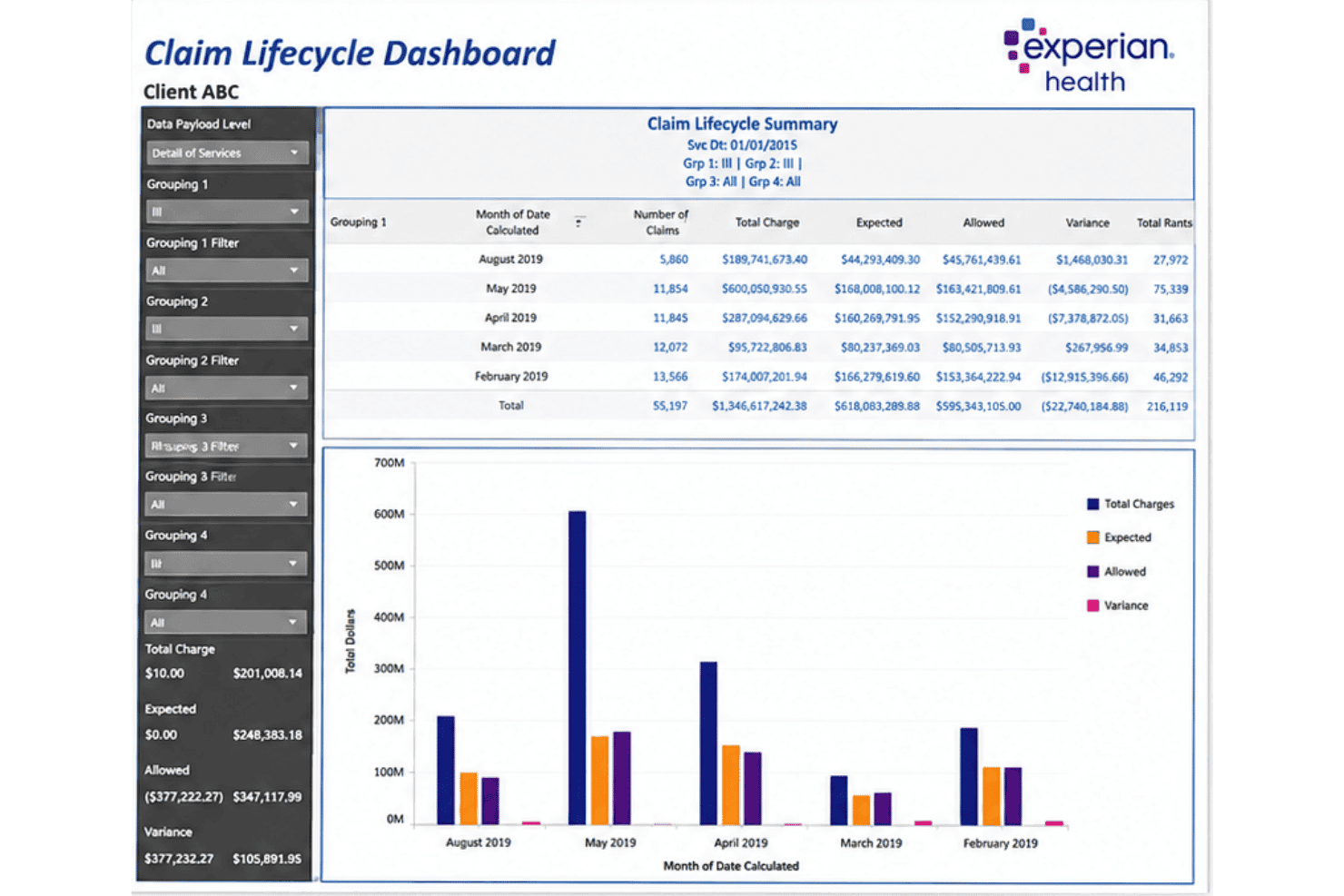
Experian Health ClaimSource handles claims, edits, tracking, denials, and ERA. Experian Health ClaimSource is a claims management system for hospitals that handles automated claim scrubbing, electronic UB-04/837I submission, denial tracking, and AI-driven denial prevention across multi-payer workflows.
Who Is Experian Health ClaimSource Best For?
It's a strong fit for large hospitals and health systems that run an enterprise EHR and need a dedicated claims scrubbing and denial management layer on top of it.
Why I Picked Experian Health ClaimSource
I picked Experian Health ClaimSource as one of the best because its eligibility and benefits verification is backed by Experian's consumer credit data infrastructure, something pure healthcare vendors can't replicate. Before a claim goes out, ClaimSource cross-references payer-specific rules from a library of 1,900+ payers to flag coverage mismatches. The AI Advantage Predictive Denials module then scores at-risk claims using your own historical data before submission.
Experian Health ClaimSource Key Features
- Custom claim edits: Build provider-specific edits to automate error checking and correct claims before submission.
- Enhanced claim status: Get payer status responses and updates directly inside the platform for tracked follow-up.
- Denial Workflow Manager: Organize denied claims using worklists with ANSI reason codes and payer-specific categories.
- Dedicated support team: Access a team focused on assisting with claim workflows and system troubleshooting.
Experian Health ClaimSource Integrations
ClaimSource offers native integrations with Epic, Athenahealth, Oracle Health, FollowMyHealth, and NextGate. An API is available for custom integrations.
Pros and Cons
Pros:
- Real-time payer eligibility checks available
- Extensive pre-bill claim edit library
- AI-driven denial prediction improves claim accuracy
Cons:
- Patient statement generation requires separate module
- Charge capture not included in platform
Learn more about Experian Health ClaimSource: Best for clearinghouse connectivity integration
- Free demo available
- Pricing upon request
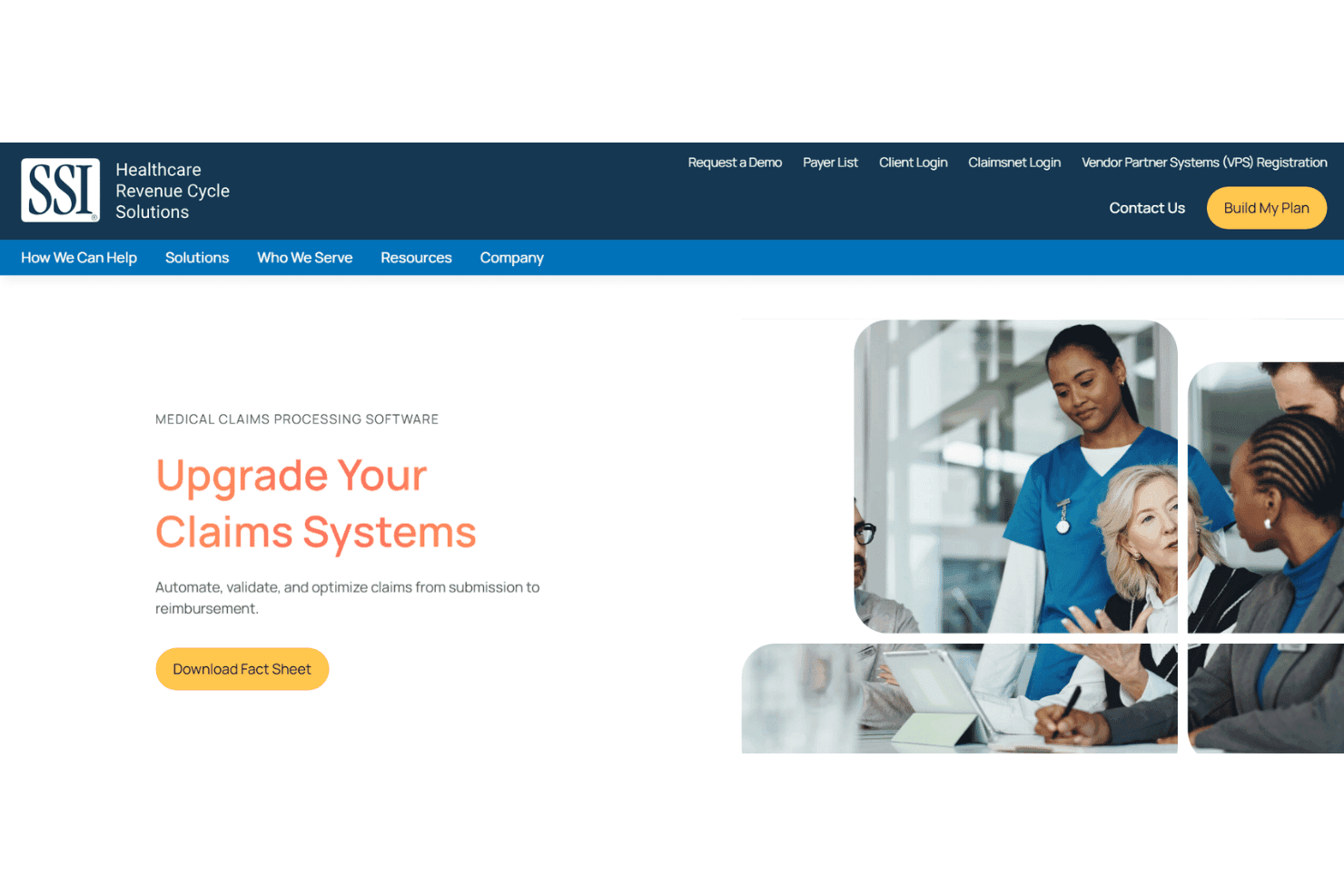
SSI Group routes claims, eligibility checks, remittances, and status updates. SSI Group is a healthcare claims clearinghouse and revenue cycle management platform that handles institutional claims submission, denial management, remittance processing, eligibility verification, and prior authorization for hospitals and health systems.
Who Is SSI Group Best For?
SSI Group is a strong fit for mid-to-large hospitals and health systems that need enterprise-scale institutional claims processing and deep payer network connectivity.
Why I Picked SSI Group
I picked SSI Group as one of the best because of the sheer depth of its payer connectivity. The clearinghouse maintains 800+ direct payer connections and validates claims against edits for more than 2,600 payers, including undocumented payer-specific rules that most platforms won't catch. I particularly like the ClickON technology, which carries 200,000+ built-in edits and produces Claredi-certified transactions that consistently meet payer-side acceptance requirements on the first pass.
SSI Group Key Features
- Denial management module: Lets you track, categorize, and rework denied claims with configurable workflows.
- Remittance management: Automates ERA/EOB posting and reconciliation directly from payers.
- Prior authorization tool: Handles electronic and automated prior authorization requests for hospital services.
- Performance analytics dashboards: Provides real-time insight into claims status and denial trends for revenue cycle teams.
SSI Group Integrations
SSI Group offers native integrations with Epic, MEDITECH, and Oracle Health, and provides an API for custom integrations.
Pros and Cons
Pros:
- Advanced denial tracking and root-cause analytics
- Direct connections to 800+ payers nationwide
- Extremely high first-pass claim acceptance rates
Cons:
- Limited support for charge capture functionality
- No patient statement or self-pay features
Learn more about SSI Group: Best for end-to-end revenue cycle outsourcing
- Free demo available
- Pricing upon request
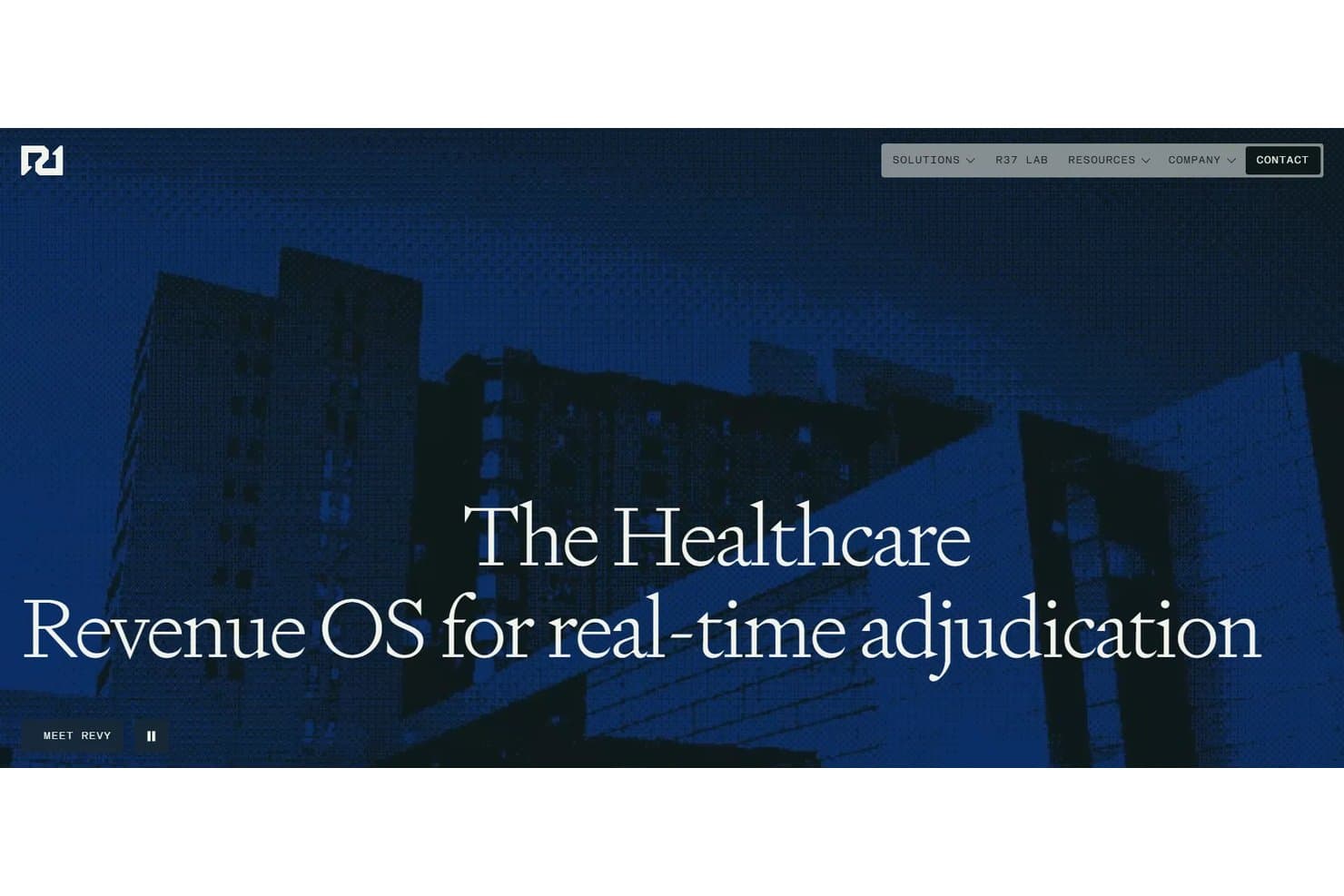
R1 RCM offers a Healthcare Revenue OS platform focused on real-time adjudication, as shown on their homepage hero section. R1 RCM is an outsourced revenue cycle management platform for hospitals and health systems that combines agentic AI with human-staffed operations to handle patient access, medical coding, claim scrubbing, denial management, and payment remittance.
Who Is R1 RCM Best For?
R1 RCM is built for large hospitals and multi-facility health systems whose revenue cycle complexity justifies a fully outsourced operational model.
Why I Picked R1 RCM
R1 RCM earns its spot on my shortlist because the Phare OS treats coding, claims, and denials as a single connected workflow rather than separate systems. I like how Phare Claim catches and corrects coding errors before submission, and Phare Flow handles remittances and denials automatically post-adjudication. The Prior Authorization module clears 68% of orders within one hour, backed by more than 1,600 authorization experts who provide human oversight throughout.
R1 RCM Key Features
- Phare Access: Automates patient intake, registration, insurance verification, and eligibility checks at the front end of the revenue cycle.
- Entri EHR integration: Connects with major EHR systems to streamline scheduling, clearance, and payment functions.
- Patient friendly billing: Supports online bill pay, automated payment plans, and omnichannel patient statements.
- Revenue integrity modules: Offers chargemaster optimization and contract management tools for hospital billing compliance and accuracy.
R1 RCM Integrations
R1 RCM offers native integrations with Epic, Oracle Health, and MEDITECH via its Entri platform, supporting direct patient access workflows and EHR connectivity. An API is available for custom integrations.
Pros and Cons
Pros:
- Includes dedicated hospital revenue integrity modules
- Automated prior authorization and real-time claim edits
- Handles patient access through payment posting
Cons:
- Limited availability of third-party user reviews
- Not suitable for small or midsize practices
Learn more about R1 RCM: Best for automated claims management
- Free demo available
- Pricing upon request
Visit WebsiteCustomer Rating:4.4/5This rating combines scores from multiple user review sites to reflect overall customer sentiment about the product.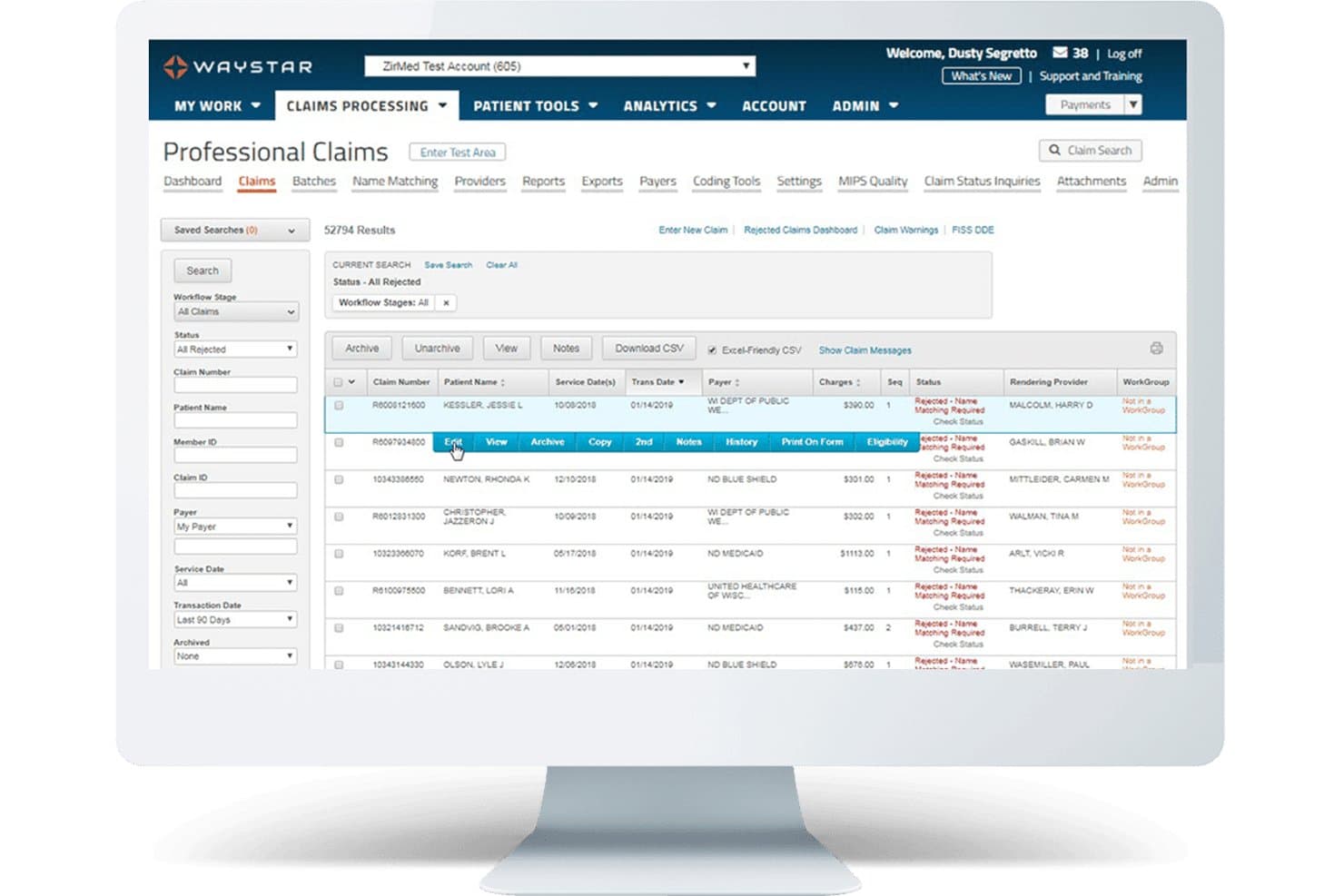
Waystar offers a Professional Claims dashboard that allows hospital billing teams to view, filter, and manage rejected claims with detailed status tracking and action options. Waystar is a cloud-native revenue cycle management platform that covers financial clearance, institutional claims management, denial recovery, payment posting, and patient billing for hospitals and health systems.
Who Is Waystar Best For?
Waystar is a strong fit for revenue cycle teams at mid-to-large hospitals and health systems managing high claim volumes across inpatient and outpatient departments.
Why I Picked Waystar
Waystar earns its spot as one of the best on my shortlist because of how far its claim automation actually goes. Claim Manager uses AI and RPA to predict the best times to status and rework claims, consistently hitting a 98.5%+ first-pass clean claims rate. I'm also impressed by AltitudeAI, which cuts denial-prevention workflows from three days to three minutes, so billing teams spend less time on manual triage and more time on exceptions that actually need attention.
Waystar Key Features
- Financial clearance suite: Includes eligibility verification, coverage detection, and pre-authorization workflows for hospital admissions.
- Clinical documentation integrity: Provides tools for physician query management and prebill anomaly detection to support accurate coding.
- Remit Manager: Automates ERA/EOB posting, payment reconciliation, and electronic remittance processing.
- Patient statements and lockbox: Generates digital and print patient bills and supports centralized payment collection workflows.
Waystar Integrations
Waystar offers native integrations with leading EHR and HIS vendors, including Epic, Cerner, MEDITECH, and Allscripts, and provides an API for custom integrations.
Pros and Cons
Pros:
- Extensive reporting for claim performance analysis
- AI-powered denial prevention and appeals
- Automated UB-04 and institutional claim workflows
Cons:
- Configuring complex payer rules requires support
- Limited transparency into payer response delays
Learn more about Waystar: Best for enterprise-scale interoperability
- Free demo available
- Pricing upon request
Visit WebsiteCustomer Rating:4/5This rating combines scores from multiple user review sites to reflect overall customer sentiment about the product.
Oracle Health oversees claims, charge capture, coding, denials, and accounts. Oracle Health is an enterprise revenue cycle management platform that covers institutional claims processing, charge capture, medical coding, denial management, and patient accounting across inpatient, outpatient, and ancillary hospital departments.
Who Is Oracle Health Best For?
Oracle Health is built for large hospitals, health systems, and integrated delivery networks that need clinical and financial data connected across multiple venues and departments.
Why I Picked Oracle Health
Oracle Health earns its spot on my shortlist because its open, EHR-agnostic architecture is genuinely rare in hospital billing. I've seen charge data flow directly from Cerner Millennium into Patient Accounting without manual intervention, which keeps discharged-not-final-billed (DNFB) accounts low across inpatient and ancillary departments. Its Contract Management module can reprice historical claims in near real time, which is a meaningful advantage when reconciling across dozens of active payer agreements simultaneously.
Oracle Health Key Features
- Patient administration module: Lets you manage registration, appointment scheduling, and self-service check-in for inpatient and outpatient hospital visits.
- Health information management (HIM): Offers unified workflows for coding, grouping, and documentation in compliance with ICD-10 and DRG standards.
- Denial management workflow: Enables automation of appeals, root cause identification, and trending of denied claims.
- Payment processing platform: Supports automated payment posting, digital payment acceptance, and management of patient account balances.
Oracle Health Integrations
Oracle Health offers native integrations with Cerner Millennium EHR, Oracle Health Patient Administration, and Oracle Health Payment. The platform features an open architecture for connecting to third-party technologies and provides an API for custom integrations.
Pros and Cons
Pros:
- Robust contract management and payer rules engine
- Deep integration with Cerner Millennium EHR
- Enterprise-grade billing for large health systems
Cons:
- Backend workflows can be slow during peak usage
- Implementation is time-intensive for new clients
Learn more about Oracle Health: Best for reimbursement analytics and optimization
- Free demo available
- Pricing upon request
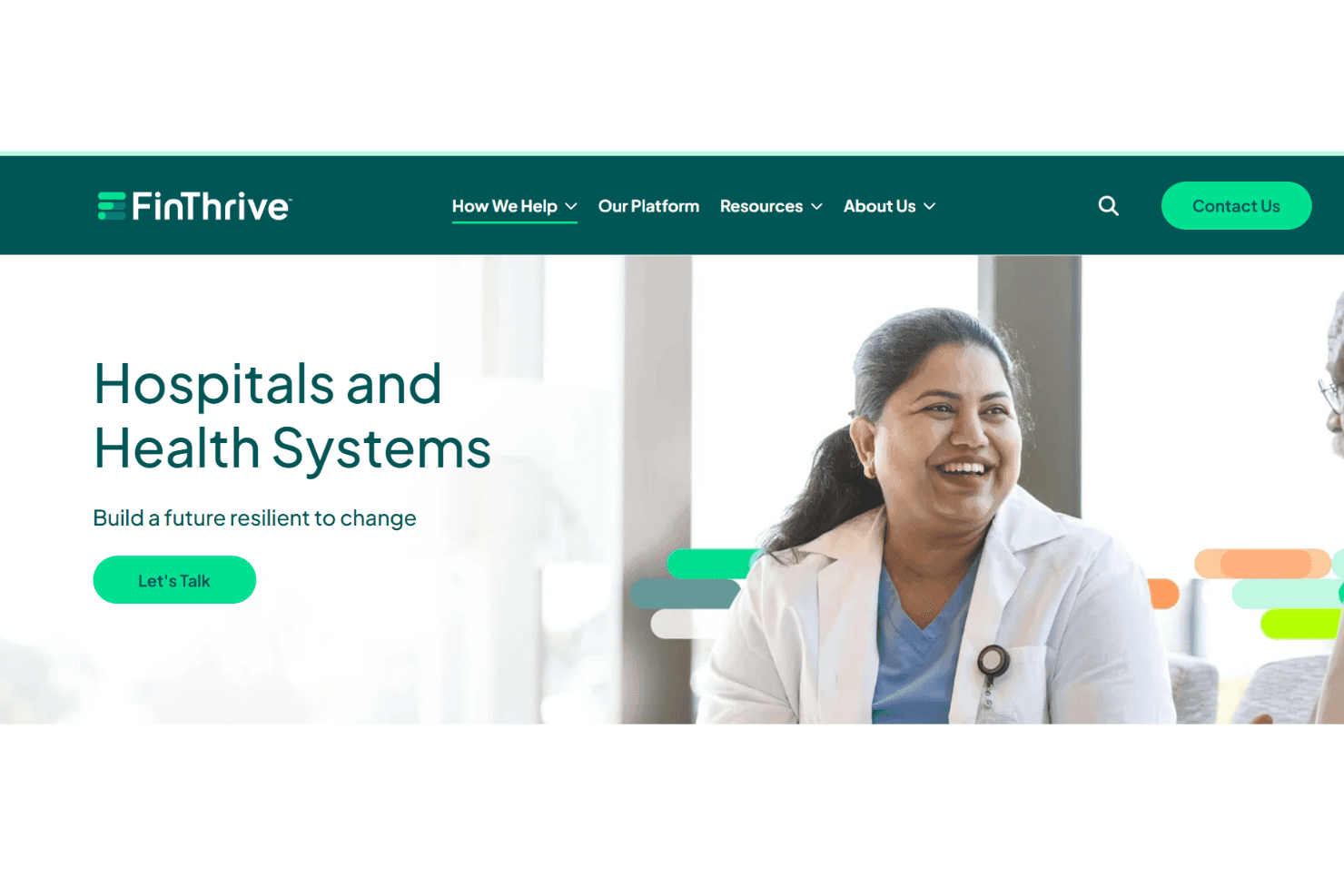
FinThrive offers a dedicated solution page for Hospitals and Health Systems with the tagline 'Build a future resilient to change.' FinThrive is an end-to-end revenue cycle management platform built for hospitals and health systems, covering patient access, charge capture, claims scrubbing, denial management, and contract-based reimbursement analytics.
Who Is FinThrive Best For?
FinThrive is a strong fit for mid-to-large hospitals and health systems that need enterprise-grade revenue cycle infrastructure across multiple departments and payer contracts.
Why I Picked FinThrive
FinThrive earns its spot on my shortlist because of how its Fusion data intelligence platform connects reimbursement analytics directly to claims outcomes. I particularly like Insurance Discover, which scans patient accounts for missed coverage at intake, and Insights Hub, which uses AI to flag revenue leakage and automate variance identification across the revenue cycle. In practice, that means my team can catch underpayments before they ever become write-offs.
FinThrive Key Features
- Embedded EHR integrations: Integrates directly with Epic, Cerner, and Allscripts for in-workflow claim and charge management.
- CDM Manager: Supports chargemaster management for compliant pricing, line item maintenance, and benchmarking.
- A/R Optimizer: Automates account resolution and remittance posting with detailed reconciliation and exception handling.
- Patient Access Coordinator: Centralizes pre-registration, insurance verification, and order management within a unified workspace.
FinThrive Integrations
FinThrive offers native integrations with Epic, Cerner, and Allscripts patient accounting systems, processes claims across 940+ EDI payers, and provides an API for custom integrations.
Pros and Cons
Pros:
- Supports contract-based reimbursement auditing
- Real-time claims scrubbing with embedded edits
- Predictive analytics for revenue leakage detection
Cons:
- Initial platform setup can be time-consuming
- Patient-facing billing features less robust
Learn more about FinThrive: Best for integrated patient and financial records
- Not available
- Pricing upon request
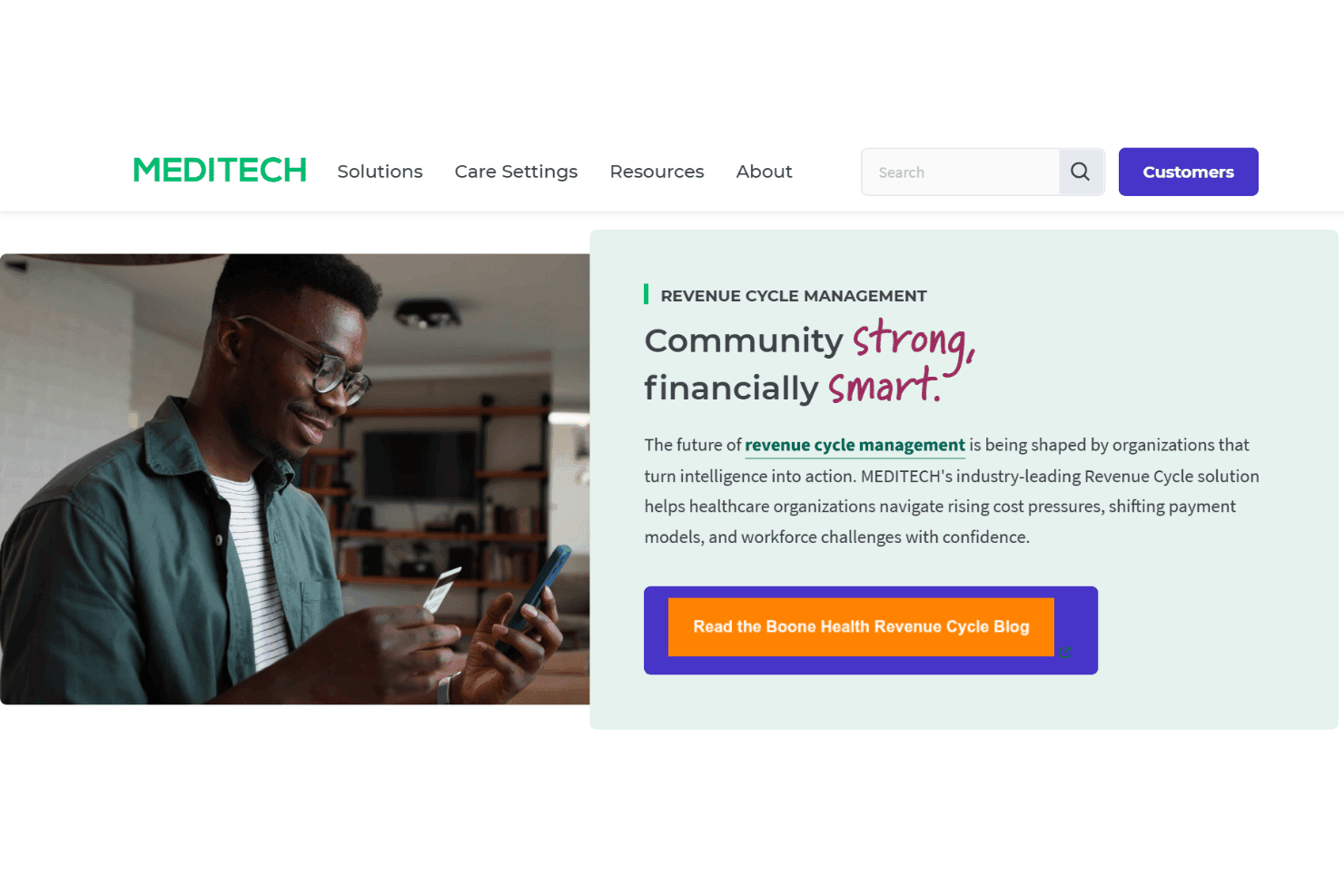
MEDITECH Expanse covers hospital billing, claims, coding, denials, and payments. MEDITECH Expanse Revenue Cycle is a hospital billing platform built natively inside the Expanse EHR, covering charge capture, claims management, coding, denial management, remittance processing, and patient billing across inpatient, outpatient, and ancillary departments.
Who Is MEDITECH Expanse Revenue Cycle Best For?
It's a strong fit for community and regional hospitals that want revenue cycle and clinical documentation managed within a single, unified platform.
Why I Picked MEDITECH Expanse Revenue Cycle
I've included MEDITECH Expanse Revenue Cycle in my top picks because the revenue cycle is built directly inside the Expanse EHR, not bolted on as a separate module. That means clinical documentation, charge capture, and coding all feed into billing without manual handoffs between systems. I particularly like how ePrior Authorization uses real-time FHIR-based APIs to verify payer rules before a claim is submitted, cutting denial volume at the source.
MEDITECH Expanse Revenue Cycle Key Features
- Referral management dashboard: Allows real-time insurance eligibility checks and directs patient referrals to in-network specialists.
- Denials and appeals agentic workflow: Automatically analyzes denials, gathers documentation, and drafts payer-specific appeals.
- Patient-friendly billing statements: Generates unified statements combining inpatient and outpatient charges in one view.
- Digital front door APIs: Supports online access, scheduling, and guest payment functionality across patient-facing channels.
MEDITECH Expanse Revenue Cycle Integrations
MEDITECH Expanse Revenue Cycle offers native integrations via FHIR-based APIs for real-time payer connections, supports HL7 v2 messaging for legacy systems, and integrates natively with Augmedix and Nuance DAX Copilot. An API and developer sandbox are available for custom integrations.
Pros and Cons
Pros:
- Multi-department charge capture in one system
- Real-time denial root-cause analytics
- Unified billing with clinical and financial data
Cons:
- Longer implementation time than non-EHR competitors
- Limited granularity for professional billing workflows
Learn more about MEDITECH Expanse Revenue Cycle: Best for real-time patient billing insights
- Not available
- Pricing upon request
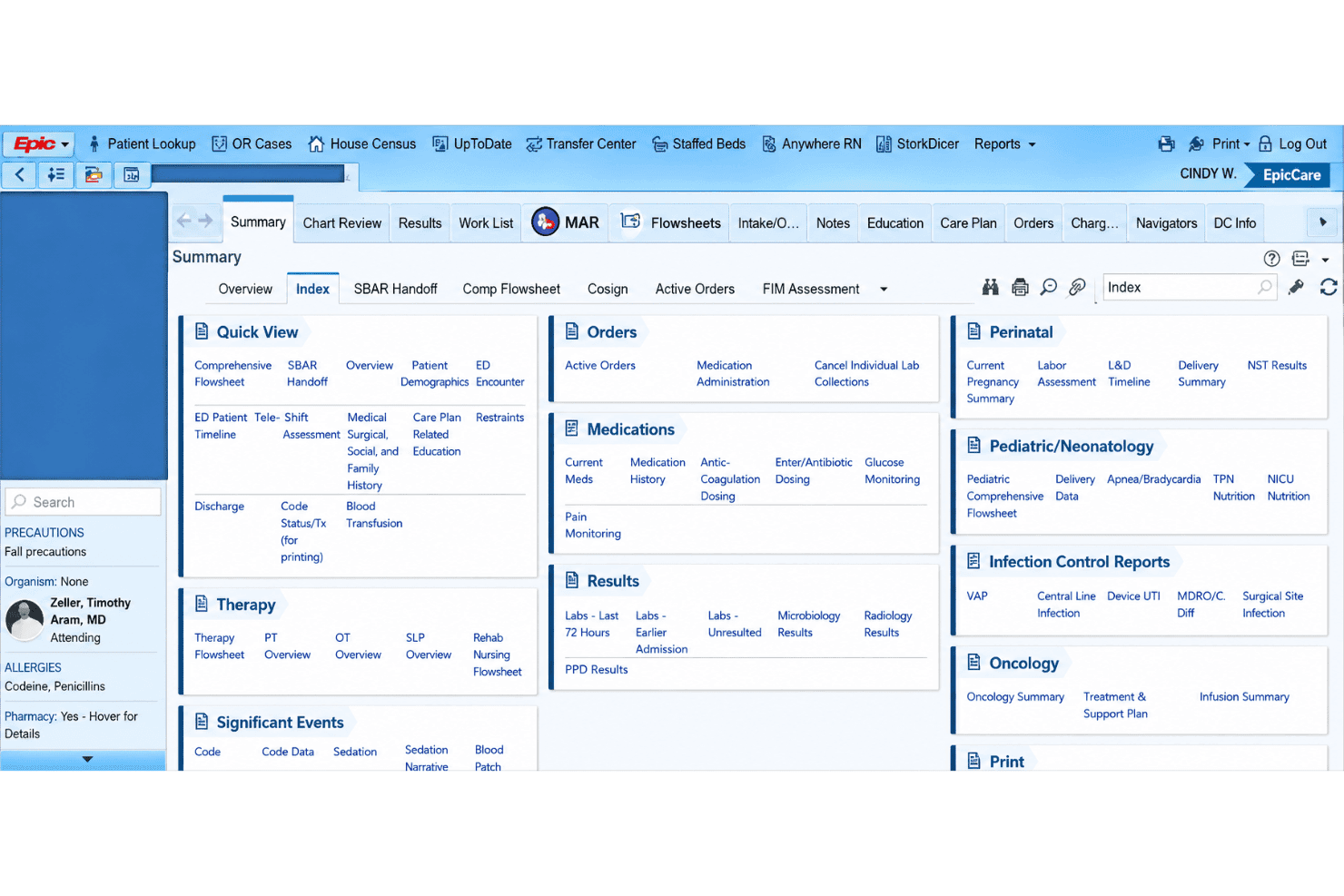
Epic Resolute handles charges, UB-04 claims, denials, ERA posting, and billing. Resolute Hospital Billing is Epic's institutional revenue cycle module, covering charge capture, UB-04/837I claims generation and scrubbing, denial management, ERA payment posting, and patient billing across inpatient, outpatient, and ancillary hospital departments.
Who Is Epic Systems (Resolute Hospital Billing) Best For?
Resolute Hospital Billing is built for large health systems and integrated delivery networks that manage complex, multi-department institutional billing at scale.
Why I Picked Epic Systems (Resolute Hospital Billing)
I picked Resolute Hospital Billing as one of the best because the real-time charge capture is unlike what I've seen from other billing platforms. Resolute runs on the same Chronicles database as Epic's clinical record, so charges generate automatically from documented orders and procedures. My team sees accurate account data the moment care is delivered. The Charge Router then applies payer-specific rules before any claim leaves the system, flagging errors before they become denials.
Epic Systems (Resolute Hospital Billing) Key Features
- Denial workqueues: Track, categorize, and route denied claims to staff for review and appeals.
- Department-level billing modules: Manage unique charge, billing, and account processes for each hospital department.
- Patient financial experience tools: Offer patients combined online statements, payment plans, and billing support through MyChart.
- Coding and CDI workflows: Facilitate coder-to-provider queries directly in the system for documentation and DRG review.
Epic Systems (Resolute Hospital Billing) Integrations
Resolute Hospital Billing offers native integrations with clearinghouses and payment processors including Availity, Waystar, Optum, Experian Health, FinThrive, TruBridge, Blue Cross Blue Shield of Massachusetts, and Cirius. API access is available for custom integrations.
Pros and Cons
Pros:
- Native hospital and professional claim processing
- Advanced denial management with workqueue tracking
- Real-time billing updates from clinical documentation
Cons:
- Workflow enforcement lacks automation or alerts
- AR reporting formats lag industry expectations
Learn more about Epic Systems (Resolute Hospital Billing):
Other Hospital Billing Software
Here are some additional hospital billing software options that didn’t make it onto my shortlist, but are still worth checking out:
- 11Ensemble Health PartnersBest for tailored process improvement services
- 12Inovalon Provider CloudBest for cloud-based workflow automation
- 13athenahealthBest for network-enabled billing insights
- 14eClinicalWorksBest for unified scheduling and billing
- 15AdvancedMDBest for integrated charge capture workflows
- 16NextGen HealthcareBest for specialty-specific billing workflows
- 17VeradigmBest for integrated payer-provider collaboration
- 18OptumBest for analytics-driven revenue cycle tools
- 19AvailityBest for real-time insurance data exchange
- 20MD ClarityBest for transparency in price estimates
How I Evaluate Hospital Billing Software
My evaluation splits into two layers: baseline acceptance criteria like UB-04 claims and DRG coding support, and the differentiating factors that set vendors apart.
Core Functionality (Table Stakes For This List)
When I'm selecting tools for my list, I rank each one on a scale from 0 (does not offer the functionality) to 5 (excels in this area) for each core functionality listed below. Then, I calculate the tool's total score into a percentage. Each tool needs to achieve a minimum total score of 65% to be considered for inclusion.
- Claims Management: I look for electronic UB-04/837I submission with built-in scrubbing rules that catch errors before claims reach the clearinghouse.
- Medical Coding Support: Full ICD-10, CPT, HCPCS, and DRG coding support matters, especially for inpatient cases where grouper accuracy affects reimbursement.
- Charge Capture: I evaluate how well the platform captures charges across departments like the OR, pharmacy, and radiology without requiring manual re-entry.
- Denial Management: Tracking and categorizing denials is table stakes, but I also check for appeals workflows and root-cause reporting to reduce repeat issues.
- Payment Posting & Remittance: Automated ERA/EOB posting with exception flagging is what I look for, since manual reconciliation bogs down even well-staffed teams.
- Patient Billing & Statements: The platform should generate clear patient statements with balance tracking and offer digital payment options like online portals or text-to-pay.
Once I have a list of tools that meet the criteria, I consider what sets each platform apart.
Differentiating Factors (What Sets Vendors Apart)
Here's how I compare and contrast different vendors:
Standout Features
Contract modeling is a major differentiator—I look for tools that compare expected reimbursement against actual payer payments and flag underpayments automatically. Patient financial engagement also matters. Self-service portals with digital estimates and flexible payment plans help hospitals collect more from self-pay balances. I evaluate embedded coding and CDI assistance too, where AI-driven ICD-10/CPT/DRG suggestions help coders improve accuracy and case mix index without slowing down.
Beyond Features
EHR integration is one of the first things I check. Bi-directional data flow between clinical documentation and billing—via HL7, FHIR, or X12 EDI—prevents the manual re-entry that causes costly errors. Regulatory compliance also weighs heavily; I look for platforms that push automatic updates for CMS rule changes and quarterly code sets. Facility type fit rounds out my evaluation, since a critical access hospital and a multi-facility IDN have very different billing complexity and scalability needs.
How to Choose Hospital Billing Software
It’s easy to get bogged down in long feature lists and complex pricing structures. To help you stay focused as you work through your unique software selection process, here’s a checklist of factors to keep in mind:
| Factor | What to Consider |
|---|---|
| FactorScalability | What to ConsiderWill the platform support your hospital’s volume today and three years from now? Consider future beds, sites, or service lines. |
| FactorIntegrations | What to ConsiderCan it exchange data with your EHR, clearinghouse, and finance systems? Check for real-world HL7/X12/FHIR integration success stories. |
| FactorCustomizability | What to ConsiderDoes the tool adapt to unique departmental workflows or payer guidelines? Assess rule builder flexibility and local exceptions support. |
| FactorEase of use | What to ConsiderWill your billing and clinical teams pick it up quickly? Evaluate navigation, workflow design, and available onboarding materials. |
| FactorImplementation and onboarding | What to ConsiderHow long from contract to go-live? Ask for timelines, hands-on support options, and examples from similar organizations. |
| FactorCost | What to ConsiderWhat’s included in “all-in” pricing? Watch for extra clearinghouse, training, or support costs impacting annual budgets. |
| FactorSecurity safeguards | What to ConsiderDoes the vendor follow HIPAA, HITECH, and SOC 2? Look for encryption standards, audit logs, and formal breach response plans. |
| FactorCompliance requirements | What to ConsiderHow does the vendor update billing rules for regulation changes? Ask about quarterly updates, payer edits, and compliance track record. |
What Are Hospital Billing Software?
Hospital billing software are digital systems that handle the entire revenue cycle, from patient registration to claims submission and payment collection for hospitals. These platforms automate charge capture, coding, and denial management while helping your team stay compliant with shifting payer rules.
By centralizing billing and payment workflows, hospital billing software makes it easier to manage complex, multi-department charges and accelerate reimbursements.
Features of Hospital Billing Software
When selecting hospital billing software, keep an eye out for the following key features:
- Claims management: Automates the creation, scrubbing, and electronic submission of UB-04/837I claims to payers and clearinghouses, reducing manual entry errors and speeding up the claims process.
- Medical coding support: Provides integrated coding tools for ICD-10, CPT, HCPCS, and DRG codes to help billing teams accurately capture services for proper institutional reimbursement.
- Denial management: Tracks, categorizes, and routes denied claims for review and appeal, offering workflow tools and analytics to reduce repeat denials and speed up resolution.
- Charge capture: Accurately records charges from inpatient, outpatient, and ancillary departments, minimizing missed revenue opportunities and connecting clinical documentation to billing.
- Payment posting and remittance: Automates ERA/EOB processing and payment reconciliation, matching payments to accounts and flagging discrepancies for follow-up.
- Patient billing and statements: Generates clear patient statements, manages self-pay balances, and supports multiple payment channels like online payment portals and mobile pay.
- Contract management: Stores and references payer contracts to compare expected and actual payments, helping you quickly identify and address underpayments.
- Integrated reporting and analytics: Offers dashboards and reports for accounts receivable, denial trends, payer performance, and net collections so you can make data-driven decisions.
- Security and compliance tools: Enforces HIPAA and data protection standards, provides audit trails, and ensures clinical and billing data stays secure throughout the revenue cycle.
- Interoperability with clinical systems: Supports direct data exchange with EHRs, scheduling, and pharmacy systems to ensure continuity between clinical documentation and billing processes.
Benefits of Hospital Billing Software
Implementing hospital billing software provides several benefits for your team and your business. Here are a few you can look forward to:
- Faster reimbursements: Automated claims management and advanced denial workflows help your hospital get paid quicker from both payers and patients.
- Improved accuracy: Integrated coding tools and charge capture ensure claims are accurate, minimizing errors that cause denials or delays.
- Better compliance: Built-in regulatory updates and security safeguards keep your billing processes aligned with HIPAA and CMS requirements.
- Reduced administrative burden: Automated payment posting, patient statements, and reporting free up staff to focus on higher-value work.
- Greater financial transparency: Contract management and reporting tools give finance leaders clear visibility into expected and actual payments.
- Enhanced patient experience: Self-service portals, online payments, and digital statements make it easier for patients to understand and settle their bills.
- Scalability for growing facilities: The ability to handle higher patient volumes and support multiple departments helps your revenue cycle adapt as your hospital expands.
Costs and Pricing of Hospital Billing Software
Selecting hospital billing software requires an understanding of the various pricing models and plans available. Costs vary based on features, team size, add-ons, and more. The table below summarizes common plans, their average prices, and typical features included in hospital billing software solutions:
Plan Comparison Table for Hospital Billing Software
| Plan Type | Average Price | Common Features |
|---|---|---|
| Plan TypeFree Plan | Average Price$0 | Common FeaturesLimited claims management, basic reporting, and standard support. |
| Plan TypePersonal Plan | Average Price$50-$150/month | Common FeaturesSingle-user access, core claims processing, simple remittance posting, and email support. |
| Plan TypeBusiness Plan | Average Price$200-$700/month | Common FeaturesMulti-user access, advanced coding tools, denial management, ERA posting, and basic integrations. |
| Plan TypeEnterprise Plan | Average Price$1,000-$8,000/month | Common FeaturesUnlimited users, full revenue cycle management, advanced analytics, deep EHR integrations, and custom support. |
Hospital Billing Software FAQs
Here are some answers to common questions about hospital billing software:
How does hospital billing software integrate with EHR systems?
Most hospital billing software supports integrations with leading EHRs through HL7, FHIR, or X12 EDI standards, allowing patient data, charges, and clinical documentation to automatically sync without manual re-entry.
Can hospital billing software handle both inpatient and outpatient billing?
Yes, hospital billing software is built to manage institutional claims for inpatient, outpatient, and ancillary services, including UB-04 submissions, DRG reimbursement, and various payer requirements.
What types of security standards should I expect from hospital billing software?
You should expect HIPAA and HITECH compliance, end-to-end encryption, audit trails, and role-based access controls to ensure patient and financial data remain protected.
How long does implementation usually take?
Implementation timelines typically range from 6 to 12 months, depending on staff size, integrations, and process complexity, especially for multi-site or enterprise hospital deployments.
Can these solutions support multiple facilities or hospital networks?
Yes, many modern hospital billing platforms offer multi-facility and enterprise-wide capabilities, supporting centralized billing, reporting, and workflow standardization across locations.
Is ongoing regulatory compliance provided with updates?
Most vendors deliver automatic billing code and payer rule updates on a quarterly basis—or as required by changes in CMS and payer policies—to keep your hospital compliant.