

Accuro EMR Review: Key Features, Pros, Cons and Pricing
Accuro EMR brings electronic medical records and clinic management into one platform, from charting and scheduling to billing, patient communication, and clinical workflow tools.

We review tools independently, and commissions help fund our testing. See our transparency policy, our methodology, or suggest a tool.
Accuro EMR is an EMR software built for Canadian physician practices that need integrated scheduling, clinical documentation, and provincial health billing in one system. I'd consider it if your clinic wants a physician-driven workflow without the setup overhead that comes with something like OSCAR Pro. Where OSCAR Pro relies on open-source flexibility that requires significant configuration, Accuro EMR gives you a more structured, ready-to-use experience that most practices can adopt without heavy IT involvement.
Accuro EMR Evaluation Summary
4.3/5
- Pricing upon request
- Free demo available
Why Trust Our Software Recommendations
6,700+
Reviews
20
Industry experts
16+
Evaluation factors
14
Years
Our team has been testing and reviewing software since 2012. As medical practice leaders ourselves, we know how difficult—and important—it is to choose the right software.
For this guide, we evaluated tools using hands-on testing and independent research, scoring tools using our selection criteria.
Our reviews reflect our human editorial judgment, not a sales pitch.
Accuro EMR Overview
From my experience, Accuro EMR stands out for its deep customization, strong Canadian compliance, and responsive support. The interface feels modern, and onboarding is straightforward, especially for clinics with complex workflows. While its integrations aren’t as broad as some competitors, its built-in tools for scheduling, billing, and secure messaging make it a solid all-in-one choice.
I think it’s best for clinics that want to tailor their EMR to specific specialties or multi-provider environments, and for teams that value hands-on support when selecting and implementing new software.
Pros
- Canadian privacy and billing compliance is prioritized
- Secure messaging and eFax built into the platform
- Customizable templates for specialty-specific clinical workflows
Cons
- Initial setup can require significant time investment
- Reporting features lack advanced analytics options
- Mobile access is limited compared to some competitors
Is Accuro EMR Right For Your Needs?
Who Would be a Good Fit for Accuro EMR?
Accuro EMR is a strong choice for Canadian healthcare organizations that need specialty-specific workflows, integrated billing, and secure communication. Its customizable templates and compliance with Canadian privacy laws make it ideal for clinics with complex documentation needs or multi-provider teams.
Practices that value hands-on support and want to centralize scheduling, charting, and billing in one platform will find Accuro EMR especially useful.
- Growing PracticesScalable features accommodate expanding teams and patient volumes.
- Administrative TeamsIntegrated scheduling, billing, and reporting streamline front-office tasks.
- Mental Health ClinicsSecure messaging and eFax support confidential patient communication.
- Canadian HealthcareBuilt-in OHIP, MSP, and Alberta billing ensures regulatory compliance.
- Specialty PracticesCustomizable templates let specialists tailor documentation to their workflows.
- Multi-Provider ClinicsAccuro EMR supports complex scheduling and shared charting for group practices.
Who Would be a Bad Fit for Accuro EMR?
Accuro EMR may not suit organizations outside Canada or those needing advanced analytics, broad integrations, or mobile-first workflows. Teams with limited IT resources or those seeking a plug-and-play EMR with minimal setup may find the platform less appealing. If your practice relies on niche integrations or advanced population health tools, Accuro EMR could fall short.
- Walk-In ClinicsWorkflow customization may be unnecessary for high-volume, low-complexity care.
- Integrated Health NetworksLimited third-party integrations restrict interoperability with other systems.
- Research InstitutionsReporting tools lack advanced analytics and data export options.
- Mobile-First TeamsMobile access is limited compared to other EMR platforms.
- Solo PractitionersSetup and feature set may be excessive for single-provider offices.
- US-Based PracticesAccuro EMR lacks US-specific billing and regulatory support.
How We Test & Score Tools
We’ve spent years building, refining, and improving our software testing and scoring system. The rubric is designed to capture the nuances of software selection and what makes a tool effective, focusing on critical aspects of the decision-making process.
Below, you can see exactly how our testing and scoring works across seven criteria. It allows us to provide an unbiased evaluation of the software based on core functionality, standout features, ease of use, onboarding, customer support, integrations, customer reviews, and value for money.
Core Functionality (25% of final scoring)
The starting point of our evaluation is always the core functionality of the tool. Does it have the basic features and functions that a user would expect to see? Are any of those core features locked to higher-tiered pricing plans? At its core, we expect a tool to stand up against the baseline capabilities of its competitors.
Standout Features (25% of final scoring)
Next, we evaluate uncommon standout features that go above and beyond the core functionality typically found in tools of its kind. A high score reflects specialized or unique features that make the product faster, more efficient, or offer additional value to the user.
We also evaluate how easy it is to integrate with other tools typically found in the tech stack to expand the functionality and utility of the software. Tools offering plentiful native integrations, 3rd party connections, and API access to build custom integrations score best.
Ease of Use (10% of final scoring)
We consider how quick and easy it is to execute the tasks defined in the core functionality using the tool. High scoring software is well designed, intuitive to use, offers mobile apps, provides templates, and makes relatively complex tasks seem simple.
Onboarding (10% of final scoring)
We know how important rapid team adoption is for a new platform, so we evaluate how easy it is to learn and use a tool with minimal training. We evaluate how quickly a team member can get set up and start using the tool with no experience. High scoring solutions indicate little or no support is required.
Customer Support (10% of final scoring)
We review how quick and easy it is to get unstuck and find help by phone, live chat, or knowledge base. Tools and companies that provide real-time support score best, while chatbots score worst.
Customer Reviews (10% of final scoring)
Beyond our own testing and evaluation, we consider the net promoter score from current and past customers. We review their likelihood, given the option, to choose the tool again for the core functionality. A high scoring software reflects a high net promoter score from current or past customers.
Value for Money (10% of final scoring)
Lastly, in consideration of all the other criteria, we review the average price of entry level plans against the core features and consider the value of the other evaluation criteria. Software that delivers more, for less, will score higher.
Core Features
Customizable Clinical Templates
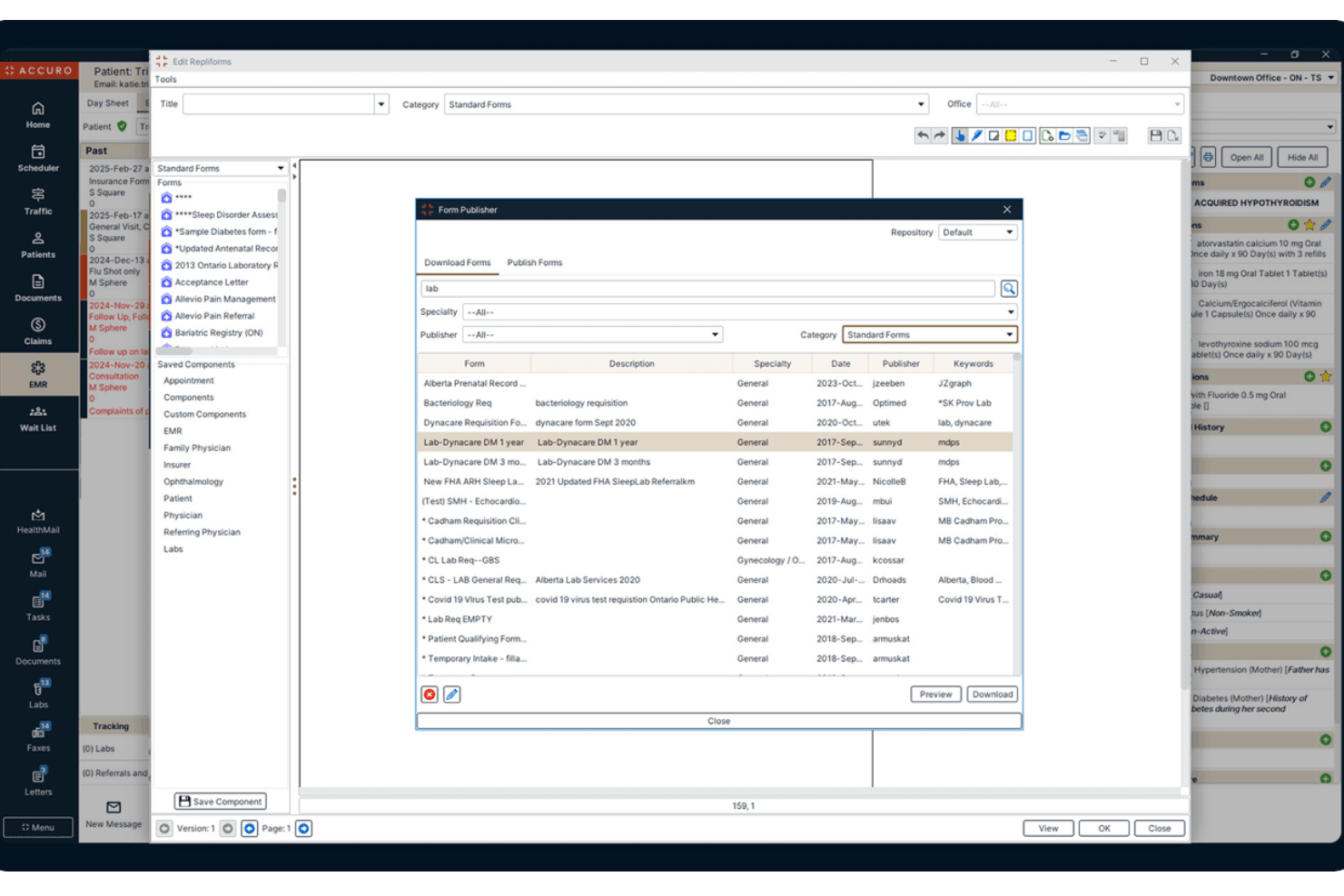
Create and modify templates for specialty-specific charting and documentation. This helps teams standardize notes while adapting to unique workflows.
Integrated Billing Management
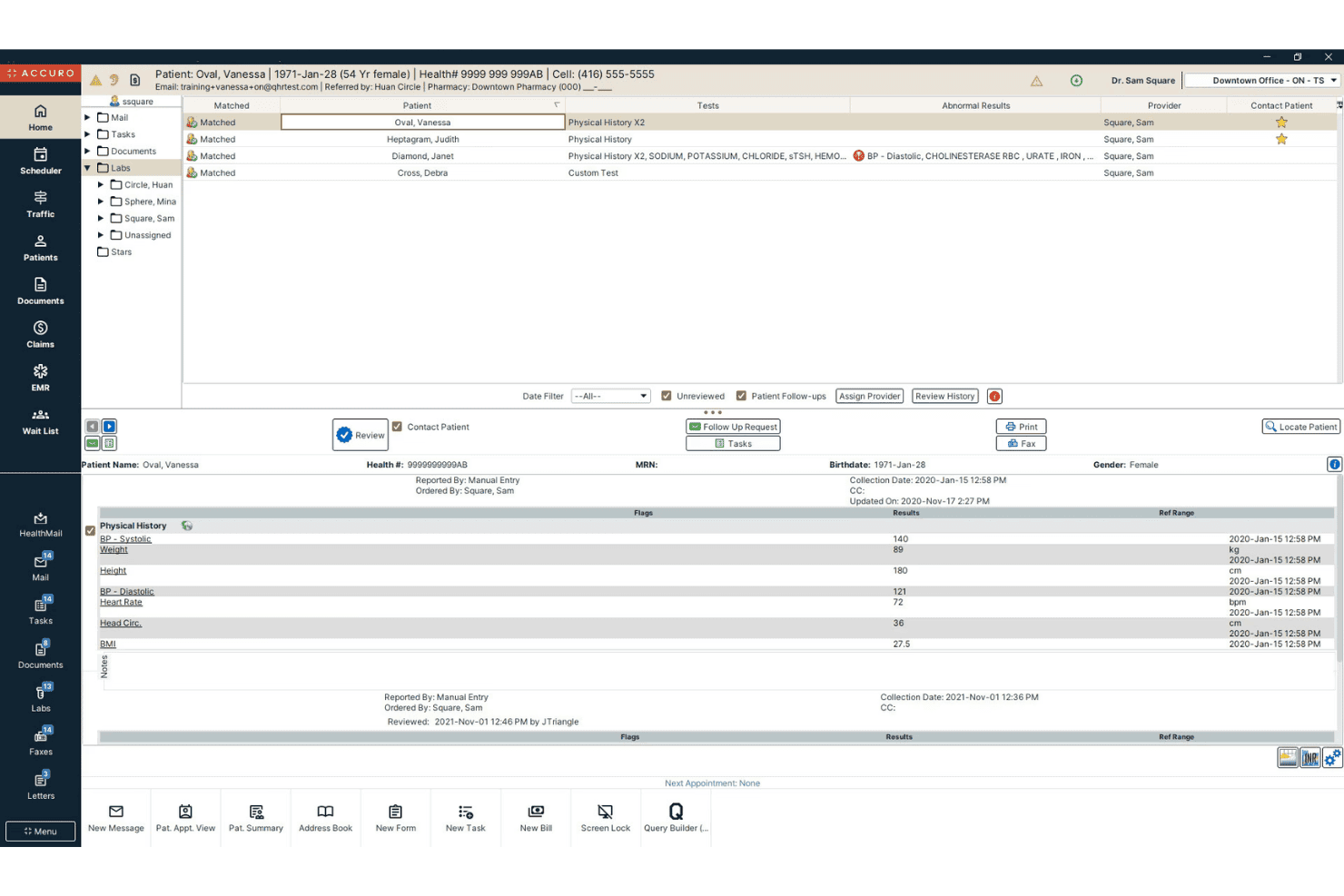
Handle OHIP, MSP, and Alberta billing directly within the platform. Automated claim submission and reconciliation save time for administrative staff.
Secure Messaging and eFax
Send encrypted messages and electronic faxes to patients and providers. This feature supports confidential communication and reduces paper use.
Appointment Scheduling
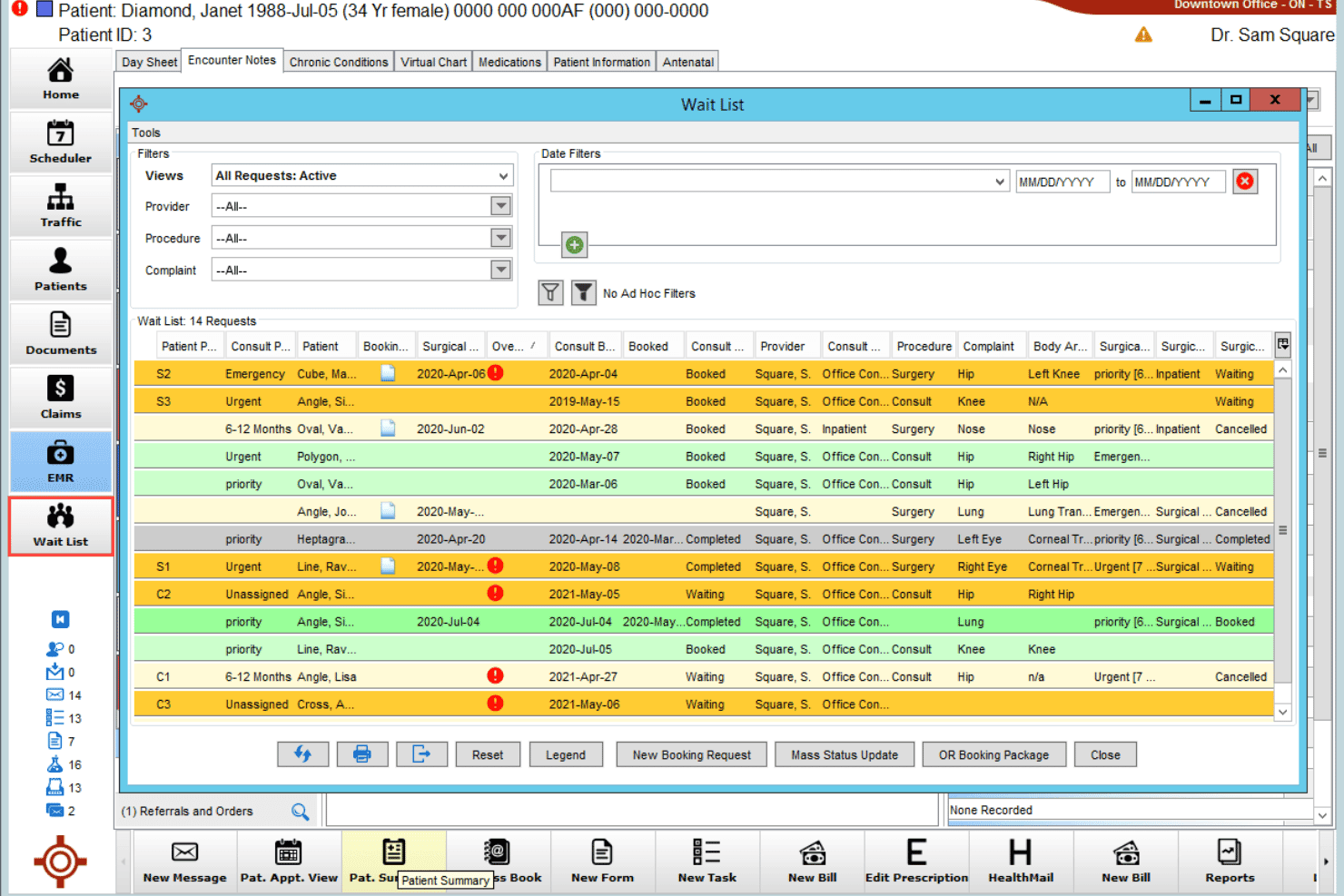
Book, manage, and track appointments with color-coded calendars and waitlist tools. Teams can reduce no-shows and optimize provider schedules.
Document Management
Store, organize, and retrieve patient files, images, and forms in one place. Quick search and tagging make it easy to find records fast.
Patient Portal
Give patients access to their health records, lab results, and appointment requests online. This improves patient engagement and reduces phone calls.
Standout Features
Virtual Care Tools
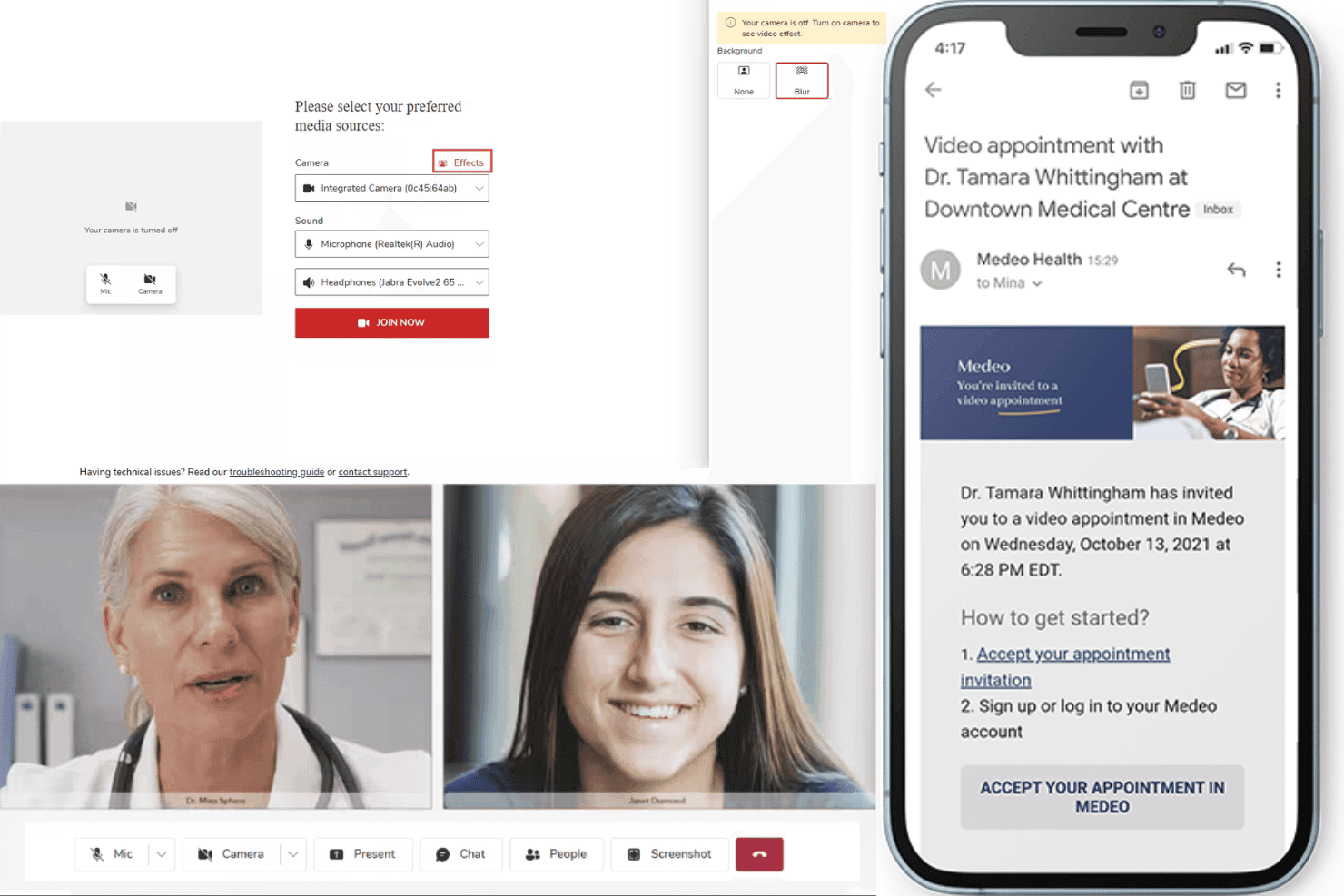
Accuro EMR offers built-in video visits and secure virtual care workflows. This lets providers deliver telehealth services without relying on third-party platforms.
QHR Accuro Mobile App
The QHR Accuro Mobile App allows providers to access schedules, patient charts, and messages on the go. This supports flexible care delivery and quick decision-making outside the clinic.
Ease of Use
Accuro EMR is user-friendly for teams that want customization without sacrificing speed. The interface is modern and intuitive, with clear navigation and logical workflows for charting, scheduling, and billing. Users often mention that onboarding is smooth, especially with support from Accuro’s training team.
While some advanced features require setup time, most daily tasks—like documenting visits or sending secure messages—are quick to learn and perform, making it approachable for both clinicians and admin staff.
Onboarding
Accuro EMR’s onboarding process is hands-on, with dedicated training sessions and personalized support that many users say helps ease the transition. The team provides step-by-step guidance, from data migration to workflow setup, and offers a library of tutorials and live help.
While setup can be time-intensive for larger clinics, most users feel well-supported and confident using the system soon after launch, thanks to responsive trainers and accessible resources.
Customer Support
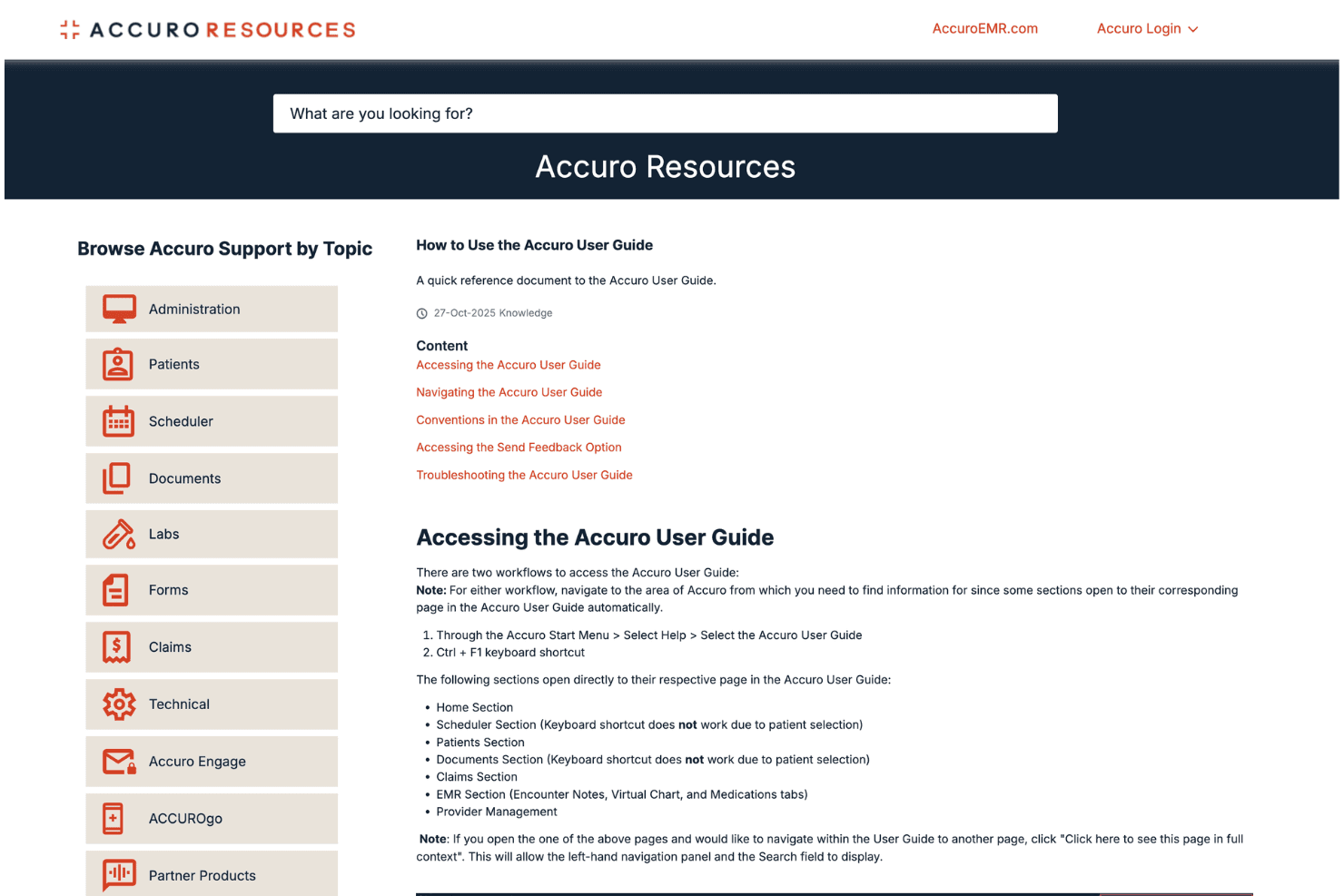
Accuro EMR’s customer support is consistently praised for being responsive and knowledgeable, with users highlighting quick turnaround times and helpful troubleshooting. Support is available by phone, email, and an online portal, making it easy to get help when issues arise.
Many clinics appreciate the follow-up from support staff and the willingness to walk users through complex problems, which builds trust and confidence in the platform.
Integrations
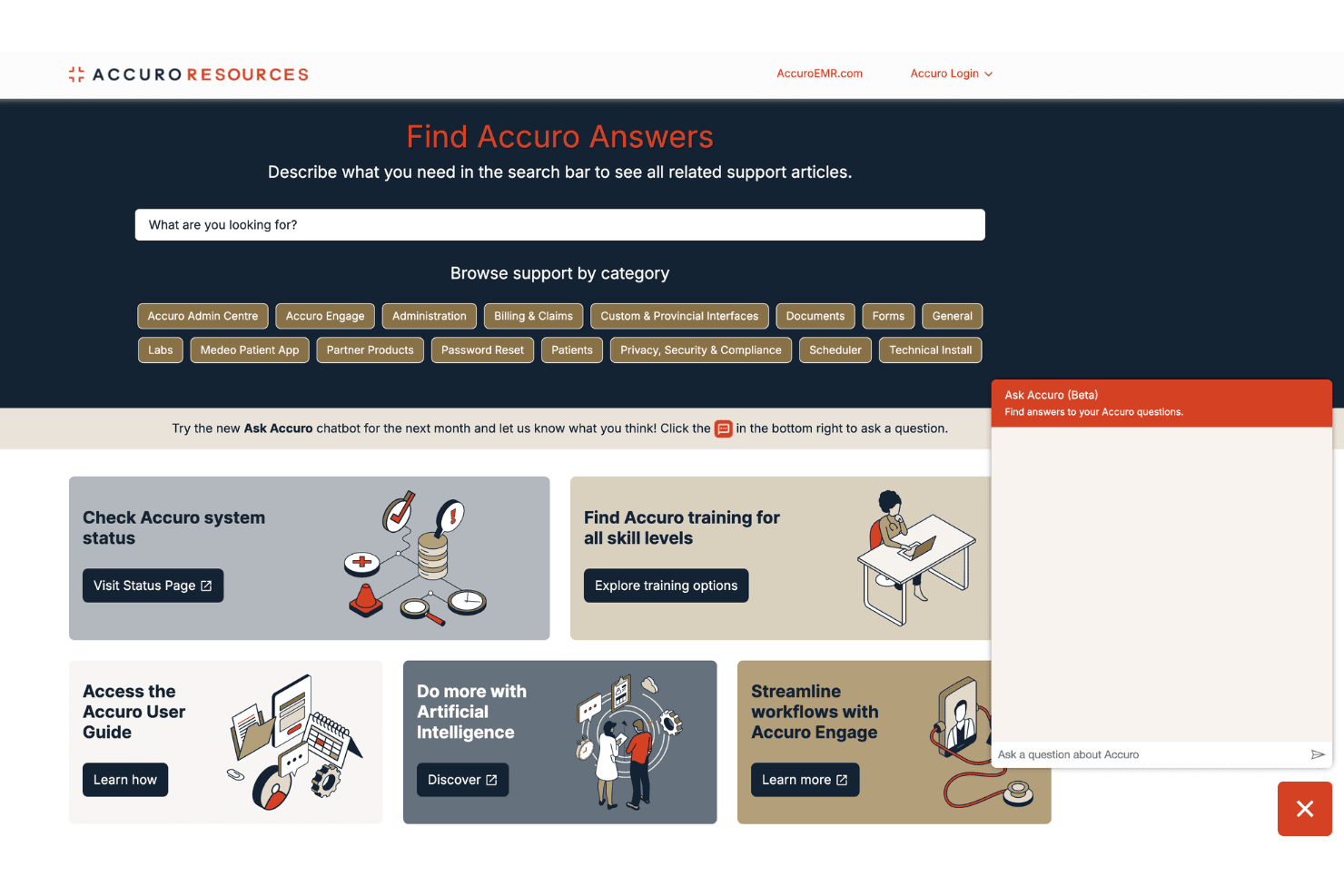
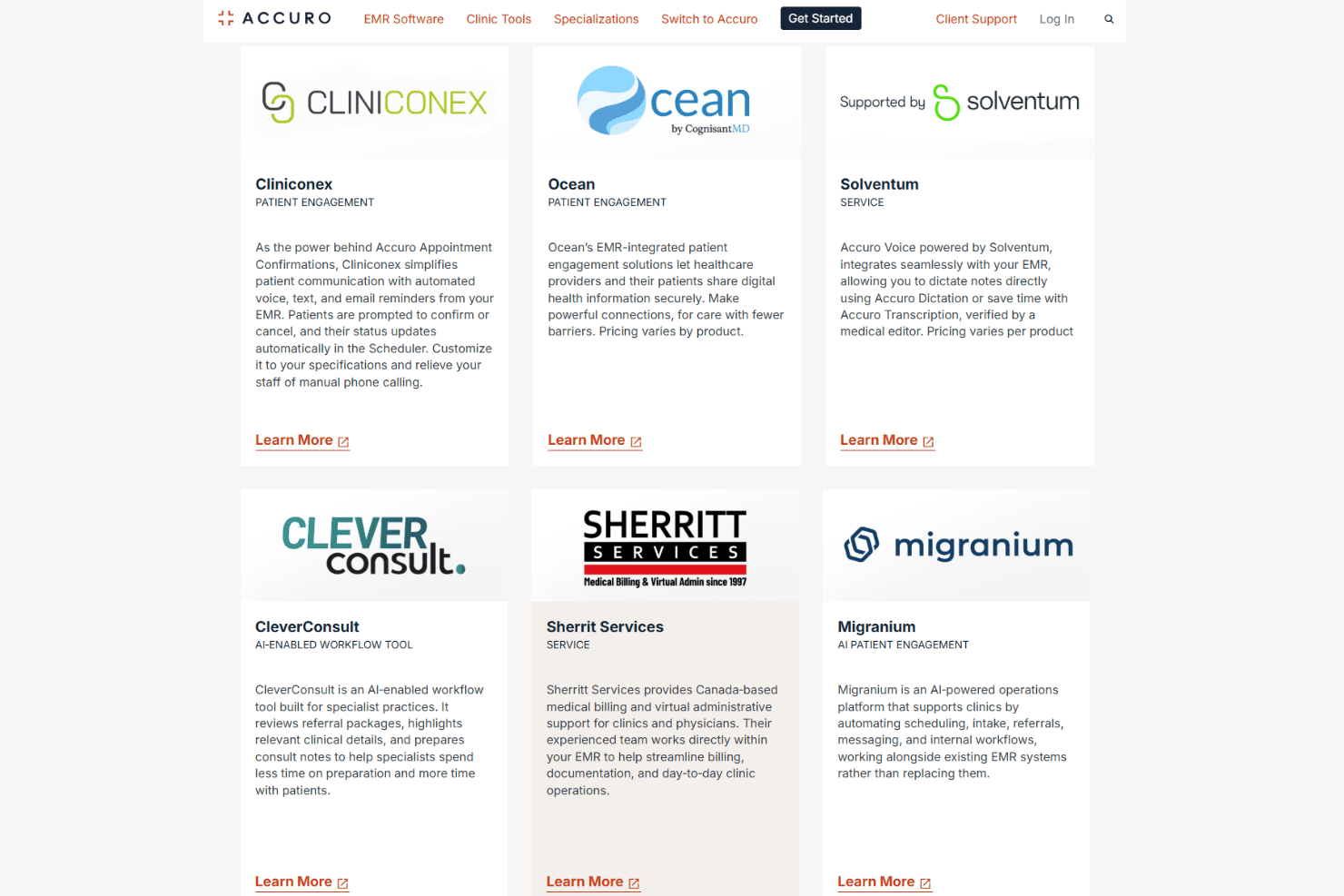
Accuro EMR integrates with provincial lab systems, diagnostic imaging repositories, OntarioMD HRM, PrescribeIT, eHealth Ontario, Alberta Netcare, Ocean by CognisantMD, Dr.Bill, Brightsquid, and QHR’s Medeo.
Accuro EMR also offers an API for custom integrations but does not connect with third-party integration tools like Zapier.
Value for Money
Accuro EMR uses custom pricing that is available upon request and tailored to clinic size, specialty requirements, and selected features. The platform is often considered a strong fit for Canadian clinics needing integrated billing, specialty-specific workflows, and compliance-focused EMR capabilities. Users frequently highlight its customization options, reporting tools, and support for multi-provider practices, though smaller clinics may find it more complex than lighter EMR alternatives.
Accuro EMR Specs
- API: Yes
- Appointment Scheduling: Yes
- Athlete Management: No
- Audit Management: Yes
- Calendar Management: Yes
- Compliance Tracking: Yes
- Customer Management: Yes
- Dashboard: Yes
- Data Export: Yes
- Data Import: Yes
- Data Visualization: Yes
- Electronic Prescribing: Yes
- External Integrations: Yes
- File Sharing: Yes
- File Transfer: Yes
- Health Management: Yes
- HIPAA Compliance: Yes
- Inventory Tracking: No
- Multi-User: Yes
- Notifications: Yes
- Organization Management: Yes
- Patient Management: Yes
- Project Management: Yes
- Regulatory Alerts: Yes
- Risk Assessment: Yes
- Scheduling: Yes
- Supplier Management: No
Accuro EMR FAQs
Accuro EMR Company Overview & History
Accuro EMR is a Canadian-based electronic medical record platform trusted by healthcare providers for over two decades. The company is headquartered in Canada and focuses exclusively on serving Canadian clinics, offering customizable workflows and tools for a wide range of specialties.
Accuro EMR is part of QHR Technologies, which is known for its commitment to supporting evolving healthcare needs and delivering reliable, secure solutions. The platform is widely used across Canada, especially by clinics seeking compliance with Canadian privacy laws and integrated billing.
Accuro EMR Major Milestones
- 2000: QHR Technologies is founded in Kelowna, British Columbia, later launching the Accuro EMR platform for Canadian healthcare providers.
- 2016: QHR Technologies, the parent company of Accuro EMR, is acquired by Loblaw Companies Limited.
- 2020: Accuro EMR expands its digital health capabilities with e-prescribing integrations and enhanced mobile and interoperability features.
- 2024: Continues enhancing specialty-specific workflows, cloud-connected tools, and AI-assisted healthcare features for Canadian clinics.