

Alegerea software-ului EMR potrivit pentru anestezie poate fi descurajantă. Aveți nevoie de o soluție care să răspundă nevoilor unice ale echipei dumneavoastră, fără să adauge complexitate. Din experiența mea, este esențial să găsiți un software care simplifică păstrarea evidențelor și asigură conformitatea.
Înțeleg — căutați informații de încredere pentru a lua o decizie în cunoștință de cauză. De aceea, am testat și evaluat independent o gamă de instrumente EMR pentru anestezie. Scopul meu este să vă ofer o perspectivă imparțială asupra celor mai bune opțiuni disponibile.
În acest articol, veți descoperi cele mai bune opțiuni pentru provocări frecvente, precum gestionarea datelor și îngrijirea pacienților. Veți găsi informații care vă ajută să alegeți un instrument care răspunde cu adevărat nevoilor dumneavoastră. Să analizăm opțiunile și să găsim soluția potrivită pentru echipa dumneavoastră.
Why Trust Our Software Recommendations
6,700+
Reviews
20
Industry experts
16+
Evaluation factors
14
Years
Our team has been testing and reviewing software since 2012. As medical practice leaders ourselves, we know how difficult—and important—it is to choose the right software.
For this guide, we evaluated tools using hands-on testing and independent research, scoring tools using our selection criteria.
Our reviews reflect our human editorial judgment, not a sales pitch.
Tabel comparativ al software-urilor EMR pentru anestezie
Score legend (out of 5)
- Excellent4.5–5
- Good4–4.4
- Average3–3.9
- Below average2–2.9
- Poor1–1.9
Sorted by: Default
| Tool | Starting Price | Website | |||||||
|---|---|---|---|---|---|---|---|---|---|
Best for customizable anesthesia charting | Not rated | 2 | Not rated | 2 | 2 | 2 | 2 | $99/month 15-day free trial | Website |
Best for AI-driven documentation | Not rated | Not rated | Not rated | 3 | 2 | Not rated | 2 | Pricing upon request Free demo available | Website |
Best for simplified documentation | 1.8 out of 5 | 2 | 2 | 2 | 2 | 1 | 2 | Pricing upon request Free demo available | Website |
Best for multi-brand OR device integration | 2.7 out of 5 | 3 | 3 | 3 | 2 | 3 | 2 | Pricing upon request Free demo available | Website |
Best for hospital EHR interoperability at scale | 2.8 out of 5 | 3 | 3 | 4 | 2 | 2 | 3 | Pricing upon request Free demo available | Website |
Best for hospital-wide anesthesia registry integration | 3.2 out of 5 | 3 | 3 | 4 | 3 | 3 | 3 | Pricing upon request Free demo available | Website |
Best for anesthesiologist-designed mobile charting | 3.0 out of 5 | 3 | 3 | 3 | 3 | 3 | 3 | Pricing upon request Free demo available | Website |
Best for DoD-proven perioperative anesthesia records | 3.0 out of 5 | 4 | 3 | 3 | 3 | 3 | 2 | Pricing upon request Not available | Website |
Best for continuous perioperative record keeping | 2.8 out of 5 | 4 | 3 | 3 | 2 | 3 | 2 | Pricing upon request Free demo available | Website |
Best for specialized anesthesia workflow optimization | Not rated | 4 | 4 | 4 | 4 | Not rated | 2 | Pricing upon request Free demo available | Website |


Recenzii ale celor mai bune software-uri EMR pentru anestezie
 Best for customizable anesthesia charting
- 15-day free trial
- From $99/month
Visit WebsiteCustomer Rating:4.8/5
OptiMantra’s customizable charting interface lets anesthesia providers tailor documentation to their specific procedural workflows. OptiMantra is an electronic medical record (EMR) and practice management platform designed to support healthcare providers that require detailed documentation and patient management — including anesthesia practices. Its customizable charting, telehealth capabilities, and integrated billing tools make it a flexible option for clinics that handle both procedural and post-operative care.
Why I Picked OptiMantra:
I picked OptiMantra because of its highly customizable charting tools that allow you to create detailed intake and follow-up forms tailored to anesthesia workflows. This flexibility helps you capture critical pre-op and post-op information accurately while maintaining compliance. I also found its telehealth functionality particularly useful for remote consultations, such as pre-anesthesia assessments or post-procedure follow-ups. Combined with diagnostics and e-prescribing integrations, it provides a well-rounded system for anesthesia care management.
Standout Features and Integrations:
OptiMantra’s features include electronic prescriptions through the Surescripts network, integrated lab ordering with results directly embedded in patient records, and secure document sharing via e-fax. The system also supports superbills, insurance billing, inventory management, and a patient portal for engagement and transparency. Integrations include Surescripts, LabCorp, Mercy Diagnostics, Quest Diagnostics, Access Medical Lab, Clinical Labs of Hawaii, Rupa Health, SimonMed, DigitalOne, Boston Heart Diagnostics, Fullscript, and Clinical Pathology Laboratories, Inc. (CPL).
Pros and Cons
Pros:
- HIPAA-compliant telehealth platform
- Integrated diagnostics and prescription tools
- Customizable charting for anesthesia workflows
Cons:
- Learning curve for new users
- Occasional system glitches reported
Learn more about OptiMantra: Best for AI-driven documentation
- Free demo available
- Pricing upon request
Visit WebsiteCustomer Rating:5/5
NextGen Healthcare dashboard displaying recent activity summaries and financial reporting tools. NextGen is a healthcare IT platform that delivers electronic health records and practice management solutions tailored to a variety of specialties, including anesthesia. Its standout tools include mobile access, AI-powered note capture, and built-in analytics to support both clinical and financial operations.
Why I Picked NextGen: NextGen stood out to me for its AI-powered Ambient Assist tool, which turns doctor-patient conversations into structured SOAP notes—helping anesthesiologists reduce documentation time significantly. I also liked its specialty-focused flexibility, which includes configurable billing workflows and mobile access that supports providers inside and outside the OR.
Standout Features and Integrations:
NextGen offers AI-powered documentation, a mobile EHR, anesthesia billing tools, and regulatory reporting. Its platform supports over 40 specialties with customizable templates and real-time data access. Integrations include CGM LABDAQ, Klara, DoctorConnect, Medsender, FrameworkLTC, and others covering labs, communication, and billing systems.
Pros and Cons
Pros:
- Supports over 40 specialties, including surgical and anesthesia settings
- Strong interoperability with labs and third-party systems
- Mobile EHR access allows anesthesiologists to manage tasks on the go
Cons:
- Some features are iOS-optimized; Android support varies
- May require integration with third-party anesthesia AIMS
Learn more about NextGEN: Best for simplified documentation
- Free demo available
- Pricing upon request
Visit WebsiteCustomer Rating:5/5
The patient history management feature in Athenahealth allows users to view and manage patient records through simplified processes. Athena Health is a provider of cloud-based healthcare solutions designed to enhance clinical effectiveness, patient experience, and financial performance. The company's flagship platform, athenaOne, integrates Electronic Health Records (EHR), Revenue Cycle Management (RCM), and patient engagement tools to consolidate operations.
Why I Picked Athenahealth:
In my comparison of various systems, Athenahealth emerged as a leader in providing an integrated healthcare experience. Its core strength is its seamless integration of key practice operations, from clinical records to patient engagement and revenue cycle management. I also like that Athenahealth offers simplified documentation processes to allow health professionals, like anesthesiologists, to view and manage patient profiles easily.
Standout Features & Integrations:
Athenahealth offers a plethora of useful features, such as revenue cycle management, communication and care tools for patient engagement, an easy-to-read summary of patient records, a patient portal, automated reminders, telehealth capabilities, and mobile accessibility. Integrations include NextPatient, DocResponse, Yosi Health, Secondwave, Recovery Plus, TSI, VaxCare, Fullscript, QueueDr, and CallMyDoc.
Pros and Cons
Pros:
- Cloud-based system for remote access
- Robust patient engagement tools
- Broad range of integrations with other healthcare systems and devices
Cons:
- Data migration can be time-consuming
- Complexity of the system may result in a learning curve
Learn more about Athenahealth: Best for multi-brand OR device integration
- Free demo available
- Pricing upon request
Visit WebsiteCustomer Rating:3.4/5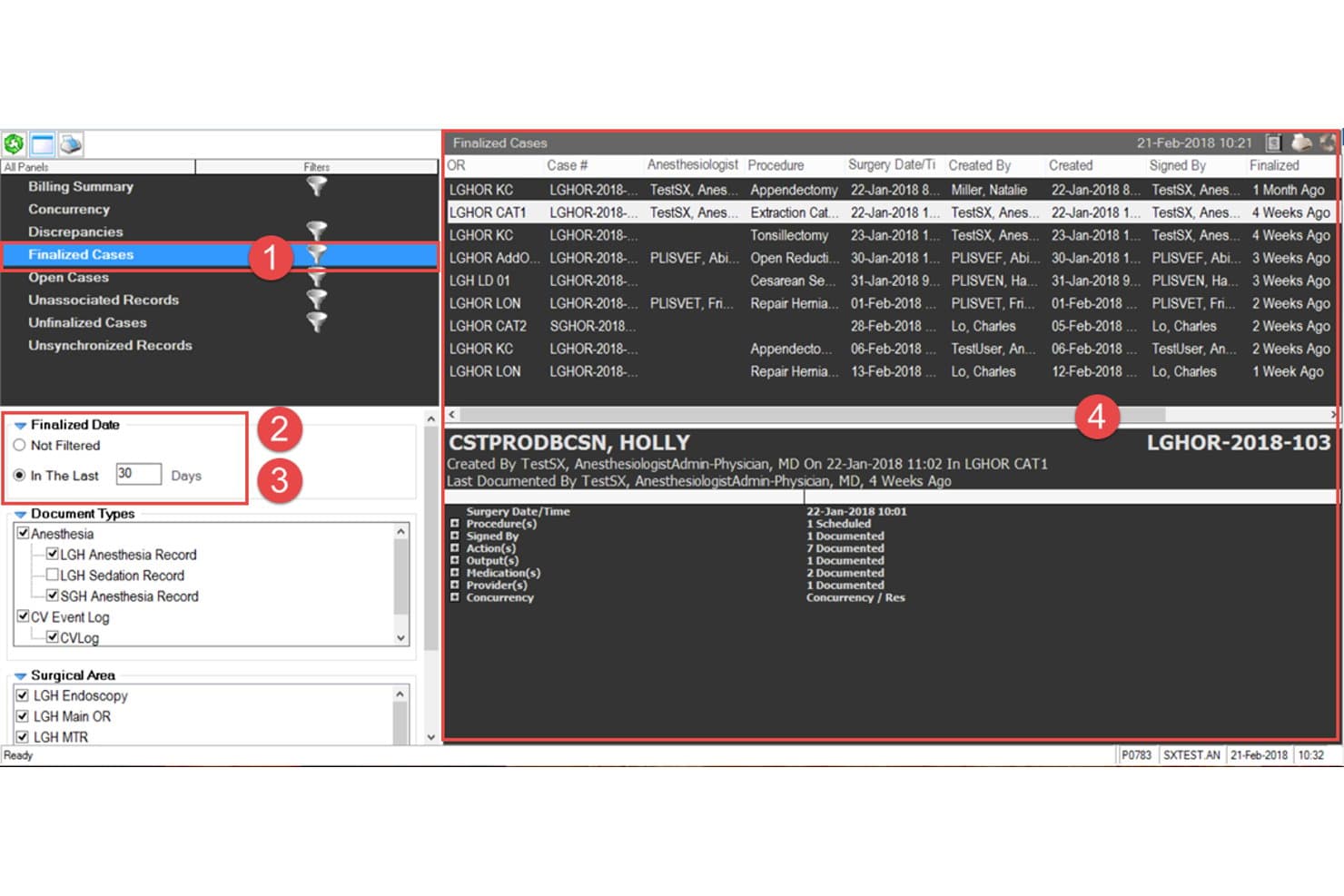
Cerner lets users review and filter finalized anesthesia cases by date. Oracle Health Anesthesia is an enterprise anesthesia EMR module that covers intraoperative documentation, device data integration, pre- and post-anesthesia records, staff scheduling, and adverse drug reaction alerts within the broader Oracle Health EHR ecosystem.
Who Is Cerner Best For?
Cerner is a strong fit for large hospital systems and health networks that prioritize seamless data exchange across departments and care settings.
Why I Picked Cerner
I've included Cerner in my top picks because its interoperability infrastructure is genuinely hard to replicate at scale. Oracle Health's FHIR APIs and Connection Hub let anesthesia records pull patient data from across departments, so a pre-anesthesia evaluation can reflect the most current labs, medications, and allergies without manual data entry. I also like that its device connectivity catalog covers over 1,000 devices, including named anesthesia monitors from Dräger Medical, GE Healthcare, and Mindray, feeding vitals directly into the intraoperative record.
Cerner Key Features
- Macro-driven intraoperative documentation: Predefined macros accelerate intra-anesthesia record completion during live cases.
- Adverse drug reaction alerts: The system flags potential drug reactions in near real time within the anesthesia workflow.
- Pre-anesthesia evaluation records: Clinicians can document and access structured pre-anesthesia assessments before cases begin.
- Multi-case supervisor monitoring: Supervisors can view data from multiple simultaneous cases in graphical or numeric displays.
Cerner Integrations
Cerner offers documented integrations with CommonWell Health Alliance, Surescripts, and Haemonetics BloodTrack. It also supports FHIR and cloud-native EHR APIs for custom connections, plus device connectivity through Oracle Health Bedside Medical Device Integration.
Pros and Cons
Pros:
- Supervisors can view multiple cases
- Pre- and post-anesthesia records are supported
- Some users report workable anesthesia charting
Cons:
- Vital-sign transfers can be unreliable
- Some users report tripled charting effort
Learn more about Cerner: Best for hospital EHR interoperability at scale
- Free demo available
- Pricing upon request
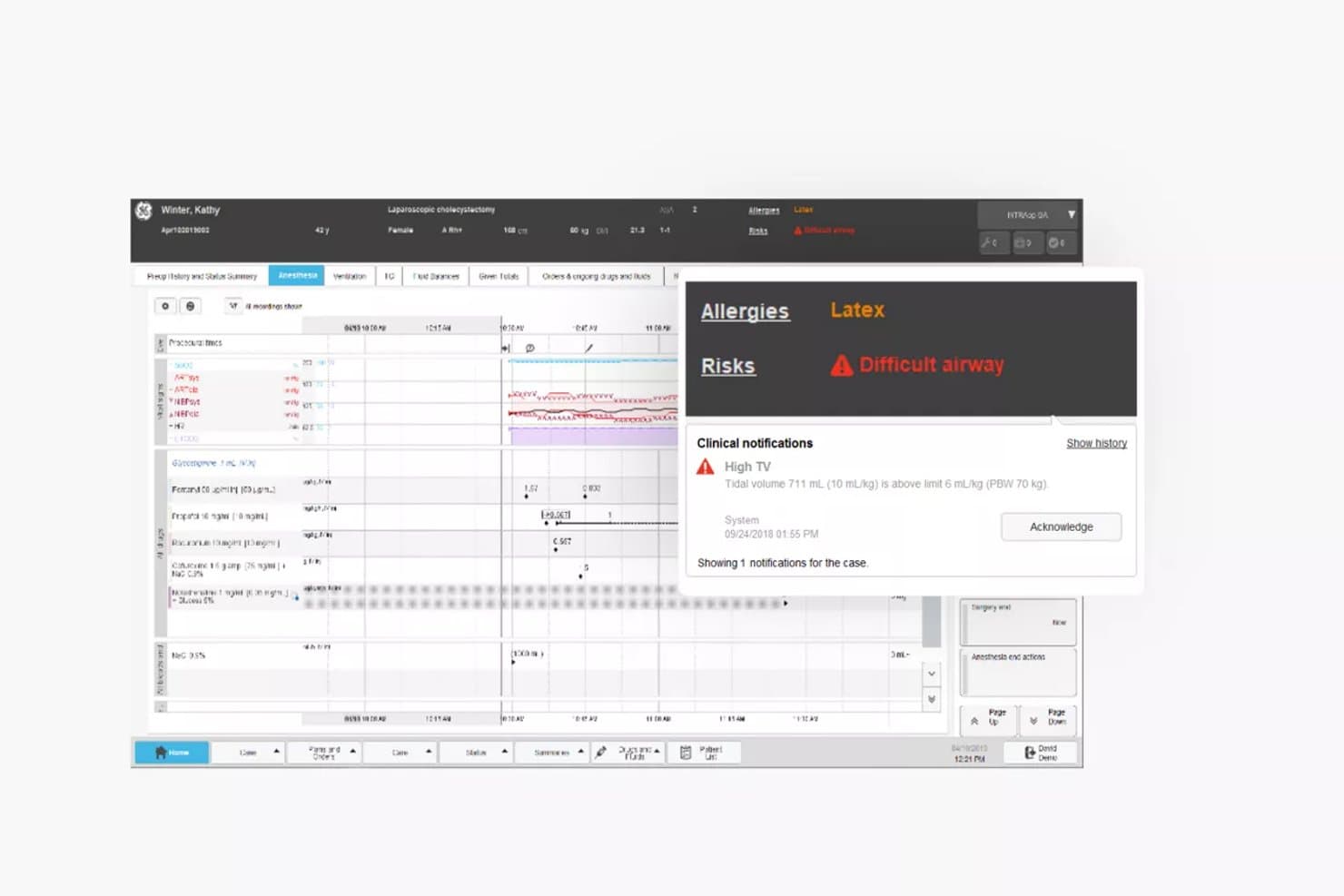
GE Healthcare surfaces allergy and airway risk alerts during surgery. GE HealthCare's Centricity Perioperative Anesthesia is an anesthesia information management system that covers intraoperative touch-screen charting, automated vital-sign capture, perioperative workflow from pre-op through PACU, and bidirectional data exchange with hospital EHR and HIS platforms.
Who Is GE HealthCare Best For?
GE HealthCare's Centricity Perioperative Anesthesia is a strong fit for large hospitals and health systems that need deep, bidirectional integration with existing EHR and HIS platforms across complex perioperative environments.
Why I Picked GE HealthCare
I picked GE HealthCare's Centricity Perioperative Anesthesia because its depth of hospital EHR connectivity is genuinely hard to replicate. With over 600 interfaces across 35 IT systems, including bidirectional exchange with Epic, Cerner, Meditech, and McKesson, it fits naturally into complex health system environments where data has to flow cleanly between anesthesia, nursing, and the inpatient record. I also like that the Discrete Data Interface passes discrete elements like vitals, medications, and discharge summaries directly into other enterprise systems, not just as documents.
GE HealthCare Key Features
- Touch-screen intraoperative charting: A touch-screen interface lets anesthesia providers document drugs, events, and vitals during a case using event-document templates and procedure-note scripts.
- Perioperative workflow coverage: The system supports anesthesia workflow across preoperative care, the OR, PACU, and ancillary areas where anesthesia is provided.
- Vital-sign device capture: Vitals auto-populate from connected OR monitors, reducing the need for manual data entry during a case.
- Clinical protocol scripts: Built-in clinical scripts guide anesthesia providers through standard protocols to support consistent, compliant care delivery.
GE HealthCare Integrations
GE HealthCare offers over 600 integrations across 35 IT systems, including Epic, Cerner, Meditech, McKesson, Siemens, and Eclipsys. Its Discrete Data Interface supports configurable HL7 v2.4 and ORU messaging, plus bidirectional exchange with hospital EHR and HIS platforms.
Pros and Cons
Pros:
- Vital-sign capture reduces repetitive manual documentation
- Clinical scripts reinforce standard anesthesia protocols
- Touch-screen charting supports intraoperative documentation
Cons:
- Supported monitor models and capture frequency are unspecified
- Current anesthesia registry reporting remains unconfirmed
Learn more about GE Healthcare: Best for hospital-wide anesthesia registry integration
- Free demo available
- Pricing upon request
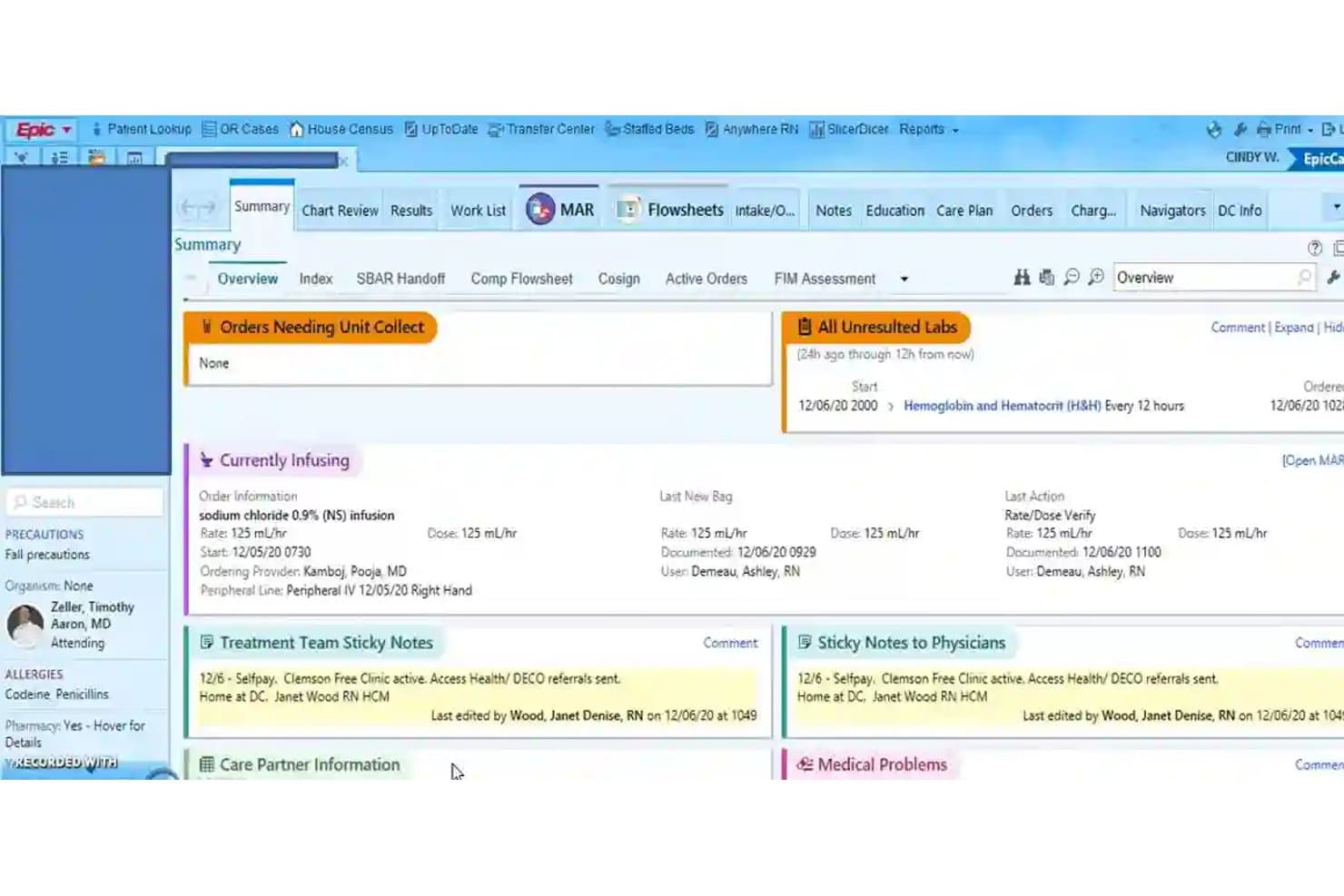
Epic EHR centralizes patient data, labs, and infusions in one view. Epic EHR is a hospital-grade electronic health record system that covers perioperative documentation, anesthesia charge capture, outcomes reporting, and OR staffing analysis across the full surgical episode.
Who Is Epic EHR Best For?
Epic EHR is the strongest fit for large hospital systems that need anesthesia documentation, outcomes reporting, and registry integration woven into a single enterprise-wide EHR platform.
Why I Picked Epic EHR
Epic EHR earns its spot on my shortlist because no other platform ties anesthesia documentation directly into a hospital-wide registry at this scale. I'm particularly drawn to its collaboration with the ASA and Anesthesia Quality Institute to build the Anesthesia Community Registry, which connects anesthesia episode data to NACOR for outcomes tracking and quality benchmarking. On top of that, OR Staffing Analysis forecasts anesthesiology coverage needs directly from the OR schedule, which is a level of operational integration I haven't seen matched elsewhere.
Epic EHR Key Features
- Perioperative documentation: Supports clinical documentation across the full surgical episode, from pre-op through post-anesthesia care.
- Incoming device data interface: Captures discrete measurements from patient-monitoring devices, with configurable automatic filing for surgical procedures.
- Art for Clinicians AI summary: Gives anesthesia providers a pre-case chart summary covering procedural notes, medication history, and cardiology information.
- OR Staffing Analysis: Forecasts nursing and anesthesiology staffing needs directly from the OR schedule to support specialty-level coverage planning.
Epic EHR Integrations
Epic EHR supports integrations with GE, Dräger, Masimo, Mindray, Nihon Kohden, Philips, and Spacelabs devices, plus infusion pumps and perioperative workflows. It offers FHIR APIs, HL7v2 interfaces, and CDS Hooks for custom connectivity.
Pros and Cons
Pros:
- Registry plans target anesthesia quality benchmarking
- Flexible templates can speed clinical documentation
- Centralized records support perioperative coordination
Cons:
- Medication entry may require repeated clicks
- Complex navigation can slow anesthesia workflows
Learn more about Epic EHR: Best for anesthesiologist-designed mobile charting
- Free demo available
- Pricing upon request
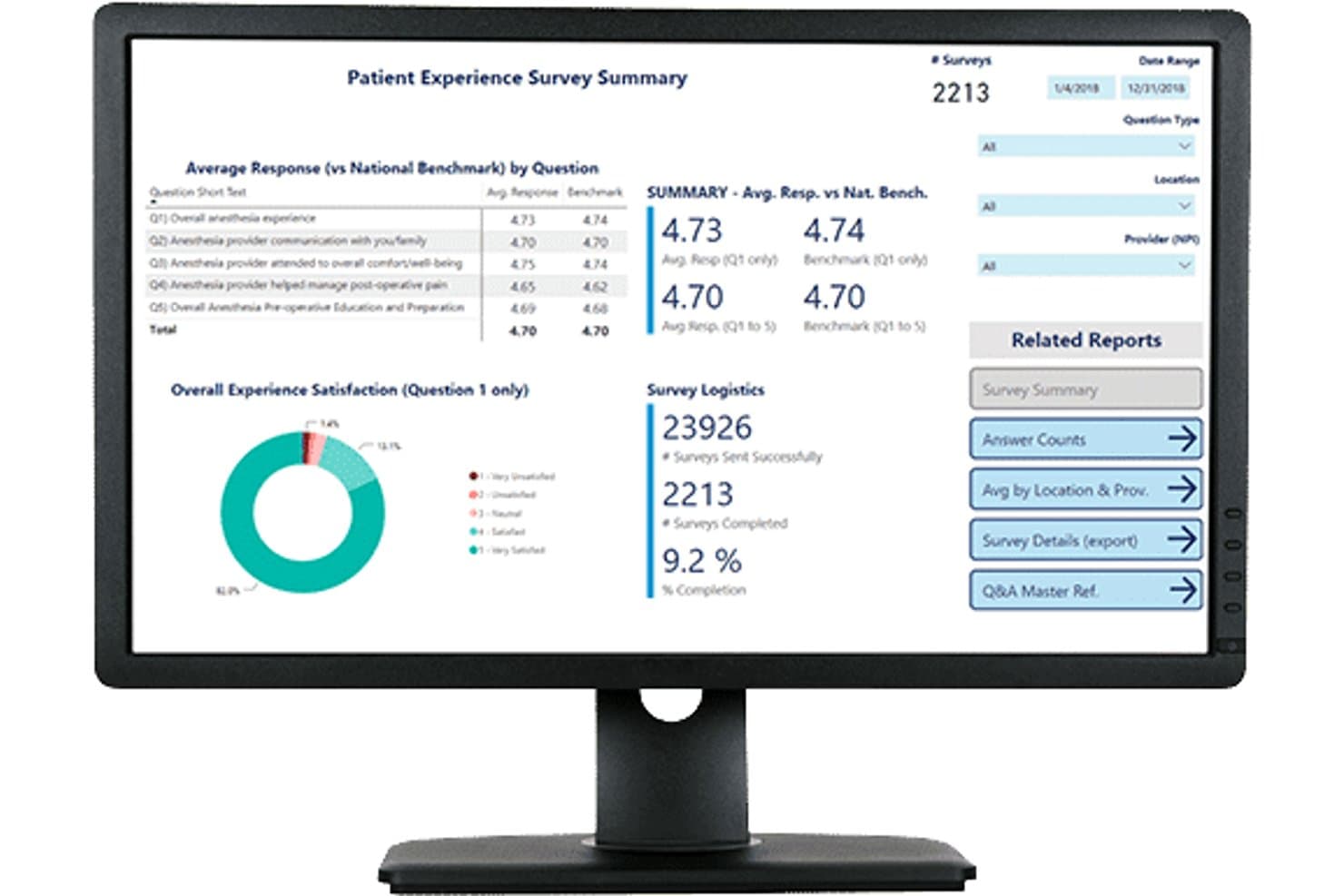
ePreop tracks patient experience survey results in a visual dashboard. Provation iPro AIMS is a mobile, cloud-based anesthesia information management system built for intraoperative charting, automated vitals capture, and peri-anesthesia documentation across pre-op, intra-op, and post-op phases.
Who Is ePreop Best For?
Provation iPro AIMS is a strong fit for anesthesiologists and anesthesia groups who need a mobile-first AIMS built around how they actually work in the OR and NORA settings.
Why I Picked ePreop
I picked ePreop as one of the best because Provation iPro AIMS was built by practicing anesthesiologists, and that shows in how it handles intraoperative documentation. I love that it wirelessly streams physiological data from anesthesia machines directly into the record in real time, eliminating manual vitals entry mid-case. The mobile-first design also lets me chart NORA cases from any location, without a fixed workstation, and dark mode keeps the interface usable in low-light ORs.
ePreop Key Features
- Auto-quality documentation: iPro automatically detects anesthesia quality measures and records them directly in the chart without manual entry.
- POCUS documentation: Providers can document point-of-care ultrasound use within the record to support compliant billing and reimbursement.
- iPro Billing Package: This add-on standardizes ASA unit, modifier, and charge calculations from finalized clinical documentation and submits charges automatically.
- Mira iPro Insights: A built-in analytics platform delivers role-appropriate clinical, operational, and financial performance data to support practice decisions.
ePreop Integrations
ePreop offers integrations with MEDITECH Expanse, Altera Digital Health, Alcidion, and VitalHub. MEDITECH Expanse connectivity includes vital signs, medications, allergies, demographics, medical history, and lab results; API availability isn’t documented.
Pros and Cons
Pros:
- Long-term reviewer praised speed and reliability
- Wireless vitals capture reduces manual entry
- Anesthesiologist-designed mobile charting
Cons:
- Few independent reviews offer limited peer insight
- Supported anesthesia-machine models aren’t specified
Learn more about ePreop: Best for DoD-proven perioperative anesthesia records
- Not available
- Pricing upon request
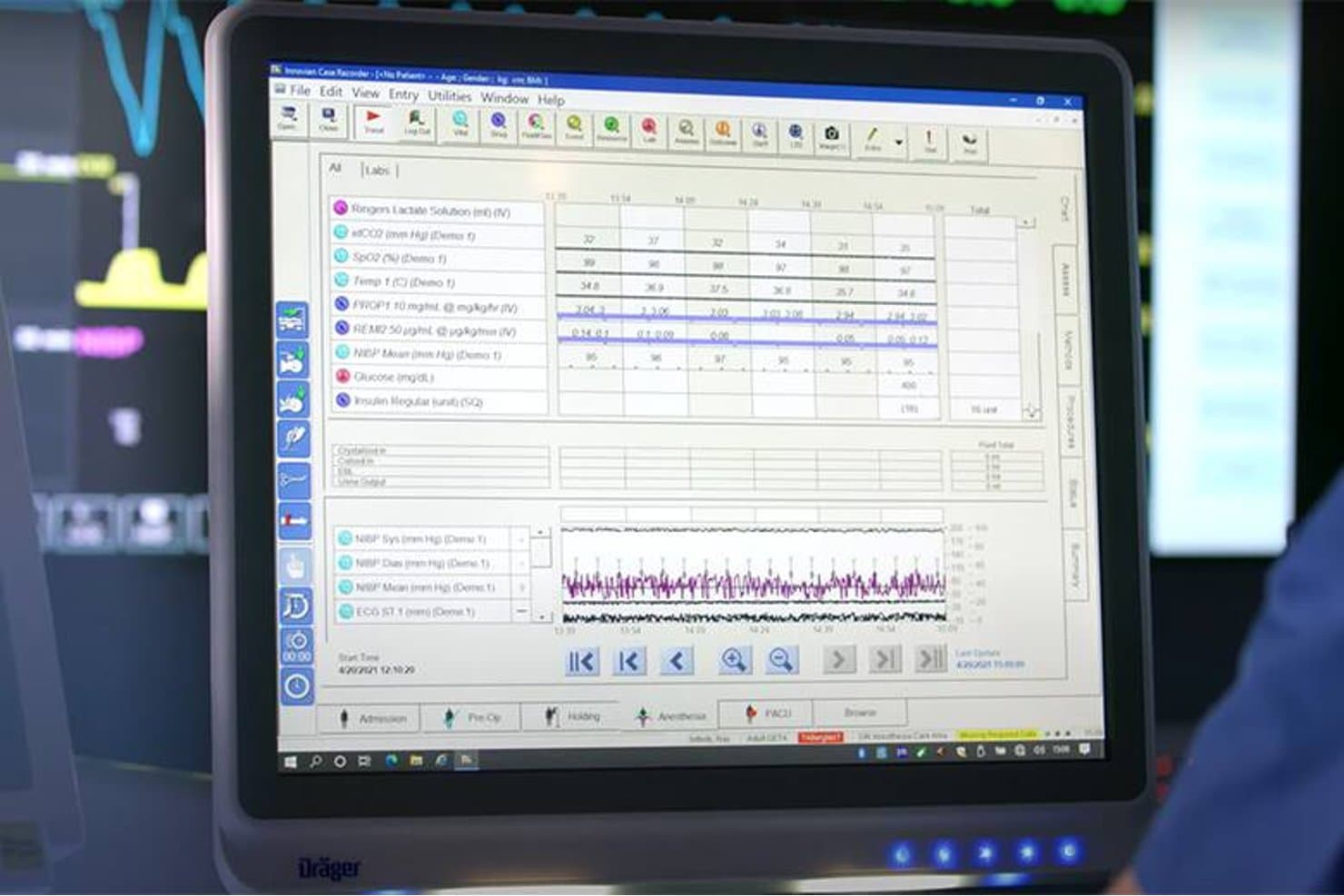
Innovian Anesthesia pulls device data into a continuous anesthesia record. Dräger Innovian Anesthesia is a perioperative anesthesia EMR that spans the full care continuum—from web-based pre-anesthesia assessments through intraoperative charting, automated vitals capture, PACU documentation, and analytics reporting.
Who Is Dräger Innovian Anesthesia Best For?
Innovian Anesthesia is a strong fit for military treatment facilities, VA medical centers, and large hospital systems that need a proven, perioperative-grade anesthesia record with deep DoD deployment history.
Why I Picked Dräger Innovian Anesthesia
I picked Dräger Innovian Anesthesia because its DoD deployment history is genuinely hard to match in this category: it's been a DoD standard worldwide since 2008 and was active across 40 Military Treatment Facilities. I also like that it covers the full perioperative record, from web-based pre-anesthesia assessments through intraoperative charting with configurable case workflows and quick-event triggers, all the way through PACU documentation in a single continuous record.
Dräger Innovian Anesthesia Key Features
- Automated vital-sign capture: Connects to anesthesia machines and patient monitors to automatically record vital signs into the continuous electronic anesthesia record.
- Innovian Anesthesia E-Forms: A configurable web-based interface captures admission and preoperative assessment data from pre-admission testing, holding areas, and inpatient units, then passes it directly into the system.
- Controlled-substance documentation trail: Shares medication information with anesthesia and pharmacy providers in real time to support controlled-substance reconciliation.
- Customizable analytics dashboards: Tracks room turnover, provider efficiency, staff assignments across up to six care areas, and patient outcomes using configurable reporting tools.
Dräger Innovian Anesthesia Integrations
Native integrations are not clearly documented. Dräger Innovian Anesthesia lists Rhapsody Integration Engine 6.0–6.5 for HL7 interfaces, plus a web API and enterprise EMR data export for custom connectivity.
Pros and Cons
Pros:
- Configurable intraoperative triggers support case documentation
- Perioperative record spans pre-op through PACU
- DoD deployment history offers proven military fit
Cons:
- Registry submission capabilities aren’t documented
- Billing automation details remain limited
Learn more about Dräger Innovian Anesthesia: Best for continuous perioperative record keeping
- Free demo available
- Pricing upon request
iMDsoft MetaVision Anesthesia displays real-time patient monitoring data on a clinical dashboard. MetaVision Anesthesia is an anesthesia information management system from iMDsoft that covers the full perioperative continuum—pre-op assessment, intraoperative charting, automated device data capture, and post-anesthesia recovery documentation.
Who Is iMDsoft MetaVision Anesthesia Best For?
MetaVision Anesthesia is a strong fit for hospital perioperative teams that need a single, unbroken patient record from pre-op assessment through intraoperative care and PACU discharge.
Why I Picked iMDsoft MetaVision Anesthesia
I picked MetaVision Anesthesia because it builds a single, unbroken patient record from pre-op assessment through intraoperative care and into PACU recovery, which is exactly what perioperative teams need to avoid documentation gaps at handoff. I love that intra-op event and medication recording works with one click or a barcode scan, with preset dosing templates keeping documentation tight during live cases. The continuous record then carries forward to PACU, where clinicians get the full anesthesia record at transfer alongside a combined pain-score and medication view to support discharge decisions.
iMDsoft MetaVision Anesthesia Key Features
- Pediatric-specific assessment tools: Supports pediatric scoring, documentation, and BMI charts to inform age-appropriate anesthesia protocol adjustments.
- Barcode-based patient identification: Scans patient barcodes at the point of care to access medical information and support medication administration checks.
- MetaVision Smart Alerts: Sends continuous notifications about patient, clinical, and administrative events throughout perioperative workflows.
- Multi-site architecture: Supports deployments from a single unit to a regional health network, with network-wide standardization alongside site-level configuration.
iMDsoft MetaVision Anesthesia Integrations
Native integrations are not clearly documented. MetaVision connects to an enterprise service bus through FHIR and HL7 v2 and supports more than 360 medical devices, but named systems and device models aren’t published.
Pros and Cons
Pros:
- One-click medication and event documentation
- Automated device capture reduces manual charting
- Continuous record supports perioperative handoffs
Cons:
- Reported infusion-rate edits can erase later notes
- Some users report cumbersome data navigation
Learn more about iMDsoft MetaVision Anesthesia: Best for specialized anesthesia workflow optimization
- Free demo available
- Pricing upon request

Graphium Health Anesthesia EMR Interface Graphium Health AnesthesiaEMR is a cloud-based electronic medical record software focused on optimizing the unique workflow needs of anesthesia practices. Its powerful tools target the specific challenges of anesthesia administration, qualifying it as best for specialized anesthesia workflow optimization.
Why I Picked Graphium Health AnesthesiaEMR:
When it comes to specialized workflow optimization in anesthesia, Graphium Health AnesthesiaEMR stands out. Its primary focus on anesthesia workflows is what drew me toward this tool. It offers specialized features that cater directly to the unique needs of anesthesiologists, setting it apart from the more generalized EMR systems. Its distinctiveness in this niche makes it best for specialized anesthesia workflow optimization.
Standout Features and Integrations:
Graphium Health AnesthesiaEMR comes with top-notch features like real-time data capture, custom reporting, and comprehensive anesthesia-specific document management. The software integrates seamlessly with numerous hospitals' information systems, providing a unified workflow.
Pros and Cons
Pros:
- Integrates with numerous hospitals' information systems
- Custom reporting capabilities offer in-depth insights
- Specialized features cater directly to anesthesiology workflows
Cons:
- Pricing information is not directly available on the website
- The system may seem complex for beginners
- Lacks a comprehensive suite covering all aspects of practice management
Learn more about Graphium Health AnesthesiaEMR:
How I Evaluate Anesthesia EMR Software
I split my evaluation into three parts, with the most weight on core functionality: logging timed drugs and events and pulling OR vitals into the case record. Next, I consider standout features such as multi-room dashboards. Finally, I look beyond features at device setup, go-live support, and pricing fit.
Core Functionality (Table Stakes For This List)
When I'm selecting tools for my list, I score each one on a scale from 0 (does not offer the functionality) to 5 (excels in this area) for each core functionality listed below. I then convert the total into a percentage to help assess each tool's overall fit, with extra weight on any functionalities I’ve deemed essential.
- Intraoperative Charting (Essential): I look for timed drug, event, and intervention entries that let clinicians build the anesthesia record as the case unfolds.
- Automated Vitals Capture (Essential): I assess whether OR monitors and anesthesia machines can feed readings into the record during a case, limiting manual entry.
- Pre/Post-Anesthesia Records: I check for structured pre-anesthesia assessments and recovery notes linked to the same encounter.
- Anesthesia Billing: I look for anesthesia time units, modifiers, and case charges that can be captured and exported for billing.
- Quality Reporting: I assess whether case data can be extracted in a structured format for anesthesia quality registries and compliance reporting.
- EHR Interoperability: I consider how patient, scheduling, and clinical information moves between the anesthesia platform, hospital EHR, and perioperative systems.
Once I have a list of tools that meet the criteria, I consider what sets each platform apart.
Differentiating Factors (What Sets Vendors Apart)
Here's how I compare and contrast different vendors:
Standout Features
I check whether a platform includes anesthesia-specific clinical decision support that flags drug interactions and dosing thresholds mid-case, not just generic allergy alerts. A multi-room dashboard is equally important; I look for a board view that lets the supervising anesthesiologist track concurrent cases, room status, and staffing gaps from one screen. I also evaluate QCDR registry partnerships, since a vendor-managed data pipeline to NACOR saves hours of manual extraction each quarter.
Beyond Features
I evaluate how each vendor handles device interface setup for OR monitors and anesthesia machines, since a platform that leaves configuration to your IT team can stall a go-live by weeks. Offline charting capability matters just as much—if the network drops mid-case, clinicians need a local fallback that syncs once connectivity returns. I also check whether pricing scales by provider, case volume, or site license, especially for groups covering multiple surgery centers.
Cum să alegeți software-ul EMR pentru anestezie
Este ușor să vă pierdeți în liste lungi de funcționalități și structuri complexe de prețuri. Pentru a vă ajuta să rămâneți concentrat în timp ce parcurgeți procesul unic de selectare a software-ului, iată o listă de verificare a factorilor de care trebuie să țineți cont:
| Factor | Ce trebuie să luați în considerare |
|---|---|
| FactorScalabilitate | Ce trebuie să luați în considerarePoate software-ul să se dezvolte odată cu cabinetul dumneavoastră? Verificați dacă acceptă planurile de extindere viitoare fără a necesita modificări majore. |
| FactorIntegrări | Ce trebuie să luați în considerareFuncționează cu sistemele dumneavoastră actuale? Căutați integrări native cu instrumentele existente pentru a evita problemele de compatibilitate. |
| FactorPosibilitate de personalizare | Ce trebuie să luați în considerareÎl puteți adapta fluxului dumneavoastră de lucru? Asigurați-vă că software-ul permite modificări pentru a răspunde nevoilor specifice, fără a necesita competențe tehnice avansate. |
| FactorUșurință în utilizare | Ce trebuie să luați în considerareEste ușor de utilizat pentru echipa dumneavoastră? Luați în considerare curba de învățare și dacă este nevoie de instruire extinsă sau dacă personalul se poate familiariza rapid cu acesta. |
| FactorImplementare și integrare inițială | Ce trebuie să luați în considerareCât de lină este tranziția? Evaluați asistența oferită în timpul configurării și cât de repede poate echipa dumneavoastră să înceapă să utilizeze eficient software-ul. |
| FactorCost | Ce trebuie să luați în considerareSe încadrează prețul în bugetul dumneavoastră? Comparați costul total de deținere, inclusiv eventualele taxe ascunse, și luați în considerare valoarea oferită pentru prețul plătit. |
| FactorMăsuri de securitate | Ce trebuie să luați în considerareSunt datele dumneavoastră protejate? Căutați conformitatea cu reglementările privind protecția datelor și funcționalități precum criptarea și controalele de acces. |
| FactorDisponibilitatea asistenței | Ce trebuie să luați în considerareEste disponibil ajutorul atunci când aveți nevoie de el? Verificați existența asistenței non-stop și disponibilitatea mai multor canale de asistență pentru a vă sprijini prompt echipa. |
Ce este software-ul EMR pentru anestezie?
Software-ul EMR pentru anestezie este un instrument digital pentru gestionarea evidențelor și proceselor de anestezie în cadrul unităților medicale. În general, anesteziștii și asistenții medicali specializați în anestezie folosesc aceste instrumente pentru a îmbunătăți eficiența și acuratețea îngrijirii pacienților.
Funcționalitățile de gestionare a datelor, urmărire a procedurilor și asigurare a conformității ajută la păstrarea evidențelor și la respectarea cerințelor de reglementare. În ansamblu, aceste instrumente îmbunătățesc siguranța pacienților și eficientizează fluxurile de lucru pentru anestezie.
Funcționalități
Atunci când selectați un software EMR pentru anestezie, urmăriți următoarele funcționalități esențiale:
- Gestionarea dosarelor pacienților: Stochează și organizează eficient datele pacienților, facilitând accesarea și actualizarea informațiilor.
- Programare: Ajută la gestionarea și coordonarea consultațiilor și procedurilor, asigurând utilizarea optimă a timpului și resurselor.
- Urmărirea anesteziei: Monitorizează administrarea și utilizarea anesteziei, oferind date esențiale pentru siguranța pacienților și conformitate.
- Raportarea conformității: Generează rapoarte pentru îndeplinirea cerințelor de reglementare, asigurând respectarea standardelor medicale.
- Facturare și emiterea facturilor: Facilitează tranzacțiile financiare prin crearea și gestionarea facturilor, îmbunătățind gestionarea ciclului veniturilor.
- Tablouri de bord personalizabile: Permite utilizatorilor să adapteze interfața la nevoile lor specifice, îmbunătățind ușurința în utilizare și eficiența.
- Acces mobil: Oferă acces de la distanță la date și funcționalități, sprijinind personalul medical aflat în deplasare.
- Analize avansate: Oferă perspective prin analiza datelor, contribuind la luarea deciziilor și îmbunătățirea rezultatelor pacienților.
- Capacități de integrare: Asigură funcționarea fără probleme cu sistemele existente prin conectarea la alte instrumente software.
- Funcții de securitate: Protejează informațiile sensibile ale pacienților prin criptare și controale de acces, asigurând confidențialitatea și securitatea datelor.
Beneficii
Implementarea unui software EMR pentru anestezie oferă mai multe beneficii pentru echipa și afacerea dumneavoastră. Iată câteva dintre acestea:
- Îngrijire îmbunătățită a pacienților: Asigură păstrarea corectă a evidențelor și monitorizarea, contribuind la rezultate mai bune pentru pacienți.
- Eficiență sporită: Automatizează programarea și facturarea, economisind timp și reducând volumul de muncă administrativă.
- Conformitate cu reglementările: Generează rapoartele necesare pentru îndeplinirea standardelor, ajutându-vă să respectați reglementările.
- Perspective bazate pe date: Utilizează analizele pentru a oferi informații valoroase, sprijinind luarea unor decizii informate.
- Accesibilitate sporită: Oferă acces mobil la date, permițând furnizorilor de servicii medicale să acceseze informațiile din mers.
- Gestionarea securizată a datelor: Protejează informațiile pacienților prin criptare, asigurând confidențialitatea și caracterul privat al acestora.
- Fluxuri de lucru personalizabile: Se adaptează nevoilor dumneavoastră specifice prin funcții personalizabile, îmbunătățind experiența utilizatorului și productivitatea.
Costuri și prețuri
Alegerea unui software EMR pentru anestezie necesită înțelegerea diferitelor modele și planuri de preț disponibile. Costurile variază în funcție de caracteristici, dimensiunea echipei, suplimente și alți factori. Tabelul de mai jos rezumă planurile comune, prețurile medii ale acestora și caracteristicile incluse de obicei în soluțiile software EMR pentru anestezie:
Tabel comparativ al planurilor pentru software EMR de anestezie
| Tipul planului | Preț mediu | Caracteristici comune |
|---|---|---|
| Tipul planuluiPlan gratuit | Preț mediu$0 | Caracteristici comuneGestionarea de bază a dosarelor pacienților, programare limitată și raportare de bază. |
| Tipul planuluiPlan personal | Preț mediu$10-$30/utilizator/lună | Caracteristici comuneGestionarea dosarelor pacienților, programare, analize de bază și raportarea conformității. |
| Tipul planuluiPlan pentru companii | Preț mediu$40-$70/utilizator/lună | Caracteristici comuneProgramare avansată, urmărirea anesteziei, facturare și emiterea facturilor și acces mobil. |
| Tipul planuluiPlan pentru întreprinderi | Preț mediu$80-$120/utilizator/lună | Caracteristici comuneTablouri de bord personalizabile, analize avansate, capacități de integrare și asistență completă. |
Întrebări frecvente despre software-ul EMR pentru anestezie
Iată câteva răspunsuri la întrebările frecvente despre software-ul EMR pentru anestezie:
Care este durata obișnuită de implementare a software-ului EMR pentru anestezie?
Durata implementării software-ului EMR pentru anestezie variază, dar de obicei este cuprinsă între câteva săptămâni și câteva luni. Factori precum dimensiunea unității dumneavoastră medicale, complexitatea sistemelor actuale și nivelul de personalizare necesar pot afecta acest interval. Pentru a accelera procesul, asigurați-vă că echipa dumneavoastră este pregătită pentru tranziție și colaborați îndeaproape cu furnizorul software-ului. Programarea din timp a sesiunilor de instruire poate ajuta personalul să se familiarizeze rapid cu acesta.
Se poate integra software-ul EMR pentru anestezie cu alte sisteme medicale?
Da, majoritatea programelor EMR pentru anestezie se pot integra cu alte sisteme medicale, precum platformele EHR și de facturare. Integrarea contribuie la menținerea unui flux de lucru unitar și asigură consecvența datelor între sisteme. Înainte de achiziție, verificați dacă software-ul este compatibil cu sistemele specifice pe care le utilizați. Un flux de date neîntrerupt poate îmbunătăți semnificativ eficiența operațională și acuratețea.
Se oferă instruire la achiziționarea software-ului EMR pentru anestezie?
Da, majoritatea furnizorilor oferă instruire ca parte a procesului de integrare inițială. Instruirea poate include tutoriale video, seminare web și sesiuni la sediu, pentru a ajuta echipa să dobândească rapid competențele necesare. Asigurați-vă că solicitați informații despre opțiunile de instruire disponibile și alegeți un furnizor care oferă asistență cuprinzătoare. O instruire eficientă asigură faptul că personalul poate utiliza software-ul la întregul său potențial, minimizând întreruperile.
Ce tipuri de controale ale accesului sunt disponibile pentru diferitele roluri ale personalului?
Accesul bazat pe roluri este implementat în mod obișnuit pentru a separa informațiile pe care anesteziologii, CRNA-urile, asistenții medicali sau administratorii le pot vedea sau edita. Permisiunile pot fi de obicei configurate până la nivelul unor module sau câmpuri de date specifice. Nivelul de control variază între platforme, în special în medii partajate, precum blocurile operatorii.
Cum gestionează software-ul înregistrarea și monitorizarea medicamentelor?
Sistemele EMR pentru anestezie includ de obicei module integrate pentru administrarea medicamentelor, monitorizarea dozelor și marcarea temporală. Unele instrumente permit scanarea codurilor de bare sau se integrează cu sistemele farmaceutice. Înregistrările medicamentelor sunt adesea asociate direct cu fișele pacienților și cu documentația intraoperatorie.