

Praxis EMR Review: Pros, Cons, Features and Pricing
I weigh Praxis EMR by practice fit, not feature count—connecting its pros, cons, features, and pricing to the real question: whether it suits your workflow.

We review tools independently, and commissions help fund our testing. See our transparency policy, our methodology, or suggest a tool.
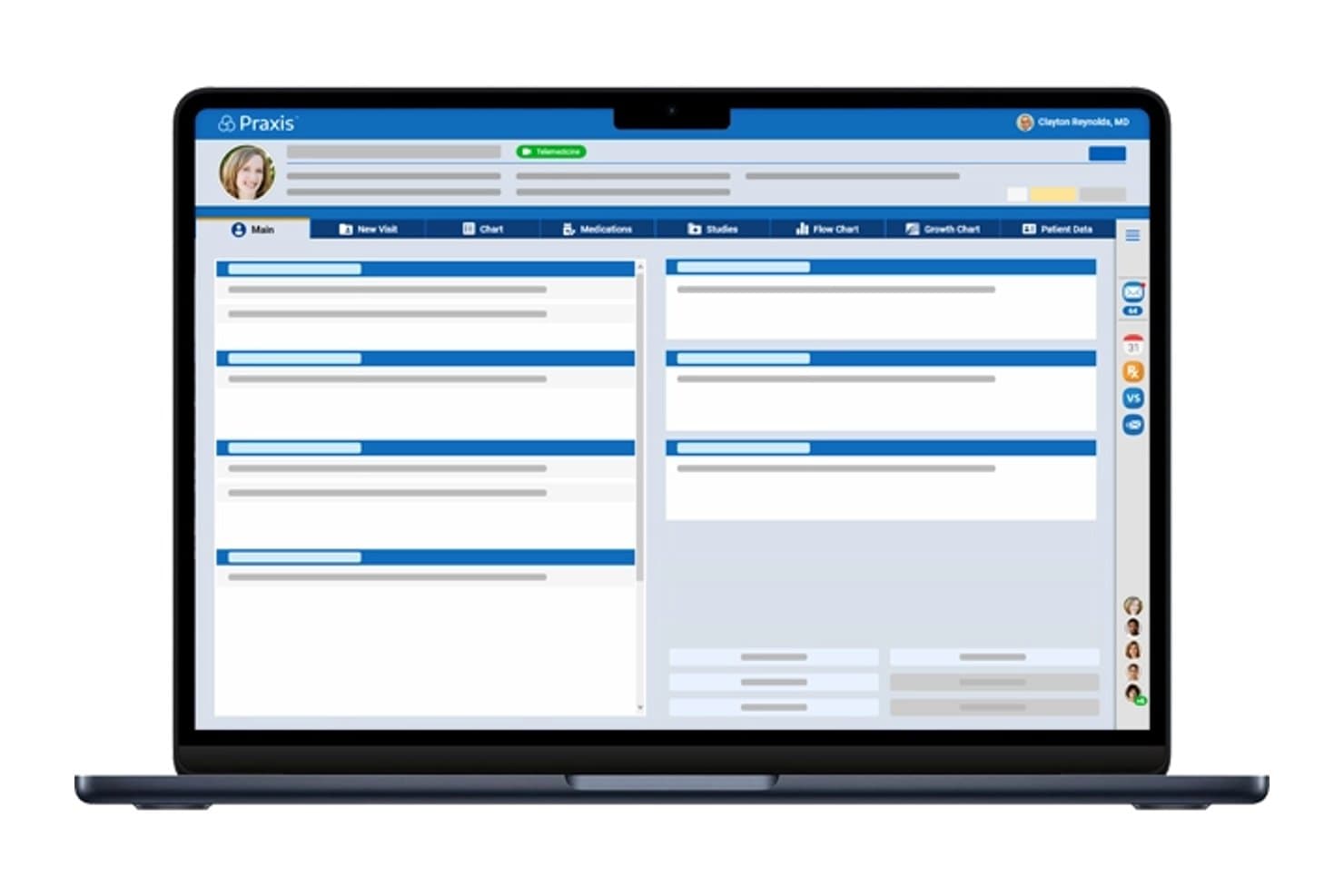
Praxis EMR is EMR software with AI-assisted, template-free charting that learns from clinicians’ prior encounters. For an independent or specialty practice that wants documentation to reflect its own clinical workflows, Praxis is a stronger fit than Practice Fusion because its Concept Processor supports personalized charting without fixed templates.
Praxis EMR Evaluation Summary
5/5
- Pricing upon request
- Free demo available
Why Trust Our Software Recommendations
6,700+
Reviews
20
Industry experts
16+
Evaluation factors
14
Years
Our team has been testing and reviewing software since 2012. As medical practice leaders ourselves, we know how difficult—and important—it is to choose the right software.
For this guide, we evaluated tools using hands-on testing and independent research, scoring tools using our selection criteria.
Our reviews reflect our human editorial judgment, not a sales pitch.
Praxis EMR Overview
Praxis EMR is my choice for independent and specialty practices that want charting shaped around clinicians’ own workflows. Its template-free Concept Processor learns from prior encounters, so a gastroenterologist can build notes and reports around their approach rather than fixed forms. Compared with template-led systems, that flexibility comes with a learning curve: setup includes about 20 hours of personalized training per provider. Pricing uses initial and additional provider licenses, plus annual support; lab, health-information-exchange, and other interfaces can add fees. Support includes phone and live chat, while onboarding is structured. I’d compare interface costs and fit before choosing it for a practice with many outside connections.
Pros
- Concept Processing learns your documentation style and reduces repetitive charting.
- Reusable assessments support patient-specific notes without fixed templates.
- Reviewers praise responsive support and personalized implementation training.
Cons
- Reviewers report slow remote connections and delayed patient-record loading.
- Building reusable clinical knowledge requires upfront customization and training.
- Practices seeking bundled practice management may need a separate system.


How We Test & Score Tools
We’ve spent years building, refining, and improving our software testing and scoring system. The rubric is designed to capture the nuances of software selection and what makes a tool effective, focusing on critical aspects of the decision-making process.
Below, you can see exactly how our testing and scoring works across seven criteria. It allows us to provide an unbiased evaluation of the software based on core functionality, standout features, ease of use, onboarding, customer support, integrations, customer reviews, and value for money.
Core Functionality (25% of final scoring)
The starting point of our evaluation is always the core functionality of the tool. Does it have the basic features and functions that a user would expect to see? Are any of those core features locked to higher-tiered pricing plans? At its core, we expect a tool to stand up against the baseline capabilities of its competitors.
Standout Features (25% of final scoring)
Next, we evaluate uncommon standout features that go above and beyond the core functionality typically found in tools of its kind. A high score reflects specialized or unique features that make the product faster, more efficient, or offer additional value to the user.
We also evaluate how easy it is to integrate with other tools typically found in the tech stack to expand the functionality and utility of the software. Tools offering plentiful native integrations, 3rd party connections, and API access to build custom integrations score best.
Ease of Use (10% of final scoring)
We consider how quick and easy it is to execute the tasks defined in the core functionality using the tool. High scoring software is well designed, intuitive to use, offers mobile apps, provides templates, and makes relatively complex tasks seem simple.
Onboarding (10% of final scoring)
We know how important rapid team adoption is for a new platform, so we evaluate how easy it is to learn and use a tool with minimal training. We evaluate how quickly a team member can get set up and start using the tool with no experience. High scoring solutions indicate little or no support is required.
Customer Support (10% of final scoring)
We review how quick and easy it is to get unstuck and find help by phone, live chat, or knowledge base. Tools and companies that provide real-time support score best, while chatbots score worst.
Customer Reviews (10% of final scoring)
Beyond our own testing and evaluation, we consider the net promoter score from current and past customers. We review their likelihood, given the option, to choose the tool again for the core functionality. A high scoring software reflects a high net promoter score from current or past customers.
Value for Money (10% of final scoring)
Lastly, in consideration of all the other criteria, we review the average price of entry level plans against the core features and consider the value of the other evaluation criteria. Software that delivers more, for less, will score higher.
Core Features
Template-Free AI Charting
Praxis EMR’s AI-based Concept Processor learns from clinicians’ previous encounters, documentation patterns, and clinical language to generate notes based on similar cases. Rather than relying on fixed templates, clinicians can modify suggested documentation to reflect each patient’s condition and their specialty-specific approach. The system remembers these changes and applies them to future encounters, reducing repetitive charting.
Electronic Prescribing
Praxis supports electronic prescriptions, refill requests, and electronic prescribing of controlled substances. Prescriptions can be prepared alongside an encounter, keeping medication orders connected to the patient’s clinical documentation.
Appointment Calendar
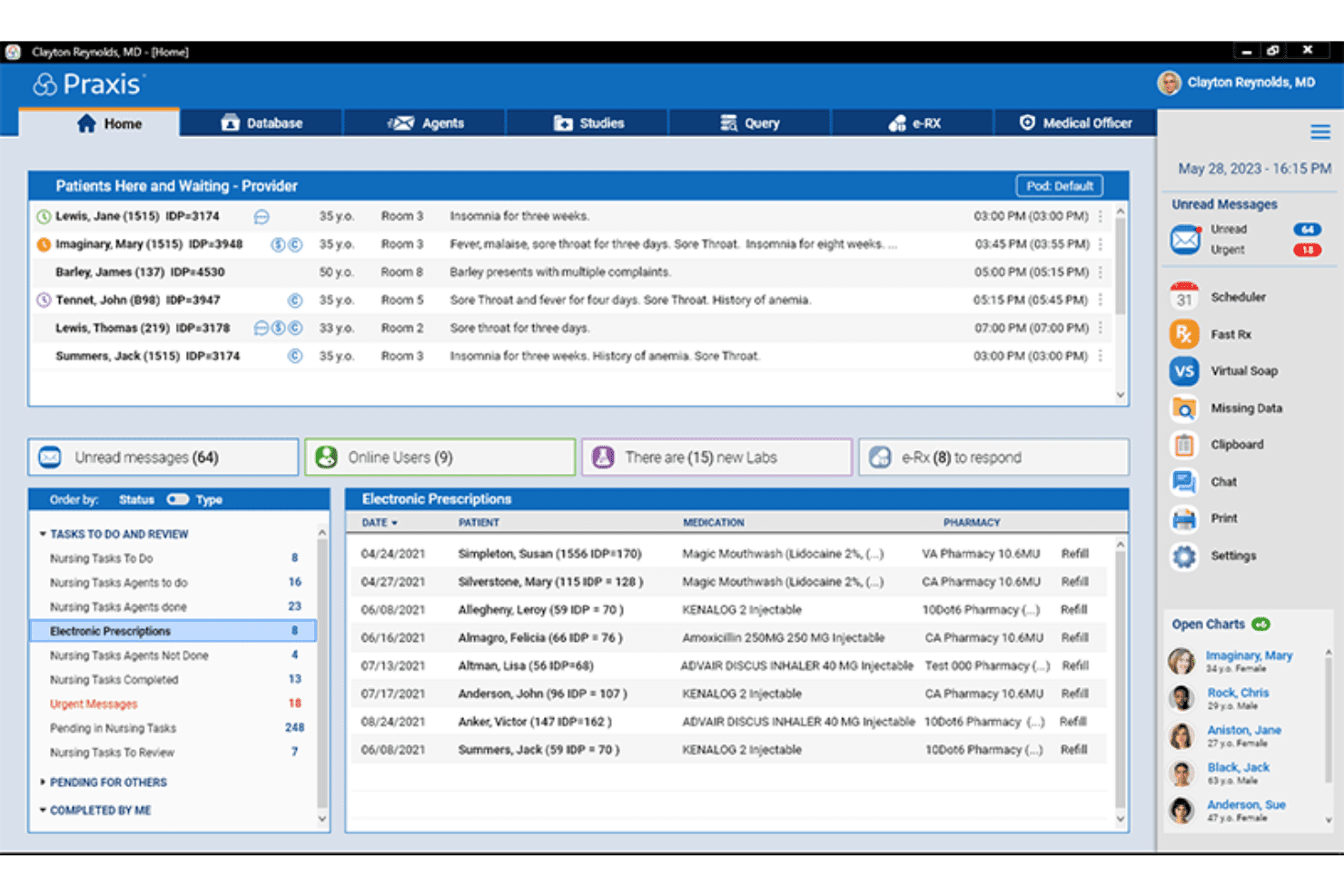
Praxis includes a customizable scheduling calendar for managing patient appointments, provider availability, and follow-up visits. Staff can organize appointment schedules, while patients can request bookings through online self-scheduling. Automated reminders and Praxis Agents coordinate follow-up tasks and patient communications.
Patient Portal and Intake
The portal supports tailored intake forms, secure messaging, online queries, and patient self-scheduling. Praxis uses encounter and patient information to present relevant forms and content, so a patient can complete condition-specific intake before a visit.
History Notes
Praxis stores patient histories and previous encounter notes, allowing clinicians to review past diagnoses, symptoms, treatments, and clinical findings. Its Concept Processor recognizes patterns from earlier documentation and applies relevant information to similar encounters, reducing repetitive charting.
Clinical Flowcharts
Praxis creates condition-specific flowcharts that track laboratory results, vital signs, medication dosages, and other clinical parameters over time. Its Concept Processor recalls previously created flowcharts for similar cases and populates them with relevant patient data, allowing clinicians to monitor treatment progress and changes.
Ease of Use
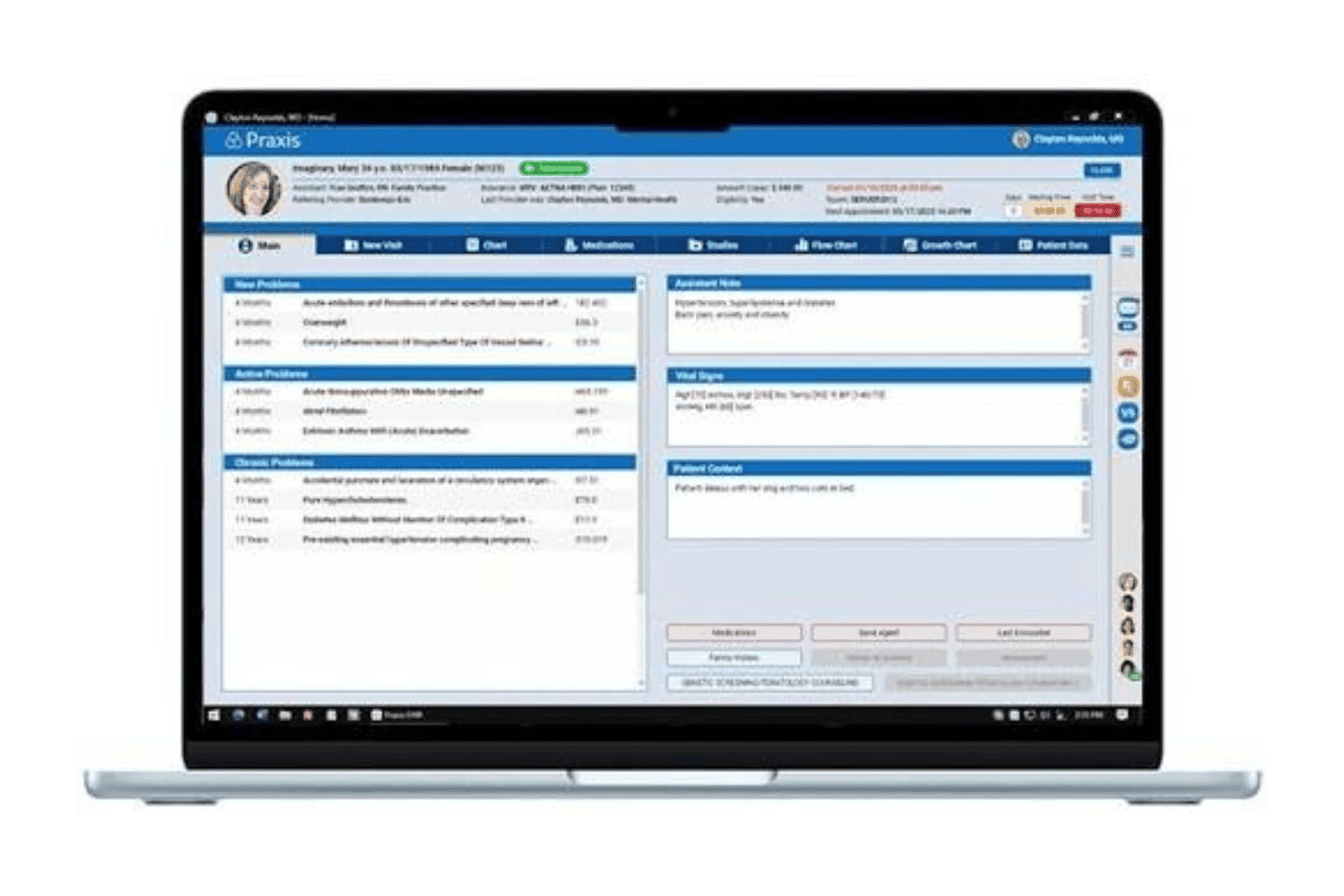
Praxis is usable once configured, but it isn’t a plug-and-play EMR. Its Concept Processor learns from prior encounters and supports reusable, patient-specific notes, giving clinicians control over documentation without fixed templates. That flexibility takes setup: each provider receives about 20 hours of personalized training. Reviews praise responsive support, though some report slow remote connections and delayed patient-record loading. I’d expect a learning curve, with usability depending on how much your practice values customized charting.
Integrations
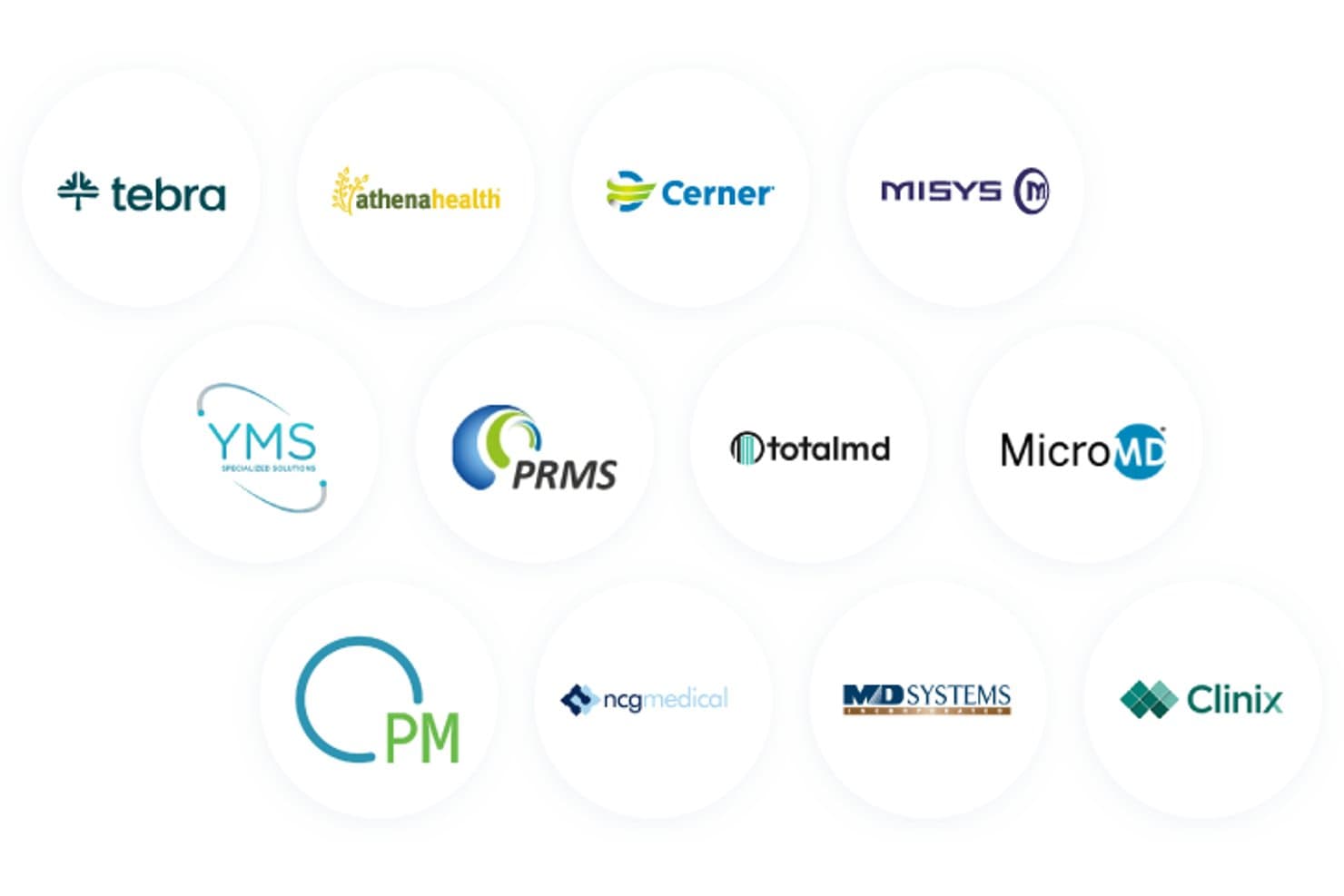
Praxis EMR lists billing partners, including Tebra, athenahealth, Cerner (now part of Oracle Health), Misys Healthcare Systems (merged with Allscripts), YMS, Physician Revenue Management Services (PRMS), TotalMD, MicroMD, M/D Systems Inc., and Clinix Medical Information Services. Praxis also supports HL7 interfaces, API access, and data exchange through EMR Direct.
Praxis EMR Specs
- API: Yes
- Appointment Scheduling: Yes
- Athlete Management: No
- Audit Management: No
- Calendar Management: Yes
- Compliance Tracking: Yes
- Customer Management: No
- Dashboard: No
- Data Export: Yes
- Data Import: Yes
- Data Visualization: Yes
- Electronic Prescribing: Yes
- External Integrations: Yes
- File Sharing: Yes
- File Transfer: Yes
- Health Management: Yes
- HIPAA Compliance: Yes
- Inventory Tracking: No
- Multi-User: Yes
- Notifications: Yes
- Organization Management: Yes
- Patient Management: Yes
- Project Management: No
- Regulatory Alerts: No
- Risk Assessment: No
- Scheduling: Yes
- Supplier Management: No


