

Crystal Practice Management Review: Pros, Cons & Pricing
I look past the feature list to weigh Crystal Practice Management’s trade-offs and pricing—so you can judge whether it fits your practice, not just its workflow.

We review tools independently, and commissions help fund our testing. See our transparency policy, our methodology, or suggest a tool.
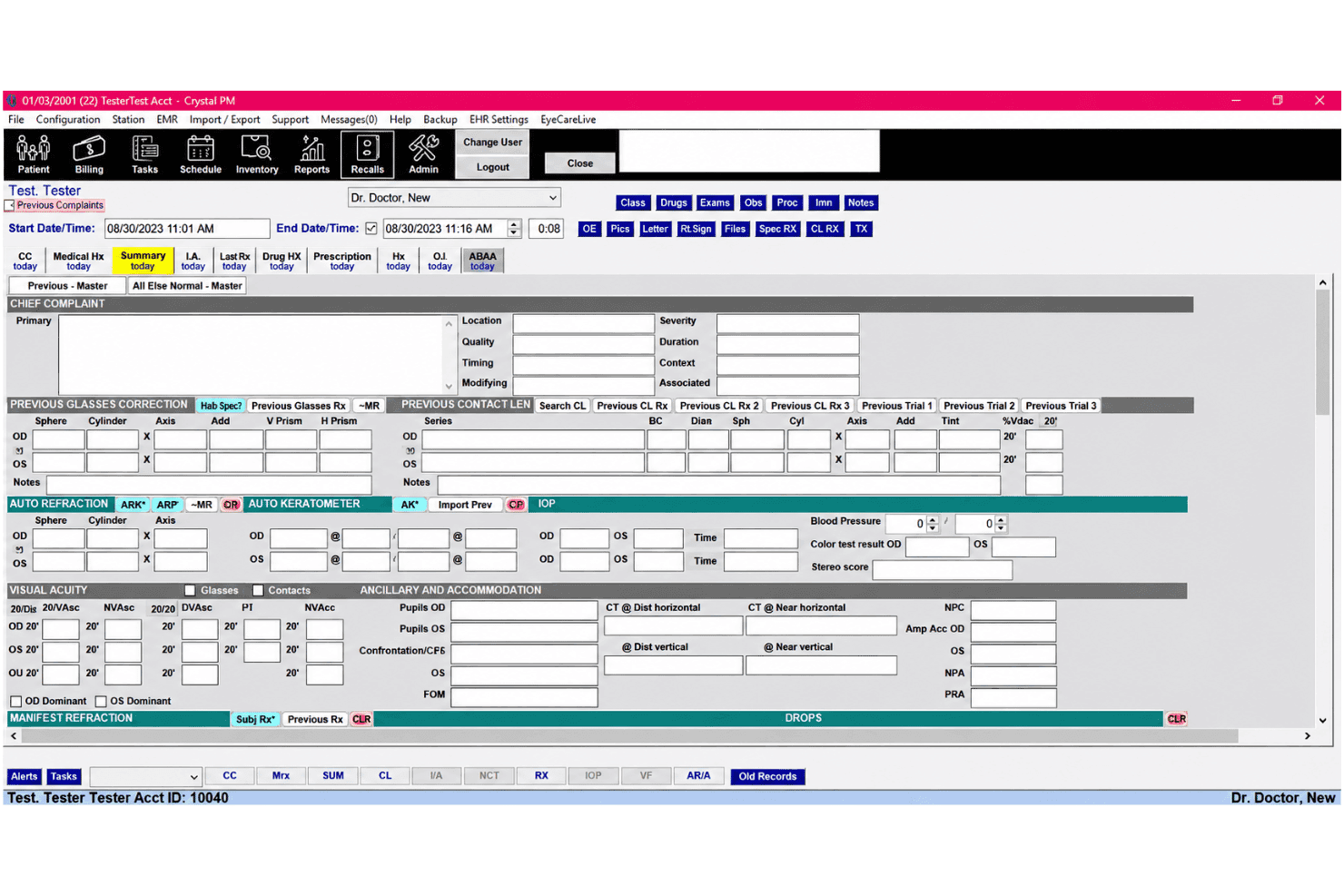
Crystal Practice Management is optometry-focused EMR software for independent eye-care practices that need clinical records and practice operations in one system. If you want a choice between cloud and in-office hosting, its two deployment options and 300+ customizable optometry templates make it a stronger fit than cloud-only RevolutionEHR.
Crystal Practice Management Evaluation Summary
4.3/5
- Pricing upon request
- Free demo available
Why Trust Our Software Recommendations
6,700+
Reviews
20
Industry experts
16+
Evaluation factors
14
Years
Our team has been testing and reviewing software since 2012. As medical practice leaders ourselves, we know how difficult—and important—it is to choose the right software.
For this guide, we evaluated tools using hands-on testing and independent research, scoring tools using our selection criteria.
Our reviews reflect our human editorial judgment, not a sales pitch.
Crystal Practice Management Overview
I’d recommend Crystal Practice Management for independent optometry practices seeking EHR and office management features in one platform. Its 300+ customizable clinical templates, insurance claims processing, optical inventory tracking, and appointment scheduling address eye-care workflows. The choice between cloud and in-office hosting adds flexibility, while personalized onboarding, data migration services, and ongoing technical support support implementation.
Crystal PM also advertises 55+ integration partners, although equipment compatibility should be confirmed. Pricing depends on the subscription tier and hosting option, and its optometry-specific features may be less relevant to other medical specialties.
Pros
- Customizable optometry templates support detailed, practice-specific clinical charting.
- Scheduling, claims, payments, and optical inventory share one system.
- Users often praise responsive support and hands-on template assistance.
Cons
- Users report slow server performance and occasional crashes.
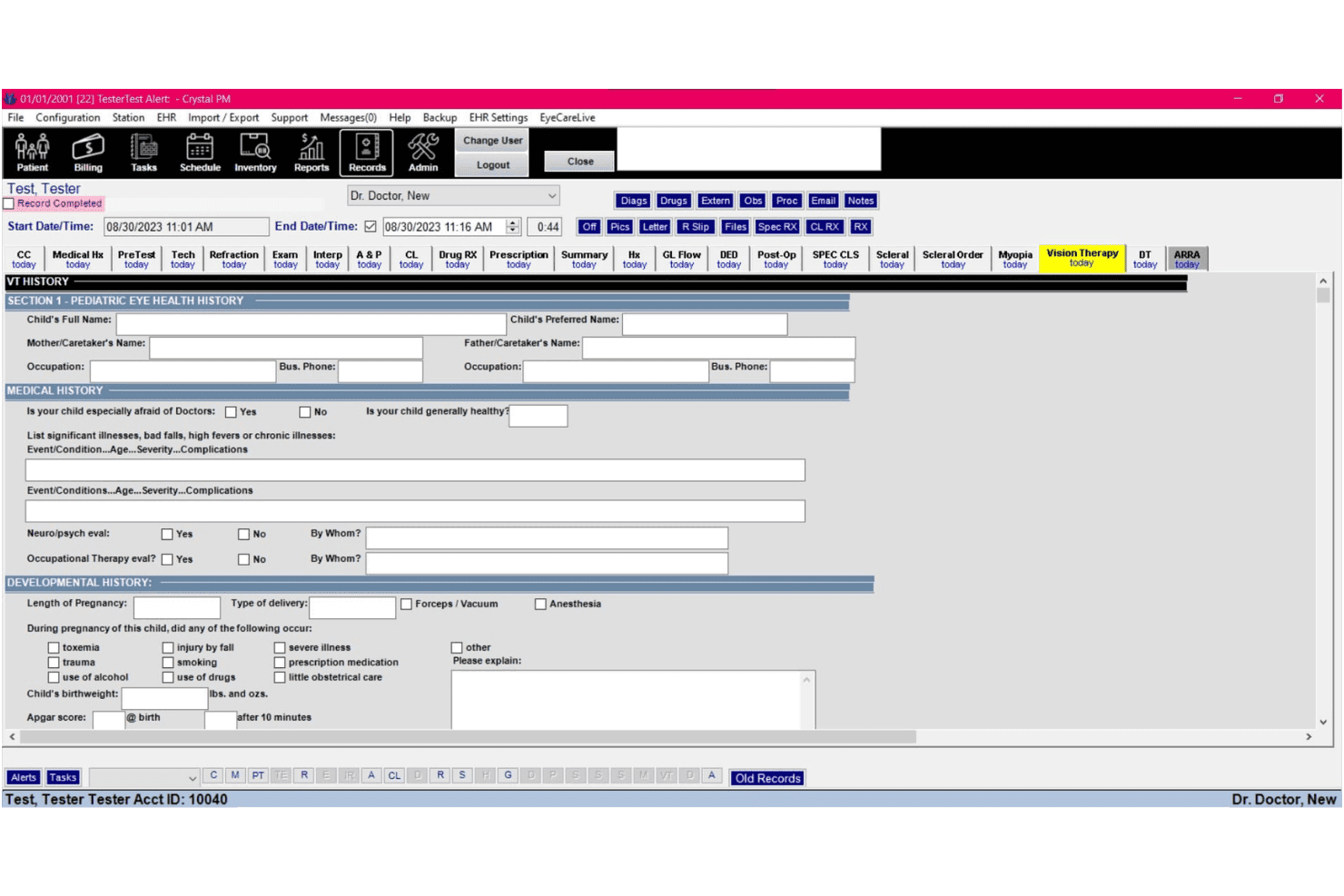
- The dated interface and Mac compatibility issues can frustrate teams.
- Billing statements and patient communication tools draw user criticism.


How We Test & Score Tools
We’ve spent years building, refining, and improving our software testing and scoring system. The rubric is designed to capture the nuances of software selection and what makes a tool effective, focusing on critical aspects of the decision-making process.
Below, you can see exactly how our testing and scoring works across seven criteria. It allows us to provide an unbiased evaluation of the software based on core functionality, standout features, ease of use, onboarding, customer support, integrations, customer reviews, and value for money.
Core Functionality (25% of final scoring)
The starting point of our evaluation is always the core functionality of the tool. Does it have the basic features and functions that a user would expect to see? Are any of those core features locked to higher-tiered pricing plans? At its core, we expect a tool to stand up against the baseline capabilities of its competitors.
Standout Features (25% of final scoring)
Next, we evaluate uncommon standout features that go above and beyond the core functionality typically found in tools of its kind. A high score reflects specialized or unique features that make the product faster, more efficient, or offer additional value to the user.
We also evaluate how easy it is to integrate with other tools typically found in the tech stack to expand the functionality and utility of the software. Tools offering plentiful native integrations, 3rd party connections, and API access to build custom integrations score best.
Ease of Use (10% of final scoring)
We consider how quick and easy it is to execute the tasks defined in the core functionality using the tool. High scoring software is well designed, intuitive to use, offers mobile apps, provides templates, and makes relatively complex tasks seem simple.
Onboarding (10% of final scoring)
We know how important rapid team adoption is for a new platform, so we evaluate how easy it is to learn and use a tool with minimal training. We evaluate how quickly a team member can get set up and start using the tool with no experience. High scoring solutions indicate little or no support is required.
Customer Support (10% of final scoring)
We review how quick and easy it is to get unstuck and find help by phone, live chat, or knowledge base. Tools and companies that provide real-time support score best, while chatbots score worst.
Customer Reviews (10% of final scoring)
Beyond our own testing and evaluation, we consider the net promoter score from current and past customers. We review their likelihood, given the option, to choose the tool again for the core functionality. A high scoring software reflects a high net promoter score from current or past customers.
Value for Money (10% of final scoring)
Lastly, in consideration of all the other criteria, we review the average price of entry level plans against the core features and consider the value of the other evaluation criteria. Software that delivers more, for less, will score higher.
Core Features
Customizable Optometry Records
Browse and edit 300+ optometrist-created templates, or build records around your exam workflow. Integrated ICD-10 codes and customizable fields help your team document eye-care visits in a format that fits the practice.
Appointment Scheduling
Use drag-and-drop scheduling, online booking, waiting lists, and room assignments to manage appointments. Automatic rescheduling for missed visits helps staff keep the schedule current.
Electronic Claims And Billing
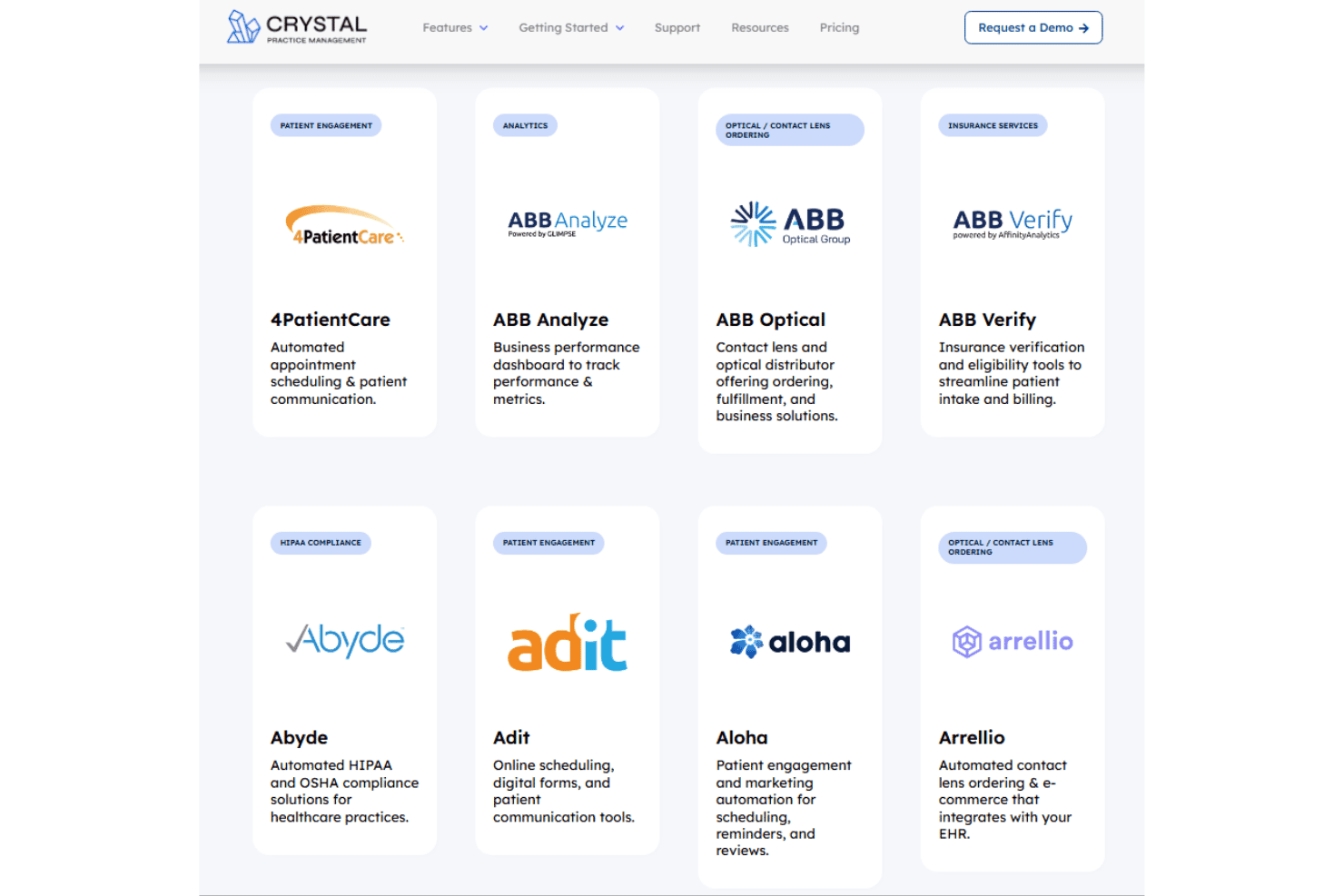
Electronic claim filing and routing slips track diagnoses, procedure codes, product orders, and recalls from check-in through checkout. That visit-level detail supports invoice creation and gives staff a clearer view of billing tasks.
Patient Portal And Communication
The patient portal gives patients access to records, prescriptions, invoices, and bill payment, with online forms and messaging available. Two-way texting and product-pickup notifications give staff additional ways to communicate about visits and orders.
Payments And Patient Ledgers
In-app payments automatically post transactions to patient ledgers and invoices. This links payment activity to the patient account, helping staff review balances without entering the transaction twice.
Optical Inventory
Track frames, contact lenses, and other eye-care items, and link sales to patient records. Custom optical packages and sales reporting help practices monitor products alongside clinical care.
Ease of Use
I find Crystal Practice Management fairly approachable once configured, particularly for optometry practices managing clinical records, scheduling, billing, and optical inventory in one system. Its customizable templates allow practices to adjust documentation fields and examination workflows according to their needs. While initial configuration and staff training may take time, personalized onboarding and technical support provide guidance during setup. I’d expect usability to improve as staff become familiar with the platform and adapt its features to their daily operations.
Integrations
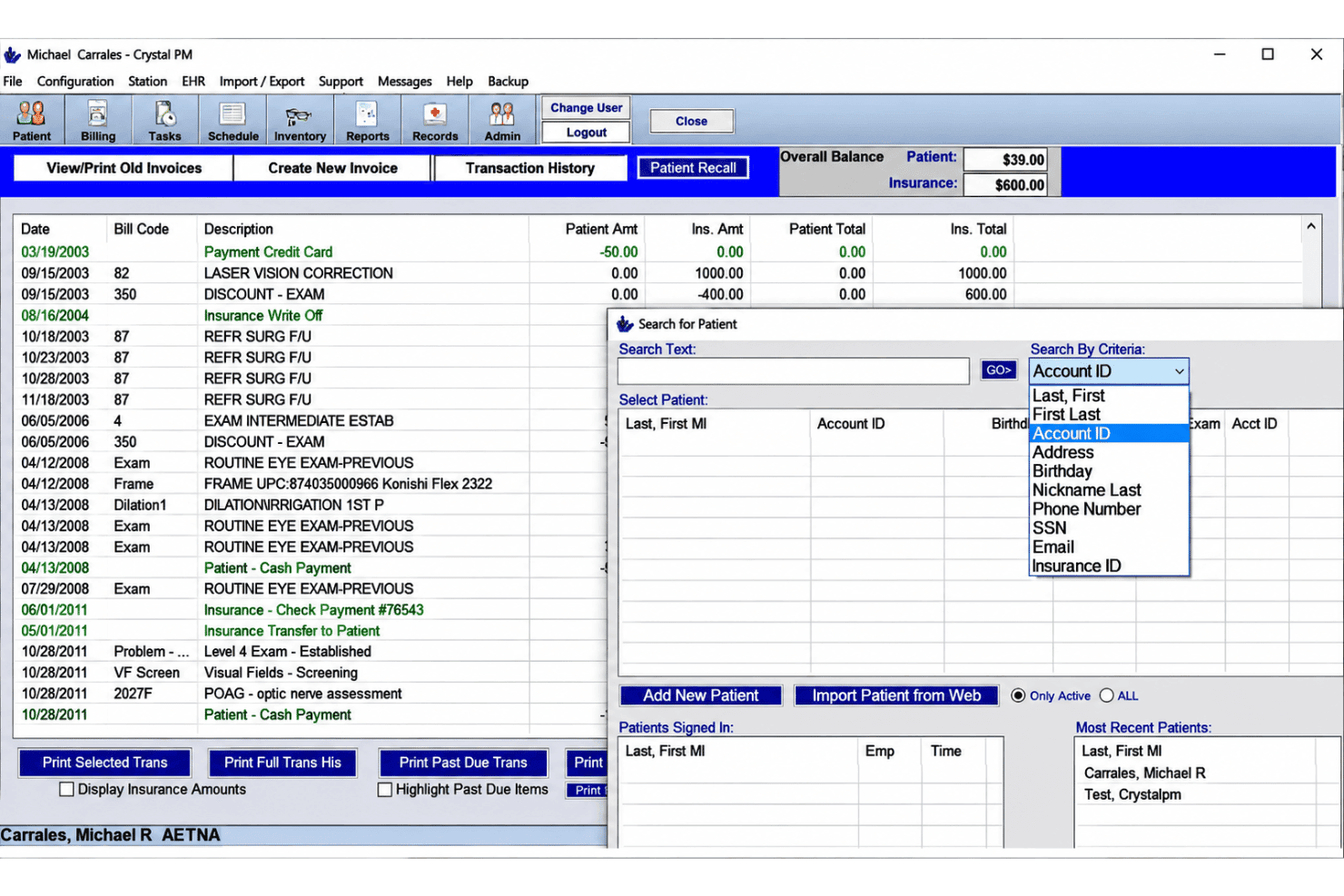
Crystal Practice Management connects with third-party partners, including 4PatientCare, ABB Analyze, ABB Optical, ABB Verify, Abyde, Adit, Aloha, Arrellio, Apex EDI, CLX, Demandforce, Optify, Solution Reach, Weave, and ZEISS. It also supports other tools for patient engagement, optical ordering, insurance verification, analytics, billing, compliance, and practice operations. Crystal Practice Management offers API access for authorized third-party applications to retrieve patient information and exchange clinical data.
Crystal Practice Management Specs
- API: Yes
- Appointment Scheduling: Yes
- Athlete Management: No
- Audit Management: Yes
- Calendar Management: Yes
- Compliance Tracking: No
- Customer Management: Yes
- Dashboard: No
- Data Export: Yes
- Data Import: Yes
- Data Visualization: No
- Electronic Prescribing: Yes
- External Integrations: Yes
- File Sharing: Yes
- File Transfer: Yes
- Health Management: Yes
- HIPAA Compliance: No
- Inventory Tracking: Yes
- Multi-User: Yes
- Notifications: Yes
- Organization Management: Yes
- Patient Management: Yes
- Project Management: No
- Regulatory Alerts: No
- Risk Assessment: No
- Scheduling: Yes
- Supplier Management: No


