
AdvancedMD-beoordeling: voor- en nadelen, functies en prijzen
AdvancedMD brengt het beheer van medische praktijken samen in één platform, van planning en facturering tot workflows voor elektronische patiëntendossiers, telezorg, patiëntenbetrokkenheid en zorganalyses.

We review tools independently, and commissions help fund our testing. See our transparency policy, our methodology, or suggest a tool.
AdvancedMD is a cloud-based medical practice management software for independent and multi-specialty practices that need scheduling, billing, EHR, and patient engagement in one platform. I'd recommend if your practice has outgrown other systems, like Tebra, but isn't ready for athenahealth's enterprise model. AdvancedMD gives you a more complete, integrated suite with the flexibility that mid-size practices actually need.
AdvancedMD Evaluation Summary
3.6/5
- Pricing upon request
- Free demo available
Waarom u onze softwareaanbevelingen kunt vertrouwen
6,700+
Reviews
20
Industry experts
16+
Evaluation factors
14
Years
Ons team test en beoordeelt software sinds 2012. Als leiders van medische praktijken weten we zelf hoe moeilijk — en belangrijk — het is om de juiste software te kiezen.
Voor deze gids hebben we tools geëvalueerd met behulp van praktijktests en onafhankelijk onderzoek, waarbij we tools beoordeelden aan de hand van onze selectiecriteria.
Onze reviews weerspiegelen ons menselijke redactionele oordeel, geen verkooppraatje.
AdvancedMD Overview
When judging AdvancedMD against others in the market, its flexible workflow customization, all-in-one dashboard, and broad integration options give it an edge—especially for multi-specialty or growing practices. However, onboarding can take time, and the interface may feel dense for smaller offices.
In my view, teams seeking advanced features like telemedicine, e-prescribing, and revenue management will find AdvancedMD worth the investment, even though its pricing and steep learning curve mean it’s not the simplest option for new, smaller clinics.
Pros
- Offers robust appointment scheduling with telemedicine built in.
- Includes granular reporting and customizable billing workflows.
- Supports extensive e-prescribing and patient portal features.
Cons
- Reported slow response times from customer support.
- System updates can cause unexpected glitches and downtime.
- Complex pricing structure with add-on costs for key features.
Is AdvancedMD Right For Your Needs?
Who Would be a Good Fit for AdvancedMD?
AdvancedMD suits organizations ready to scale, manage complexity, and centralize clinical and admin tasks. Multi-provider practices, specialty clinics, and large medical groups get the most value from features like telemedicine, granular billing controls, and analytics.
Teams needing robust customization or advanced reporting tools will find it especially helpful for tackling diverse workflows and patient needs.
- Multi-Specialty ClinicsAdvancedMD supports specialty EHR templates and customized workflows, making it easy to tailor records and processes for different specialties within one platform.
- Growing Private PracticesIts flexible modular licensing and broad feature set help expanding practices add capabilities as new providers, locations, or services come onboard.
- Revenue Cycle TeamsBilling automation, centralized claims tracking, and revenue analytics let dedicated billing teams manage high claim volume with better transparency.
- Behavioral Health GroupsCustom templates, telepsychiatry support, and charting tools create a tailored experience for mental health providers managing diverse patient needs.
- Surgical CentersAdvancedMD handles complex scheduling, inventory tracking, and procedure documentation needed for high-volume surgical environments.
- IT-Driven OrganizationsThe open API, advanced user permissions, and integration potential work best for organizations that have in-house IT or admin teams.
Who Would be a Bad Fit for AdvancedMD?
AdvancedMD might not be ideal for large hospital systems or healthcare networks with complex needs. If your team requires extensive customization or integration with numerous third-party systems, you may find the software’s capabilities limiting. Additionally, practices without dedicated IT support might struggle with the initial setup and learning curve. AdvancedMD’s feature-rich platform could be overwhelming for users seeking a more straightforward solution.
- Solo ProvidersThe system’s layered workflows and training requirements are often more than solo practitioners need for day-to-day operations.
- Non-Clinical Wellness CentersAdvancedMD’s clinical and billing tools are overkill for spas, nutritionists, or alternative health providers with basic scheduling needs.
- Part-Time PracticesSmaller operations may struggle to justify the cost and administrative overhead when full-time resources aren’t available.
- Rural Clinics With Low InternetCloud-based functionalities and telemedicine tools don’t serve clinics with spotty or unreliable internet connections.
- Small Pediatric PracticesBasic pediatric clinics without subspecialties will likely never use the platform’s more advanced features or reporting capabilities.
- Short-Term Pop-Up ClinicsTemporary clinics don’t benefit from intensive implementation, credentialing workflows, or rich customization options.
How We Test & Score Tools
We’ve spent years building, refining, and improving our software testing and scoring system. The rubric is designed to capture the nuances of software selection and what makes a tool effective, focusing on critical aspects of the decision-making process.
Below, you can see exactly how our testing and scoring works across seven criteria. It allows us to provide an unbiased evaluation of the software based on core functionality, standout features, ease of use, onboarding, customer support, integrations, customer reviews, and value for money.
Core Functionality (25% of final scoring)
The starting point of our evaluation is always the core functionality of the tool. Does it have the basic features and functions that a user would expect to see? Are any of those core features locked to higher-tiered pricing plans? At its core, we expect a tool to stand up against the baseline capabilities of its competitors.
Standout Features (25% of final scoring)
Next, we evaluate uncommon standout features that go above and beyond the core functionality typically found in tools of its kind. A high score reflects specialized or unique features that make the product faster, more efficient, or offer additional value to the user.
We also evaluate how easy it is to integrate with other tools typically found in the tech stack to expand the functionality and utility of the software. Tools offering plentiful native integrations, 3rd party connections, and API access to build custom integrations score best.
Ease of Use (10% of final scoring)
We consider how quick and easy it is to execute the tasks defined in the core functionality using the tool. High scoring software is well designed, intuitive to use, offers mobile apps, provides templates, and makes relatively complex tasks seem simple.
Onboarding (10% of final scoring)
We know how important rapid team adoption is for a new platform, so we evaluate how easy it is to learn and use a tool with minimal training. We evaluate how quickly a team member can get set up and start using the tool with no experience. High scoring solutions indicate little or no support is required.
Customer Support (10% of final scoring)
We review how quick and easy it is to get unstuck and find help by phone, live chat, or knowledge base. Tools and companies that provide real-time support score best, while chatbots score worst.
Customer Reviews (10% of final scoring)
Beyond our own testing and evaluation, we consider the net promoter score from current and past customers. We review their likelihood, given the option, to choose the tool again for the core functionality. A high scoring software reflects a high net promoter score from current or past customers.
Value for Money (10% of final scoring)
Lastly, in consideration of all the other criteria, we review the average price of entry level plans against the core features and consider the value of the other evaluation criteria. Software that delivers more, for less, will score higher.
Core Features
Appointment Scheduling
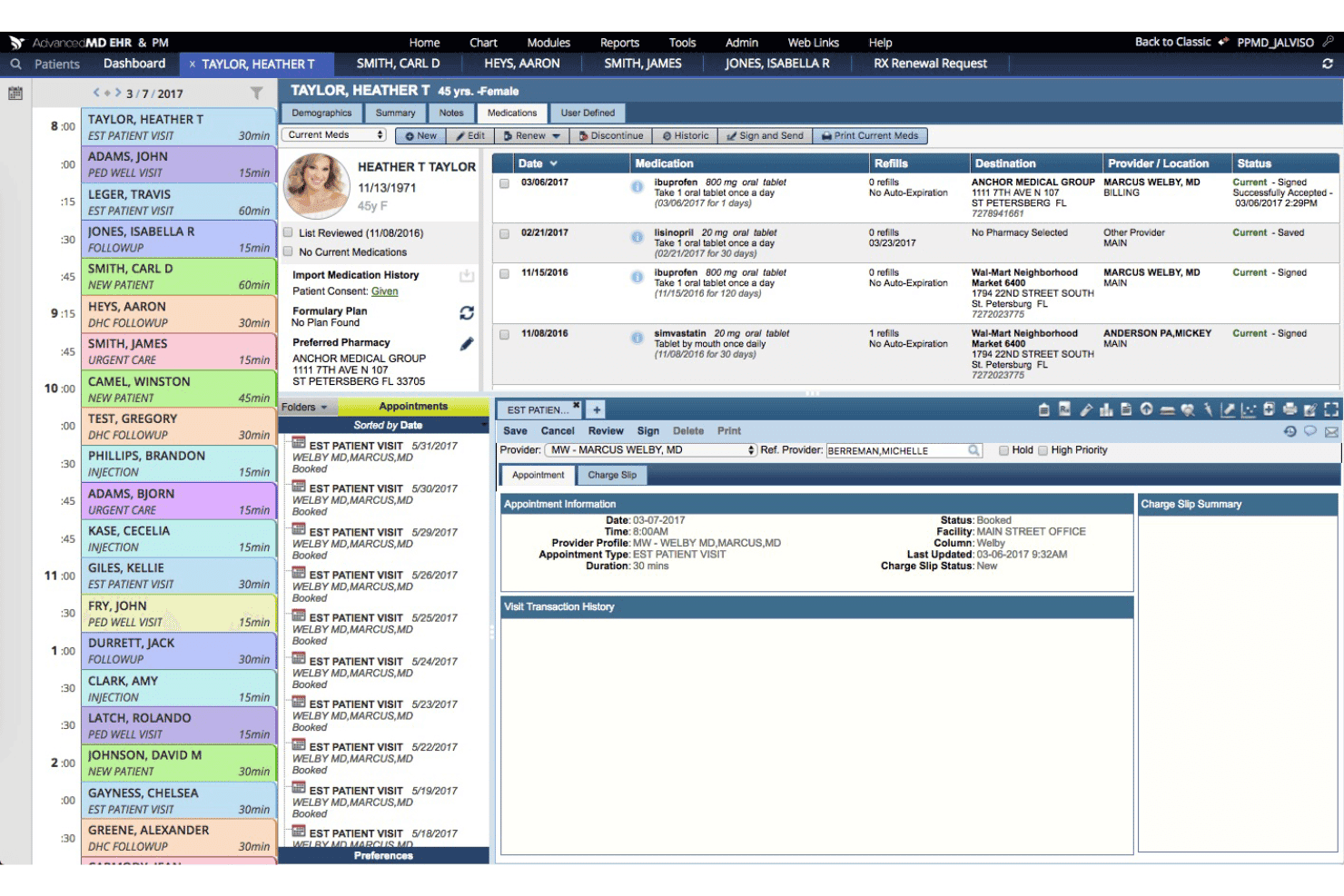
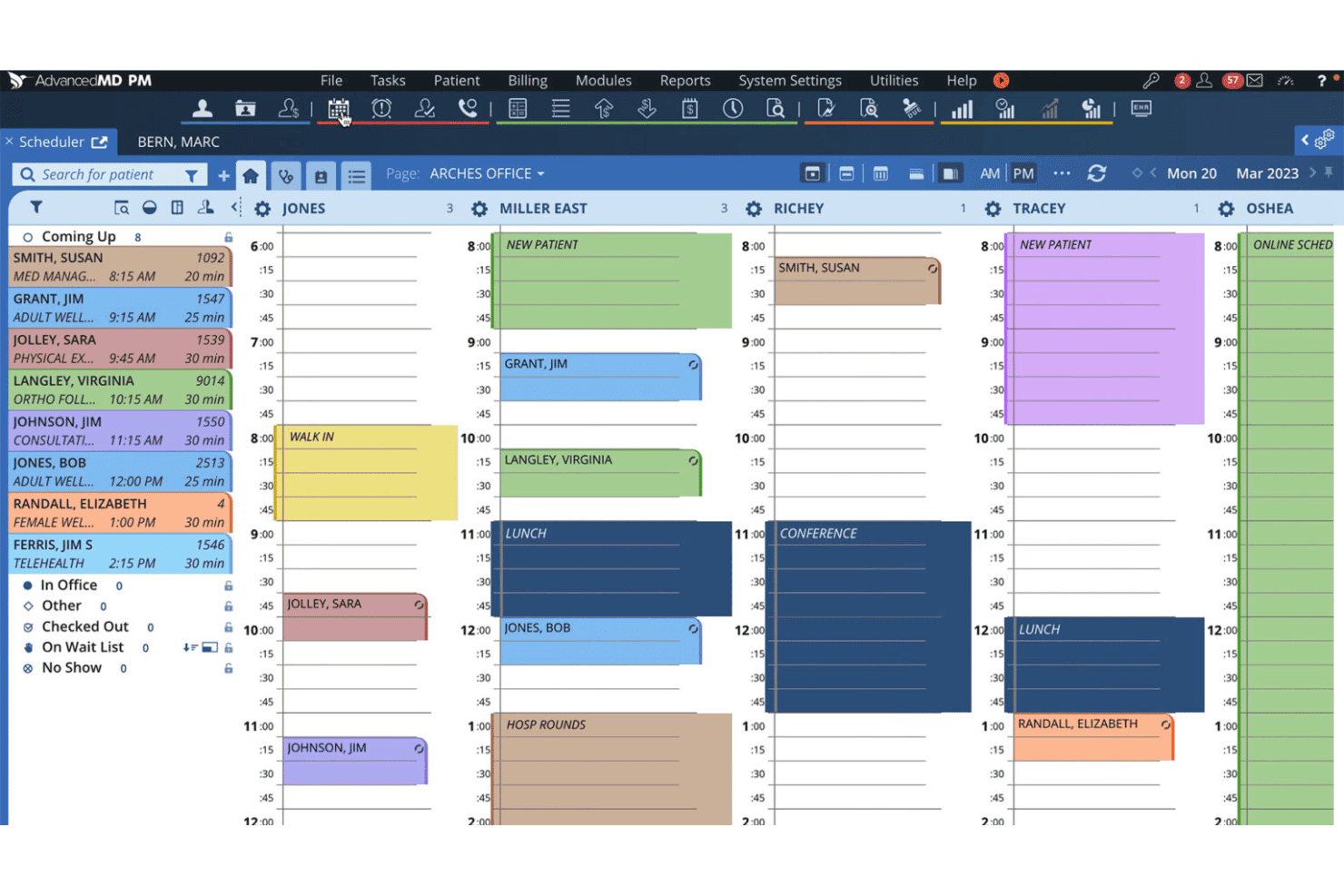
AdvancedMD lets you manage provider calendars, recurring appointments, and resource allocation in one place. You can send automated reminders via text or email to reduce no-shows.
Electronic Health Records (EHR)
Keep comprehensive patient records, chart notes, and diagnostic data organized and accessible. The customizable chart templates help different specialists save time documenting visits.
Medical Billing and Claims Management
Automate insurance eligibility checks, claims submissions, and payment processing through a cloud-based billing system. Track denials and resubmissions within a centralized billing dashboard.
Patient Portal
Provide patients secure access to visit summaries, lab results, and messaging with staff. Patients can request appointments, pay bills, and upload documents directly through the portal.
Telemedicine
Offer virtual appointments with video calls integrated into your scheduling workflow. Video visits launch from the same dashboard as in-person visits to keep processes unified.
Reporting and Analytics
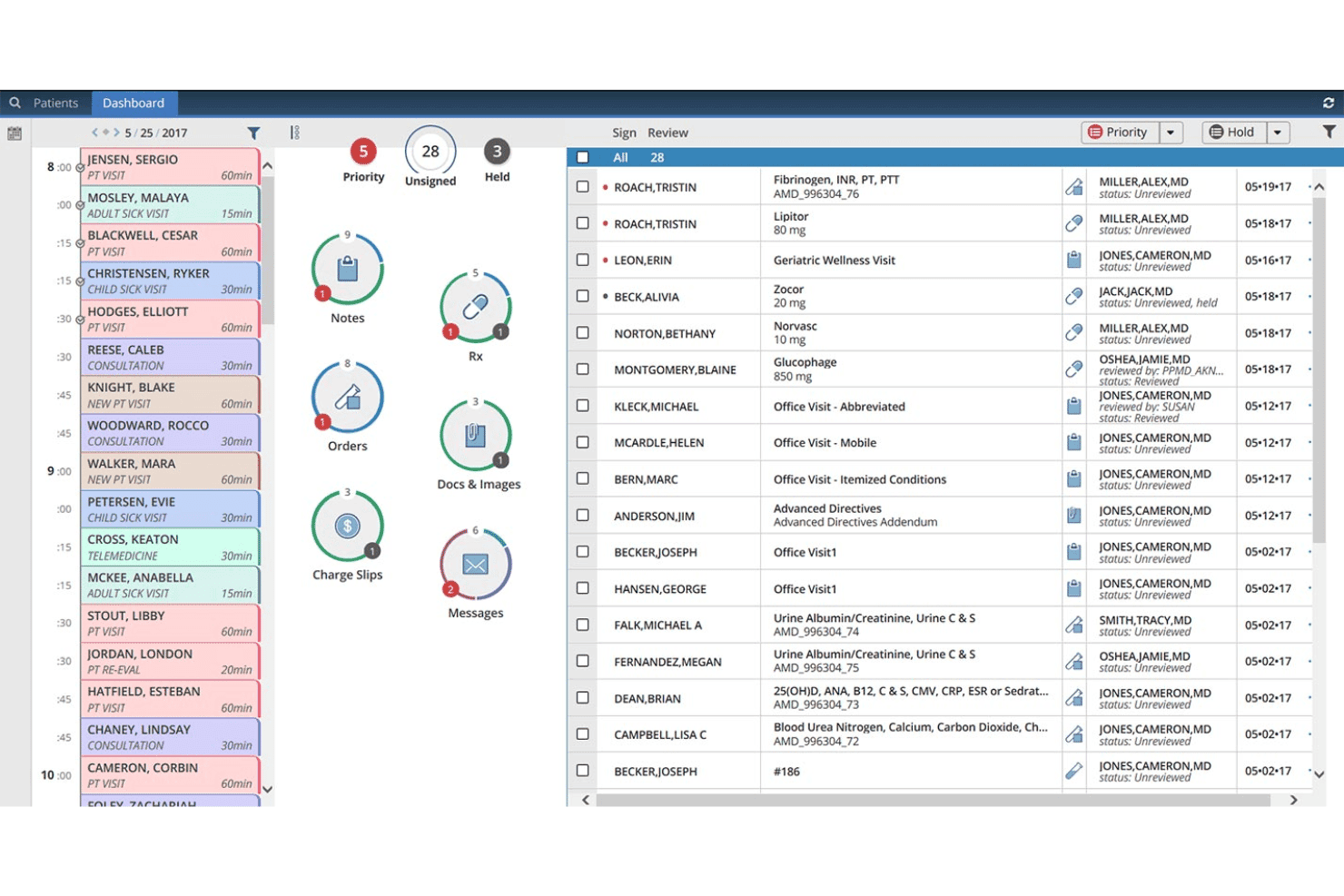
Access customizable reports on revenue cycle, scheduling, and clinical workflow metrics. Use dashboards to spot financial or operational trends and support data-driven decisions.
Ease of Use
AdvancedMD packs a wide feature set, but its usability can challenge smaller teams or new users. I’ve seen user reviews describe its interface as dense, especially as you add more modules like billing or telemedicine.
However, workflow customizations, visual dashboards, and centralized patient records make the daily experience smooth for practices willing to invest in setup and training.
Integrations
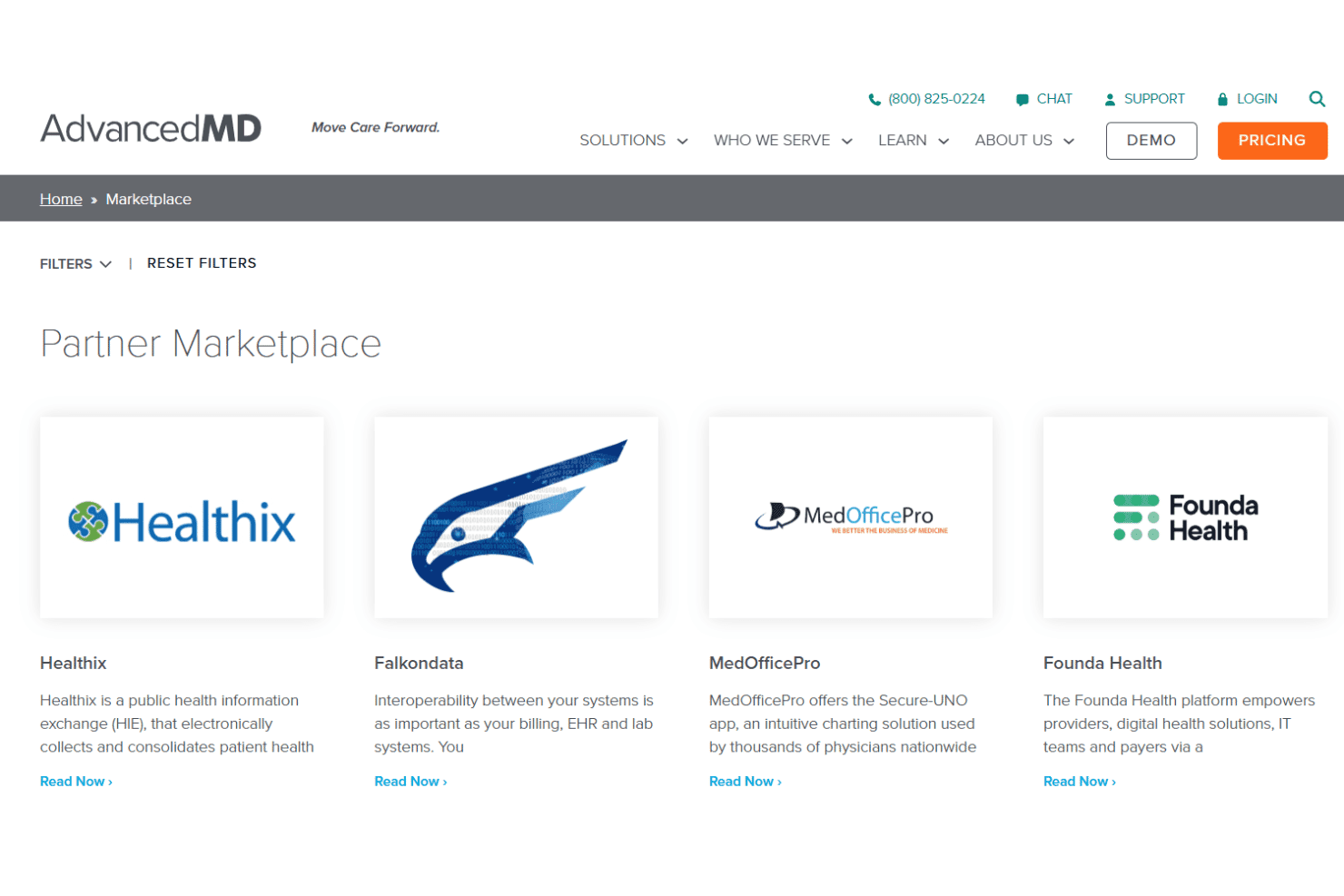
AdvancedMD integrates with LabCorp, Quest Diagnostics, Surescripts, Updox, DrFirst, Medline, Availity, TriZetto, Waystar, and InstaMed, among others.
AdvancedMD also offers an open API and connects with select third-party integration platforms.
AdvancedMD Specs
- 2-Factor Authentication: Yes
- API: Yes
- Appointment Scheduling: Yes
- Approval Workflows: No
- Audit Management: No
- Audit Trail: No
- Batch Permissions & Access: No
- Billing/Invoicing: Yes
- Compliance Tracking: No
- Customer Management: No
- Data Export: Yes
- Data Import: Yes
- Document Management: No
- Electronic Prescribing: Yes
- External Integrations: Yes
- HIPAA Compliance: Yes
- Incident Management: No
- Multi-User: Yes
- Notifications: Yes
- Patient Management: Yes
- Regulatory Alerts: No
- Report & Compliance: Yes
- Risk Assessment: No
- Self-service Portal: Yes
- Task Scheduling/Tracking: No
- Workflow Management: No


