
Recensione Pabau: Vantaggi, Svantaggi, Funzionalità e Prezzi
Pabau unisce la gestione della clinica in un'unica piattaforma: dalla programmazione e fatturazione alla comunicazione con i pazienti, automazione del marketing e gestione quotidiana del flusso di lavoro della clinica.

Recensiamo gli strumenti in modo indipendente e le commissioni ci aiutano a finanziare i nostri test. Consulta la nostra politica sulla trasparenza, la nostra metodologia o suggerisci uno strumento.
Pabau is a clinic management software built for aesthetic clinics, med spas, and similar practices that need to manage appointments, patient records, consent forms, and invoicing in one system. I'd consider it over something like Cliniko if your clinic relies heavily on treatment notes, before/after photo documentation, and client marketing tools—features Pabau handles natively rather than through third-party add-ons.
Pabau Evaluation Summary
4.7/5
- From $65/user/month (billed annually)
- Free demo available
Perché fidarsi dei nostri consigli sui software
6,700+
Reviews
20
Industry experts
16+
Evaluation factors
14
Years
Il nostro team testa e recensisce software dal 2012. In quanto leader di studi medici noi stessi, sappiamo quanto sia difficile — e importante — scegliere il software giusto.
Per questa guida, abbiamo valutato gli strumenti attraverso test pratici e ricerche indipendenti, assegnando un punteggio agli strumenti in base ai nostri criteri di selezione.
Le nostre recensioni riflettono il nostro giudizio editoriale umano, non un discorso di vendita.
Pabau Overview
When judging clinic management software, I think Pabau stands out for its customizable scheduling, strong reporting, and easy patient communications. Its interface is more intuitive than most, and onboarding feels direct. Compared to peers, Pabau’s all-in-one approach and responsive support give it an edge, though integrations and pricing flexibility could be stronger.
I’d suggest it’s best for clinics focused on streamlining admin work who want everything—from digital forms to marketing tools, in a single system.
Pros
- Appointment reminders reduce no-shows for busy clinics.
- Digital consent forms simplify compliance and audits.
- Built-in marketing tools help attract and retain patients.
Cons
- Support wait times can be unpredictable during peak hours.
- Limited options for custom reporting configurations.
- Mobile app lacks key scheduling and chart features.
Is Pabau Right For Your Needs?
Who Would be a Good Fit for Pabau?
Pabau works best for clinics and practices that want one place for patient records, scheduling, charting, and marketing. I think it gives the most value to teams dealing with regular client flow, diverse services, or compliance demands. Whether supporting a single provider or managing multiple practitioners, Pabau’s all-in-one tools keep clinical, administrative, and outreach operations connected.
- Med SpasFrequent, appointment-based services and before/after photo tools align well with Pabau’s visual charting and digital consent workflows.
- Multi-Provider ClinicsCoordination of multiple practitioners, rosters, and clinical histories is simple with Pabau’s user permissions and centralized records.
- Allied Health PracticesPhysios, chiros, and therapists can automate consent, online bookings, and reminders without sacrificing detailed clinical notes.
- Cosmetic Surgery CentersPhoto diaries, consent, and post-treatment recall automate compliance and patient engagement for surgical workflows.
- Business Operations ManagersReporting dashboards, payment integration, and staff management dashboards let managers track KPIs and patient trends in one place.
- Marketing TeamsNative tools for reviews, loyalty programs, and targeted campaigns keep patients engaged and return rates up.
Who Would be a Bad Fit for Pabau?
Pabau isn’t ideal for every healthcare setting, especially if you need specialty features or have requirements outside of the outpatient/private clinic world. Highly specialized, large-budget, or niche organizations may want more advanced customization, deep specialty EMR/EHR features, or broad interoperability. If your workflows live elsewhere or most care is inpatient, you’ll likely find Pabau too limited.
- Large HospitalsPabau doesn’t offer complex inpatient management, bed tracking, or integration with lab and radiology systems typical in hospitals.
- Dental PracticesTooth charting and specialty dental workflows are missing, so dental teams will find essential tools lacking.
- Community Health CentersPublic health reporting, multi-payer billing, and integration with government health systems are outside Pabau’s core focus.
- Labs and Imaging CentersPabau lacks automation, barcode tracking, and PACS or LIS connectivity for diagnostic service workflows.
- Single-Session ProvidersIf your business relies on walk-ins or once-off visits with minimal patient tracking, Pabau’s feature set will feel unnecessary.
- Psychiatric PracticesSpecialized mental health documentation, outcome scoring, and telehealth tools needed for psychiatric clinics are not Pabau’s strength.
Come testiamo e valutiamo gli strumenti
Abbiamo trascorso anni a costruire, perfezionare e migliorare il nostro sistema di test e valutazione del software. Il criterio è progettato per cogliere le sfumature della selezione del software e cosa rende uno strumento efficace, concentrandosi sugli aspetti critici del processo decisionale. Qui sotto puoi vedere esattamente come funzionano i nostri test e punteggi in base a sette criteri. Ci consente di offrire una valutazione obiettiva del software basata su funzionalità principali, caratteristiche distintive, facilità d’uso, onboarding, assistenza clienti, integrazioni, recensioni dei clienti e rapporto qualità-prezzo.
Funzionalità Principali (25% del punteggio finale)
Il punto di partenza della nostra valutazione sono sempre le funzionalità principali dello strumento. Ha le funzioni di base che un utente si aspetterebbe? Alcune di queste funzioni principali sono riservate a piani tariffari superiori? In sostanza, ci aspettiamo che uno strumento sia all’altezza delle capacità di base dei suoi concorrenti.
Caratteristiche Distintive (25% del punteggio finale)
Successivamente, valutiamo caratteristiche distintive e insolite che vanno oltre le funzionalità di base tipicamente presenti negli strumenti della stessa categoria. Un punteggio alto riflette funzionalità specializzate o uniche che rendono il prodotto più veloce, efficiente o offrono un valore aggiunto all’utente. Valutiamo anche quanto sia facile integrare con altri strumenti comunemente presenti nella stack tecnologica per espandere funzionalità e utilità del software. Gli strumenti che offrono numerose integrazioni native, connessioni di terze parti e accesso API per creare integrazioni personalizzate ottengono il punteggio migliore.
Facilità d’Uso (10% del punteggio finale)
Consideriamo quanto sia rapido e intuitivo eseguire i compiti definiti nelle funzionalità principali usando lo strumento. Il software con punteggi elevati è ben progettato, intuitivo, offre app mobili, fornisce modelli e fa sembrare semplici anche compiti complessi.
Onboarding (10% del punteggio finale)
Sappiamo quanto sia importante l’adozione rapida da parte del team per una nuova piattaforma, perciò valutiamo quanto sia facile imparare e usare uno strumento con una formazione minima. Valutiamo quanto tempo impiega un membro del team a configurarsi e iniziare a usare lo strumento senza esperienza. Le soluzioni che ottengono il punteggio più alto richiedono poco o nessun supporto.
Assistenza Clienti (10% del punteggio finale)
Esaminiamo quanto sia rapido e semplice sbloccarsi e trovare aiuto tramite telefono, chat dal vivo o knowledge base. Gli strumenti e le aziende che forniscono assistenza in tempo reale ottengono il punteggio migliore, mentre i chatbot ottengono il punteggio più basso.
Recensioni dei Clienti (10% del punteggio finale)
Oltre ai nostri test e valutazioni, consideriamo il net promoter score da parte di clienti attuali e passati. Esaminiamo la probabilità che, data la possibilità, scelgano nuovamente lo strumento per le sue funzioni principali. Un software con punteggio elevato riflette un alto net promoter score da parte di clienti attuali o passati.
Rapporto Qualità-Prezzo (10% del punteggio finale)
Infine, tenendo conto di tutti gli altri criteri, analizziamo il prezzo medio dei piani base rispetto alle caratteristiche principali e valutiamo il valore degli altri criteri. Il software che offre di più, a meno, otterrà un punteggio più alto.
Core Features
Online Appointment Scheduling
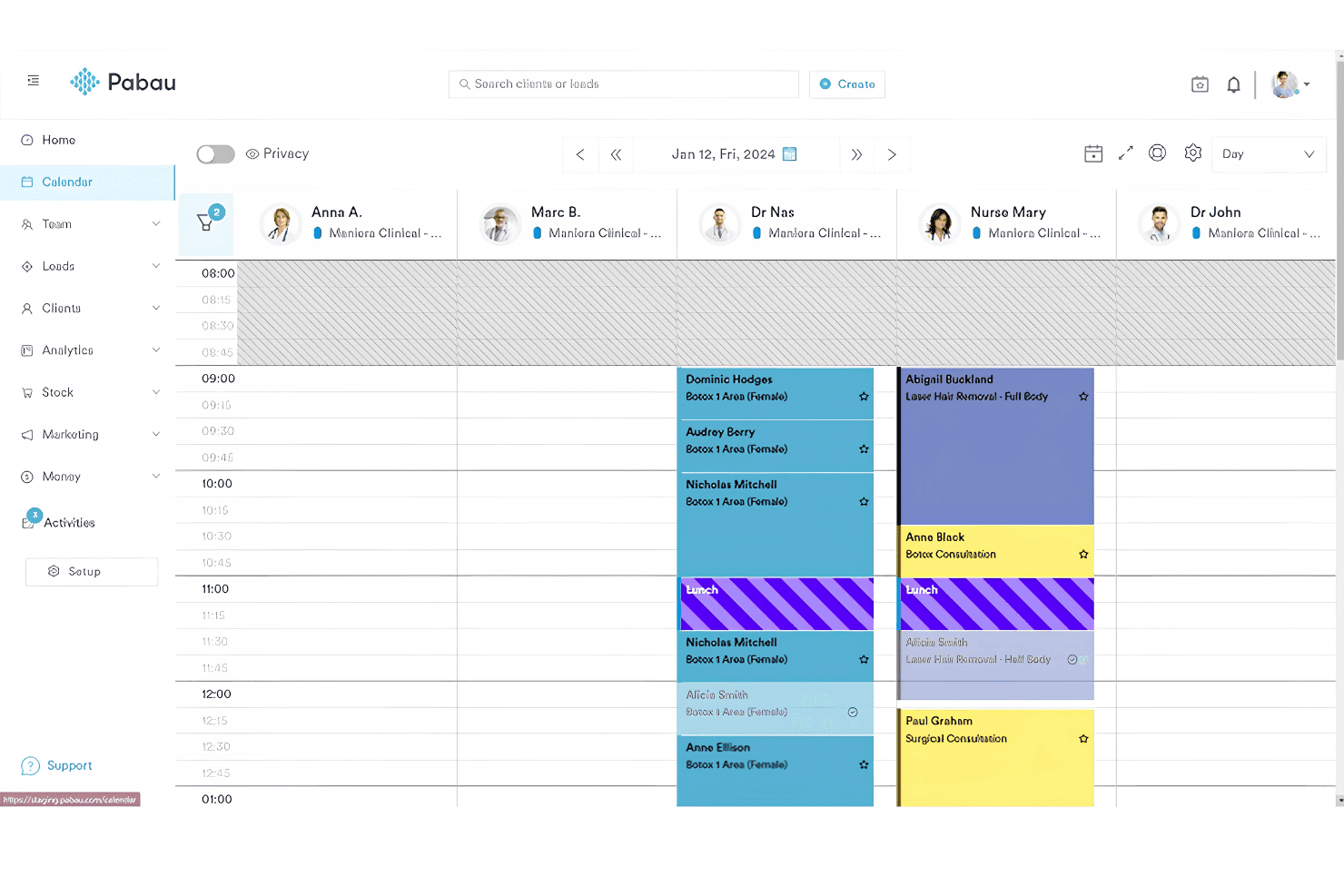
Patients can book, reschedule, or cancel appointments online anytime. This saves front desk time and reduces phone queues.
Automated Reminders and Recalls
Pabau sends SMS or email reminders to help patients remember appointments. This reduces no-shows and keeps schedules predictable.
Digital Consent Forms
Create, send, and securely store digital consent forms for every treatment. Forms are customizable and auto-attach to patient records for audits.
Patient Record Management
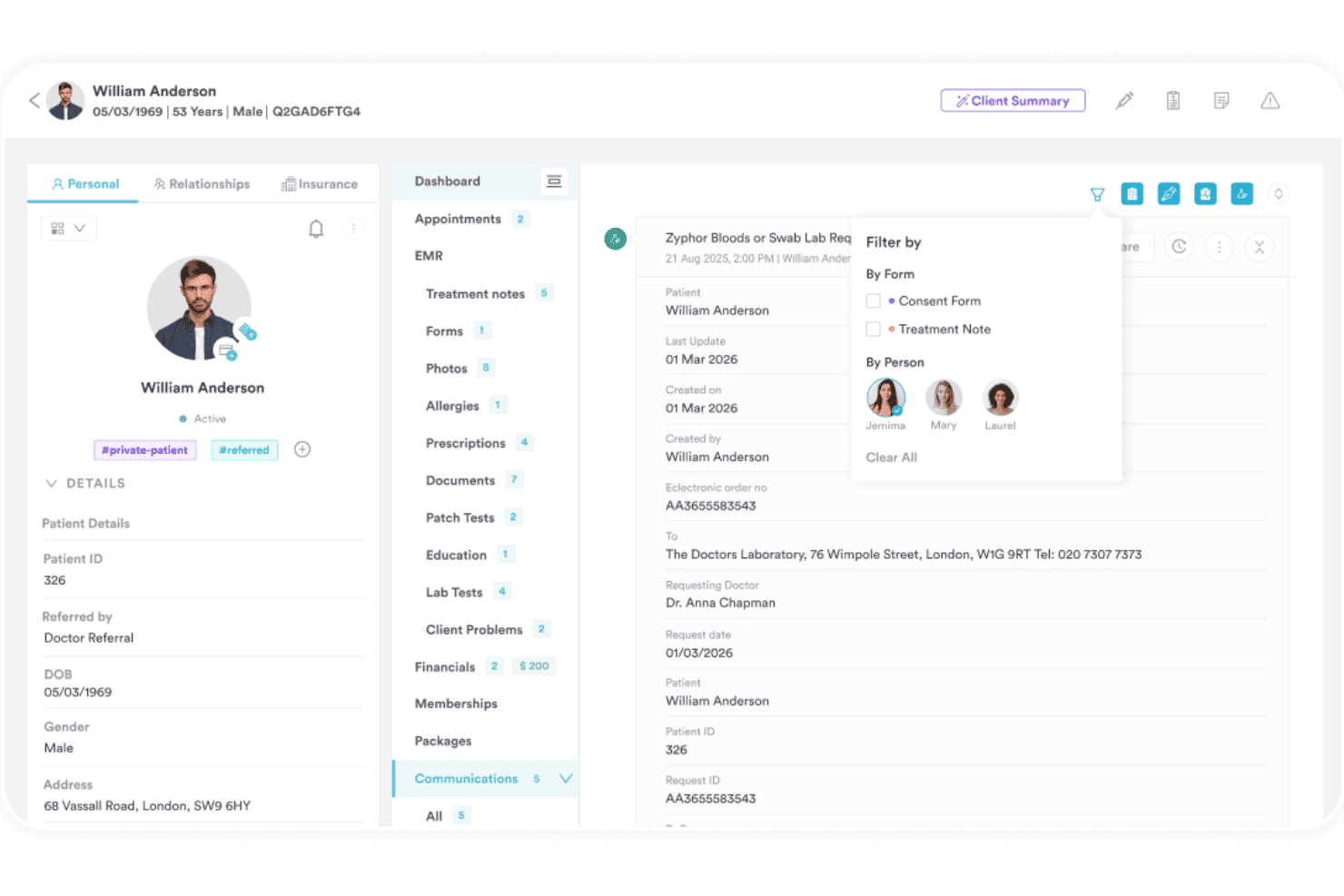
Access detailed, unified electronic patient records from any device. All notes, history, and images are stored in one place for quick review.
Clinical Charting Tools
Drag-and-drop charting and template tools make documentation faster. Clinicians can add diagrams, annotations, and notes with just a few clicks.
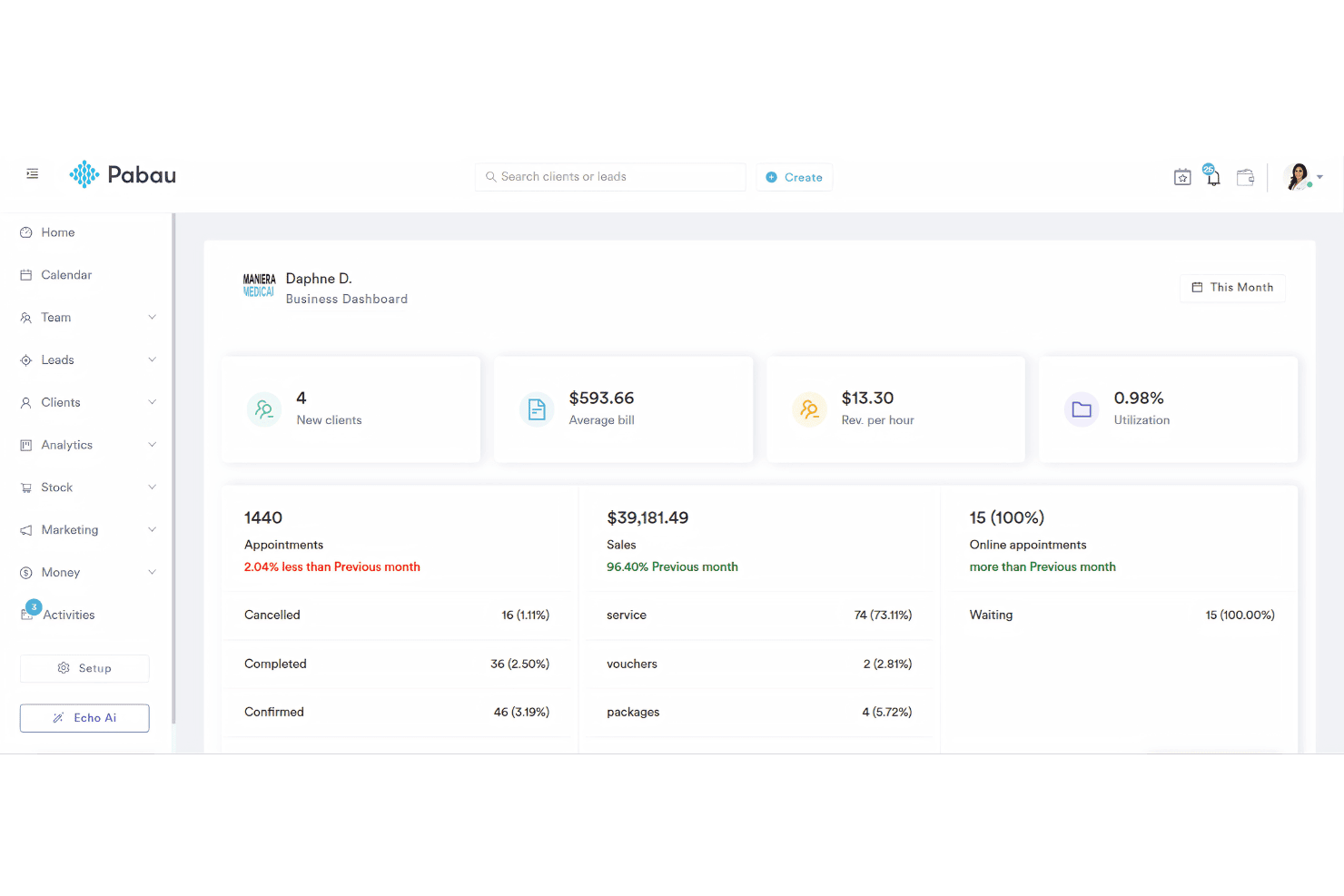
Reporting and Analytics Dashboard
Track revenue, staff performance, and appointment trends in a visual dashboard. Customizable reports help clinics measure what matters most.
Ease of Use
Pabau feels intuitive even for staff new to clinic software, with quick access to core tools from a clean dashboard. Users like the drag-and-drop charting, clear appointment booking workflows, and how patient documents are easy to find.
Some want more in-app guidance, but overall, the navigation and daily workflows require little training.
Integrations
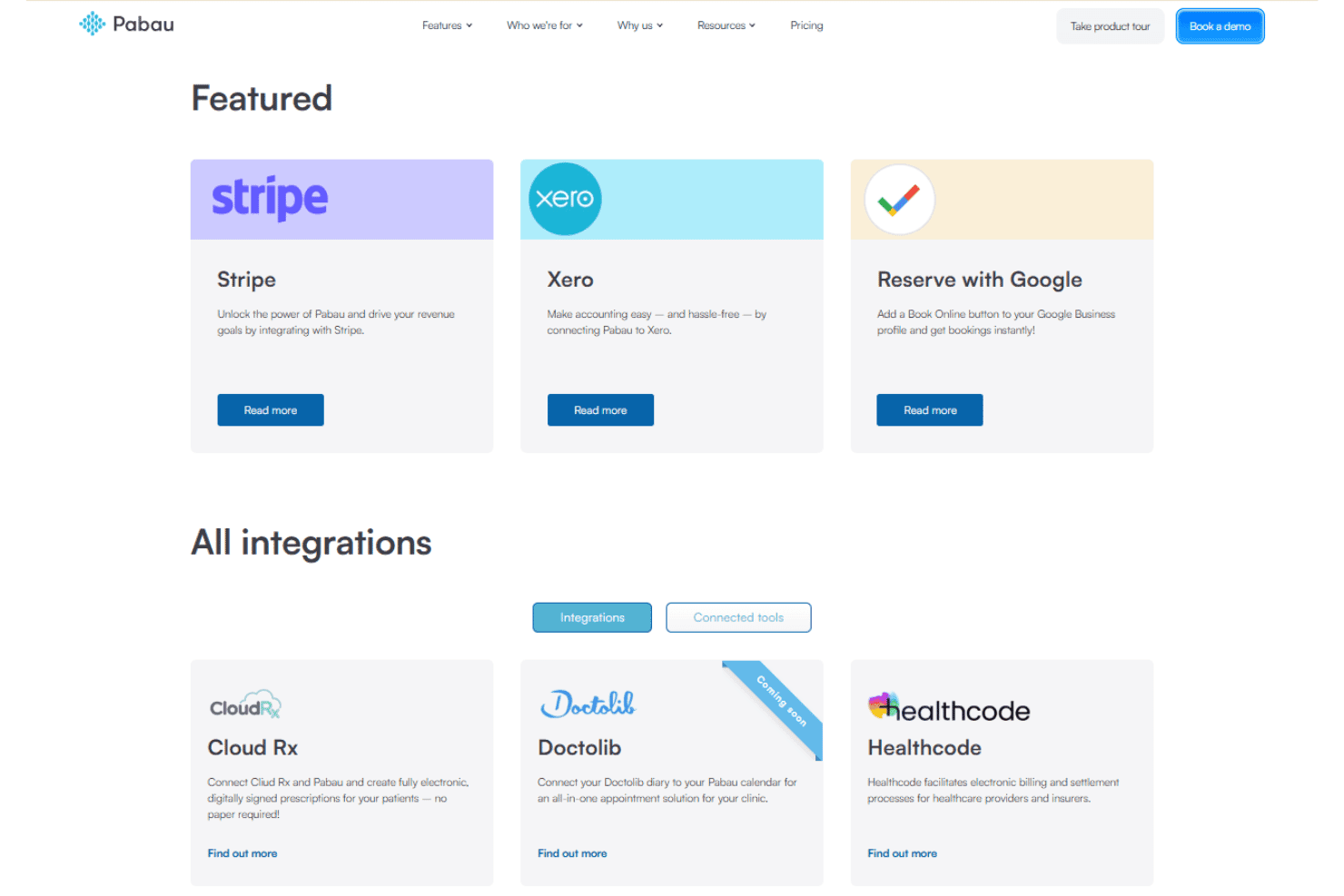
Pabau integrates with Stripe, Xero, Reserve with Google, Cloud Rx, Doctolib, Healthcode, iCal, PatientPerfect, The Doctor’s Lab, and Google Calendar, among others.
Pabau also offers an API and supports connections with select third-party tools.
Pabau Specs
- 2-Factor Authentication: Yes
- API: Yes
- Appointment Scheduling: Yes
- Batch Permissions & Access: Yes
- Billing/Invoicing: Yes
- Budgeting: No
- Customer Management: Yes
- Data Export: Yes
- Data Import: Yes
- Data Visualization: Yes
- Electronic Prescribing: Yes
- Expense Tracking: Yes
- External Integrations: Yes
- File Transfer: Yes
- HIPAA Compliance: Yes
- Multi-User: Yes
- Notifications: Yes
- Patient Management: Yes
- Report & Compliance: Yes
- Self-service Portal: Yes
- Task Scheduling/Tracking: Yes

