

Owl Practice Review: Pros, Cons, Features, and Pricing
Owl Practice brings mental health practice management into one platform, from scheduling and clinical notes to billing, telehealth, and client communication tools for therapy practices.

We review tools independently, and commissions help fund our testing. See our transparency policy, our methodology, or suggest a tool.
Owl Practice is a mental health EHR built for therapists and counselors who need integrated scheduling, clinical documentation, billing, and a client portal in a single platform. I'd mainly consider it if you're running a solo or small group practice and want something focused and straightforward—especially if SimplePractice feels like more tool than what you actually need. Owl Practice keeps the feature set tight and the workflow intuitive, which makes it a practical fit for clinicians who want to spend less time navigating software and more time with clients.
Owl Practice Evaluation Summary
3/5
- From $60 CAD/month
- 14-day free trial
Why Trust Our Software Recommendations
6,700+
Reviews
20
Industry experts
16+
Evaluation factors
14
Years
Our team has been testing and reviewing software since 2012. As medical practice leaders ourselves, we know how difficult—and important—it is to choose the right software.
For this guide, we evaluated tools using hands-on testing and independent research, scoring tools using our selection criteria.
Our reviews reflect our human editorial judgment, not a sales pitch.
Owl Practice Overview
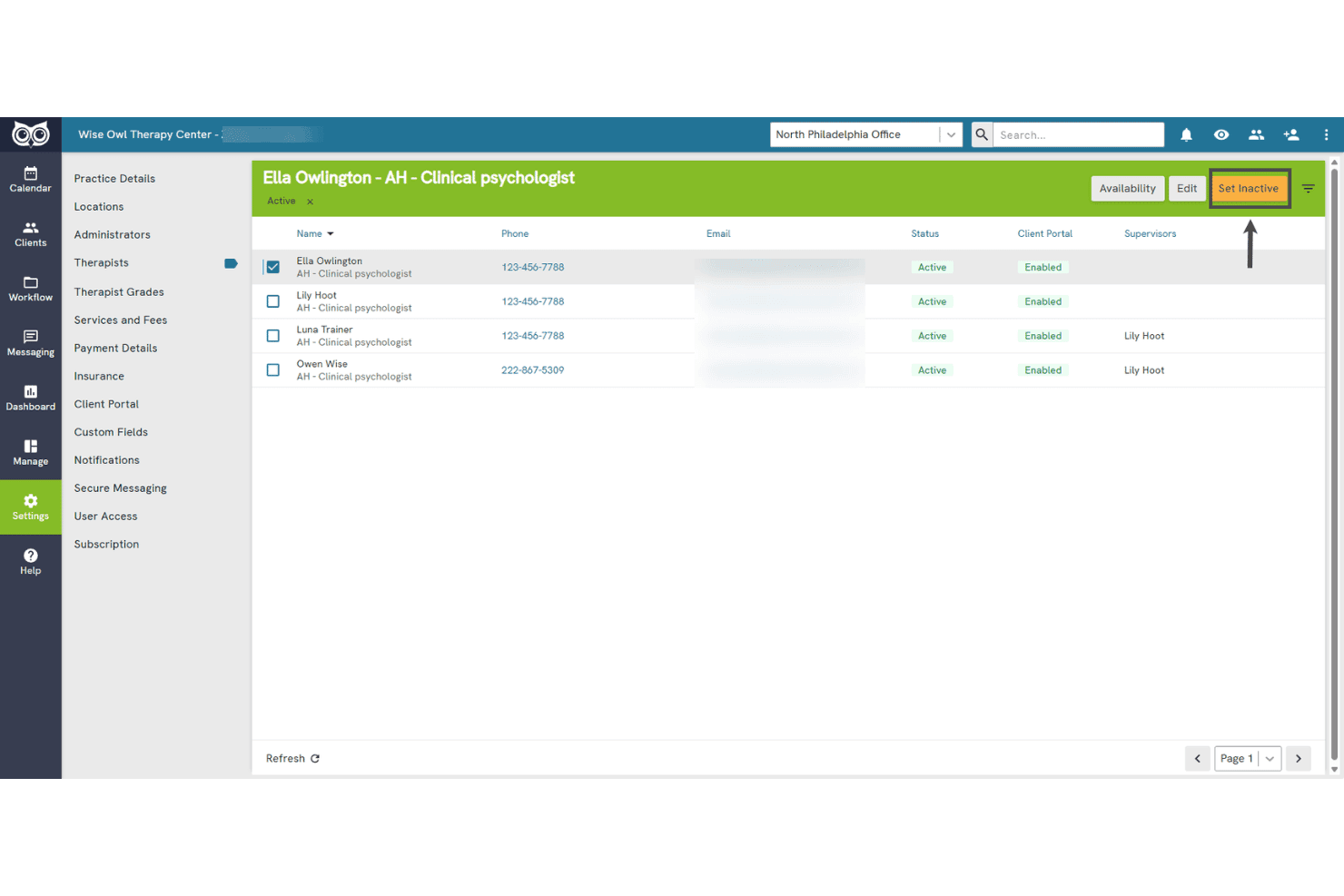
Owl Practice is a strong choice if you want a mental health practice management solution that’s easy to learn, offers responsive support, and covers core needs like scheduling, billing, and secure telehealth. Its interface is cleaner and more intuitive than most, and onboarding is straightforward. However, you’ll find integrations are limited, and pricing can be higher for larger teams.
I’d suggest it’s best for solo practitioners or small clinics who value simplicity and dedicated mental health features over deep customization or broad third-party integrations.
Pros
- Secure client messaging and HIPAA-compliant data handling.
- Responsive and knowledgeable customer support team.
- Built-in telehealth with group session support.
Cons
- Pricing increases quickly for group practices.
- No dedicated mobile app for clinicians or clients.
- Limited third-party integrations for billing and scheduling.
Is Owl Practice Right For Your Needs?
Who Would be a Good Fit for Owl Practice?
Owl Practice is a strong choice for mental health professionals and organizations that need secure, therapy-focused features and value a straightforward, clinician-friendly interface. It’s especially well-suited for smaller practices, solo providers, and teams that prioritize HIPAA compliance, telehealth, and client communication tools over deep customization or broad integrations.
If your work centers on therapy, counseling, or behavioral health, you’ll likely find its session notes, client portal, and responsive support team a good match for your workflow.
- Solo PractitionersOwl Practice’s all-in-one platform simplifies scheduling, billing, and documentation for solo providers.
- Small Group PracticesIts pricing and feature set are tailored for small teams needing secure telehealth and group session support.
- Behavioral Health ClinicsThe platform’s therapy-specific templates and secure messaging fit behavioral health workflows.
- Child and Family TherapistsCustomizable intake forms and family session support help manage complex client relationships.
- Telehealth-First PracticesBuilt-in telehealth with group session capability supports remote care delivery.
- Canadian PracticesOwl Practice offers Canadian data hosting and billing features for compliance.
Who Would be a Bad Fit for Owl Practice?
Owl Practice may not be the best option for large organizations, multidisciplinary clinics, or teams that require extensive integrations and advanced reporting. Larger enterprises and those outside mental health may need broader functionality or more scalable solutions.
If your practice relies on a mobile app, complex billing workflows, or deep customization, you’ll likely find the platform limiting.
- Large Hospital SystemsOwl Practice lacks the scalability and integrations needed for enterprise environments.
- Multidisciplinary ClinicsIt’s focused on mental health, not suited for mixed-specialty practices.
- Practices Requiring Mobile AppsThere’s no dedicated mobile app for clinicians or clients.
- Teams Needing Advanced ReportingReporting features are basic compared to more analytics-driven platforms.
- US-Only Insurance BillingInsurance billing tools are limited for complex US payer requirements.
- Practices Needing Custom IntegrationsFew options exist for connecting with external billing or scheduling systems.
How We Test & Score Tools
We’ve spent years building, refining, and improving our software testing and scoring system. The rubric is designed to capture the nuances of software selection and what makes a tool effective, focusing on critical aspects of the decision-making process.
Below, you can see exactly how our testing and scoring works across seven criteria. It allows us to provide an unbiased evaluation of the software based on core functionality, standout features, ease of use, onboarding, customer support, integrations, customer reviews, and value for money.
Core Functionality (25% of final scoring)
The starting point of our evaluation is always the core functionality of the tool. Does it have the basic features and functions that a user would expect to see? Are any of those core features locked to higher-tiered pricing plans? At its core, we expect a tool to stand up against the baseline capabilities of its competitors.
Standout Features (25% of final scoring)
Next, we evaluate uncommon standout features that go above and beyond the core functionality typically found in tools of its kind. A high score reflects specialized or unique features that make the product faster, more efficient, or offer additional value to the user.
We also evaluate how easy it is to integrate with other tools typically found in the tech stack to expand the functionality and utility of the software. Tools offering plentiful native integrations, 3rd party connections, and API access to build custom integrations score best.
Ease of Use (10% of final scoring)
We consider how quick and easy it is to execute the tasks defined in the core functionality using the tool. High scoring software is well designed, intuitive to use, offers mobile apps, provides templates, and makes relatively complex tasks seem simple.
Onboarding (10% of final scoring)
We know how important rapid team adoption is for a new platform, so we evaluate how easy it is to learn and use a tool with minimal training. We evaluate how quickly a team member can get set up and start using the tool with no experience. High scoring solutions indicate little or no support is required.
Customer Support (10% of final scoring)
We review how quick and easy it is to get unstuck and find help by phone, live chat, or knowledge base. Tools and companies that provide real-time support score best, while chatbots score worst.
Customer Reviews (10% of final scoring)
Beyond our own testing and evaluation, we consider the net promoter score from current and past customers. We review their likelihood, given the option, to choose the tool again for the core functionality. A high scoring software reflects a high net promoter score from current or past customers.
Value for Money (10% of final scoring)
Lastly, in consideration of all the other criteria, we review the average price of entry level plans against the core features and consider the value of the other evaluation criteria. Software that delivers more, for less, will score higher.
Core Features
Family and Couples Management
Owl Practice lets you link multiple clients under one family or relationship profile. This makes it easy to manage joint sessions, shared billing, and documentation for couples or families.
Client Records and Therapy Notes
Store and organize client records with customizable therapy note templates. Intelligent note features help keep documentation organized and accessible.
Scheduling and Reminders
Automate appointment booking and send free email or SMS reminders. Clients can self-schedule, reducing no-shows and admin work.
Insurance Claim Filing
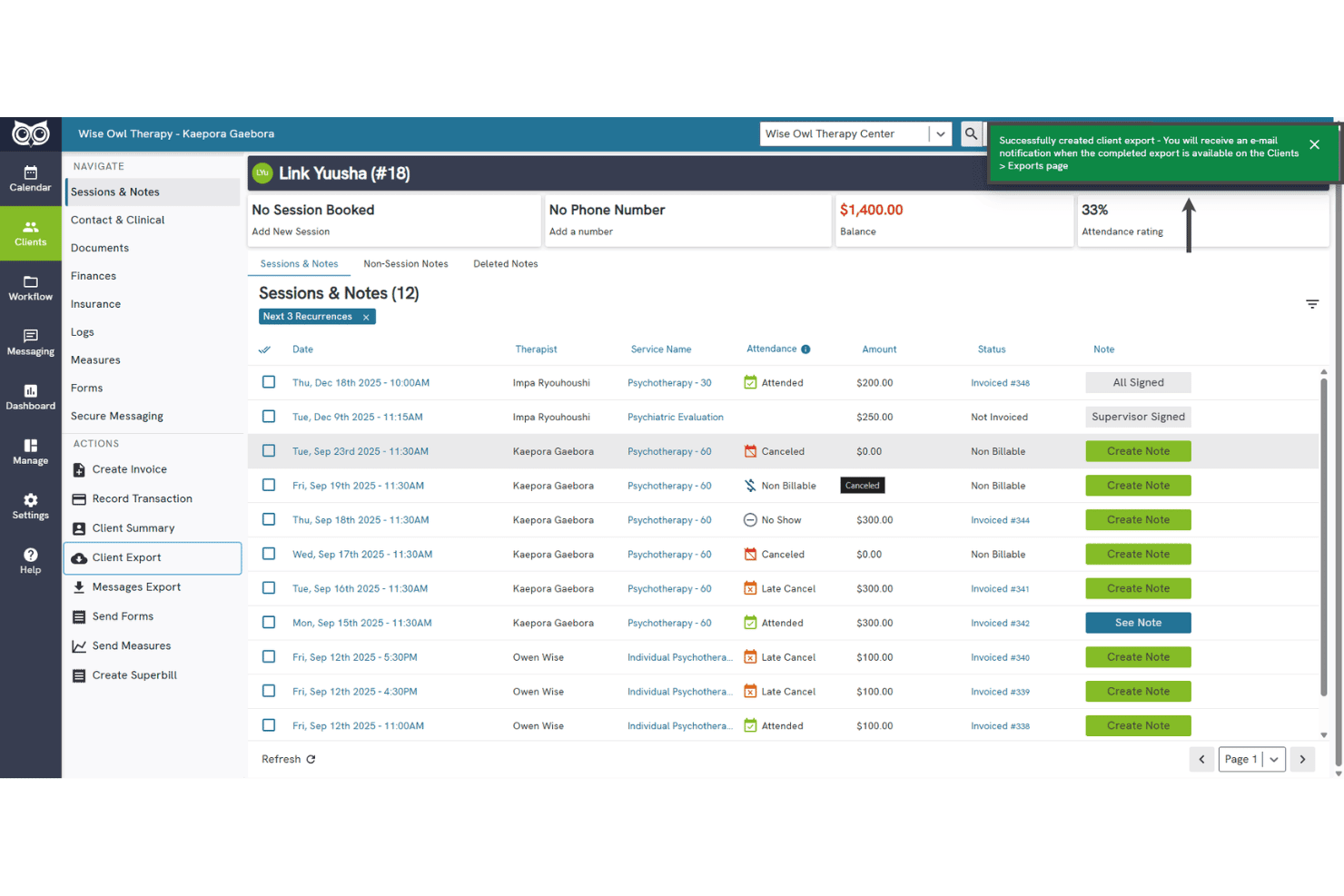
Create, submit, and track insurance claims directly in the platform. Automatic data entry and payer enrollment save time and reduce errors.
Secure Messaging
Communicate with clients through a password-protected portal with read receipts. Share documents and discuss sensitive topics securely.
Measurement-Based Care
Access over 85 clinical assessments to track client progress. Automated scoring and reporting support evidence-based care.
Standout Features
Telehealth Video Sessions
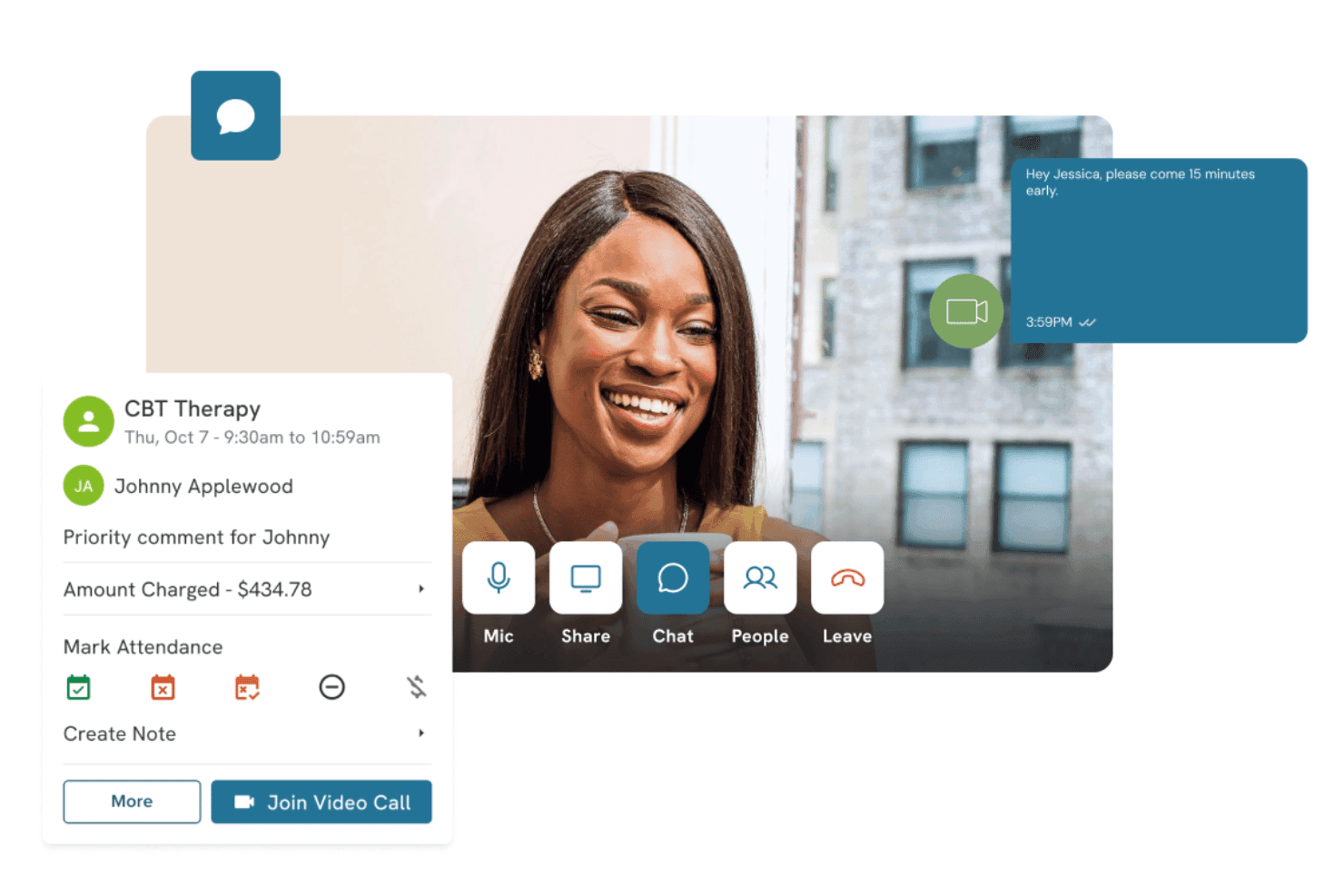
Run secure, HIPAA-compliant video sessions with screen sharing and chat. Virtual backgrounds and group session support make remote care flexible.
Canadian Data Residency
The platform offers Canadian data hosting and compliance options. This is especially valuable for practices needing to meet strict Canadian privacy regulations and client data requirements.
Ease of Use
Owl Practice is one of the more user-friendly mental health practice management solutions I’ve seen, with a clean interface and intuitive navigation that new users pick up quickly. Users often mention how easy it is to schedule appointments, document sessions, and communicate with clients.
The onboarding process is straightforward, and support resources are accessible. Most clinicians and administrators will appreciate how little training is needed to get started and stay organized.
Onboarding
Owl Practice offers a smooth onboarding experience, with guided setup, video tutorials, and responsive customer support that help new users get up and running quickly. Many users highlight the helpfulness of the onboarding team and the clarity of training materials.
Practices will find the transition process less stressful, as the platform provides step-by-step assistance and answers questions promptly, making it easier to realize value soon after signing up.
Customer Support
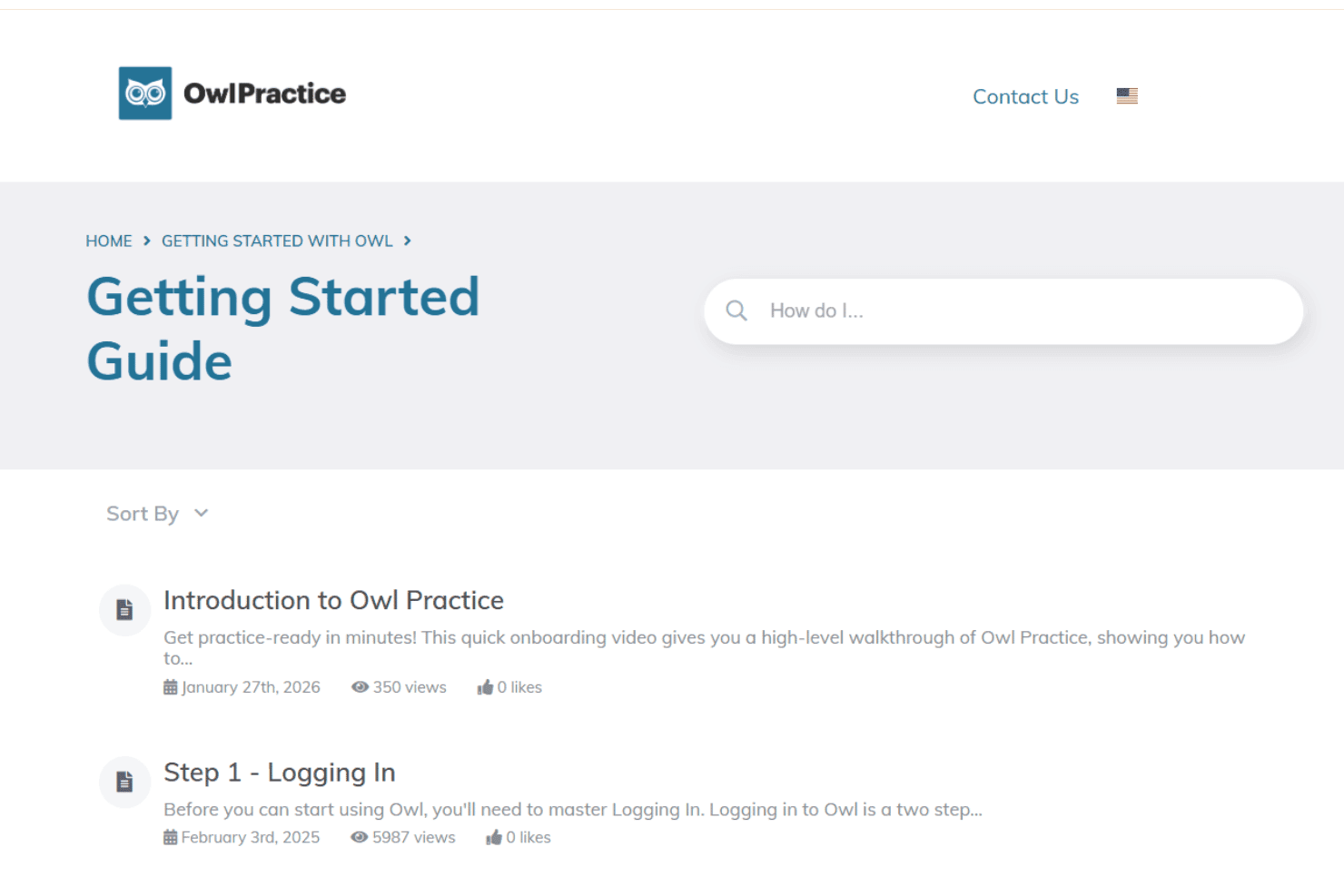
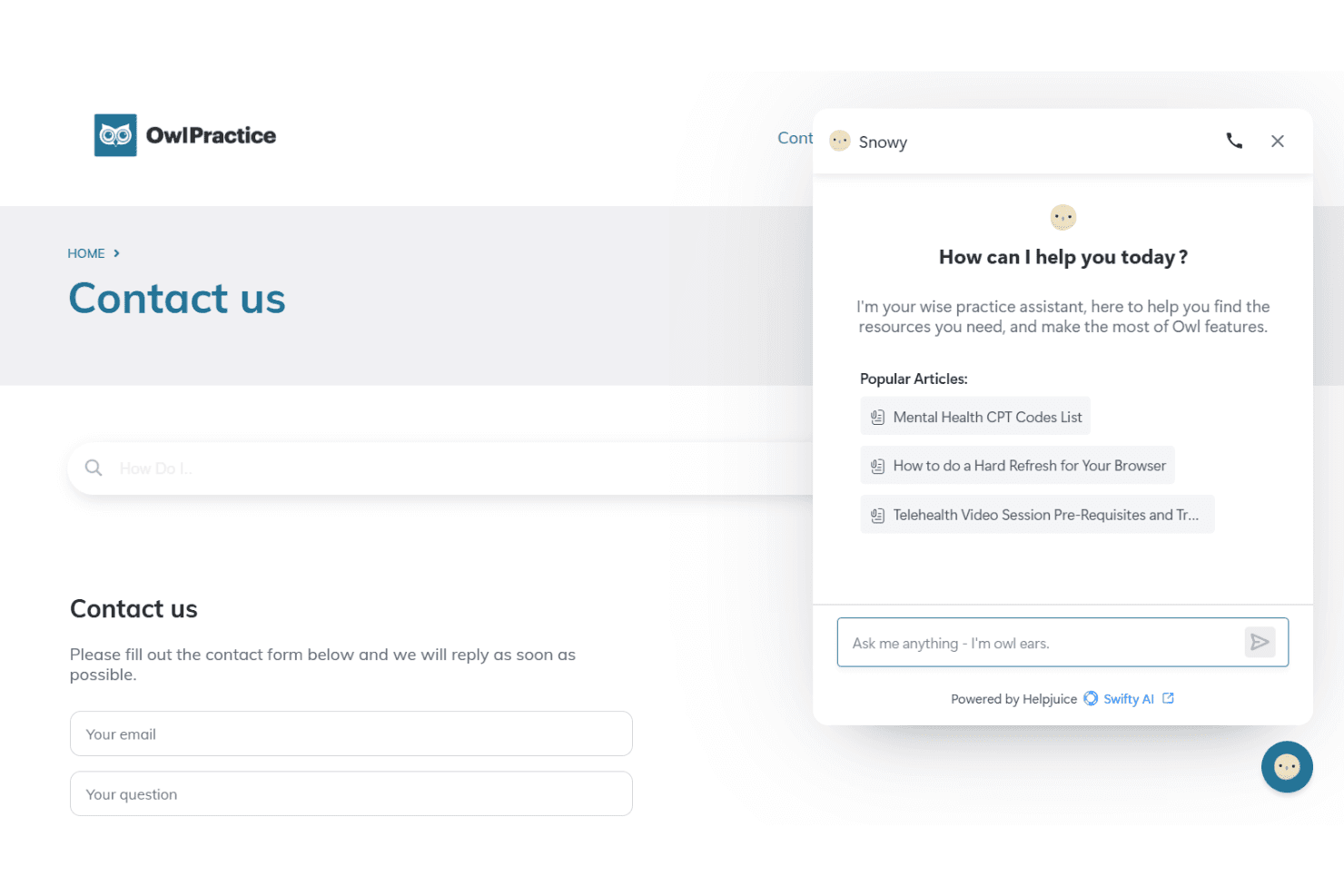
Owl Practice Suite’s customer support stands out for its responsiveness and knowledgeable team, with users frequently praising quick replies and thorough assistance. Support is available through email, phone, and an extensive help center, making it easy to get answers when issues arise.
Practices will appreciate the personal touch and follow-up from support staff, especially during onboarding or when troubleshooting billing and telehealth features.
Integrations
Owl Practice integrates with Stripe for payments, Telus eClaims for insurance billing, and Owl Video Therapy for telehealth.
Owl Practice does not currently offer an open API or connect with third-party integration tools.
Value for Money
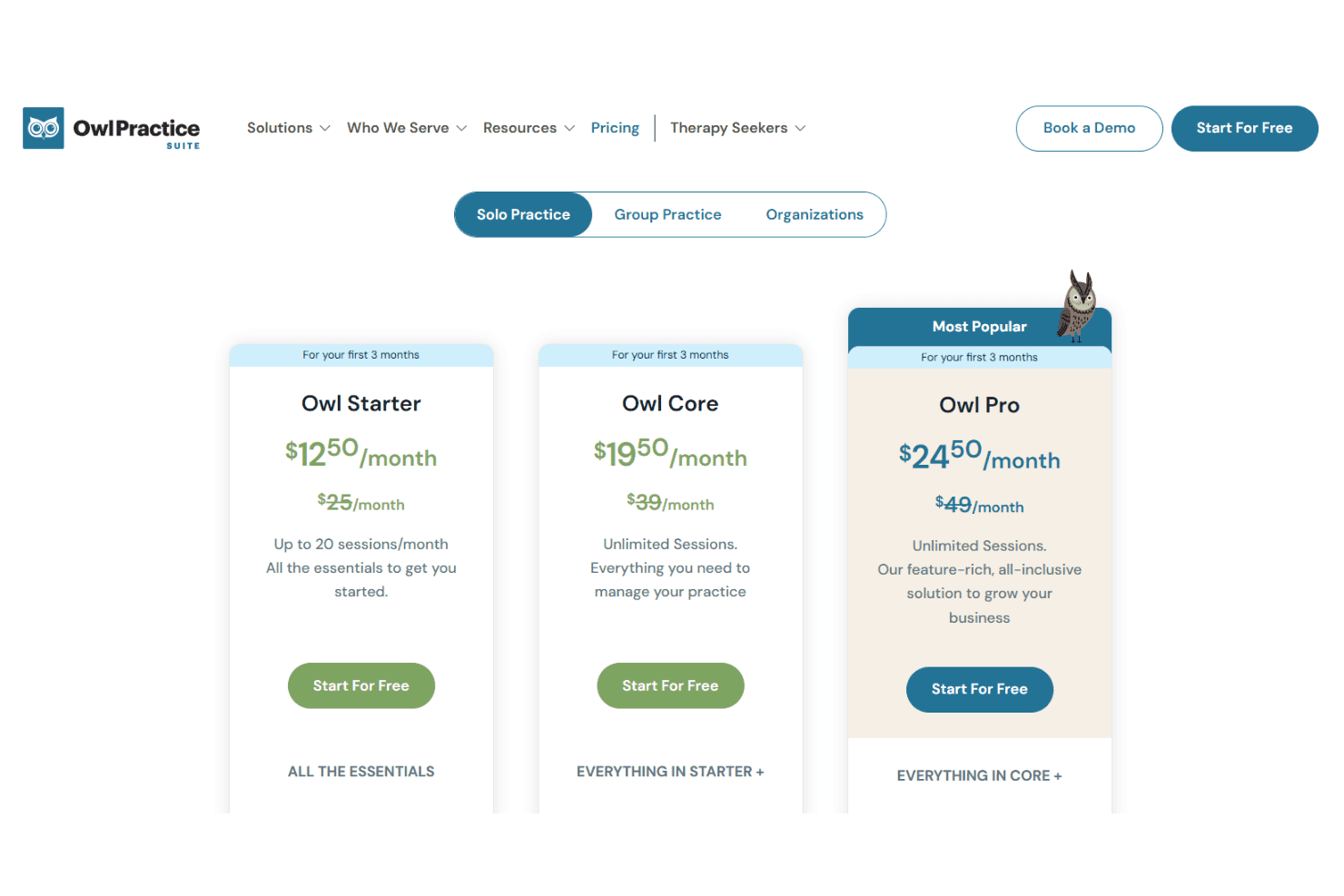
Owl Practice offers strong value for solo practitioners and small teams, with pricing that reflects its focus on therapy-specific features and secure telehealth. Users say the cost is fair for the included support and compliance, though group practices may see prices rise quickly as they add clinicians or advanced features.
- Owl Starter: Core tools like scheduling, billing, and client records for solo or part-time practitioners.
- Owl Core: Adds unlimited sessions, online booking, and workflow customization for full-time practices.
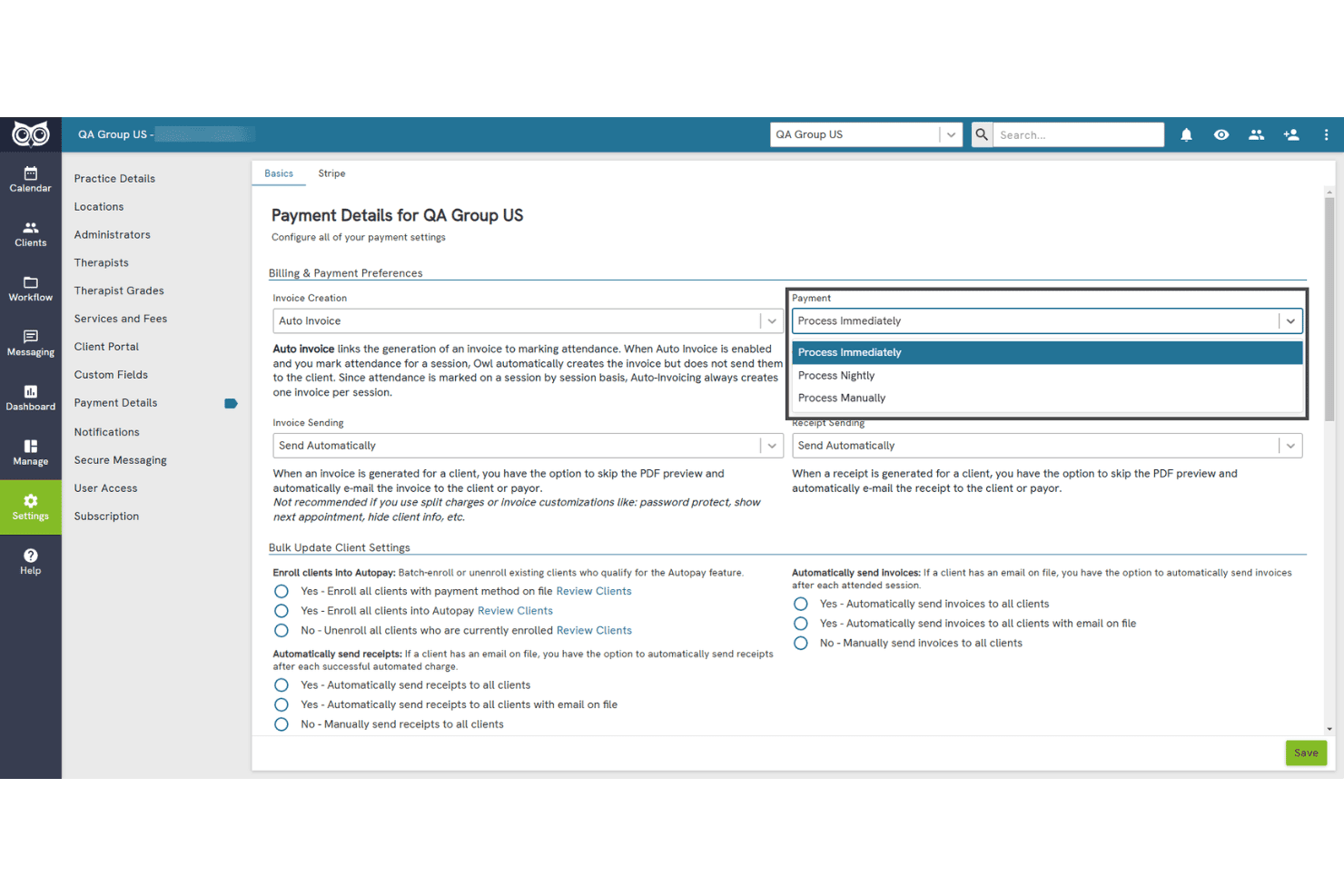
- Owl Pro: Includes telehealth, secure messaging, and insurance tools for growing, automation-focused practices.
- Group Practice / Organization Plans: Flexible, scalable plans with team management and customization for multi-provider organizations.
Owl Practice Specs
- API: No
- Appointment Scheduling: Yes
- Athlete Management: No
- Audit Management: No
- Calendar Management: Yes
- Compliance Tracking: Yes
- Customer Management: Yes
- Dashboard: Yes
- Data Export: Yes
- Data Import: Yes
- Data Visualization: Yes
- Electronic Prescribing: No
- External Integrations: Yes
- File Sharing: Yes
- File Transfer: No
- Health Management: Yes
- HIPAA Compliance: Yes
- Inventory Tracking: No
- Multi-User: Yes
- Notifications: Yes
- Organization Management: Yes
- Patient Management: Yes
- Project Management: No
- Regulatory Alerts: No
- Risk Assessment: No
- Scheduling: Yes
- Supplier Management: No
Owl Practice FAQs
Owl Practice Company Overview & History
Owl Practice Suite is a purpose-built mental health practice management platform serving therapists, group practices, nonprofits, and higher education organizations.
Owl Practice Suite is affiliated with Zencare, a therapist directory and client-matching service, and offers integrated solutions for both practice management and client acquisition.
Owl Practice Suite Major Milestones
- 2014: Initial launch of Owl Practice Suite as a dedicated mental health EHR and practice management platform.
- 2020: Expansion of telehealth video session capabilities in response to increased demand for virtual care.
- 2022: Integration with Zencare to support therapist marketing and client matching.
- 2026: Serves thousands of therapists and organizations across the US and Canada, with ongoing platform enhancements and support resources.