
Inovalon Review: Pros, Cons, Features and Pricing
Inovalon brings healthcare analytics and data management into one platform, from clinical insights and quality reporting to risk adjustment, interoperability, and population health analytics.

We review tools independently, and commissions help fund our testing. See our transparency policy, our methodology, or suggest a tool.
Inovalon is a healthcare analytics software built for health plans, providers, and life sciences organizations that need to connect clinical and claims data to measure quality, manage risk, and support care decisions. I'd choose it over competitors like Health Catalyst if your team needs a single platform that spans data aggregation, quality measurement, and care management workflows.
Inovalon Evaluation Summary
4.5/5
- Pricing upon request
- Free demo available
Why Trust Our Software Recommendations
6,700+
Reviews
20
Industry experts
16+
Evaluation factors
14
Years
Our team has been testing and reviewing software since 2012. As medical practice leaders ourselves, we know how difficult—and important—it is to choose the right software.
For this guide, we evaluated tools using hands-on testing and independent research, scoring tools using our selection criteria.
Our reviews reflect our human editorial judgment, not a sales pitch.
Inovalon Overview
When I judge Inovalon against other healthcare data analytics platforms, I find its range of integrations and customizable analytics tools gives it an edge for organizations needing detailed, multi-source insights. Its pricing can be complex, and onboarding may take time, but the dedicated support team helps smooth things out.
If you’re selecting a platform for data-driven quality programs or revenue cycle improvements—and want strong compliance and reporting—I’d suggest Inovalon is best suited for larger care networks or payers juggling diverse data streams.
Pros
- Advanced analytics support for value-based care initiatives.
- Robust compliance features for regulatory and reporting requirements.
- Deep data extraction from multiple healthcare sources.
Cons
- Complex pricing structures require direct negotiation.
- Interface lacks modern design and visual appeal.
- Onboarding can be lengthy for large organizations.
Is Inovalon Right For Your Needs?
Who Would be a Good Fit for Inovalon?
Inovalon fits best for large healthcare organizations and those needing detailed compliance, regulatory, and reporting capabilities. It’s especially helpful for payers, providers, and health systems handling multiple data sources and industry regulations.
It’s a smart pick for teams focused on value-based care and is looking for advanced quality programs and risk adjustment analytics.
- Health InsurancePlans Insurers handling HEDIS or STAR ratings get detailed analytics and automated reporting tools.
- Large Health SystemsMulti-facility provider groups benefit from broad data integration and benchmarking against national datasets.
- Compliance DepartmentsCompliance teams streamline regulatory reporting with built-in quality measurement frameworks.
- Population Health TeamsThose managing chronic conditions or risk stratification use predictive analytics and segmentation.
- Accountable Care OrganizationsACOs needing to coordinate value-based initiatives access continuous, actionable data and compliance monitoring.
- Healthcare Data AnalystsAnalysts leverage customizable dashboards and real-time extraction for deep clinical and operational research.
Who Would be a Bad Fit for Inovalon?
Inovalon isn’t well-suited for smaller provider practices or organizations with limited regulatory or reporting complexities. Solo clinicians, early-stage companies, or care teams lacking dedicated IT resources may struggle with onboarding and cost.
Teams looking for an out-of-the-box interface or companies focused on non-healthcare verticals won’t see full value. Users requiring quick setup or low-touch analytics tools can find the platform’s depth to be more burden than benefit in those settings.
- Small Private PracticesSimple data needs and minimal reporting can make onboarding overhead and cost unjustifiable.
- StartupsEarly-stage digital health companies often want rapid implementation and may not need enterprise-level compliance.
- Solo CliniciansIndividual providers don’t benefit from advanced analytics or multi-source data integrations.
- IT-Constrained TeamsOrganizations without dedicated technical support can struggle with implementation and customization.
- Non-Healthcare SectorsInovalon solutions are specialized for healthcare, so other industries won’t benefit from its features.
- Low-Volume ProvidersThose with few patients rarely need advanced segmentation or benchmarking capabilities, making the platform overkill.
How We Test & Score Tools
We’ve spent years building, refining, and improving our software testing and scoring system. The rubric is designed to capture the nuances of software selection and what makes a tool effective, focusing on critical aspects of the decision-making process.
Below, you can see exactly how our testing and scoring works across seven criteria. It allows us to provide an unbiased evaluation of the software based on core functionality, standout features, ease of use, onboarding, customer support, integrations, customer reviews, and value for money.
Core Functionality (25% of final scoring)
The starting point of our evaluation is always the core functionality of the tool. Does it have the basic features and functions that a user would expect to see? Are any of those core features locked to higher-tiered pricing plans? At its core, we expect a tool to stand up against the baseline capabilities of its competitors.
Standout Features (25% of final scoring)
Next, we evaluate uncommon standout features that go above and beyond the core functionality typically found in tools of its kind. A high score reflects specialized or unique features that make the product faster, more efficient, or offer additional value to the user.
We also evaluate how easy it is to integrate with other tools typically found in the tech stack to expand the functionality and utility of the software. Tools offering plentiful native integrations, 3rd party connections, and API access to build custom integrations score best.
Ease of Use (10% of final scoring)
We consider how quick and easy it is to execute the tasks defined in the core functionality using the tool. High scoring software is well designed, intuitive to use, offers mobile apps, provides templates, and makes relatively complex tasks seem simple.
Onboarding (10% of final scoring)
We know how important rapid team adoption is for a new platform, so we evaluate how easy it is to learn and use a tool with minimal training. We evaluate how quickly a team member can get set up and start using the tool with no experience. High scoring solutions indicate little or no support is required.
Customer Support (10% of final scoring)
We review how quick and easy it is to get unstuck and find help by phone, live chat, or knowledge base. Tools and companies that provide real-time support score best, while chatbots score worst.
Customer Reviews (10% of final scoring)
Beyond our own testing and evaluation, we consider the net promoter score from current and past customers. We review their likelihood, given the option, to choose the tool again for the core functionality. A high scoring software reflects a high net promoter score from current or past customers.
Value for Money (10% of final scoring)
Lastly, in consideration of all the other criteria, we review the average price of entry level plans against the core features and consider the value of the other evaluation criteria. Software that delivers more, for less, will score higher.
Core Features
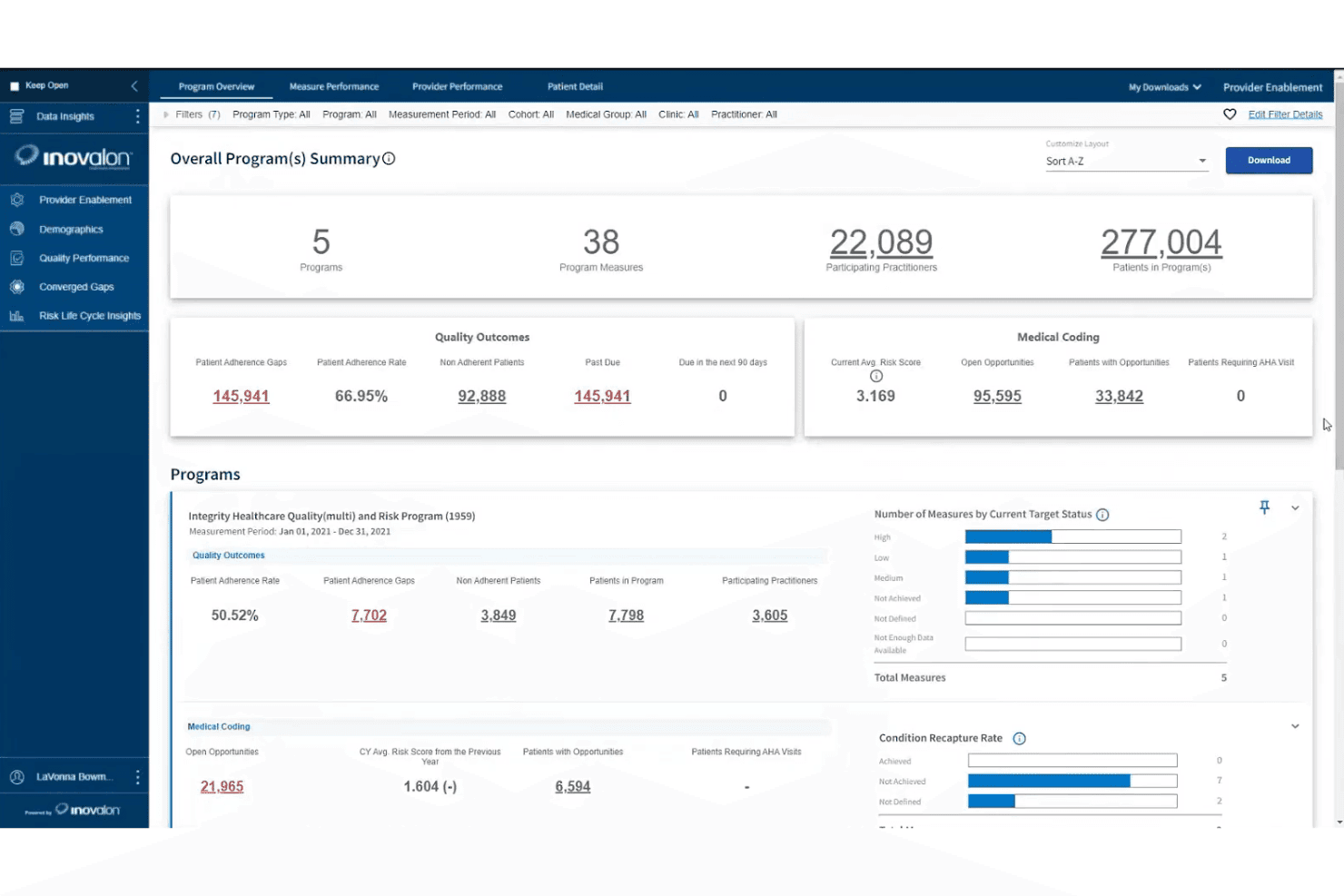
Real-Time Data Analytics
Analyze vast healthcare data sets in real time for clinical, financial, and operational insights. Users quickly identify trends and gaps across populations to improve outcomes.
Quality Measurement and Reporting
Automate quality scoring and regulatory reporting for programs like HEDIS and STAR. Health plans and providers track and optimize performance metrics year-round.
Risk Adjustment Analytics
Calculate member risk scores using claims, clinical, and pharmacy data. This supports more accurate reimbursements and better care planning.
Patient Stratification
Segment patients by risk, utilization, or outcomes using built-in algorithms. Teams target interventions to those with the highest needs or gaps in care.
Customizable Dashboards
Create visualizations of performance, compliance, or population health metrics. Stakeholders monitor and share key indicators across the organization.
Predictive Analytics
Leverage predictive models to forecast readmissions, costs, or disease progression. I’ve found users rely on these forecasts to inform strategic planning and resource allocation.
Standout Features
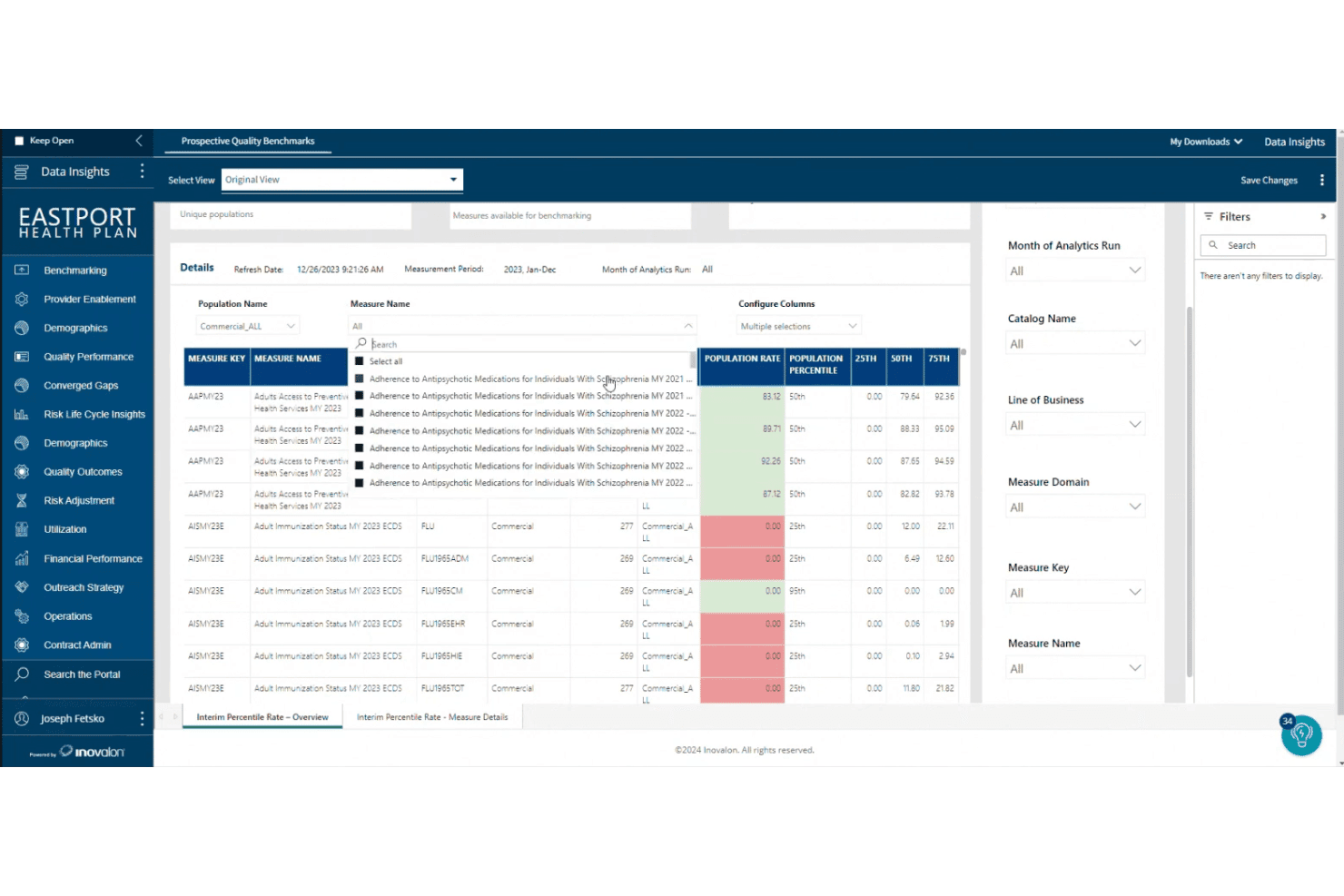
National Comparative Benchmarking
Access anonymized data benchmarks from across Inovalon’s vast national network. Users compare organizational performance against peers for deeper context and improvement opportunities.
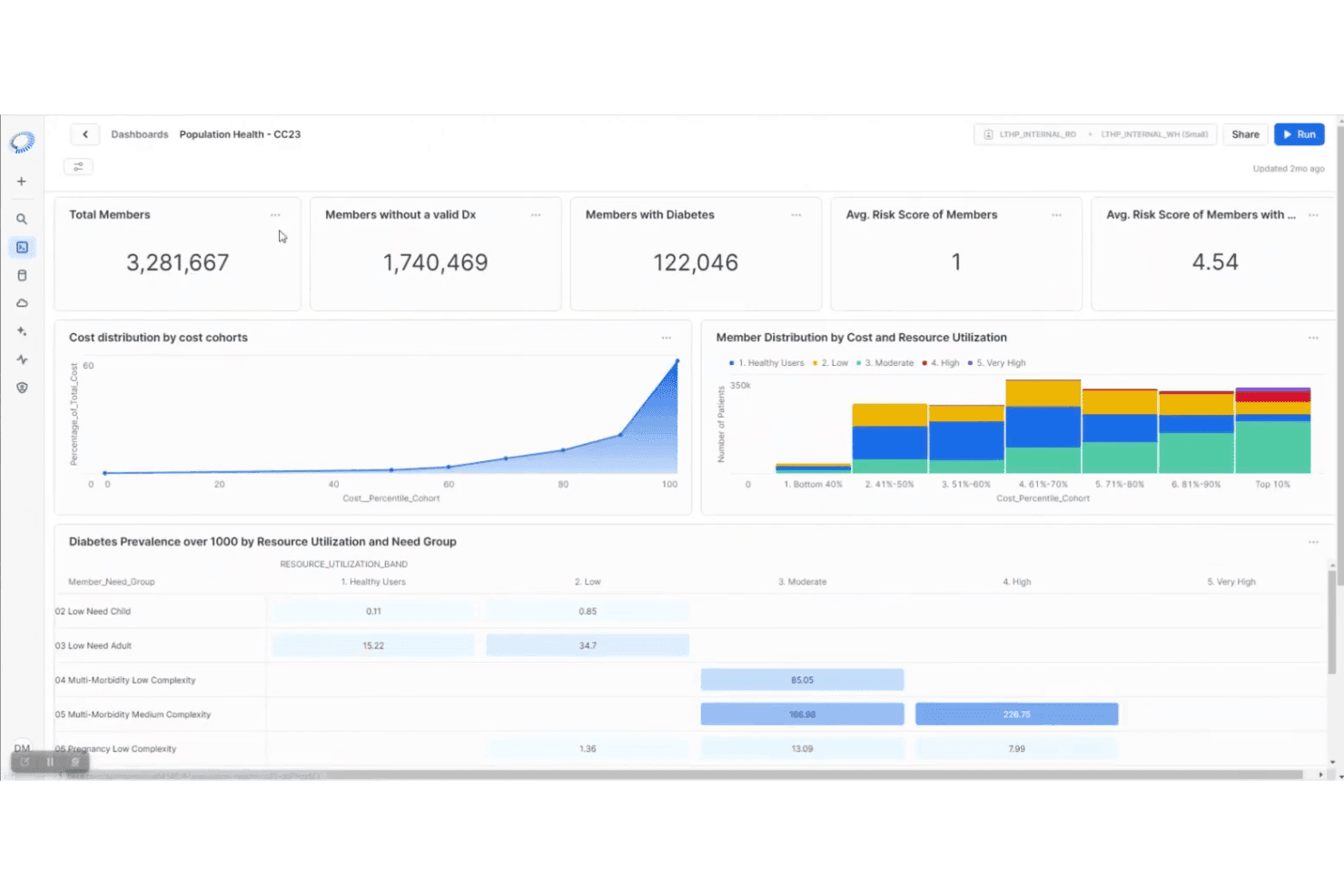
Population Health Management
Leverage Inovalon’s population health management solutions to aggregate and analyze patient data across multiple sources. This enables targeted interventions, improved care coordination, and enhanced health outcomes on a large scale.
Ease of Use
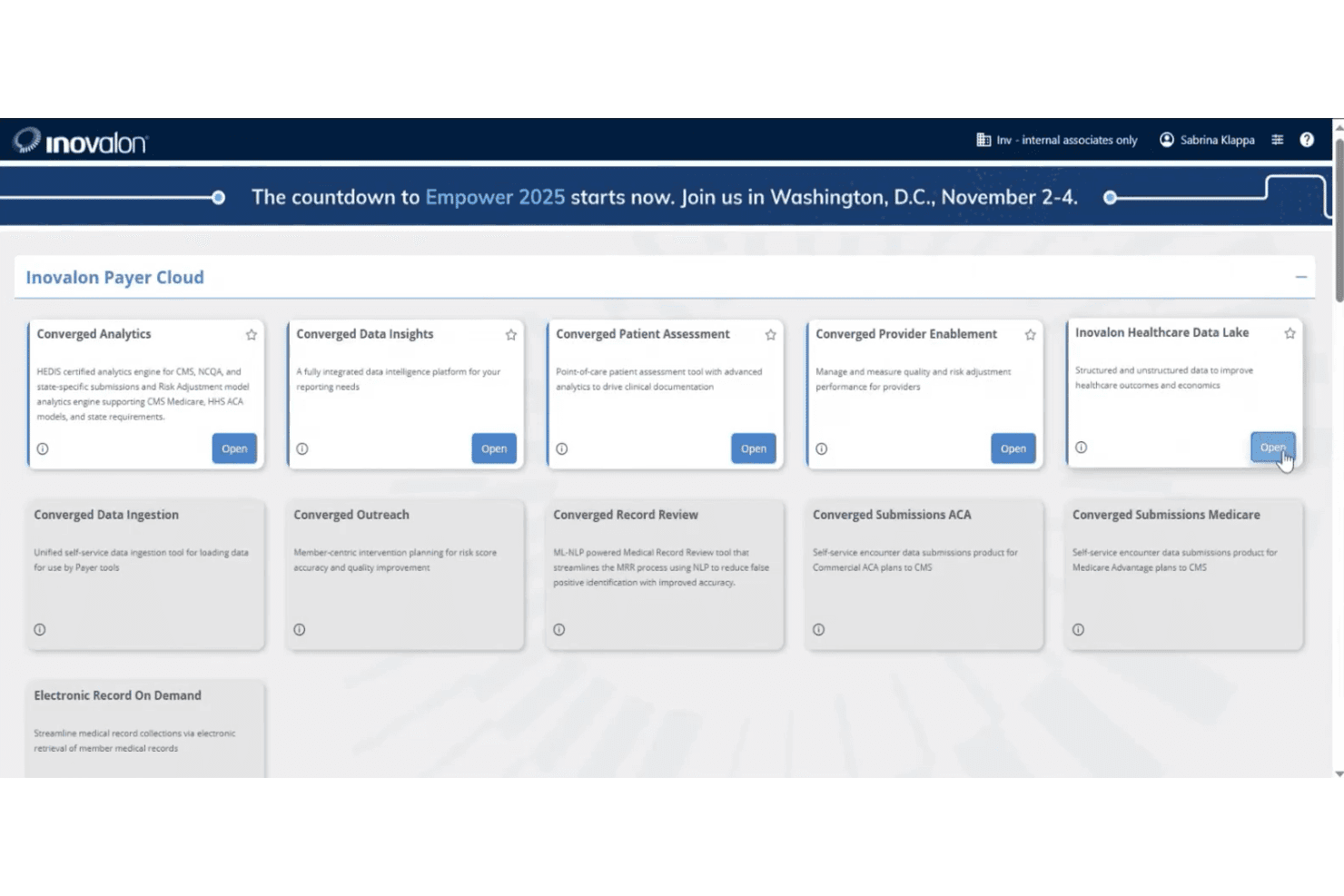
Inovalon’s user interface feels outdated, but its usability makes up for it with highly detailed analytics and reporting tools. Users often mention that finding specific data points can be challenging at first, but once familiar with its workflow, managing large, complex healthcare data sets becomes efficient.
The platform’s extensive documentation and responsive support team help offset initial navigation hurdles, especially for users focused on compliance and quality reporting.
Onboarding
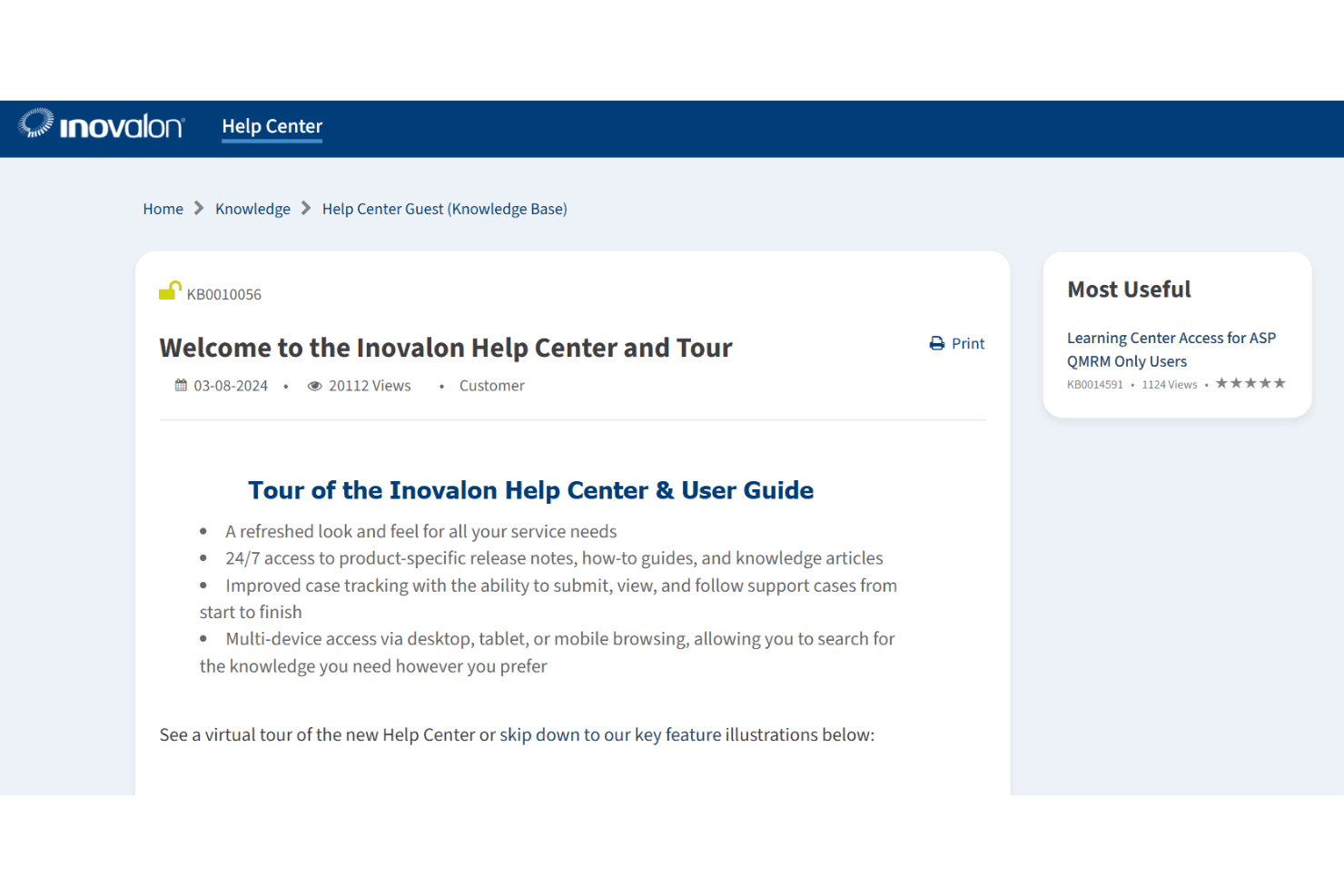
Onboarding with Inovalon can take more time than expected, especially for larger teams navigating complex data requirements. Users point to personalized implementation support and detailed onboarding materials as a major upside, allowing teams to resolve setup roadblocks and learn platform nuances.
Dedicated customer success managers and scheduled training sessions provide direct answers and hands-on help, making the transition manageable even if the initial process isn’t quick.
Customer Support
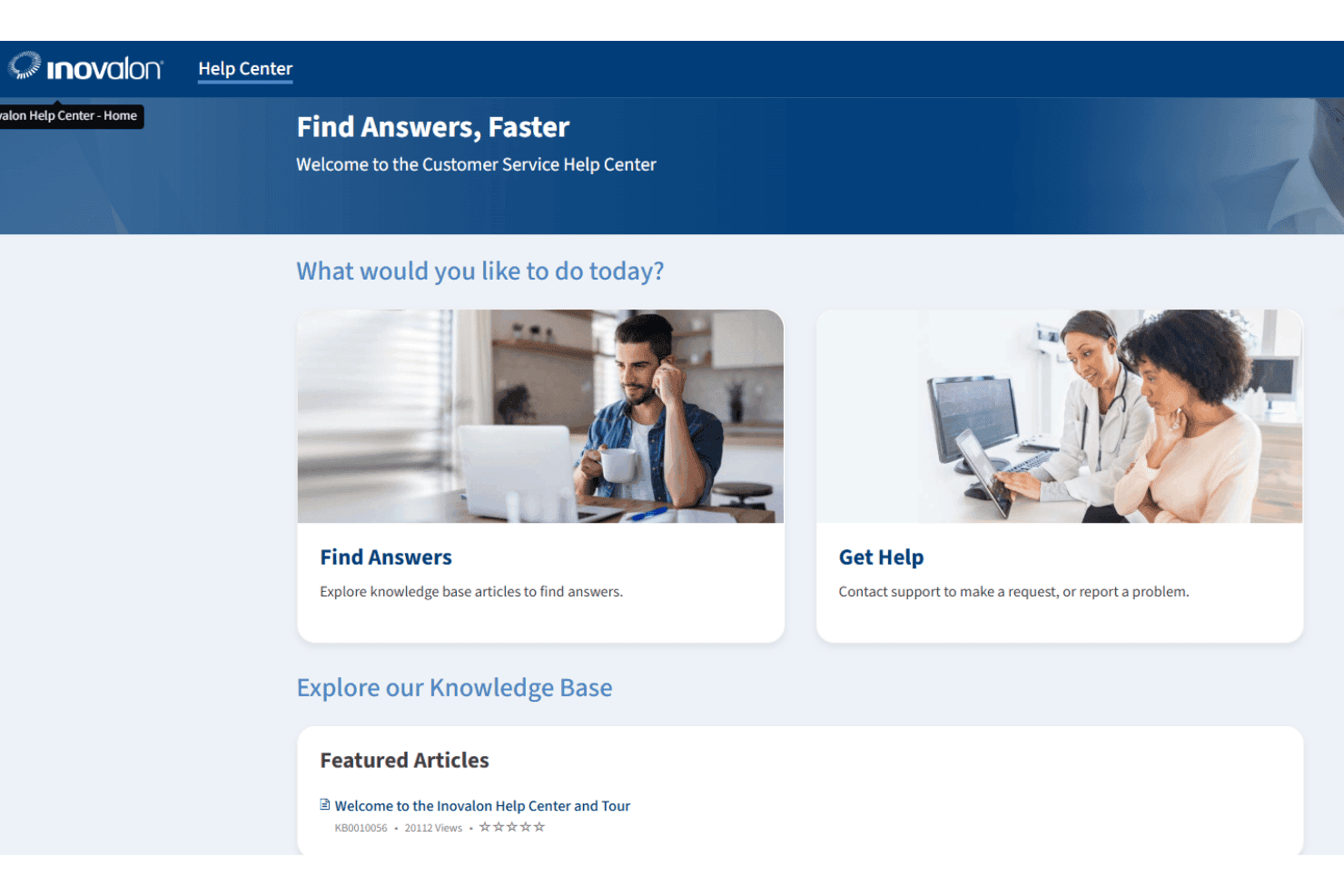
Inovalon’s customer support is widely viewed as responsive and knowledgeable, with users describing quick turnaround on technical questions and ongoing troubleshooting. I’ve noticed that having a dedicated account manager and access to in-depth help documentation helps users resolve complex issues that arise.
Live chat, email, and scheduled support calls give teams multiple ways to connect for urgent or detailed assistance.
Integrations
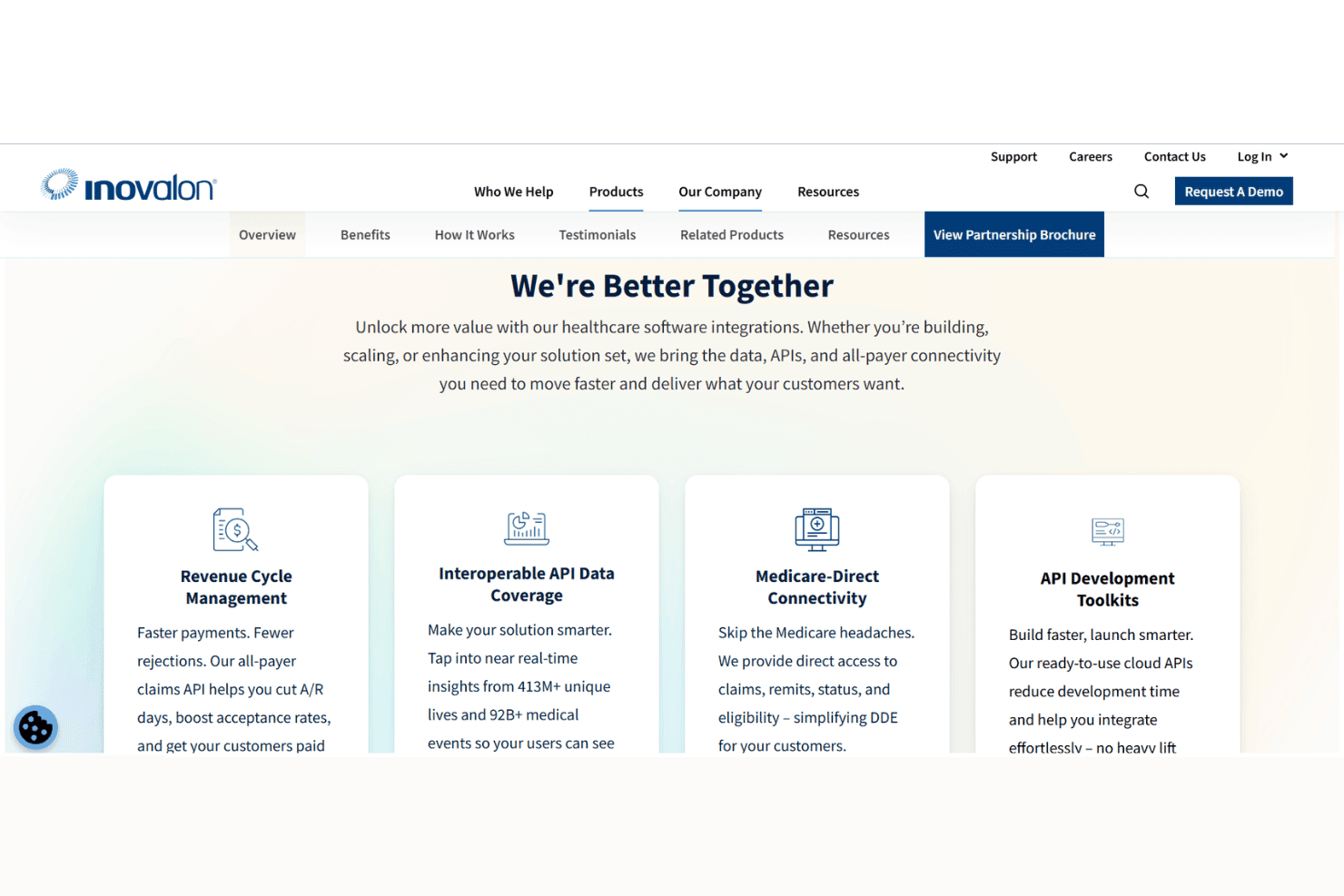
Inovalon integrates with MEDITECH EHR, AlayaCare, CMS (Medicare and Medicaid direct connectivity), Blue Cross Blue Shield networks, Geisinger Health Plan, Phelps Memorial Health Center, ChartSwap, Fenyx Health, HMG Healthcare, and ProHealth Care, among others.
Inovalon also offers a comprehensive API for custom software connections and supports direct integration with both payer and provider systems, but does not list support for third-party integration marketplaces.
Value for Money
Inovalon uses a custom enterprise SaaS pricing model with costs based on organization size, user count, claims volume, and selected modules. The pricing is seen as high and complex, but many users feel the capabilities and compliance support justify the spend for larger organizations handling diverse data sets.
It is best for organizations with specific reporting and regulatory needs and is well-known for lowering administrative workload, better patient payment collection, and more efficient support for value-based care initiatives.
Inovalon Specs
- API: Yes
- Appointment Scheduling: No
- Athlete Management: No
- Audit Management: Yes
- Calendar Management: Yes
- Compliance Tracking: Yes
- Customer Management: Yes
- Dashboard: Yes
- Data Export: Yes
- Data Import: Yes
- Data Visualization: Yes
- Electronic Prescribing: Yes
- External Integrations: Yes
- File Sharing: Yes
- File Transfer: Yes
- Health Management: Yes
- HIPAA Compliance: Yes
- Inventory Tracking: No
- Multi-User: Yes
- Notifications: Yes
- Organization Management: Yes
- Patient Management: Yes
- Project Management: No
- Regulatory Alerts: No
- Risk Assessment: Yes
- Scheduling: Yes
- Supplier Management: No
Inovalon FAQs
Inovalon Company Overview & History
Inovalon, headquartered in Bowie, Maryland, is a healthcare technology company specializing in cloud-based platforms for data analytics and data-driven healthcare solutions. Founded by Dr. Keith Dunleavy, the company employs thousands of professionals worldwide and serves major healthcare organizations, insurers, and life sciences companies.
Inovalon is known for its deep expertise in large-scale healthcare data analytics, frequently collaborating with national health plans and leading provider systems. The company was publicly traded until 2021, when it was acquired by an equity consortium led by Nordic Capital and Insight Partners.
Inovalon Major Milestones
1998: Inovalon is founded by Dr. Keith Dunleavy.
- 2015: Company completes its initial public offering (IPO) on NASDAQ.
- 2017: Inovalon announces multiple large-scale partnerships with top Medicare Advantage and Medicaid plans.
- 2021: Inovalon is acquired and taken private in a $7.3 billion deal led by Nordic Capital and Insight Partners.
- 2022: Expands partnerships with major payer and provider clients, further scaling its cloud-based data platform solutions.