

Substance abuse billing software automates claims processing, payment tracking, and compliance for addiction treatment providers. If you’re comparing options, you’re likely dealing with tough insurance rules, changing documentation needs, and pressure to get every claim right. The right platform helps your team keep up with billing demands, reduce denied claims, and maintain clear records. This list will help you quickly see which tools are built for the unique challenges of substance use billing so you can find solutions that fit your workflow and compliance requirements.
Why Trust Our Software Recommendations
6,700+
Reviews
20
Industry experts
16+
Evaluation factors
14
Years
Our team has been testing and reviewing software since 2012. As medical practice leaders ourselves, we know how difficult—and important—it is to choose the right software.
For this guide, we evaluated tools using hands-on testing and independent research, scoring tools using our selection criteria.
Our reviews reflect our human editorial judgment, not a sales pitch.
Best Substance Abuse Billing Software
This comparison chart outlines pricing for my top substance abuse billing software picks, helping you find the best option for your budget and practice needs.
| Tool | Best For | Trial Info | Price | ||
|---|---|---|---|---|---|
| 1 | Best for addiction EHR and CRM | Free demo available | From $59/user/month | Website | |
| 2 | Best for enterprise behavioral health | Free demo available | Pricing upon request | Website | |
| 3 | Best for substance use management | Free plan available | Pricing upon request | Website | |
| 4 | Best for behavioral health charting | 30-day free trial | From $35/user/month | Website | |
| 5 | Best for addiction care workflows | Free demo available | Pricing upon request | Website | |
| 6 | Best for addiction treatment workflows | Free demo available | Pricing upon request | Website | |
| 7 | Best for integrated treatment operations | Free demo available | Pricing upon request | Website | |
| 8 | Best for substance use documentation | Free demo available | Pricing upon request | Website | |
| 9 | Best for residential treatment programs | Free demo available | Pricing upon request | Website | |
| 10 | Best for addiction treatment CRM | Free demo available | Pricing upon request | Website |


Best Substance Abuse Billing Software Reviews
Below are my detailed summaries of the best substance abuse billing software that made it onto my shortlist. My reviews offer a detailed look at the features, pricing, and integrations of each software to help you find the best one for you.
 Best for addiction EHR and CRM
- Free demo available
- From $59/user/month
Visit WebsiteCustomer Rating:4.5/5This rating combines scores from multiple user review sites to reflect overall customer sentiment about the product.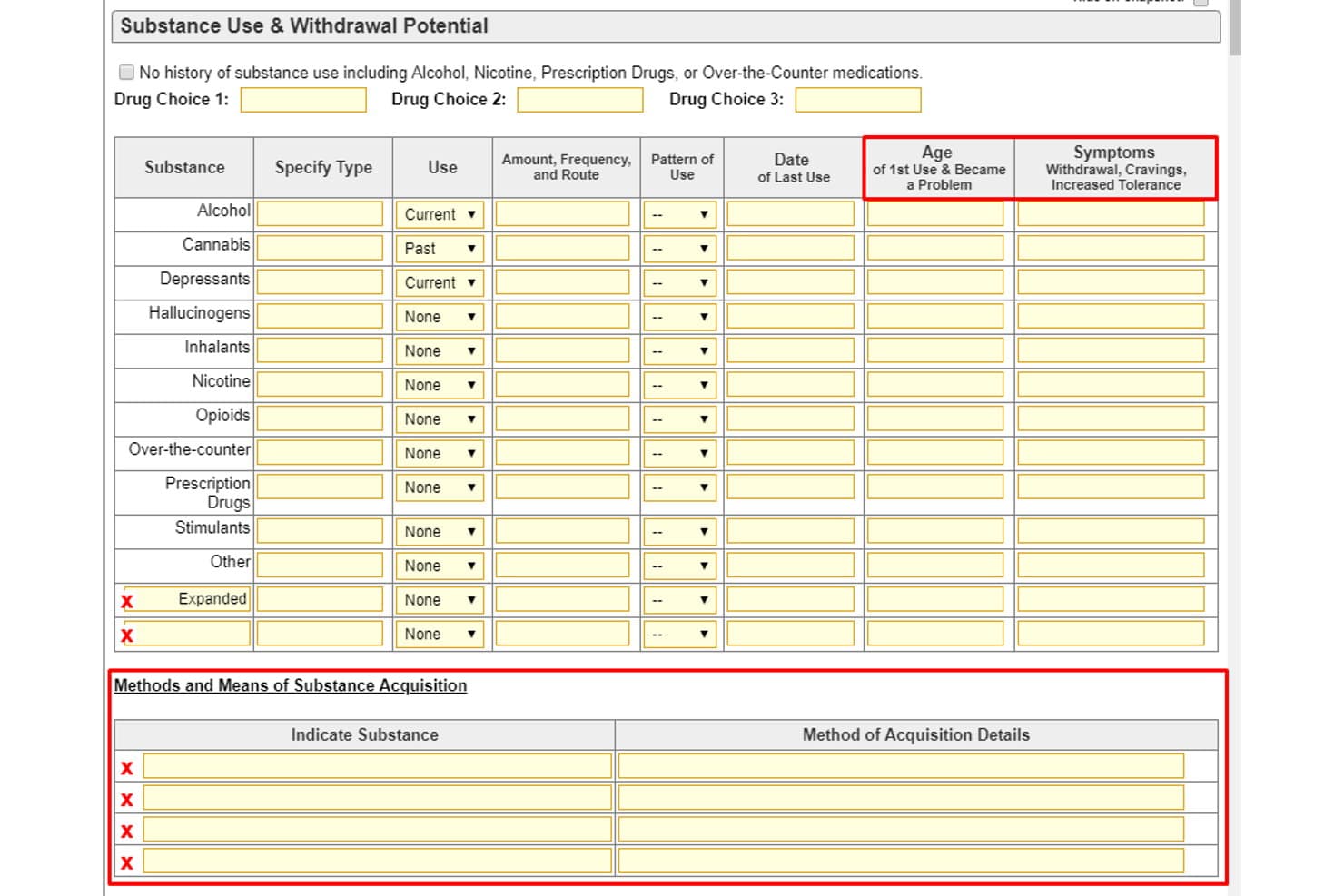
BestNotes offers a detailed Substance Use & Withdrawal Potential form for tracking patient drug history, usage patterns, and acquisition methods. BestNotes is a cloud-based EHR and CRM platform built specifically for behavioral health and addiction treatment providers, combining clinical documentation, admissions pipeline management, and RCM billing in a single system.
Who Is BestNotes Best For?
BestNotes is a strong fit for small to mid-sized addiction treatment centers that need SUD-specific documentation, admissions tracking, and billing in one platform.
Why I Picked BestNotes
BestNotes earns its spot on my shortlist because the native admissions CRM and addiction EHR mean billing teams aren't reconciling data across two separate systems. I particularly like the native ASAM Continuum integration, which embeds level-of-care assessments directly into clinical workflows before a claim is submitted. The built-in 42 CFR Part 2 consent management is a real differentiator, since SUD billing records carry confidentiality requirements that most EHRs bolt on as an afterthought.
BestNotes Key Features
- eMAR functionality: Document medication administration for each patient stay within an integrated electronic MAR.
- CollaborateMD billing integration: Submit electronic claims with 837I/837P formats using a built-in revenue cycle management engine.
- ASAM Criteria assessments: Launch standardized ASAM Level of Care assessments directly within the EHR workflow.
- Real-time patient eligibility checks: Verify insurance coverage and estimator status from the billing interface before claim submission.
BestNotes Integrations
BestNotes offers native integrations with ASAM Continuum, CO-Triage, CollaborateMD, DrFirst, and Videra Health. An API is available for custom integrations.
Pros and Cons
Pros:
- End-to-end admissions to billing in one system
- Native 42 CFR Part 2 consent workflows
- Built-in ASAM and SUD-specific assessment tools
Cons:
- Custom report templates require paid setup
- Out-of-network contract modeling is limited
Learn more about BestNotes: Best for enterprise behavioral health
- Free demo available
- Pricing upon request
Visit WebsiteCustomer Rating:4.4/5This rating combines scores from multiple user review sites to reflect overall customer sentiment about the product.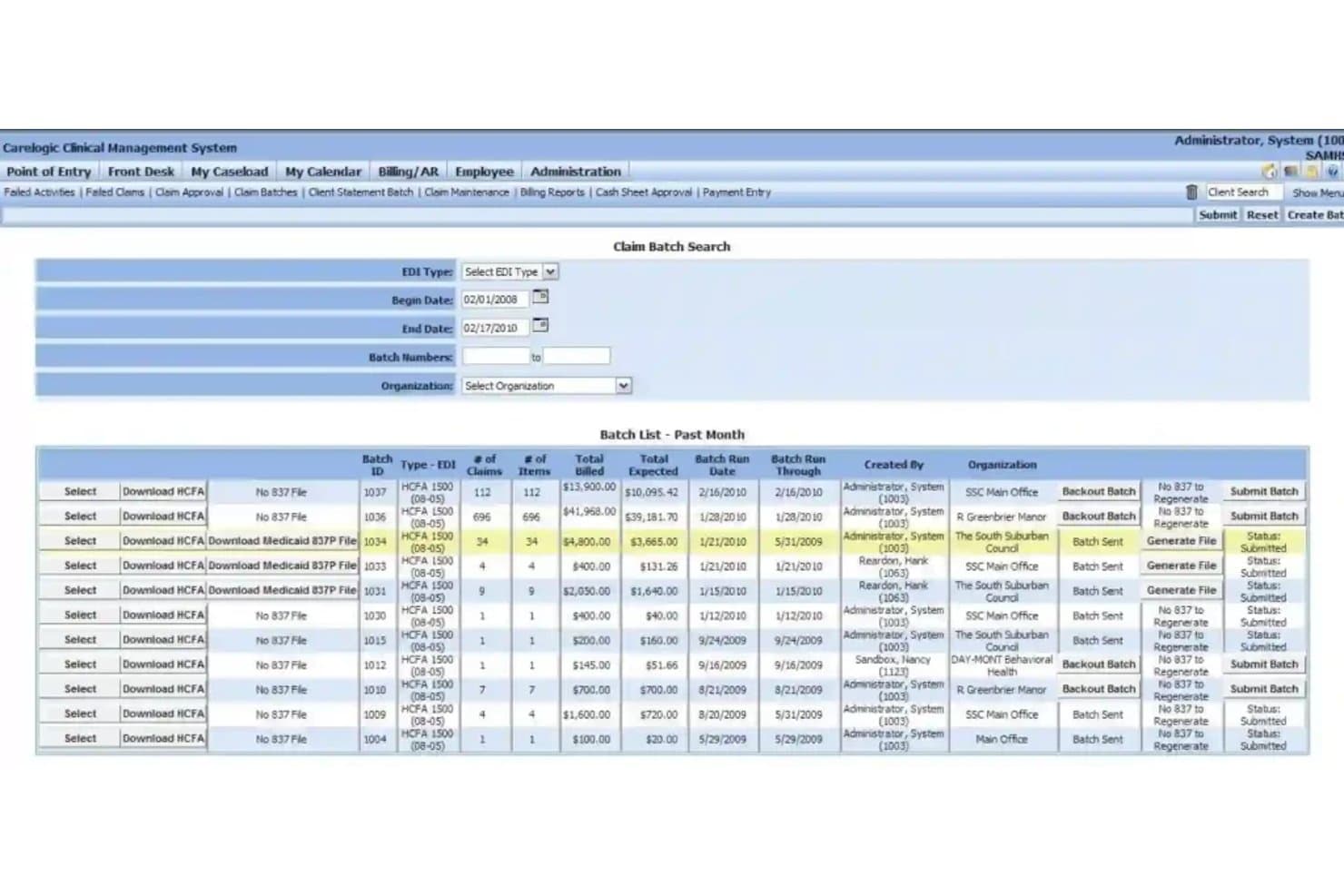
Qualifacts CareLogic offers a Claim Batch Search interface that allows billing staff to filter, review, and submit claim batches with detailed EDI type, date range, and organization controls. Qualifacts CareLogic is a behavioral health EHR with an integrated RCM and billing module built for substance use disorder treatment facilities, supporting SUD-specific claims processing, 42 CFR Part 2 compliance, and multi-payer billing workflows.
Who Is Qualifacts CareLogic Best For?
It's a strong fit for mid-size to enterprise SUD treatment facilities running multiple locations or programs, such as residential, IOP, PHP, and MAT.
Why I Picked Qualifacts CareLogic
I've included Qualifacts CareLogic in my top picks because no other platform on this list handles 42 CFR Part 2 compliance with the same depth. At the enterprise level, running billing across residential, IOP, and MAT programs simultaneously means consent management and redisclosure controls can't be an afterthought. CareLogic's ASAM Criteria Software add-on and MethodOne MAT/MOUD module make it one of the few EHRs I'd trust to handle level-of-care billing without heavy manual configuration.
Qualifacts CareLogic Key Features
- Integrated payer contract management: Lets you configure multiple payer contracts, including Medicaid and commercial, for program-specific billing rules.
- Automated claims validation: Runs claims through built-in validation checks before submission to minimize rejections.
- Role-based access controls: Sets detailed user permissions for sensitive SUD patient records and billing tasks.
- Business intelligence dashboards: Offers automated reporting by payer, level of care, or episode to support audits and payer negotiations.
Qualifacts CareLogic Integrations
Native integrations include OnCall Health for telehealth, Inovalon for eligibility workflows, lab information systems, and health information exchanges. An API is available for custom integrations.
Pros and Cons
Pros:
- Multi-location and program billing flexibility
- ASAM level-of-care and SUD code support
- Built-in 42 CFR Part 2 controls
Cons:
- Outpatient scheduling can feel outdated
- Custom reporting often requires SQL knowledge
Learn more about Qualifacts CareLogic: Best for substance use management
- Free plan available
- Pricing upon request
Visit WebsiteCustomer Rating:4.8/5This rating combines scores from multiple user review sites to reflect overall customer sentiment about the product.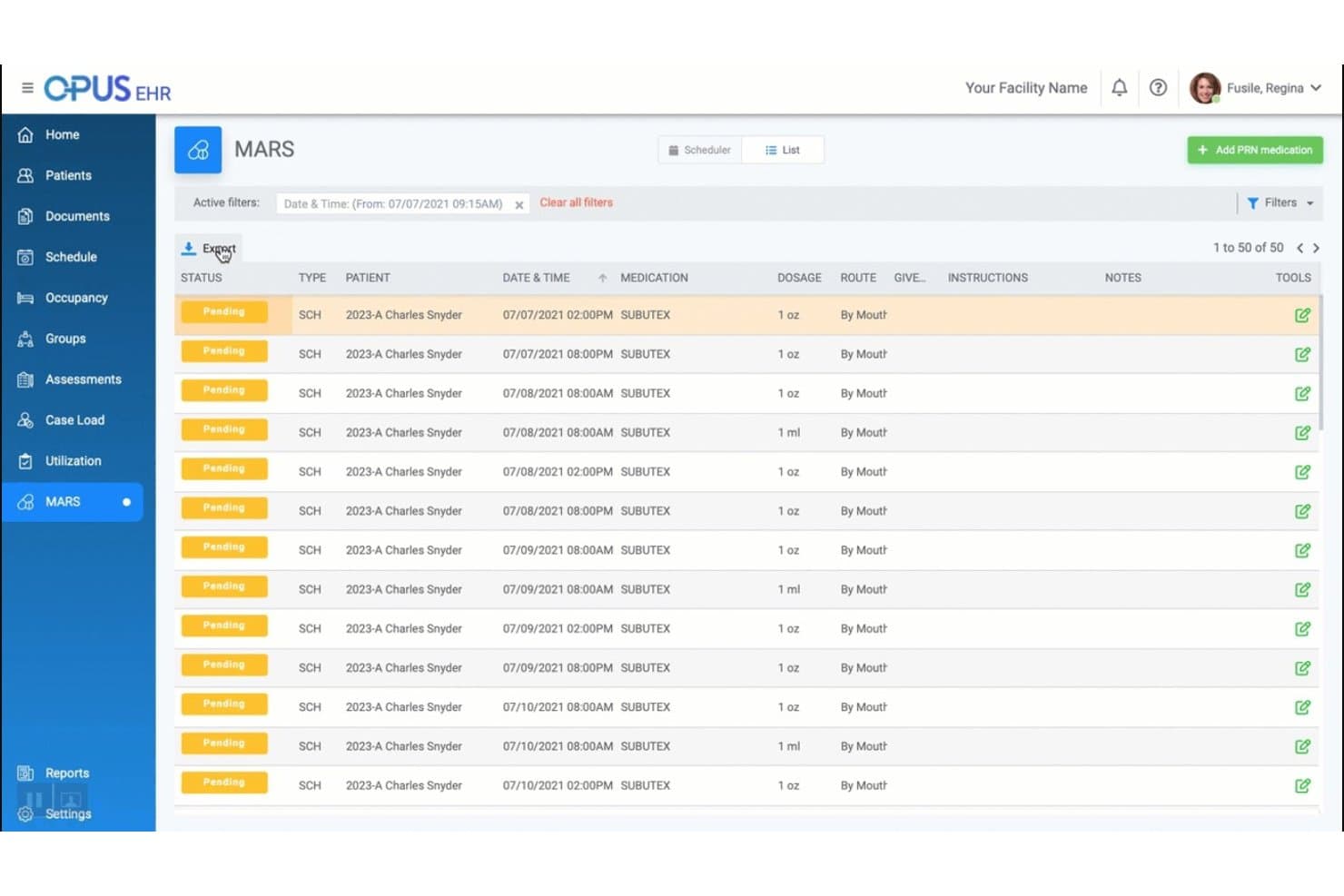
Opus EHR offers a MARS (Medication Administration Record System) list view displaying pending Subutex medication schedules for substance abuse patients. Opus EHR is a cloud-based EHR built specifically for addiction treatment and behavioral health facilities, combining clinical documentation, CRM-based admissions management, and a built-in revenue cycle management engine for SUD billing.
Who Is Opus EHR Best For?
Opus EHR is a strong fit for mid-sized addiction treatment centers running multiple levels of care, such as IOP, PHP, residential, and MAT programs, with 5 or more clinicians on staff.
Why I Picked Opus EHR
I picked Opus EHR because it's one of the few platforms built from the ground up for substance use disorder treatment, meaning its billing workflows are pre-configured for the realities of SUD care rather than adapted from general practice management. I especially like its utilization review module, which flags unpaid claims and over-billing situations in real time across ASAM levels of care. Its built-in RCM handles both UB-04 and CMS 1500 claims, so my team can bill residential and outpatient services from the same system without switching platforms.
Opus EHR Key Features
- E-prescribing for controlled substances: Securely send electronic prescriptions for SUD medications within the EHR.
- Custom analytics dashboard: Manage financial and operational metrics with drag-and-drop reporting widgets tailored for SUD programs.
- Flexible fee schedule management: Set up multiple billing schedules by payer, contract, or level of care for addiction treatment services.
- Embedded group telehealth: Run HIPAA-compliant group sessions and document attendance from within the platform.
Opus EHR Integrations
Opus EHR offers native integrations with Collect Rx, APT Financial, Healthcare Capital, and Curogram. The software also connects with various pharmacy, lab, and payer systems. An API is available for custom integrations.
Pros and Cons
Pros:
- Custom reporting for SUD financial metrics
- Integrated utilization review and claims scrubbing
- Pre-built billing for ASAM levels of care
Cons:
- Limited support for bundled SCA contract billing
- 42 CFR Part 2 consent not explicit
Learn more about Opus EHR: Best for behavioral health charting
- 30-day free trial
- From $35/user/month
Visit WebsiteCustomer Rating:4.1/5This rating combines scores from multiple user review sites to reflect overall customer sentiment about the product.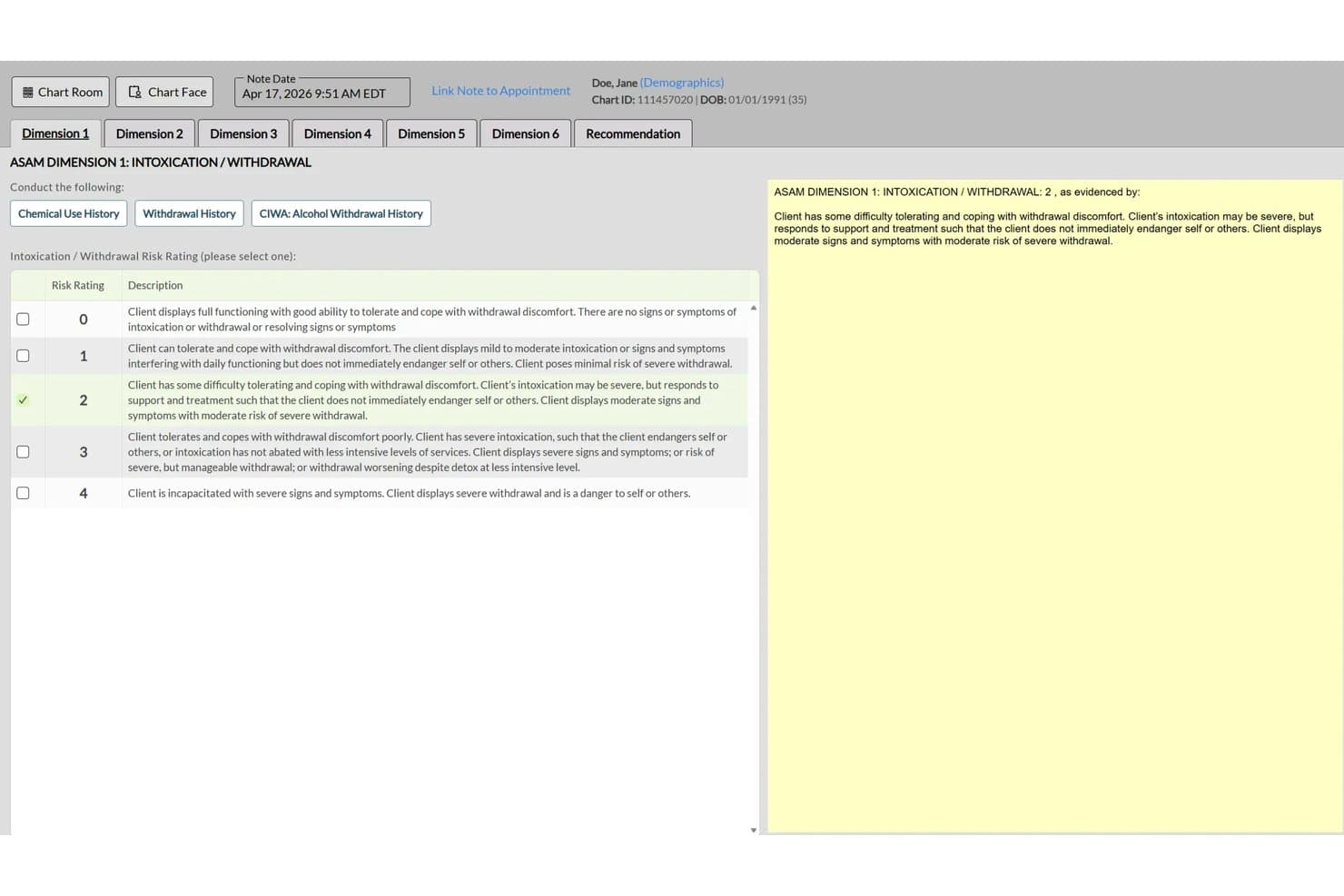
ICANotes offers structured ASAM Dimension 1 Intoxication/Withdrawal risk rating documentation within its addiction treatment EMR. ICANotes is a behavioral health EHR with integrated billing that combines SUD-specific clinical documentation, group therapy charting, and claims submission tools built for addiction treatment practices.
Who Is ICANotes Best For?
It's a strong fit for solo and small-to-mid-size outpatient SUD practices that need charting and billing in a single platform without managing separate systems.
Why I Picked ICANotes
ICANotes earns its spot on my shortlist because its SUD-specific charting directly supports billing accuracy. I like that the group therapy note templates generate individualized clinical notes for each client in a single workflow, which meets the documentation standards IOP and outpatient group programs need for payer compliance. The content engine, built on 75,000+ pre-written clinical phrases, produces audit-ready notes that map to medical necessity criteria and reduce the documentation gaps that commonly trigger claim denials.
ICANotes Key Features
- E-prescribing with EPCS: Prescribers can submit electronic prescriptions for controlled and non-controlled substances within the platform.
- Integrated clearinghouse claims submission: Prepare and batch-submit claims directly to connected clearinghouses from within ICANotes.
- Patient portal: Clients can access appointment schedules, secure messages, and select financial records online.
- Lab ordering and results integration: Order labs and receive results directly in the patient chart for coordinated care documentation.
ICANotes Integrations
ICANotes offers native integrations for e-prescribing, clearinghouse claims submission, and lab ordering and results. An API is available for custom integrations.
Pros and Cons
Pros:
- 42 CFR Part 2 compliance workflows included
- Batch claims sent to integrated clearinghouse
- SUD charting built for addiction counselors
Cons:
- Lacks support for ASAM level contract billing
- No real-time insurance verification or pre-auth
Learn more about ICANotes:
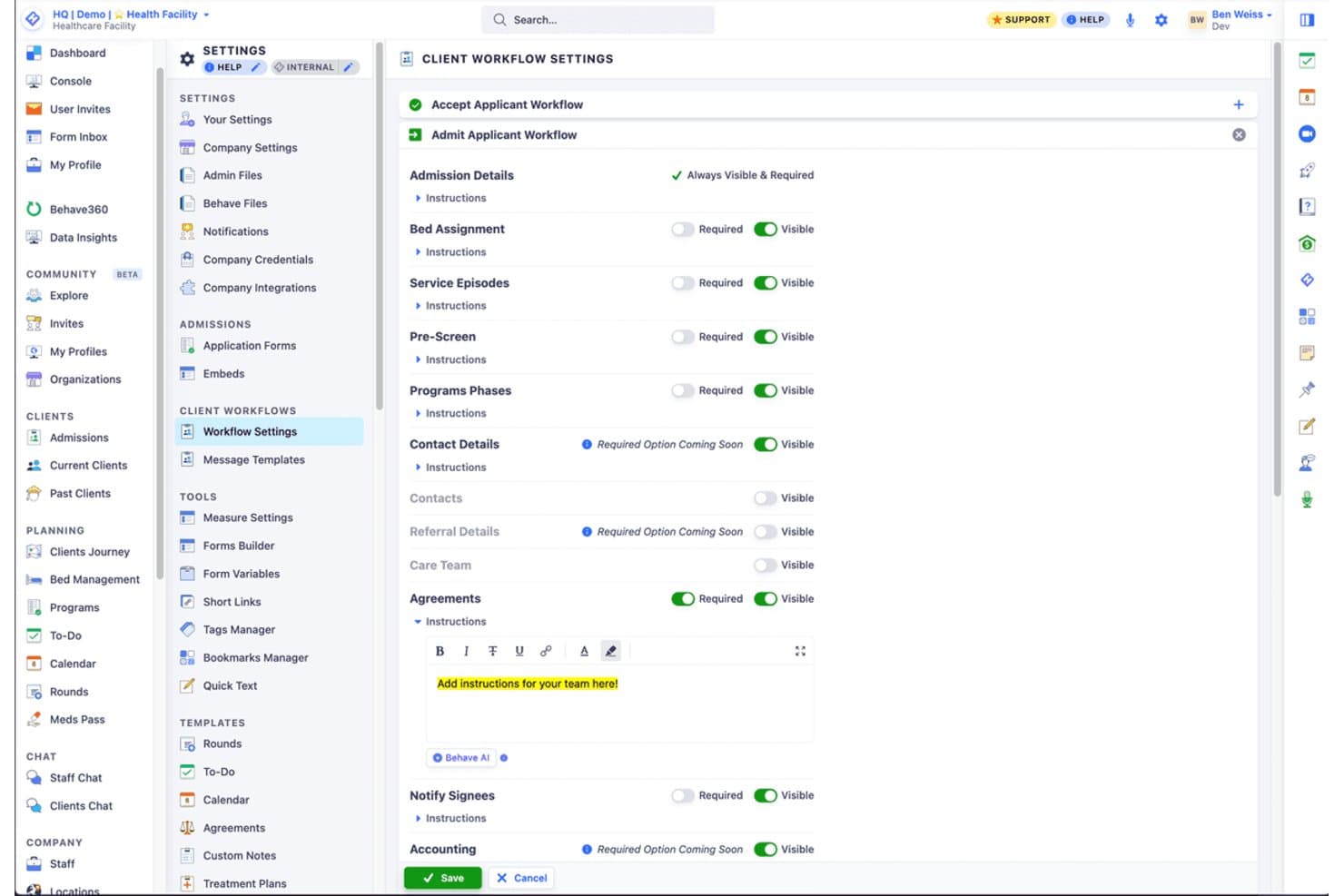
Behave Health offers customizable client workflow settings that allow staff to configure admission steps, agreements, and visibility requirements for each stage of the intake process. Behave Health is an all-in-one platform for addiction treatment and behavioral health facilities that bundles CRM, EHR, and RCM into a single system with built-in insurance verification, claims submission, utilization review, and denial management.
Who Is Behave Health Best For?
Behave Health is a strong fit for facility-based addiction treatment providers running detox, residential, PHP, or IOP programs who need clinical and billing workflows in one system.
Why I Picked Behave Health
I picked Behave Health because the clinical and billing workflows are built specifically around addiction treatment levels of care. When a client moves from detox into PHP, that level-of-care change flows directly into per-diem claim generation without manual re-entry. I also like the utilization review module, which keeps authorization tracking and concurrent review deadlines connected to the clinical chart rather than managed separately in a spreadsheet or a different system.
Behave Health Key Features
- Real-time insurance eligibility checks: Instantly verify behavioral health coverage, copays, deductibles, and reimbursement rates for each client.
- Integrated EHR and billing platform: Sync clinical charts, treatment plans, and billing events in one shared system to minimize data entry errors.
- Out-of-network and per-diem rate handling: Accommodate single-case agreements, variable daily rates, and bundled billing common in addiction treatment.
- Behavioral health financial and operational reporting: Generate reports segmented by payer, level of care, and episode across all programs and facilities.
Behave Health Integrations
Behave Health offers native integrations with Stripe for payments, Zoom and Google Meet for telehealth sessions, and supports e-prescribing integrations for EPCS and PDMP checks. An API is available for custom integrations.
Pros and Cons
Pros:
- Real-time denial tracking and reporting
- Automatic VOB with behavioral health parsing
- SUD billing logic built for ASAM levels
Cons:
- Reporting customization is not extensive
- Limited payer contract modeling tools
Learn more about Behave Health: 6Best for addiction treatment workflows
Kipu
- Free demo available
- Pricing upon request
Visit WebsiteCustomer Rating:4.7/5This rating combines scores from multiple user review sites to reflect overall customer sentiment about the product.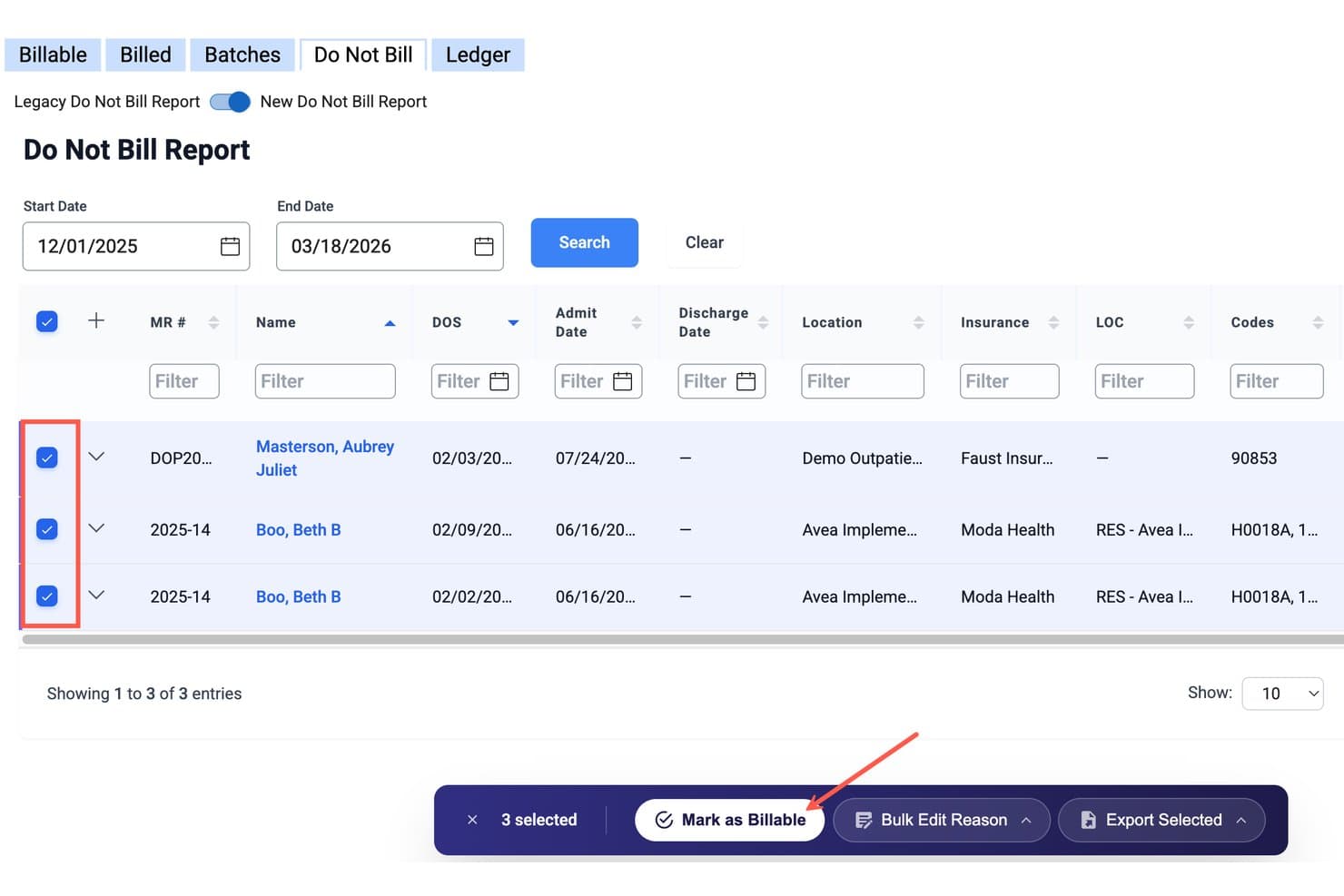
Kipu offers a Do Not Bill Report with bulk action tools, allowing users to select multiple claims and mark them as billable in one step. Kipu is a cloud-based EMR and revenue cycle management platform built for addiction treatment and behavioral health centers, combining clinical documentation, insurance verification, utilization review, and claims management in one system.
Who Is Kipu Best For?
Kipu is a strong fit for multi-site addiction treatment and residential behavioral health facilities that need billing and clinical documentation managed in a single platform.
Why I Picked Kipu
I picked Kipu as one of the best because its billing workflows are built specifically around addiction treatment level-of-care coding, not retrofitted from general medical billing. The attendance calendar directly feeds claim generation, so when a patient completes an IOP session, that attendance record becomes a billable claim without manual entry. I also like that the utilization review module tracks authorization status with color-coded alerts, keeping concurrent review on track across active cases.
Kipu Key Features
- Automated denial categorization: Tracks and categorizes payer denials by type to streamline appeals and root-cause analysis.
- Real-time VOB checks: Instantly verifies behavioral health benefits and displays details directly within the billing workflow.
- Integrated utilization review dashboard: Centralizes authorization monitoring with alerts for concurrent review and expiring approvals.
- Financial reporting by level of care: Generates reports segmented by ASAM level, payer, and treatment episode for actionable billing data.
Kipu Integrations
Kipu offers native integrations with ASAM CONTINUUM, Chess Health, Contexture, and DFM, and provides an API for custom integrations. Additional connections are available through its certified partner marketplace.
Pros and Cons
Pros:
- 42 CFR Part 2 compliance features included
- Automated denial categorization for behavioral claims
- ASAM level billing logic built in
Cons:
- Requires in-house staff for billing process
- Fragmented billing and RCM pricing structure
Learn more about Kipu: Best for integrated treatment operations
- Free demo available
- Pricing upon request
Visit WebsiteCustomer Rating:4.4/5This rating combines scores from multiple user review sites to reflect overall customer sentiment about the product.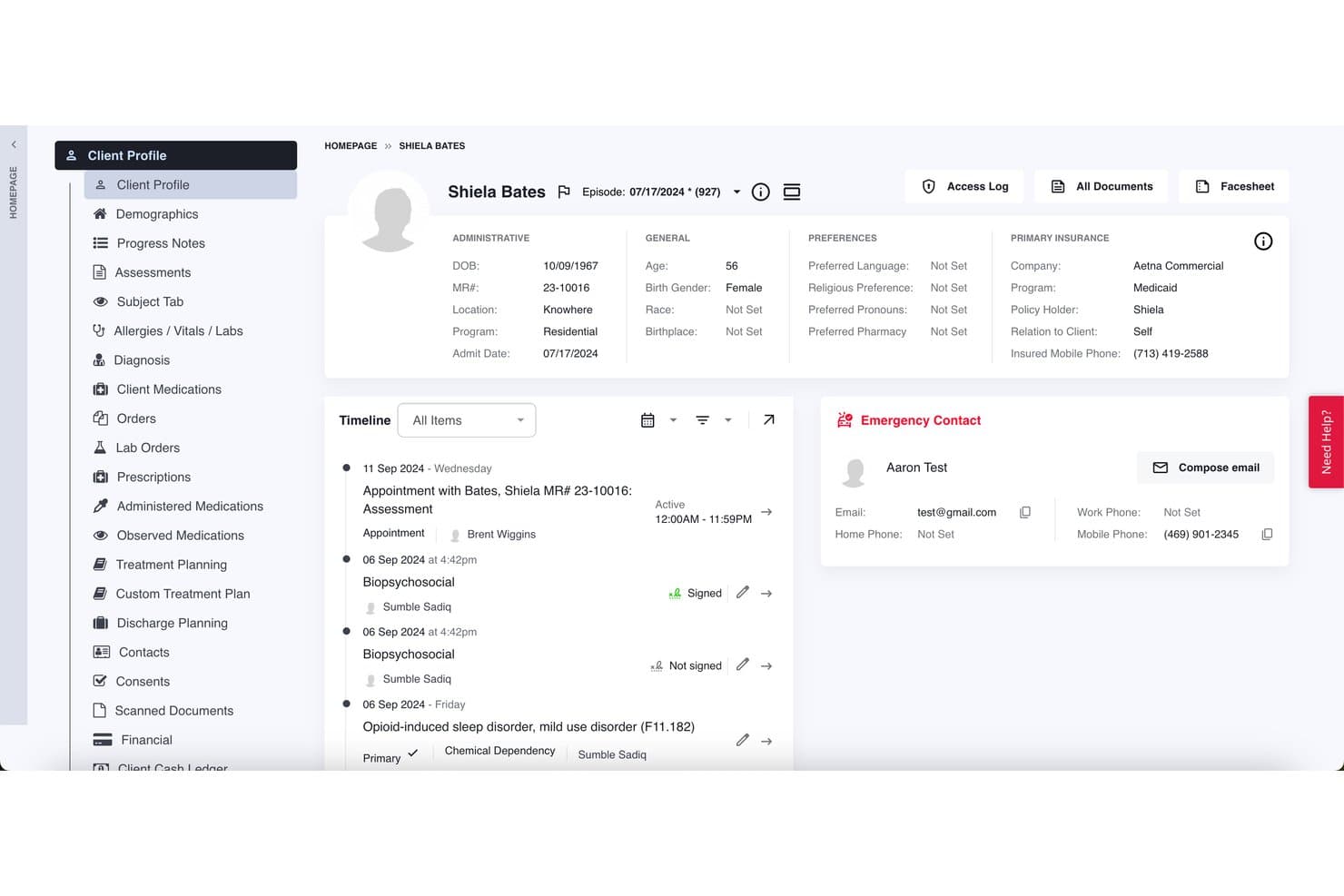
Lightning Step offers a detailed client profile view with insurance, billing, emergency contact, and timeline documentation for substance abuse treatment management. Lightning Step is a behavioral health platform built for substance abuse treatment centers that integrates CRM, EMR, and revenue cycle management with SUD-specific claims processing, insurance verification, and 42 CFR Part 2-compliant billing tools.
Who Is Lightning Step Best For?
Lightning Step is a strong fit for addiction treatment facilities that operate across multiple levels of care, from detox and residential to PHP and IOP programs.
Why I Picked Lightning Step
Lightning Step earns its spot on my shortlist because the CRM, EMR, and RCM all run on a single login, so billing teams aren't reconciling data across disconnected systems. I particularly like LIA, the AI assistant that learns payer-specific denial patterns and flags at-risk claims before submission. The automated 42 CFR Part 2 consent verification also runs in the background, which I think billing managers at SUD facilities will genuinely value.
Lightning Step Key Features
- Smart bulk claims actions: Submit multiple SUD-specific insurance claims and payments with a single click.
- Integrated clearinghouse connectivity: Direct connections to Waystar for real-time claim status, remits, and denials.
- Utilization review dashboards: Monitor and track UR documentation, reviews, and status by client and payer.
- Patient billing portal: Lets patients upload insurance cards, make credit card payments, and manage billing consents online.
Lightning Step Integrations
Lightning Step offers native integrations with Waystar, CTM, Millenium, Twilio, and Salesforce. An API is available for custom integrations.
Pros and Cons
Pros:
- Automated VOB and UR tracking for SUD
- AI flags at-risk SUD claims before submission
- Built-in 42 CFR Part 2 compliance workflows
Cons:
- Reporting customization is somewhat restricted
- Limited payer contract modeling features
Learn more about Lightning Step: Best for substance use documentation
- Free demo available
- Pricing upon request
Visit WebsiteCustomer Rating:3.9/5This rating combines scores from multiple user review sites to reflect overall customer sentiment about the product.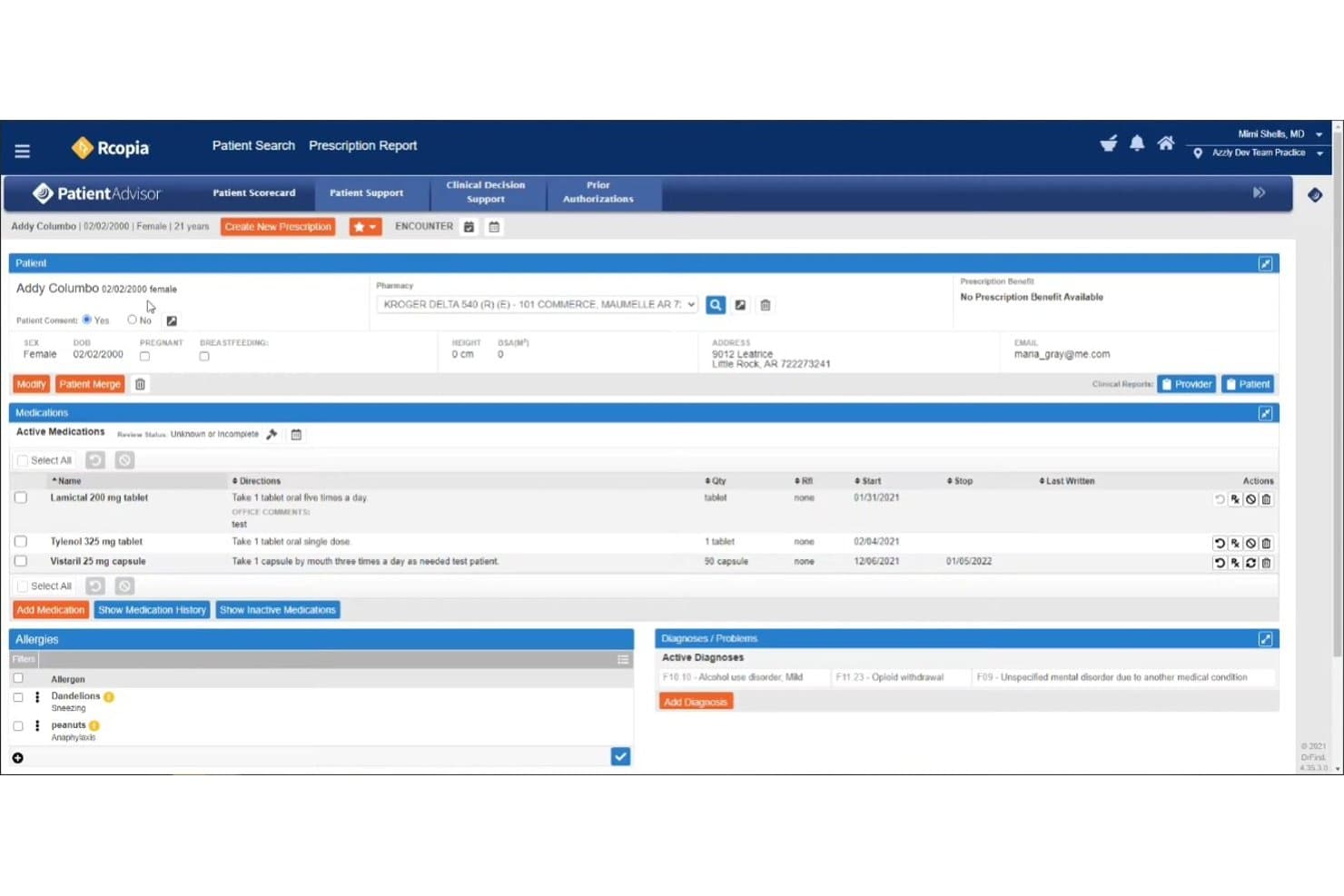
AZZLY Rize offers an integrated e-prescribing module with active medications, allergy tracking, and substance-related diagnoses such as opioid withdrawal and alcohol use disorder. AZZLY Rize is an all-in-one EHR and RCM platform built specifically for behavioral health and substance use disorder programs, combining clinical documentation, medical billing, claims submission, and revenue cycle management in a single system.
Who Is AZZLY Rize Best For?
It's a strong fit for small-to-mid-size substance use disorder treatment centers running MAT, OTP, IOP, PHP, or residential programs that need one platform for both clinical and billing workflows.
Why I Picked AZZLY Rize
I picked AZZLY Rize as one of the best because its clinical documentation is directly wired into the billing engine. ASAM level-of-care notes feed auto-claims generation by encounter type, and the system blocks incomplete notes from submitting, which cuts post-submission coding errors at the source. I find that particularly useful when managing IOP and residential billing simultaneously across multiple ASAM levels with different payer rules.
AZZLY Rize Key Features
- Prior-auth countdown tracking: Automated tools notify billing staff of upcoming authorization expirations for ongoing SUD treatment episodes.
- Auto charge master and fee schedule setup: Lets you configure payer-specific billing rules, rates, and modifiers to match addiction treatment program billing models.
- Integrated ERA posting: Automatically posts electronic remittance advice data directly to patient accounts to simplify AR and denial follow-up.
- Real-time bed and census management: Monitors inpatient occupancy and program census in sync with billing and clinical documentation.
AZZLY Rize Integrations
AZZLY Rize offers native integrations with Zoom for telehealth, Stripe for payment processing, EPCS and PDMP for e-prescribing, MethodOne and Methware for methadone dosing data, plus bi-directional lab integrations.
Pros and Cons
Pros:
- Built-in prior-auth expiration tracking
- Strong controls for 42 CFR Part 2 compliance
- ASAM-level billing directly linked to documentation
Cons:
- Custom reporting setup can be time-consuming
- Out-of-network billing model options are limited
Learn more about AZZLY Rize: Best for residential treatment programs
- Free demo available
- Pricing upon request
Visit WebsiteCustomer Rating:4.7/5This rating combines scores from multiple user review sites to reflect overall customer sentiment about the product.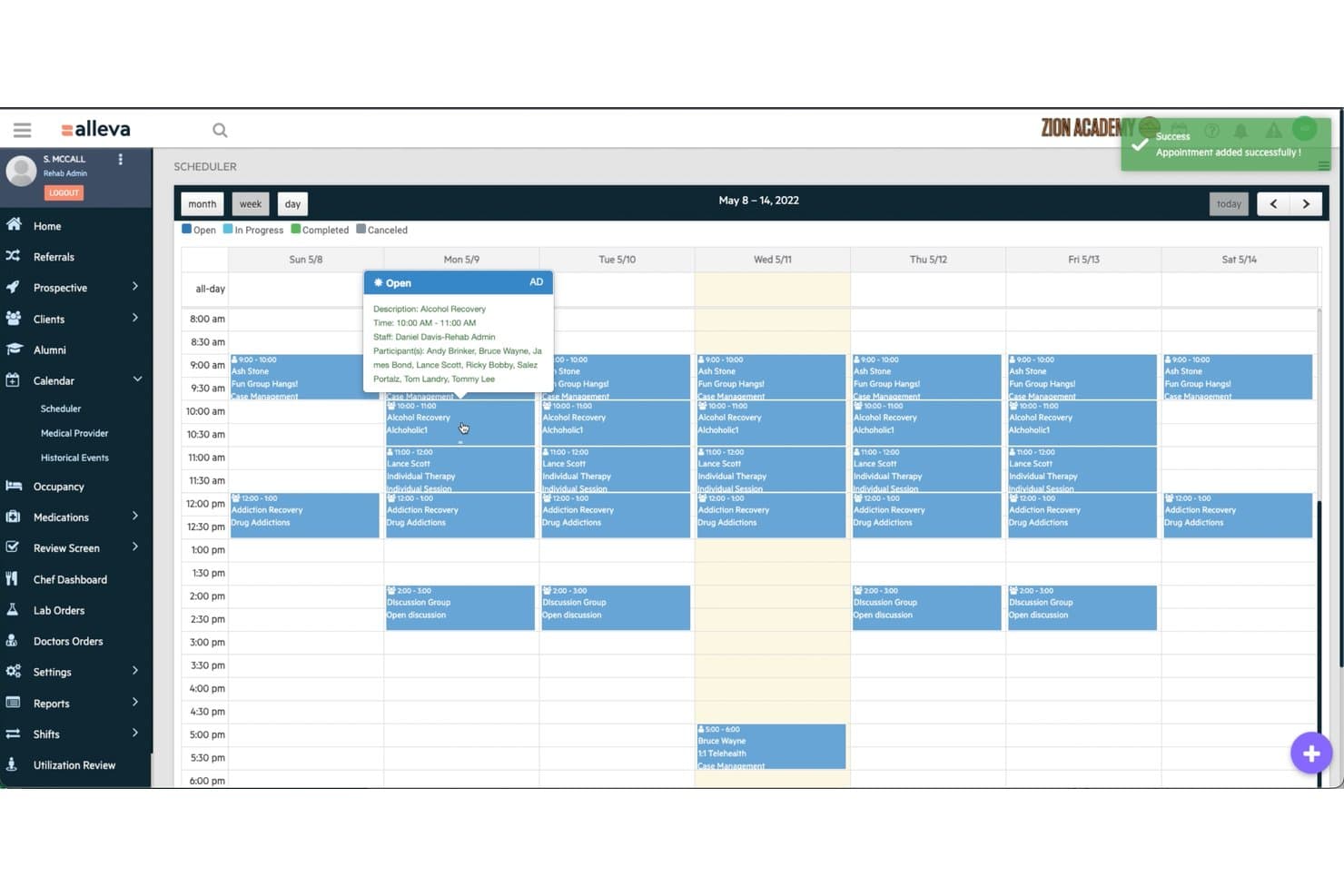
Alleva offers a weekly scheduler view that displays group therapy sessions, individual appointments, and staff assignments for substance abuse treatment programs. Alleva is a behavioral health EMR and RCM platform built exclusively for addiction treatment programs, covering clinical documentation, insurance verification, claims submission, and denial management across detox, IOP, PHP, and residential care settings.
Who Is Alleva Best For?
Alleva is a strong fit for addiction treatment centers operating across multiple levels of care, particularly those running residential programs alongside IOP, PHP, or detox services.
Why I Picked Alleva
I picked Alleva as one of the best because it's the only platform I've used that builds residential care workflows directly into the billing process. The Encounter Transmission Table (ETT) runs pre-submission claim audits with custom rules per payer and program, so claims go out clean. Echo, the ambient AI scribe, generates progress notes and UR documentation from clinical sessions, keeping 24/7 residential documentation current without adding manual work for shift staff.
Alleva Key Features
- Instant VOBs: Built-in verification of benefits powered by Waystar with real-time eligibility checks at the point of admission.
- Automated ERA posting: Integration with clearinghouse services for electronic remittance advice posting and reconciliation in the billing dashboard.
- Payer-specific validation rules: Encounter Transmission Table (ETT) applies custom auditing criteria to billing submissions for different payers and programs.
- Integrated client and family portal: Secure portal enabling clients, families, and referral sources to access information and telehealth sessions.
Alleva Integrations
Alleva offers native integrations with Waystar, Salesforce, CollaborateMD, CMD, NuIQ, and Owl, and provides an API for custom integrations.
Pros and Cons
Pros:
- Real-time VOB integrated at intake
- ETT pre-submission claim validation prevents denials
- Dedicated residential and detox billing workflows
Cons:
- Payer contract modeling features are limited
- 42 CFR Part 2 compliance not prominently shown
Learn more about Alleva: 10Best for addiction treatment CRM
Sunwave
- Free demo available
- Pricing upon request
Visit WebsiteCustomer Rating:5/5This rating combines scores from multiple user review sites to reflect overall customer sentiment about the product.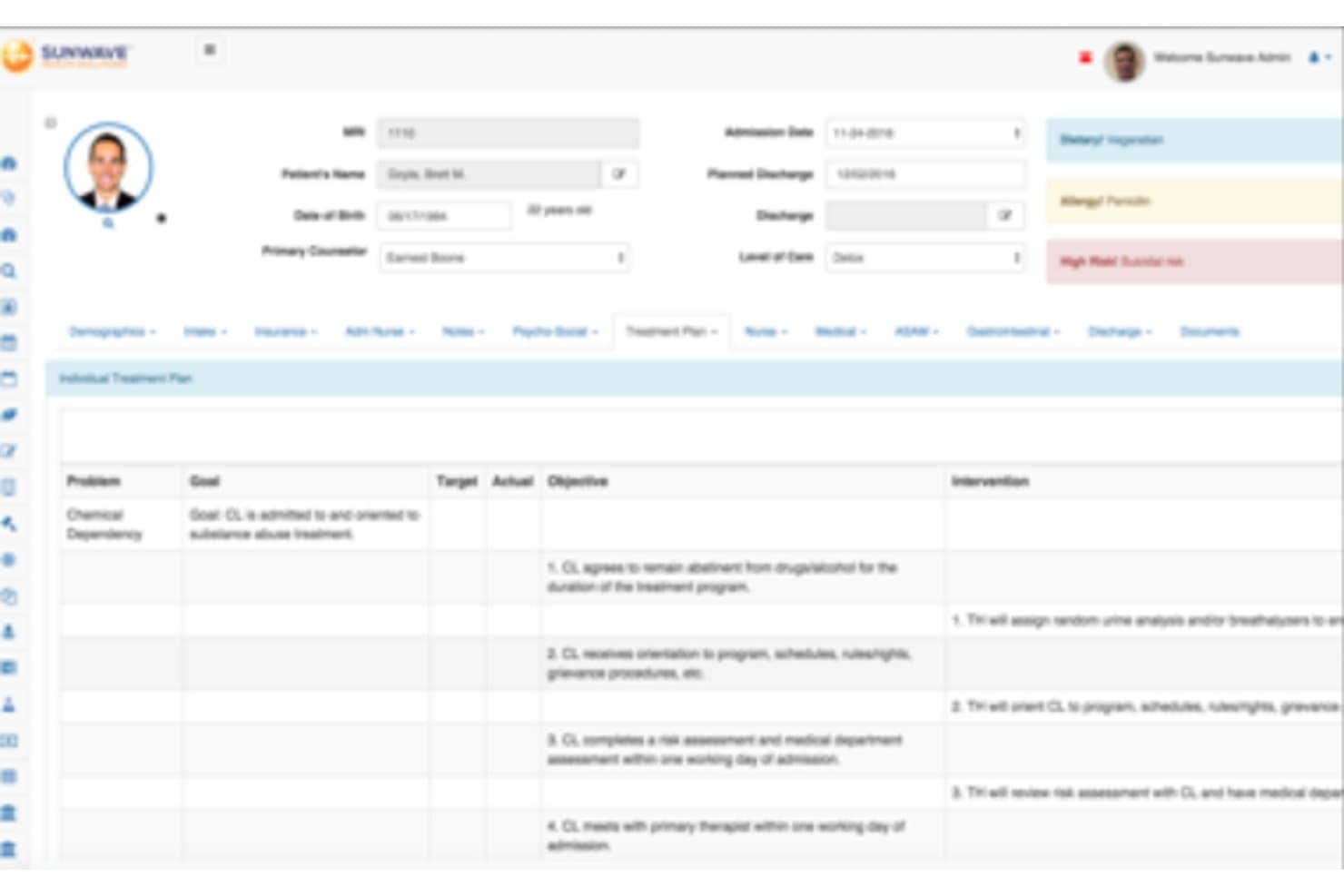
Sunwave offers an Individual Treatment Plan screen with patient details, goals, objectives, and interventions for substance abuse care management. Sunwave is an all-in-one behavioral health platform built for substance use disorder treatment centers, combining CRM, EMR, and RCM into a single system with SUD-specific claims processing, insurance verification, and 42 CFR Part 2 compliance tools.
Who Is Sunwave Best For?
Sunwave is a strong fit for mid-sized to large SUD treatment facilities managing multiple levels of care across one or more locations.
Why I Picked Sunwave
I've included Sunwave in my top picks because its addiction treatment CRM feeds directly into the RCM module, removing the manual handoff between admissions and billing. When a patient moves from inquiry to admission, census data auto-populates insurance claims, so billing teams aren't re-entering what admissions already captured. I also like the real-time bed board, which keeps payer eligibility and available capacity visible in the same system where claims are generated.
Sunwave Key Features
- Automated SUD claims validation: Runs over 150 built-in rules to catch coding errors and ensure payer-specific requirements are met before submission.
- Real-time eligibility and VOB dashboard: Lets you instantly check behavioral health benefits and run verification of benefits with detailed breakdowns.
- Clinical documentation sync: Links clinical progress notes and utilization review data directly to billing for support with audits and medical necessity.
- Configurable SUD financial reporting: Generates reports segmented by payer, level of care, and treatment episode for compliance and operational analysis.
Sunwave Integrations
Sunwave offers native integrations with Salesforce, CHESS Health, Twilio, PaySimple, DoseSpot, TriZetto, CTM, Waystar, and Stripe. An API is available for custom integrations.
Pros and Cons
Pros:
- Real-time eligibility and VOB workflow tools
- CRM, EMR, and billing fully integrated
- SUD-specific claims validation rules built in
Cons:
- Implementation timelines can be lengthy
- Contract modeling for OON payers is limited
Learn more about Sunwave:
Other Substance Abuse Billing Software
Here are some additional substance abuse billing software options that didn’t make it onto my shortlist, but are still worth checking out:
- 11Ease HealthBest for addiction workflow automation
- 12RittenBest for behavioral health documentation
- 13ValantBest for behavioral practice management
- 14NetsmartBest for large behavioral organizations
- 15NextGen Behavioral Health SuiteBest for large behavioral practices
- 16ProcentiveBest for behavioral billing workflows
- 17MillinBest for substance use billing
- 18PIMSYBest for customizable behavioral EHR
How I Evaluate Substance Abuse Billing Software
I split my evaluation into must-have billing capabilities—like 42 CFR Part 2 compliance and ASAM-level claims—and the differentiators that separate a good fit from a great one.
Core Functionality (Table Stakes for This List)
When I'm selecting tools for my list, I rank each one on a scale from 0 (does not offer the functionality) to 5 (excels in this area) for each core functionality listed below. Then, I calculate the tool's total score into a percentage. Each tool needs to achieve a minimum total score of 55% to be considered for inclusion.
- SUD-Specific Claims Processing: I check whether claims can go out with ASAM levels, H-codes, and detox/IOP/PHP/residential revenue codes via both 837I and 837P formats.
- Insurance Verification & Authorization: Real-time eligibility checks matter, but I also look for built-in authorization tracking and concurrent review workflows tied to behavioral health payers.
- 42 CFR Part 2 Compliance: Beyond standard HIPAA, I evaluate how each tool manages consent tracking, redisclosure controls, and audit trails for substance use disorder records.
- Denial Management & AR Follow-up: Denied SUD claims often share common patterns. I look for denial categorization, appeal templates, and AR worklists built around behavioral health payer trends.
- Payer Contract & Rate Management: Addiction treatment billing regularly involves out-of-network claims, single case agreements, and per-diem or bundled rates. Each tool should handle that variety.
- Behavioral Health Reporting: I evaluate whether reports can break down revenue and AR by level of care, payer, and episode of treatment rather than just standard financial summaries.
Once I have a list of tools that meet the criteria, I consider what sets each platform apart.
Differentiating Factors (What Sets Vendors Apart)
Here's how I compare and contrast different vendors:
Standout Features
Authorization tracking matters most when a patient's pre-auth expires mid-stay and you lose days of reimbursement. I look for tools that send expiration alerts and flag coverage gaps before they hit your revenue. UR integration pairs well here—linking clinical documentation directly to each billed day helps defend medical necessity during payer reviews. I also evaluate level of care billing logic, since platforms that auto-adjust between per-diem and bundled rates as a patient steps down from residential to IOP save your team from constant manual reconfiguration.
Beyond Features
Payer mix expertise is a big one—I look at whether a vendor has depth with commercial, Medicaid, and single case agreement billing, since SUD facilities often juggle all three. EHR integration also matters. A platform that syncs with your clinical system lets billing staff pull documentation to support medical necessity without chasing down clinicians. I also consider how well a tool scales across facility types, especially if you run both outpatient and residential programs under one organization.
How to Choose Substance Abuse Billing Software
It’s easy to get bogged down in long feature lists and complex pricing structures. To help you stay focused as you work through your unique software selection process, here’s a checklist of factors to keep in mind:
| Factor | What to Consider |
| Scalability | Will the software fit both small outpatient programs and multi-facility residential care as your organization grows? |
| Integrations | Does it work with your EHR, clearinghouse, or accounting tools so key billing info doesn't get siloed or require duplicate data entry? |
| Customizability | How easily can you adapt templates, forms, billing rules, or reporting to fit your specific contract terms and reporting demands? |
| Ease of use | Can new billing staff quickly learn the system, or will ongoing training be a constant need? Test for intuitive navigation during demos. |
| Implementation and onboarding | What does migration and training really look like, and do you have support if you’re moving from spreadsheets or legacy tools? |
| Cost | Evaluate not just monthly fees, but also setup, user charges, or percentage-of-collections pricing—read the contract for hidden costs. |
| Security safeguards | Does the vendor offer strong data encryption, access logs, and audit trails to support HIPAA and 42 CFR Part 2 confidentiality? |
| Compliance requirements | Does the platform address your specific payer mix, audit readiness, and state-level SUD confidentiality and billing rules? |
What Is Substance Abuse Billing Software?
Substance abuse billing software is a specialized system designed to manage claims, insurance verification, denial tracking, and compliance for addiction treatment services. It supports unique requirements like ASAM-level coding, 42 CFR Part 2 consent management, and payer contract workflows for detox, IOP, PHP, and residential care. This software helps facilities automate administrative tasks while maintaining regulatory standards and maximizing reimbursement for substance use disorder treatment.
Features of Substance Abuse Billing Software
When selecting substance abuse billing software, keep an eye out for the following key features:
- SUD-specific claims processing: Manages billing using ASAM levels, H-codes, and appropriate revenue codes across detox, IOP, PHP, and residential treatment services.
- Insurance verification and authorization: Automates real-time eligibility checks and tracks pre-authorizations to help prevent claim denials and treatment interruptions.
- 42 CFR Part 2 compliance: Enforces advanced confidentiality, robust consent tracking, and redisclosure controls for substance use disorder patient records.
- Denial management workflows: Tracks, categorizes, and helps resolve claim denials with built-in appeals and root-cause analytics tailored to common SUD billing challenges.
- Payer contract and rate management: Handles complex reimbursement structures, including out-of-network rates, bundled payments, and single case agreements.
- Behavioral health reporting: Generates financial and operational reports segmented by payer, level of care, episode, and other behavioral health-relevant metrics.
- UR (utilization review) integration: Connects clinical documentation to billing, ensuring every billed day of care has matching medical necessity notes and pre-auth documentation.
- Customizable billing rules: Lets you modify billing logic to reflect payer-specific requirements, state regulations, or changing levels of care.
- Audit trail and compliance logs: Maintains a clear, accessible record of all billing actions and changes, ready for external audit or internal review at any time.
- Patient responsibility estimator: Calculates deductibles, copays, and coinsurance in advance to help patients plan for out-of-pocket costs.
Benefits of Substance Abuse Billing Software
Implementing substance abuse billing software provides several benefits for your team and your business. Here are a few you can look forward to:
- Faster reimbursement: Automated claims processing, payer-specific billing logic, and real-time eligibility help speed up collections and reduce manual errors.
- Fewer denied claims: Standardized workflows for authorization tracking, medical necessity attachments, and denial management significantly minimize the chances of rejected claims.
- Improved regulatory compliance: Built-in 42 CFR Part 2 consent controls and audit trails help ensure your billing always meets SUD confidentiality and compliance standards.
- Clearer financial performance: Advanced reporting by payer, level of care, and episode supports more accurate forecasting and informed decision-making.
- Reduced administrative burden: Integrated insurance verification, UR documentation, and patient responsibility estimates cut down on repetitive manual work for staff.
- Better patient experience: Upfront benefit checks and transparent cost estimates help patients understand financial obligations before care begins.
- Stronger payer relationships: Consistent, accurate claims and supporting documentation foster smoother interactions and faster resolutions with behavioral health payers.
Costs and Pricing of Substance Abuse Billing Software
Selecting substance abuse billing software requires an understanding of the various pricing models and plans available. Costs vary based on features, team size, add-ons, and more. The table below summarizes common plans, their average prices, and typical features included in substance abuse billing software solutions:
Plan Comparison Table for Substance Abuse Billing Software
| Plan Type | Average Price | Common Features |
| Free Plan | $0 | Basic claims entry, limited reporting, and manual insurance verification. |
| Personal Plan | $30-$75/user/month | Individual provider billing, simple denial tracking, customizable templates, and HIPAA compliance. |
| Business Plan | $100-$250/user/month | Multi-user access, SUD billing codes, automated insurance verification, payer contract management, and standard reporting. |
| Enterprise Plan | $300-$600+/user/month | Advanced AR workflows, 42 CFR Part 2 controls, EHR integrations, bundled claims automation, custom analytics, and dedicated support. |
Substance Abuse Billing Software FAQs
Here are some answers to common questions about substance abuse billing software:
What makes substance abuse billing different from standard medical billing?
Substance abuse billing involves unique standards like ASAM levels of care, 42 CFR Part 2 consent requirements, and behavioral health-specific authorization and medical necessity processes not found in general medical billing.
Can substance abuse billing software support both outpatient and residential programs?
Yes, most solutions can handle claims and billing logic for outpatient, intensive outpatient, partial hospitalization, and residential services within the same platform.
How does the software help reduce claim denials?
These platforms automate insurance verification, track authorizations, and connect clinical documentation to billing, all of which address the most common causes of denial in addiction treatment billing.
Is 42 CFR Part 2 compliance included in all substance abuse billing software?
No, not all platforms offer full 42 CFR Part 2 consent tracking and redisclosure controls—be sure to check if the solution meets your confidentiality requirements.
What integrations are important for substance abuse billing software?
Look for integrations with EHRs, clearinghouses, and accounting software to minimize double entry, keep billing in sync with clinical data, and streamline payment posting.
Will the software handle out-of-network or single case agreement billing?
Many specialized platforms support out-of-network claims and can manage single case agreements, which is important for addiction treatment centers serving a wide range of payers.