

Employee engagement software for healthcare helps medical practices and organizations recognize staff, gather feedback, and measure engagement to support retention, morale, and team communication. If you’re a medical practice owner, you know high turnover, communication breakdowns, and burnout are costly and disruptive. This guide spotlights top employee engagement solutions designed specifically for healthcare workflows and priorities, so you can evaluate ways to strengthen your team, deliver great care, and meet the unique demands of your environment.
Why Trust Our Software Recommendations
6,700+
Reviews
20
Industry experts
16+
Evaluation factors
14
Years
Our team has been testing and reviewing software since 2012. As medical practice leaders ourselves, we know how difficult—and important—it is to choose the right software.
For this guide, we evaluated tools using hands-on testing and independent research, scoring tools using our selection criteria.
Our reviews reflect our human editorial judgment, not a sales pitch.
Best Employee Engagement Software for Healthcare
This comparison chart summarizes pricing details for my best employee engagement for healthcare software selections to help you find the best one for your budget and practice needs.
| Tool | Best For | Trial Info | Price | ||
|---|---|---|---|---|---|
| 1 | Best for shift-based recognition and staff surveys | Free demo available | Pricing upon request | Website | |
| 2 | Best for rewards and employee wellness | Free demo available | Pricing upon request | Website | |
| 3 | Best for employee feedback and engagement | Free demo available | Pricing upon request | Website | |
| 4 | Best for engagement surveys and analytics | Free demo available | Pricing upon request | Website | |
| 5 | Best for recognition and employee feedback | Free demo available | Pricing upon request | Website | |
| 6 | Best for employee recognition and rewards | Free demo available | Pricing upon request | Website | |
| 7 | Best for workforce recognition programs | Free demo available | Pricing upon request | Website | |
| 8 | Best for healthcare workforce insights | Free demo available | Pricing upon request | Website | |
| 9 | Best for healthcare employee experience | Free demo available | Pricing upon request | Website | |
| 10 | Best for customizable employee rewards | Free demo available | Pricing upon request | Website |


Employee Engagement Software for Healthcare Reviews
Below are my detailed summaries of the best employee engagement software for healthcare that made it onto my shortlist. My reviews offer a detailed look at the features, best use cases, and capabilities of each platform to help you find the best one for you.
 Best for shift-based recognition and staff surveys
- Free demo available
- Pricing upon request
Visit WebsiteCustomer Rating:4.7/5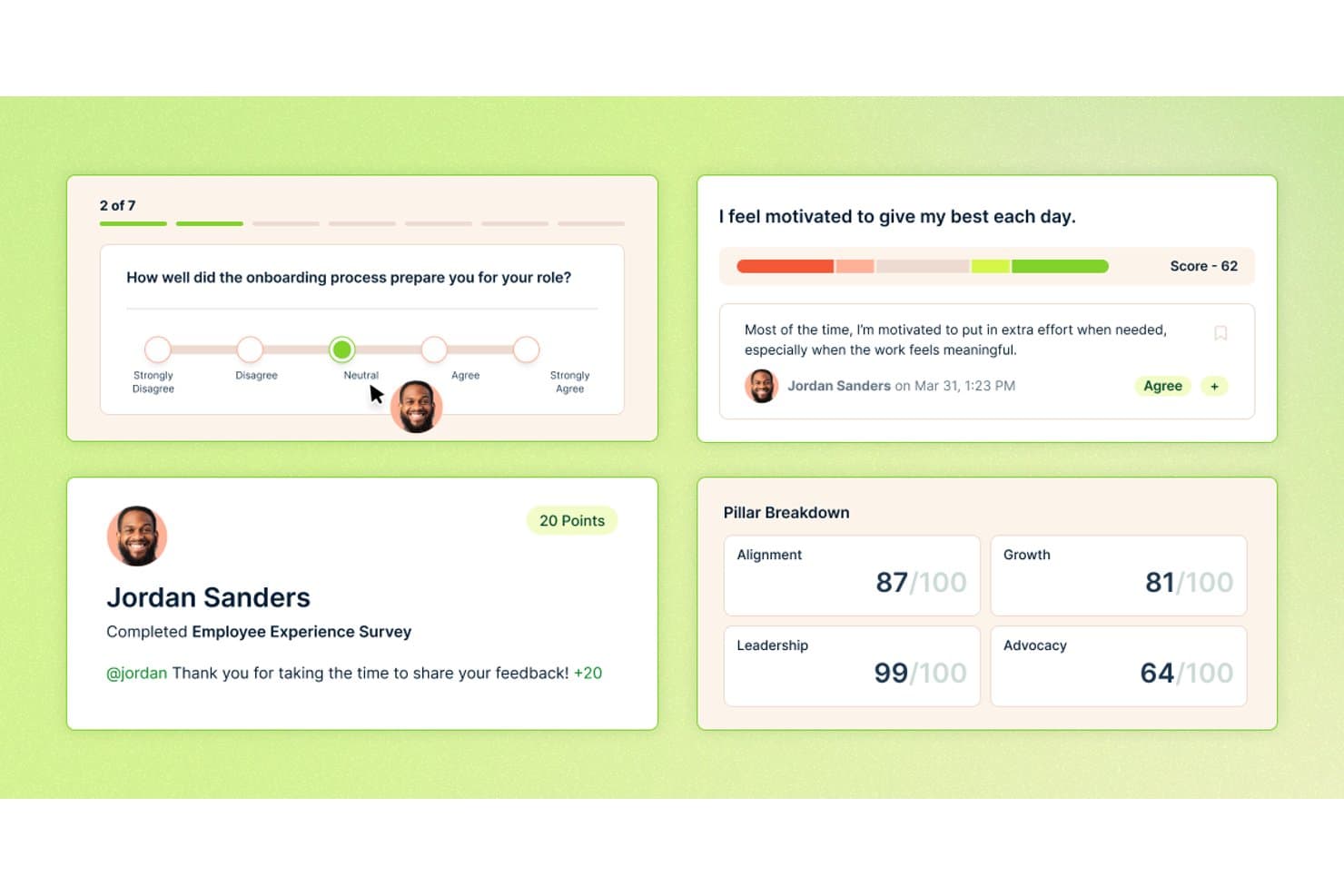
Nectar tracks employee engagement scores across key pillars like leadership and alignment. Nectar is an employee engagement platform built around peer recognition, rewards, pulse surveys, and internal communications, with dedicated features for frontline and shift-based healthcare staff.
Who Is Nectar Best For?
Nectar fits smaller healthcare organizations—like home-care agencies and specialty clinics—that prioritize frontline staff recognition across shifts over clinical benchmarking or compliance-heavy survey workflows.
Why I Picked Nectar
I've included Nectar in my top picks because its recognition engine is genuinely built around how clinical staff actually work: across shifts, on shared devices, and without consistent email access. Shift-specific recognition challenges let day and night teams run separate programs, and Kiosk Mode lets staff log shoutouts from a shared tablet on the floor. SafeTalk™ rounds this out by letting HR respond to anonymous survey comments through a two-way chat, which is a real asset when you need honest feedback from frontline nurses without burning trust.
Nectar Key Features
- Peer and manager shoutouts: Staff can send value-tagged recognition with GIFs and badges, visible to the whole organization through a shared feed.
- SafeTalk™ anonymous two-way chat: HR can respond to anonymous survey comments through an ongoing private chat without revealing the employee's identity.
- AI sentiment analysis: Open-ended survey responses are automatically analyzed for themes, with AI-generated summaries that preserve the original comments.
- Multi-channel survey delivery: Surveys reach staff by email, SMS, Slack, or Microsoft Teams, supporting participation across desk-based and frontline roles.
Nectar Integrations
Nectar lists integrations with Workday, ADP, BambooHR, Paycor, Paylocity, Rippling, Gusto, Namely, NetSuite, and Zenefits. It also supports SAML-based SSO, CSV and SFTP imports, and its PAPI API for custom integrations.
Pros and Cons
Pros:
- Mobile access fits deskless clinical workers
- Anonymous follow-up encourages candid staff feedback
- Shift-specific recognition supports day-night teams
Cons:
- Healthcare benchmarks remain unavailable
- No validated burnout measurement
Learn more about Nectar: Best for rewards and employee wellness
- Free demo available
- Pricing upon request
Visit WebsiteCustomer Rating:4.7/5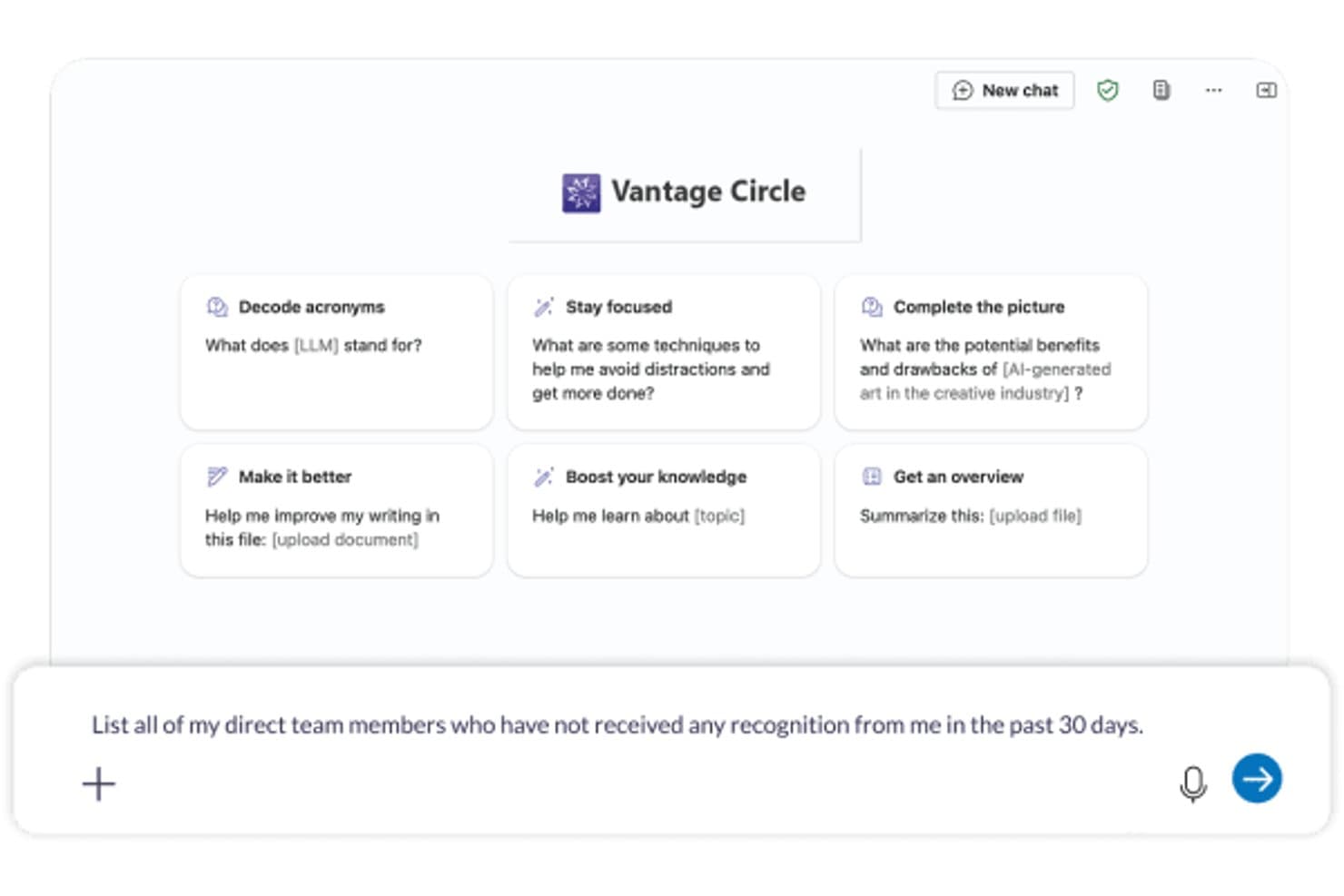
Vantage Circle offers an AI-powered chat assistant that enables managers to track team recognition activity over the past 30 days. Vantage Circle is an employee engagement platform that combines peer-to-peer and manager-led recognition, rewards, corporate wellness challenges, pulse surveys, and employee perks across mobile, desktop, and offline channels.
Who Is Vantage Circle Best For?
It's a strong fit for HR directors at large, distributed healthcare organizations managing recognition and wellness programs for shift-based, deskless frontline staff.
Why I Picked Vantage Circle
I picked Vantage Circle as one of the best because its Phygital Recognition cards let nurses and clinical staff claim rewards by scanning a QR code, no corporate email or desktop needed. I also like how Vantage Fit adds team wellness challenges and a mental health content library that speak directly to burnout in clinical roles. Recognition feeds work across WhatsApp and Microsoft Teams, so shift-based staff stay connected to recognition moments in real time.
Vantage Circle Key Features
- Pulse and eNPS surveys: Collect anonymous feedback from clinical teams with configurable frequency and multi-language support.
- Global rewards catalog: Offer gift card and merchandise choices across 100+ countries and dozens of categories.
- Manager analytics dashboard: View unit-level recognition and engagement trends with secure role-based visibility.
- HRIS integration options: Sync workforce data from platforms like Workday, SAP, and UKG for up-to-date employee records.
Vantage Circle Integrations
Vantage Circle offers native integrations with Workday, UKG, SAP SuccessFactors, Oracle HCM, ADP, BambooHR, Darwinbox, Keka, and Microsoft Teams. An API is available for custom integrations.
Pros and Cons
Pros:
- Peer recognition accessible via WhatsApp and Teams
- Vantage Fit targets burnout with wellness challenges
- QR-based recognition works for deskless clinical staff
Cons:
- Survey reporting lacks clinical unit-level depth
- No healthcare-specific engagement benchmarking available
Learn more about Vantage Circle: Best for employee feedback and engagement
- Free demo available
- Pricing upon request
Visit WebsiteCustomer Rating:4.5/5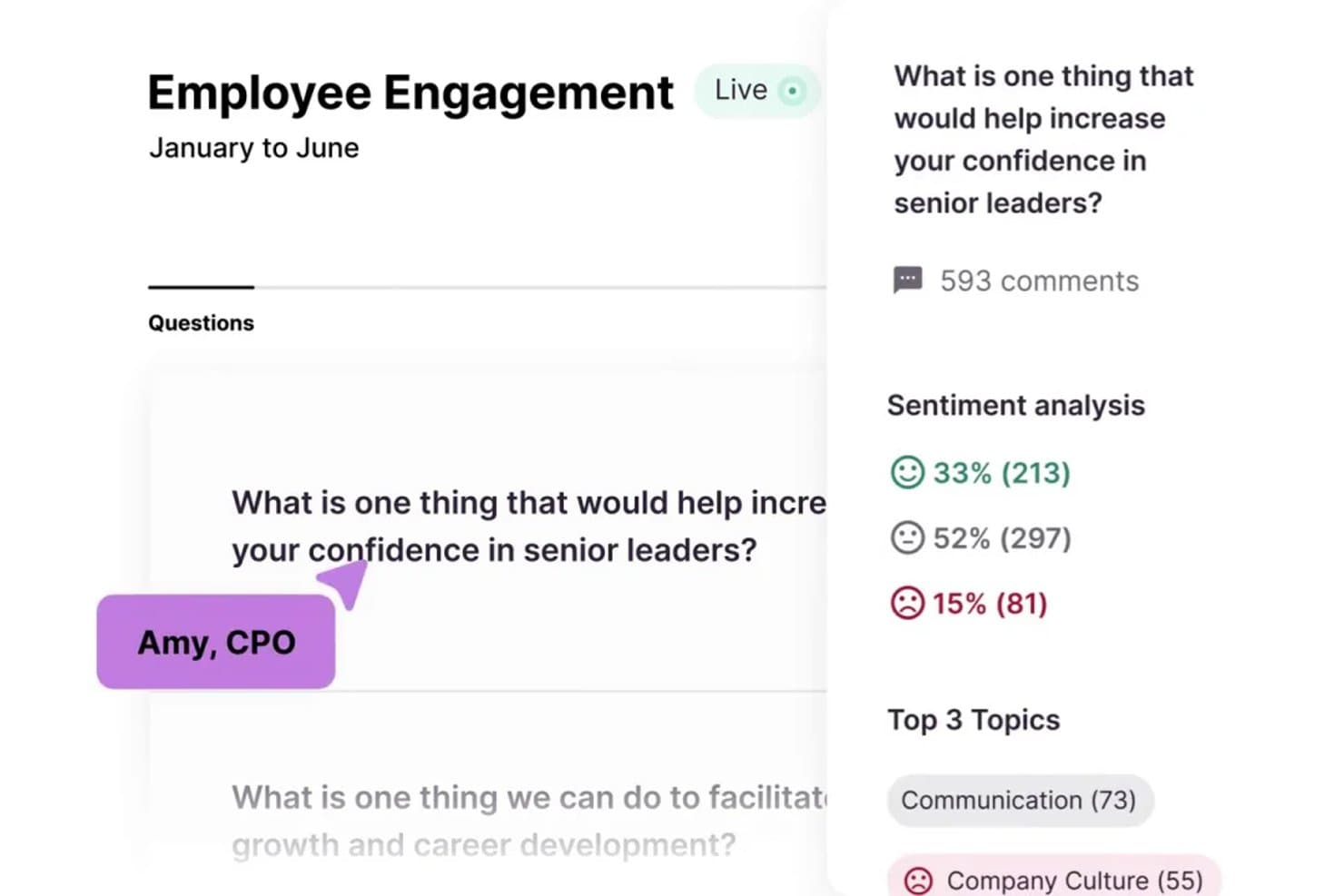
Culture Amp offers sentiment analysis and topic tracking on open-ended employee engagement survey questions, with live comment feeds and confidence metrics for senior leaders. Culture Amp is an employee engagement platform that combines configurable pulse, lifecycle, and annual surveys with people analytics, AI-driven insights, and healthcare-specific benchmarking to help HR teams measure and act on workforce sentiment.
Who Is Culture Amp Best For?
Culture Amp is a strong fit for HR directors at mid-sized to large healthcare organizations who lead annual engagement strategy and need data to present to executive leadership.
Why I Picked Culture Amp
Culture Amp earns its spot on my shortlist because its employee feedback tools are genuinely built for depth. I love how AI comment summaries surface patterns across hundreds of open-ended survey responses, letting HR teams quickly identify what's behind burnout signals or low patient safety scores. The healthcare-specific benchmarks are particularly useful, showing where you land on factors like Support Resources and Contribution to Broader Purpose compared to the industry median.
Culture Amp Key Features
- Healthcare industry benchmarking: Lets you compare engagement metrics by patient-facing roles, departments, and facility type.
- People science consulting add-on: Provides expert guidance for survey design and interpreting results with a clinical HR lens.
- Anonymous onboarding and exit surveys: Captures feedback at key employee lifecycle points with privacy safeguards for clinical and non-clinical staff.
- Slack and Microsoft Teams integration: Enables automated survey notifications, reminders, and frontline peer recognition within your existing communication channels.
Culture Amp Integrations
Culture Amp offers native integrations with Workday, Slack, Microsoft Teams, Pave, and Go1. An API is available for custom integrations.
Pros and Cons
Pros:
- Manager action plans guided at unit level
- AI summarizes open-text clinical staff feedback
- Healthcare-specific benchmarks by role and facility type
Cons:
- Recognition features less developed than dedicated platforms
- No native EHR or Epic integration
Learn more about Culture Amp: Best for engagement surveys and analytics
- Free demo available
- Pricing upon request
Visit WebsiteCustomer Rating:4.3/5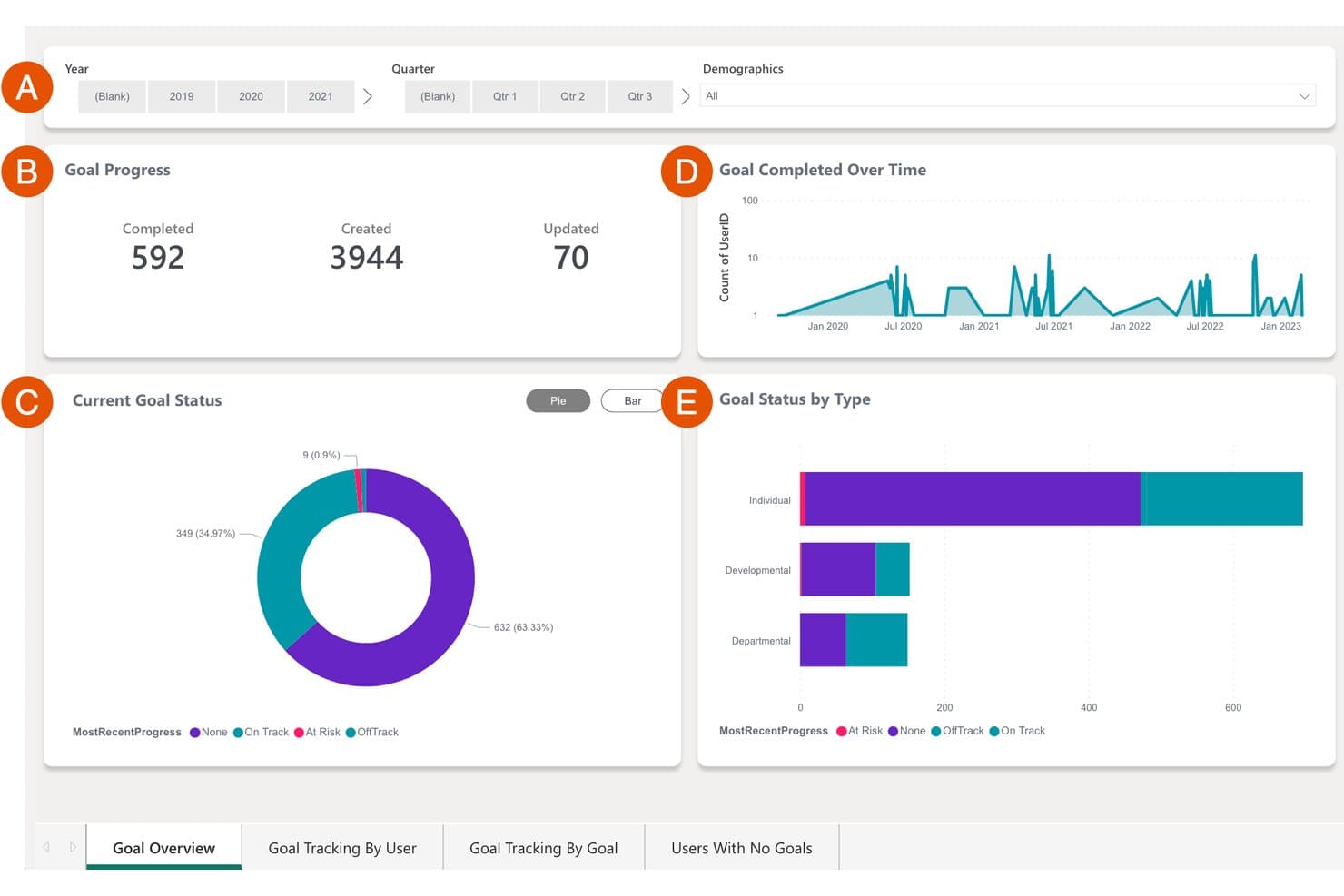
Quantum Workplace offers a Goal Overview dashboard that tracks goal progress, completion trends over time, current goal status, and goal status by type across individual, developmental, and departmental categories. Quantum Workplace is an employee engagement platform that combines pulse, lifecycle, and annual surveys with AI-powered analytics, action planning, recognition, and performance management tools.
Who Is Quantum Workplace Best For?
Quantum Workplace suits mid-market to enterprise health systems where HR directors need structured, data-driven engagement programs across large, multi-department workforces.
Why I Picked Quantum Workplace
Quantum Workplace earns its spot as one of the best on my shortlist because of its depth in engagement surveys and analytics. I love that the platform supports lifecycle surveys across onboarding, stay, and exit touchpoints, giving HR teams visibility into where nurses and clinicians disengage. The AI-powered Smart Summary condenses open-ended survey comments into actionable themes, and manager dashboards with department-level heatmaps let unit leads see exactly where engagement is dropping.
Quantum Workplace Key Features
- Lifecycle survey automation: Schedule onboarding, stay, and exit surveys automatically to collect feedback throughout the employee journey.
- Role-based audience segmentation: Segment survey audiences by job function, department, or location for precise data analysis.
- Recognition and rewards app: Enable peer-to-peer and manager recognition with a dedicated mobile app for shift-based clinical teams.
- Multi-language support: Offer surveys and recognition tools in 40+ languages to reach diverse healthcare workforces.
Quantum Workplace Integrations
Quantum Workplace offers native integrations with HR systems like Workday, UKG, ADP, BambooHR, Paylocity, Paycor, and Namely. An API is available for custom integrations.
Pros and Cons
Pros:
- Lifecycle surveys cover onboarding through exit
- AI-powered analysis of open-ended clinical feedback
- Deep healthcare-specific engagement benchmarking available
Cons:
- Smaller clinical units risk anonymity concerns in survey results
- Reporting customization can feel limited for complex health systems
Learn more about Quantum Workplace: Best for recognition and employee feedback
- Free demo available
- Pricing upon request
Visit WebsiteCustomer Rating:4.9/5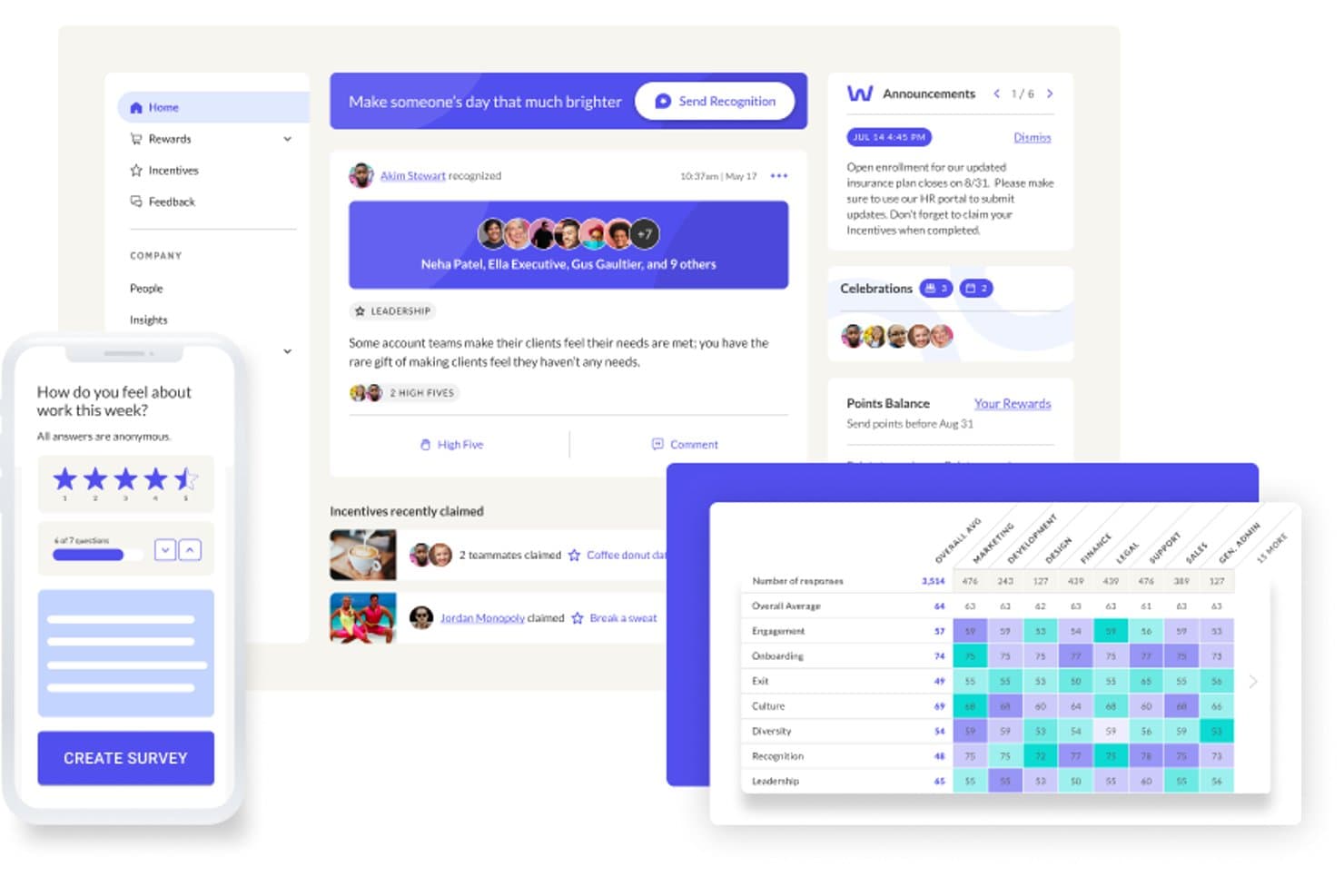
WorkTango offers a comprehensive employee engagement platform featuring recognition feeds, incentive tracking, pulse surveys, announcements, and department-level engagement analytics dashboards. WorkTango is an employee experience platform that combines peer-to-peer recognition, rewards, and engagement surveys with AI-powered analytics and manager action planning tools.
Who Is WorkTango Best For?
WorkTango is a strong fit for mid-market healthcare organizations where HR teams need a single platform for both staff recognition and engagement measurement.
Why I Picked WorkTango
WorkTango earns its spot on my shortlist because recognition for frontline healthcare workers is genuinely hard to get right. I love that it supports mobile and shared-kiosk access, so night-shift nurses can give and receive peer recognition without needing a desktop. On the feedback side, Anonymous Conversations lets clinical staff flag concerns about staffing or workflows without fear of identification, which I think drives far more honest responses than standard open-comment fields.
WorkTango Key Features
- Role-based leader dashboards: Managers and department heads access dashboards tailored to their teams and permissions.
- Comment summaries and themes: AI analyzes large volumes of survey text to surface trending feedback topics instantly.
- Customizable survey templates: Build and launch pulse, onboarding, or exit surveys using expert-designed healthcare-focused templates.
- HRIS and payroll integrations: Sync employee and organizational data from systems like Workday, BambooHR, and ADP Workforce Now.
WorkTango Integrations
WorkTango offers native integrations with Workday, BambooHR, ADP Workforce Now, Gusto, Slack, Microsoft Teams, and Outlook. An API is available for custom integrations.
Pros and Cons
Pros:
- Healthcare-specific engagement benchmarks available for comparison
- Anonymous surveys protect clinical staff identities
- Peer recognition works across rotating shift schedules
Cons:
- Manager action plans can feel too prescriptive
- No native connection to Epic or EHR
Learn more about WorkTango: Best for employee recognition and rewards
- Free demo available
- Pricing upon request
Visit WebsiteCustomer Rating:4.7/5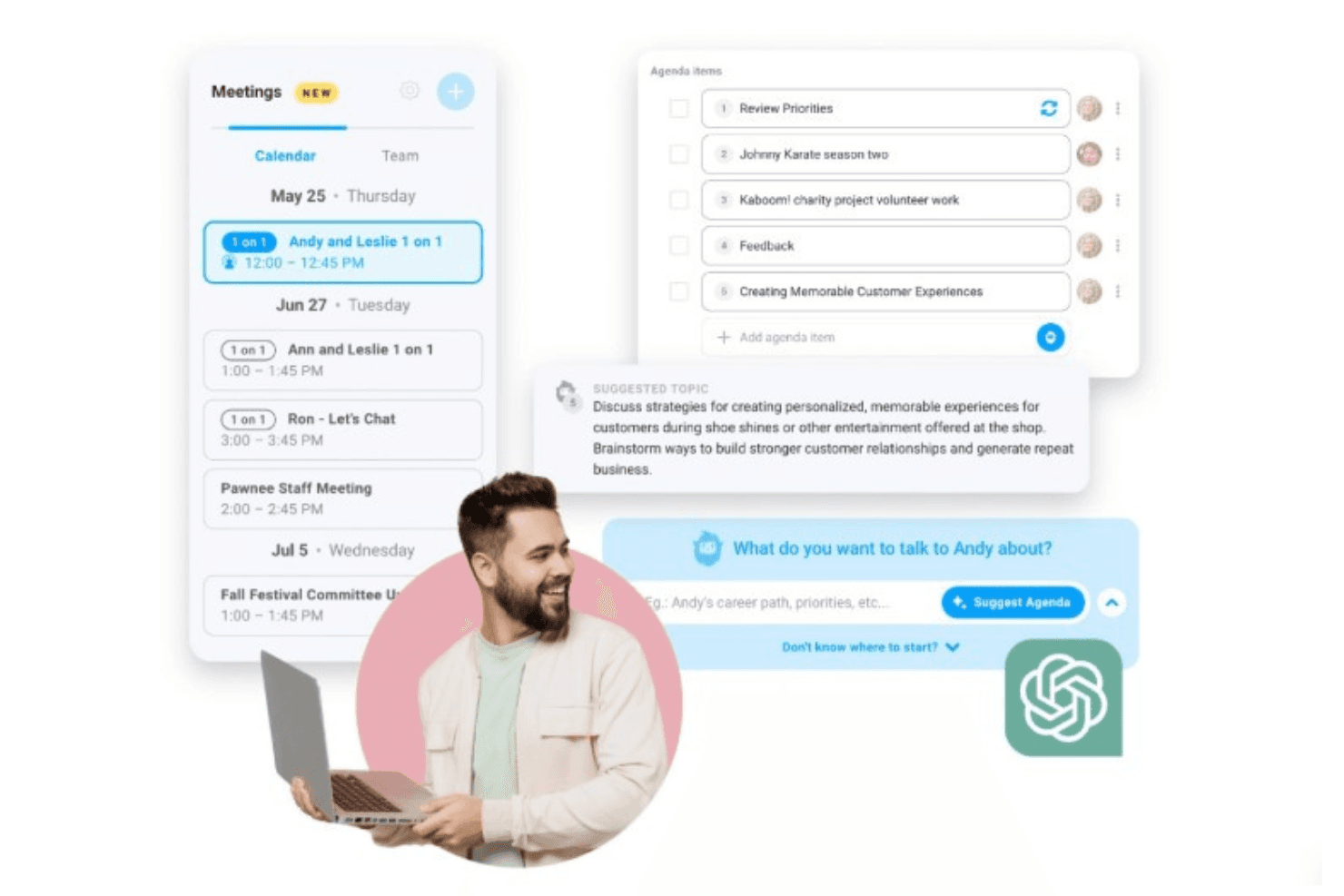
Motivosity offers a meetings feature with calendar scheduling, collaborative agenda building, AI-suggested topics, and ChatGPT integration for 1-on-1s and team meetings. Motivosity is an employee recognition and rewards platform built around peer-to-peer appreciation, milestone automation, pulse surveys, and a social engagement layer that connects staff across shifts and departments.
Who Is Motivosity Best For?
Motivosity is a strong fit for mid-sized to large healthcare organizations that want to build a culture of recognition across distributed, shift-based clinical teams.
Why I Picked Motivosity
I picked Motivosity as one of the best because its recognition features are genuinely built with healthcare in mind. The Service Shoutouts feature lets patients and families call out specific care team members by name, turning a positive patient experience into a visible, shareable moment of recognition. I also like the automated DAISY Award nomination workflow, which removes the administrative lift from nursing leaders while keeping the program running consistently across units and shifts.
Motivosity Key Features
- Pulse (eNPS) surveys: Capture real-time staff sentiment using configurable pulse surveys designed for ongoing engagement measurement.
- Social platform and org chart: Connect teams across shifts and departments with interactive profiles, a live feed, and a visual org chart.
- Mobile app: Enable clinical staff to recognize peers and access engagement tools on iOS or Android devices at any time.
- HIPAA-compliant data handling: Safeguard sensitive healthcare employee data with compliance and encryption built into the platform.
Motivosity Integrations
Motivosity offers native integrations with Workday, ADP, BambooHR, Rippling, Slack, Microsoft Teams, and Okta, with an API available for custom integrations.
Pros and Cons
Pros:
- Patient recognition flows into staff reward programs
- Mobile app keeps non-desk staff included
- Shift-based peer recognition works across 24/7 teams
Cons:
- Survey templates aren't tailored for healthcare roles
- Burnout analytics lack clinical-specific depth
Learn more about Motivosity: Best for workforce recognition programs
- Free demo available
- Pricing upon request
Visit WebsiteCustomer Rating:4.6/5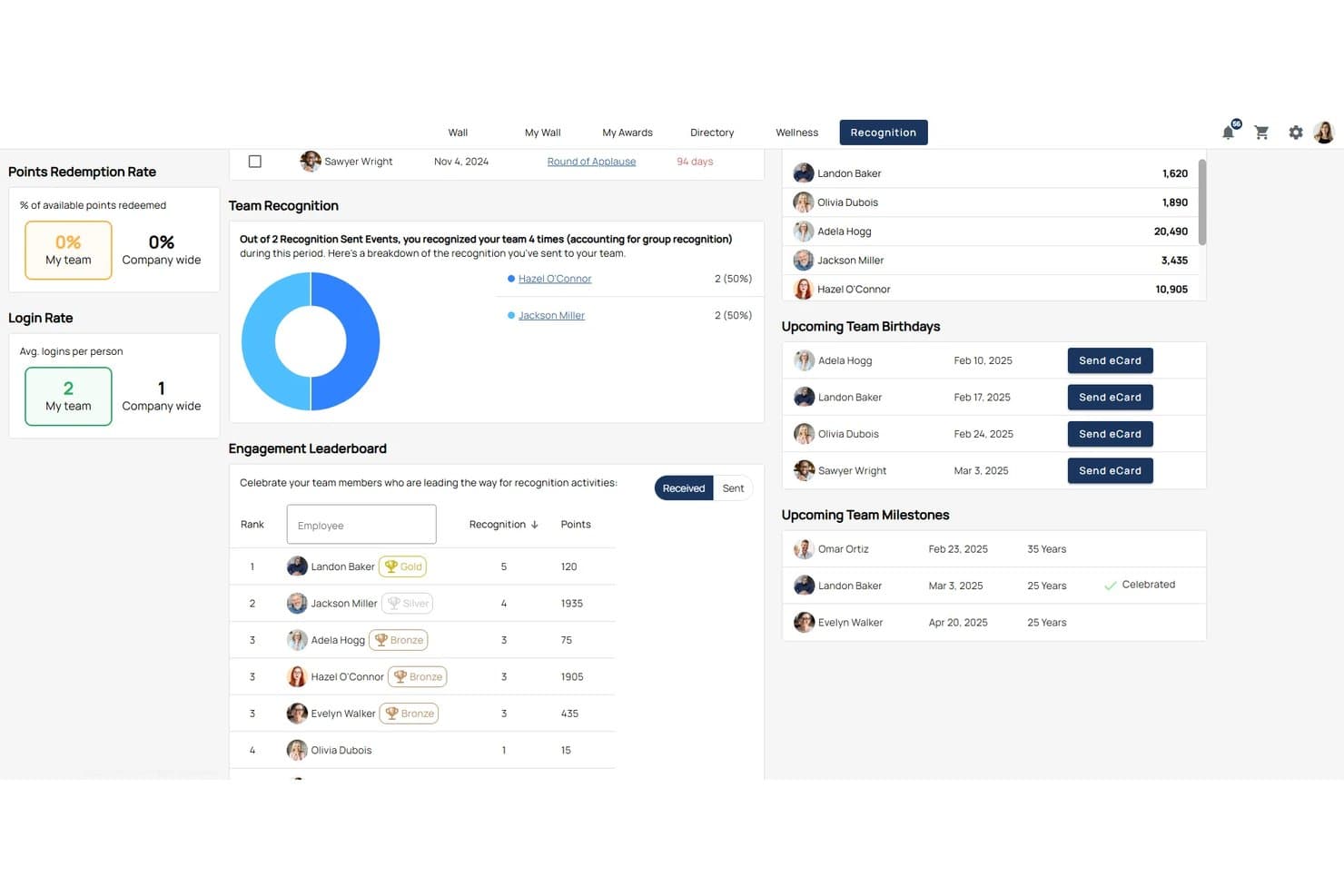
Terryberry offers a recognition dashboard with engagement leaderboards, team birthdays, milestones, and points tracking for employee rewards. Terryberry is an employee recognition and engagement platform that combines peer-to-peer recognition, service awards, wellbeing programs, and engagement surveys in a single hub designed for frontline and shift-based workforces.
Who Is Terryberry Best For?
Terryberry is a strong fit for healthcare HR directors and operations managers at mid-to-large organizations looking to formalize recognition programs for frontline and deskless clinical staff.
Why I Picked Terryberry
I picked Terryberry as one of the best because its recognition ecosystem is genuinely built for shift-based clinical teams. The mobile app and offline participation options mean a night-shift nurse can receive and send recognition without ever needing desktop access. I also love the zero-markup rewards catalog, which gives healthcare HR teams a budget-conscious way to back recognition with meaningful physical awards and service milestone keepsakes.
Terryberry Key Features
- Custom-branded recognition awards: Offer symbolic and physical awards tailored to your organization's brand and culture.
- Wellbeing challenge modules: Run activity-based wellness programs and team challenges that engage staff across locations.
- Employee listening surveys: Deploy configurable engagement and feedback surveys built on a six-pillar model.
- HRIS and communication integrations: Connect seamlessly with Workday, ADP, BambooHR, Microsoft Teams, and Outlook for unified data and workflows.
Terryberry Integrations
Terryberry offers native integrations with Workday, BambooHR, ADP, UKG, Microsoft Teams, Outlook, and Amazon Business. An API is available for custom integrations.
Pros and Cons
Pros:
- Wellbeing challenge modules engage multi-location teams
- Physical service award options for milestone recognition
- Shift-based peer recognition reaches deskless clinical staff
Cons:
- Burnout risk tracking is limited compared to dedicated platforms
- Survey analytics lack healthcare-specific benchmarking depth
Learn more about Terryberry: Best for healthcare workforce insights
- Free demo available
- Pricing upon request
Visit WebsiteCustomer Rating:4.5/5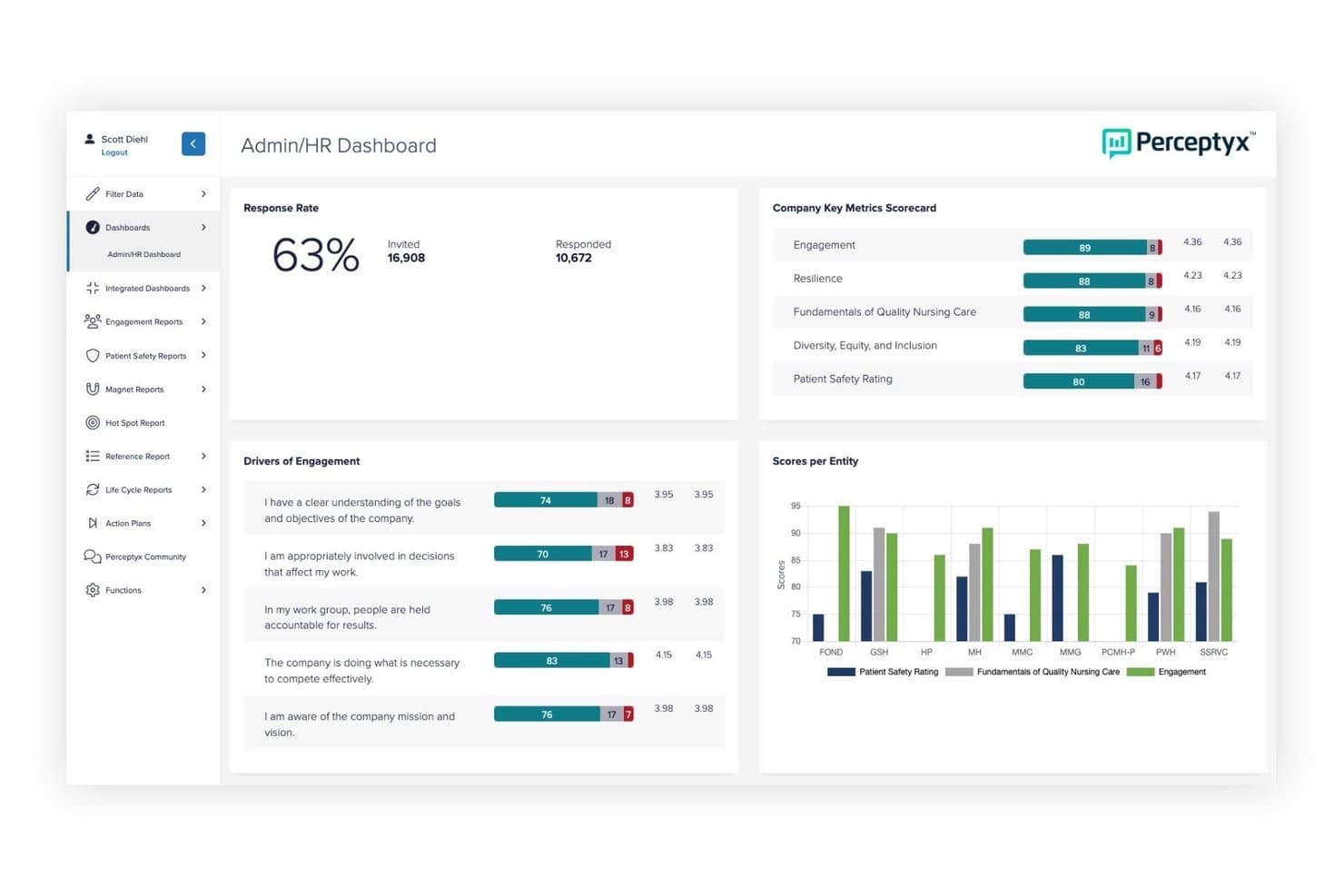
Perceptyx offers an Admin/HR Dashboard with key metrics including engagement scores, drivers of engagement, and scores per entity across healthcare entities. Perceptyx is an employee listening and people analytics platform built for large healthcare organizations, offering multi-channel engagement surveys, workforce benchmarking, burnout tracking, and AI-driven action planning.
Who Is Perceptyx Best For?
Perceptyx is a strong fit for HR directors and CNOs at large health systems and hospital networks with 1,000+ employees.
Why I Picked Perceptyx
Perceptyx earns its spot on my shortlist because the depth of healthcare-specific benchmarking is unlike anything else I've seen. The platform draws from 4M+ healthcare workers across 500+ health systems, so I can compare RN engagement scores against genuinely comparable facilities, not generic cross-industry data. I also like that the ANCC Magnet-approved RN survey and Leapfrog Safety Culture assessments are built directly into the platform, ready to deploy without custom configuration.
Perceptyx Key Features
- AI narrative analysis agents: Automatically categorize and interpret open-ended survey responses from clinical staff.
- Lifecycle listening modules: Deploy surveys at onboarding, key tenure milestones, and exit to track employee sentiment over time.
- Health system data segmentation: Segment results by department, unit, location, shift, and employee type for targeted insights.
- Manager coaching workflows: Equip line leaders with AI-driven coaching tools to facilitate follow-up and accountability on engagement issues.
Perceptyx Integrations
Perceptyx offers native integrations with Workday, Oracle, SAP SuccessFactors, Microsoft Teams, and Slack, and provides an API for custom integrations.
Pros and Cons
Pros:
- AI-driven burnout risk flagging for clinical staff
- Validated survey templates for Magnet and Leapfrog
- Granular healthcare benchmarks by role and facility
Cons:
- Reporting depth may overwhelm smaller HR teams
- Implementation timelines can be slow for large systems
Learn more about Perceptyx: Best for healthcare employee experience
- Free demo available
- Pricing upon request
Visit WebsiteCustomer Rating:4/5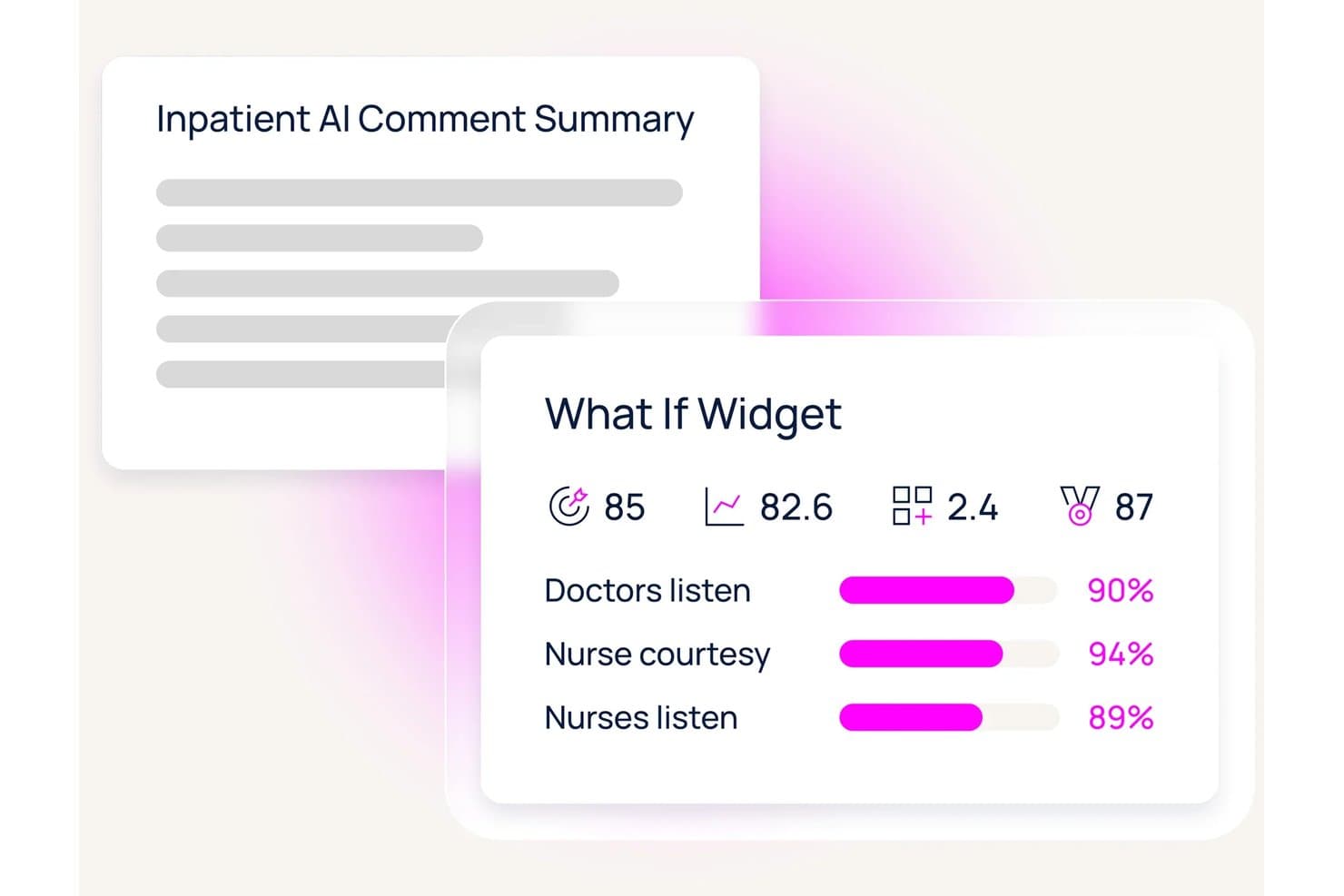
Press Ganey offers an inpatient AI comment summary and a 'What If Widget' dashboard displaying key patient experience metrics including doctor and nurse performance scores. Press Ganey is a healthcare-native employee engagement platform with workforce census and pulse surveys, AI-driven open-text analytics, burnout prediction, safety culture measurement, and benchmarking drawn from 3.4 million healthcare employee data points.
Who Is Press Ganey Best For?
Press Ganey is built for mid-to-large health systems, hospitals, and multi-site clinical networks where HR directors and CNOs need healthcare-specific engagement data.
Why I Picked Press Ganey
I picked Press Ganey because no other engagement platform I've seen benchmarks against a dataset of 3.4 million healthcare employee voices. The role-based, branched survey design routes different questions to nurses, physicians, and APPs within a single deployment. On top of that, the predictive analytics flag burnout and turnover risk at the unit level before the problem escalates.
Press Ganey Key Features
- Safety culture surveys: Includes AHRQ and proprietary healthcare safety culture measurement tools for regulatory compliance.
- Epic EMR integration: Integrates experience and engagement data directly into Epic workflows and provider dashboards.
- Crowdsourcing for innovation: Lets staff submit feedback and ideas directly for organizational improvement initiatives.
- Role-based action planning: Deliver tailored, unit-specific recommendations to managers with built-in tracking and accountability tools.
Press Ganey Integrations
Press Ganey offers native integrations with Epic and MyChart, and provides an API for custom integrations. Native integrations with Workday, UKG, and Kronos are also supported.
Pros and Cons
Pros:
- Validated clinical survey templates built in
- Predictive burnout scoring at the unit level
- Healthcare-specific benchmarks by role and specialty
Cons:
- Implementation timelines suit large health systems only
- Reporting interface can overwhelm smaller HR teams
Learn more about Press Ganey: 10Best for customizable employee rewards
Awardco
- Free demo available
- Pricing upon request
Visit WebsiteCustomer Rating:4.9/5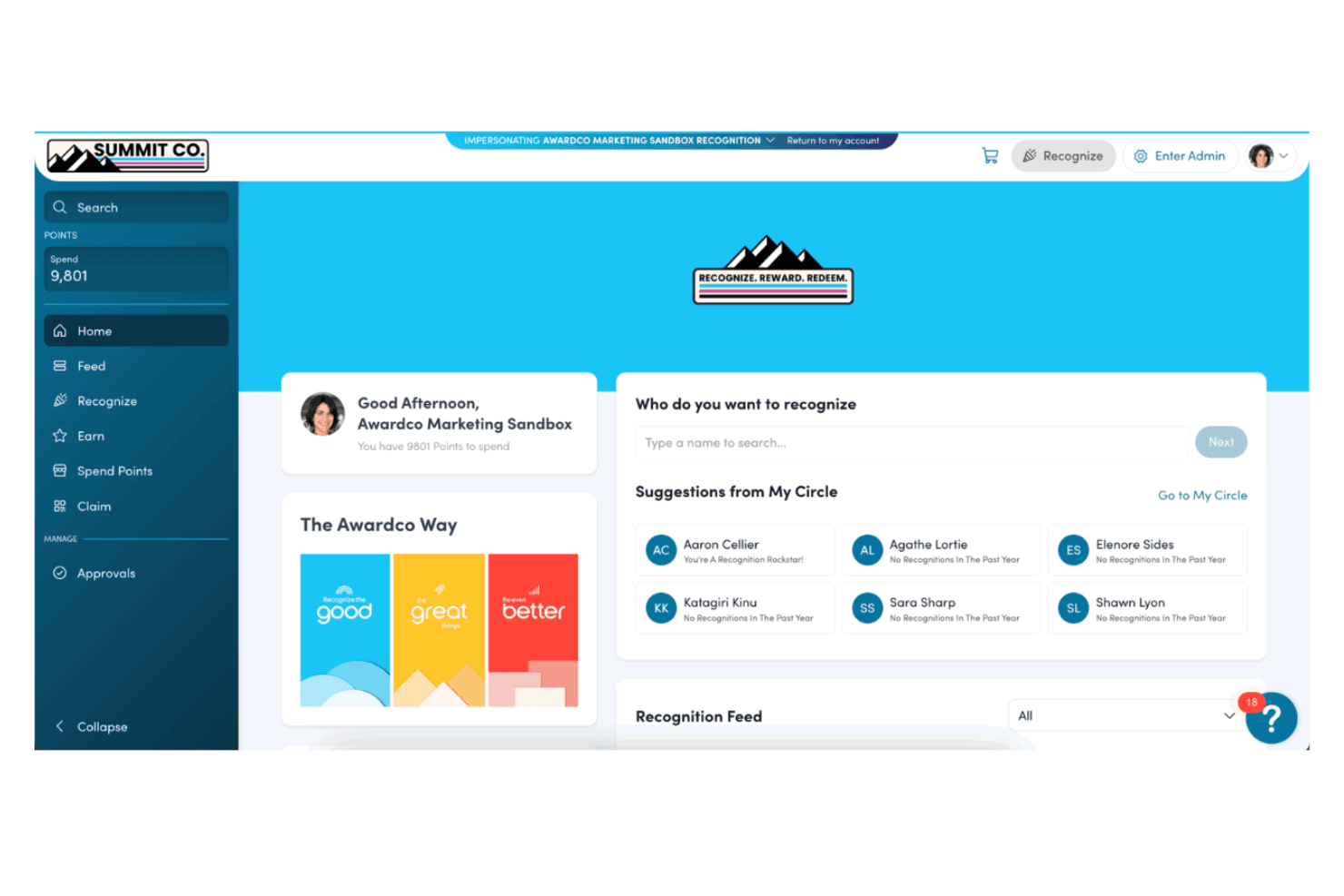
Awardco offers a recognition hub where users can search for colleagues to recognize, view circle suggestions, and track points from a centralized home dashboard. Awardco is an employee recognition and rewards platform built for healthcare organizations, combining peer-to-peer recognition, automated milestone programs, wellness incentives, and engagement surveys across shift-based and multi-location clinical teams.
Who Is Awardco Best For?
Awardco is a strong fit for healthcare HR directors and operations managers at mid-size to large health systems with deskless, shift-based clinical staff spread across multiple locations or departments.
Why I Picked Awardco
I picked Awardco as one of the best because its rewards catalog is genuinely unmatched for healthcare settings. Built on a direct Amazon integration with zero markups, clinical staff can redeem points for items they actually want, from fitness equipment to hotel stays. I also like AwardCodes, physical points cards that let charge nurses recognize bedside staff on the spot, no smartphone or app required.
Awardco Key Features
- Awardco Engage surveys: Launch pulse, onboarding, annual, and exit surveys with customizable templates built directly into the platform.
- External recognition: Allow patients and visitors to instantly send digital messages of appreciation to healthcare staff.
- HIPAA-compliant data handling: Maintain healthcare privacy standards with platform features and policies designed for sensitive clinical environments.
- Manager dashboards: Track recognition activity, budget allocation, and engagement trends by department or location in real time.
Awardco Integrations
Awardco offers native integrations with Workday, ADP, BambooHR, Paychex, Gusto, and UKG, has built-in support for Slack and Microsoft Teams, and provides an API for custom integrations.
Pros and Cons
Pros:
- Supports shift-based and deskless clinical staff
- Offline recognition via physical AwardCodes
- Large, no-markup rewards catalog for staff
Cons:
- Survey tools less advanced than dedicated engagement platforms
- Reporting depth limited for multi-facility health systems
Learn more about Awardco:
Other Employee Engagement Software for Healthcare
Here are some additional employee engagement software for healthcare options that didn’t make it onto my shortlist, but are still worth checking out:
- 11BonuslyBest for peer-to-peer employee recognition
- 12Bucketlist RewardsBest for personalized recognition programs
- 13ConnecteamBest for deskless clinical staff engagement
- 14StaffbaseBest for healthcare employee communications
- 15CultureMonkeyBest for continuous employee feedback
- 16MangoAppsBest for healthcare intranet engagement
How I Evaluate Employee Engagement Software for Healthcare
I split my evaluation into the baseline functionality every platform must cover and the differentiators that separate tools genuinely built for clinical environments from generic solutions.
Core Functionality (Table Stakes For This List)
When I'm selecting tools for my list, I rank each one on a scale from 0 (does not offer the functionality) to 5 (excels in this area) for each core functionality listed below. I then calculate the tool's total score into a percentage, using 65% as a benchmark to help assess its overall fit for the list.
- Engagement Surveys: I look for configurable pulse and lifecycle surveys with anonymity controls that protect respondents in small clinical units.
- Healthcare Benchmarking: Benchmarks should segment by healthcare role or facility type, not just broad cross-industry averages.
- Burnout & Wellbeing Tracking: Dedicated burnout indexes with trend tracking matter here—a single wellbeing question in a general survey won't surface real risk.
- Recognition & Rewards: I look for peer-to-peer recognition that reaches staff on rotating shifts via mobile, so night-shift nurses aren't excluded.
- Action Planning & Analytics: Manager dashboards with unit-level heatmaps and guided action plans help nurse leaders act on results without waiting on HR.
- HRIS & Compliance Integration: Native connections to healthcare HRIS platforms like Workday or UKG and HIPAA-compliant data handling are what I evaluate here.
Once I have a list of tools that meet the criteria, I consider what sets each platform apart.
Differentiating Factors (What Sets Vendors Apart)
Here's how I compare and contrast different vendors:
Standout Features
Burnout and wellbeing analytics are a major differentiator. I look for platforms that connect engagement trends to turnover intent and patient safety metrics. That gives CNOs a real-time view of which units are at highest risk. Shift-based recognition also matters. If a platform can't reach a night-shift nurse on their phone at 3 a.m., it's missing a big part of your workforce. Healthcare-specific benchmarks round this out, letting you compare results by role or facility type against similar-sized peers.
Beyond Features
HIPAA compliance and BAA availability are the first things I check. Without them, you can't deploy engagement tools in a clinical setting. Integration depth also matters—platforms that sync with Workday, UKG, or Kronos and pull data from scheduling systems let you segment results by unit and shift. I also evaluate whether a vendor offers pre-built survey templates aligned to healthcare frameworks like Magnet or AHRQ, which saves weeks of setup when rolling out across a multi-facility health system.
How to Choose an Employee Engagement Software for Healthcare
Which capabilities matter most for your team’s engagement, retention, and compliance? Here’s how to narrow your options:
| If your priority is… | Look for… |
| Reducing burnout across clinical teams | Burnout analytics tied to clinical roles and shift data |
| Listening to staff on all shifts | Mobile-first recognition and survey tools |
| Tracking progress on action plans | Unit-level dashboards with guided interventions |
| Compliance and privacy | HIPAA, BAA, and SOC 2 documentation from vendors |
| Benchmarking against similar facilities | Proprietary healthcare-specific engagement benchmarks |
How to Vet Your Shortlist
- Request documentation: Ask vendors for their HIPAA and BAA compliance certificates for your legal review.
- Test survey reach: Set up a pilot and verify survey delivery works for night, weekend, and casual staff, not just weekday shifts.
- Check integration claims: Request a workflow showing sync with your HRIS or scheduling system using a real employee file.
- Demand pre-built content: Review sample survey templates mapped to frameworks like Magnet or AHRQ, not just generic questions.
- Decide on flexibility vs. healthcare focus: Weigh platforms that offer best-in-class healthcare features against broader HR tools with general engagement modules.
What Is Employee Engagement Software for Healthcare?
Employee engagement software for healthcare is a digital platform that helps medical organizations survey staff, track morale, recognize exceptional work, and monitor burnout trends across shifts and departments. These tools are designed to address the unique communication, compliance, and operational needs of clinical teams, delivering HIPAA-compliant workflows, healthcare-specific benchmarks, and actionable insights for administrators, nurse leaders, and HR teams.
Features of Employee Engagement Software for Healthcare
When selecting employee engagement software for healthcare, keep an eye out for the following key features:
- Engagement surveys: Send frequent pulse, lifecycle, or annual surveys to gather anonymous feedback from clinicians and staff on morale, satisfaction, and workplace challenges.
- Burnout and wellbeing tracking: Monitor clinician fatigue, psychological safety, and risk indicators to help identify and address emerging burnout trends by unit or shift.
- Healthcare benchmarking: Compare engagement or satisfaction scores against industry norms, with specialized benchmarks by job role, specialty, or facility type.
- Recognition and rewards: Enable both peer-to-peer and manager-driven recognition to celebrate exemplary work across shifts—often with points, awards, or custom badges.
- Mobile-first access: Ensure staff working nights, rotating shifts, or across multiple sites can participate in surveys and recognition using smartphones or tablets.
- Action planning tools: Equip managers with dashboards, guided interventions, and reporting to turn survey results into specific unit- or department-level improvements.
- HRIS and scheduling integrations: Sync staff data, schedules, and job roles from systems like Workday or Kronos for accurate survey routing and analytics.
- HIPAA-compliant data handling: Protect staff privacy with encryption, access controls, and compliance workflows designed for healthcare’s regulatory standards.
- Role-based analytics: Break down engagement or wellbeing data by department, role, or shift to pinpoint areas with high turnover, burnout, or exceptional culture.
- Pre-built healthcare survey templates: Use validated templates aligned with industry frameworks like Magnet or AHRQ to speed up setup and ensure healthcare relevance.
Benefits of Employee Engagement Software for Healthcare
Implementing employee engagement software for healthcare provides several benefits for your team and your business. Here are a few you can look forward to:
- Lower clinician burnout: Proactively track wellbeing indicators so managers can address fatigue and stress before it drives attrition.
- Improved staff retention: Use recognition, actionable insights, and benchmarking to foster a workplace where clinicians want to stay.
- Better patient care: Surface staffing issues and morale concerns that impact patient experience, helping raise quality and safety.
- Faster, data-driven interventions: Equip leaders with dashboards and guided action planning to address unit-level problems with speed and precision.
- Enhanced shift coverage: Recognize staff who go above and beyond, improving scheduling reliability and performance across 24/7 operations.
- More robust compliance: Streamline HIPAA requirements and data privacy safeguards for all engagement efforts.
- Clear ROI reporting: Tie engagement metrics to turnover, patient outcomes, or survey results to track the impact of workforce initiatives.
Costs and Pricing of Employee Engagement Software for Healthcare
Selecting employee engagement software for healthcare requires an understanding of the various pricing models and plans available. Costs vary based on features, team size, add-ons, and more. The table below summarizes common plans, their average prices, and typical features included in employee engagement software for healthcare solutions:
Plan Comparison Table for Employee Engagement Software for Healthcare
| Plan Type | Average Price | Common Features |
| Free Plan | $0 | Basic surveys, limited analytics, basic reporting, and support for a small number of users. |
| Personal Plan | $5–$15/user/month | Pulse surveys, standard templates, basic recognition tools, and self-serve help resources. |
| Business Plan | $16–$35/user/month | Mobile access, shift-based workflows, integrations with HRIS, team dashboards, and healthcare-specific content. |
| Enterprise Plan | $36–$60/user/month | Custom benchmarks, HIPAA compliance, predictive analytics, priority support, and advanced data privacy controls. |
Employee Engagement Software for Healthcare FAQs
Here are some answers to common questions about employee engagement software for healthcare:
How does employee engagement software for healthcare protect staff privacy?
Employee engagement software for healthcare uses features like encrypted data storage, access controls, and HIPAA-compliant workflows to ensure staff responses remain confidential and secure, even in small units or departments.
Can engagement tools integrate with existing HR or scheduling systems?
Yes, most engagement platforms offer native integrations or APIs to connect with HRIS and scheduling software like Workday, UKG, or Kronos, helping automate survey distribution and surface results by shift, unit, or role.
How often should we conduct staff engagement surveys in a healthcare setting?
Weekly or bi-weekly pulse surveys are common, as they keep feedback timely and actionable without causing survey fatigue. These short, targeted surveys provide real-time sentiment across rotating shifts and departments.
Is there a way to measure burnout and wellbeing trends uniquely for clinical roles?
Yes, the best platforms include dedicated wellbeing dashboards and analytics that monitor burnout risk by unit, specialty, and shift, letting nurse leaders and HR teams spot and address issues early.
What content is included to support compliance and clinical relevance?
Look for vendors that supply pre-built, healthcare-validated survey templates aligned with frameworks like Magnet or AHRQ, alongside documentation for HIPAA, SOC 2, and other regulatory standards.