

An AI voice agent for healthcare is software that uses artificial intelligence to interact with patients and staff by phone or voice interface, handling tasks like appointment scheduling, answering questions, and directing calls. If you’re searching for these tools, you probably want to reduce call wait times, improve patient access, and free up clinical staff for higher-value work.
Choosing the right solution can help your team spend less time fielding routine requests and more time focusing on what matters most—delivering safe, effective care. Below, you'll find a list of top AI voice agent picks, each reviewed with your needs and daily challenges in mind.
Why Trust Our Software Recommendations
6,700+
Reviews
20
Industry experts
16+
Evaluation factors
14
Years
Our team has been testing and reviewing software since 2012. As medical practice leaders ourselves, we know how difficult—and important—it is to choose the right software.
For this guide, we evaluated tools using hands-on testing and independent research, scoring tools using our selection criteria.
Our reviews reflect our human editorial judgment, not a sales pitch.
Comparison Table: AI Voice Agents for Healthcare
This comparison table summarizes pricing details for my top AI voice agent selections.
| Tool | Best For | Trial Info | Price | ||
|---|---|---|---|---|---|
| 1 | Best for healthcare contact center automation | Free demo available | Pricing upon request | Website | |
| 2 | Best for end-to-end patient calls | Free demo available | Pricing upon request | Website | |
| 3 | Best for custom healthcare voice agents | Free plan available | From $0.07/min | Website | |
| 4 | Best for patient and payer call automation | Free demo available | Pricing upon request | Website | |
| 5 | Best for AI voice call deflection | Free demo available | Pricing upon request | Website | |
| 6 | Best for health system call automation | Free demo available | Pricing upon request | Website | |
| 7 | Best for clinical patient outreach | Free demo available | Pricing upon request | Website | |
| 8 | Best for patient, provider, and payer calls | Free demo available | Pricing upon request | Website | |
| 9 | Best for specialty care patient access | Free demo available | Pricing upon request | Website | |
| 10 | Best for multichannel healthcare agents | Free plan available | From $150 prepayment | Website |


Best AI Voice Agents for Healthcare Reviews
Below are my detailed summaries of the best AI voice agents for healthcare that made it onto my shortlist. My reviews offer a detailed look at the features, integrations, and pricing of each platform to help you find the best one for you.
 Best for healthcare contact center automation
- Free demo available
- Pricing upon request
Visit WebsiteCustomer Rating:4.8/5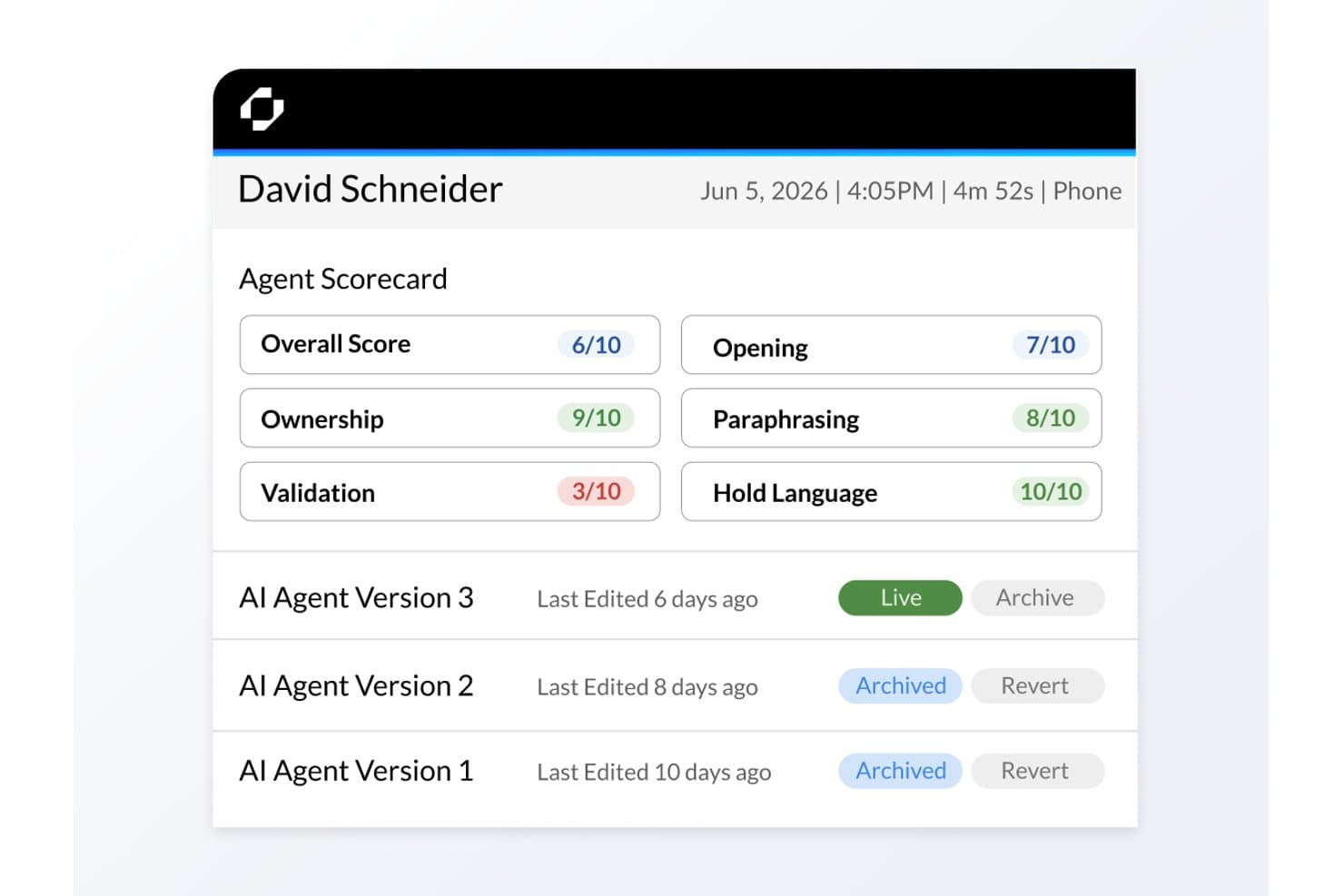
Replicant offers an AI agent scorecard dashboard that tracks soft skills like validation, ownership, and hold language to evaluate call center performance. Replicant is an enterprise-grade conversational AI platform that automates patient-facing phone interactions across appointment scheduling, intake, insurance verification, and billing inquiries using voice, chat, and SMS channels.
Who Is Replicant Best For?
Replicant is a strong fit for large hospital networks, health systems, and payers managing high volumes of inbound and outbound patient calls across multiple locations.
Why I Picked Replicant
I picked Replicant as one of the best because its Agent Replication technology clones your top-performing call center agents into scalable AI voice agents, preserving their decision logic and workflows. I also like that it handles thousands of concurrent calls, which matters during open enrollment or flu season surges. Its HIPAA, SOC 2 Type II, and PCI DSS certifications make it one of the few voice AI tools genuinely ready for regulated healthcare contact centers.
Replicant Key Features
- Conversation intelligence analytics: Surfaces KPIs, call drivers, and automation opportunities from every AI and human interaction.
- Omnichannel support: Runs a single AI agent across voice, chat, and SMS with consistent context and workflow handling.
- Automated outbound reminders: Sends automated appointment reminders and status updates to patients without staff involvement.
- Configurable AI studio: Lets you set behavior guardrails, patient data policies, and compliance workflows without coding.
Replicant Integrations
Replicant offers native integrations with Genesys, Five9, NICE, Salesforce, ServiceNow, Zendesk, Kustomer, and Gladly. An API is available for custom integrations. Native integrations with electronic health record systems are not documented.
Pros and Cons
Pros:
- Granular post-call analytics across departments
- HIPAA, SOC 2 Type II certified natively
- Handles thousands of concurrent patient calls
Cons:
- Long implementation timelines for clinical deployments
- No documented native EHR integrations
Learn more about Replicant: Best for end-to-end patient calls
- Free demo available
- Pricing upon request
Visit WebsiteCustomer Rating:4.2/5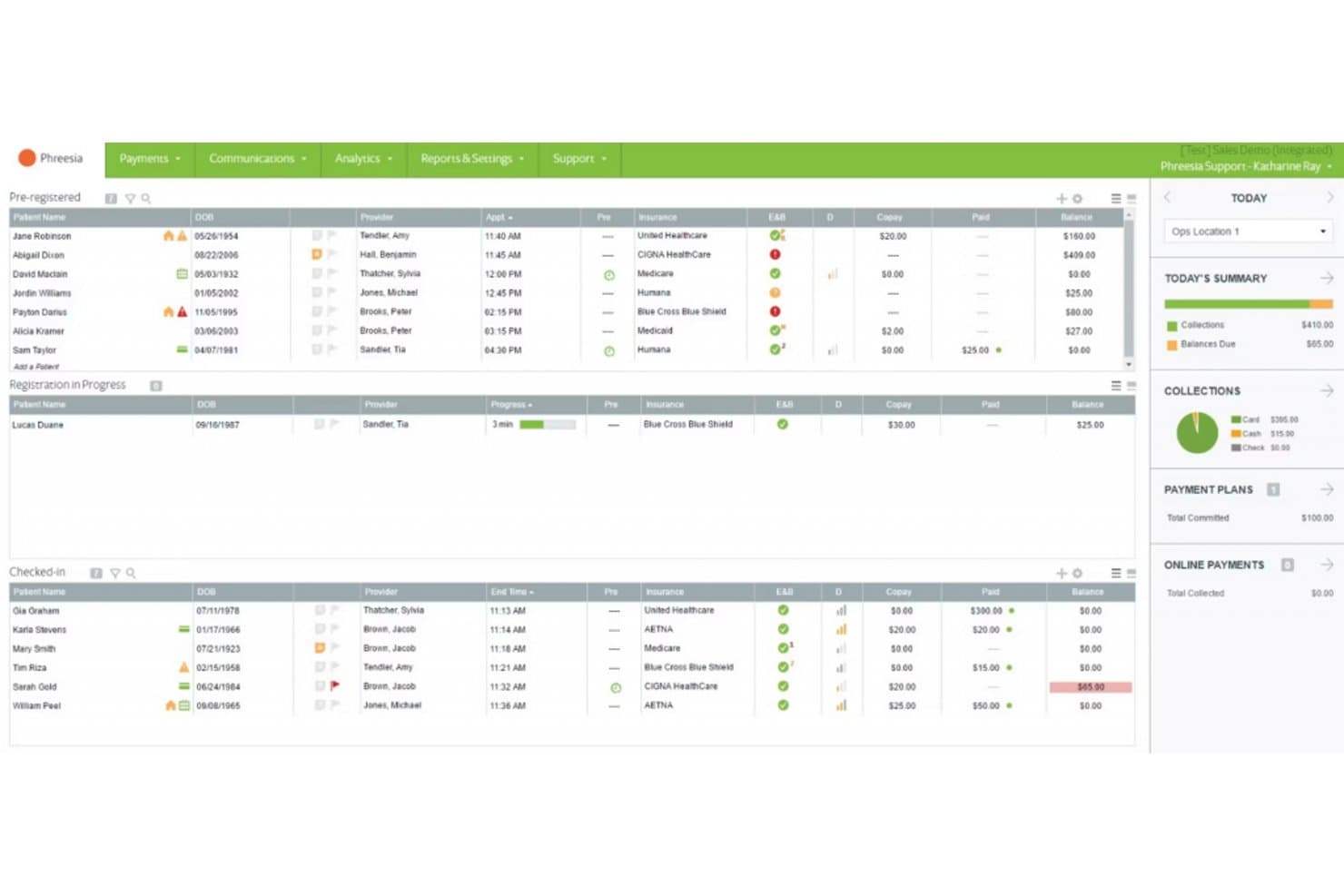
Phreesia dashboard showing patient registration, insurance, copays, balances, and collections. Phreesia brings AI voice capabilities to healthcare organizations, handling inbound and outbound patient phone calls for appointment scheduling, clinical triage, prescription refill requests, billing inquiries, and after-hours call routing.
Who Is Phreesia Best For?
Phreesia is a strong fit for independent practices and specialty groups that manage high inbound call volumes and want to automate phone-based patient interactions without adding front-desk staff.
Why I Picked Phreesia
I picked Phreesia as one of the best because its VoiceAI handles both inbound requests and outbound campaigns like reminders and recall outreach without staff involvement. What I find most impressive is its clinical triage: the AI distinguishes a routine refill from an urgent clinical concern and routes accordingly in real time. After-hours calls are handled the same way, routing to the on-call provider with HIPAA-compliant two-way texting and a timestamped audit trail written back to the chart.
Phreesia Key Features
- 24/7 self-scheduling: Patients can book appointments by phone at any time without waiting for staff.
- Bidirectional EHR integration: Appointment details and call notes are written back to systems like Epic, Cerner, and athenahealth in real time.
- Automated outbound campaigns: VoiceAI initiates calls for appointment reminders, payment collection, and recall campaigns.
- Real-time insurance verification: The platform confirms patient insurance details during intake and scheduling calls.
Phreesia Integrations
Phreesia offers native integrations with Epic, Cerner, athenahealth, eClinicalWorks, and NextGen, and provides an API for custom integrations.
Pros and Cons
Pros:
- HITRUST CSF and SOC 2 Type II certified
- Covers both inbound and outbound call types
- Handles 20+ languages on inbound calls
Cons:
- Rigid contract terms with steep cancellation penalties
- VoiceAI availability varies by EHR integration
Learn more about Phreesia: Best for custom healthcare voice agents
- Free plan available
- From $0.07/min
Visit WebsiteCustomer Rating:4.8/5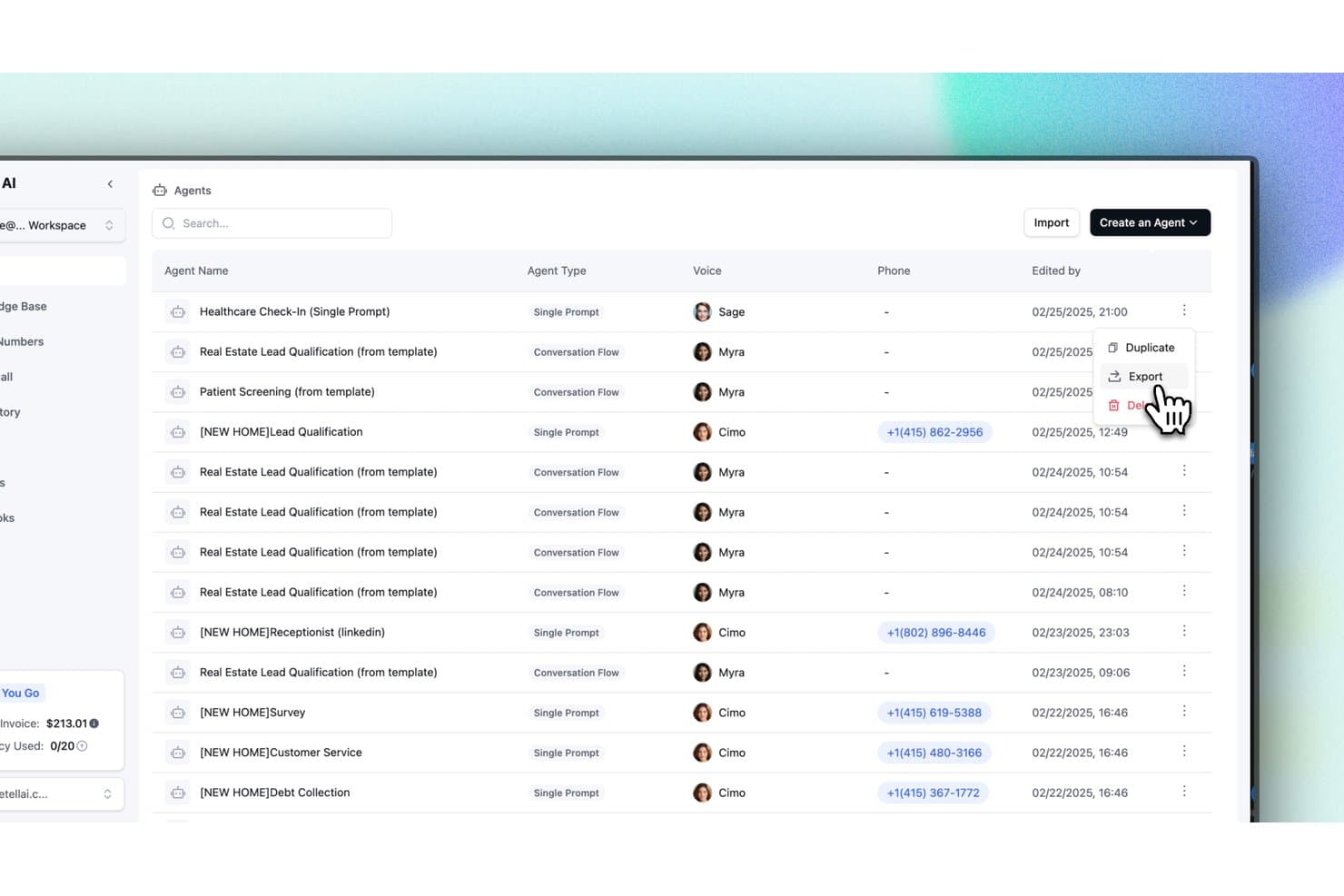
Retell AI dashboard for managing healthcare voice agents and patient call workflows. Retell AI is an AI voice agent platform built specifically for healthcare, combining patient scheduling, payer IVR navigation, call triage, and EHR integrations into a HIPAA-compliant phone agent.
Who Is Retell AI Best For?
Retell AI is a strong fit for medical practice administrators and clinic operations teams looking to automate patient-facing phone calls without expanding front-desk staff.
Why I Picked Retell AI
I've included Retell AI in my top picks because of how far it lets you push agent customization for healthcare-specific workflows. I particularly like that you can build agents to navigate payer IVR systems on behalf of staff, handling claim status checks and prior authorization calls that would otherwise tie up revenue cycle teams for hours. The proprietary turn-taking model and ~600ms latency mean the agent handles natural conversational pauses without talking over patients.
Retell AI Key Features
- HIPAA-compliant AI note-taking: Automatically generates secure call logs and patient records for compliance and audit readiness.
- Epic and eClinicalWorks integration: Connects directly to major EHR systems to read and update patient and appointment data in real time.
- Dynamic call routing: Routes incoming calls to specific departments or assigned staff based on patient responses and call intent.
- Batch outbound calling: Runs automated campaigns for appointment reminders, surveys, or patient follow-ups at high volume.
Retell AI Integrations
Retell AI offers native integrations with Epic, OpenDental, Dentrix, ChiroTouch, eClinicalWorks, Jane App, aCOM Health, Keragon, Twilio, Vonage, and HubSpot. An API is available for custom integrations.
Pros and Cons
Pros:
- Outbound campaign calling built in natively
- Proprietary turn-taking model reduces awkward pauses
- Deeply customizable voice agent configurations
Cons:
- Fewer pre-built healthcare templates than competitors
- Requires developer resources to configure agents
Learn more about Retell AI: Best for patient and payer call automation
- Free demo available
- Pricing upon request
Visit WebsiteCustomer Rating:5/5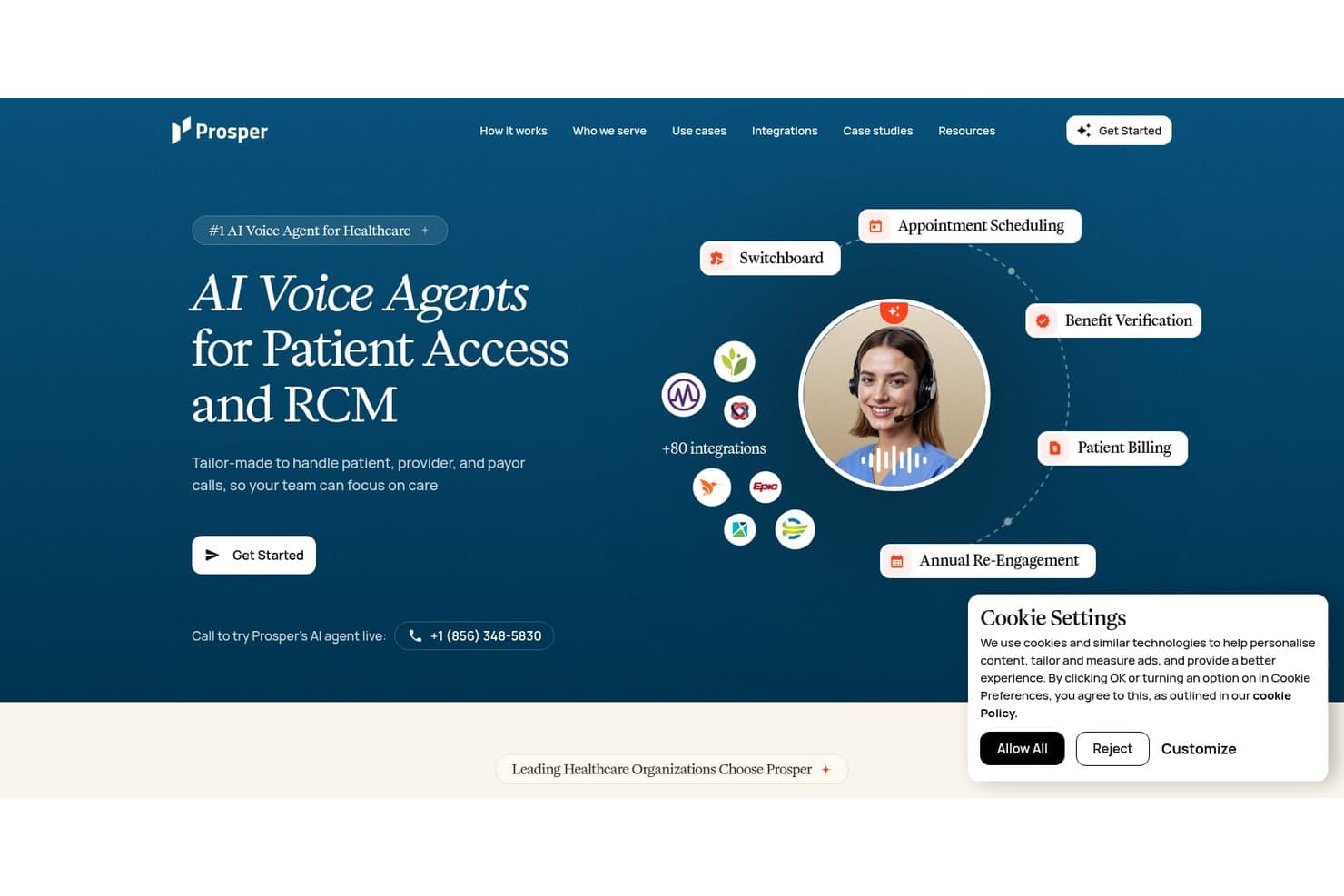
Prosper AI offers AI Voice Agents for Patient Access and RCM, handling appointment scheduling, benefit verification, patient billing, and annual re-engagement with 80+ integrations. Prosper AI is a healthcare voice AI platform with autonomous agents for patient scheduling, intake, and billing calls, and payer-side benefits verification and prior authorization.
Who Is Prosper AI Best For?
Prosper AI is a strong fit for outpatient groups and health systems with high patient call volumes and revenue cycle teams managing payer communication.
Why I Picked Prosper AI
I picked Prosper AI as one of the best because it's the only healthcare voice AI platform I've found that automates both sides of the phone problem: patient calls and payer calls. Its payer-facing agents call insurers directly, navigate hold queues, and capture up to 60 data points per benefits verification call. On the patient side, its Blueprints™ cover scheduling, intake, reminders, and billing in a single conversation, with no menu routing involved.
Prosper AI Key Features
- Bidirectional EHR and PMS integration: Connects with over 80 healthcare systems including Epic, Athenahealth, and Cerner for appointment and data sync.
- Multilingual voice support: Handles patient and payer conversations in up to 45 languages with healthcare-specific vocabulary.
- AI-powered call quality assurance: Reviews and monitors every call for compliance and accuracy using AI-driven quality checks.
- Switchboard and smart routing: Routes inbound calls to the appropriate department or staff based on caller intent and urgency.
Prosper AI Integrations
Prosper AI offers native integrations with Epic, Athenahealth, Cerner, eClinicalWorks, NextGen, Greenway, Veradigm, Nextech, Allscripts/Altera, and MEDITECH. An API is available for custom integrations.
Pros and Cons
Pros:
- Supports patient conversations in 45 languages
- Deep benefits verification data capture per call
- Handles both patient and payer-facing calls
Cons:
- Newer platform with limited public case studies
- No publicly available pricing information
Learn more about Prosper AI:
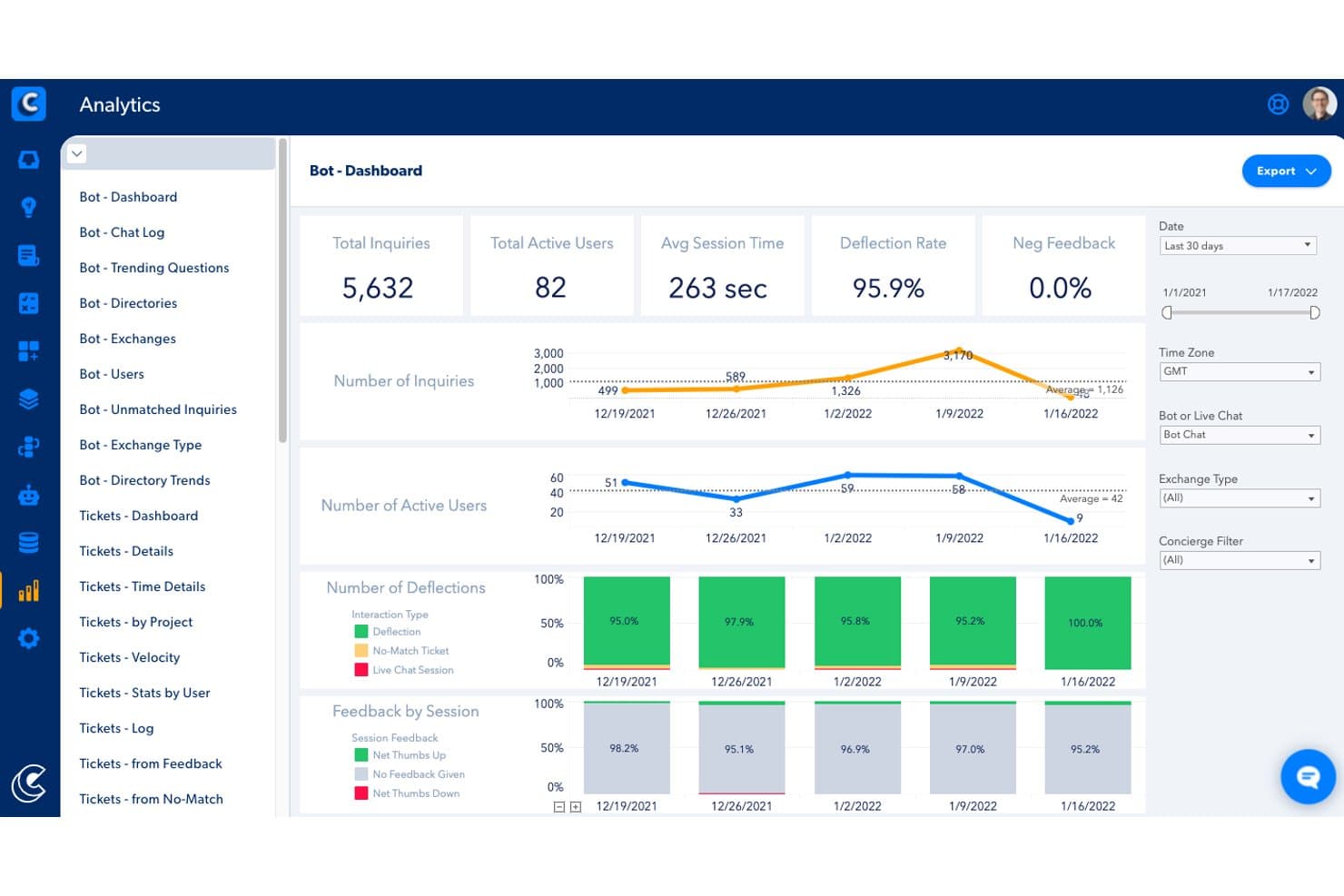
SmartAction by Capacity analytics dashboard tracking inquiries, users, deflection rates, and session feedback. SmartAction is an AI voice agent platform built for healthcare contact centers, handling inbound patient calls through conversational voice automation for appointment scheduling, call routing, billing inquiries, and patient authentication.
Who Is SmartAction Best For?
SmartAction is a strong fit for mid-to-enterprise health systems and medical groups with high inbound call volumes that need to automate routine patient interactions at scale.
Why I Picked SmartAction
I picked SmartAction as one of the best because no other platform I've looked at is as deliberately engineered around call deflection for healthcare contact centers. The NOVA platform identifies caller intent immediately, containing scheduling, billing, and patient authentication calls without ever involving a live agent. Its intelligent routing layer then escalates only urgent inquiries, which means contact center teams handle genuinely complex patient needs rather than repetitive intake tasks.
SmartAction Key Features
- Omnichannel patient engagement: Supports voice, chat, SMS, and email channels with context maintained across touchpoints.
- Epic and AthenaHealth integration: Connects natively to major EHR systems for real-time appointment updates and patient record lookups.
- HIPAA and SOC 2 Type II compliance: Protects PHI with robust security, signed BAAs, and secure storage protocols.
- Automated payment handling: Enables patients to securely pay bills or copays using AI-guided voice transactions.
SmartAction Integrations
SmartAction offers native integrations with Epic, AthenaHealth, and Henry Schein, and provides an API for custom integrations.
Pros and Cons
Pros:
- Dedicated healthcare implementation team included
- NOVA platform identifies and routes caller intent immediately
- High containment rates for repetitive patient calls
Cons:
- Not suited for small or single-provider practices
- Requires managed onboarding with no self-serve option
Learn more about SmartAction: 6Best for health system call automation
Hyro
- Free demo available
- Pricing upon request
Visit WebsiteCustomer Rating:4.9/5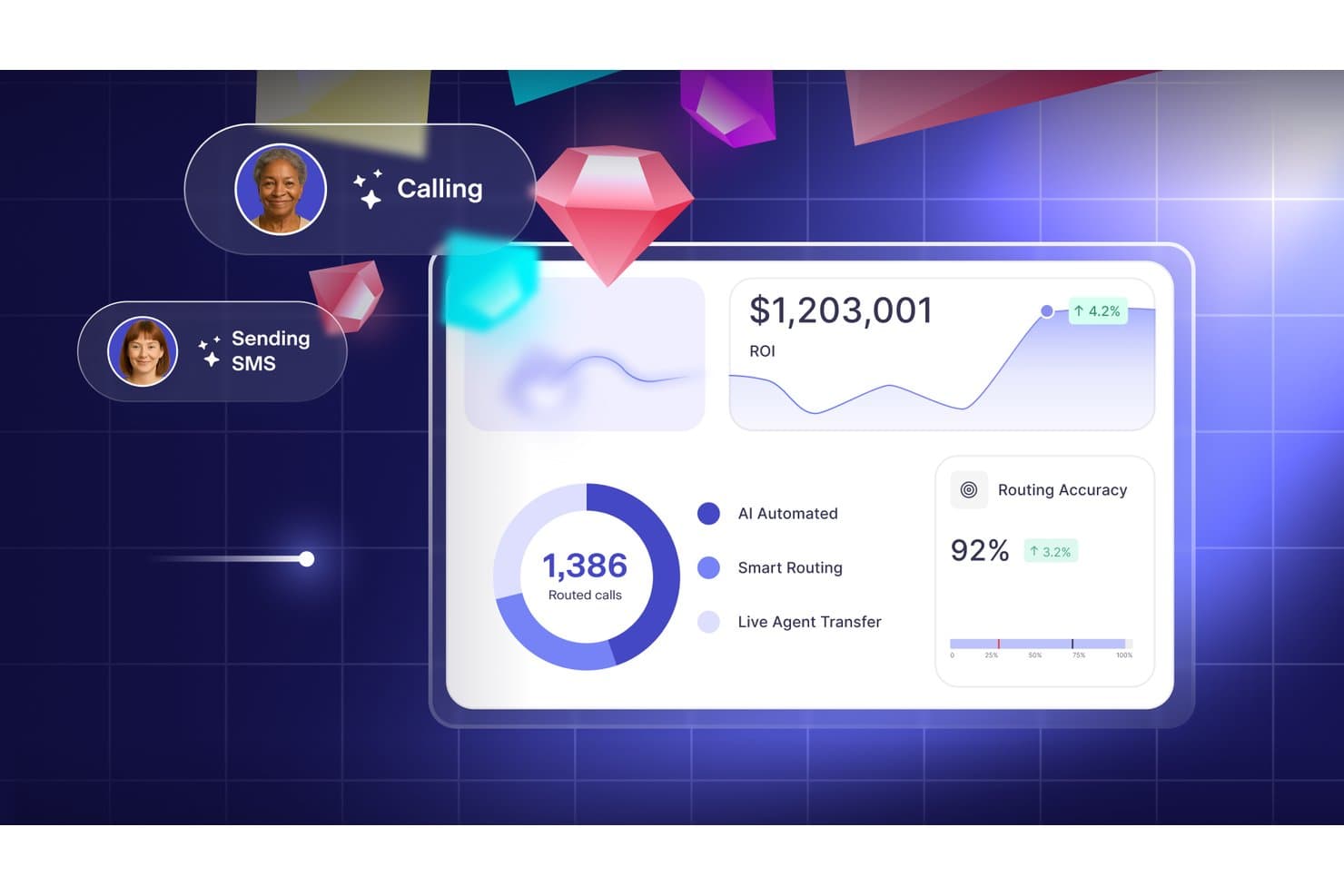
Hyro offers an AI-powered voice agent dashboard displaying routed call analytics, routing accuracy, and ROI metrics for healthcare communication workflows. Hyro is a healthcare-native conversational AI platform that deploys voice and chat agents across phone, web, and SMS channels to handle patient scheduling, call routing, intake, prescription support, and billing interactions.
Who Is Hyro Best For?
Hyro is built for enterprise health systems and large multi-site hospital networks running Epic or Cerner that need to automate high call volumes at scale.
Why I Picked Hyro
I picked Hyro as one of the best because its Call Center Automation covers the full call lifecycle: booking, rescheduling, and prescription refill requests. What I especially like is the Smart Routing layer, which detects patient intent and escalates complex calls to the right department in real time. Hyro's self-updating knowledge graph keeps the AI current with provider availability changes without manual retraining.
Hyro Key Features
- Epic and Cerner integration: Connects directly with major EHR platforms to sync patient data and manage appointments in real time.
- HIPAA-compliant conversational AI: Processes voice and chat interactions securely with agreements and audit logs as required for protected health information.
- Conversational analytics dashboard: Tracks call volumes, containment rates, outcomes, and intent analysis for ongoing optimization.
- Multilingual support: Handles English, Spanish, and other commonly spoken patient languages with context-sensitive medical terminology.
Hyro Integrations
Hyro offers native integrations with Epic, Oracle Cerner, eClinicalWorks, Athenahealth, Kyruus, Salesforce Health Cloud, Cisco, NICE, Genesys, Five9, and RingCentral. An API is available for custom integrations.
Pros and Cons
Pros:
- Supports post-discharge outreach and recall campaigns
- Knowledge graph self-updates without manual retraining
- Handles high-volume inbound call routing automatically
Cons:
- Primarily suited for large enterprise health systems
- Long implementation timeline for enterprise deployments
Learn more about Hyro: Best for clinical patient outreach
- Free demo available
- Pricing upon request
Visit WebsiteCustomer Rating:4/5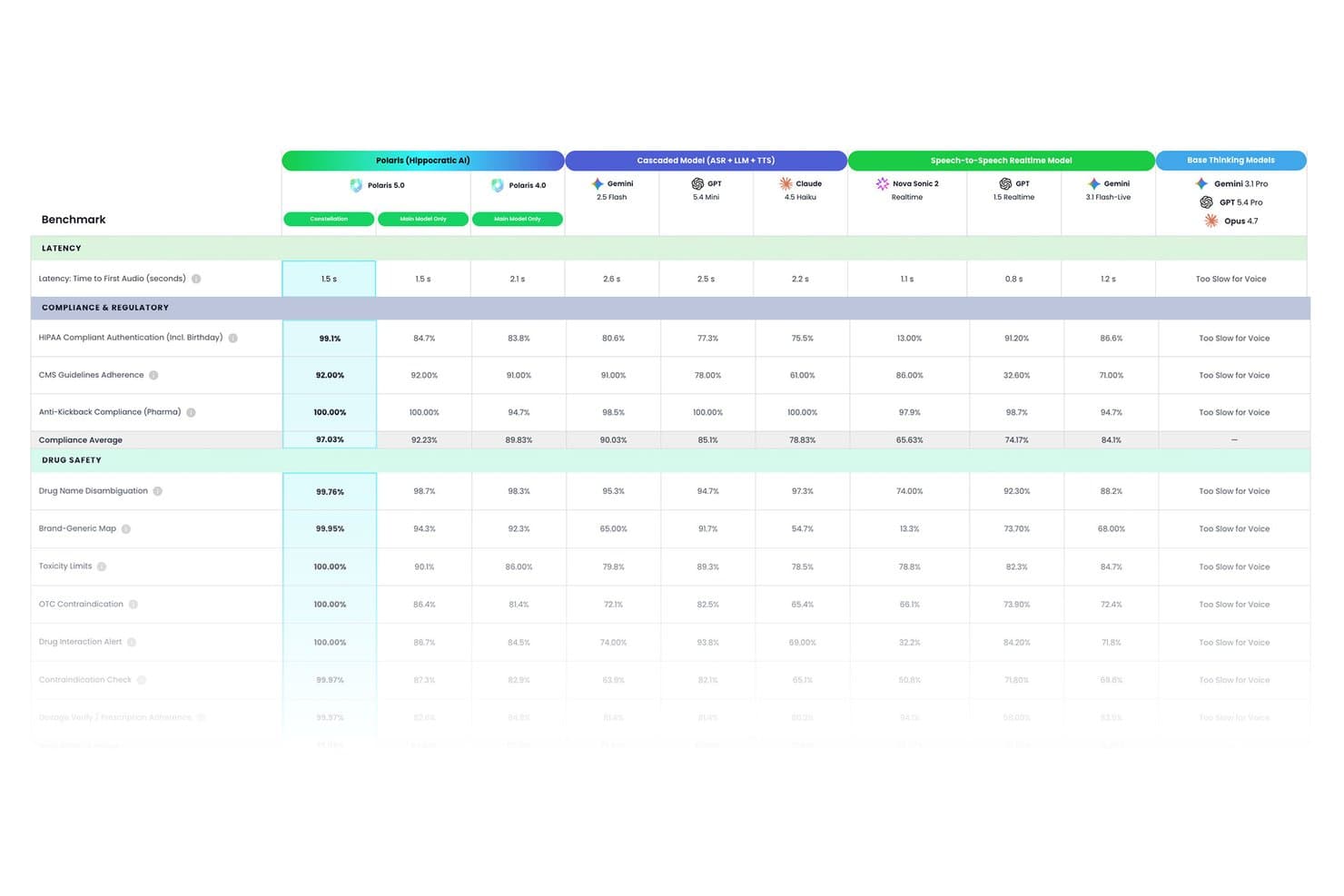
Hippocratic AI benchmark dashboard comparing healthcare voice AI latency, compliance, and drug safety performance. Hippocratic AI is a healthcare-specific AI voice agent platform built on a clinical large language model, purpose-built for non-diagnostic patient interactions including post-discharge follow-up, chronic care outreach, and pre-visit screening.
Who Is Hippocratic AI Best For?
Hippocratic AI is a strong fit for enterprise health systems, payors, and life sciences organizations that run high-volume clinical patient outreach programs.
Why I Picked Hippocratic AI
I picked Hippocratic AI because no other voice agent on this list is built specifically for clinical patient outreach at scale. Its Polaris Constellation Architecture runs purpose-built agents for post-discharge follow-up, chronic care management, and screening outreach like colorectal and mammogram programs. I particularly like that the platform's nurse escalation logic has handled 31K+ real clinical escalations, making it credible for outreach programs where patient safety is non-negotiable.
Hippocratic AI Key Features
- Bidirectional EHR integration: Syncs patient data and updates in real time with Epic, Cerner, Athenahealth, NextGen, and eClinicalWorks.
- Multilingual medical vocabulary: Communicates with patients in Spanish and other major languages while handling clinical and insurance language accurately.
- Clinical documentation capture: Records detailed patient assessments and risk screenings directly to the health record with high accuracy.
- Escalation protocols for clinical triage: Uses nurse-in-the-loop escalation and safety guardrails to ensure urgent patient cases are routed to human clinicians.
Hippocratic AI Integrations
Hippocratic AI offers over 50 native integrations with systems including Epic, Cerner, Athenahealth, NextGen, eClinicalWorks, Modernizing Medicine, Salesforce Health Cloud, and Oracle Health. An API is available for custom integrations.
Pros and Cons
Pros:
- Supports specialty-tuned scripts for chronic care
- Nurse escalation logic tested across real patients
- Clinically validated for high-volume outreach programs
Cons:
- Minimal fit for small independent clinics
- Not built for inbound scheduling workflows
Learn more about Hippocratic AI: Best for patient, provider, and payer calls
- Free demo available
- Pricing upon request
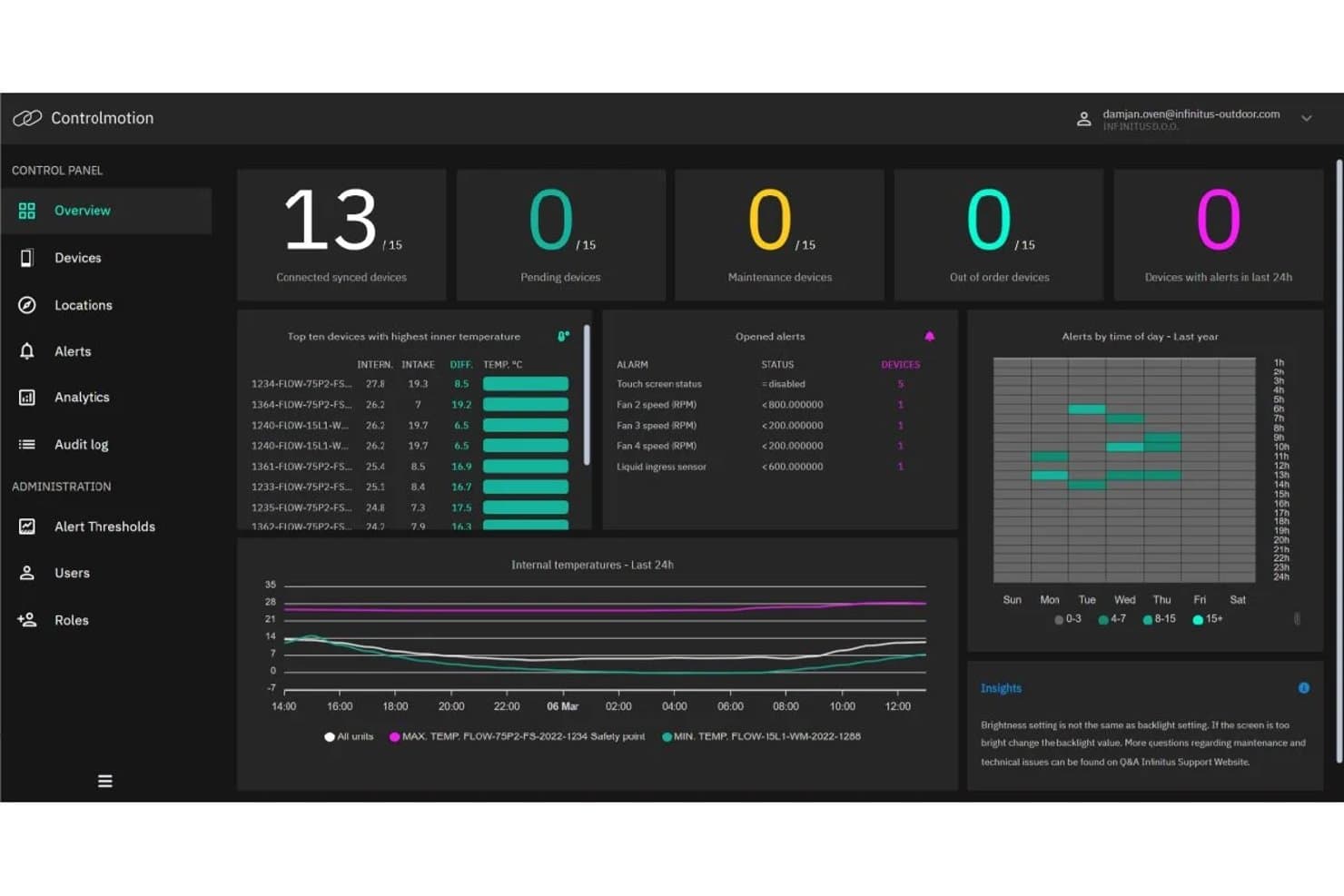
Infinitus dashboard showing connected devices, alerts, analytics, and system performance. Infinitus is a healthcare-focused AI voice agent platform that automates outbound and inbound phone calls across patient, provider, and payer workflows, including benefits verification, prior authorization, medication adherence, and insurance discovery.
Who Is Infinitus Best For?
Infinitus is a strong fit for enterprise health systems, specialty pharmacies, and pharma manufacturers managing high volumes of payer and patient access calls.
Why I Picked Infinitus
I picked Infinitus as one of the best because it covers patient, provider, and payer calls from a single platform, which is genuinely rare in this space. I particularly like the benefits verification agent, which navigates 1,400+ payer IVR systems to collect drug coverage, prior authorization requirements, and coordination of benefits details. The Clinical Escalations feature runs silently alongside every call and triggers warm transfers or 911 handoffs when a risk threshold is crossed.
Infinitus Key Features
- AI copilot for outbound calls: Lets staff initiate AI-assisted phone calls to bypass IVR systems and eliminate hold times.
- SMART on FHIR integration: Integrates directly with EHRs like Epic and Cerner using SMART on FHIR for secure data exchange.
- Digital-first data collection: Pulls data digitally from payor and clearinghouse connections to reduce phone call durations.
- Automated post-call review: Uses AI to review and flag conversation outputs for accuracy and compliance.
Infinitus Integrations
Infinitus offers native integrations with Epic, Cerner, and Athenahealth using SMART on FHIR protocols. An API is available for custom integrations.
Pros and Cons
Pros:
- Fast turnaround on benefits verification status
- Handles patient, provider, and payer call types
- Navigates payer IVR queues without staff involvement
Cons:
- Works best layered onto an existing PA workflow
- Not a full end-to-end prior authorization platform
Learn more about Infinitus: Best for specialty care patient access
- Free demo available
- Pricing upon request
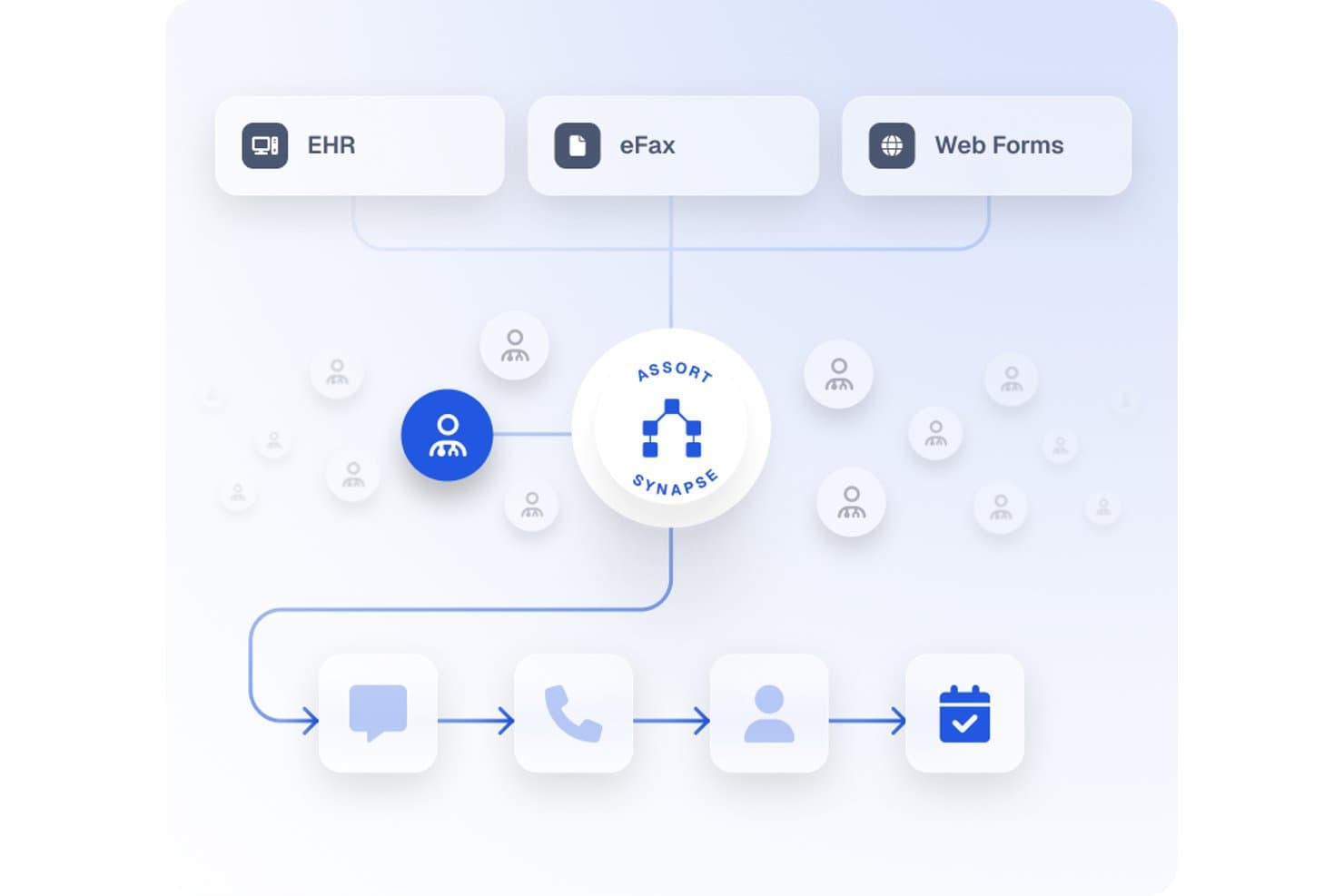
Assort Health offers an AI-powered routing system that connects referrals from EHR, eFax, and Web Forms through an intelligent workflow including messaging, calling, patient matching, and scheduling. Assort Health is a specialty-focused AI voice agent platform for healthcare that handles inbound and outbound patient calls across scheduling, triage, intake, medication refills, and follow-up across 23+ medical specialties.
Who Is Assort Health Best For?
Assort Health is a strong fit for multi-provider specialty practices and health systems managing high patient call volumes across complex scheduling workflows.
Why I Picked Assort Health
I picked Assort Health as one of the best because its specialty protocol engine covers 62,000 care protocols across 23+ specialties, something generic voice AI platforms simply can't match. I love how the Synapse implementation engine builds org-specific workflows from a practice's own data before go-live. Its Patient Journey Memory also retains prior call context, so a returning orthopedic patient never has to repeat their history.
Assort Health Key Features
- Multilingual voice support: Communicates with patients in 37 languages using accurate medical terminology and natural speech.
- Bidirectional EHR integration: Connects with over 80 EHRs including Epic and athenahealth to read and update patient records in real time.
- Automated care journeys: Orchestrates patient intake, referral management, and follow-up tasks with configurable digital workflows.
- Proactive outbound outreach: Sends appointment reminders, manages waitlists, and resolves payment issues using automated voice and text campaigns.
Assort Health Integrations
Assort Health offers native integrations with over 80 EHR and practice management systems, including Epic, athenahealth, Cerner, eClinicalWorks, and NextGen. An API is available for custom integrations.
Pros and Cons
Pros:
- Supports 37 languages with clinical terminology
- Retains patient call context across interactions
- Covers 62,000 protocols across 23+ specialties
Cons:
- Implementation relies heavily on org-specific clinical data
- Limited publicly available user review data
Learn more about Assort Health:
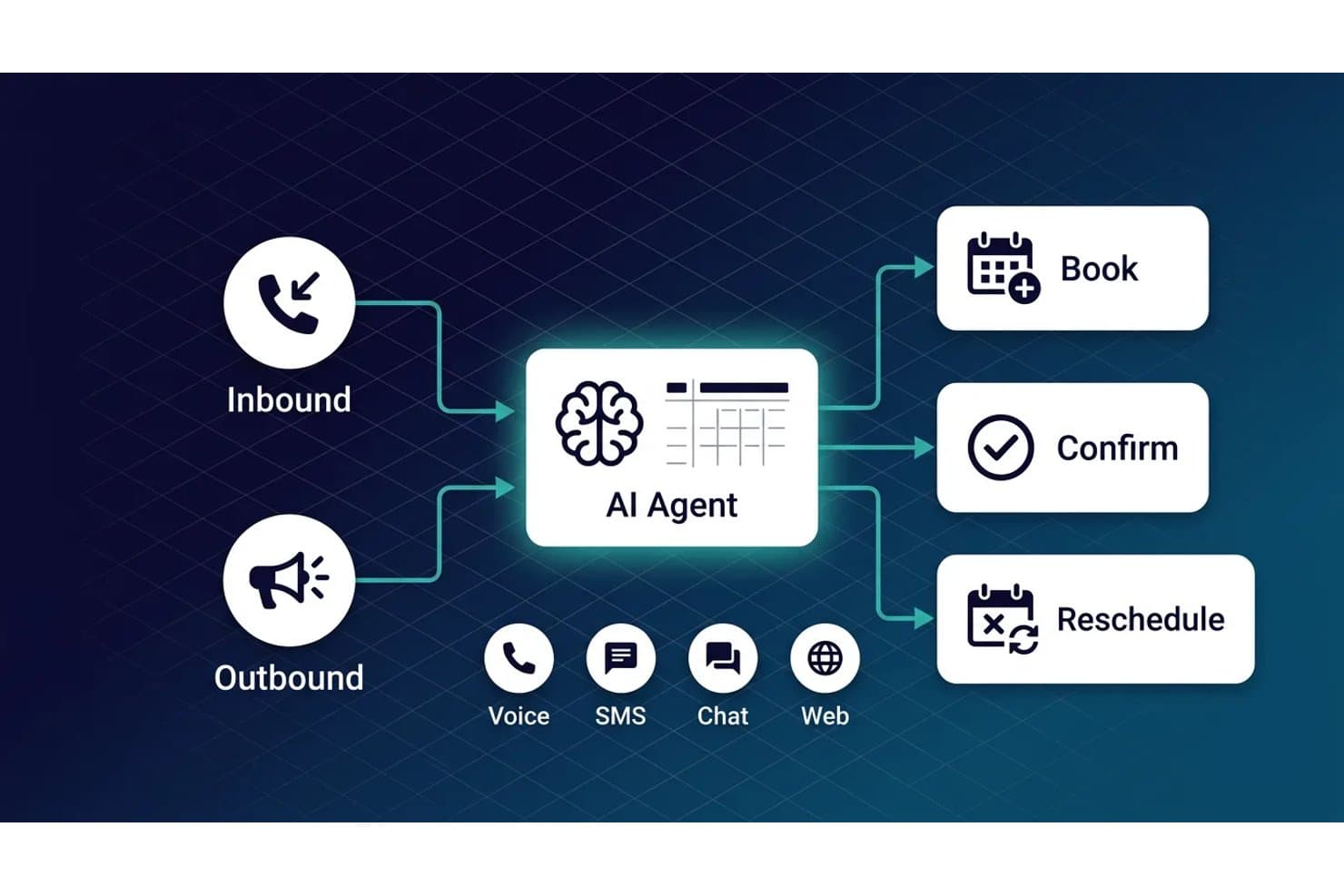
Syllable offers an AI Agent for scheduling that handles inbound and outbound communications via Voice, SMS, Chat, and Web to book, confirm, or reschedule appointments. Syllable is a multichannel AI voice agent platform built for healthcare that automates patient communication across voice, SMS, chat, and web, with certified Epic EHR integration and a HITRUST- and SOC 2 Type II-compliant infrastructure.
Who Is Syllable Best For?
Syllable is a strong fit for large health systems and enterprise patient access centers managing high inbound call volumes across multiple departments.
Why I Picked Syllable
I picked Syllable as one of the best because no other platform I've evaluated handles true multichannel coverage as natively, running the same agent logic across voice, SMS, chat, and web without separate tools. What I find impressive is how it books appointments directly inside Epic within the same call, using real-time availability checks and patient verification via DOB or MRN. The Outbound Appointment Reminder Agent then pushes SMS follow-ups tied to that same call context.
Syllable Key Features
- HIPAA and HITRUST certified security: All patient voice and data interactions are encrypted and fully compliant with healthcare regulations.
- Real-time Epic EHR integration: The platform connects natively to Epic for direct scheduling, patient lookup, and workflow automation.
- Multi-cloud deployment support: Syllable agents run on AWS, GCP, Azure, or OCI with elastic scaling and policy-based routing.
- Distributed tracing and analytics: Built-in logging, monitoring, and dashboards surface critical voice agent performance data.
Syllable Integrations
Syllable offers native integration with Epic for real-time scheduling and patient lookup. An API is available for custom integrations.
Pros and Cons
Pros:
- Purpose-built for clinical-scale scheduling and call volume
- Hour-based pricing is unusually transparent for enterprise
- Multilingual patient support across several languages
Cons:
- Less suited to small clinics and single-location practices
- Little third-party review evidence currently available
Learn more about Syllable:
Other AI Voice Agents for Healthcare
- 11Notable HealthBest for patient access automation
- 12ParlanceBest for healthcare call routing
- 13Oracle HealthBest for EHR-integrated clinical voice AI
- 14ThoughtlyBest for healthcare appointment calls
- 15VoxyHealthBest for patient calls and care gaps
How I Evaluate AI Voice Agents for Healthcare
For a tool to earn a spot on this list, it needs to deliver genuine AI value—not just replace a touch-tone IVR with a slightly smarter script. I split my evaluation into two layers: the core functionality every solution must meet to qualify, and the differentiating factors that set the best options apart.
Core Functionality (Table Stakes For This List)
When I'm selecting tools for my list, I rank each one on a scale from 0 (does not offer the functionality) to 5 (excels in this area) for each core functionality listed below. Then, I calculate the tool's total score into a percentage. Each tool needs to achieve a minimum total score of 65% to be considered for inclusion.
- Natural Voice Conversations: I look for fluid, human-like dialogue that handles interruptions and retains context—not rigid IVR menus patients hang up on.
- HIPAA Compliance: Every tool should offer a signed BAA, end-to-end encryption, and audit logging. SOC 2 or HITRUST certification is a strong signal.
- Appointment Management: I evaluate whether the agent can book, reschedule, and cancel visits autonomously, including handling provider preferences and complex scheduling rules.
- EHR/PMS Integration: The agent needs to connect with systems like Epic, athenahealth, or NextGen to read and write patient data without manual workarounds.
- Call Routing & Triage: I check for intent-based routing that detects urgency—like a patient reporting chest pain—and escalates to clinical staff with warm transfers.
- Multilingual & Medical Vocabulary: The agent should handle languages common in your patient population and understand clinical terms, insurance language, and symptom descriptions.
Once I have a list of tools that meet the criteria, I consider what sets each platform apart.
Differentiating Factors (What Sets Vendors Apart)
Here's how I compare and contrast different vendors:
Standout Features
Ambient symptom triage is a major differentiator. I look for agents that use clinically validated protocols to assess severity and escalate urgent cases to on-call staff. Live human handoff matters just as much; the best platforms pass full conversation context and sentiment cues to the clinician picking up. I also evaluate post-call analytics, where drill-downs by department or provider help you track containment rates, no-show reduction, and patient sentiment over time.
Beyond Features
Implementation experience matters a lot in this space. I look for vendors with dedicated healthcare onboarding teams who handle EHR mapping and telephony cutover planning, with phased rollouts by department or service line. Telephony interoperability is equally important—your agent needs to plug into existing SIP trunks and contact center platforms like Genesys or Five9. I also evaluate use case breadth, checking whether a vendor supports both inbound scheduling calls and outbound campaigns like care gap closure or post-discharge check-ins.
How to Choose AI Voice Agents for Healthcare
It’s easy to get bogged down in long feature lists and complex pricing structures. To help you stay focused as you work through your unique software selection process, here’s a checklist of factors to keep in mind:
| Factor | What to Consider |
| Scalability | Will the agent handle fluctuating call volumes and practice growth, or will it require frequent upgrades as you expand? |
| Integrations | Does the solution connect seamlessly with your EHR, practice management, or contact center platforms without major technical effort? |
| Customizability | Can you tailor workflows, scripts, and prompts to match your specialties, locations, or patient populations? |
| Ease of use | Will staff and patients actually use it, or will training and daily operation feel like a barrier? |
| Implementation and onboarding | What is the realistic timeline for rollout, including EHR mapping and training? Does the vendor offer support throughout this stage? |
| Cost | Are there any setup, integration, or per-minute fees that could affect your annual budget? Is pricing transparent as volumes grow? |
| Security safeguards | Is there end-to-end encryption, BAA availability, user access controls, and regular security audits in place? |
| Support availability | Are live troubleshooting, after-hours, and multilingual support offered, and how quickly does the vendor respond? |
What Are AI Voice Agents for Healthcare?
AI voice agents for healthcare are software platforms that use artificial intelligence to interact with patients and staff by phone, handling tasks like appointment scheduling, call routing, and answering clinical or administrative questions. They support medical practices by reducing manual workload and helping ensure timely, accurate patient communication.
Features of AI Voice Agent for Healthcare
When selecting AI voice agent for healthcare, keep an eye out for the following key features:
- Natural voice conversation: Uses advanced speech recognition and synthesis for human-like, real-time conversations with patients over the phone.
- HIPAA compliance: Ensures that all patient interactions and data handling follow established healthcare privacy regulations with secure, encrypted storage.
- Automated appointment management: Schedules, reschedules, confirms, and cancels visits directly in sync with your scheduling or practice management system.
- EHR integration: Connects with electronic health record platforms to read and write patient information, notes, and updates automatically.
- Call routing and triage: Analyzes caller needs and urgency, then transfers or escalates calls to the right department or clinical staff as needed.
- Multilingual support: Handles conversations in multiple languages common to your patient base, using accurate medical terminology and context.
- Insurance and billing handling: Collects and verifies insurance details, eligibility, and answers basic billing questions using up-to-date data.
- Patient intake automation: Gathers pre-visit details and updates records so staff don’t need to handle repetitive intake calls manually.
- Live agent handoff: Recognizes complex or sensitive inquiries and smoothly transfers calls with a summary to a human team member.
- Analytics dashboard: Provides insights into call volume, average handling time, no-show rates, and patient sentiment to track and optimize your workflows.
Benefits of AI Voice Agents for Healthcare
Implementing AI voice agents for healthcare provides several benefits for your team and your business. Here are a few you can look forward to:
- Reduced administrative burden: Automates repetitive tasks like appointment scheduling and intake, freeing up staff for higher-value work.
- Improved patient access: Handles after-hours and high-volume calls, making it easier for patients to connect when they need care.
- Lower no-show rates: Delivers timely appointment reminders and confirmations through automated, personalized outreach.
- Faster call resolution: Uses intelligent routing and triage so callers reach the right department or clinician without extra transfers.
- Stronger data security: Maintains HIPAA compliance and audit trails with secure encryption and controlled access to patient information.
- Better patient satisfaction: Offers natural conversation and multilingual support so patients feel understood and well cared for.
- Actionable performance insights: Provides analytics on call metrics, patient sentiment, and operational outcomes that help optimize your workflows.
Costs and Pricing of AI Voice Agents for Healthcare
Selecting AI voice agents for healthcare requires an understanding of the various pricing models and plans available. Costs vary based on features, team size, add-ons, and more. The table below summarizes common plans, their average prices, and typical features included in AI voice agents for healthcare solutions:
Plan Comparison Table for AI Voice Agents for Healthcare
| Plan Type | Average Price | Common Features |
| Free Plan | $0 | Limited appointment scheduling, basic call routing, one integration, and simple analytics. |
| Personal Plan | $50-$150/month | Appointment management, voice conversations, limited EHR integration, basic HIPAA compliance, and support. |
| Business Plan | $300-$800/month | Advanced scheduling, multilingual support, call triage, analytics dashboard, and integration with multiple EHRs and systems. |
| Enterprise Plan | $1,000+/month | Custom workflows, deep EHR connectivity, priority support, implementation assistance, compliance certifications, and operational analytics. |
AI Voice Agent for Healthcare FAQs
Here are some answers to common questions about AI voice agent for healthcare:
How do AI voice agents for healthcare handle sensitive patient information?
AI voice agents for healthcare use encryption, audit logs, and strict access controls to protect sensitive data. Most vendors offer signed BAAs and support HIPAA compliance, ensuring patient information is safe during every interaction.
Can these systems integrate with my existing EHR or scheduling software?
Yes, most AI voice agents for healthcare are designed to connect with common EHR, EMR, and scheduling platforms. Look for solutions that offer out-of-the-box integrations or flexible APIs to avoid manual data transfers.
What languages do AI voice agents for healthcare support?
Many agents support multiple languages, including Spanish, Mandarin, and more. It’s important to confirm the platform offers high accuracy in both everyday and medical conversations for the patient populations you serve.
Can I customize the workflows and scripts for my specific needs?
Yes, you can usually tailor scripts, appointment rules, triage questions, and prompts to fit your organization’s specialties, departments, and patient scenarios. This helps the agent feel like a natural extension of your team.
How quickly can a healthcare practice implement an AI voice agent?
Implementation times vary, but many vendors support phased rollouts over 4–12 weeks. Planning includes EHR integration, call flow mapping, and training so teams are ready before launch.
What if a patient call is too complex for the AI to handle?
If a conversation is too complex, the AI voice agent can escalate the call to a live staff member with all relevant context and notes, ensuring a smooth handoff and patient experience.