

Software-ul de facturare pentru spitale gestionează facturarea pacienților, colectarea plăților, procesarea cererilor de rambursare și raportarea financiară pentru spitale și sisteme spitalicești. Dacă sunteți în căutarea celui mai bun software de facturare pentru spitale, probabil că doriți să reduceți problemele legate de facturare, să identificați erorile frecvente de plată și să vă mențineți echipa concentrată asupra pacienților în locul documentelor. Întrucât reglementările evoluează constant, iar veniturile sunt în joc, alegerea sistemului potrivit poate însemna mai puține cereri respinse și o situație financiară mai sănătoasă.
În acest ghid, vă voi prezenta cele mai bune opțiuni de software de facturare pentru spitale pentru 2026, astfel încât să puteți compara funcțiile, să observați diferențele importante și să alegeți soluția potrivită pentru fluxul de lucru și obiectivele unității dumneavoastră.
Why Trust Our Software Recommendations
6,700+
Reviews
20
Industry experts
16+
Evaluation factors
14
Years
Our team has been testing and reviewing software since 2012. As medical practice leaders ourselves, we know how difficult—and important—it is to choose the right software.
For this guide, we evaluated tools using hands-on testing and independent research, scoring tools using our selection criteria.
Our reviews reflect our human editorial judgment, not a sales pitch.
Rezumatul celor mai bune software-uri de facturare pentru spitale
Acest tabel comparativ rezumă detaliile de preț pentru software-ul meu de facturare pentru spitale, pentru a vă ajuta să găsiți cea mai bună soluție pentru bugetul și nevoile dumneavoastră de afaceri.
Sorted by: Default
| Tool | Starting Price | Website | |
|---|---|---|---|
Best for rural hospital billing needs | 2.6 out of 5 | Pricing upon request Free demo available | Website |
Best for multi-payer reimbursement support | 3.8 out of 5 | Pricing upon request Free demo available | Website |
Best for eligibility and benefits verification | Not rated | Pricing upon request Free demo available | Website |
Best for clearinghouse connectivity integration | Not rated | Pricing upon request Free demo available | Website |
Best for end-to-end revenue cycle outsourcing | Not rated | Pricing upon request Free demo available | Website |
Best for enterprise-scale interoperability | 4.4 out of 5 | Pricing upon request Free demo available | Website |
Best for automated claims management | 4.4 out of 5 | Pricing upon request Free demo available | Website |
Best for reimbursement analytics and optimization | Not rated | Pricing upon request Free demo available | Website |
Best for integrated patient and financial records | Not rated | Pricing upon request Not available | Website |
Best for real-time patient billing insights | Not rated | Pricing upon request Not available | Website |


Recenzii ale celor mai bune software-uri de facturare pentru spitale
Mai jos sunt rezumatele mele detaliate ale celor mai bune software-uri de facturare pentru spitale care au ajuns pe lista mea scurtă. Recenziile mele oferă o privire detaliată asupra funcțiilor, capacităților și integrărilor fiecărui software, pentru a vă ajuta să găsiți cea mai bună soluție pentru dumneavoastră.
 Best for rural hospital billing needs
- Free demo available
- Pricing upon request
Visit WebsiteCustomer Rating:2.6/5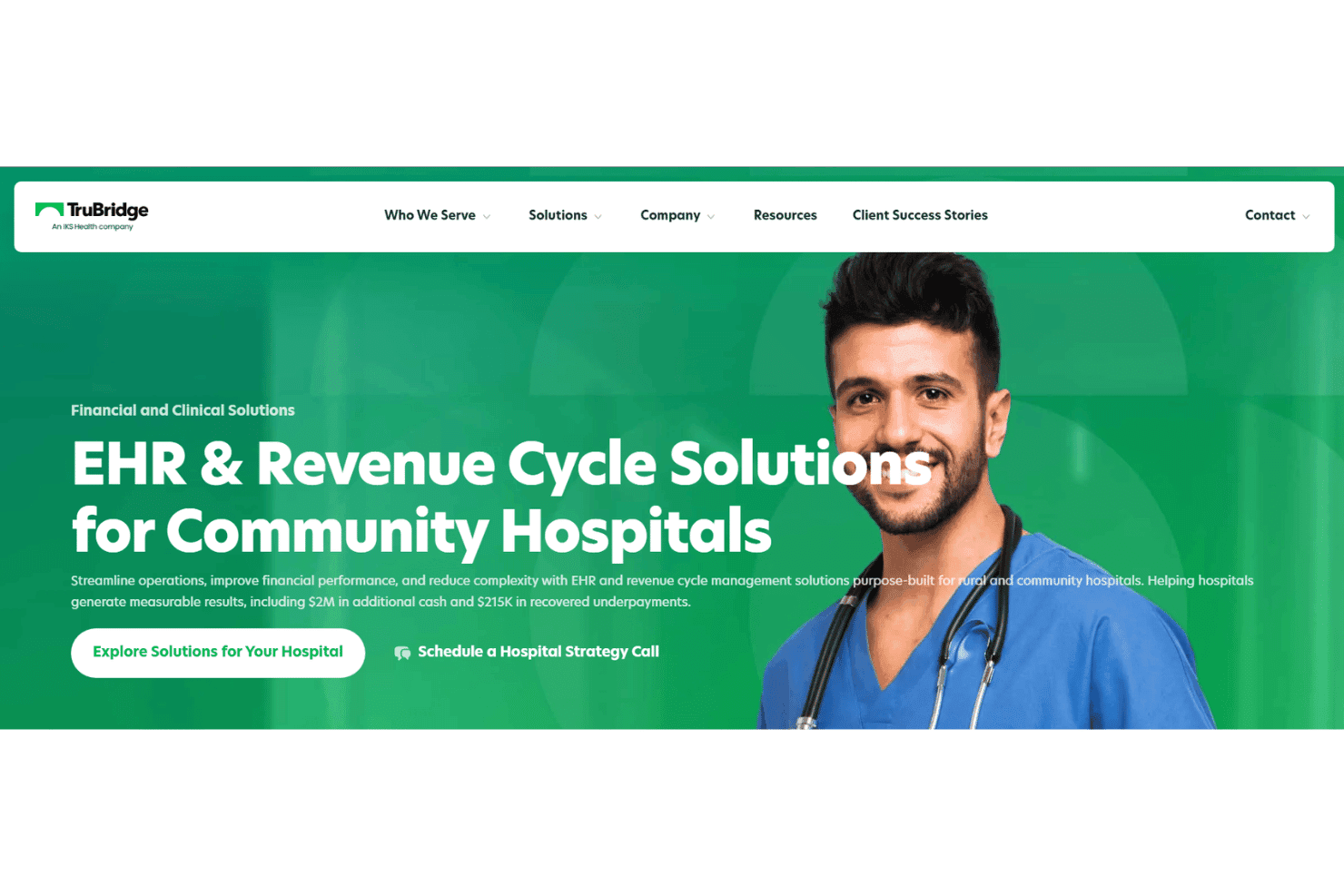
TruBridge offers EHR and Revenue Cycle Solutions purpose-built for rural and community hospitals. TruBridge is a revenue cycle management and hospital billing platform designed for rural and community hospitals, with modules spanning claims management, medical coding, charge capture, denial management, and patient billing.
Who Is TruBridge Best For?
TruBridge is a strong fit for revenue cycle directors and billing managers at critical access and community hospitals with under 100 beds.
Why I Picked TruBridge
I've included TruBridge in my top picks because it's purpose-built for the billing realities that rural and critical access hospitals face. I particularly like the Complete Business Office model, which handles claim submission through collections for facilities that can't staff a full in-house RCM team. The Contract Management module also catches underpaid claims automatically, which matters when your payer mix is Medicare-heavy and every reimbursement dollar counts.
TruBridge Key Features
- Medical coding service: Certified professionals assign ICD-10, CPT, HCPCS, and DRG codes for hospital-based billing.
- Patient billing and payment portal: Patients can view statements and make payments online through an integrated portal.
- Denial management worklists: Staff can track denied claims, categorize issues, and manage appeals in dedicated workflows.
- EHR and RCM integration: Enables seamless sharing of clinical and financial data within TruBridge's suite and other EHRs.
TruBridge Integrations
TruBridge offers native integrations with Microsoft Dragon Copilot, Multiview, and RevSpring. Native integrations are not clearly documented beyond these, and an API is not publicly disclosed for custom integrations.
Pros and Cons
Pros:
- Contract management detects payer underpayments
- Offers end-to-end revenue cycle outsourcing
- Designed for rural and critical access hospitals
Cons:
- Limited documentation for self-service troubleshooting
- Interface feels dated and unintuitive
Learn more about TruBridge: Best for multi-payer reimbursement support
- Free demo available
- Pricing upon request
Visit WebsiteCustomer Rating:3.8/5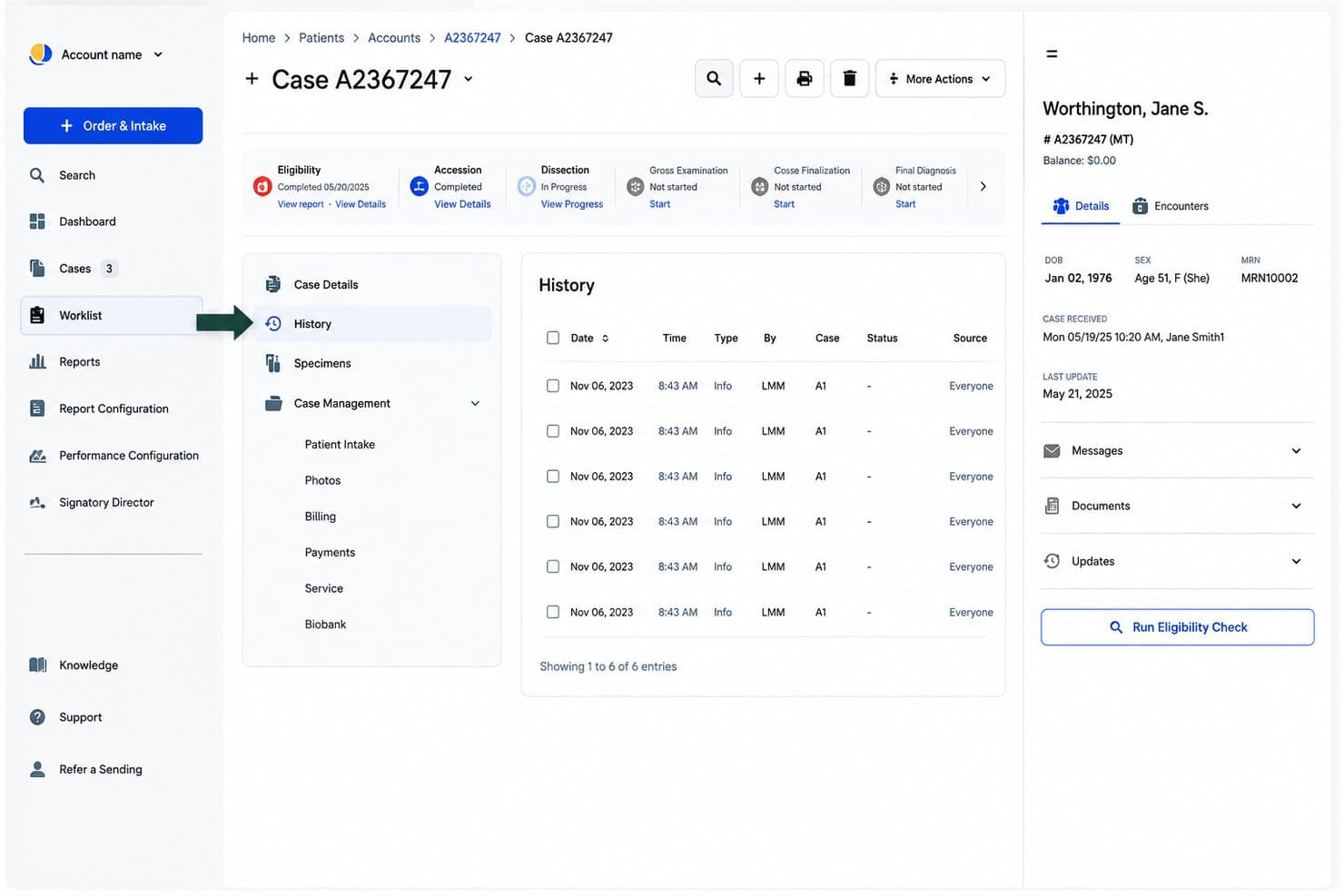
Quadax coordinates claims, eligibility, authorizations, denials, and billing. Quadax is a hospital revenue cycle management platform built around claims management, multi-payer eligibility verification, denial management, remittance automation, and AI-driven reimbursement analytics for health systems and hospitals.
Who Is Quadax Best For?
Quadax is a strong fit for hospitals and health systems that manage high claim volumes across multiple payers and need purpose-built tools for reimbursement accuracy and denial prevention.
Why I Picked Quadax
I picked Quadax as one of the best because its ICV All-Payer eligibility tool confirms copay, coinsurance, and deductible details in real time across all major payers from one platform. XpressBiller catches payer-specific errors before submission, and RemitMax converts paper EOBs into 835 transactions to keep remittance automation running even when payers send paper. Contract Management then flags underpayments against expected reimbursement by payer, which is where multi-payer billing gets complicated fast.
Quadax Key Features
- Xpeditor claims management: Streamlines claim workflow by directing claims to designated billers based on your customized criteria.
- Predictive Intelligence suite (PIQ): Uses AI to predict and avoid denials before they occur in hospital billing workflows.
- AskQ AI assistant: Delivers instant, source-backed claims guidance directly within your claims management dashboard.
- Business intelligence analytics: Provides advanced reporting and analytics for monitoring payment trends and payer performance.
Quadax Integrations
Quadax offers native integrations with Epic Resolute Billing and connects with EHR and billing platforms. An API is available for custom integrations.
Pros and Cons
Pros:
- Detailed audit trails for all claims
- Strong multi-payer eligibility verification
- High first-pass claim acceptance rates
Cons:
- No built-in charge capture module
- User interface feels dated to many users
Learn more about Quadax: Best for eligibility and benefits verification
- Free demo available
- Pricing upon request
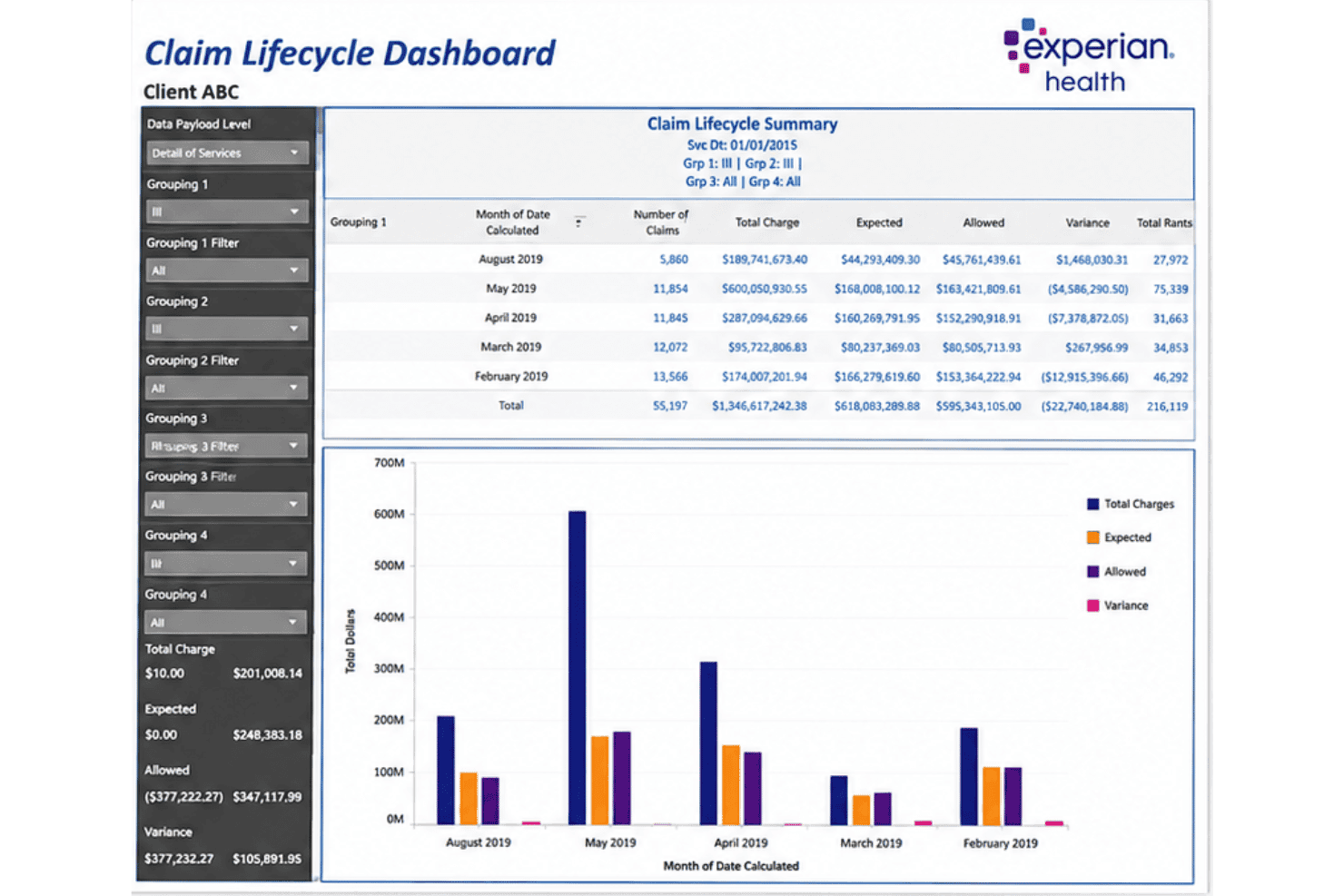
Experian Health ClaimSource handles claims, edits, tracking, denials, and ERA. Experian Health ClaimSource is a claims management system for hospitals that handles automated claim scrubbing, electronic UB-04/837I submission, denial tracking, and AI-driven denial prevention across multi-payer workflows.
Who Is Experian Health ClaimSource Best For?
It's a strong fit for large hospitals and health systems that run an enterprise EHR and need a dedicated claims scrubbing and denial management layer on top of it.
Why I Picked Experian Health ClaimSource
I picked Experian Health ClaimSource as one of the best because its eligibility and benefits verification is backed by Experian's consumer credit data infrastructure, something pure healthcare vendors can't replicate. Before a claim goes out, ClaimSource cross-references payer-specific rules from a library of 1,900+ payers to flag coverage mismatches. The AI Advantage Predictive Denials module then scores at-risk claims using your own historical data before submission.
Experian Health ClaimSource Key Features
- Custom claim edits: Build provider-specific edits to automate error checking and correct claims before submission.
- Enhanced claim status: Get payer status responses and updates directly inside the platform for tracked follow-up.
- Denial Workflow Manager: Organize denied claims using worklists with ANSI reason codes and payer-specific categories.
- Dedicated support team: Access a team focused on assisting with claim workflows and system troubleshooting.
Experian Health ClaimSource Integrations
ClaimSource offers native integrations with Epic, Athenahealth, Oracle Health, FollowMyHealth, and NextGate. An API is available for custom integrations.
Pros and Cons
Pros:
- Real-time payer eligibility checks available
- Extensive pre-bill claim edit library
- AI-driven denial prediction improves claim accuracy
Cons:
- Patient statement generation requires separate module
- Charge capture not included in platform
Learn more about Experian Health ClaimSource: Best for clearinghouse connectivity integration
- Free demo available
- Pricing upon request
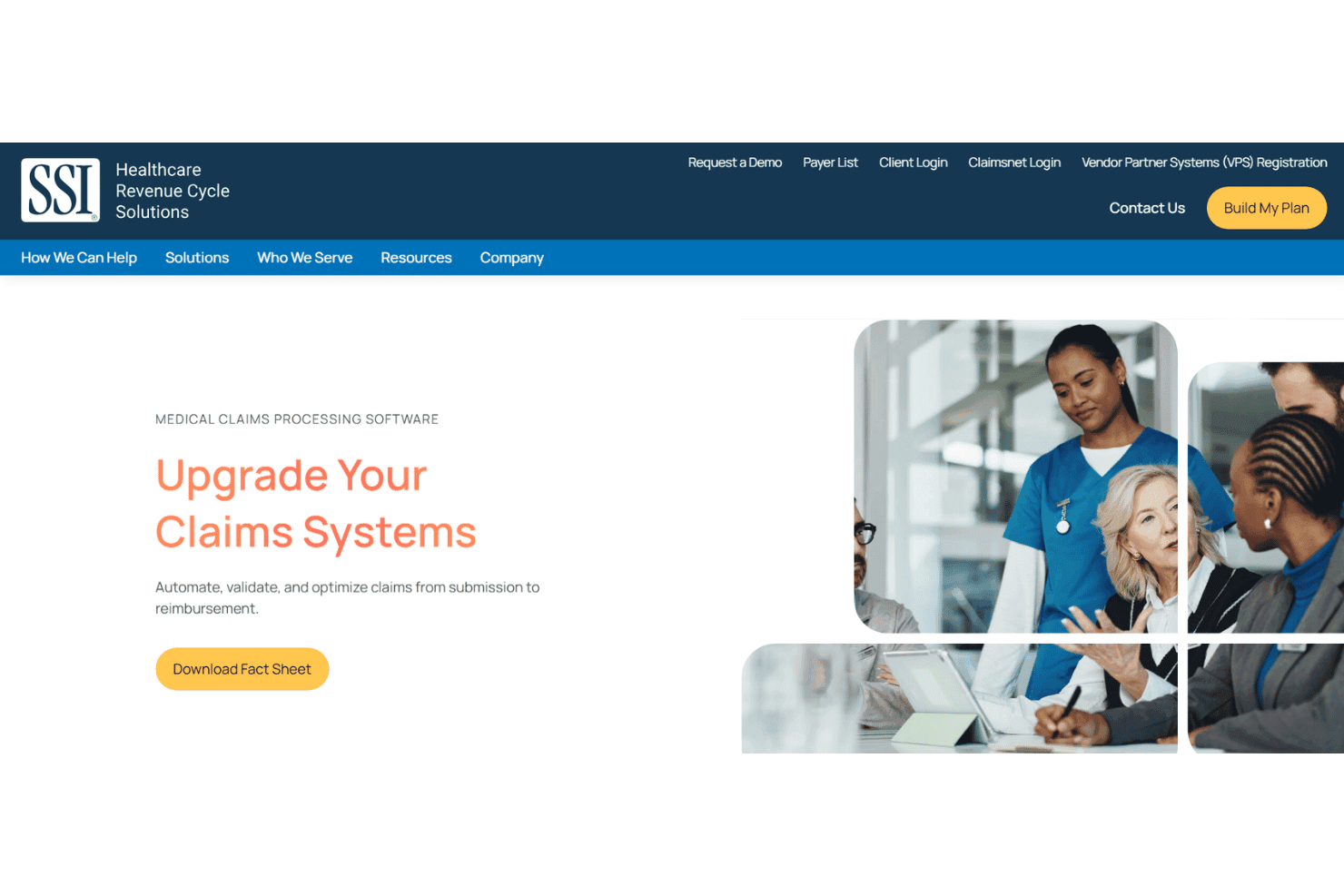
SSI Group routes claims, eligibility checks, remittances, and status updates. SSI Group is a healthcare claims clearinghouse and revenue cycle management platform that handles institutional claims submission, denial management, remittance processing, eligibility verification, and prior authorization for hospitals and health systems.
Who Is SSI Group Best For?
SSI Group is a strong fit for mid-to-large hospitals and health systems that need enterprise-scale institutional claims processing and deep payer network connectivity.
Why I Picked SSI Group
I picked SSI Group as one of the best because of the sheer depth of its payer connectivity. The clearinghouse maintains 800+ direct payer connections and validates claims against edits for more than 2,600 payers, including undocumented payer-specific rules that most platforms won't catch. I particularly like the ClickON technology, which carries 200,000+ built-in edits and produces Claredi-certified transactions that consistently meet payer-side acceptance requirements on the first pass.
SSI Group Key Features
- Denial management module: Lets you track, categorize, and rework denied claims with configurable workflows.
- Remittance management: Automates ERA/EOB posting and reconciliation directly from payers.
- Prior authorization tool: Handles electronic and automated prior authorization requests for hospital services.
- Performance analytics dashboards: Provides real-time insight into claims status and denial trends for revenue cycle teams.
SSI Group Integrations
SSI Group offers native integrations with Epic, MEDITECH, and Oracle Health, and provides an API for custom integrations.
Pros and Cons
Pros:
- Advanced denial tracking and root-cause analytics
- Direct connections to 800+ payers nationwide
- Extremely high first-pass claim acceptance rates
Cons:
- Limited support for charge capture functionality
- No patient statement or self-pay features
Learn more about SSI Group: Best for end-to-end revenue cycle outsourcing
- Free demo available
- Pricing upon request
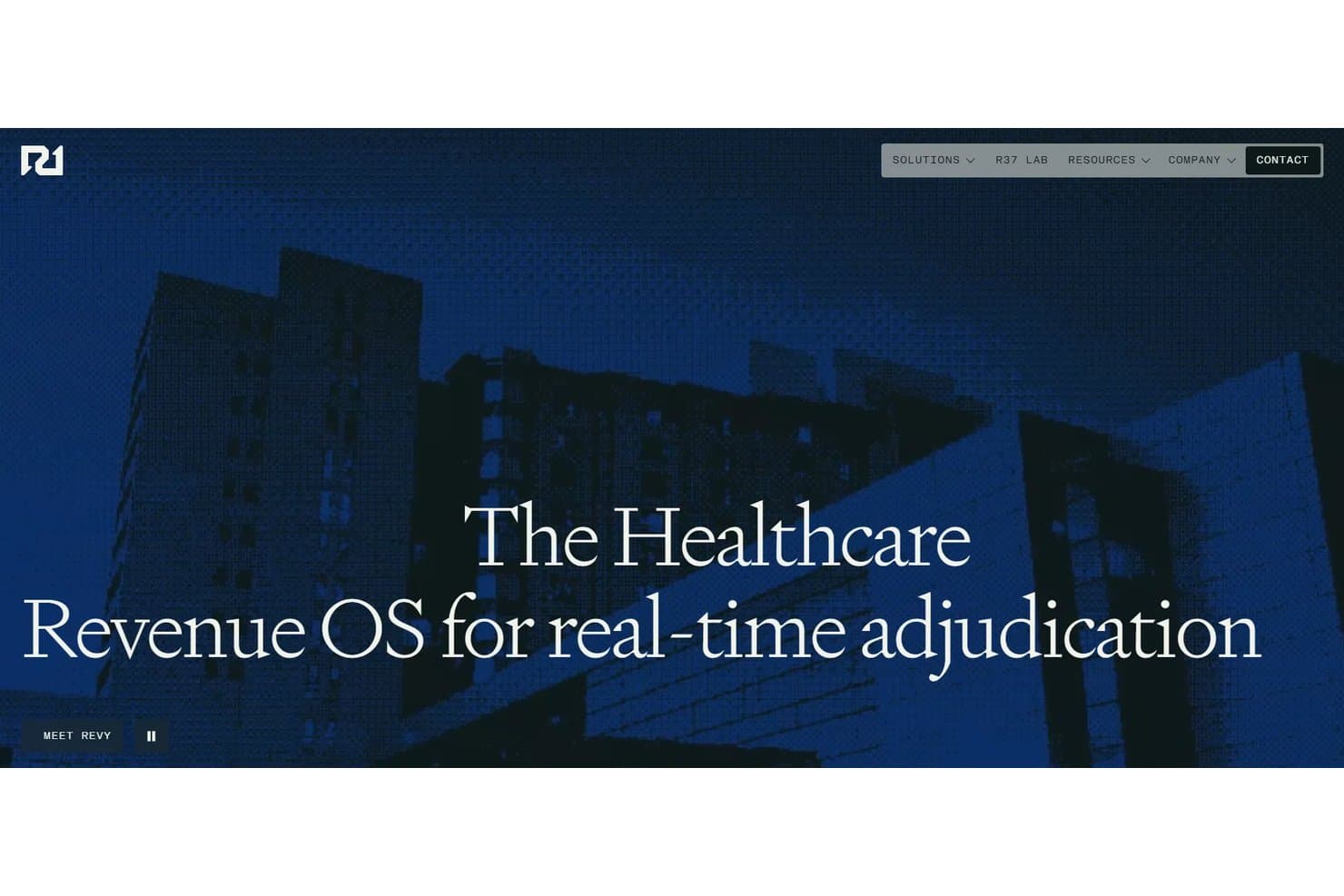
R1 RCM offers a Healthcare Revenue OS platform focused on real-time adjudication, as shown on their homepage hero section. R1 RCM is an outsourced revenue cycle management platform for hospitals and health systems that combines agentic AI with human-staffed operations to handle patient access, medical coding, claim scrubbing, denial management, and payment remittance.
Who Is R1 RCM Best For?
R1 RCM is built for large hospitals and multi-facility health systems whose revenue cycle complexity justifies a fully outsourced operational model.
Why I Picked R1 RCM
R1 RCM earns its spot on my shortlist because the Phare OS treats coding, claims, and denials as a single connected workflow rather than separate systems. I like how Phare Claim catches and corrects coding errors before submission, and Phare Flow handles remittances and denials automatically post-adjudication. The Prior Authorization module clears 68% of orders within one hour, backed by more than 1,600 authorization experts who provide human oversight throughout.
R1 RCM Key Features
- Phare Access: Automates patient intake, registration, insurance verification, and eligibility checks at the front end of the revenue cycle.
- Entri EHR integration: Connects with major EHR systems to streamline scheduling, clearance, and payment functions.
- Patient friendly billing: Supports online bill pay, automated payment plans, and omnichannel patient statements.
- Revenue integrity modules: Offers chargemaster optimization and contract management tools for hospital billing compliance and accuracy.
R1 RCM Integrations
R1 RCM offers native integrations with Epic, Oracle Health, and MEDITECH via its Entri platform, supporting direct patient access workflows and EHR connectivity. An API is available for custom integrations.
Pros and Cons
Pros:
- Includes dedicated hospital revenue integrity modules
- Automated prior authorization and real-time claim edits
- Handles patient access through payment posting
Cons:
- Limited availability of third-party user reviews
- Not suitable for small or midsize practices
Learn more about R1 RCM: Best for enterprise-scale interoperability
- Free demo available
- Pricing upon request
Visit WebsiteCustomer Rating:4.4/5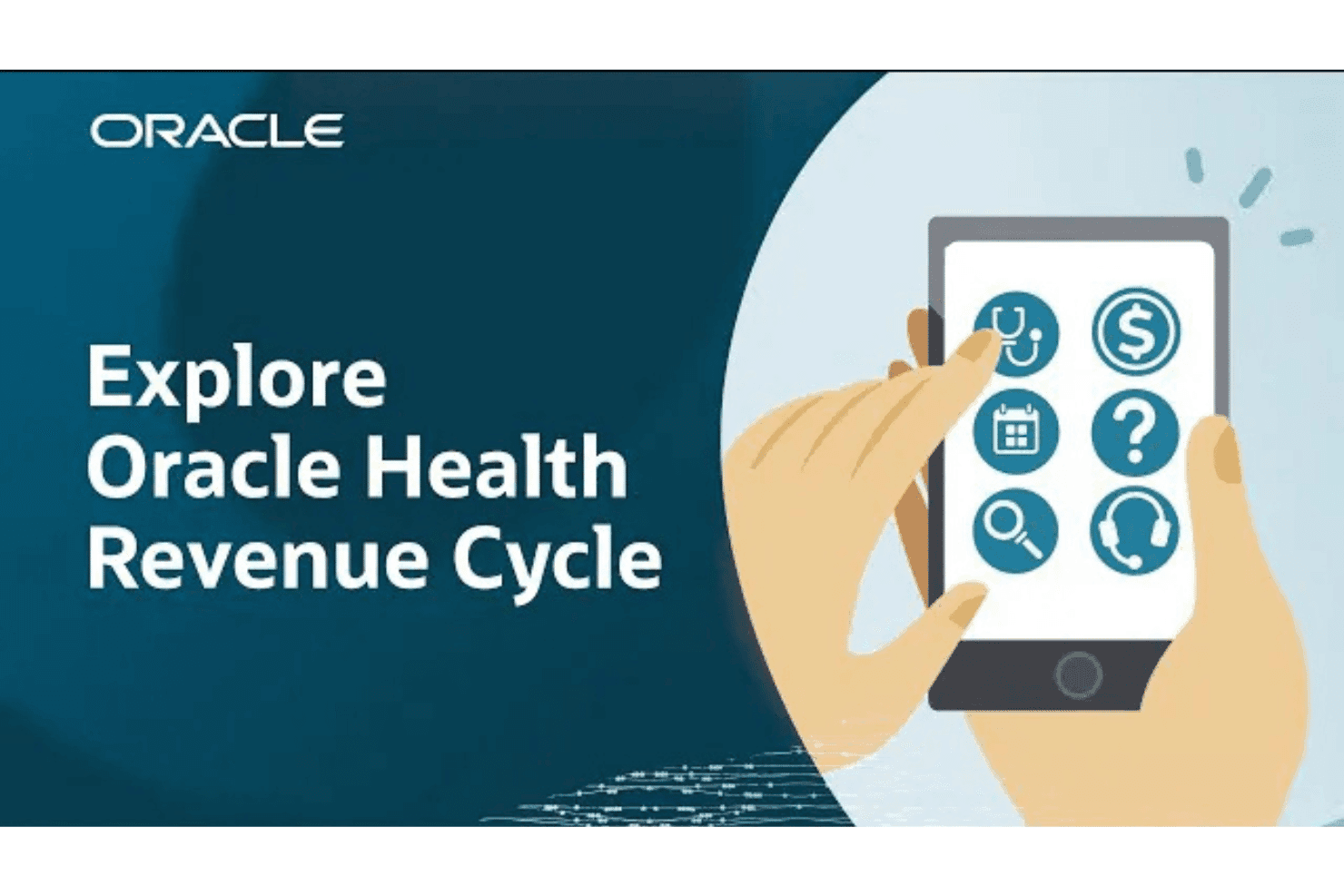
Oracle Health oversees claims, charge capture, coding, denials, and accounts. Oracle Health is an enterprise revenue cycle management platform that covers institutional claims processing, charge capture, medical coding, denial management, and patient accounting across inpatient, outpatient, and ancillary hospital departments.
Who Is Oracle Health Best For?
Oracle Health is built for large hospitals, health systems, and integrated delivery networks that need clinical and financial data connected across multiple venues and departments.
Why I Picked Oracle Health
Oracle Health earns its spot on my shortlist because its open, EHR-agnostic architecture is genuinely rare in hospital billing. I've seen charge data flow directly from Cerner Millennium into Patient Accounting without manual intervention, which keeps discharged-not-final-billed (DNFB) accounts low across inpatient and ancillary departments. Its Contract Management module can reprice historical claims in near real time, which is a meaningful advantage when reconciling across dozens of active payer agreements simultaneously.
Oracle Health Key Features
- Patient administration module: Lets you manage registration, appointment scheduling, and self-service check-in for inpatient and outpatient hospital visits.
- Health information management (HIM): Offers unified workflows for coding, grouping, and documentation in compliance with ICD-10 and DRG standards.
- Denial management workflow: Enables automation of appeals, root cause identification, and trending of denied claims.
- Payment processing platform: Supports automated payment posting, digital payment acceptance, and management of patient account balances.
Oracle Health Integrations
Oracle Health offers native integrations with Cerner Millennium EHR, Oracle Health Patient Administration, and Oracle Health Payment. The platform features an open architecture for connecting to third-party technologies and provides an API for custom integrations.
Pros and Cons
Pros:
- Robust contract management and payer rules engine
- Deep integration with Cerner Millennium EHR
- Enterprise-grade billing for large health systems
Cons:
- Backend workflows can be slow during peak usage
- Implementation is time-intensive for new clients
Learn more about Oracle Health: Best for automated claims management
- Free demo available
- Pricing upon request
Visit WebsiteCustomer Rating:4.4/5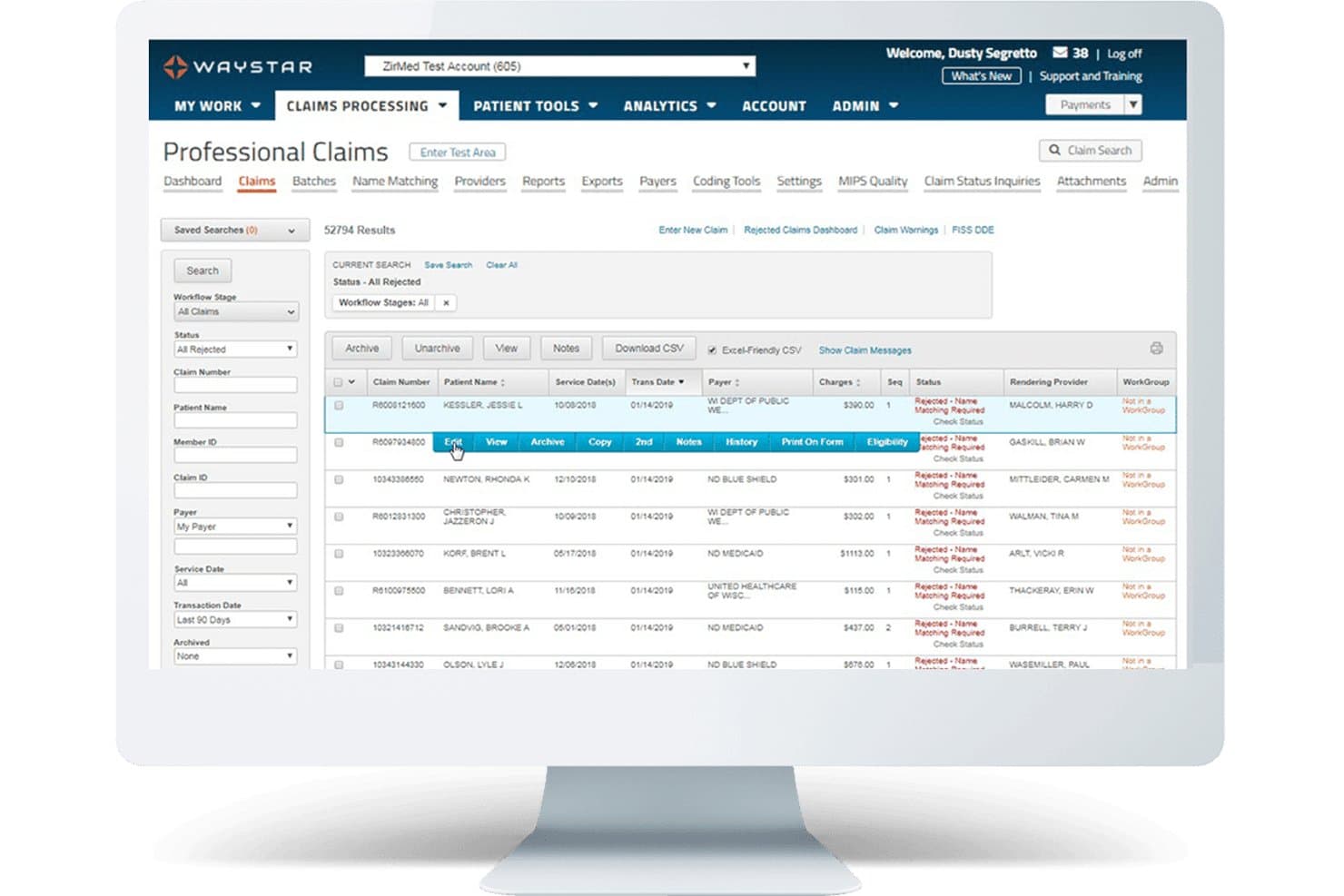
Waystar offers a Professional Claims dashboard that allows hospital billing teams to view, filter, and manage rejected claims with detailed status tracking and action options. Waystar is a cloud-native revenue cycle management platform that covers financial clearance, institutional claims management, denial recovery, payment posting, and patient billing for hospitals and health systems.
Who Is Waystar Best For?
Waystar is a strong fit for revenue cycle teams at mid-to-large hospitals and health systems managing high claim volumes across inpatient and outpatient departments.
Why I Picked Waystar
Waystar earns its spot as one of the best on my shortlist because of how far its claim automation actually goes. Claim Manager uses AI and RPA to predict the best times to status and rework claims, consistently hitting a 98.5%+ first-pass clean claims rate. I'm also impressed by AltitudeAI, which cuts denial-prevention workflows from three days to three minutes, so billing teams spend less time on manual triage and more time on exceptions that actually need attention.
Waystar Key Features
- Financial clearance suite: Includes eligibility verification, coverage detection, and pre-authorization workflows for hospital admissions.
- Clinical documentation integrity: Provides tools for physician query management and prebill anomaly detection to support accurate coding.
- Remit Manager: Automates ERA/EOB posting, payment reconciliation, and electronic remittance processing.
- Patient statements and lockbox: Generates digital and print patient bills and supports centralized payment collection workflows.
Waystar Integrations
Waystar offers native integrations with leading EHR and HIS vendors, including Epic, Cerner, MEDITECH, and Allscripts, and provides an API for custom integrations.
Pros and Cons
Pros:
- Extensive reporting for claim performance analysis
- AI-powered denial prevention and appeals
- Automated UB-04 and institutional claim workflows
Cons:
- Configuring complex payer rules requires support
- Limited transparency into payer response delays
Learn more about Waystar: Best for reimbursement analytics and optimization
- Free demo available
- Pricing upon request
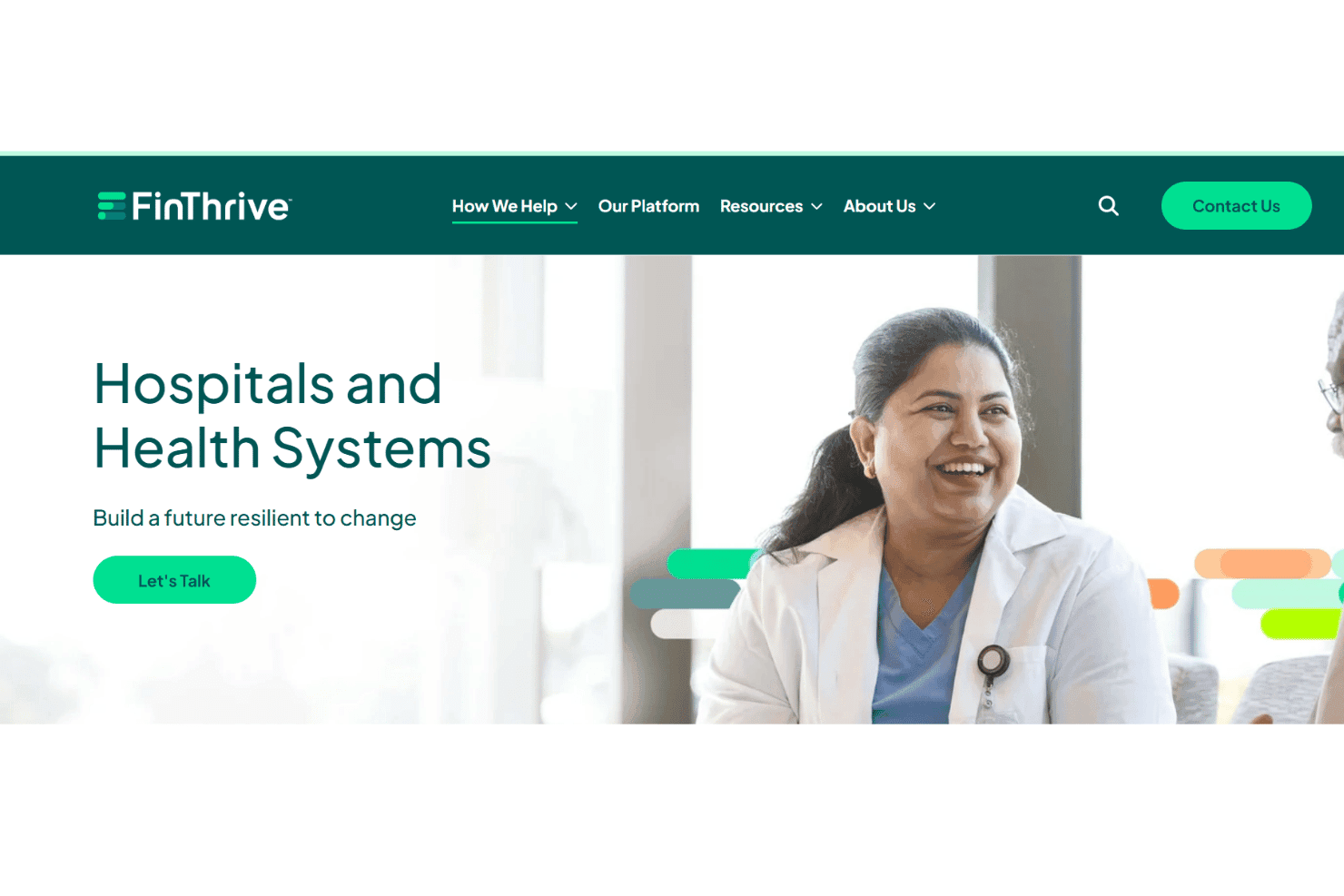
FinThrive offers a dedicated solution page for Hospitals and Health Systems with the tagline 'Build a future resilient to change.' FinThrive is an end-to-end revenue cycle management platform built for hospitals and health systems, covering patient access, charge capture, claims scrubbing, denial management, and contract-based reimbursement analytics.
Who Is FinThrive Best For?
FinThrive is a strong fit for mid-to-large hospitals and health systems that need enterprise-grade revenue cycle infrastructure across multiple departments and payer contracts.
Why I Picked FinThrive
FinThrive earns its spot on my shortlist because of how its Fusion data intelligence platform connects reimbursement analytics directly to claims outcomes. I particularly like Insurance Discover, which scans patient accounts for missed coverage at intake, and Insights Hub, which uses AI to flag revenue leakage and automate variance identification across the revenue cycle. In practice, that means my team can catch underpayments before they ever become write-offs.
FinThrive Key Features
- Embedded EHR integrations: Integrates directly with Epic, Cerner, and Allscripts for in-workflow claim and charge management.
- CDM Manager: Supports chargemaster management for compliant pricing, line item maintenance, and benchmarking.
- A/R Optimizer: Automates account resolution and remittance posting with detailed reconciliation and exception handling.
- Patient Access Coordinator: Centralizes pre-registration, insurance verification, and order management within a unified workspace.
FinThrive Integrations
FinThrive offers native integrations with Epic, Cerner, and Allscripts patient accounting systems, processes claims across 940+ EDI payers, and provides an API for custom integrations.
Pros and Cons
Pros:
- Supports contract-based reimbursement auditing
- Real-time claims scrubbing with embedded edits
- Predictive analytics for revenue leakage detection
Cons:
- Initial platform setup can be time-consuming
- Patient-facing billing features less robust
Learn more about FinThrive: Best for integrated patient and financial records
- Not available
- Pricing upon request
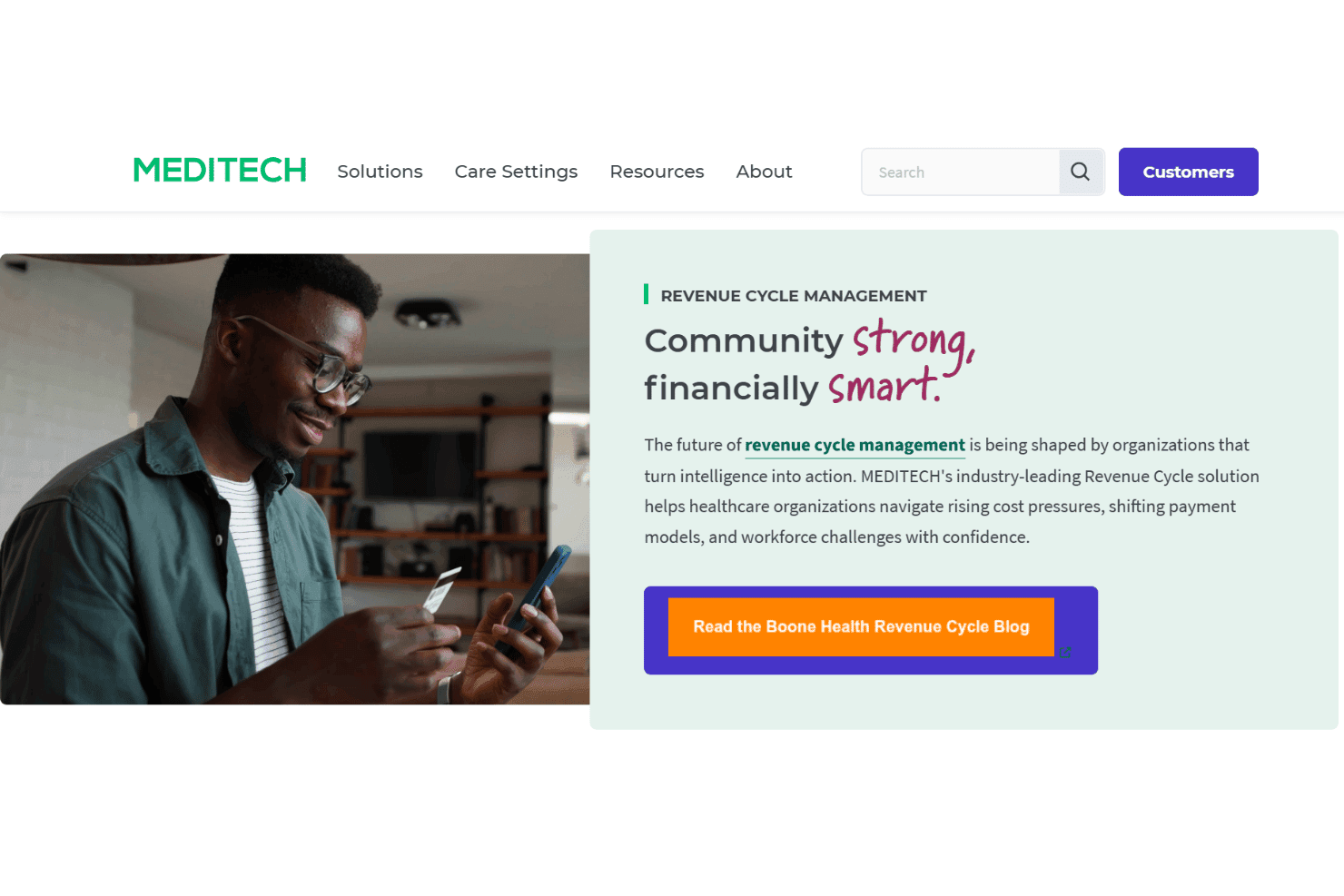
MEDITECH Expanse covers hospital billing, claims, coding, denials, and payments. MEDITECH Expanse Revenue Cycle is a hospital billing platform built natively inside the Expanse EHR, covering charge capture, claims management, coding, denial management, remittance processing, and patient billing across inpatient, outpatient, and ancillary departments.
Who Is MEDITECH Expanse Revenue Cycle Best For?
It's a strong fit for community and regional hospitals that want revenue cycle and clinical documentation managed within a single, unified platform.
Why I Picked MEDITECH Expanse Revenue Cycle
I've included MEDITECH Expanse Revenue Cycle in my top picks because the revenue cycle is built directly inside the Expanse EHR, not bolted on as a separate module. That means clinical documentation, charge capture, and coding all feed into billing without manual handoffs between systems. I particularly like how ePrior Authorization uses real-time FHIR-based APIs to verify payer rules before a claim is submitted, cutting denial volume at the source.
MEDITECH Expanse Revenue Cycle Key Features
- Referral management dashboard: Allows real-time insurance eligibility checks and directs patient referrals to in-network specialists.
- Denials and appeals agentic workflow: Automatically analyzes denials, gathers documentation, and drafts payer-specific appeals.
- Patient-friendly billing statements: Generates unified statements combining inpatient and outpatient charges in one view.
- Digital front door APIs: Supports online access, scheduling, and guest payment functionality across patient-facing channels.
MEDITECH Expanse Revenue Cycle Integrations
MEDITECH Expanse Revenue Cycle offers native integrations via FHIR-based APIs for real-time payer connections, supports HL7 v2 messaging for legacy systems, and integrates natively with Augmedix and Nuance DAX Copilot. An API and developer sandbox are available for custom integrations.
Pros and Cons
Pros:
- Multi-department charge capture in one system
- Real-time denial root-cause analytics
- Unified billing with clinical and financial data
Cons:
- Longer implementation time than non-EHR competitors
- Limited granularity for professional billing workflows
Learn more about MEDITECH Expanse Revenue Cycle: Best for real-time patient billing insights
- Not available
- Pricing upon request
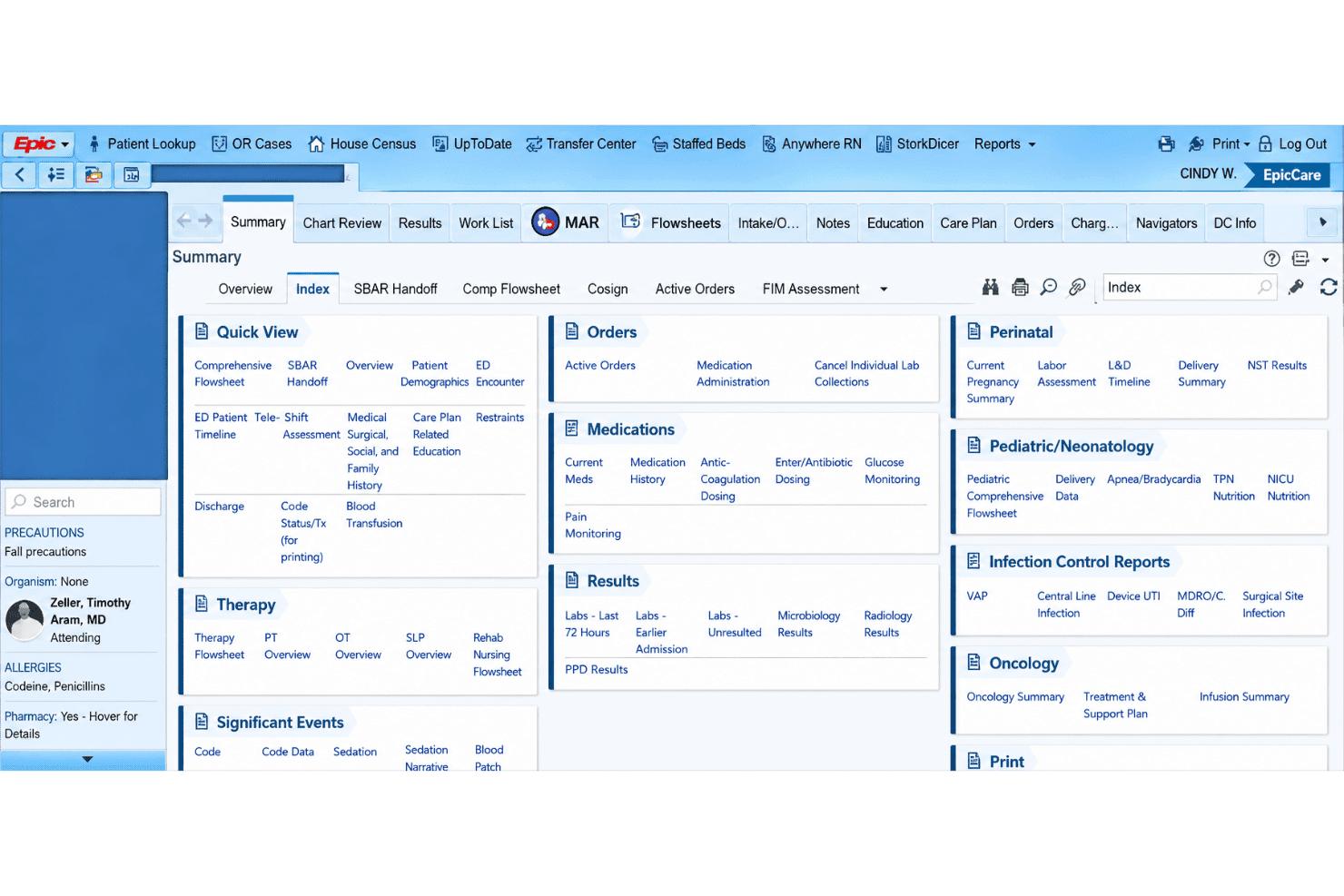
Epic Resolute handles charges, UB-04 claims, denials, ERA posting, and billing. Resolute Hospital Billing is Epic's institutional revenue cycle module, covering charge capture, UB-04/837I claims generation and scrubbing, denial management, ERA payment posting, and patient billing across inpatient, outpatient, and ancillary hospital departments.
Who Is Epic Systems (Resolute Hospital Billing) Best For?
Resolute Hospital Billing is built for large health systems and integrated delivery networks that manage complex, multi-department institutional billing at scale.
Why I Picked Epic Systems (Resolute Hospital Billing)
I picked Resolute Hospital Billing as one of the best because the real-time charge capture is unlike what I've seen from other billing platforms. Resolute runs on the same Chronicles database as Epic's clinical record, so charges generate automatically from documented orders and procedures. My team sees accurate account data the moment care is delivered. The Charge Router then applies payer-specific rules before any claim leaves the system, flagging errors before they become denials.
Epic Systems (Resolute Hospital Billing) Key Features
- Denial workqueues: Track, categorize, and route denied claims to staff for review and appeals.
- Department-level billing modules: Manage unique charge, billing, and account processes for each hospital department.
- Patient financial experience tools: Offer patients combined online statements, payment plans, and billing support through MyChart.
- Coding and CDI workflows: Facilitate coder-to-provider queries directly in the system for documentation and DRG review.
Epic Systems (Resolute Hospital Billing) Integrations
Resolute Hospital Billing offers native integrations with clearinghouses and payment processors including Availity, Waystar, Optum, Experian Health, FinThrive, TruBridge, Blue Cross Blue Shield of Massachusetts, and Cirius. API access is available for custom integrations.
Pros and Cons
Pros:
- Native hospital and professional claim processing
- Advanced denial management with workqueue tracking
- Real-time billing updates from clinical documentation
Cons:
- Workflow enforcement lacks automation or alerts
- AR reporting formats lag industry expectations
Learn more about Epic Systems (Resolute Hospital Billing):
Alte software-uri de facturare pentru spitale
Iată câteva opțiuni suplimentare de software de facturare pentru spitale care nu au ajuns pe lista mea scurtă, dar care merită totuși analizate:
- 11Ensemble Health PartnersBest for tailored process improvement services
- 12Inovalon Provider CloudBest for cloud-based workflow automation
- 13athenahealthBest for network-enabled billing insights
- 14eClinicalWorksBest for unified scheduling and billing
- 15AdvancedMDBest for integrated charge capture workflows
- 16NextGen HealthcareBest for specialty-specific billing workflows
- 17VeradigmBest for integrated payer-provider collaboration
- 18OptumBest for analytics-driven revenue cycle tools
- 19AvailityBest for real-time insurance data exchange
- 20MD ClarityBest for transparency in price estimates
How I Evaluate Hospital Billing Software
My evaluation splits into two layers: baseline acceptance criteria like UB-04 claims and DRG coding support, and the differentiating factors that set vendors apart.
Core Functionality (Table Stakes For This List)
When I'm selecting tools for my list, I rank each one on a scale from 0 (does not offer the functionality) to 5 (excels in this area) for each core functionality listed below. Then, I calculate the tool's total score into a percentage. Each tool needs to achieve a minimum total score of 65% to be considered for inclusion.
- Claims Management: I look for electronic UB-04/837I submission with built-in scrubbing rules that catch errors before claims reach the clearinghouse.
- Medical Coding Support: Full ICD-10, CPT, HCPCS, and DRG coding support matters, especially for inpatient cases where grouper accuracy affects reimbursement.
- Charge Capture: I evaluate how well the platform captures charges across departments like the OR, pharmacy, and radiology without requiring manual re-entry.
- Denial Management: Tracking and categorizing denials is table stakes, but I also check for appeals workflows and root-cause reporting to reduce repeat issues.
- Payment Posting & Remittance: Automated ERA/EOB posting with exception flagging is what I look for, since manual reconciliation bogs down even well-staffed teams.
- Patient Billing & Statements: The platform should generate clear patient statements with balance tracking and offer digital payment options like online portals or text-to-pay.
Once I have a list of tools that meet the criteria, I consider what sets each platform apart.
Differentiating Factors (What Sets Vendors Apart)
Here's how I compare and contrast different vendors:
Standout Features
Contract modeling is a major differentiator—I look for tools that compare expected reimbursement against actual payer payments and flag underpayments automatically. Patient financial engagement also matters. Self-service portals with digital estimates and flexible payment plans help hospitals collect more from self-pay balances. I evaluate embedded coding and CDI assistance too, where AI-driven ICD-10/CPT/DRG suggestions help coders improve accuracy and case mix index without slowing down.
Beyond Features
EHR integration is one of the first things I check. Bi-directional data flow between clinical documentation and billing—via HL7, FHIR, or X12 EDI—prevents the manual re-entry that causes costly errors. Regulatory compliance also weighs heavily; I look for platforms that push automatic updates for CMS rule changes and quarterly code sets. Facility type fit rounds out my evaluation, since a critical access hospital and a multi-facility IDN have very different billing complexity and scalability needs.
Cum să alegeți software-ul de facturare pentru spitale
Este ușor să vă pierdeți în liste lungi de funcții și structuri complexe de prețuri. Pentru a vă ajuta să rămâneți concentrat în timp ce parcurgeți procesul unic de selectare a software-ului, iată o listă de verificare a factorilor de care trebuie să țineți cont:
| Factor | Ce trebuie avut în vedere |
|---|---|
| FactorScalabilitate | Ce trebuie avut în vedereVa susține platforma volumul spitalului dumneavoastră de astăzi și de peste trei ani? Luați în considerare numărul viitor de paturi, locații sau linii de servicii. |
| FactorIntegrări | Ce trebuie avut în vederePoate face schimb de date cu sistemul dumneavoastră EHR, casa de compensare și sistemele financiare? Verificați exemple reale de integrări HL7/X12/FHIR implementate cu succes. |
| FactorPosibilitate de personalizare | Ce trebuie avut în vedereSe adaptează instrumentul la fluxurile de lucru unice ale departamentelor sau la cerințele plătitorilor? Evaluați flexibilitatea generatorului de reguli și suportul pentru excepții locale. |
| FactorUșurință în utilizare | Ce trebuie avut în vedereVor putea echipele dumneavoastră de facturare și clinice să îl folosească rapid? Evaluați navigarea, proiectarea fluxului de lucru și materialele de inițiere disponibile. |
| FactorImplementare și inițiere | Ce trebuie avut în vedereCât timp este necesar de la semnarea contractului până la lansare? Solicitați calendare, opțiuni de asistență practică și exemple de la organizații similare. |
| FactorCost | Ce trebuie avut în vedereCe este inclus în prețul „total”? Fiți atenți la costurile suplimentare pentru casa de compensare, instruire sau asistență, care pot afecta bugetele anuale. |
| FactorMăsuri de securitate | Ce trebuie avut în vedereRespectă furnizorul cerințele HIPAA, HITECH și SOC 2? Căutați standarde de criptare, jurnale de audit și planuri oficiale de răspuns la breșe. |
| FactorCerințe de conformitate | Ce trebuie avut în vedereCum actualizează furnizorul regulile de facturare în cazul modificărilor de reglementare? Întrebați despre actualizări trimestriale, modificări impuse de plătitori și istoricul de conformitate. |
Ce este software-ul de facturare pentru spitale?
Software-urile de facturare pentru spitale sunt sisteme digitale care gestionează întregul ciclu al veniturilor, de la înregistrarea pacientului până la trimiterea cererilor de rambursare și colectarea plăților pentru spitale. Aceste platforme automatizează capturarea tarifelor, codificarea și gestionarea cererilor respinse, ajutând în același timp echipa să respecte regulile în schimbare ale plătitorilor.
Prin centralizarea fluxurilor de lucru pentru facturare și plăți, software-ul de facturare pentru spitale facilitează gestionarea tarifelor complexe provenite din mai multe departamente și accelerarea rambursărilor.
Funcțiile software-ului de facturare pentru spitale
Atunci când selectați un software de facturare pentru spitale, urmăriți următoarele funcții esențiale:
- Gestionarea solicitărilor: Automatizează crearea, verificarea și trimiterea electronică a solicitărilor UB-04/837I către plătitori și case de compensare, reducând erorile de introducere manuală și accelerând procesul de procesare a solicitărilor.
- Asistență pentru codificarea medicală: Oferă instrumente integrate de codificare pentru codurile ICD-10, CPT, HCPCS și DRG, pentru a ajuta echipele de facturare să înregistreze cu precizie serviciile în vederea rambursării instituționale corespunzătoare.
- Gestionarea refuzurilor: Urmărește, categorizează și direcționează solicitările refuzate pentru verificare și contestație, oferind instrumente pentru fluxuri de lucru și analize care reduc refuzurile repetate și accelerează soluționarea.
- Înregistrarea taxelor: Înregistrează cu precizie taxele din departamentele de spitalizare, ambulatoriu și auxiliare, minimizând oportunitățile de venituri ratate și conectând documentația clinică la facturare.
- Înregistrarea plăților și a remiterilor: Automatizează procesarea ERA/EOB și reconcilierea plăților, asociind plățile cu conturile și semnalând discrepanțele pentru monitorizare.
- Facturarea pacienților și extrasele de cont: Generează extrase de cont clare pentru pacienți, gestionează soldurile achitate direct de pacienți și acceptă mai multe canale de plată, precum portalurile de plată online și plata mobilă.
- Gestionarea contractelor: Stochează și utilizează contractele cu plătitorii pentru a compara plățile preconizate cu cele efective, ajutându-vă să identificați și să soluționați rapid plățile insuficiente.
- Raportare și analiză integrate: Oferă tablouri de bord și rapoarte pentru creanțe, tendințele refuzurilor, performanța plătitorilor și încasările nete, astfel încât să puteți lua decizii bazate pe date.
- Instrumente de securitate și conformitate: Impune respectarea standardelor HIPAA și de protecție a datelor, oferă piste de audit și asigură securitatea datelor clinice și de facturare pe parcursul întregului ciclu al veniturilor.
- Interoperabilitate cu sistemele clinice: Acceptă schimbul direct de date cu dosarele medicale electronice, sistemele de programare și sistemele farmaceutice, pentru a asigura continuitatea între documentația clinică și procesele de facturare.
Beneficiile software-ului de facturare pentru spitale
Implementarea software-ului de facturare pentru spitale oferă mai multe beneficii echipei și organizației dumneavoastră. Iată câteva dintre avantajele pe care le puteți anticipa:
- Rambursări mai rapide: Gestionarea automatizată a solicitărilor și fluxurile avansate pentru refuzuri ajută spitalul să primească mai rapid plățile atât de la plătitori, cât și de la pacienți.
- Precizie îmbunătățită: Instrumentele integrate de codificare și înregistrarea taxelor asigură acuratețea solicitărilor, minimizând erorile care cauzează refuzuri sau întârzieri.
- Conformitate mai bună: Actualizările de reglementare integrate și măsurile de protecție a securității mențin procesele de facturare aliniate la cerințele HIPAA și CMS.
- Reducerea sarcinii administrative: Înregistrarea automatizată a plăților, extrasele de cont pentru pacienți și raportarea eliberează personalul pentru a se concentra asupra activităților cu valoare mai mare.
- Transparență financiară sporită: Instrumentele de gestionare a contractelor și de raportare oferă liderilor financiari o imagine clară asupra plăților preconizate și efective.
- Experiență îmbunătățită pentru pacienți: Portalurile cu autoservire, plățile online și extrasele de cont digitale le facilitează pacienților înțelegerea și achitarea facturilor.
- Scalabilitate pentru unitățile în dezvoltare: Capacitatea de a gestiona un număr mai mare de pacienți și de a susține mai multe departamente ajută ciclul veniturilor să se adapteze pe măsură ce spitalul se extinde.
Costurile și prețurile software-ului de facturare pentru spitale
Selectarea software-ului de facturare pentru spitale necesită înțelegerea diferitelor modele de preț și planuri disponibile. Costurile variază în funcție de caracteristici, dimensiunea echipei, suplimente și alți factori. Tabelul de mai jos prezintă pe scurt planurile uzuale, prețurile medii ale acestora și caracteristicile incluse în mod obișnuit în soluțiile software de facturare pentru spitale:
Tabel comparativ al planurilor pentru software-ul de facturare pentru spitale
| Tipul planului | Preț mediu | Caracteristici comune |
|---|---|---|
| Tipul planuluiPlan gratuit | Preț mediu$0 | Caracteristici comuneGestionarea limitată a solicitărilor, raportare de bază și asistență standard. |
| Tipul planuluiPlan personal | Preț mediu$50-$150/lună | Caracteristici comuneAcces pentru un singur utilizator, procesarea de bază a solicitărilor, înregistrarea simplă a remiterilor și asistență prin e-mail. |
| Tipul planuluiPlan pentru companii | Preț mediu$200-$700/lună | Caracteristici comuneAcces pentru mai mulți utilizatori, instrumente avansate de codificare, gestionarea refuzurilor, înregistrarea ERA și integrări de bază. |
| Tipul planuluiPlan pentru întreprinderi | Preț mediu$1,000-$8,000/lună | Caracteristici comuneUtilizatori nelimitați, gestionarea completă a ciclului veniturilor, analize avansate, integrări complexe cu dosarele medicale electronice și asistență personalizată. |
Întrebări frecvente despre software-ul de facturare spitalicească
Iată câteva răspunsuri la întrebările frecvente despre software-ul de facturare spitalicească:
Cum se integrează software-ul de facturare spitalicească cu sistemele EHR?
Majoritatea soluțiilor software de facturare spitalicească acceptă integrări cu sistemele EHR de top prin standardele HL7, FHIR sau X12 EDI, permițând sincronizarea automată a datelor pacienților, a tarifelor și a documentației clinice, fără reintroducere manuală.
Poate software-ul de facturare spitalicească să gestioneze atât facturarea pacienților internați, cât și a celor ambulatorii?
Da, software-ul de facturare spitalicească este conceput pentru a gestiona solicitările de plată instituționale pentru servicii de internare, ambulatorii și auxiliare, inclusiv transmiteri UB-04, rambursări DRG și diverse cerințe ale plătitorilor.
La ce tipuri de standarde de securitate ar trebui să mă aștept de la software-ul de facturare spitalicească?
Ar trebui să vă așteptați la conformitate cu HIPAA și HITECH, criptare de la un capăt la altul, piste de audit și controale de acces bazate pe roluri, pentru a vă asigura că datele pacienților și cele financiare rămân protejate.
Cât durează de obicei implementarea?
Termenele de implementare variază de obicei între 6 și 12 luni, în funcție de dimensiunea personalului, integrări și complexitatea proceselor, în special în cazul implementărilor spitalicești cu mai multe locații sau la nivel de întreprindere.
Pot aceste soluții să accepte mai multe unități sau rețele de spitale?
Da, multe platforme moderne de facturare spitalicească oferă capabilități pentru mai multe unități și pentru întreaga întreprindere, acceptând facturarea centralizată, raportarea și standardizarea fluxurilor de lucru între locații.
Este asigurată conformitatea permanentă cu reglementările prin actualizări?
Majoritatea furnizorilor livrează actualizări automate ale codurilor de facturare și ale regulilor plătitorilor trimestrial sau atunci când sunt necesare în urma modificărilor politicilor CMS și ale plătitorilor, pentru a menține conformitatea spitalului dumneavoastră.