
EHR in medical billing is the integration of electronic health records into your billing workflow—and in my experience, it's one of the most impactful changes a practice can make to reduce claim denials and speed up reimbursement. Manual billing creates documentation gaps, coding errors, and slow payment cycles that cost practices real money.
This guide walks you through how EHR fits into the billing process step by step, what benefits you can realistically expect, and how to work through common implementation challenges. You'll also find practical guidance on choosing the right EHR software for your specific billing needs.
What Is an EHR in Medical Billing?
An EHR, or electronic health record, is a digital system that captures and stores patient clinical data—diagnoses, medications, lab results, visit notes, and more—and connects that data directly to the billing workflow. In medical billing, this connection is everything. When clinical documentation feeds automatically into charge capture and claim generation, your billing team isn't chasing down information or re-entering data from paper charts.
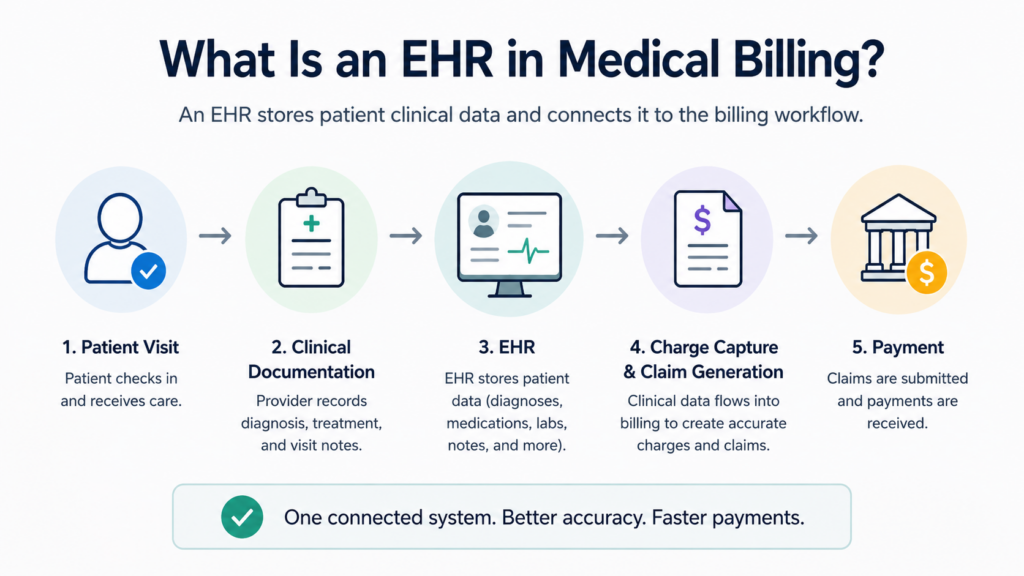
Before EHRs, billing teams worked from handwritten encounter forms, faxed notes, and disconnected systems. Errors were common, and they were expensive. Today, an EHR gives you a single source of truth that moves with the patient from check-in through payment.
Examples of EHR in Medical Billing
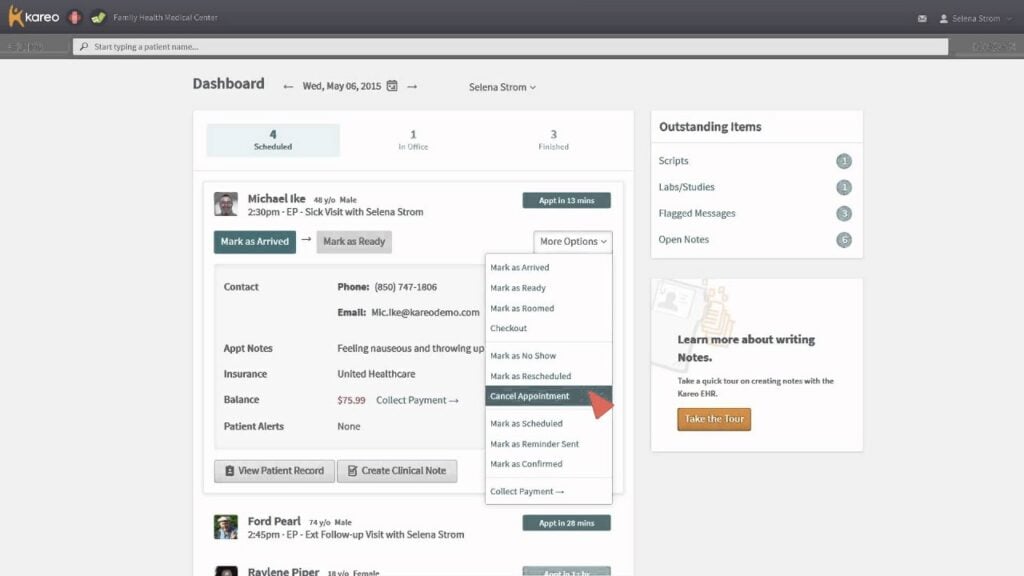
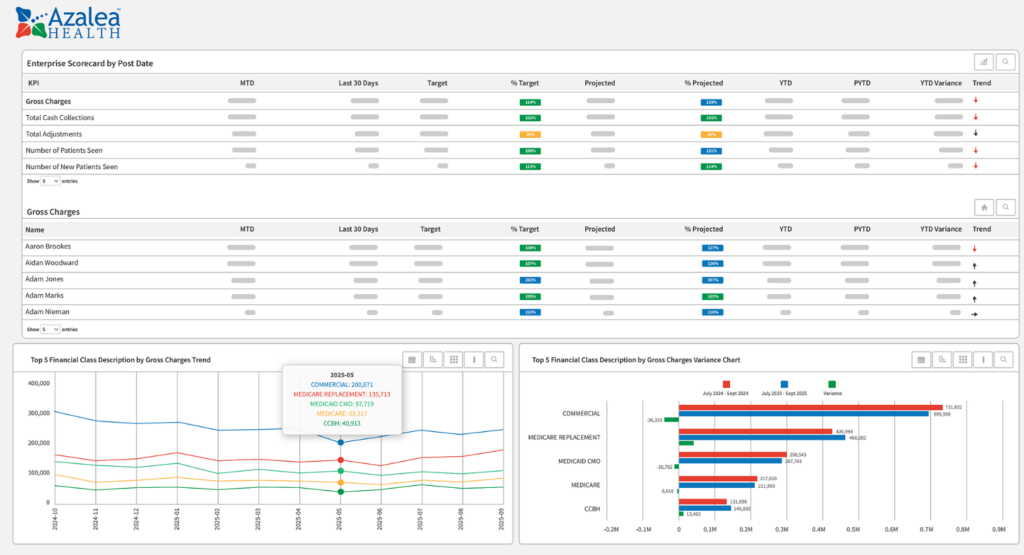
Here are some visual examples of EHR in medical billing interfaces to show you what these tools typically look like:
10 Top EHR in Medical Billing Software to Consider
EMR vs. EHR: Key Differences in a Billing Context
These two terms get used interchangeably, but they're not the same—and the difference matters for billing.
Use this comparison to understand which system does what:
| EMR | EHR | |
|---|---|---|
| Scope | EMRSingle practice or clinic | EHRAcross multiple providers and care settings |
| Data sharing | EMRLimited to one organization | EHRDesigned for interoperability |
| Billing integration | EMRBasic charge capture | EHRFull RCM integration |
| Patient access | EMRTypically none | EHRPatient portal included |
| Claim support | EMRManual or minimal | EHRAutomated coding support and claim generation |
An EMR is essentially a digital version of a paper chart. An EHR is a connected platform. For billing purposes, the interoperability of an EHR is what makes it valuable. When a specialist, a lab, and a primary care provider can all share the same patient record, the billing data is more complete and more accurate.

How EHR Works in the Medical Billing Workflow
EHR touches every stage of the billing process. Here's how the workflow actually moves:
- Patient registration: The patient's demographics, insurance information, and eligibility are verified at check-in—often in real time, directly through the EHR.
- Clinical documentation: The provider documents the encounter using structured templates. This is where coding starts. The EHR maps clinical notes to ICD-10 and CPT codes automatically or with prompts.
- Charge capture: Billable services are captured from the encounter documentation. In an integrated EHR, this happens without a separate manual entry step.
- Claim generation: The EHR compiles the claim using the captured charges, patient data, and coding. Many systems run pre-submission scrubbing to catch errors before the claim goes out.
- Claim submission: The claim is transmitted to the payer electronically, typically through a clearinghouse the EHR connects to.
- Payment posting: Remittance data is received and matched against the original claim. The EHR flags discrepancies and underpayments.
- Denial management: Denied claims are tracked within the system, giving your billing team the documentation they need to appeal quickly.
In my experience, the biggest efficiency gains happen between steps 2 and 4. When documentation and charge capture are connected, you eliminate a significant manual handoff that's historically been a major source of billing errors.
Key Benefits of Using EHR in Medical Billing
| What Improves | |
|---|---|
| Billing accuracy | What ImprovesClinical documentation flows directly into coding and charge capture |
| Claim speed | What ImprovesClaims can be generated and submitted sooner after the encounter |
| Denial prevention | What ImprovesEligibility, coding, and claim edits can be caught before submission |
| Revenue visibility | What ImprovesBilling teams can track claims, payments, denials, and outstanding balances |
| Staff productivity | What ImprovesLess duplicate entry and fewer manual handoffs between clinical and billing teams |
| Patient collections | What ImprovesPortals and online payment tools make patient balances easier to manage |
Improved Accuracy and Fewer Billing Errors
Manual billing creates gaps. A provider documents a service, someone else translates it into a billing code, and another person submits the claim—each step is a chance for error. EHR reduces that chain. When clinical documentation maps directly to codes, the risk of miscoding, missing charges, and data entry mistakes drops significantly. Over 85% of claim denials are considered preventable, and most of those stem from documentation and data errors that an integrated EHR catches earlier in the process.
Faster Claim Generation and Submission
With a connected EHR, claims are built from the encounter note—not reconstructed from it. That means your billing team can submit faster, and payers receive cleaner claims. Real-time eligibility verification and proactive claim validation can significantly reduce healthcare denials, and integrated EHR billing tools help healthcare organizations improve claims processing and reduce reimbursement delays.
Standardized Coding With ICD-10 and CPT
EHR systems embed coding logic into the clinical documentation workflow. When a provider selects a diagnosis or procedure, the system suggests or assigns the corresponding ICD-10 or CPT code. This keeps coding consistent across providers, reduces the chance of upcoding or undercoding, and ensures that documentation supports the code selected—which matters when a payer audits a claim.
Integration With Revenue Cycle Management
Many healthcare providers use their EHR vendors for revenue cycle management software, and EHR vendors commonly bundle revenue cycle or medical practice management services with their platforms. This tight integration means patient data, clinical documentation, and financial workflows live in the same environment. You're not importing data between systems or reconciling discrepancies between your EHR and a separate billing platform. The revenue cycle runs cleaner because it runs from one connected source.
Better Interoperability and Care Coordination
Persistent challenges in effectively managing data handoffs between EHRs, patient accounting platforms, patient access tools, and collections systems are one of the main reasons billing breaks down. A well-integrated EHR addresses this by standardizing how data moves between systems. When labs, specialists, and billing all work from the same record, you get fewer duplicate entries, fewer missing authorizations, and fewer claims that come back denied because the documentation didn't follow the patient.
Patient Portal Access and Online Billing
Most modern EHR platforms include a patient portal where patients can view their visit summaries, access itemized bills, and make payments online. From a billing standpoint, this matters. When patients understand their charges and can pay without calling the office, collections move faster and administrative time drops. EHRs enable patients to access their health records, review bills, and communicate with healthcare providers, and this level of engagement fosters trust and enhances patient satisfaction.
More Articles
Common Challenges When Using EHR for Billing
EHR integration improves billing—but implementation isn't always smooth. Watch for these challenges before and after go-live:
- Poor staff training: An EHR is only as useful as the people using it. If providers document inconsistently or billing staff don't know how to use the claim tools, you'll see errors that the system was designed to prevent. Budget time for structured, role-specific training.
- Data migration errors: Moving patient records from a legacy system into a new EHR introduces real risk. Incomplete or misformatted data can corrupt billing records. I'd strongly recommend a parallel-run period before fully transitioning.
- Workflow disruption at go-live: Expect a temporary slowdown in the first weeks after switching systems. Claim volume often dips, and denial rates can spike. Plan for this with extra billing staff coverage or a phased rollout.
- Misconfigured coding templates: If your EHR's coding suggestions aren't configured for your specialty, they'll produce inaccurate codes. Work with your vendor during setup to tailor templates to your most common encounter types.
- Interoperability gaps: 74% of respondents in a 2025 Black Book survey reported significant issues with duplicate records and patient identification errors before adopting targeted solutions. Confirm upfront that your EHR connects cleanly to your clearinghouse, payer portals, and lab systems.
How to Choose the Right EHR System for Your Billing Needs
Not every EHR handles billing the same way. Use these criteria to evaluate your options before committing:
- Specialty fit: Some EHRs are built for general practice and others for specific specialties. A behavioral health practice needs different coding templates and documentation flows than an orthopedic clinic. Confirm the system supports your specialty's billing requirements out of the box.
- RCM integration: Look for a system where clinical documentation and billing live in the same platform, not two products that sync imperfectly. Ask vendors specifically how charge capture flows from the encounter note to the claim.
- Clearinghouse connectivity: Your EHR needs to connect to the clearinghouses and payers you work with. Confirm compatibility with your top five payers before signing anything.
- Real-time eligibility verification: This should be standard. If a system requires manual eligibility checks, it's going to slow down your front-end workflow and increase denial risk.
- Claim scrubbing tools: A good EHR catches errors before the claim leaves your system. Ask vendors what pre-submission scrubbing logic is built in and how often it's updated to reflect payer rule changes.
- Reporting and analytics: You need visibility into denial rates, A/R aging, and clean claim rates. If the system can't give you that data easily, you can't identify where your billing is breaking down.
- Implementation and support: I think this is underrated in vendor evaluations. A poorly managed implementation can set your billing back for months. Ask vendors specifically about onboarding timelines, training resources, and ongoing support access.
Take Your EHR Billing Knowledge Further
Getting EHR right is an ongoing process—and staying current on tools, regulations, and best practices makes a real difference. Subscribe to The Medical Practice newsletter for fresh guides, tool reviews, and expert insights on managing and growing your practice.