

Os fornecedores de EHR para oncologia disponibilizam sistemas especializados de registos de saúde eletrónicos concebidos para apoiar as equipas de cuidados oncológicos na documentação, no planeamento dos tratamentos e na coordenação dos cuidados. Se procura os melhores fornecedores de EHR para oncologia, precisa de um software capaz de lidar com a complexidade clínica e os desafios dos fluxos de trabalho específicos da oncologia. A precisão, a conformidade e as funcionalidades adaptadas são essenciais para gerir regimes de tratamento e equipas multidisciplinares.
Neste guia, encontrará as minhas principais escolhas, baseadas na experiência direta com ferramentas que ajudam os prestadores de cuidados oncológicos a prestar cuidados seguros, eficientes e centrados no doente. Utilize esta lista para comparar soluções e encontrar a opção certa para as necessidades da sua prática em 2026.
Why Trust Our Software Recommendations
6,700+
Reviews
20
Industry experts
16+
Evaluation factors
14
Years
Our team has been testing and reviewing software since 2012. As medical practice leaders ourselves, we know how difficult—and important—it is to choose the right software.
For this guide, we evaluated tools using hands-on testing and independent research, scoring tools using our selection criteria.
Our reviews reflect our human editorial judgment, not a sales pitch.
Tabela comparativa de fornecedores de EHR para oncologia
Esta tabela comparativa apresenta os preços das minhas principais escolhas de EHR para oncologia:
| Tool | Best For | Trial Info | Price | ||
|---|---|---|---|---|---|
| 1 | Best for adaptable oncology charting | Free demo available | Pricing upon request | Website | |
| 2 | Best for hospital oncology workflows | Free demo available | Pricing upon request | Website | |
| 3 | Best for voice-enabled oncology charting | Free demo available | Pricing upon request | Website | |
| 4 | Best for specialty oncology workflows | Free demo available | Pricing upon request | Website | |
| 5 | Best for oncology billing and RCM | Free demo available | Pricing upon request | Website | |
| 6 | Best for enterprise cancer care | Not available | Pricing upon request | Website | |
| 7 | Best for oncology data and analytics | Free demo available | Pricing upon request | Website | |
| 8 | Best for community oncology workflows | Free demo available | Pricing upon request | Website | |
| 9 | Best for radiation oncology management | Not available | Pricing upon request | Website | |
| 10 | Best for integrated radiation oncology | Free demo available | Pricing upon request | Website |


Avaliações dos melhores fornecedores de EHR para oncologia
Apresentamos abaixo os meus resumos detalhados dos melhores fornecedores de EHR para oncologia que entraram na minha lista restrita. As minhas avaliações oferecem uma análise detalhada das funcionalidades, dos melhores casos de utilização e das integrações de cada sistema, para o ajudar a encontrar a melhor opção para si.
 Best for adaptable oncology charting
- Free demo available
- Pricing upon request
Visit WebsiteCustomer Rating:5/5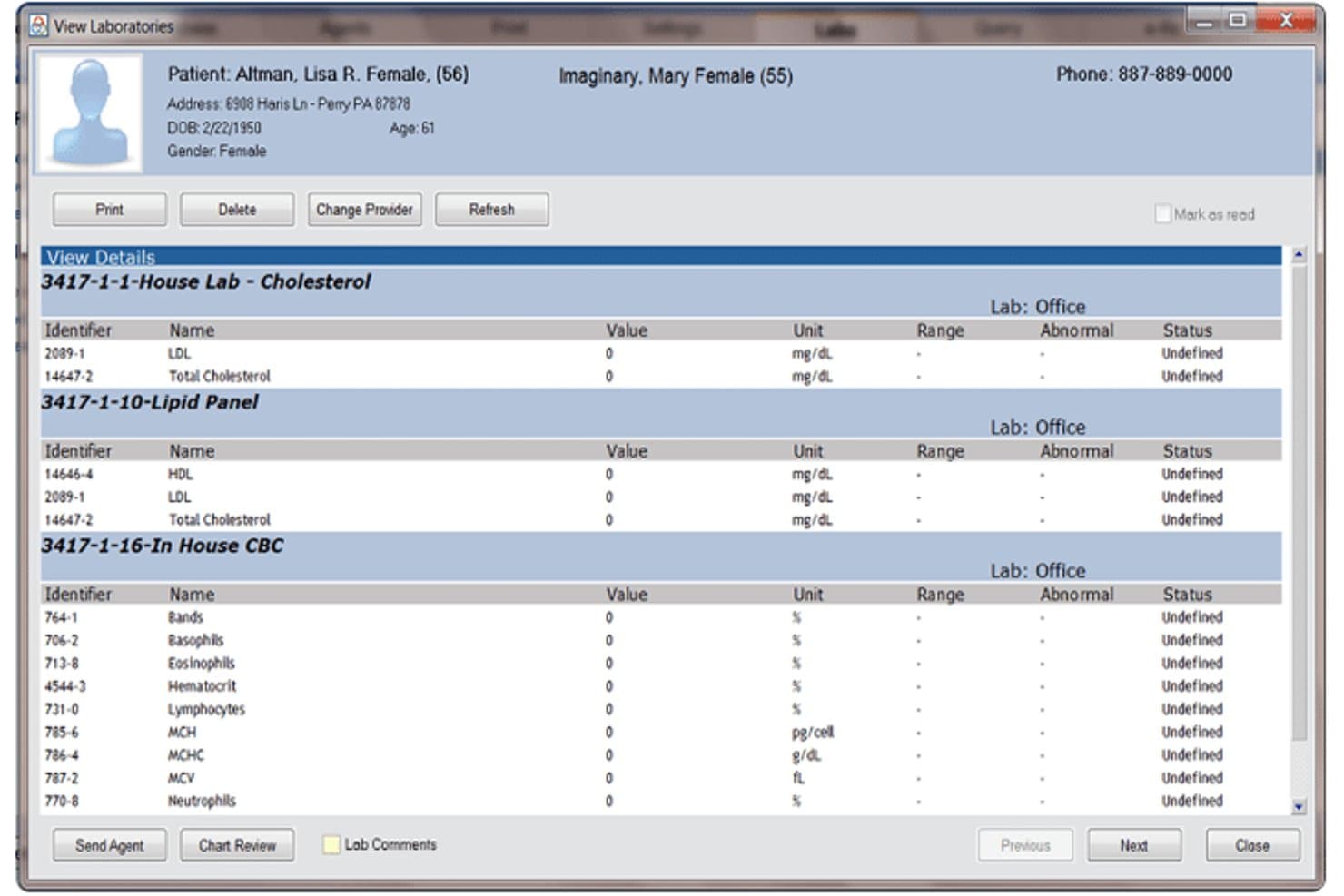
A screenshot of the patient information inside the tool Praxis EMR. Praxis EMR is a template-free EHR built around an AI Concept Processor engine that learns each physician's individual documentation style, supporting oncology and hematology practices with adaptive charting, lab integration, e-prescribing, and MIPS reporting.
Who Is Praxis EMR Best For?
Praxis EMR is a strong fit for solo and small-group oncology and hematology physicians who want to document in their own clinical style rather than work within rigid, pre-built templates.
Why I Picked Praxis EMR
I picked Praxis EMR because its Concept Processor AI is unlike anything else I've seen in oncology charting. Rather than forcing oncologists into fixed templates, it learns how each physician naturally describes staging, tumor markers, and treatment progressions over time. I also appreciate Datum+, which embeds discrete structured data inside narrative notes, so oncology records remain clinically readable without sacrificing the reportable data points that quality programs require.
Praxis EMR Key Features
- PraxDocs document management: Lets you scan, archive, and organize lab, pathology, and imaging results alongside patient records.
- AI-driven patient intake: Automates the digital patient intake process, capturing histories and patient-reported data before visits.
- Practice guidelines engine: Delivers real-time clinical advisories to help maintain compliance with MACRA, MIPS, and other reporting programs.
- Intelligent messaging (Praxis Agents): Automates reminder messages and routine communication between staff, patients, and providers.
Praxis EMR Integrations
Praxis EMR offers native integrations with SureScripts for e-prescribing, EMR Direct for secure messaging, and supports real-time bidirectional lab interfaces. An API is available for custom integrations.
Pros and Cons
Pros:
- MIPS reporting built directly into the workflow
- No templates speeds up oncology note writing
- AI charting adapts to individual physician style
Cons:
- Infusion suite management requires third-party tools
- No native chemotherapy regimen library included
Learn more about Praxis EMR: Best for hospital oncology workflows
- Free demo available
- Pricing upon request
Visit WebsiteCustomer Rating:4/5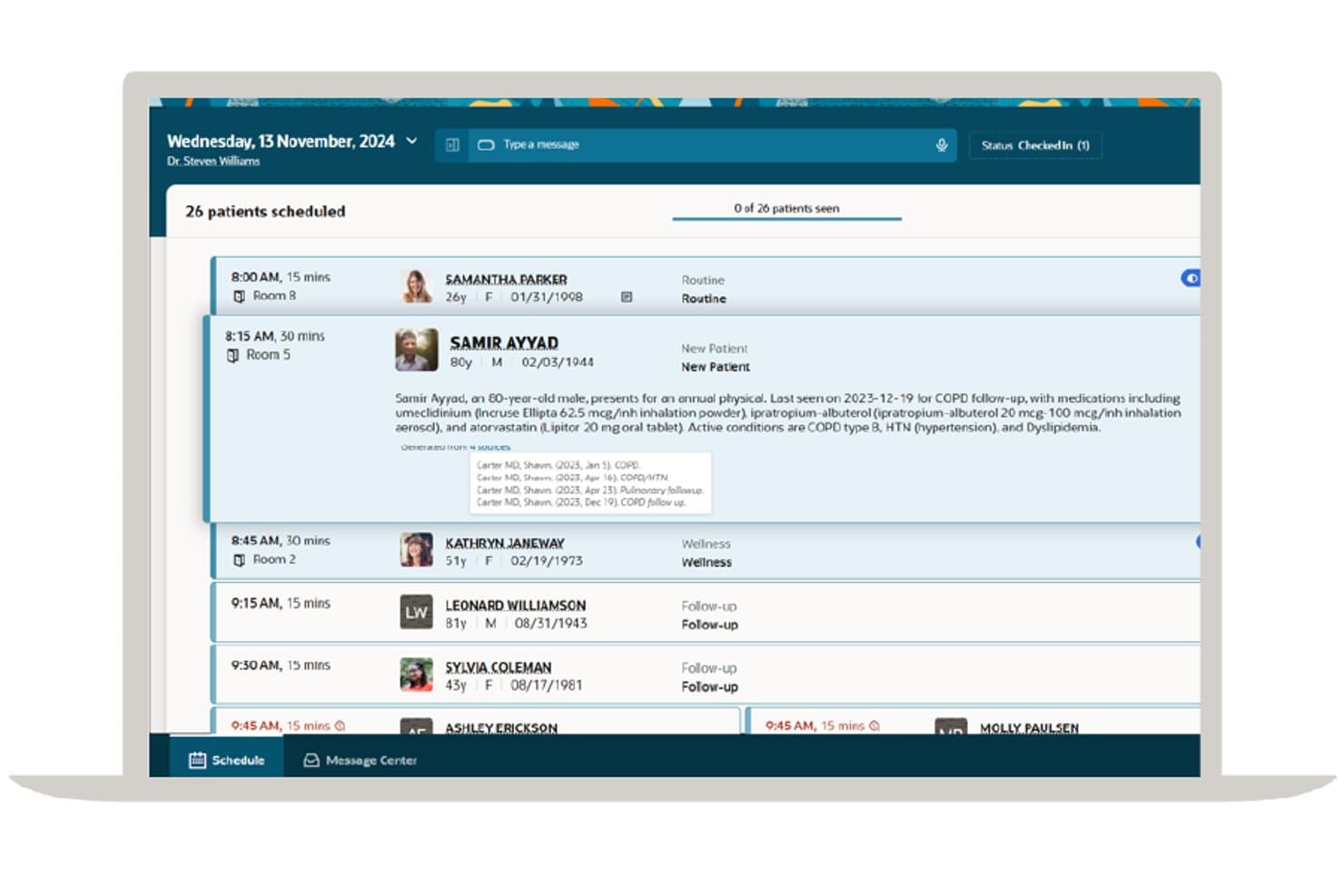
Oracle Health offers an AI-generated patient summary view within its daily schedule interface, surfacing medication history and active conditions at a glance. Oracle Health is a cloud-based, AI-first EHR platform built for hospital and health system oncology, combining chemotherapy regimen management, AJCC-compliant staging, infusion suite workflows, pathology and genomics integration, and revenue cycle tools.
Who Is Oracle Health Best For?
Oracle Health is a natural fit for large hospital systems and academic medical centers running dedicated cancer centers or infusion programs at scale.
Why I Picked Oracle Health
Oracle Health earns its spot on my shortlist because of how deeply it handles hospital-scale oncology workflows natively. I especially like the Infusion Suite's smart pump integration, which captures pause times automatically and feeds that data directly into billing, which matters a lot for J-code accuracy across a high-volume infusion center. AJCC-compliant discrete staging documentation also means clinicians chart TNM staging in structured fields that flow into downstream reporting, not buried in free text.
Oracle Health Key Features
- Integrated lab and pathology modules: Consolidates anatomic pathology, molecular diagnostics, and next-generation sequencing results directly within the oncology EHR.
- Multidisciplinary treatment planning: Supports unified documentation for medical, radiation, and surgical oncology in one patient record.
- Barcode specimen and medication tracking: Enables manual and automated tracking for specimen handling and chemo administration safety.
- Bidirectional interoperability tools: Facilitates easy data exchange with external labs, imaging systems, and hospital enterprise platforms using open APIs.
Oracle Health Integrations
Oracle Health offers native integrations with Surescripts, Haemonetics BloodTrack, Validic, and the Multum Drug Database, plus supports lab device integration, imaging systems, and provides an API for custom integrations.
Pros and Cons
Pros:
- Scales across multi-site hospital oncology networks
- AJCC staging captured in discrete, structured fields
- Native smart pump data feeds into billing directly
Cons:
- Migration from legacy PowerChart adds implementation complexity
- Post-acquisition support quality has declined noticeably
Learn more about Oracle Health: Best for voice-enabled oncology charting
- Free demo available
- Pricing upon request
Visit WebsiteCustomer Rating:3.9/5
ChartLogic offers a Patient Communications settings panel where patients can manage notification preferences via Text, Email, and Voice for appointments, forms, portal messages, and lab results. ChartLogic is an ambulatory EHR platform built for specialty practices, combining voice-driven clinical documentation, oncology-specific templates and flow sheets, practice management, and revenue cycle management in a single suite.
Who Is ChartLogic Best For?
ChartLogic fits solo and small-to-mid-sized hematology and oncology practices where physicians prioritize fast, voice-driven clinical documentation over complex multi-site workflows.
Why I Picked ChartLogic
I've included ChartLogic in my top picks because its voice dictation goes beyond simple note narration. Using what it calls a command-and-control methodology, I can navigate through notes, insert oncology-specific sub-templates, and complete documentation in under 90 seconds. The pre-built hematology and oncology flow sheets mean I'm not starting from scratch, and the custom template builder lets me reshape them around my actual charting workflow.
ChartLogic Key Features
- Note template builder: Create and customize oncology-specific templates and medical charting workflows.
- Integrated practice management: Use built-in scheduling, claims management, eligibility checks, and custom reporting in a single system.
- ONC-certified EHR: Meet regulatory requirements with 2015 Edition ONC-ACB certified electronic health records.
- Multi-location patient tracking: Monitor patient appointments, referrals, and records across different practice sites.
ChartLogic Integrations
ChartLogic offers native integrations with CareCloud Central and connects to hundreds of lab facilities for ePrescribe and lab interfaces. An API is available for custom integrations.
Pros and Cons
Pros:
- ONC-certified for regulatory compliance
- Pre-built hematology and oncology flow sheets included
- Voice notes completed in under 90 seconds
Cons:
- No infusion chair scheduling or drug prep tools
- No chemotherapy regimen or protocol management
Learn more about ChartLogic: Best for specialty oncology workflows
- Free demo available
- Pricing upon request
Visit WebsiteCustomer Rating:3.7/5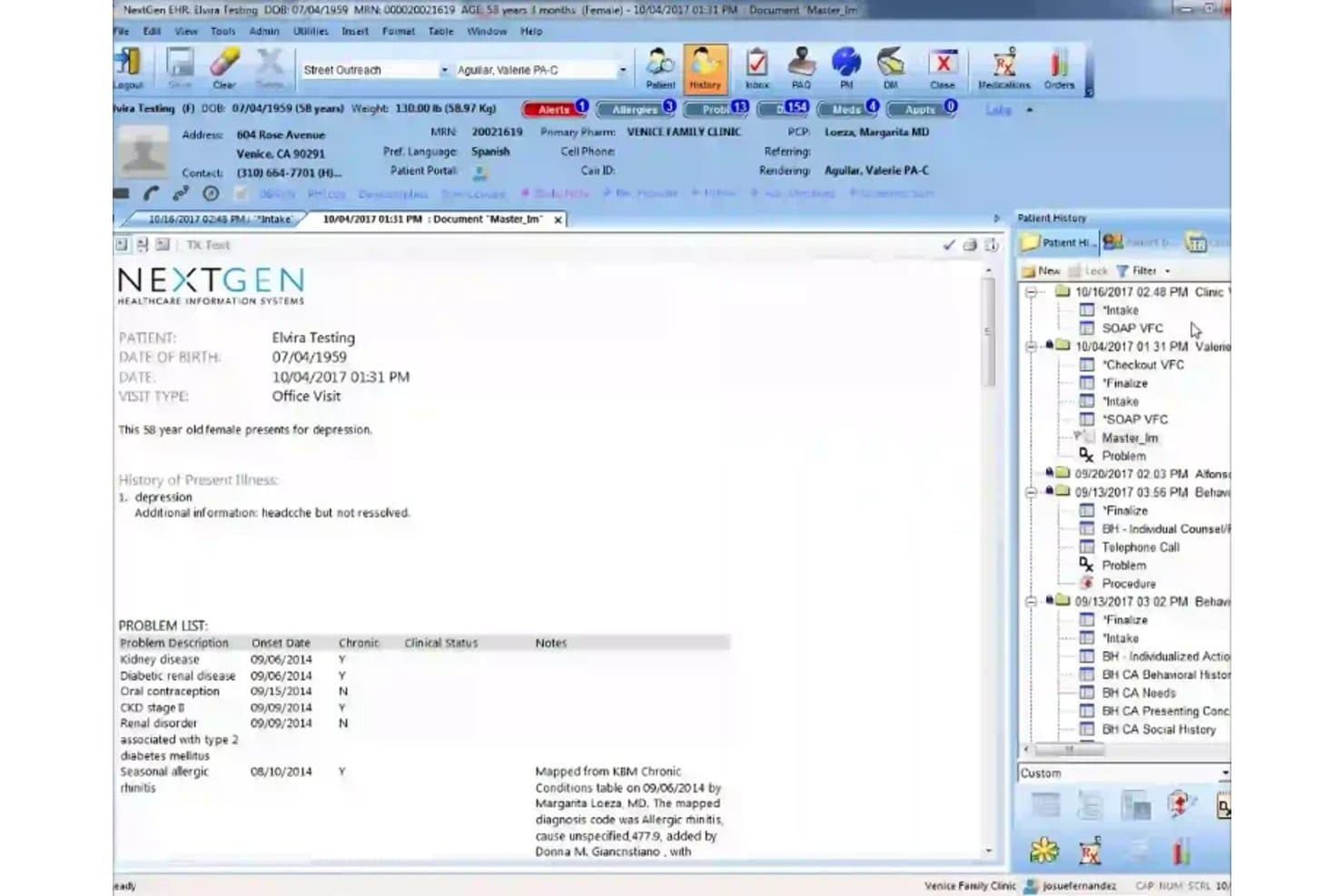
NextGen Healthcare offers a clinical documentation interface displaying patient history, problem lists, and office visit notes within its EHR platform. NextGen Healthcare is a multi-specialty ambulatory EHR platform with configurable oncology and hematology workflows, practice management, revenue cycle management, and AI-powered ambient clinical documentation.
Who Is NextGen Healthcare Best For?
NextGen Healthcare fits multi-specialty ambulatory practices that offer hematology/oncology alongside other service lines and need a single configurable EHR platform.
Why I Picked NextGen Healthcare
I picked NextGen Healthcare as one of the best because its library of 26 specialty-specific clinical templates includes configurable oncology and hematology workflows that go beyond basic note-taking. The specialty template editor lets oncology practices build custom encounter forms with specialty-relevant order sets and clinical decision support rules. I also like Ambient Assist, which converts live patient conversations into structured SOAP notes within 30 seconds of a completed visit, cutting documentation time by up to two hours per provider per day.
NextGen Healthcare Key Features
- Specialty-configurable clinical templates: Oncology and hematology fields can be tailored to fit unique workflows in multi-specialty practices.
- Integrated practice management tools: Schedule, bill, and manage authorizations directly in the EHR environment.
- Lab and diagnostic connectivity: Access results from more than 700 labs and connect with imaging and pathology systems.
- API-driven interoperability: Exchange patient records with external providers, HIEs, and enterprise EHRs using Mirth Connect.
NextGen Healthcare Integrations
NextGen Healthcare offers native integrations with more than 700 labs through NextGen Share Diagnostic Hub and connects with platforms like Clearwave, Doctible, Solutionreach, Commure, Vytalize, and Clinically. An API is available for custom integrations.
Pros and Cons
Pros:
- Strong lab connectivity across hundreds of providers
- Ambient AI documentation cuts charting time significantly
- Configurable specialty templates for oncology workflows
Cons:
- Missing infusion suite management tools
- No dedicated chemotherapy regimen library available
Learn more about NextGen Healthcare: Best for oncology billing and RCM
- Free demo available
- Pricing upon request
Visit WebsiteCustomer Rating:3.5/5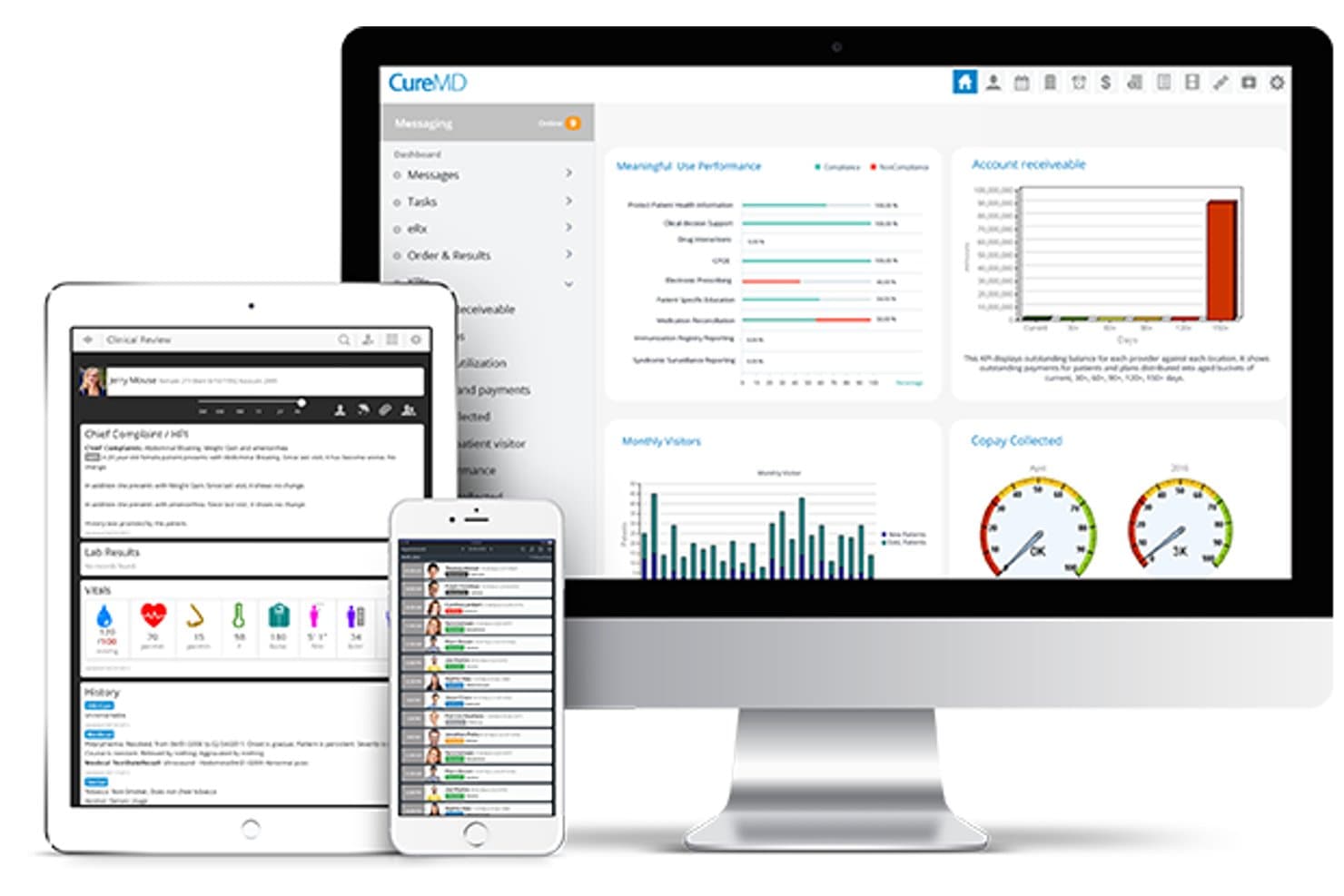
CureMD offers a multi-device EHR platform displaying clinical dashboards, patient records, messaging, and performance analytics across desktop, tablet, and mobile. CureMD is a cloud-based oncology EHR and practice management platform that combines chemotherapy regimen management, oncology-specific charting, infusion workflow tools, and integrated medical billing and RCM in a single system.
Who Is CureMD Best For?
CureMD is a strong fit for small to mid-sized independent medical oncology practices that need a unified EHR and billing system without a large IT infrastructure.
Why I Picked CureMD
I picked CureMD as one of the best because its billing architecture is built specifically around how oncology practices actually get paid. What I like most is how it pulls dosing information and NDC numbers directly from the drug cabinet into the practice management system, which removes a major manual step in J-code billing. It also includes drug utilization forecasting and wastage tracking, so practices can stay on top of buy-and-bill margins without running separate reports.
CureMD Key Features
- Integrated lab and imaging results: Pulls diagnostic, pathology, and radiology data directly into the patient chart for consolidated clinical reference.
- Customizable oncology charting templates: Enables cancer-specific documentation including staging, tumor markers, and longitudinal treatment histories.
- Infusion chair scheduling and workflow: Supports real-time scheduling, drug prep, and administration tracking for infusion suite operations.
- Automated dose calculations and safety alerts: Provides built-in BSA/AUC calculations and oncology-specific decision support throughout the chemo ordering process.
CureMD Integrations
CureMD offers native integrations with e-prescribing networks, health information exchanges, pathology labs, radiology services, hospital networks, and pharmacies. An API is available for custom integrations.
Pros and Cons
Pros:
- Specialty-specific templates for cancer diagnosis documentation
- Built-in MIPS reporting for oncology quality compliance
- Unified EHR and RCM cuts duplicate data entry
Cons:
- Reporting tools require significant manual workarounds
- Customer support availability is limited on weekends
Learn more about CureMD: 6Best for enterprise cancer care
Epic
- Not available
- Pricing upon request
Visit WebsiteCustomer Rating:3.9/5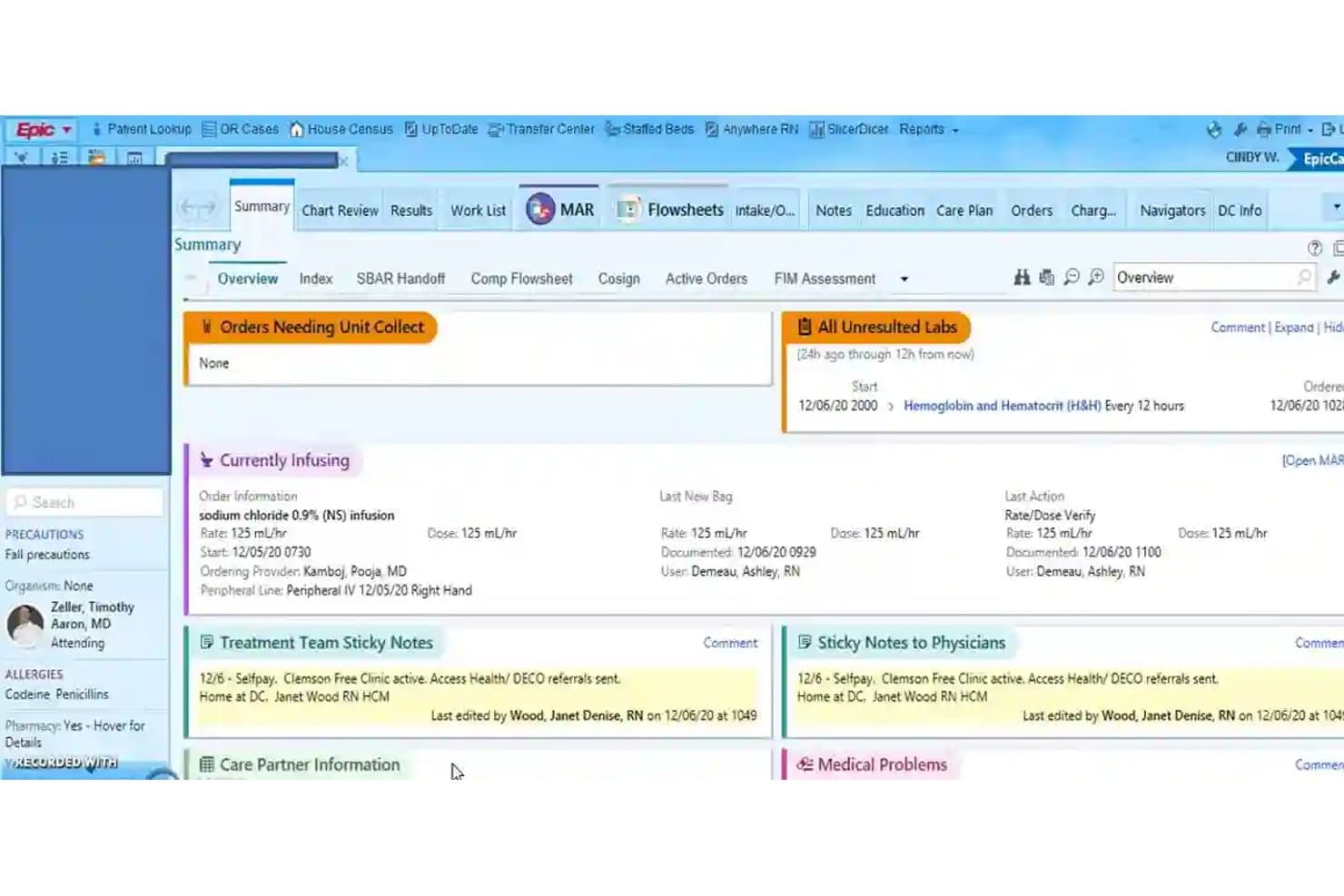
Epic offers a patient summary dashboard displaying active infusions, unresulted labs, treatment team notes, and allergy precautions within its EHR interface. Epic is an enterprise oncology EHR module that handles chemotherapy regimen management, cancer staging documentation, clinical decision support, and longitudinal treatment tracking across inpatient and outpatient care settings.
Who Is Epic Best For?
Epic is built for large academic medical centers and integrated cancer enterprises that already operate within a mature Epic environment.
Why I Picked Epic
Epic earns its spot on my shortlist because of how it handles chemotherapy at enterprise scale. I particularly value its NCCN-aligned protocol library, which lets oncology teams build, customize, and queue multi-cycle regimens ahead of patient visits. On top of that, its lifetime cumulative dose tracking and CPOE-based safety checks catch dangerous errors before they reach administration.
Epic Key Features
- Oncology-specific chart templates: Capture cancer staging, tumor markers, and longitudinal treatment history with structured, oncology-driven documentation.
- Integrated infusion scheduling: Coordinate chair assignments, drug preparation, and administration tracking within a unified workflow.
- Lab and diagnostic connectivity: Consolidate lab, pathology, and imaging results directly into the oncology patient record using native integration.
- Cancer registry reporting: Automate staging data and registry submissions to meet quality and compliance requirements for accredited cancer programs.
Epic Integrations
Epic offers native integrations across the Epic ecosystem, including EpicCare Ambulatory, Willow Pharmacy, Radiant Radiology, and Beaker Lab. It also integrates with Mosaiq for radiation oncology workflows and supports data exchange via HL7 and FHIR APIs.
Pros and Cons
Pros:
- Native cancer registry reporting built in
- Closed-loop chemo safety checks reduce errors
- NCCN-aligned regimen library is continuously updated
Cons:
- Implementation takes months for large organizations
- Requires existing Epic infrastructure to deploy
Learn more about Epic: Best for oncology data and analytics
- Free demo available
- Pricing upon request
Visit WebsiteCustomer Rating:3.4/5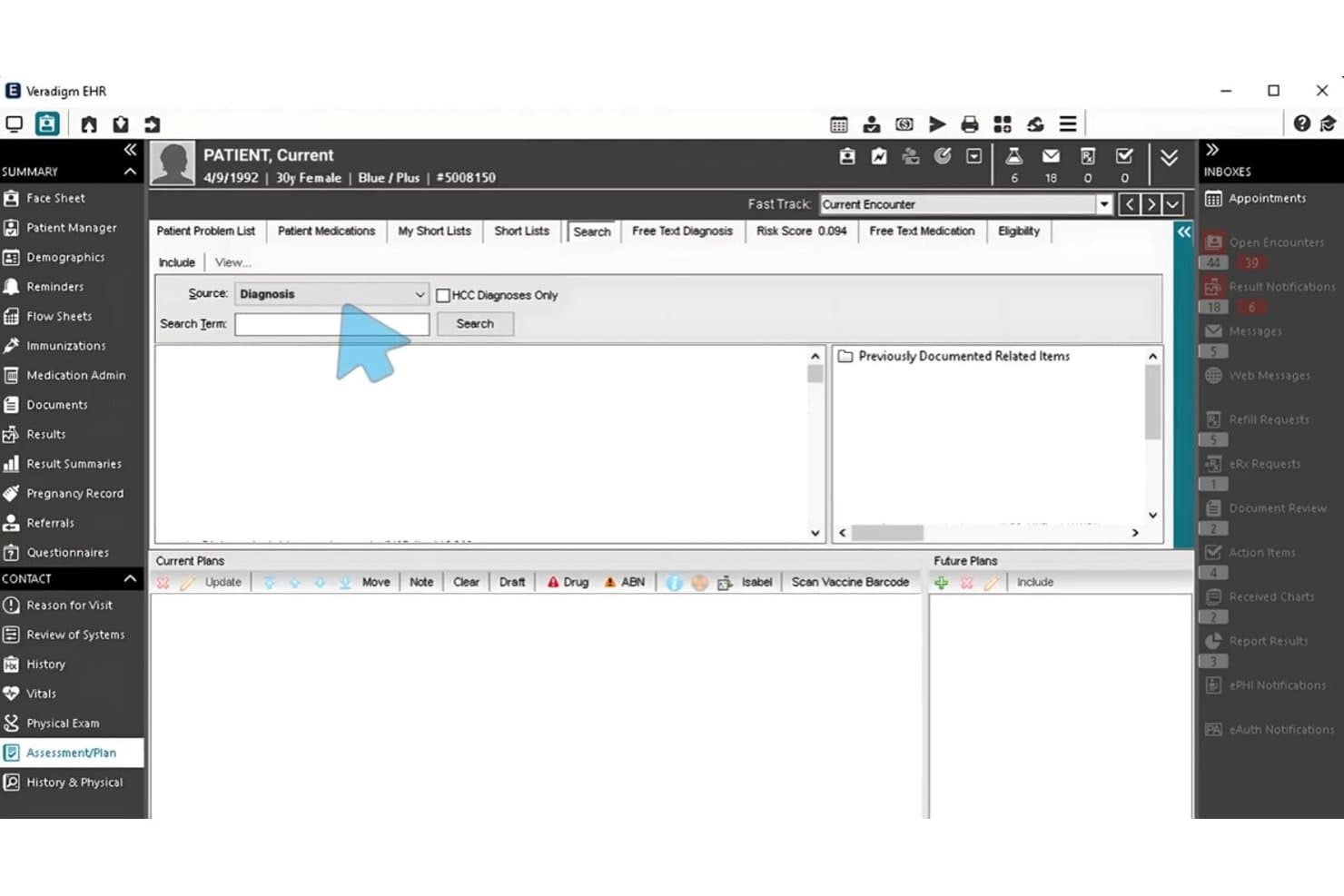
Veradigm offers a diagnosis search interface within its Assessment/Plan module, allowing clinicians to search and document patient diagnoses during encounters. Veradigm is a healthcare data and EHR platform that pairs ambulatory electronic health records with a real-world evidence analytics layer built on over 152 million de-identified patient records, including oncology populations.
Who Is Veradigm Best For?
Veradigm suits multi-specialty health systems and ambulatory practices that need a general-purpose EHR alongside access to large-scale oncology real-world data for research and reporting.
Why I Picked Veradigm
I've included Veradigm in my top picks because its Real-World Evidence Analytics Platform is built on OMOP standards, drawing from over 152 million de-identified patient records that include hematology, radiation oncology, and GYN oncology populations. I like using it to build cancer-specific cohorts and run longitudinal outcome analyses directly from structured EHR data. The platform also links claims and EHR records, which makes it practical for tracing full oncology patient journeys across care settings.
Veradigm Key Features
- Specialty EHR templates: Provides customizable clinical templates for oncology, hematology, and palliative care.
- Integrated diagnostic ordering: Supports direct lab and imaging orders and result retrieval within the EHR system.
- Automated quality reporting: Delivers built-in MIPS and PCMH reporting tools for tracking oncology quality measures.
- Real-time clinical alerts: Surfaces medication interaction warnings and decision support during patient encounters.
Veradigm Integrations
Veradigm offers native integrations with FollowMyHealth, Payerpath, a Diagnostic Ordering and Results Network, and its App Expo for certified third-party apps. An API is available for custom integrations.
Pros and Cons
Pros:
- Bidirectional lab and diagnostic result retrieval
- Automated MIPS reporting for oncology measures
- Large-scale real-world oncology data access
Cons:
- No infusion chair scheduling or workflow
- No native chemotherapy regimen management tools
Learn more about Veradigm: Best for community oncology workflows
- Free demo available
- Pricing upon request
Visit WebsiteCustomer Rating:4.8/5
Flatiron's OncoEMR offers an 'Add Multiple Orders' interface allowing clinicians to select radiology and imaging orders, assign ordering physicians, schedule order dates, and add detailed instructions for oncology workflows. Flatiron OncoEMR is a cloud-based oncology EHR built exclusively for cancer care, combining NCCN-aligned chemotherapy regimen management, oncology-specific charting, clinical decision support, and molecular diagnostic integration.
Who Is Flatiron Best For?
Flatiron OncoEMR is a strong fit for hematology/oncology physicians and practice administrators running multi-site community cancer care operations.
Why I Picked Flatiron
I've included Flatiron OncoEMR in my top picks because it's the only oncology EHR purpose-built around how community practices actually operate. I particularly like how NCCN Order Templates® are built directly into the chart, so clinicians aren't building regimens from scratch at each visit. Flatiron Assist™ then surfaces evidence-based treatment options at the point of care, keeping protocols consistent across a distributed, multi-site practice.
Flatiron Key Features
- AJCC cancer staging templates: Structured fields guide documentation and coding of tumor stage at diagnosis and recurrence.
- Chair scheduling for infusion centers: Assigns patients to chairs and tracks drug administration times in multi-site infusion suites.
- Molecular diagnostics integration: Direct integrations with genomic labs pull biomarker results into the patient chart for precision oncology decision-making.
- Cancer-specific quality measure reporting: Built-in tools support MIPS, OCM, and QOPI reporting workflows required for regulatory compliance.
Flatiron Integrations
Flatiron OncoEMR offers native integrations with DeepScribe, Natera, Adaptive Biotechnologies clonoSEQ, Foundation Medicine, and Abbott Precision Oncology. It also integrates with lab, radiology, and practice management systems. An API is available for custom integrations.
Pros and Cons
Pros:
- Structured biomarker data surfaces targeted therapy options
- Purpose-built exclusively for oncology clinical workflows
- NCCN-aligned regimen library built in natively
Cons:
- Reporting depth lags behind some competitor platforms
- Limited dedicated infusion suite management tools
Learn more about Flatiron: Best for radiation oncology management
- Not available
- Pricing upon request
Visit WebsiteCustomer Rating:5/5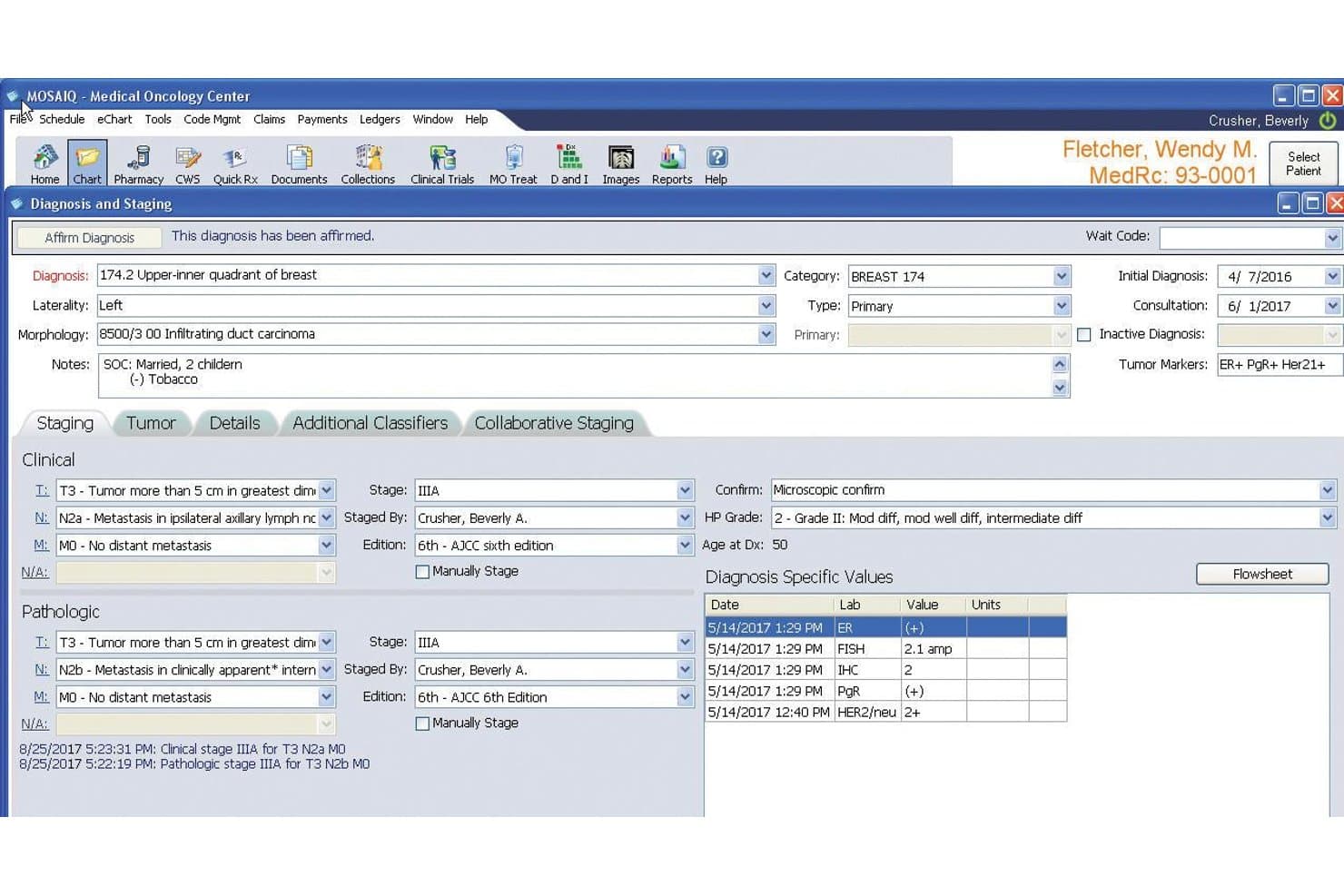
Elekta's MOSAIQ Medical Oncology Center EHR offers a detailed Diagnosis and Staging screen with clinical and pathologic staging, tumor markers, and diagnosis-specific lab values. Elekta is a radiation and medical oncology EHR platform that supports chemotherapy ordering, dose calculation, cancer staging, multidisciplinary treatment documentation, and oncology-specific clinical workflows across the full patient care journey.
Who Is Elekta Best For?
Elekta suits cancer centers and hospital-based oncology departments that need a single platform spanning both radiation and medical oncology workflows.
Why I Picked Elekta
Elekta earns its spot on my shortlist because no other oncology EHR ties radiation therapy delivery as tightly to clinical documentation as MOSAIQ does. It operates as a full oncology information system (OIS), with native connections to Elekta linacs and third-party treatment planning systems inside one charting environment. I also like the MOSAIQ Evaluate module, which lets my team pull treatment plan reviews directly into the patient record without switching applications.
Elekta Key Features
- Oncology-specific regimen builder: Create, save, and customize treatment protocols with cycle tracking and dose adjustments for chemotherapy and immunotherapy.
- Integrated lab and pathology data: Import pathology, genomic, imaging, and lab results directly into the patient chart for complete diagnostic data.
- Comprehensive cancer charting tools: Document TNM staging, tumor markers, longitudinal treatment history, and survivorship details within structured oncology templates.
- Clinical decision support: Access oncology-specific dose calculations, BSA/AUC logic, and drug interaction checks built into the order workflow.
Elekta Integrations
Elekta offers native integrations with Epic, Cerner, Kaiku Health, ProKnow, and Elekta linacs, and supports HL7-based connectivity to lab systems, pharmacies, and cancer registries. An API is available for custom integrations.
Pros and Cons
Pros:
- Strong multidisciplinary tumor board documentation tools
- Cumulative lifetime dose tracking built in
- Unifies radiation and medical oncology workflows
Cons:
- Infusion chair scheduling depth is limited
- Billing features lag dedicated RCM platforms
Learn more about Elekta: Best for integrated radiation oncology
- Free demo available
- Pricing upon request
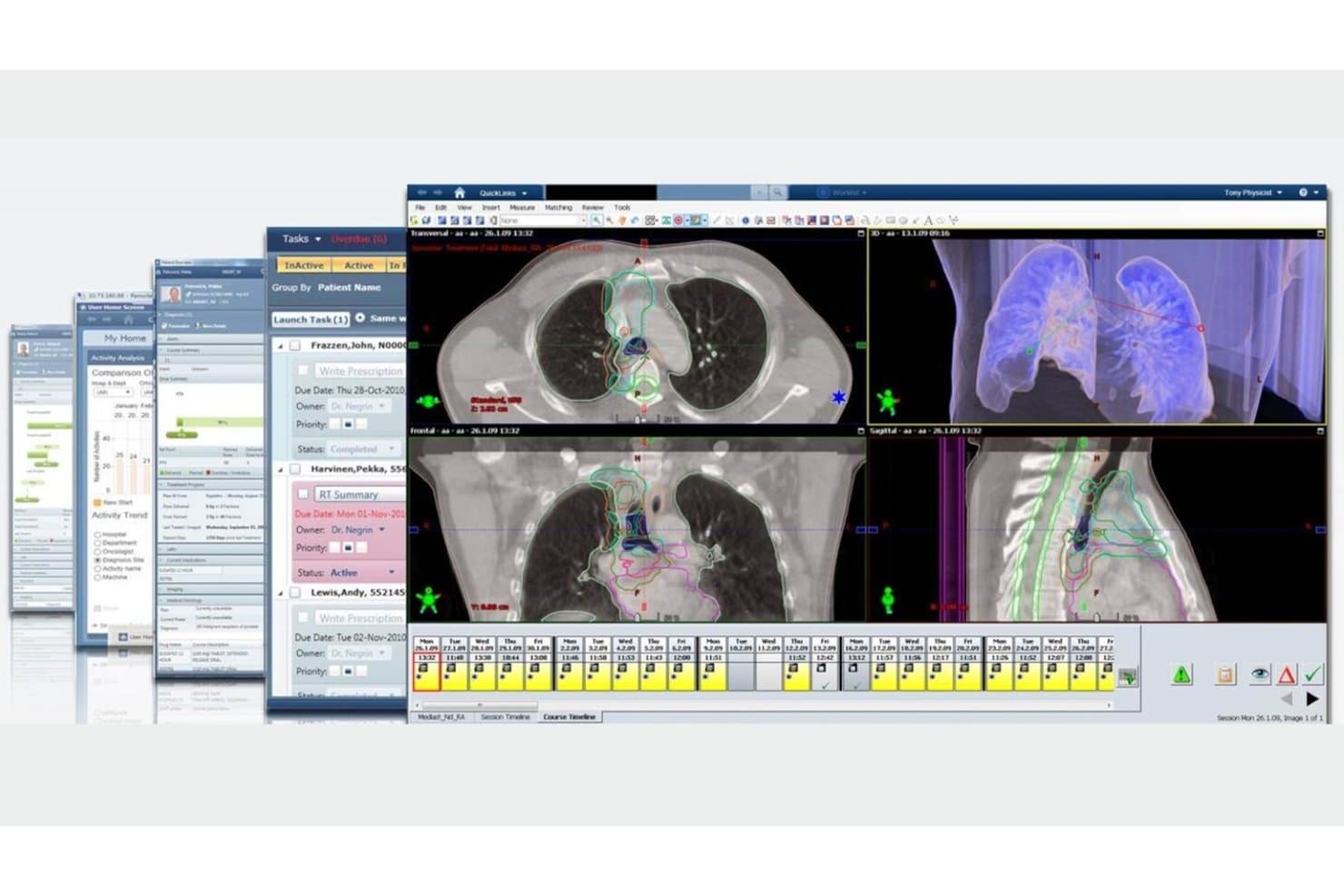
Varian ARIA Oncology Information System offers a multi-panel clinical workspace displaying CT scan imaging with radiation treatment contours, patient task lists, and a course timeline for oncology treatment planning. Varian ARIA Oncology Information System is an oncology-specific EHR and information management platform that combines radiation, medical, and surgical oncology records, treatment planning, scheduling, charge capture, and diagnostic image review into a single clinical system.
Who Is Varian ARIA Oncology Information System Best For?
It's a strong fit for hospital-affiliated cancer centers and enterprise oncology programs already running Varian radiation therapy equipment.
Why I Picked Varian ARIA Oncology Information System
I picked Varian ARIA Oncology Information System because no other oncology EHR connects directly into Varian LINAC systems and Eclipse treatment planning the way it does. My team can pull radiation treatment plans, MV/kV/CT/CBCT imaging, and dose tracking into a single patient record without any manual import steps. ARIA also automates AJCC cancer staging and captures CPT and HCPCS codes across completed treatment activities.
Varian ARIA Oncology Information System Key Features
- Oncology-specific charting templates: Supports AJCC staging, TNM coding, tumor markers, and longitudinal treatment documentation.
- Advanced billing and claim management: Includes oncology claim edits, charge capture, split technical and professional billing, and HL7 export for reimbursement systems.
- Integrated diagnostic imaging review: Allows direct access to MV, kV, CT, CBCT, MR, and PET images within the patient record.
- Performance status and toxicity tracking: Documents ECOG, Karnofsky, and Lansky scales, plus detailed adverse event and toxicity monitoring.
Varian ARIA Oncology Information System Integrations
Varian ARIA Oncology Information System offers native integrations with Eclipse treatment planning, InSightive analytics, Noona patient engagement, LIS and RIS systems, and supports HL7 and DICOM data exchange for interoperability with hospital and lab systems.
Pros and Cons
Pros:
- Supports MV, kV, CT, and PET imaging
- Built-in AJCC staging and toxicity documentation
- Connects directly to Varian LINAC treatment systems
Cons:
- Legacy OIS product is being phased out
- Infusion workflows require a separate add-on module
Learn more about Varian ARIA Oncology Information System:
Outros fornecedores de EHR para oncologia
Eis algumas opções adicionais de fornecedores de EHR para oncologia que não entraram na minha lista restrita, mas que vale a pena consultar:
- 11Meditech Expanse OncologyBest for connected cancer care
- 12OncentricBest for oncology EHR and billing
- 13eClinicalWorksBest for coordinated oncology care
- 14WRSHealthBest for oncology treatment planning
- 15InterSystemsBest for unified oncology data
How I Evaluate Oncology EHR Vendors
I evaluate oncology EHRs across two layers: baseline requirements like regimen libraries and infusion workflows, and differentiators like genomic integration and closed-loop chemo safety.
Core Functionality (Table Stakes For This List)
When I'm selecting tools for my list, I rank each one on a scale from 0 (does not offer the functionality) to 5 (excels in this area) for each core functionality listed below. Then, I calculate the tool's total score into a percentage. Each tool needs to achieve a minimum total score of 55% to be considered for inclusion.
- Chemotherapy Regimen Management: I look for NCCN-aligned protocol libraries and the ability to build custom multi-cycle regimens with automated cycle progression.
- Oncology-Specific Charting: I check for TNM staging fields, tumor marker tracking, and longitudinal treatment timelines rather than generic templates.
- Infusion Scheduling & Workflow: Chair scheduling with drug prep coordination and nurse assignments matters, especially for busy multi-chair infusion suites.
- Oncology Billing & Reimbursement: I evaluate J-code support, drug wastage tracking, prior auth workflows, and buy-and-bill handling for high-cost oncolytics.
- Clinical Decision Support: Dose calculations based on BSA/AUC, toxicity monitoring, and regimen-specific drug interaction alerts are what I look for here.
- Lab & Diagnostic Integration: I check whether the system pulls in pathology, imaging, and genomic results via HL7/FHIR rather than requiring manual entry.
Once I have a list of tools that meet the criteria, I consider what sets each platform apart.
Differentiating Factors (What Sets Vendors Apart)
Here's how I compare and contrast different vendors:
Standout Features
Molecular and genomic integration is a big differentiator. I look for systems that natively ingest results from genomic labs and structure biomarker data to drive targeted therapy recommendations. Closed-loop chemo safety features like barcode administration and cumulative lifetime dose tracking add a meaningful layer of protection during high-risk regimens. I also evaluate clinical trials matching—automated patient-to-trial screening based on diagnosis, staging, and prior therapies saves hours of manual eligibility review.
Beyond Features
Practice setting fit matters a lot. I evaluate whether a system scales from a solo community oncology practice to a multi-site cancer network with shared infusion centers. Regulatory reporting is another key factor—I check for built-in QOPI, MIPS, and EOM reporting so your team isn't manually pulling quality data. Interoperability with the broader oncology ecosystem also shapes my assessment. Bidirectional exchange with PACS, radiation systems, and referring providers via FHIR/HL7 keeps care coordination from breaking down between departments.
Como escolher fornecedores de EHR para oncologia
É fácil perder-se em listas extensas de funcionalidades e estruturas de preços complexas. Para o ajudar a manter o foco enquanto percorre o seu processo específico de seleção de software, apresentamos uma lista de verificação com os fatores a ter em conta:
| Fator | O que deve considerar |
| Escalabilidade | A plataforma consegue lidar com o seu volume atual de doentes e acompanhar o crescimento da prática ou a abertura de novas unidades? |
| Integrações | O sistema liga-se facilmente aos seus laboratórios, serviços de imagiologia, PACS e serviços de faturação? |
| Personalização | É possível adaptar os fluxos de trabalho, os modelos e os relatórios às subespecialidades de oncologia ou às necessidades de investigação? |
| Facilidade de utilização | As suas equipas clínicas e administrativas aprenderão rapidamente a utilizar o sistema ou é provável que este perturbe os fluxos de trabalho diários? |
| Implementação e integração inicial | Que apoio do fornecedor e recursos de formação existem para garantir uma transição tranquila e minimizar o tempo de inatividade? |
| Custo | Contabilizou todos os custos — configuração, subscrição, suporte e migração de dados — para além das simples taxas de licenciamento? |
| Medidas de segurança | O sistema cumpre as normas de segurança dos cuidados de saúde e disponibiliza controlos de acesso completos, registos de auditoria e encriptação? |
| Requisitos de conformidade | Existe suporte integrado para QOPI, MIPS, EOM ou necessidades de acreditação locais relevantes para a sua prática? |
O que são os fornecedores de EHR para oncologia?
Os fornecedores de EHR para oncologia disponibilizam sistemas de registos de saúde eletrónicos concebidos especificamente para prestadores de cuidados oncológicos, apoiando a documentação, a gestão dos tratamentos e a coordenação dos cuidados específicos da oncologia. Estas plataformas de software EHR ajudam as práticas a gerir regimes de quimioterapia, acompanhar a evolução dos doentes, integrar dados laboratoriais e de diagnóstico e simplificar a conformidade com as normas de faturação e comunicação de informação específicas da oncologia.
Funcionalidades dos fornecedores de EHR para oncologia
Ao selecionar fornecedores de EHR oncológico, esteja atento às seguintes funcionalidades essenciais:
- Gestão de regimes de quimioterapia: Inclui bibliotecas de protocolos baseados em evidências e ferramentas para criar, personalizar e acompanhar planos de tratamento com vários ciclos para diferentes tipos de cancro.
- Registo clínico específico de oncologia: Permite documentar detalhadamente o estadiamento do tumor, o diagnóstico, o historial de tratamentos e as linhas cronológicas longitudinais específicas dos doentes oncológicos.
- Agendamento de infusões: Permite gerir eficientemente o agendamento de cadeirões, coordenar a preparação dos medicamentos e monitorizar em tempo real as operações da unidade de infusão.
- Faturação e reembolso em oncologia: Gere códigos J, desperdício de medicamentos, autorizações prévias e fluxos de trabalho complexos de aquisição e faturação para medicamentos de quimioterapia e imunoterapia.
- Suporte à decisão clínica: Fornece alertas, cálculos de doses, monitorização da toxicidade e verificações de segurança específicas dos regimes, adaptadas aos cuidados oncológicos.
- Integração de análises e diagnósticos: Consolida os resultados de anatomia patológica, genómica, imagiologia e análises diretamente no processo clínico do doente, utilizando as normas HL7 ou FHIR.
- Segurança medicamentosa em circuito fechado: Incorpora a administração com códigos de barras, a verificação das doses e o acompanhamento da dose cumulativa ao longo da vida para reduzir erros de medicação com fármacos de alto risco.
- Planeamento multidisciplinar do tratamento: Permite a colaboração entre equipas de oncologia médica, cirúrgica e radioterapêutica, com linhas cronológicas unificadas dos doentes e coordenação dos cuidados.
- Ferramentas de comunicação de qualidade e conformidade: Automatiza a recolha de dados para programas regulamentares como o QOPI, o MIPS e a submissão a registos oncológicos locais.
- Integração do portal do doente: Oferece comunicação segura, atualizações sobre o tratamento e acompanhamento dos sintomas diretamente aos doentes, para os envolver no seu percurso de cuidados.
Benefícios dos Fornecedores de EHR Oncológico
A implementação de fornecedores de EHR oncológico proporciona vários benefícios para a sua equipa e para a sua organização. Eis alguns dos benefícios que pode esperar:
- Melhor coordenação dos cuidados: Os planos de tratamento integrados, os resultados das análises e as notas clínicas ajudam as equipas de oncologia a manterem-se alinhadas ao longo de todo o percurso do doente.
- Maior segurança dos doentes: Funcionalidades como a administração de medicamentos com códigos de barras, a verificação das doses e o acompanhamento da toxicidade reduzem os erros de medicação e os riscos do tratamento.
- Faturação oncológica simplificada: A gestão automatizada dos códigos J, o acompanhamento do desperdício de medicamentos e os fluxos de trabalho de aquisição e faturação simplificam os complexos processos de reembolso específicos dos cuidados oncológicos.
- Tomada de decisões clínicas mais rápida: O acesso a alertas específicos de oncologia, ao suporte à decisão e a bibliotecas de regimes atualizadas permite aos profissionais de saúde tomar decisões atempadas e baseadas em evidências.
- Gestão eficiente das infusões: O agendamento de cadeirões e o acompanhamento das infusões em tempo real otimizam a utilização da unidade e reduzem os estrangulamentos em centros movimentados.
- Suporte à conformidade regulamentar: As ferramentas integradas para a comunicação de dados do QOPI, do MIPS e do EOM minimizam o trabalho manual e ajudam as unidades a cumprir as normas de qualidade oncológica em evolução.
- Maior envolvimento dos doentes: Os portais do doente adaptados à oncologia melhoram a comunicação, fornecem atualizações atempadas e permitem aos doentes acompanhar os seus próprios sintomas e cuidados.
Custos e Preços dos Fornecedores de EHR Oncológico
A seleção de fornecedores de EHR oncológico exige uma compreensão dos vários modelos de preços e planos disponíveis. Os custos variam consoante as funcionalidades, o tamanho da equipa, os complementos e outros fatores. A tabela abaixo resume os planos comuns, os seus preços médios e as funcionalidades normalmente incluídas nas soluções de fornecedores de EHR oncológico:
Tabela Comparativa de Planos para Fornecedores de EHR Oncológico
| Tipo de plano | Preço médio | Funcionalidades comuns |
| Plano gratuito | $0 | Registos de doentes limitados, registo clínico oncológico básico, suporte mínimo e agendamento manual de infusões. |
| Plano pessoal | $75-$200/utilizador/mês | Funcionalidades essenciais de EHR, acesso de um único prestador, bibliotecas de regimes, faturação básica e relatórios simples. |
| Plano empresarial | $300-$500/utilizador/mês | Suporte para vários prestadores, fluxos de trabalho da unidade de infusão, faturação avançada, integrações laboratoriais e ferramentas de conformidade. |
| Plano empresarial de grande dimensão | $600-$900/utilizador/mês | Interoperabilidade em toda a rede, integrações personalizadas, análise de dados oncológicos, suporte dedicado e segurança empresarial. |
Perguntas frequentes sobre fornecedores de sistemas EHR de oncologia
\u003cspan style=\u0022font-weight: 400;\u0022\u003eEis algumas respostas a perguntas frequentes sobre fornecedores de sistemas EHR de oncologia:\u003c/span\u003e
Em que diferem os sistemas EHR de oncologia dos EHR gerais?
\u003cspan style=\u0022font-weight: 400;\u0022\u003eOs EHR de oncologia são concebidos para os fluxos de trabalho dos cuidados oncológicos, apoiando a gestão de regimes terapêuticos, o agendamento de infusões, o registo do estadiamento e a faturação especializada, em vez de se limitarem ao registo clínico geral.\u003c/span\u003e
Os fornecedores de sistemas EHR de oncologia podem integrar-se com sistemas laboratoriais e de imagiologia?
\u003cspan style=\u0022font-weight: 400;\u0022\u003eSim, a maioria dos fornecedores de sistemas EHR de oncologia disponibiliza integrações com laboratórios de anatomia patológica, imagiologia (PACS) e genómica, permitindo que os dados dos doentes sejam transferidos automaticamente para o EHR e reduzindo a introdução manual.\u003c/span\u003e
Que requisitos regulamentares devem os EHR de oncologia suportar?
\u003cspan style=\u0022font-weight: 400;\u0022\u003eEstes sistemas devem ajudar na elaboração de relatórios de qualidade QOPI, MIPS e EOM, bem como suportar o envio automatizado de dados para os registos de cancro e cumprir diretrizes rigorosas de segurança dos medicamentos.\u003c/span\u003e
As plataformas EHR de oncologia incluem o acompanhamento de ensaios clínicos?
\u003cspan style=\u0022font-weight: 400;\u0022\u003eMuitos EHR de oncologia modernos disponibilizam ferramentas integradas para a correspondência entre doentes e ensaios, bem como para o acompanhamento do estado de inscrição, facilitando o apoio das instituições à investigação clínica.\u003c/span\u003e
Como lidam os EHR de oncologia com a faturação complexa de medicamentos?
\u003cspan style=\u0022font-weight: 400;\u0022\u003eNormalmente, tratam o mapeamento de códigos J, o desperdício de medicamentos, os fluxos de trabalho de aquisição e faturação e a conformidade específica de cada entidade pagadora, que são essenciais para um reembolso oncológico correto.\u003c/span\u003e