

Programvare for leverandørstyring i helsesektoren hjelper legekontorer med å organisere, følge opp og føre tilsyn med leverandørene som støtter den daglige driften, fra godkjenning av kvalifikasjoner til kontraktsstyring. Etter hvert som klinikken vokser, blir det vanskeligere å holde oversikt over samsvarsregistre, fornyelser og bemanningsbehov på flere lokasjoner. Denne veiledningen hjelper deg med å sammenligne funksjonssett som er viktigst for reelle kliniske og driftsrelaterte arbeidsflyter, fra kontroll av kvalifikasjoner til tilgangskontroller for lokaler. Du får en tydelig oversikt over de beste alternativene og hvilke verktøy som løser utfordringene til travle legekontorer.
Why Trust Our Software Recommendations
6,700+
Reviews
20
Industry experts
16+
Evaluation factors
14
Years
Our team has been testing and reviewing software since 2012. As medical practice leaders ourselves, we know how difficult—and important—it is to choose the right software.
For this guide, we evaluated tools using hands-on testing and independent research, scoring tools using our selection criteria.
Our reviews reflect our human editorial judgment, not a sales pitch.
Sammenligningstabell for programvare for leverandørstyring i helsesektoren
Denne sammenligningstabellen oppsummerer prisopplysningene for mine beste utvalgte løsninger for programvare for leverandørstyring i helsesektoren:
| Tool | Best For | Trial Info | Price | ||
|---|---|---|---|---|---|
| 1 | Best for unified spend and invoice analytics | Free demo available | Pricing upon request | Website | |
| 2 | Best for configurable staffing compliance features | Free demo available | Pricing upon request | Website | |
| 3 | Best for real-time facility access monitoring | Free demo available | Pricing upon request | Website | |
| 4 | Best for controlling agency coverage by department | Free demo available | Pricing upon request | Website | |
| 5 | Best for automated sanction screening | 7-day free trial | From $199/month | Website | |
| 6 | Best for centralizing vendor credential tracking | Not available | Pricing upon request | Website | |
| 7 | Best for automated contract renewal alerts | Free demo available | Pricing upon request | Website | |
| 8 | Best for consolidated vendor workforce oversight | Free demo available | Pricing upon request | Website | |
| 9 | Best for custom clinical system integrations | Free demo available | Pricing upon request | Website | |
| 10 | Best for ongoing credentialing compliance | Free demo available | Pricing upon request | Website |


Anmeldelser av programvare for leverandørstyring i helsesektoren
Nedenfor finner du mine detaljerte sammendrag av den beste programvaren for leverandørstyring i helsesektoren som kom med på kortlisten min. Anmeldelsene mine gir en detaljert gjennomgang av funksjonene, samsvarsegenskapene og integrasjonene i hver plattform, slik at du kan finne den beste løsningen for deg.
 Best for unified spend and invoice analytics
- Free demo available
- Pricing upon request
Visit WebsiteCustomer Rating:4.8/5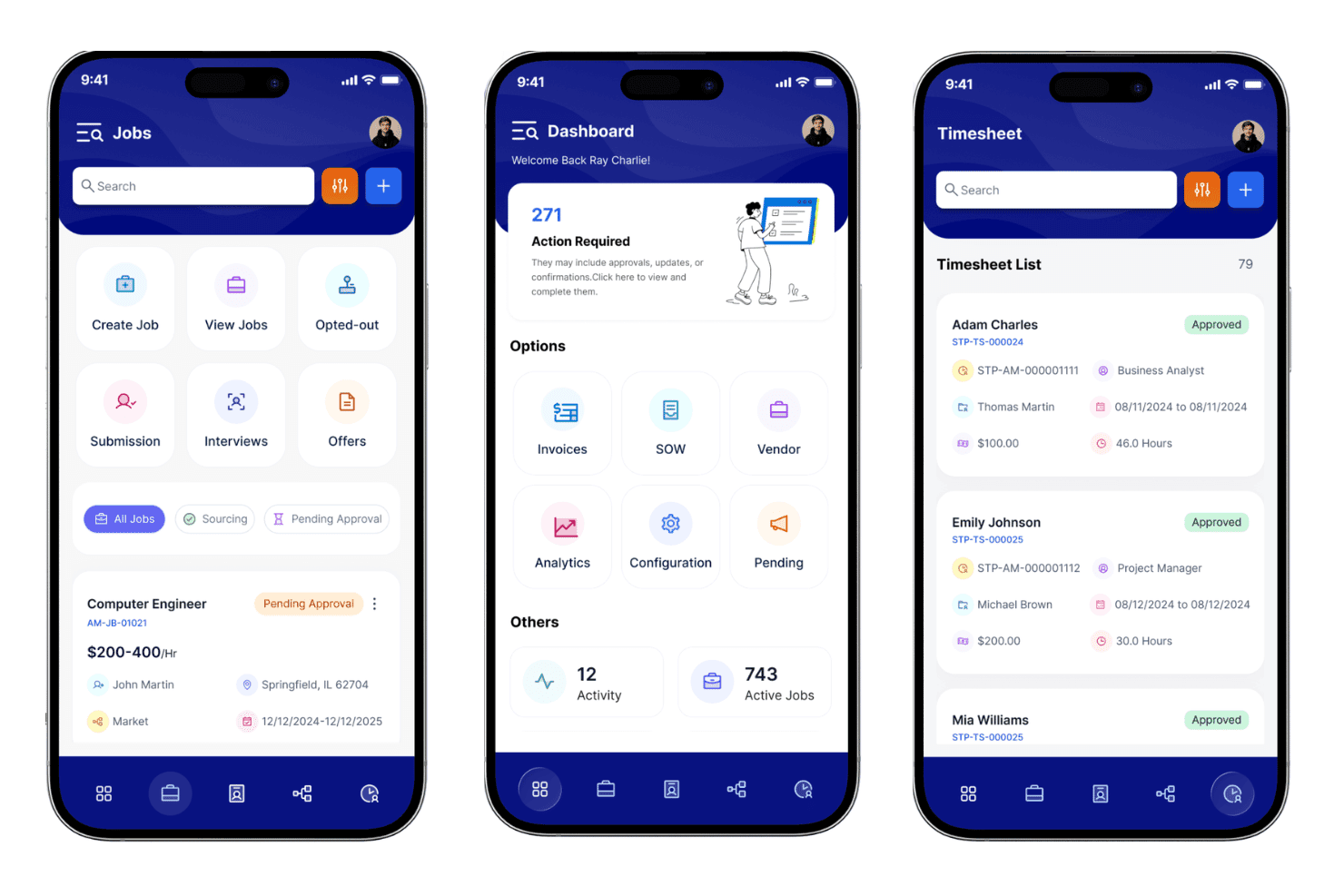
Simplify VMS lets users track jobs, timesheets, and workforce data in one mobile app. Simplify VMS is a healthcare-focused vendor management system that centralizes contingent workforce procurement, supplier credentialing, time and expense tracking, and spend and invoice analytics across nursing, allied health, and locum tenens labor categories.
Who Is Simplify VMS Best For?
Simplify VMS is a strong fit for enterprise health systems managing large-scale contingent staffing programs across multiple facilities and labor categories.
Why I Picked Simplify VMS
I picked Simplify VMS as one of the best because it consolidates spend and invoice data across every labor category into one real-time dashboard. I especially like the AI-driven reporting layer, which surfaces vendor spend trends and performance benchmarks without requiring manual data pulls. The vendor scorecards let me compare agency performance side by side across nursing, allied health, and locum tenens suppliers simultaneously.
Simplify VMS Key Features
- Automated credential tracking: Continually monitors license status and certification requirements for contingent clinicians.
- Supplier management dashboard: Centralizes supplier profiles, contracts, and compliance documentation in a single platform.
- Requisition workflow automation: Streamlines creation, approval, and distribution of staffing requests to multiple vendors.
- Custom analytics and reporting: Allows creation of tailored reports on staffing utilization and supplier performance trends.
Simplify VMS Integrations
Native integrations are not clearly documented. An API is available for custom integrations.
Pros and Cons
Pros:
- Automates credential tracking and compliance enforcement
- Real-time spend and vendor performance dashboards
- Covers all contingent labor categories in one platform
Cons:
- Limited documented third-party integration ecosystem
- No transparent pricing published for budget planning
Learn more about Simplify VMS: Best for configurable staffing compliance features
- Free demo available
- Pricing upon request
Visit WebsiteCustomer Rating:3.6/5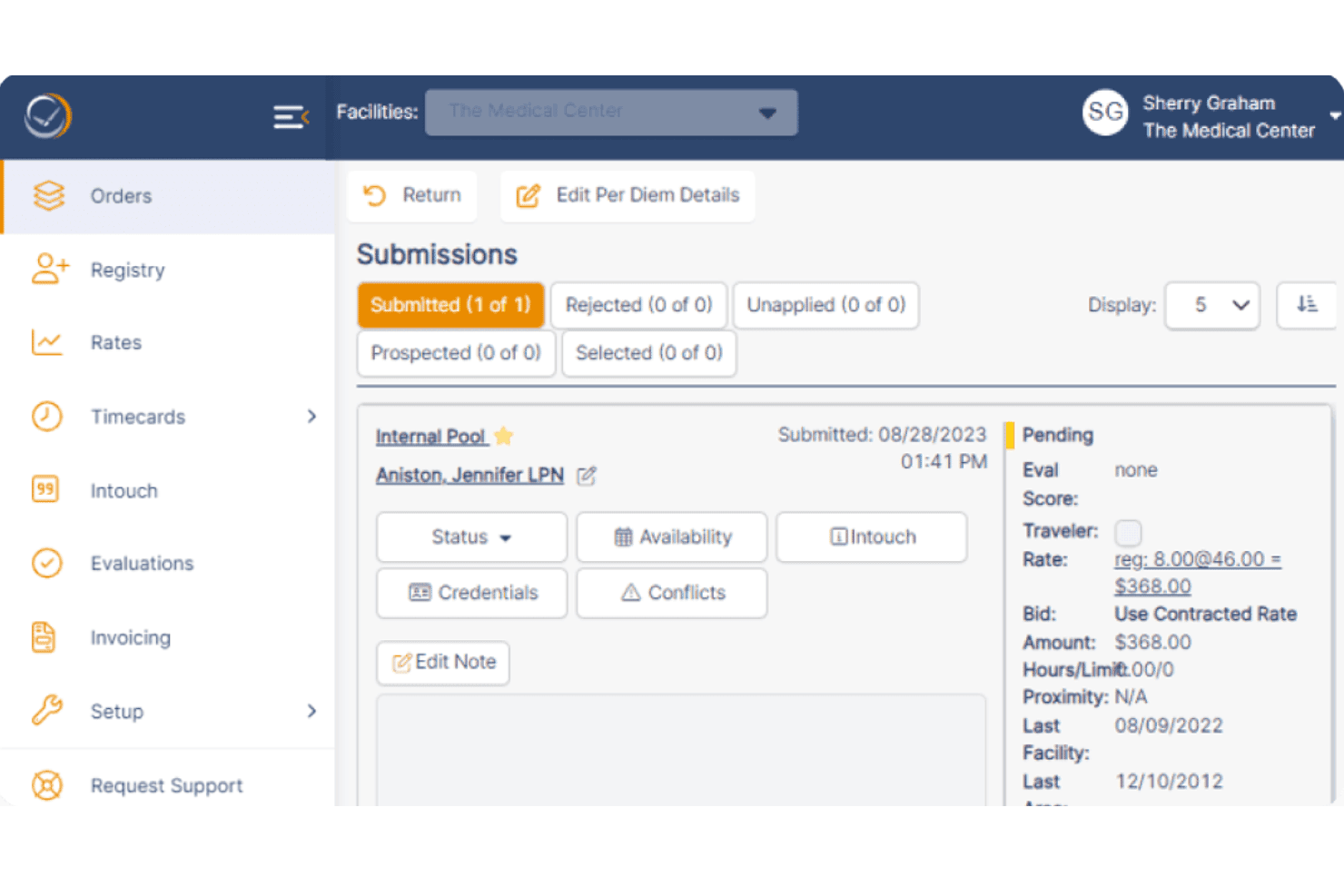
StafferLink lets users review and manage per diem shift submissions. StafferLink is a healthcare-specific staffing vendor management system (VMS) that handles contingent workforce requisitions, agency supplier management, credential tracking, and invoicing for health systems and MSPs.
Who Is StafferLink Best For?
It's a strong fit for enterprise health systems and managed service providers overseeing contingent clinical labor across multiple facilities.
Why I Picked StafferLink
I picked StafferLink because its User Defined Field (UDF) framework gives compliance teams granular control over staffing rules at the individual shift level. I can configure separate rules for location, facility type, and shift category without rebuilding the entire program structure. I also like that those same UDFs feed directly into invoicing, keeping compliance logic and billing aligned across every agency relationship.
StafferLink Key Features
- Registry talent pooling: Build and maintain a validated pool of internal and agency staff with up-to-date credential documentation.
- Automated time capture: Collect time and expense data for contingent staff manually or through third-party system integrations.
- Centralized invoice management: Generate and distribute detailed invoices automatically as timecards and expenses are approved.
- Custom performance tracking: Use configurable forms and user-defined fields to collect and evaluate stakeholder feedback on staffing agency performance.
StafferLink Integrations
Native integrations are not clearly documented. StafferLink offers an API for custom integrations.
Pros and Cons
Pros:
- Built specifically for contingent clinical workforce management
- UDFs tie compliance logic directly to invoicing
- Highly configurable shift-level compliance rule settings
Cons:
- Reporting customization requires significant initial configuration
- No pre-built native integrations with EHR systems
Learn more about StafferLink: Best for real-time facility access monitoring
- Free demo available
- Pricing upon request
Visit WebsiteCustomer Rating:2.8/5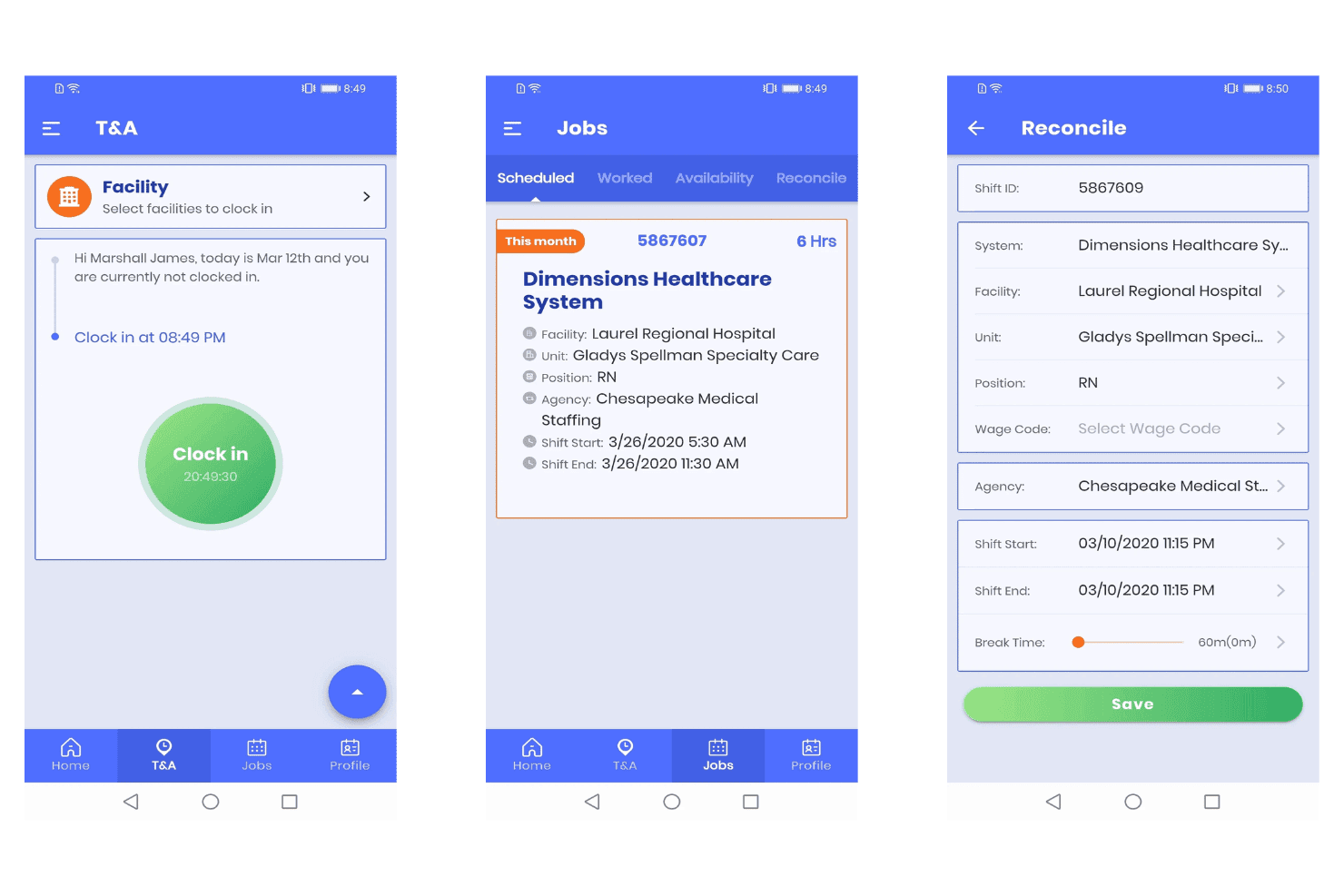
b4health lets nurses clock in at assigned facilities, view scheduled jobs, and reconcile completed shifts. b4health is a cloud-based vendor management system built for hospitals and health systems, combining staffing agency coordination, credential compliance monitoring, shift scheduling, and billing reconciliation in a single platform.
Who Is b4health Best For?
b4health is a good fit for hospital staffing coordinators and administrators managing contingent workforce programs across large health systems.
Why I Picked b4health
I picked b4health as one of the best because its GPS-based Mobile Time Tracker verifies that agency staff are physically on-site before clocking in, which is something I haven't seen handled this precisely in other VMS platforms. I also like that the system flags workers with expired credentials before they gain facility access, so credentialing and access control work together in real time. That combination makes it genuinely useful for hospitals running high-volume contingent staffing programs.
b4health Key Features
- Credential compliance monitoring: Tracks expiring licenses and certifications for healthcare staff with automated alerts built into the system.
- Integrated billing and reconciliation: Lets you generate, edit, and reconcile agency invoices directly from the VMS interface.
- Customizable reporting suite: Provides exportable reports on scheduling, spending, time cards, contract status, and quality assurance metrics.
- Multi-channel time and attendance: Supports web, mobile app, and phone-based time tracking options for agency and internal resource pool staff.
b4health Integrations
Native integrations are not clearly documented. An API is available for custom integrations.
Pros and Cons
Pros:
- Supports multi-method time and attendance recording
- Vendor-neutral agency sourcing with no conflicts
- GPS-verified check-in prevents buddy clocking
Cons:
- Narrowly focused on staffing, not full vendor lifecycle
- Limited native integrations with major EHR platforms
Learn more about b4health: Best for controlling agency coverage by department
- Free demo available
- Pricing upon request
Visit WebsiteCustomer Rating:4.8/5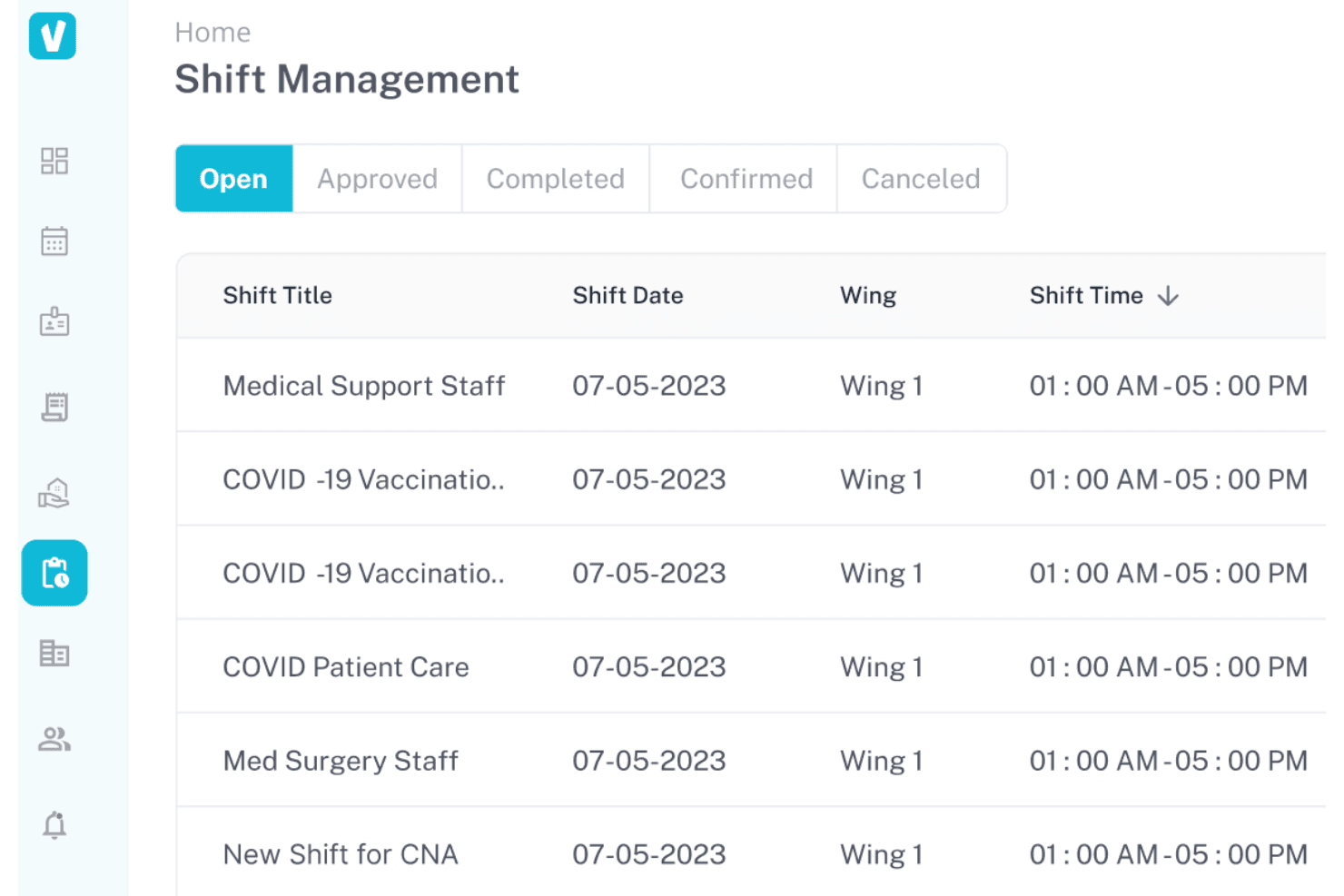
Vars Health tracks open shifts by date and wing for easier staffing coordination. Vars Health is a healthcare staffing vendor management platform that centralizes agency oversight, contingent workforce credentialing, shift scheduling, and spend analytics across departments and facilities.
Who Is Vars Health Best For?
Vars Health is a strong fit for healthcare staffing agencies and MSPs managing contingent labor across multiple hospital departments or facility locations.
Why I Picked Vars Health
I picked Vars Health as one of the best because of how precisely it handles department-level agency coverage. Its multi-rate card management lets me set different rate structures per department, and the float pool optimization tools give me real-time visibility into which units are covered and which have gaps. I also rely on its role-based access controls to make sure each department lead only sees and manages their own staffing activity.
Vars Health Key Features
- Automated credential expiration alerts: Sends notifications for upcoming credential renewals to keep compliance up to date.
- Secure document storage: Lets you store, organize, and access all staff credentials and onboarding documents in one place.
- Audit-ready compliance reporting: Generates reports tailored for regulatory standards like Joint Commission audits.
- Finance dashboard: Tracks labor spend, invoicing, and rate cards for all contingent staff in real time.
Vars Health Integrations
Native integrations are not clearly documented. An API is available for custom integrations.
Pros and Cons
Pros:
- Originally built for a multi-hospital healthcare system
- Float pool visibility across multiple facility locations
- Department-level rate card configuration per unit
Cons:
- Limited public reviews to assess long-term performance
- No clearly documented native third-party integrations
Learn more about Vars Health: Best for automated sanction screening
- 7-day free trial
- From $199/month
Visit WebsiteCustomer Rating:5/5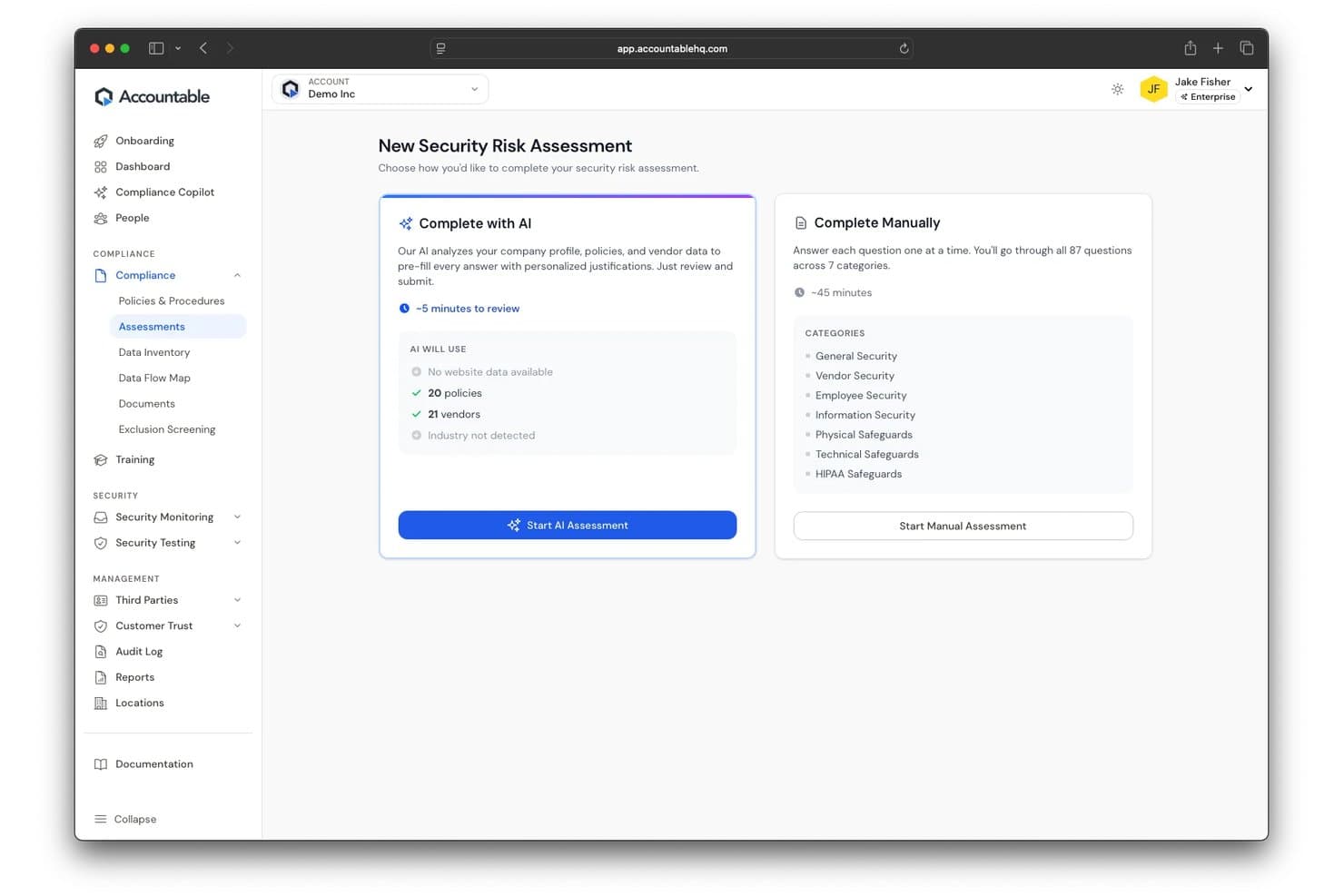
Accountable HQ lets users run AI-powered security risk assessments in minutes. Accountable HQ is a HIPAA compliance platform that combines vendor management, BAA tracking, security risk assessment, and exclusion screening into a single compliance hub for healthcare organizations and their business associates.
Who Is Accountable HQ Best For?
It's a strong fit for small to mid-sized healthcare organizations and business associates that need a dedicated compliance coordinator or practice administrator to manage HIPAA obligations across vendors.
Why I Picked Accountable HQ
I picked Accountable HQ as one of the best because its Exclusion Screening feature automatically checks vendors against OIG and SAM exclusion lists, which is something I have to do manually with most other HIPAA compliance platforms. Paired with Vendor Discovery and Shadow IT detection, I can catch unauthorized vendors handling PHI before they become a liability. The BAA Management workflow ties it all together, so every flagged vendor has a documented compliance trail.
Accountable HQ Key Features
- Compliance Copilot: AI-powered tool for generating HIPAA policies and procedures tailored to organizational needs.
- Security risk assessment: Built-in module for conducting structured annual HIPAA security risk assessments.
- Incident response management: Centralized dashboard for documenting and managing security incidents and response activities.
- Audit log: Comprehensive activity logging to support audit readiness and compliance reviews.
Accountable HQ Integrations
Native integrations are not clearly documented. An API is available for custom integrations.
Pros and Cons
Pros:
- Purpose-built for HIPAA compliance workflows
- BAA management with e-signature built in
- Continuous OIG and SAM exclusion screening
Cons:
- Reporting lacks multi-facility or IDN-level depth
- Limited vendor access control for on-site management
Learn more about Accountable HQ: Best for centralizing vendor credential tracking
- Not available
- Pricing upon request
Visit WebsiteCustomer Rating:3.5/5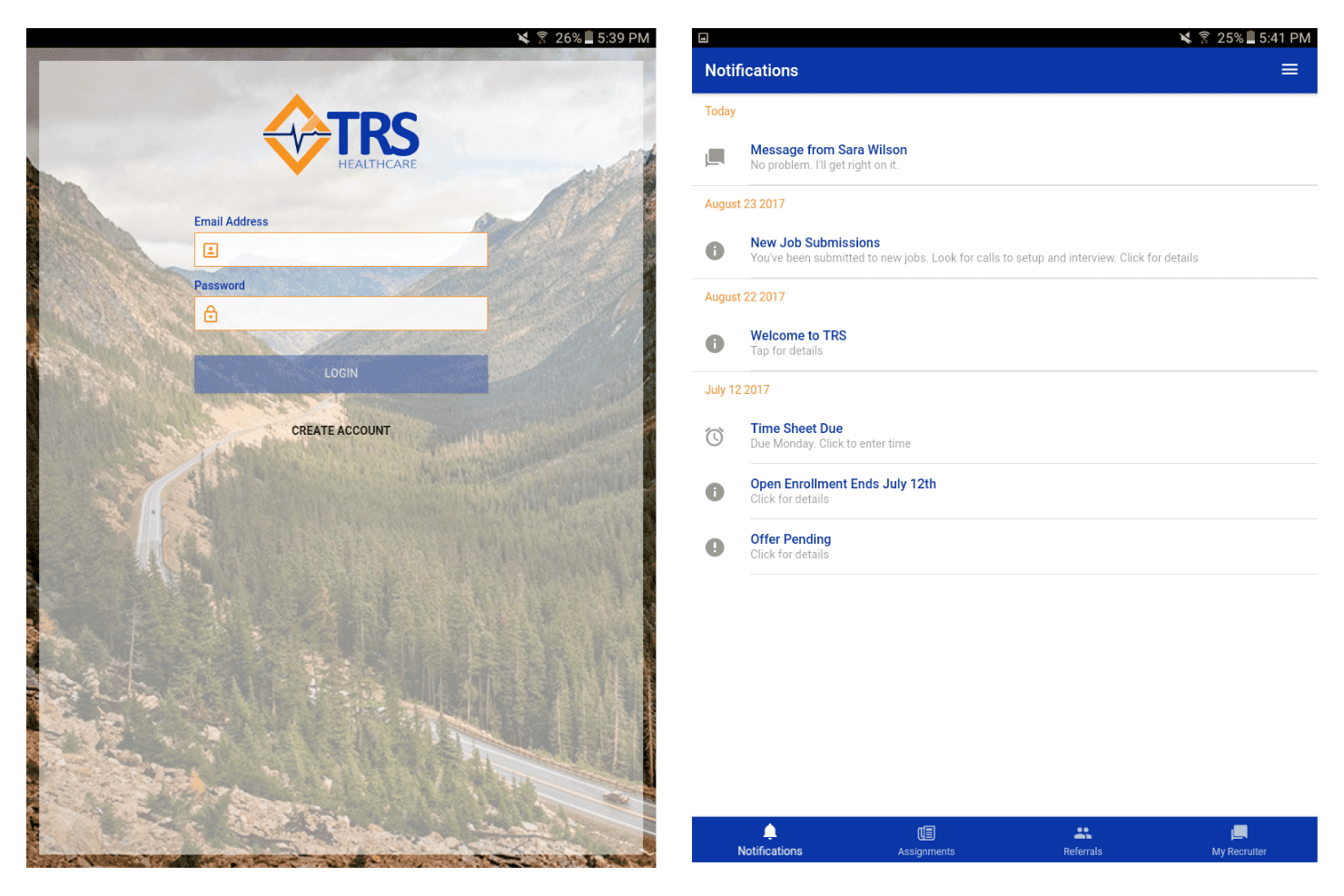
TRS Healthcare's app keeps travelers updated on assignments and required actions. TRS Healthcare is a healthcare staffing vendor management system that centralizes credential and license tracking, assignment management, timesheet processing, and invoicing across your vendor supplier network.
Who Is TRS Healthcare Best For?
TRS Healthcare is a strong fit for hospital systems and large healthcare facilities managing multiple staffing agencies and contingent clinical workforce vendors.
Why I Picked TRS Healthcare
I picked TRS Healthcare because the unified dashboard keeps credential and license tracking, timesheet management, and contract renewals in one place for every staffing vendor in my network. When I'm managing multiple agencies supplying clinical staff, I can review applications, track active licenses, and flag upcoming renewals without toggling between systems. The pre-vetted supplier network also adds a vetting layer before credentials ever reach the dashboard.
TRS Healthcare Key Features
- Unified assignment management: Oversee posting, hiring, timesheet review, and contract renewal for staffing vendors on a single platform.
- Dedicated supplier network: Access a pre-vetted roster of staffing partners to fill clinical workforce needs.
- Dashboard analytics: Track fill rates, costs, quality measures, and vendor utilization with built-in reporting tools.
- Compliance tracking: Maintain oversight of assignment statuses and clinician credential validity for every agency-supplied staff member.
TRS Healthcare Integrations
Native integrations are not clearly documented. An API is available for custom integrations.
Pros and Cons
Pros:
- Handles the full assignment lifecycle in one place
- Pre-vetted supplier network included out of the box
- Paired MSP support alongside the VMS platform
Cons:
- Limited publicly documented credentialing verification depth
- Focused on staffing workflows, not broader vendor compliance
Learn more about TRS Healthcare: Best for automated contract renewal alerts
- Free demo available
- Pricing upon request
Visit WebsiteCustomer Rating:5/5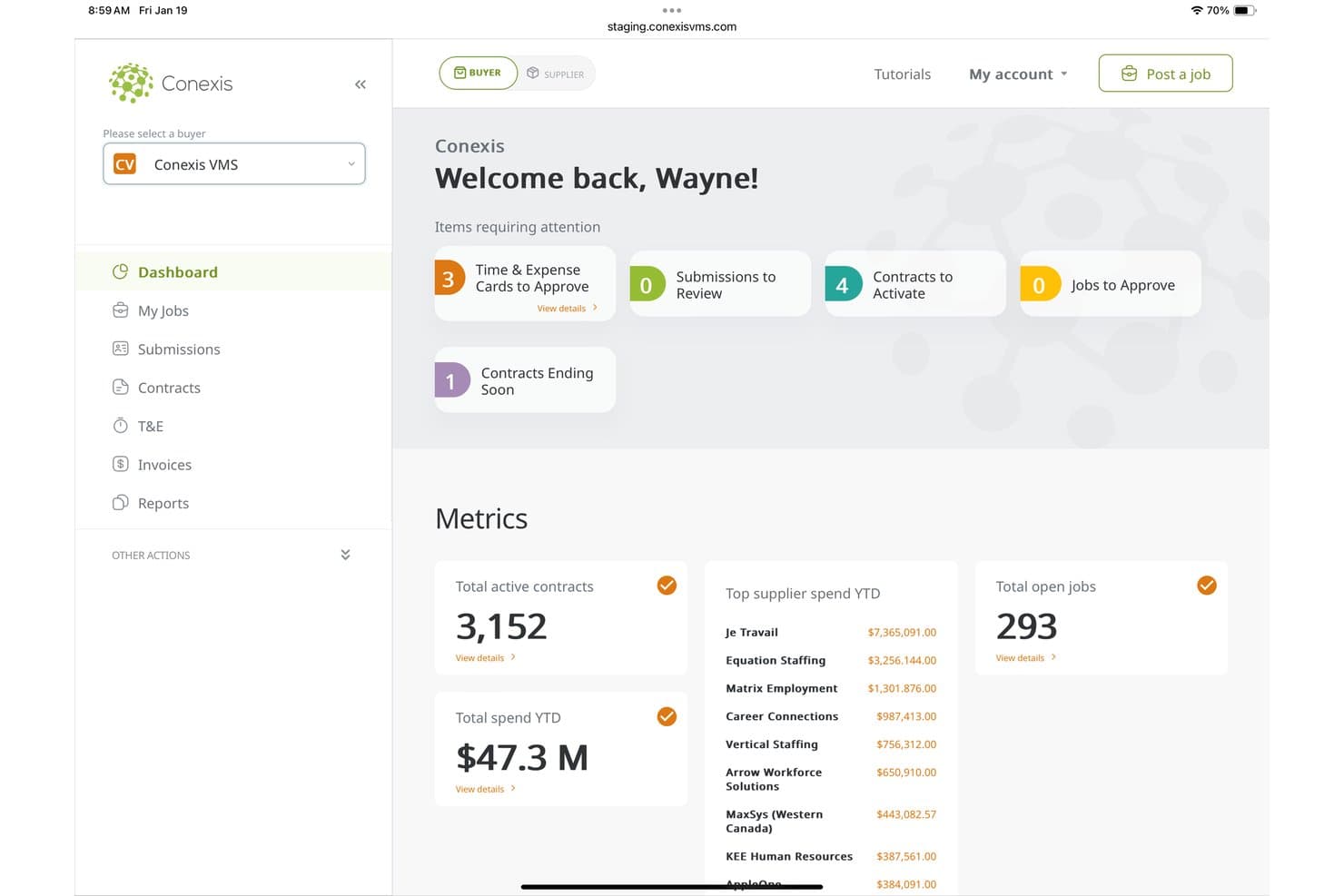
Conexis VMS manages vendor spend, contracts, and approvals in one dashboard. Conexis VMS is a contingent workforce vendor management system built for hospitals and health systems, covering staffing agency management, credential tracking, shift-based scheduling, spend management, and compliance monitoring.
Who Is Conexis VMS Best For?
Conexis VMS is a good fit for mid-market hospitals and health systems managing contingent clinical and non-clinical staff through multiple staffing agencies.
Why I Picked Conexis VMS
I picked Conexis VMS as one of the best because its automated contract renewal alerts keep staffing agency agreements from lapsing unnoticed. The platform tracks supplier contract timelines alongside credential expiration dates, so your team gets ahead of renewals before they create coverage gaps. I also like that audit-ready documentation is stored centrally, making it easy to pull supplier records during an accreditation review.
Conexis VMS Key Features
- Shift-based requisition management: Create and manage open shift requests for both clinical and non-clinical positions across departments.
- Automated credential tracking: Track worker licenses, certifications, background checks, and flag upcoming expirations for compliance.
- Internal resource pool management: Build and prioritize float pools and internal contingent staff before releasing requests to outside agencies.
- Spend and invoice reporting: Generate detailed reports on staffing agency invoices, billed hours, and cost allocation by department.
Conexis VMS Integrations
Native integrations are not clearly documented. An API is available for custom integrations.
Pros and Cons
Pros:
- Do-not-rehire flagging prevents risky worker reengagement
- Tracks credentials, immunizations, and background checks automatically
- Go-live possible in under 30 days
Cons:
- Primarily focused on contingent workforce, not full vendor lifecycle management
- Native integrations with clinical systems not clearly documented
Learn more about Conexis VMS: Best for consolidated vendor workforce oversight
- Free demo available
- Pricing upon request
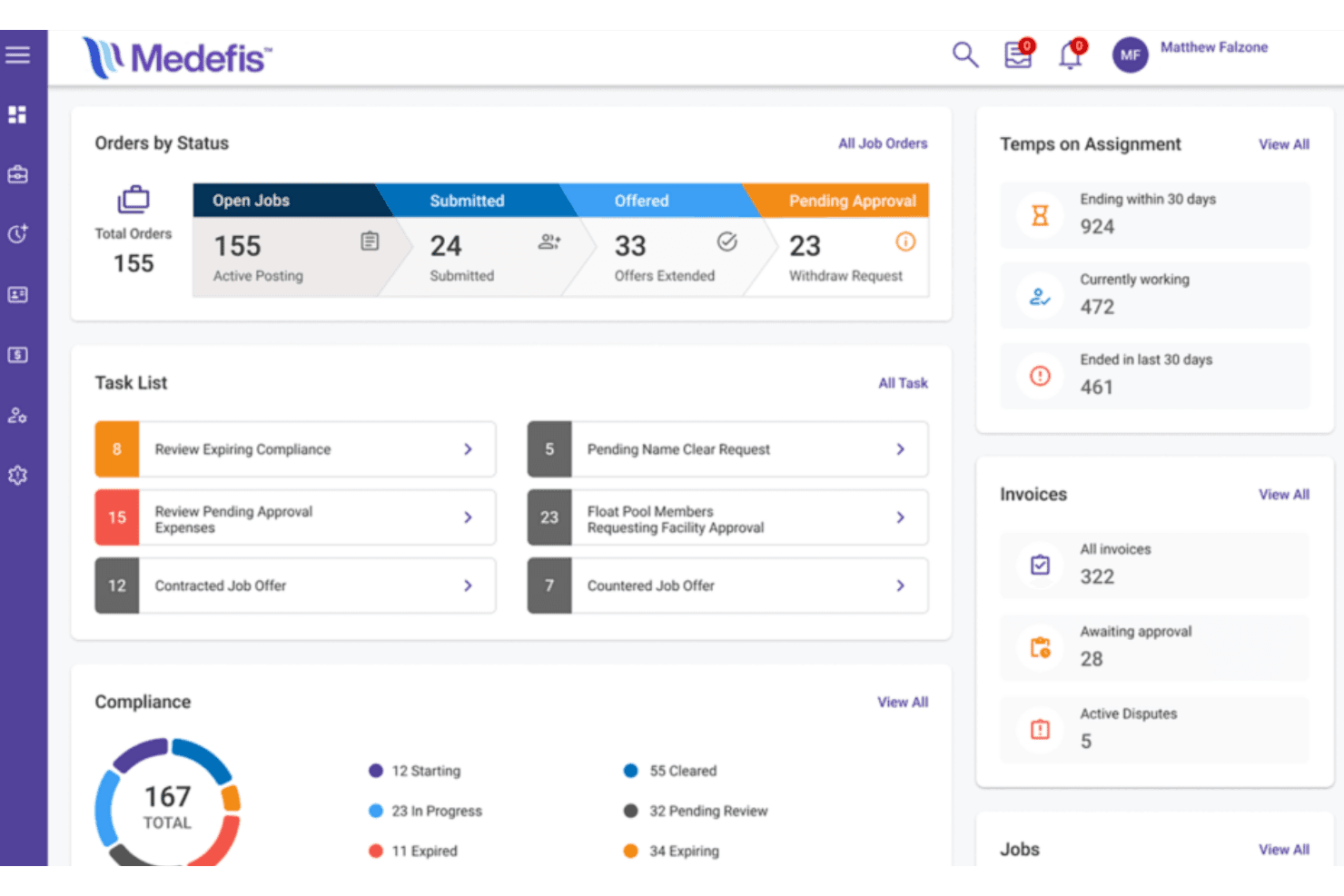
Medefis manages job orders, tasks, compliance, and invoices in one dashboard. Medefis is a healthcare vendor management system (VMS) that centralizes contingent workforce sourcing across clinical and non-clinical categories, with tools for vendor sourcing, candidate credentialing, competitive bid management, and staffing spend tracking.
Who Is Medefis Best For?
Medefis is a strong fit for hospital systems and large health networks managing high volumes of contingent clinical staff across multiple facilities and staffing vendors.
Why I Picked Medefis
I've included Medefis in my top picks because its BidMatch and TalentMatch engines bring a level of consolidated vendor oversight that other staffing VMS platforms don't replicate. When I post a position, competing agencies are automatically notified when they've been outbid, which keeps pricing market-driven across all submissions. I also like that I can track travelers on assignment, open jobs, and expiring positions from a single dashboard, spanning a network of 900+ suppliers across clinical, non-clinical, and locum categories.
Medefis Key Features
- Credential expiration tracking: Track clinician license and certification expiration dates with date-stamped storage and renewal alerts.
- Marketplace vendor access: Post open positions to a network of 900+ vetted staffing suppliers across clinical and non-clinical categories.
- Real-time assignment status: View real-time data on open, filled, and expiring staffing assignments for monitoring resource availability.
- Document storage and retrieval: Store, organize, and retrieve credential documents securely for auditing and compliance checks.
Medefis Integrations
Native integrations are not clearly documented. An API is available for custom integrations.
Pros and Cons
Pros:
- Single dashboard view across multiple assignments and vendors
- Competitive bidding keeps contingent labor costs market-driven
- Large pre-vetted supplier network for clinical roles
Cons:
- Reporting customization options are limited for non-staffing spend
- Primarily built for staffing VMS, not credentialing or BAA management
Learn more about Medefis: Best for custom clinical system integrations
- Free demo available
- Pricing upon request
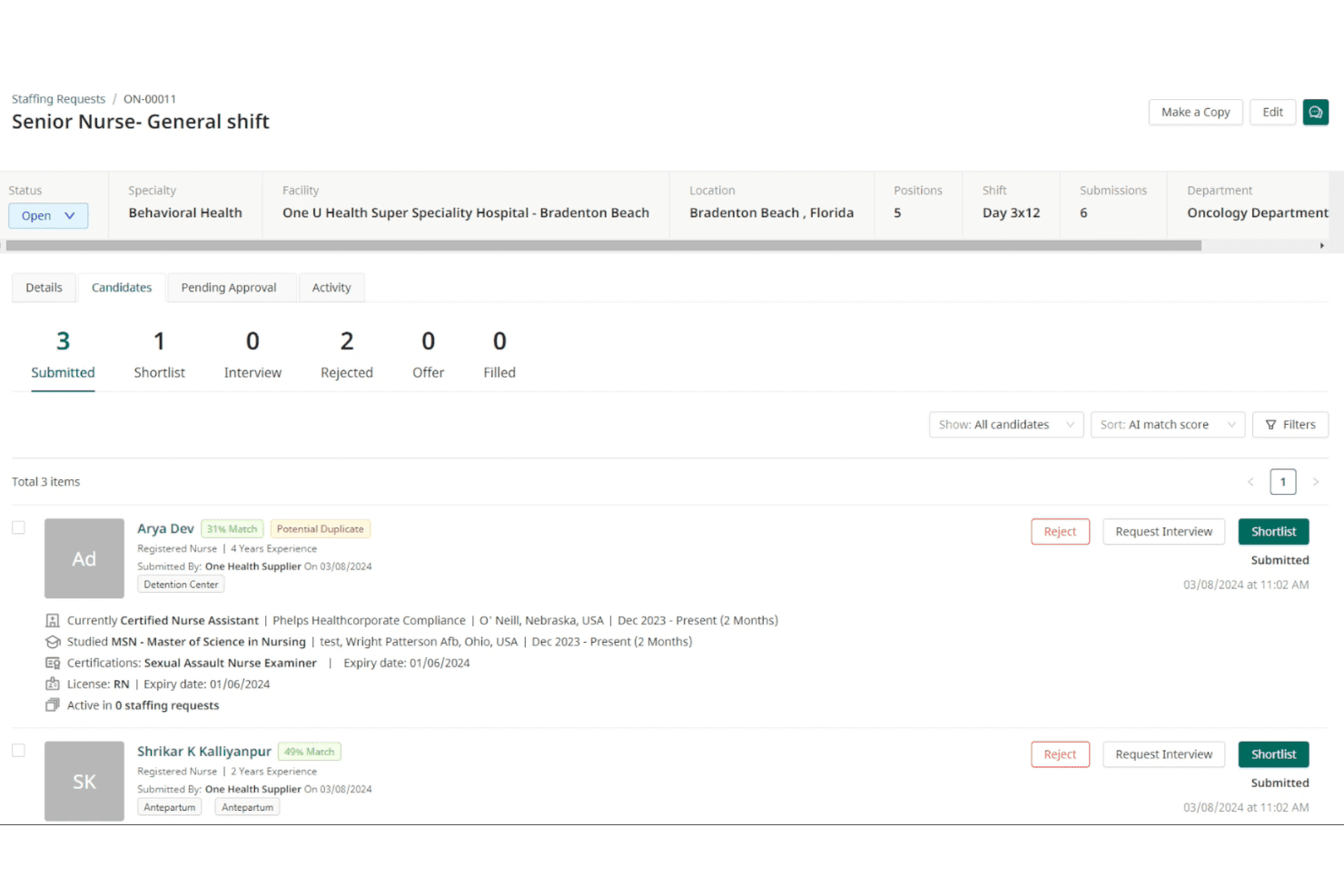
AbilityStack tracks nurse candidates through submission, shortlist, and interview stages. AbilityStack is a healthcare workforce VMS that consolidates contract, per-diem, and SOW staffing management with built-in clinician credentialing, shift scheduling, and API-based integrations to clinical systems including EMR, HRIS, and payroll platforms.
Who Is AbilityStack Best For?
AbilityStack is a good fit for enterprise health systems managing large contingent workforces across multiple facilities with existing EMR, HRIS, or payroll environments to integrate.
Why I Picked AbilityStack
AbilityStack earns its spot on my shortlist because of its API-first architecture, which lets health systems build custom connections to EMR, HRIS, and payroll platforms without replacing legacy infrastructure. I particularly like how the no-code/low-code configuration layer lets you shape clinical workflows around those integrations rather than the other way around. I've found this most valuable when connecting shift scheduling to timekeeping or syncing clinician credentials across systems.
AbilityStack Key Features
- Clinician credentialing management: Track licenses, certifications, expirations, and automated alerts for medical staff.
- Shift and per-diem scheduling: Manage assignments, float pools, and last-minute call-ins in a unified workspace.
- Direct sourcing and talent pools: Create branded talent networks and referral programs to build a pipeline of clinical candidates.
- Analytics and visual reporting: Access real-time dashboards with workforce and staffing analytics for informed decision-making.
AbilityStack Integrations
Native integrations are not clearly documented. The tool supports integrations via API for custom connections to platforms such as EMR, HRIS, and payroll systems.
Pros and Cons
Pros:
- Rapid deployment with healthcare-specific configuration templates
- Covers contract, per-diem, and permanent workforce types
- API-first architecture suits complex health system environments
Cons:
- Narrowly focused on staffing, not broader vendor compliance management
- Limited native integrations without custom development work
Learn more about AbilityStack: Best for ongoing credentialing compliance
- Free demo available
- Pricing upon request
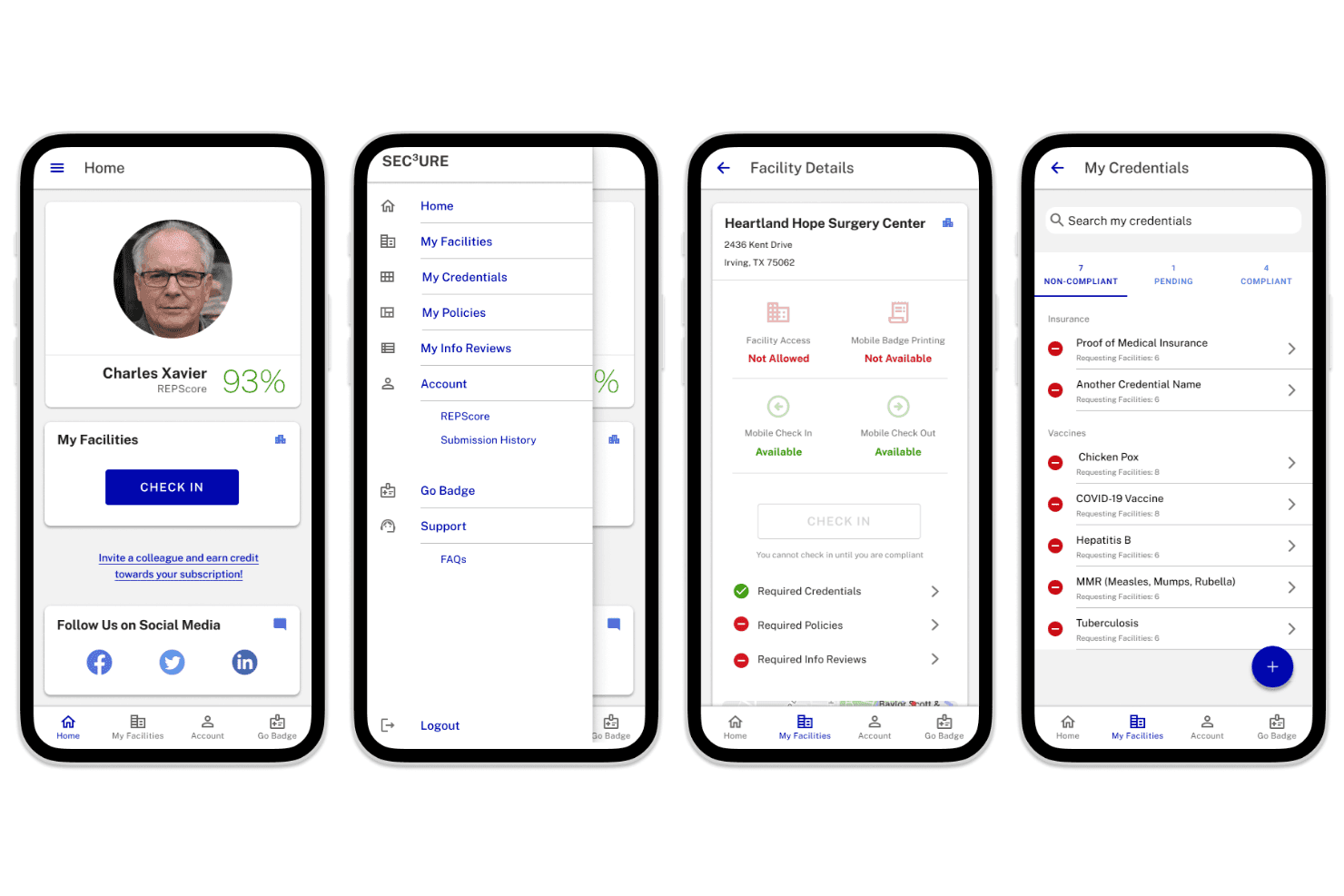
IntelliCentrics SEC³URE helps reps manage credentials and facility check-ins on mobile. IntelliCentrics is a vendor credentialing platform built for healthcare facilities, combining automated credential verification, digital check-in and access control, continuous sanction monitoring, and compliance tracking across medical and non-medical vendors.
Who Is IntelliCentrics Best For?
IntelliCentrics is a strong fit for credentialing coordinators and compliance staff at hospitals, health systems, and ambulatory surgical centers managing high vendor volumes across multiple sites.
Why I Picked IntelliCentrics
IntelliCentrics earns its spot on my shortlist because of how it handles continuous credentialing rather than one-time verification. The SEC³URE Passport monitors each vendor's credentials daily, automatically flagging expiring documents and new policy requirements. I also rely on the 30-day rolling sanction checks, which keep OIG compliance current without my team having to trigger manual reviews.
IntelliCentrics Key Features
- SEC³URE GO! digital badge: Lets vendors check in and display real-time compliance using a contactless, wearable badge.
- "Who's Onsite" dashboard: Shows a live view of all vendors currently checked in at your facility.
- Expirable management automation: Flags and manages documentation expiration dates for vendor records without manual tracking.
- Centralized policy updates: Pushes compliance policy changes directly to vendors through digital passports and mobile app notifications.
IntelliCentrics Integrations
Native integrations are not clearly documented. IntelliCentrics offers an API for custom integrations.
Pros and Cons
Pros:
- Credential verification happens at check-in, not after
- Large pre-registered vendor network reduces onboarding time
- Daily automated sanction monitoring across OIG and SAM
Cons:
- Reporting customization is limited for complex facilities
- Vendor-side fees create friction during rep onboarding
Learn more about IntelliCentrics:
Annen programvare for leverandørstyring i helsesektoren
Her er noen flere alternativer for programvare for leverandørstyring i helsesektoren som ikke kom med på kortlisten min, men som likevel er verdt å se nærmere på:
- 11Trio Workforce SolutionsBest for rapid vendor onboarding and support
- 12RingoBest for managing multi-facility vendor networks
- 13BlueSkyBest for scheduling integration with care teams
- 14ShiftWiseBest for integrating with GPO purchasing networks
- 15ShiftNex AIBest for AI-driven vendor activity insights
- 16KimedicsBest for credentialing medical staffing vendors
- 17VectorCareBest for facility-based vendor coordination
- 18FocusOne SolutionsBest for centralized workforce vendor oversight
- 19NTRACTSBest for contract audit and compliance review
- 20WorkWiseBest for automated compliance document tracking
How I Evaluate Healthcare Vendor Management Software
I evaluate each platform against baseline requirements—credentialing automation, BAA tracking—then look at differentiators like exclusion monitoring and EHR integrations that set the best apart.
Core Functionality (Table Stakes For This List)
When I'm selecting tools for my list, I rank each one on a scale from 0 (does not offer the functionality) to 5 (excels in this area) for each core functionality listed below. I then calculate the tool's total score into a percentage, using 65% as a benchmark to help assess its overall fit for the list.
- Vendor Credentialing: I look for automated collection and verification of licenses, insurance certificates, and OIG/SAM exclusion checks rather than basic document storage.
- HIPAA Compliance Tracking: Managing BAAs across dozens of vendors manually is a headache, so I evaluate how well each tool handles BAA workflows and compliance status monitoring.
- Contract Management: I check whether the platform centralizes contracts with automated renewal alerts and version control so nothing expires without notice.
- Vendor Access Control: For practices with vendor reps visiting clinical areas, I look at digital check-in, badging, and access permission features that replace paper visitor logs.
- Risk Assessment: Each tool should score vendors based on PHI access and compliance status, not just assign a static risk label that never updates.
- Spend & Performance Analytics: I evaluate whether the platform tracks vendor invoices and performance metrics in dashboards rather than requiring manual spreadsheet exports.
Once I have a list of tools that meet the criteria, I consider what sets each platform apart.
Differentiating Factors (What Sets Vendors Apart)
Here's how I compare and contrast different vendors:
Standout Features
Continuous exclusion and sanction monitoring is a major differentiator. Platforms that screen against OIG, SAM, and state exclusion lists on an ongoing basis catch risks that one-time onboarding checks miss. Vendor visitor check-in matters too—kiosk or mobile check-in with badge printing and training verification gives you real control over who enters clinical areas. I also evaluate spend analytics dashboards that break down costs by service line or department, which helps surface consolidation opportunities across contracts.
Beyond Features
Integration with clinical and financial systems is a big one. A platform that connects to your EHR and ERP means vendor data flows into existing workflows without manual re-entry. I also evaluate the size of each vendor's pre-registered community network—a large network means fewer reps need to credential from scratch when they first visit your facility. Healthcare-specific compliance coverage matters too, especially built-in support for Joint Commission, CMS, and Stark Law requirements beyond standard HIPAA tracking.
Slik velger du programvare for leverandørstyring i helsesektoren
Å velge riktig programvare for leverandørstyring i helsesektoren handler om å tilpasse viktige krav til samsvar, kvalifikasjonskontroll og arbeidsflyt til de høyest prioriterte behovene dine som klinikk- eller praksisadministrator:
| Hvis prioriteten din er … | Se etter … |
|---|---|
| Hvis prioriteten din er …Å følge opp kvalifikasjoner og lisenser | Se etter …Automatiserte varsler og sanntidskontroller av utestengelser/sanksjoner |
| Hvis prioriteten din er …Å håndheve tilgangskontroller for leverandørrepresentanter | Se etter …Besøkendeselvbetjeningskiosk, mobil innsjekking og utskrift av adgangskort |
| Hvis prioriteten din er …Å administrere BAA-er og regulatoriske standarder | Se etter …Innebygde arbeidsflyter for HIPAA, CMS og Joint Commission |
| Hvis prioriteten din er …Å koble til kliniske eller økonomiske systemer | Se etter …Integrasjoner med EHR eller ERP (ikke manuelle eksporter) |
| Hvis prioriteten din er …Å redusere friksjon ved introduksjon av nye leverandører | Se etter …Forhåndsregistrert representant-/leverandørfellesskap med selvbetjening |
Slik vurderer du kortlisten
- Kontroller påstandene om automatisert kvalifikasjonskontroll: Be om en eksempelrapport fra en OIG/SAM-kontroll av utestengelser som er kjørt i løpet av de siste 30 dagene.
- Test tilgangskontrollene i praksis: Avtal en direktedemonstrasjon av digital innsjekking og utskrift av adgangskort på det faktiske stedet ditt.
- Bekreft oppfølgingen av samsvar: Be om et arbeidsflytdokument eller en skjermopptaksgjennomgang av en avtale med en forretningsforbindelse som dekker trinnene for HIPAA-samsvar.
- Demonstrer integrasjonene: La IT-teamet ditt bekrefte en testtilkobling til EHR- eller ERP-systemet ved hjelp av anonymiserte data.
- Avveining du bør vurdere: Bestem deg mellom en plattform som utmerker seg med ferdig konfigurert kvalifikasjonskontroll for små legekontorer, og en som er bygget for skalerbarhet på flere lokasjoner eller i et sykehussystem.
Hva er programvare for leverandørstyring i helsesektoren?
Programvare for leverandørstyring i helsetjenesten er et system som hjelper klinikker og medisinske virksomheter med å organisere, kvalifisere og føre tilsyn med tredjepartsleverandører og tjenesteleverandører. Du bruker den til å automatisere oppgaver som verifisering av kvalifikasjoner, administrere Business Associate-avtaler (BAAs), kontrollere leverandørers tilgang til lokaler og følge opp kontraktsfornyelser for å sikre samsvar og redusere risiko. Denne programvaren samler opplysninger på ett sted, forbedrer oversikten og støtter tryggere drift av virksomheten ved å sikre at alle leverandører oppfyller helsespesifikke regulatoriske standarder.
Funksjoner i programvare for leverandørstyring i helsetjenesten
Når du velger programvare for leverandørstyring i helsetjenesten, bør du se etter følgende nøkkelfunksjoner:
- Leverandørgodkjenning: Sikrer at leverandørene har gyldige og oppdaterte lisenser, forsikringer og sertifiseringer ved å automatisere innsamling og verifisering av dokumenter samt påminnelser om fornyelse.
- Oppfølging av HIPAA-samsvar: Følger opp Business Associate-avtaler og verifiserer at leverandørene fortløpende overholder helsereguleringer, noe som støtter sikker håndtering av PHI.
- Kontraktsstyring: Lagrer leverandørkontrakter sentralt, tilbyr versjonskontroll og automatiserer varsler om utløp, slik at risikoen for opphold og manglende fornyelser reduseres.
- Tilgangskontroll for leverandører: Administrerer leverandørrepresentanters adgang til lokalene ved hjelp av digital innsjekking, adgangskort og tilgangstillatelser, og erstatter papirbaserte innskrivingslister for bedre sikkerhet.
- Verktøy for risikovurdering: Gir leverandører poeng basert på tilgangen deres til sensitive data, samsvarsstatus og risiko knyttet til forretningsforbindelser, slik at virksomheten kan håndtere eksponeringen mot tredjeparter.
- Dashbord for kostnadsanalyse: Gir rapporter om leverandørkostnader etter tjenesteområde, sted eller avdeling, og synliggjør kostnadsdrivere og muligheter for konsolidering.
- Overvåking av utestengelser og sanksjoner: Kontrollerer kontinuerlig leverandører mot sanksjonslister fra OIG, SAM, GSA og delstatene, og varsler deg når en risiko oppstår.
- Innsjekkingskiosk for besøkende: Tilbyr en kiosk på stedet eller en mobilapp som skriver ut adgangskort, verifiserer nødvendig opplæring og sporer leverandørrepresentanters plassering i kliniske områder.
- Ytelsesoppfølging: Samler inn og analyserer nøkkelindikatorer for leverandører, for eksempel levering til avtalt tid, kvalitet og tjenestenivåer, og støtter leverandørbeslutninger basert på dokumentasjon.
- Selvbetjent leverandørportal: Lar leverandører laste opp dokumentasjon, oppdatere forsikringer og følge med på statusen for godkjenningen, noe som reduserer den administrative arbeidsmengden for virksomheten din.
Vanlige AI-funksjoner i programvare for leverandørstyring i helsetjenesten
I tillegg til standardfunksjonene i programvare for leverandørstyring i helsetjenesten som er nevnt ovenfor, tar mange av disse løsningene i bruk AI med funksjoner som:
- Prediktiv risikoskåring: Bruker AI til å analysere leverandørdata og flagge mulige samsvars- eller kvalifiseringsrisikoer før de blir problemer, slik at du kan handle proaktivt.
- Automatisert dokumentklassifisering: AI skanner og kategoriserer opplastede leverandørdokumenter, henter ut viktige opplysninger og reduserer manuell registrering for team som arbeider med godkjenning.
- Avviksdeteksjon i kostnader: Identifiserer uvanlige utgiftsmønstre eller avvik i fakturaer på tvers av leverandører og varsler deg om mulig svindel eller faktureringsfeil.
- Smart kontraktsgjennomgang: AI gjennomgår kontraktstekst for samsvarshull, manglende klausuler eller fornyelsesrisikoer, og støtter raskere og mer nøyaktig kontraktsstyring.
- Spørring på naturlig språk: Lar brukere stille spørsmål om leverandørdata eller samsvarsstatus med naturlige formuleringer, mens AI umiddelbart finner frem relevante innsikter.
Fordeler med programvare for leverandørstyring i helsetjenesten
Implementering av programvare for leverandørstyring i helsetjenesten gir flere fordeler for teamet og virksomheten din. Her er noen av fordelene du kan se frem til:
- Forbedret samsvar: Sentralisert godkjenning og automatisert overvåking av OIG/SAM sørger for at virksomheten din overholder forskrifter som HIPAA og Joint Commission.
- Redusert administrativ belastning: Digital innsamling av dokumenter, automatiserte påminnelser og selvbetjente leverandørportaler reduserer behovet for manuell sporing og oppfølging.
- Bedre sikkerhet på anlegget: Digital innsjekking, sanntidsutskrift av adgangskort og verifisering av opplæring kontrollerer tilgangen for leverandører i sensitive kliniske områder.
- Lavere risikoeksponering: Automatisert risikopoengberegning og kontinuerlig sanksjonsovervåking avdekker problemer før de påvirker virksomheten eller pasientene dine.
- Økt kontraktsoversikt: Sentralisert lagring av kontrakter og automatiserte varsler om fornyelse hjelper deg med å unngå oversittede frister og utløpte avtaler.
- Optimaliserte leverandørkostnader: Analyseoversikter gir deg innsikt som kan brukes til å konsolidere leverandører, forhandle frem bedre vilkår og kontrollere kostnadene.
- Effektivisert leverandørregistrering: Tilgang til forhåndsregistrerte nettverk og intuitive selvbetjeningsverktøy hjelper nye leverandører med å bli godkjent og komme raskere i gang.
Kostnader og priser for programvare for leverandørstyring i helsesektoren
Ved valg av programvare for leverandørstyring i helsesektoren er det viktig å forstå de ulike prismodellene og abonnementene som er tilgjengelige. Kostnadene varierer basert på funksjoner, teamstørrelse, tillegg og mer. Tabellen nedenfor oppsummerer vanlige abonnementer, gjennomsnittsprisene deres og typiske funksjoner som er inkludert i løsninger for programvare for leverandørstyring i helsesektoren:
Sammenligningstabell for abonnementer for programvare for leverandørstyring i helsesektoren
| Abonnementstype | Gjennomsnittspris | Vanlige funksjoner |
|---|---|---|
| AbonnementstypeGratisabonnement | Gjennomsnittspris$0 | Vanlige funksjonerGrunnleggende dokumentlagring, begrenset sporing av godkjenninger og tilgang for én bruker. |
| AbonnementstypePersonlig abonnement | Gjennomsnittspris$25–$50 per bruker per måned | Vanlige funksjonerLisensverifisering, enkel kontraktslagring, brukerstøtte og varsler om eksklusjonslister. |
| AbonnementstypeBedriftsabonnement | Gjennomsnittspris$75–$150 per bruker per måned | Vanlige funksjonerAutomatisert godkjenning, besøksstyring, integrasjonsmuligheter, kostnadsanalyse og samsvarsverktøy. |
| AbonnementstypeAbonnement for større virksomheter | Gjennomsnittspris$200+ per bruker per måned | Vanlige funksjonerAvanserte integrasjoner, tilpassede arbeidsflyter, risikopoengberegning, dedikert oppstart og brukerstøtte på virksomhetsnivå. |
Vanlige spørsmål om programvare for leverandørstyring i helsesektoren
Her er noen svar på vanlige spørsmål om programvare for leverandørstyring i helsesektoren:
Hvordan støtter programvare for leverandørstyring i helsesektoren overholdelse av regelverk?
Programvare for leverandørstyring i helsesektoren automatiserer kontroller mot eksklusjonslister, sporer utløpsdatoer for kontrakter og lisenser og lagrer samsvarsdokumenter som BAA-er. Dette hjelper klinikken eller anlegget ditt med å dokumentere tilbørlig aktsomhet under revisjoner og reduserer risikoen for å samarbeide med leverandører som ikke oppfyller kravene.
Kan programvare for leverandørstyring i helsesektoren integreres med vårt EHR- eller innkjøpssystem?
Ja, de fleste løsninger tilbyr innebygde integrasjoner eller API-integrasjoner med vanlige EHR-, ERP- og innkjøpssystemer. Dette lar deg synkronisere godkjenninger, kontraktsdata og oppdateringer av leverandørtilgang mellom plattformene, noe som reduserer manuell dataregistrering og feil.
Hva skjer hvis en leverandørs godkjenninger utløper eller en sanksjon blir flagget?
Du får varsler i sanntid og kan angi automatiske tilgangsbegrensninger eller eskaleringer i arbeidsflyten. Dette sikrer at bare kvalifiserte leverandører som oppfyller kravene, får tilgang på stedet, og bidrar til å beskytte anlegget ditt.
Går leverandørregistreringen raskere med programvare for leverandørstyring i helsesektoren?
Ja, registreringen går mye raskere fordi forhåndsregistrerte nettverk, selvbetjeningsportaler og automatisert dokumentverifisering reduserer papirarbeid og administrative forsinkelser for både teamet ditt og nye leverandører.