

Plattformer for ansattfordeler i helsesektoren er spesialiserte verktøy som hjelper klinikker og helseforetak med å anerkjenne, belønne og støtte klinisk personale – uten å øke den administrative belastningen eller forstyrre arbeidsflyten under vakter.
Hvis du leter etter de beste plattformene for ansattfordeler i helsesektoren, vet du allerede hvordan arbeidsmoralen og det å beholde ansatte kan være avgjørende for om klinikken din vokser eller ikke.
Denne veiledningen sammenligner 10 ledende løsninger utviklet for helseteam, slik at du kan se hvilke plattformer som passer til unike arbeidsplaner, behov for anerkjennelse i den virkelige arbeidshverdagen og presset med å levere pasientbehandling av høy kvalitet samtidig som teamet holdes engasjert.
Why Trust Our Software Recommendations
6,700+
Reviews
20
Industry experts
16+
Evaluation factors
14
Years
Our team has been testing and reviewing software since 2012. As medical practice leaders ourselves, we know how difficult—and important—it is to choose the right software.
For this guide, we evaluated tools using hands-on testing and independent research, scoring tools using our selection criteria.
Our reviews reflect our human editorial judgment, not a sales pitch.
Sammenligningstabell for plattformer for ansattfordeler i helsesektoren
Denne sammenligningstabellen oppsummerer prisopplysningene for mine utvalgte plattformer for ansattfordeler i helsesektoren:
| Tool | Best For | Trial Info | Price | ||
|---|---|---|---|---|---|
| 1 | Best for recognizing shift-based clinical staff | Free demo available | Pricing upon request | Website | |
| 2 | Best for clinical staff recognition and retention | Free demo available | Pricing upon request | Website | |
| 3 | Best for ADP-connected perks and recognition | Free demo available | From $3/user/month | Website | |
| 4 | Best for recognition-led engagement in clinical teams | Free demo available | Pricing upon request | Website | |
| 5 | Best for health system recognition and retention ROI | Free demo available | Pricing upon request | Website | |
| 6 | Best for recognition tied to clinical milestones | Free demo available | Pricing upon request | Website | |
| 7 | Best for recognition-led retention in clinical teams | Free demo available | Pricing upon request | Website | |
| 8 | Best for all-in-one perks without point-solution sprawl | Free demo available | Pricing upon request | Website | |
| 9 | Best for NHS and public healthcare staff perks | Free demo available | Pricing upon request | Website | |
| 10 | Best for large-scale clinical staff recognition | Free demo available | Pricing upon request | Website |


Anmeldelser av plattformer for ansattfordeler i helsesektoren
Nedenfor finner du mine detaljerte sammendrag av de beste plattformene for ansattfordeler i helsesektoren som kom med på kortlisten min. Anmeldelsene mine gir en detaljert gjennomgang av funksjonene, integrasjonene og de beste bruksområdene for hver plattform, slik at du kan finne den beste løsningen for deg.
 Best for recognizing shift-based clinical staff
- Free demo available
- Pricing upon request
Visit WebsiteCustomer Rating:4.7/5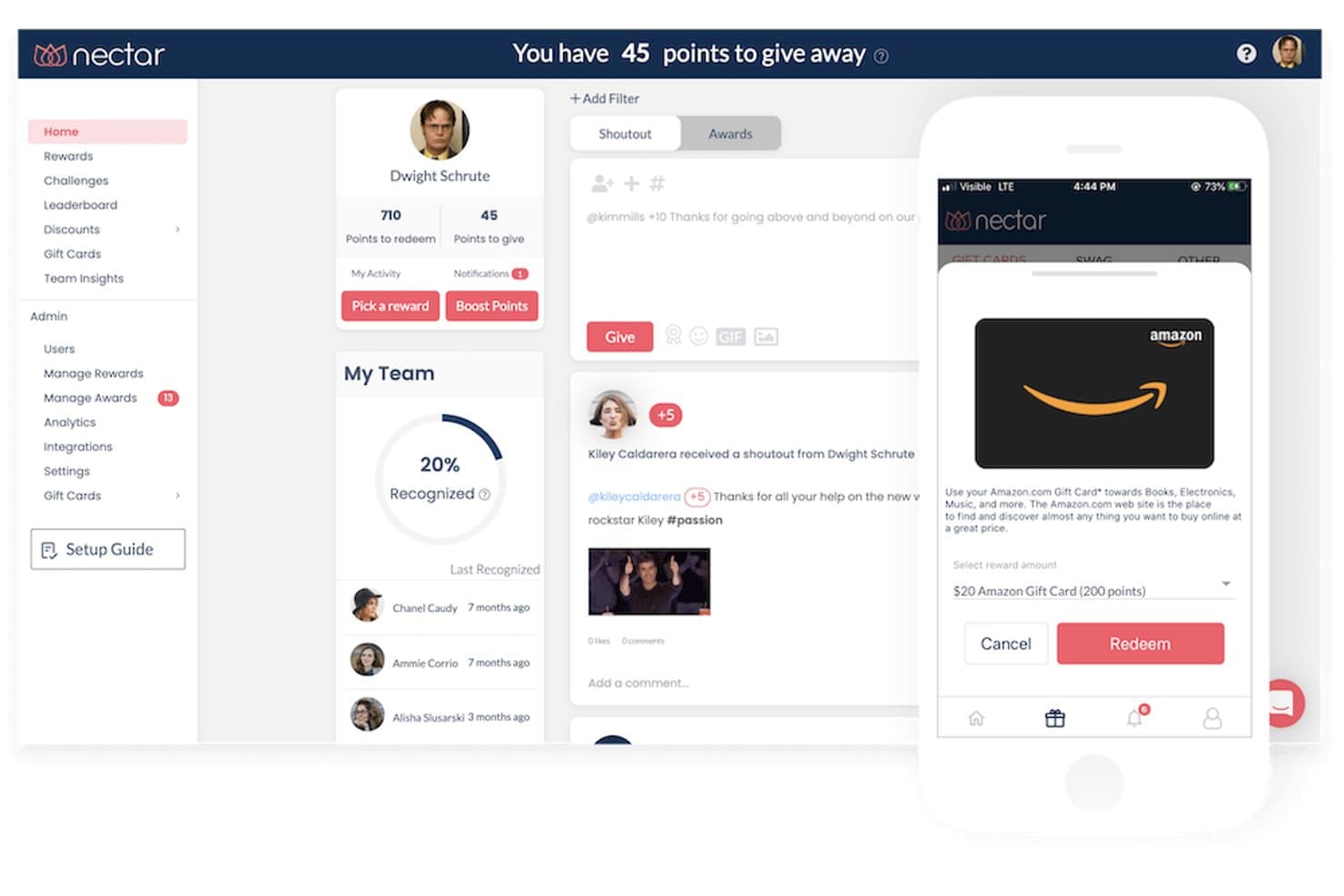
Nectar lets healthcare teams recognize peers and redeem gift card rewards. Nectar is an employee recognition and engagement platform built for healthcare organizations, offering peer-to-peer recognition, a points-based rewards catalog, automated milestone celebrations, pulse surveys, and frontline-accessible tools like SMS, kiosk mode, and a mobile app.
Who Is Nectar Best For?
Nectar is a strong fit for healthcare HR teams managing large populations of shift-based clinical staff who need recognition tools that reach workers without desk access.
Why I Picked Nectar
I picked Nectar as one of the best because it's the only platform here with a dedicated Healthcare Bundle built specifically for shift-based clinical teams. Features like kiosk mode and SMS recognition mean a floor nurse finishing a 12-hour shift can receive a peer shoutout without ever touching a desktop. I also love the Community Recognition feed, which lets patients and families recognize clinical staff directly, something you won't find on most recognition platforms.
Nectar Key Features
- Nectar Signals: Monitors behavioral engagement patterns across the platform to generate real-time health scores for individuals, teams, and departments, flagging early disengagement risk.
- Nomination programs: Configurable nomination workflows let HR teams design custom award categories, manage review and selection, and announce winners to the broader organization.
- Pulse surveys with AI sentiment analysis: ClaraAI scans open-ended survey responses to identify recurring themes and surface burnout or morale patterns across clinical teams.
- SafeTalk anonymous feedback: A two-way anonymous channel where employees can raise concerns confidentially and HR can follow up without revealing identities.
Nectar Integrations
Nectar offers native integrations with common HRIS and collaboration tools, including ADP, BambooHR, Workday, Paycor, Paylocity, Rippling, UKG, Microsoft Teams, Slack, and Okta, plus SSO support via Azure AD, Ping Identity, and SAML. An open API is available at the Premium tier for custom integrations, though native connectors to clinical scheduling systems like QGenda or Symplr aren't documented.
Pros and Cons
Pros:
- Burnout risk flagged with real-time health scores
- Kiosk mode supports shift and deskless staff
- Recognition feed allows patient and family shoutouts
Cons:
- Lacks HIPAA compliance and Business Associate Agreement
- No healthcare-specific perks or discount partners
Learn more about Nectar: Best for clinical staff recognition and retention
- Free demo available
- Pricing upon request
Visit WebsiteCustomer Rating:4.8/5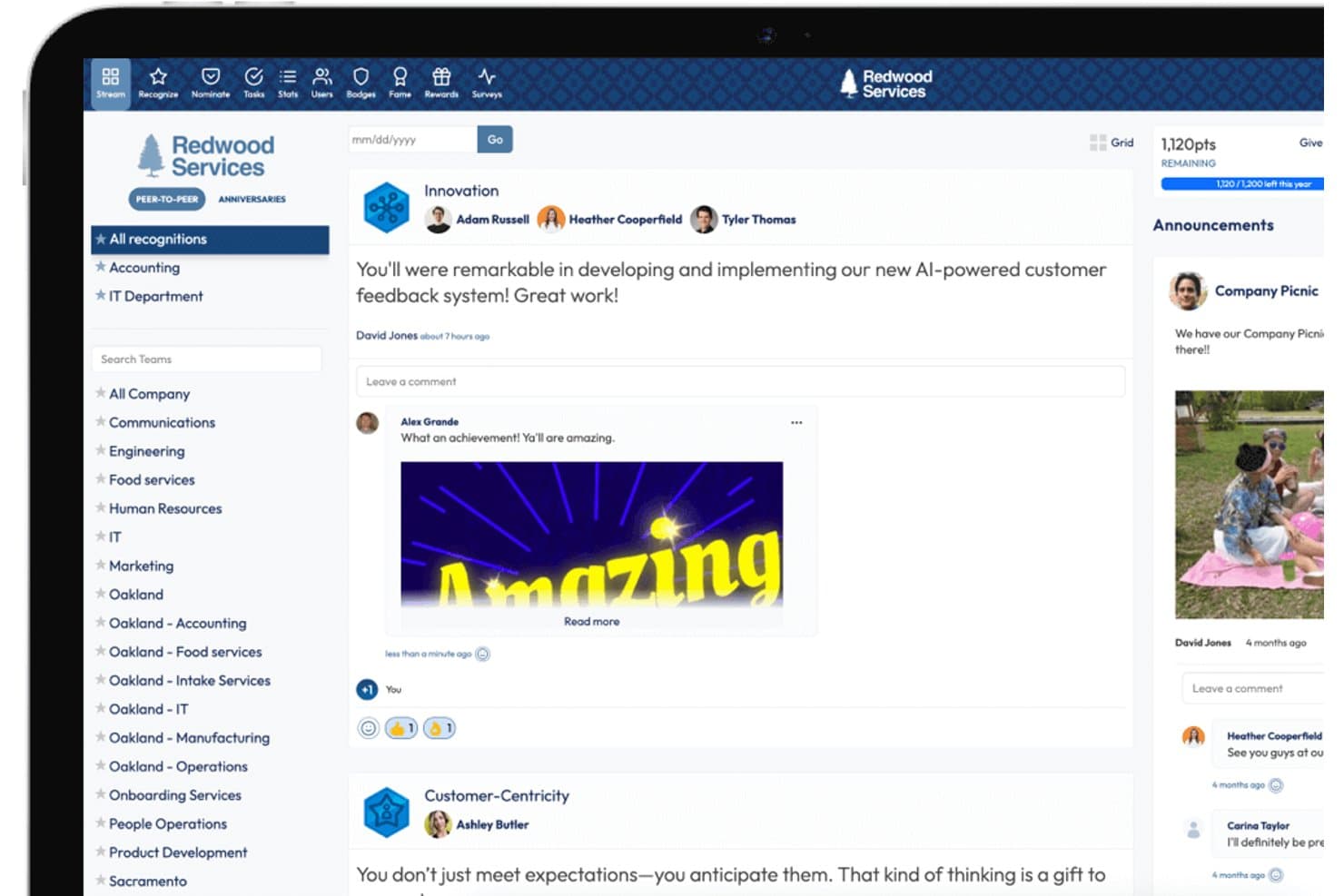
Recognize lets healthcare teams celebrate peer achievements with badges and points. Recognize is an employee recognition and rewards platform built for healthcare settings, combining peer-to-peer recognition, clinical role-specific badges, a 50,000+ reward catalog, pulse surveys, and frontline worker accessibility tools like SMS login and TV Kiosk Mode.
Who Is Recognize Best For?
Recognize is a strong fit for small-to-mid-sized medical practices and clinics that want to build a culture of recognition among shift-based clinical staff without a large HR budget.
Why I Picked Recognize
Recognize earns its spot on my shortlist because of how seriously it treats clinical staff recognition as its own discipline. I love that it ships with preconfigured healthcare badges like HIPAA Hero, Infection Protection, and Care Transition, so your team isn't starting from scratch trying to translate generic recognition into clinical values. The Frontline Worker package is what really sets it apart: telephone-based login and TV Kiosk Mode mean nurses and techs on a 12-hour shift can receive recognition without ever touching a corporate email account.
Recognize Key Features
- Automated service milestone recognition: Recognize automatically triggers work anniversary and tenure milestone recognition with configurable reward types and per-role budgets.
- Employee nominations: Staff and managers can nominate colleagues for employee of the month, quarter, or year awards through a structured voting workflow.
- Pulse and eNPS surveys: Built-in survey tools let you run wellness, happiness, and engagement surveys natively inside Microsoft Teams, Outlook, and SharePoint.
- 50,000+ reward catalog with zero markup: Staff can redeem points for gift cards, Amazon products, travel, experiences, and swag across 180+ countries at up to 30% off retail prices.
Recognize Integrations
Recognize offers native integrations with Workday, ADP, Paylocity, Slack, and across the Microsoft ecosystem, including Microsoft Teams, Outlook, SharePoint, and Viva Engage, plus SSO through Okta, Azure AD, and ADFS. It connects with Zapier and provides a REST API, webhooks, SCIM, and sFTP for custom integrations, though no native integrations with clinical scheduling systems like Kronos, UKG Dimensions, or QGenda are documented.
Pros and Cons
Pros:
- Service milestone recognition with role-based options
- TV Kiosk and SMS support for frontline staff
- Preconfigured clinical recognition badges for healthcare teams
Cons:
- Does not offer a HIPAA compliance option
- No healthcare-specific perks like scrubs or CME
Learn more about Recognize: Best for ADP-connected perks and recognition
- Free demo available
- From $3/user/month
Visit WebsiteCustomer Rating:4.7/5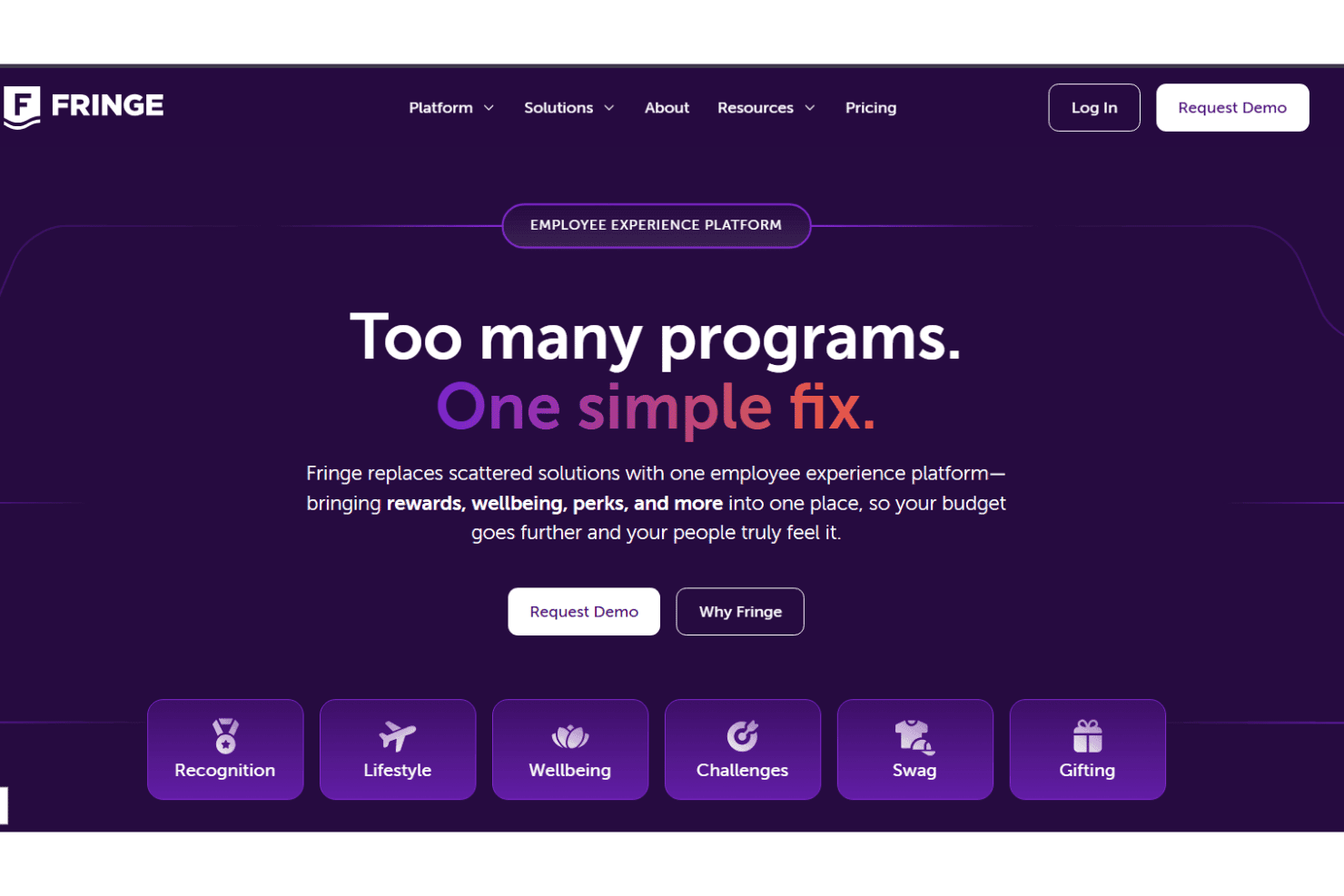
Fringe supports healthcare staff wellness with lifestyle benefits, perks, and rewards. Fringe is an employee perks platform that consolidates rewards, recognition, lifestyle benefits, wellness, and gifting into a single points-based system with native HRIS and payroll integrations.
Who Is Fringe Best For?
Fringe is a strong fit for mid-sized medical practices and physician groups that already run ADP Workforce Now and want to consolidate recognition, lifestyle benefits, and wellness into one platform.
Why I Picked Fringe
I've included Fringe in my top picks because it's ADP's official recognition partner, which means if your practice already runs ADP Workforce Now, you get peer-to-peer recognition, automated milestone celebrations, and a social recognition feed embedded directly inside ADP at no extra platform cost. I also like that the points-based lifestyle marketplace lets staff choose their own rewards across wellness, travel, childcare, and fitness, covering a diverse healthcare workforce without a one-size-fits-all approach.
Fringe Key Features
- Points-based lifestyle marketplace: Employees spend points directly across 140+ brands spanning wellness, travel, childcare, dining, and fitness without submitting receipts or reimbursement requests.
- Automated milestone recognition: The platform triggers birthday, work anniversary, and new hire celebrations automatically, with no manual setup required per employee.
- Wellness challenges with leaderboards: Configurable step, hydration, sleep, and mindfulness campaigns reward participation with points and display progress on team leaderboards.
- Real-time engagement dashboards: Admins view utilization rates, redemption trends, and feature adoption across all programs in a single reporting dataset.
Fringe Integrations
Fringe offers 20+ native HRIS and payroll integrations, including ADP Workforce Now (with recognition embedded directly inside ADP), Gusto, Alight, Okta, Slack, Microsoft Teams, Gmail, Outlook, Fitbit, and Apple Watch. Zapier support is not clearly documented, and a form to request additional integrations is available on the platform.
Pros and Cons
Pros:
- Wellness suite covers therapy, coaching, fitness, and more
- Employees choose rewards from a diverse marketplace
- Recognition is directly embedded in ADP Workforce Now
Cons:
- No documented HIPAA or SOC 2 compliance
- No healthcare-specific perks or clinical tools
Learn more about Fringe: Best for recognition-led engagement in clinical teams
- Free demo available
- Pricing upon request
Visit WebsiteCustomer Rating:4.9/5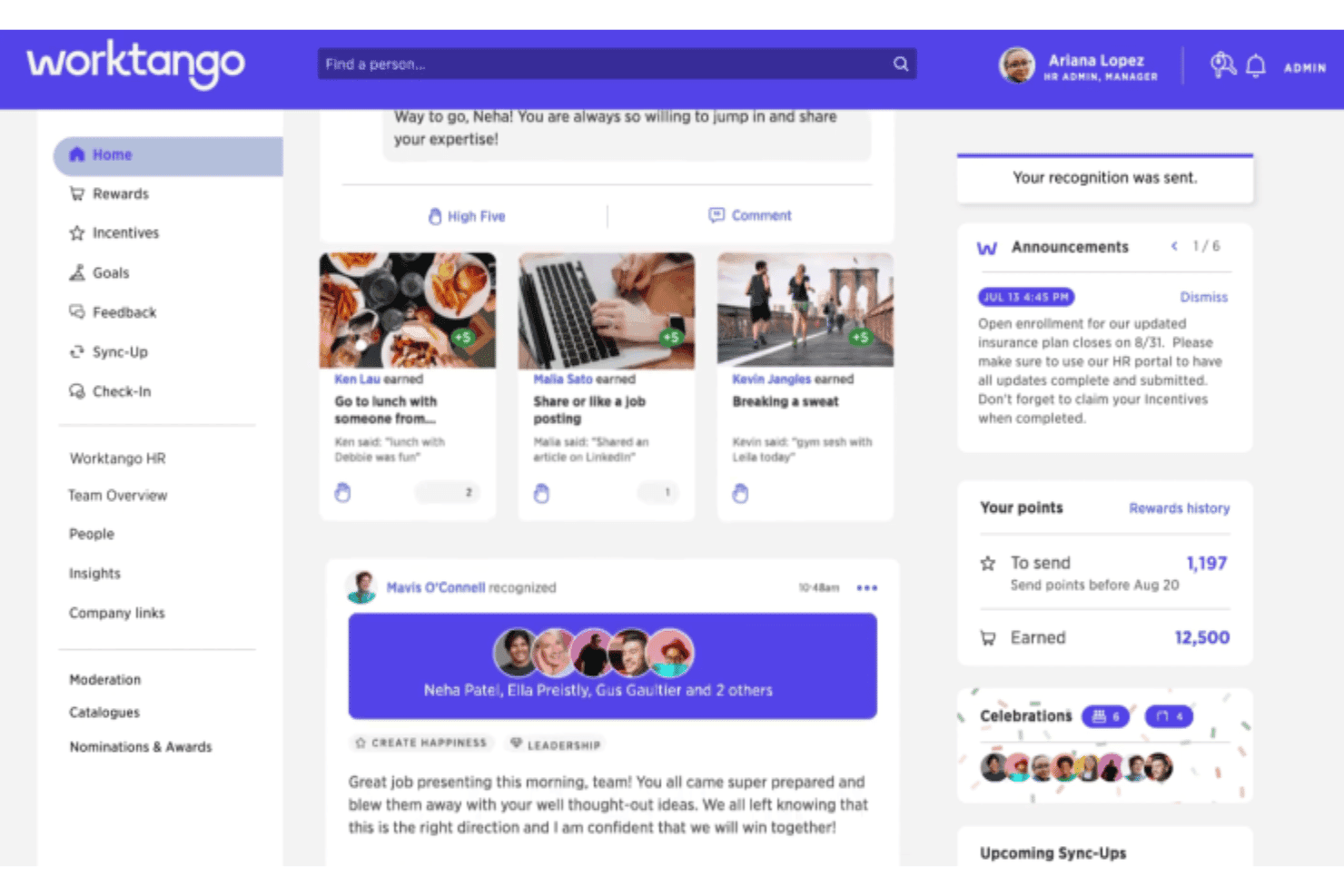
WorkTango rewards healthcare staff with peer recognition and wellness incentives. WorkTango is an employee recognition and rewards platform that combines peer-to-peer recognition, automated milestone awards, a global perks marketplace, wellness incentives, and engagement surveys in one system.
Who Is WorkTango Best For?
WorkTango is a strong fit for mid-to-large health systems and eldercare organizations whose HR teams want to anchor a staff retention strategy in peer-to-peer recognition and engagement surveys.
Why I Picked WorkTango
WorkTango earns its spot on my shortlist because its peer-to-peer recognition engine is genuinely built for the rhythm of clinical work. I love that staff can send recognition from a personal phone without a work email, and that those moments surface on break room TV displays, so shift workers who never sit at a desk still feel seen. Automated service milestone awards mean a nurse's fifth anniversary gets celebrated without HR having to remember it.
WorkTango Key Features
- Incentives module: Choose from 50+ pre-configured templates to reward specific staff behaviors, like survey completion or wellness participation, with built-in budget controls and claim caps.
- Wellness Index surveys: Run targeted surveys to measure wellness gaps across departments and track trends over time, with anonymous conversation options for staff to raise concerns confidentially.
- Global rewards marketplace: Give staff access to 10M+ reward options across 85 countries at zero markup, so your recognition budget goes entirely to the reward itself.
- Engagement analytics dashboards: Segment recognition and survey data by department, location, or team to spot struggling units early before disengagement or turnover escalates.
WorkTango Integrations
WorkTango offers 60+ native HRIS and HCM integrations, including Workday, UKG Pro, ADP Workforce Now, Ceridian Dayforce, Paychex, Paylocity, SAP SuccessFactors, BambooHR, Apple Health, and Google Fit, plus native connections across the Microsoft ecosystem, including Microsoft Teams and Microsoft Outlook, and Slack. SSO is supported via SAML 2.0 with Okta, Azure Active Directory, and Google Workspace, and an API is available for custom integrations.
Pros and Cons
Pros:
- TV display support for break-room recognition
- Automated milestone awards for nurse anniversaries
- Recognition works without email for clinical staff
Cons:
- No clinical scheduling or wellness platform integration
- No healthcare-specific perks or reward partners
Learn more about WorkTango: Best for health system recognition and retention ROI
- Free demo available
- Pricing upon request
Visit WebsiteCustomer Rating:4.8/5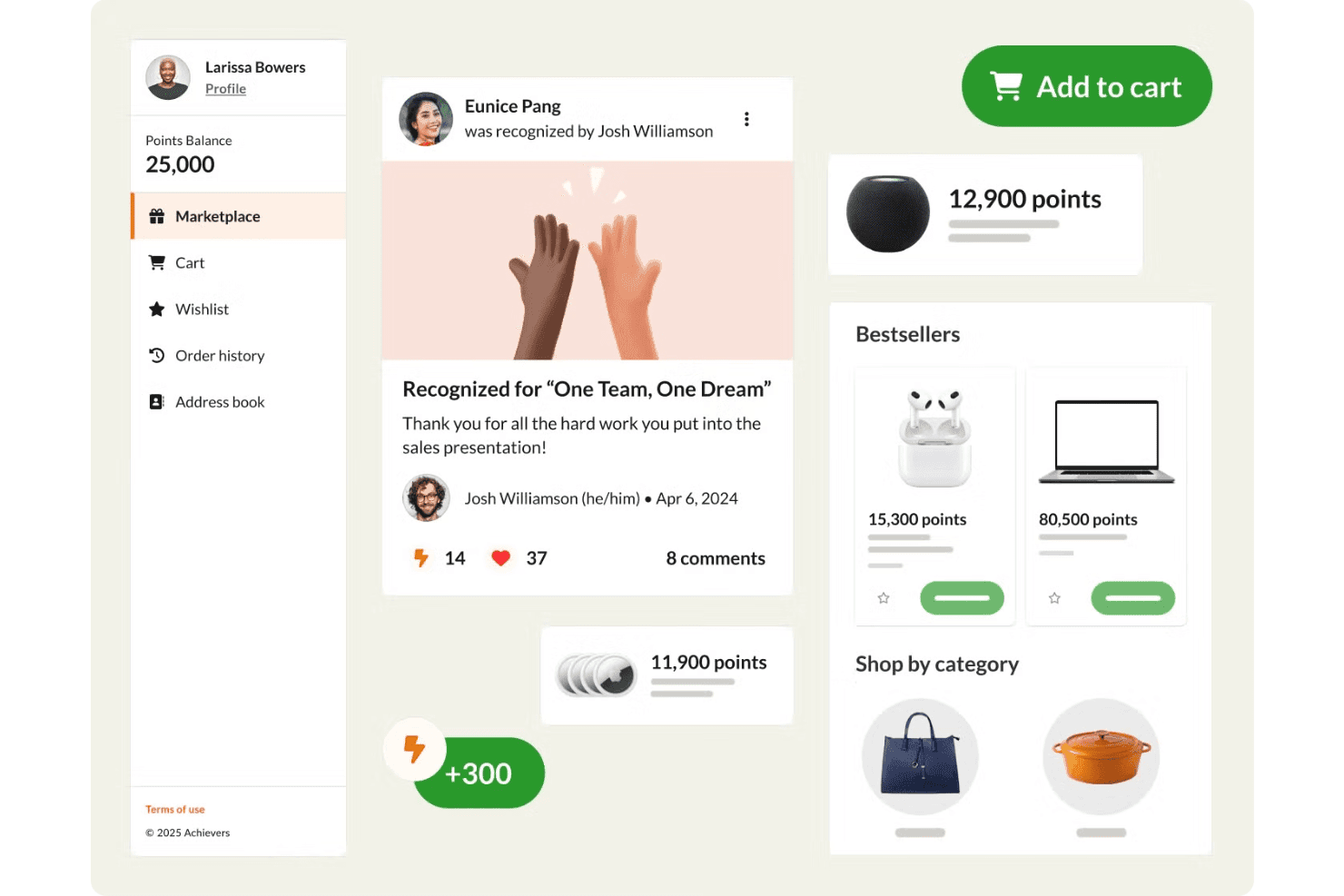
Achievers helps health systems recognize frontline clinicians through patient feedback, peer praise, and milestone rewards. Achievers is an employee recognition and rewards platform built for large health systems, combining peer-to-peer recognition, a global rewards marketplace, milestone automation, and patient-sourced recognition for frontline clinical staff.
Who Is Achievers Best For?
Achievers is a strong fit for large health systems and hospital networks with 1,000+ employees that need a structured, data-backed recognition program tied to measurable retention outcomes.
Why I Picked Achievers
I picked Achievers as one of the best because it's the only platform on this list with documented, health-system-scale retention ROI: Bon Secours Mercy Health reported $41.8M in annual savings, and Christus Health saw a 250% ROI with a measurable drop in turnover. I love that its patient-sourced recognition feature, powered by a Cipher Health integration, lets patients submit recognition directly for bedside nurses and clinical staff, which mirrors programs like the DAISY Award in practice. The Zebra Technologies integration also stands out, giving shift-based clinical workers access to recognition on rugged handheld devices without needing a desk or laptop.
Achievers Key Features
- Global rewards marketplace: Employees redeem recognition points from a catalog of 3M+ merchandise items, 345,000+ experiences, and 11,000+ gift cards across 190 countries.
- AI-powered inclusive language checker: Reviews recognition messages in real time to flag non-inclusive language before submission, supporting equity across large, distributed clinical teams.
- Voice of Employee pulse surveys: Built-in weekly check-ins and pulse surveys let HR and operations leaders track staff sentiment and surface frontline concerns in near real time.
- Service milestone automation: Automatically triggers anniversary, birthday, and onboarding milestone recognitions with configurable reward tokens, points, and custom digital cards.
Achievers Integrations
Achievers offers native integrations with Workday (Gold Tier), UKG Pro, ADP, SAP SuccessFactors, Ceridian Dayforce, Oracle, Slack, Zoom, Zebra Technologies, and Cipher Health for patient-sourced recognition, plus native connections across the Microsoft ecosystem (Teams, SharePoint, Outlook, Viva) and Google ecosystem (Chat, Gmail, Meet). An open API is available for custom integrations.
Pros and Cons
Pros:
- Mobile and Zebra device access for shift workers
- Documented retention ROI in health systems
- Patient-sourced recognition for clinical staff
Cons:
- No explicit HIPAA BAA advertised
- No healthcare-specific perks marketplace
Learn more about Achievers: Best for recognition tied to clinical milestones
- Free demo available
- Pricing upon request
Visit WebsiteCustomer Rating:4.7/5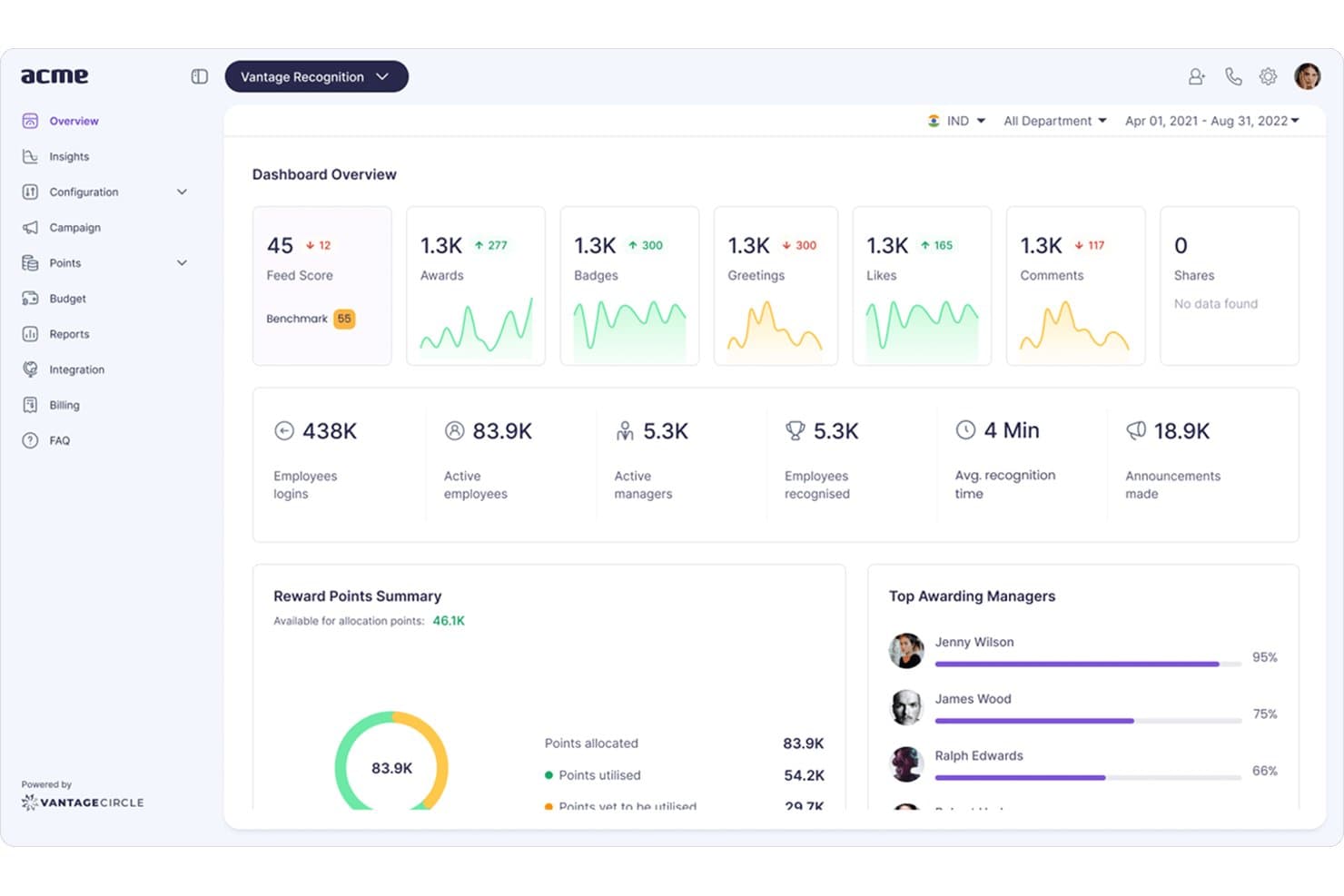
Vantage Circle tracks recognition, rewards, and engagement metrics in one dashboard. Vantage Circle is an employee recognition, perks, wellness, and engagement platform that combines peer-to-peer rewards, a corporate discounts marketplace, wellness challenges, and pulse survey tools in a single modular suite.
Who Is Vantage Circle Best For?
Vantage Circle is a strong fit for mid-to-large health systems that want to tie employee recognition directly to clinical performance milestones across multi-site, shift-based teams.
Why I Picked Vantage Circle
I picked Vantage Circle as one of the best because it directly ties recognition to clinical milestones, like zero-deviation streaks and protocol adherence, in a way most perks platforms don't. I love that phygital recognition cards let bedside nurses and MAs participate without a corporate device or email. The AI-powered Vantage Pulse also flags burnout risk before it escalates, which matters in high-pressure shift-based care environments.
Vantage Circle Key Features
- Vantage Perks marketplace: Access 1,000+ brand deals across retail, travel, wellness, and lifestyle categories, with a built-in cashback system that converts purchases into redeemable points.
- Automated milestone recognition: Sync with your HRIS to trigger recognition for work anniversaries, birthdays, and service milestones without manual input from managers.
- Vantage Pulse surveys: Run pulse surveys with AI-powered sentiment analysis that flags recurring disengagement themes and predicts attrition risk across departments and shift groups.
- Microsoft Teams and Slack integration: Embed the full recognition feed, rewards wallet, and catalog directly inside Teams or Slack so staff can give and receive recognition without leaving their existing tools.
Vantage Circle Integrations
Vantage Circle offers 20+ native HRIS and SSO integrations, including Workday, UKG, SAP SuccessFactors, Oracle HCM, ADP, BambooHR, Rippling, Paylocity, Microsoft Teams, and Slack, plus native connections across the Microsoft ecosystem, including Microsoft 365 Copilot and Azure AD. WhatsApp alerts are supported for recognition notifications, though there are no documented native integrations with clinical scheduling platforms like QGenda or ShiftKey.
Pros and Cons
Pros:
- AI predicts burnout and attrition risks
- Phygital cards support non-desk clinical workers
- Ties recognition to clinical performance milestones
Cons:
- No native EAP or earned wage access
- No healthcare-specific perks or scrubs discounts
Learn more about Vantage Circle: Best for recognition-led retention in clinical teams
- Free demo available
- Pricing upon request
Visit WebsiteCustomer Rating:4.6/5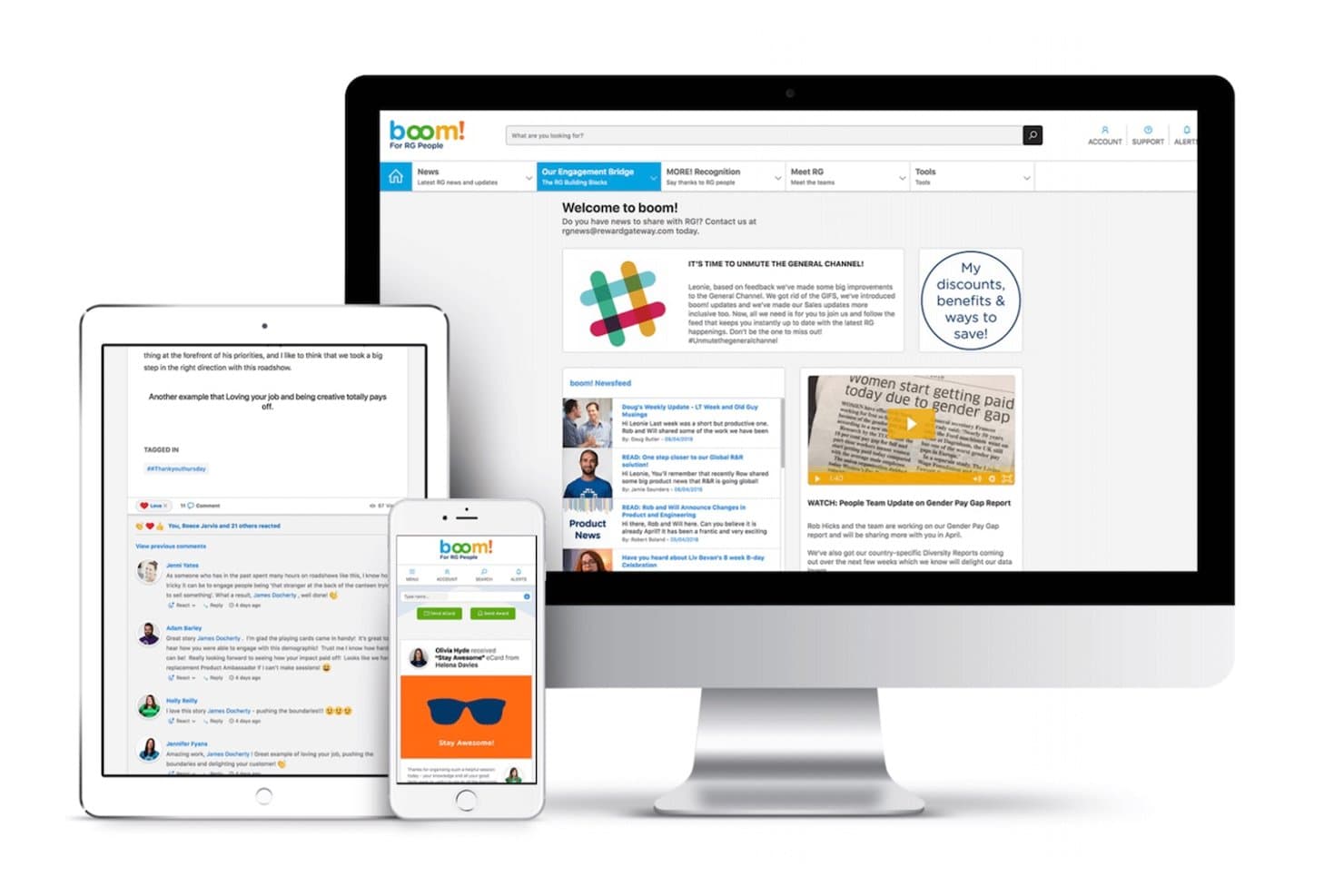
Reward Gateway centralizes perks, recognition, and news in one platform. Reward Gateway is an employee engagement platform built around recognition, perks discounts, wellbeing, and internal communications—with a dedicated healthcare vertical and tools like SmartHub, SmartSpending™, and Wellbeing+ designed for distributed clinical and administrative teams.
Who Is Reward Gateway Best For?
Reward Gateway is a strong fit for mid-size to large health systems and multi-site clinical organizations where HR teams need a structured recognition program to anchor staff retention.
Why I Picked Reward Gateway
Reward Gateway earns its spot on my shortlist because of how well its recognition suite maps to the retention problem in clinical environments. I love that peer-to-peer recognition, manager Boost awards, and automated service milestones can all be configured by role and department, so a 27-location health system can run the same program across every site without losing specificity. The Shannon Medical Center case study, where the platform generated nearly 19,700 recognition moments in six months, shows this isn't theoretical.
Reward Gateway Key Features
- SmartSpending™ app: A dedicated mobile app for browsing and redeeming employee discounts across hundreds of national retailers, including grocery, dining, and travel categories.
- Wellbeing+ app: A corporate wellness app with activity challenges, meditation content, nutrition resources, and wearable device integration for tracking personal fitness goals.
- Engaged Index™ survey tool: A validated four-question engagement benchmark that measures workforce sentiment and compares results across Reward Gateway's global client base.
- Audience-segmented communications: An internal content and blogging tool that lets HR teams publish and schedule posts by role, location, or department to reach frontline and administrative staff separately.
Reward Gateway Integrations
Reward Gateway offers 30+ native integrations, including Workday, ADP Workforce Now, UKG, Paychex, Paylocity, BambooHR, Rippling, Microsoft Teams, Slack, and Okta, with an Open API available for custom integrations.
Pros and Cons
Pros:
- Wellbeing app includes activity and mental health tools
- Automated service milestones for healthcare roles
- Structured recognition for multi-site clinical teams
Cons:
- No documented HIPAA or BAA compliance
- No healthcare-specific discounts or rewards
Learn more about Reward Gateway: Best for all-in-one perks without point-solution sprawl
- Free demo available
- Pricing upon request
Visit WebsiteCustomer Rating:4.6/5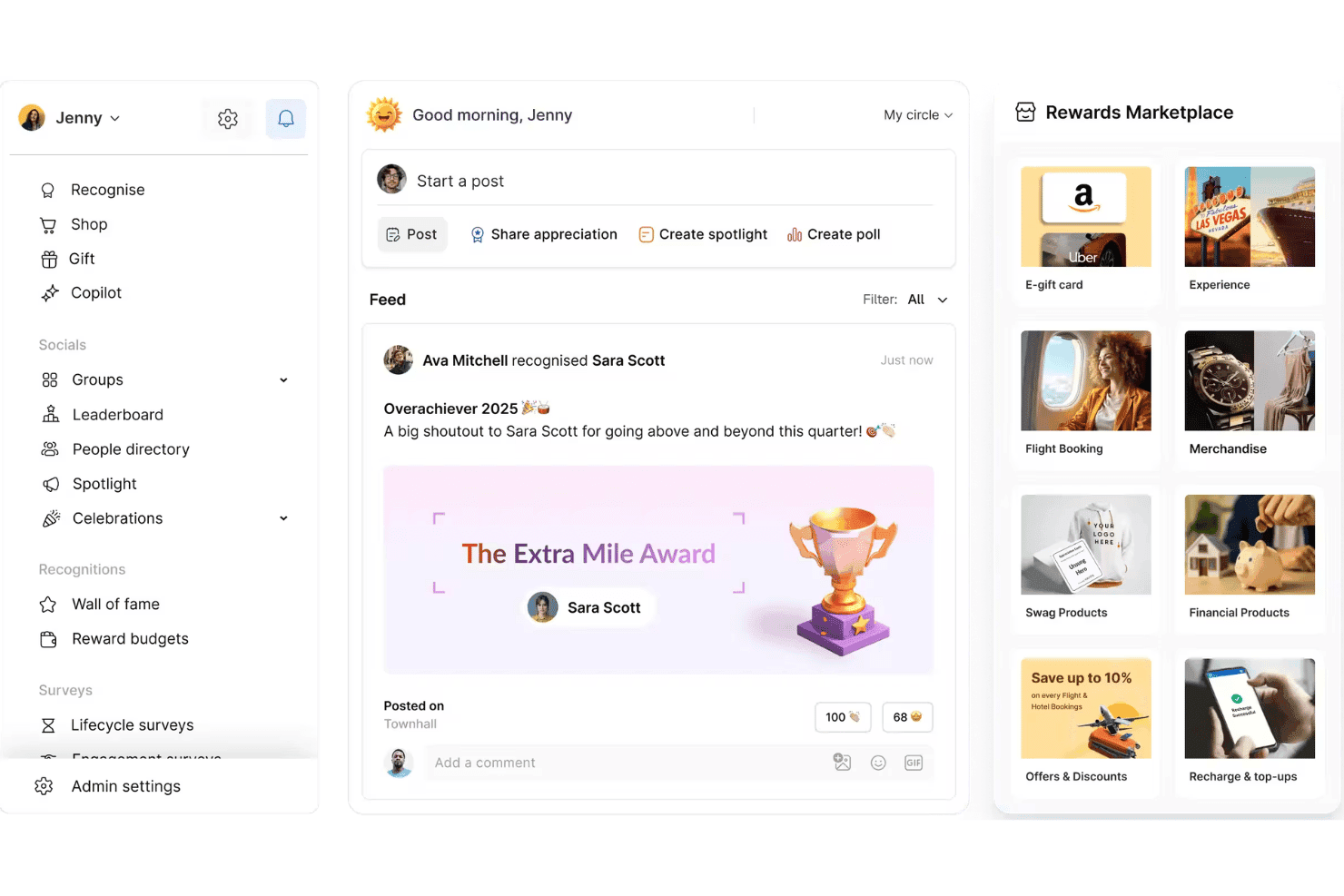
Empuls fosters healthcare staff wellness with rewards, discounts, and surveys. Empuls is an employee perks and engagement platform that combines a rewards and discounts marketplace, peer-to-peer recognition, wellness benefits, pulse surveys, and a social intranet into a single system.
Who Is Empuls Best For?
Empuls is a good fit for HR teams at small-to-midsize healthcare organizations that want recognition, perks, wellness, and engagement surveys in one platform instead of managing several separate tools.
Why I Picked Empuls
Empuls earns its spot on my shortlist because it replaces the usual tangle of separate recognition, perks, wellness, and survey tools with a single platform. I particularly like the OTP-based mobile login, which lets shift-based clinical staff access recognition and rewards without a corporate email or desktop, and the QR-code instant recognition feature that lets supervisors acknowledge a great patient interaction on the spot. The AI-powered flight-risk signals are a genuine differentiator, surfacing burnout patterns before they become turnover.
Empuls Key Features
- Peer-to-peer and manager recognition feed: A social recognition wall where staff can post, react to, and comment on colleague appreciations using 150+ core value badges or custom badges.
- AI-powered flight-risk signals: Empuls Copilot analyzes engagement and survey data to flag employees showing early burnout or disengagement patterns before they escalate.
- Lifecycle survey suite: Configurable pulse surveys, eNPS tracking, onboarding/offboarding surveys, and 360° feedback tools that run automatically based on employee milestones.
- Multi-channel reward delivery: Employees receive recognition and reward notifications via push, SMS, or WhatsApp—no corporate email address required.
Empuls Integrations
Empuls offers 50+ native integrations, including BambooHR, Workday, SAP SuccessFactors, ADP, UKG, HiBob, Microsoft Teams, Slack, Google Workspace, and Zoom, with SAML/SCIM SSO support (Okta, Azure AD) and a full REST API available for custom integrations. Healthcare-specific scheduling connectors (QGenda, Symplr, ShiftKey, Kronos/UKG Dimensions scheduling) are not documented.
Pros and Cons
Pros:
- Built-in AI burnout and flight-risk analytics
- Wide global rewards marketplace breadth
- Mobile-first OTP login for shift clinicians
Cons:
- Wellness partners focus on India, not U.S.
- No healthcare-specific perks like scrubs or CME
Learn more about Empuls: Best for NHS and public healthcare staff perks
- Free demo available
- Pricing upon request
Visit WebsiteCustomer Rating:4.5/5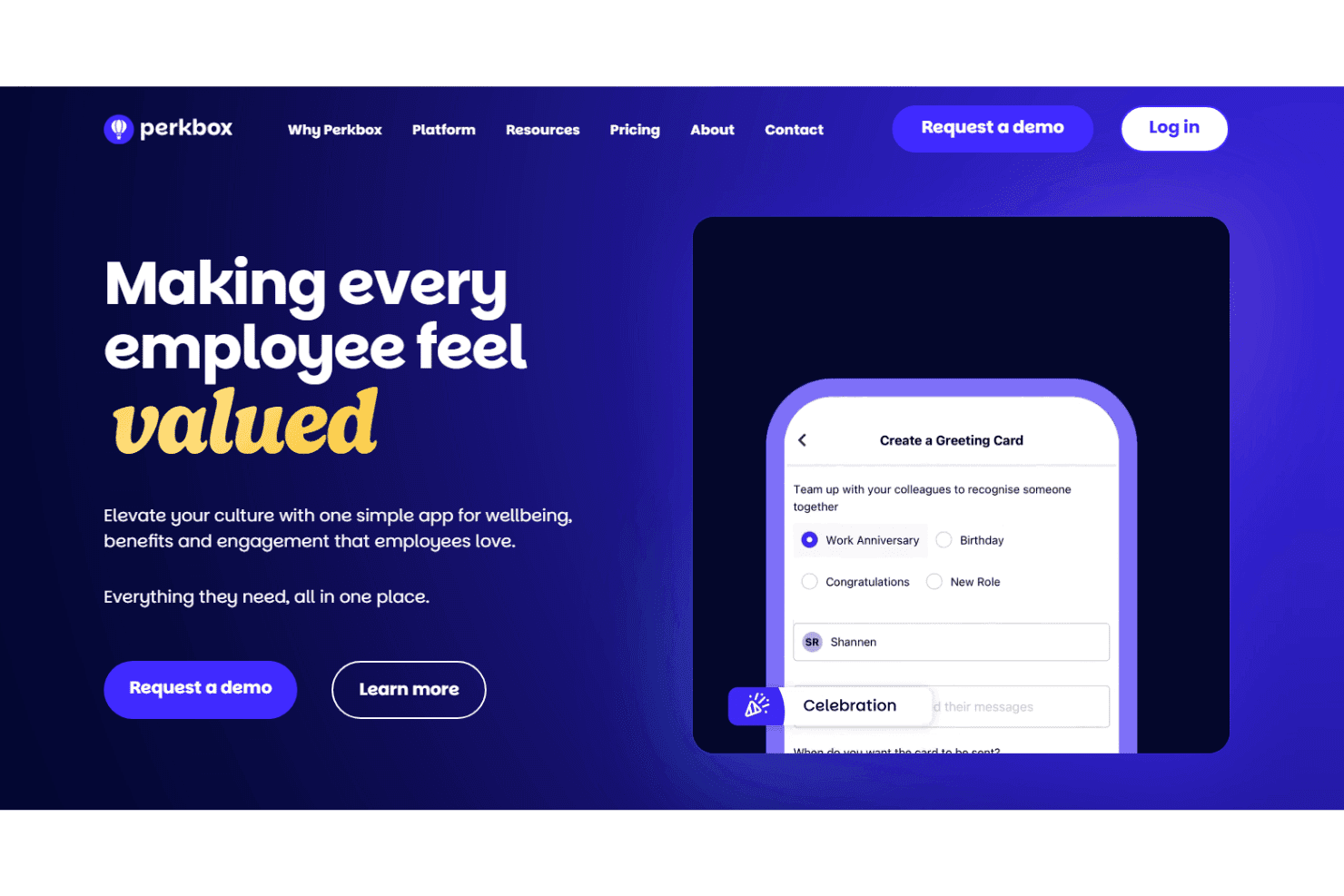
Perkbox backs healthcare staff wellness with EAP, GP access, perks, and rewards. Perkbox is an employee perks platform that combines a discounts marketplace, peer-to-peer recognition, rewards, and wellbeing tools—including an EAP and online GP access—in a single app built for deskless and shift-based workforces.
Who Is Perkbox Best For?
Perkbox is a strong fit for HR managers at NHS trusts and UK public healthcare organizations looking to consolidate perks, recognition, and wellbeing into a single platform for frontline and shift-based staff.
Why I Picked Perkbox
Perkbox earns its spot on my shortlist because it's trusted by over 80% of NHS organizations, making it the go-to perks platform for UK public healthcare staff. I'm particularly impressed by the QR code and kiosk access points that let frontline clinical and facilities staff tap into discounts without ever needing a desktop. The Oxford University Hospitals rollout is a real-world proof point I keep coming back to: 15,000+ employees, £173,000 in employer NI savings, and a 100% increase in staff accessing cost-saving benefits.
Perkbox Key Features
- Peer-to-peer recognition feed: Employees and managers send value-tagged recognitions visible across the entire organization, with scheduled and milestone-based recognition options built in.
- Employee Assistance Programme (EAP): A fully accredited, 24/7 confidential counselling service with licensed counsellors, reporting an 87% user improvement rate.
- Salary sacrifice schemes: Cycle to Work, Home and Electronics, and Car Benefit schemes are available as add-ons, letting employees access tax-efficient purchasing directly through the platform.
- Admin analytics portal: Drill-down usage reporting by team, department, and site, with industry benchmarking and real-time rewards spend tracking.
Perkbox Integrations
Perkbox offers 30+ native integrations, including Workday, BambooHR, HiBob, Lattice, Sage, Breathe HR, Okta, Google Workspace, and Microsoft Azure AD, though only one HRIS connection can be active at a time and no clinical scheduling systems (QGenda, UKG, Symplr) are supported.
Pros and Cons
Pros:
- QR code and kiosk access for frontline staff
- Unified app for perks, wellbeing, recognition
- Broad NHS/public healthcare adoption and trust
Cons:
- UK-centric features limit global applicability
- No healthcare-specific perks or burnout tools
Learn more about Perkbox: 10Best for large-scale clinical staff recognition
Espresa
- Free demo available
- Pricing upon request
Visit WebsiteCustomer Rating:4.2/5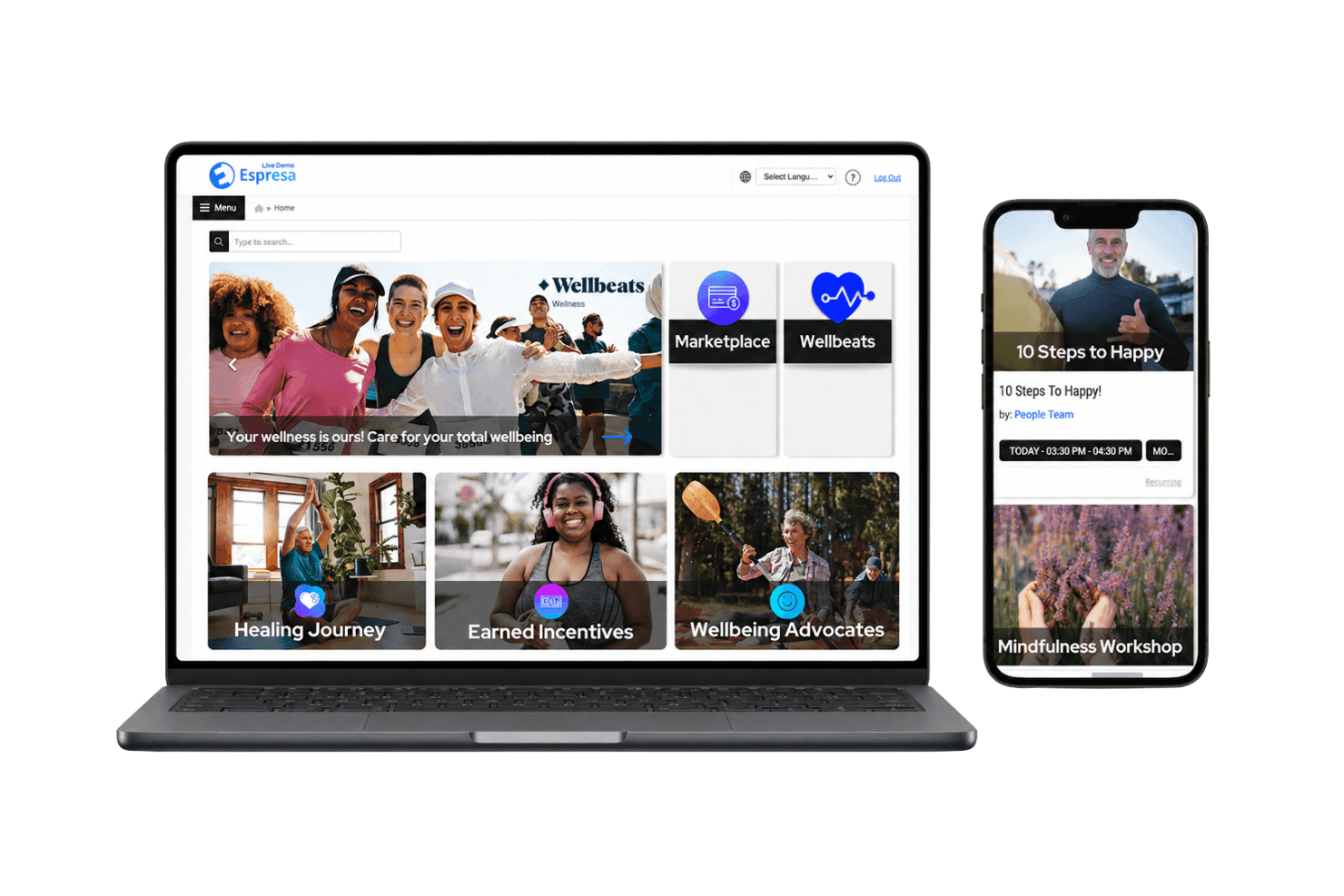
Espresa centralizes wellness perks like incentives and advocacy tools. Espresa is an employee perks platform that brings lifestyle spending accounts, peer recognition, wellbeing challenges, and specialty care benefits together in a single system designed for large, distributed workforces.
Who Is Espresa Best For?
Espresa is a strong fit for HR teams at large health systems managing recognition, wellbeing, and lifestyle spending benefits across thousands of distributed clinical and non-clinical staff.
Why I Picked Espresa
Espresa earns its spot on my shortlist because of how well it handles recognition at scale across large, distributed clinical workforces. I'm particularly impressed by its social recognition wall, peer-to-peer workflows, and 360-degree analytics, which together gave MaineHealth's 25,000-person team across 16 hospitals 43,000+ recognitions in just eight months. Its Specialty Care Accounts, covering GLP-1, HRT, and specialty mental health, add a layer of clinical-grade benefit support I don't see on most recognition platforms.
Espresa Key Features
- Lifestyle spending account (LSA) categories: Employers configure eligible spending categories—such as physical fitness, financial wellness, and professional growth—with funds accessible via a physical or digital Espresa Visa Card.
- Wellbeing challenges module: Employees join gamified health challenges and team competitions, with activity tracked via wearable integrations including Fitbit, Apple Watch, Garmin, and Strava.
- Specialty Care Accounts: Employers fund capped healthcare budgets covering GLP-1 medications, hormone replacement therapy, and specialty mental health services outside standard group health plans.
- AI Eligibility Adviser: An AI-powered claims validation tool reviews employee submissions before processing, with Espresa reporting 99.9% first-pass claim adjudication accuracy.
Espresa Integrations
Espresa offers native integrations with major HRIS, SSO, and wellness platforms, including Workday, ADP, UKG, SAP SuccessFactors, Oracle HCM, Okta, Microsoft Entra ID, Fitbit, Garmin, and Wellbeats, along with wearable syncs for Apple Watch and Strava and marketplace fulfillment via a Visa-backed debit card. An API is available for custom integrations and feed-based syncing with additional HRIS/HCM systems.
Pros and Cons
Pros:
- Specialty care budgets for GLP-1 and HRT
- Unified LSA, recognition, and wellbeing modules
- Proven success with large regional health systems
Cons:
- No clinical scheduling platform integrations
- No named healthcare-specific perks partners
Learn more about Espresa:
Andre plattformer for ansattfordeler i helsesektoren
Her er noen flere alternativer for plattformer for ansattfordeler i helsesektoren som ikke kom med på kortlisten min, men som likevel er verdt å undersøke:
- 11AwardcoBest for recognizing clinical staff across every shift
- 12Bucketlist RewardsBest for frontline clinical staff recognition
- 13BonuslyBest for peer-to-peer recognition with HRIS sync
- 14Cooleaf (ITA Group)Best for engagement-led nurse retention
- 15AssemblyBest for recognition and rewards in small practices
- 16MotivosityBest for burnout signals and nurse retention
- 17WorkhumanBest for enterprise-wide clinical staff recognition
- 18TerryberryBest for recognition-led wellness in clinical teams
- 19FormaBest for flexible benefits across healthcare HR
- 20PerkSpotBest for a free discounts marketplace in healthcare
How I Evaluate Healthcare Employee Perks Platforms
I split my evaluation into baseline criteria every platform must meet and differentiating factors that separate tools built for clinical teams from generic HR software.
Core Functionality (Table Stakes For This List)
When I'm selecting tools for my list, I rank each one on a scale from 0 (does not offer the functionality) to 5 (excels in this area) for each core functionality listed below. I then calculate the tool's total score into a percentage, using 65% as a benchmark to help assess its overall fit for the list.
- Perks & discounts marketplace: I check whether the catalog goes beyond generic retail discounts to include perks healthcare staff actually use, like scrubs, continuing education, or childcare deals.
- Recognition & rewards: The platform should support both peer-to-peer and manager-led recognition with a real rewards catalog, not just kudos badges that collect dust.
- Wellness & mental health benefits: I look for built-in wellness stipends or mental health resources that address burnout head-on, especially for high-stress clinical roles.
- Shift-worker accessibility: A native mobile app matters here. Nurses and techs working overnight rotations need push notifications and full feature access from their phones.
- HRIS & payroll integration: Platforms that connect with systems like ADP, UKG, or Workday save your HR team from manually syncing employee eligibility every pay cycle.
- Engagement analytics & reporting: I evaluate whether dashboards let you segment participation by department or role, so you can spot which teams are disengaged before turnover spikes.
Once I have a list of tools that meet the criteria, I consider what sets each platform apart.
Differentiating Factors (What Sets Vendors Apart)
Here's how I compare and contrast different vendors:
Standout Features
I look for burnout risk signals like pulse surveys and engagement heatmaps that flag at-risk departments before turnover hits. A night-shift nursing unit showing declining sentiment scores is exactly the kind of early warning that lets you act, not react. Service milestone automation matters too—platforms like Awardco and Vantage Circle can trigger recognition for nursing anniversaries or board certifications without manual tracking. I also evaluate shift-scheduling sync with tools like QGenda or UKG, so rewards tie to actual worked shifts rather than outdated rosters.
Beyond Features
I check whether a platform can deploy without a dedicated HRIS admin, since most clinics under 100 staff don't have one. Minimum seat counts and pricing tiers that fit a 20-person practice matter as much as enterprise scalability. I also evaluate integration depth with payroll systems like ADP or Paychex and scheduling tools like QGenda, because manual roster syncing burns HR time fast. Finally, I look for healthcare-specific compliance posture—SOC 2 Type II certification, role-based access controls, and clear policies on how reward incentives align with anti-kickback regulations.
Slik velger du en plattform for ansattfordeler i helsesektoren
Når du skal avgjøre hvilken plattform for ansattfordeler i helsesektoren som passer best for teamet ditt, bør du spørre: Hvilke praktiske behov knyttet til ansatte, arbeidsplaner og regelverk er viktigst i klinikken din, og kan plattformen håndtere disse uten å skape mer administrativt arbeid?
| Hvis prioriteten din er ... | Se etter ... |
|---|---|
| Hvis prioriteten din er ...Å minimere administrativt arbeid | Se etter ...Omfattende integrasjon med HRIS-/lønnssystemet og automatisk synkronisering av bemanningslister |
| Hvis prioriteten din er ...Å beholde klinisk personale som arbeider skift | Se etter ...Mobiltilpassede plattformer med funksjoner for anerkjennelse under vakten |
| Hvis prioriteten din er ...Å støtte sykepleieres trivsel og forebygge utbrenthet | Se etter ...Innebygde velværestipender og verktøy for støtte til mental helse |
| Hvis prioriteten din er ...Å skalere på tvers av flere klinikksteder | Se etter ...Konfigurasjon for flere lokasjoner og rapportering på stedsnivå |
| Hvis prioriteten din er ...Å beskytte mot risiko for manglende etterlevelse | Se etter ...SOC 2 Type II og rollebaserte tilgangskontroller |
Slik vurderer du kortlisten din
- Kontroller systemintegrasjonen: Be om en direktedemonstrasjon som viser hvordan plattformen synkroniseres med HR-/lønnssystemet og planleggingsverktøyene du bruker i dag.
- Test mobiltilgangen: Start en prøveperiode på én uke, og be ansatte på nattevakt sende og motta anerkjennelser via mobilappen.
- Bekreft at fordelene er relevante: Be om en fullstendig eksport av fordelskatalogen, og kontroller at den inneholder alternativer som er spesifikke for helsesektoren, ikke bare rabatter hos butikker.
- Kontroller etterlevelsen: Be om SOC 2 Type II-sertifisering og en skriftlig erklæring om etterlevelse av regler mot utilbørlige ytelser knyttet til belønninger for klinisk personale.
- Avveining – skalerbarhet kontra fokus på helsesektoren: Avgjør om du trenger en helsespesialisert løsning som prioriterer kliniske arbeidsflyter, eller en generell HR-plattform med bredere HRIS-funksjoner.
Hva er plattformer for personalfordeler i helsesektoren?
Plattformer for personalfordeler i helsesektoren er digitale verktøy som hjelper klinikker og helsesystemer med å anerkjenne, belønne og støtte medarbeiderne sine. Disse plattformene tilbyr vanligvis tilgang til fordeler, velværeytelser og anerkjennelsesprogrammer som er tilpasset kliniske og administrative team.
De er utformet for å passe inn i skiftbaserte arbeidsflyter, redusere manuell administrasjon og hjelpe organisasjoner med å øke engasjementet, støtte medarbeiderbevaring og forbedre teamets generelle trivsel i pressede helsemiljøer.
Funksjoner i plattformer for personalfordeler i helsesektoren
Når du velger plattformer for personalfordeler i helsesektoren, bør du se etter følgende nøkkelfunksjoner:
Markedsplass for fordeler og rabatter: En kuratert katalog med tilbud og fordeler tilpasset helsepersonell, for eksempel rabatter på arbeidstøy, etter- og videreutdanning, måltidstjenester eller barnepass. Dette sikrer at fordelene oppleves som relevante for kliniske og ikke-kliniske roller i hverdagen.
System for anerkjennelse og belønning: Gjør det mulig med anerkjennelse mellom kolleger og fra ledere, knyttet til konkrete belønninger – ikke bare digitale merker. Dette bidrar til å fremme en positiv arbeidskultur og oppmuntrer til kontinuerlig engasjement på alle nivåer blant medarbeiderne.
Velvære- og psykisk helse-ytelser: Gir tilgang til velværestipender, ressurser for psykisk helse eller verktøy for stressmestring som er spesielt utviklet for å håndtere risikoen for utbrenthet som er særpreget for helsesektoren.
Tilgjengelighet på mobil: Tilbyr en mobilapp med push-varsler og full funksjonalitet, slik at skiftarbeidere kan få tilgang til funksjoner, motta anerkjennelse eller benytte fordeler utenom vanlig arbeidstid eller mens de er på farten.
Integrasjon med HRIS og lønn: Kobler seg til HR-informasjonssystemer og lønnsplattformer som ADP, UKG eller Workday, reduserer manuell dataregistrering og holder medarbeideropplysninger og kvalifikasjon automatisk samordnet.
Analyse og rapportering av engasjement: Dashbord og rapporteringsverktøy viser trender for bruk av fordeler og anerkjennelse på tvers av steder, avdelinger og roller, slik at administratorer kan identifisere team med lavt engasjement og prioritere tiltak.
Synkronisering av skiftplaner: Synkroniserer med programvare for skiftplanlegging i helsesektoren for å sikre at belønnings- og anerkjennelsesprogrammer gjenspeiler faktisk utførte skift og er tilgjengelige for medarbeidere som arbeider natt og helg.
Automatisk oppfølging av milepæler: Utløser automatisk anerkjennelse ved ansettelsesjubileer eller sertifiseringer, slik at viktige begivenheter og prestasjoner aldri blir oversett.
Rollebasert tilgangskontroll: Gjør det mulig for organisasjoner å angi egendefinerte tillatelser og synlighet for ledere, HR og medarbeidere, og støtter krav til samsvar og personvern i helsesektoren.
Standarder for samsvar og sikkerhet: Innebygd støtte for SOC 2 Type II-sertifisering og tydelige kontroller som sikrer samsvar med helsereguleringer og bestemmelser mot ulovlige returprovisjoner ved tilbud om insentiver til klinisk personale.
Vanlige AI-funksjoner i plattformer for personalfordeler i helsesektoren
I tillegg til standardfunksjonene i plattformer for personalfordeler i helsesektoren som er nevnt ovenfor, integrerer mange av disse løsningene AI med funksjoner som:
AI-drevet innsikt i engasjement: Bruker maskinlæring til å analysere deltakelsesdata, trender for anerkjennelse og tilbakemeldinger fra undersøkelser for å flagge avdelinger eller team med risiko for lavt engasjement eller høy medarbeideravgang. Dette hjelper deg med å målrette tiltak før problemene eskalerer.
Personlige anbefalinger av fordeler: AI-algoritmer foreslår relevante fordeler, belønninger eller velværeressurser til den enkelte medarbeider basert på rollen, skiftmønsteret og tidligere engasjement, slik at opplevelsen føles skreddersydd og bruken øker.
Automatiske forslag til anerkjennelse: AI overvåker ansettelsesjubileer, sertifiseringer og til og med data om fullførte skift for å utløse tidsriktige forslag til anerkjennelse for ledere og kolleger, noe som reduserer risikoen for at viktige milepæler blir oversett.
Behandling av naturlig språk for analyse av tilbakemeldinger: Analyserer tilbakemeldinger fra undersøkelser og anerkjennelser for å avdekke temaer, bekymringer og trender.
Prediktiv modellering av medarbeiderbevaring: AI analyserer historiske data om engasjement, anerkjennelse og skiftplanlegging for å forutsi hvilke medarbeidere som kan ha høyere risiko for å slutte, slik at HR kan håndtere utfordringer knyttet til medarbeiderbevaring proaktivt.
Fordeler med plattformer for personalfordeler i helsesektoren
Implementering av plattformer for personalfordeler i helsesektoren gir flere fordeler for teamet og virksomheten din. Her er noen av fordelene du kan se frem til:
- Økt evne til å beholde ansatte: Relevante personalgoder, støtte til velvære og anerkjennelse kan bidra til å beholde ansatte.
- Redusert utbrenthet og bedre trivsel: Velværestipend og ressurser for psykisk helse støtter ansatte i roller med høyt stressnivå.
- Forenklet HR-administrasjon: Integrasjoner med HRIS, lønnssystemer og vaktplanlegging holder ansattdata og kvalifisering oppdatert.
- Bedre oversikt over engasjement: Analyser avdekker deltakelsestrender og team med lavt engasjement før turnover øker.
- Mobil tilgang for skiftarbeidere: Mobilapper gir ansatte som jobber natt og helg tilgang til personalgoder og anerkjennelse når som helst.
- Bedre etterlevelse og sikkerhet: SOC 2 Type II, tilgangskontroller og sikkerhetstiltak for belønninger støtter etterlevelse i helsesektoren.
- Rettidig, personlig anerkjennelse: Automatiserte milepæler og KI-varsler sørger for at prestasjoner og jubileer blir anerkjent.
Kostnader og priser for plattformer for personalgoder i helsesektoren
Ved valg av plattformer for personalgoder i helsesektoren er det nødvendig å forstå de ulike prismodellene og tilgjengelige planene. Kostnadene varierer basert på funksjoner, teamstørrelse, tillegg og mer. Tabellen nedenfor oppsummerer vanlige planer, gjennomsnittsprisene deres og typiske funksjoner som er inkludert i løsninger for plattformer for personalgoder i helsesektoren:
Sammenligningstabell for plattformer for personalgoder i helsesektoren
| Plantype | Gjennomsnittspris | Vanlige funksjoner |
|---|---|---|
| PlantypeGratisplan | Gjennomsnittspris$0 | Vanlige funksjonerTilgang til en begrenset markedsplass for personalgoder, grunnleggende verktøy for anerkjennelse og standardtilgang til mobilappen. |
| PlantypePersonlig plan | Gjennomsnittspris$5–$10/per bruker/måned | Vanlige funksjonerTilgang til en utvidet katalog over personalgoder, kollegaanerkjennelse, varsler i mobilappen og grunnleggende rapporteringsoversikter. |
| PlantypeBedriftsplan | Gjennomsnittspris$10–$20/per bruker/måned | Vanlige funksjonerFull markedsplass for personalgoder og rabatter, anerkjennelse fra kolleger og ledere, velvære- og psykiske helsefordeler, mobil vaktplanlegging og HRIS-synkronisering. |
| PlantypeStorbedriftsplan | Gjennomsnittspris$20–$30/per bruker/måned | Vanlige funksjonerTilpassede integrasjoner, analyser av engasjement, rollebasert tilgang, støtte for etterlevelse, automatisert sporing av milepæler og avansert rapportering. |
Vanlige spørsmål om plattformer for personalgoder for ansatte i helsesektoren
Her er noen svar på vanlige spørsmål om plattformer for personalgoder for ansatte i helsesektoren:
Hvordan støtter plattformer for personalgoder for ansatte i helsesektoren etterlevelse av helsereguleringer?
Ja, de fleste plattformer for personalgoder for ansatte i helsesektoren støtter etterlevelse ved å tilby funksjoner som SOC 2 Type II-sertifisering, rollebaserte tilgangskontroller og kontroller for å tilpasse belønninger til lover mot ulovlige henvisningsbetalinger. Dette er spesielt viktig hvis du gir insentiver til klinisk personale, ettersom helsespesifikke reguleringer kan ha strenge regler for gaver og personalgoder.
Kan små klinikker uten et eget HR-team enkelt bruke disse plattformene?
Ja, mange plattformer er utformet slik at du ikke trenger en HRIS-administrator på heltid. Noen tilbyr rask onboarding, et minsteantall brukere på under 20, selvbetjent oppsett og integrasjoner som reduserer det løpende administrasjonsarbeidet. Det gjør dem praktiske for klinikker eller praksiser med begrensede HR-ressurser.
Kan belønninger administreres forskjellig på tvers av avdelinger eller kliniske roller?
Mange plattformer lar administratorer opprette separate programmer, kvalifikasjonsregler, budsjetter eller kriterier for anerkjennelse for ulike ansattgrupper. Dette kan være nyttig når sykepleiere, leger, administrativt personale, teknikere og andre team har ulike arbeidstider, ansvarsområder eller behov knyttet til velvære.
Hvordan kan jeg finne ut om de tilgjengelige personalgodene faktisk vil appellere til helsepersonell?
Gå gjennom leverandørens katalog over belønninger og fordeler før du velger en plattform. Se etter alternativer som er relevante for klinisk arbeid, for eksempel velværetjenester, støtte til barnepass, måltidsfordeler, treningsprogrammer, ressurser for videreutdanning, transportfordeler og rabatter på arbeidsrelaterte nødvendigheter.
Kan ansatte på nattskift, i helgene og på tilkallingsbasis delta i det samme personalgodeprogrammet?
Ja, men tilgjengeligheten varierer fra plattform til plattform. Se etter mobiltilgang, asynkron anerkjennelse, automatiserte kvalifikasjonsregler og varsler som ikke er avhengige av at ansatte er pålogget i vanlig arbeidstid. Dette kan gjøre programmene mer tilgjengelige for ansatte som arbeider skift eller har uregelmessige arbeidstider.
Kan plattformen støtte flere sykehus, klinikker eller praksislokasjoner?
Mange plattformer støtter stedsbasert administrasjon og rapportering. Se etter funksjoner som lar hvert anlegg eller hver avdeling administrere anerkjennelse lokalt, samtidig som overordnede retningslinjer, rapportering og programstyring opprettholdes på organisasjonsnivå.