

Recensione NexHealth: Pro, Contro, Caratteristiche e Prezzi
NexHealth centralizza la gestione dello studio: dalla pianificazione online e dal coinvolgimento dei pazienti, fino alla fatturazione e alle analisi sulle prestazioni.

Recensiamo gli strumenti in modo indipendente e le commissioni ci aiutano a finanziare i nostri test. Consulta la nostra politica sulla trasparenza, la nostra metodologia o suggerisci uno strumento.
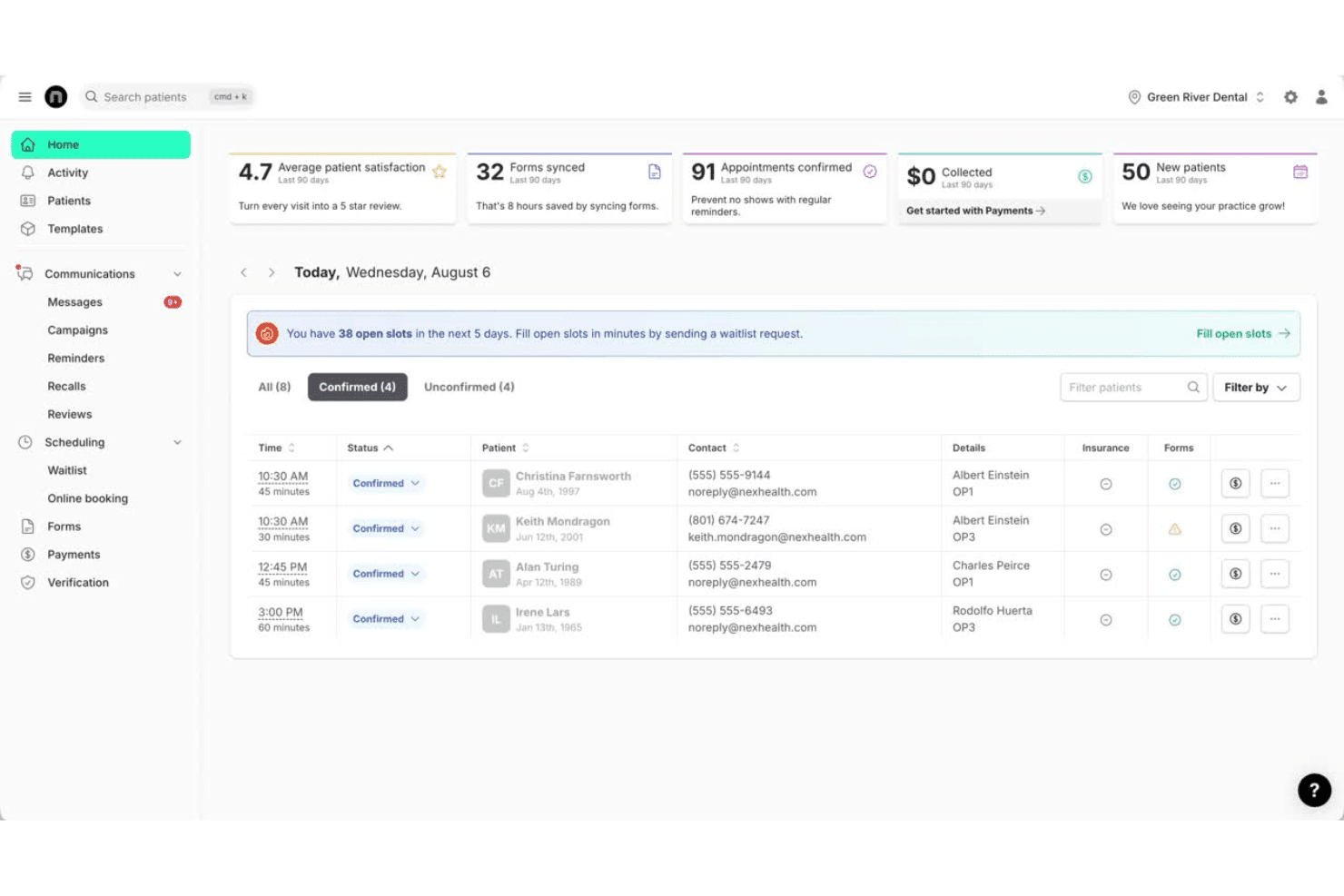
NexHealth is a medical practice management software built around patient engagement, covering online scheduling, digital intake forms, automated reminders, and two-way messaging. It's worth considering if your practice wants to layer those tools onto an existing EHR rather than replacing your entire clinical system. If you've looked at Kareo and found it asks more of your workflow than you're ready for, NexHealth's integration-first approach is a more practical path forward—you keep your current system and extend what it can do for patients.
NexHealth Evaluation Summary
4.8/5
- Pricing upon request
- Free demo available
Perché fidarsi dei nostri consigli sui software
6,700+
Reviews
20
Industry experts
16+
Evaluation factors
14
Years
Il nostro team testa e recensisce software dal 2012. In quanto leader di studi medici noi stessi, sappiamo quanto sia difficile — e importante — scegliere il software giusto.
Per questa guida, abbiamo valutato gli strumenti attraverso test pratici e ricerche indipendenti, assegnando un punteggio agli strumenti in base ai nostri criteri di selezione.
Le nostre recensioni riflettono il nostro giudizio editoriale umano, non un discorso di vendita.
NexHealth Overview
In my judgment, NexHealth stands out for its modern interface, automated patient messaging, and deep integrations with many EHRs, which makes onboarding smooth for most teams. The platform’s live support and transparent scheduling tools tip the scales for busy clinics that value reliability and easy tech adoption.
While the pricing is on the higher side and customizations are limited compared to some alternatives, practices prioritizing direct patient engagement and fast digital appointment booking will find NexHealth a smart choice.
Pros
- Automated patient reminders reduce no-shows and manual work.
- Two-way texting lets practices manage communication in real time.
- Online booking syncs instantly with practice schedules and EHRs.
Cons
- Additional fees apply for SMS usage above plan limits.
- No in-depth billing or claims management features included.
- Limited custom branding for patient communication tools.
Is NexHealth Right For Your Needs?
Who Would be a Good Fit for NexHealth?
NexHealth works best for healthcare teams that want to automate patient communication, reduce no-shows, and sync with EHRs in real time. It’s a smart choice for practices with frequent appointment changes and lots of staff-patient interaction and departments needing online scheduling and digital forms gain value quickly.
If your team handles high patient volumes or recalls, you’ll find NexHealth’s automation and reminders helpful.
- Dental PracticesNexHealth manages recalls, digital forms, and integrates with popular dental EHRs for a connected patient experience.
- Multi-Location ClinicsThe platform centralizes scheduling, reminders, and patient communication for teams working across several sites.
- Reception TeamsSimplifies tasks with digital intake, instant reminders, and a unified messaging dashboard to reduce phone calls.
- Growing Outpatient GroupsAutomated reminders, online booking, and instant payments help manage increasing scheduling demands and reduce no-shows.
- Pediatric OfficesDigital forms and parent-friendly text reminders keep families engaged and streamline scheduling for frequent visits.
Who Would be a Bad Fit for NexHealth?
NexHealth isn’t right for every organization. Small solo practitioners may find the investment hard to justify if they only book a handful of appointments per week. If your business relies on complex claims management, requires very custom workflows, or isn’t in healthcare, NexHealth won’t address your main operational needs.
- Solo ProvidersThe features may be overkill and the cost harder to justify for clinics with minimal appointment volume.
- Rural Health SystemsAreas with spotty internet access can struggle to benefit from NexHealth’s cloud-based platform and real-time features.
- Hospitals with Inpatient CareThe focus on outpatient scheduling and digital forms won’t meet the complex needs of large hospital systems.
- Mental Health PracticesMany specialties need more tailored workflows or compliance features than NexHealth currently offers.
- Chiropractic Clinics With Complex BillingNexHealth doesn’t include in-depth claims processing or insurance billing tools.
Come testiamo e valutiamo gli strumenti
Abbiamo trascorso anni a costruire, perfezionare e migliorare il nostro sistema di test e valutazione del software. Il criterio è progettato per cogliere le sfumature della selezione del software e cosa rende uno strumento efficace, concentrandosi sugli aspetti critici del processo decisionale. Qui sotto puoi vedere esattamente come funzionano i nostri test e punteggi in base a sette criteri. Ci consente di offrire una valutazione obiettiva del software basata su funzionalità principali, caratteristiche distintive, facilità d’uso, onboarding, assistenza clienti, integrazioni, recensioni dei clienti e rapporto qualità-prezzo.
Funzionalità Principali (25% del punteggio finale)
Il punto di partenza della nostra valutazione sono sempre le funzionalità principali dello strumento. Ha le funzioni di base che un utente si aspetterebbe? Alcune di queste funzioni principali sono riservate a piani tariffari superiori? In sostanza, ci aspettiamo che uno strumento sia all’altezza delle capacità di base dei suoi concorrenti.
Caratteristiche Distintive (25% del punteggio finale)
Successivamente, valutiamo caratteristiche distintive e insolite che vanno oltre le funzionalità di base tipicamente presenti negli strumenti della stessa categoria. Un punteggio alto riflette funzionalità specializzate o uniche che rendono il prodotto più veloce, efficiente o offrono un valore aggiunto all’utente. Valutiamo anche quanto sia facile integrare con altri strumenti comunemente presenti nella stack tecnologica per espandere funzionalità e utilità del software. Gli strumenti che offrono numerose integrazioni native, connessioni di terze parti e accesso API per creare integrazioni personalizzate ottengono il punteggio migliore.
Facilità d’Uso (10% del punteggio finale)
Consideriamo quanto sia rapido e intuitivo eseguire i compiti definiti nelle funzionalità principali usando lo strumento. Il software con punteggi elevati è ben progettato, intuitivo, offre app mobili, fornisce modelli e fa sembrare semplici anche compiti complessi.
Onboarding (10% del punteggio finale)
Sappiamo quanto sia importante l’adozione rapida da parte del team per una nuova piattaforma, perciò valutiamo quanto sia facile imparare e usare uno strumento con una formazione minima. Valutiamo quanto tempo impiega un membro del team a configurarsi e iniziare a usare lo strumento senza esperienza. Le soluzioni che ottengono il punteggio più alto richiedono poco o nessun supporto.
Assistenza Clienti (10% del punteggio finale)
Esaminiamo quanto sia rapido e semplice sbloccarsi e trovare aiuto tramite telefono, chat dal vivo o knowledge base. Gli strumenti e le aziende che forniscono assistenza in tempo reale ottengono il punteggio migliore, mentre i chatbot ottengono il punteggio più basso.
Recensioni dei Clienti (10% del punteggio finale)
Oltre ai nostri test e valutazioni, consideriamo il net promoter score da parte di clienti attuali e passati. Esaminiamo la probabilità che, data la possibilità, scelgano nuovamente lo strumento per le sue funzioni principali. Un software con punteggio elevato riflette un alto net promoter score da parte di clienti attuali o passati.
Rapporto Qualità-Prezzo (10% del punteggio finale)
Infine, tenendo conto di tutti gli altri criteri, analizziamo il prezzo medio dei piani base rispetto alle caratteristiche principali e valutiamo il valore degli altri criteri. Il software che offre di più, a meno, otterrà un punteggio più alto.
Core Features
Online Scheduling
Patients can book appointments from your website with real-time availability. This feature syncs directly with your EHR so schedules stay accurate.
Automated Reminders
Send customizable text and email reminders to reduce missed appointments. Reminders go out automatically based on your scheduling rules.
Digital Forms
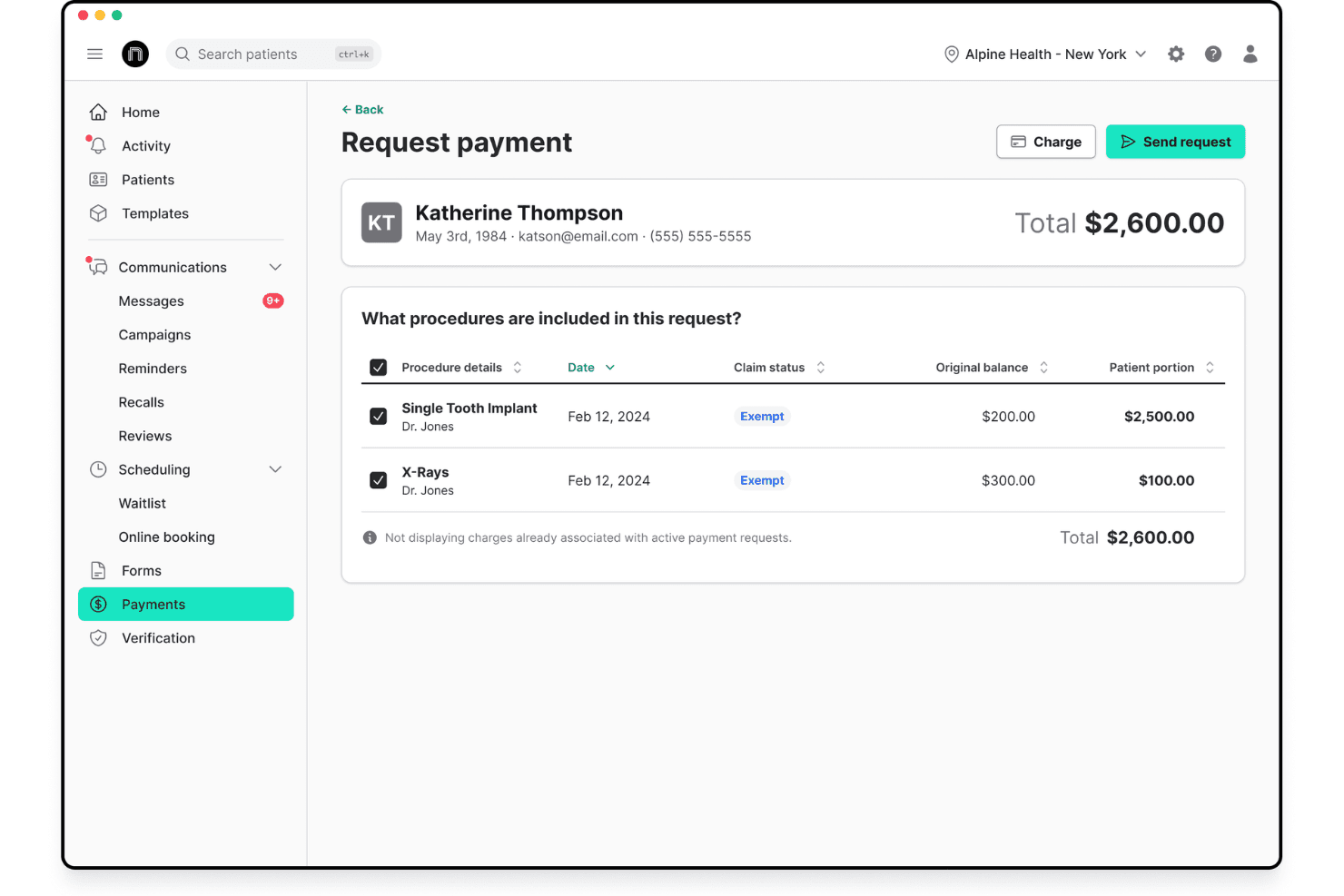
Patients complete medical forms online before their visit. Submitted forms write back to your EHR, which saves staff time at check-in.
Patient Communication
Staff and patients can text back and forth securely. All conversations are organized in a unified dashboard for easy follow-up.
Reporting and Analytics
Insightful reports on practice performance and patient data support informed decision-making, offering a clearer view of strengths and areas for improvement.
Billing Management
Streamlines billing processes with accurate invoicing and payment tracking, making it easier for teams to manage finances. This feature helps ensure timely and efficient payments.
Ease of Use
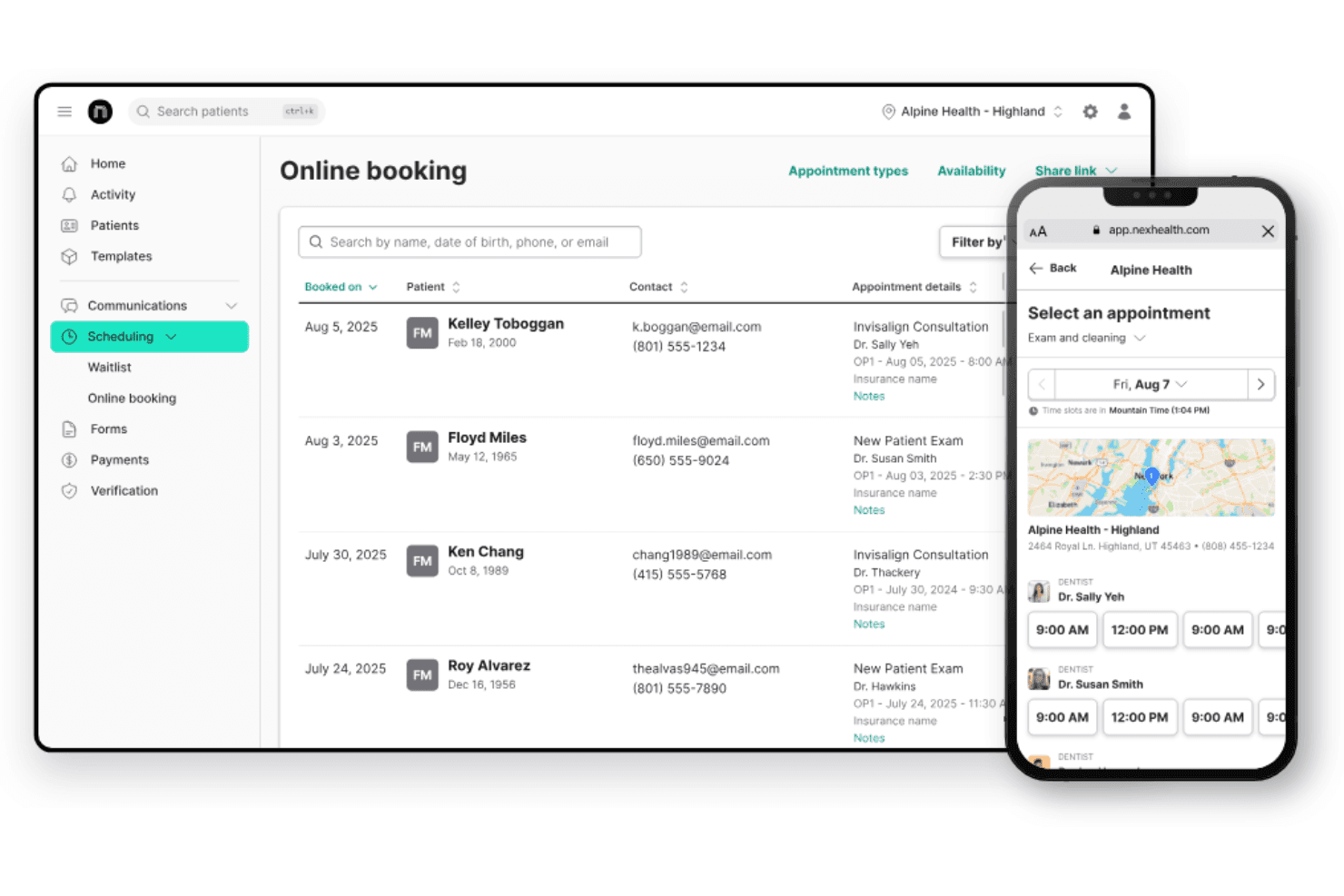
NexHealth’s interface feels intuitive, with a clean dashboard and clear workflow for scheduling and messaging. I think staff will find most tasks—like sending patient reminders or tracking form completion—just a click or two away.
Users mention quick onboarding and less manual data entry thanks to real-time EHR syncing, which adds up to less frustration for teams moving fast.
Integrations
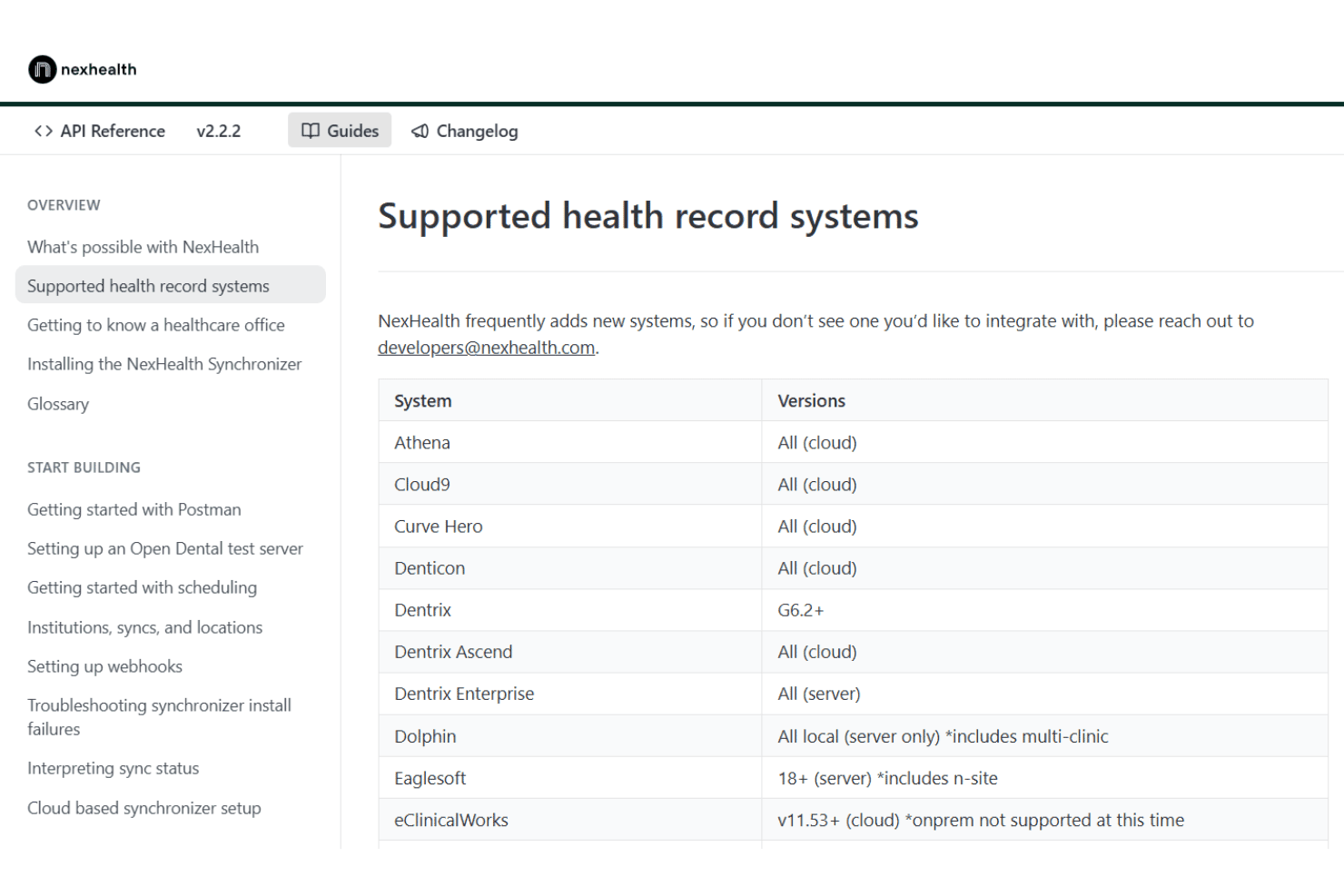
NexHealth integrates with Dentrix, Open Dental, Eaglesoft, athenahealth, Epic Systems, Kareo, DrChrono, Practice Fusion, ChiroTouch, and Curve Dental, among others.
NexHealth offers a public API for custom integrations and supports connectivity with a wide range of EHR and practice management systems.
NexHealth Specs
- API: Yes
- Appointment Scheduling: Yes
- Athlete Management: No
- Audit Management: Yes
- Calendar Management: Yes
- Compliance Tracking: No
- Customer Management: Yes
- Dashboard: Yes
- Data Export: Yes
- Data Import: Yes
- Data Visualization: Yes
- Electronic Prescribing: No
- External Integrations: Yes
- File Sharing: No
- File Transfer: No
- Health Management: No
- HIPAA Compliance: Yes
- Inventory Tracking: No
- Multi-User: Yes
- Notifications: Yes
- Organization Management: No
- Patient Management: Yes
- Project Management: No
- Regulatory Alerts: No
- Risk Assessment: No
- Scheduling: Yes
- Supplier Management: No


