

Recensione di Luma Health: Pro, Contro, Caratteristiche e Prezzi
Luma Health riunisce engagement e comunicazione dei pazienti in un’unica piattaforma, dalla pianificazione degli appuntamenti ai promemoria, intake, messaggistica e workflow di coordinamento dell’assistenza.

Recensiamo gli strumenti in modo indipendente e le commissioni ci aiutano a finanziare i nostri test. Consulta la nostra politica sulla trasparenza, la nostra metodologia o suggerisci uno strumento.
Luma Health is a patient engagement software built for healthcare organizations that need to automate patient scheduling, reminders, and two-way messaging across the care journey. It's a strong fit for practices and health systems looking to cut down on manual outreach and no-shows without overhauling their existing workflows. When comparing this tool to others, I'd choose it over a tool like Phreesia if your team needs text-first, automated communication across the full patient journey rather than a solution centered primarily on in-office intake.
Luma Health Evaluation Summary
4.7/5
- Pricing upon request
- Free demo available
Perché fidarsi dei nostri consigli sui software
6,700+
Reviews
20
Industry experts
16+
Evaluation factors
14
Years
Il nostro team testa e recensisce software dal 2012. In quanto leader di studi medici noi stessi, sappiamo quanto sia difficile — e importante — scegliere il software giusto.
Per questa guida, abbiamo valutato gli strumenti attraverso test pratici e ricerche indipendenti, assegnando un punteggio agli strumenti in base ai nostri criteri di selezione.
Le nostre recensioni riflettono il nostro giudizio editoriale umano, non un discorso di vendita.
Luma Health Overview
When judging Luma Health, I’d say its messaging automation, flexible appointment tools, and rich EHR integrations set it apart for practices that want to scale patient outreach. The intuitive interface and responsive support make onboarding easy, even for less tech-savvy teams. Pricing can climb for advanced workflows, but you get robust two-way texting, referral tracking, and multi-location management.
Clinics focused on reducing no-shows and delivering coordinated care will find Luma Health a strong pick, though those with basic needs might find lighter options elsewhere.
Pros
- Automated appointment reminders reduce patient no-shows.
- Two-way texting improves real-time patient communication.
- Referral management streamlines multi-provider coordination.
Cons
- Reporting tools lack advanced customization.
- Some users report mobile app bugs.
- Multi-language support is limited compared to others.
Is Luma Health Right For Your Needs?
Who Would be a Good Fit for Luma Health?
Luma Health is best suited for healthcare organizations that need advanced patient outreach, automated scheduling, and complex referral management. Large practices, specialty clinics, and health systems benefit from its ability to automate multi-step journeys and centralize communication.
Teams looking to scale engagement or coordinate care across multiple providers see the most value, especially when personalized health campaigns and real-time messaging are essential.
- Multi-Specialty ClinicsMultiple care teams can unify scheduling, communication, and referrals, making it easier to track and manage patient journeys across specialties.
- Hospital SystemsHealth systems benefit from Luma Health’s deep EHR integrations and ability to coordinate high patient volumes across multiple departments.
- Population Health TeamsOutreach campaigns for chronic management or preventive care are simple to automate and customize for targeted groups.
- Referral CoordinatorsAutomated referral tracking closes gaps in care by notifying staff and patients when action is required.
- Large-Scale ProvidersMultiple locations or providers can manage patient communications and resource allocation from a single dashboard.
- Patient Experience LeadersThose focused on improving patient communication and feedback loops find tools to automate surveys and close the loop on complaints or requests.
Who Would be a Bad Fit for Luma Health?
Luma Health may not be ideal for solo practices, clinics with basic needs, or industries outside patient care. If your team wants only simple reminders or can’t justify higher costs, the feature depth can be overkill. Smaller, budget-conscious operations or those lacking integration needs might find more value elsewhere, especially if deep automation and analytics aren’t priorities.
- Solo ProvidersMost features are unnecessary overhead for small offices just needing basic scheduling and reminders.
- Veterinary ClinicsLuma Health is designed for human healthcare workflows and typically won’t support veterinary-specific needs.
- Dental PracticesSome dental offices find the feature set too advanced for their appointment and recall workflows
- Small Budget ClinicsPrice may outweigh the value for clinics that don’t need custom automation or in-depth analytics.
- Urgent Care CentersOn-demand walk-in models don’t always benefit from automated multi-step care journeys.
- Non-Healthcare SectorsTeams outside healthcare miss out on Luma Health’s capabilities, as it’s tailored for clinical patient engagement and compliance.
Come testiamo e valutiamo gli strumenti
Abbiamo trascorso anni a costruire, perfezionare e migliorare il nostro sistema di test e valutazione del software. Il criterio è progettato per cogliere le sfumature della selezione del software e cosa rende uno strumento efficace, concentrandosi sugli aspetti critici del processo decisionale. Qui sotto puoi vedere esattamente come funzionano i nostri test e punteggi in base a sette criteri. Ci consente di offrire una valutazione obiettiva del software basata su funzionalità principali, caratteristiche distintive, facilità d’uso, onboarding, assistenza clienti, integrazioni, recensioni dei clienti e rapporto qualità-prezzo.
Funzionalità Principali (25% del punteggio finale)
Il punto di partenza della nostra valutazione sono sempre le funzionalità principali dello strumento. Ha le funzioni di base che un utente si aspetterebbe? Alcune di queste funzioni principali sono riservate a piani tariffari superiori? In sostanza, ci aspettiamo che uno strumento sia all’altezza delle capacità di base dei suoi concorrenti.
Caratteristiche Distintive (25% del punteggio finale)
Successivamente, valutiamo caratteristiche distintive e insolite che vanno oltre le funzionalità di base tipicamente presenti negli strumenti della stessa categoria. Un punteggio alto riflette funzionalità specializzate o uniche che rendono il prodotto più veloce, efficiente o offrono un valore aggiunto all’utente. Valutiamo anche quanto sia facile integrare con altri strumenti comunemente presenti nella stack tecnologica per espandere funzionalità e utilità del software. Gli strumenti che offrono numerose integrazioni native, connessioni di terze parti e accesso API per creare integrazioni personalizzate ottengono il punteggio migliore.
Facilità d’Uso (10% del punteggio finale)
Consideriamo quanto sia rapido e intuitivo eseguire i compiti definiti nelle funzionalità principali usando lo strumento. Il software con punteggi elevati è ben progettato, intuitivo, offre app mobili, fornisce modelli e fa sembrare semplici anche compiti complessi.
Onboarding (10% del punteggio finale)
Sappiamo quanto sia importante l’adozione rapida da parte del team per una nuova piattaforma, perciò valutiamo quanto sia facile imparare e usare uno strumento con una formazione minima. Valutiamo quanto tempo impiega un membro del team a configurarsi e iniziare a usare lo strumento senza esperienza. Le soluzioni che ottengono il punteggio più alto richiedono poco o nessun supporto.
Assistenza Clienti (10% del punteggio finale)
Esaminiamo quanto sia rapido e semplice sbloccarsi e trovare aiuto tramite telefono, chat dal vivo o knowledge base. Gli strumenti e le aziende che forniscono assistenza in tempo reale ottengono il punteggio migliore, mentre i chatbot ottengono il punteggio più basso.
Recensioni dei Clienti (10% del punteggio finale)
Oltre ai nostri test e valutazioni, consideriamo il net promoter score da parte di clienti attuali e passati. Esaminiamo la probabilità che, data la possibilità, scelgano nuovamente lo strumento per le sue funzioni principali. Un software con punteggio elevato riflette un alto net promoter score da parte di clienti attuali o passati.
Rapporto Qualità-Prezzo (10% del punteggio finale)
Infine, tenendo conto di tutti gli altri criteri, analizziamo il prezzo medio dei piani base rispetto alle caratteristiche principali e valutiamo il valore degli altri criteri. Il software che offre di più, a meno, otterrà un punteggio più alto.
Core Features
Automated Appointment Reminders
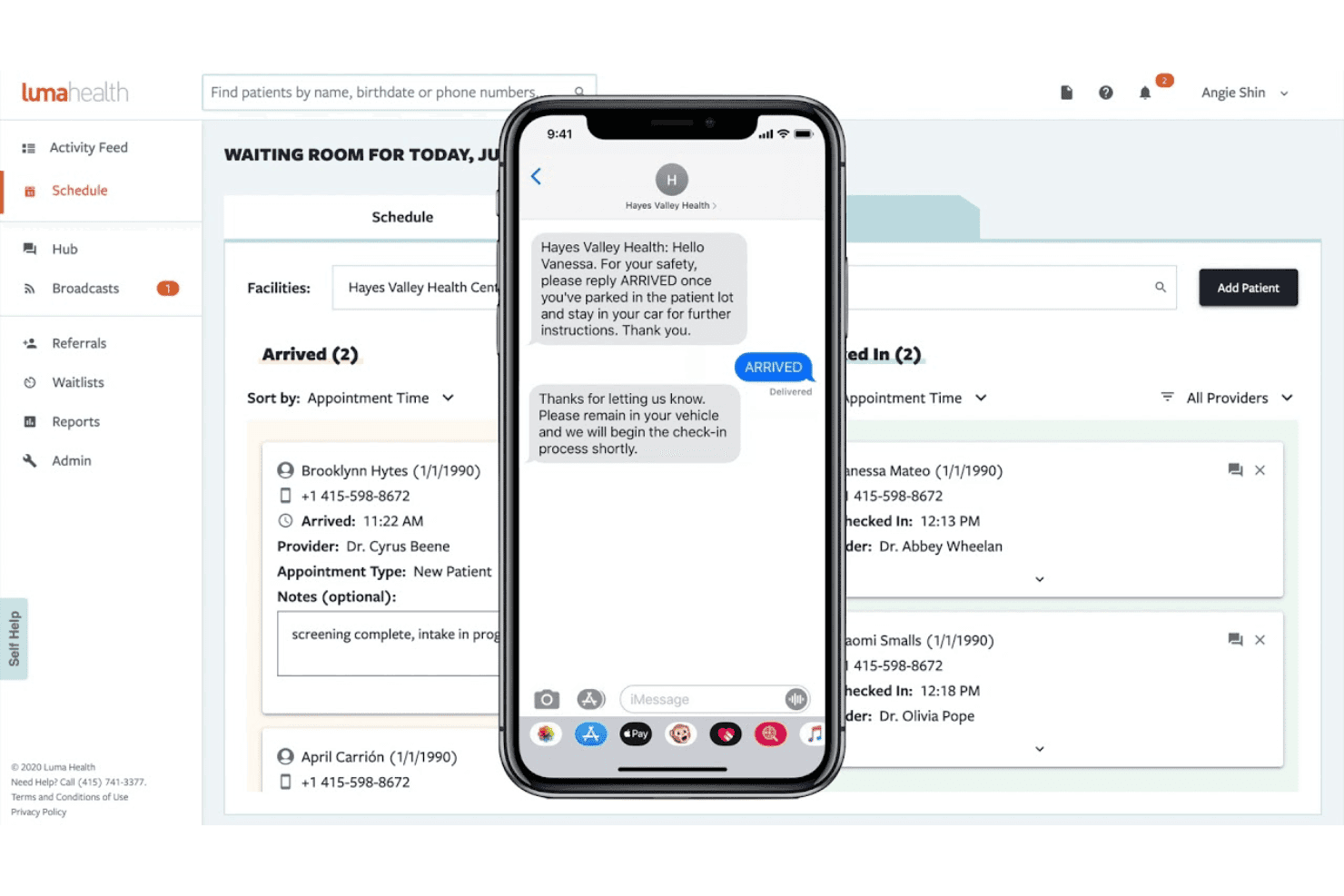
Send patients timely text, email, or voice reminders to cut down no-shows. Scheduling updates sync with your calendar and update patients instantly.
Two-Way Secure Patient Messaging
Chat with patients directly through HIPAA-compliant text messaging. Patients can ask questions and get answers without phone tag.
Digital Patient Intake Forms
Patients fill out customizable forms before arriving, streamlining check-in. Forms update patient records automatically when submitted.
Referral Management Tracking
Track the referral process from start to finish across providers. Real-time updates let practices close referral loops faster.
Broadcast Messaging for Announcements
Send bulk messages, like flu clinic hours or policy changes, to targeted patient groups. Responses route directly to staff for follow-up.
Waitlist and Fill-Now Scheduling
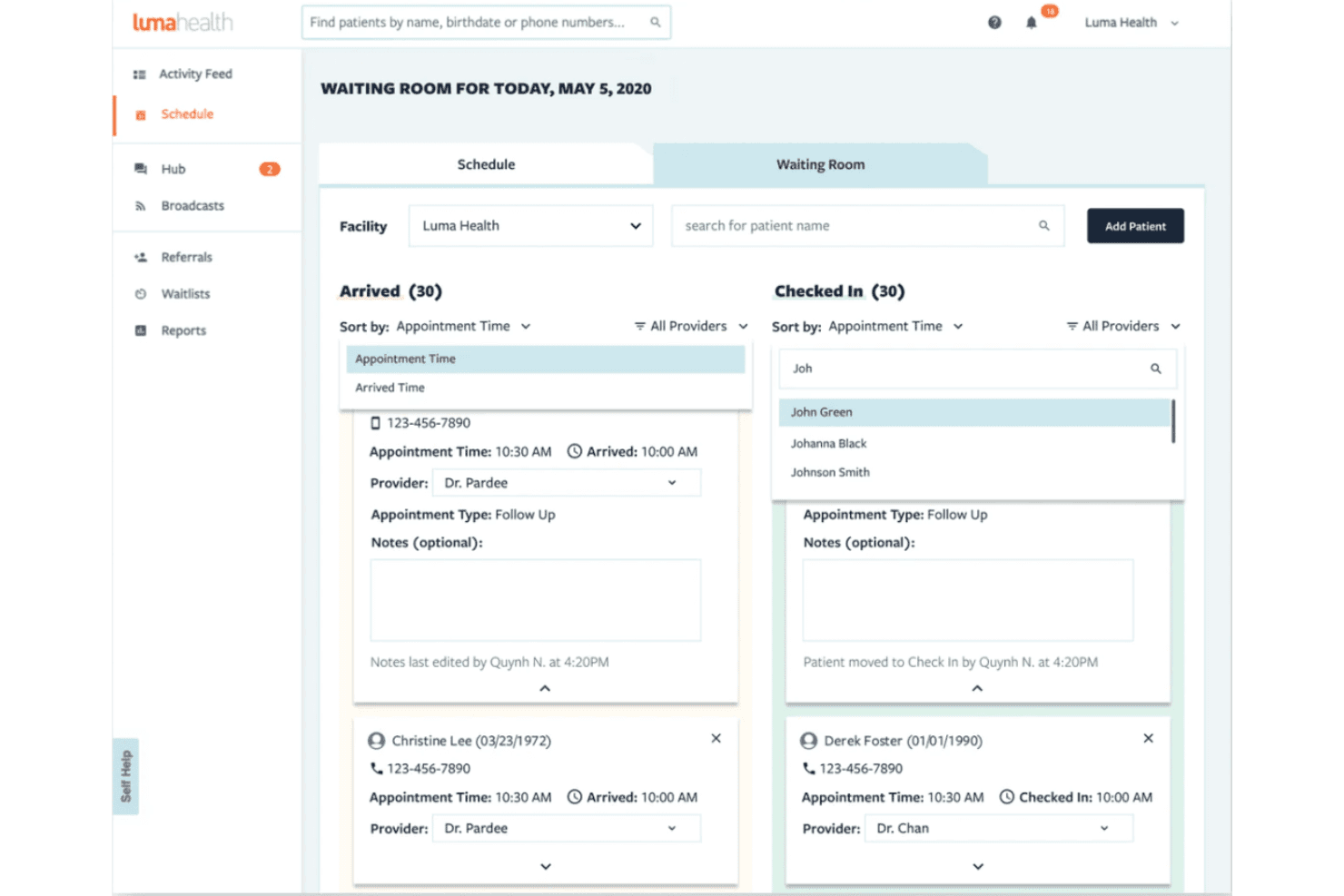
Patients can join a waitlist for earlier appointments automatically. If a spot opens, Luma Health notifies and reschedules patients instantly.
Ease of Use
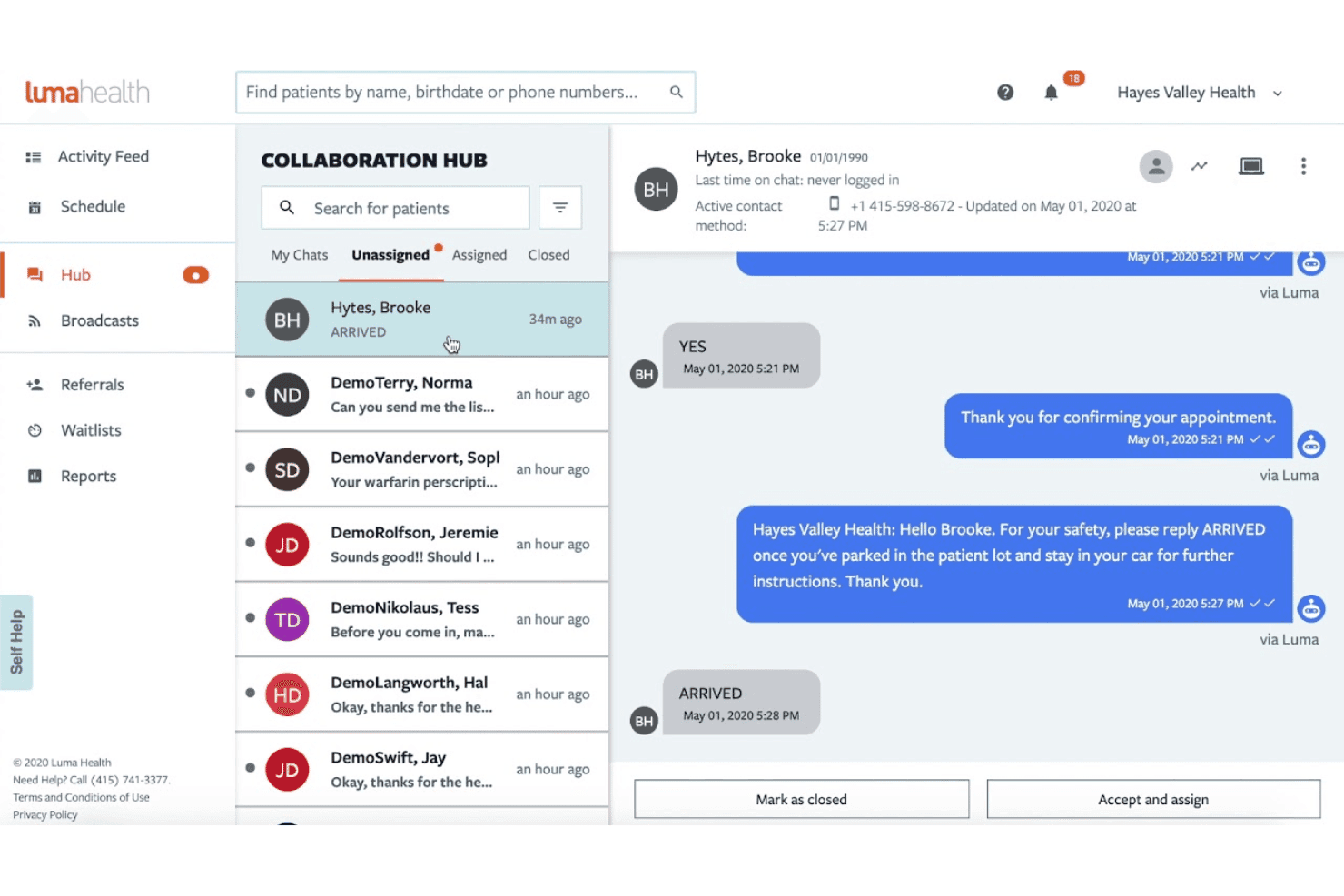
Luma Health stands out for its clean dashboard and logical workflows that keep scheduling, messaging, and patient progress at your fingertips. Most users say navigation is quick, with intuitive tabs and clear prompts guiding staff through setup, broadcast messaging, and follow-up flows.
Even with robust features, teams report getting comfortable fast thanks to thoughtful onboarding and in-app support.
Integrations
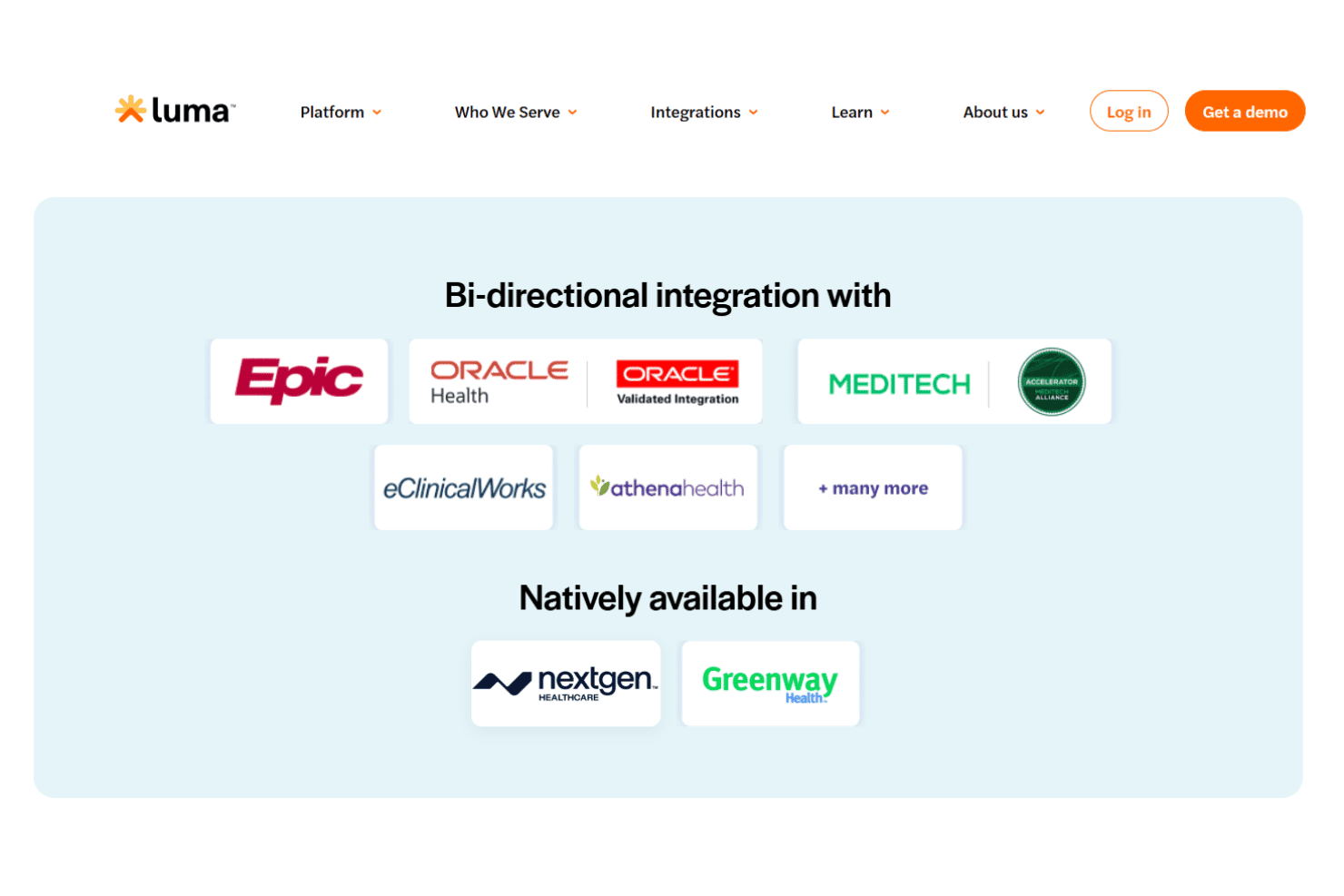
Luma Health integrates with Epic, Oracle Health, eClinicalWorks, athenahealth, NextGen, Greenway, Nextech, Cerner, Meditech, and Allscripts.
Luma Health also offers an API for custom integrations and connects with select third-party tools.
Luma Health Specs
- API: Yes
- Appointment Scheduling: Yes
- Athlete Management: No
- Audit Management: Yes
- Calendar Management: Yes
- Compliance Tracking: Yes
- Customer Management: Yes
- Dashboard: Yes
- Data Export: Yes
- Data Import: Yes
- Data Visualization: Yes
- Electronic Prescribing: No
- External Integrations: Yes
- File Sharing: Yes
- File Transfer: Yes
- Health Management: Yes
- HIPAA Compliance: Yes
- Inventory Tracking: No
- Multi-User: Yes
- Notifications: Yes
- Organization Management: Yes
- Patient Management: Yes
- Project Management: No
- Regulatory Alerts: No
- Risk Assessment: No
- Scheduling: Yes
- Supplier Management: No


