

Avis sur Compulink : Avantages, Inconvénients, Fonctionnalités et Tarification
Compulink regroupe le DSE et la gestion des cabinets médicaux sur une seule plateforme, de la création de dossiers cliniques et de la planification aux facturations, à l’imagerie et aux outils de flux de travail spécifiques aux spécialités.

Nous évaluons les outils de manière indépendante, et les commissions aident à financer nos tests. Consultez notre politique de transparence, notre méthodologie, ou suggérez un outil.
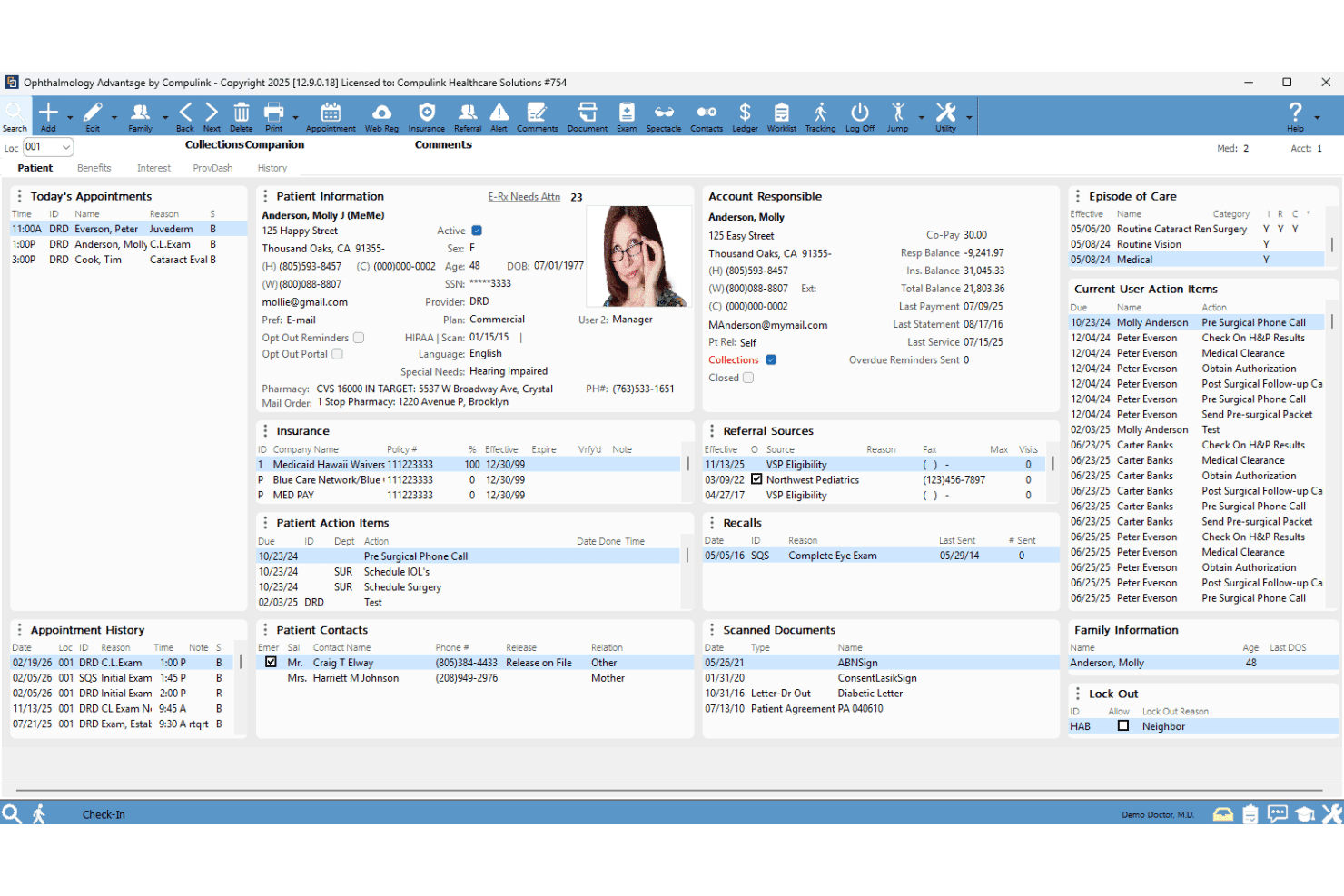
Compulink is a free EHR software built for specialty medical practices that need clinical documentation, scheduling, and billing tools in one system. I'd consider it over a more generic option like OpenEMR if you're running a specialty clinic—think optometry, dermatology, or behavioral health—and want built-in specialty-specific templates and workflows without heavy customization upfront.
Compulink Evaluation Summary
3.9/5
- Pricing upon request
- Free demo available
Pourquoi faire confiance à nos recommandations de logiciels
6,700+
Reviews
20
Industry experts
16+
Evaluation factors
14
Years
Notre équipe teste et évalue des logiciels depuis 2012. En tant que dirigeants de cabinets médicaux nous-mêmes, nous savons à quel point il est difficile — et important — de choisir le bon logiciel.
Pour ce guide, nous avons évalué les outils grâce à des tests pratiques et une recherche indépendante, en notant les outils selon nos critères de sélection.
Nos avis reflètent notre jugement éditorial humain, et non un argumentaire de vente.
Compulink Overview
When judging Compulink against other EHR platforms, its specialty-focused features and deep workflow customization set it apart, especially for ophthalmology and therapy practices. Pricing can be a sticking point for budget-minded clinics, and onboarding may take longer than some expect, but the rich templates, responsive support, and broad integration options make it a strong contender.
If you’re selecting an EHR for a mid- to large-sized or specialty-focused group, I’d consider Compulink a top pick.
Pros
- Specialty content for eye care, therapy, and pain management.
- Robust reporting and analytics built into clinical workflows.
- Built-in telehealth with native patient communication features.
Cons
- Frequent software updates can disrupt established user workflows.
- Patient portal interface feels dated compared to many competitors.
- Multi-specialty practices may face complex configuration requirements.
Is Compulink Right For Your Needs?
Who Would be a Good Fit for Compulink?
Compulink works best for specialty practices and organizations that need deep customization, integrated optical or therapy tools, and broad practice management all in one place. Its large clinics, surgical centers, or groups juggling unique workflows and advanced reporting features stand to gain the most.
Multi-location practices or those needing built-in telehealth and inventory appreciate how much can be managed under one system.
- Ophthalmology ClinicsCompulink’s ophthalmology content, imaging integrations, and ASC modules are designed for detailed eye care workflows.
- Behavioral Health CentersSpecialty templates and flexible forms make documenting complex behavioral health cases much easier and more compliant.
- Multi-Specialty PracticesThe platform’s configurability supports different specialties and departments in a single, unified environment.
- Ambulatory Surgery CentersIntegrated ASC management tools for pre-op, intra-op, and post-op workflows streamline care beyond standard EHRs.
- Occupational Therapy OfficesTherapy-specific documentation and inventory modules fit the needs of rehabilitation and therapy clinics.
- Large Group PracticesRobust analytics, scheduling, and enterprise practice management handle high volumes with strong automation.
Who Would be a Bad Fit for Compulink?
Compulink isn’t ideal for solo providers, practices that want something very simple, or clinics with tight technology budgets. Organizations needing a modern, patient-friendly portal or those uninterested in deep customization may also struggle. Startups or teams with lightweight, general needs can find Compulink’s depth and complexity overkill.
- Solo PractitionersThe setup and feature set are more than most solo providers need and can be overwhelming.
- Small Pediatric OfficesThe learning curve and pediatric content options may be lighter compared to pediatric-focused alternatives.
- Home Health AgenciesCompulink lacks dedicated home health workflows and remote visit tracking specific to this audience.
- Startup Clinics Entry costs and system complexity can be excessive if you’re starting small and don’t need advanced features.Compulink’s limited reporting features might not meet your complex data needs.
- Dental PracticesDental-specific charting and billing aren’t a primary focus, making integration and usability subpar for dentistry.
- Cost-Conscious TeamsThe higher price point and paid add-ons may not fit clinics with limited budgets or minimal software needs.
Comment nous testons et notons les outils
Nous avons passé des années à construire, affiner et améliorer notre système de test et de notation des logiciels. Cette grille est conçue pour saisir les nuances du choix des logiciels et ce qui rend un outil efficace, en se concentrant sur les aspects cruciaux du processus décisionnel. Ci-dessous, vous pouvez voir exactement comment nos tests et notations fonctionnent sur sept critères. Cela nous permet de proposer une évaluation impartiale des logiciels basée sur leurs fonctionnalités principales, fonctionnalités remarquables, facilité d’utilisation, intégration, support client, avis clients et rapport qualité/prix.
Fonctionnalité principale (25 % de la note finale)
Le point de départ de notre évaluation est toujours la fonctionnalité principale de l’outil. Dispose-t-il des fonctions de base que l’on est en droit d’attendre ? Certaines de ces fonctionnalités principales sont-elles limitées aux forfaits les plus chers ? Nous attendons d’un outil qu’il se mesure aux capacités essentielles de ses concurrents.
Fonctionnalités remarquables (25 % de la note finale)
Ensuite, nous évaluons les fonctionnalités remarquables, peu communes, qui vont au-delà des fonctions de base généralement présentes dans ce type d’outils. Une note élevée reflète des fonctionnalités uniques ou spécialisées qui rendent le produit plus rapide, plus efficace ou qui apportent une valeur ajoutée à l’utilisateur. Nous évaluons également la facilité d’intégration avec les autres outils présents dans l’écosystème numérique afin d’étendre la fonctionnalité et l’utilité du logiciel. Les outils offrant de nombreuses intégrations natives, des connexions tierces, et un accès API pour créer des intégrations personnalisées reçoivent de meilleures notes.
Facilité d’utilisation (10 % de la note finale)
Nous considérons la rapidité et la simplicité d’exécution des tâches définies dans la fonctionnalité principale à l’aide de l’outil. Un logiciel bien noté est bien conçu, intuitif, propose des applications mobiles, fournit des modèles et simplifie les tâches relativement complexes.
Onboarding (10 % de la note finale)
Nous savons à quel point il est important qu’une équipe adopte rapidement une nouvelle plateforme, nous évaluons donc la facilité d’apprentissage et d’utilisation d’un outil avec une formation minimale. Nous évaluons la rapidité avec laquelle un membre de l’équipe peut installer et commencer à utiliser l’outil sans expérience préalable. Les solutions les mieux notées requièrent peu ou pas de support.
Support client (10 % de la note finale)
Nous examinons la rapidité et la facilité pour se débloquer et obtenir de l’aide par téléphone, chat en direct ou base de connaissances. Les outils et entreprises proposant une assistance en temps réel obtiennent les meilleures notes, alors que les chatbots sont les moins bien notés.
Avis clients (10 % de la note finale)
Au-delà de nos propres tests et évaluations, nous considérons le score de recommandation net des clients actuels et passés. Nous évaluons leur probabilité, s’ils en avaient le choix, de sélectionner à nouveau l’outil pour ses fonctionnalités principales. Un logiciel bien noté reflète un haut score de recommandation net parmi la clientèle.
Rapport qualité/prix (10 % de la note finale)
Enfin, en tenant compte de tous les autres critères, nous examinons le prix moyen des offres de base au regard des fonctionnalités principales et des autres critères d’évaluation. Un logiciel qui en offre plus, pour moins, obtiendra une note supérieure.
Core Features
Specialty-Specific Templates
Compulink delivers templates tailored for ophthalmology, behavioral health, and other specialties. These save documentation time and meet unique clinical needs.
Practice Management
You get scheduling, billing, and claims management all in one system. This streamlines workflows from patient intake to reimbursement.
Telehealth
Compulink offers secure, integrated telehealth visits directly within the EHR. Patients join virtual appointments and messages through the portal.
Automated Reporting
Generate detailed practice analytics on performance, compliance, and outcomes. Built-in dashboards help staff spot trends and optimize care delivery.
Electronic Prescribing
This feature enables providers to send prescriptions electronically to pharmacies. It reduces errors and speeds up medication fulfillment.
Patient Portal
Give patients 24/7 access to their records, appointments, and secure messaging. They can view lab results and update forms before visits.
Ease of Use
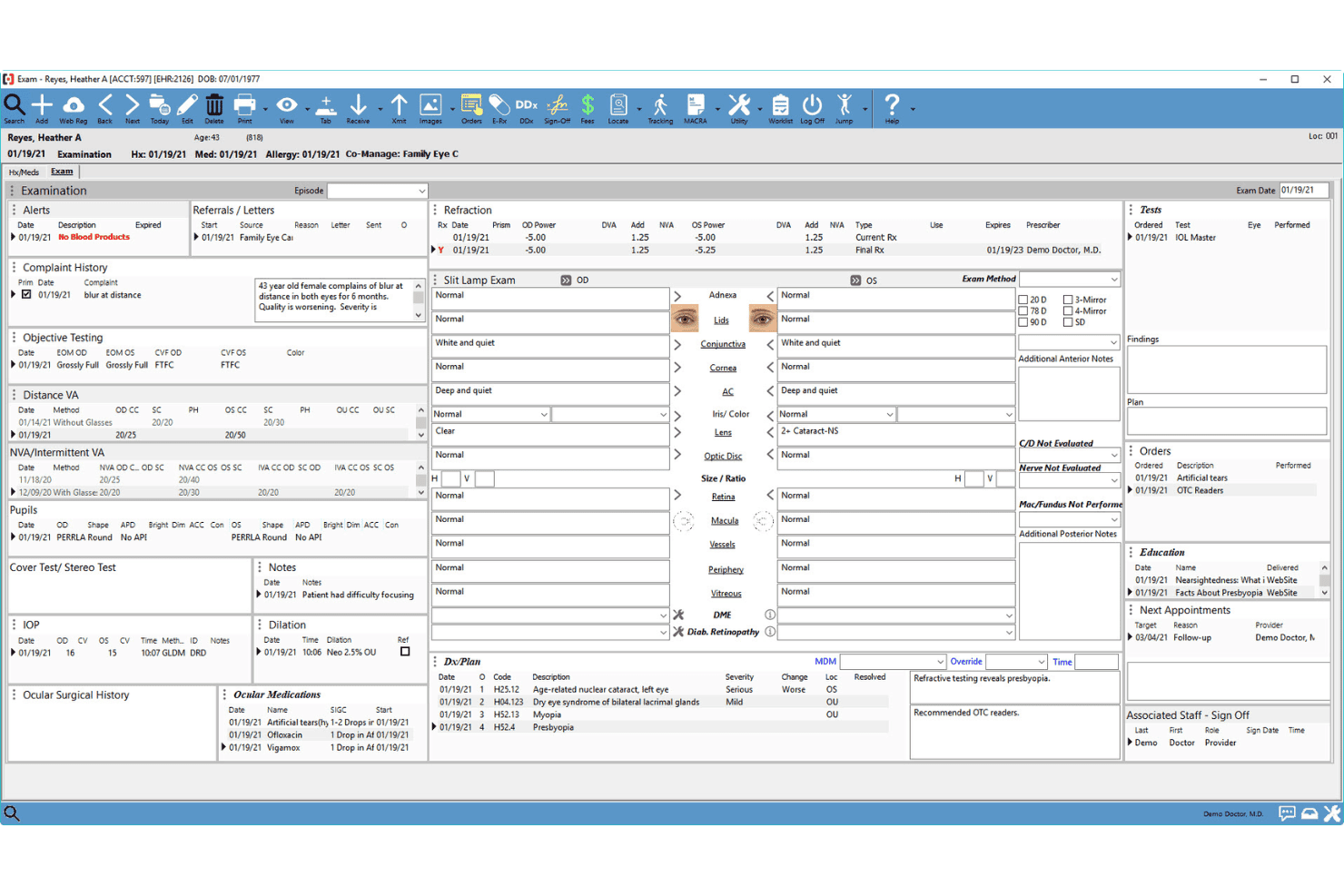
Compulink’s user interface feels dense at first, but its specialty-focused design and deep customization mean you can tailor workflows exactly to your needs. Some report the patient portal feels dated, but staff love the shortcut tools for charting.
I find the system’s drag-and-drop scheduling, customizable dashboards, and in-chart quick actions make daily tasks more efficient once you’re familiar with the layout.
Integrations
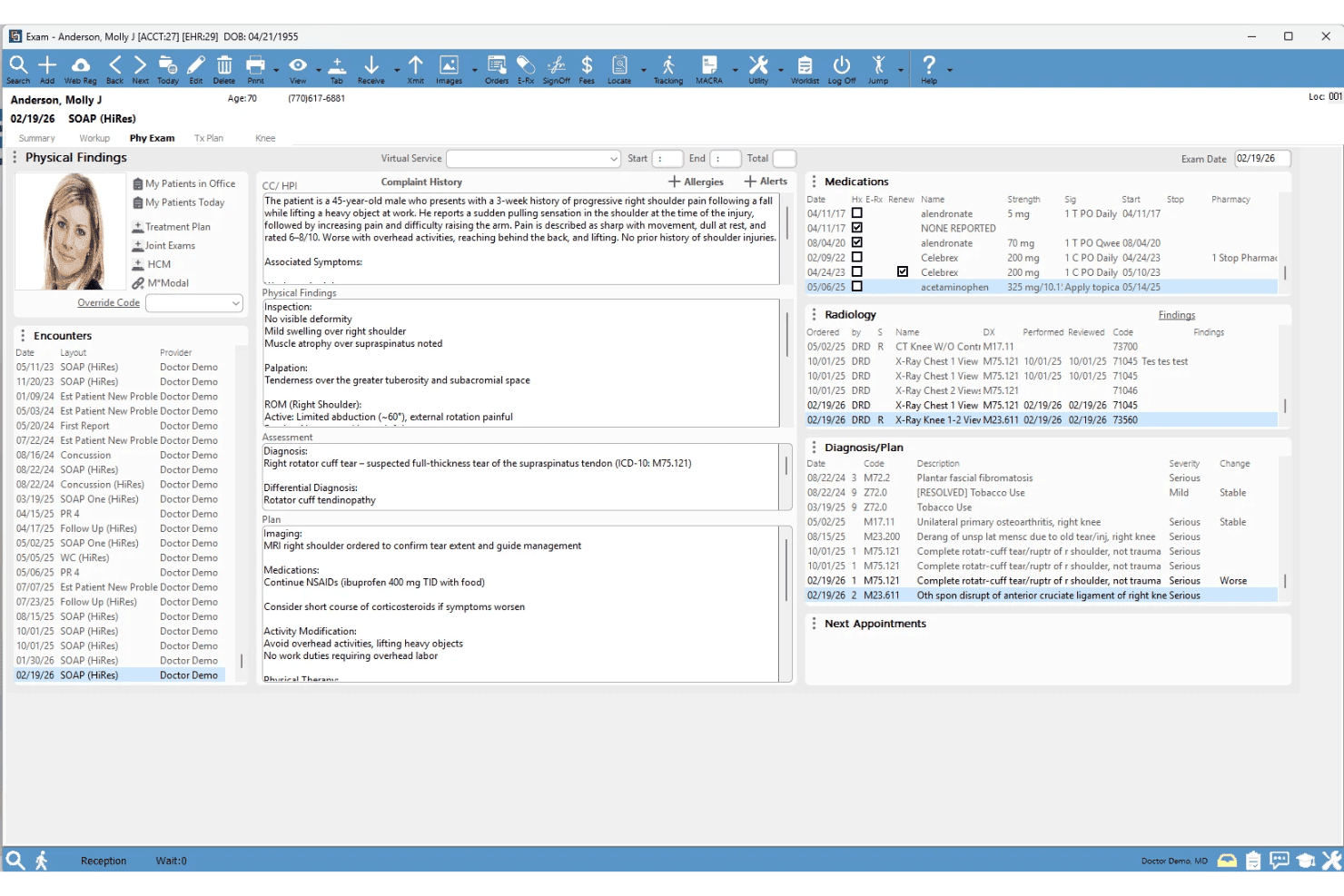
Compulink integrates with Surescripts, TriZetto, Change Healthcare, LabCorp, Quest Diagnostics, DrFirst, Waystar, ID.me, IMS, and RevSpring, among others.
Compulink also offers an open API for third-party connections and integrations.
Compulink Specs
- API: Yes
- Appointment Scheduling: Yes
- Athlete Management: No
- Audit Management: No
- Calendar Management: Yes
- Compliance Tracking: No
- Customer Management: No
- Dashboard: Yes
- Data Export: Yes
- Data Import: Yes
- Data Visualization: Yes
- Electronic Prescribing: Yes
- External Integrations: Yes
- File Sharing: No
- File Transfer: No
- Health Management: Yes
- HIPAA Compliance: Yes
- Inventory Tracking: No
- Multi-User: Yes
- Notifications: Yes
- Organization Management: Yes
- Patient Management: Yes
- Project Management: No
- Regulatory Alerts: No
- Risk Assessment: No
- Scheduling: Yes
- Supplier Management: No


