

Reseña de CareCloud: ventajas, desventajas, funciones y precios explicados
Analizo en detalle cómo el sistema de historia clínica electrónica de CareCloud destaca para los consultorios que buscan un diseño intuitivo y complementos flexibles; descubre si sus funciones realmente agilizan los flujos de trabajo en 2026.

Revisamos herramientas de manera independiente, y las comisiones ayudan a financiar nuestras pruebas. Consulta nuestra política de transparencia, nuestra metodología o sugiere una herramienta.
CareCloud is a free EHR software for independent and small-to-midsize practices that need clinical documentation, scheduling, and practice management without paying for a software license. I'd suggest it over paid-only options like Kareo if you want a no-cost plan that still includes telehealth and a patient portal—features most competitors reserve for higher subscription tiers.
CareCloud Evaluation Summary
3.6/5
- Pricing upon request
- Free demo available
Por qué confiar en nuestras recomendaciones de software
6,700+
Reviews
20
Industry experts
16+
Evaluation factors
14
Years
Nuestro equipo lleva probando y evaluando software desde 2012. Como líderes de centros médicos, sabemos lo difícil —y lo importante— que es elegir el software adecuado.
Para esta guía, evaluamos las herramientas mediante pruebas prácticas e investigación independiente, puntuando las herramientas según nuestros criterios de selección.
Nuestras reseñas reflejan nuestro criterio editorial humano, no un discurso de ventas.
CareCloud Overview
When I judge CareCloud, I see a platform that offers slick scheduling, customizable charting, and strong support—features that make it easy for teams to get up and running. The interface feels modern and uncluttered, which sets it apart from clunkier options. Its pricing is competitive, but smaller practices might find some add-ons add up. If you’re choosing an EHR for a multi-specialty group or a fast-growing office that needs flexibility and easy integrations, CareCloud is going to be a smart pick. I think it’s especially well-suited for those wanting a balance of usability and customization.
Pros
- Offers specialty-specific templates for multiple medical fields
- Provides real-time dashboards for practice performance tracking
- Includes a patient portal with online payment options
Cons
- Occasional system slowdowns during peak hours
- Reporting customization requires more technical knowledge than expected
- Some advanced features require additional monthly fees
Is CareCloud Right For Your Needs?
Who Would be a Good Fit for CareCloud?
CareCloud is a strong choice for growing medical groups and practices that want an integrated, cloud-based EHR with customizable workflows and excellent billing tools. Multispecialty clinics, outpatient centers, and organizations focused on patient experience should find its patient engagement tools and reporting a good match. I think practices needing robust integration options and detailed analytics will benefit most from what CareCloud provides.
- Multispecialty ClinicsCareCloud handles scheduling, clinical documentation, and billing for diverse specialties in one unified platform.
- Midsize PracticesMid-sized groups benefit from CareCloud’s flexible pricing, scalable modules, and streamlined onboarding support.
- Outpatient CentersOutpatient clinics use CareCloud’s detailed scheduling, patient intake, and modern patient portal tools.
- AdministratorsPractice administrators gain efficiency from CareCloud’s analytics dashboards, integrated billing, and custom workflow design.
- Revenue Cycle TeamsRevenue cycle managers get real-time billing, claims management, and payer connectivity for cleaner, faster reimbursements.
- Telehealth ProvidersTelehealth practices can use CareCloud’s native telemedicine module and flexible integrations for virtual visits and follow-up.
Who Would be a Bad Fit for CareCloud?
CareCloud isn’t ideal for solo practitioners who want bare-minimum EHR functions at the lowest price. High-volume hospital systems, organizations outside the US, and specialty clinics with highly complex custom needs may want to look elsewhere. If your team uses mostly third-party tools or non-medical workflows, CareCloud’s healthcare focus could feel limiting.
- Solo PractitionersSingle-provider clinics may find CareCloud’s breadth and pricing unnecessary for basic charting and scheduling.
- Large HospitalsHospital systems might need deeper inpatient features and enterprise-level integrations not offered by CareCloud.
- Non-U.S. EntitiesCareCloud’s design and compliance features center on U.S. healthcare, which can limit applicability internationally.
- Highly Specialized ClinicsSubspecialties needing hyper-specific charting or device integration could outgrow CareCloud’s customization options.
- Behavioral Health OnlyBehavioral health teams wanting niche documentation and tools may not find CareCloud’s templates granular enough.
- Non-Clinical TeamsNon-clinical organizations or those outside healthcare won’t get value from CareCloud’s medically focused workflows.
Cómo Probamos y Puntamos las Herramientas
Hemos pasado años construyendo, refinando y mejorando nuestro sistema de pruebas y puntuación de software. La rúbrica está diseñada para captar los matices de la selección de software y lo que hace que una herramienta sea eficaz, centrándose en los aspectos críticos del proceso de toma de decisiones. A continuación, puedes ver exactamente cómo funcionan nuestras pruebas y puntuaciones en siete criterios. Nos permite proporcionar una evaluación imparcial del software en función de funcionalidad principal, características destacadas, facilidad de uso, incorporación, soporte al cliente, integraciones, opiniones de clientes y relación calidad-precio.
Funcionalidad Principal (25% de la puntuación final)
El punto de partida de nuestra evaluación es siempre la funcionalidad principal de la herramienta. ¿Tiene las funciones y características básicas que un usuario esperaría? ¿Alguna de esas funciones principales está restringida a planes de precios superiores? En esencia, esperamos que una herramienta cumpla con las capacidades básicas frente a sus competidores.
Características Destacadas (25% de la puntuación final)
Luego, evaluamos características destacadas poco comunes que van más allá de la funcionalidad principal que normalmente se encuentra en herramientas similares. Una puntuación alta refleja funciones especializadas o únicas que hacen que el producto sea más rápido, eficiente o aporte valor adicional al usuario. También evaluamos lo fácil que es integrar la herramienta con otros sistemas normalmente utilizados en el entorno tecnológico para ampliar la funcionalidad y utilidad del software. Las herramientas que ofrecen abundantes integraciones nativas, conexiones de terceros y acceso a API para crear integraciones personalizadas obtienen mejores puntuaciones.
Facilidad de Uso (10% de la puntuación final)
Consideramos qué tan rápido y fácil es ejecutar las tareas definidas en la funcionalidad principal usando la herramienta. El software que tiene una alta puntuación está bien diseñado, es intuitivo de usar, ofrece aplicaciones móviles, plantillas y hace que las tareas relativamente complejas parezcan sencillas.
Incorporación (10% de la puntuación final)
Sabemos lo importante que es la rápida adopción del equipo para una nueva plataforma, así que evaluamos lo fácil que es aprender y usar una herramienta con mínimo entrenamiento. Analizamos cuán rápido un miembro del equipo puede configurarse y empezar a usar la herramienta sin experiencia previa. Las soluciones con mayor puntuación indican que se requiere poco o ningún soporte.
Soporte al Cliente (10% de la puntuación final)
Revisamos la rapidez y facilidad para encontrar ayuda por teléfono, chat en vivo o base de conocimientos. Las herramientas y empresas que ofrecen soporte en tiempo real obtienen mejor puntuación, mientras que los chatbots obtienen la peor.
Opiniones de Clientes (10% de la puntuación final)
Más allá de nuestras propias pruebas y evaluaciones, consideramos el puntaje neto del promotor de clientes actuales y anteriores. Revisamos la probabilidad de que, dado el caso, elegirían nuevamente la herramienta por su funcionalidad principal. Un software con alta puntuación refleja un alto puntaje neto de promotores de clientes actuales o pasados.
Relación Calidad-Precio (10% de la puntuación final)
Por último, considerando todos los demás criterios, revisamos el precio promedio de los planes de entrada frente a las funciones principales y consideramos el valor de los demás criterios de evaluación. El software que ofrece más por menos, obtiene una mayor puntuación.
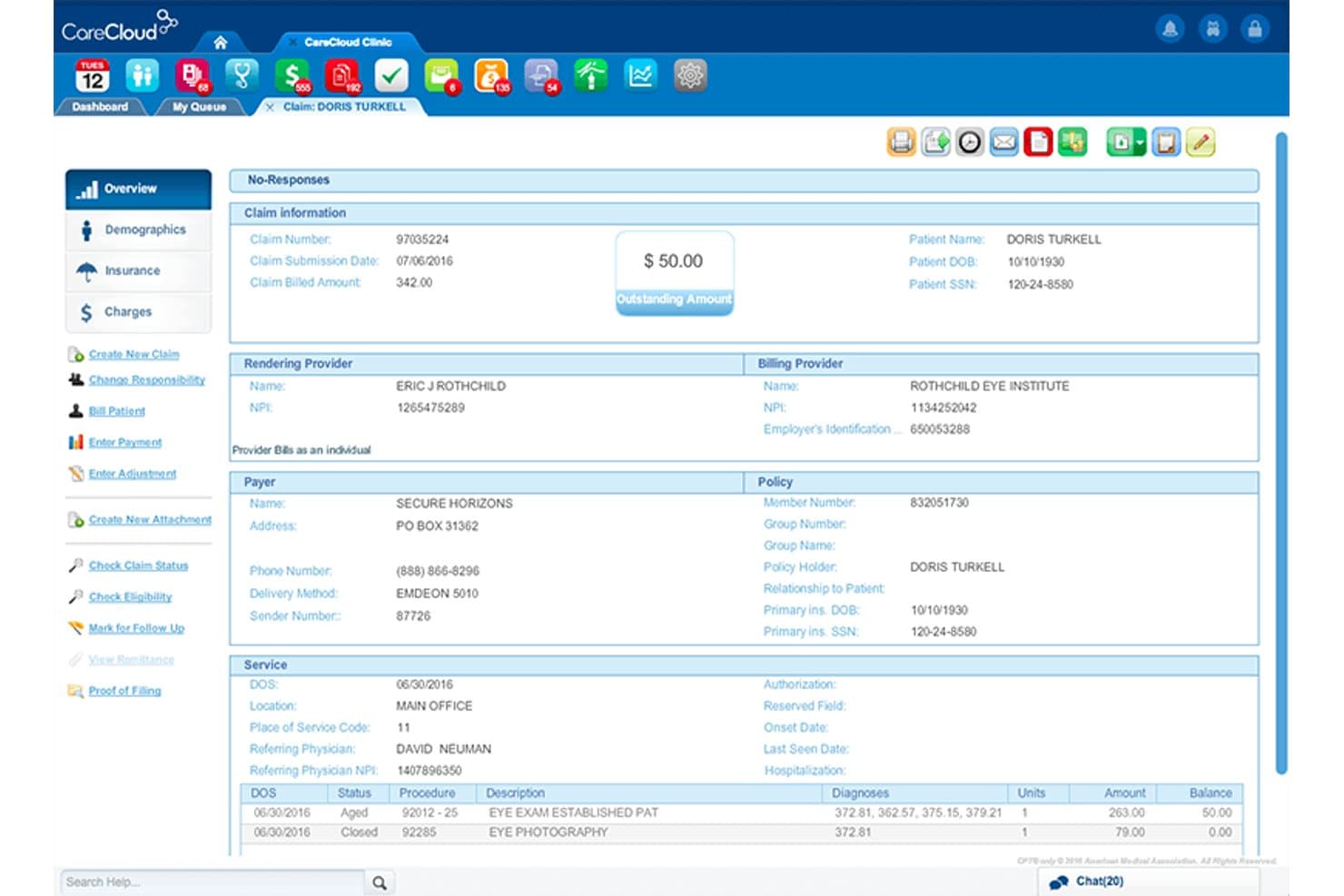
Core Features
Clinical Charting
Create, edit, and manage patient charts with specialty-specific templates. Physicians can document encounters quickly using intuitive workflows.
Patient Portal
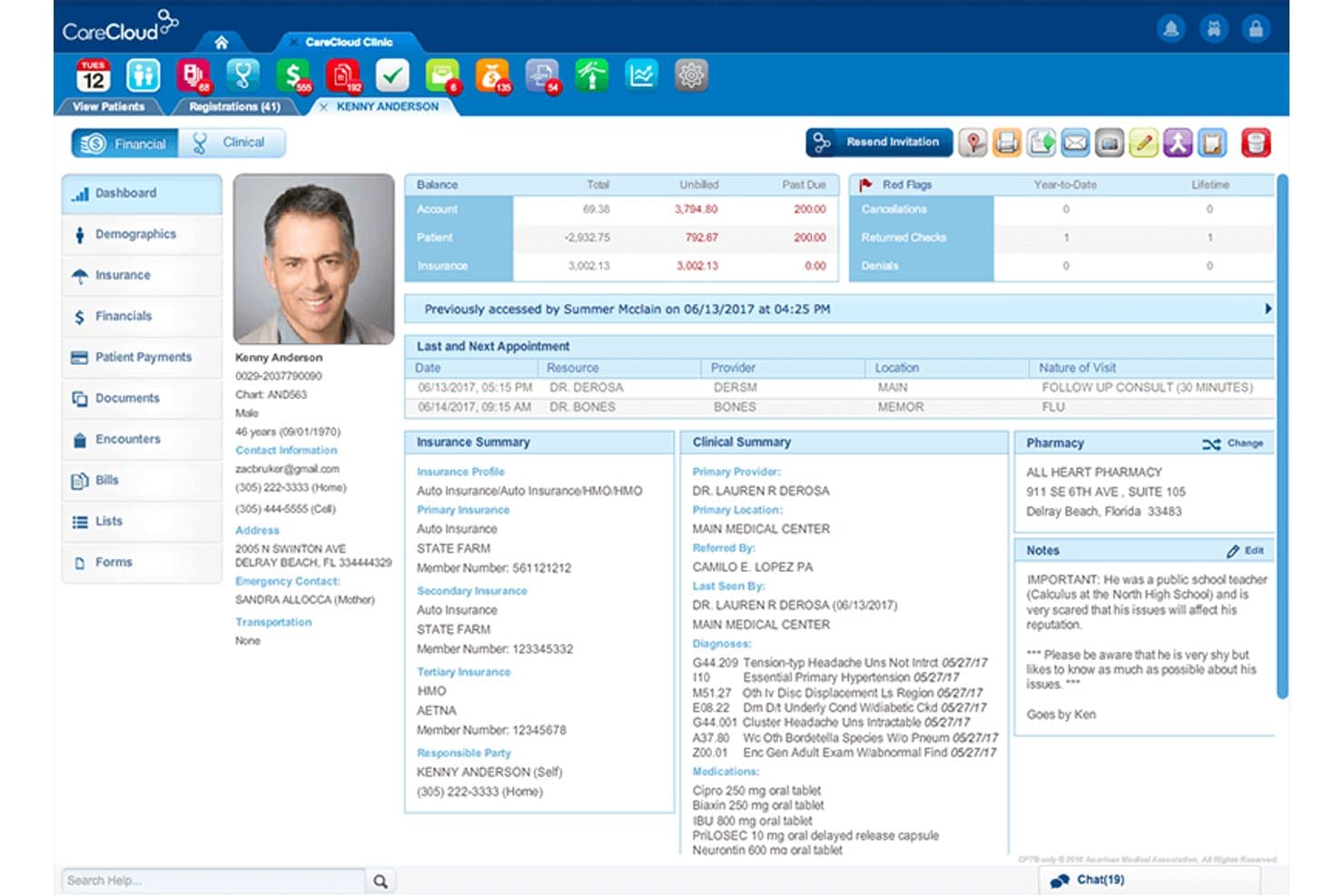
Give patients secure access to health records, messages, and billing. The portal allows online scheduling and payment for added convenience.
Practice Analytics
See real-time dashboards showing revenue cycle, productivity, and trends. Practices get actionable data to improve clinical and financial outcomes.
Electronic Prescribing
Send prescriptions digitally to pharmacies with drug interaction checks. Providers save time and support safety by reducing manual errors.
Appointment Scheduling
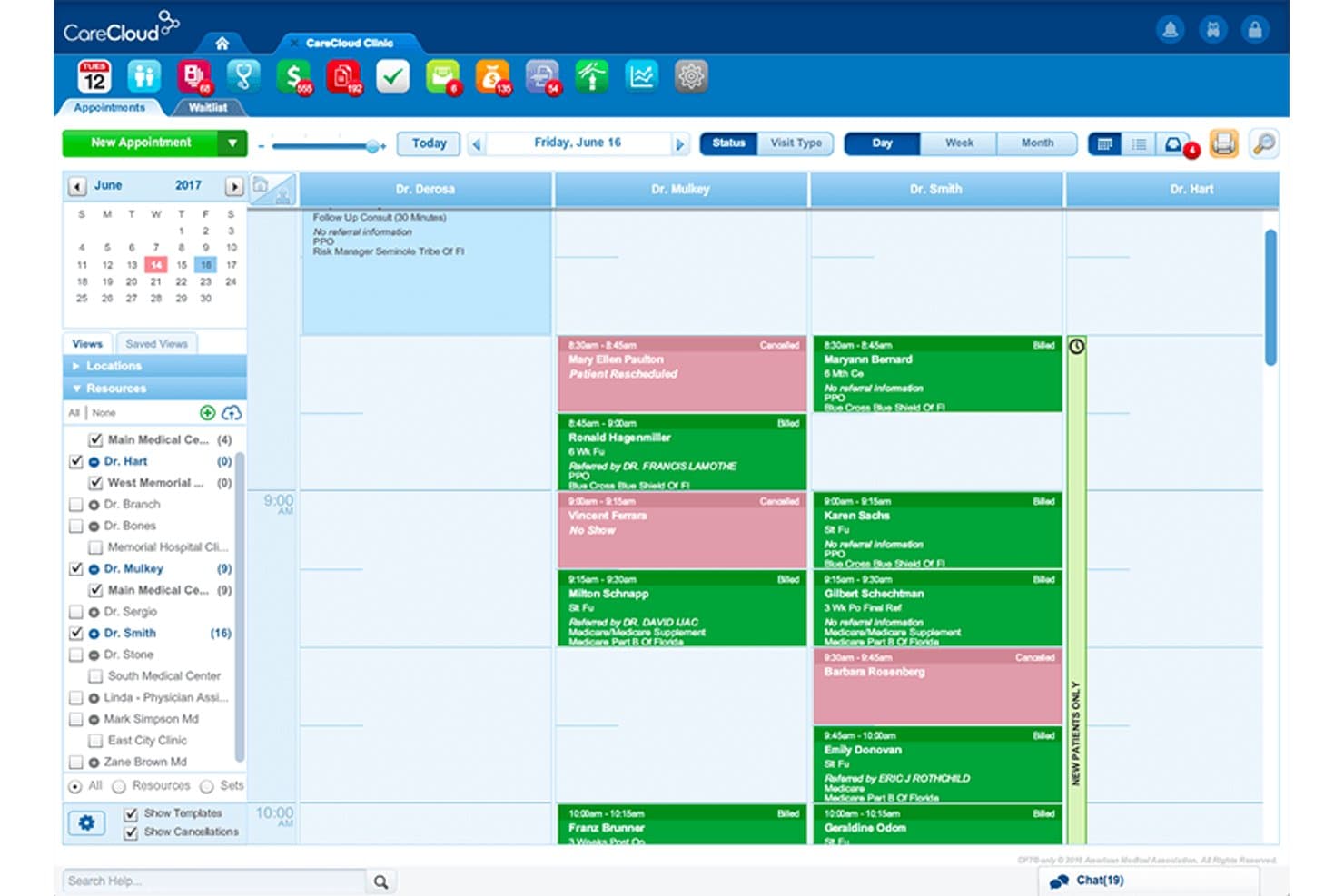
Manage complex, multi-provider, and location-based appointments in one view. Staff can confirm, reschedule, or fill cancellations faster.
Revenue Cycle Management
Automate charge capture, claim submission, and denials tracking from one platform. Medical practices can reduce billing errors and boost collections.
Ease of Use
CareCloud stands out for its modern, intuitive layout and role-driven dashboards, making navigation easy for staff and providers. I think the quick-access menus, specialty templates, and integrated patient communications help users accomplish daily tasks faster. Many reviewers highlight how onboarding is smooth and providers adapt quickly, which isn’t always the case in this space. Its consistent design and guided workflows reduce disruption, so new team members catch on with minimal training.
Integrations
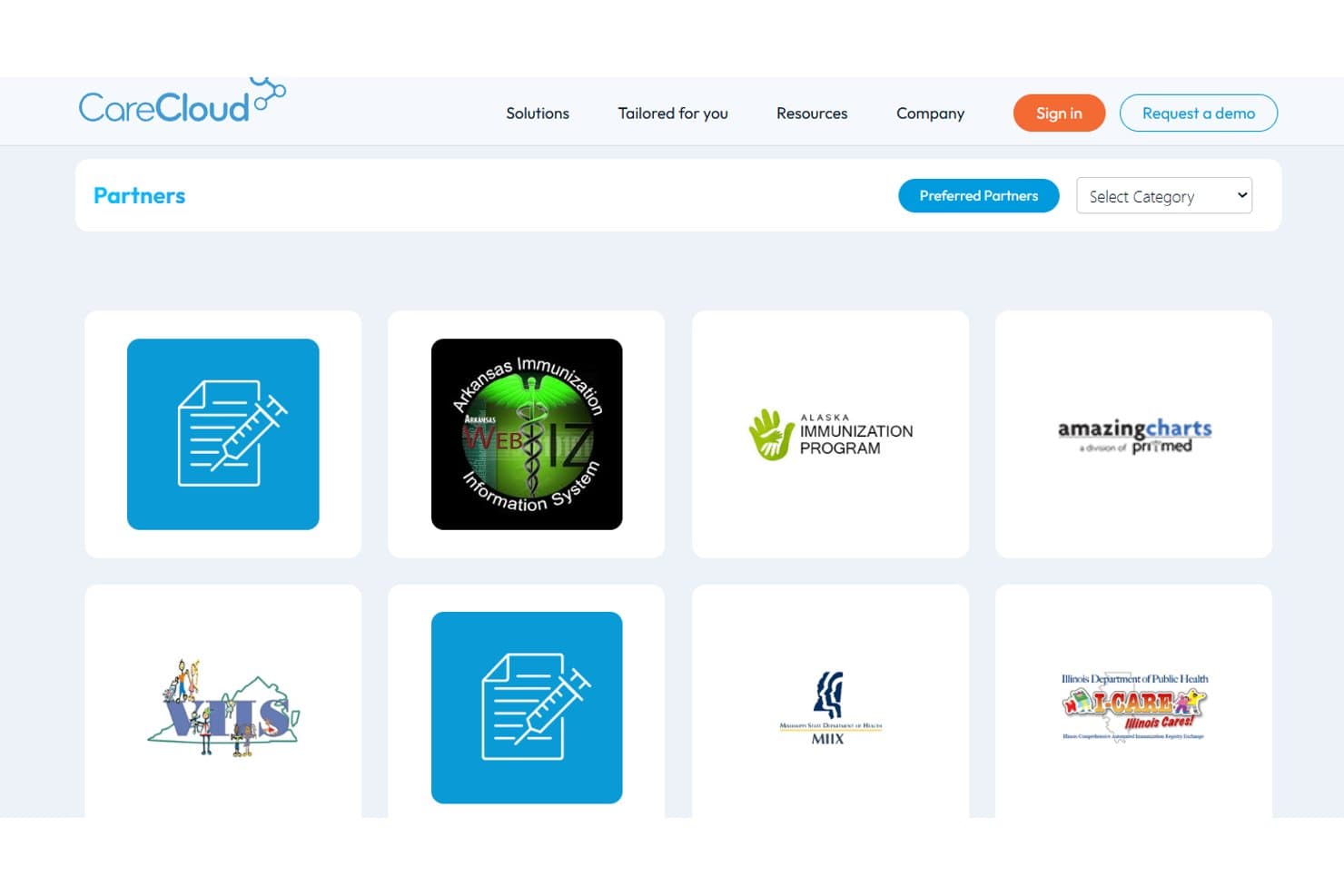
CareCloud integrates with Zocdoc, Chiron Health, RevSpring, QueueDr, Holly by Nimblr, FOX Rehabilitation, IntrinsiQ Specialty Solutions, Rosch Visionary Systems, NextPatient, and UroChartEHR, among others.
CareCloud also offers robust interoperability via its Connector, supporting lab and immunization interfaces, EHR data exchange, and FHIR-based connections. An API is available for custom integrations and third-party tools.
CareCloud Specs
- API: Yes
- Appointment Scheduling: No
- Athlete Management: No
- Audit Management: No
- Calendar Management: Yes
- Compliance Tracking: No
- Customer Management: Yes
- Dashboard: Yes
- Data Export: Yes
- Data Import: Yes
- Data Visualization: Yes
- Electronic Prescribing: No
- External Integrations: Yes
- File Sharing: Yes
- File Transfer: Yes
- Health Management: No
- HIPAA Compliance: No
- Inventory Tracking: No
- Multi-User: Yes
- Notifications: Yes
- Organization Management: No
- Patient Management: No
- Project Management: No
- Regulatory Alerts: No
- Risk Assessment: No
- Scheduling: Yes
- Supplier Management: No


